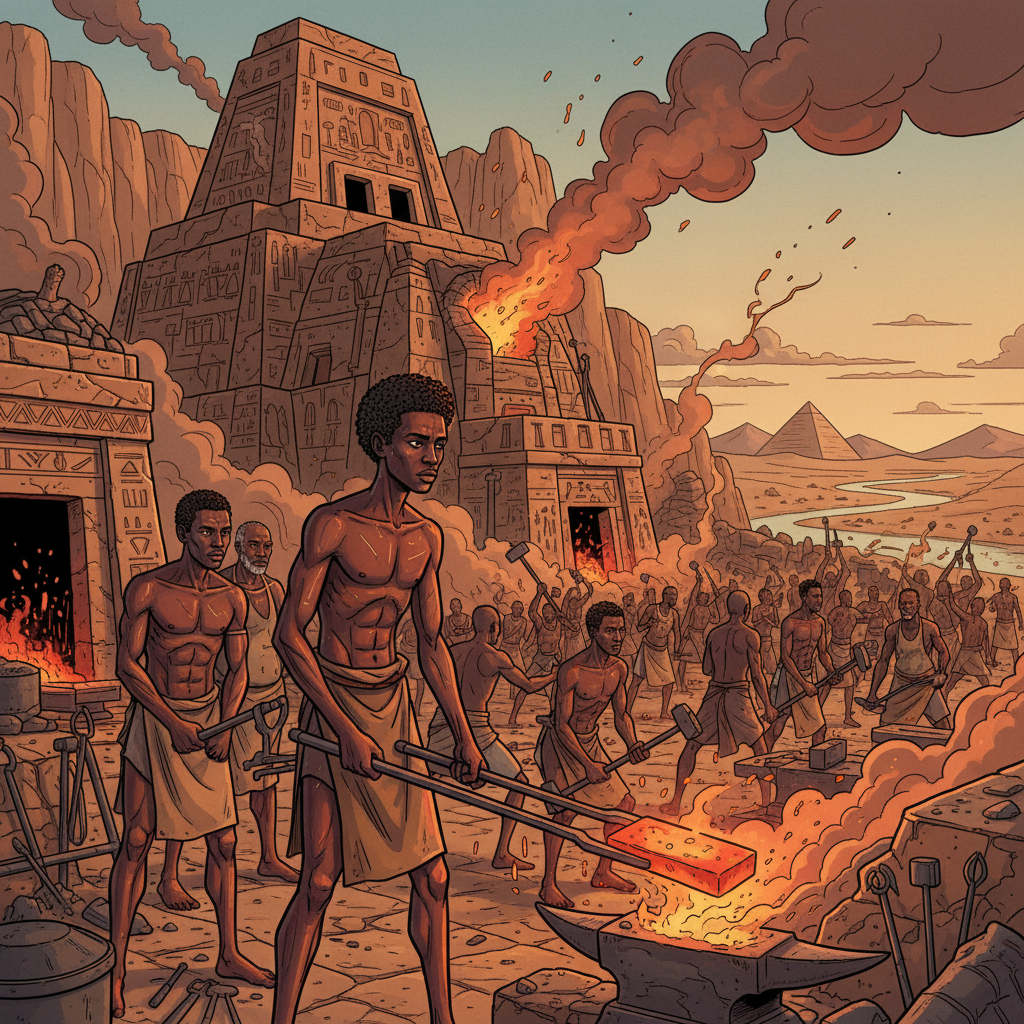
Taharqo, tall for his thirteen years, gripped the heavy tongs. Sweat beaded on his ebony skin, reflecting the fiery glow of the forge. He pulled a glowing ingot from the roaring heat, the air vibrating with the rhythmic clang of hammers. This was the heart of Meroe, the great city in the Kingdom of Kush, where iron was king, and Taharqo felt a deep pride in his place here. He was learning to shape the very bones of their civilization, transforming stubborn rock into tools and weapons that strengthened their people. Each swing of his hammer was a prayer, a dedication to the craft and the ancestors who had mastered it. The smell of charcoal and hot metal filled his lungs, a scent he now associated with purpose and belonging.
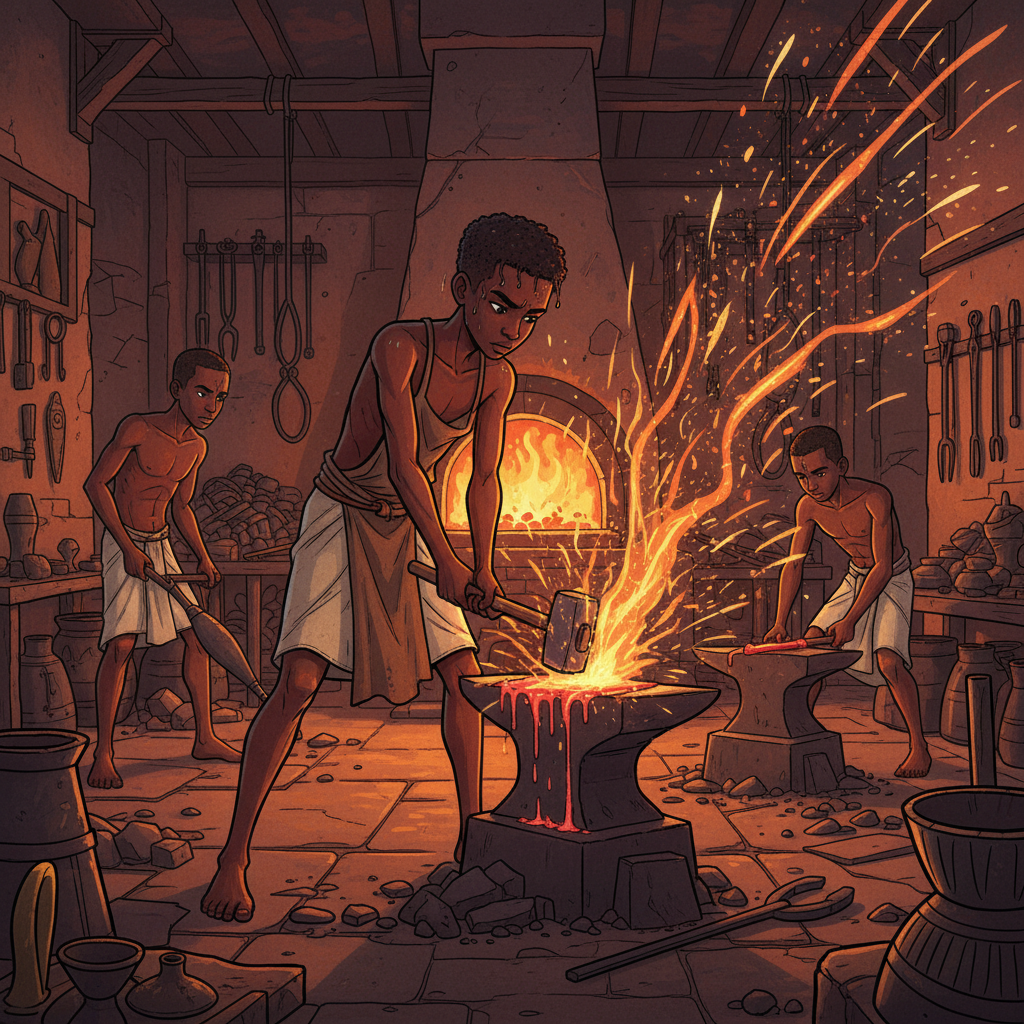
His short, tight 4C hair was damp at the temples, but his concentration never wavered. He laid the red-hot metal on the anvil, its surface shimmering like liquid sun. Then, with a grunt, he brought his hammer down, striking with practiced force. Sparks flew, a dazzling shower of tiny stars against the dimness of the workshop. Taharqo imagined the iron bending to his will, changing its nature under his careful guidance. He was not just hitting metal; he was coaxing it, convincing it to become something new and useful. The other apprentices worked around him, a symphony of focused effort, each contributing to the powerful hum of the compound. He knew his work was good, strong, and true.
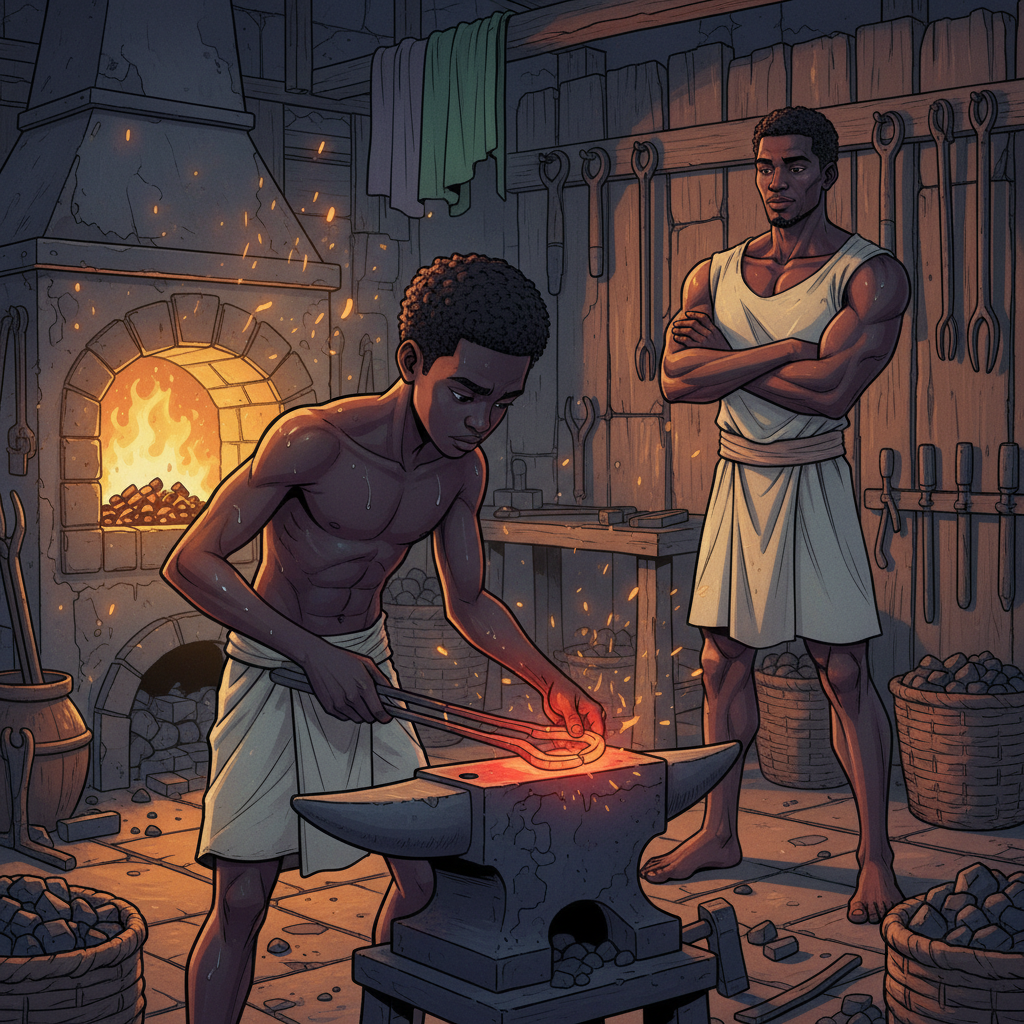
Today, Taharqo was tasked with shaping a new set of fire-tongs, a delicate but crucial tool for handling molten metal. He had been working on them for hours, refining the curve of the jaws, ensuring the grip was perfectly balanced. He knew the forge-master, Sekani, valued precision above all else. Sekani, a man whose muscles rippled beneath skin as dark and polished as obsidian, moved with a quiet authority that commanded respect. Taharqo admired him greatly, always striving to meet the high standards Sekani set. He wanted to be a master ironworker one day, just like Sekani, known for his skill and dedication to Maat, the principle of truth and order.
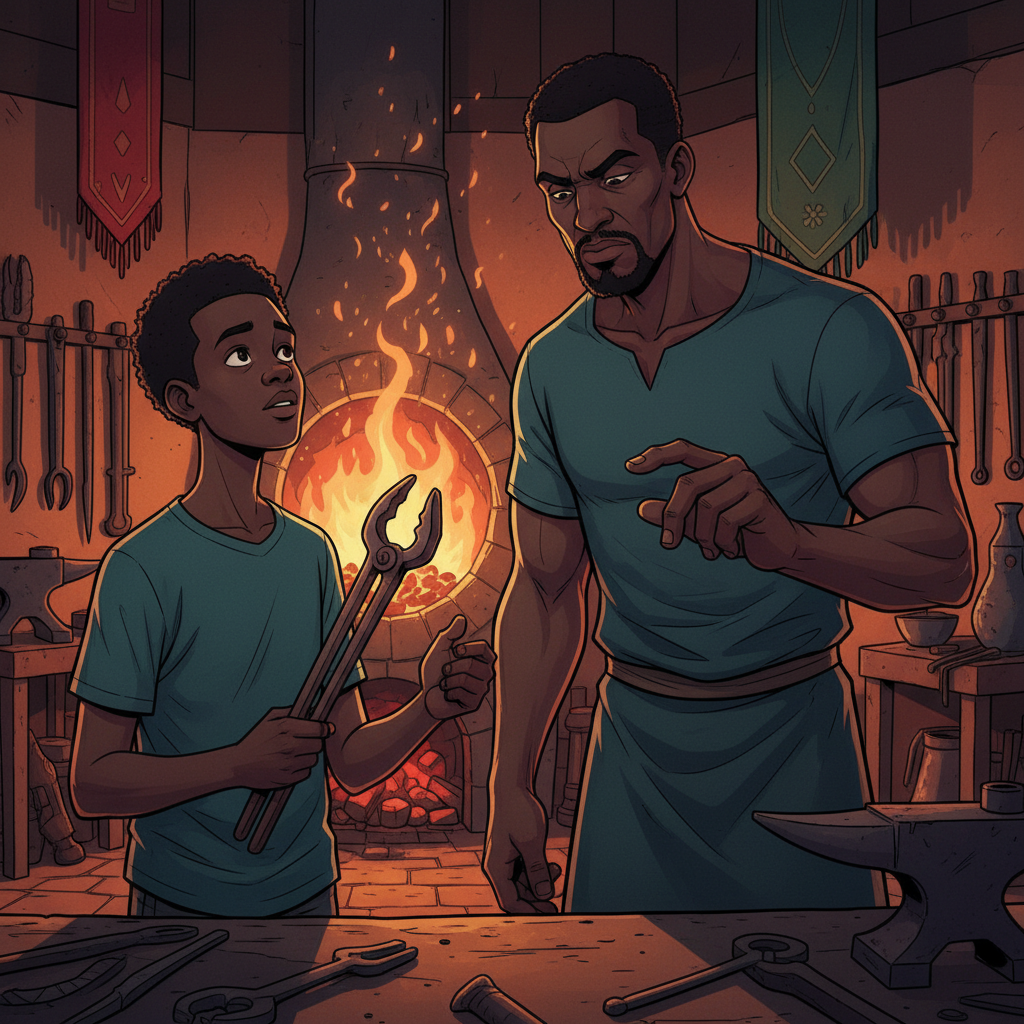
A shadow fell across Taharqo's work. He looked up to see Master Sekani standing beside him, his gaze sharp and assessing. Sekani's eyes, usually warm, held a critical glint. Taharqo's chest tightened with a mix of anticipation and a flicker of unease. He waited, tongs still in hand, ready for the praise he felt he had earned. Sekani picked up the half-finished tongs, turning them slowly in his calloused fingers. The master's frown deepened as he examined the joint where the two pieces of metal met. Taharqo's heart began to thud, a discordant drumbeat against the steady rhythm of the forge.
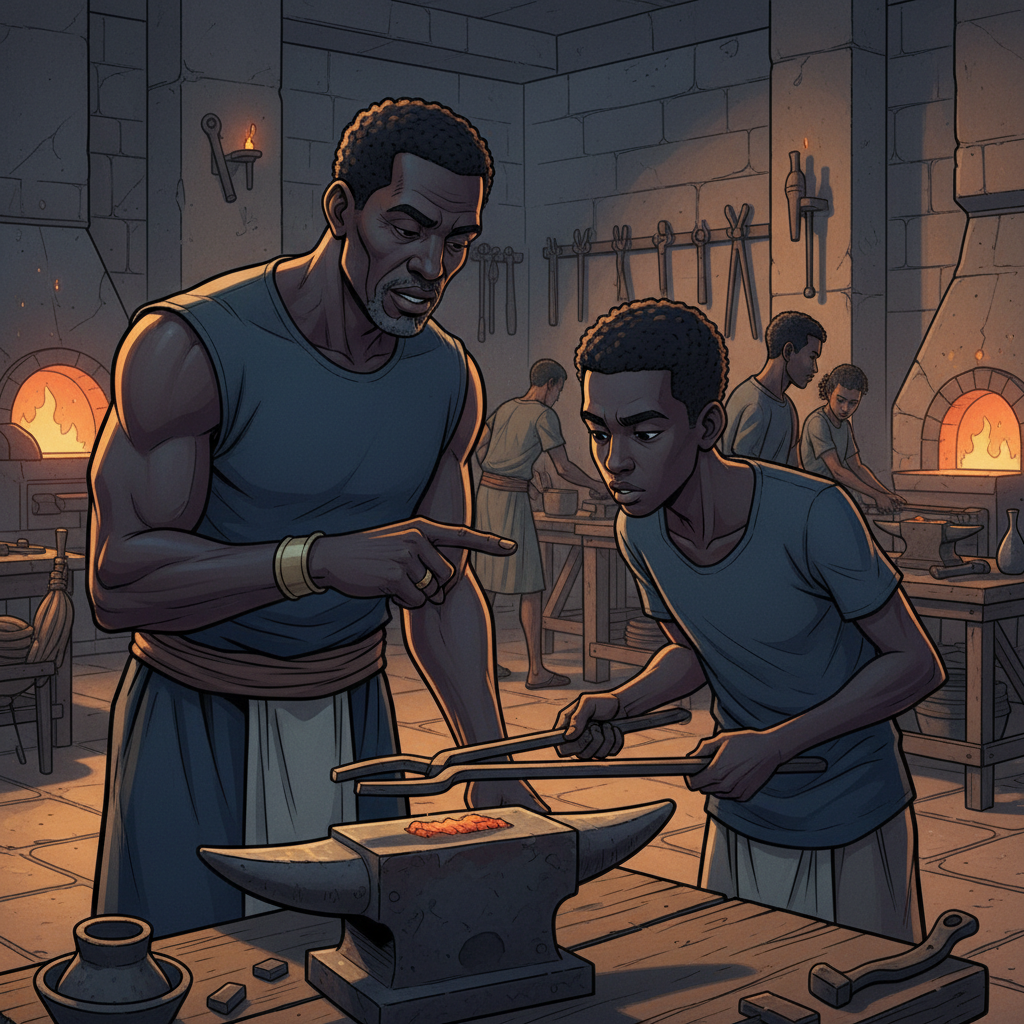
'Taharqo,' Sekani's voice was low, but it cut through the din of the workshop like a honed blade. 'Look here. The weld is weak. The metal here is not truly joined; it is merely pressed together. This will fail, and it will fail when it is needed most. It could cause injury.' Sekani pointed to a barely visible seam. Taharqo squinted, his earlier pride dissolving like mist in the morning sun. He had thought the join was solid, but now, under Sekani's expert eye, he saw the flaw. A wave of shame washed over him, hot and bitter, eclipsing the heat of the forge. He had worked so hard, but it wasn't enough.
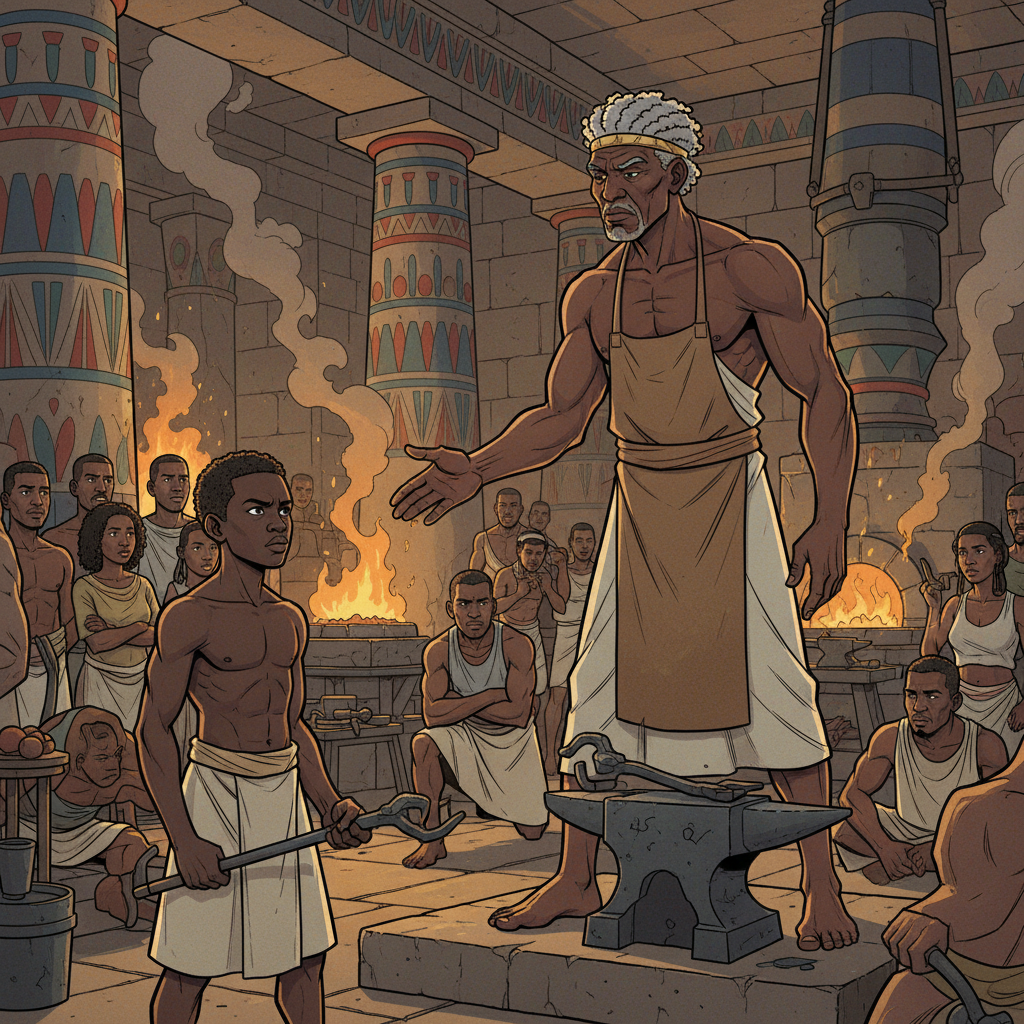
The master continued, his voice firm, 'This is not the quality of work we demand in Kush. This is not honoring the metal, nor the spirits of the ancestors who taught us its secrets. You rushed. You did not give the metal the time and attention it required to truly fuse. Isfet is born from such carelessness, Taharqo. It creates disorder where there should be strength.' Taharqo's face burned. He felt everyone in the compound watching him, judging his failure. The clang of hammers seemed to mock him, the roar of the bellows a jeering laugh. His shame transformed into a hot, prickly anger.
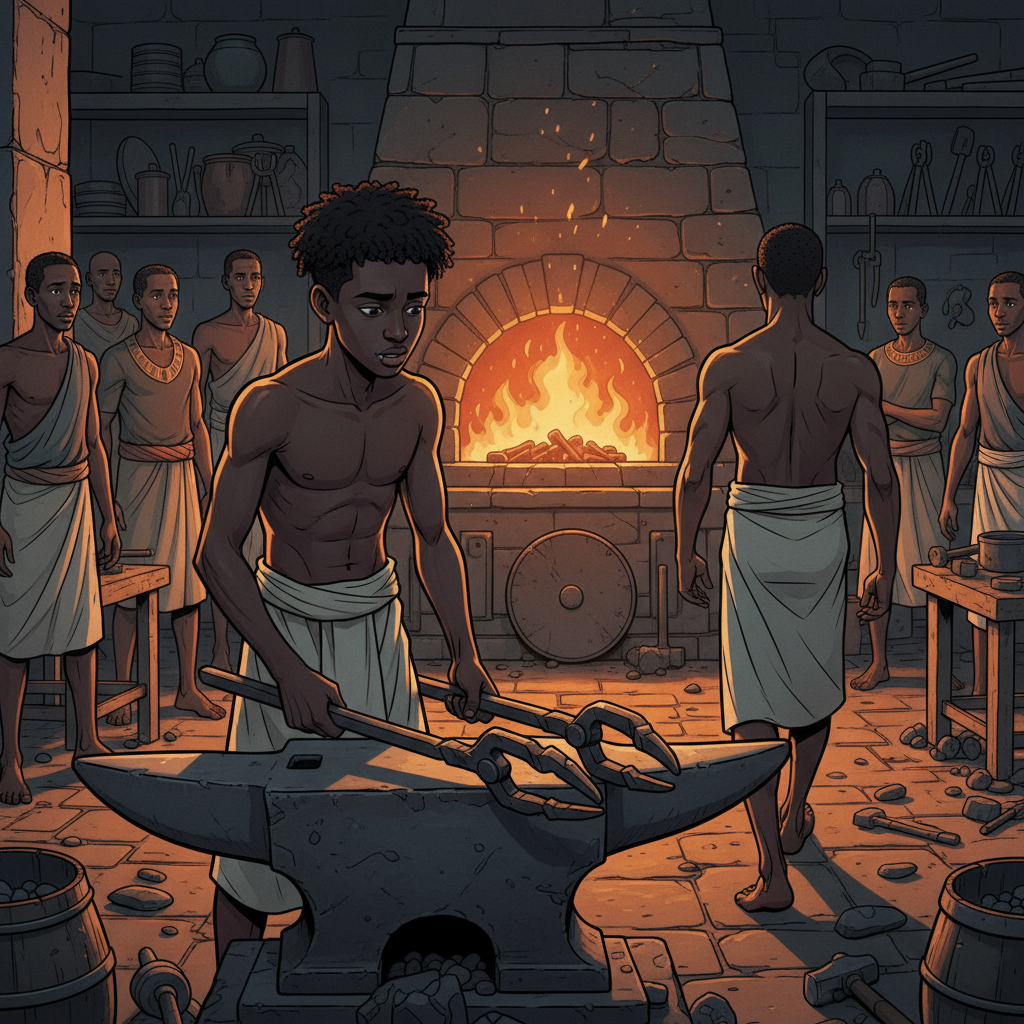
It wasn't fair. He had tried his best! He had poured his effort into those tongs. How could Sekani be so harsh, so unfeeling? Taharqo felt a surge of indignation, a powerful urge to defend himself, to argue his case. But Sekani had already turned away, leaving the flawed tongs on the anvil. The master's back seemed to carry a silent judgment. Taharqo's lower lip trembled, and he bit it hard. The injustice of it all swelled within him, pushing out all other thoughts, leaving only a throbbing sense of betrayal. He felt a deep disconnection, a sudden chasm opening between him and the familiar rhythm of the forge. He wanted to escape the gaze of the others.
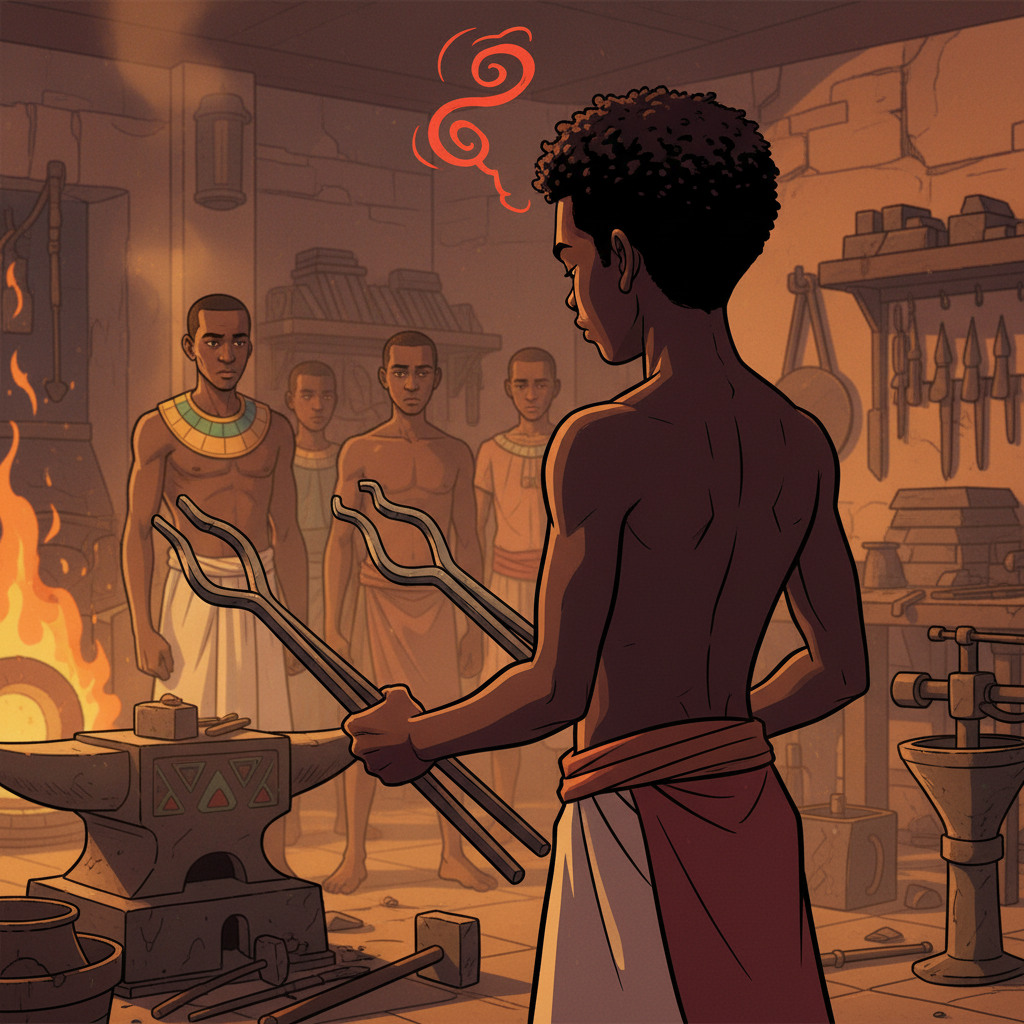
His hands tightened on the tongs until his knuckles were white. He looked at the weak weld again, but now he saw it not as a mistake to be corrected, but as proof of Sekani's unfairness. Rage, quick and hot like molten iron, began to bubble in his chest. It felt like a protective shield, defending him from the sting of Sekani's words. He didn't want to fix the tongs; he wanted to smash them, to shatter the very thing that had brought him such public humiliation. This wasn't about learning; this was about disrespect, about being shamed in front of his peers. The feeling of Isfet, of imbalance, was growing within his ba, his very soul.
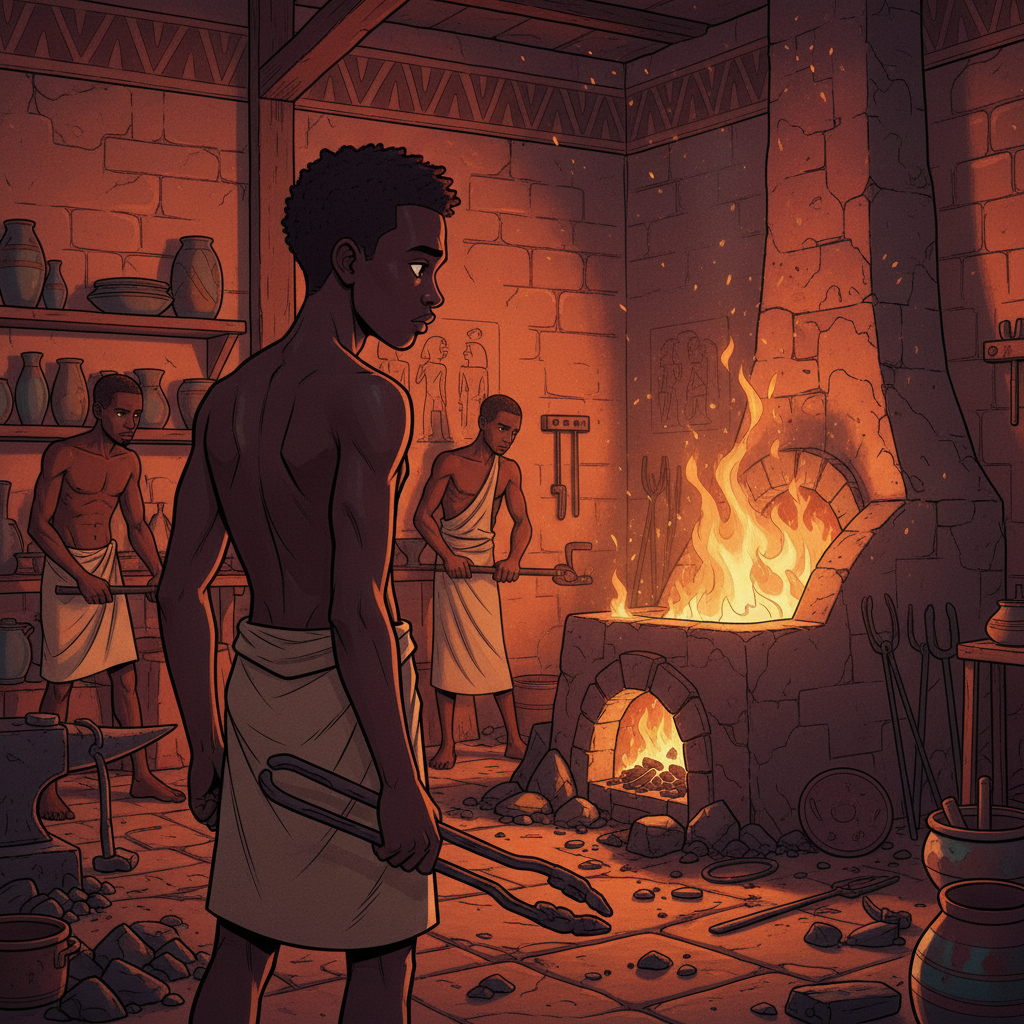
A dangerous thought flickered in Taharqo's mind, a dark idea born from his wounded pride. If they wouldn't appreciate his effort, if his best wasn't good enough, then he wouldn't work at all. He wouldn't give Sekani the satisfaction of seeing him try again, only to fail. He wouldn't let his master see the tears that threatened to sting his eyes. He would show them. He would show them all that he wouldn't be treated this way. The forge suddenly felt oppressive, stifling him with its heat and the silent judgment he imagined from everyone around him. He felt an urge to withdraw completely, to disappear from their sight.
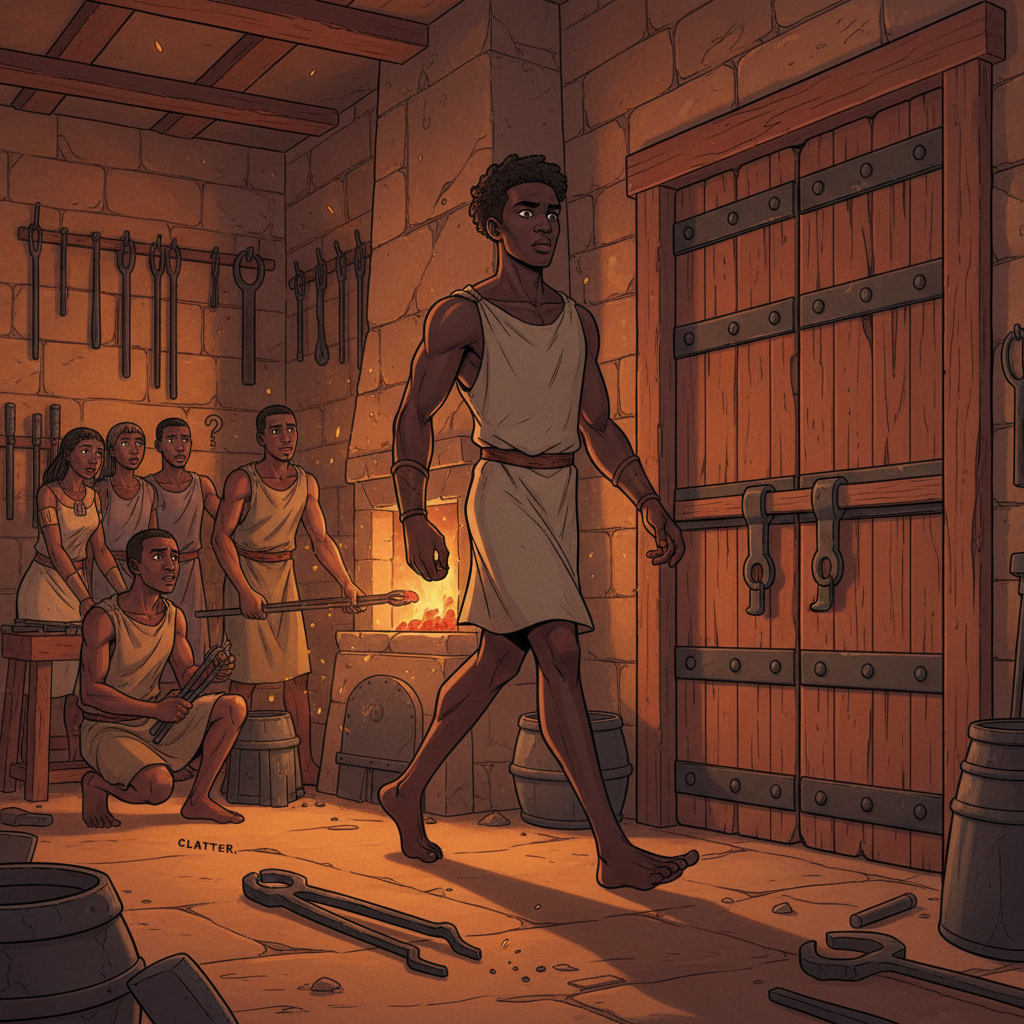
Without a word, Taharqo dropped the tongs with a clatter that was too loud in the sudden silence of his own mind. He strode towards the main door of the forge, a heavy timber gate that could be barred from the inside. He ignored the questioning glances of the other apprentices. His feet carried him with purpose, fueled by the churning storm inside him. He felt a strange satisfaction in the shock on their faces, in their murmurs. They would see. They would understand the depth of his anger and the unfairness of their master. He would show them what it meant to disrespect a dedicated apprentice who had poured his heart into his work.
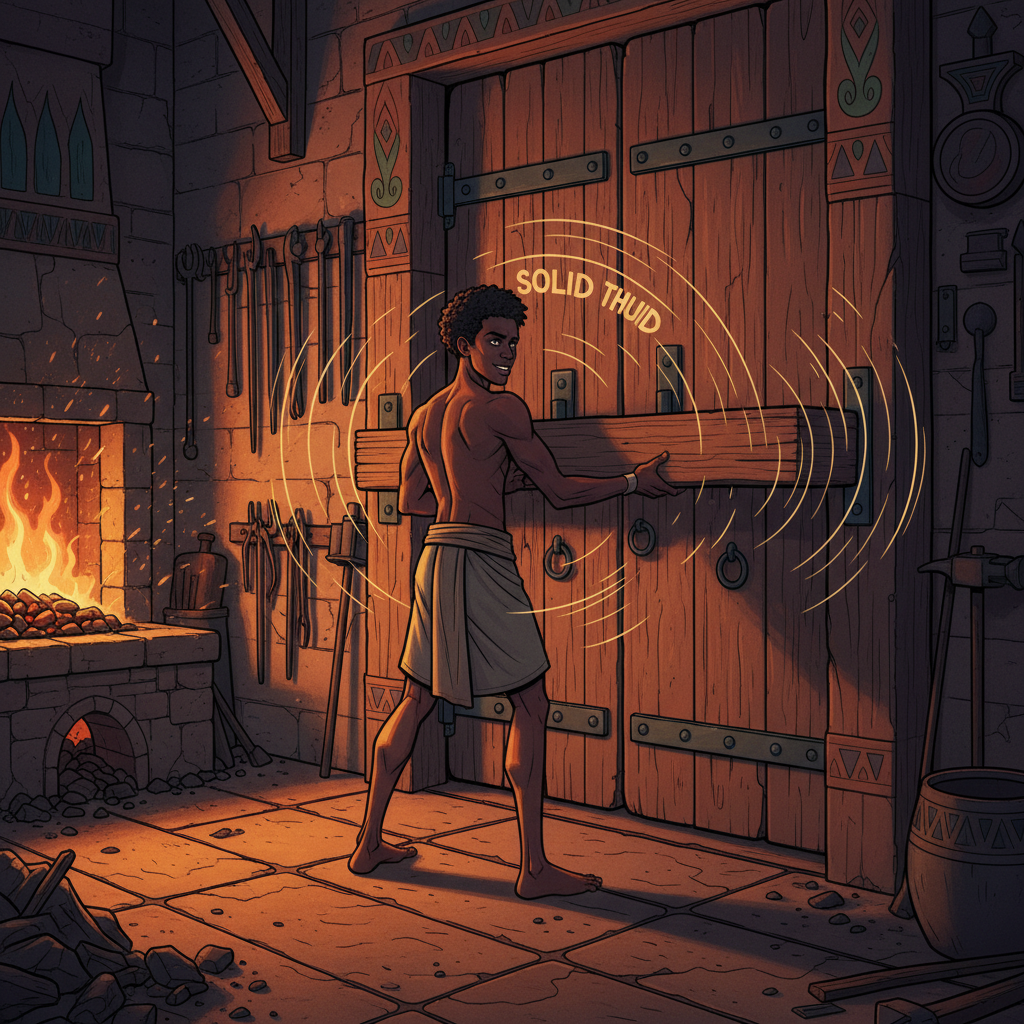
Reaching the door, Taharqo grabbed the thick wooden beam that served as a bolt. His fingers trembled slightly, but his resolve was firm. He slid the beam into its heavy iron brackets, the solid thud echoing loudly in the sudden quiet of the workshop. The sound felt final, definitive. The forge, once a place of warmth and collaboration, now became his solitary sanctuary. He had locked himself in, and more importantly, he had locked everyone else out. A strange, bitter sense of triumph mixed with the lingering hurt. Now, he thought, they would have to deal with the consequences of their actions, not his.
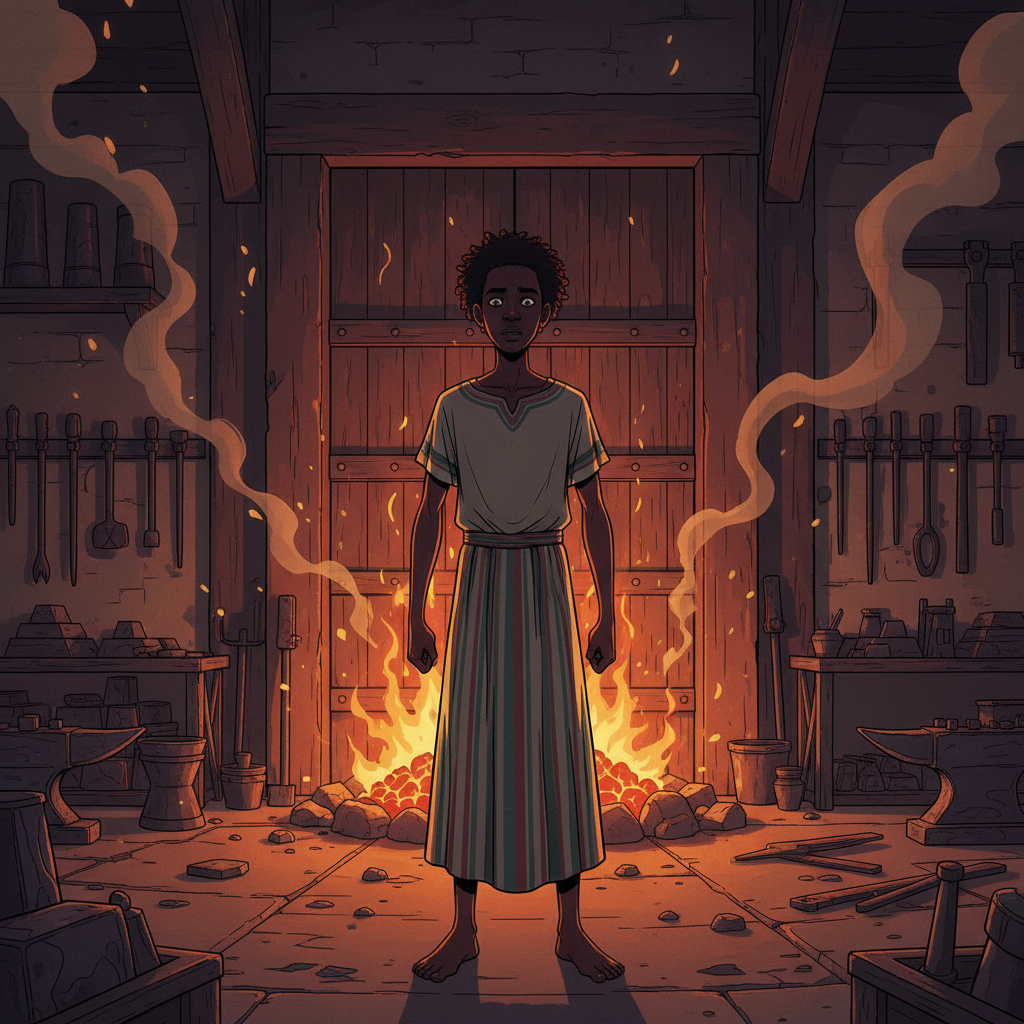
The heavy door sealed him in, plunging the workshop into a deeper gloom. The only light now came from the glowing coals of the main hearth, casting long, dancing shadows on the walls. The distant sounds of the compound faded, replaced by the roar of the fire and the ragged beat of his own heart. Taharqo stood in the center of the vast space, breathing heavily. The air, thick with the scent of smoke and metal, felt stifling. He had achieved his goal: isolation. But instead of feeling better, the anger inside him seemed to grow, feeding on the silence and the lack of distraction. It coiled in his stomach, a hot, restless serpent.
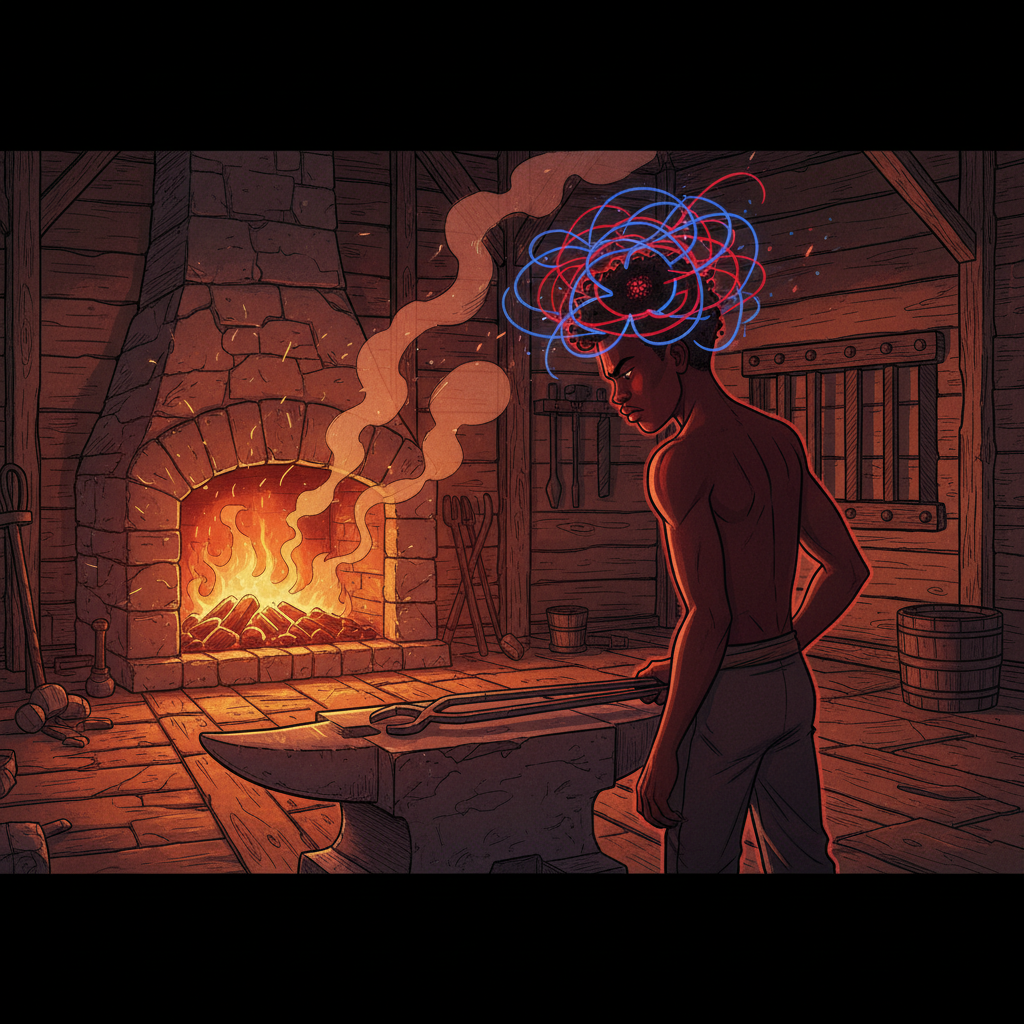
He walked to the anvil where the flawed tongs lay. He picked them up, not to fix them, but to stare at the imperfection, fueling his resentment. Sekani had been too harsh. Too quick to judge. He had humiliated Taharqo publicly. Was that the way of Maat? To break a young spirit? No, he thought, that was Isfet. That was disorder. His thoughts were a tangled knot, each strand tightening around the core of his anger. He felt trapped, not just by the locked door, but by the overwhelming emotions that held him captive. The quiet gave his anger space to breathe, to expand, to fill every corner of his mind.
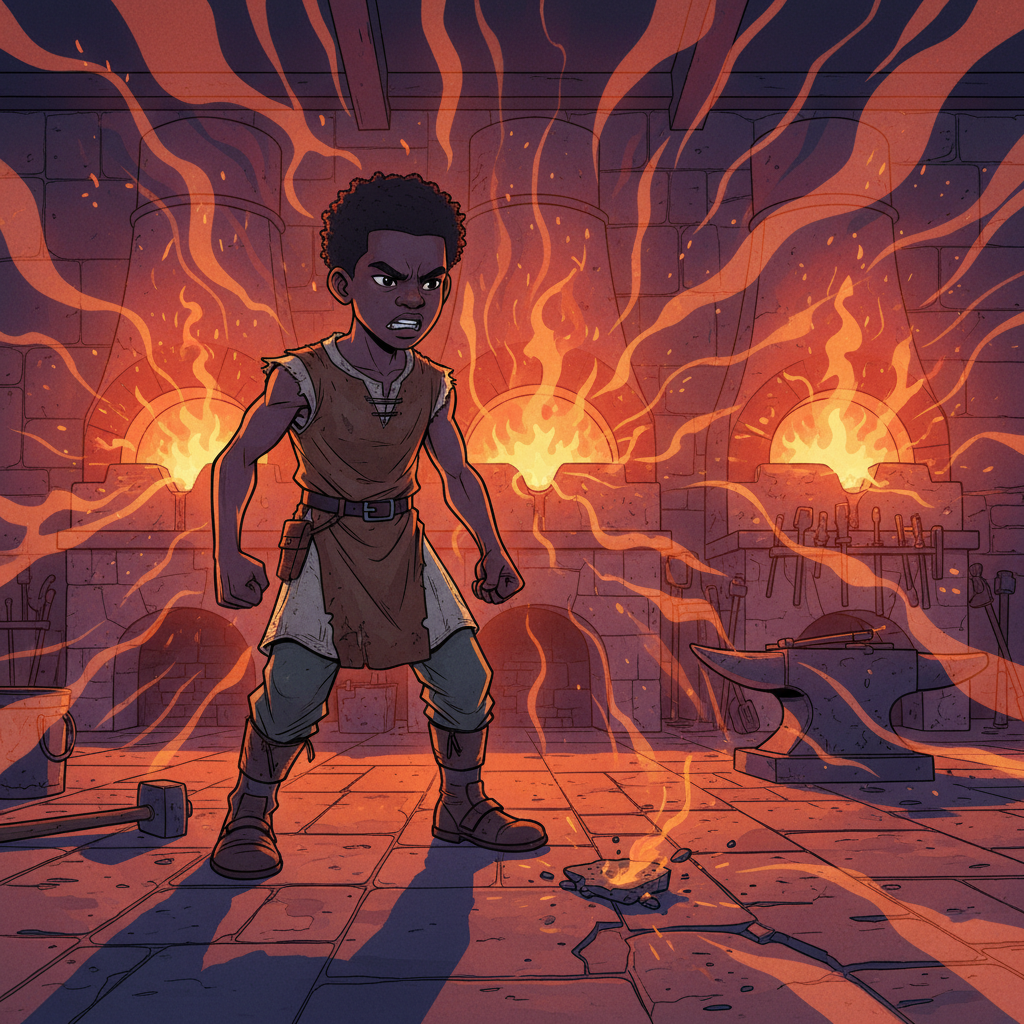
Minutes stretched into what felt like hours. He paced the floor, his heavy boots echoing. He imagined what Sekani and the others were saying outside the door. Probably talking about his stubbornness, his disrespect. This only made his fury burn brighter. He kicked a stray piece of slag, sending it skittering across the floor. He wanted to lash out, to scream, to make them understand how much he hurt. But there was no one to scream at, only the silent walls of the forge. The heat from the furnaces pressed in on him, a physical manifestation of his boiling emotions. He was alone, and the aloneness was not comforting.
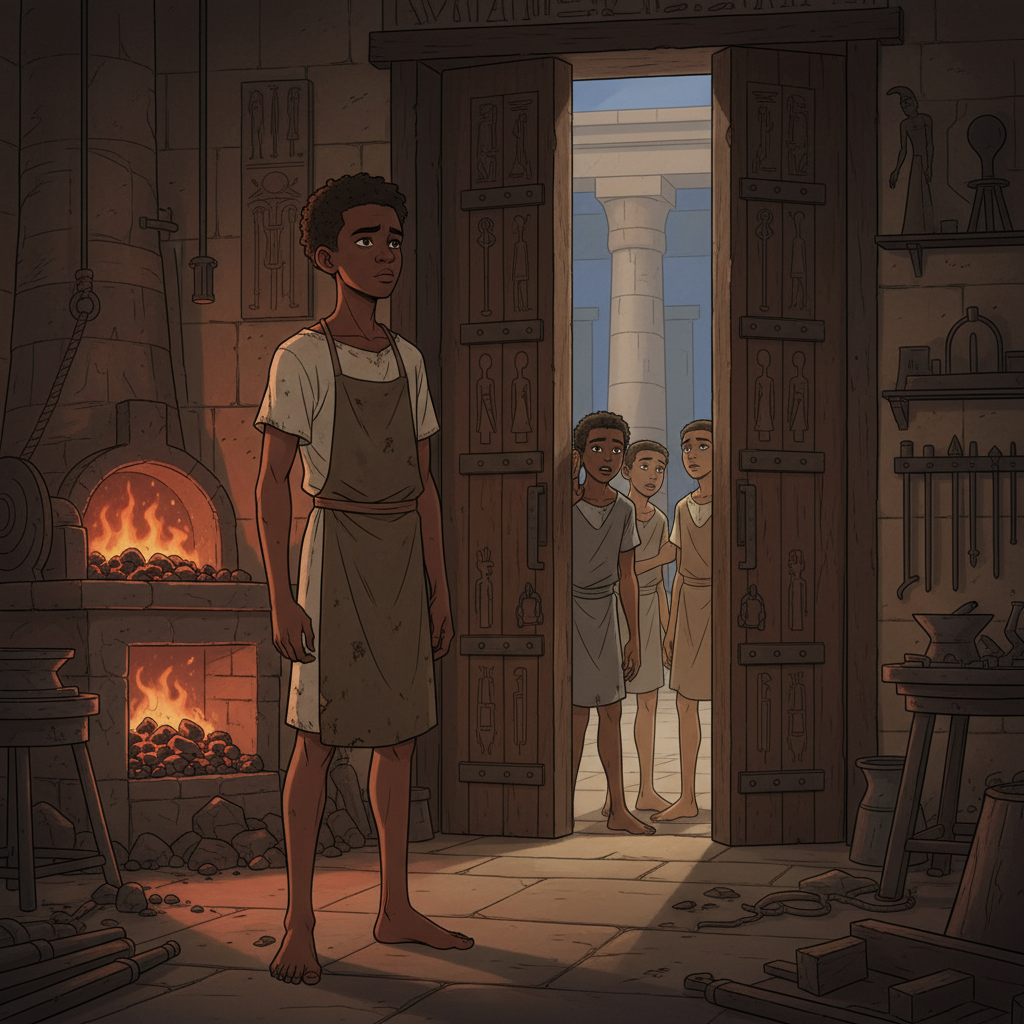
Suddenly, a voice, muffled but clear, came from outside the door. 'Taharqo? Are you in there? It's Khepri. What's going on?' Khepri was another apprentice, a year older than Taharqo. Taharqo didn't answer. He just stood still, listening. He heard Khepri's footsteps retreat, then return with more voices. He knew Sekani would be there soon. A fresh wave of defiance surged through him. He wouldn't open the door. He wouldn't. He just wanted to be left alone with his anger, even though that anger was now a heavy, painful weight in his chest, not the shield it had once pretended to be. The silence of the forge felt less like a sanctuary and more like a tomb.
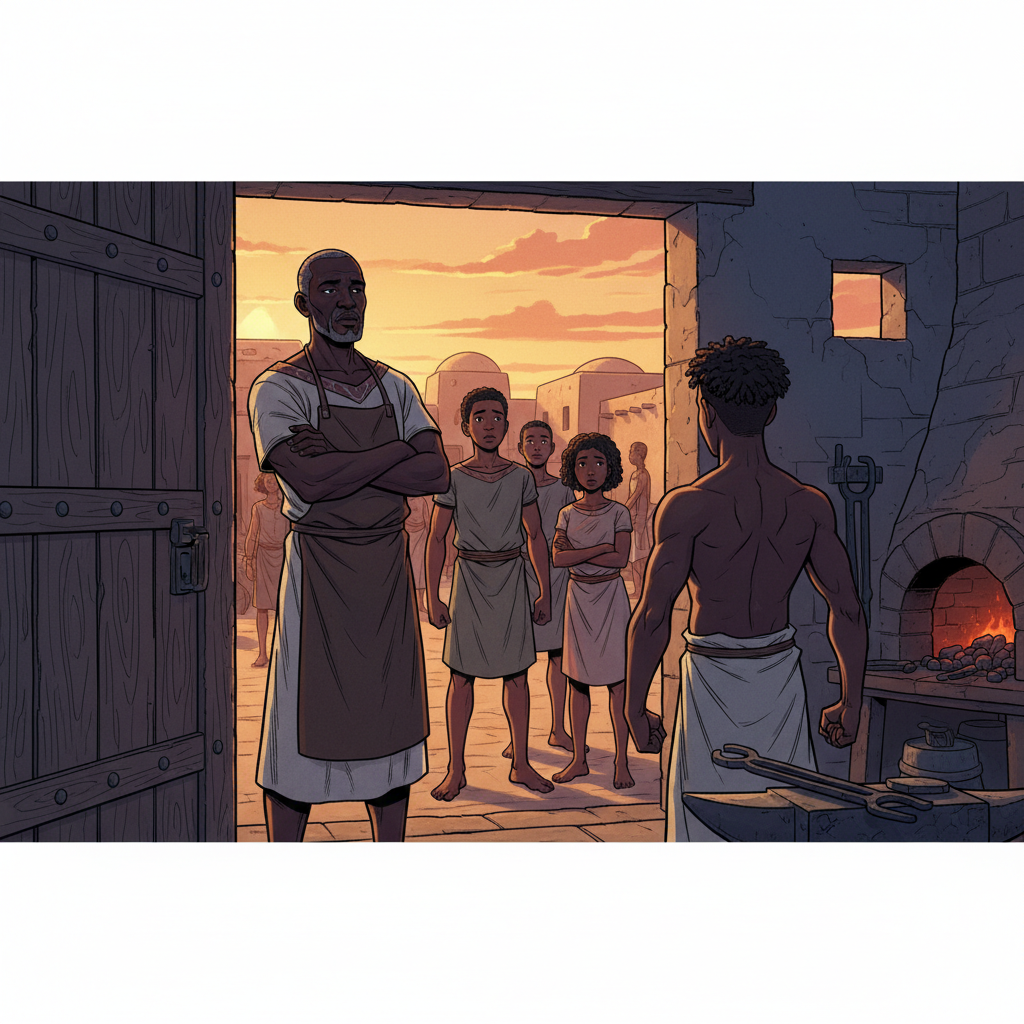
Then came Sekani's voice, deep and calm, resonating through the thick timber. 'Taharqo. We need to talk about this. The forge cannot sit idle. There is work to be done, and lessons to be learned.' Taharqo closed his eyes. He heard the master's words, but they sounded hollow to him, a pretense. He believed Sekani was only concerned about the work, not about Taharqo's feelings. This thought made the knot of anger in his gut tighten further. He wanted Sekani to feel his absence, to regret his harsh words. He wanted Sekani to know that his apprentice was suffering because of him. He clenched his fists, refusing to respond.
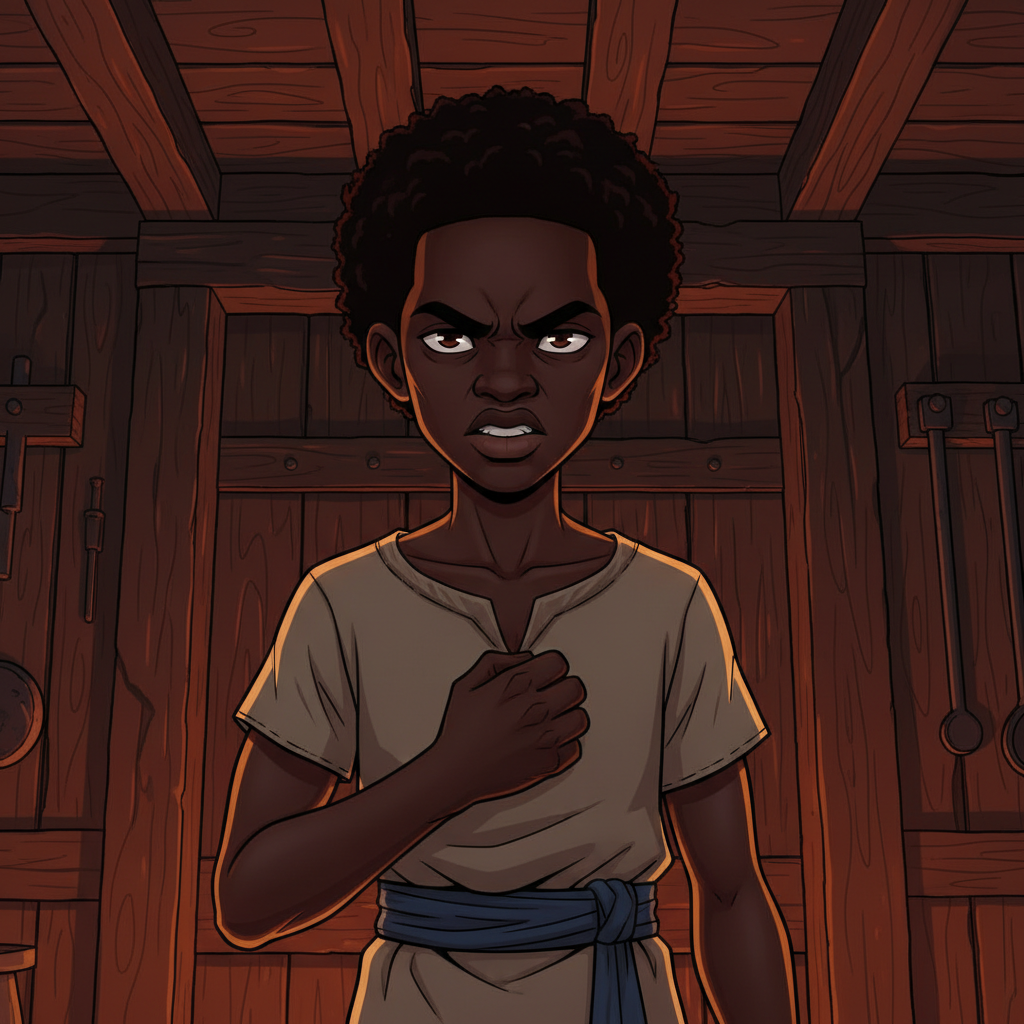
Sekani's voice came again, softer this time. 'Taharqo, I understand your feelings. But locking yourself away will not make them disappear. It will only make them grow heavier. This is not the path of Maat, my son. Harmony is found in facing challenges, not in hiding from them. Come out. Let us speak.' Taharqo scoffed inwardly. Maat? What harmony was there in public shame? Sekani didn't understand. He couldn't possibly understand the burning humiliation Taharqo felt. His anger was a living thing now, pulsing with heat, refusing to be reasoned with. It felt powerful, and he clung to its false strength.
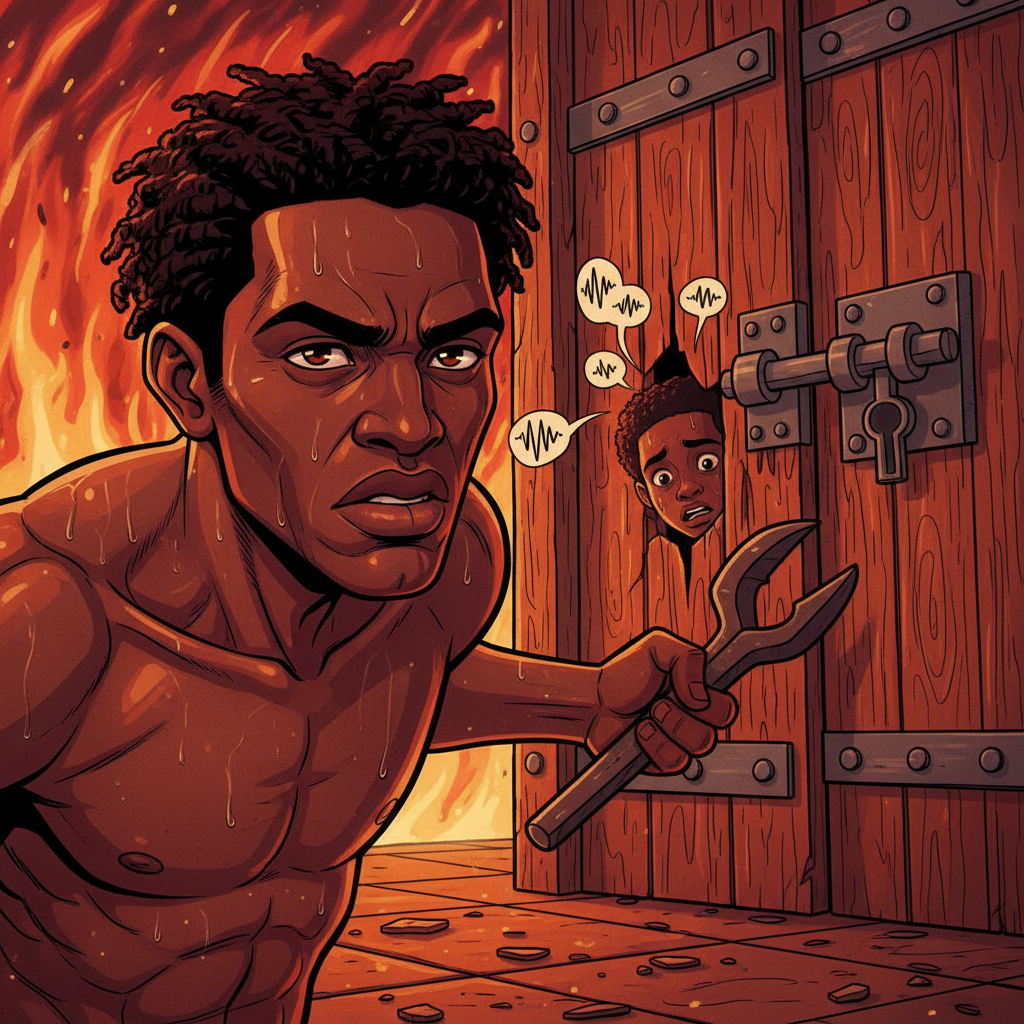
More voices joined in, other apprentices calling his name, trying to coax him out. He heard Akili, a quiet boy from a pottery village, sound genuinely worried. But Taharqo refused to yield. His resolve hardened with each plea. He would not give in. He would stand his ground, even if it meant remaining alone in the hot, silent forge forever. The furnace embers glowed, a mocking reflection of the embers of his own rage, refusing to cool. He knew what he was doing was causing inconvenience, perhaps even anger, for the others, but he didn't care. He needed them to feel something of what he was feeling.
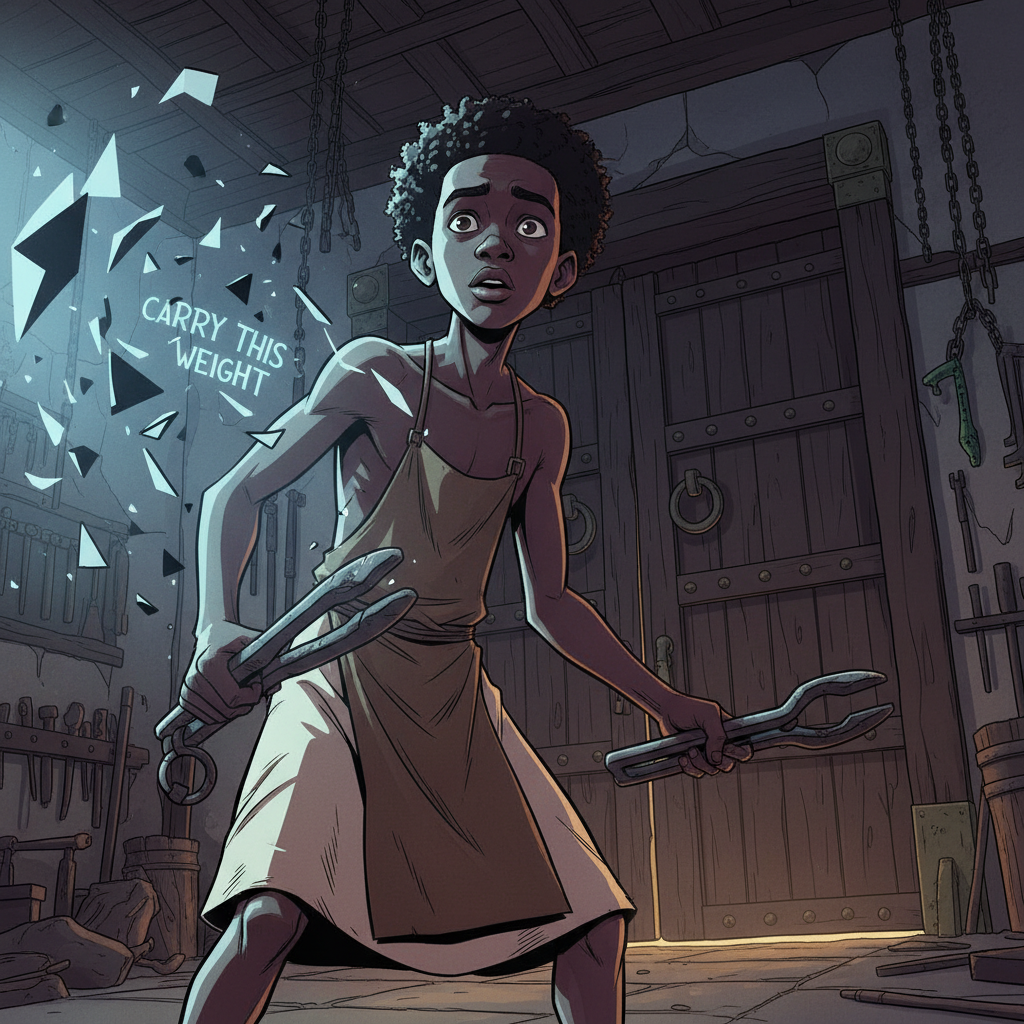
Then Sekani spoke again, his voice clear and steady through the heavy door, cutting through Taharqo's swirling thoughts like a cool breeze. 'Taharqo,' the master said, his tone gentle yet firm, 'I am not your enemy. The door you locked keeps out everyone who would help you carry this weight.' The words struck Taharqo like a physical blow. He froze. *Carry this weight.* The phrase echoed in the emptiness of the forge, suddenly making sense. His anger, his shame, his hurt – it was indeed a heavy weight, and he was carrying it all alone, making it heavier with every passing moment of his stubborn isolation. He suddenly saw the futility of his act.
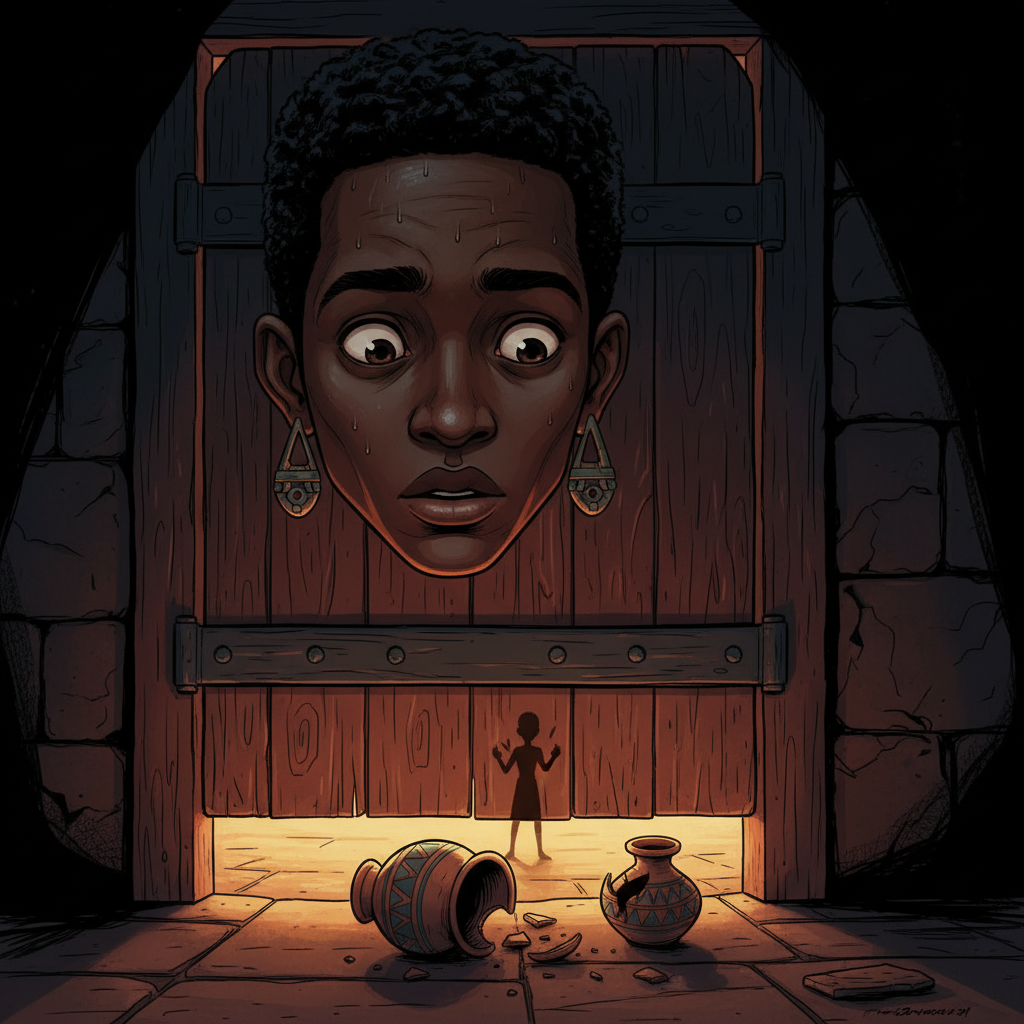
A new voice, Akili's, piped up from outside. 'Master Sekani is right, Taharqo. I did something similar once. I broke a clay pot, a special one, and I was so ashamed, I ran and hid in the kiln, thinking if I just stayed there, the shame would go away.' Taharqo listened, surprised. Akili, the quiet one? 'But the longer I stayed,' Akili continued, 'the hotter it got, and the more alone I felt. My shame didn't shrink; it grew. It wasn't until I came out and faced Master Sekani that the true work of mending, both the pot and my spirit, could begin. My hiding only cost me weeks of progress.'
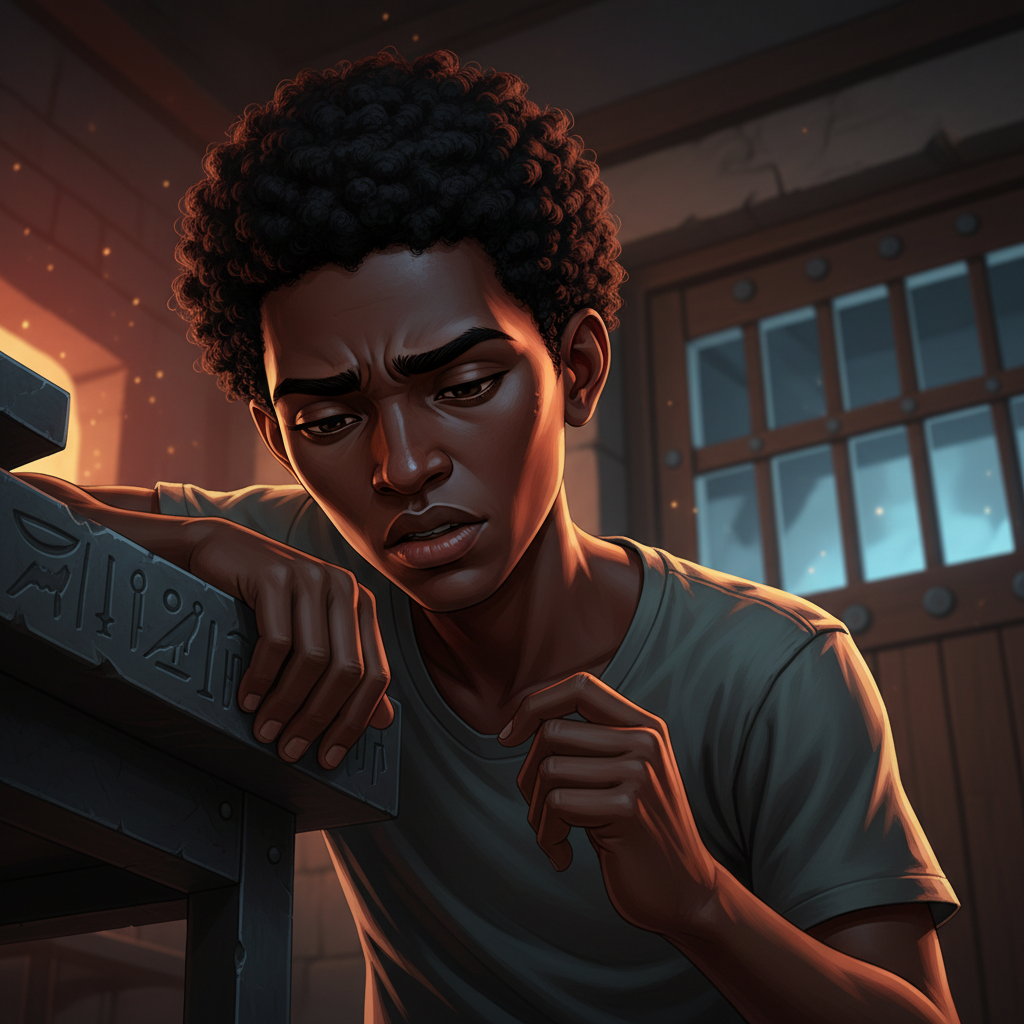
Akili's story hit Taharqo hard. He had never thought of it that way. He had imagined his isolation as a form of protest, a way to punish Sekani for his perceived injustice. But Akili's words made him see that he was only punishing himself. The rage he had nurtured in the silence had indeed grown, making him feel worse, not better. He leaned against the cool metal of a workstation, the heat from the hearth now feeling less like an ally and more like a suffocating blanket. The heavy wooden bolt on the door felt less like a shield and more like a self-imposed prison bar.
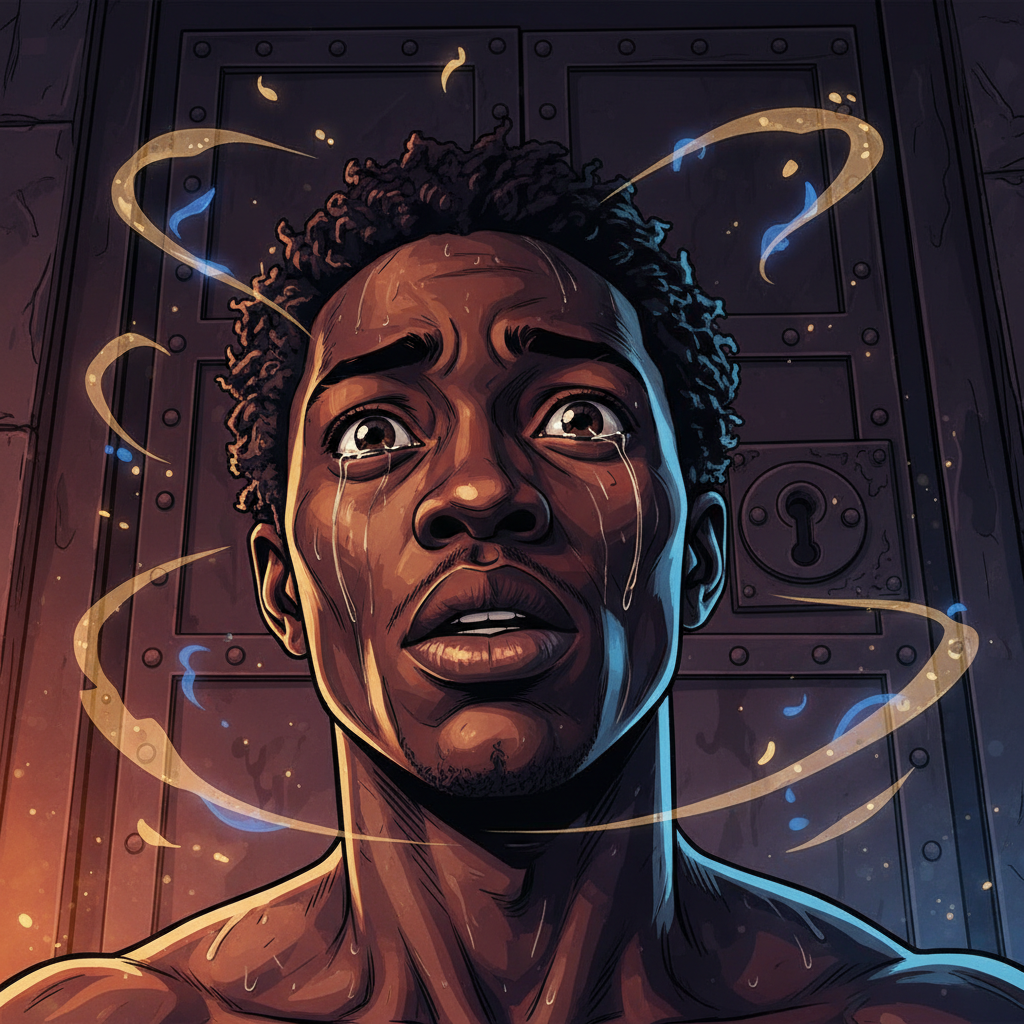
The silence returned, but this time it was different. It wasn't filled with his own burning anger, but with the echoes of Akili's story and Sekani's gentle but firm words about carrying weight. Taharqo's breath hitched. He realized that opening the door would be far harder than locking it. Locking it had been an act of anger, driven by the hot impulsiveness of Isfet. Opening it would require courage, humility, and a willingness to face his shame and seek harmony. It would mean admitting he was wrong, not just to Sekani, but to himself. It would be an act of Maat, restoring balance.
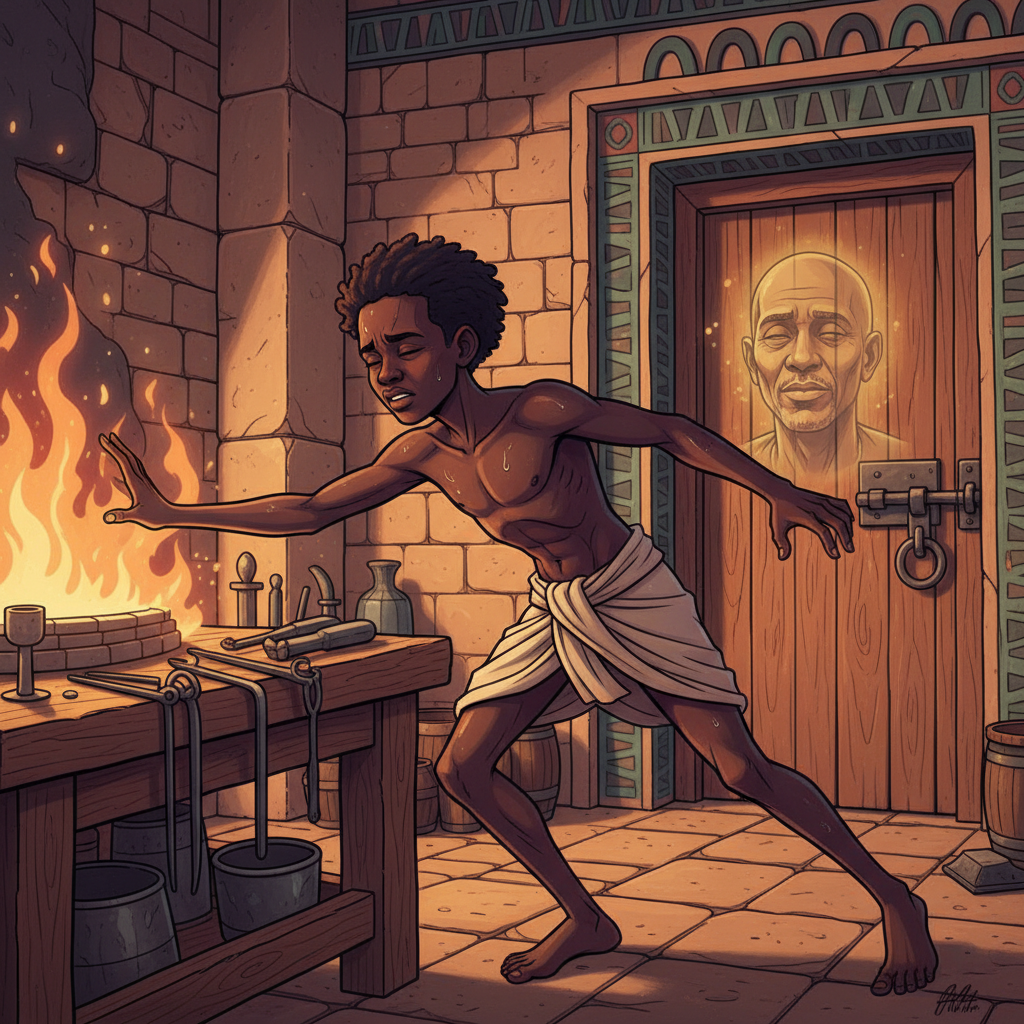
His legs felt heavy as he pushed himself away from the workstation. Each step towards the door was a struggle, like walking against a strong current. His chest ached with the effort of fighting his own stubborn pride. He reached the door, his hand hovering over the heavy wooden bolt. It felt impossibly heavy, refusing to move. He closed his eyes, took a deep, shaky breath, and pictured Sekani's face, not in anger, but in the calm wisdom he usually showed. He remembered the principle of Harmony, of finding balance even when emotions raged like a storm.
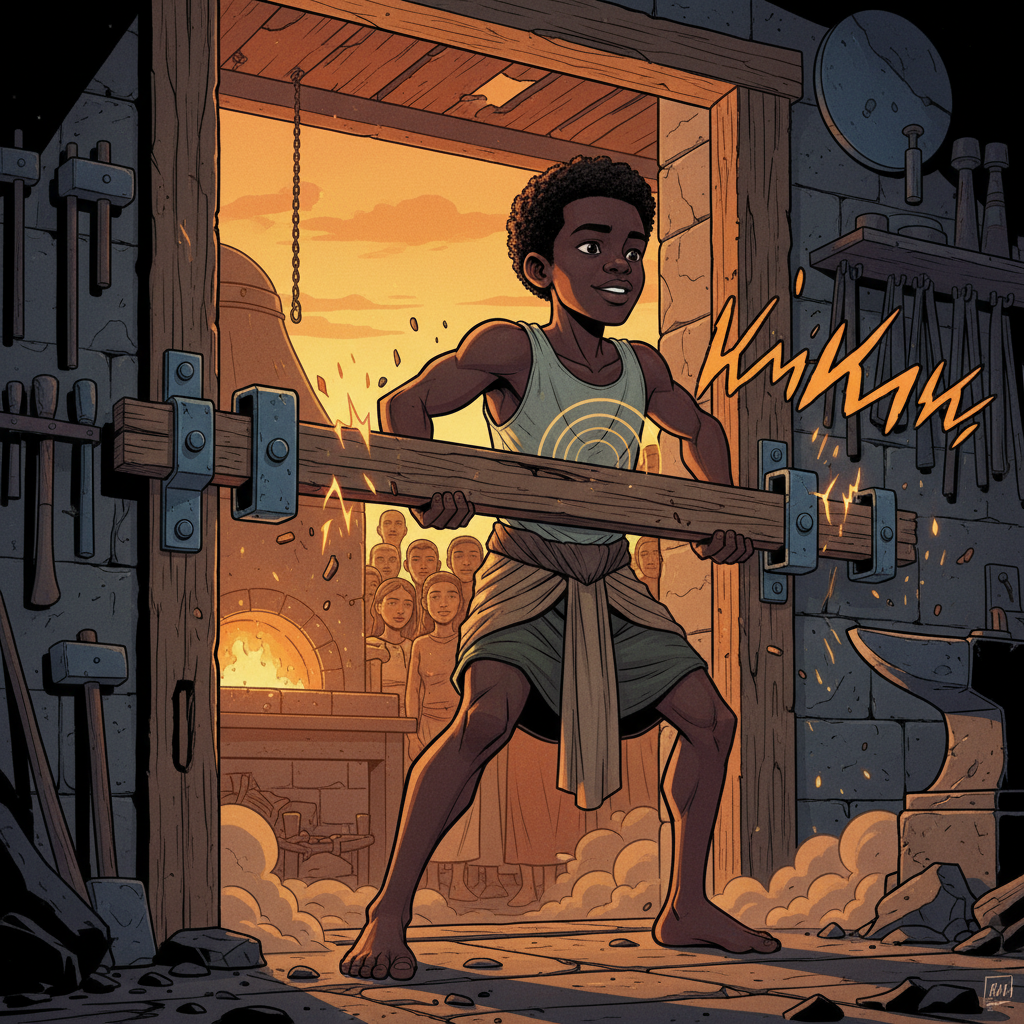
With a surge of determination, Taharqo gripped the bolt. He pulled it with all his might. The wood grated against the iron brackets, a loud, protesting screech that filled the silent forge. The sound was raw, unrefined, but it was the sound of a barrier coming down. The heavy beam slid back, away from its locking position. He could feel the eyes of everyone outside, waiting. His heart pounded like a drum, but this time, it was a drum of anticipation, not fear. The hardest part was done; the decision to open had been made, and now the physical act followed, swift and true.
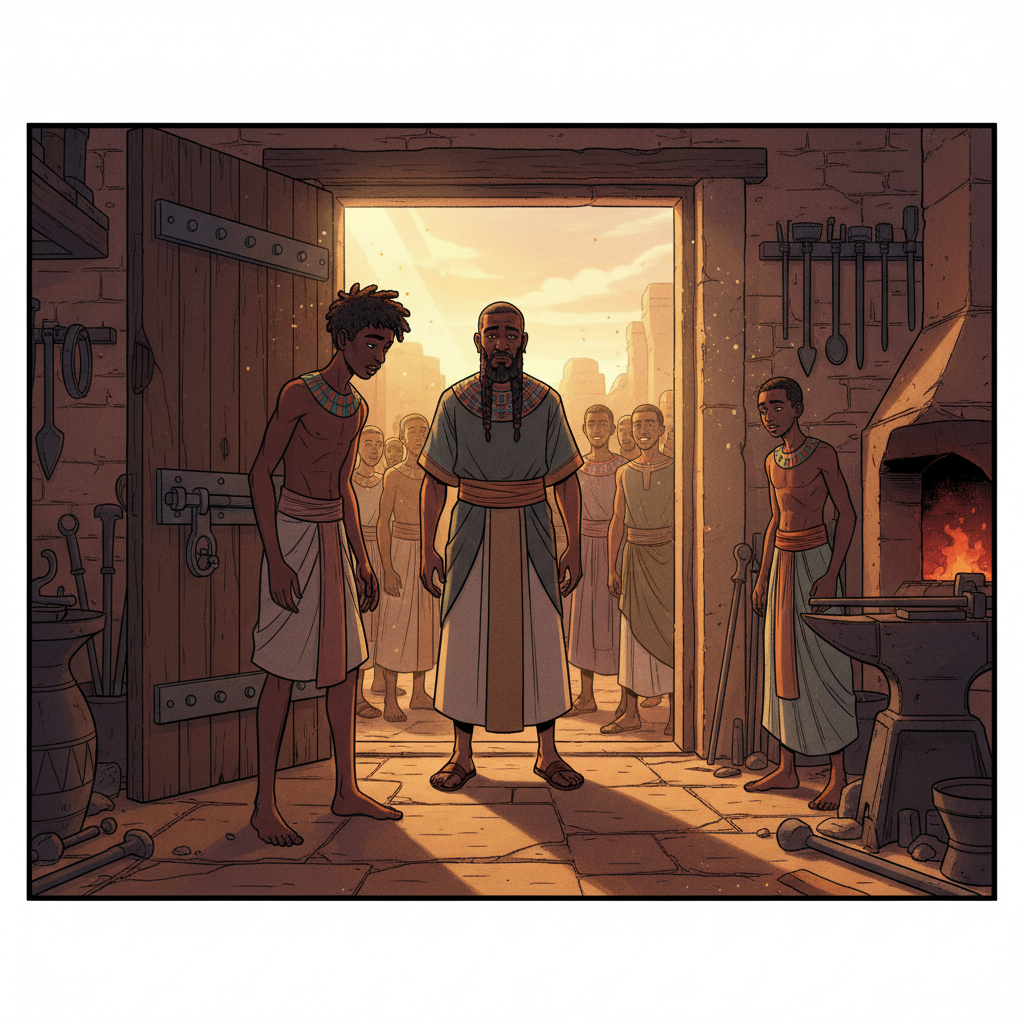
He pushed the heavy timber door inward. A flood of daylight and fresh air rushed into the forge, chasing away the gloom and the stale, angry air. Master Sekani stood directly in front, his face unreadable but his eyes kind. Akili and the other apprentices stood behind him, their expressions a mix of relief and curiosity. Taharqo didn't look at them. He looked only at Sekani, his throat tight, unable to speak. The master simply nodded, a slow, understanding gesture that spoke volumes. There was no lecture, no further scolding, just a quiet acknowledgment of Taharqo's return.
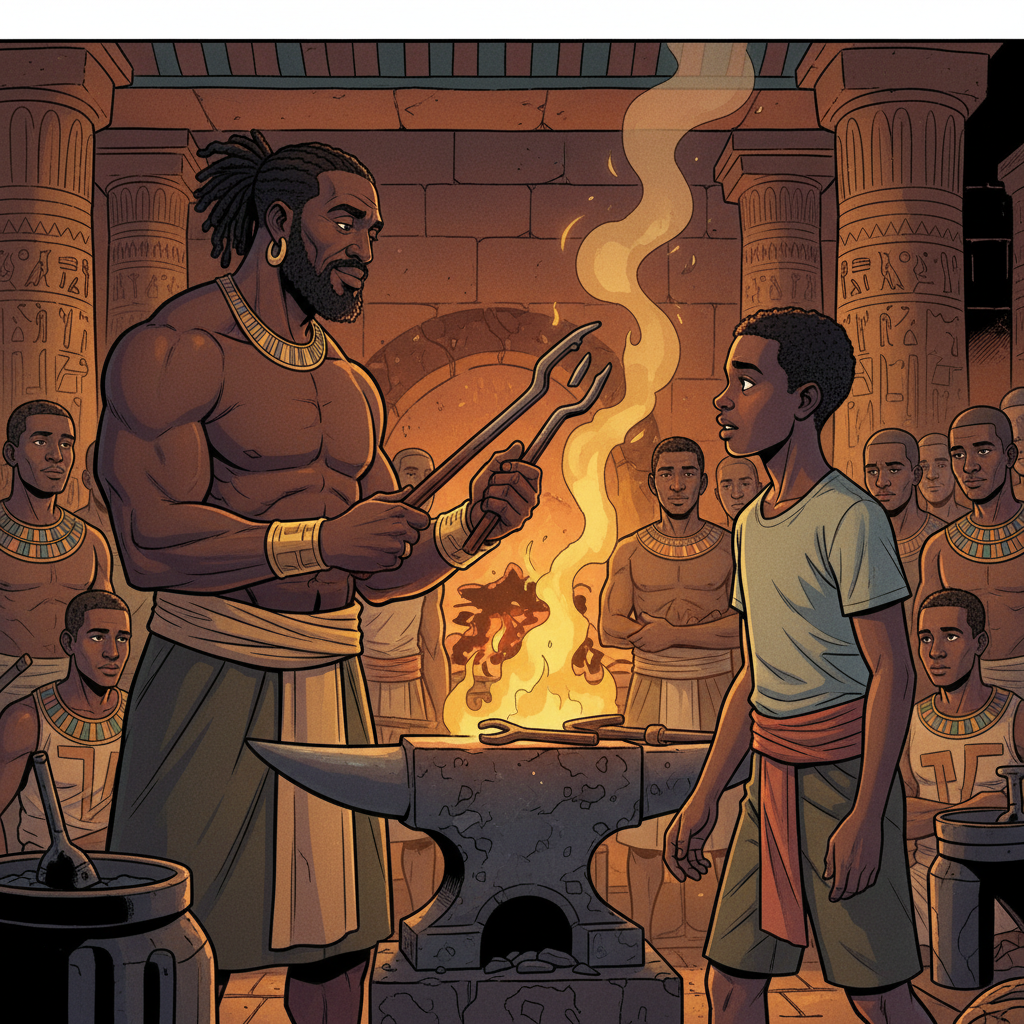
Sekani then turned and walked to the anvil, picking up the flawed tongs. 'Taharqo,' he said, his voice back to its usual calm authority. 'Let us re-examine this. We will work on it together.' He didn't say 'you will fix it', but 'we will work on it'. Taharqo felt a wave of profound relief wash over him, melting away the last remnants of his rage. This was the harmony he had unknowingly sought. He understood now that facing mistakes with others, rather than hiding, was the true path. It was a path of Maat, not Isfet. He walked towards the anvil, ready to learn, ready to mend, ready to truly belong again.
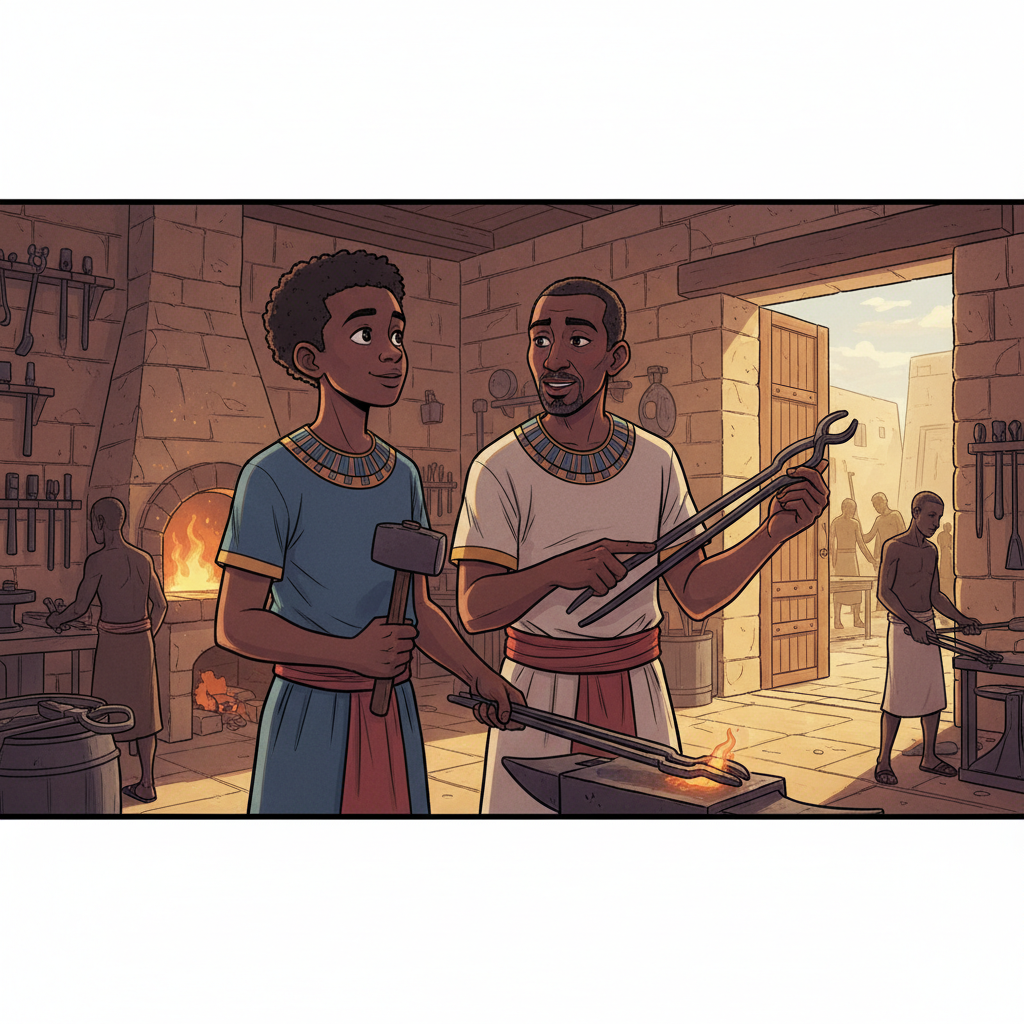
He picked up his hammer, its weight familiar and comforting in his hand. The forge-master began to explain, not harshly, but with patience, the exact technique for a perfect weld. Taharqo listened, truly listened this time, his mind clear and open. He knew this would not be easy, but he also knew he was not alone. The sounds of the forge, the clang of metal, the roar of the fire, the steady rhythm of work – they no longer mocked him. They welcomed him back into their embrace, a chorus of purpose and community. Harmony had been restored, not just in the workshop, but within Taharqo's own heart.