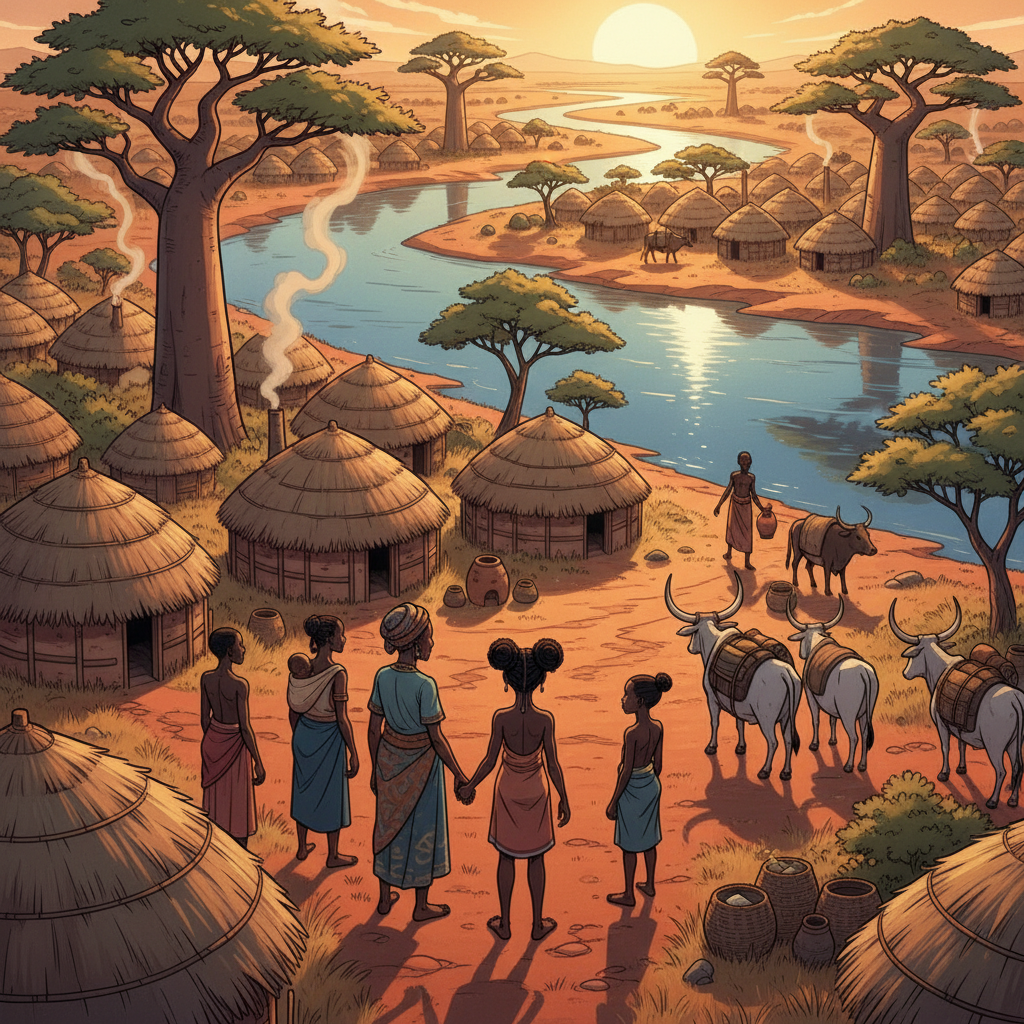
Nzinga was ten years old and had been walking south, with her family and her family's cattle, for as long as she could remember. Her skin was deep brown, her hair was in tight coils gathered into two thick knots above her ears, and her feet were tough from years on the dusty paths. Her family was the second generation born on the move. Her grandmother had been born back home in the Niger-Congo country, far to the north and west. Her mother Nzuri had been born on the road. Nzinga had been born under a baobab tree somewhere east of the great lakes, and she did not even know the name of the place. Her family kept the iron-smelting forge alive as they moved, packing the small clay furnace into pieces on the back of their strongest ox.
They were not refugees. Nzinga had heard travelers use that word about them once and her mother had laughed quietly and said no, no, they were not running from anything. They were carrying something. They were carrying iron. The teacher Obenga, in books that would not be written for a thousand years, would say that all the tongues of the wide southern land came from one tongue — and that the slow southward walk of the Bantu people was the carrying of that tongue, and of iron-smelting, and of cattle-keeping, and of sorghum agriculture, into lands that did not yet know them. Nzinga's grandmother had taught her three things every child of the family learned: the names of the cattle, the words of the migration songs, and the smell of good iron-ore.
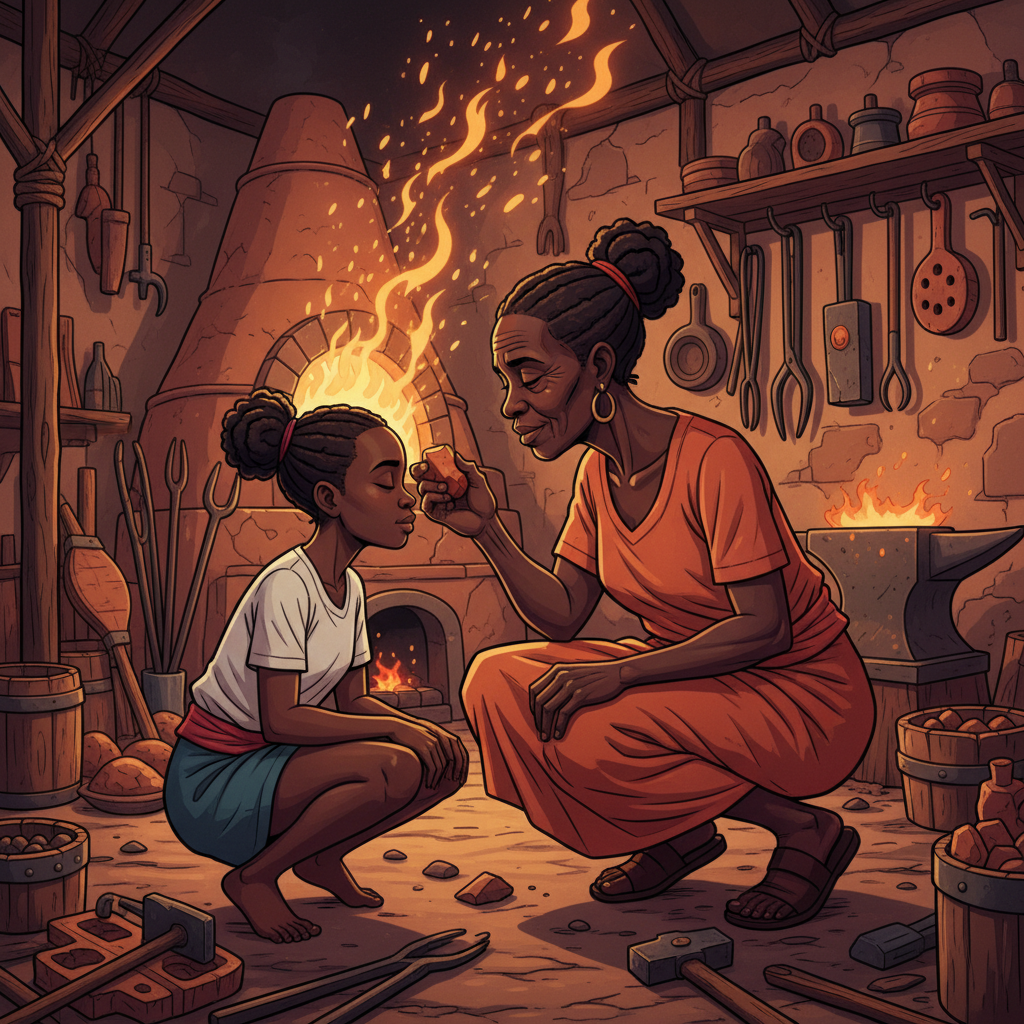
Nzinga's mother Nzuri was the family's iron-smelt keeper. She was the one who fired the small clay bloomery every time the family stopped in one place long enough — sometimes a week, sometimes a season. Nzuri was thirty years old, with strong shoulders and the same scarred hands every iron-smelter had, and she could read the color of the flame the way Nzinga's father read the color of the cattle's hides. She would crouch beside the bloomery and watch the air-pumps work and say things like, "Hotter. The bellows-keeper is tired. Switch with him." And someone would. Nzinga had been the bellows-keeper since she was seven. She was small but tireless. Her older cousin Lubaya was the family's lead scout — fifteen years old, the family's eyes ahead of the herd, the one who walked an hour in front and looked for water and for trouble.
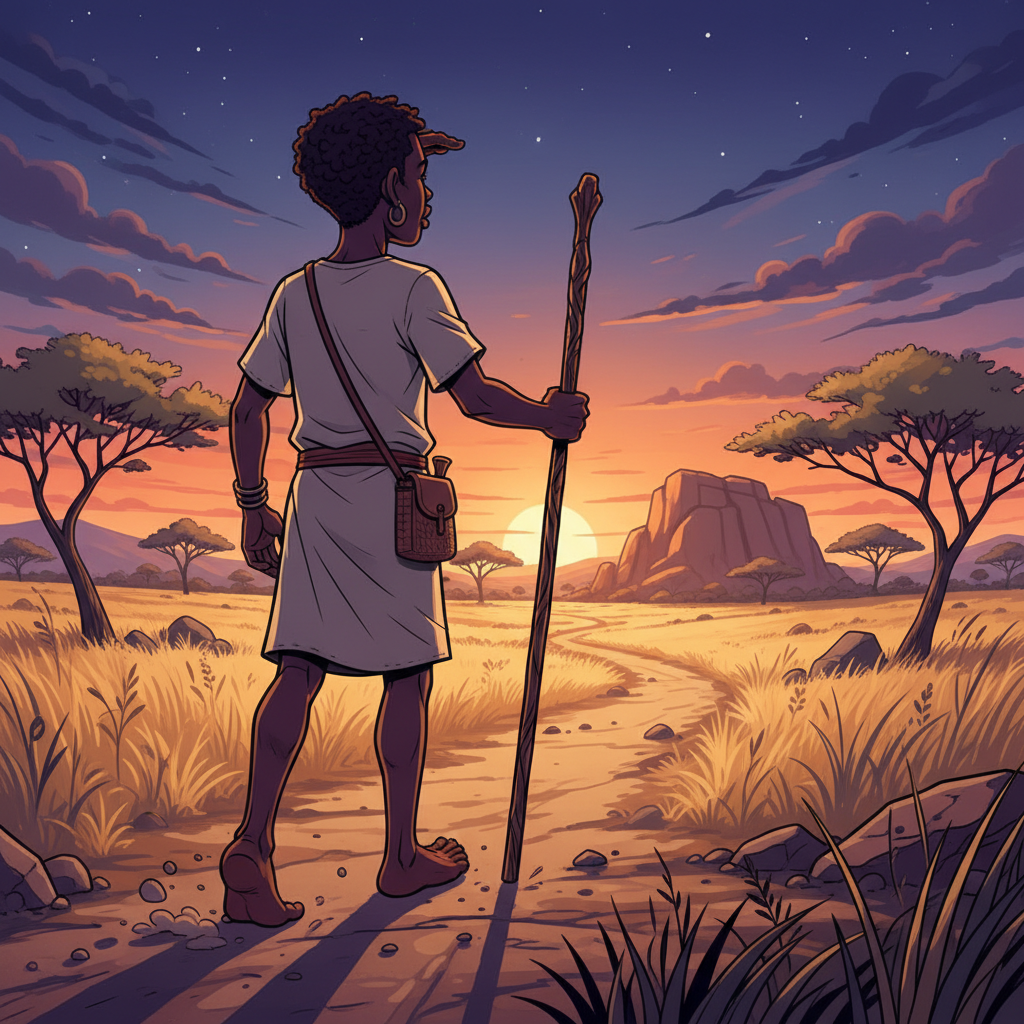
On the morning the story began, Lubaya came running back from the front of the column with her walking-stick still in her hand. She was breathing hard but her face was calm. "There are people," she said. Mother Nzuri stopped the column. Nzinga's father called the cattle into a tight cluster. Lubaya pointed east. "At the edge of the forest. Twenty of them. Maybe twenty-five. They have seen us. They have not moved." Mother Nzuri did not look afraid. She looked thoughtful. "Are they hunters?" Lubaya shook her head. "They have planting-knives. They have children with them. They are a family-group. They have a forge — I can smell the cold ash on them, but it is not iron-smelting ash. It is wood-fire ash. They are not iron-people. They are forest-farmers. Grandmother's trade-songs would name them Bashima — the People-Of-The-Tall-Trees in the proto-Bantu old words. We have not met the Bashima before." Mother Nzuri nodded slowly. "All right. Let us see them."
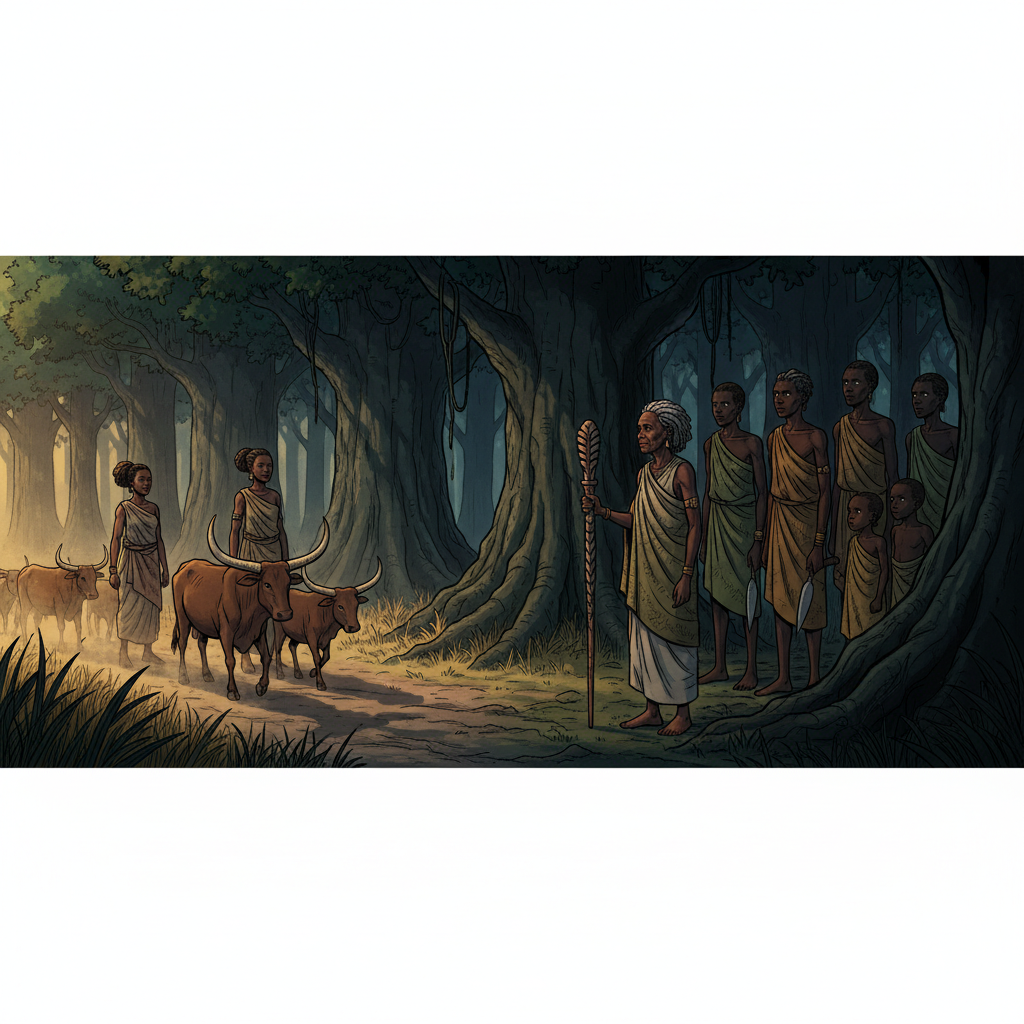
The family walked the cattle slowly forward to the edge of the great forest. The forest-people were waiting in a half-circle, just inside the tree-shadows, their planting-knives held loosely at their sides. They were taller than Nzinga's family on average, and their skin was the very deep dark brown of people who lived under tall trees. They wore wrap-cloths of woven raffia. Their children — three of them, all about Nzinga's age — stood at the back of the half-circle and stared at the cattle, which they had clearly never seen up close. At the center of the forest-people's half-circle stood an older woman. She was perhaps sixty years old. Her hair was silver-streaked, gathered in tight white-streaked coils, and she leaned on a tall walking-staff carved with what looked like rows of small leaves. Her eyes were very steady. She did not speak. Nzinga's mother did not speak.
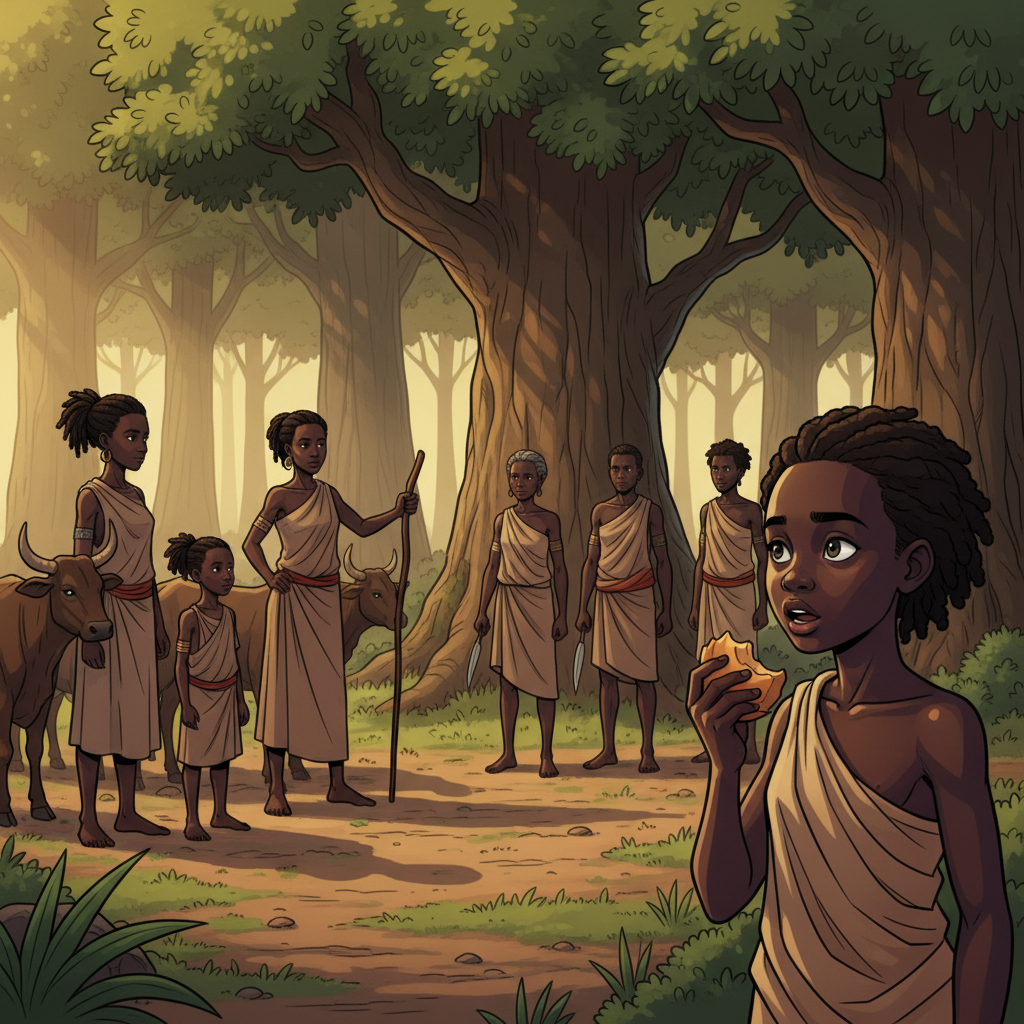
The two groups stood and looked at each other across the clearing's edge for what felt to Nzinga like a very long time but was probably only the count of forty heartbeats. Behind the older forest-woman, one of the children — a girl of about ten with bright watching eyes — was holding a half-eaten piece of yam in her hand. She had stopped chewing. Nzinga was watching the children. She was thinking that the forest-people's children were watching her family's children — Nzinga and her two younger cousins — with the same wariness as the adults. Nzinga's mother had taught her: if you want to know what an adult is going to do, watch the child standing next to them. The child shows the truth that the adult's face is hiding. The forest-girl's wariness was real. But it was not anger. It was just not-knowing.
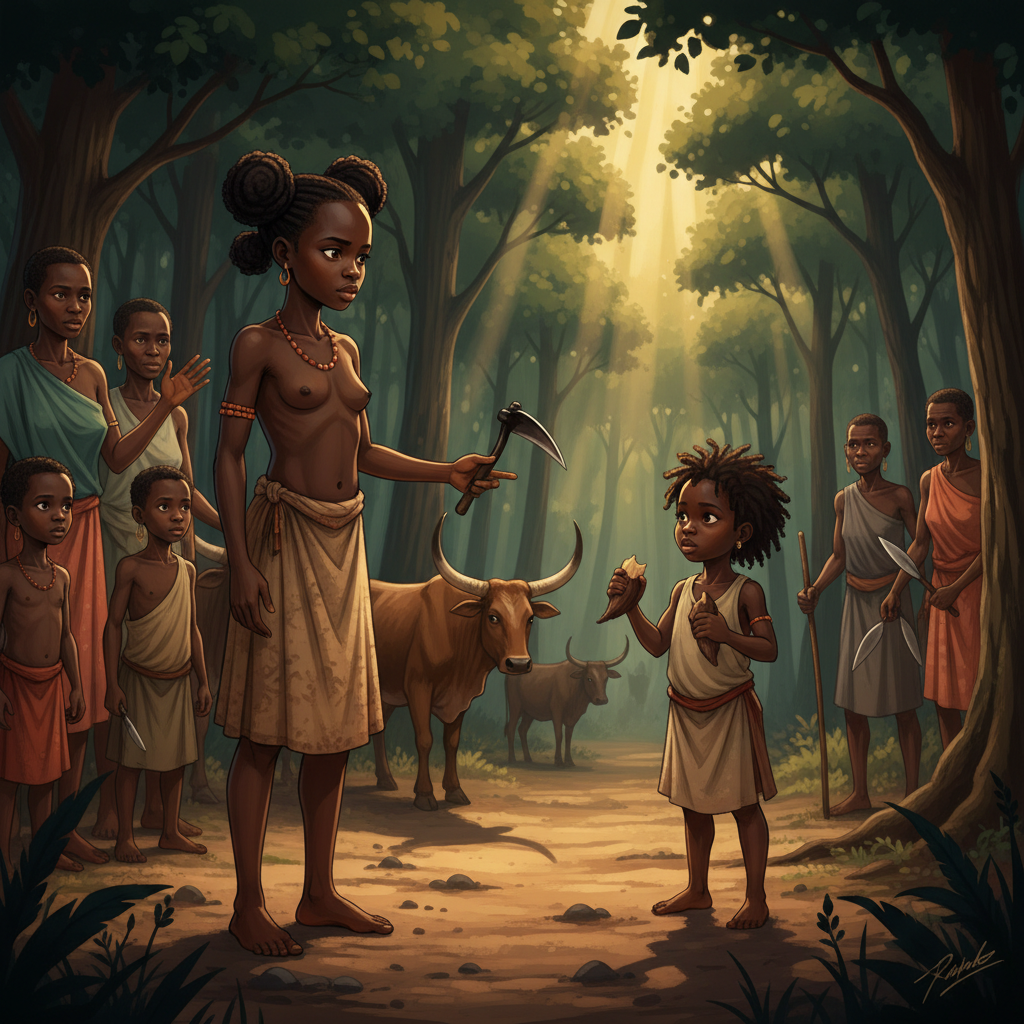
Nzinga stepped forward. She had not planned to. Her mother did not stop her — Nzinga could feel her mother's hand lift slightly behind her but not catch her arm. Nzinga walked five steps into the clearing, not toward the older forest-woman but toward the forest-girl with the half-eaten yam. She stopped at three paces from the girl. She held out her right hand, palm-up. In her palm sat a single small black iron hoe-blade — a piece her mother had finished at the last bloomery firing two weeks before. The iron was good iron, cleanly forged, the cutting edge sharpened. It was a real gift, not a toy. The open-palm offering was old in Nzinga's family. Her grandmother had taught her: when meeting people you do not yet know, you offer the hand without a weapon, the blade laid flat across the palm with the iron facing yourself, never them. It was the migration-gesture of trust the proto-Bantu line had been giving for generations. The Bashima would not know the words for it. But the gesture would be older than words. Nzinga had taken it from her own carrying-pouch without permission. She held it out. She did not speak. She was not sure what to say in a language she did not know.
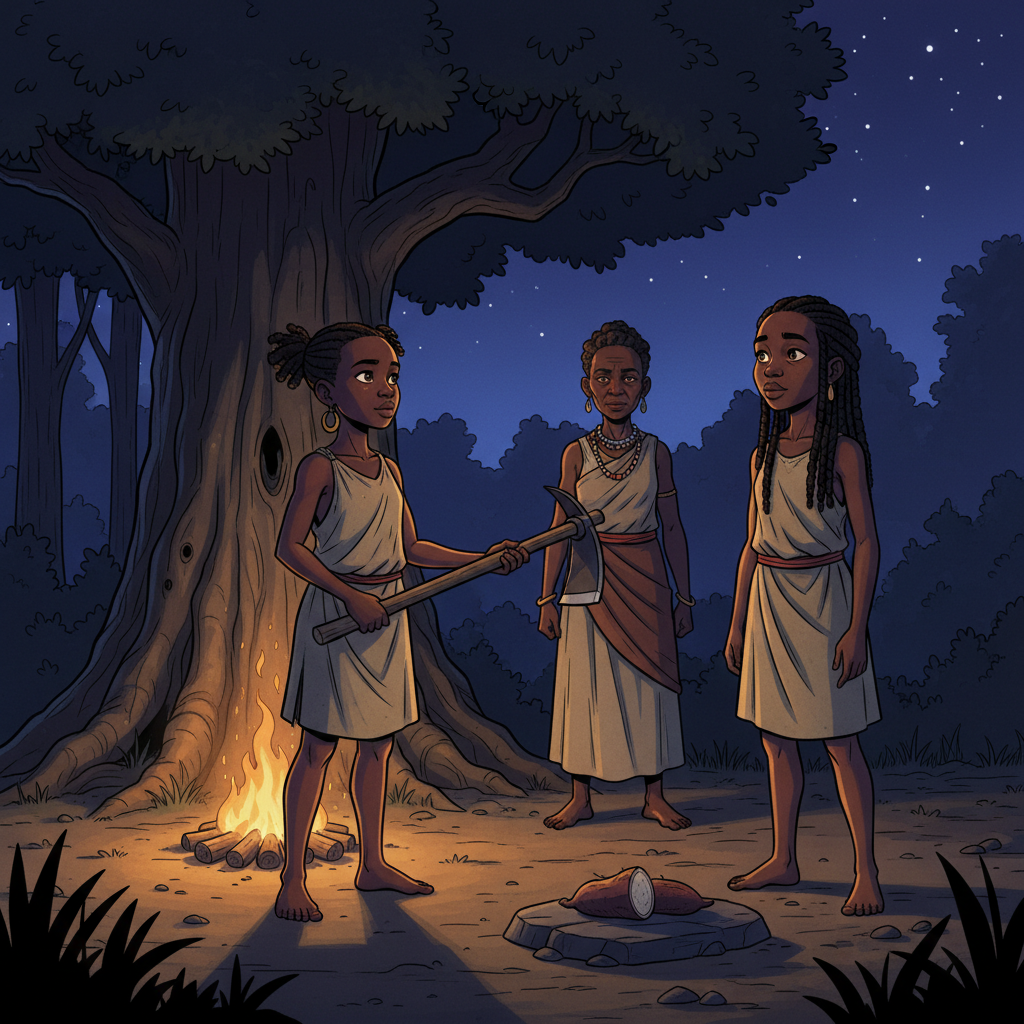
The forest-girl looked at the iron hoe-blade. Then she looked up at the older forest-woman behind her. The older woman moved her chin one small fraction — a permission, very quiet. The forest-girl set down her half-eaten yam on a flat stone at her feet and walked three paces forward into the clearing. She stopped in front of Nzinga. Up close she was taller, and her eyes were a warmer brown than Nzinga's, and her hair was twisted into many small braids that fell past her shoulders. She did not take the hoe-blade. Instead she reached into the small leather pouch tied at her waist and brought out a single dark brown nut — a kola nut, Nzinga realized, though the forest-people's kolas were a different shape than the ones Nzinga's grandmother used to chew. The girl broke the nut in half between her hands. She gave Nzinga the right half. She kept the left.
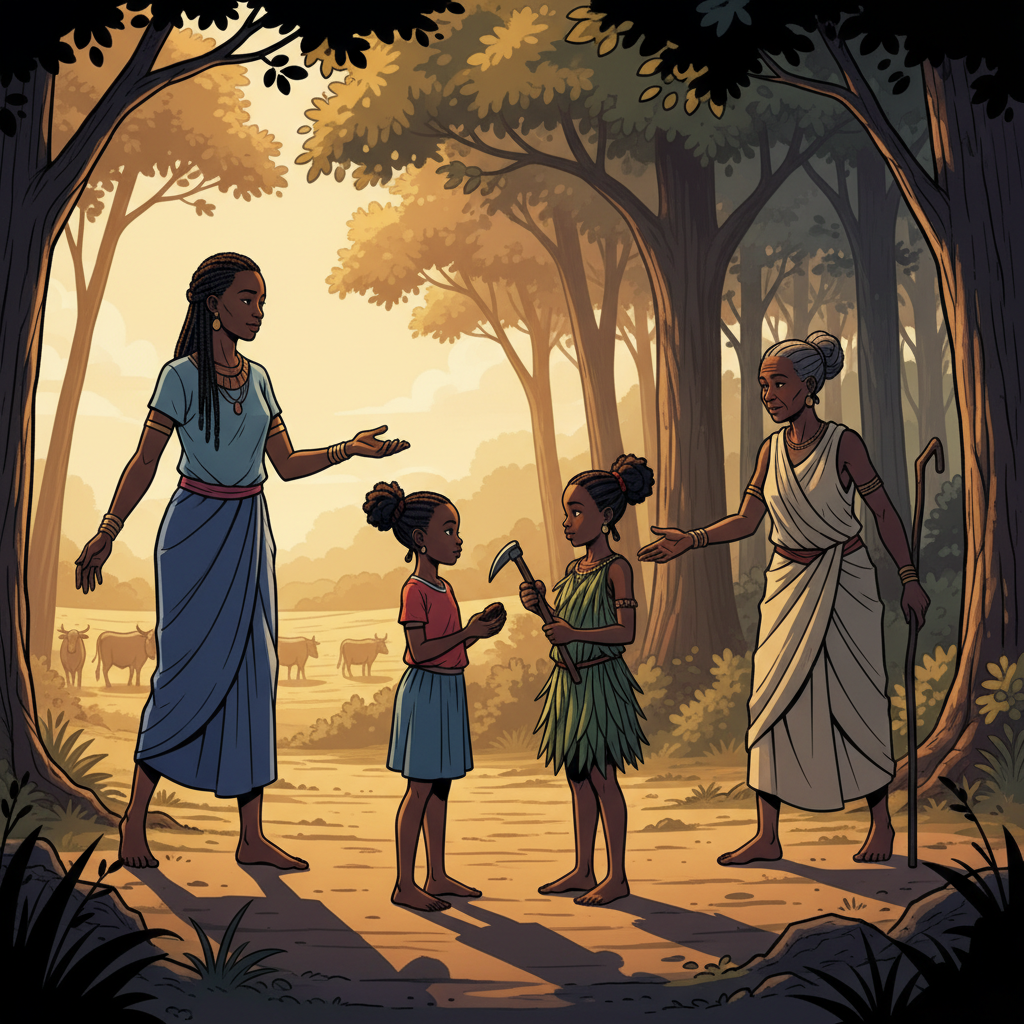
Nzinga held the half-kola in her left hand. She put the iron hoe-blade into the forest-girl's right hand. The girl closed her fingers around it. They stood for another moment. Then Nzinga's mother Nzuri walked forward, and the older forest-woman walked forward, and they met at the center of the clearing where the two girls were standing. The older woman spoke, in a language Nzinga did not understand. She gestured at the iron-blade in her granddaughter's hand. Mother Nzuri did not understand the words but she understood the gesture. She nodded. She made a smaller gesture toward the forest — the universal gesture of "show us your camp." The older forest-woman gestured back: come.
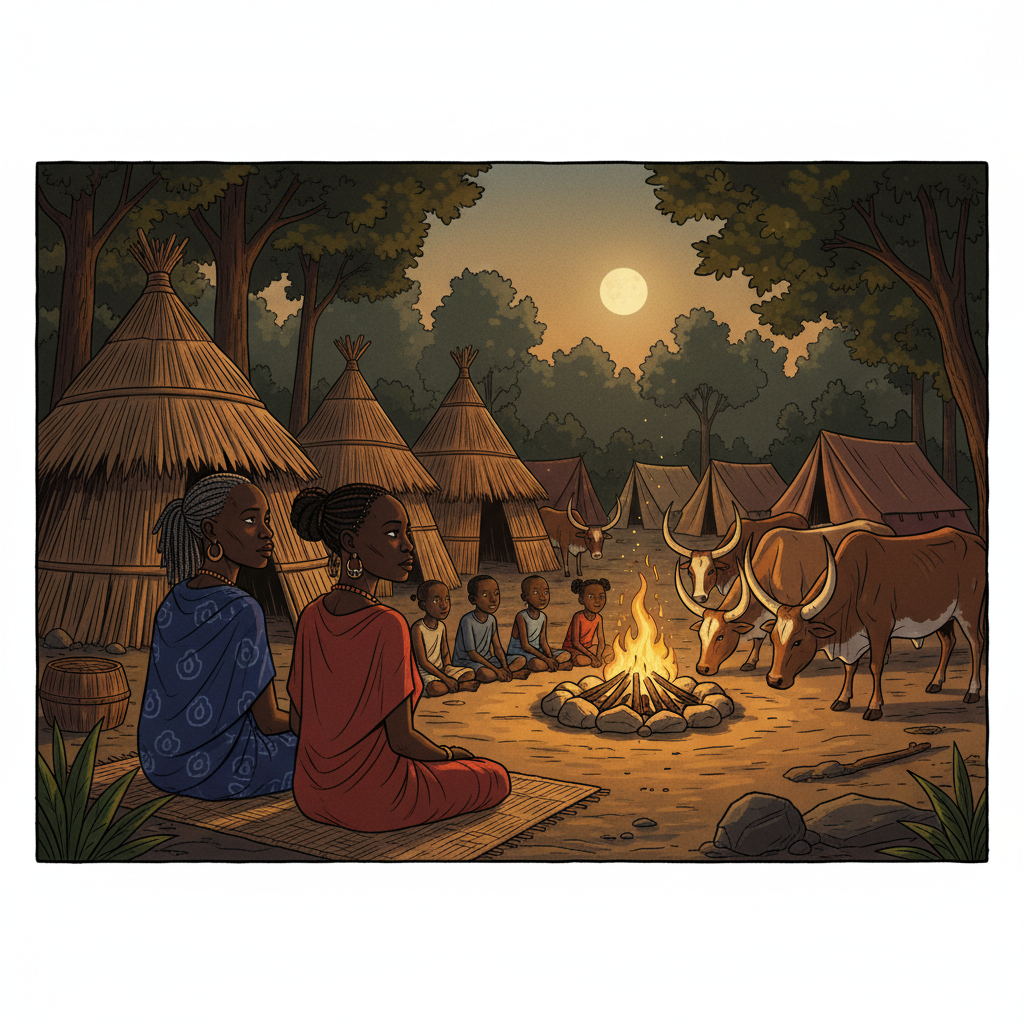
By evening the two groups were camping together in a clearing the forest-people had been using for several months. The forest-people's shelters were small woven cones of bent saplings and palm-fronds, set in a loose circle around a central fire-pit. Nzinga's family's tents — leather and reed, made for the open plains — went up alongside, at the clearing's edge. The cattle grazed at the meadow on the clearing's western side. The forest-people watched the cattle the way Nzinga's family had been watching them at the clearing's edge that morning — with curiosity, not fear. The older forest-woman, whose name Nzinga was learning was Mama Kibibi, came and sat beside Mother Nzuri at the cooking-fire. They did not speak. They both watched the children.
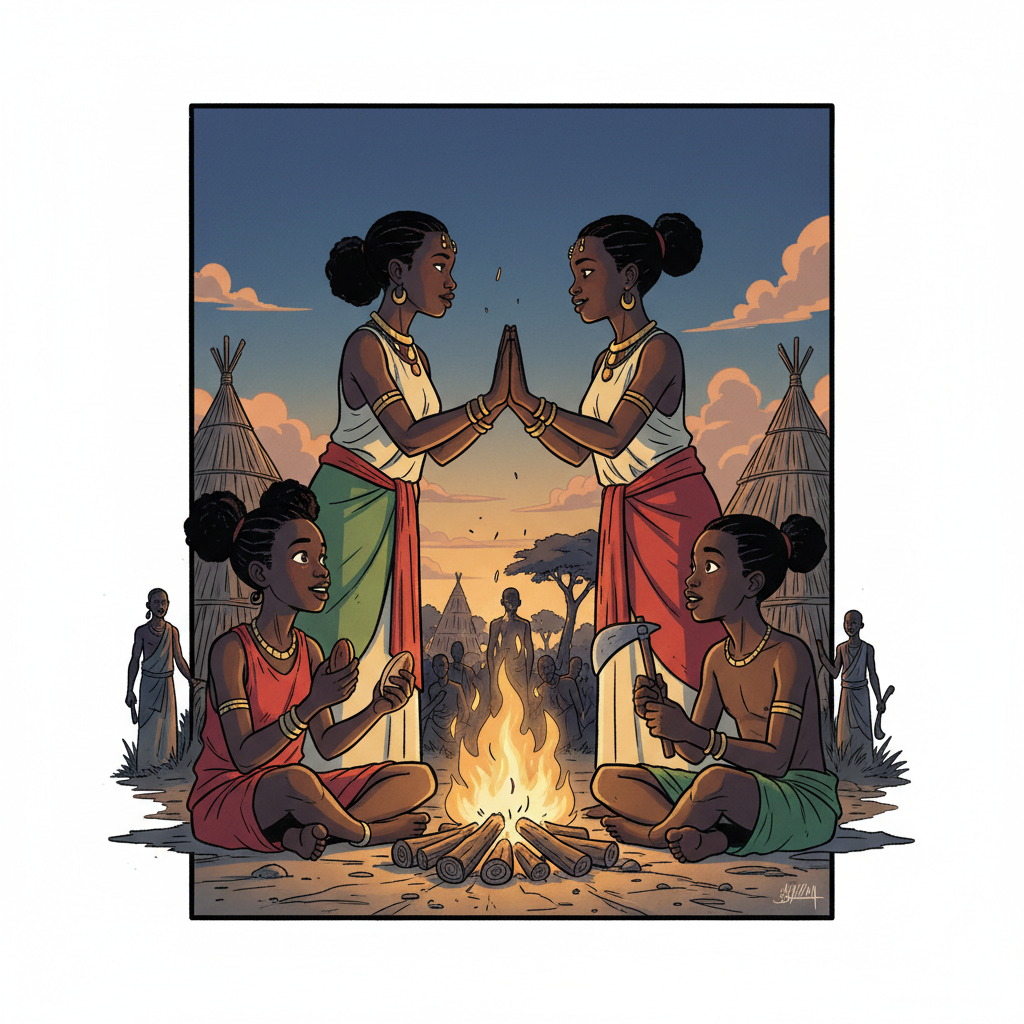
The children of both families were already friends. Nzinga and the forest-girl — whose name was Sefu — had been together all afternoon. Sefu had taught Nzinga the forest-people's word for water (maji, which was almost the same as the word Nzinga's mother used) and the word for cooking-fire (moto, which was different). Nzinga had taught Sefu the song her grandmother used to sing about the long road. They had played a small game with pebbles in the dust. Now they were sitting cross-legged together at the edge of the cooking-fire, watching the older women, holding the half-kola-nut and the iron hoe-blade in their laps. Mama Kibibi looked at Mother Nzuri. She made the gesture of two hands coming together — palms meeting. Mother Nzuri did the same. They held the gesture for a moment, then dropped their hands.
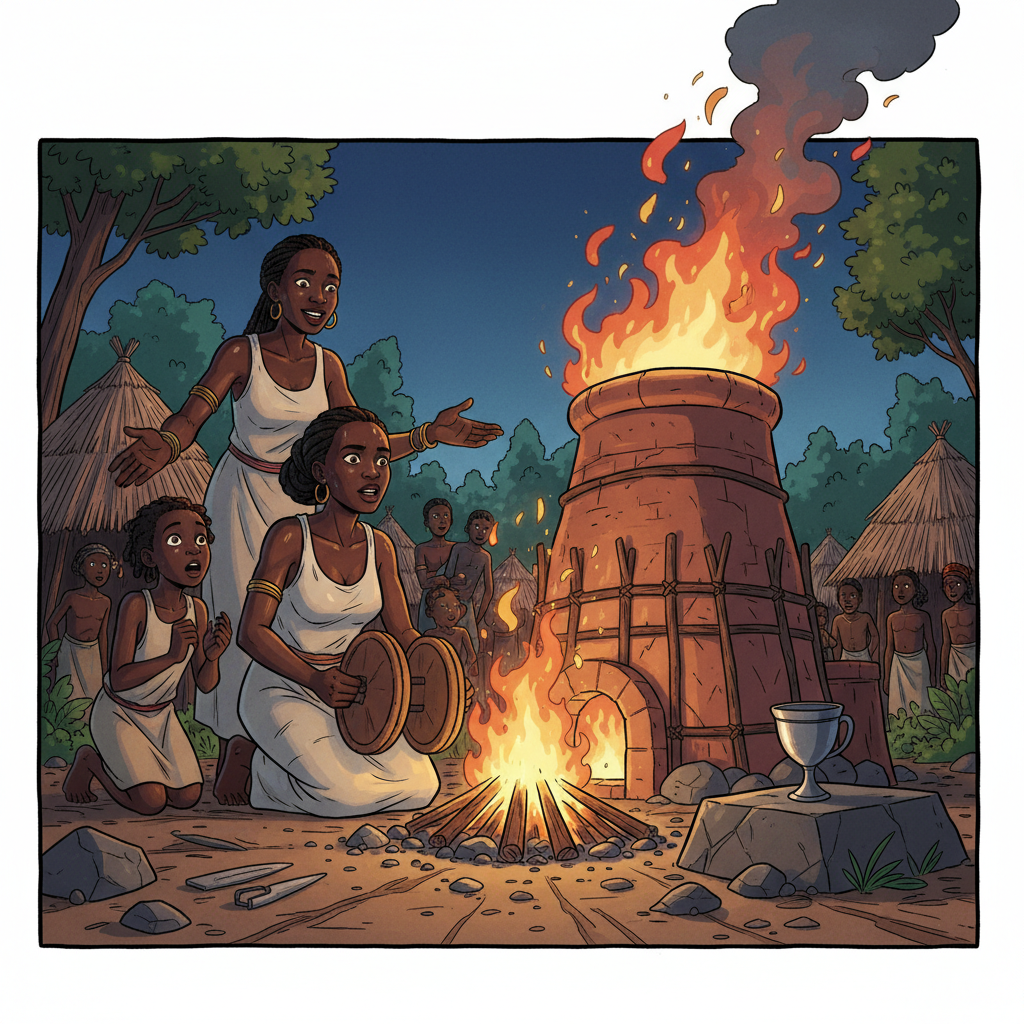
For the next four days the two groups stayed together in the clearing. Nzinga's mother showed Mama Kibibi's family how to fire the small clay bloomery. They built one near the central fire-pit. The forest-people had never smelted iron before — they had been using stone tools and traded iron when they could find any — but they understood fire and clay and bellows-work. They learned quickly. Mama Kibibi's sister, a woman about Mother Nzuri's age named Sister Aida, took to the bellows-work the way Nzinga had at seven — small steady hands, no panic when the flame jumped. By the third day Sister Aida was firing the bloomery on her own. By the fourth day a small clean cup of forest-people iron sat on a stone beside the bloomery, the first iron their family had ever made themselves.
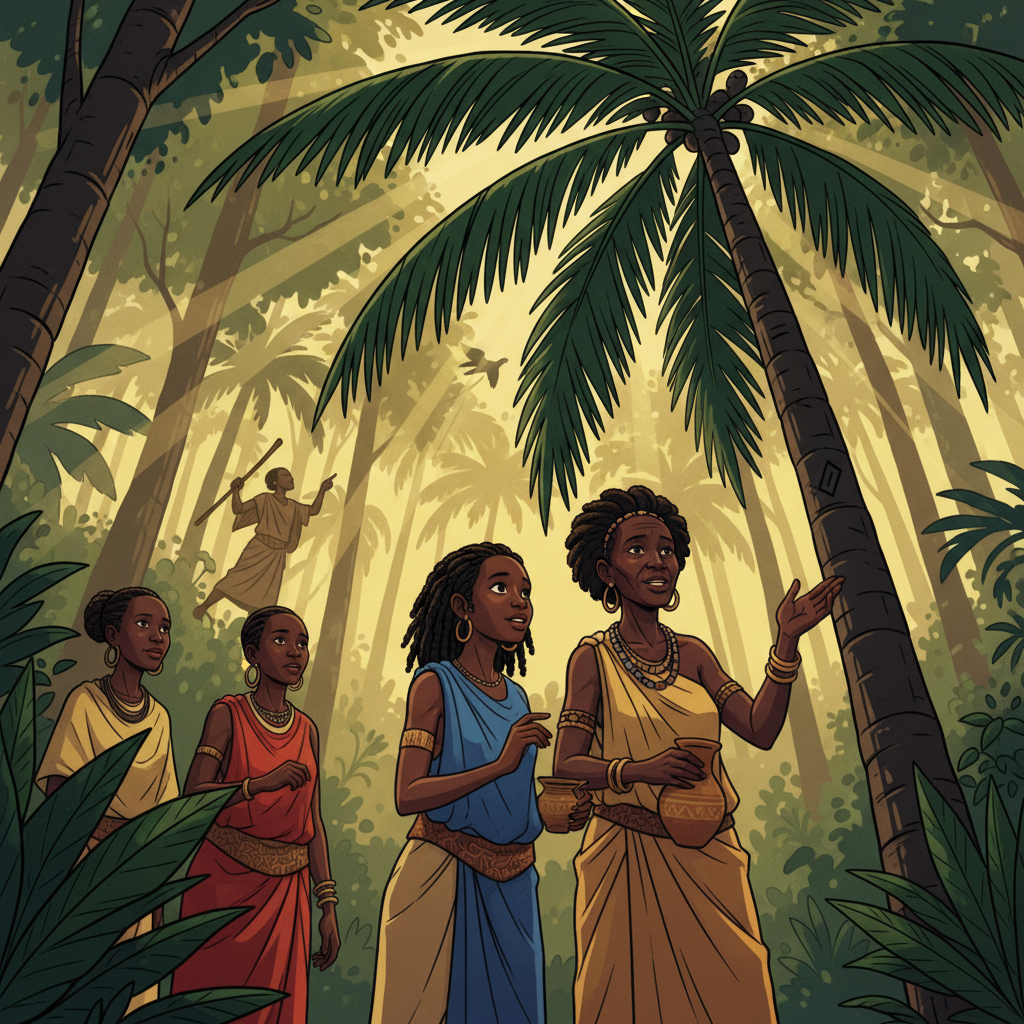
In return, Mama Kibibi's family taught Nzinga's family the forest. They taught them which yams could be roasted directly in the ashes and which had to be boiled. They taught them how to read the small marks at the base of a tree that meant a forest-pig had passed within the last day. They taught them the names of three different palm-trees whose oil could be pressed for cooking and lamp-fuel. They taught Lubaya, the scout, the bird-calls that meant safe-water and the ones that meant danger. Lubaya, who had spent her whole life on the open plains, learned the forest the way Sister Aida had learned the bellows. By the fourth day Lubaya could move through the trees so quietly that the forest-people's children laughed and said she had become one of them.
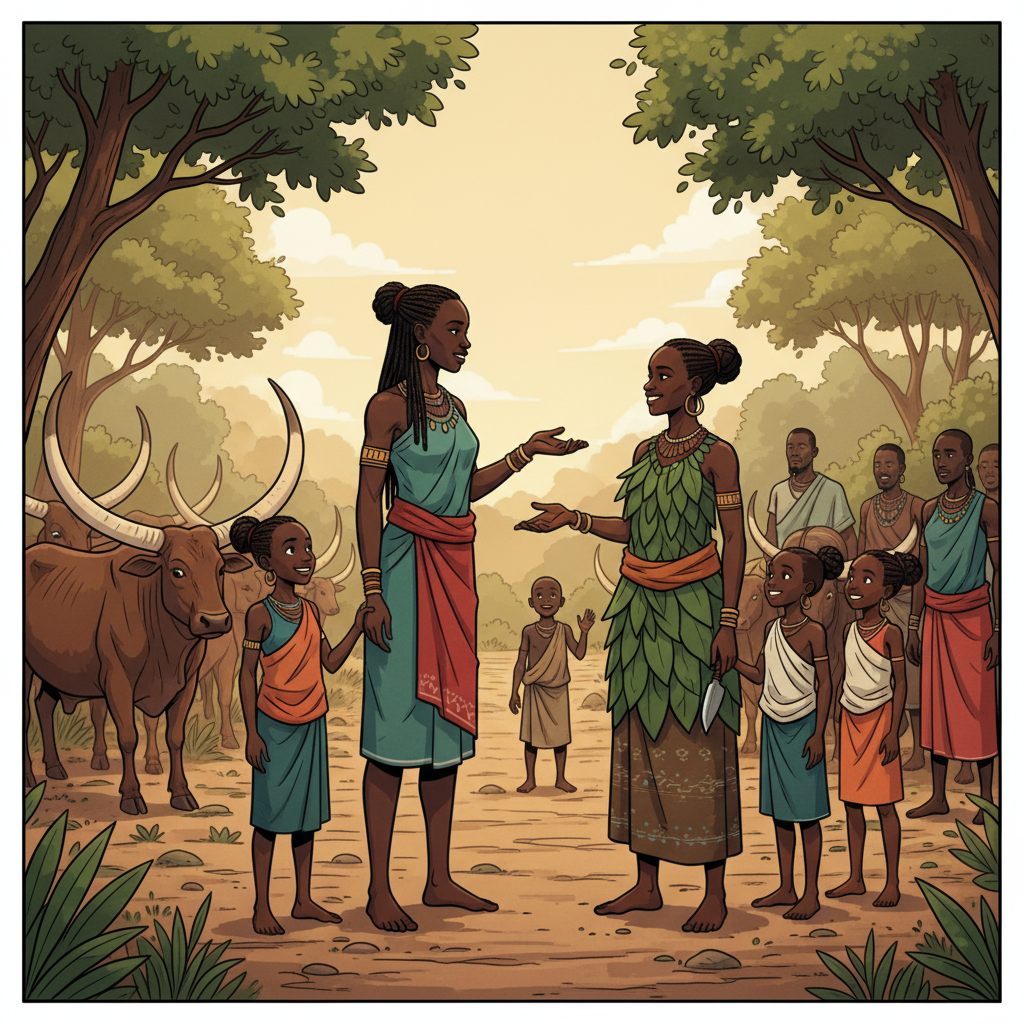
On the fifth morning Nzinga's family's ox was packed for the road again. The two groups were ready to part. But before they parted, Mother Nzuri walked over to Mama Kibibi and spoke through the half-language they had been building all week — pointing at the road south, gesturing at the iron-blade Sefu still wore tied to her wrap-cloth, gesturing at the cattle. Mama Kibibi nodded slowly. She gestured at Mother Nzuri's family. Then she gestured at her own. Then she gestured south. The two families would walk south together. Not as one merged family — they were still two — but as two families walking the same road. The forest-people would teach Nzinga's family the forest. Nzinga's family would teach the forest-people the iron. And the cattle would feed them all.
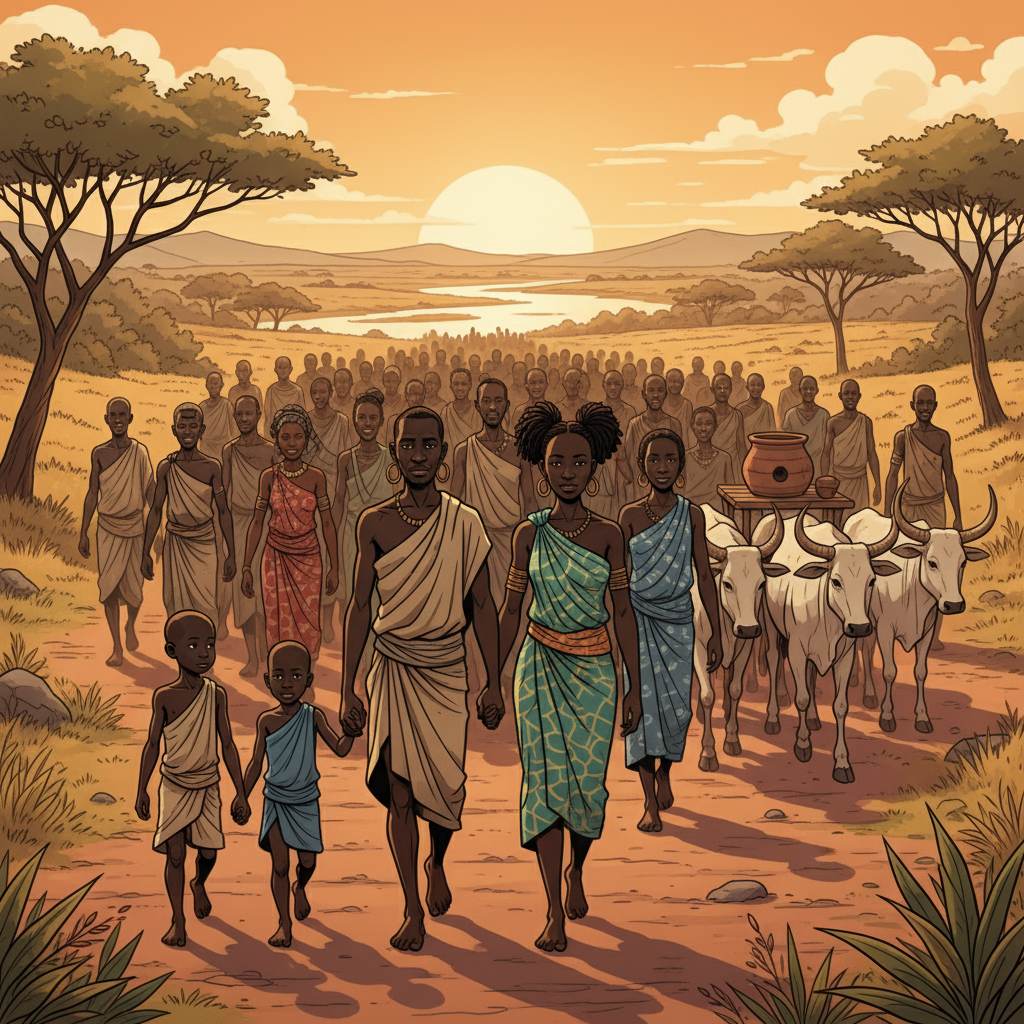
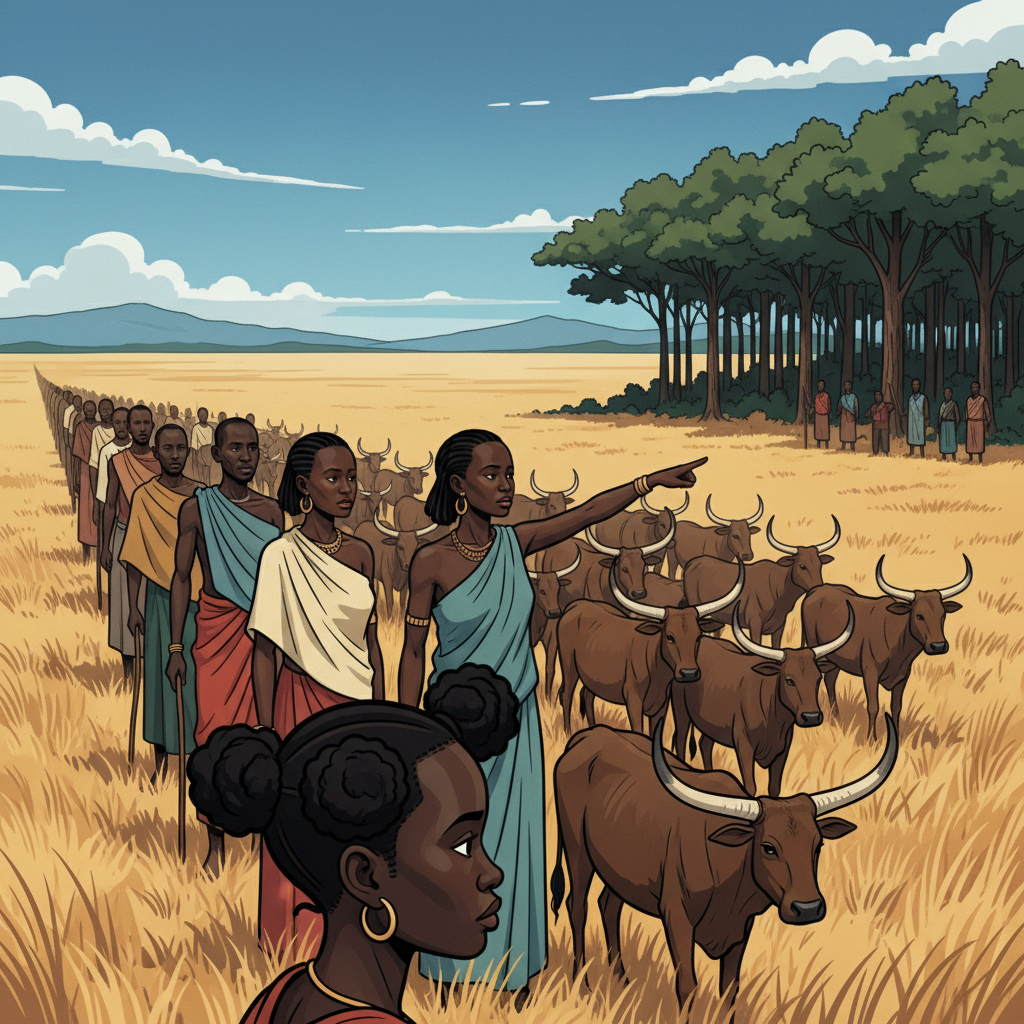
Fifteen years passed. Nzinga grew up. She married a young man from the forest-people's extended family — a quiet man named Tau who was Mama Kibibi's grandson. Sefu, who became Nzinga's closest friend, married a man from Nzinga's family. The two extended families had become one walking community, and the community had grown over the years as it had met other groups — some Bantu like Nzinga's, some forest-people like Sefu's, some who spoke languages none of them had heard before but who had recognized, in the way the extended community welcomed them, that the road was open. By the time Nzinga was twenty-five she was leading her own walk south — taking her own young family, plus Sefu's family, plus a third family that had joined them two years before from the east, plus twelve of the cattle, plus a small bloomery in pieces on the back of an ox. They walked south toward the great river that none of them had yet seen, and at the front of the column the children of all three families walked together, holding hands. Nzinga's mother had taught her, on the road, that all the tongues of the wide southern land came from one tongue. Nzinga had not understood it then. She understood it now. Harmony was the smaller hand offered first.