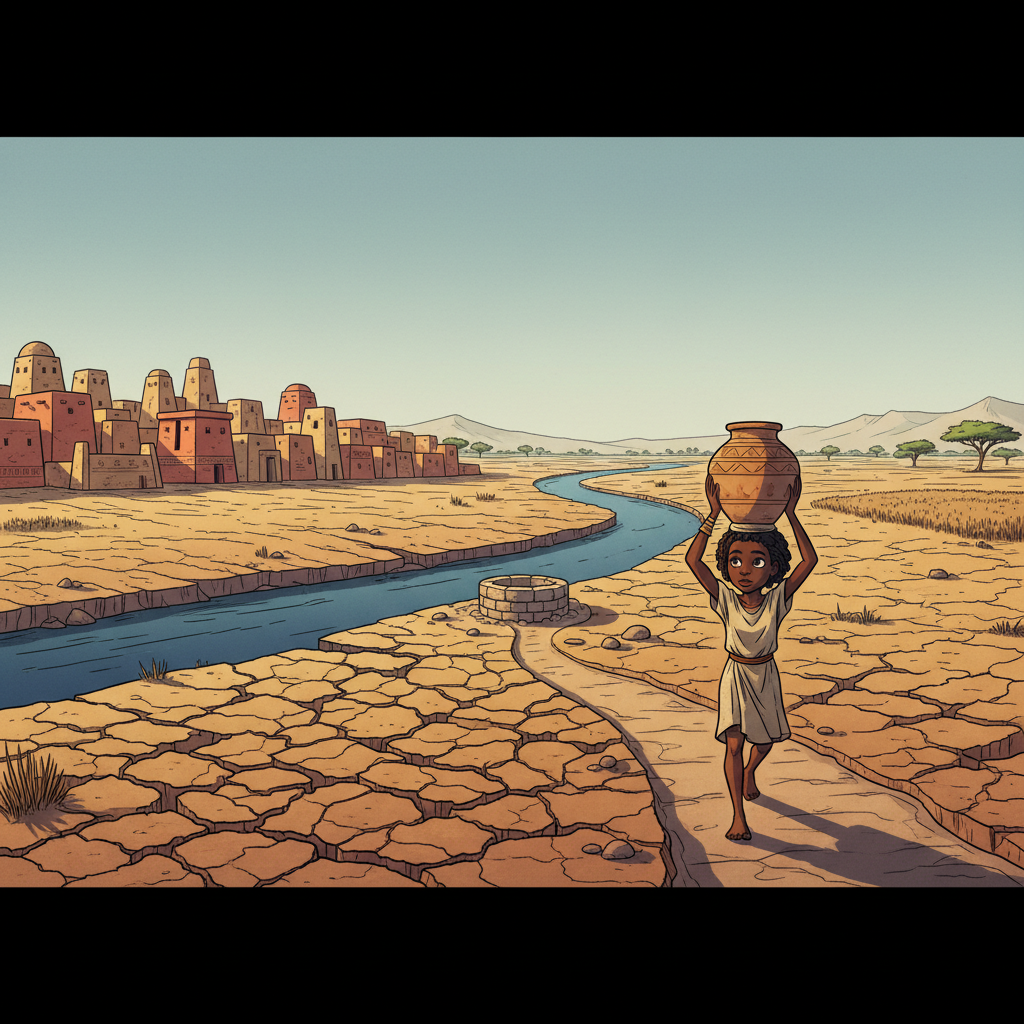
The rains did not come that year. The nile ran lower than anyone could remember, and the fields around the village of Nekhen cracked like old pottery. The mud that had been soft and dark after last year's flood was now pale and hard as stone. Even the birds had gone quiet, as if the sky itself was holding its breath. Dara, a ten-year-old girl with rich dark skin and sharp, watchful eyes, carried her water jar to the village well each morning. She walked the same dusty path her mother and grandmother had walked before her. The jar felt heavier each day — not because of the water inside, but because there was less and less of it.
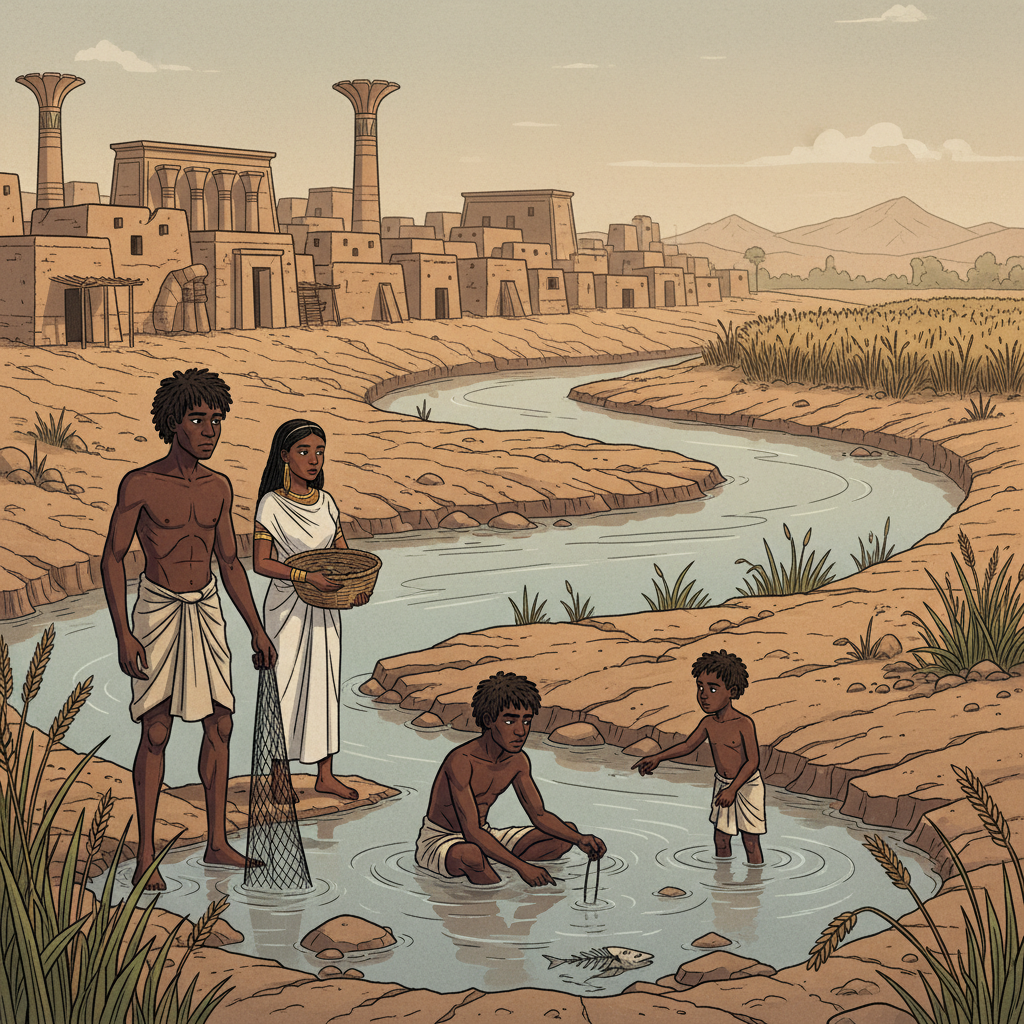
Nekhen had always been a proud village. It sat on a bend of the nile where the water once pooled deep and generous during the season of Akhet, the great inundation. Farmers grew emmer wheat, barley, and flax. Fishermen pulled tilapia from the shallows. Children learned their letters at the per ankh, the House of Life, where scribes taught the old knowledge passed down since the time of the first kings of kemet. But this year, the river barely whispered over the rocks. The fish were gone. The crops withered before they could be harvested, and the granaries held only dust and the memory of plenty.
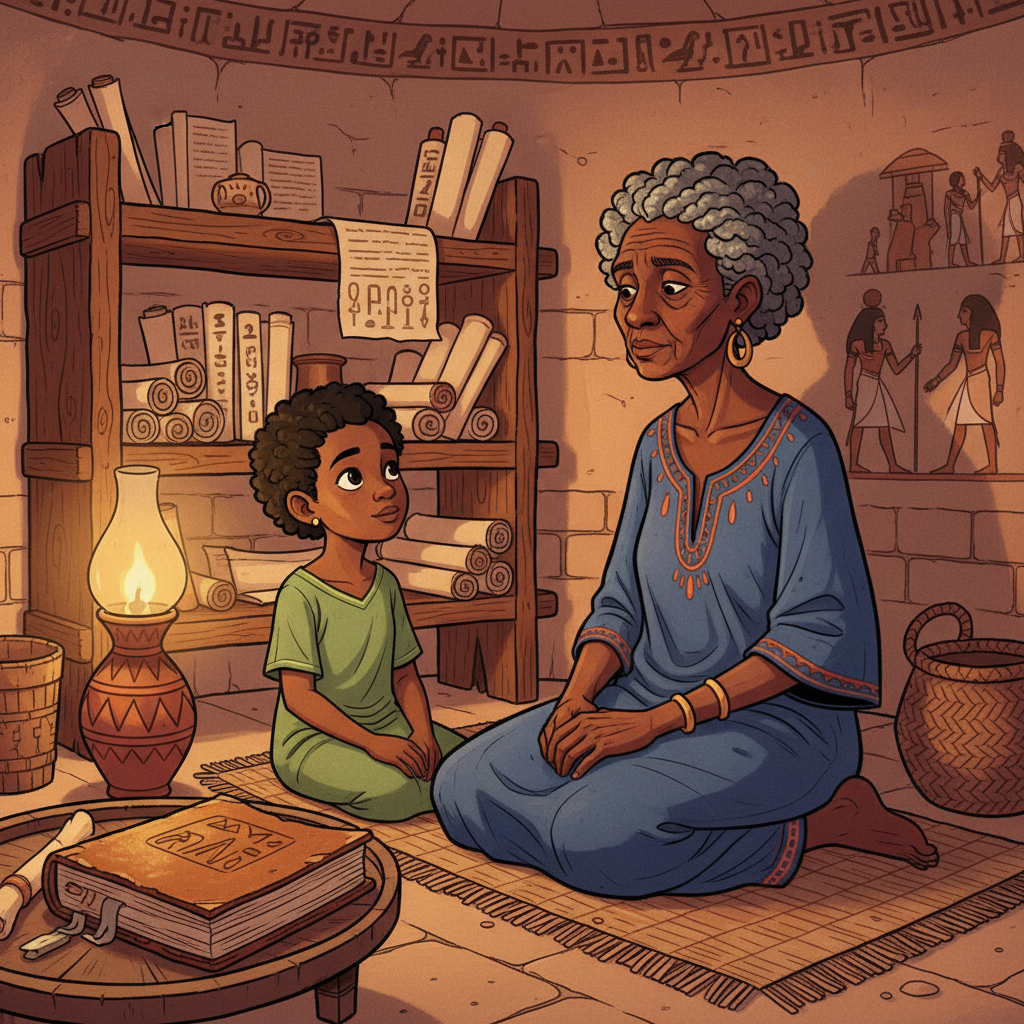
Dara's grandmother, Elder Nzinga, was the oldest woman in Nekhen. Her deeply lined ebony face held the map of every drought, every flood, every harvest she had witnessed in seventy years of living. She had been a teacher at the per ankh before her legs grew stiff, and she still kept a shelf of papyrus scrolls in her small mud-brick house. Dara loved to sit beside her in the evenings while Nzinga told stories of ancient kemet and kush — of the great dams the Kushite engineers built, of how the pharaohs stored grain for seven lean years. "The ancestors were not smarter than us," Nzinga would say. "They simply remembered that no one survives alone."
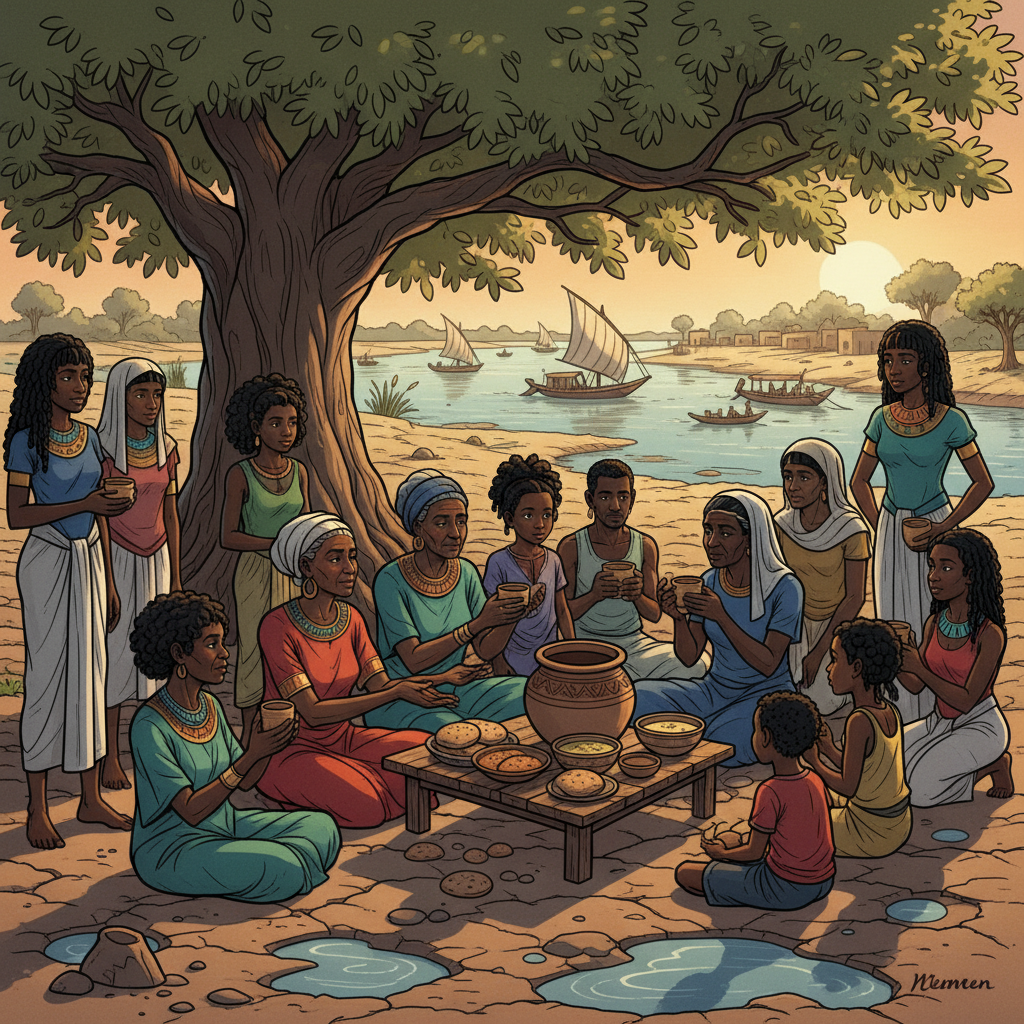
At first, the people of Nekhen shared what they had. Families brought their last jars of water to a common table under the great sycamore tree. Mothers divided bread so every child had a piece. The elders drank last, insisting the young ones drink first. This was maat — the ancient principle of balance, truth, and justice that had held communities together since the beginning. Dara felt proud of her village during those early days. She helped her grandmother carry lentil soup to a family whose father was sick. She watched neighbors mend each other's cracked irrigation channels without being asked. It seemed like Nekhen would weather the drought the way it had weathered every hardship before.
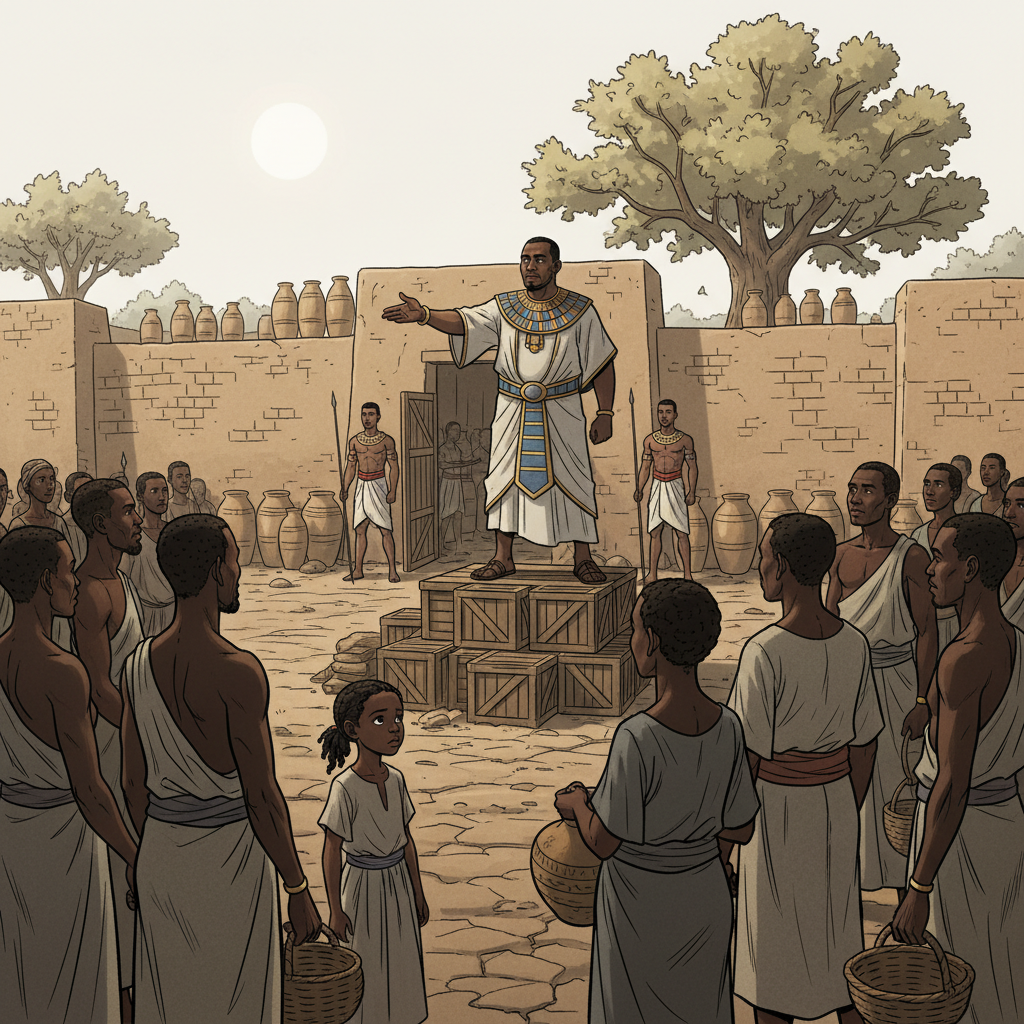
But as the weeks passed and the sky stayed empty and white with heat, something changed. Fear crept into hearts like a serpent sliding under a door. A wealthy man named Kha, who owned the largest plot of farmland in Nekhen, began storing jars and jars of water inside his walled compound. He hired two young men to guard the gate. "This water is mine," he declared. "I dug my own well. Why should I give away what I worked for?" Dara saw the look on the faces of the people who heard him. It was not anger — not yet. It was something worse. It was the thought forming behind their eyes: perhaps Kha is right. Perhaps I should do the same.
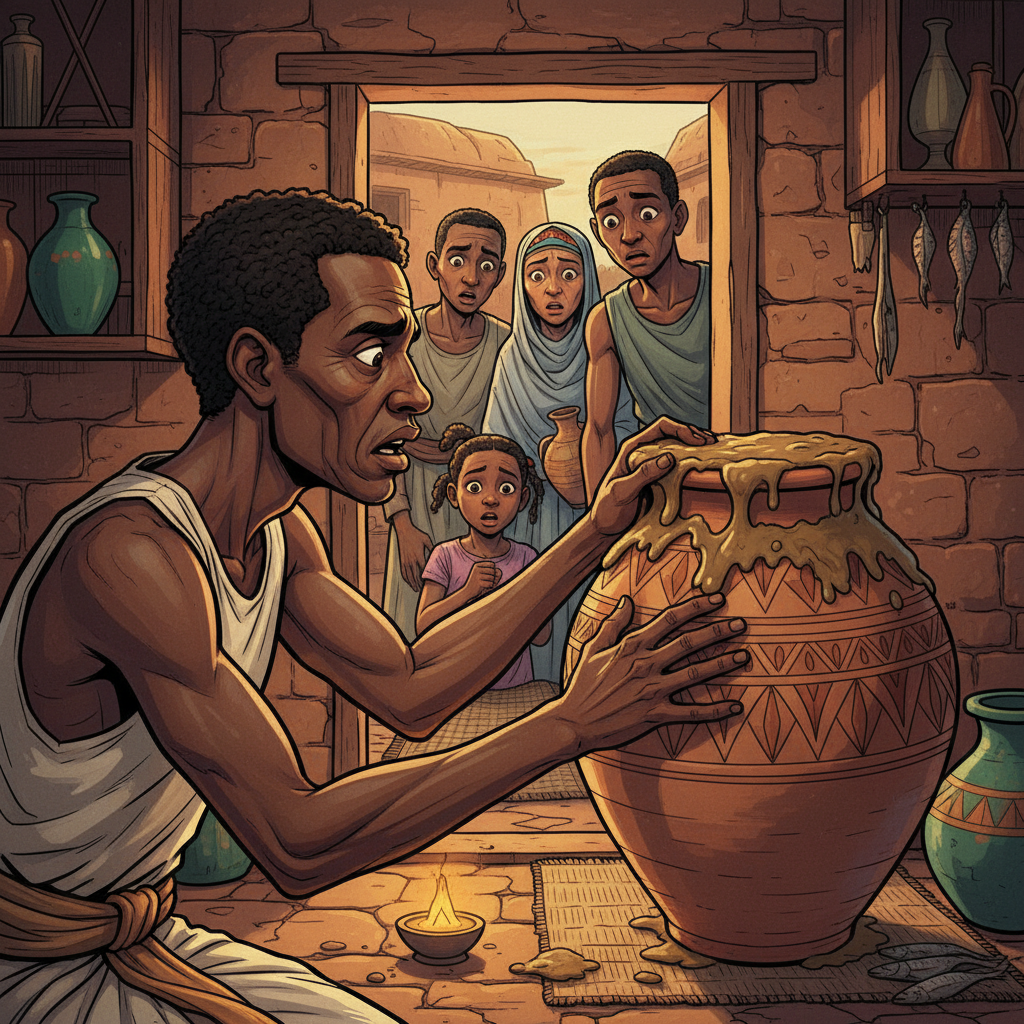
That thought was isfet. Not a monster with fangs and claws, but something far more dangerous — a whisper in the mind. Isfet is what the ancestors of kemet called the force of greed, chaos, and disorder. It does not arrive with thunder. It arrives quietly, in the moment when a person decides that their fear matters more than their neighbor's thirst. Within days, other families began to copy Kha. A potter sealed his rain cistern and told his cousins they could not draw from it. A fisherman's widow hid dried fish under her sleeping mat instead of sharing. Neighbors who had eaten together for years now locked their doors when the sun went down.
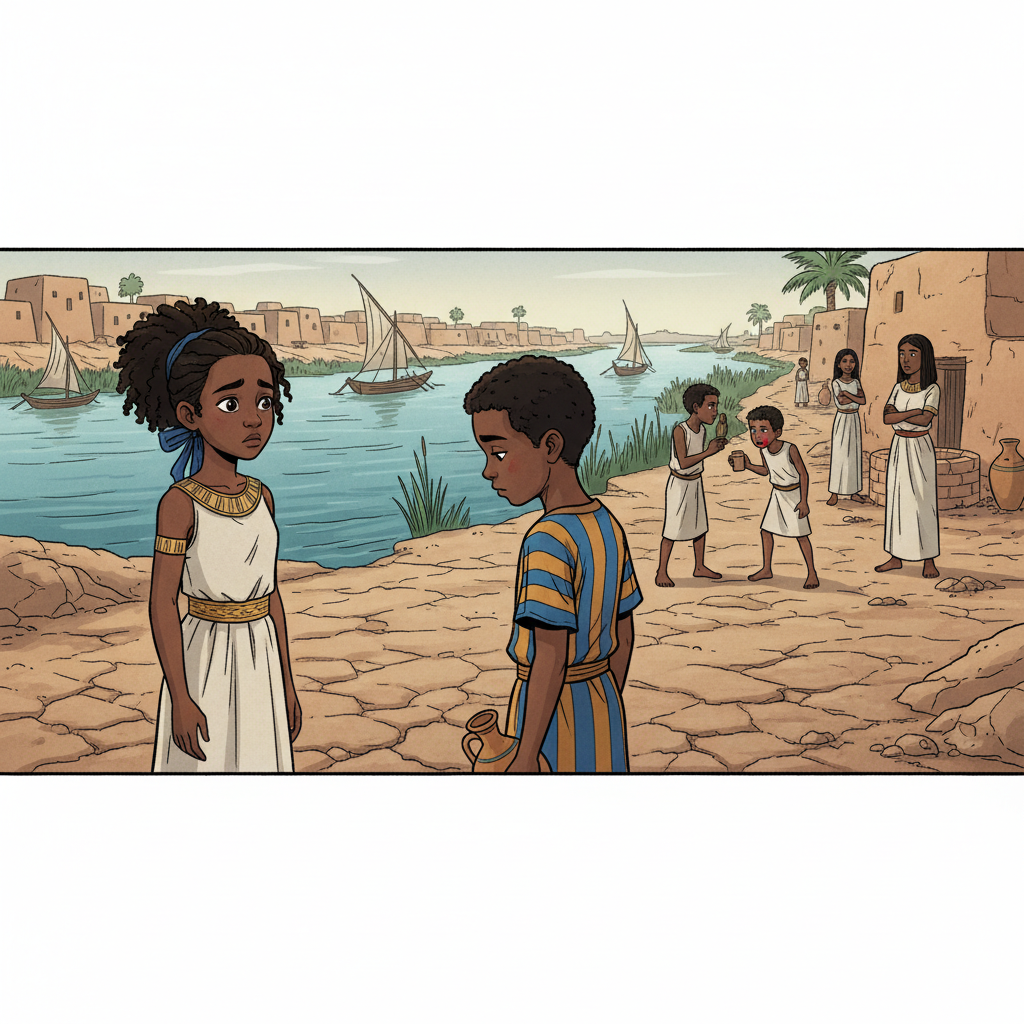
The children felt it most. Dara's best friend, a boy named Fen with quick hands and a loud laugh, stopped meeting her at the well. His mother had told him not to share their water with anyone — not even Dara. When Dara saw him in the lane, he looked away, ashamed. She wanted to call out to him, but the words caught in her throat like dry sand. Children who had played senet together and chased each other through the barley fields now argued over cups of water. A fight broke out between two boys near the well, and one came home with a split lip. Their mothers, who had been friends since girlhood, did not speak to each other for a week.
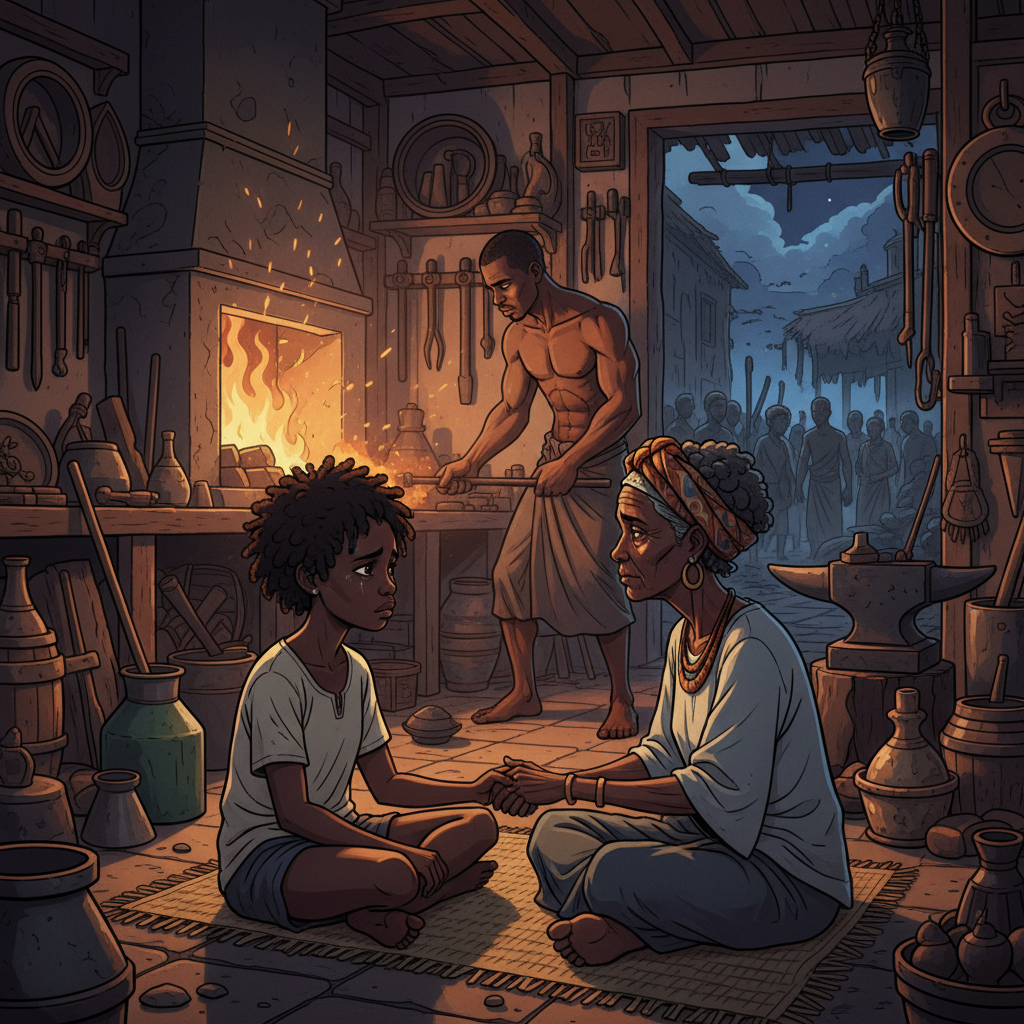
Dara watched her village unraveling like a frayed linen cloth. She could feel something heavy pressing on her chest — not hunger, though she was hungry, but grief. The ka, the life-spirit that the ancestors said lived in every person, felt dim in Nekhen. It was as if the drought had dried up not just the water but the kindness in people. One evening she sat with her grandmother and asked, "Why are people being so cruel? We have always shared." Elder Nzinga was quiet for a long time. Then she said, "Isfet feeds on fear, child. And fear makes people forget who they are. It makes them believe the lie that there is not enough."
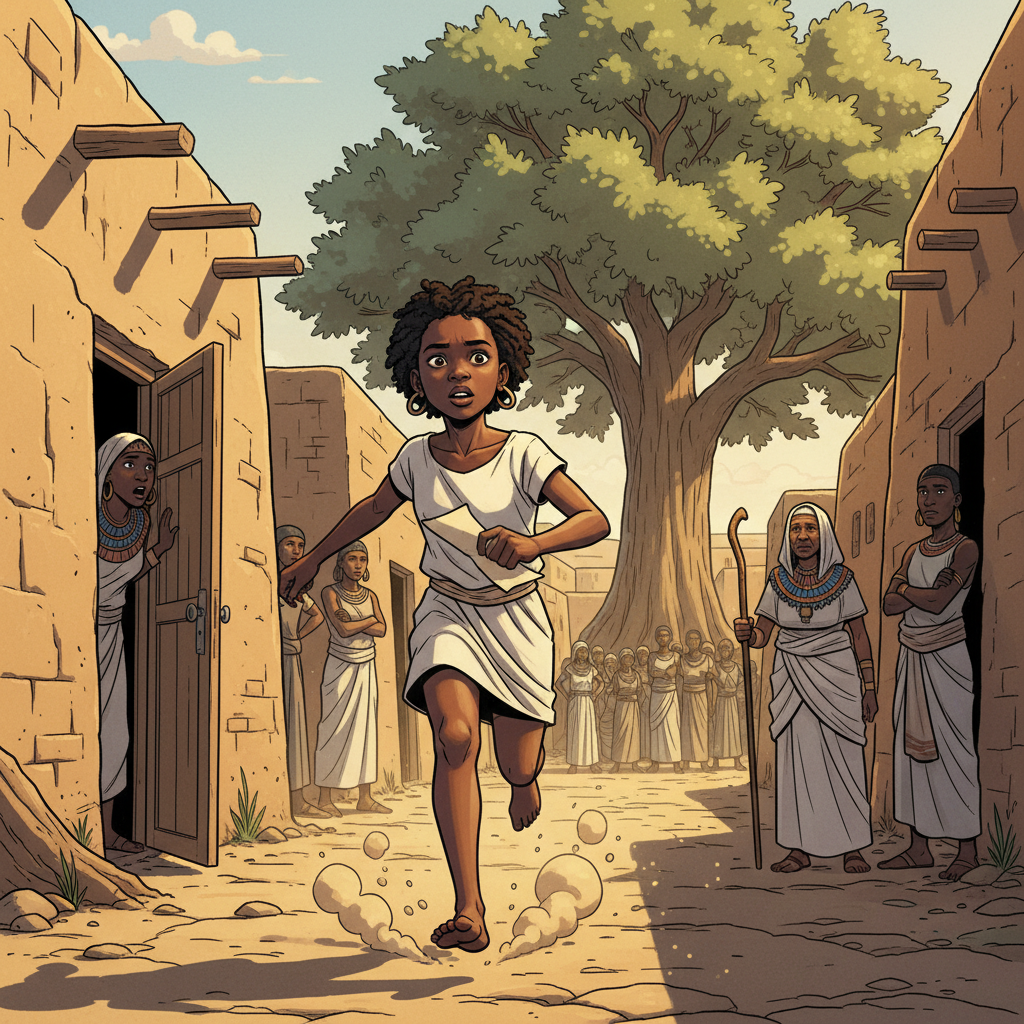
Elder Nzinga rose before dawn the next morning. She put on her white linen wrap and her beaded collar — the one she wore only for important occasions. She took her walking stick, carved from acacia wood, and sent Dara to knock on every door in the village. "Tell them the Elder calls a meeting under the sycamore," she said. "Tell them it is not a request." Dara ran through the lanes, her bare feet raising small clouds of dust. Some people came willingly. Others came slowly, with suspicious eyes. Even Kha came, though he stood at the edge of the gathering with his arms crossed. By the time the sun cleared the eastern hills, all of Nekhen stood beneath the great tree.
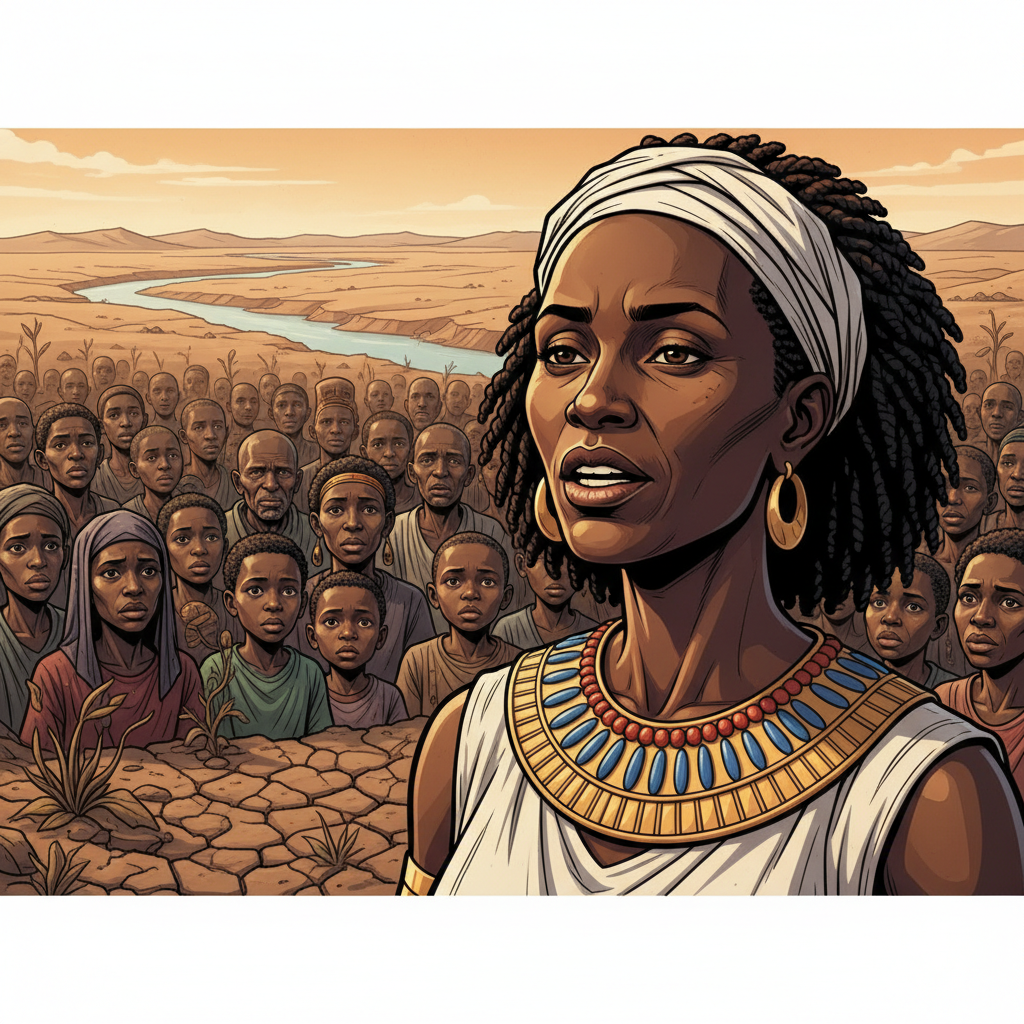
"I have seen this before," Nzinga said, and her calm, powerful voice carried to every ear. "I was a girl when the drought of my grandmother's time came. The nile shrank to a ribbon. And the people of that village did what you are doing now — they hoarded, they fought, they locked their doors. Half of them died. Not from thirst, but from the violence that comes when isfet rules a community." She let the silence hold. Then she continued: "But I also know the story of the engineers of kush, who built channels and reservoirs so that water reached every family, rich or poor. They survived because they understood maat. Water belongs to no one person. The nile does not flow for one family alone."
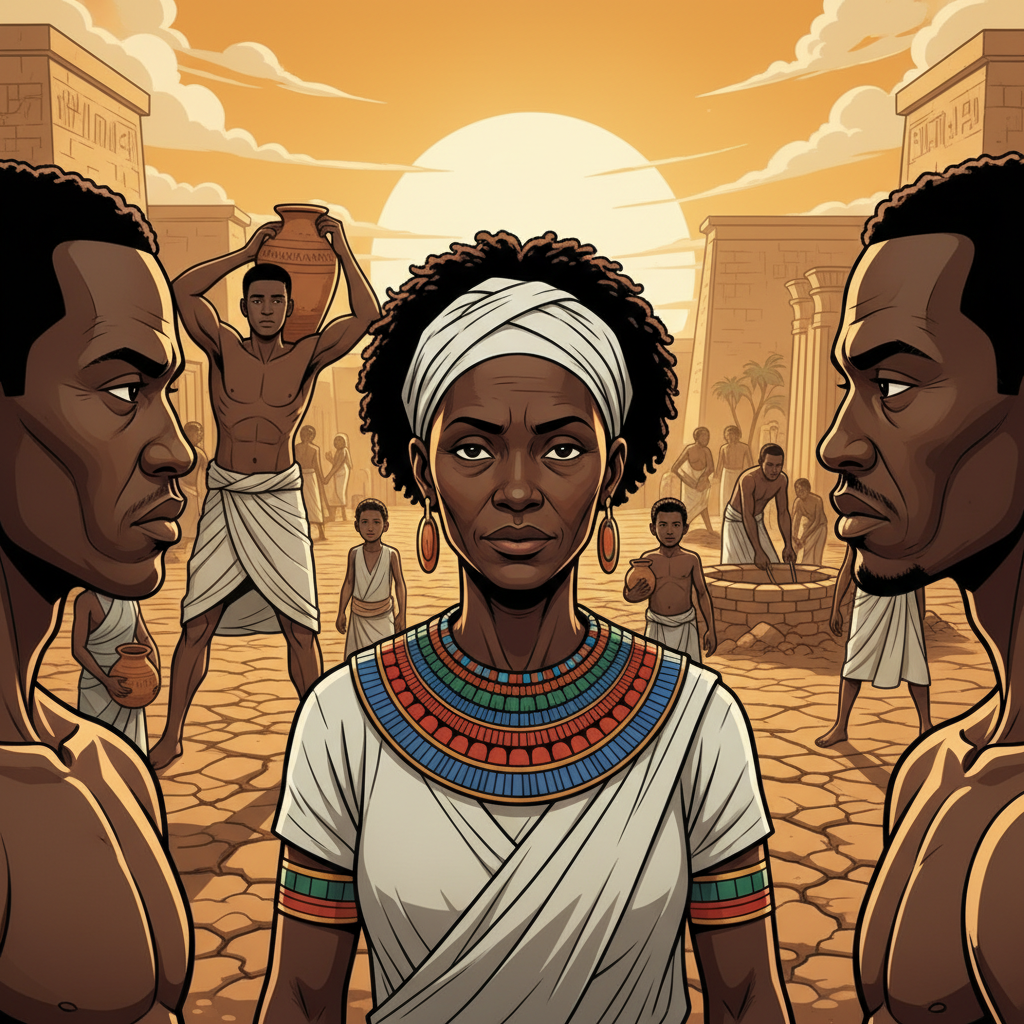
"Our ancestors in kemet survived droughts far worse than this," Nzinga said. "The scribes recorded them on the walls of temples — seven years, ten years without a full flood. Those communities survived because they worked together, not against each other. They rationed grain. They dug new wells. The strong carried water for the weak. That is maat. That is what keeps the ka of a village alive." She looked directly at Kha. "You are not an evil man. You are a frightened man. But your fear is killing your neighbors." Kha's jaw tightened, but he did not leave. Something in Nzinga's voice — steady as the bedrock beneath the river — held him where he stood.
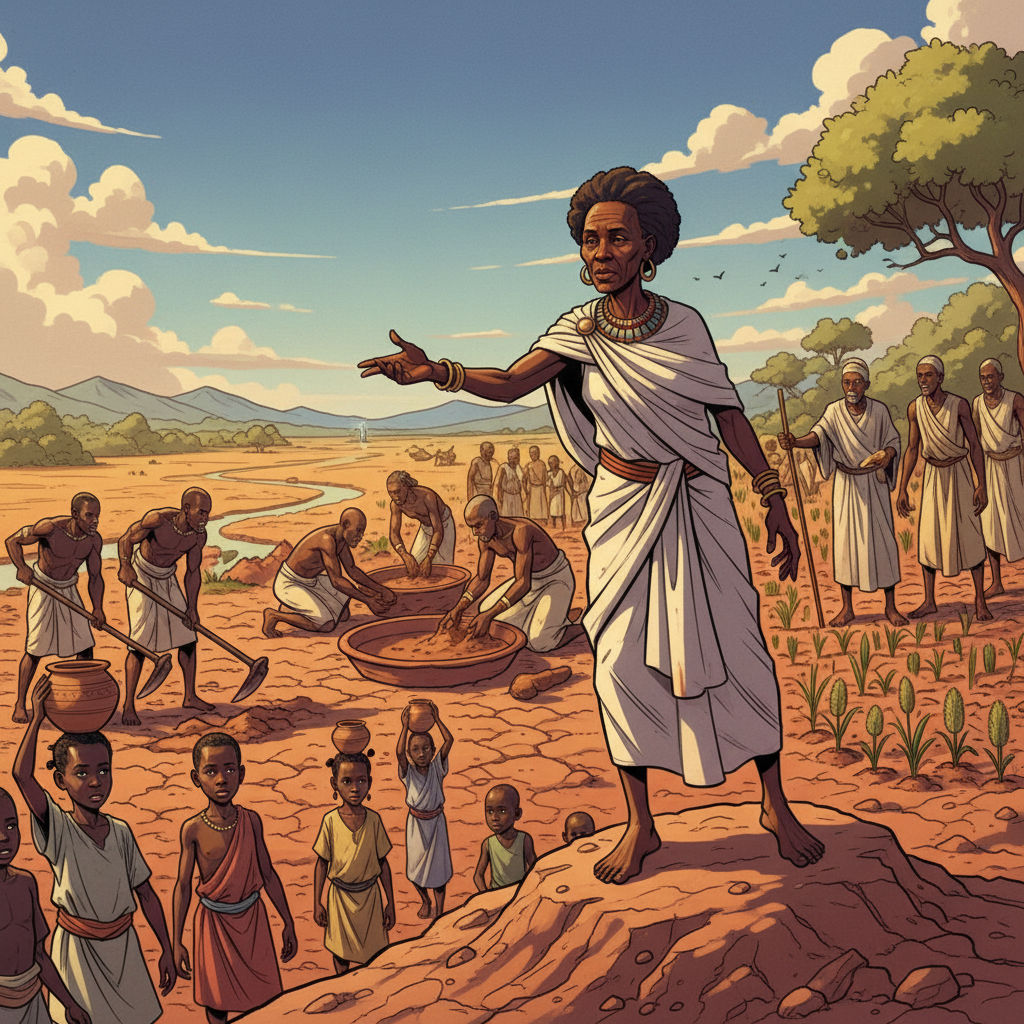
That afternoon, Elder Nzinga organized the village with the precision of a general commanding an army. She divided the people into groups. The strongest adults would dig new channels from a spring in the eastern hills that still trickled with water. The craftspeople would build clay-lined basins to catch every drop. The elders who knew the old farming ways would teach the younger ones how to plant drought-resistant sorghum. Dara and the other children were given the most important task of all: carrying water to the sick and elderly who could not walk to the well. "You are the legs of the village," Nzinga told them. "Without you, the weakest among us will suffer first. And a community that abandons its weakest has already lost its soul."
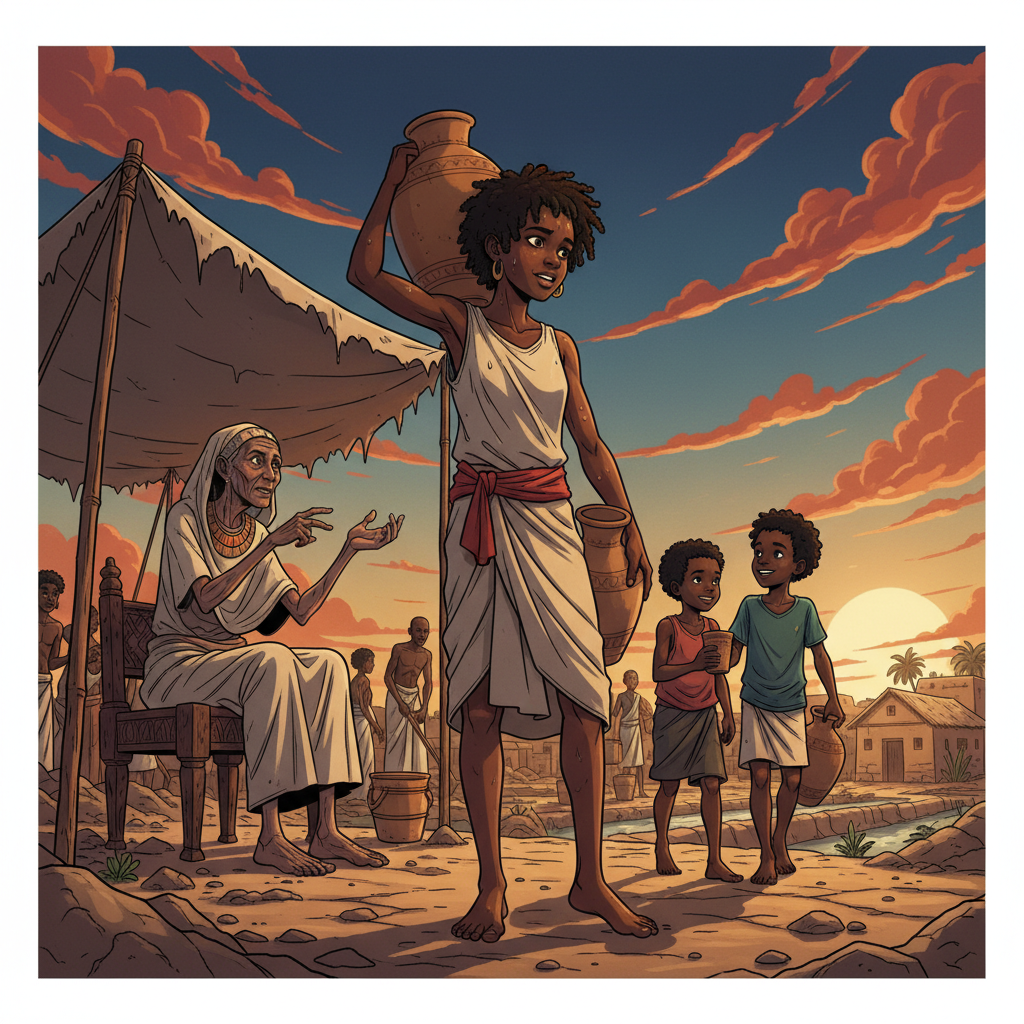
The work was hard. Dara's arms ached from carrying jars up the hill path. Her lips cracked in the heat, and some days she felt so tired she wanted to cry. But she did not stop. She watched her grandmother, who could barely walk, sitting in the shade and directing the work with sharp eyes and a sharper tongue. If old Nzinga could keep going, so could she. Slowly, the village began to heal. Fen came to Dara one morning and said, "I am sorry I stopped meeting you at the well." She handed him a cup of water and said, "Drink. Then help me carry these jars to old Meri's house." He smiled — the first smile she had seen in weeks — and they walked together as they always had.
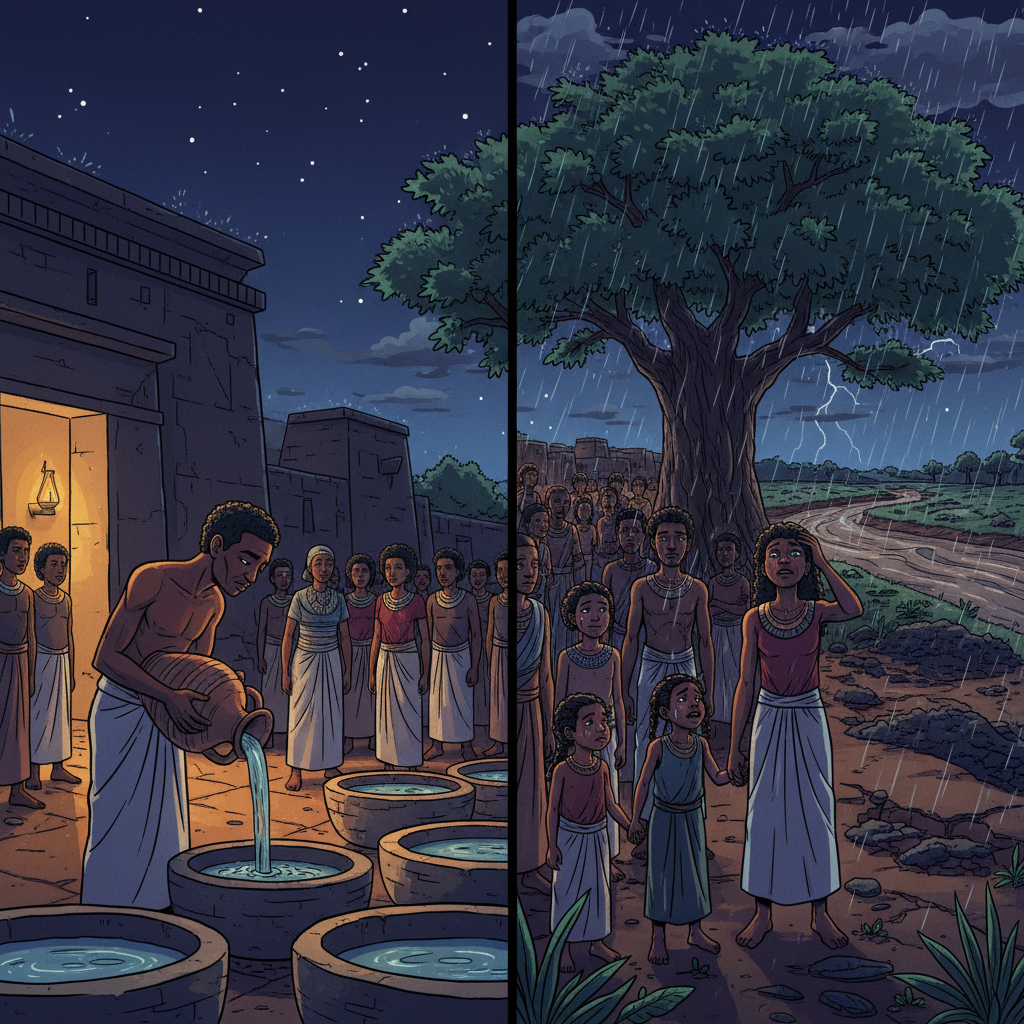
Even Kha, ashamed and quiet, opened his compound and poured his stored water into the common basins. No one jeered at him. Nzinga had told the village, "Maat does not ask for punishment. It asks for correction. A man who returns to the path of justice has more courage than one who never left it." The drought lasted three more months. But no one in Nekhen went thirsty, and no one went hungry enough to steal. When at last the clouds darkened the sky and the first heavy drops of rain hit the dry earth, the whole village gathered under the sycamore and wept. Dara held her grandmother's hand and watched the nile begin to rise, brown and strong, carrying the rich black soil that gave kemet its name — the Black Land.
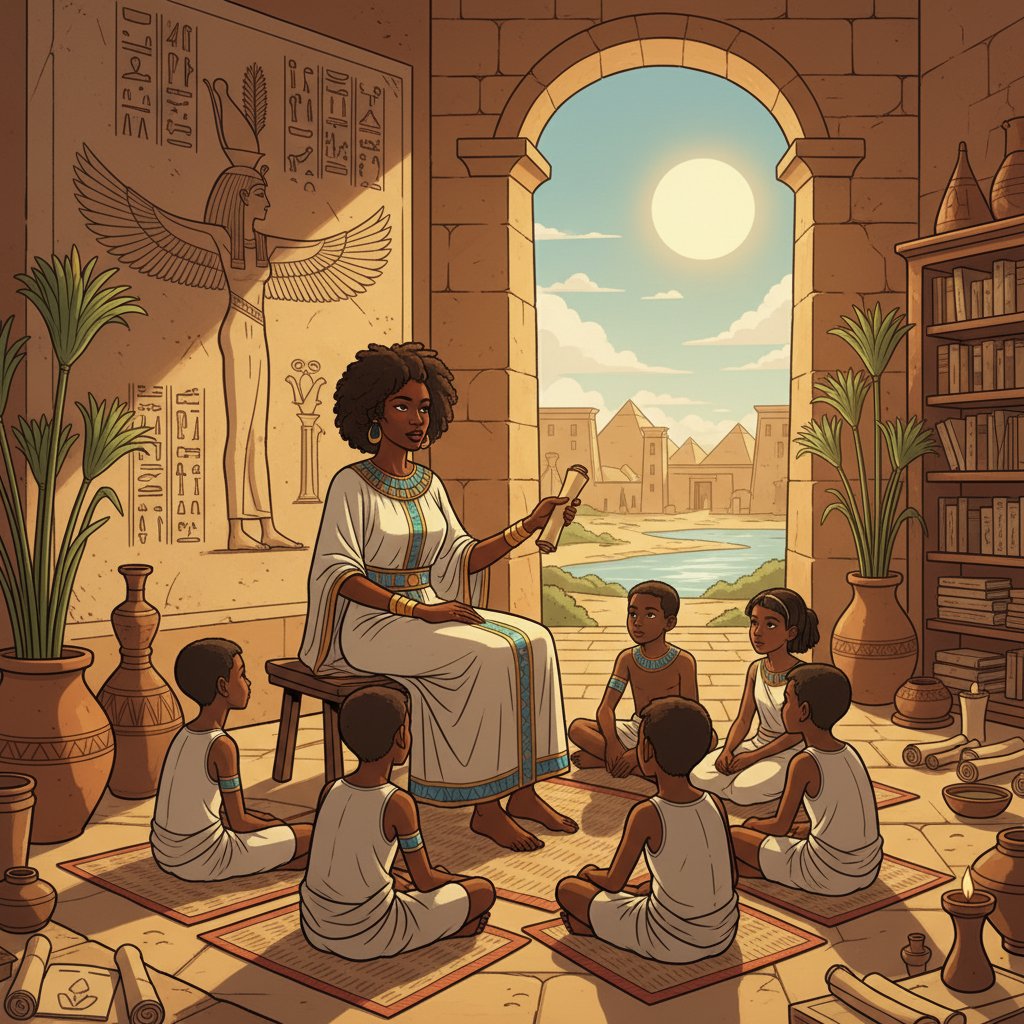
Dara never forgot her grandmother's lesson. Years later, she would teach it at the per ankh to children who had never known a drought: maat is not just an old idea carved on temple walls. It is the only way a community survives. Greed is the oldest enemy, and sharing is the oldest medicine. Isfet will always return — in every generation, in every land — whispering that there is not enough, that you must take before others take from you. Today, in the modern world, there is enough food and water for every person on Earth — yet millions go hungry because the spirit of isfet still whispers "hoard, hoard, hoard" to those with power. The lesson of Nekhen, of kemet, of kush, is as urgent now as it was then. The nile still flows. The question is whether we will share it.