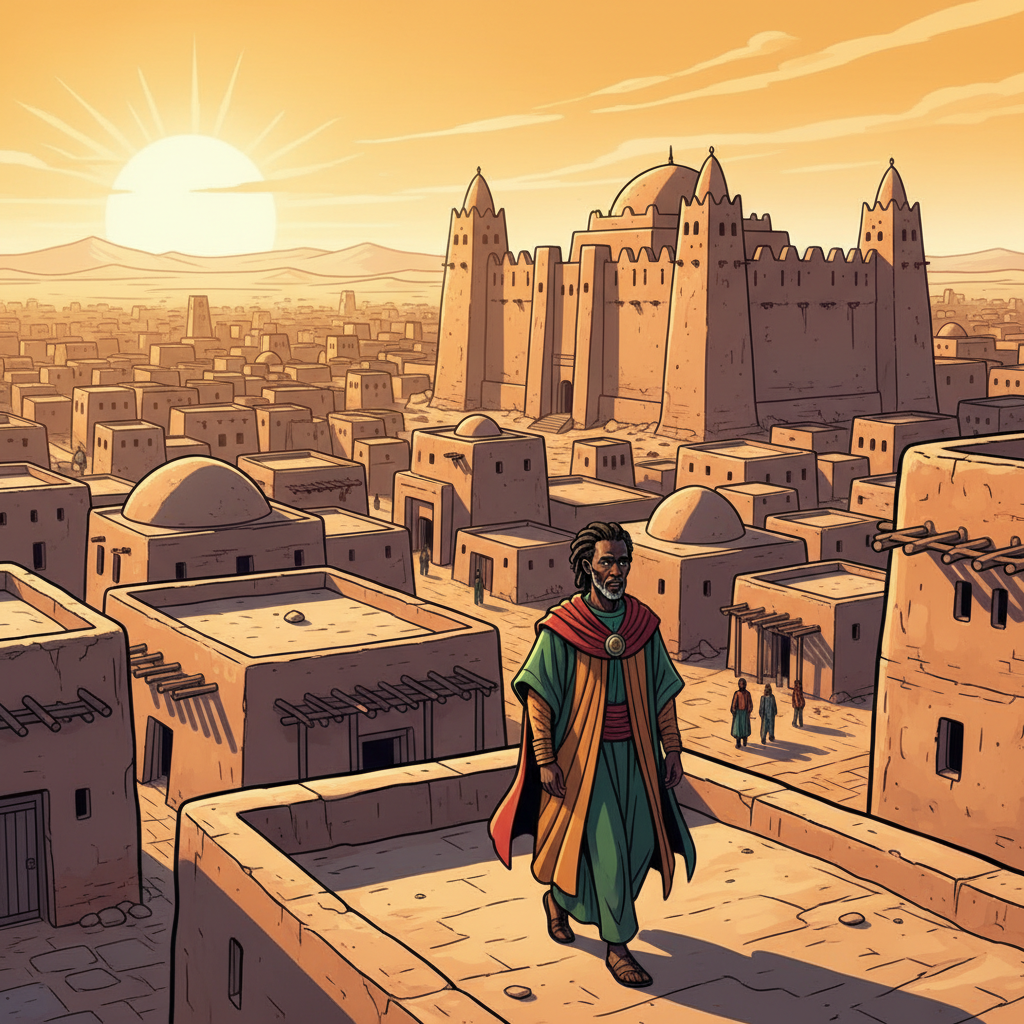
The morning sun, a familiar golden eye, rose over the flat rooftops of Timbuktu, casting long shadows across the sand-swept alleys. Seba Amadou, a venerable scholar whose skin was the deep hue of fertile earth and whose broad nose and full lips spoke of generations rooted in this soil, walked the familiar path to the University of Sankore. His 4C hair, meticulously braided, framed a face etched with years of contemplation, yet his eyes still held the sharp spark of a perpetual student. Thousands of manuscripts, each a testament to the brilliance of his ancestors, awaited him. He felt the weight of history, the vibrant hum of knowledge, a living organism sustained by the scholars and scribes who dedicated their lives to Maat, to truth and balance, within these hallowed halls. Sankore was more than a university; it was the intellectual heart of the Mali and Songhai Empires, a beacon of learning in a world often shrouded in ignorance.
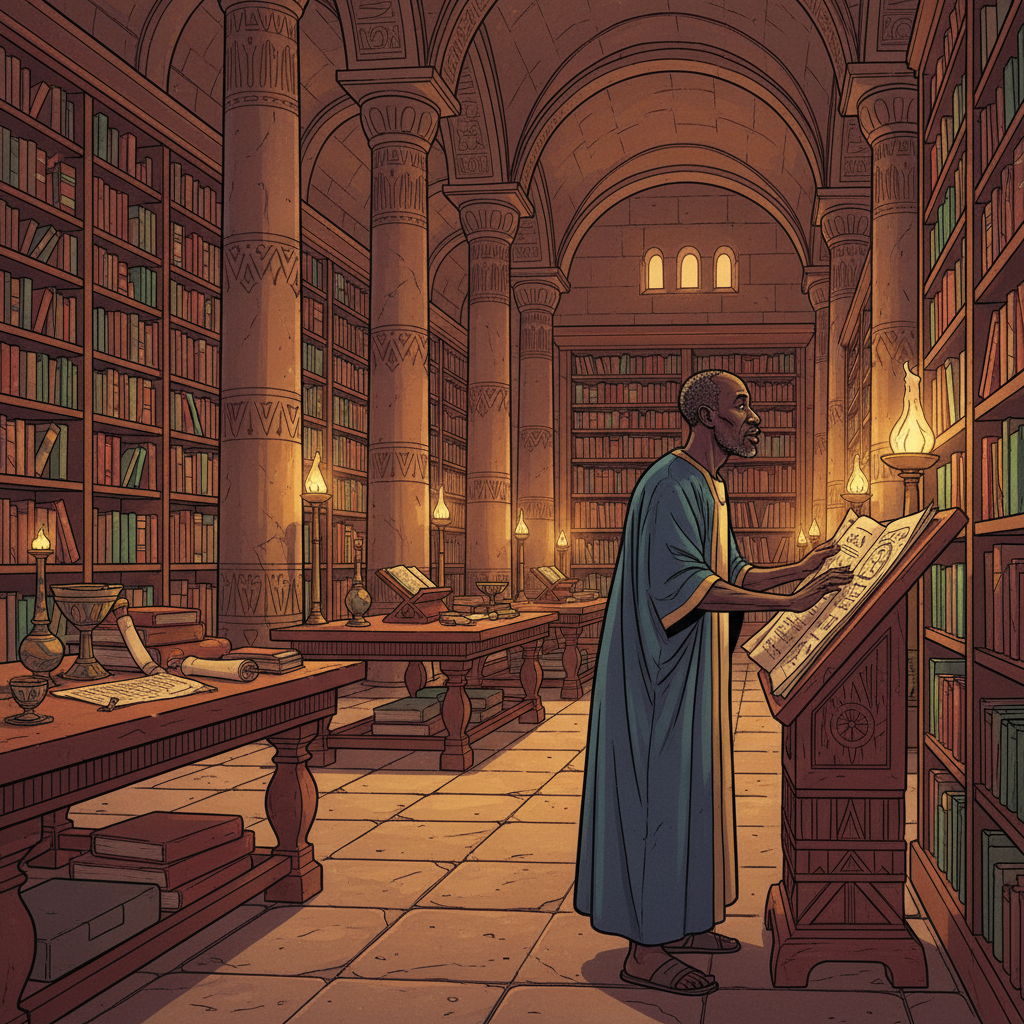
Amadou entered the grand library, the scent of aged parchment and dry ink filling his lungs like a sacred breath. Rows upon rows of leather-bound volumes, filled with astronomical charts, complex mathematical equations, intricate legal codes, and profound medical texts, stretched towards the high, vaulted ceilings. Each scroll, each page, was imbued with the ka, the life-force, of the minds that had conceived and preserved them. He traced the elegant script of a treatise on planetary motion, a work that rivaled any in the known world, understanding that this knowledge, this heka, was a legacy to be cherished, protected, and expanded. For centuries, the scholars of Timbuktu had illuminated the path for all, a continuous stream of wisdom flowing from the ancient traditions of Kemet and the Nile Valley, a truth that scholars like Theophile Obenga would later champion.
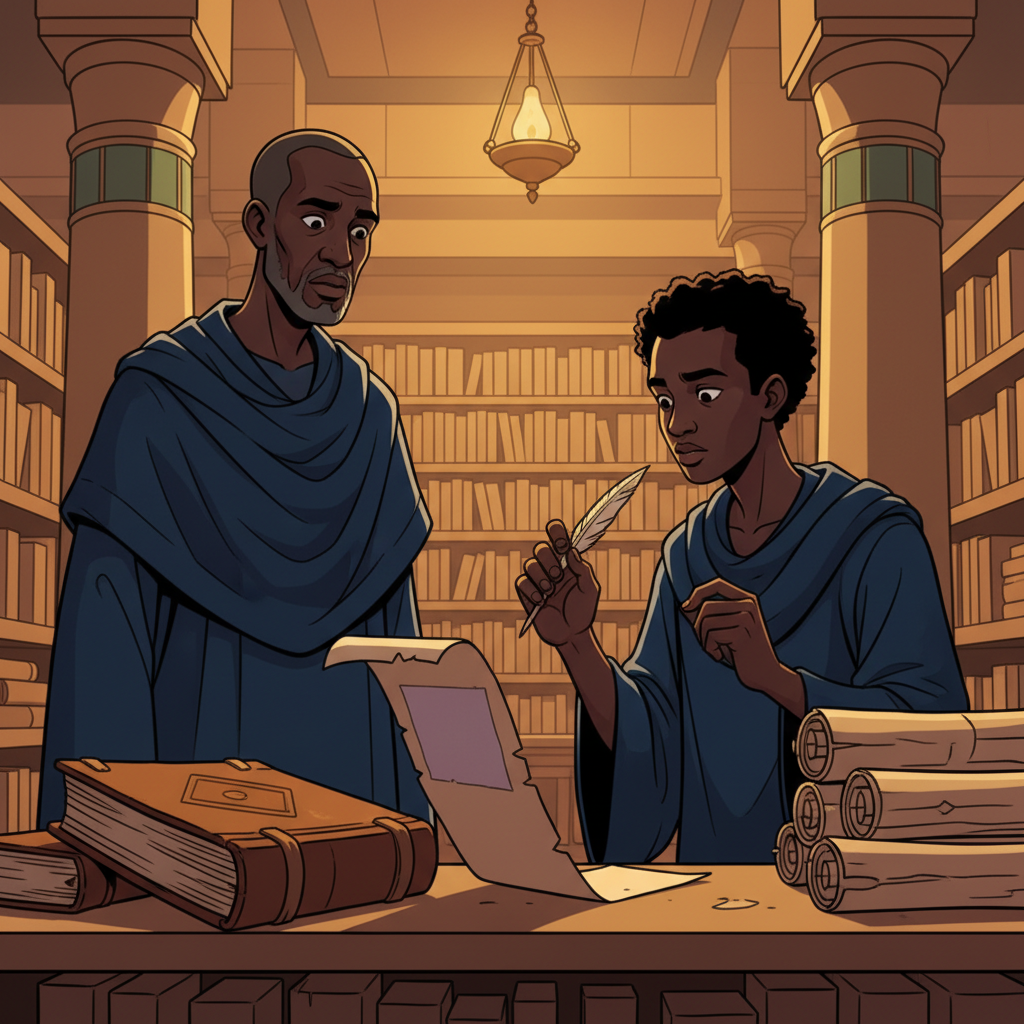
Lately, however, a subtle discord had begun to hum beneath the harmonious rhythm of scholarship. Amadou had noticed small things: an unusual tremor in the hand of a junior scribe, Kai, whose ambition was as sharp as his quills; a faint, unfamiliar scent of a different kind of paper among the stacks; a manuscript on herbal remedies, usually kept under strict watch, slightly ajar from its proper place. These were minor deviations, easily dismissed as oversight in a library of hundreds of thousands of texts. Yet, Amadou’s mind, honed by decades of seeking precision, detected a whisper of isfet, a subtle imbalance that unsettled his spirit. He knew that disorder, once allowed to take root, could spread like desert fire, threatening the very foundations of Maat.
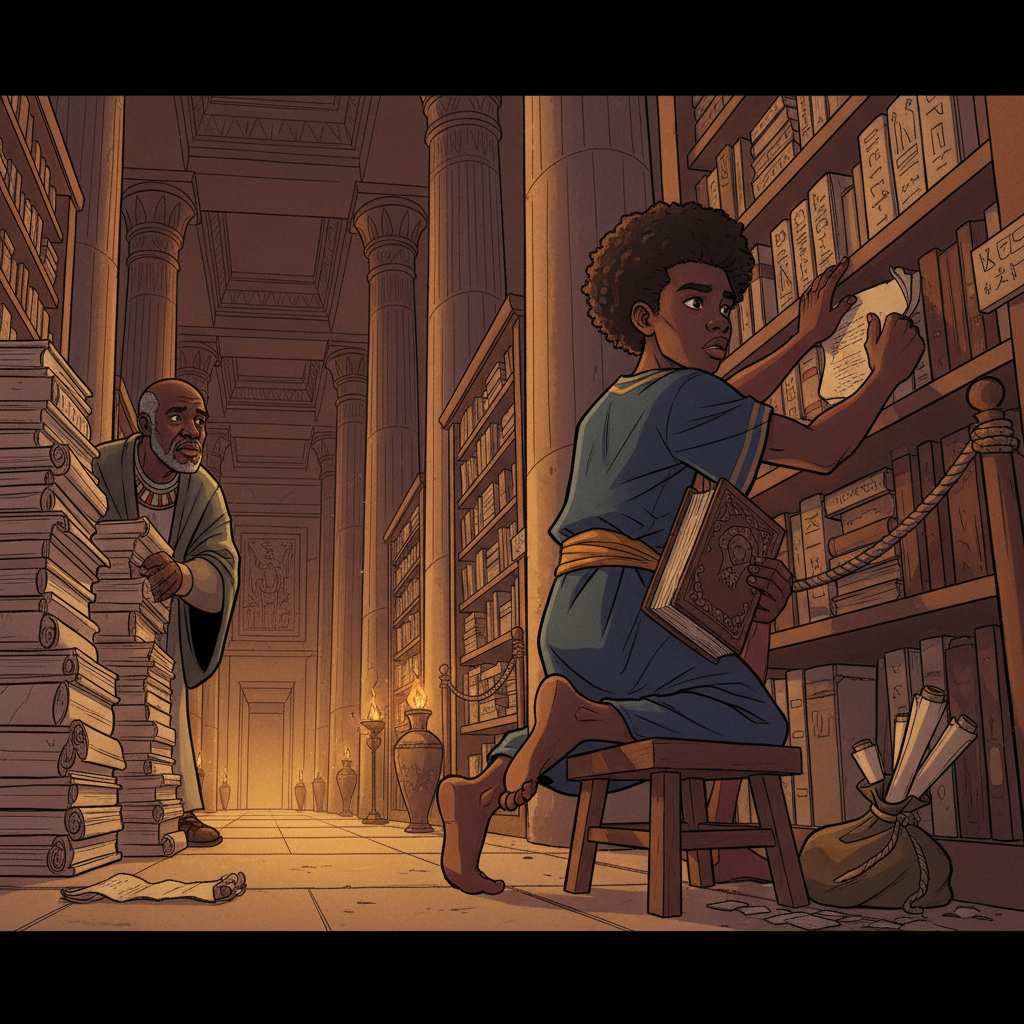
His observations grew more pointed. He saw Kai, a young man of striking features—dark skin, full lips, and a thick crown of 4C coils—lingering longer in the restricted sections, his movements a little too furtive. Kai’s meticulous copying skills were renowned, but Amadou now perceived a new urgency in his work, an almost desperate speed. The young scribe would often claim to be working on personal projects, his explanations plausible but lacking the candor Amadou usually associated with true devotion to learning. The old scholar remembered his own youthful zeal, but it was always tempered by reverence for the knowledge itself, not just its acquisition. This felt different, a commercial undercurrent beneath the academic facade.
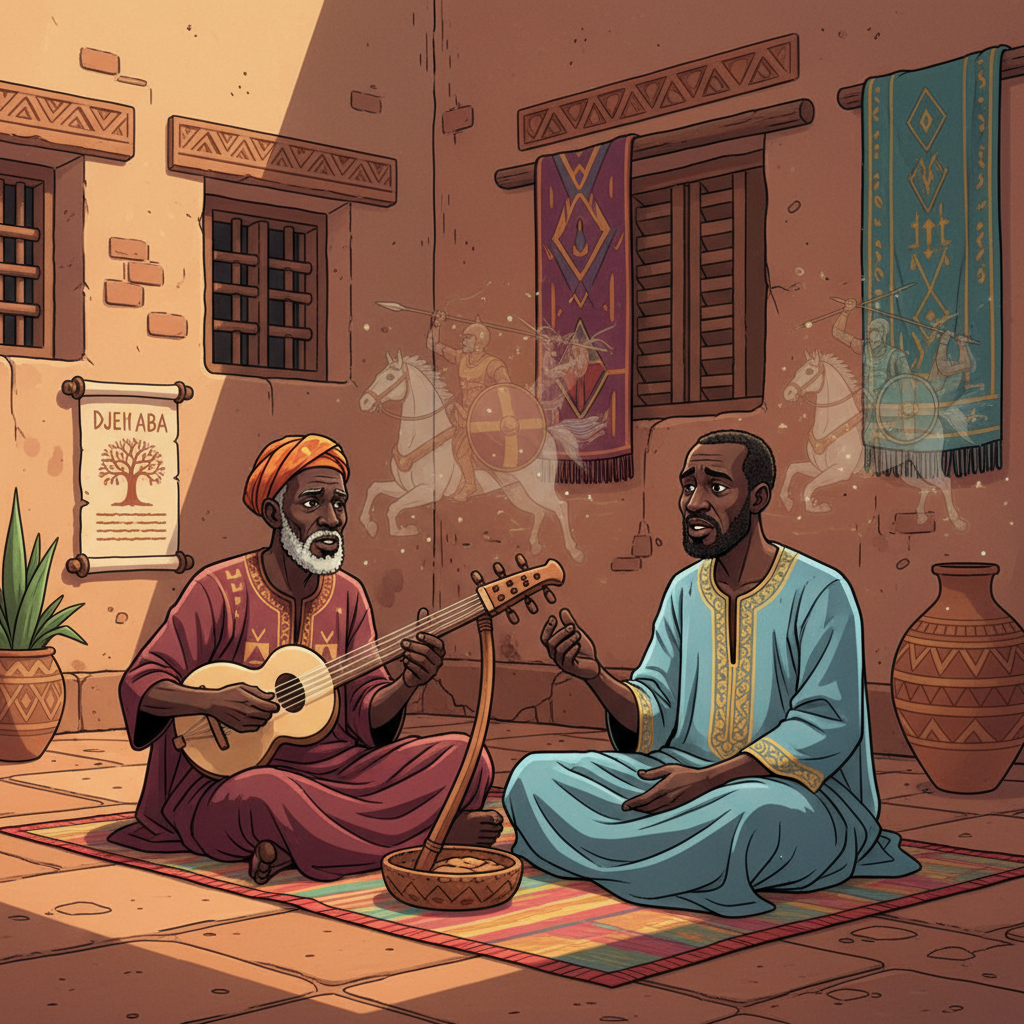
Disturbed by these mounting suspicions, Seba Amadou sought out Djeli Kaba, the venerable griot of his clan, whose memory was a living library of Manden history and wisdom. Kaba’s fingers danced over the strings of his kora, weaving melodies that spoke of kings and battles, of Sundiata Keita and the Manden Charter, of the deep philosophical roots of their people. Amadou, sitting on a woven mat, confided his unease. “Kaba,” he began, “when does the sharing of knowledge become a betrayal of its source? When does the hand that copies, become the hand that steals?” Kaba’s eyes, ancient and knowing, met his. “My brother,” the griot replied, “knowledge is like the Nile; it must flow. But its source, its ka, must never be diverted without honor, without reciprocity, lest the lands it once nourished turn to dust.”
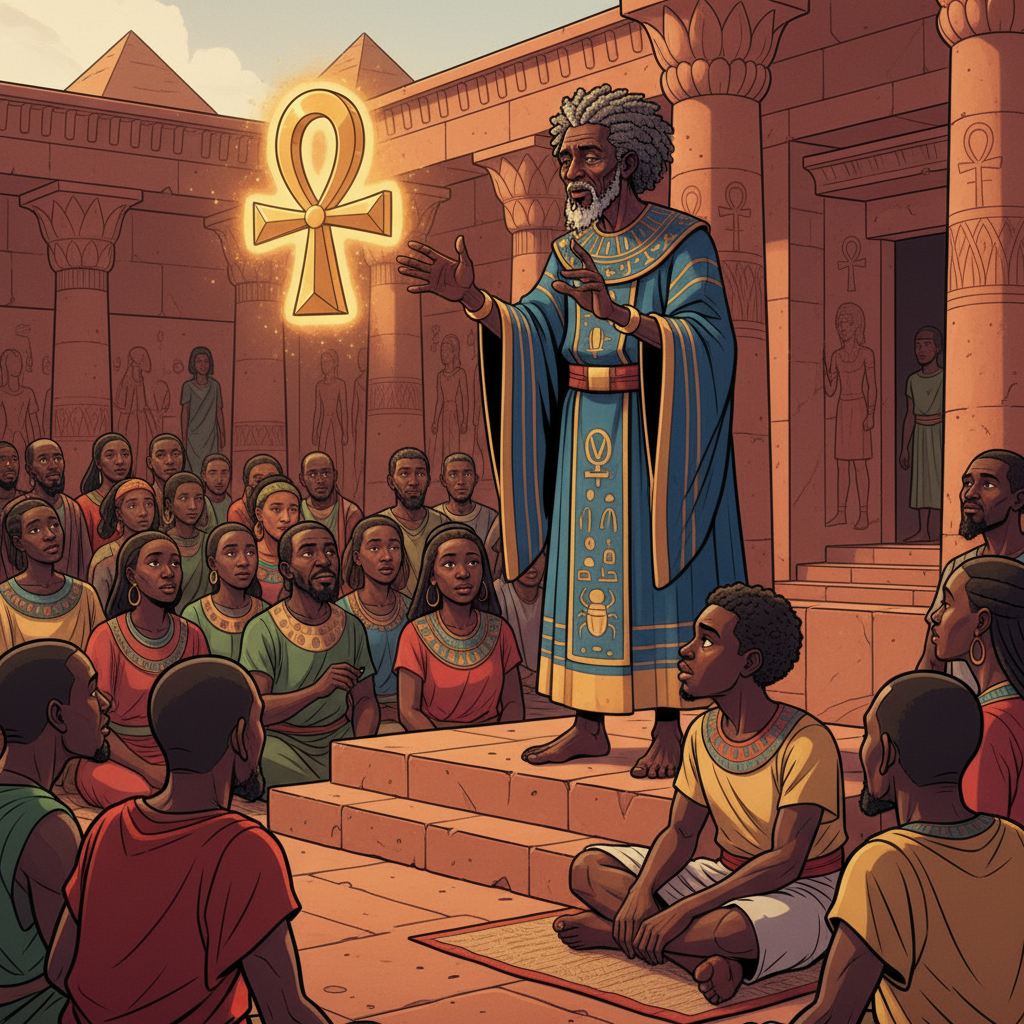
Djeli Kaba then spoke of the ancient principles, passed down through generations of griots and sebas, linking the intellectual heritage of Mali directly to Kemet. “Our ancestors in the Nile Valley taught us that true knowledge, steeped in Maat, is a sacred trust,” Kaba intoned, his voice rich with history. “It is not merely facts, but a way of being, an ankh, a life-force that sustains our civilization. To remove it from its context, to sever its roots from the soil of its origin, is to diminish its heka, its inherent power. Cheikh Anta Diop and Theophile Obenga, though they walk in the future, would echo these truths: that African intellectual traditions are continuous, profound, and foundational. They are not commodities to be traded blindly, but legacies to be safeguarded for the communal good, for the spirit of ubuntu.”
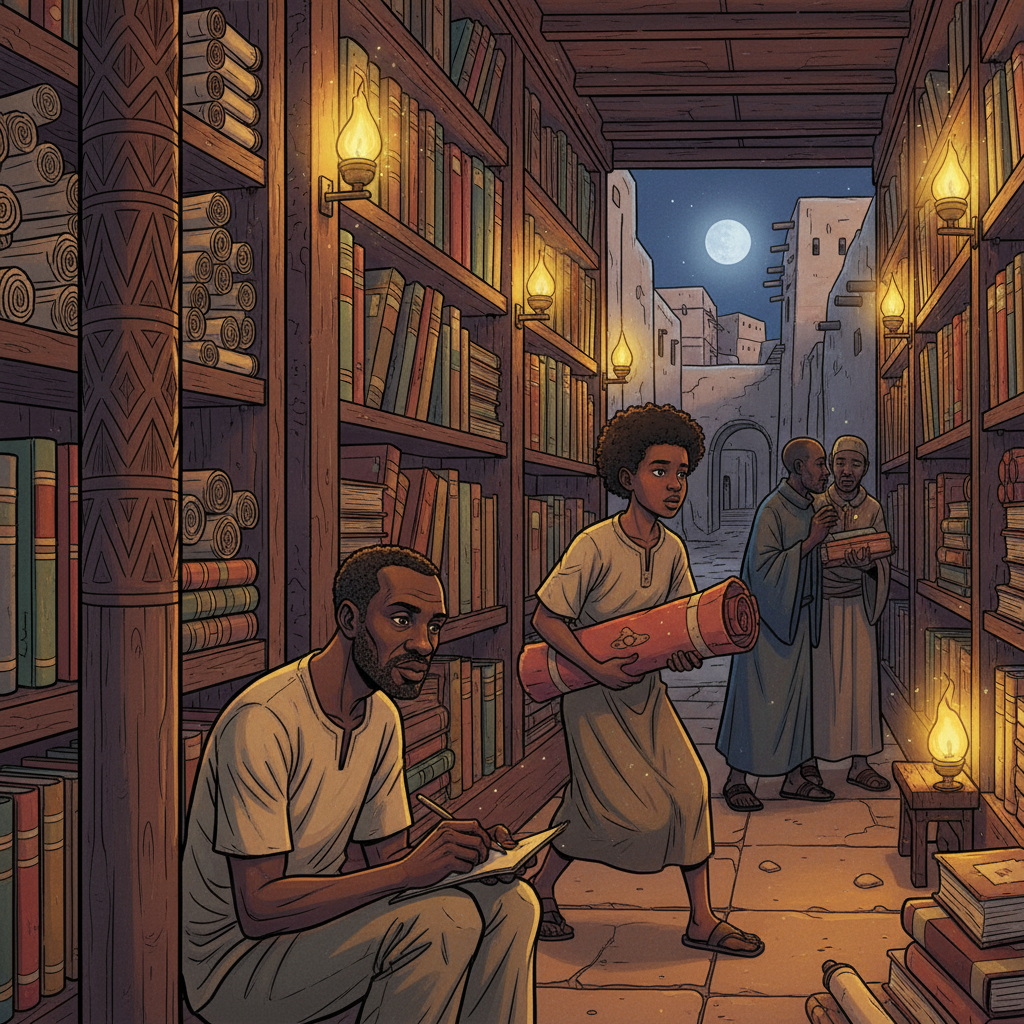
Galvanized by Kaba’s wisdom, Seba Amadou intensified his discreet investigation. He began to track specific manuscripts, noting their unique identifiers, the subtle imperfections of their covers. He spent long hours observing the comings and goings of the scribes, not just Kai, but others who seemed to move with a similar guardedness. He discovered a pattern: certain invaluable texts—astronomical calendars, advanced surgical procedures, intricate legal precedents from the era of Mansa Musa—would be taken to a small, seldom-used copying chamber for unusually long periods. The chamber, he noted, had a second, less visible exit leading towards the merchant quarter of Djenne. The faint scent of foreign wax, used for sealing documents, now made sense. It wasn’t just individual curiosity; it was a systematic, organized operation.
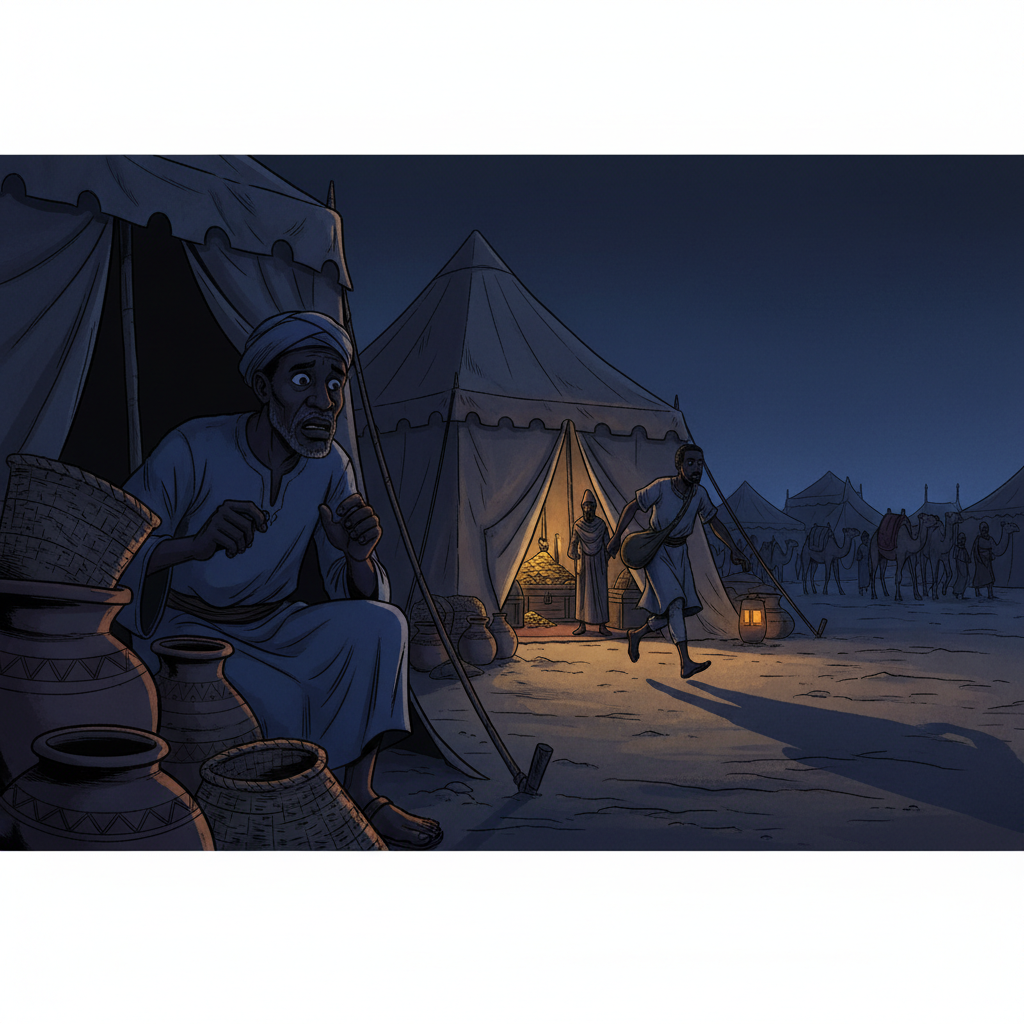
One moonless night, Amadou followed Kai, who slipped out of the library with a heavy satchel, not towards his modest dwelling, but in the direction of the foreign merchant’s caravanserai. Amadou maintained a cautious distance, his heart pounding a rhythm of dread. He watched as Kai entered a dimly lit tent, emerging much later, his satchel visibly lighter, his stride more buoyant. The old scholar’s suspicions solidified into painful certainty. The theft was real. The knowledge of Sankore, painstakingly accumulated over centuries, was being siphoned away, its inherent value being exchanged for mere gold. The realization left a bitter taste in his mouth, a sense of profound injustice, a stark manifestation of isfet.
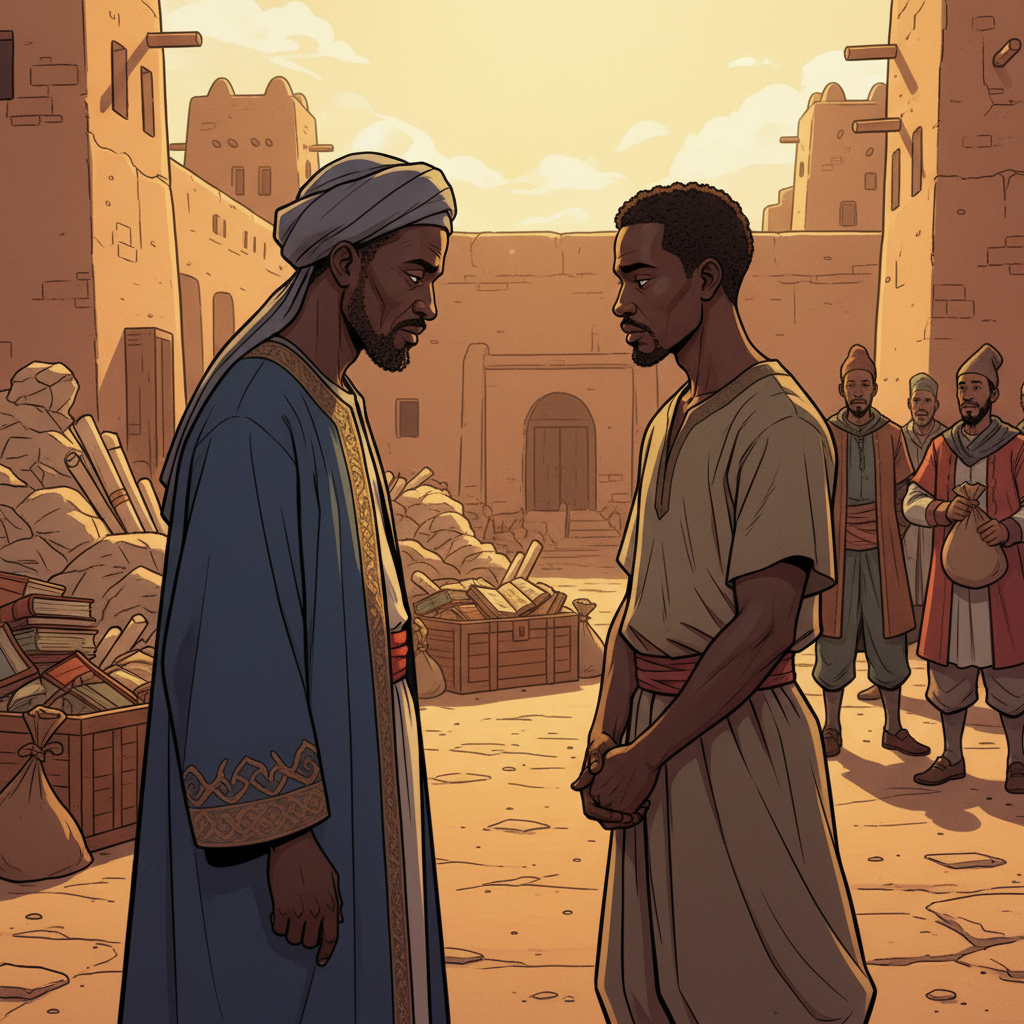
The next morning, Amadou confronted Kai, not with accusations, but with a quiet, knowing gaze. “Tell me, son,” Amadou said, his voice softer than the rustle of old parchment, “what is the true worth of a star chart when it guides ships that plunder, or a medical text when its wisdom serves those who deny your very humanity?” Kai, his dark skin now tinged with shame, stammered, his usual eloquence deserting him. He confessed, detailing how foreign merchants, particularly those from across the Sahara, offered vast sums for copies of specific scientific and philosophical texts. They promised to spread Sankore’s brilliance, but their eagerness felt less like reverence and more like appropriation. Kai, burdened by a large family and the allure of wealth, had convinced himself he was merely sharing, not betraying.
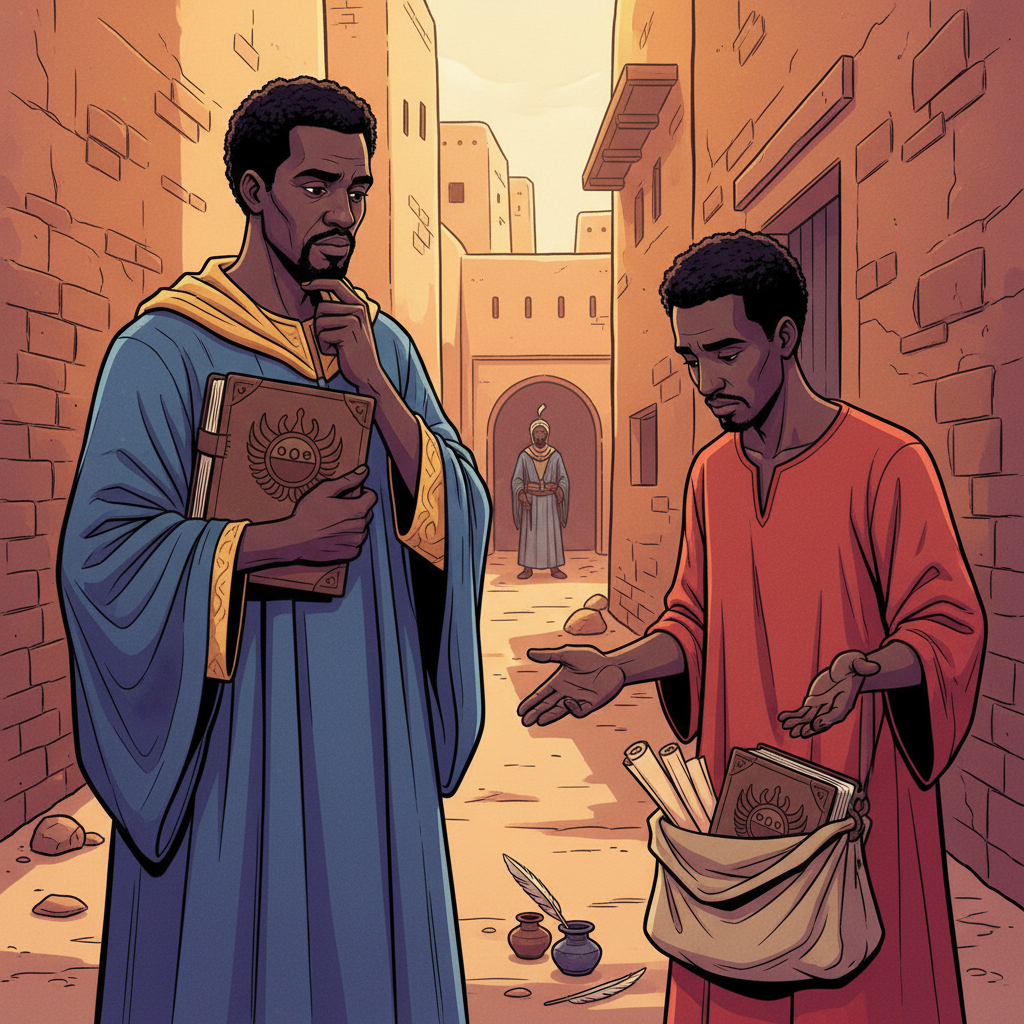
Amadou listened, his heart heavy. Kai’s dilemma, while born of individual weakness, reflected a larger, more complex moral quagmire. Was it truly theft if the knowledge was merely copied, not removed? But then, who owned the truth? If knowledge was universal, did it belong to everyone, or did its unique Kemetic and African heritage demand protection? These were not simple questions of right and wrong, but a profound struggle between competing interpretations of Maat. Maulana Karenga’s teachings on cultural integrity resonated deeply: the knowledge of Sankore was not just information; it was the intellectual property, the very soul, of their civilization. To allow its unmonitored dissemination was to risk its misrepresentation, its appropriation, and ultimately, its denial as an African creation.
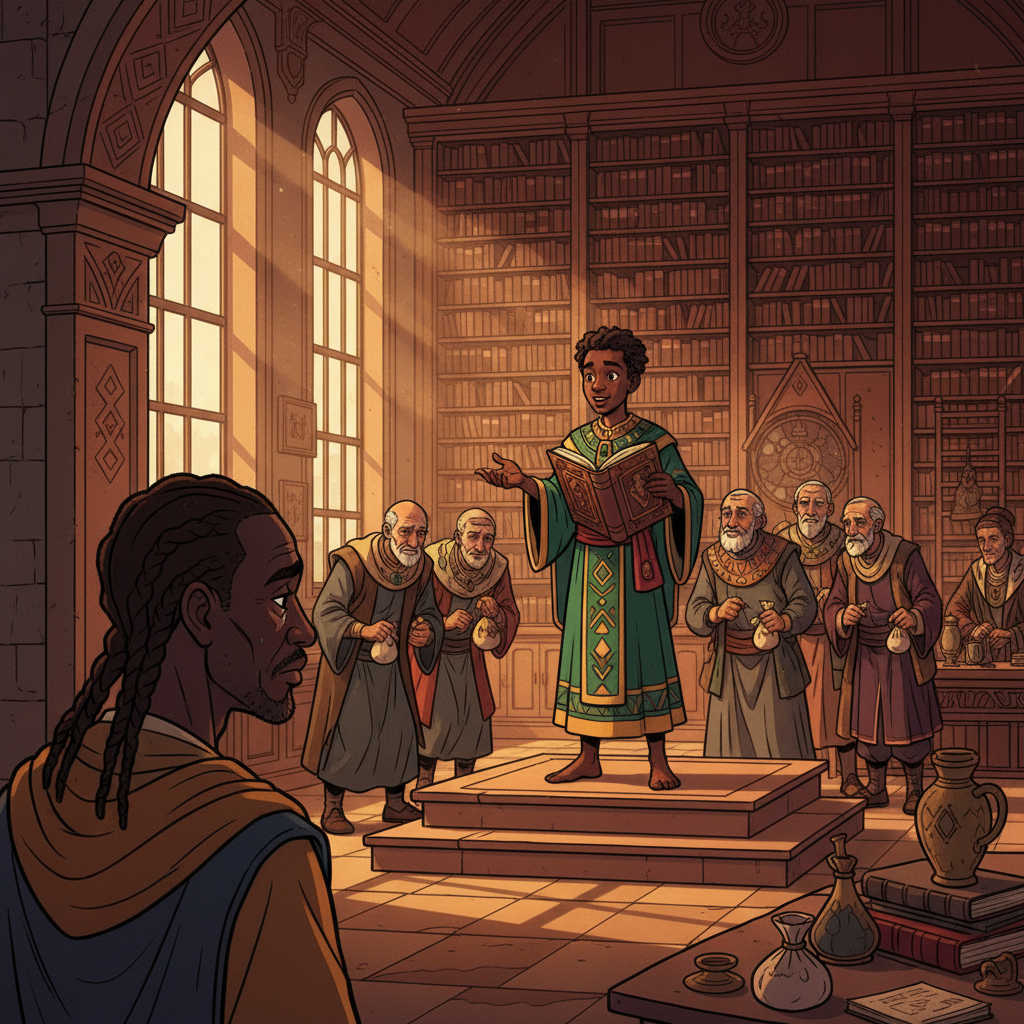
Kai, tears welling in his eyes, explained the merchants' promises. They spoke of grand European libraries eager for the wisdom of Africa, of reciprocal exchange. But Amadou knew the world was not always so balanced. He recalled stories from the griots about distant lands where African contributions were often erased, where the very concept of African scholarship was mocked, even as its treasures were coveted. Kai, young and naive, had fallen for the illusion of generous exchange, blinded by the immediate relief of gold. He hadn’t considered the long-term implications, the historical injustice that Chancellor Williams would later describe: how the stripping of intellectual wealth could undermine a civilization’s future, leaving it vulnerable to external narratives of inferiority.
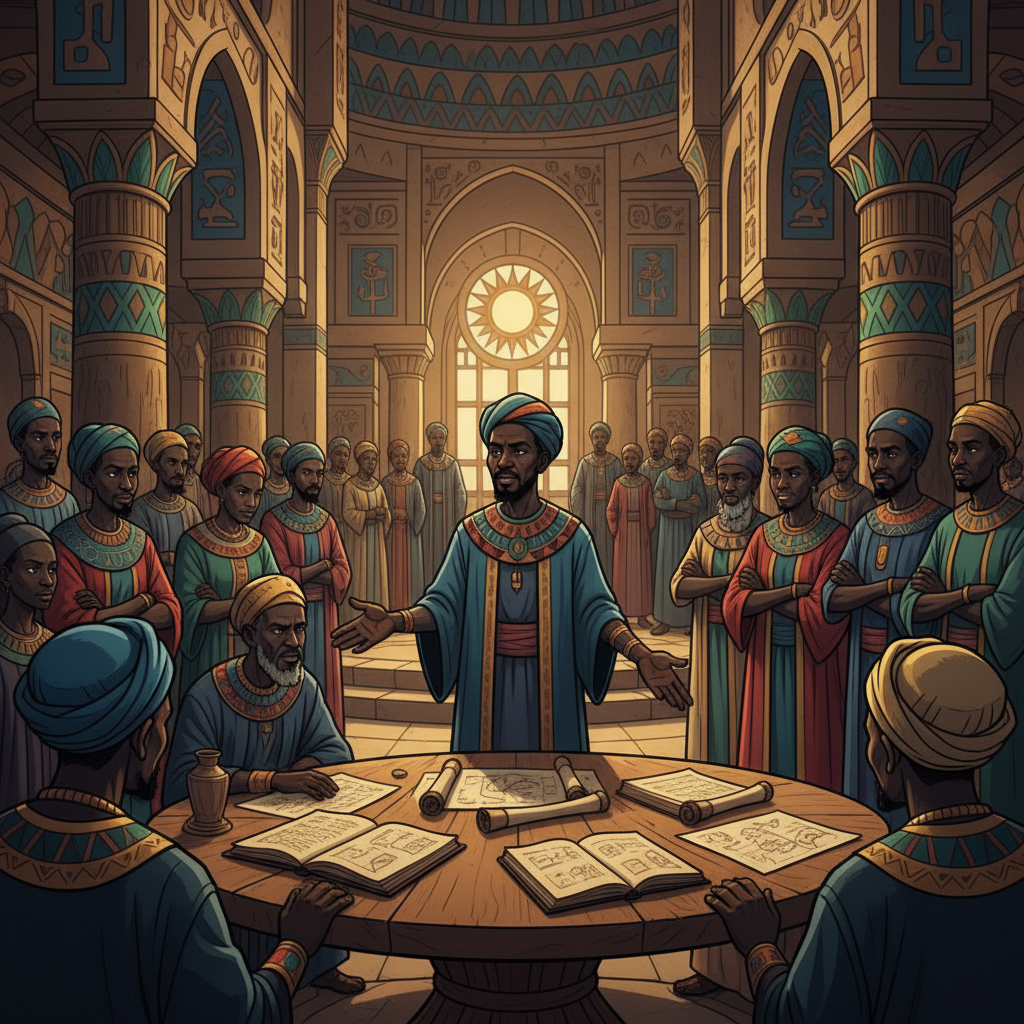
Seba Amadou called an emergency council of the senior sebas of Sankore and the chief advisors to the current mansa, whose reign continued the legacy of Mansa Musa. The chambers, usually filled with calm debate, now crackled with tension. Amadou presented his findings, laying out the evidence of the illicit copying and the foreign recipients. Some scholars argued for open sharing, citing the universal nature of knowledge, believing that wisdom should flow freely like the Niger River. Others, however, spoke passionately of cultural sovereignty, arguing that their ancestors had labored for centuries to cultivate this intellectual garden, and it was their sacred duty to protect it from exploitation, especially given the history of external aggressions and misunderstandings.
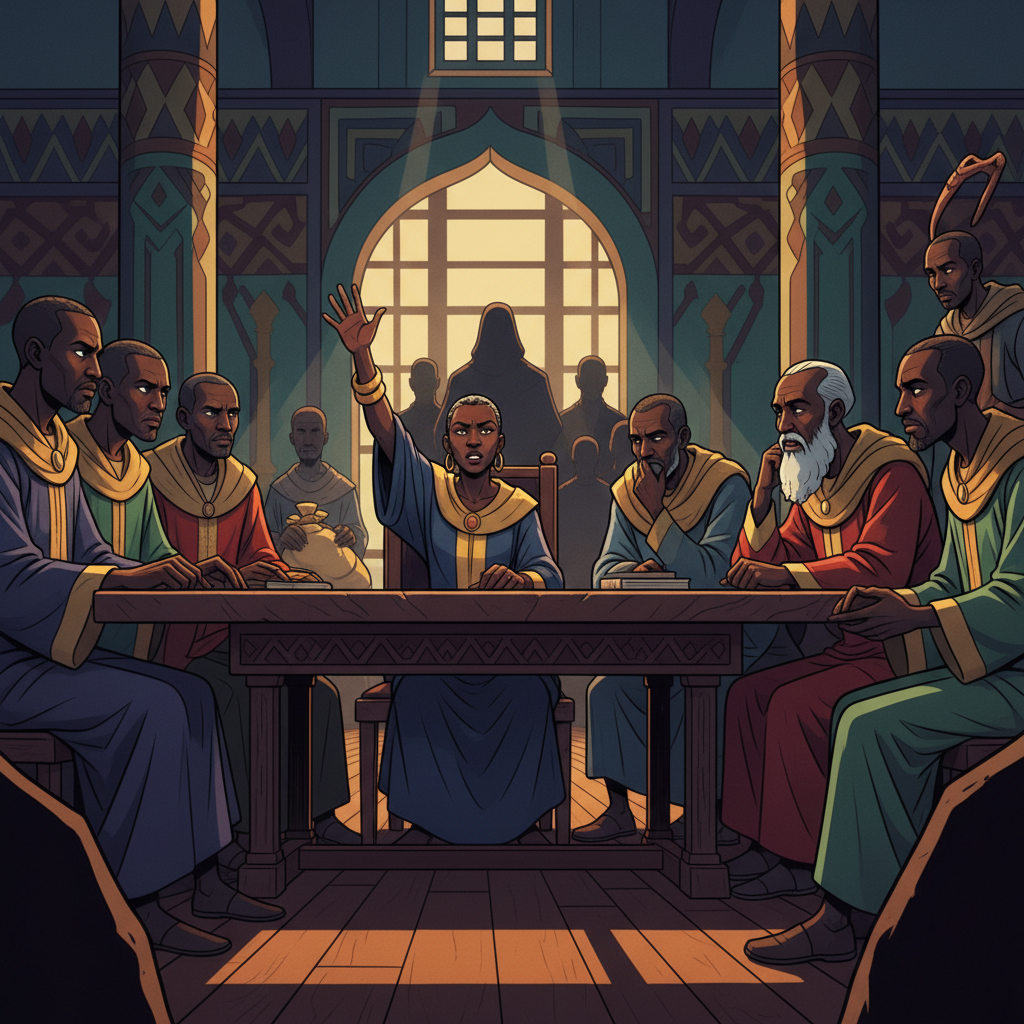
The debate was fierce, touching on the very soul of Sankore. “Is it not our duty to illuminate the world?” one venerable scholar, Seba Bakari, argued. “To hoard knowledge is a form of isfet, a denial of its purpose.” Another, Seba Mariama, countered, her voice firm, “But to allow our wisdom to be taken without context, without acknowledgement, is to allow its truth to be distorted, its origins obscured. What justice is there in that? John Henrik Clarke would remind us that our intellectual agency, our capacity to create and define our own narratives, is paramount. If we do not protect our knowledge, who will defend its African identity?” The economic implications were also weighed: Timbuktu thrived on trade, and offending powerful foreign merchants carried a significant risk.
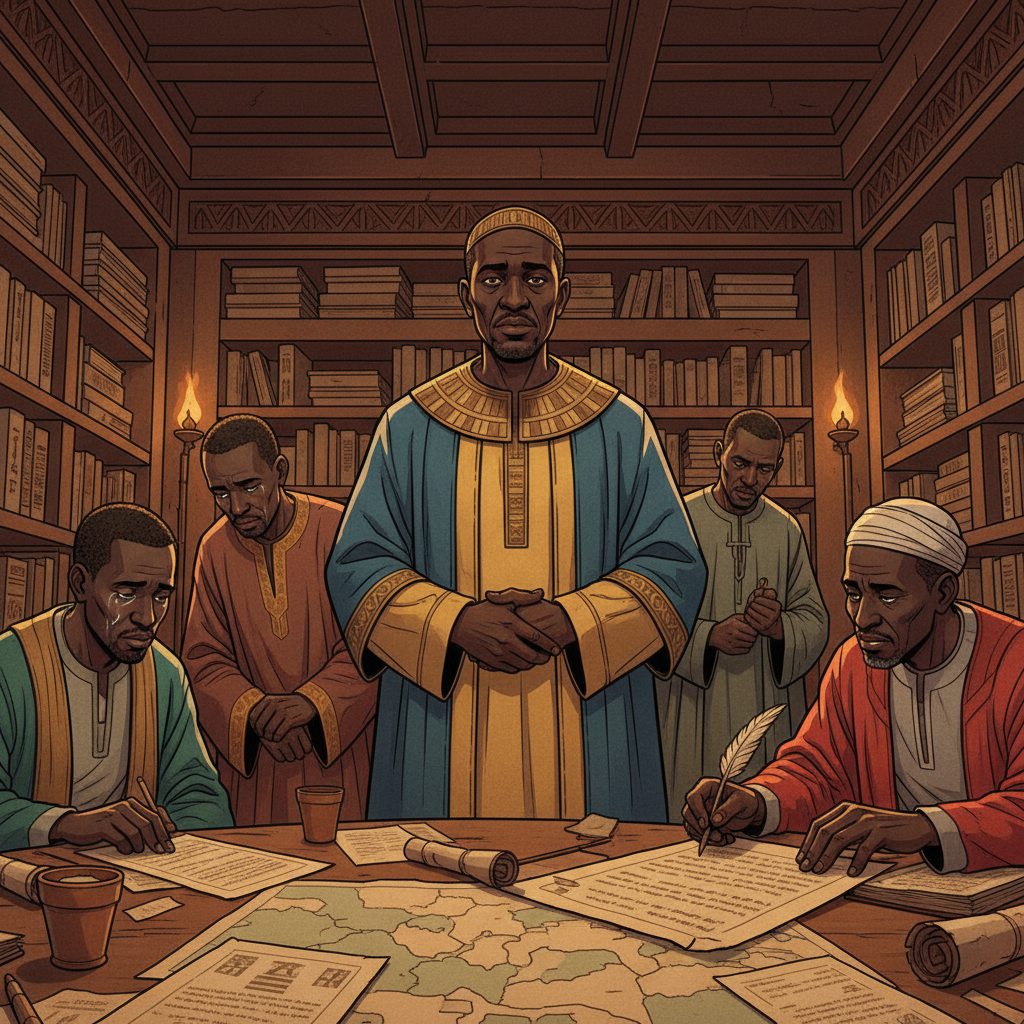
After days of intense discussion, fueled by late-night vigils and profound introspection, a difficult decision was reached. It was a compromise, a complex attempt to uphold Maat in the face of ambiguity. The council decided to implement stricter controls on manuscript access and copying, particularly for certain sensitive texts. Kai, remorseful and humbled, was to be publicly censured and reassigned to less sensitive duties, his brilliance now serving as a cautionary tale. While outright bans on foreign scholars were deemed too extreme for the spirit of open learning, a new system of reciprocal exchange was proposed, demanding that any copied knowledge be accompanied by clear attribution and a commitment to genuine partnership, embodying the spirit of ubuntu. The future, they knew, held many uncertainties, but their commitment to the integrity of Sankore’s legacy remained unshakeable.
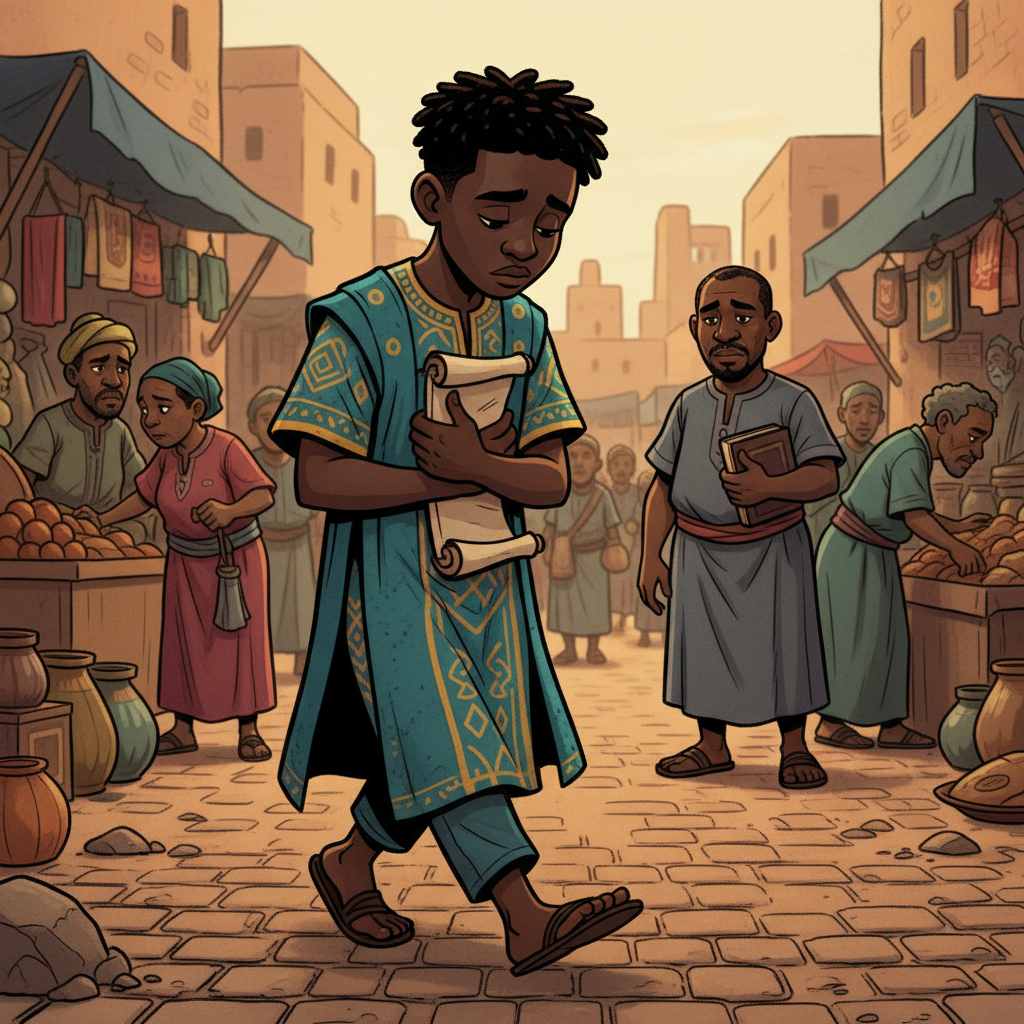
The immediate aftermath was unsettling. Some foreign merchants, accustomed to easier access, took their trade elsewhere, causing a minor economic tremor in the bustling markets of Djenne. Kai, once a rising star, now walked with his head bowed, his vibrant energy muted by shame. Seba Amadou felt the weight of the decision, knowing that even a path chosen with the purest intention could cause ripples of discomfort. Yet, he also knew that true Maat sometimes demanded uncomfortable truths and difficult sacrifices. The challenge was not just about stopping the illicit copying, but about re-educating their own people on the profound value and sovereignty of their intellectual heritage. It was about instilling a deeper understanding of why this knowledge must be protected, not just for them, but for all future generations who would seek to understand the truth of African genius.
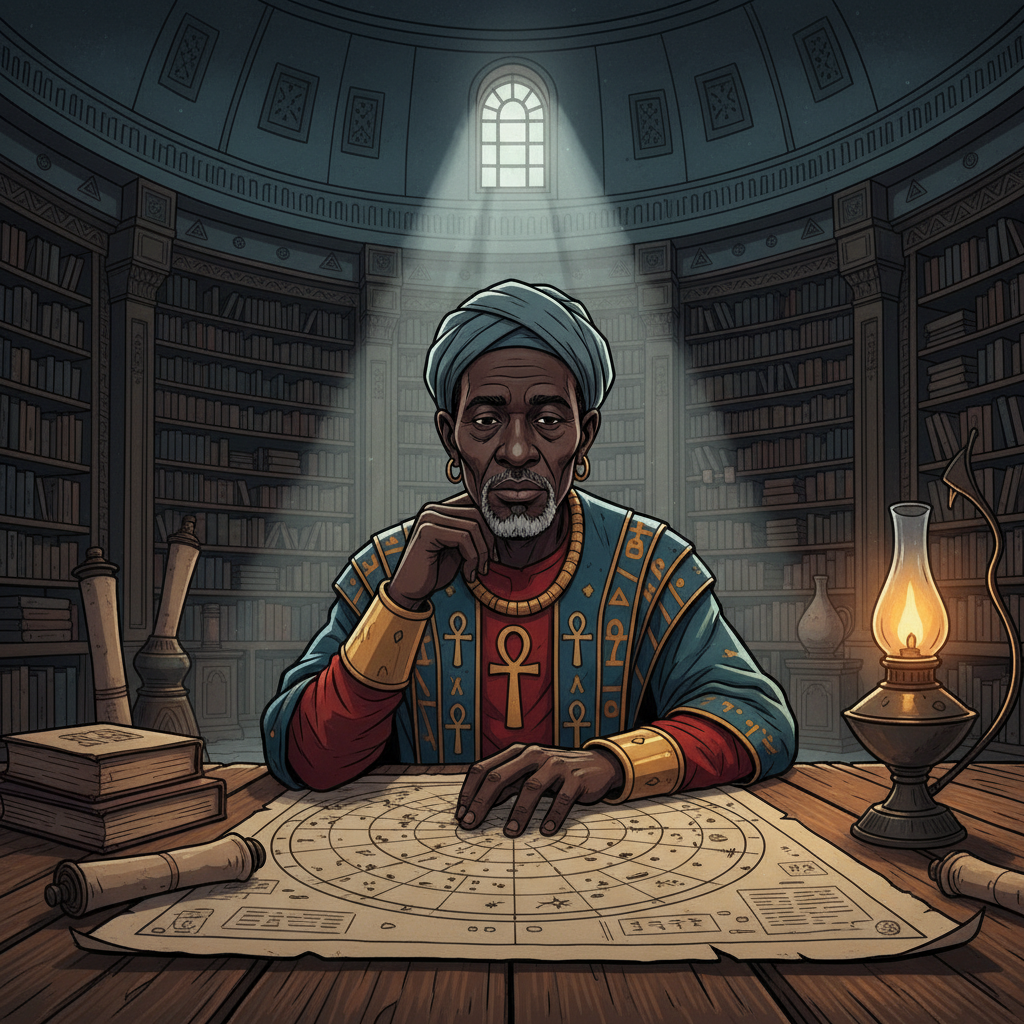
Seba Amadou often found himself gazing at the star charts, contemplating the vastness of the cosmos and the smallness of human endeavors, yet the immense significance of their choices. The silence in the library, once a comforting hum, now held a new, watchful quality. He understood that the battle for knowledge was never truly over. It was a continuous struggle against isfet, against those who would twist truth for power or profit. He knew that the seeds of doubt about African intellectual capacity would one day be sown by those who benefited from its theft, just as Asa Hilliard would later articulate the systematic denial and misrepresentation of African contributions to world civilization. Their vigilance was not merely about guarding manuscripts; it was about safeguarding the very identity and dignity of their people.
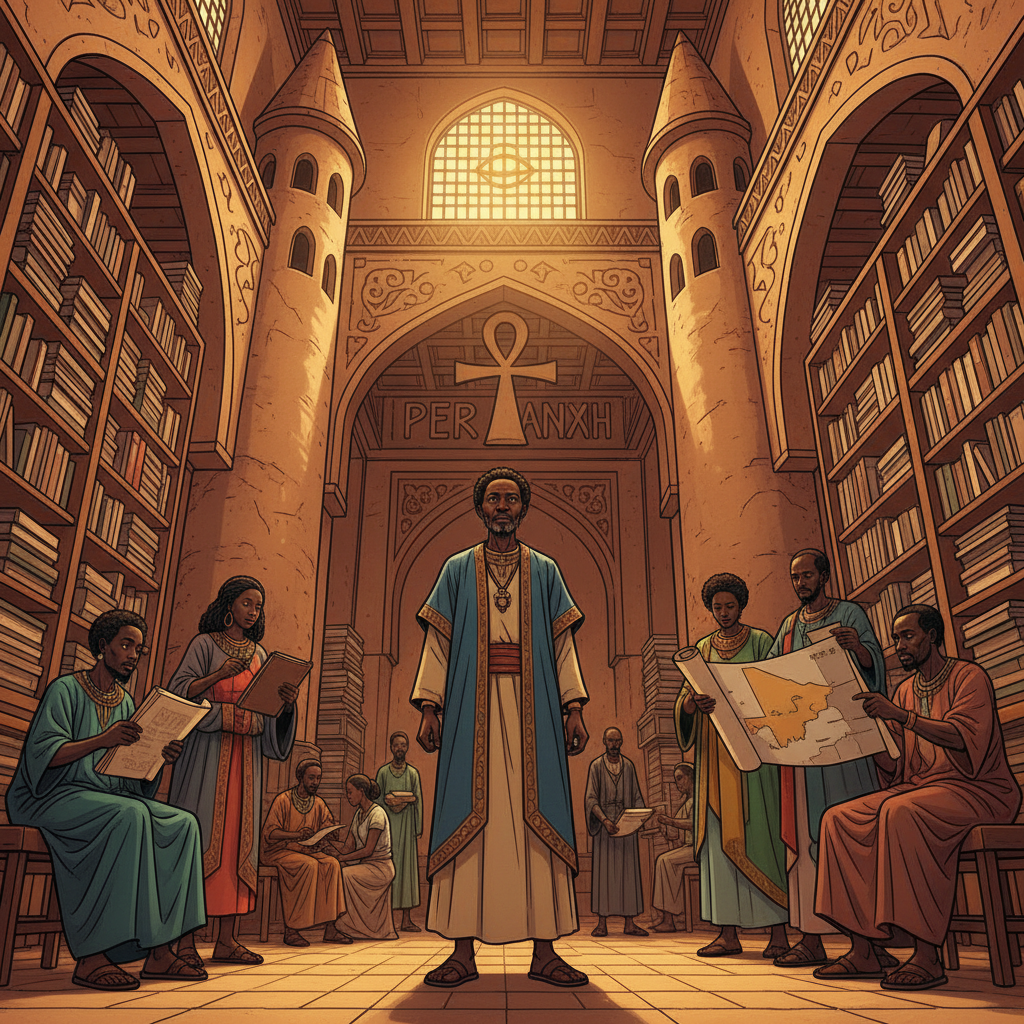
Yet, despite the anxieties, a renewed sense of purpose settled over Sankore. The scholars, now more acutely aware of the external gaze upon their treasured texts, began to redouble their efforts in preserving, annotating, and creating new works. They established stronger internal systems for knowledge dissemination within the empire, ensuring that the people of Mali and Songhai were the first and foremost beneficiaries of their own genius. The University, now more vigilant, became a fortress of intellectual integrity, a per-ankh, a house of life, dedicated not just to acquiring knowledge but to understanding its profound implications for cultural sovereignty and self-determination. The teachings of ancient Kemet resonated anew: knowledge was power, and its control was vital to a people’s destiny.
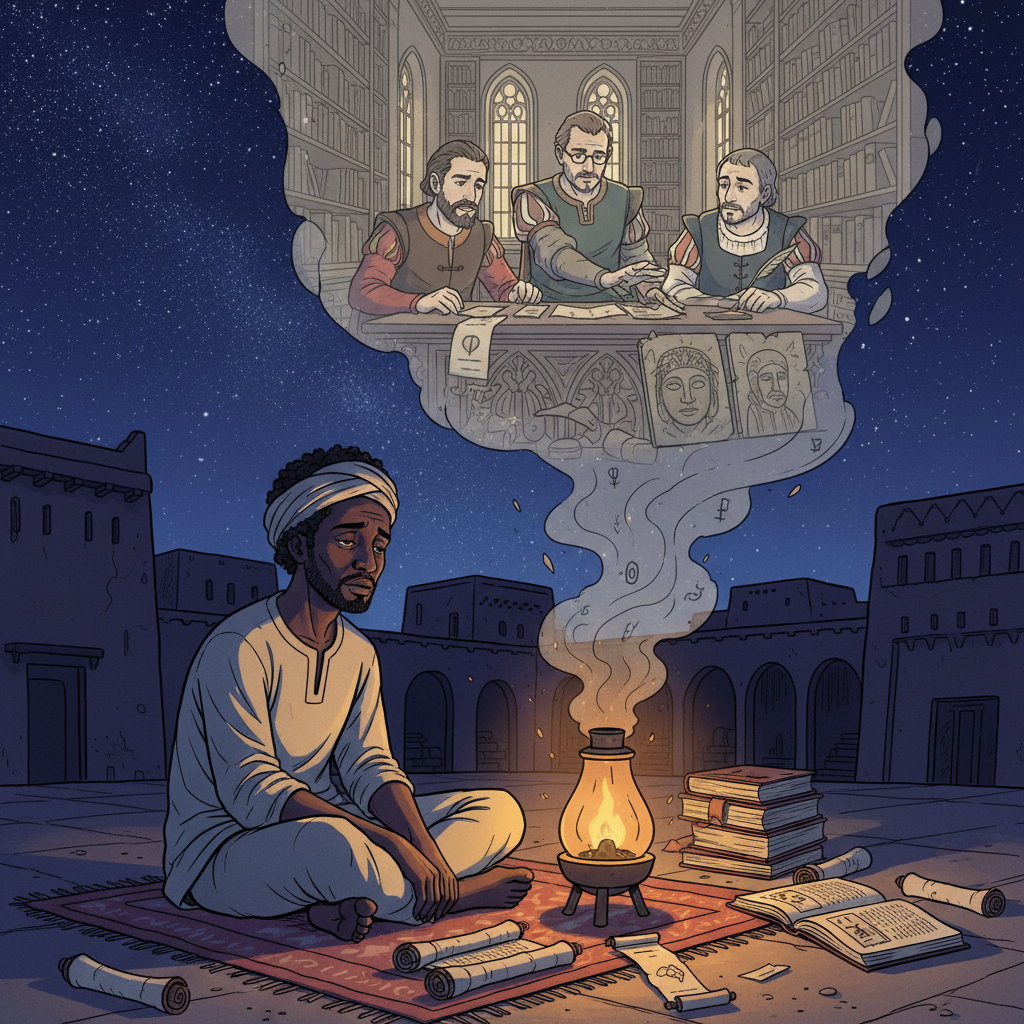
Years passed. The clandestine copying largely ceased, though Amadou knew the desire for Sankore’s treasures abroad never truly vanished. He often wondered about the fate of the manuscripts that had already left, carried across the Sahara, eventually perhaps across seas. He imagined them resting in distant libraries, their African origins slowly forgotten or deliberately obscured by those who would claim their brilliance. He saw a future where European scholars, sitting on these very texts, would deny African literacy, deny the existence of a grand intellectual tradition in Timbuktu. This future denial was the ultimate form of isfet, a betrayal of truth that would cast a long, dark shadow over the light of Sankore.
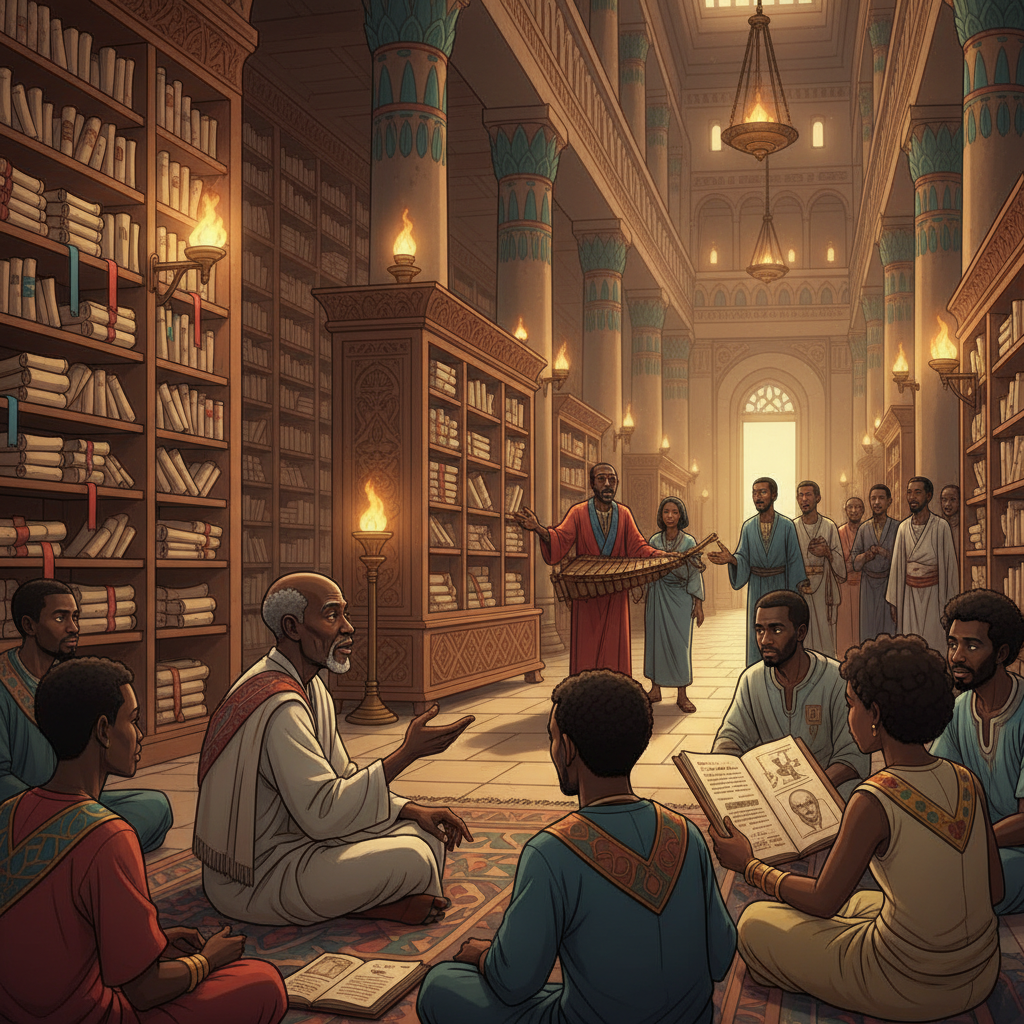
But the true essence of Sankore, the spirit of its learning, remained. The intricate astronomical calculations, the sophisticated medical practices, the profound legal philosophies — these continued to be taught, debated, and expanded upon by generations of African sebas. The living traditions, the oral histories recounted by griots like Djeli Kaba, ensured that the knowledge was not confined to parchment alone. It lived in the minds and hearts of the people, woven into the fabric of their daily lives. The silence in the library was not one of emptiness, but of reverence, a deep, resonant quietude where truth was cultivated, and the ankh of wisdom continued to flow, undisturbed by the clamor of external avarice.
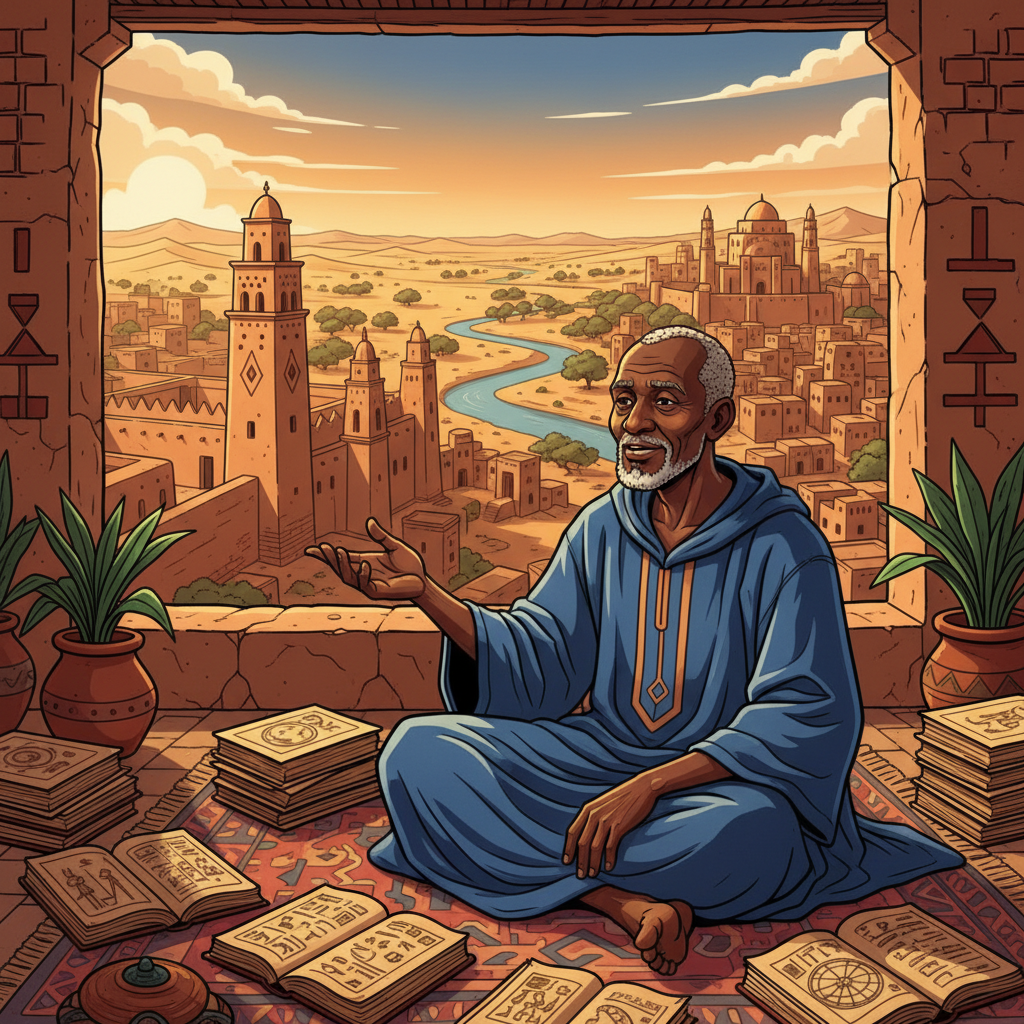
Seba Amadou, now an elder statesman of the mind, reflected on the immense responsibility of stewardship. The University of Sankore, alongside its sister city, Djenne, stood as a monument to what African intellect could achieve. The challenge had forced them to define what it meant to hold knowledge, to share it, and to protect it according to Maat. It was a constant negotiation, a delicate balance. The manuscripts, though sometimes silent to the outside world, continued to speak volumes within their walls, their heka resonating through time, waiting for a future generation to fully reclaim and amplify their powerful, undeniable truth.