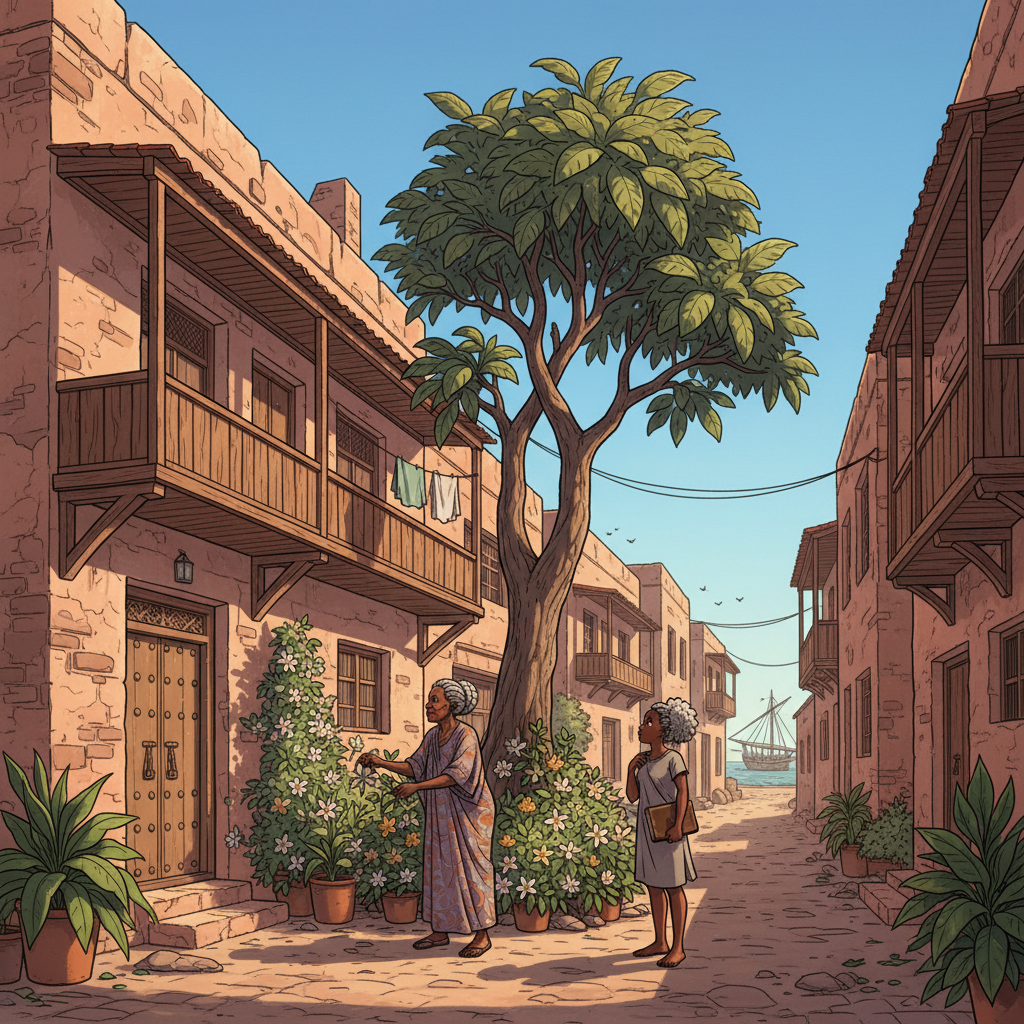
Halima was twelve years old, the daughter of Zuhura the ledger-keeper and Saidi the textile-merchant, and she had grown up in a courtyard house on the third street back from the Mombasa harbor. The house was coral-stone, two stories tall, with a small inner courtyard where her grandmother Bi Mwana kept four kinds of jasmine and a single old kola tree she had brought as a sapling from the Comoros forty years ago. Halima's family lived from the Indian Ocean monsoon trade. From November through April, when the monsoon blew from the northeast, ships came down from Hormuz and Surat and Cambay and Calicut. From May through October, when the monsoon reversed, ships sailed back the other way, carrying gold and ivory and iron and timber from East Africa to all the harbors of the eastern sea.
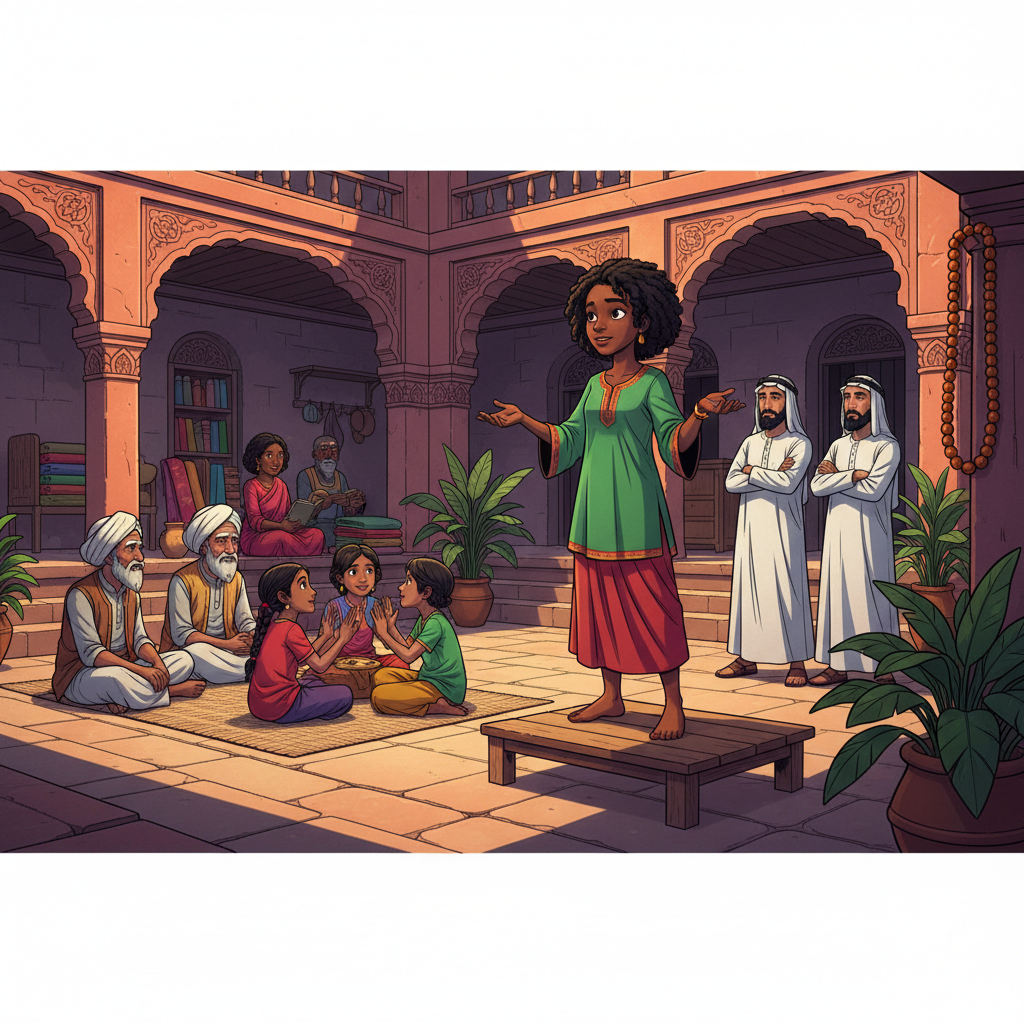
The Swahili coast was Halima's whole world and also one stop on a much larger road. She spoke Kiswahili at home with her parents and grandmother, Arabic with the visiting traders from Yemen and Oman, and a careful child's Hindi-and-Gujarati with the Indian merchants who came every monsoon-season. The Hindi-Gujarati she had learned not from books but from playing with the children of one specific merchant — a Gujarati man named Vasava-bhai who had been coming to Mombasa every season since Halima was four. Vasava-bhai had three daughters and a son who were close to Halima's age. They had taught her, over the years, the words for water and rice and how-are-you and please-pass-the-bread. In return, Halima had taught them Kiswahili words for the same things. The trade in words was older than the trade in goods.
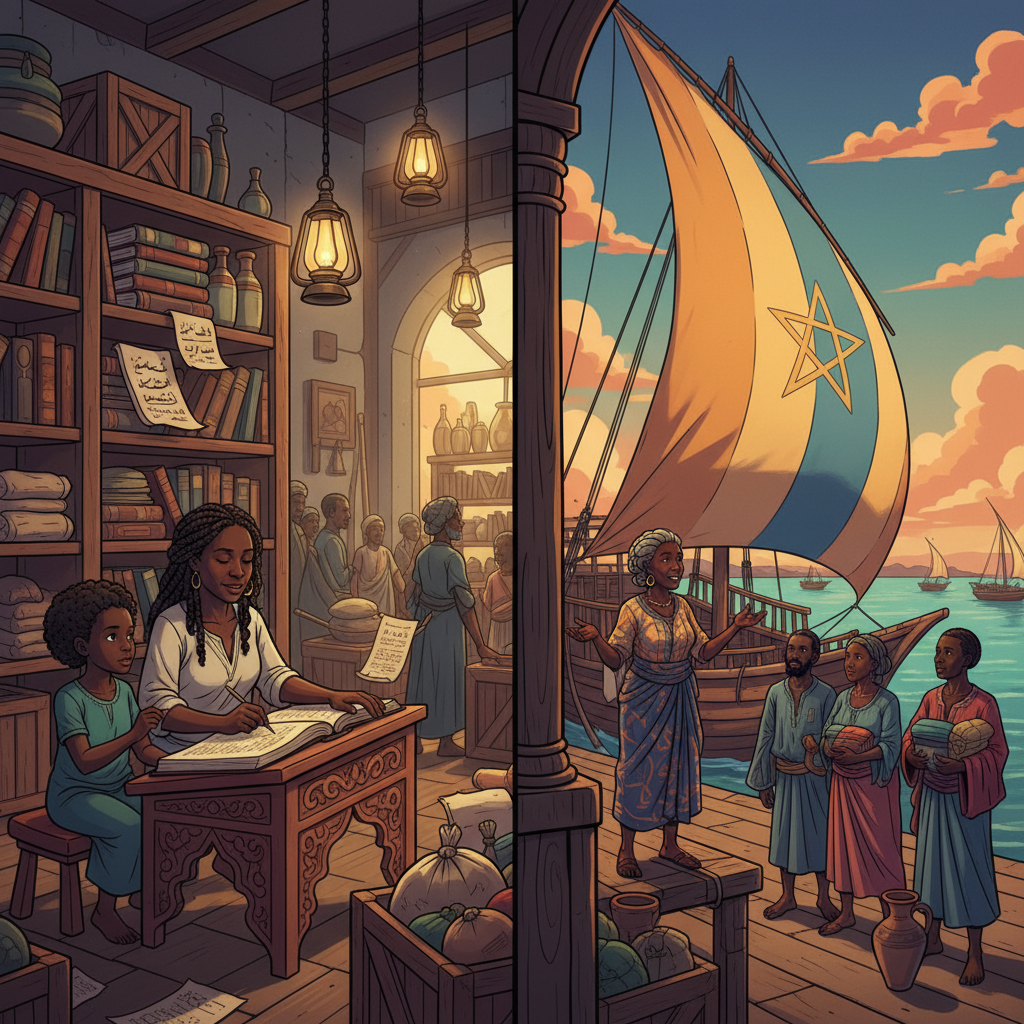
Halima's mother Zuhura was the family's ledger-keeper. She worked at a low cedar writing-desk in the back of the family warehouse, where she recorded every transaction in three scripts: Kiswahili in Arabic letters for the family's working notes, formal Arabic for the contracts that went to the sultan's clerks, and Gujarati script for the receipts that went back to India with Vasava-bhai's ships. Halima had been her mother's helper since she was eight. She could read all three scripts. She could write in two. She was learning Gujarati script slowly because the consonant-clusters were difficult and her mother said they took years to get truly right. Halima's grandmother Bi Mwana ran her own small dhow ship — the Nyota, the Star — and traded directly with three Comorian merchant families. She was a respected senior captain on the Mombasa waterfront. She was sixty-two years old.
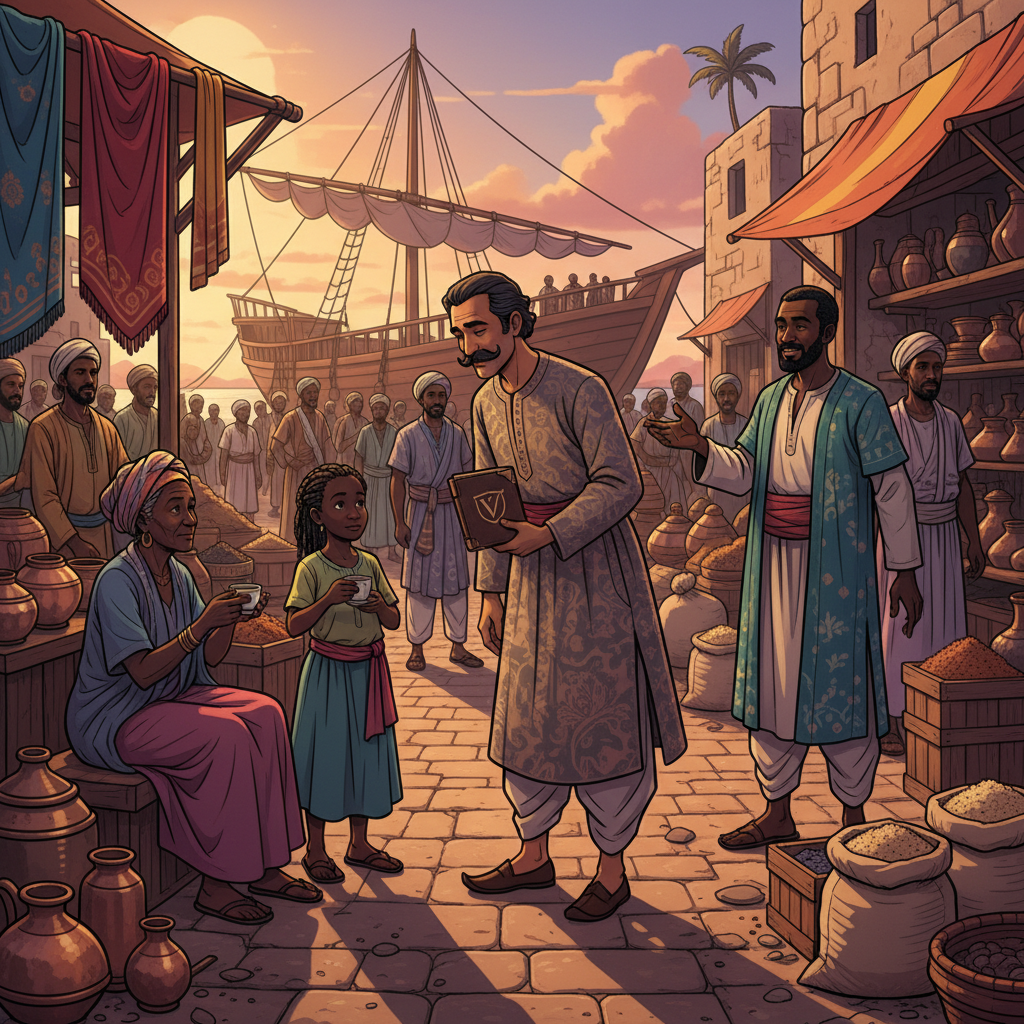
On the third day of the trading season in Halima's twelfth year, Vasava-bhai arrived. He was a tall man in his forties, with the warm brown skin of a coastal Gujarati and a heavy mustache he kept neatly trimmed. He carried a small leather-bound book everywhere he went, the family ledger of his Surat-based trading house. He greeted Halima's father Saidi at the harbor, bowed to Bi Mwana with the careful formality that Comorian-Gujarati trade had developed over two centuries, and accepted the small cup of cardamom-tea that Halima offered him at the warehouse threshold. He did not, this season, bring his three daughters and son. Halima asked after them carefully in Gujarati. Vasava-bhai answered, briefly: they had stayed in Surat with their mother. He did not say why. Halima noticed but did not press.
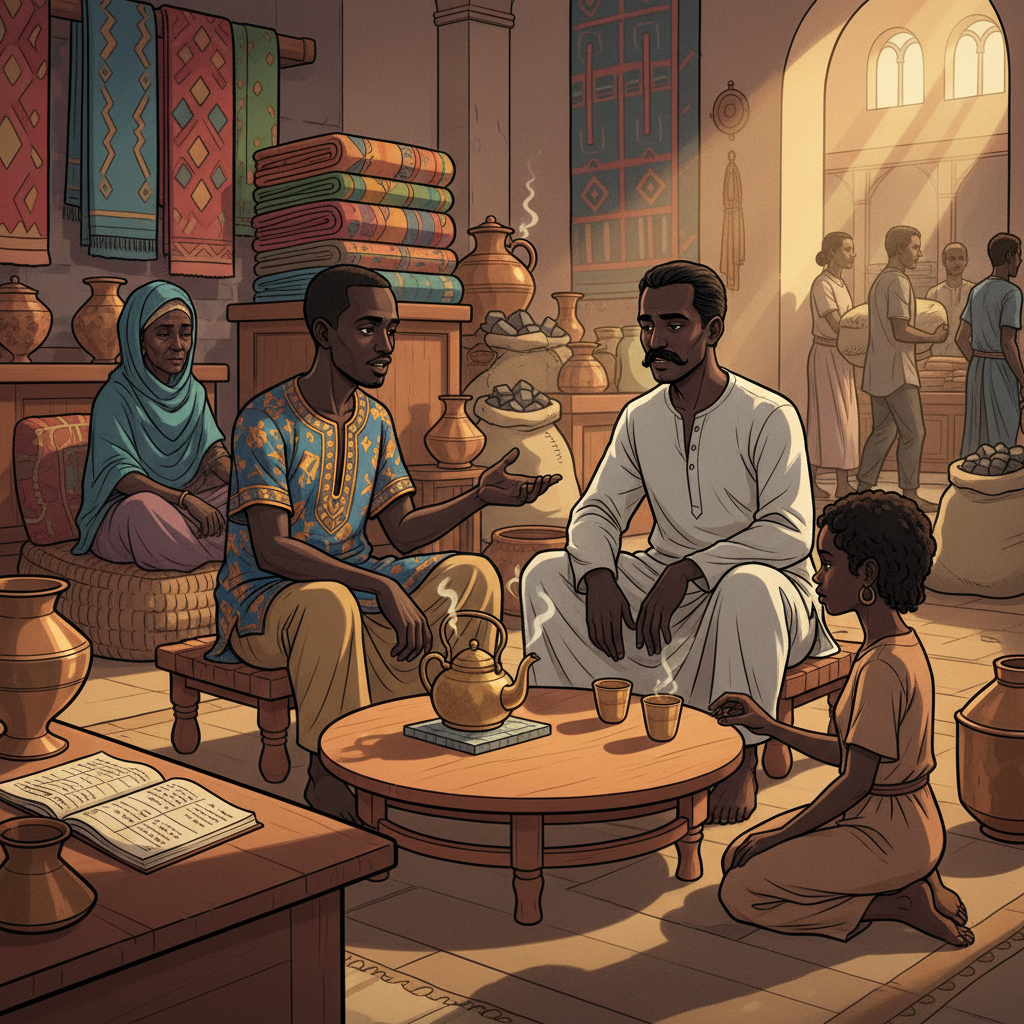
The negotiation was for a season's worth of Gujarati cotton textiles. Saidi wanted three hundred bolts of the fine block-printed cloth that the women of Cambay wove. Vasava-bhai had brought three hundred and twenty bolts in his ship's hold. The price would be settled in gold dust, ivory, and a small portion of iron-bar from the southern interior. The two men sat on low cedar stools across a polished sandalwood low-table in the warehouse's reception room. Zuhura sat at the side-desk with her ledger open. Bi Mwana sat on a cushion against the far wall, listening. Halima poured the tea — three small brass cups, the cardamom and clove still steaming — and set the brass teapot down on its tile at the center of the low-table. She knelt at the edge of the room. She would refill the cups as needed.
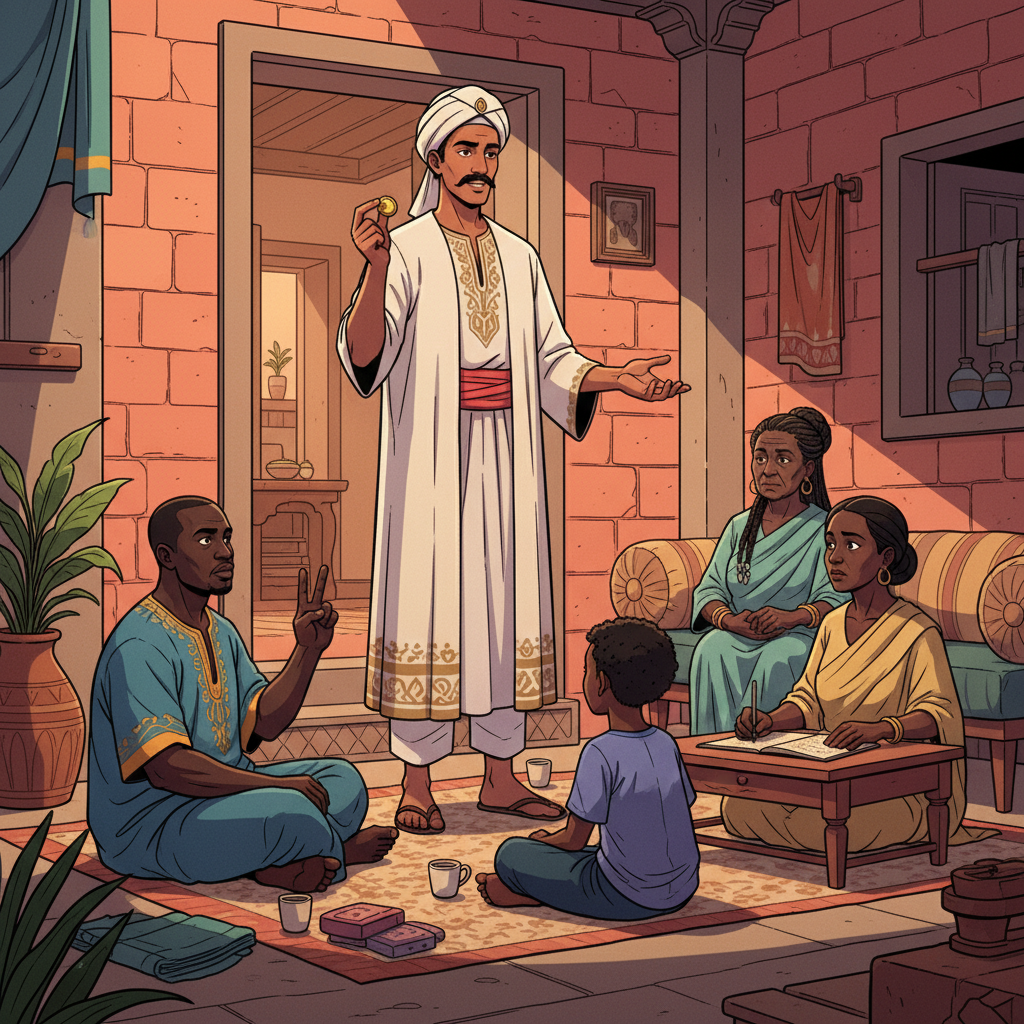
The opening prices were spoken. Vasava-bhai named twelve mithqal of gold per bolt, with the iron-bar and ivory adjustments to follow. Saidi countered at nine mithqal. Vasava-bhai did not move from twelve. Saidi did not move from nine. The first hour passed. The second hour passed. The cups were refilled twice. The gap closed only slightly — Saidi to ten, Vasava-bhai to eleven and a half. Halima had heard her father negotiate every monsoon-season for as long as she could remember. This was not how it usually went. Usually by the second hour the men had found a middle and were laughing. Today Vasava-bhai's face was not laughing. Saidi's shoulders were not relaxing. Zuhura at the side-desk had stopped writing. Bi Mwana on the cushion was watching the merchant's face very carefully. The room was beginning to cool.
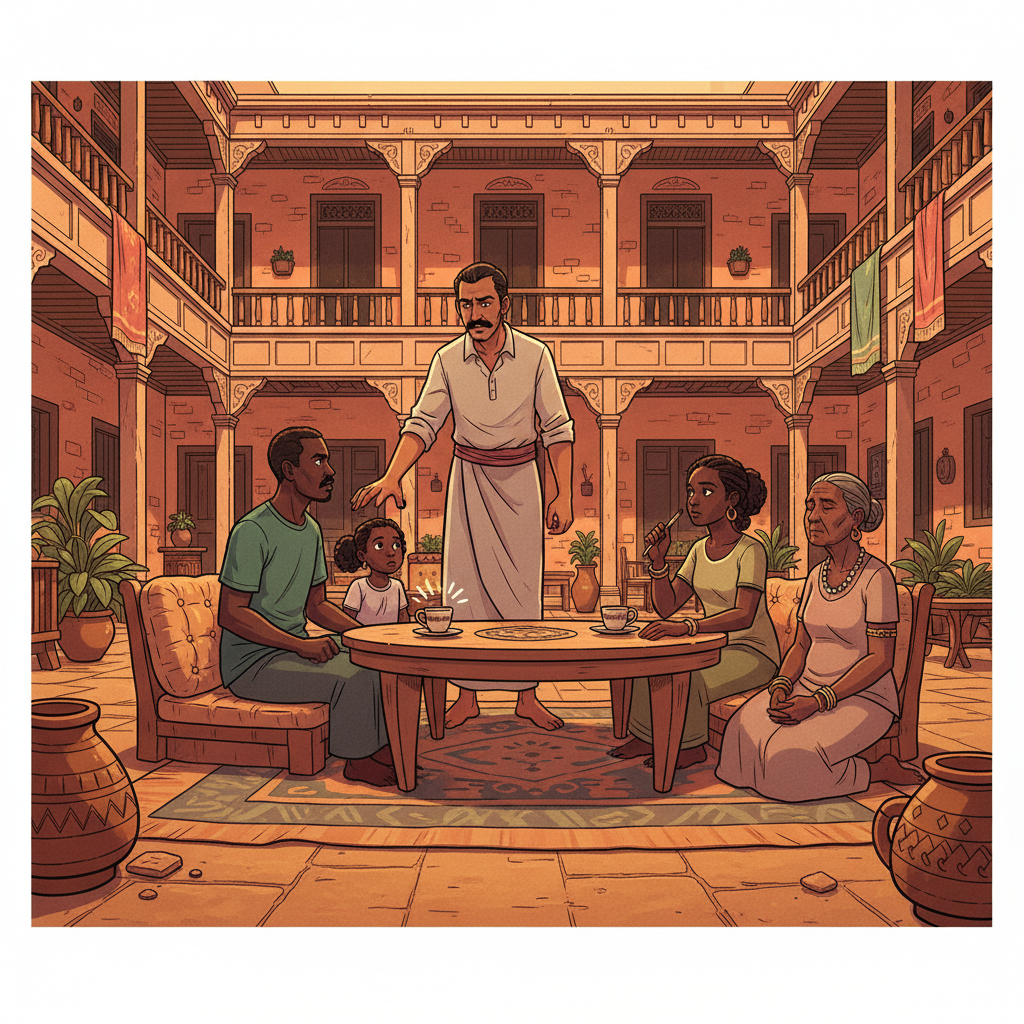
At the start of the third hour, Vasava-bhai set down his cup harder than he had set it down before. The sandalwood table made a small sharp sound. He spoke a single sentence in Gujarati to himself — a sentence Halima only half-understood, but the half she did was: "...not the year for this." He looked up at Saidi. He said, in the formal Arabic both men used when the discussion was beginning to feel impossible: "Eleven and a half mithqal is my final offer. I cannot go lower. If your house cannot meet eleven and a half, I will take the cloth to Kilwa next week." Saidi did not answer immediately. Halima saw her father's jaw set. She saw her mother's pen lift from the ledger and rest against her cheek. She saw her grandmother Bi Mwana close her eyes for one long heartbeat.
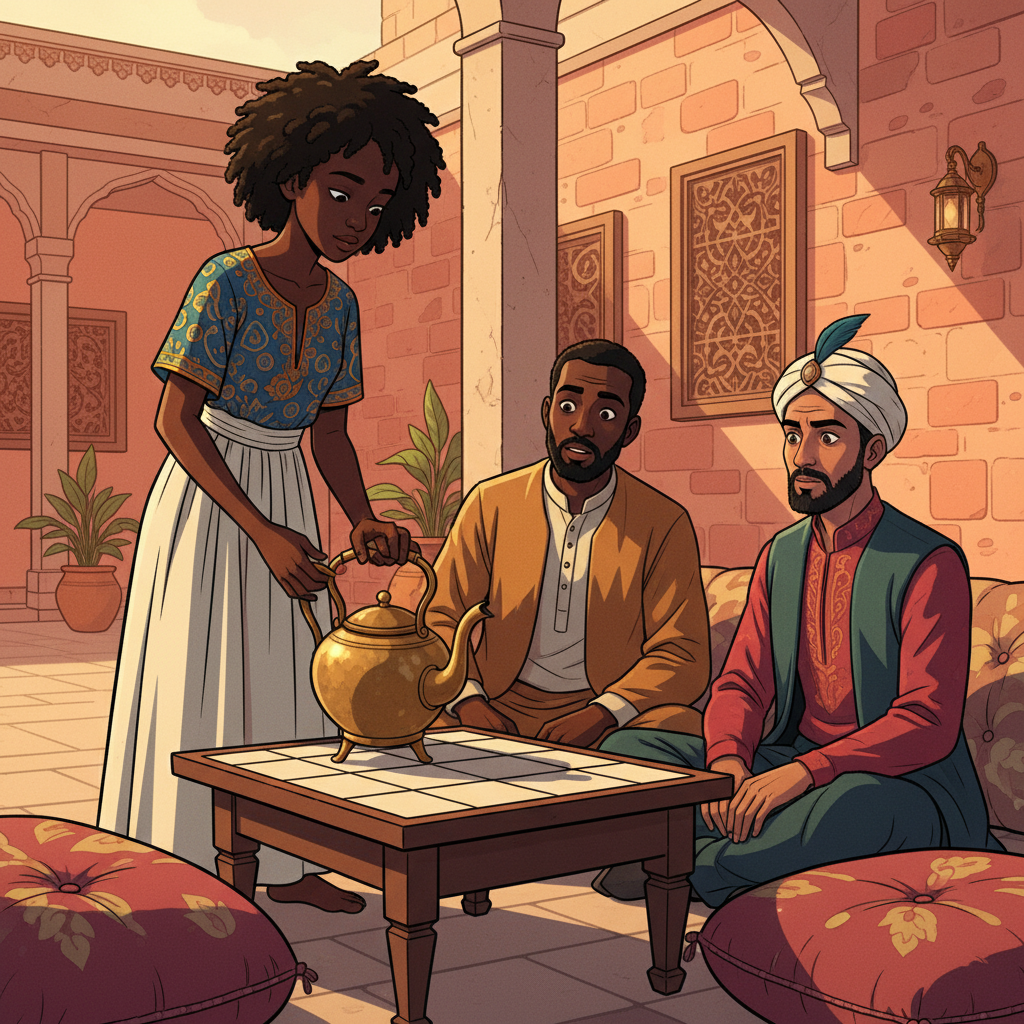
Halima moved. She did not plan it. She picked up the brass teapot from its tile. The teapot was still warm — Zuhura had brewed a fresh pot only ten minutes ago. She walked the two paces to the low-table. She did not refill any of the three cups. She set the teapot back down on its tile, very carefully, and let her hand rest on the brass handle. The handle was warm against her palm. The two men looked at her. Vasava-bhai's face did not change, but his eyes — sharper than they had been a moment before — followed her hand on the teapot. Halima said, in her careful child's Gujarati, the four words she had practiced over eight years of monsoon-seasons with his children: "Aapakaa baalakon kaa kya haal hai?" How are your children?
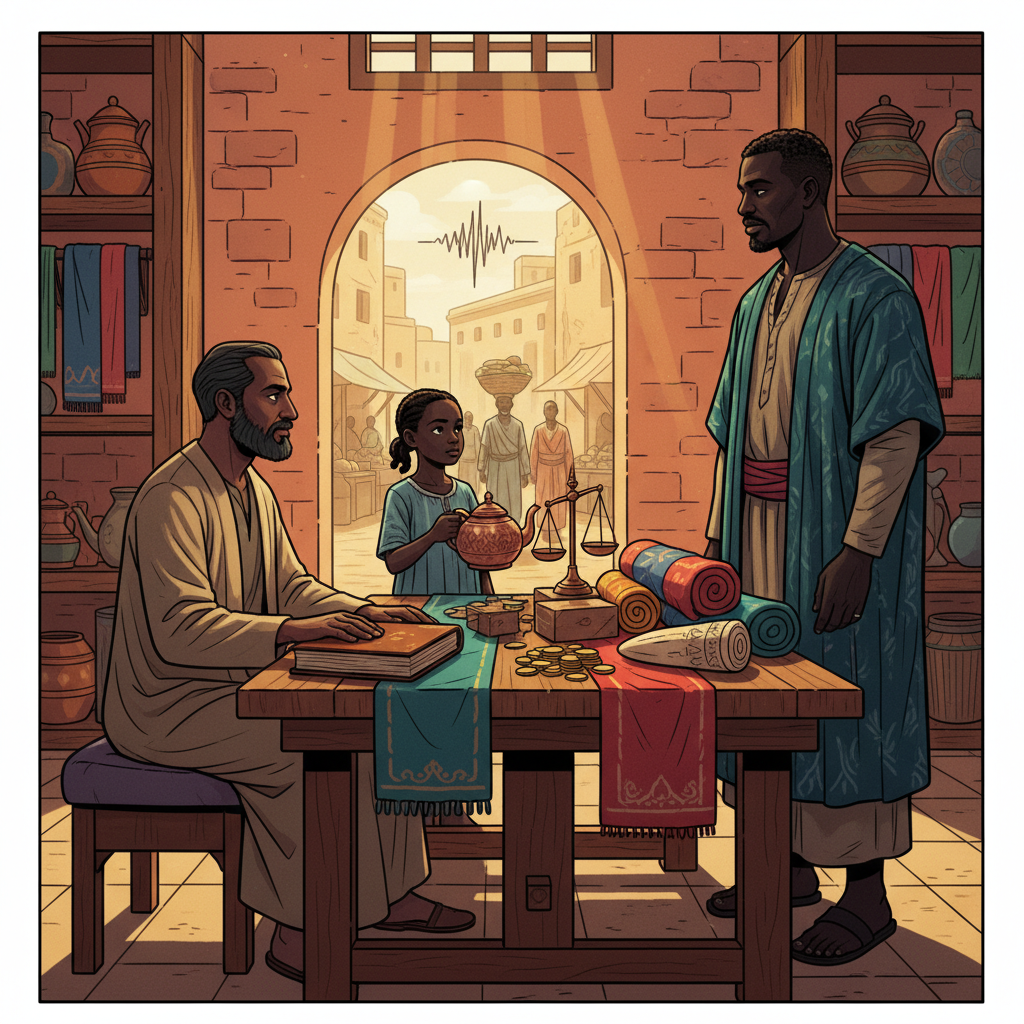
For a long moment Vasava-bhai did not speak. The room was very quiet. Halima could hear, through the warehouse wall, the distant call of a fish-seller in the street. She kept her hand on the teapot. She did not look away from Vasava-bhai's face. The merchant's expression was almost unchanged — but a single muscle at the corner of his mouth moved. He set his Arabic-Gujarati ledger-book down on the table beside him, very carefully, the way one sets down something one had been gripping. He drew one slow breath. He looked at Saidi for one heartbeat. Then he looked back at Halima. He said, in slow careful Gujarati so she would understand every word: "Anjali is well. She is twelve now. She asks after you. Meera was sick this winter. She is recovering. The younger girl Asha is well. My son Mahesh is fourteen and apprenticing with his uncle in Cambay."
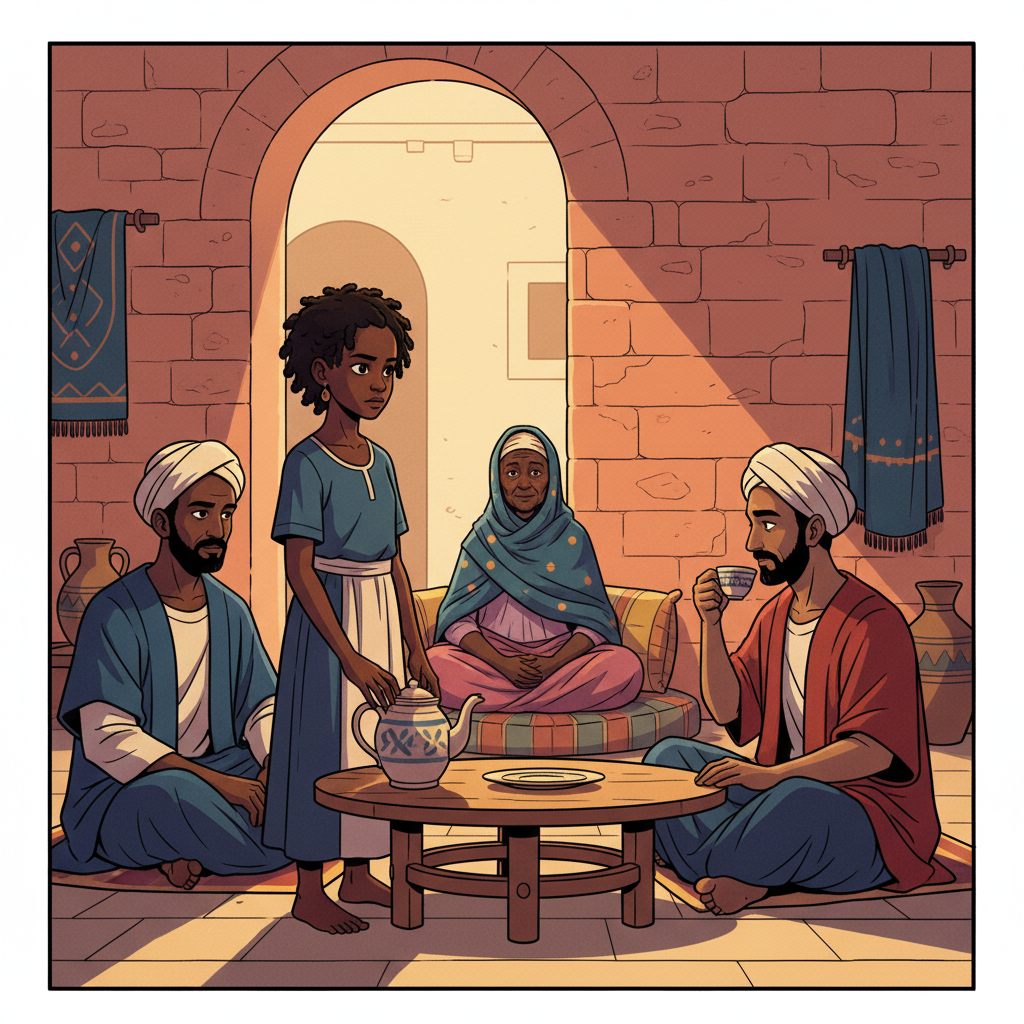
Halima nodded slowly. She did not smile yet. She kept her hand on the teapot. She said, in Gujarati: "Please tell Meera I prayed for her health. Please tell Anjali I have been practicing the song she taught me at the last monsoon's end." She paused. She added, in Kiswahili so her grandmother could hear, and then in Arabic so her father could hear, the same line a third time: "She has been practicing." Bi Mwana on her cushion against the far wall opened her eyes. She smiled, for the first time since the negotiation had begun, a very small smile. Saidi at the low-table did not move. Vasava-bhai picked up his cup of tea. He drank the rest of it slowly. He set the empty cup down. He turned to Saidi.
"Eleven mithqal," Vasava-bhai said. "Not eleven and a half. Eleven. With the iron-bar adjustment as I named. With the small additional shipment of cardamom that I had not mentioned, six sacks, no extra charge, for your daughter's patience." He paused. "And I will bring my daughters next monsoon. Anjali asks every season." Saidi did not answer immediately. He looked at Halima. He looked at Bi Mwana on her cushion. Bi Mwana nodded once. Saidi turned back to Vasava-bhai. "Eleven mithqal," he said. "Accepted. We are honored to do business with the house of Vasava-bhai of Surat. Zuhura will draft the contract this afternoon." Vasava-bhai nodded. He picked up his ledger. He stood. He bowed to Saidi the formal merchant-bow. He bowed to Bi Mwana the deeper Comorian-Gujarati merchant-bow. He bowed, very briefly, to Halima — the small bow given to an apprentice who had been useful.
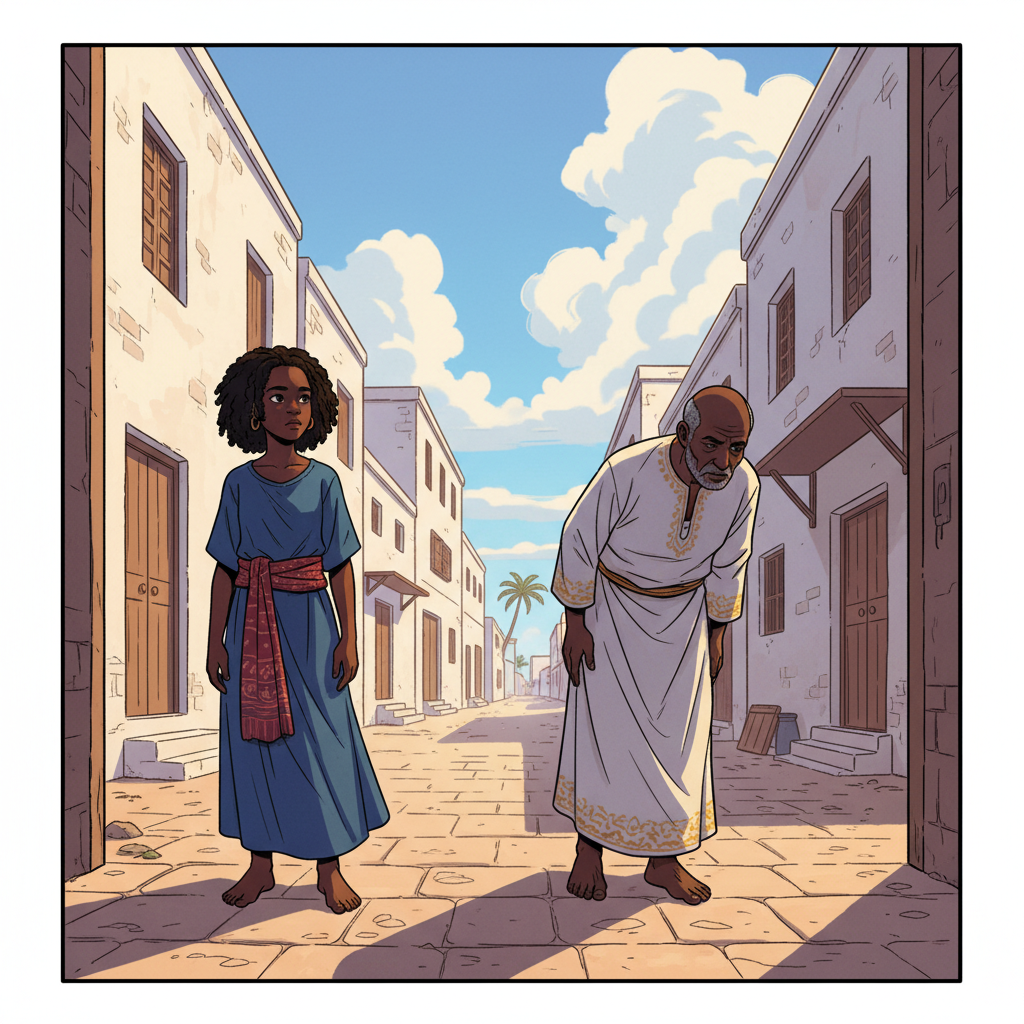
Then he left. Halima walked him to the warehouse threshold. He stopped at the doorway. He did not look at her directly. His face had not warmed. He had not smiled at her once during the whole exchange. He said, very quietly, in Gujarati that only she could hear: "You did a good thing, child. I will not tell you it was easy to be moved by. I have my own pride. I will say only this: next monsoon, my daughters." He bowed once more, the same small apprentice-bow, and walked down the street toward the harbor. Halima watched him go. She did not yet know what to make of his face. He had not softened. He had simply agreed to the price and walked away. She returned to the warehouse. Her grandmother Bi Mwana was waiting in the courtyard.
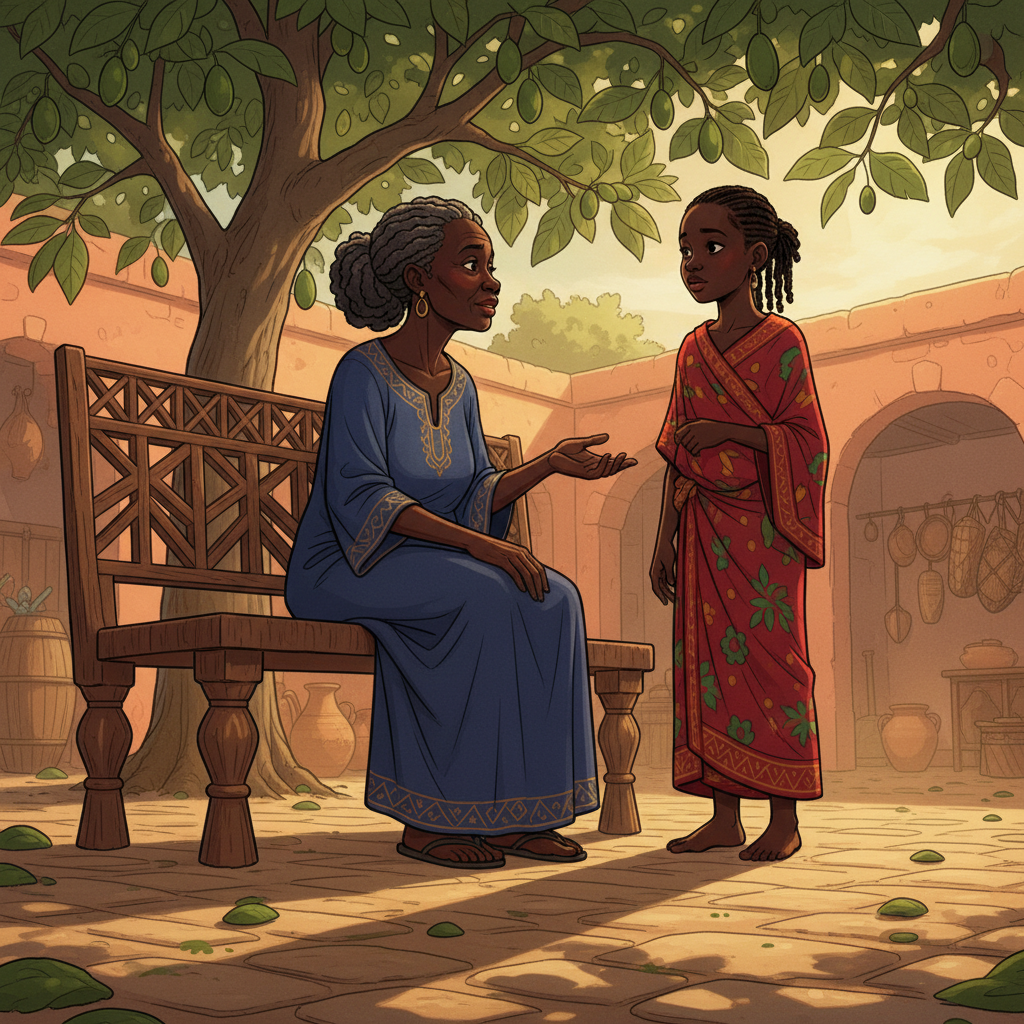
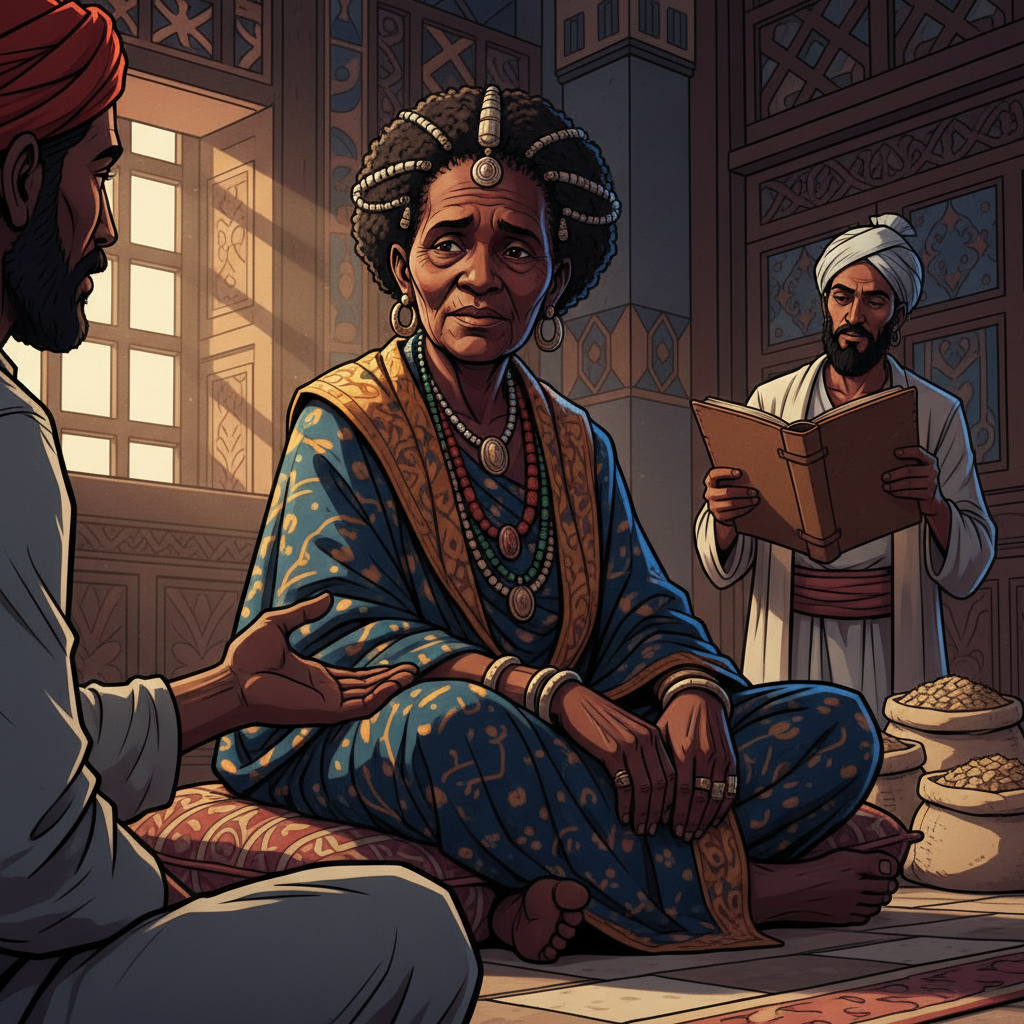
Bi Mwana was sitting on the cedar bench by the kola tree. She gestured for Halima to sit beside her. The afternoon sun was filtering through the kola-tree leaves in soft green patterns across the courtyard floor. Bi Mwana did not speak for a moment. Then she said, in Kiswahili: "Harmony is not agreement, child. Harmony is not even affection. Harmony IS the room remembering it has children in it. Harmony IS the wind willing to carry our words across an ocean it cannot see. Harmony IS the question a small voice can ask when the large voices have run out of questions. That is what Maat-Harmony is, in our coast. He did not smile. You noticed." Halima nodded. "I noticed." Bi Mwana put her own old steady hand on her own knee, palm down — not on Halima's shoulder, not on her hair, just a gesture of attention shared. "Our coast has a saying," she said. "Our people on this coast have always said: we taught the wind to carry our words. The wind does not need to smile back. The wind carries the words. Vasava-bhai will carry your question to Surat. He will tell his daughters. He will tell their mother. He will tell his uncle in Cambay. The wind has caught your words. The smile will arrive later. Maybe years later. Maybe never on his face."
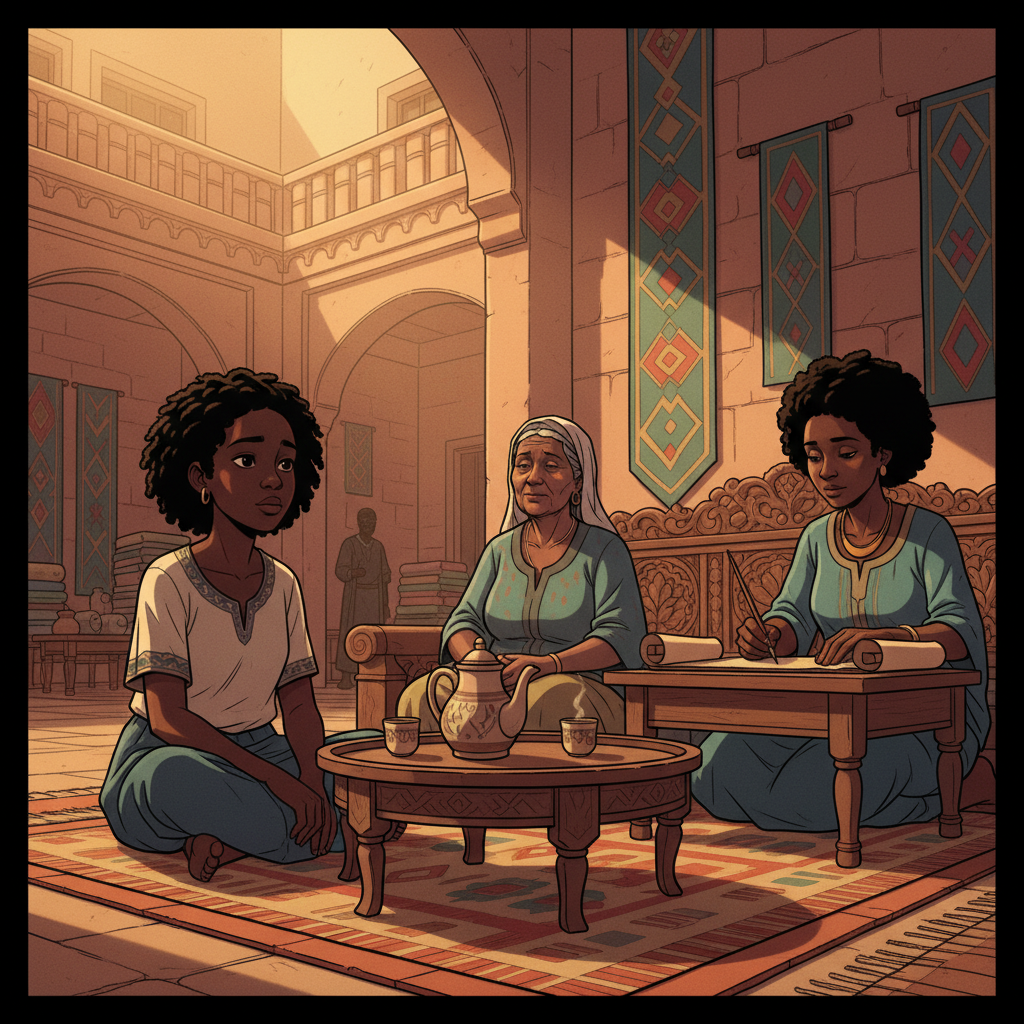
Halima thought about this for a long time. The cardamom-tea was cooling on the low-table in the empty reception room. Her mother was beginning to draft the contract at her side-desk. Her father was somewhere in the warehouse counting bolts. Bi Mwana was sitting beside her, breathing slowly. "Did I do the right thing, Bibi?" Halima asked. Bi Mwana smiled — the very small smile she had given in the reception room. "You poured the tea. Then you asked his children's name. That is a thing a child can do that an adult cannot. The adults had become two men with prices. You made the room have children in it again. That is harmony, child. Not agreement. Harmony. The room had been forgetting it."
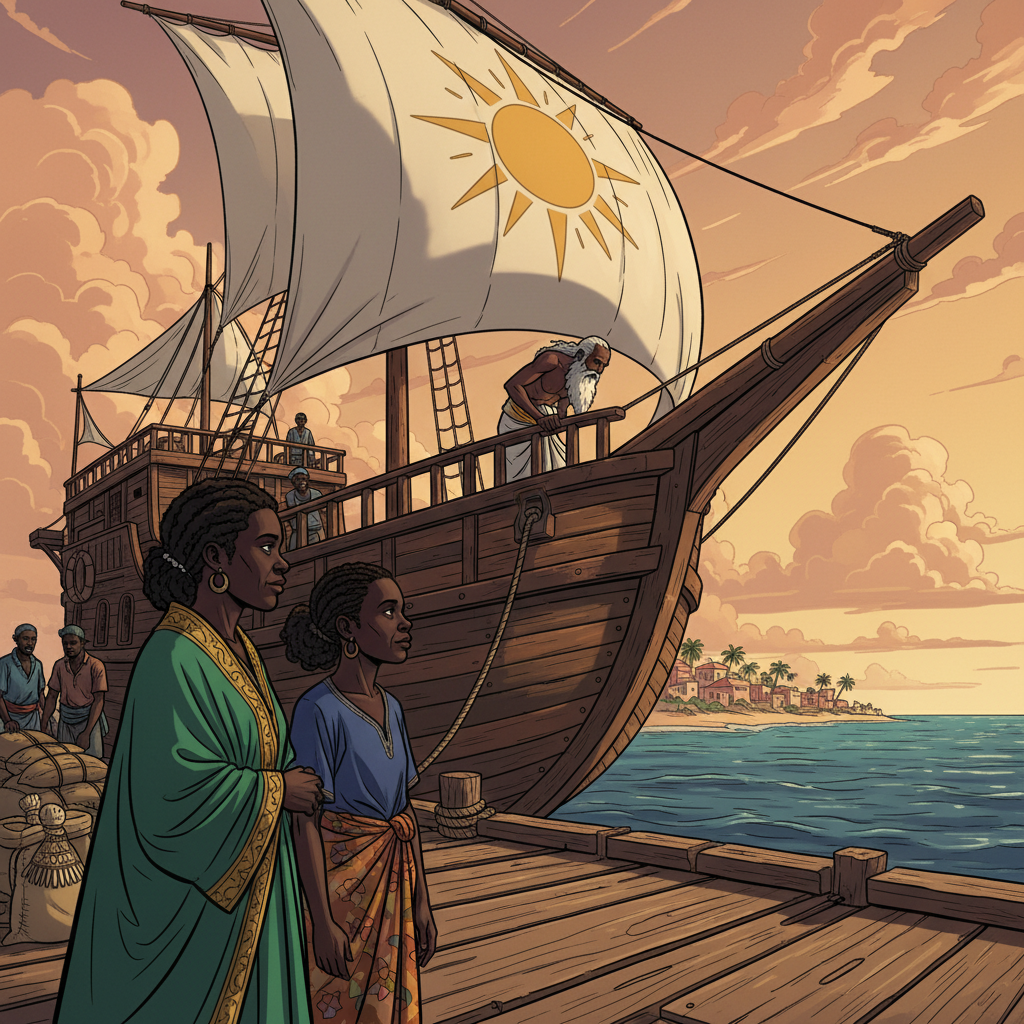
Three months later, when the trading season ended and Vasava-bhai's ship sailed back to Surat with the monsoon, Halima walked down to the harbor with her grandmother to see him off. The Surat dhow was loading the last of its return cargo — Mombasa's gold dust, the small ivory-pieces, the cardamom and clove of the Comoros, the East African iron-bar. Vasava-bhai stood at the rail. He saw Halima at the wharf. He bowed once — the small apprentice-bow. He still did not smile. The Surat dhow caught the wind. It sailed. Halima watched until it was a small speck on the eastern sea. She turned to her grandmother. Bi Mwana said, very quietly: "The wind has the words. We wait."
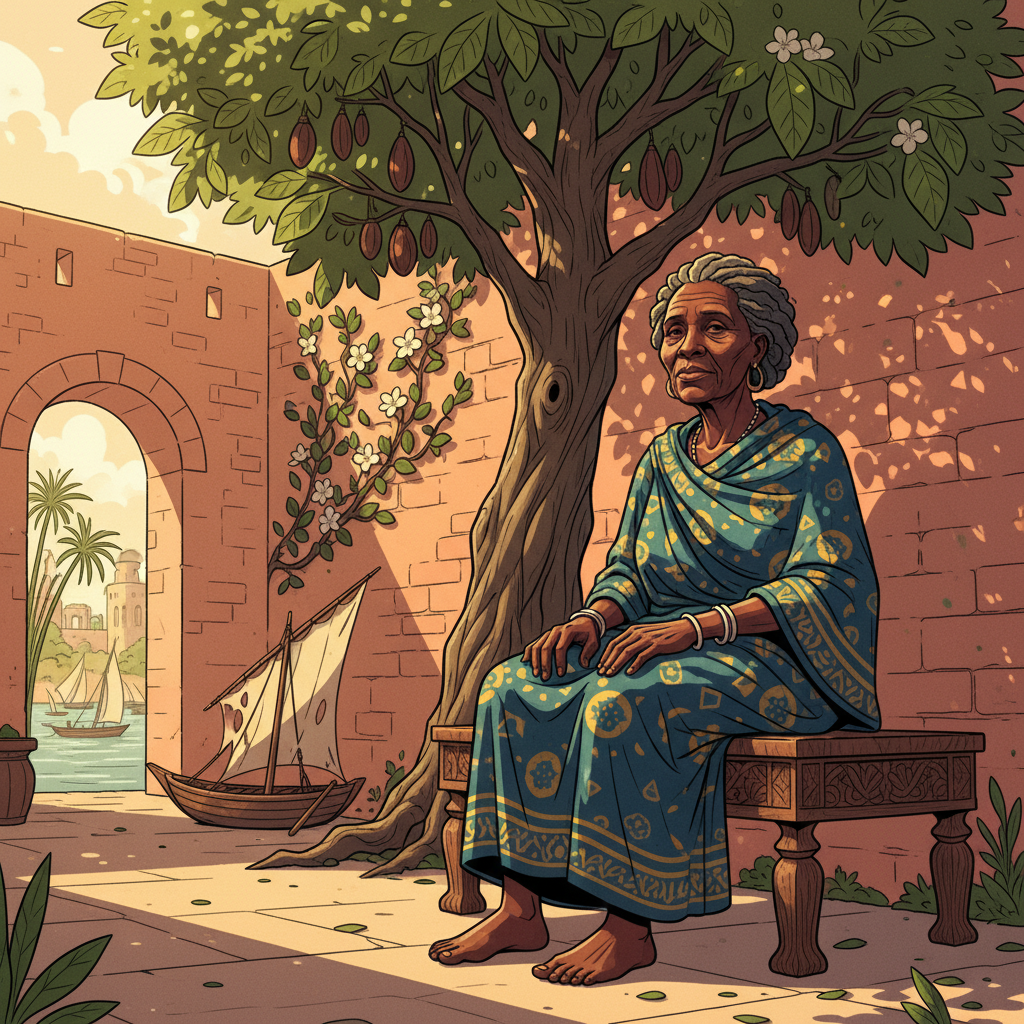
Five years passed. Halima grew up. Her Hindi-Gujarati became fluent. Her Arabic became formal. She began to draft the warehouse contracts herself, alongside her mother Zuhura. Bi Mwana's small dhow Nyota came home from one of its Comorian trips with a torn sail that no one quite fixed in time, and Bi Mwana, at sixty-seven, said quietly that next season she would not sail. Halima's grandmother stayed in the courtyard with her jasmine and her old kola tree. On the third day of the trading season in Halima's seventeenth year, a ship arrived from Hormuz that had never come to Mombasa before — a Persian merchant family Halima had never heard of, looking for a Swahili textile-house to open a new correspondence with. They had been told by other merchants up and down the coast that the house of Saidi-and-Zuhura was the one to ask for.
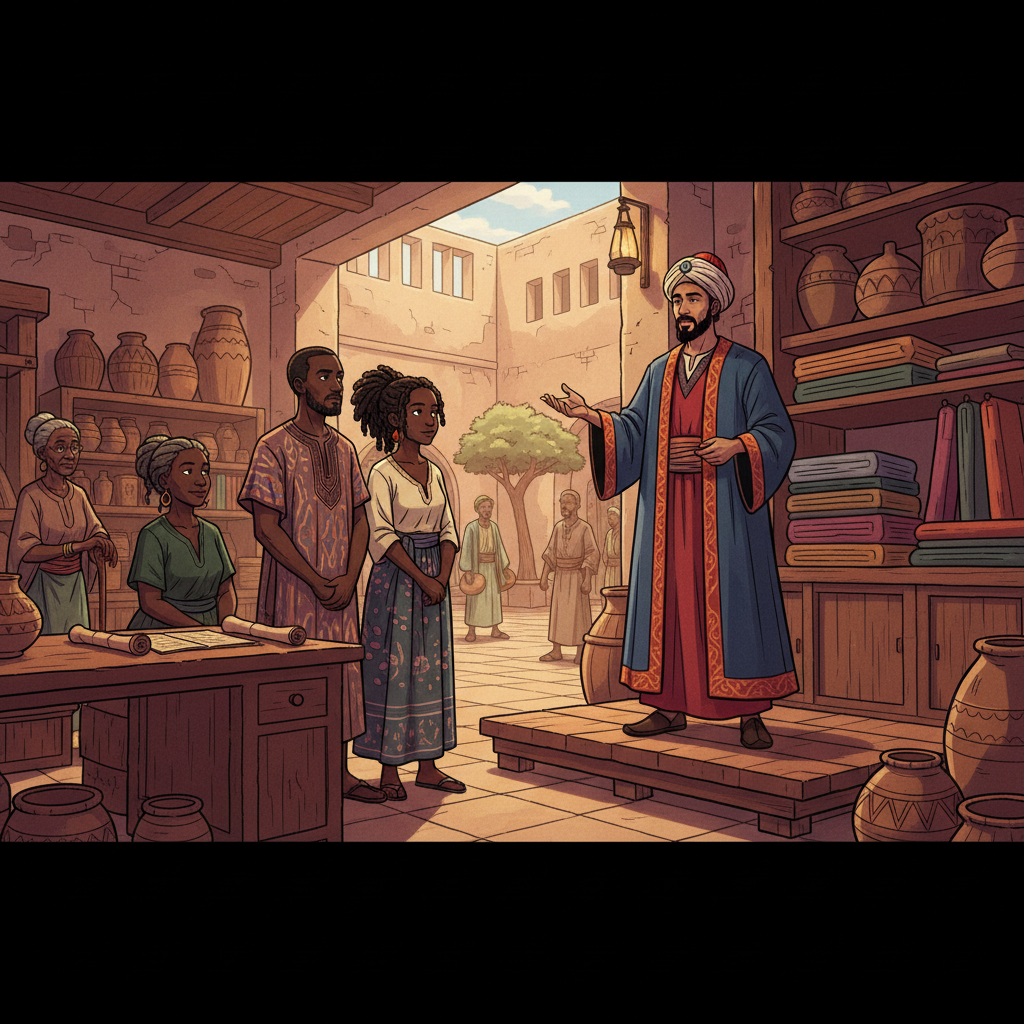
The Persian factor walked into the warehouse. He spoke in formal Arabic to Saidi. He inquired about textile arrangements. He named his trading house in Hormuz. Then he said something that Halima had not expected. He said: "I am told by Vasava-ji of Surat that the daughter of this house is the one to whom we should bring our negotiation. He said: ask for the girl who asks after children." The Persian factor turned to Halima. He bowed. He waited. Halima looked at her father. Her father nodded once. She looked at her mother. Her mother smiled very small from the side-desk. She looked at her grandmother in the courtyard doorway. Bi Mwana, leaning on her cedar walking-stick now, nodded slowly. The wind had carried the words. Halima stepped forward. She said, in formal Arabic: "Welcome to Mombasa. Please sit. I will pour the tea."
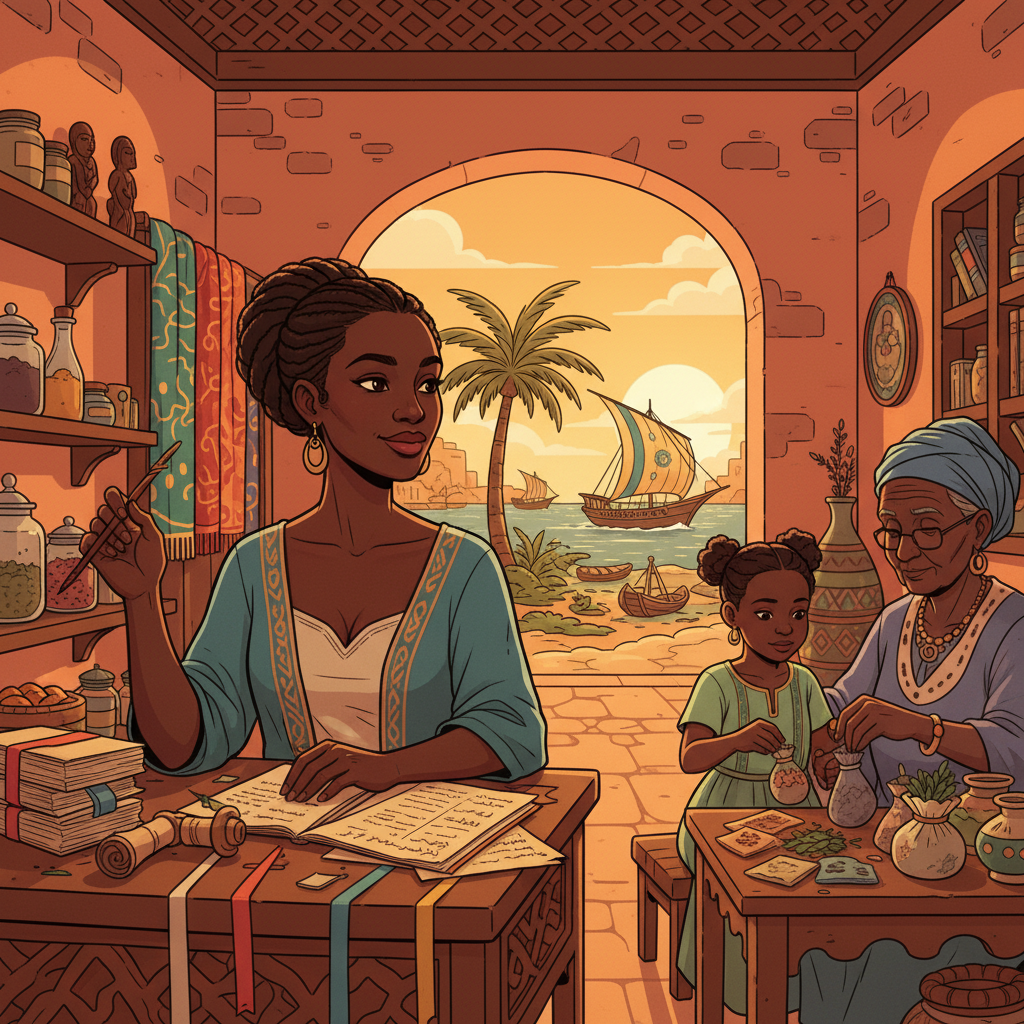
The Persian negotiation went well. By the end of the season Halima had opened the family's first Persian-Gulf correspondence. The house of Saidi-and-Zuhura now traded with Surat AND Hormuz, with future possibilities of Aden and Hadramawt and Calicut and Cambay — the whole Indian Ocean lattice of trade in three languages and four scripts. Halima still did not know what Vasava-bhai's face had looked like in Surat when he told his factor to ask for "the girl who asks after children." She might never know. But she knew what her grandmother had taught her, and what her family's coast had taught its young for centuries: harmony is not agreement, and it is not affection. Harmony is the room remembering it has children in it. The wind has the words. Sometimes the smile arrives. Sometimes it does not. The work continues.