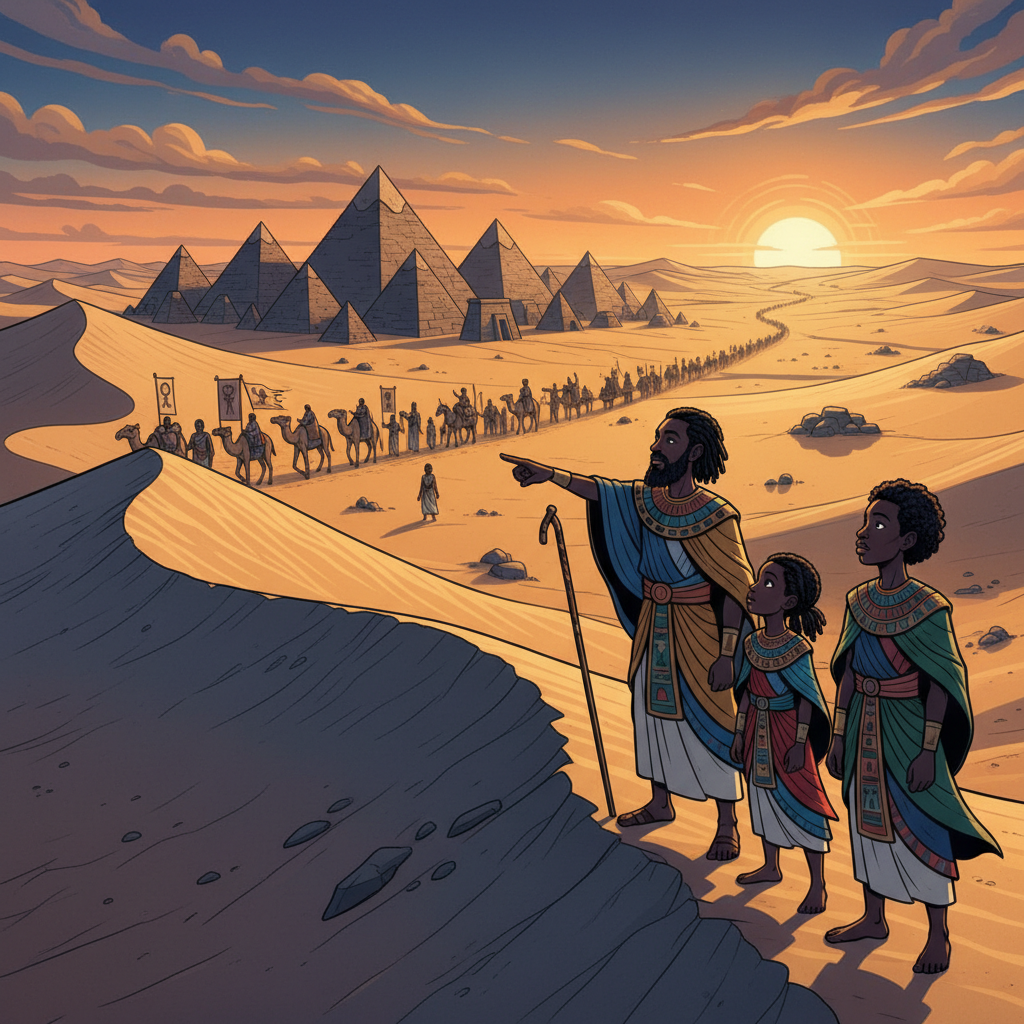
My dear student, come closer. Let the gentle breeze from the Nile carry us back, across the sands of time, to a century when Kemet, our beloved land, had strayed like a lost child. Its heart, once strong and unified, had fragmented into many pieces, and the sacred principles of Maat, of truth and balance, grew faint in the north. But then, from the deep south, from the ancient lands of Kush, a new dawn broke, shining like the morning sun over the desert horizon. Our Kushite cousins, those powerful pharaohs from Napata, heard the call of their ancestral homeland. They were not strangers, mind you, but family, the older siblings of Kemet, bringing their wisdom and devotion to restore what was lost. Today, we journey to the reign of Pharaoh Taharqa, a builder whose vision reached for the stars, and whose legacy reminds us that true beauty is an act of Maat itself.
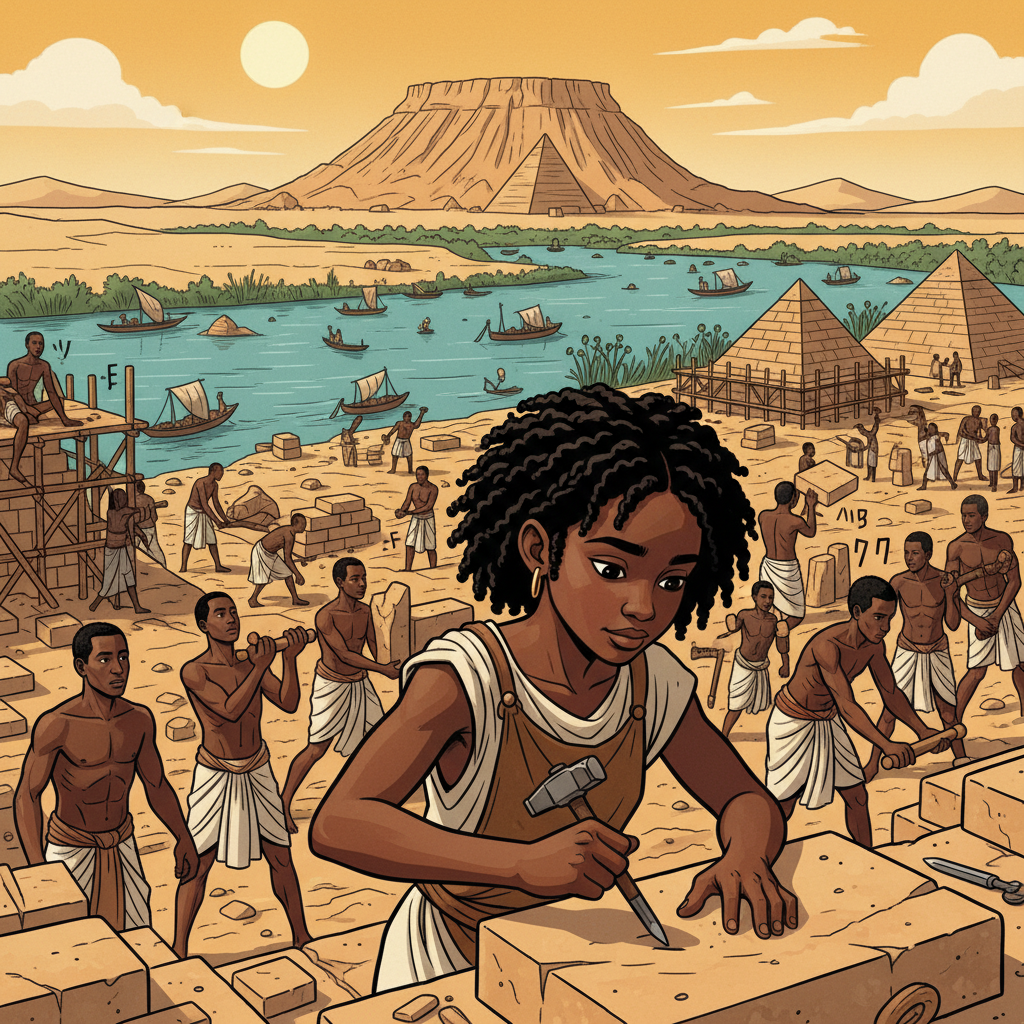
Imagine, if you will, the bustling construction site across the great Nile from the sacred mountain of Gebel Barkal, in the heart of what we call Nubia. The air hummed with the sound of chisels striking stone, the rhythmic chants of workers, and the creak of massive timbers as blocks of sandstone were hauled into place. This was Nuri, the new royal necropolis chosen by Pharaoh Taharqa, a place where the kings of Kush would sleep among pyramids, just like our ancestors in the Old Kingdom. Among the many skilled hands shaping this monumental dream was a young apprentice stone-mason named Tasheriti. She was a girl of perhaps twelve seasons, with rich ebony skin that gleamed under the sun, her thick 4C hair often escaping its braids, and eyes that held the sharp intelligence of her father, a master builder. She moved with purpose, her small hands already strong, learning the ancient craft that carved eternity from stone.
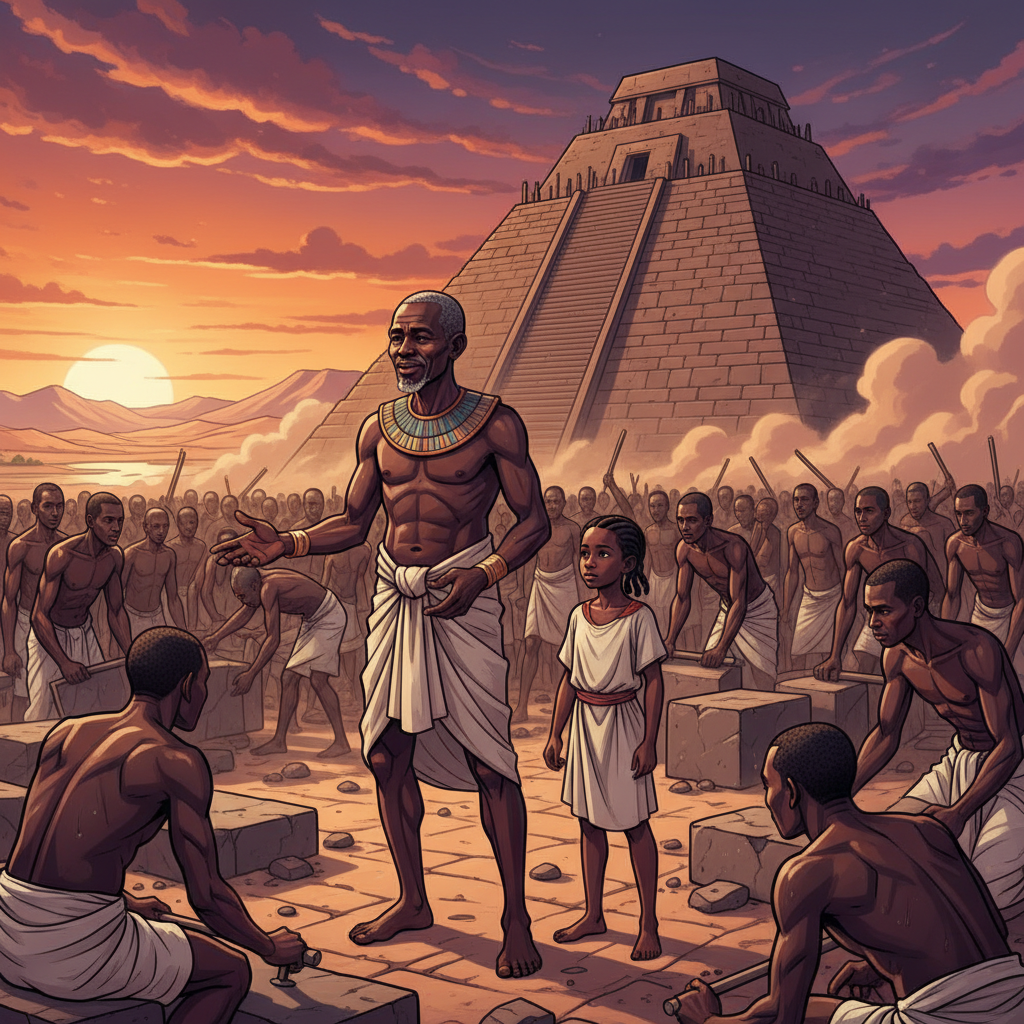
Tasheriti loved the smell of fresh-cut stone and the challenge of a precise angle. She watched her father, Akil, as he instructed the workmen, his voice deep and calm, his movements precise. Akil, too, bore the proud features of our people: a broad, kind face, full lips, and eyes that held the wisdom of generations of builders. He taught Tasheriti not just how to shape stone, but how to respect it, how to understand its inner `ka`, its spirit. One evening, as the sun dipped below the western desert, painting the sky in fiery hues of orange and purple, Tasheriti and Akil sat by their modest dwelling. The great pyramid of Pharaoh Taharqa, still growing, cast a long shadow across the plain. Tasheriti looked at its rising form, then turned to her father, a question bubbling in her heart.
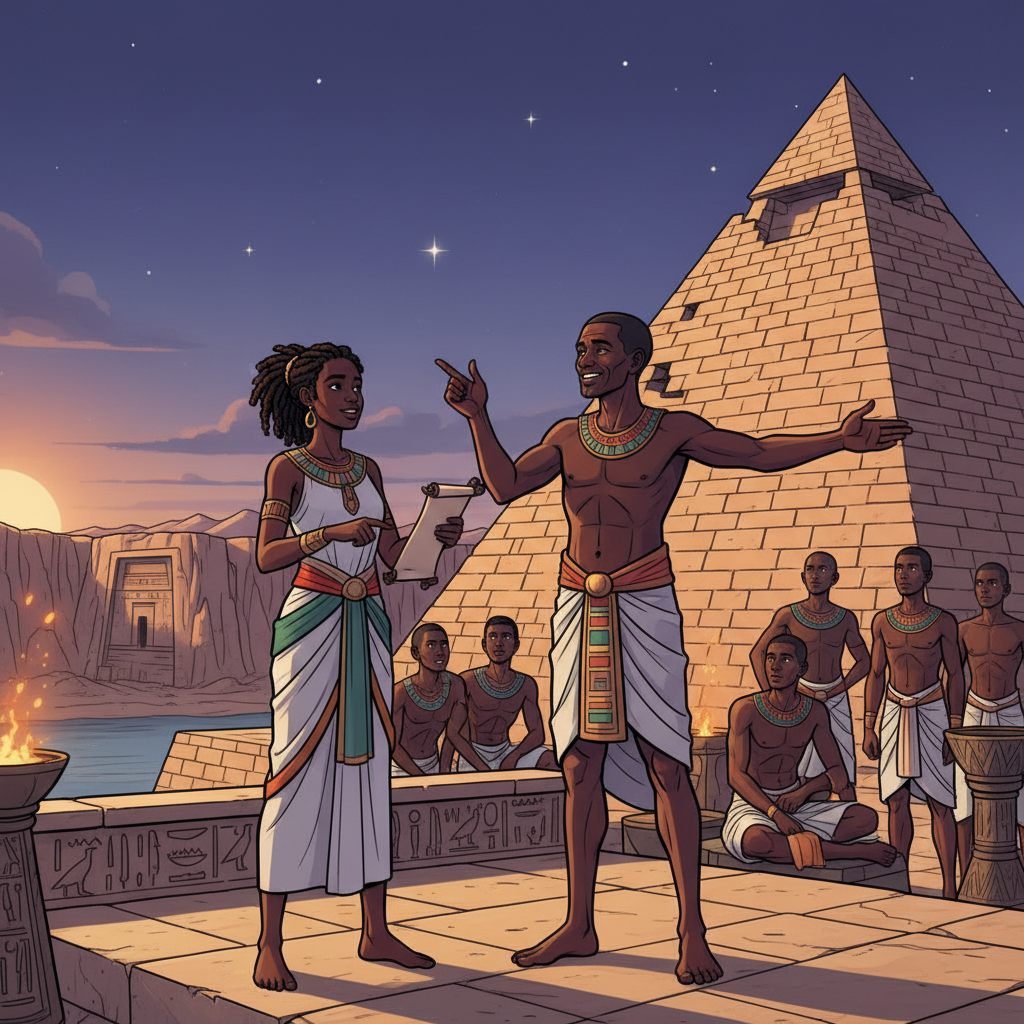
“Father,” she began, her voice soft but earnest, “why do we build these great pyramids again? Our Kemetic ancestors in the north stopped building them a thousand and five hundred years ago. Scribes tell us they built mastabas and rock-cut tombs instead. Why has Pharaoh Taharqa chosen this ancient form for his eternal resting place and for all the kings of Kush?” Akil smiled, a gentle crinkle at the corners of his eyes. He understood her curiosity, for it was the mark of a true learner. He gestured towards the stars, just beginning to prick the darkening sky, and then back towards the pyramid, its apex already reaching for them. “Ah, my daughter,” he said, his voice filled with reverence, “you ask a question that touches the very heart of Maat, and the purpose of our lives.”
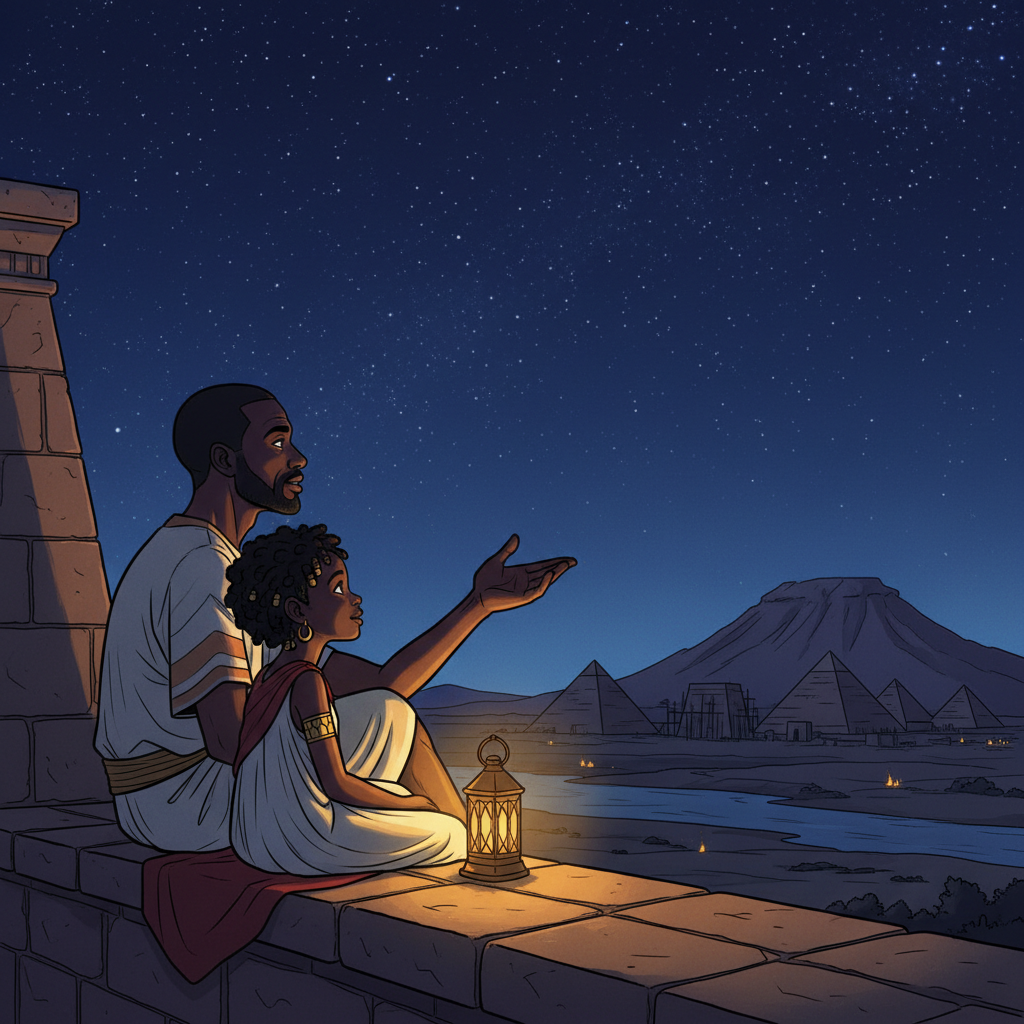
“Look at the stars, Tasheriti. They follow an eternal, unchanging path, a perfect order woven by the neter, the divine forces of creation. When Kemet became fragmented, when many rulers squabbled for power in the north, that order, that Maat, began to fray. Isfet, disorder and chaos, began to creep into the land, like desert sands encroaching upon fertile fields.” He paused, drawing a deep breath of the cool evening air. “Our pharaohs from Napata, like Taharqa, understand that true kingship is not about power alone, but about restoring that divine order. They came from our southern homeland, from Kush, where the traditions of Amun and the ancient ways were kept pure and strong, like the unchanging flow of the great Nile itself.”
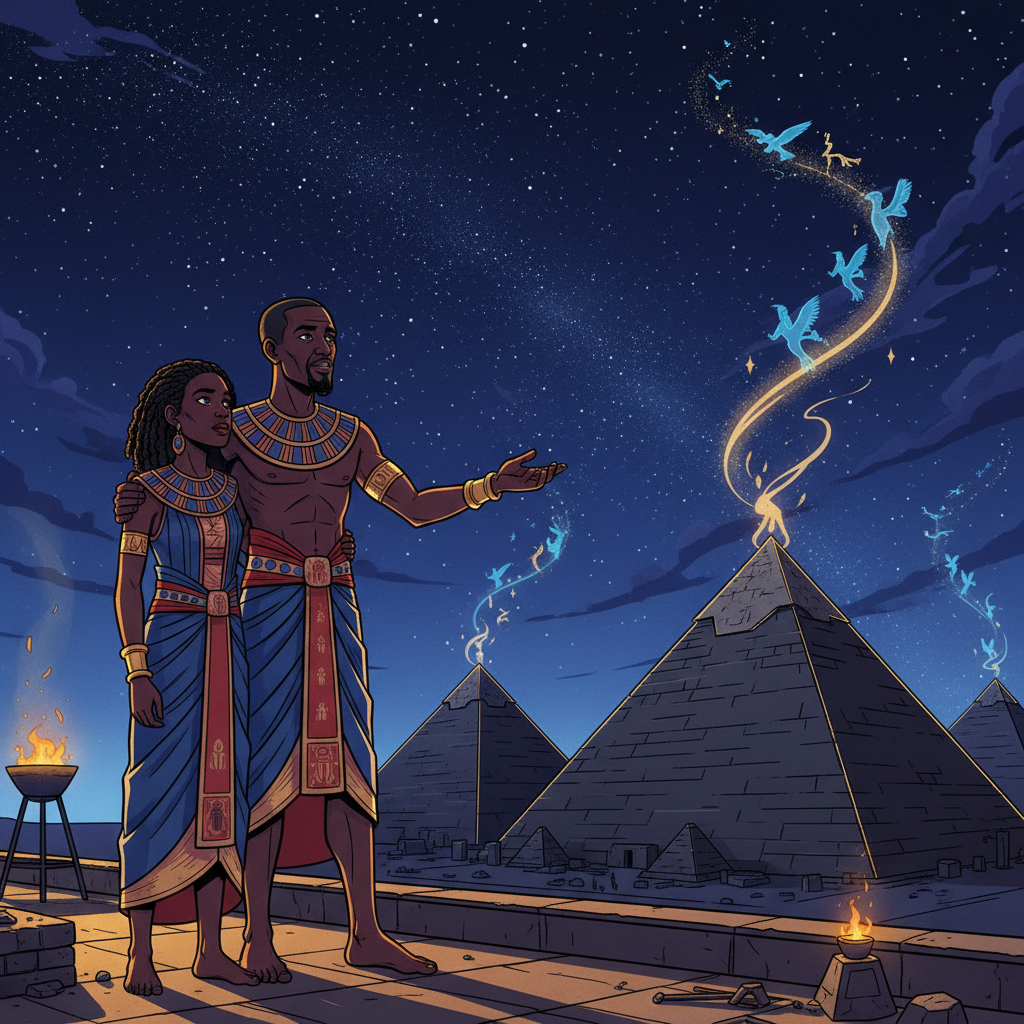
“These pyramids,” Akil continued, his gaze sweeping over the growing monuments, “are not merely tombs. They are cosmic stairways, built to help the `ka` and `ba` of the pharaoh ascend to the stars, to join the neter, and to continue guiding Kemet from the heavens. They are a physical manifestation of our belief in eternal life, in the cyclical nature of existence, and in the enduring power of Maat.” “Pharaoh Taharqa, like his ancestors Piye and Shabaka, is profoundly devout. He does not build for vanity, but out of a deep religious mission. He seeks to restore the grandeur and sacred order of the earliest times, to remind Kemet of its true self. To build a pyramid, Tasheriti, is to participate in that restoration, to shape chaos into sacred geometry, to affirm Maat with every cut stone.”
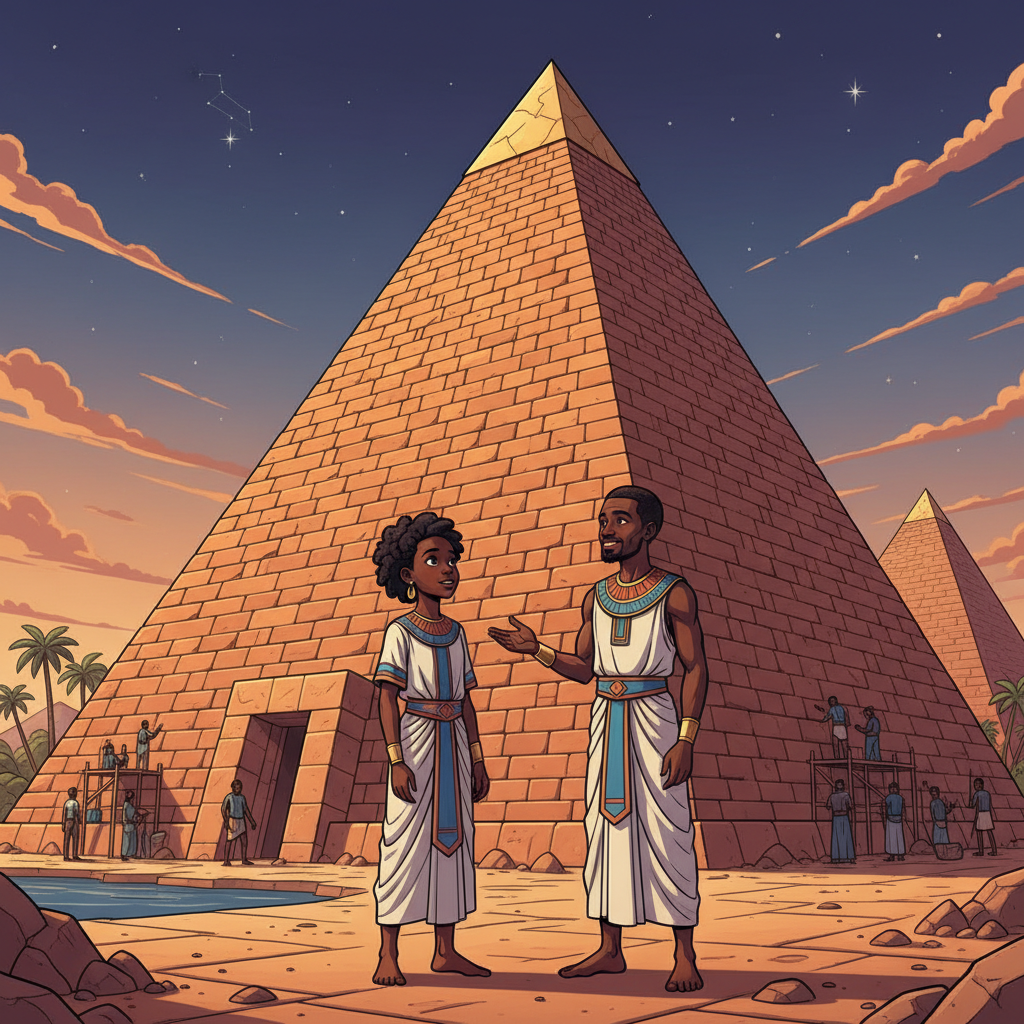
Tasheriti considered his words, her young mind grasping the profound meaning behind the heavy stones. She had always seen the pyramids as grand structures, but now she saw them as prayers made solid, as a testament to an enduring faith. “So, building them is an act of Maat, Father?” she asked, her eyes wide with understanding. “Indeed, my child. Beauty, true beauty, is a dimension of righteous order, or `nefer`. When we build something with precision, with reverence, with a vision that connects earth to sky, we are bringing Maat into being. Taharqa’s building program, from the massive colonnade he plans for Karnak in Waset to the temples he expands at Kawa, is a deliberate act of conservative restoration, a return to the Old Kingdom ideal.”
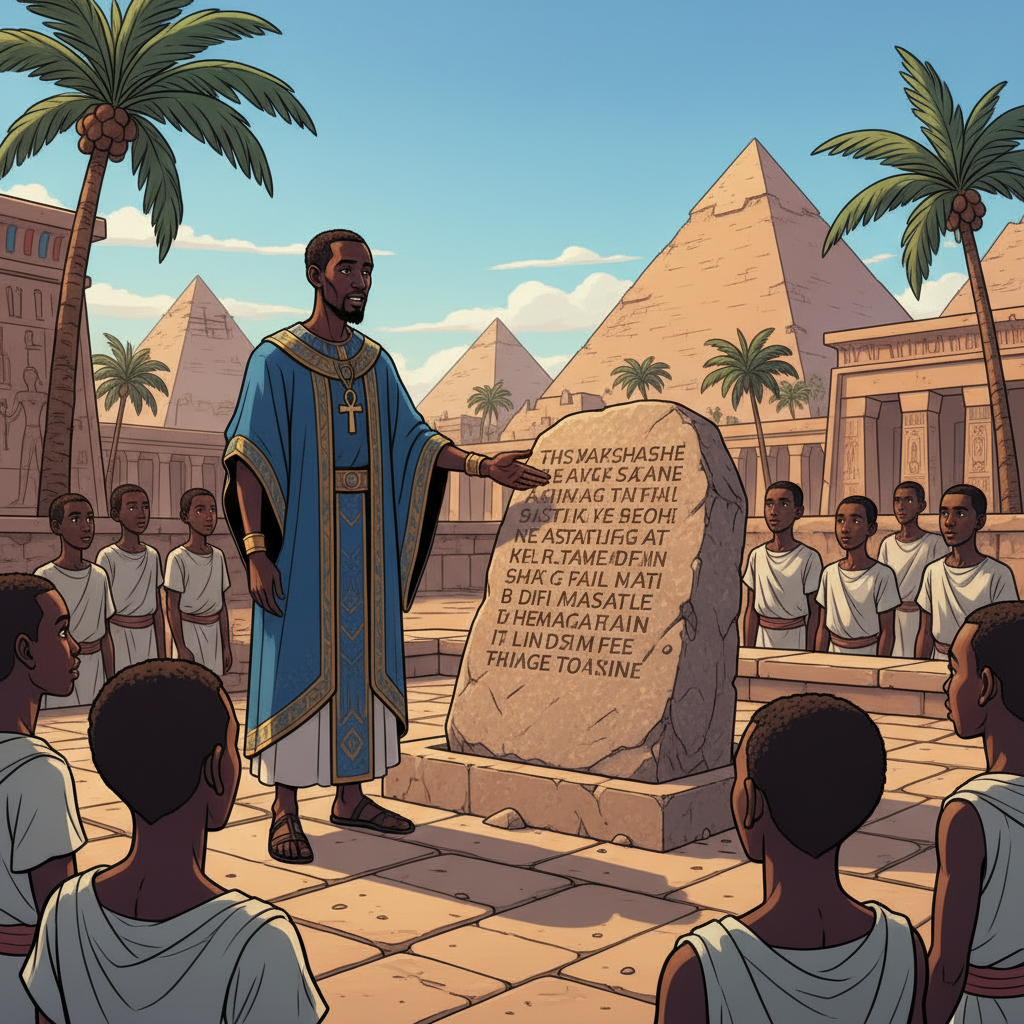
Akil explained that the Kushite pharaohs saw themselves as the rightful custodians of Kemetic tradition, guardians of the wisdom that might otherwise have been lost. He spoke of how Pharaoh Shabaka, Taharqa’s uncle, had literally preserved ancient texts, like the Memphite Theology, by having them carved into granite – the famous Shabaka Stone – ensuring their survival for generations. “These pyramids at Nuri,” Akil swept his hand towards the necropolis, where many smaller pyramids would soon rise around Taharqa’s grand design, “are a testament to that commitment. The Kushites, from Napata to Meroe, would build more pyramids than our northern ancestors ever did – over two hundred across our lands, each a beacon of Maat, pointing to the eternal truths above.”
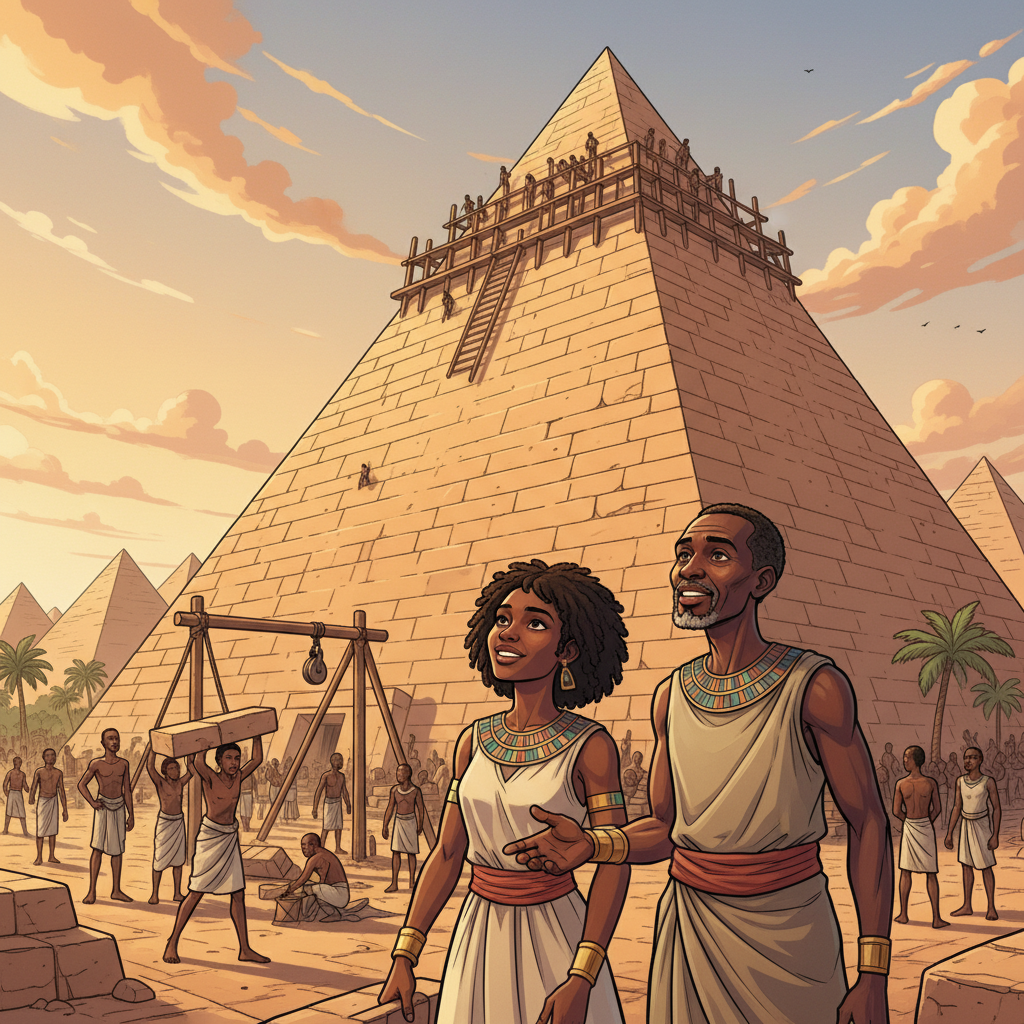
Pharaoh Taharqa’s own pyramid, still under construction, would be the largest ever built in a Kushite royal cemetery, reaching some fifty-one meters tall. Its angles would be steeper than those at Giza, its form sharp and elegant, a true reflection of the Kushite aesthetic. He was determined that his resting place, and those of his successors, would be a monumental statement of devotion to Amun, the great Neter of both Waset and Napata. Tasheriti felt a surge of pride. She was not just moving rocks; she was helping to build a piece of the cosmos, a pathway for a king’s `ka`, a symbol of Maat restored. She understood that this act of building was a declaration, a silent but powerful message to all of Kemet that the ancient ways, the true ways, were alive and thriving under the protective gaze of the Kushite pharaohs.
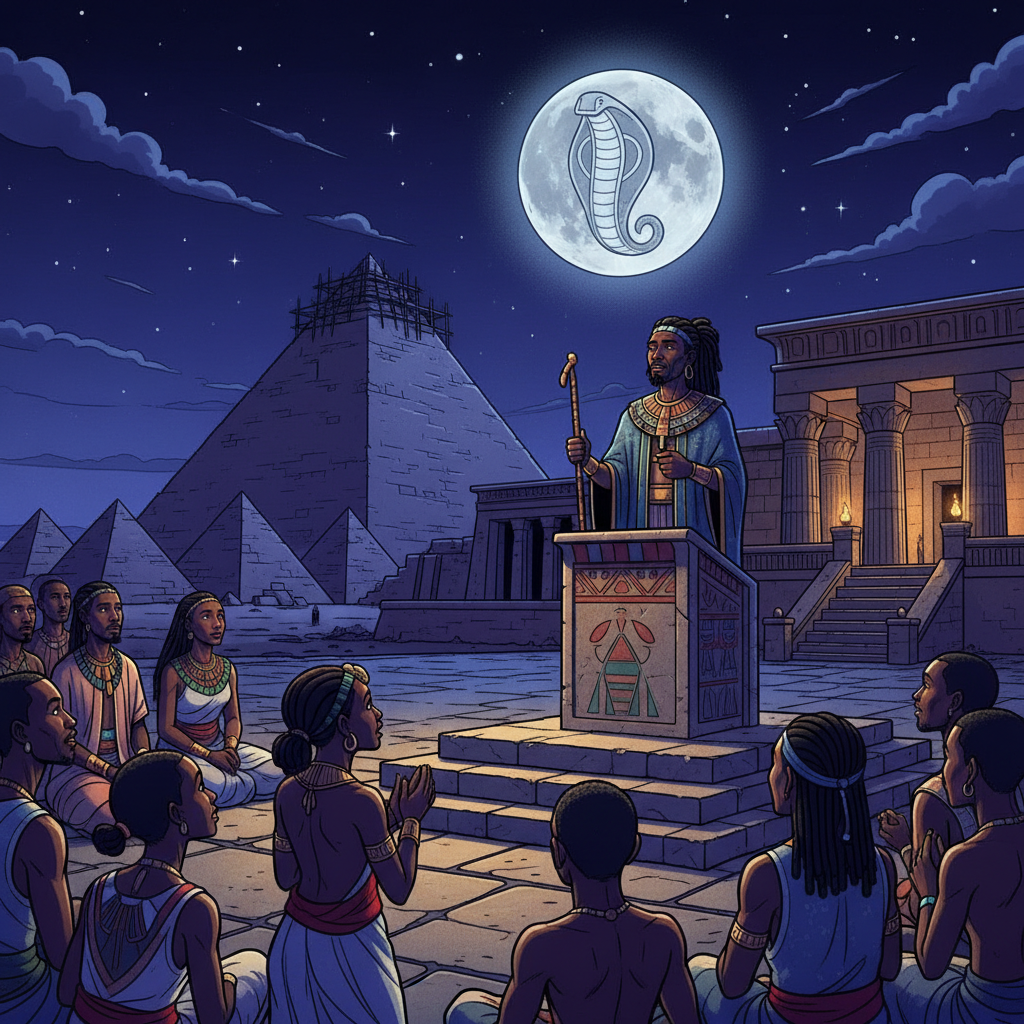
As the moon rose, a silver uraeus in the dark sky, Akil spoke of Taharqa’s reign as the zenith of the 25th Dynasty. “This era, Tasheriti, is a golden age for Kemet, revived by its southern heart. While lands far to the west, like what they call Rome, were still just small villages of mud huts, our pharaohs were building structures that touched the heavens and preserving wisdom that would endure for millennia.” He reminded her that Taharqa’s vision stretched beyond Nuri. He had commissioned the Temple of Amun at Kawa in his youth, and now, as pharaoh, he continued to expand it, along with countless other temples from the Delta all the way south to the fourth cataract, ensuring that the light of Amun shone brightly across the unified lands of Kemet and Kush.
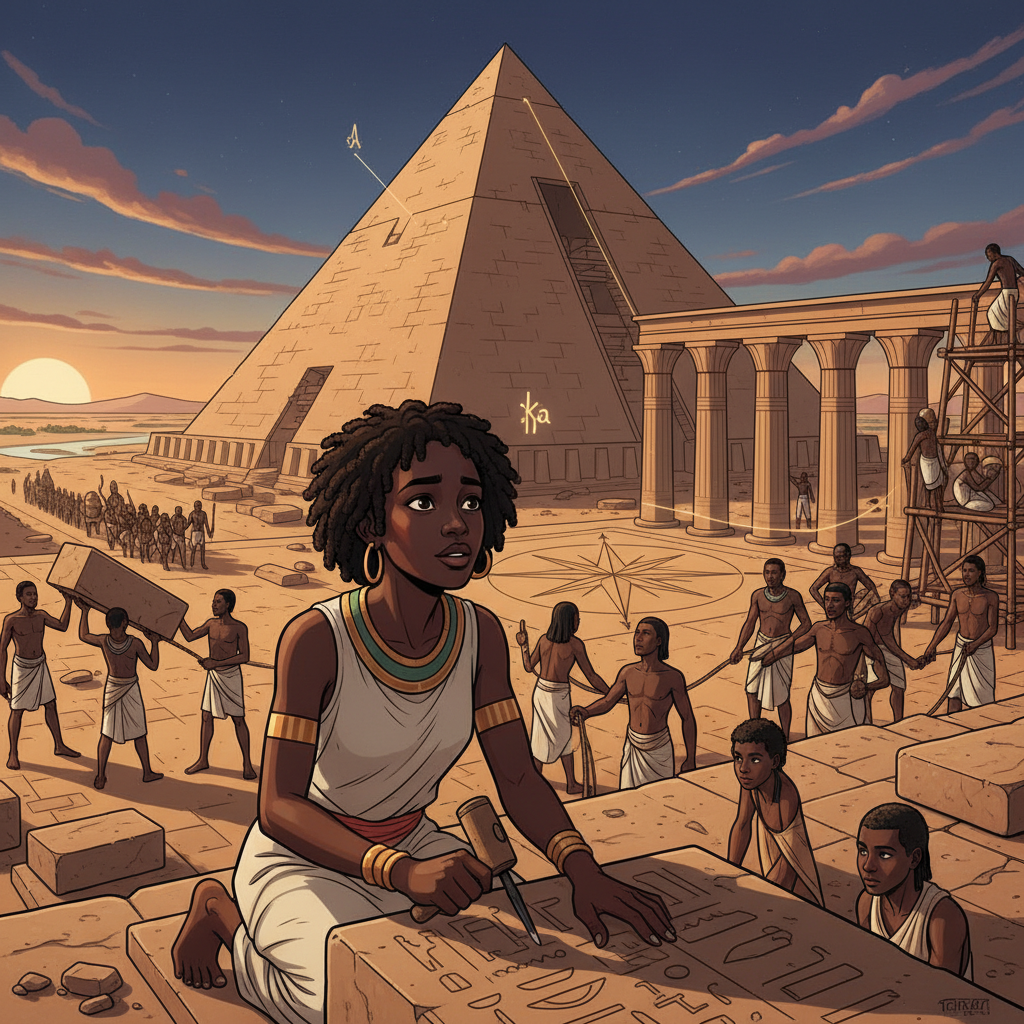
Tasheriti spent her days hauling stone, assisting master sculptors, and learning to read the hieroglyphs that would adorn the temple walls. She learned that each carving, each inscription, was a prayer, a story, a piece of the divine order. Her hands, calloused but nimble, became extensions of her growing understanding of Maat. She saw the beauty in the symmetry, the balance in the towering columns, the harmony in the alignment of the pyramid with the cardinal directions. It was not just stone and sweat; it was spirit and purpose, imbued with the `ka` of every worker and the vision of a pharaoh who sought to honor the neter above all else.
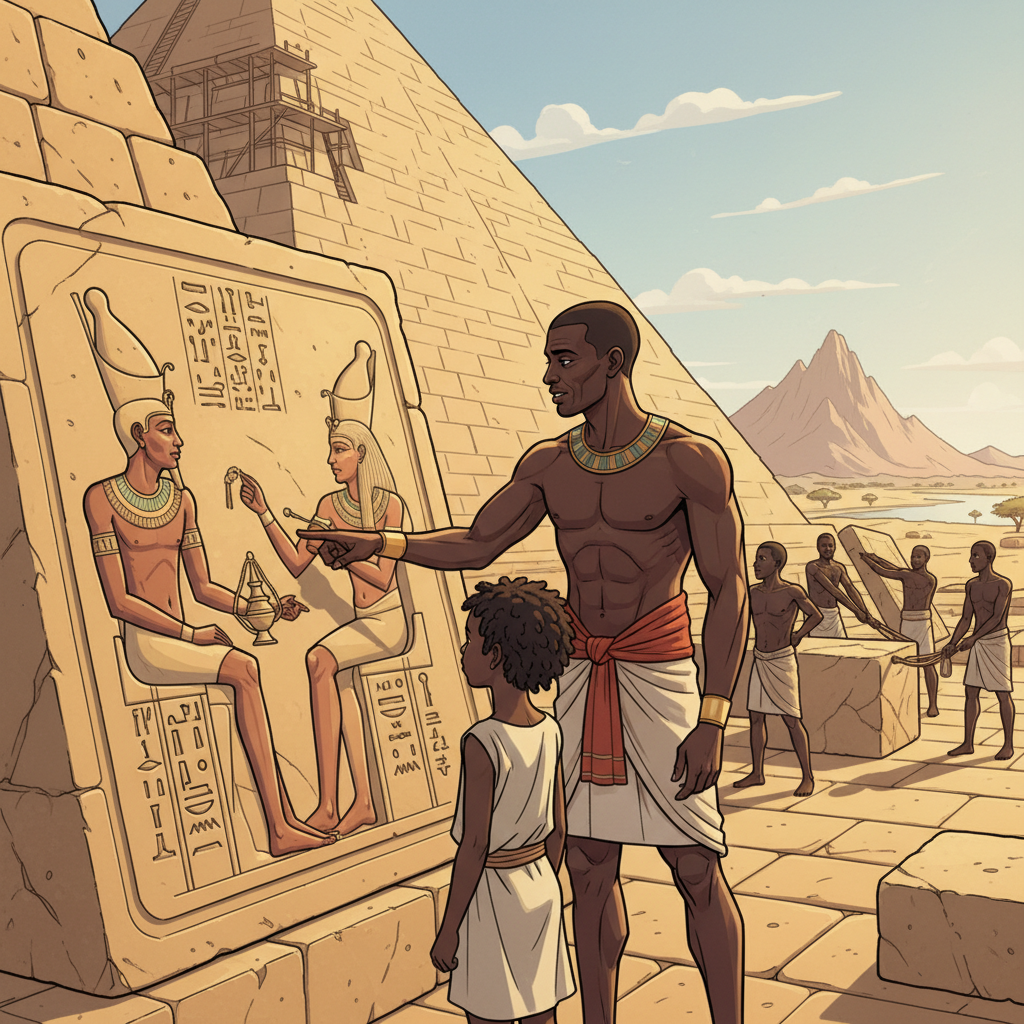
One particularly hot day, as she helped position a finely carved block near the base of the pyramid, her father pointed to a small, intricate relief. It depicted Pharaoh Taharqa offering incense to Amun, his regal figure, with rich dark skin and a powerful build, radiating devotion. “Look closely, Tasheriti,” Akil instructed, “see how his `uraeus`, the cobra on his brow, signifies his divine authority, but also his commitment to protecting Maat.” “The pharaohs of Kush,” he continued, “are not conquerors. They are restorers. They marched north not with a desire for conquest, but with a sacred mission from Amun, whose voice they heard from the holy mountain of Gebel Barkal. Their campaigns were a religious pilgrimage, a journey to reawaken the heart of Kemet.”
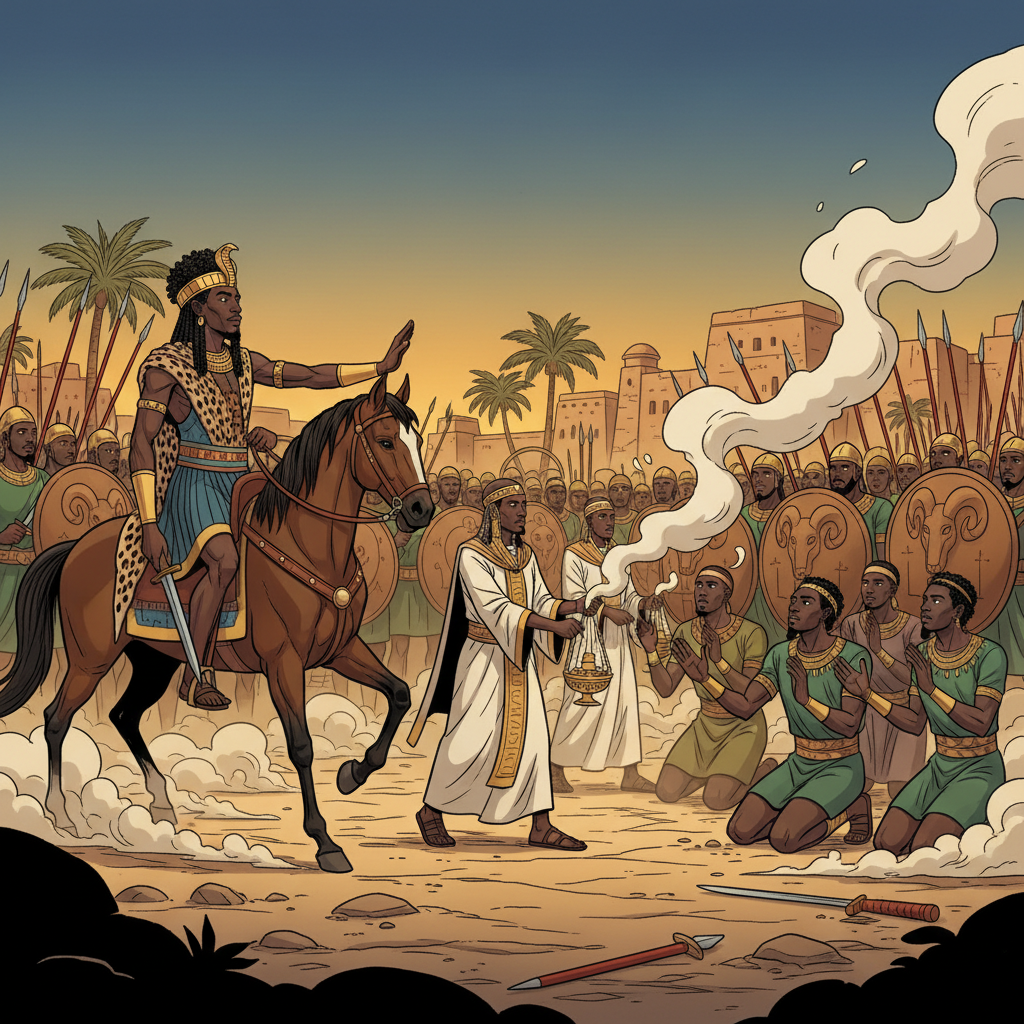
Tasheriti thought of the stories of Piye, the first Kushite pharaoh, who had refused to attack cities that surrendered, instead insisting on ritual purification before entering them. He was a king who valued devotion over destruction, a true son of Amun who exemplified Maat in his every action. This wasn’t about power; it was about piety. Her father explained that the very act of building these pyramids was a testament to the belief that the divine order, once established, could be restored through human effort guided by righteous intention. Each stone, each chisel mark, was a step towards re-establishing the cosmic balance that had been disturbed by the fragmentation of the northern lands.
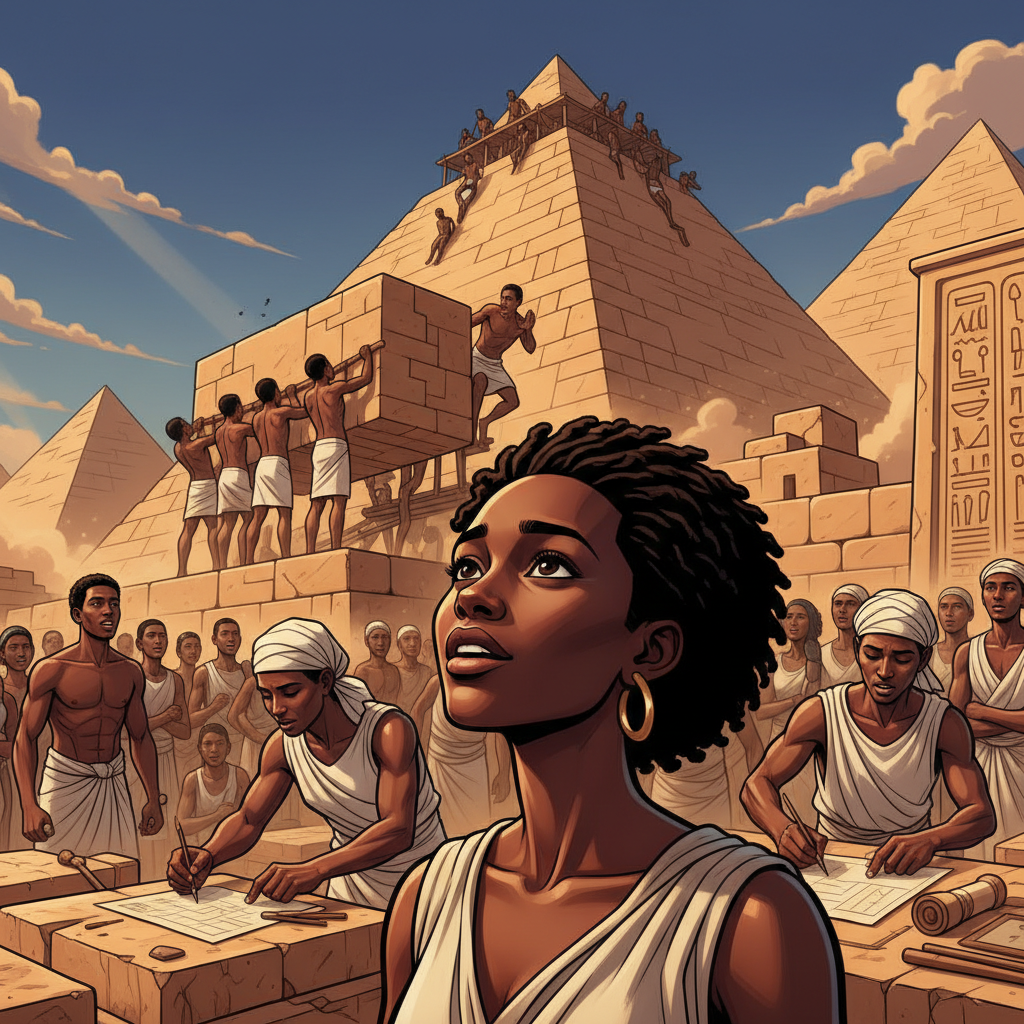
The workers at Nuri, men and women from all corners of Kush and Kemet, toiled with a shared sense of purpose. They were part of something grander than themselves, a legacy that would stretch beyond their lifetimes. They sang ancient songs, their voices echoing across the desert, songs that spoke of Amun, of the Nile, and of the enduring spirit of Ta-Seti, the Land of the Bow. Tasheriti learned to appreciate the sheer ingenuity and organization required to build such massive structures. She saw how the scribes meticulously planned every angle, how the stonecutters worked with precision, and how the entire community contributed to this monumental expression of faith and order.
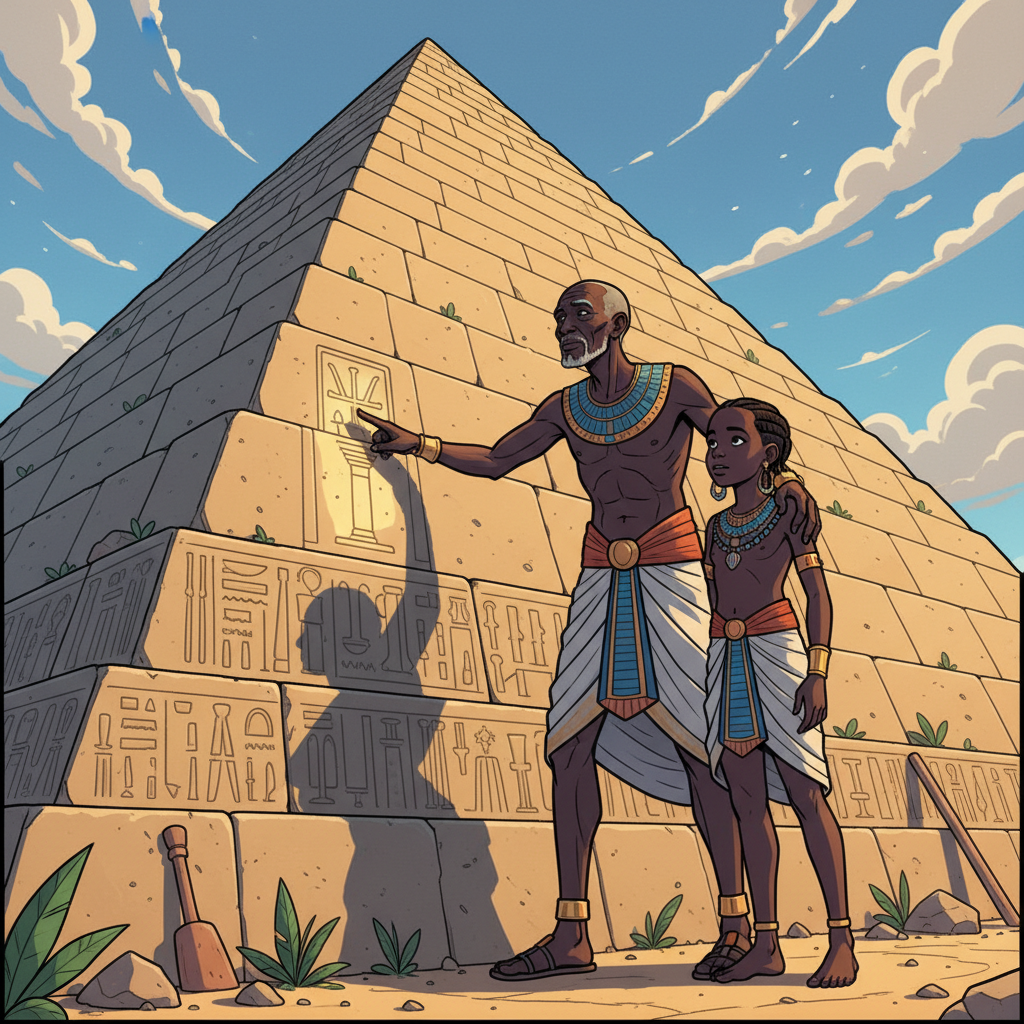
“This pyramid, Tasheriti,” Akil said one day, placing a hand on the cool stone, “is a `djed` pillar, made manifest in grand scale. It represents stability, endurance, and the backbone of Osiris, signifying the triumph of life over death, and order over chaos. It is a promise to the neter that Kemet will stand strong once more, guided by the light of Maat.” Tasheriti understood. The pyramids were not just monuments to kings; they were monuments to an ideal. They were a physical commitment to the restoration of `maat` in the land, a visible sign that the balance had been re-established, and that the divine order was being upheld by the Kushite pharaohs.
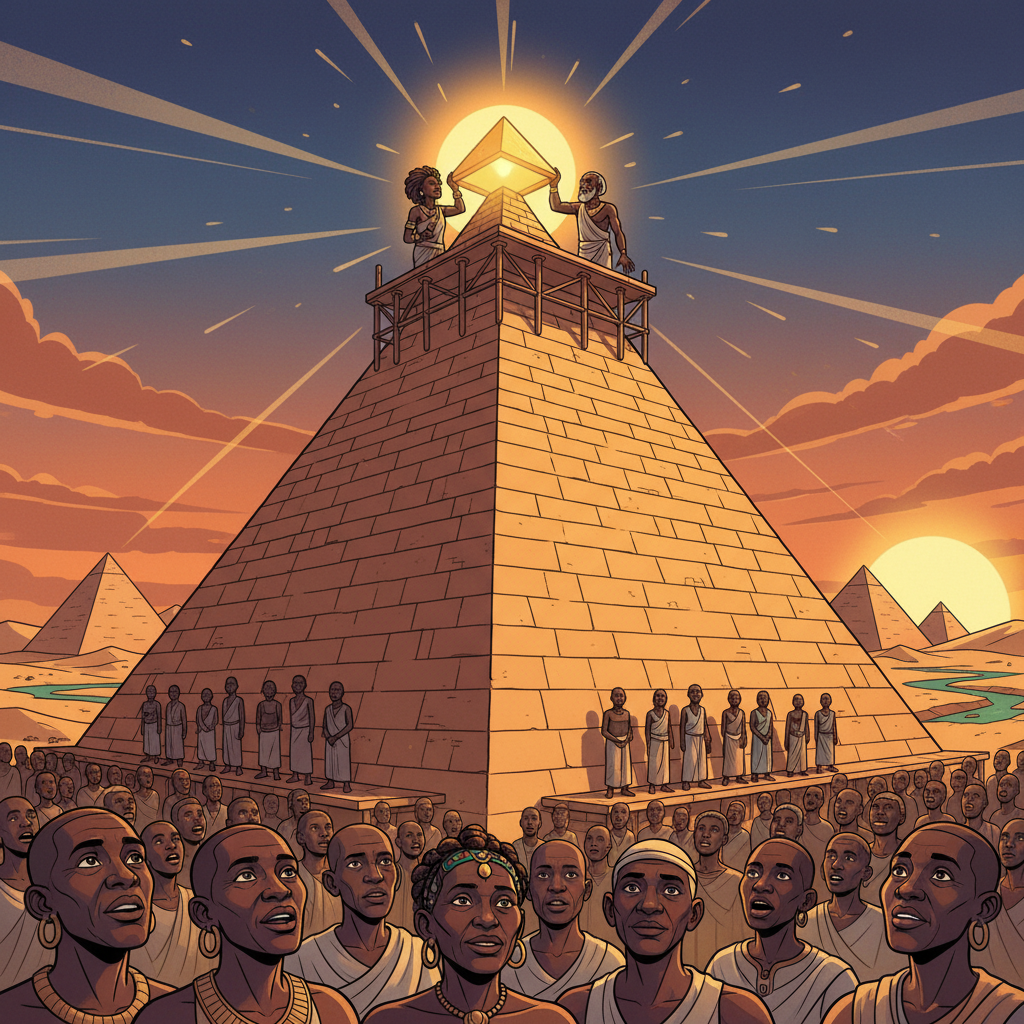
The years passed, and Tasheriti grew taller, her skills sharper. She was no longer just an apprentice but a skilled artisan, capable of intricate carvings and precise measurements. She saw Taharqa’s pyramid finally capped with its golden `pyramidion`, a shimmering point that caught the first and last rays of the sun, literally crowning the structure with light. It was a moment of profound awe, not just for the workers, but for all of Kemet and Kush. The pyramid stood as a beacon, a testament to the unwavering faith of Pharaoh Taharqa and the enduring spirit of a people who understood that true power lay in reverence, in order, and in the timeless pursuit of Maat.
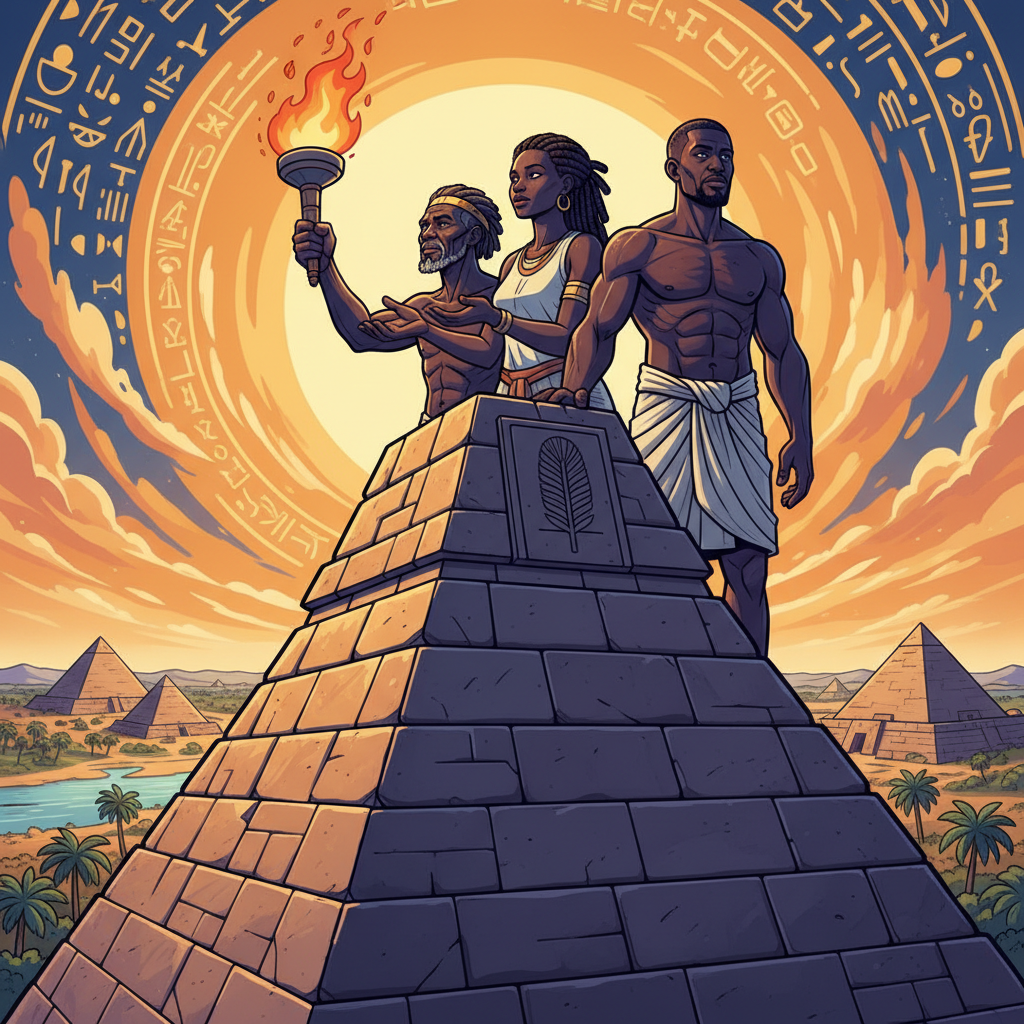
Though the Assyrians, with their iron weapons, would eventually challenge the Kushite presence in the north, pushing our pharaohs back towards Napata, the spirit of building and devotion never died. Nuri remained the royal necropolis, and the tradition of pyramid-building continued for centuries, even flourishing further south at Meroe, where powerful Kandake warrior queens would one day challenge even the mighty Roman Empire. For Taharqa’s reign was the zenith, the highest point, of the 25th Dynasty’s direct rule over all of Kemet. His pyramids at Nuri, his expansions at Karnak and Kawa, and his unwavering commitment to Maat, ensured that the flame of ancient Kemetic wisdom burned brighter than ever, preserved by the very hands that shaped these monumental stones.
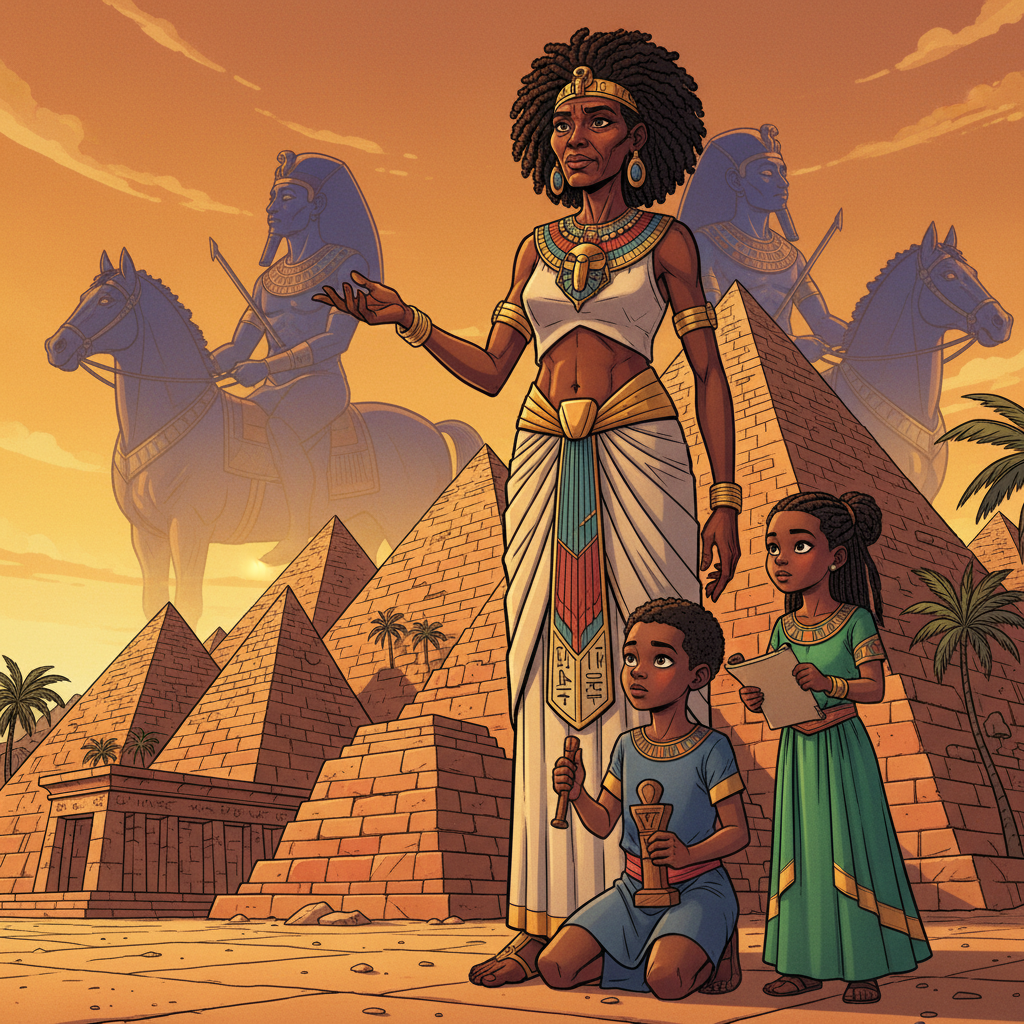
Tasheriti, now a master herself, would teach her own children the lessons of Nuri. She would tell them that the pyramids were not just monuments to dead kings, but living symbols of a timeless truth: that when humans align their will with the divine order, when they act with Maat in their hearts, they can create beauty that lasts for eternity. She would speak of the Kushite pharaohs, with their dark skin and noble spirits, who had reminded Kemet of its true self, who had brought the strength of the southern Nile back to its northern child. Their legacy was not just in stone, but in the enduring spirit of Maat that they had rekindled across the land.
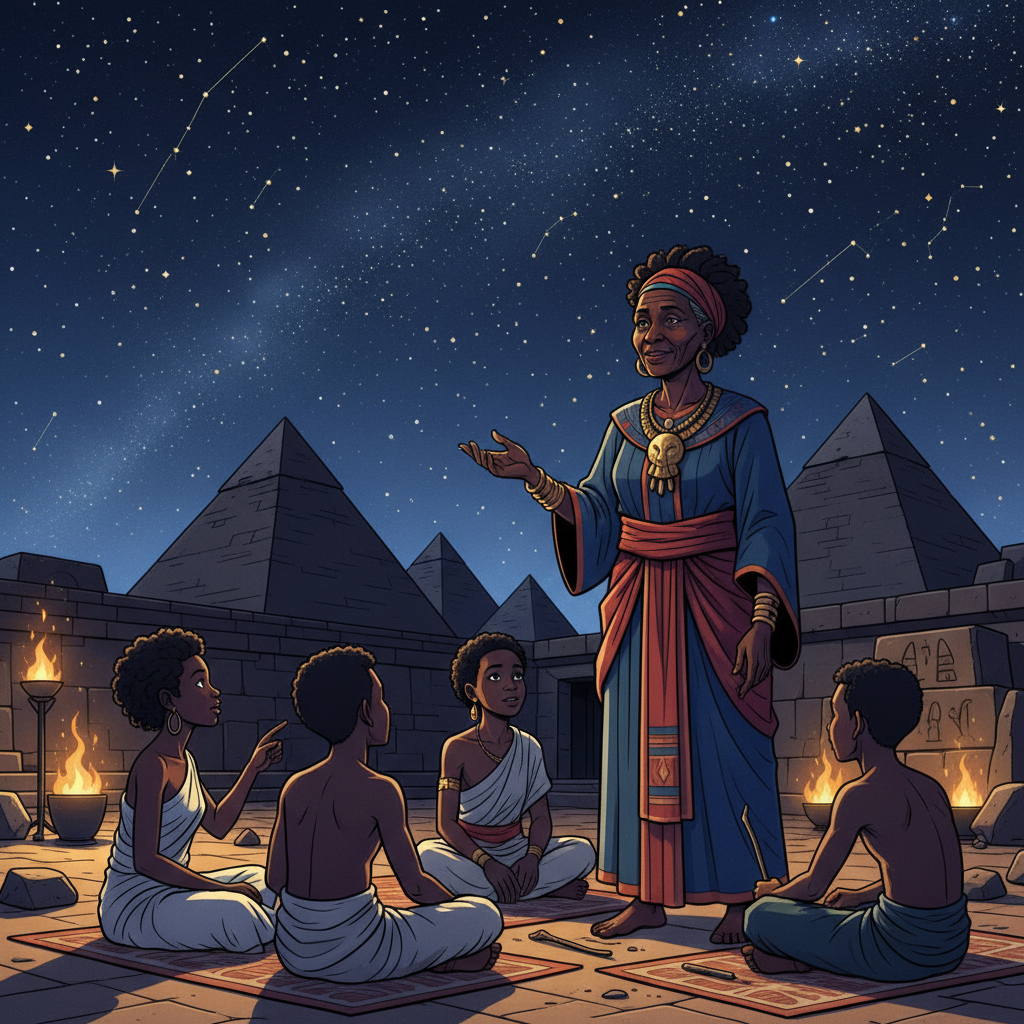
And so, my young student, the story of Taharqa and the pyramids of Nuri is a story about more than just stone and kings. It is a story about the profound power of intention, the sacred act of creation, and the enduring quest for Maat. It reminds us that true beauty is not superficial; it is a reflection of harmony, balance, and righteous order, reaching from the earth to the cosmos. Just as Tasheriti helped build a physical pathway to the stars, you, too, can build pathways of Maat in your own life. Every act of kindness, every moment of truth, every choice for justice, is a stone in your own magnificent pyramid, reaching towards the divine.
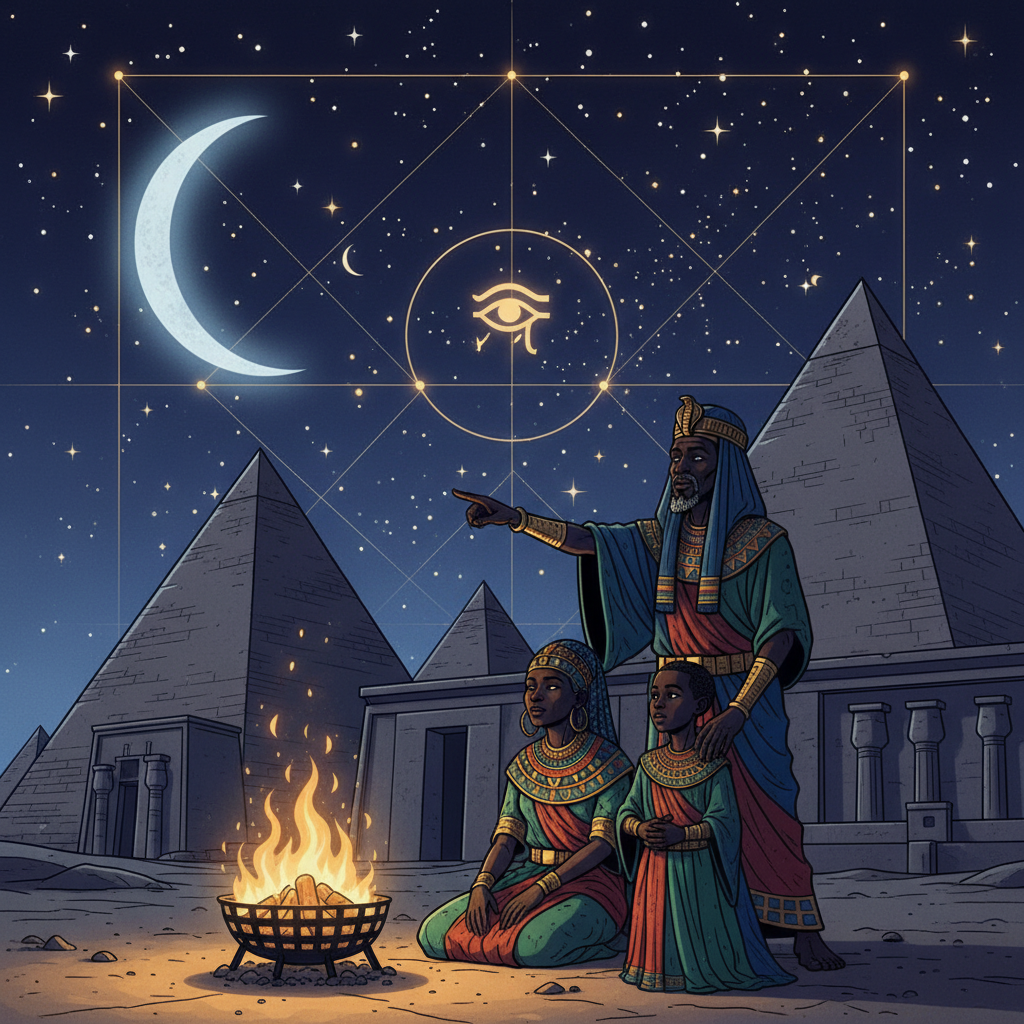
The Kushite pharaohs, our ancestors, understood that the universe itself is a grand design, a testament to the Neter. By building structures that mirrored this cosmic order, they honored the divine and ensured the well-being of Kemet. Their pyramids, standing tall and proud, were a visible declaration that the fragmented pieces of the land were once again united under the banner of Maat. This reunion, this restoration, was a testament to their unwavering faith and their deep understanding of their ancestral role. They were the keepers of the flame, ensuring that the light of truth and justice would never be extinguished, but would continue to shine brightly, like the stars over Nuri, for all generations to come.
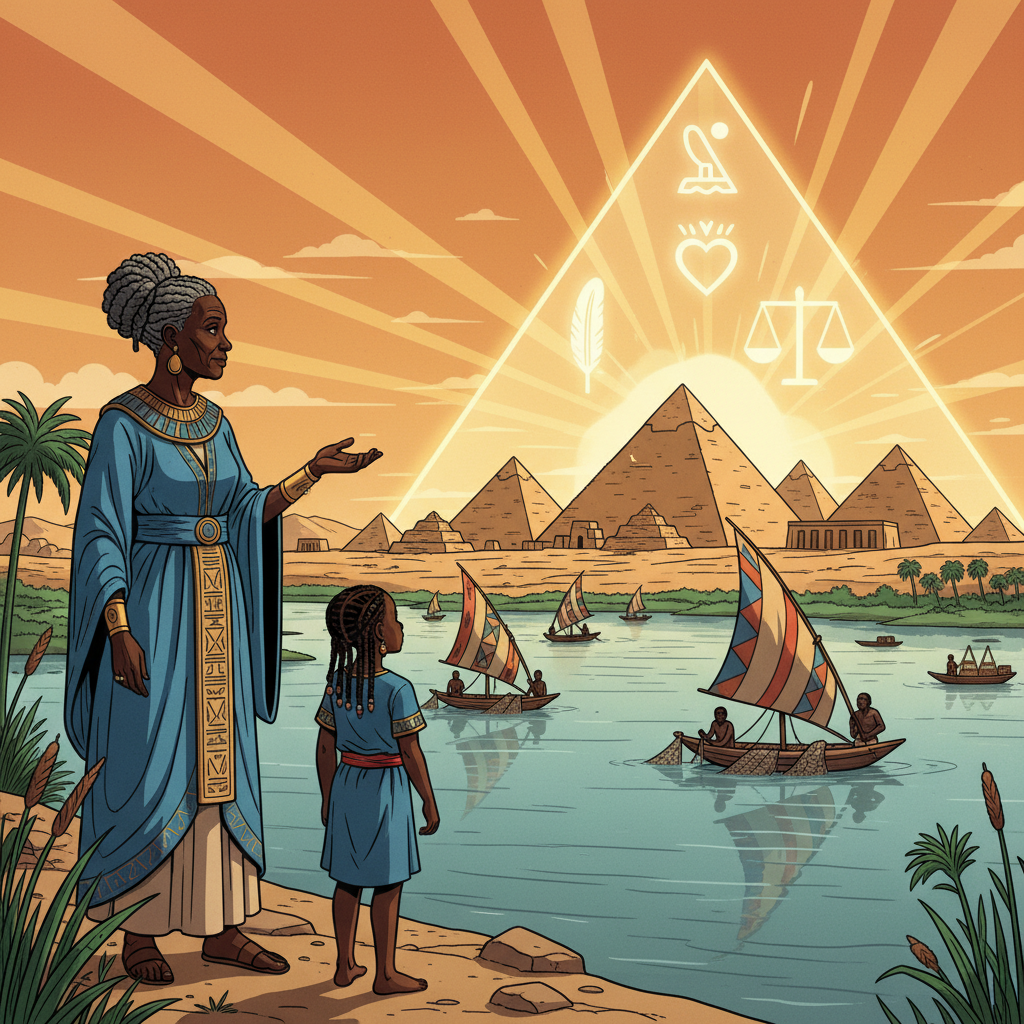
Think of it, {name}, what a powerful statement it was! To look across the Nile from Gebel Barkal and see not just one, but many pyramids rising, each a testament to Maat. This was our heritage, a time when our African ancestors, with their deep wisdom and devotion, reclaimed their birthright and reminded the world of the enduring strength of Kemet. You carry this legacy within you, my heir. Just as Tasheriti learned to shape stone into sacred beauty, you too can shape your thoughts, your words, and your actions to reflect the principles of Maat. Let your life be a pyramid of truth, justice, and harmony, a beacon that shines as brightly as those built by Pharaoh Taharqa.
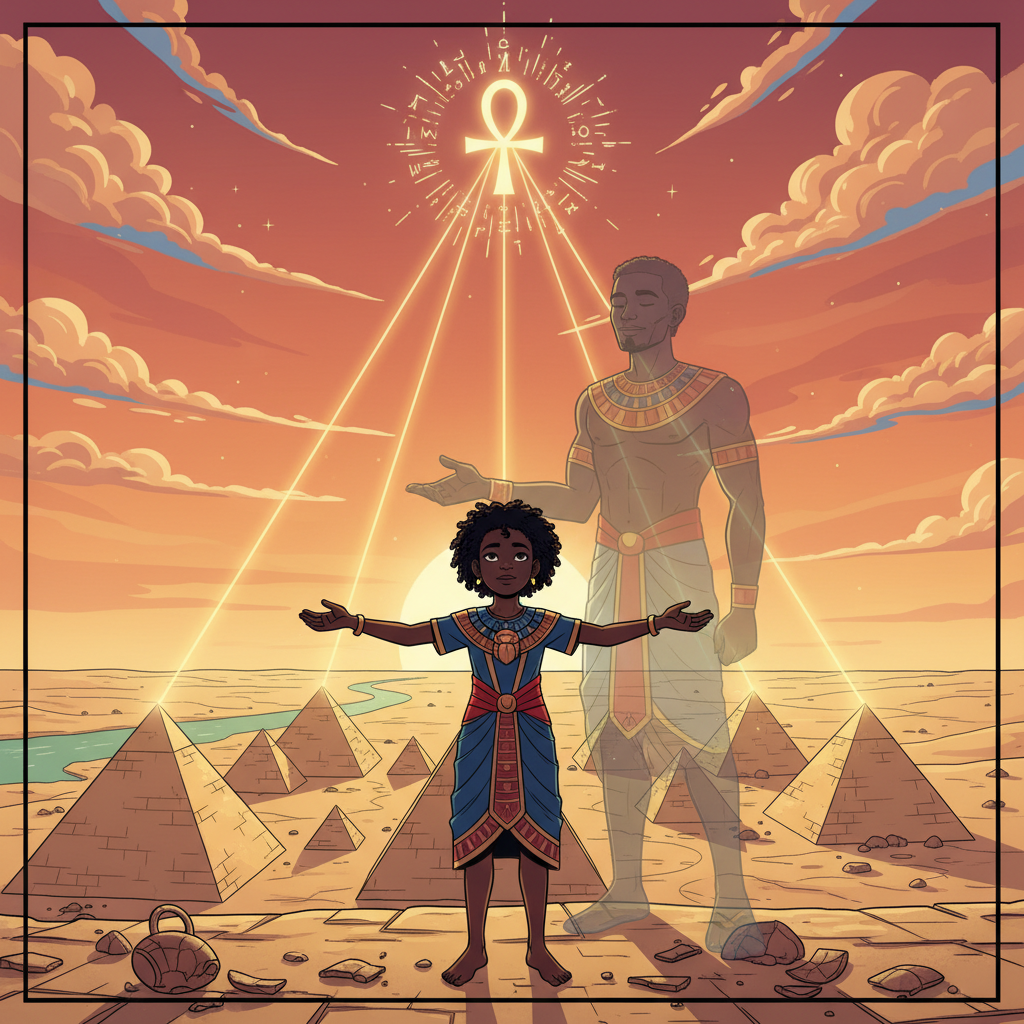
For the essence of the Per Ankh, the House of Life, is to understand these timeless principles and to live them. The pyramids of Nuri stand not just as relics of the past, but as eternal lessons. They teach us that even when things seem broken or fragmented, the spirit of Maat, of righteous order and profound beauty, can always be restored through devotion, vision, and hard work. Carry this wisdom in your heart, {name}. Be like Tasheriti, who saw beyond the stone to the sacred purpose. Be like Taharqa, who built not for himself, but for the eternity of Kemet. Let your spirit soar, like the apex of a pyramid, reaching for the cosmic dance of the Neter.