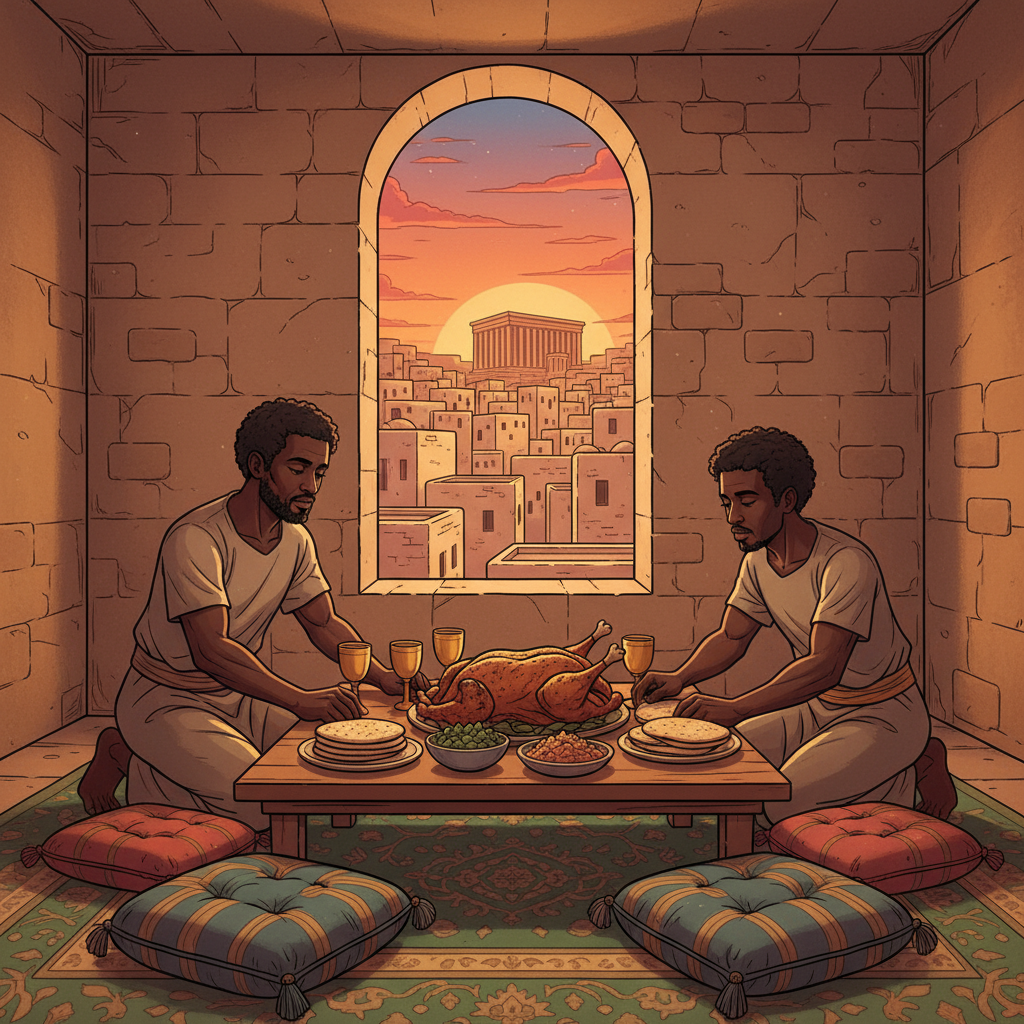
Yerushalayim, a city carved from ancient stone and living memory, pulsed with the quiet hum of Pesach preparations. It was Thursday, the eve of the sacred feast. Earlier in the day, two of Yeshua’s trusted men, Petros and Yochanan, had navigated the crowded streets, their dark faces intent, to secure an upper-room for their master and the twelve. They had carefully arranged the space: low tables for reclining, soft cushions, and the essential elements of the Seder. A roasted lamb, its skin crisp, lay ready. Unleavened bread, flat and firm, was stacked beside bitter herbs, symbolic of the ancestors’ suffering, and a sweet charoset, recalling the mortar of Kemet. Four cups for the wine stood waiting, each vessel a promise of remembrance and liberation. The city itself held its breath, a crucible of spirit and expectation. The air was thick with the scent of roasted meat and freedom.
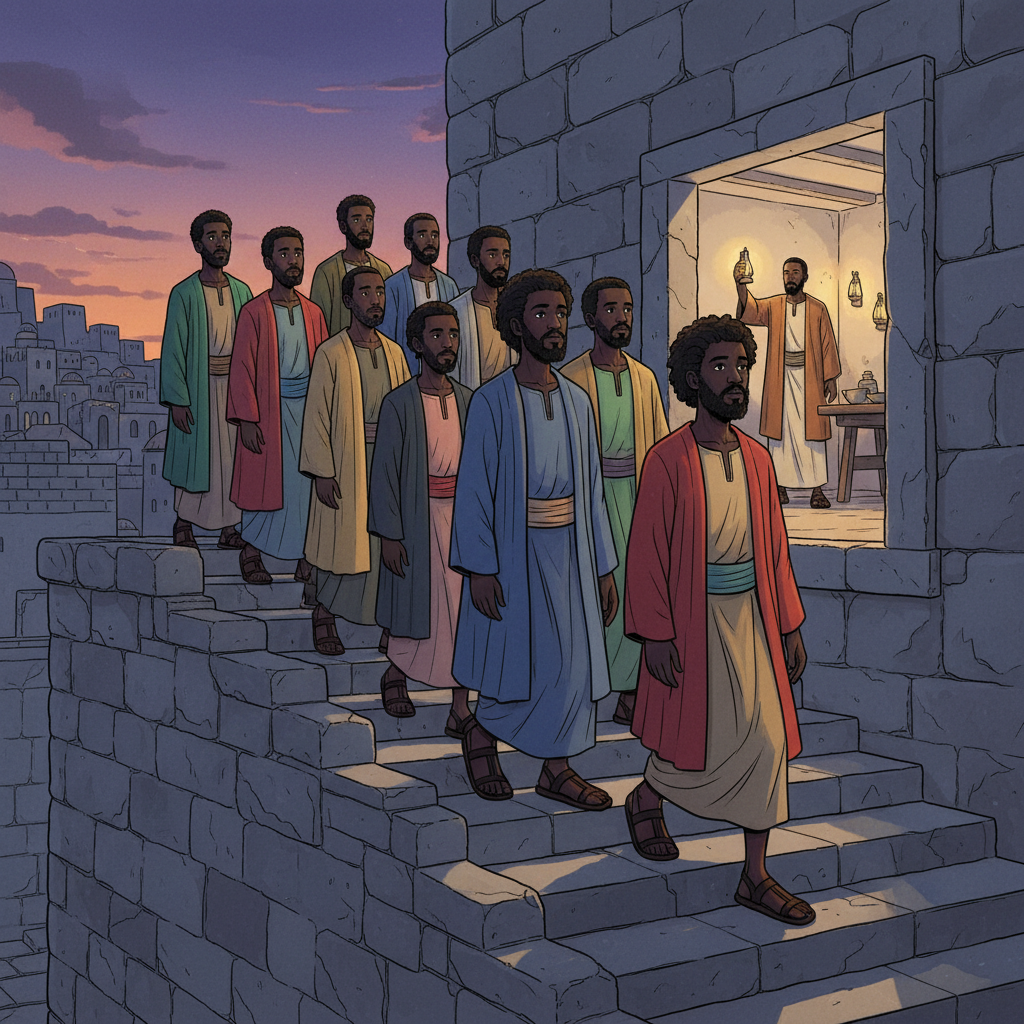
As twilight deepened, painting the western hills in hues of purple and gold, the thirteen gathered. Yeshua walked amongst his twelve, their footsteps echoing softly on the ancient stone stair leading to the second-floor room. The host, a man of quiet dignity, had already lit the oil lamps, their soft glow casting long shadows that danced on the plain, whitewashed walls. The room was not opulent; it was a humble space, yet filled with an unspoken reverence. It was a sanctuary from the clamor of the city below, a chamber chosen for sacred intention. Here, the traditions of countless generations, the echoes of Kemet and the desert journey, would converge with a new articulation of an ancient truth. They settled themselves, their eyes adjusting to the lamp-light, ready for the unfolding of a meal that carried the weight of ages.
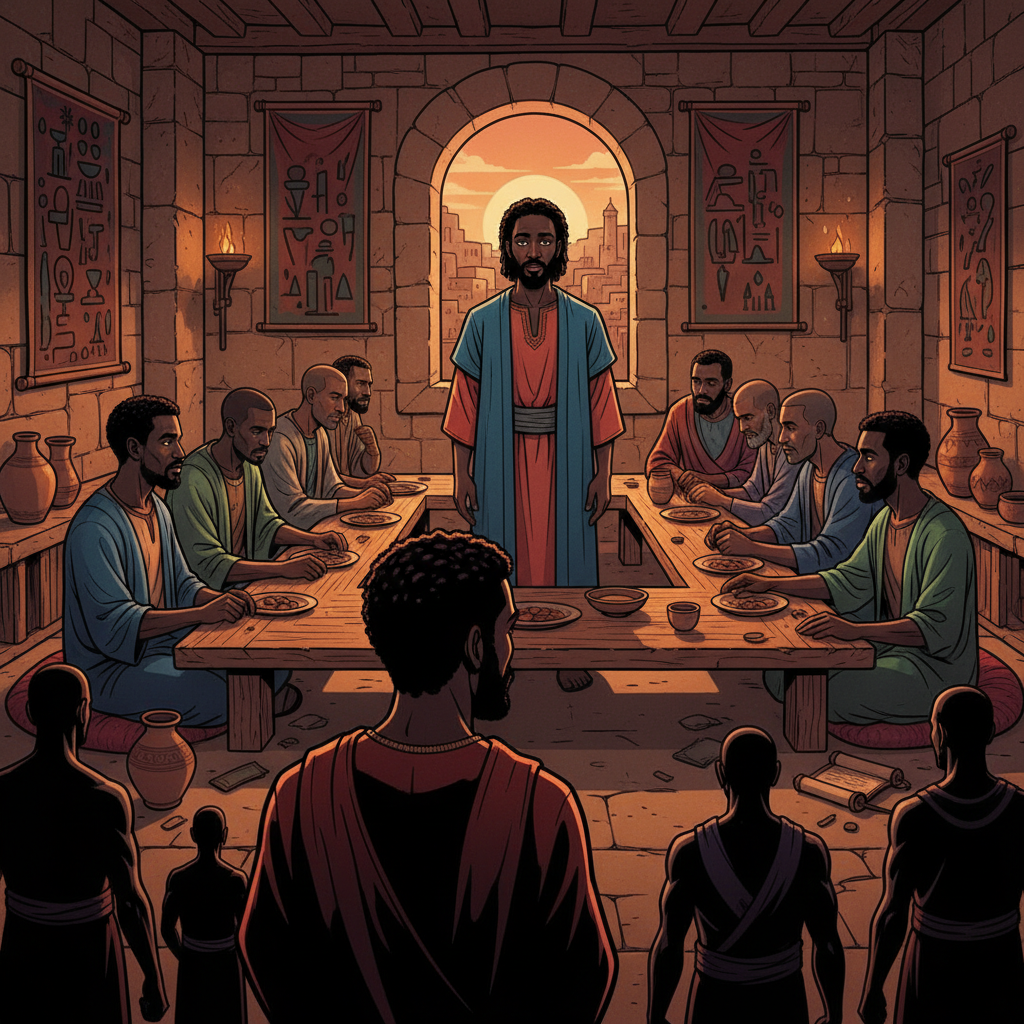
Yeshua looked at his men, at the familiar, beloved faces gathered around him. He saw the weariness etched into their dark skin, the residue of a week intense with teaching, healing, and confrontation. The city thrummed with a restless energy; Yerushalayim was on edge, a living entity bracing for unseen shifts. Temple authorities watched, their gaze sharp, their power challenged by the simple, radical truth Yeshua spoke. He felt the tension, a low thrumming beneath the surface of the evening. His eyes, deep pools of knowing, passed over each disciple, lingering for a fraction longer on Yehudah of Kerioth. Yehudah’s gaze flickered, a momentary tremor in the quiet room, a shadow crossing the light of the lamps. The weight of the moment was palpable, a truth felt in the bones.
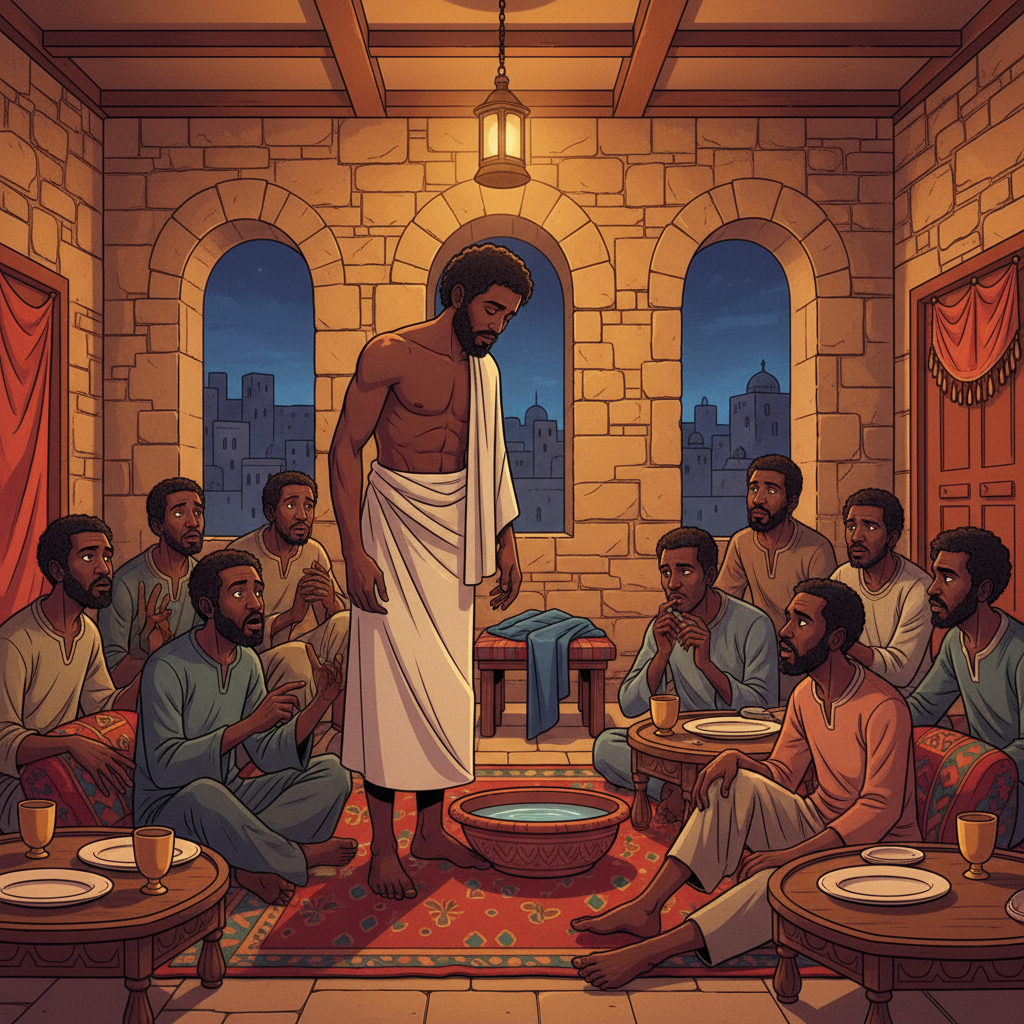
Before they could recline at the low tables, before the first cup of wine was poured, Yeshua did something none of them expected. The expected ritual of Pesach was etched into the very soul of the lineage, passed from elder to child for millennia. Every gesture of the Seder was known, sacred. Yet, Yeshua stood up. He removed his heavy outer robe, the garment of a teacher and master, laying it aside with a deliberate movement that seemed to shed not just cloth, but an ancient protocol of status. He took a long, clean linen towel, wrapping it around his waist, tying it securely. It was the simple, unmistakable attire of a household servant, the posture of one prepared to perform the lowest, most menial task in any home, anywhere in the world. The air in the upper-room thickened with unspoken questions, with a profound shift in expectation, as if the very laws of gravity had momentarily inverted.
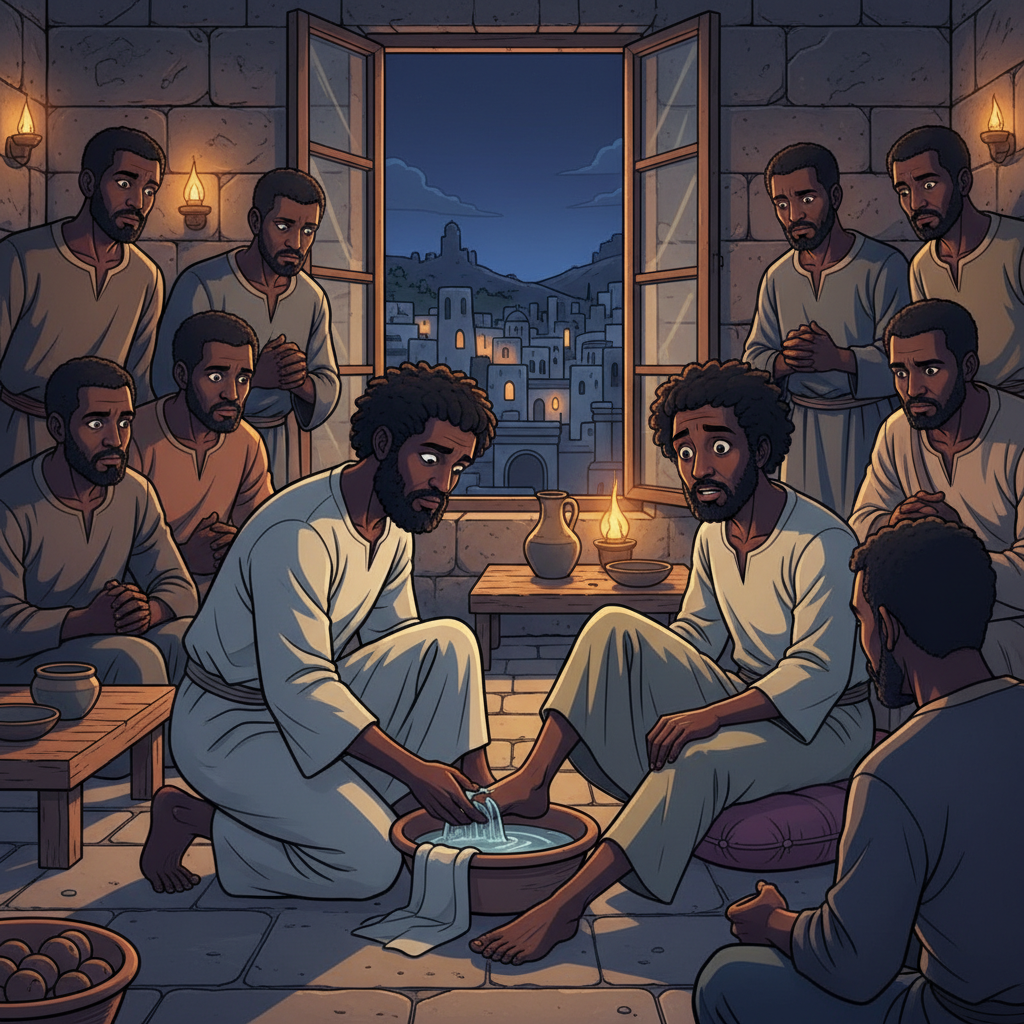
Then, Yeshua took a clay basin, its rim smoothed by countless hands, and filled it with clear, cool water. He carried it to Andreas, who was seated closest to him, his posture still, his eyes wide with a mixture of confusion and awe. Without a word, Yeshua knelt. It was the priest’s posture, but in this context, it was the posture of service, of the lustral washing found in the temples of Kemet before sacred rites began. He gently took Andreas’s foot, calloused from long journeys, and began to wash it. The room went utterly silent. The low murmur of the city faded, replaced by the soft splash of water, the gentle rasp of the towel. The other disciples watched, their dark faces reflecting the lamp-light, their minds wrestling with the profound inversion of rank before their very eyes.
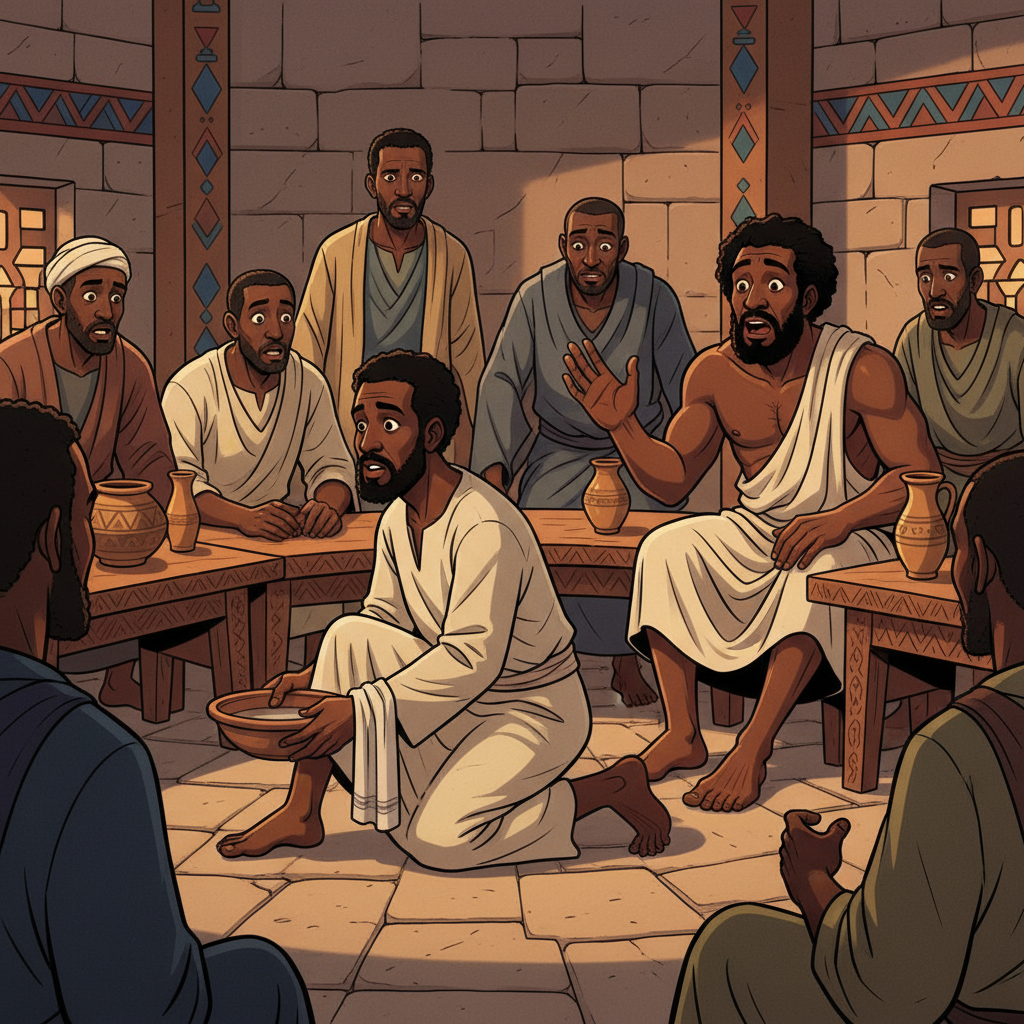
Petros, robust and impetuous, sat two places further down the low table. He watched Yeshua’s hands moving over Andreas’s feet, the quiet dignity of the act, the humble service. A tight knot formed in Petros’s chest, a mixture of fierce loyalty and bewildered discomfort. He understood, with a sudden, visceral clarity, what was coming. His Rabbi, his Lord, the one they had followed across Galilee and Judea, the one whose words held the weight of the cosmos, was performing the task of the lowest servant. This was an inversion of Maat, an affront to all perceived order. As Yeshua approached him, basin and towel in hand, Petros could not bear it. He pulled his feet back, his voice thick with protest and deep respect. "Rabbi!" he exclaimed, his dark eyes pleading. "YOU shall never wash my feet. This cannot be right. This is not the way of masters, nor the way of our lineage."
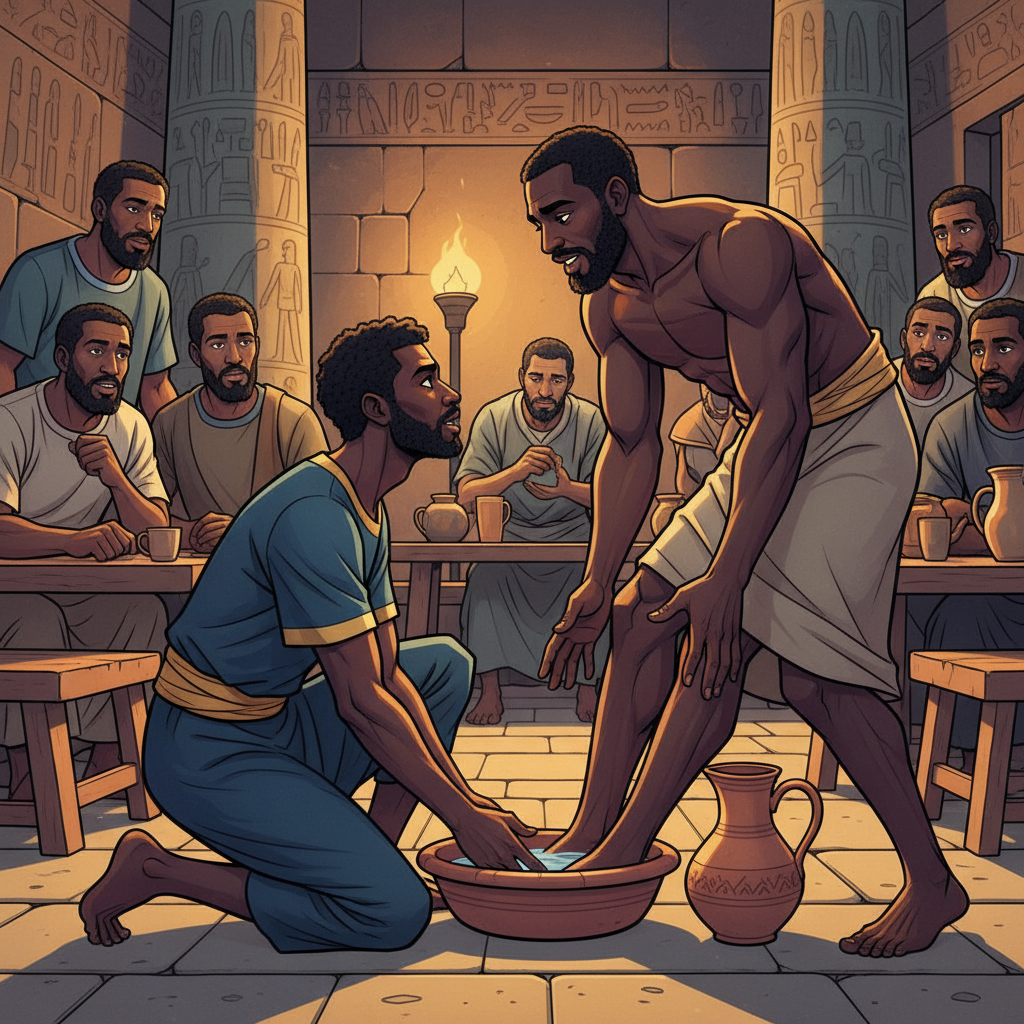
Yeshua paused, kneeling before Petros, looking up at him with eyes that held both tender understanding and unwavering resolve. His voice was quiet, yet it carried the weight of ancient wisdom. "If I do not wash you, you have no part with me," Yeshua stated, the words resonating with a deeper meaning than mere physical cleanliness. It was about shared experience, about embracing a new kind of belonging. Petros, ever impulsive, ever quick to shift from protest to passionate commitment, understood immediately the gravity of these words. His resistance crumbled. His dark face softened, illuminated by a flash of realization. "Then not just my feet, Lord," he declared, pushing his feet forward, "but my hands and my head also! Wash all of me, if that is what it takes for me to be truly with you."
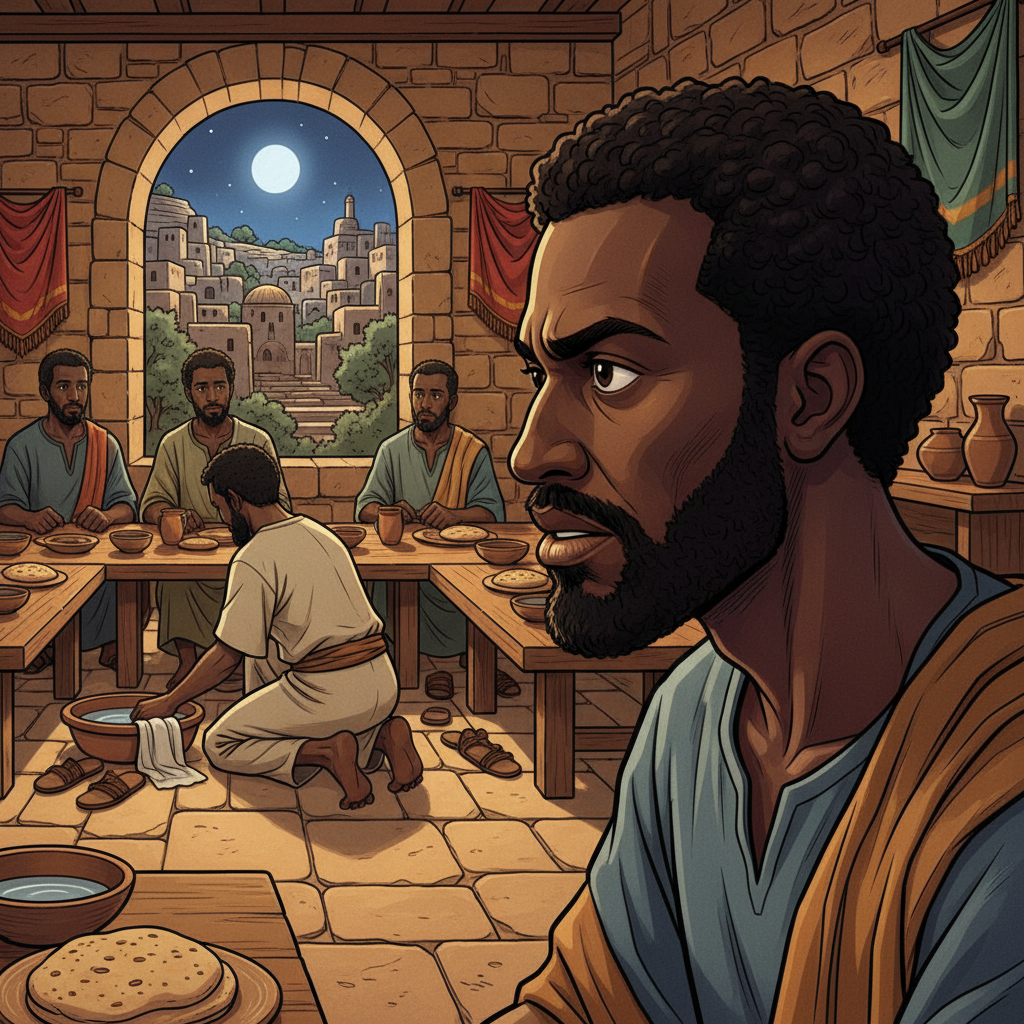
Yeshua almost smiled, a brief, gentle curve of his lips, touched with both affection and knowing. "He who has bathed needs only his feet washed," he explained, his voice low and instructive. "You are clean, though not every one of you." The final phrase hung in the air, a subtle tremor of a truth yet to fully unfold. He then continued his sacred task, moving around the circle of men. Yochanan, the beloved, received the same humble service. Then Yaakov, his brother. Bartolomeo, quiet and thoughtful. Tomas, ever seeking, watched with deep concentration. Mattityahu, the tax collector, whose journey to this moment was perhaps the longest, humbled by the touch. Each foot, each man, received the lustral water, the gentle towel, the profound blessing of the Master’s service.
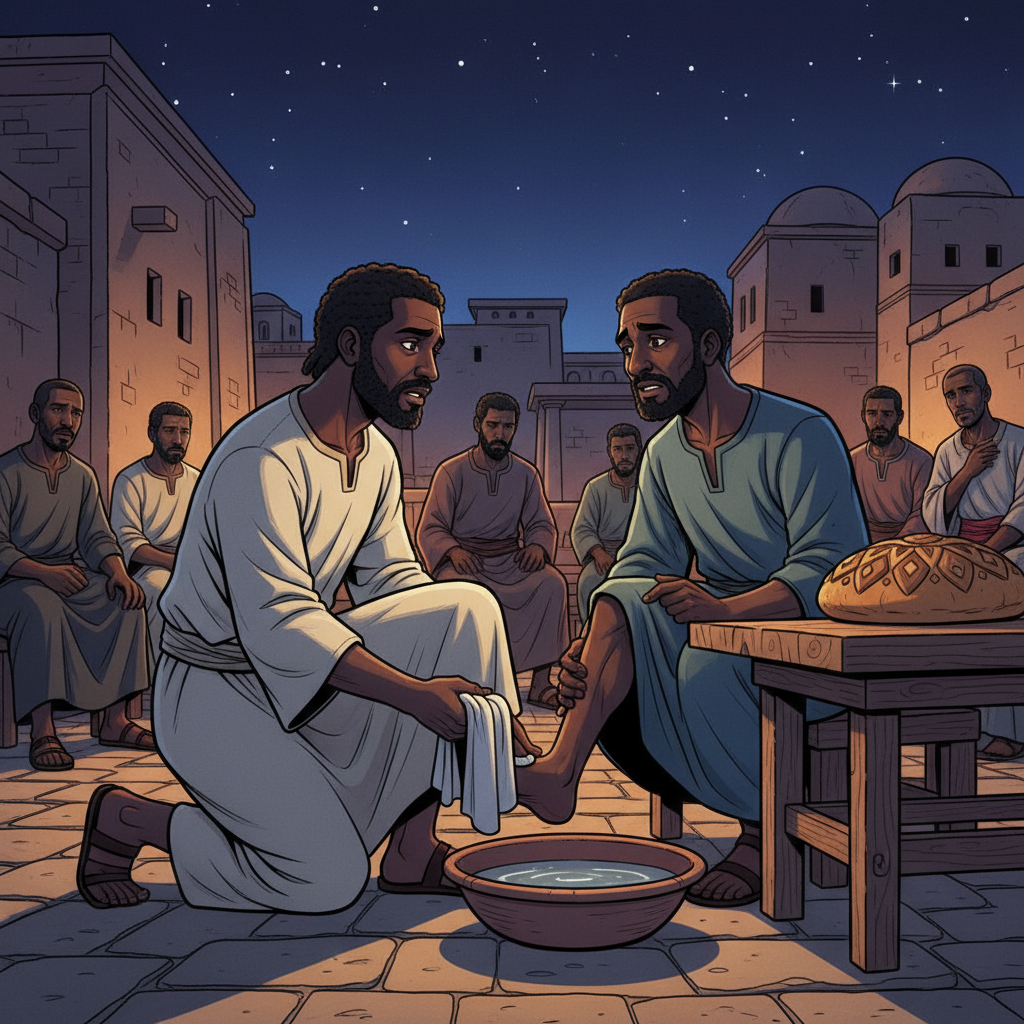
Each foot received the water and the towel, cleansed not only of the dust of Yerushalayim’s streets but of the dust of expectation and hierarchy. Yeshua moved with a quiet, deliberate grace. He came to Yehudah of Kerioth. The air seemed to grow stiller, colder, around them. Without hesitation, Yeshua knelt before him, just as he had for the others. He took Yehudah’s foot, performed the same act of humble service. As he did so, Yeshua looked directly into Yehudah’s eyes, a gaze that was neither accusation nor judgment, but pure, unwavering love and sorrow. Yehudah’s eyes, dark and troubled, did not fully meet his. They flickered away, a quick, almost imperceptible dart, betraying the turmoil within. The water that washed Yehudah’s feet felt no different, yet it carried an invisible, unbearable weight.
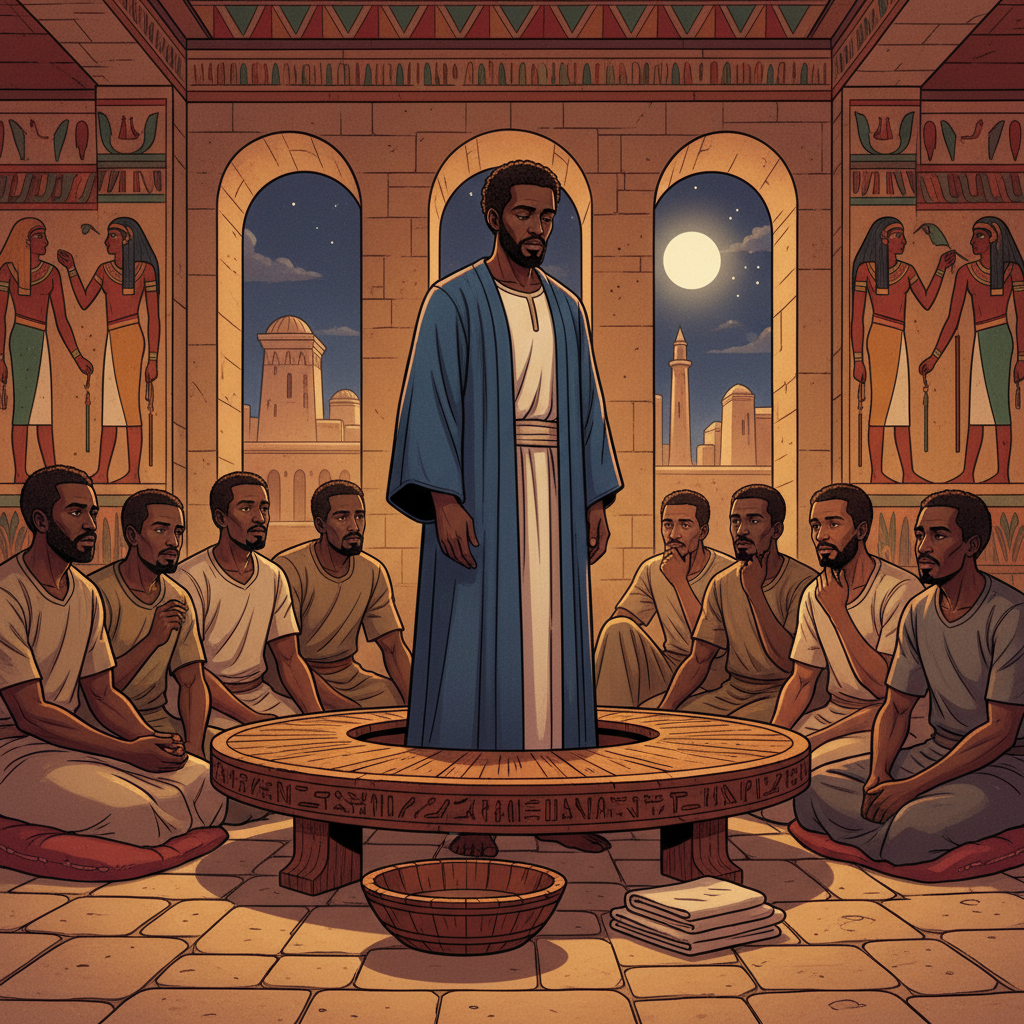
When the last foot was washed, the basin emptied, Yeshua rose. He put his outer robe back on, resuming the garment of a teacher, but now, the garment carried a new weight, a new understanding, transformed by the humble act. He sat back at the low table with his disciples. The silence in the upper-room was deep, pregnant with meaning, each man wrestling with the implications of what they had just witnessed. Then Yeshua spoke, his voice clear and resonant, cutting through the quiet. "Do you understand what I have done for you?" he asked, his gaze sweeping across their faces, inviting their contemplation. "You call me Teacher and Lord, and you are right, for so I am. So if I, your Teacher and Lord, have washed your feet — you also ought to wash one another’s feet." It was a command wrapped in an example, a new law etched not on stone, but in water and linen, designed to reshape their very understanding of leadership.
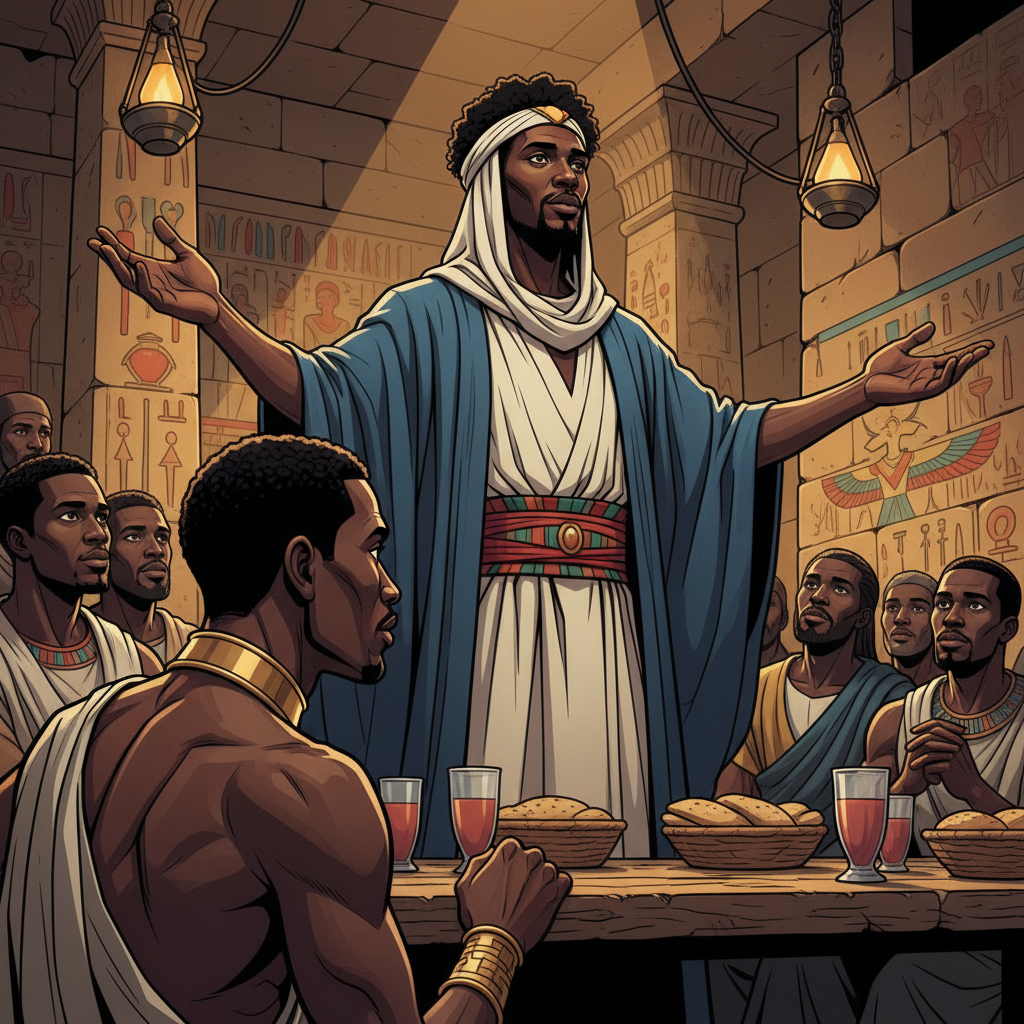
"I have given you an example, a living lesson," Yeshua continued, his voice now carrying the authority of one who spoke from a lineage of deep wisdom, from the very heart of Maat. "The leader serves. The teacher kneels. This is the truth, the Maat, as I want you to carry it forward, not just in ritual, but in the daily rhythm of your lives. For the high to serve the low is not a diminishment; it is the very essence of true power, the vital current that keeps a real lineage alive and thriving. It is the inversion of worldly hierarchy, echoing the ancient wisdom of Kemet where the pharaoh was first servant of the Two Lands. This principle, this sacred reciprocity, is how the light of our ancestors continues to burn brightly through the generations, never extinguished."
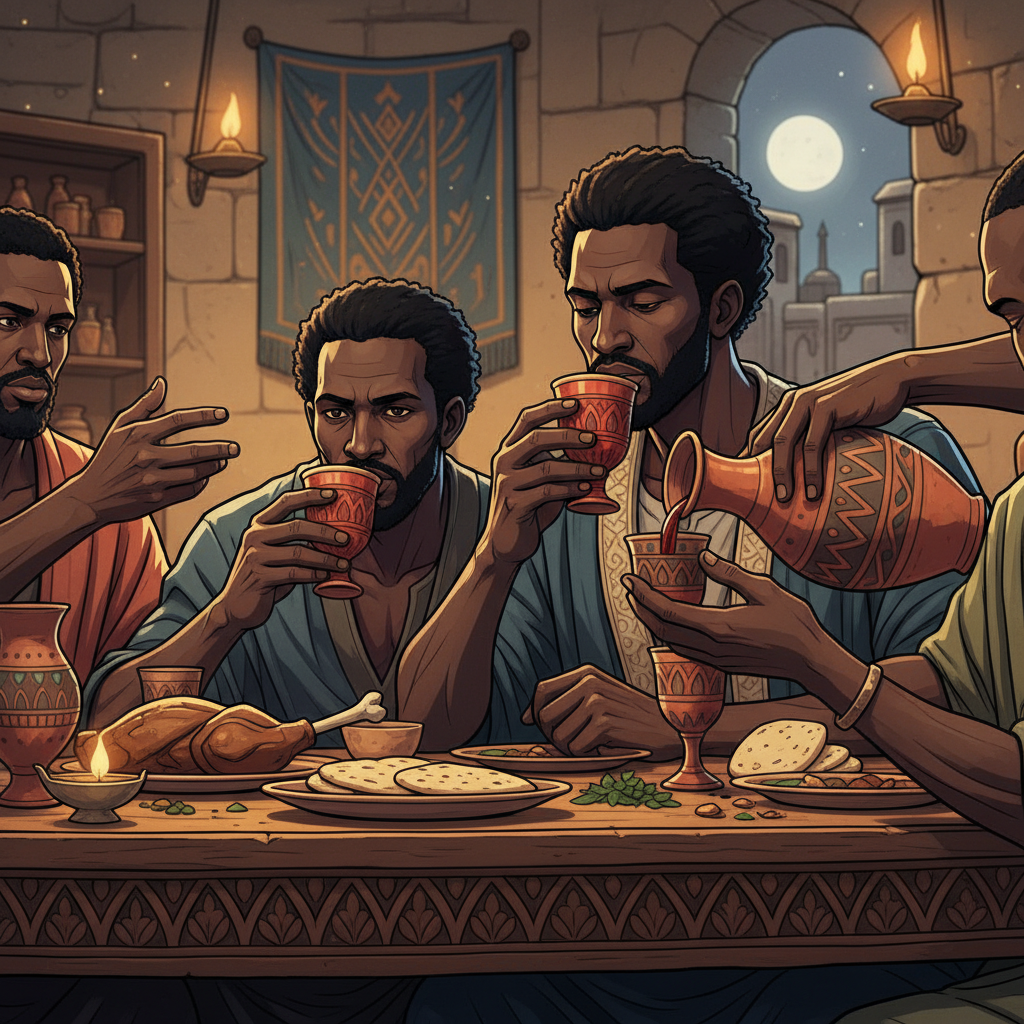
With the teaching complete, the profound act of service imprinted on their souls, the meal finally began. The Pesach Seder unfolded, an ancient drama re-enacted. The lamb, roasted and savory, was shared. The bitter herb, sharp and poignant, was tasted, reminding them of the long, hard journey of their people. The unleavened bread, simple and pure, spoke of haste and liberation. Four cups of wine, each a step in the unfolding narrative of freedom, were poured and sipped. The sound of the city, muted now, drifted in through the open window, a distant hum against the intimacy of the upper-room. The lamps glowed low, casting a warm, enveloping light on their dark, reflective faces as the sacred story of Exodus was recited, weaving past into present.
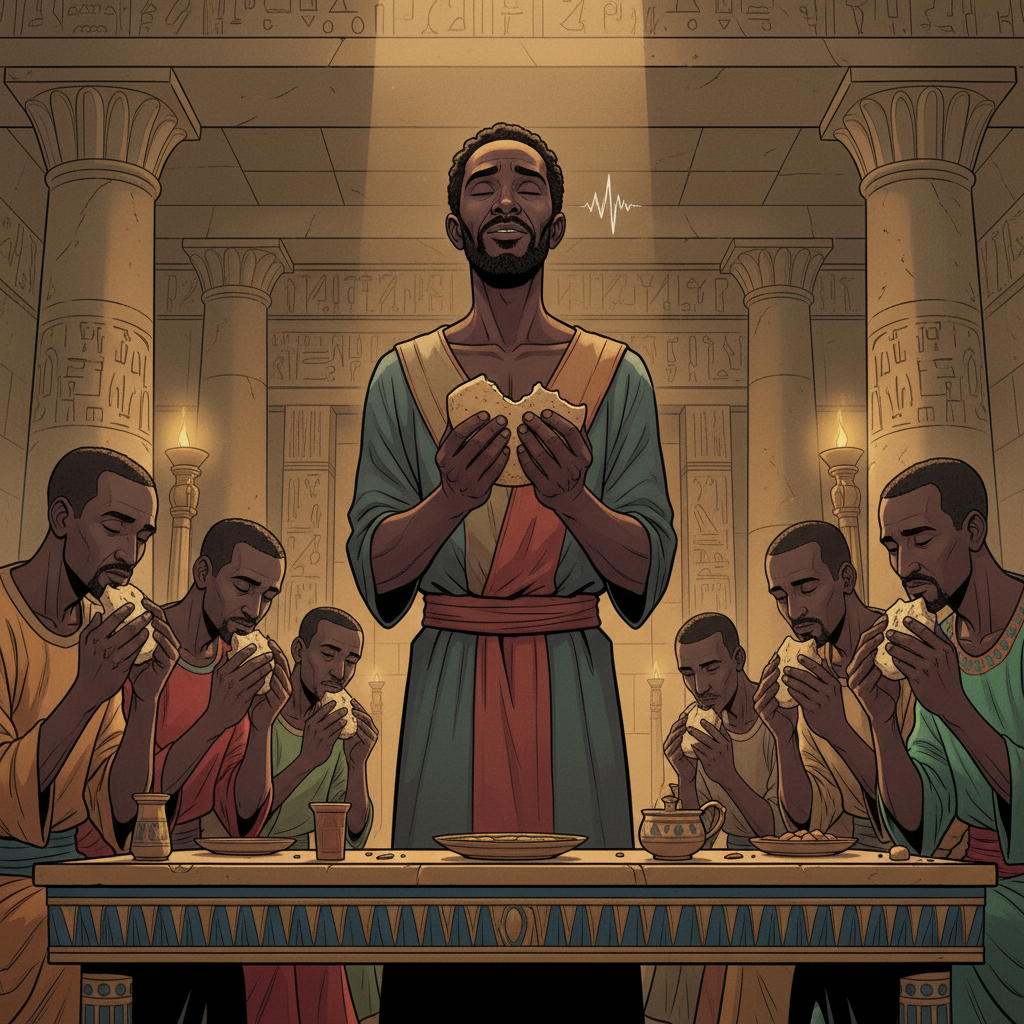
Then, Yeshua took the unleavened bread, holding it in his strong, dark hands. He looked to the heavens, his eyes filled with gratitude, and gave thanks to the Creator. With a deliberate motion, he broke the bread into pieces. The sound was soft, a small tear in the quiet air. He handed a piece to each of his disciples. "This is my body," he said, his voice imbued with a quiet power, "given for you. Do this in remembrance of me." The men ate, chewing slowly, the simple taste of the bread now heavy with unspoken meaning. They did not yet fully grasp the profound Heka he was enacting, the deep spiritual alchemy. They would, later, when the full weight of his journey and the lineage’s path became clear, understand this sacred gift of remembrance.
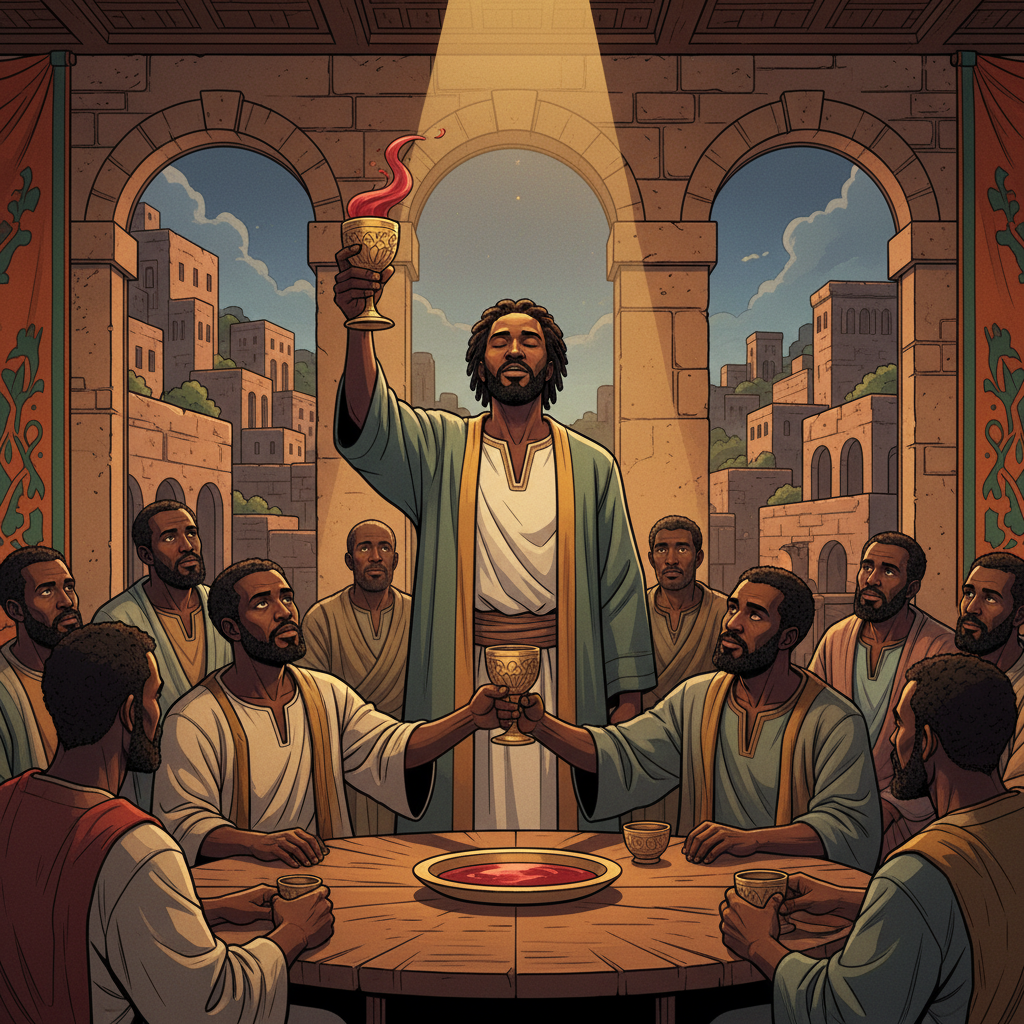
Next, Yeshua took the third cup, the Cup of Redemption, the one that traditionally celebrated freedom from bondage. He lifted it, his gaze again toward the unseen, and gave thanks. The light caught the deep red of the wine, a liquid symbol of life itself. He passed the cup to Yochanan, who then passed it to Yaakov, and so around the circle. "This cup," Yeshua declared, his voice firm with prophetic certainty, "is the new covenant in my blood, poured out for many for the forgiveness of sins. Do this, when you drink it, in remembrance of me." Each man drank, the taste of wine bittersweet on their tongues, a silent pact forged in the quiet upper-room. A profound stillness settled, a moment suspended between what was and what was yet to come.
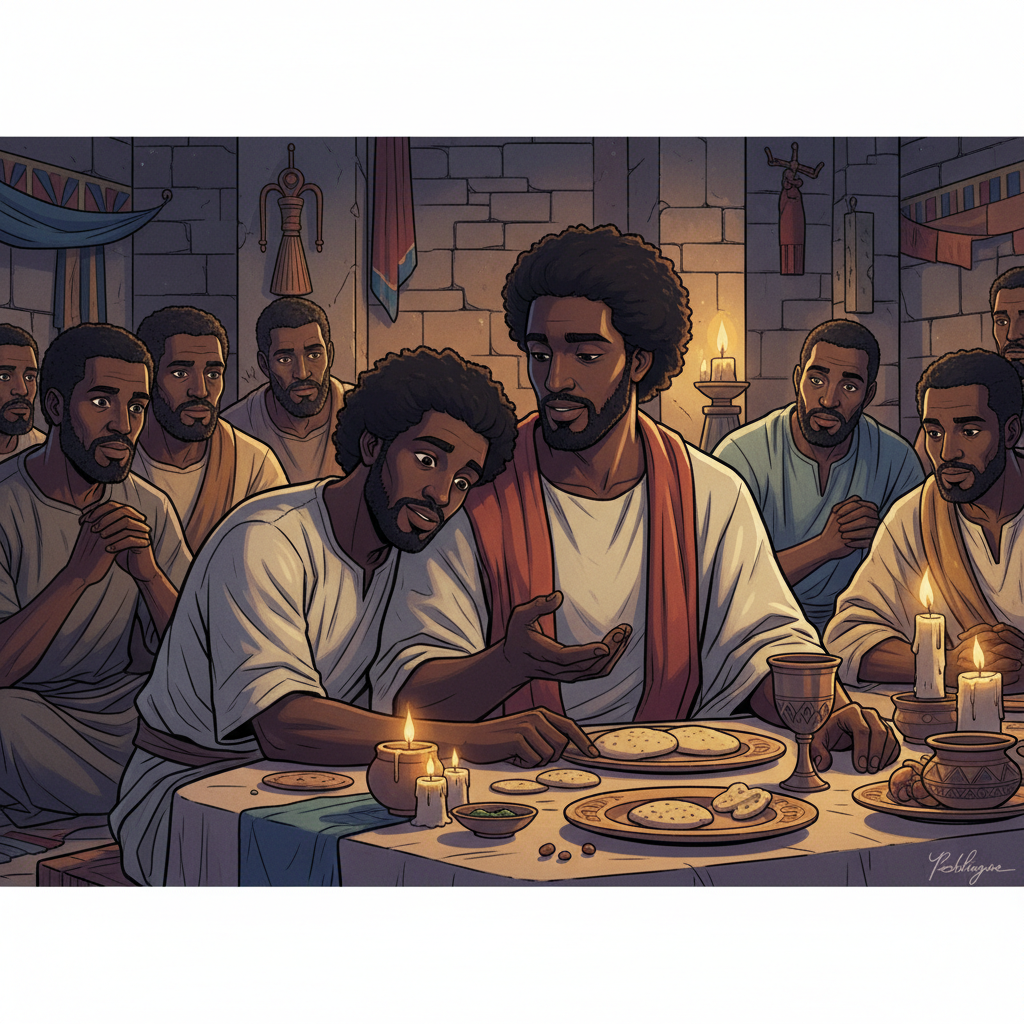
Yochanan, sitting closest to Yeshua, leaning a little against him, felt the tremor of significance that ran through his master. He whispered softly, "Rabbi, what is this you are doing tonight? What is this new Heka?" Yeshua turned slightly, his voice equally soft, a balm in the quiet room. "I am giving you a Heka you can carry without me," he explained, his words unfolding the profound spiritual technology. "The bread will remember. The cup will remember. And as long as you do this together, with intention and true heart, I will be there, in the breaking and the pouring, in the gathering of the community. This is a living ritual, a sacred practice that binds you to me and to each other, a continuous act of creation and remembrance, a conduit of power."
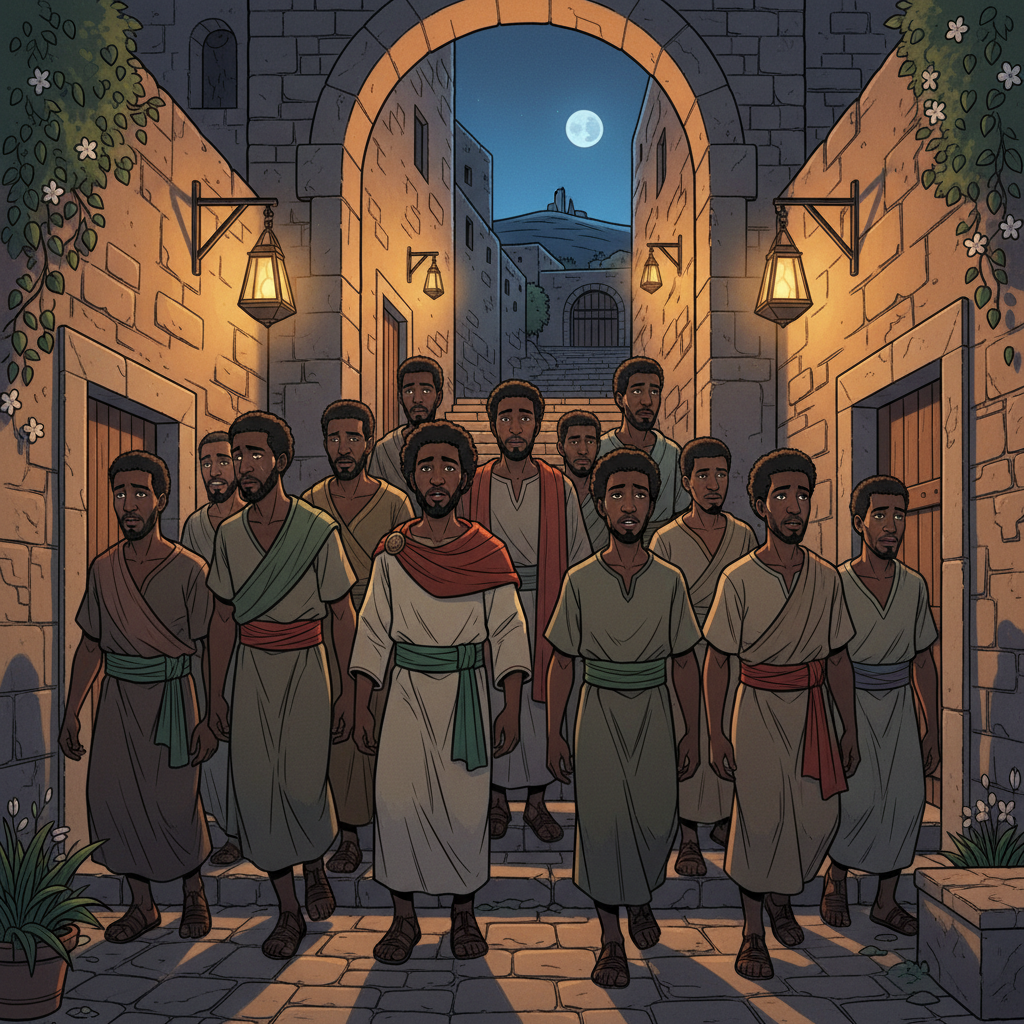
Finally, their hearts heavy with understanding, light with a new, profound sense of purpose, they sang the Hallel. The ancient Pesach psalms, songs of praise and deliverance, filled the upper-room, their voices rising and falling, strong and unwavering. Some men’s voices cracked, heavy with emotion, with the weight of prophecy and the unknown path ahead. When the last amen echoed into the night, they rose. They walked down the stone stair, out of the upper-room, into the city’s narrow, lamplit streets. The air was cool now, carrying the scent of night-blooming jasmine. They walked eastward, out of the familiar city gate, down into the Kidron valley, a deep shadow in the moonlight, and then up the slope toward the Mount of Olives, toward a garden Yeshua often went to – Gat Shemanim, the place of the olive press. Here, the next part of the story would begin.