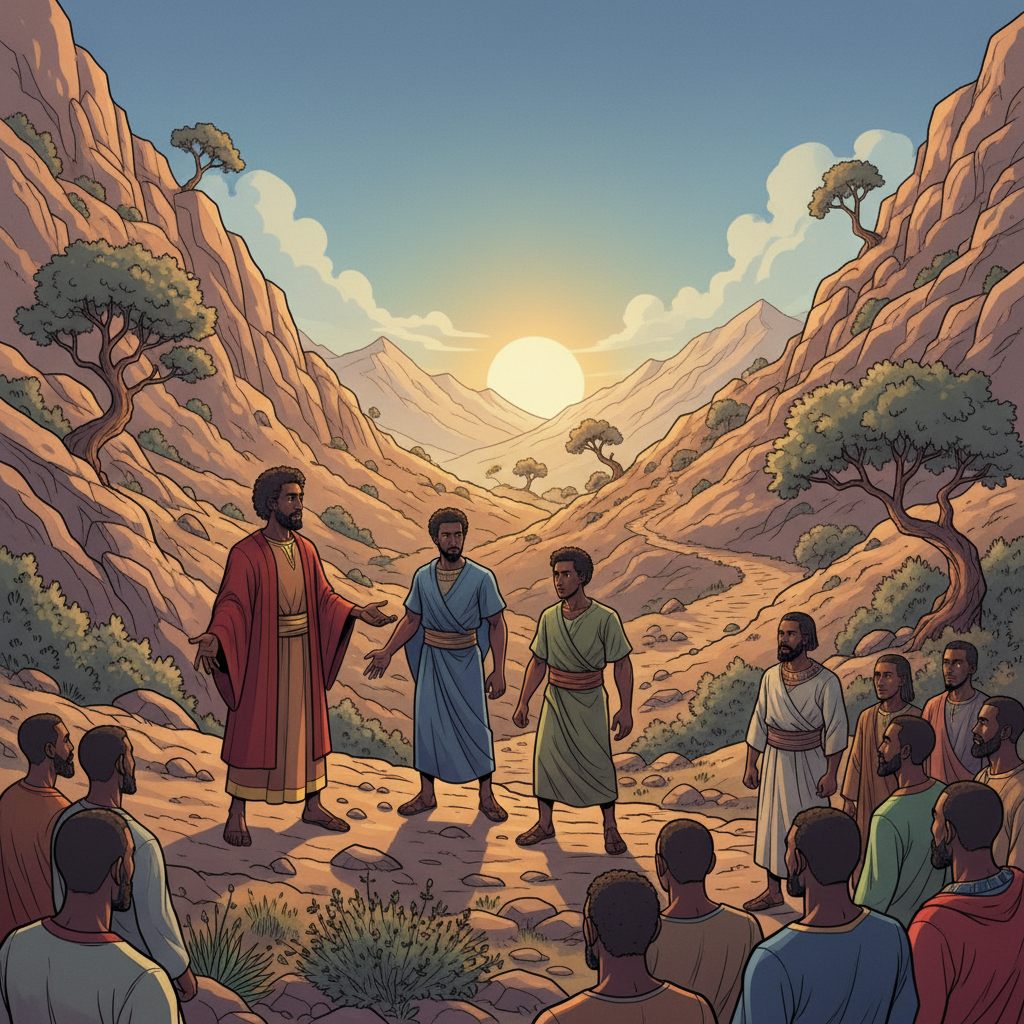
Yeshua walked to the edge of the small camp, where the morning air, thin and cool, carried the clean scent of wild thyme from the rocky slopes. He turned to the gathered disciples, his gaze steady and deep, full of an ancient knowing. "This time," he said, his voice a low timbre, "only three will come with me." He called Petros, whose spirit was like a stone in a river, strong and unyielding. He called Yochanan, the son of Zebedee, whose fervor burned bright like desert fire. And he called Yaakov, Yochanan's brother, the quiet strength. The other disciples remained below, their faces reflecting a quiet understanding, a patient faith. The path ahead was steep, winding upward like a serpent coiled around the mountain's flanks. The sun, a golden eye in the clear sky, promised a day of stark, revealing light. Yeshua led the way, his stride strong and unhurried, toward the silent, sacred heights.
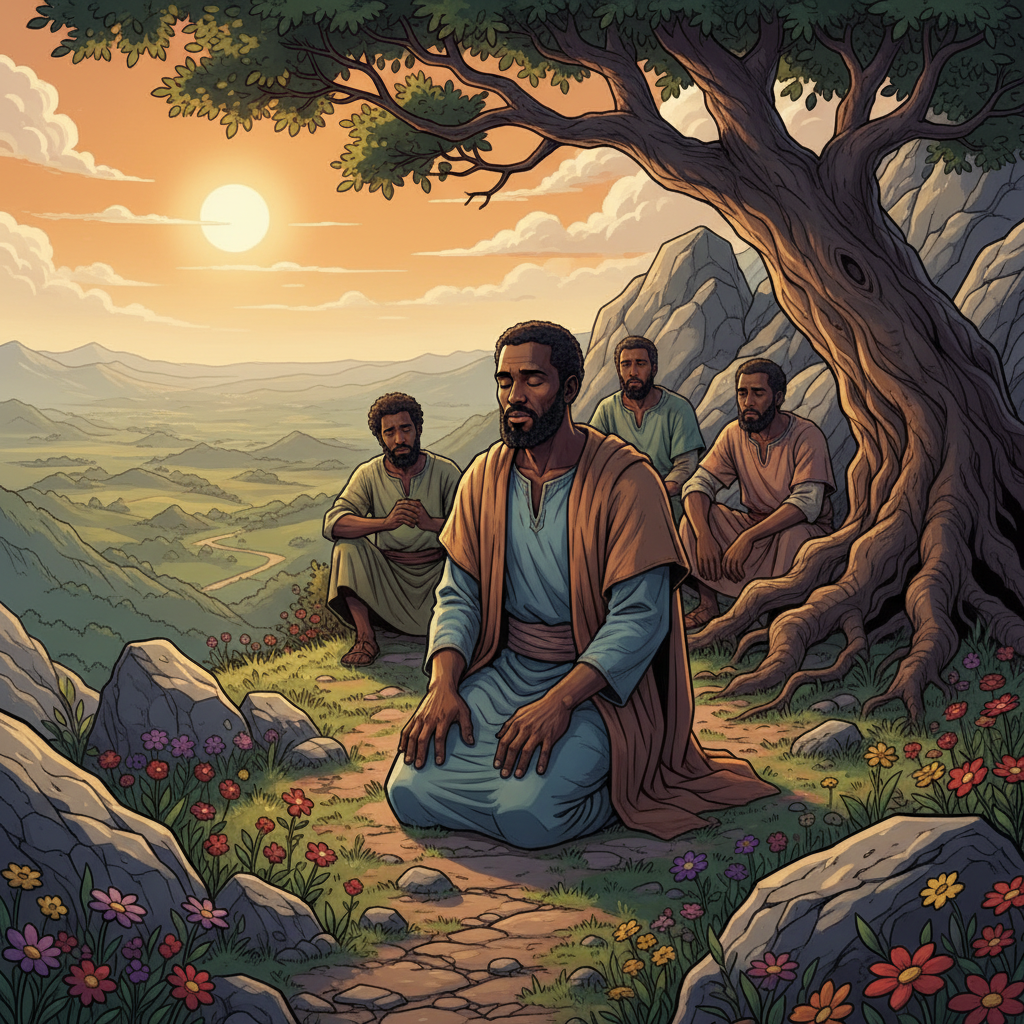
The climb was long and arduous, a test of spirit and sinew. The narrow path, barely more than a goat track, clung to the mountainside, loose stones skittering beneath their sandaled feet with every upward step. The air grew thinner, carrying the distant song of eagles, the world below shrinking into a vast, sprawling tapestry of emerald greens and ochre browns. After many hours, their muscles aching with the sustained effort, they reached an upper meadow, a high plateau carpeted with hardy mountain flowers and ancient, wind-sculpted rocks. The sun beat down, warming the very stones. The three men, strong as they were, felt the profound weariness settle deep in their bones. They found a sheltered spot beneath an ancient, gnarled tree whose roots gripped the earth like an elder's hand. Yeshua knelt, his dark skin gleaming with the light sheen of exertion, his eyes closing in a prayer that seemed to draw the mountain's spirit into himself. Petros, Yochanan, and Yaakov sat a few paces away, their chests heaving with each deep breath.
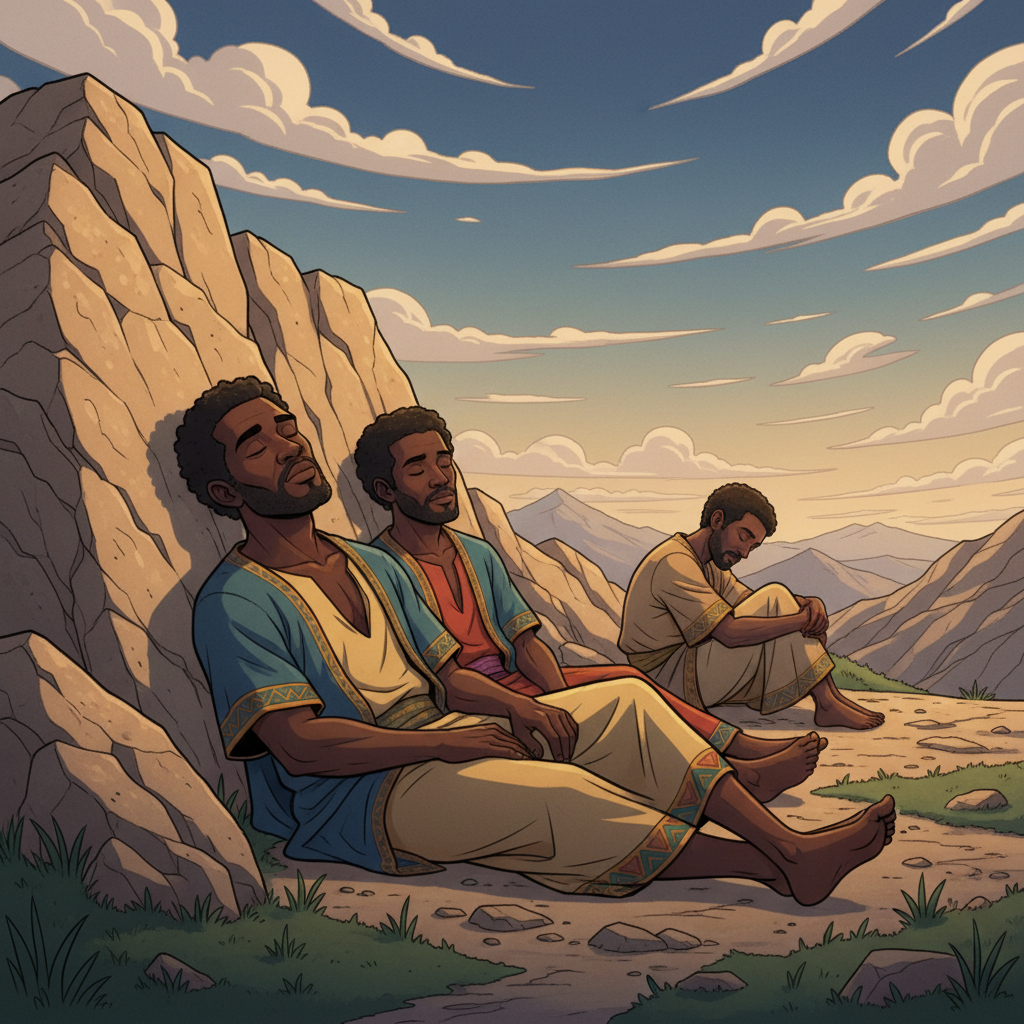
The quiet of the high mountain was profound, a silence that felt older than time itself. It was the kind of quiet that allowed a man to hear the pulse in his own ears, the soft whisper of the wind through the sparse mountain grass, the distant hum of creation. Petros, leaning against a rough-hewn stone, felt his eyelids grow heavy, weighed down by the day's toil and the mountain's tranquil embrace. The persistent warmth of the sun, combined with the deep exhaustion from the relentless ascent, pulled him into a heavy, dreamless sleep. Yochanan, usually vigilant and quick to observe, watched the distant, slow-moving clouds for a time, then his head drooped, his awareness drifting. Yaakov, always the quietest and most introspective, slumped sideways, his breath growing slow and even, lost to the deep slumber that claimed his companions. The three men, chosen to witness an unfolding mystery, slept through its first, subtle moments.
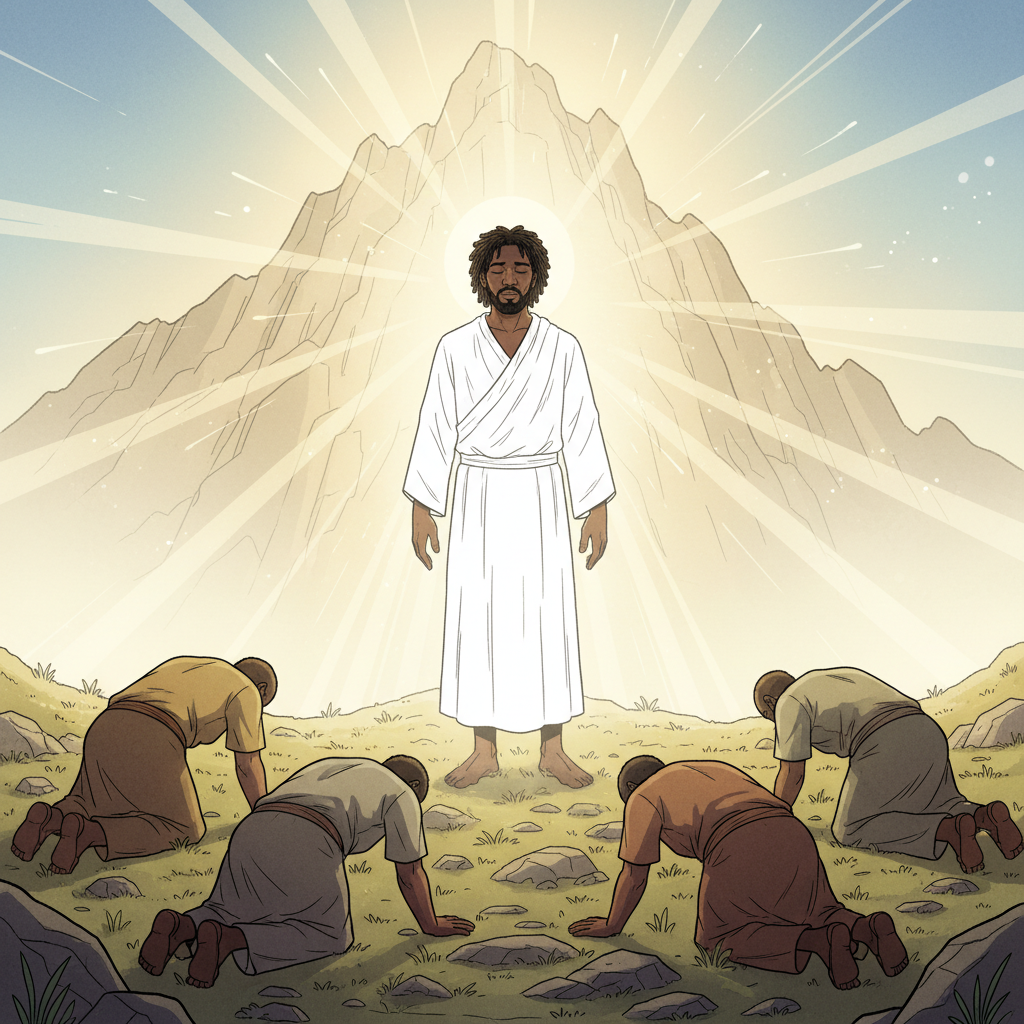
They woke not to the sun's usual gentle caress, but to a light that felt ancient, primordial, a revelation. It was a light behind the sun, a pure, unblemished emanation that washed the entire upper meadow. It was not harsh or blinding, but radiant, a luminescence that seemed to vibrate in the very air, making the unseen visible. Yeshua stood before them, no longer kneeling in prayer, but upright and utterly transformed. His face was shining, not merely reflecting light, but generating it from within, like the sun itself at its zenith. His simple Galilean garments, woven from plain wool, had become white, a brilliance beyond any earthly fabric, whiter than any fuller on earth could ever bleach. The light was absolute, erasing all shadows, revealing the very essence of form and spirit, saturating the space with divine presence.
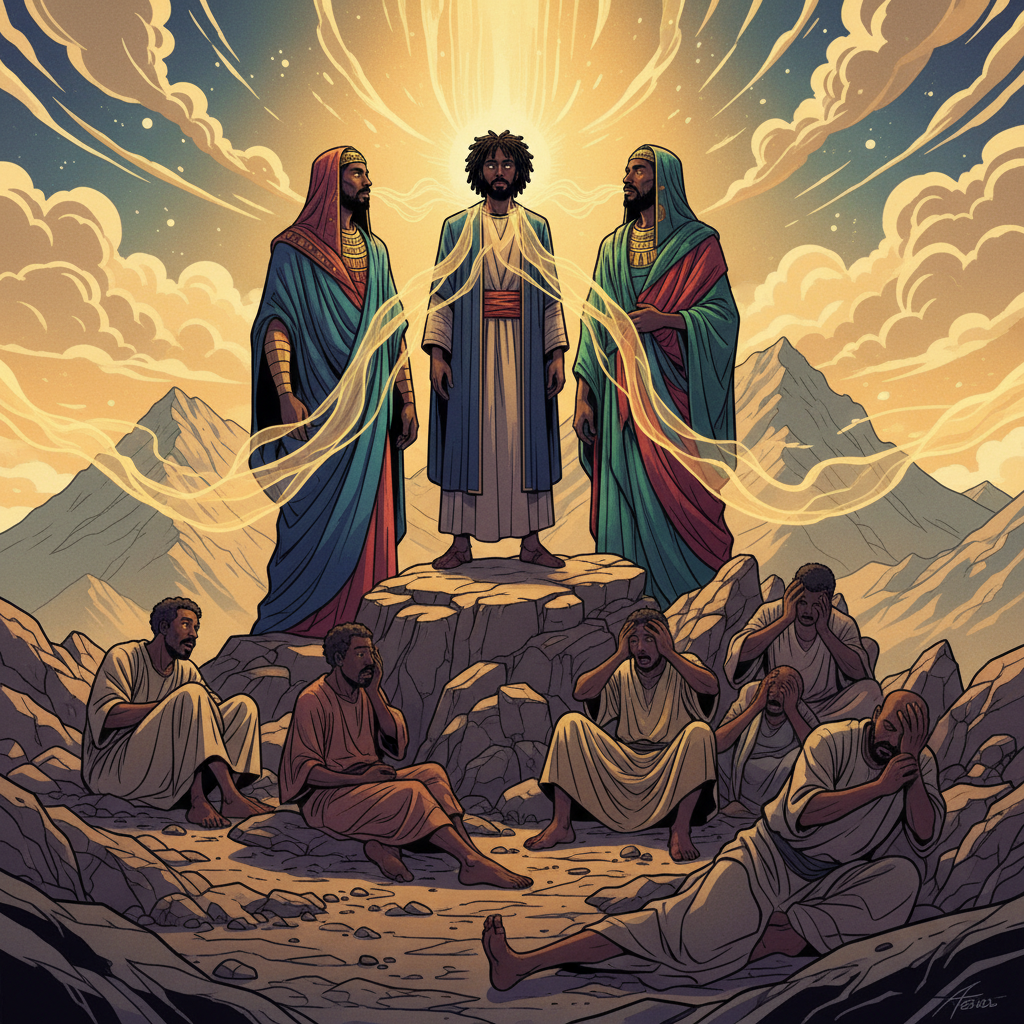
He was not alone. Standing beside Yeshua, bathed in the same profound and unearthly light, were two figures of immense stature and presence. They were tall and regal, their forms distinct yet woven seamlessly into the tapestry of the radiance, as if born from the very light itself. They spoke with Yeshua, their voices a low, resonant hum, a melody beyond human language, yet carrying immense weight and meaning that vibrated through the silent mountain air. The disciples, still groggy from their deep sleep and utterly stunned by the transcendent light, could not at first comprehend who these magnificent beings were. Their minds strained, trying to grasp the impossible vision unfolding before them, a sacred convergence on the mountain peak, a meeting of worlds both seen and unseen.
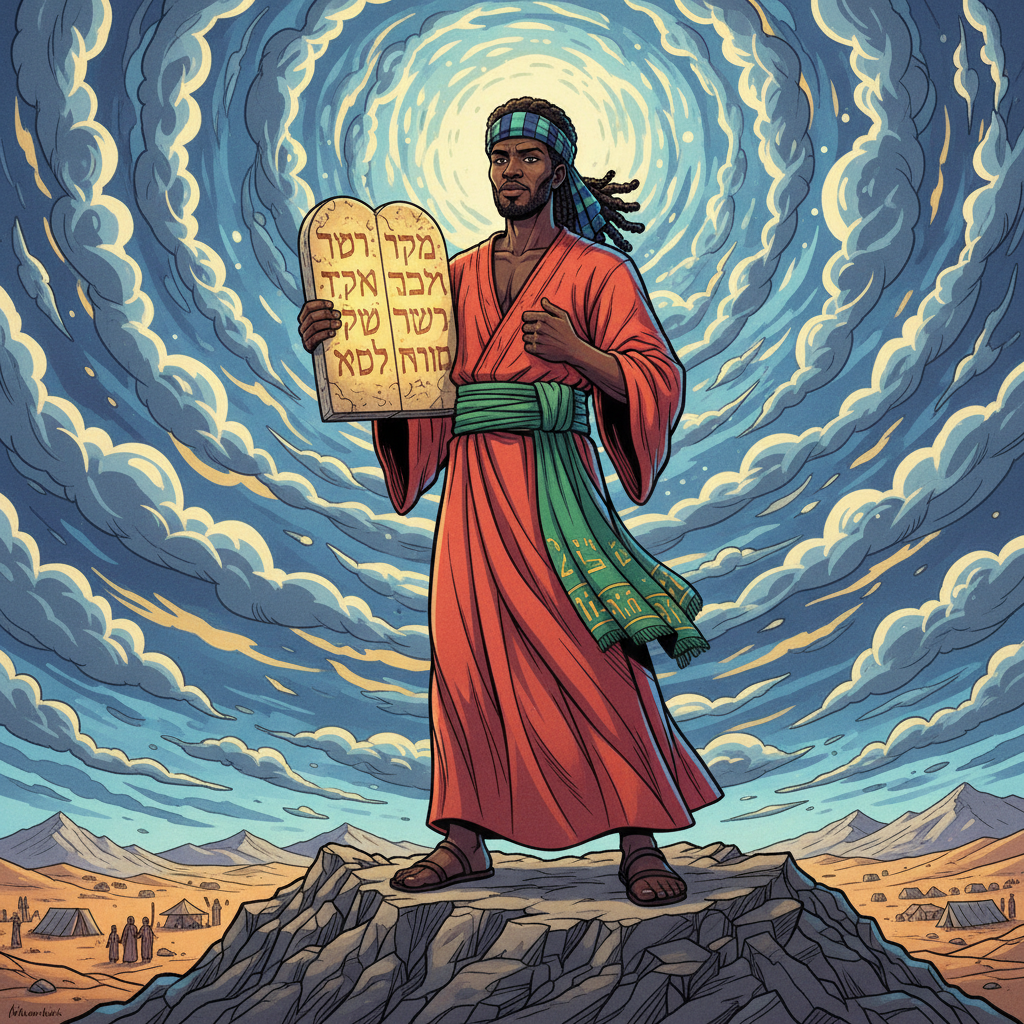
Yet, the faces of these two figures were etched into the memory of the elders, passed down through the sacred oral traditions of the Africana-Hebraic lineage, held in the heart of the people. Slowly, with a jolt that shook his very soul, Petros began to recognize them. The first, his bearing commanding, his eyes holding the wisdom of ages and the burdens of a people, was Moshe. Moshe, the great seba, the lawgiver, the one chosen by the Most High to lead the Children of Yisrael out of the crucible of Kemet, out of the land of bondage and into the promise. He was the one who climbed the holy mountain of Sinai, entered the sacred cloud, and brought down the words, the enduring Torah, that shaped a people and set their course. His presence was foundational, a living pillar of the covenant.
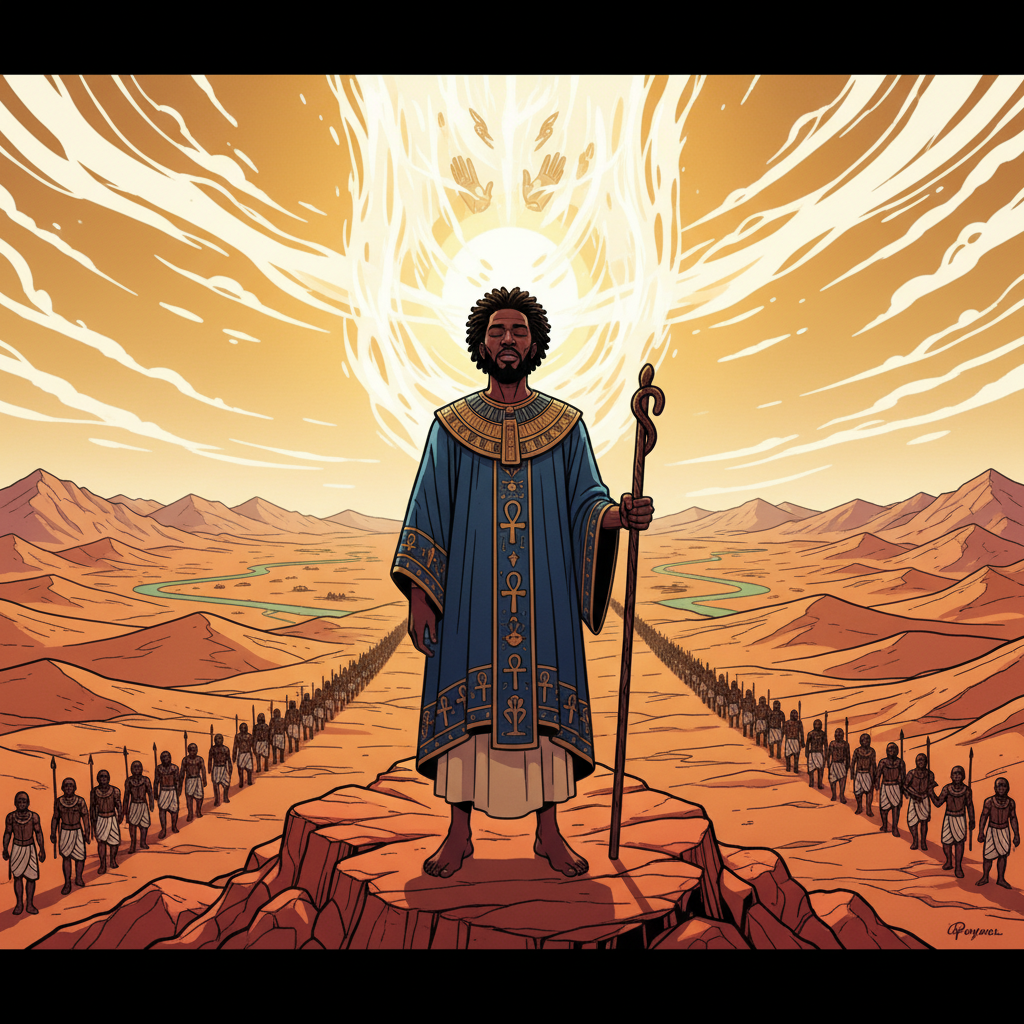
Moshe, whose death was not a common one, but a mystery held in the divine hand. He was buried by the Most High in the valley of Moab, a place no man knows to this day, his grave concealed from human eyes. He was a seba, an elder, a founder, whose life bridged the profound wisdom traditions of Kemet and the arduous desert journey toward liberation. His presence here, on this high mountain, was a testament to the eternal thread of the covenant, the unbroken chain of divine guidance that connects generations. He stood as the very root of the law, the first great prophet, the one who spoke face-to-face with the Most High, confirming the ancient lineage.
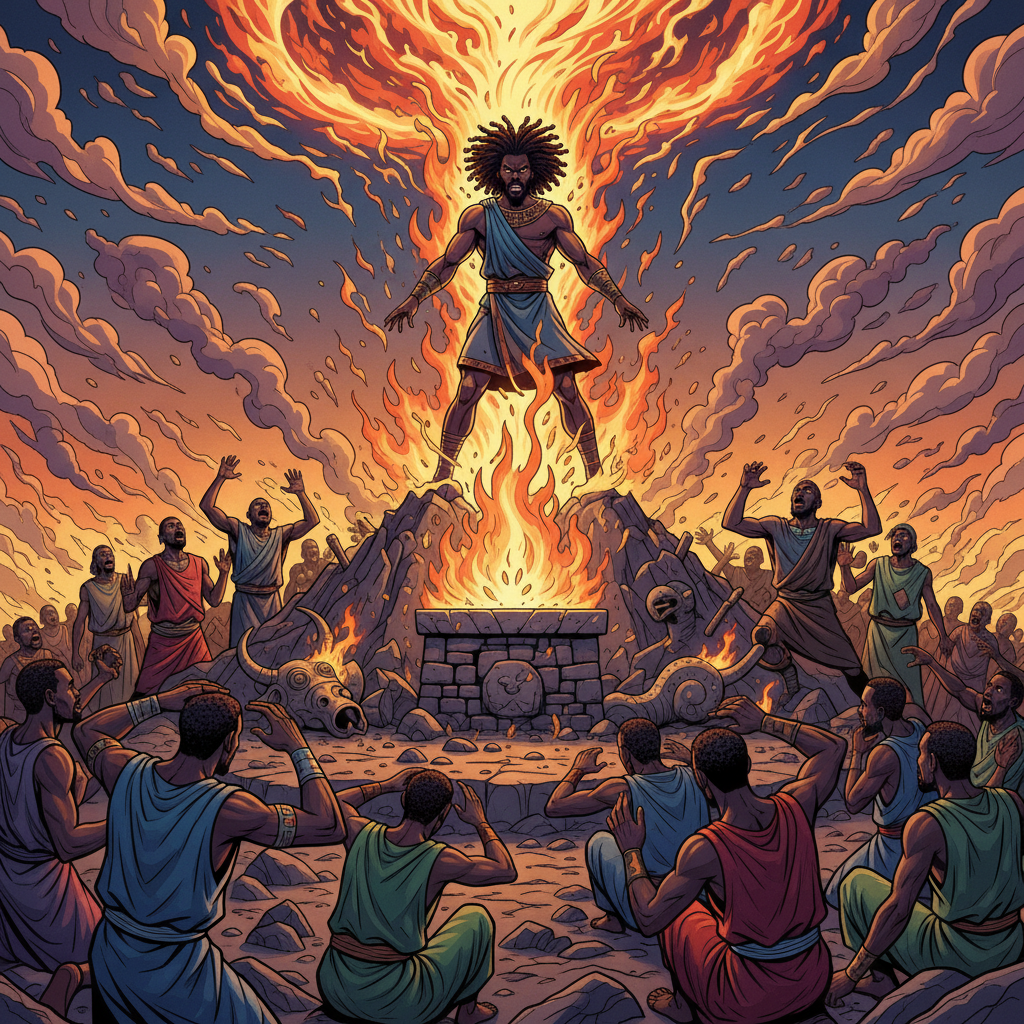
And the second figure, equally radiant and powerful, his presence crackling with the fire of prophecy, was Eliyahu. Eliyahu, the prophet who stood fiercely for the One God, who called down fire from heaven on Mount Carmel to consume the false idols and their prophets. He was the one whose life culminated not in ordinary death, but in a dramatic ascension, taken up into the heavens in a chariot of fire, leaving his mantle, his spiritual authority, to fall upon Elisha. He was the living voice of the prophets, the embodiment of divine intervention and unyielding justice, a beacon of truth and righteous zeal in every generation. His appearance affirmed the ongoing stream of prophetic power, the enduring spirit that spoke through the chosen ones.
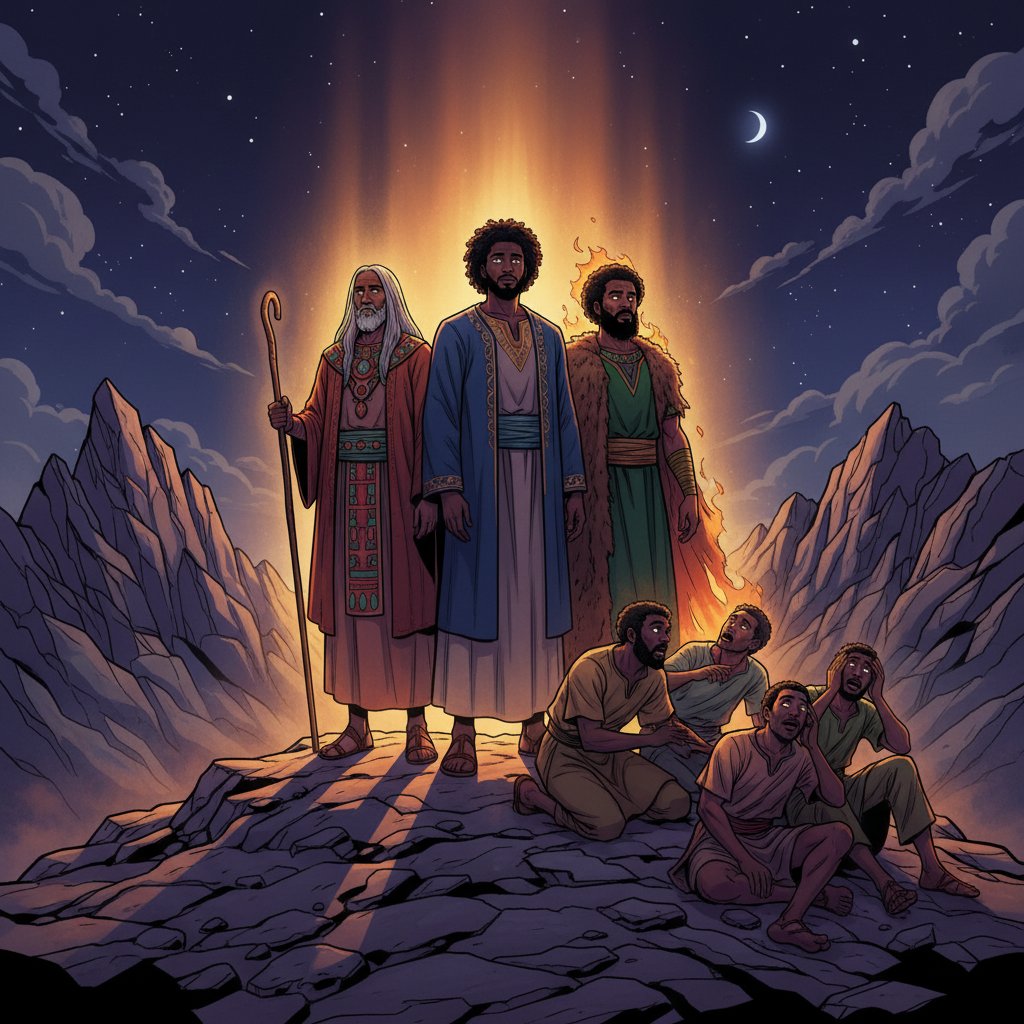
These were the eldest of the lineage, the towering figures who stood at the very beginning of the covenant and whose lives carved the path for generations. Both had defied ordinary death, touched directly by the hand of the Most High in ways beyond human understanding, their destinies woven into the fabric of divine mystery. Now, they stood on this mountain, vibrant and alive, engaged in deep counsel with Yeshua, their radiant forms testament to an eternal reality. Petros, his breath catching in his throat, his heart pounding like a drum, nudged Yochanan and Yaakov awake, pulling them from their stupor. Their eyes, wide with disbelief and profound awe, fixed on the impossible vision: Yeshua, Moshe, and Eliyahu, all bathed in the light that had no earthly source.
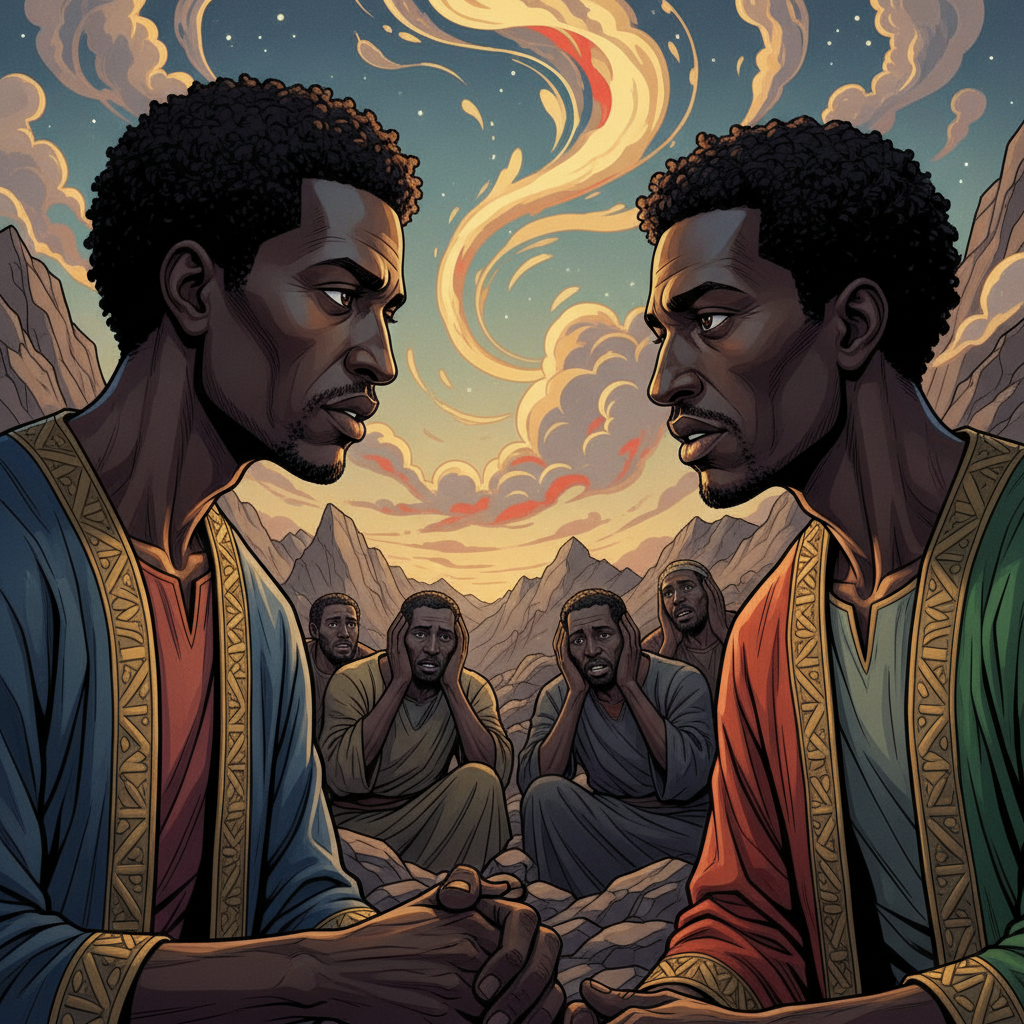
Yeshua, Moshe, and Eliyahu spoke together, their conversation a deep, resonant murmur in the luminous air. The gospel writers would later tell that their profound discussion concerned the "departure" Yeshua was about to accomplish in Yerushalayim, a journey both spiritual and physical, a destined culmination of his mission. But to the three startled disciples, the words themselves were cloaked in mystery. It was a tongue they did not know, perhaps the ancient language of the ancestors, the profound Aramaic of the first seba, or even the sacred cloud-tongue spoken between the Most High and the chosen. They could not follow the intricate weave of the conversation, yet they felt its immense WEIGHT, its profound significance pressing upon them, a truth too vast for mere words.
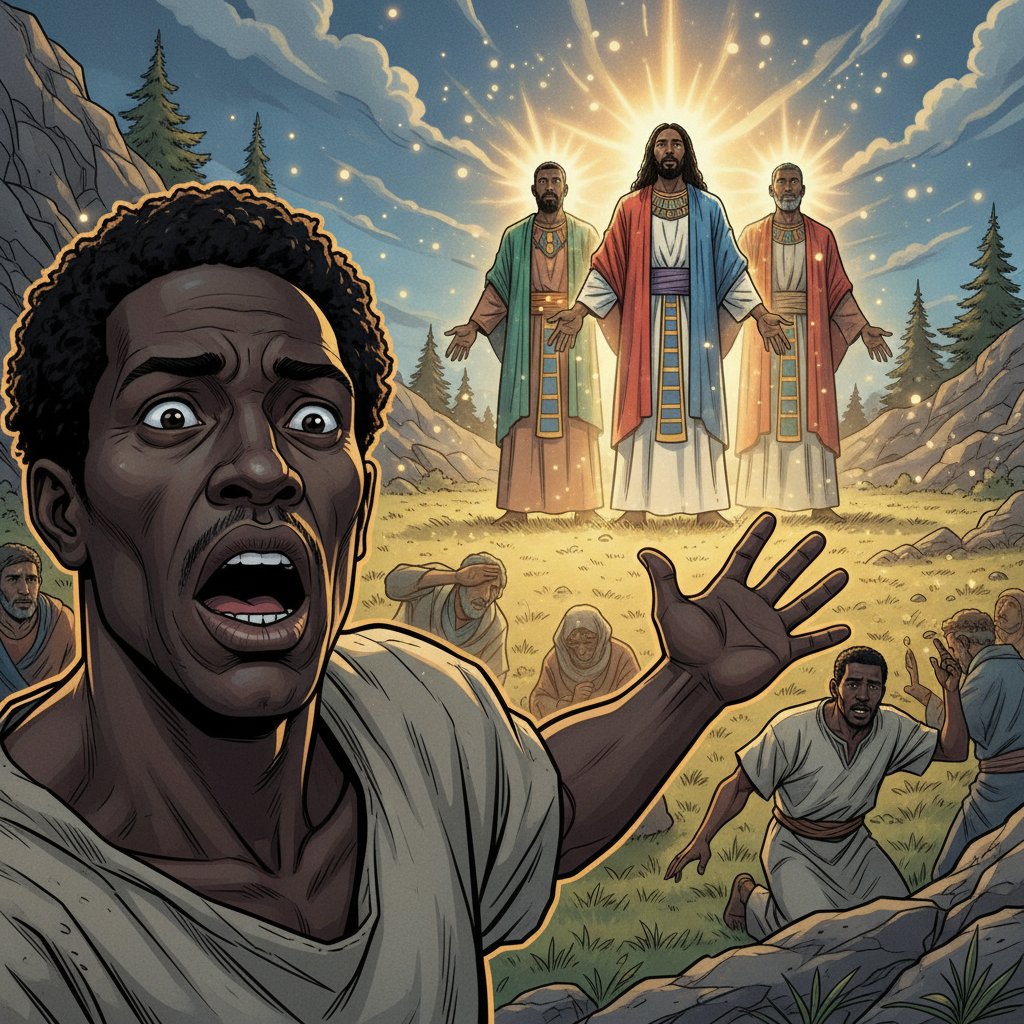
The sheer weight of the moment, the tangible presence of such power and history, was almost unbearable, a spiritual pressure that filled the high meadow. Petros, whose heart was quick and whose tongue often moved faster than his mind, could not remain silent. He blurted out, his voice a raw whisper against the sacred quiet, a desperate plea to grasp and hold what was happening. "Rabbi, it is good for us to be here! Let us make three booths — one for you, one for Moshe, and one for Eliyahu!" He did not know what he was saying, his words tumbling out, born of an urgent, almost childlike desire to hold onto this transcendent moment, to somehow contain the boundless, overwhelming light that filled their world.
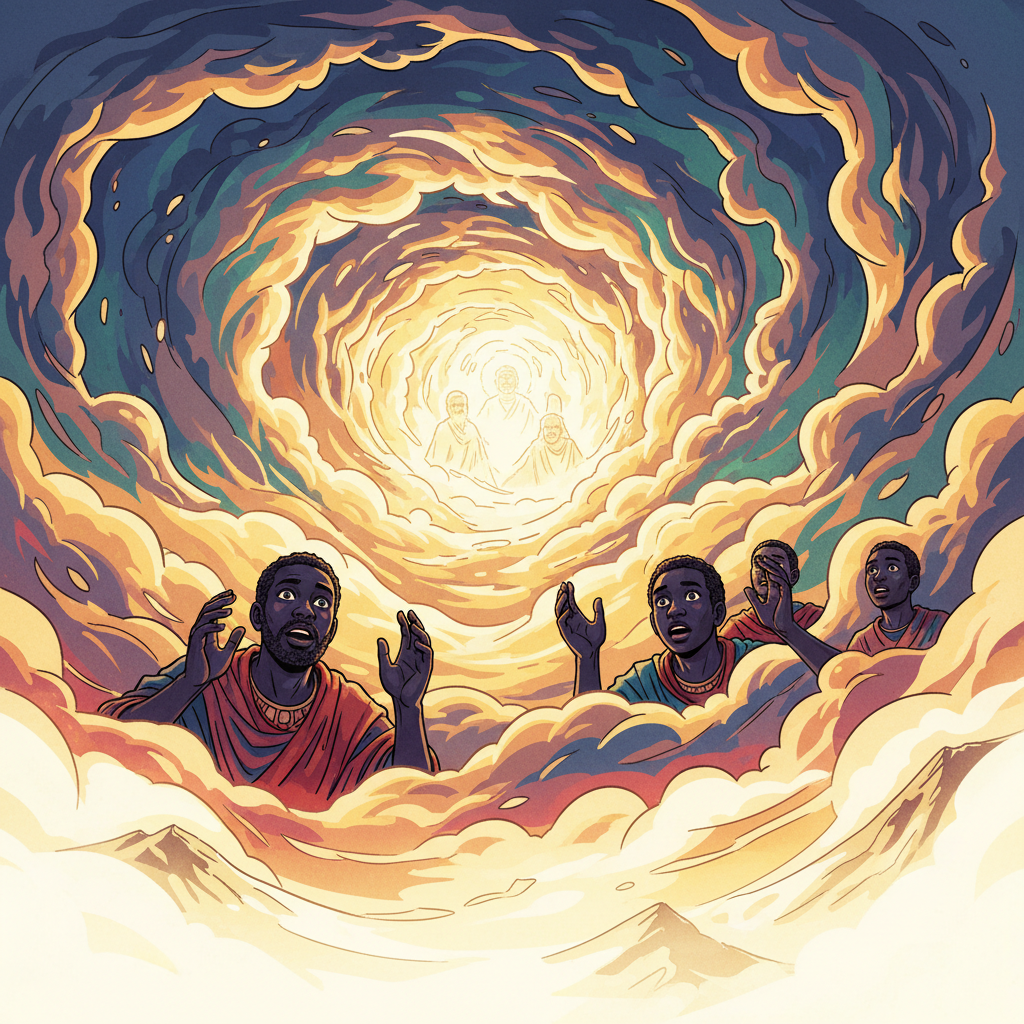
Even as Petros spoke, his eager words still hanging in the luminous mountain air, a cloud descended. It was not an ordinary cloud, wispy and transient, but thick and bright, luminous at its edges, a manifestation of divine presence. It echoed the very cloud that had covered Mount Sinai when Moshe ascended to meet the Most High, a pillar of smoke by day and fire by night. This sacred cloud enveloped them, wrapping the entire scene in a swirling, brilliant mist. The disciples found themselves inside the cloud, unable to see Yeshua, or Moshe, or Eliyahu anymore. There was only bright fog, a living, tangible presence that hummed with unseen power, a sacred veil drawn across the face of the mountain.
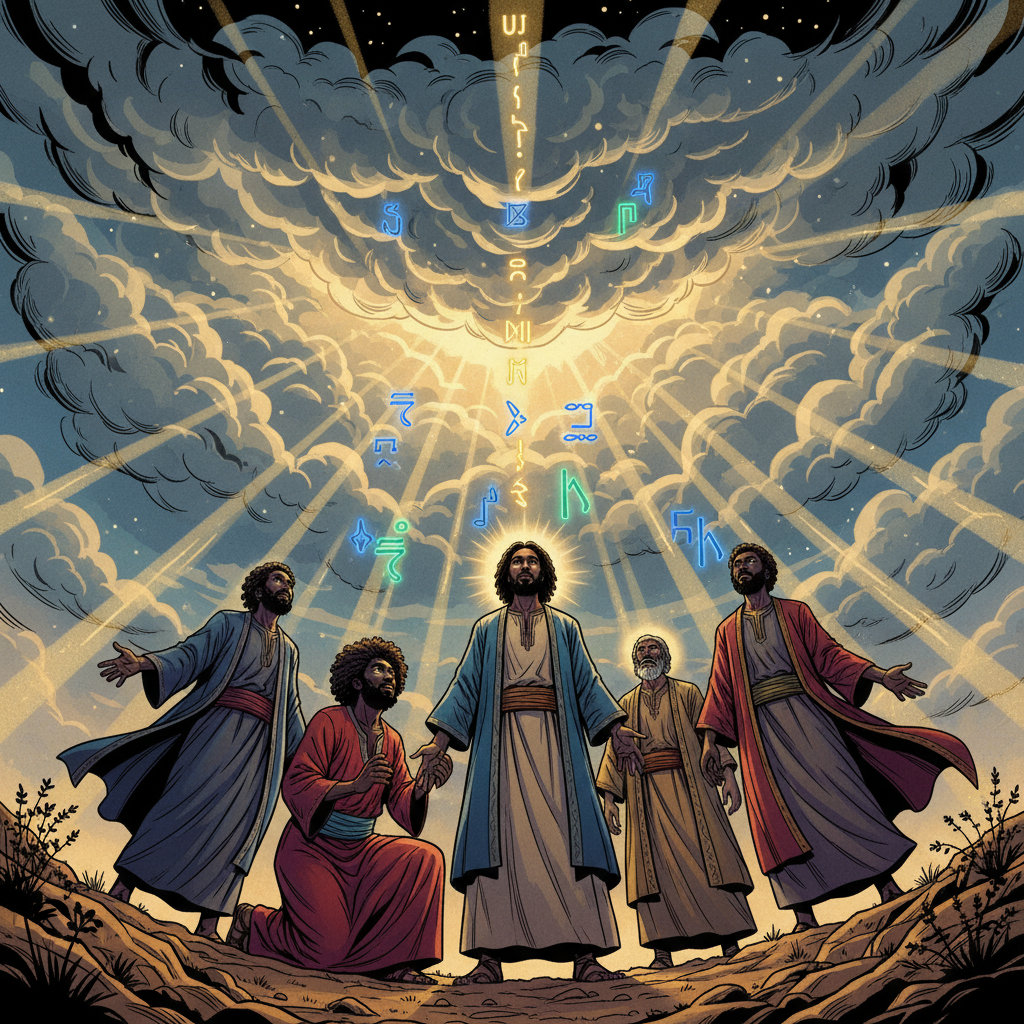
From the very heart of the cloud, a voice spoke. It was a voice unlike any they had ever heard, deeper than the rumble of distant thunder, yet softer than a mother's lullaby, resonating through their very bones and settling in their spirits. It was a father's voice, direct and undeniable, carrying the full weight of creation. The voice said, with absolute authority and tender, encompassing love, "This is my beloved son. Listen to him." There was no debate, no room for questioning, no possibility of misunderstanding. The declaration was complete, a cosmic affirmation, confirming Yeshua's unique and divine place in the eternal lineage, his mandate directly from the source of all being, the very heart of Maat.
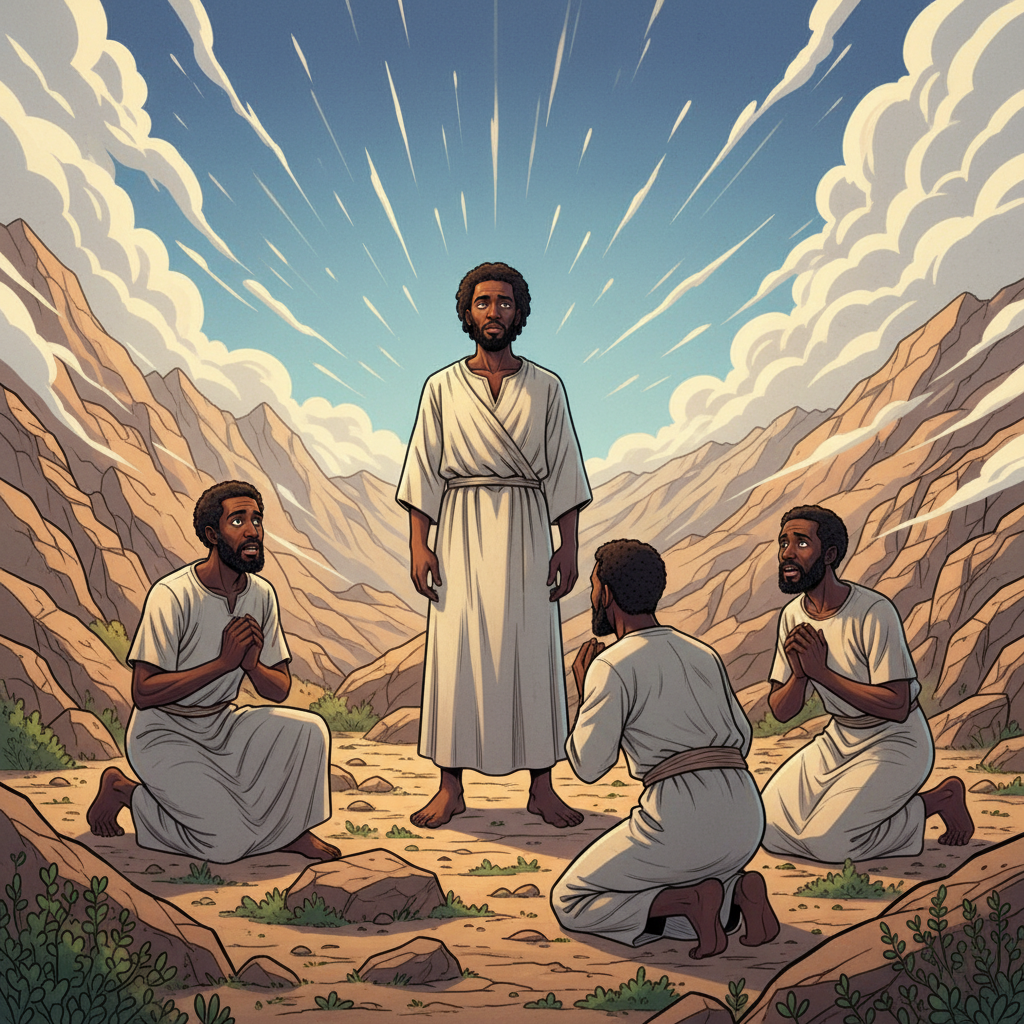
As suddenly as it came, the luminous cloud began to lift, dissipating into the brilliant mountain air, revealing the landscape once more. When the disciples could see clearly again, their eyes still adjusting, the two ancient seba were gone. Moshe was gone, Eliyahu was gone. Only Yeshua stood before them, his face returned to its ordinary, sun-kissed tan, the blinding, otherworldly light having receded from his simple garments. Yet, something in him was profoundly different. An unshakeable depth, a quiet power, a settled knowing that now radiated from his being. The disciples, overwhelmed by what they had witnessed, their hearts still thrumming with the echo of the divine voice, were afraid to speak, held in a sacred silence.
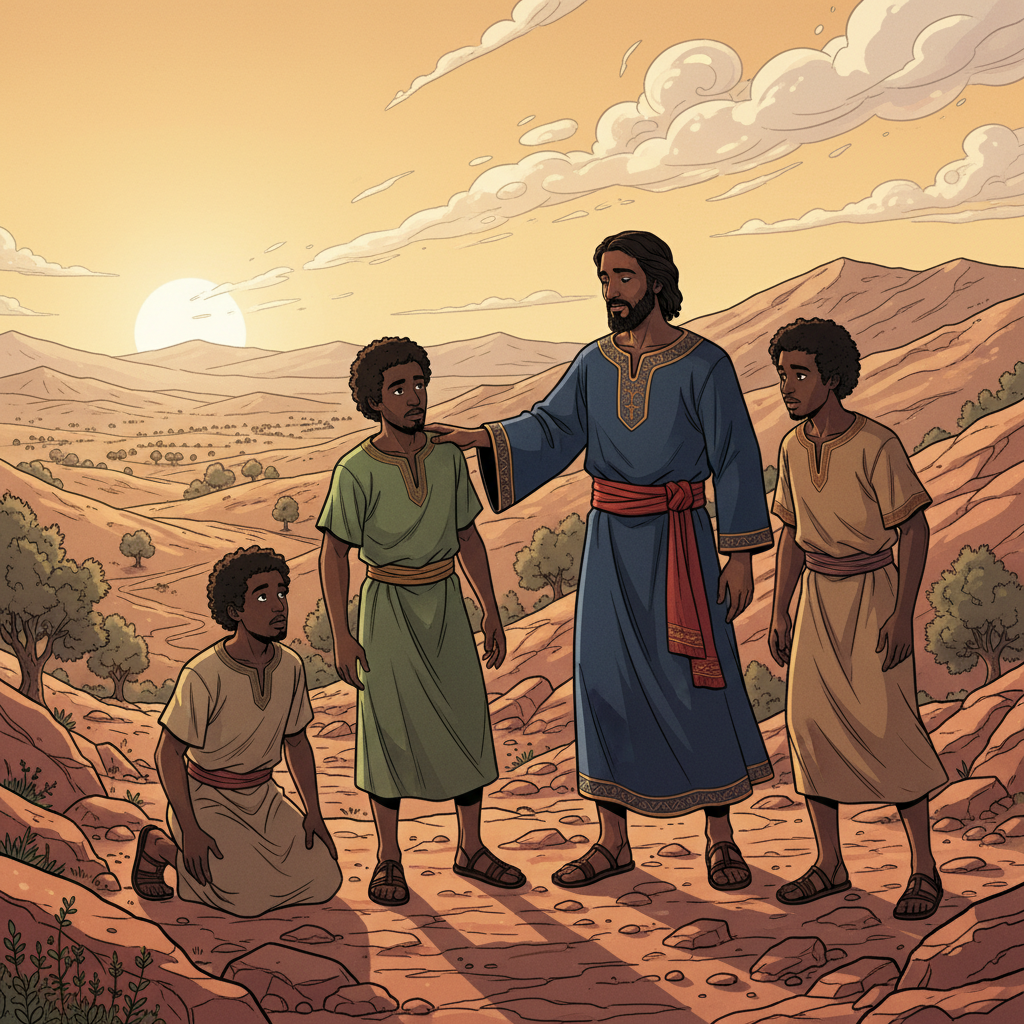
Yeshua walked over to them, his steps light and purposeful on the rocky ground. He reached out and touched Petros's shoulder, his hand warm and steady, a grounding presence after the ethereal vision. "Rise," he said, his voice gentle but firm, carrying the quiet authority of one who had just communed with the ancestors. "Do not be afraid." They stood up, their legs still trembling slightly, their minds reeling. As they began their descent down the mountain, the world below them seemed to hum with a new, profound significance. Yeshua spoke again, his words a quiet command: "Tell no one this vision until the Son of Man has risen from the dead." Petros, Yochanan, and Yaakov nodded, their faces solemn and marked by the experience. They would keep silent, but the image of the lineage made light, the eldest standing together, the voice from the cloud, would forever be seared into the sacred memory of their souls.