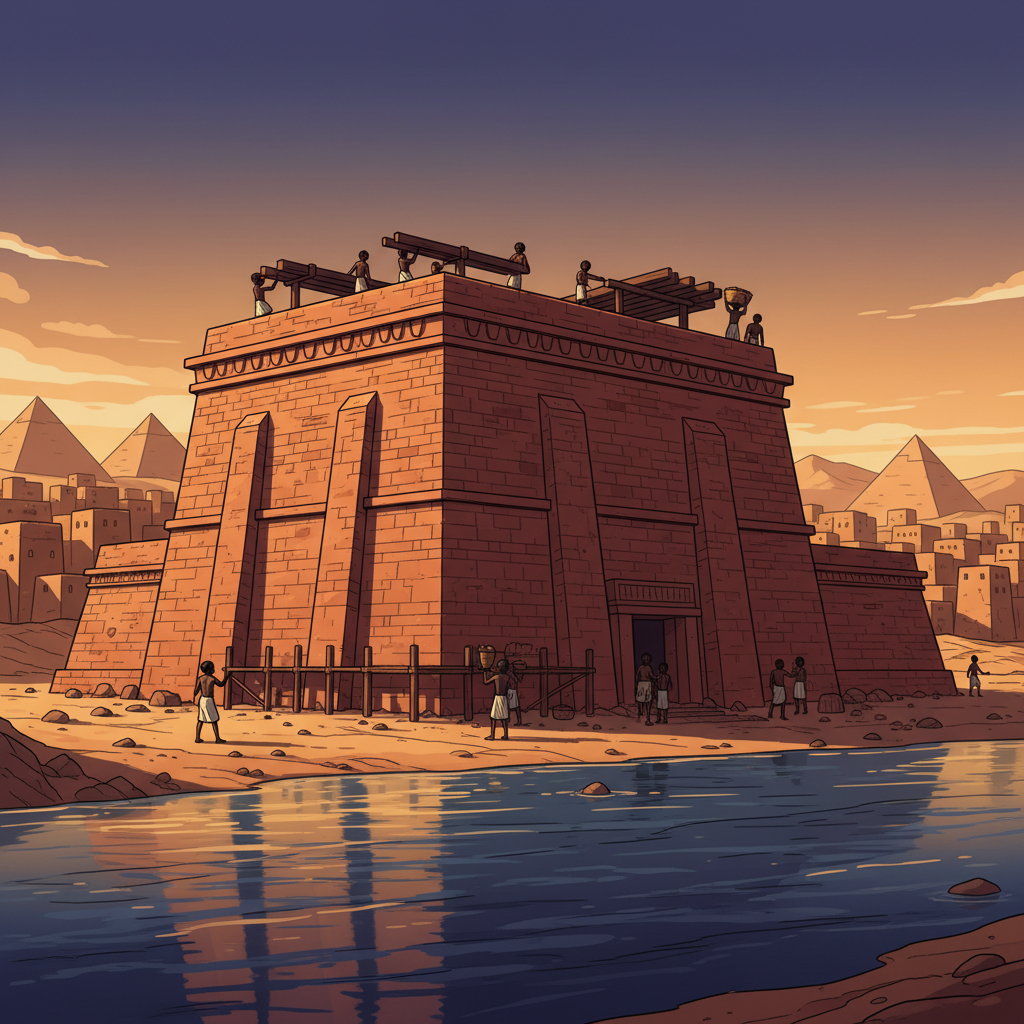
The new grain storehouse of Meroe was going to be magnificent. It would stand three stories tall on the eastern bank of the great river, with walls of fired brick thick enough to keep out the worst floods and a roof of cedar beams imported from the northern forests. When finished, it would hold enough grain to feed the city through two full seasons of drought. The people of Meroe had not forgotten the last famine, and this storehouse was their promise to the future: never again.
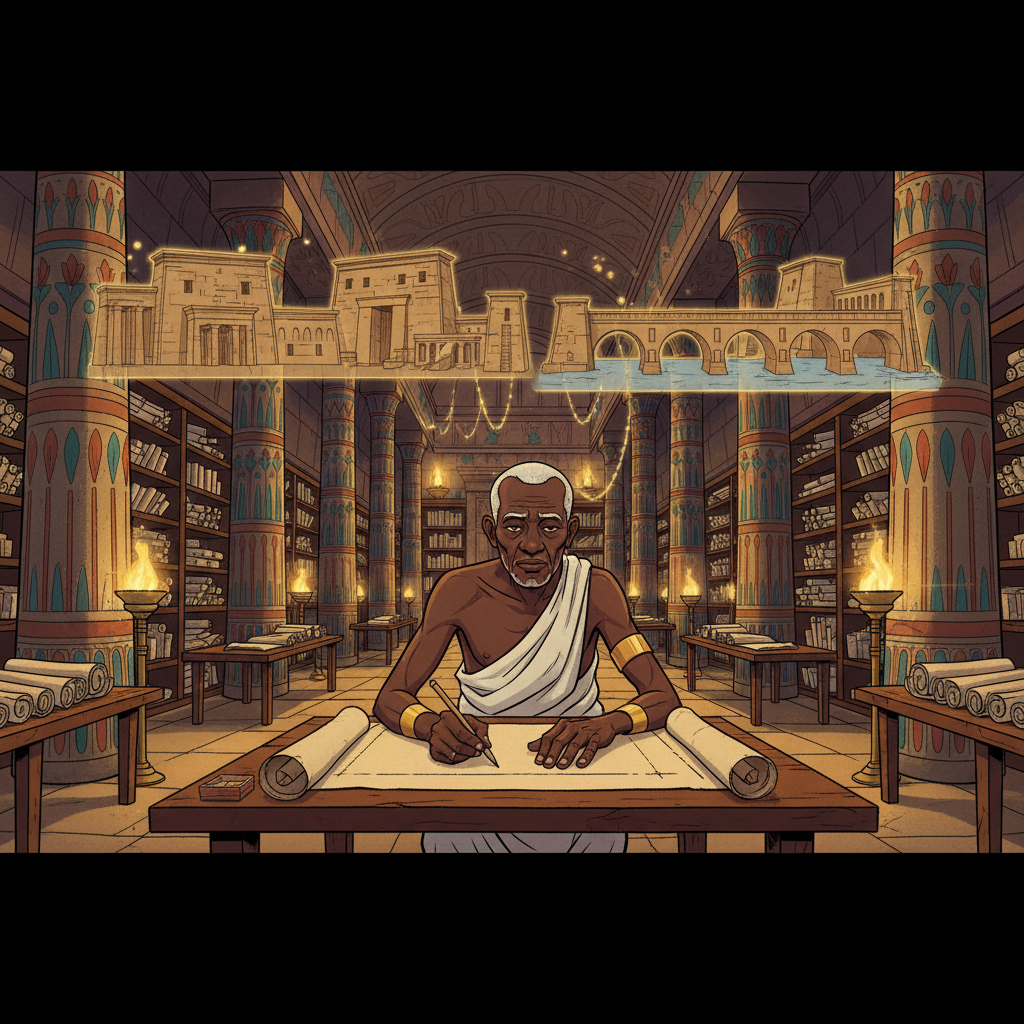
Master Khons was the architect. He was seventy-one years old, with very dark skin that had been baked even deeper by decades in the sun, white hair cropped close to his skull, and hands that trembled slightly when he was tired but could still draw a perfectly straight line on papyrus. He had designed eighteen major buildings in his lifetime — temples, granaries, a palace wing, three bridges — and none had ever failed. Not one crack. Not one shifted foundation. His reputation was not merely good; it was legendary.
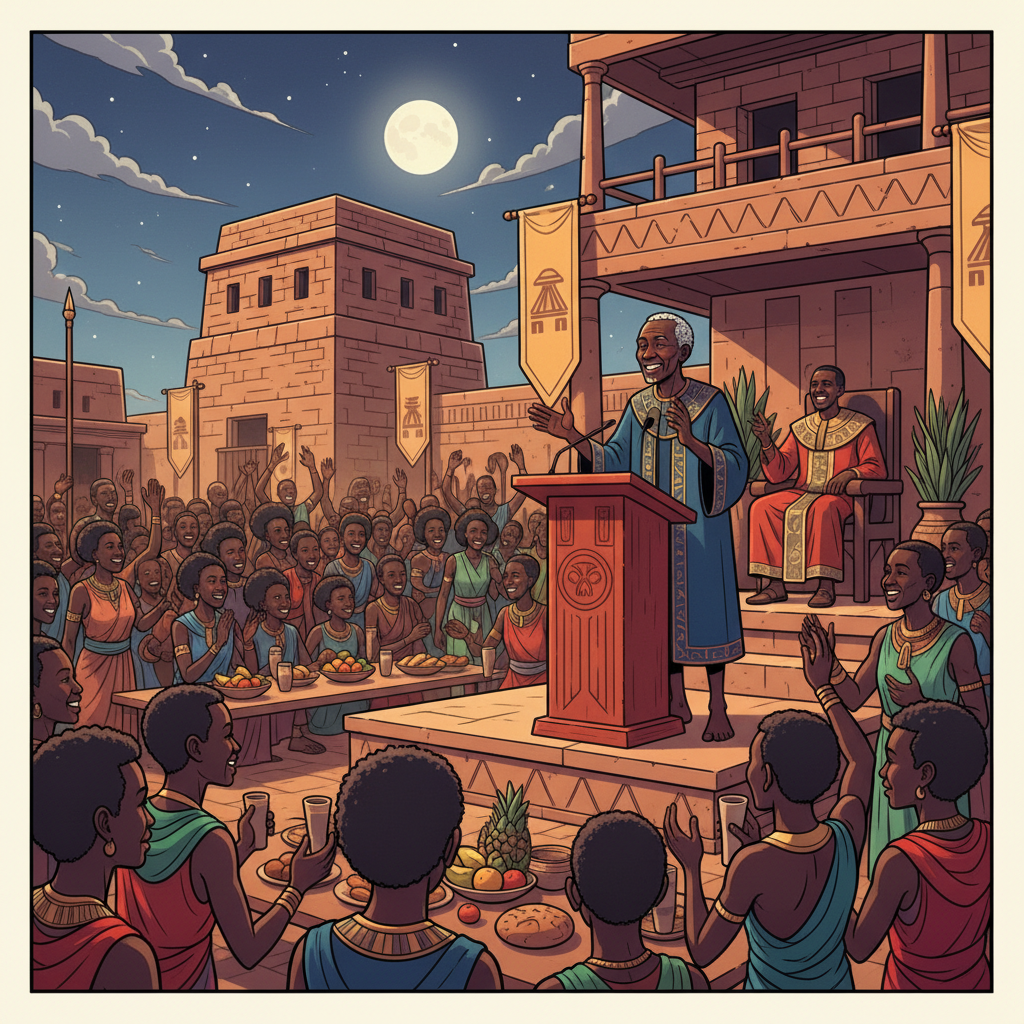
This storehouse was to be his final work. Khons had announced publicly that after this building was complete, he would retire and spend his remaining years teaching in the Per Ankh. The city had celebrated him with a feast. The governor had promised to name the building after him. Every brick laid was a brick in his legacy, and every beam placed was a sentence in the story the city would tell about Master Khons for generations to come.
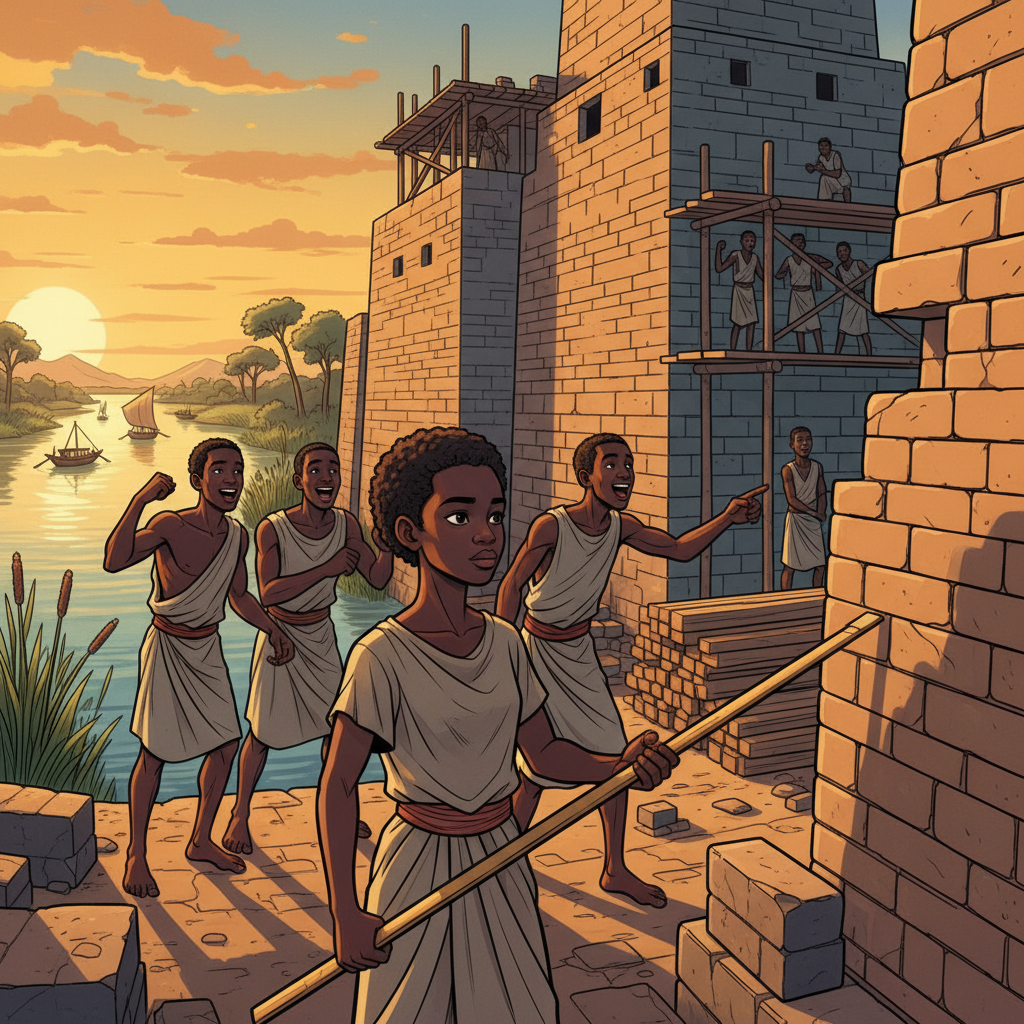
Amara was the youngest of Khons's twelve apprentices and the only girl. She was fourteen, with skin the deep brown-black of river clay, strong arms from hauling bricks since she was ten, and a quiet intensity that the other apprentices sometimes mistook for shyness. She was not shy. She was observant. While the older apprentices joked and boasted, Amara watched, measured, and remembered. She had learned more from watching than most learned from being told.
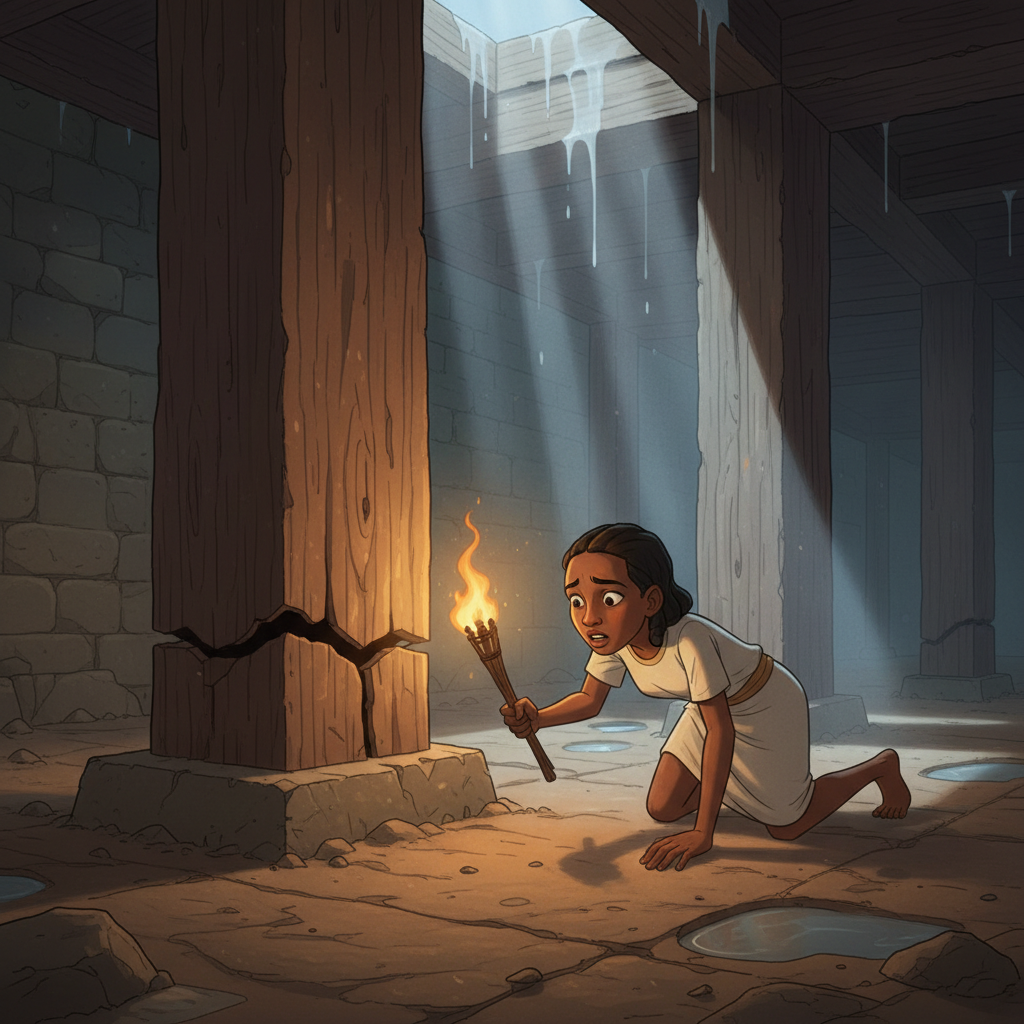
It was during the third month of construction, on a morning when the river mist hung thick and silver over the building site, that Amara found the crack. She had been sent to the foundation level to check the drainage channels — the lowest, dirtiest job, which always fell to the newest apprentice. She was crawling along the base of the western wall with a reed torch when her fingers brushed something wrong. A line in the main support beam. Not a surface scratch. A crack that ran deep into the wood, splitting the grain from one side nearly to the other.
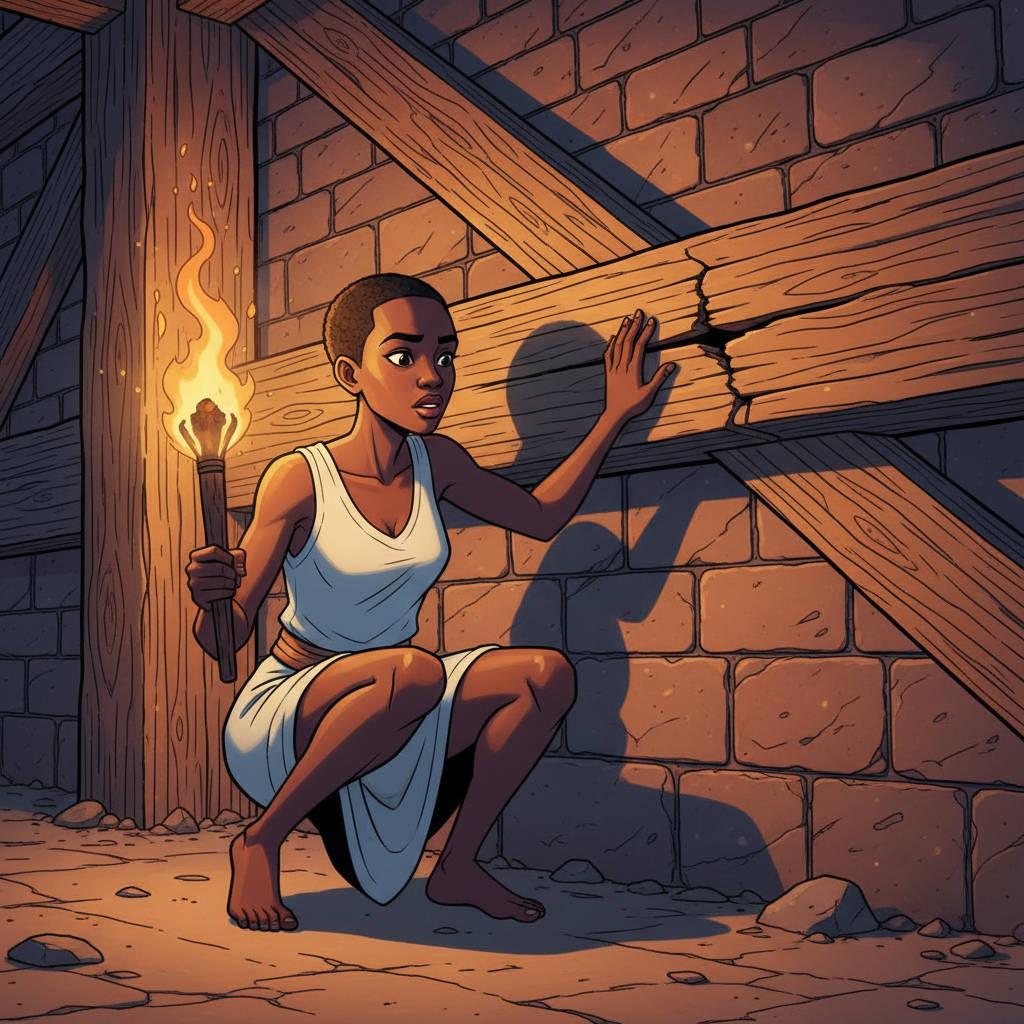
Amara pressed her thumbnail into the crack and felt it give. The wood was separating. She held her torch closer and saw the truth clearly: this beam — the one that bore the weight of the entire western wall — was fractured. It might hold for a year. It might hold for five. But eventually, especially under the crushing weight of stored grain during flood season, it would fail. And when it failed, the western wall would come down, and the grain stored against it — thousands of measures — would be lost.
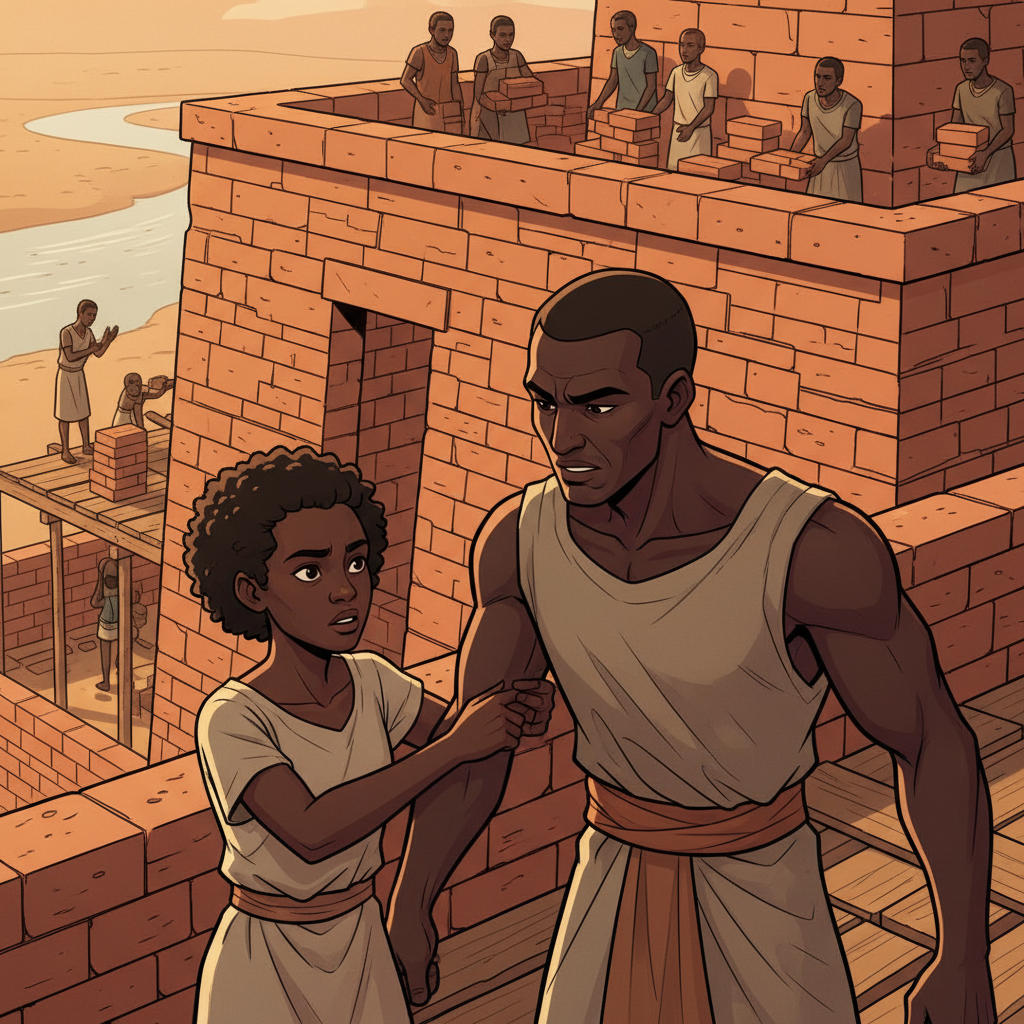
Her first instinct was to tell the senior apprentice, Bakenmut. He was twenty-two, confident, and had been Khons's favorite for years. Amara found him supervising the upper-level bricklaying and pulled him aside. "There is a crack in the western foundation beam," she said. "A deep one. I think the beam needs to be replaced." Bakenmut looked at her the way a hawk looks at a sparrow. "You think? You have been an apprentice for four years. Master Khons chose that beam himself. Are you saying he made an error?"
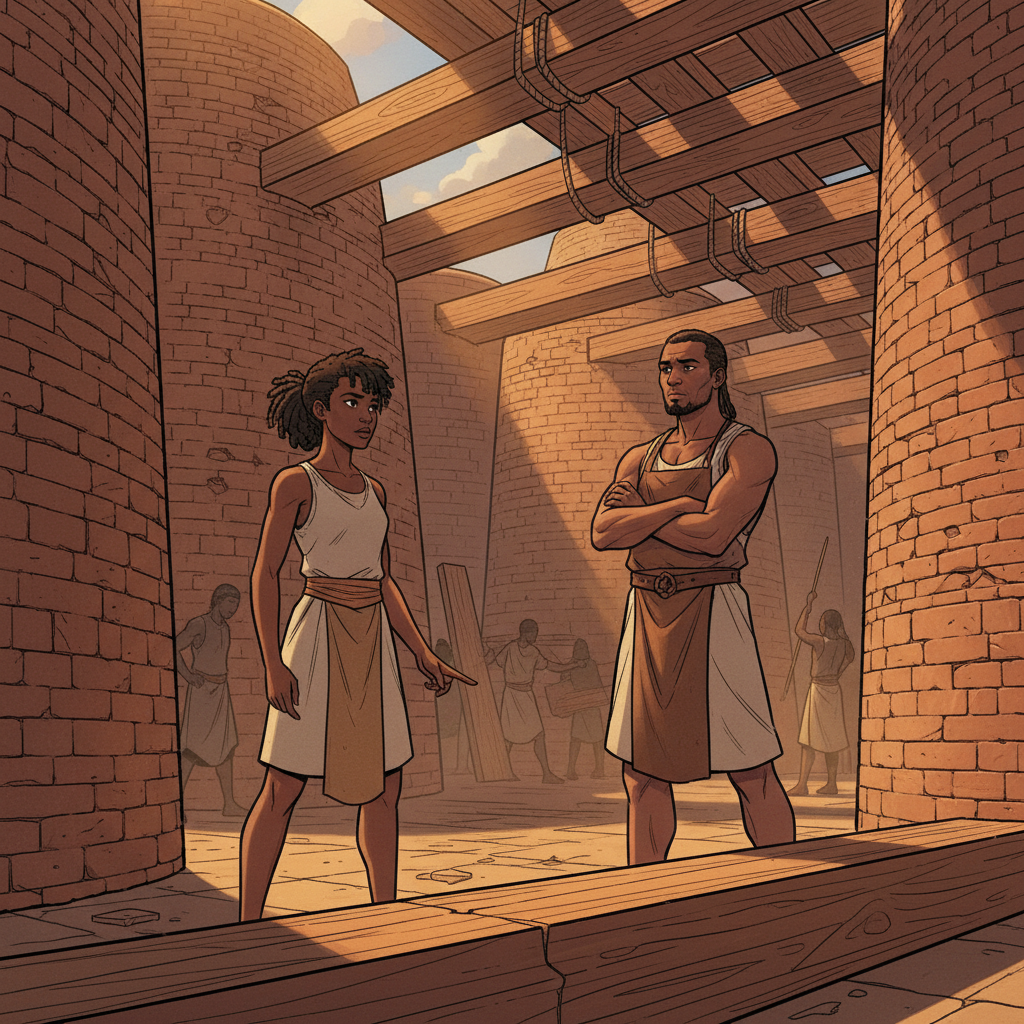
"I am saying the beam is cracked," Amara said steadily. "I do not know if it was cracked when he chose it or if it cracked after placement. But it is cracked now." Bakenmut crossed his arms. "If you tell Khons his beam is flawed, you are telling the greatest architect in Meroe that he made a mistake in his final building. His legacy building. The building named after him. He will not thank you for it, Amara. He may dismiss you." Bakenmut paused. "And honestly? I think you are wrong. Show me something that is not just a surface scratch and I will listen."
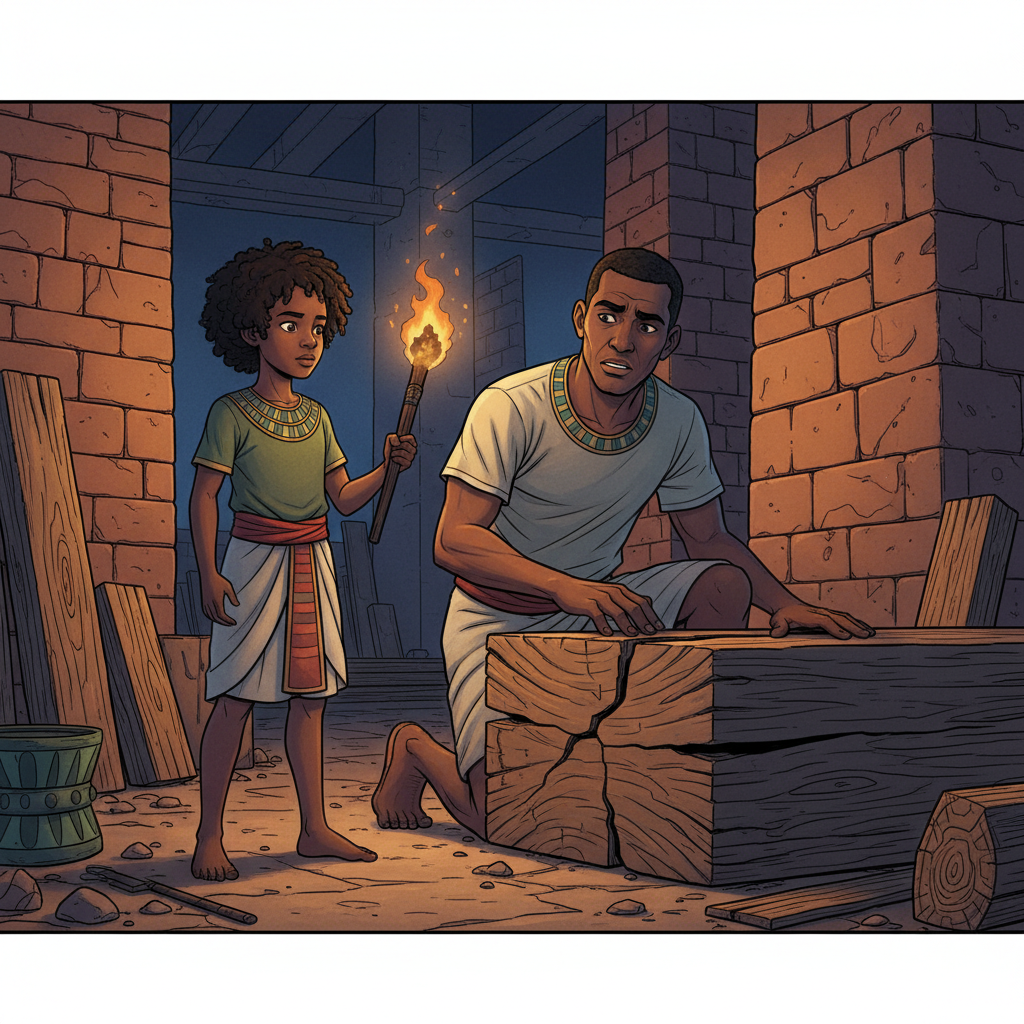
Amara took Bakenmut to the foundation. She held the torch while he examined the beam. She watched his face change — the casual dismissal fading into something tighter and more uncomfortable. He pressed his own thumbnail into the crack and felt it give, just as she had. He stood up slowly and dusted off his knees. "That is more than a scratch," he admitted. Then he looked at her with something between respect and warning. "But it may hold. Beams like this have held for decades with worse cracks. And if you bring this to Khons, he will hear one thing: you do not trust him. It will end your apprenticeship."
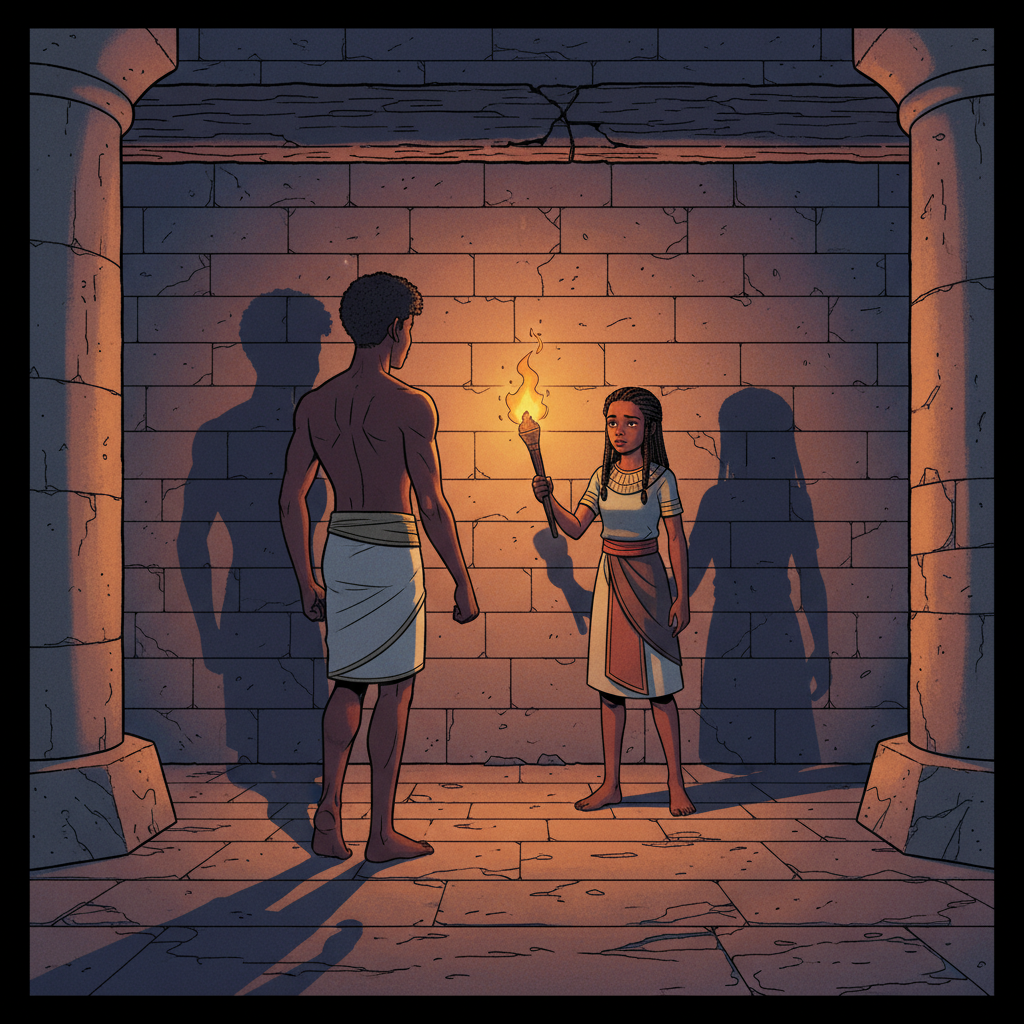
"And if the beam fails during flood season?" Amara asked. Bakenmut was quiet for a long moment. "Then we will deal with it then." He walked away. Amara stood alone in the foundation with her torch casting jumping shadows on the walls, and she understood something she had not understood before: Bakenmut was not a bad person. He was afraid. He was afraid of embarrassing the man who controlled his career, afraid of being wrong, afraid of the chaos that truth would cause. Fear dressed itself up as caution, and caution dressed itself up as wisdom, and wisdom said: leave it alone.
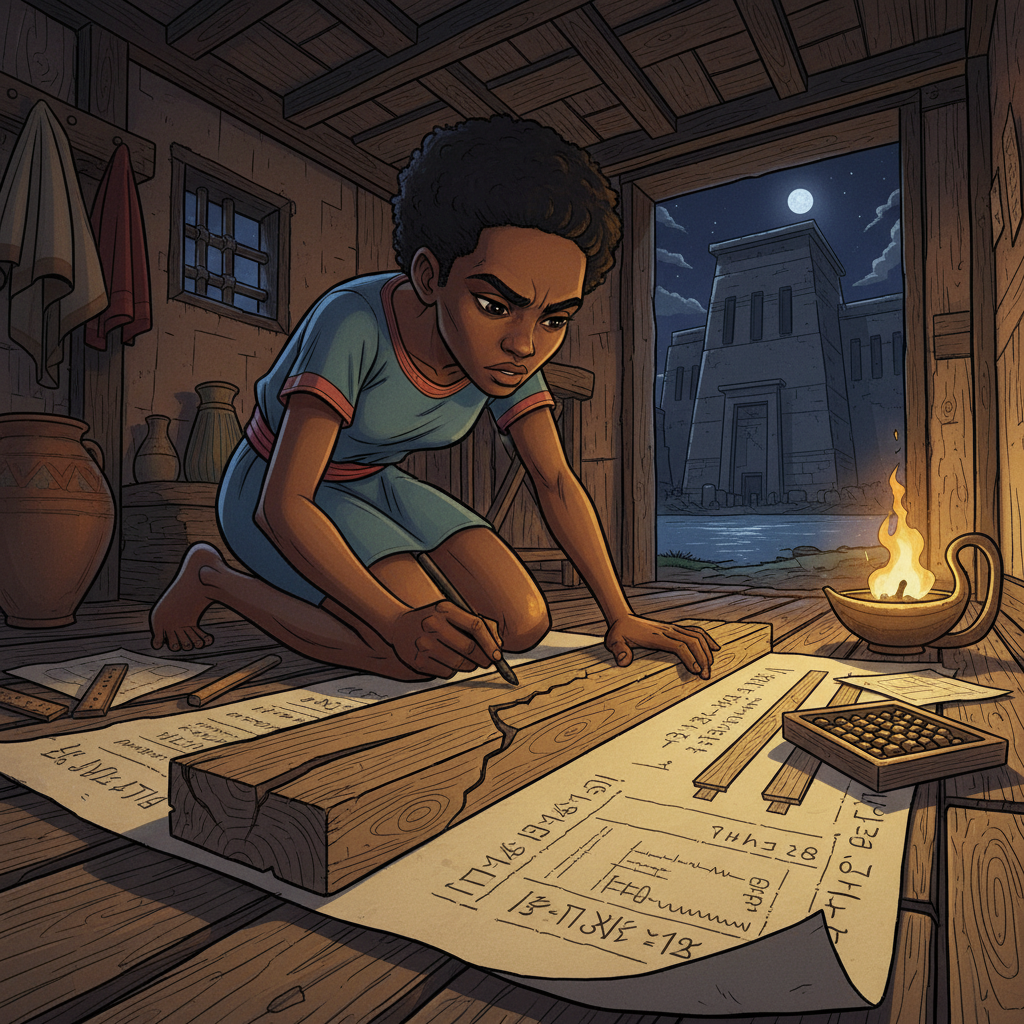
Amara could not leave it alone. She went home that night to the small room she rented near the riverbank and drew the beam from memory — every grain line, every knot, the exact length and depth of the crack. She calculated the weight the beam would bear when the storehouse was full. She calculated the stress of floodwater pressing against the western wall. She was only an apprentice, but she had studied the mathematics of load-bearing in the Per Ankh, and the numbers did not lie. The beam would hold under normal conditions. Under flood conditions with a full granary, it would not.
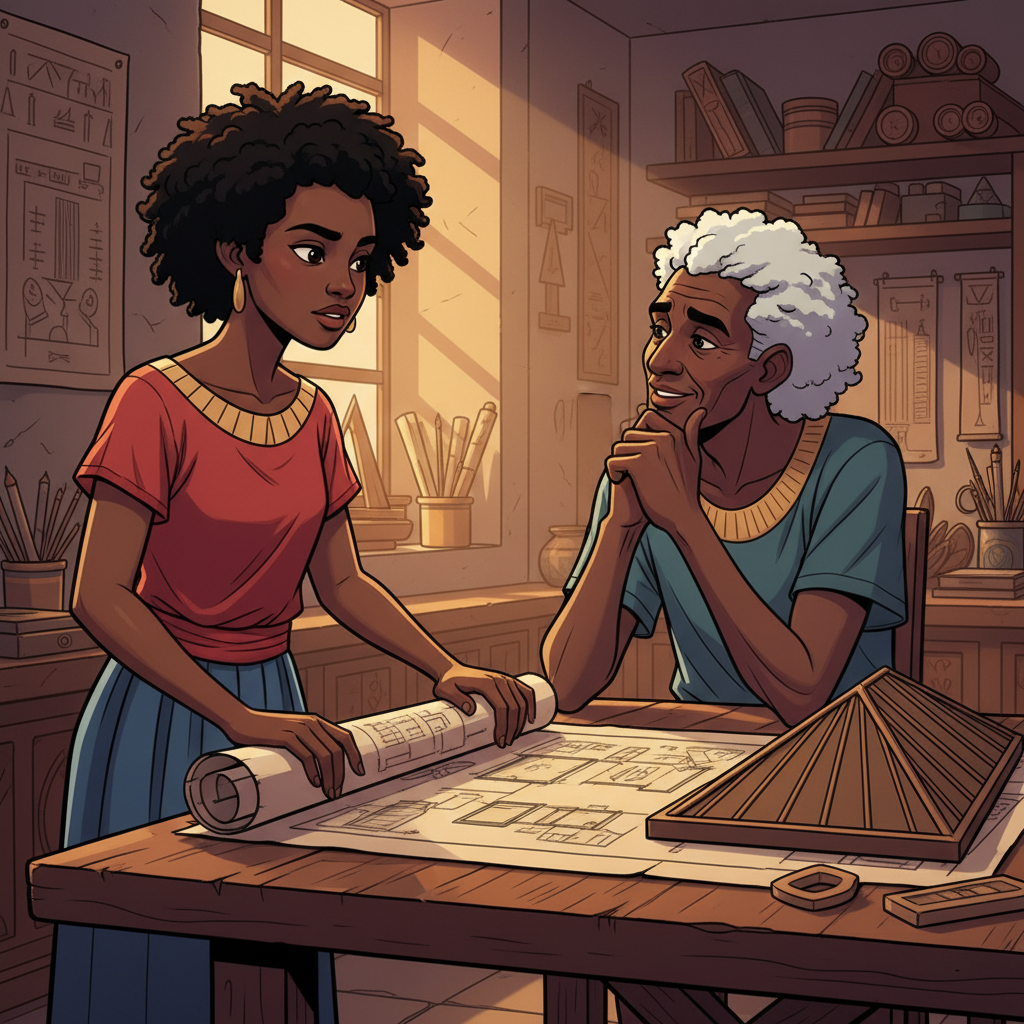
The next morning, Amara went to Master Khons. She found him in his drafting room, bent over plans for the roof structure, his white hair bright against his dark skin. He looked up when she entered and smiled — the distracted, kind smile of a man deep in thought. "Amara. What brings you?" She placed her drawing on his table. "Master, I found a crack in the western foundation beam. I have drawn it here. I have also calculated the load-bearing stress under flood conditions. I believe the beam needs to be replaced."
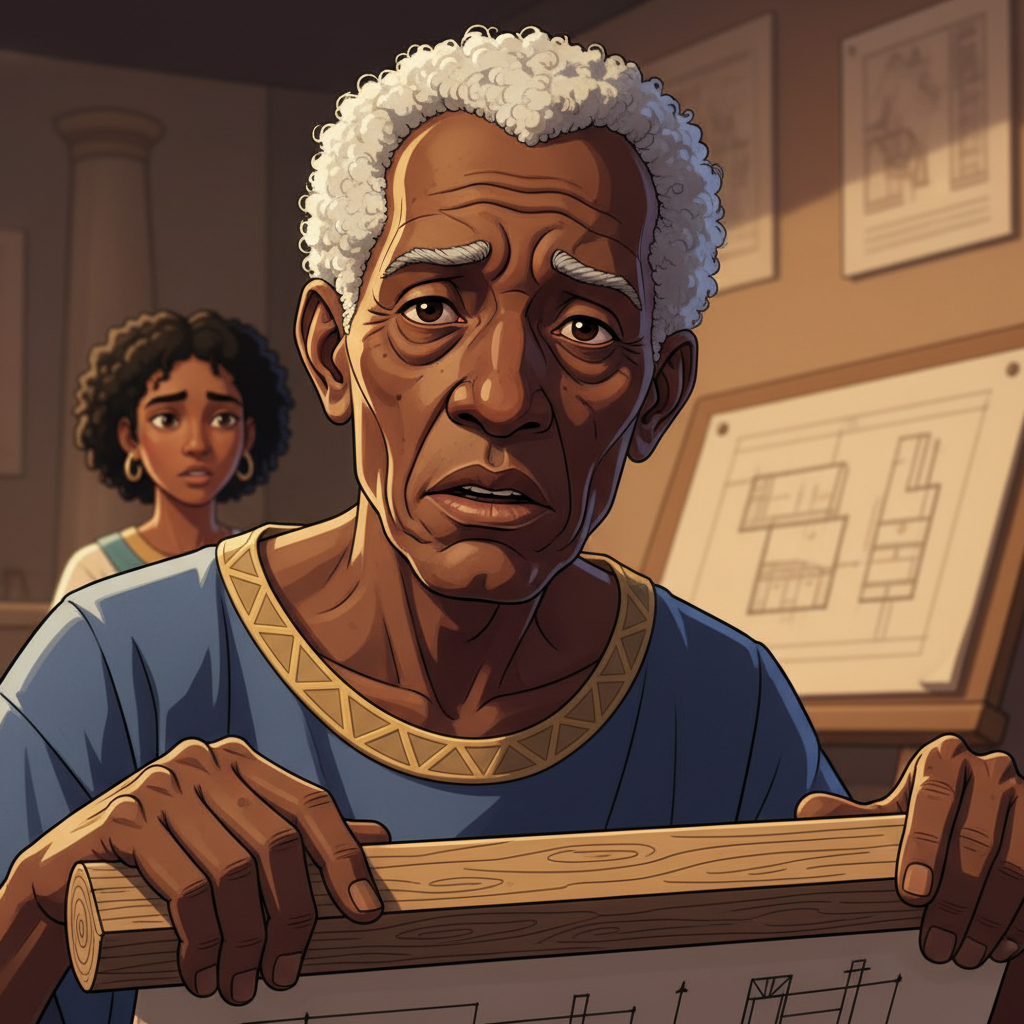
Khons's smile faded. He picked up the drawing and studied it for a long time, his old hands trembling slightly. When he looked up, his eyes were not angry — they were wounded. "I selected that beam myself," he said. "I tested it with my own hands." "I know, Master." "Do you know what it will mean if this beam must be replaced? Three weeks of delay. The governor will be furious. The city will say Master Khons's final building was flawed from the foundation. My legacy —" He stopped. His jaw tightened. "Who else knows about this?"
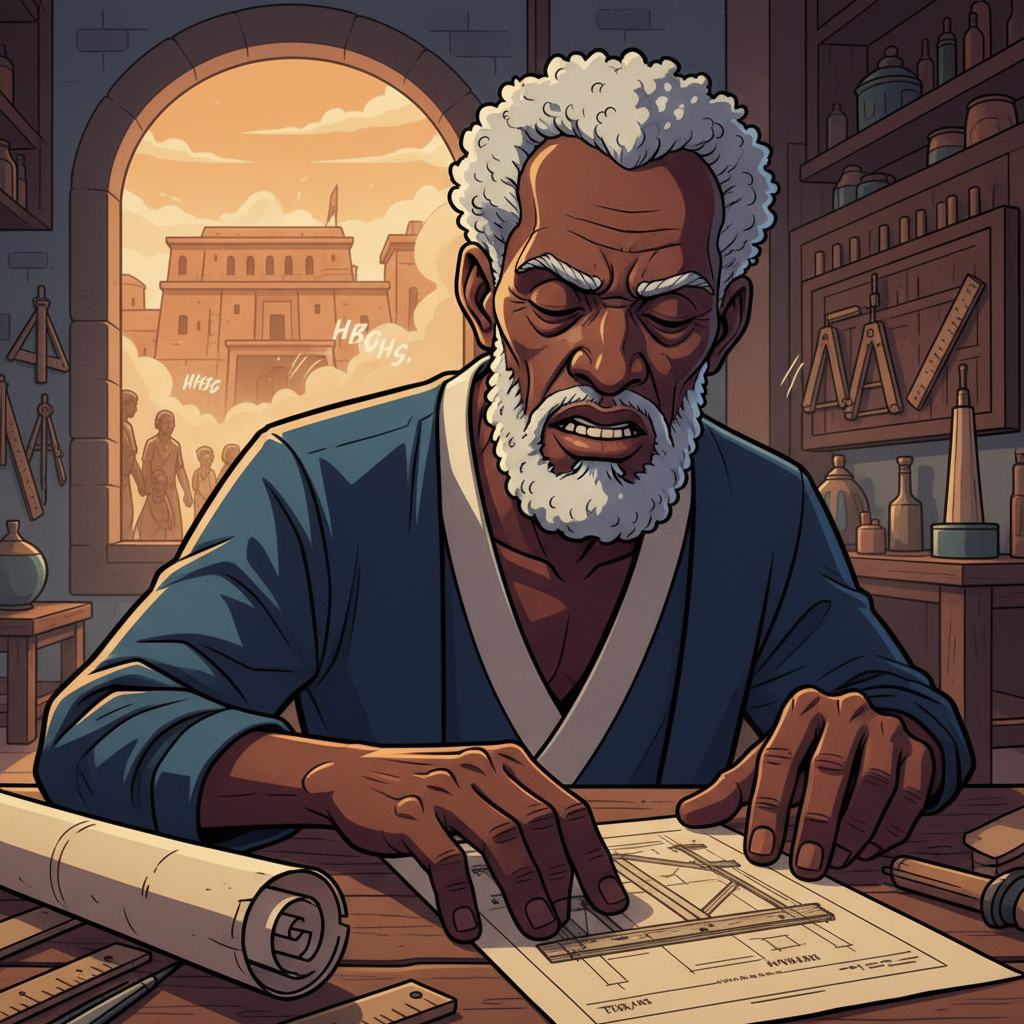
"Only Bakenmut and myself, Master." "And Bakenmut said nothing to me." It was not a question. Khons set down the drawing and closed his eyes. The room was silent except for the distant sound of hammers from the building site. When he opened his eyes, something had shifted in them — the wound was still there, but beneath it was something harder and clearer. "Take me to the beam," he said.
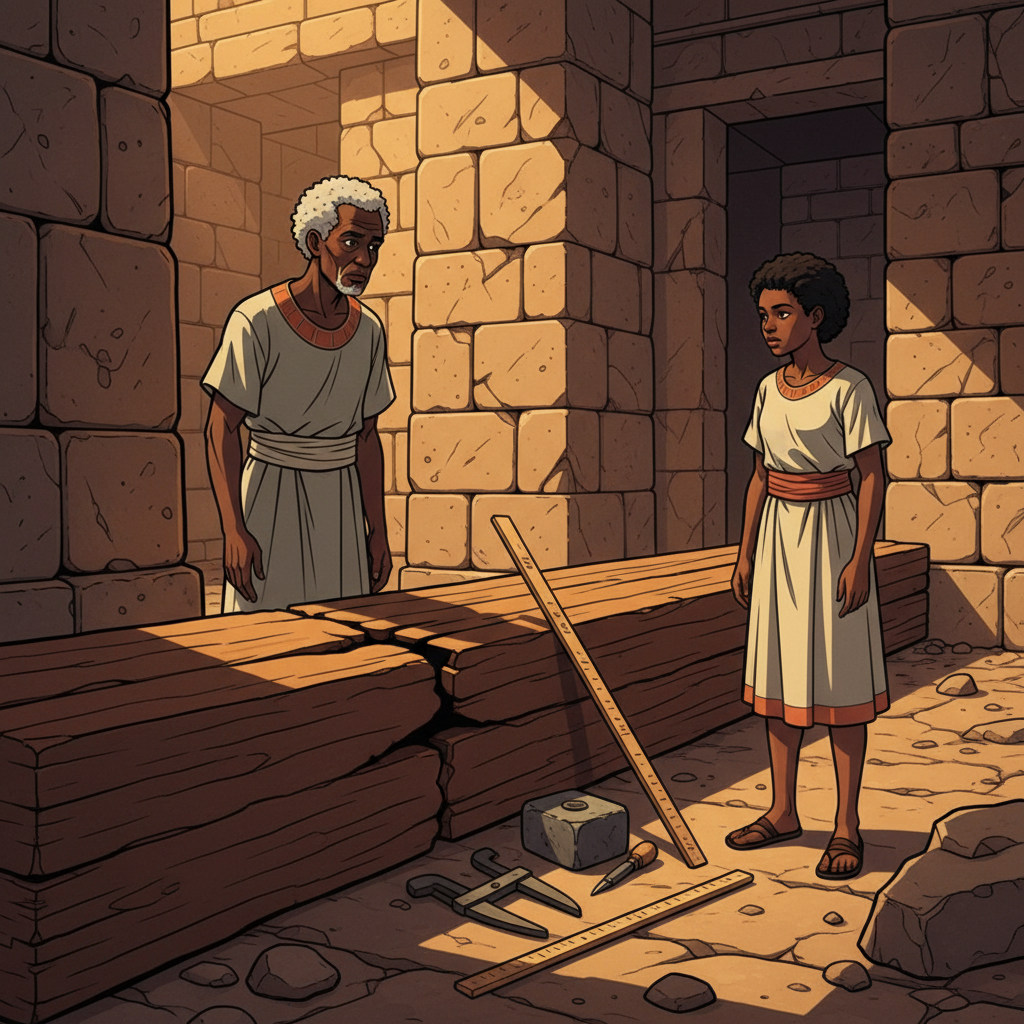
In the foundation, Khons examined the crack with the thoroughness of a man who had spent fifty years reading wood and stone. He pressed, measured, and tested. When he stood up, his face was grave. "You are right," he said. "The crack runs deeper than I would have expected. Under flood load, this beam would fail within three seasons." He looked at Amara. "You could have said nothing. Bakenmut said nothing. Why did you speak?"
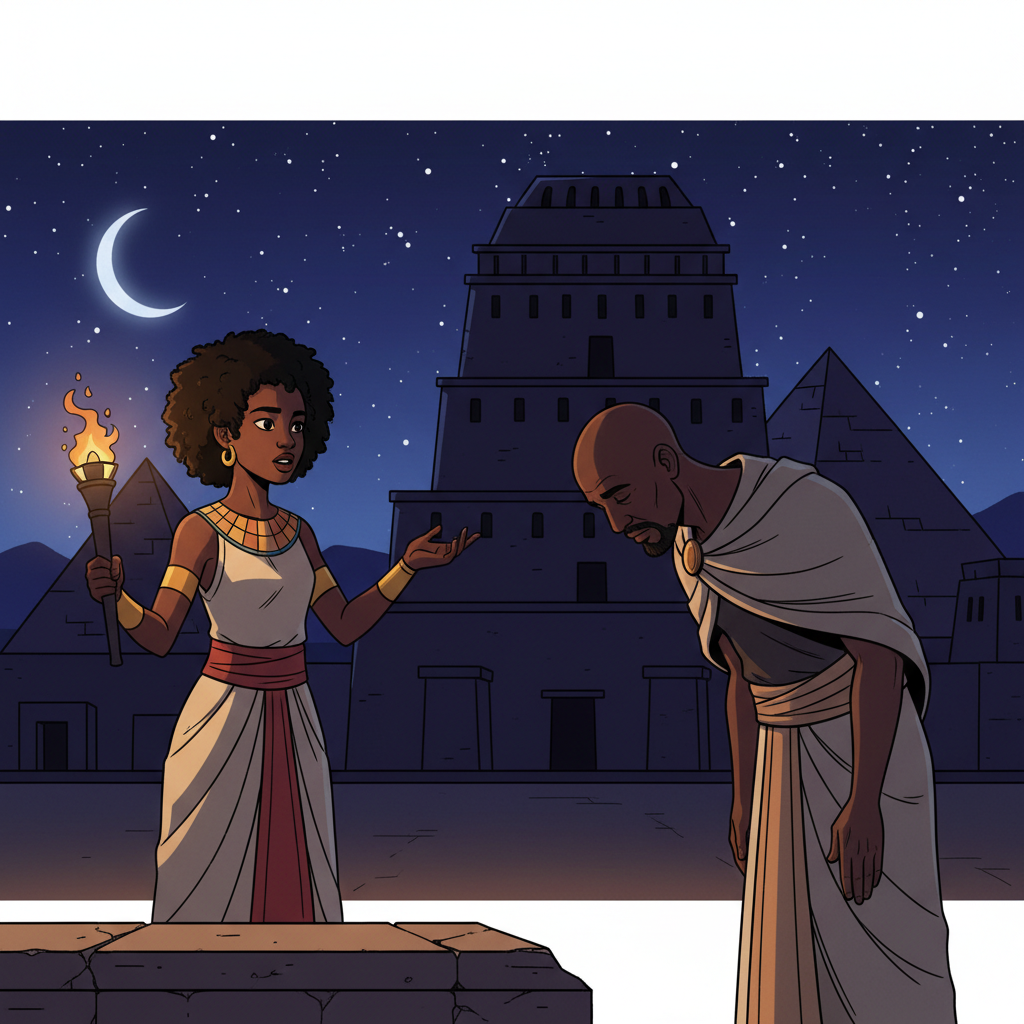
"Because the grain belongs to everyone, Master. If the wall falls, it is not your reputation that starves. It is the families who trusted that this building would protect them." Khons was quiet for a very long time. Then he did something that Amara never forgot for the rest of her life. He bowed to her — a deep, formal bow, the kind a master gives to an equal. "You have more courage than my senior apprentice," he said. "And more integrity than I showed in this moment. I did not want to hear the truth. You brought it to me anyway."
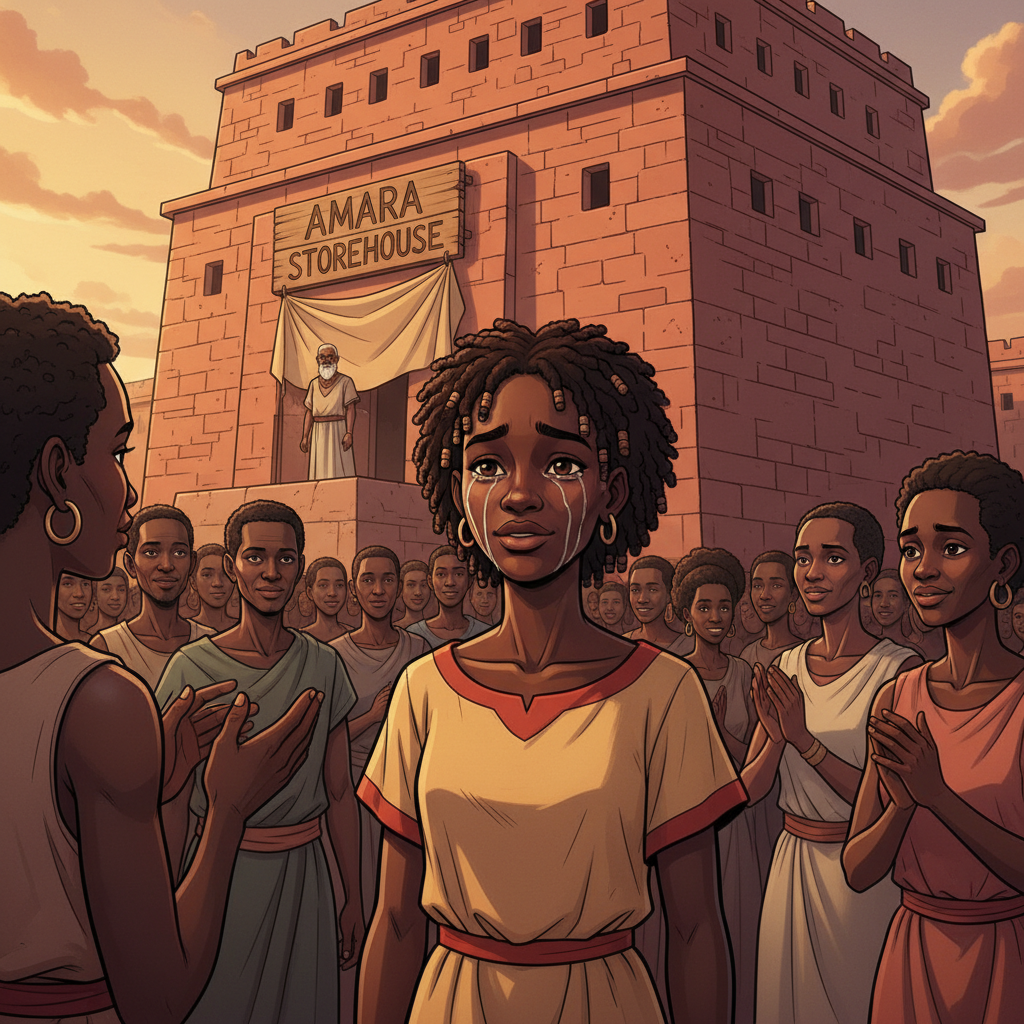
The beam was replaced. The building was delayed three weeks. The governor was angry. Some people in the city whispered that old Khons was losing his touch. But Khons himself told the full story at the naming ceremony: how his youngest apprentice, a fourteen-year-old girl with no rank and no standing, had the courage to correct her master. He did not name the building after himself. He named it the Amara Storehouse. "Because," he said, "a building is only as strong as the truth in its foundation. And the truth came from her." Amara stood in the crowd with tears running down her dark cheeks, not because she was proud, but because she finally understood what Maat cost — and what it was worth.