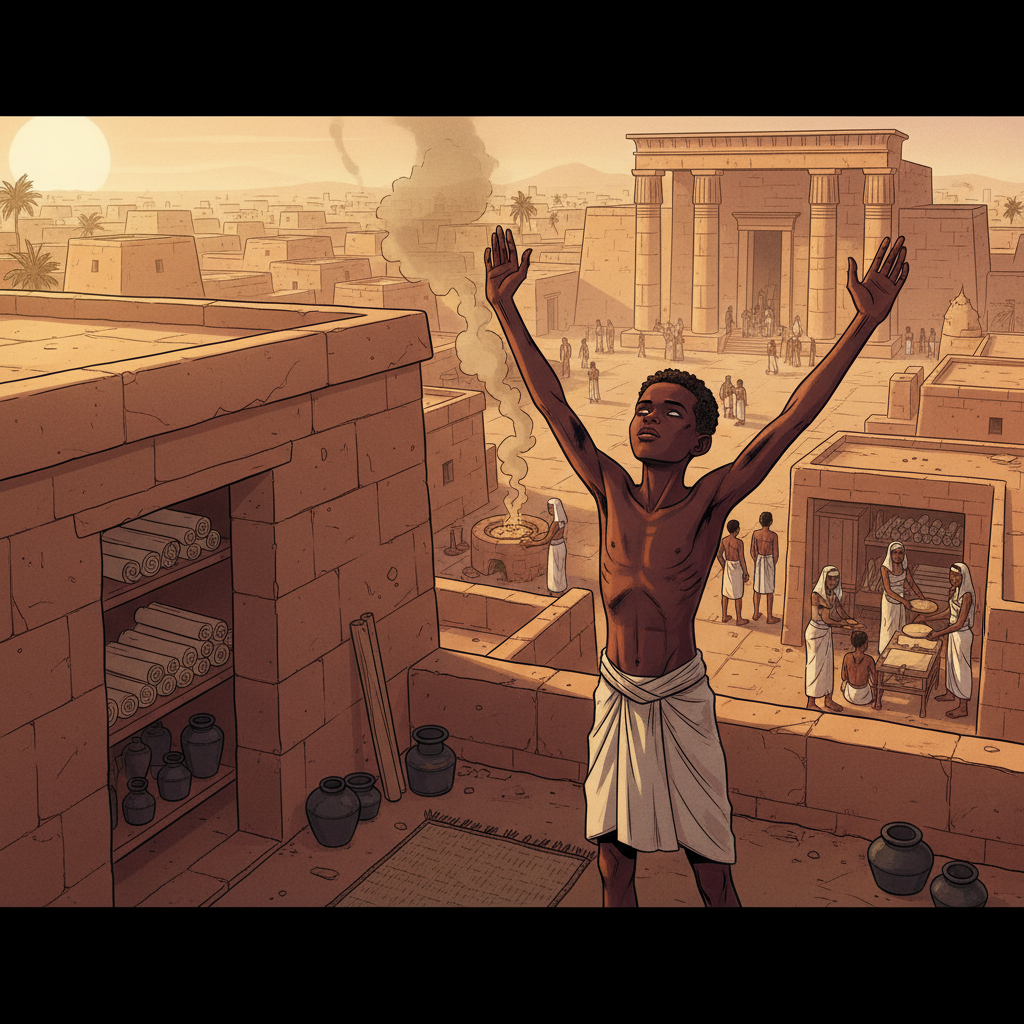
The morning air in Memphis hummed with a symphony of daily life. The sweet, earthy scent of baking flatbread drifted from nearby kitchens, mixing with the sharp, clean tang of papyrus and rich, dark ink from his father's study. Khnumhotep, thirteen suns old, stretched, his lean arms already smudged with dried ink from yesterday’s careful copying. His short, tightly coiled 4C hair felt cool against his scalp as he rose from his mat, ready to begin his day. He moved with a quick, restless energy, a testament to his clever, curious mind, always eager to explore the world around him. Though his thoughts often raced, sometimes that very speed made his patience wear thin. Today, like most days, meant new hieroglyphs to master at the Per Ankh, the great House of Life, where his respected father, Seba Huni, shared the ancient wisdom with many young student scribes, including his own son.
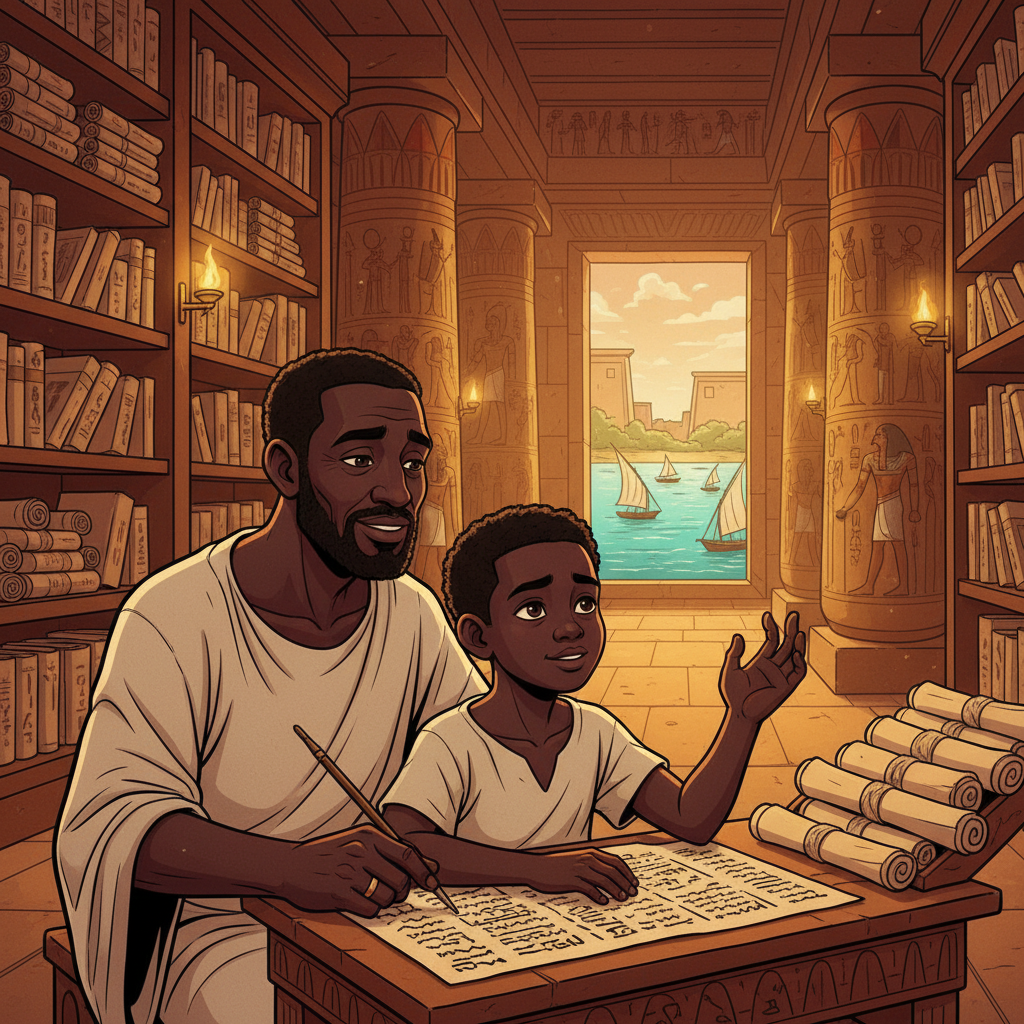
Seba Huni was a pillar of Maat, his calm presence a steady anchor in their bustling scribe’s household. He saw the potential in Khnumhotep’s bright eyes, but also noticed the boy's occasional struggle with focus, especially when a task seemed dull or difficult. Khnumhotep loved the vibrant stories recorded on the scrolls, the ancient tales of Netjeru and legendary pharaohs, but the endless copying of legal texts or tedious accounts felt like a cage to his active mind. Lately, his thoughts had been wandering more than usual during lessons. He’d often sneak glances out the window, imagining grand adventures along the great Hapi, the Nile River, wishing he was there instead of at his desk.
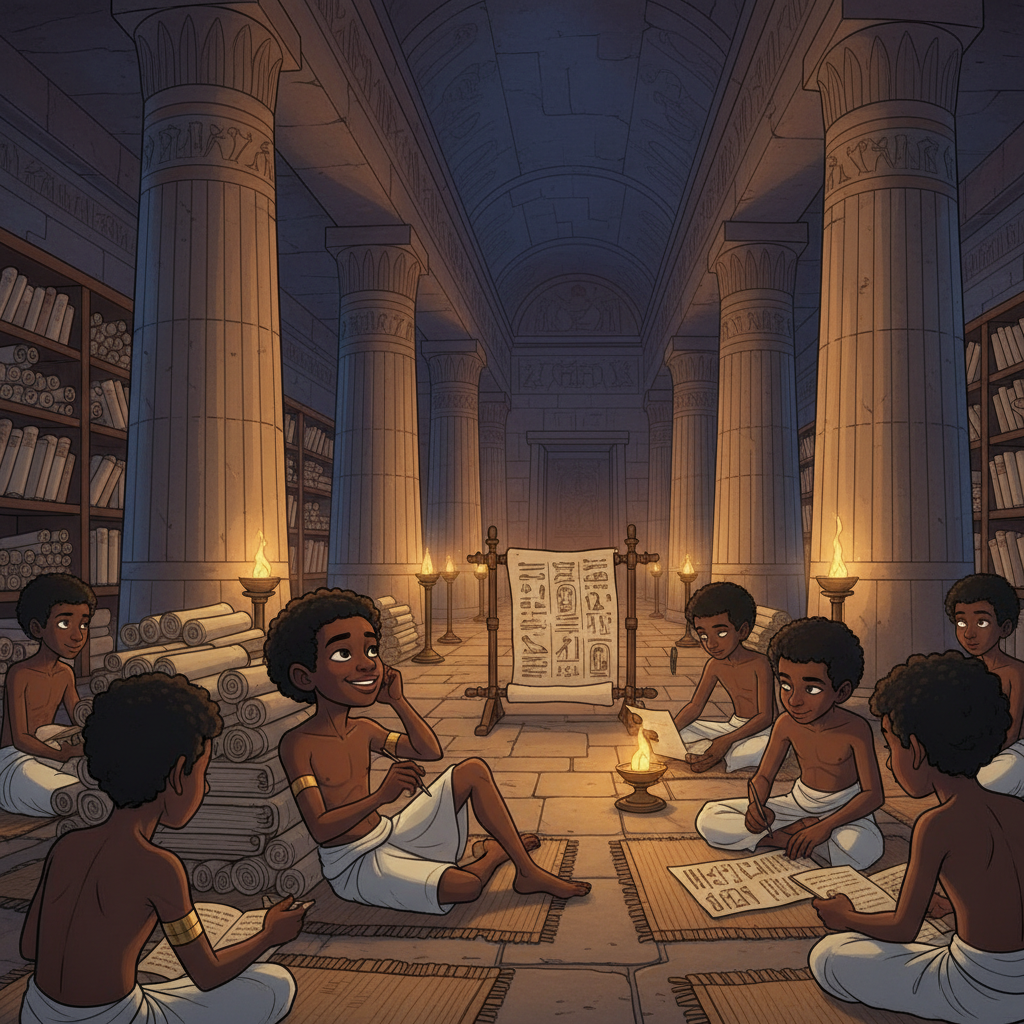
This coming week, a significant examination loomed for all the student scribes at the Per Ankh, casting a long shadow over their studies. It would rigorously test their knowledge of ancient Kemetic history and their precision in hieroglyphic transcription, demanding complete accuracy. Khnumhotep had always relied on his sharp wit and quick memory, often managing to grasp concepts faster than his peers with minimal effort. He knew the general ideas, the broad strokes of the lessons, and felt confident he could charm his way through the specifics, as he often did. He told himself there was no real need for tedious, dedicated study; his innate cleverness would surely be enough, just as it always had been in the past.
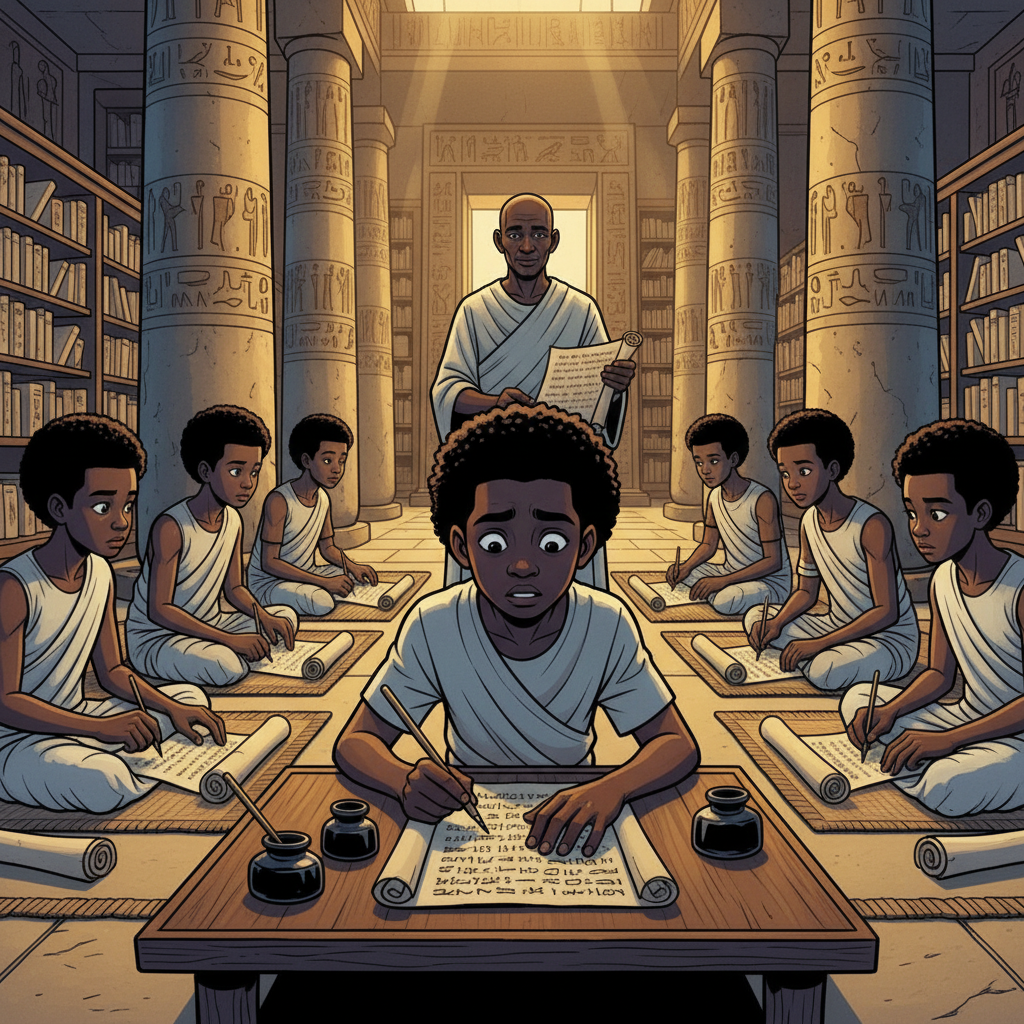
The day of the examination arrived, bright and unyielding, bringing with it a nervous tension that crackled in the air. Khnumhotep sat among the other earnest students, his inkwell steady, his reed pen poised, a picture of false calm. But as Seba Huni presented the scrolls with the questions, which were far more challenging than anticipated, Khnumhotep’s usual confidence began to waver, then crumble. The questions weren't about broad concepts; they demanded specific dates, obscure names of lesser-known pharaohs, and precise translations of complex legal phrases he hadn't bothered to learn. He tried to bluff, to recall fragments, but the words felt like sand slipping through his fingers. A cold knot formed in his stomach, confirming his fear. He had truly, utterly failed, and he knew it.
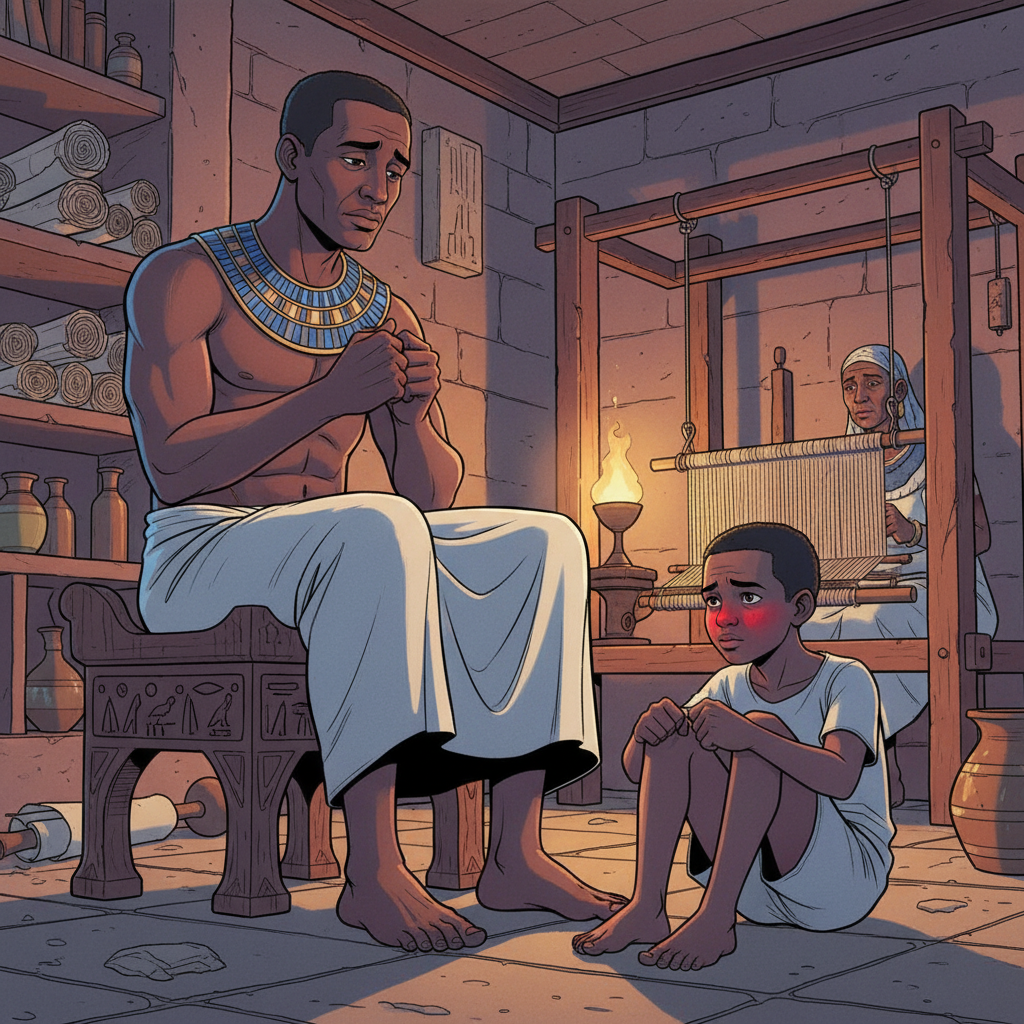
Later that evening, the air in their quiet home felt unusually heavy, thick with unspoken disappointment. Seba Huni, usually so gentle and understanding, spoke with a quiet disappointment that cut deeper than any angry shout could have. Khnumhotep had not only performed poorly but had tried to pass off guesses as solid knowledge, a clear disrespect for the truth and the principles of Maat. His father explained the severe consequences of his actions: no trips to the lively market, no playing by the Hapi with his friends, and extra copying tasks from the oldest, dustiest scrolls for the rest of the entire week. Khnumhotep felt a hot flush of injustice rise fiercely in his cheeks, even though deep down, he knew his father’s judgment was absolutely just and right.
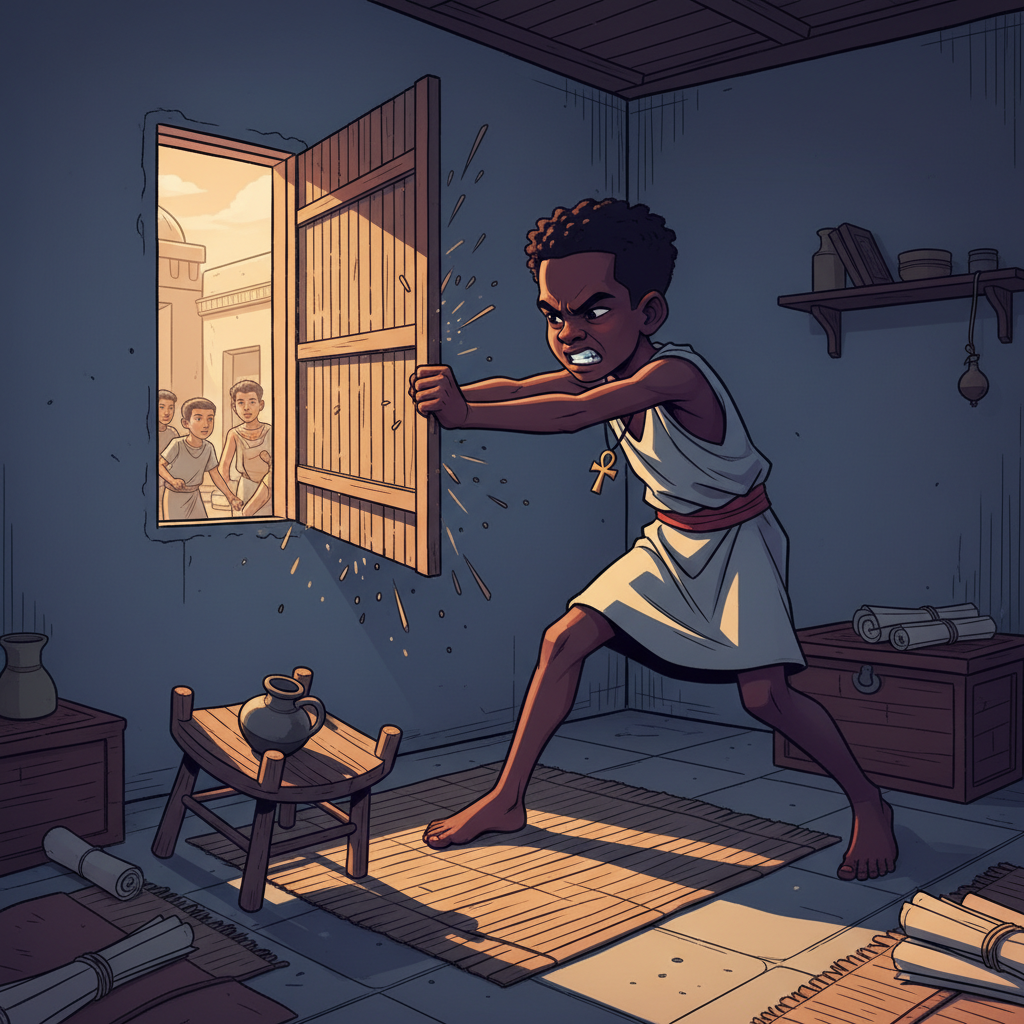
Khnumhotep stormed into his small room, slamming the reed door shut with a satisfyingly defiant thud that echoed in the quiet house. "Unfair!" he muttered under his breath, kicking angrily at the leg of his low stool. His father always spoke of Maat, of balance and truth, yet this punishment felt entirely out of balance to Khnumhotep, a harsh, undeserved burden. He had made a mistake, yes, he admitted that, but to be confined, to miss the vibrant life outside with his friends? His quick temper, a sudden surge of Isfet, clouded his thoughts, making him see red. He felt a burning need to make his father feel some of the intense anger and frustration that now churned inside him, to somehow strike back and make him understand.
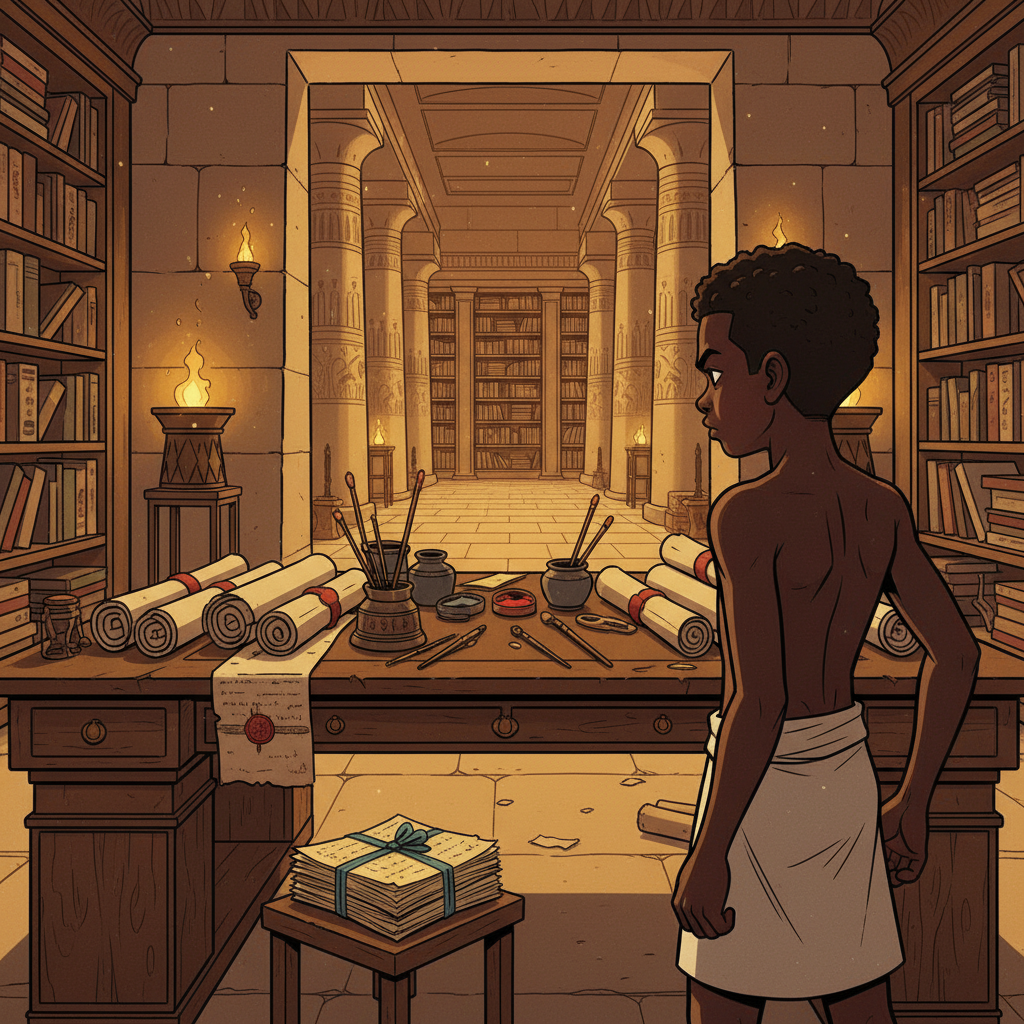
His furious gaze landed on his father’s writing desk, usually a sanctuary of order, quiet industry, and sacred knowledge, now transformed into a potent symbol of his unjust confinement. It was laden with numerous scrolls, various inkpots, and an array of intricate writing tools, all representing the very studies he now resented. A particular stack of old, worn papyrus sat slightly apart from the newer, neatly bound texts, looking forgotten and insignificant. A mischievous, almost dark, idea began to form in Khnumhotep's mind, a small, insidious flicker of rebellion against his father’s unwavering authority and the punishment he felt he didn't truly deserve.
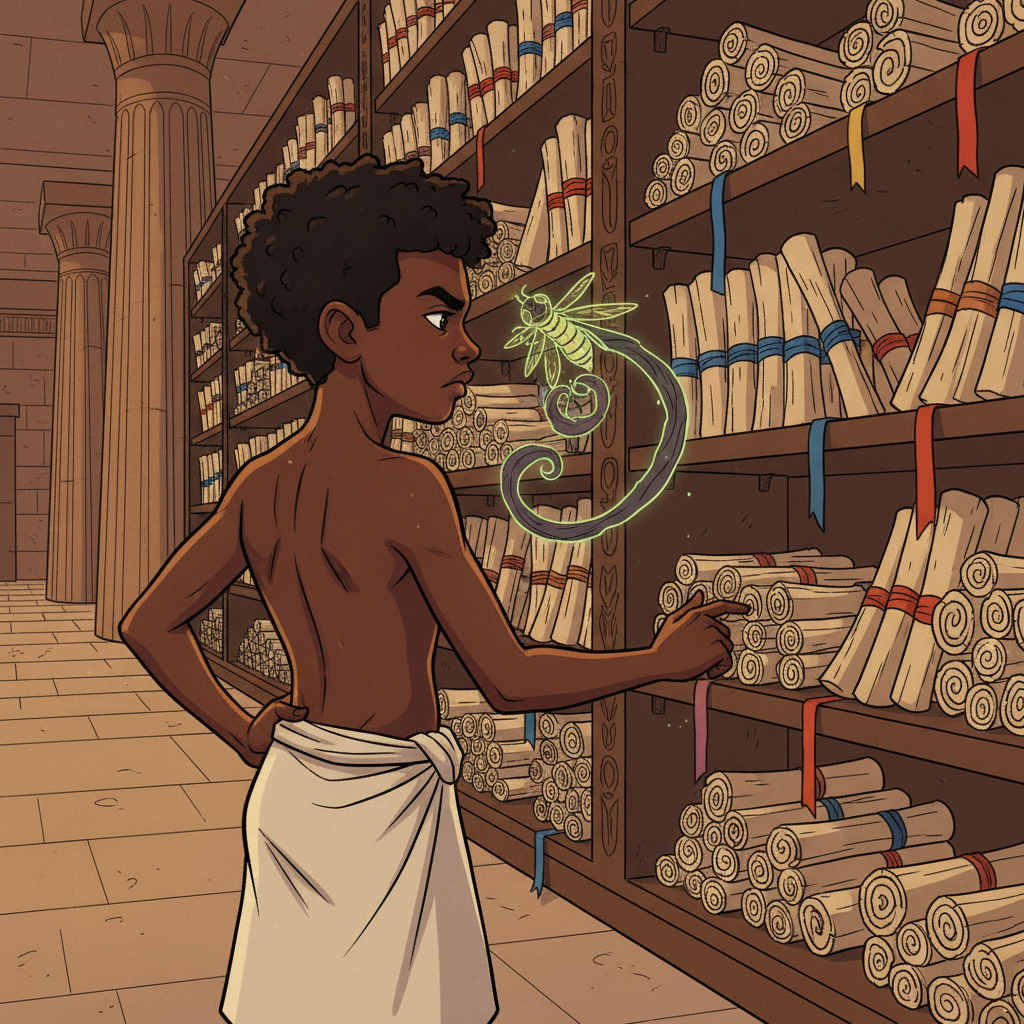
The idea felt like a tiny, buzzing insect, irritating and insistent, refusing to be ignored. If he couldn't enjoy his freedom, confined to this small space, why should his father enjoy his peace and the undisturbed order of his study? What if something "accidentally" happened to some of those less important, old-looking scrolls? Not the truly valuable ones, of course, just the brittle, aged ones that seemed to have no purpose. It would be a small act, a secret act of defiance, a way to release the burning fire building within him. The thought, though tempting and offering a fleeting sense of power, felt distinctly like a shadow of Isfet creeping into his heart, urging him towards imbalance and disorder.
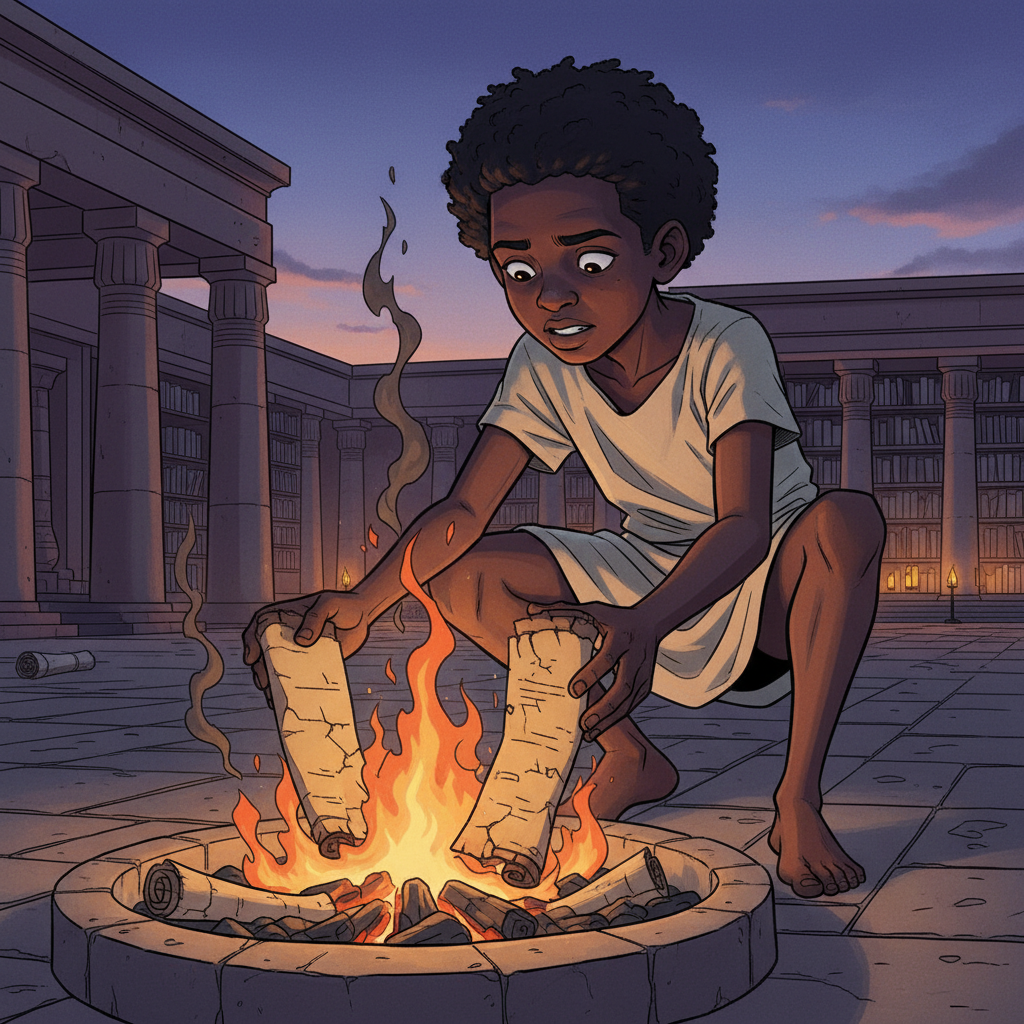
With a racing heart and trembling hands, Khnumhotep crept towards the forbidden desk, his movements hushed and furtive. His fingers trembled slightly as he carefully selected a few of the aged, brittle scrolls from the stack, their dry surfaces feeling forgotten in his grasp. He moved silently, like a shadow gliding through the twilight-kissed courtyard, towards the household brazier. Embers from the evening meal still glowed faintly, a warm, inviting orange against the deepening dusk. Without another moment of thought, fuelled by raw, unchecked anger and a surge of rebellion, he threw the scrolls into the heart of the flames. A whoosh of air, then the papyrus caught, burning quickly and fiercely, disappearing in moments.
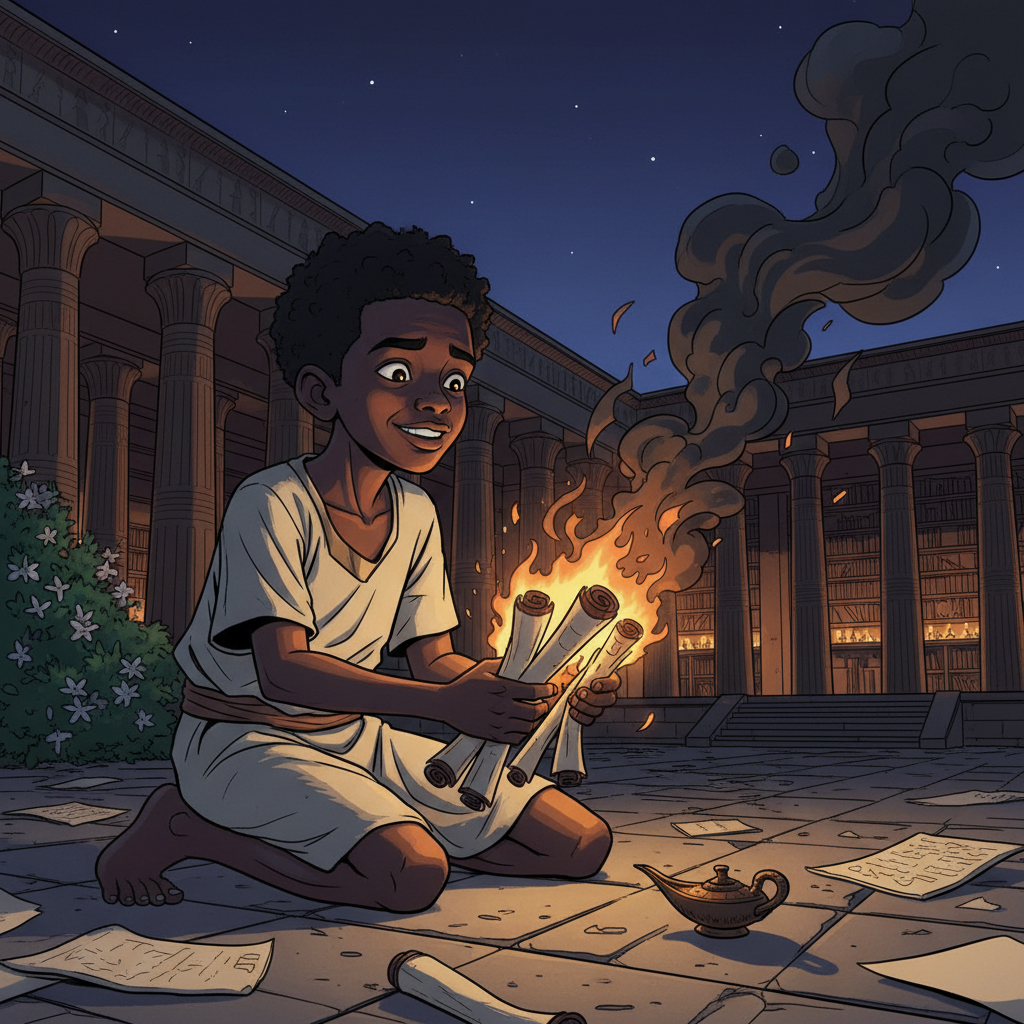
A sharp, acrid smell of burning papyrus instantly filled the evening air, briefly overwhelming the sweet fragrance of night jasmine that usually perfumed the courtyard. For an instant, a dark, hot satisfaction coursed through Khnumhotep, a fleeting triumph. He had done it. He had struck back, and no one would ever know. But then, as quickly as it came, the satisfaction vanished entirely, replaced by a cold, sickening wave of fear and a bitter taste of regret that lingered in his mouth. The crackling flames seemed to mock him, devouring the thin sheets of history, turning them to nothing. He quickly returned to his room, trying desperately to appear calm, but his heart throbbed like a drum against his ribs, betraying his inner turmoil.
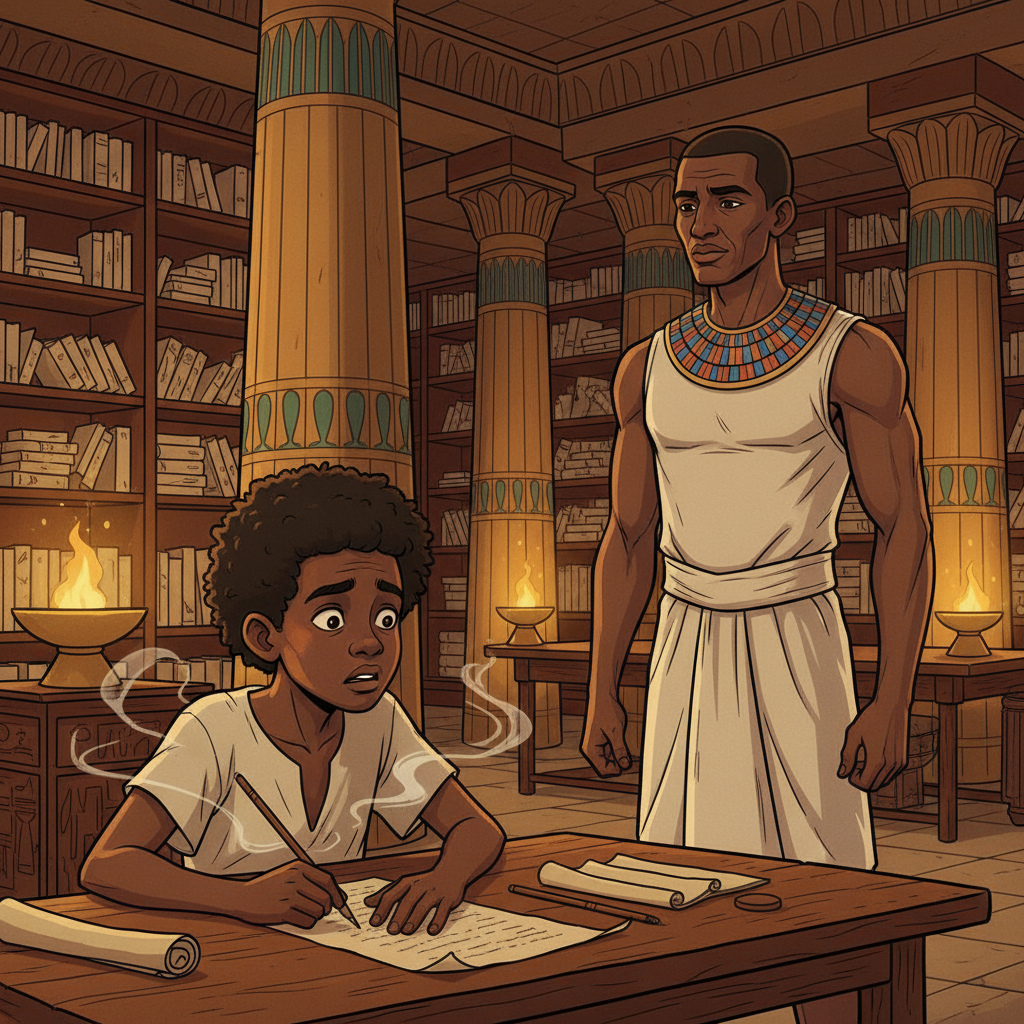
The evening progressed with an unsettling, heavy quietness that felt more oppressive than any noise. Khnumhotep tried to focus on his extra copying tasks, his reed pen scratching faintly on the papyrus, but his mind incessantly replayed the scene at the brazier. The acrid smell of smoke seemed to cling to his clothing, to his very skin, a secret mark of his transgression. When Seba Huni returned from his evening duties at the Per Ankh, his gaze, usually so warm and full of affection, swept across the desk, then around the room with a subtle shift. Khnumhotep held his breath, terrified. His father noticed the slight disarray, the faint lingering scent of smoke, and his eyes, though still calm, narrowed just a fraction, a tiny signal of something amiss.
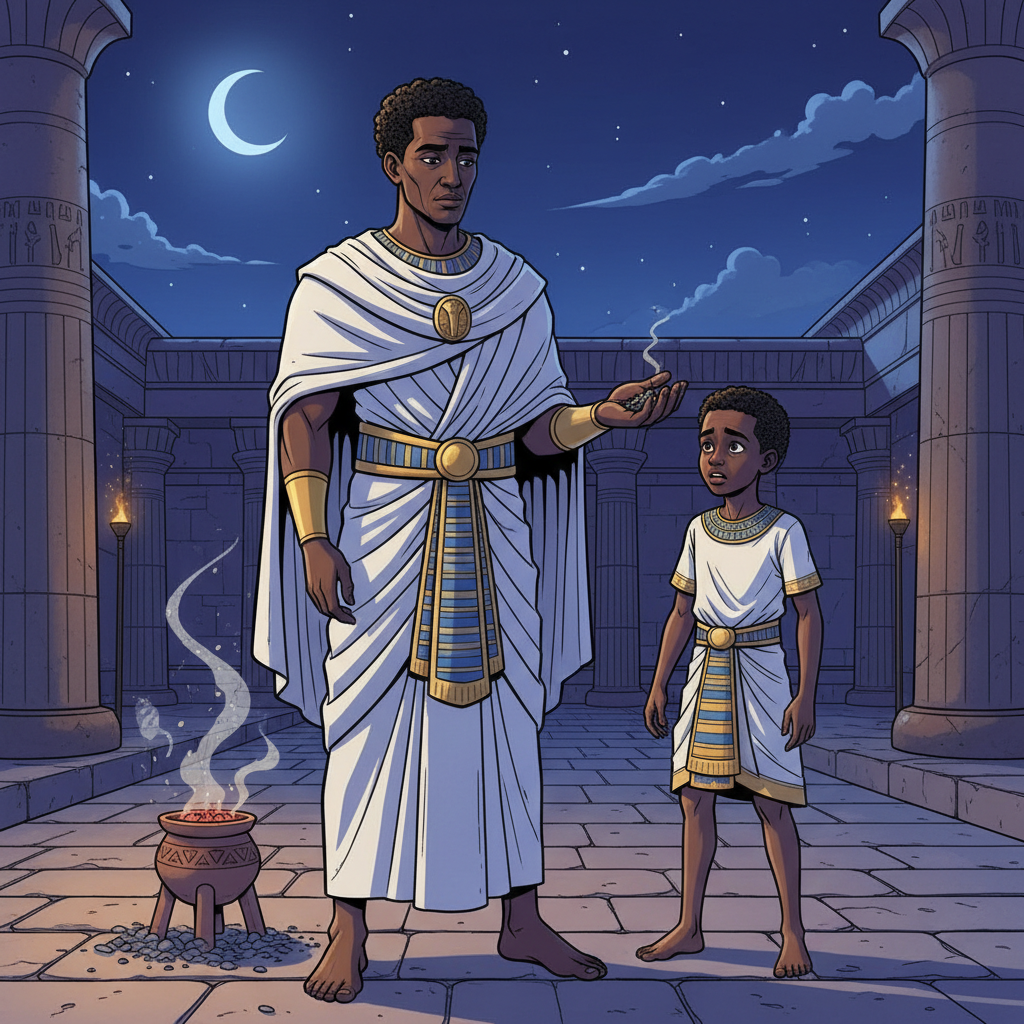
Seba Huni didn't speak a single word, which in itself was more alarming than any accusation. He walked with slow, deliberate steps out into the moonlit courtyard. Khnumhotep followed silently, his stomach twisting into painful knots of dread and guilt. His father moved directly to the brazier, where only fine, grey ash and fading embers now remained of the fire. Seba Huni reached in, carefully sifting through the cooling embers with his bare fingers, then scooped up a small handful of the delicate, dark flakes. He didn't yell, he didn't even raise his voice, or make a single sound of anger. He just stood there, the ashes resting in his palm, his face an utterly unreadable mask of profound stillness, which was unnerving.
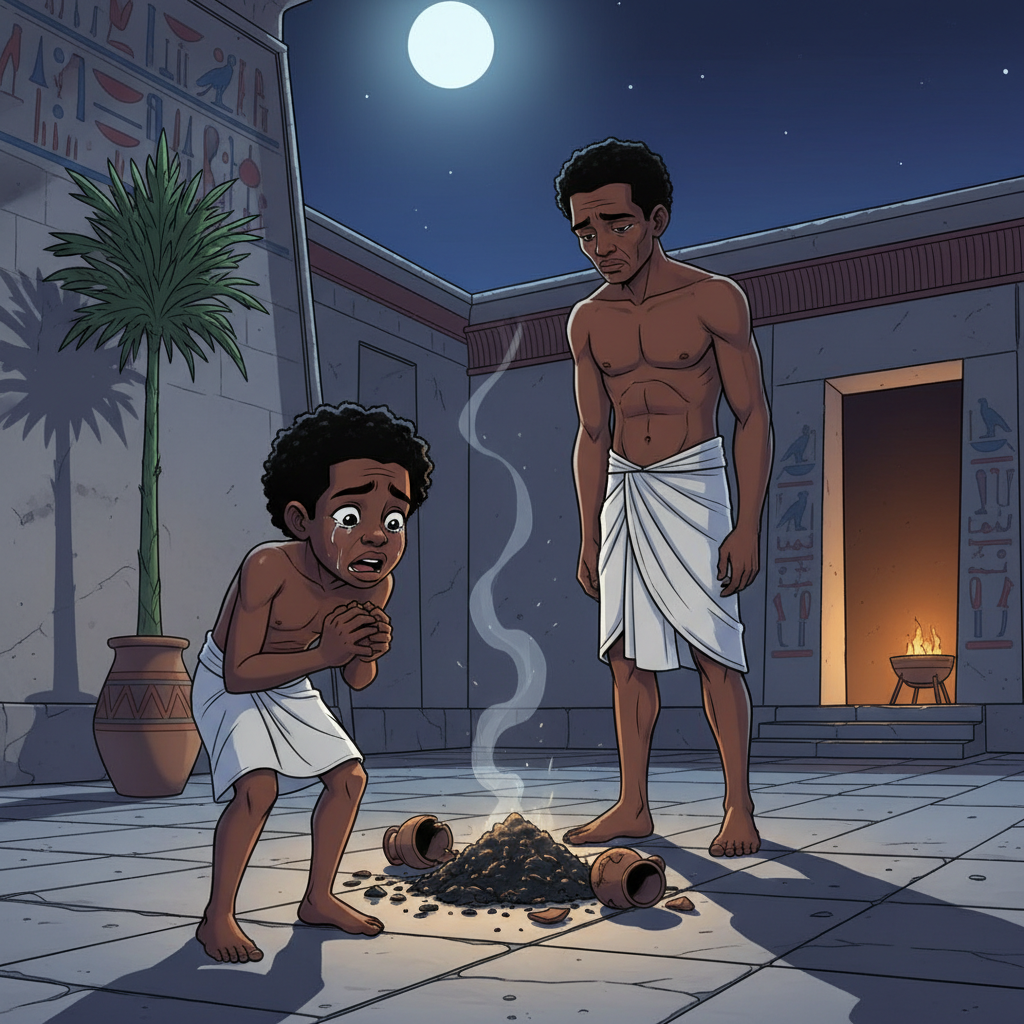
The silence that followed was a heavy, suffocating blanket, far, far worse than any angry words or sharp reprimand Khnumhotep could have imagined. His breath hitched painfully in his throat, making it difficult to speak. He longed desperately to confess, to explain the burning anger that had pushed him to such a foolish and destructive act, to beg for his father's forgiveness and understanding. But the words caught, trapped by a thick knot of shame, fear, and deep regret. His father continued to gaze at the ashes, his broad shoulders slightly slumped, a posture Khnumhotep had rarely, if ever, seen, one that suggested a profound weariness and deep sorrow rather than righteous rage. This was a new, unsettling kind of punishment.
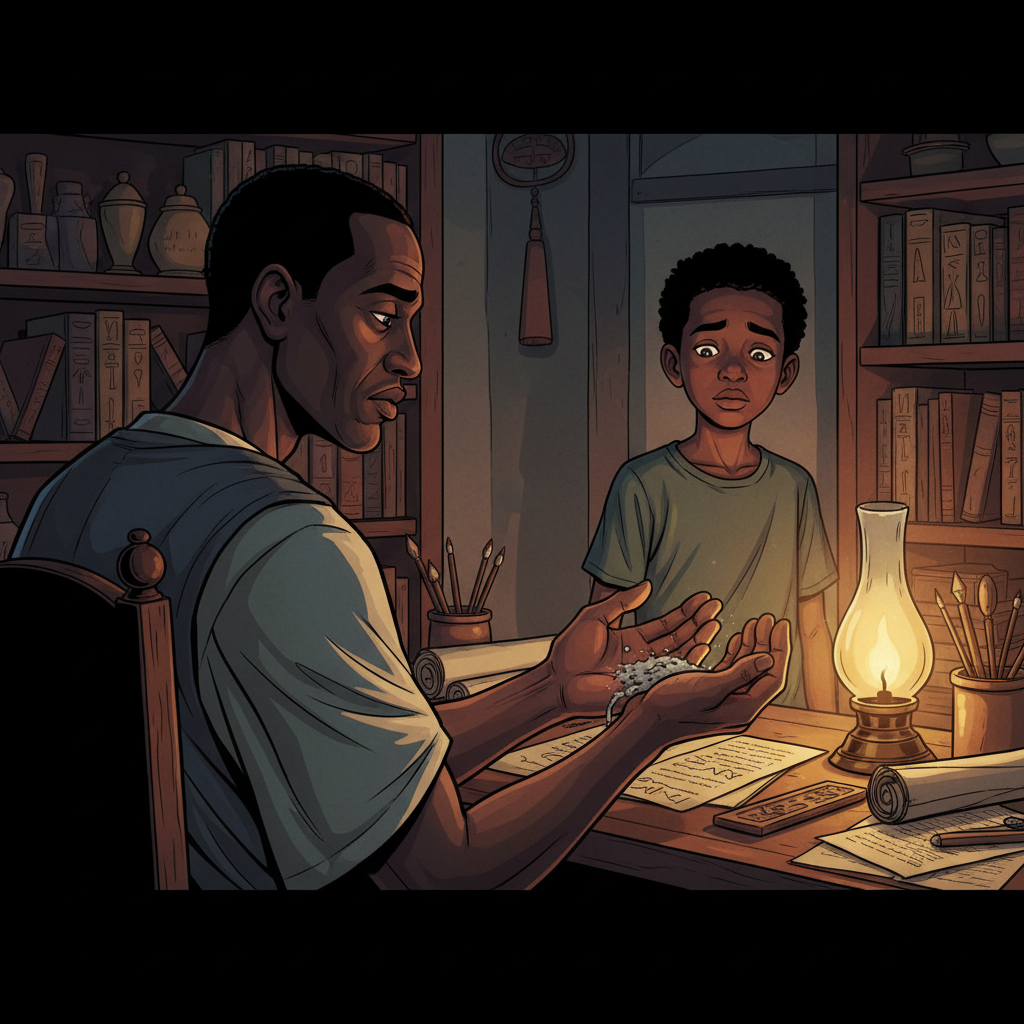
Khnumhotep watched his father, bewildered by his unexpected reaction. He had prepared himself for a lengthy lecture, for a stern, disapproving glance, for any form of punishment he could understand and anticipate. Instead, there was only this profound quiet, this deep, unsettling sadness emanating from Seba Huni, like a heavy fog. His father walked back inside, still holding the ashes gently in his cupped hand, and sat at his desk, not even looking at Khnumhotep, as if the boy wasn't there. The boy felt a strange, growing pang of confusion and fear. This wasn't the reaction he had expected at all, and it unnerved him more deeply than anything else could have possibly done.
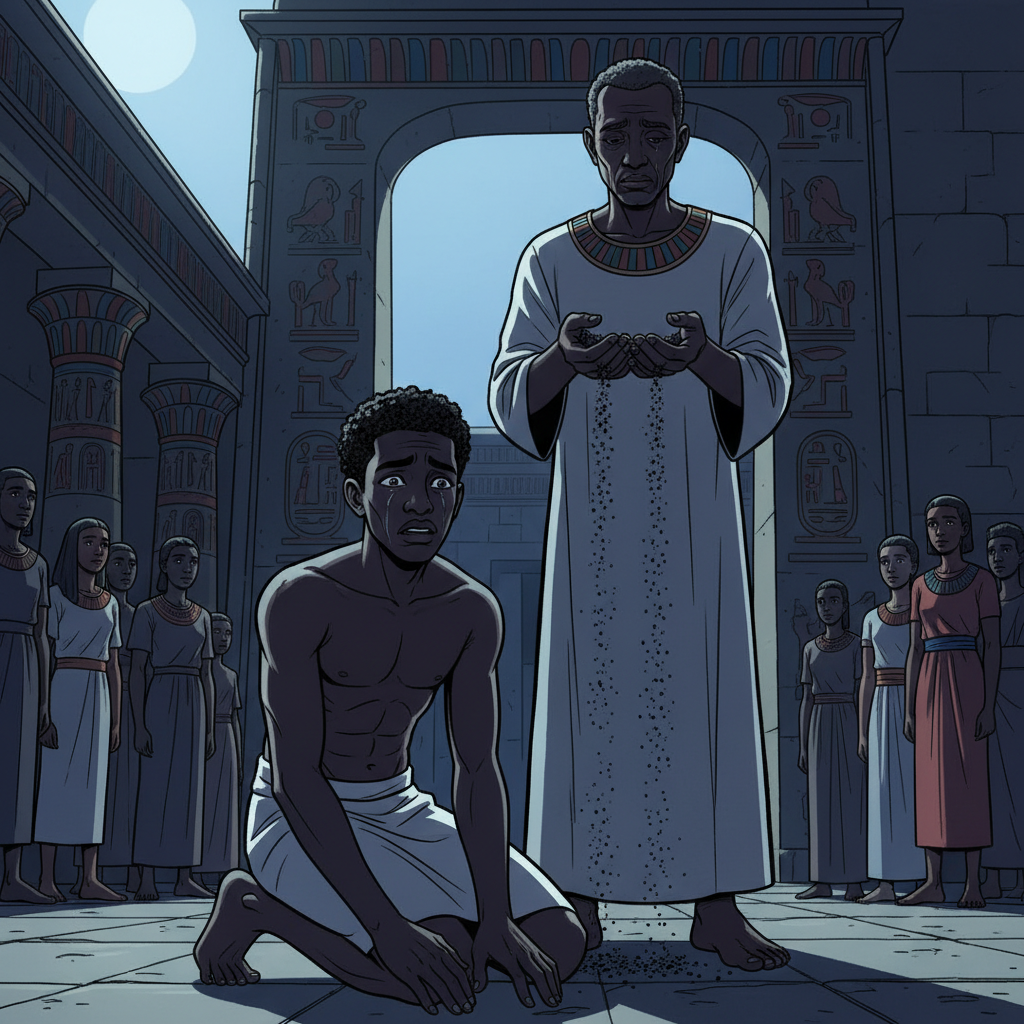
"Baba," Khnumhotep finally managed to whisper, his voice barely audible, a fragile thread breaking the oppressive stillness that filled the room. "They were just old papers, weren't they? Just unimportant practice scrolls?" He tried desperately to inject a casualness into his tone, to make it seem as if the act was minor, inconsequential, easily forgotten. Seba Huni didn't reply directly. He only sighed, a deep, shuddering sound that seemed to carry the immense weight of years, of hidden sorrows. He gently poured the ashes from one palm to the other, watching them fall like dark, gritty sand, each grain a silent accusation against Khnumhotep's careless actions.
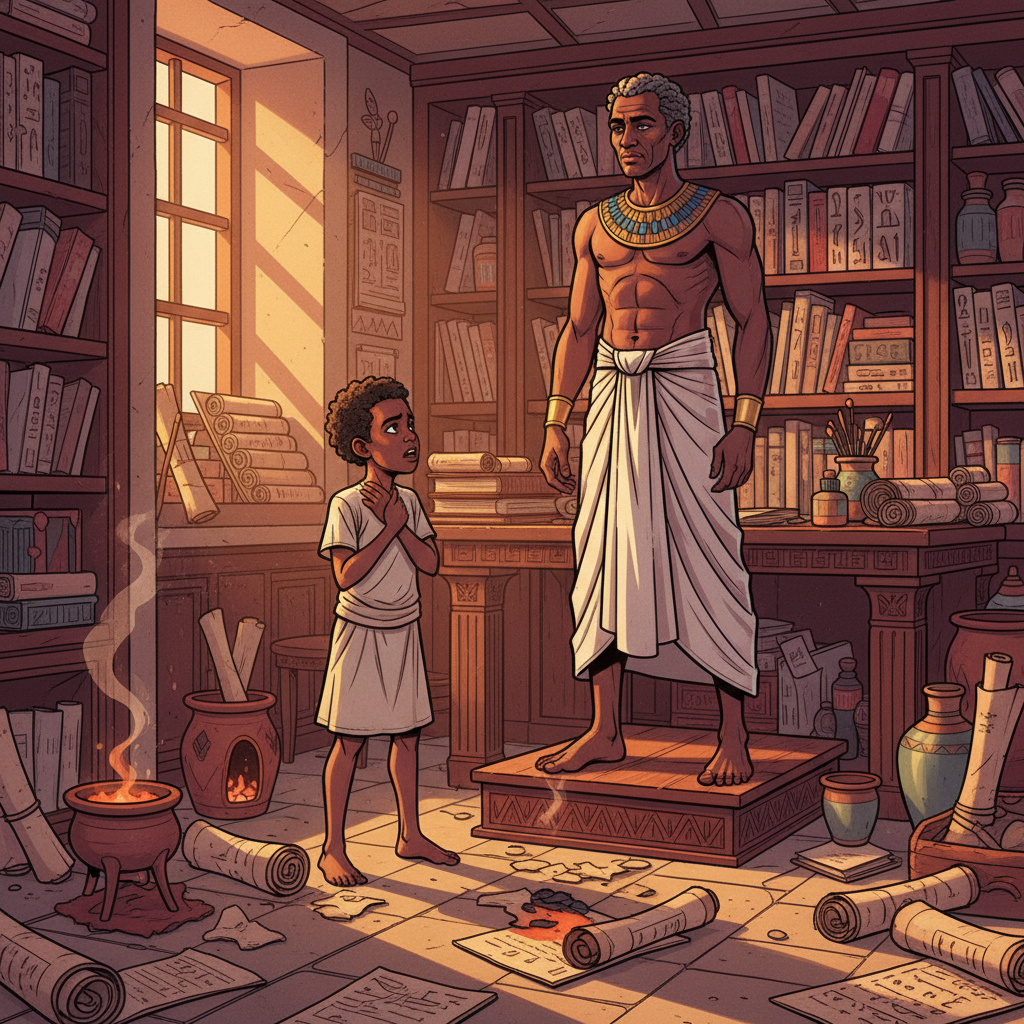
Seba Huni finally lifted his gaze, his eyes dark with an emotion Khnumhotep couldn’t quite place; it wasn't simple anger, but something far more potent and heart-wrenching. "Khnumhotep," his father began, his voice low and steady, each word carefully measured, "do you remember anything at all about these scrolls? About what was precisely written on them, or who wrote them?" Khnumhotep shook his head slowly, his throat tight with unspoken guilt and rising panic. He hadn't bothered to look, only to burn. A cold dread, sharp and icy, began to seep into his very bones, telling him that his careless, impulsive act held a far deeper and more terrible meaning than he could have ever possibly imagined in his fit of rage.
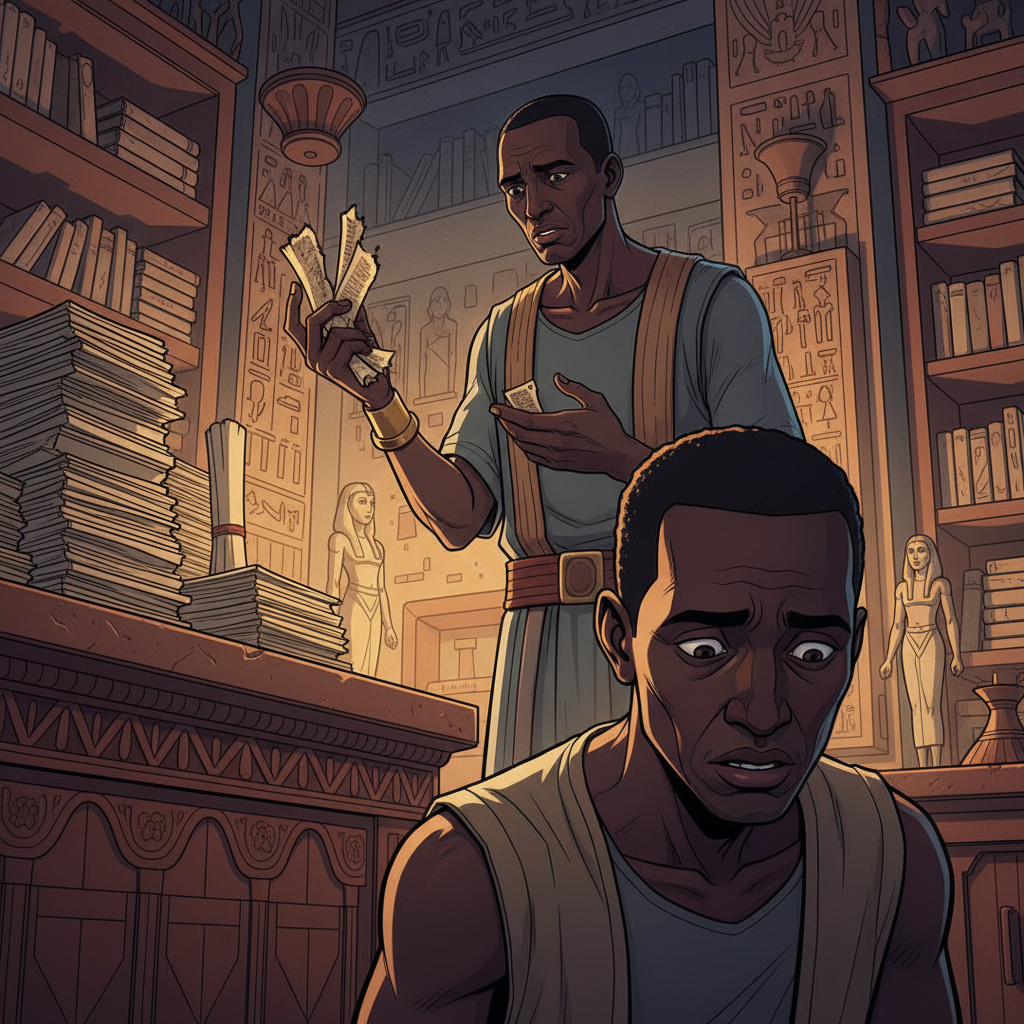
Seba Huni paused, his gaze fixed on the fragile remnants cradled in his hand, as if trying to piece together the lost words. "These were not just any scrolls, my son. Not mere practice sheets, and certainly not discarded drafts meant for the fire." He gestured vaguely towards the remaining stack on his desk, the ones Khnumhotep hadn't touched. "These were old, yes, ancient, but immensely precious. Unique. One of a kind, irreplaceable works." The air in the room grew thick with Khnumhotep's mounting dread, heavy and suffocating. He wanted to ask, to understand, but his voice was trapped. He could only stand there, frozen, as his father continued, each word a slow, deliberate, painful blow to his conscience.
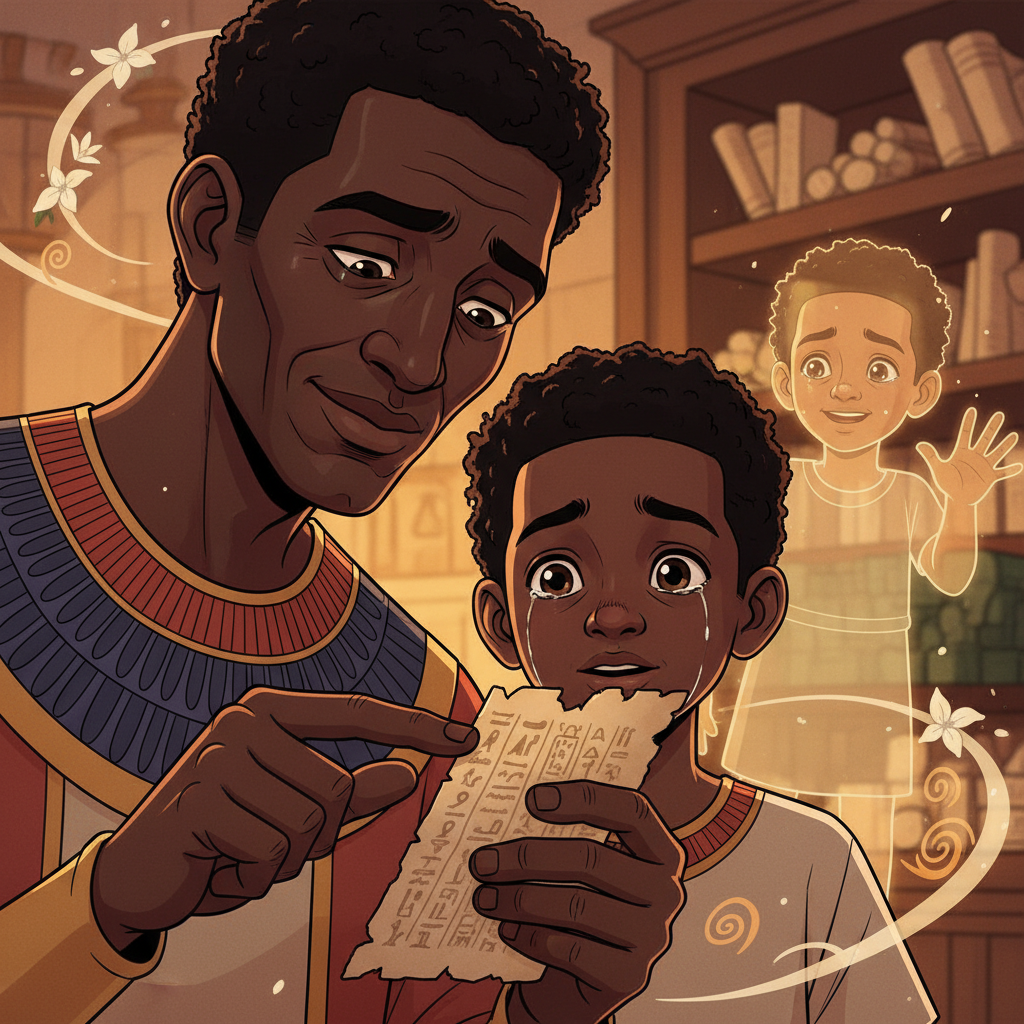
"Do you remember your grandfather, Khufu?" Seba Huni asked, his voice now almost a whisper, laced with a tenderness that surprised Khnumhotep. Khnumhotep nodded slowly, a lump forming in his throat. He had only been a small child, perhaps five suns old, when his revered grandfather, a renowned scribe and wise elder, had passed into the West. He remembered soft, gentle hands, a warm, knowing smile, and the faint, comforting smell of jasmine and old papyrus that always clung to his grandfather, like a second skin. Seba Huni then reached for a single, slightly scorched fragment that had somehow miraculously escaped the brazier's hungry flames, its edge blackened but some hieroglyphs still faintly visible. He pointed to a distinctive, elegant script. "This is his hand. This is his writing, my son."
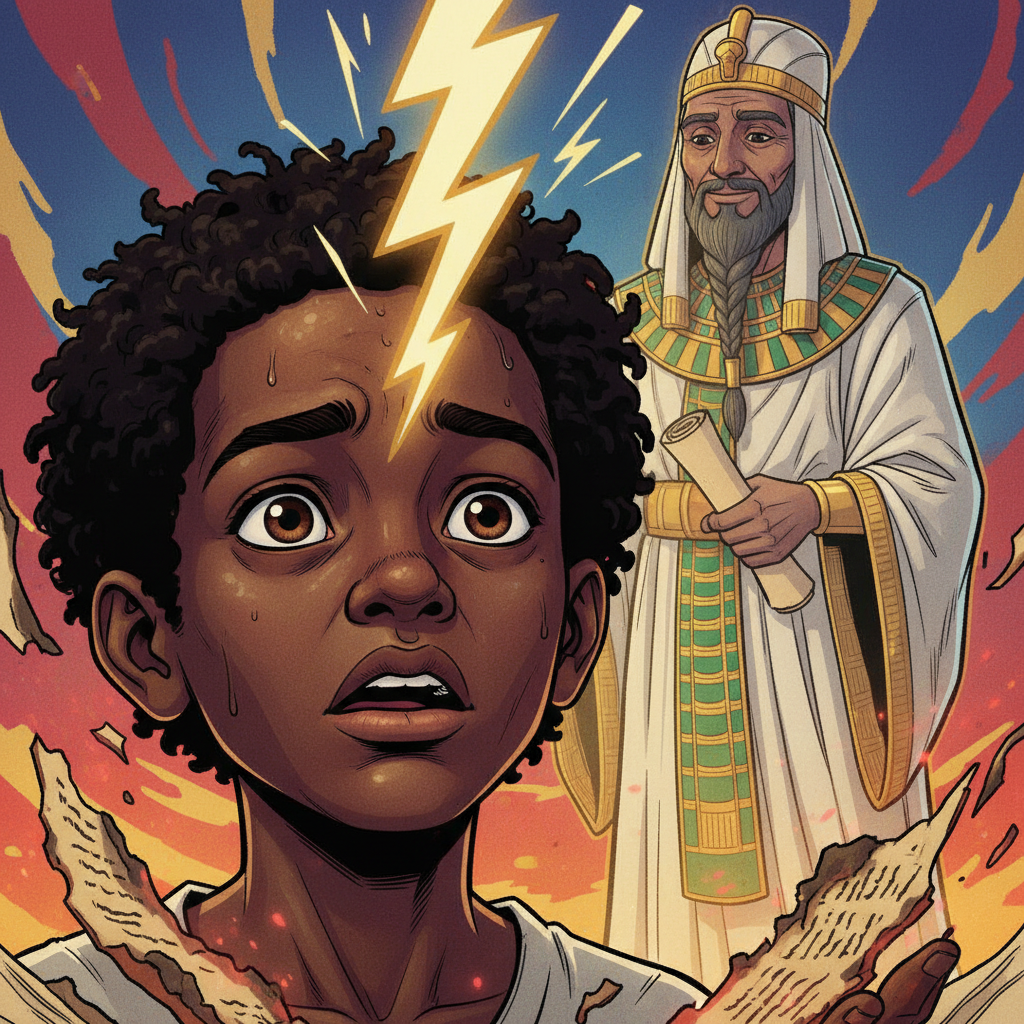
Khnumhotep's world tilted violently, spinning around him. His grandfather, Khufu, had been a legendary figure in their family, a man whose profound wisdom and gentle spirit were often spoken of with reverence at family gatherings, his name a blessing. These weren't mere papers he had burned in a fit of childish pique; these were direct messages, precious teachings from his esteemed ancestor, a guiding light for his future. The thought struck him with the devastating force of a thunderclap, echoing loudly in his mind. He had not only destroyed something sacred, but something imbued with the very spirit of his lineage, a piece of his own history. The fiery satisfaction from earlier felt like a distant, shameful, and utterly foolish memory now.
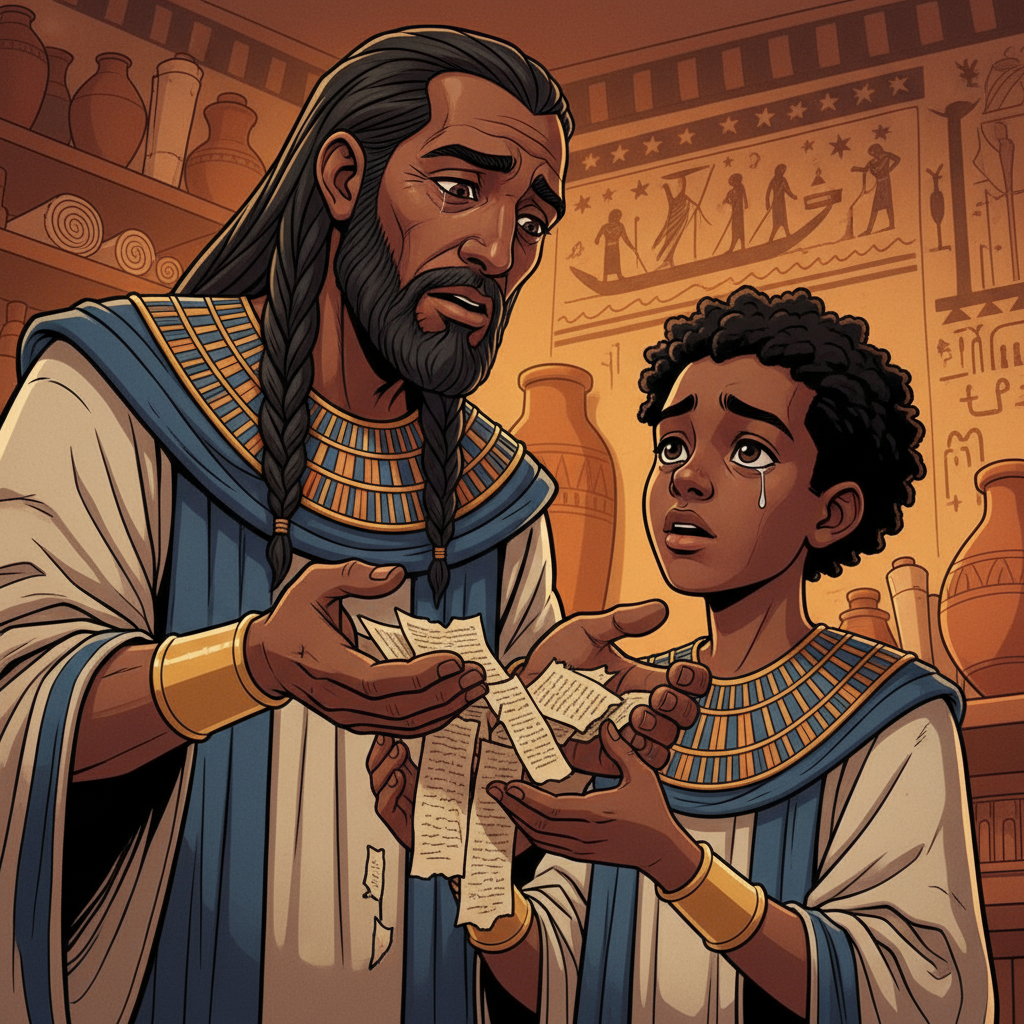
Seba Huni’s voice, though still quiet, was now heavy with a profound and aching sorrow that touched Khnumhotep's very soul. "Your grandfather wrote these, Khnumhotep, during the quiet year before he finally passed into the West, before his spirit joined the Netjeru." He paused, his eyes meeting Khnumhotep’s, clear and unwavering, filled with a deep, knowing pain. "He wrote them for you, my son. For you specifically. They were filled with his personal reflections, his deepest hopes, his understanding of Maat, and his lessons for navigating life, all meant to guide you as you grew older, for when you were old enough to truly understand their wisdom and their depth." His words were a heavy weight.
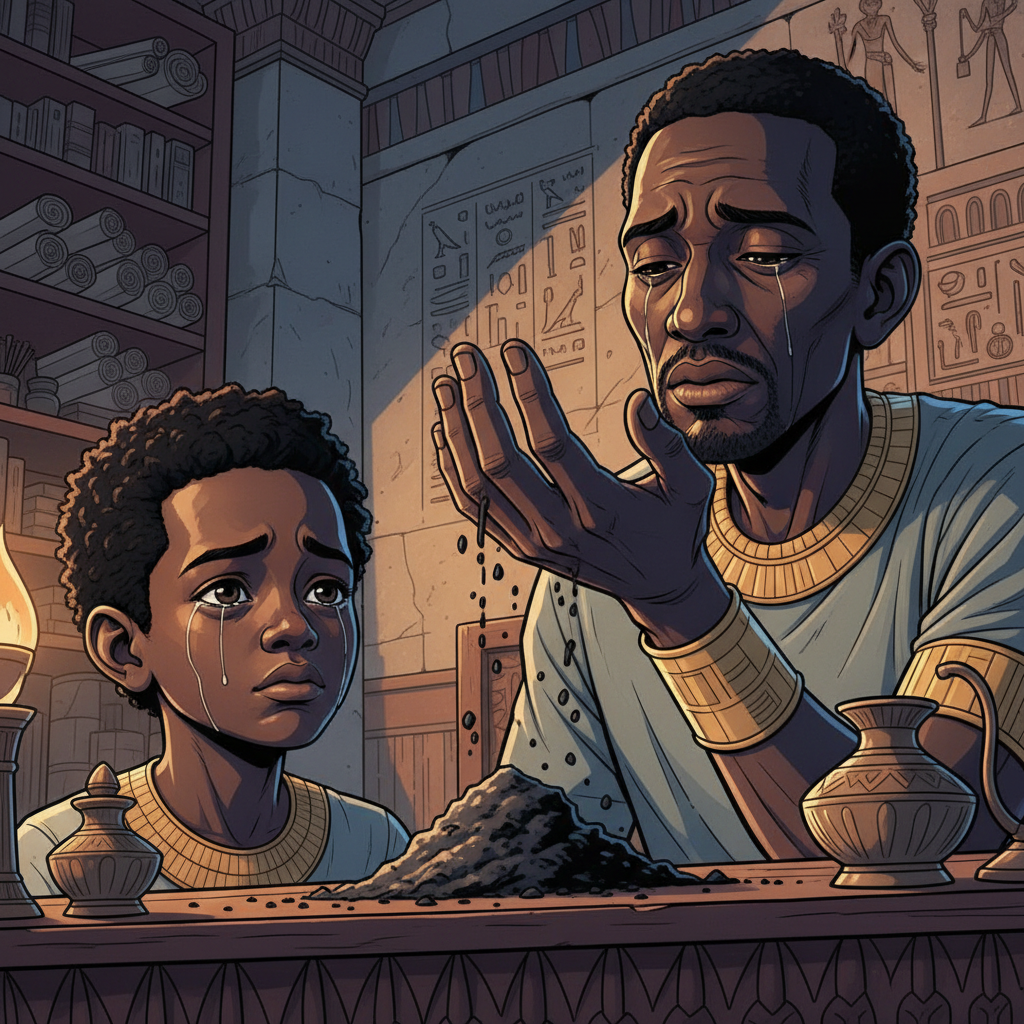
"You were almost old enough," Seba Huni finished, his voice breaking just slightly, a fragile sound in the heavy air. He slowly opened his palm, letting the remaining ashes drift gently to the desk, a soft, dark rain of loss. The silence that followed was worse than any shouting, any whipping, any confinement Khnumhotep could have ever endured. It was the deep, crushing silence of irreversible loss, of something beautiful gone forever. Khnumhotep stared at the ashes, then at his father's grief-stricken face. The truth, raw and brutal, landed in his heart like a hammer blow. He had not only burned papyrus; he had burned away a connection to his past, to his grandfather's love, to his own future, all for a fleeting moment of anger.
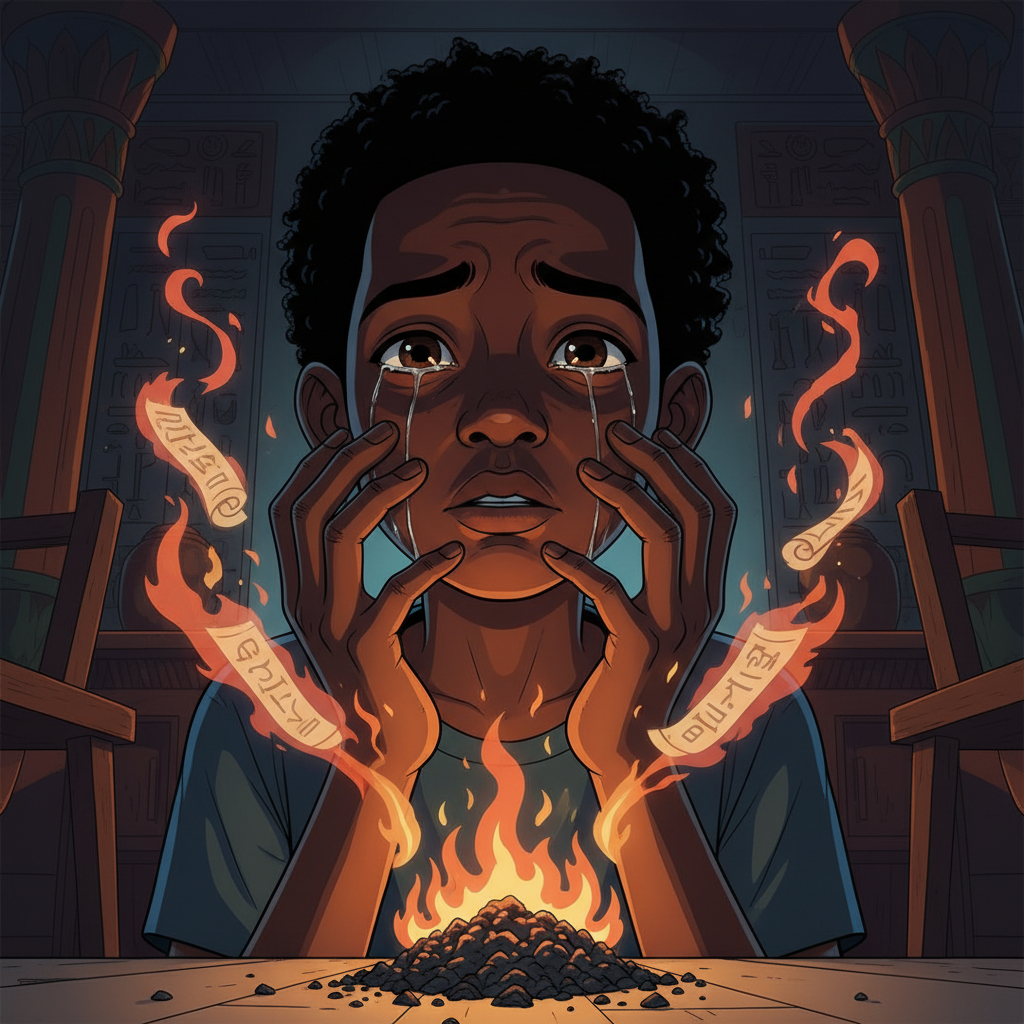
The shame and regret were overwhelming, a crushing weight that stole Khnumhotep’s breath and made his chest ache. He had been so utterly consumed by his own anger, by the sting of his perceived punishment, that he had blindly acted with Isfet, allowing disorder to guide his actions. His destructive impulse, fueled by a childish desire for petty revenge, had cost him something truly priceless, something he could never get back. He looked at the ashes, then at his ink-stained fingers, remembering the fire, the quick, hungry flames devouring the words. You cannot un-burn what you burned. The words, the wisdom, the love – all turned to smoke, forever lost.
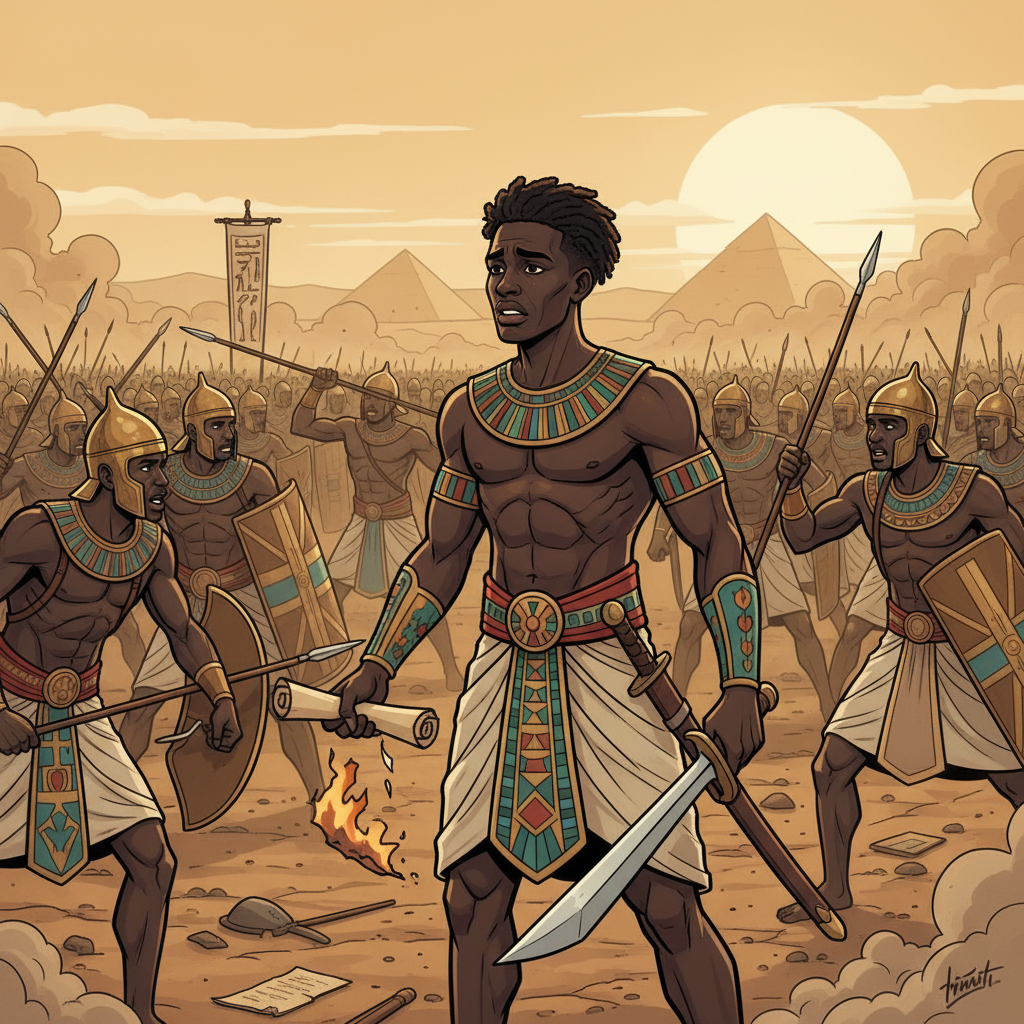
His earlier rage at his father, at the unfairness of his grounding, now seemed childish, utterly foolish, and insignificant in comparison to what he had done. In his blinding anger, he had attacked the very foundation of Maat – truth, balance, respect for elders, and the preservation of ancestral wisdom. He had sought to inflict a small, temporary hurt, a minor inconvenience, but instead, he had inflicted a deep, lasting wound upon himself, upon his family's heritage, and upon the very memory of his beloved grandfather. The destructive impulse had been a fleeting moment of darkness, a momentary lapse into Isfet, but its painful consequences would now last forever, a permanent scar on his heart.
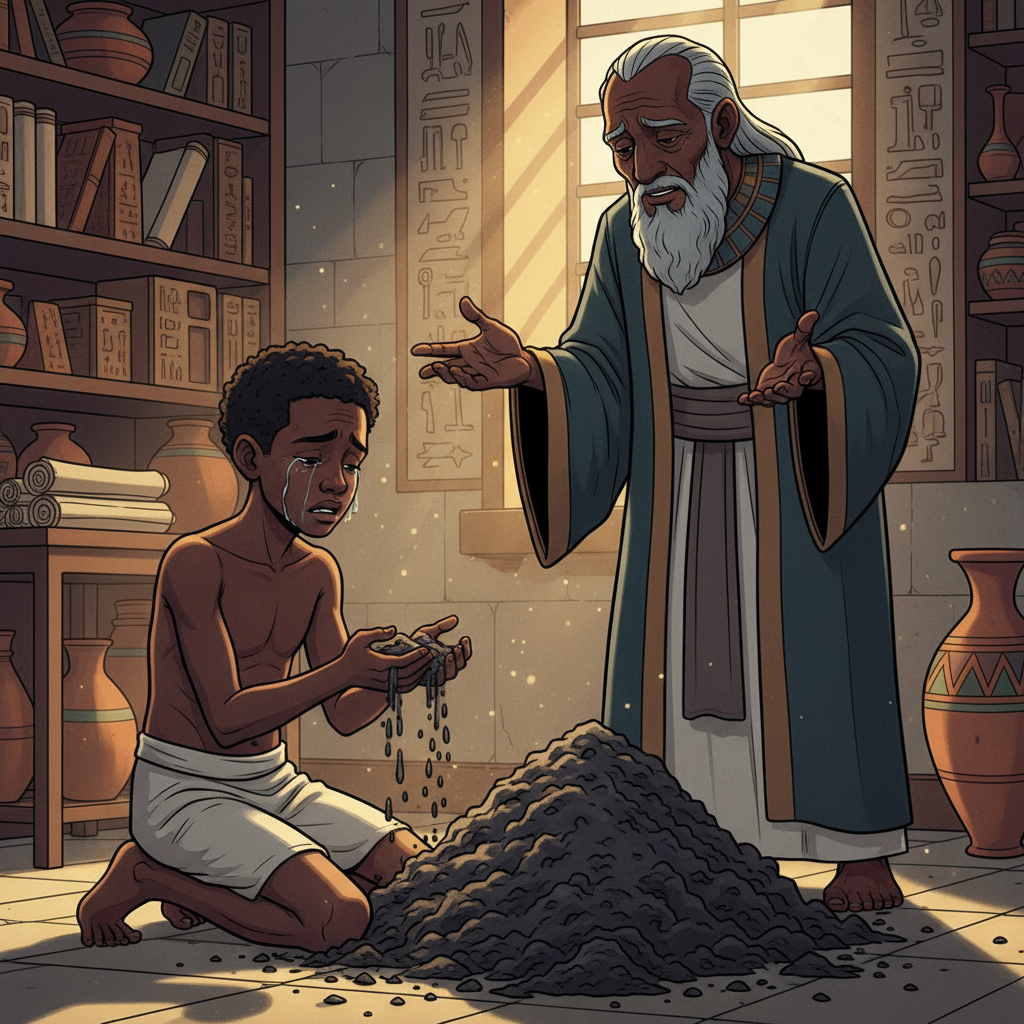
A profound, aching sorrow settled over Khnumhotep, heavy and cold. He desperately wanted to gather the ashes, to somehow piece them back together, to reclaim the lost words and knowledge from the dust. But they were just dust, tiny, fragmented remnants of what once was, utterly beyond repair. The irreversibility of his actions pressed down on him with immense force, a heavy, unyielding lesson he would carry always. He understood now with chilling clarity that vengeful destruction always cost far more than the original pain or perceived injustice, always took something irreplaceable. He had thought he was punishing his father, but he had truly, deeply punished himself, extinguishing a light meant for him.
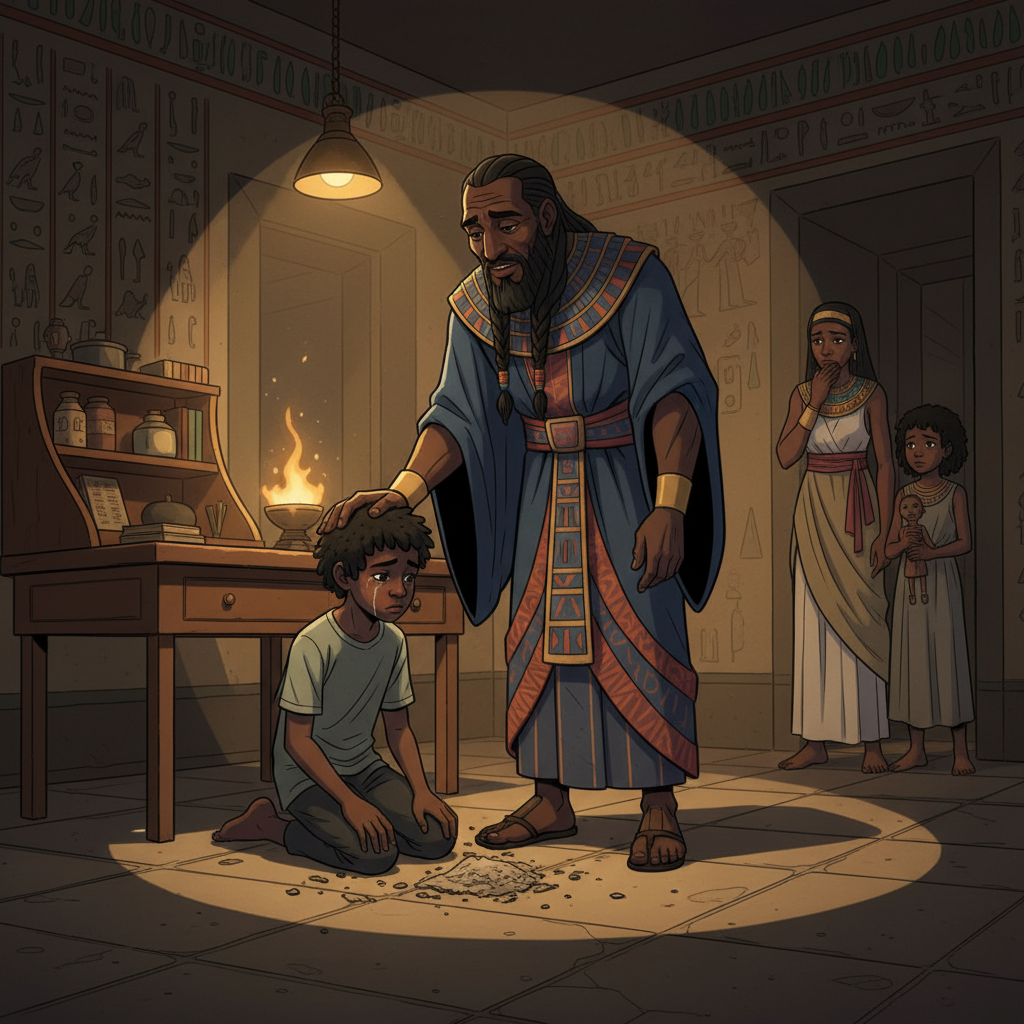
Seba Huni reached across the desk and gently placed a warm, comforting hand on Khnumhotep’s shoulder. His touch was steady, offering solace and understanding even amidst the profound sadness that filled the room. "What is done cannot be undone, my son," he said, his voice soft but firm with ancient wisdom. "But we learn. We learn from the choices we make, especially when Isfet tries to guide our hands and blind our hearts to Maat." He offered forgiveness, not for the permanent act itself, which held its own irreversible consequence, but for the boy who now, finally, understood the true depth and gravity of his terrible mistake, and who truly regretted his actions.
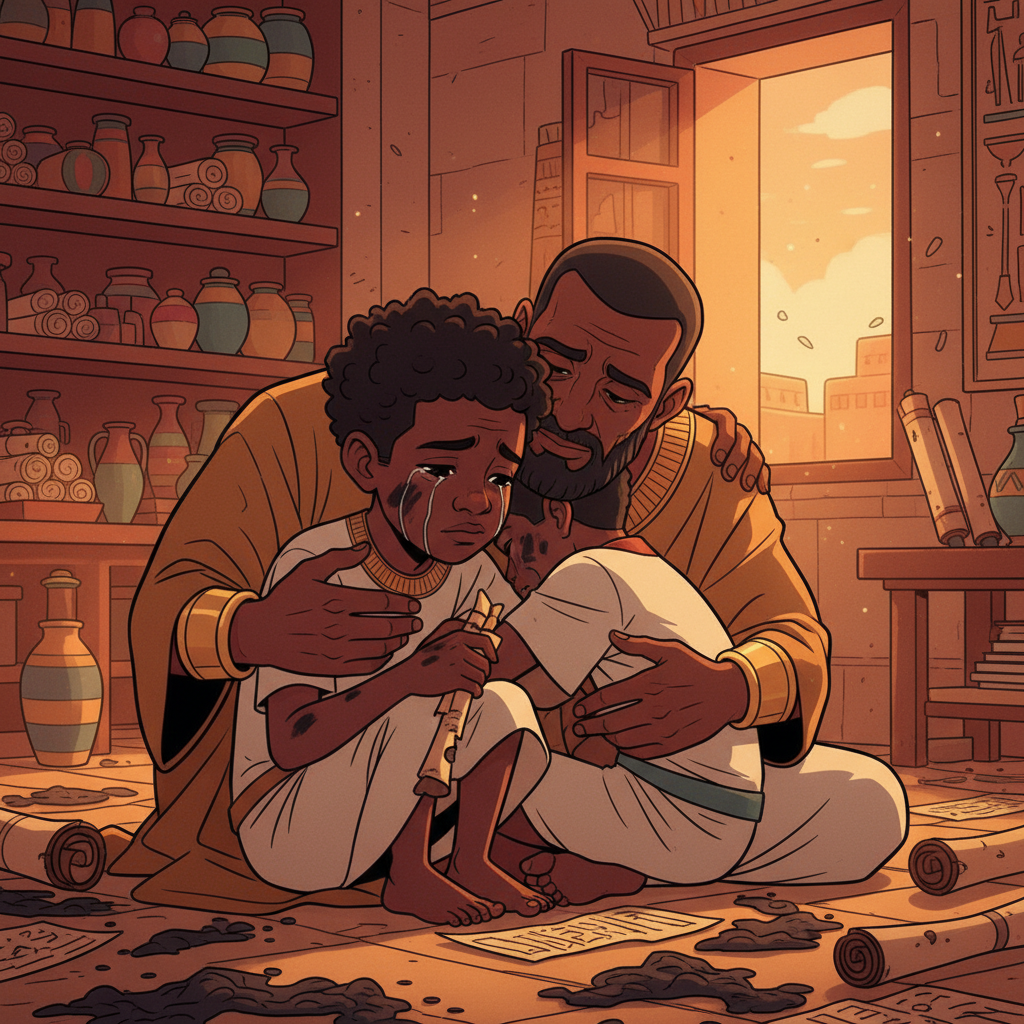
Tears, hot and heavy, streamed down Khnumhotep’s face, tracing paths through the ink smudges on his cheeks. They were not tears of anger at his grounding, nor tears of self-pity, but tears of deep, aching sorrow for the lost words, for the priceless connection to his grandfather that he had so carelessly and foolishly extinguished. He understood now, truly understood, that the fleeting satisfaction of revenge was never, ever worth the lasting pain of irreversible loss. He had always thought he was a clever boy, quick-witted and sharp, but he had acted with profound foolishness, and the cost of that single moment was immeasurable, a void that could never be filled.
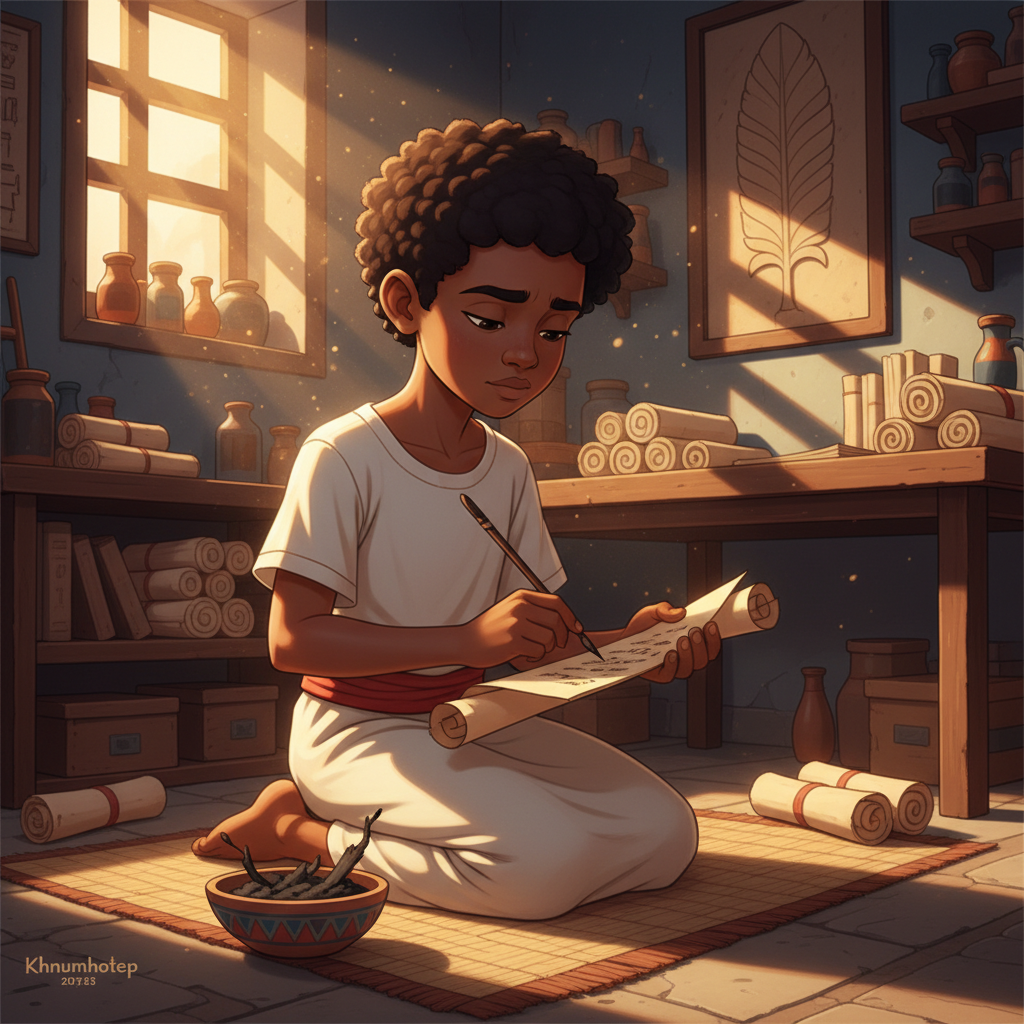
From that day forward, something fundamental shifted deeply within Khnumhotep. He still possessed his quick mind and restless energy, but now he paired it with a newfound patience, a profound respect for the wisdom of Maat, and a careful consideration of his actions. He applied himself diligently to his studies, not just mindlessly copying, but truly understanding and valuing every word, remembering the preciousness of every scroll, every hieroglyph. He knew the words of his grandfather were gone forever, but their spirit, the powerful lesson of truth and creation over destructive impulse, would guide his path always, a constant, silent reminder from the ashes of what was lost.