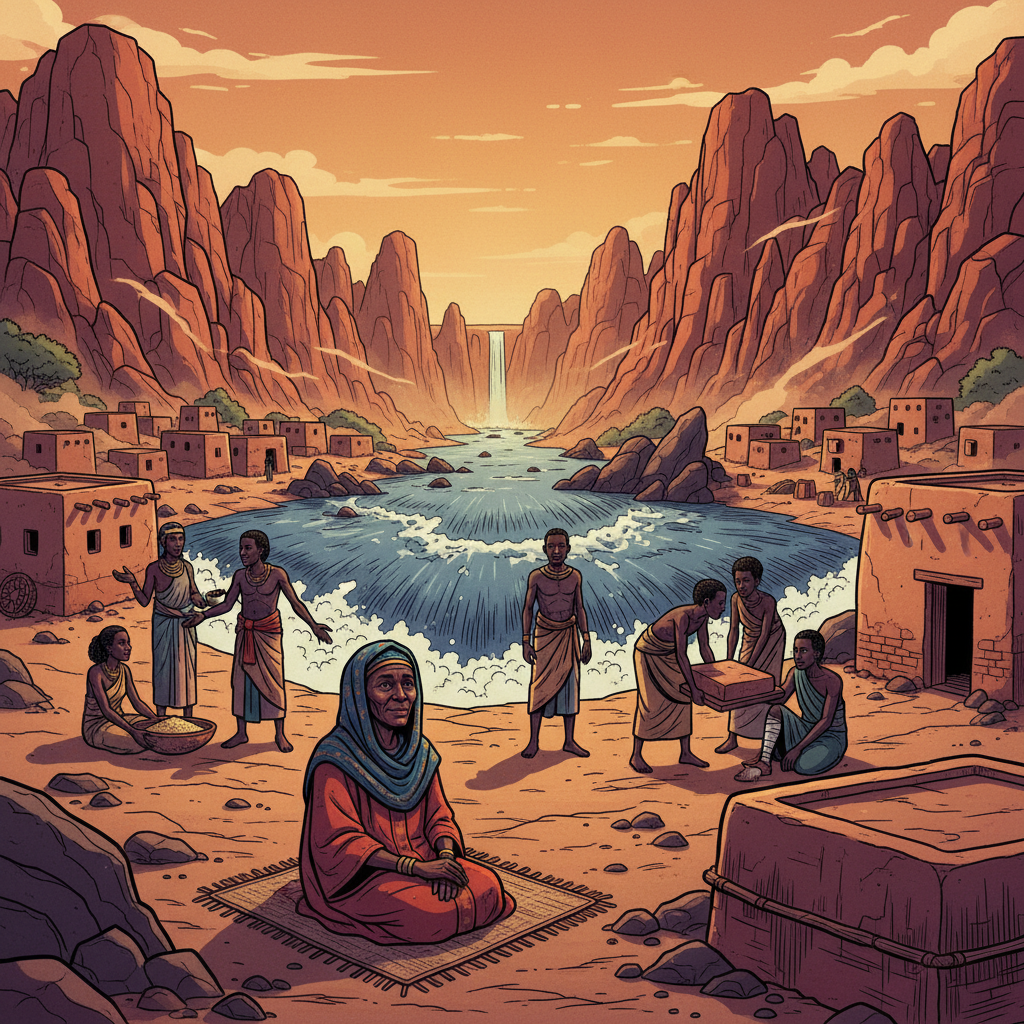
In a village by the Second Cataract of the Nile, where the river carved through red-black rock and the desert wind sang against mud-brick walls, five families lived close together. They were not related by blood. They did not share a family name. But they were bound by something the elders said was stronger than blood — mutual obligation. The kind of bond where your neighbor's hunger is your problem, and your abundance is your neighbor's blessing. This was the land of Kush, where the Nile narrowed and the cataracts churned white water over ancient stone. Life here was harder than in the broad green valleys to the north. The soil was thinner. The floods were less generous. But the people had learned something that the river itself taught them: when the current is strong, you survive by holding on to each other. When one family had too much grain after harvest, they shared it with those who had too little. When one family's father was injured hauling stone, the other families covered his work in the fields without being asked. This was not charity. This was Ma'at — the sacred balance that holds the world together.
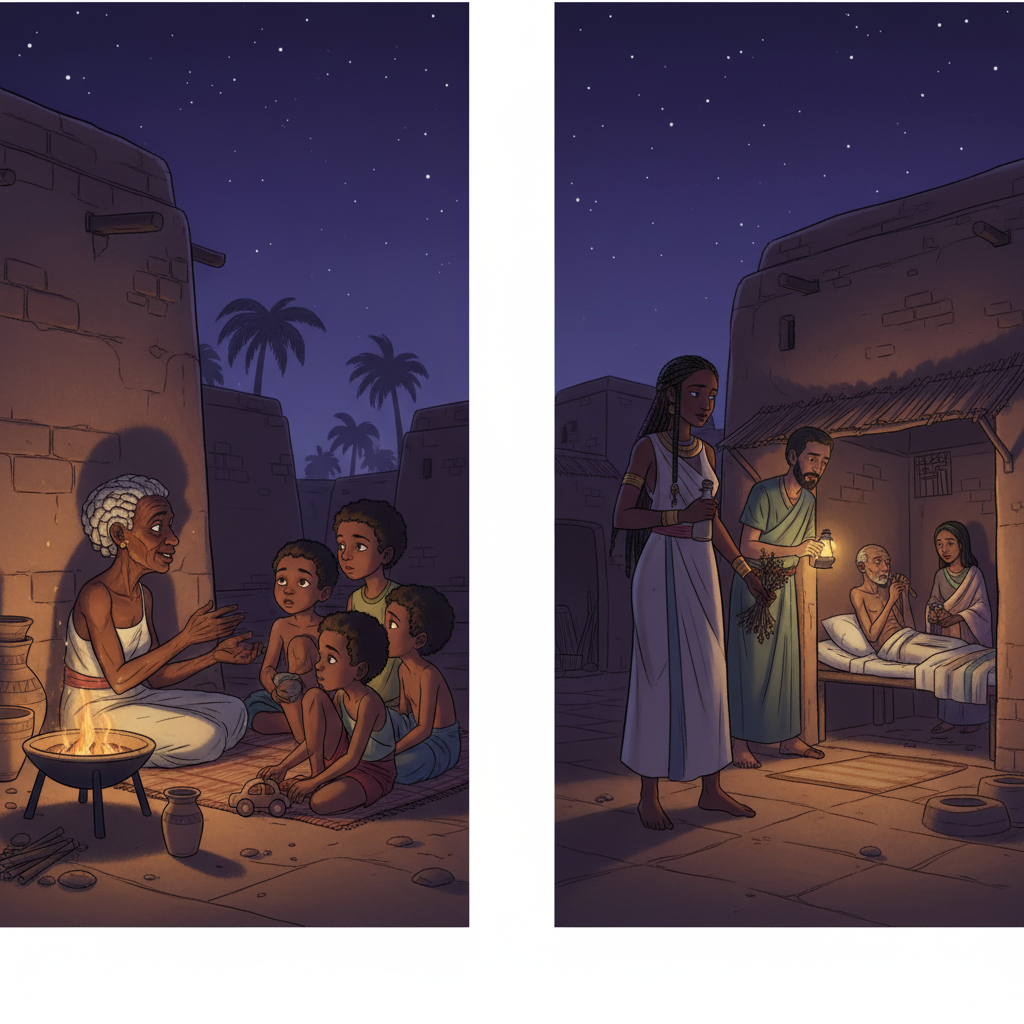
Every person in the village had a role, and every role mattered. Old Djaou, whose dark weathered face was creased with seventy years of Kushite sun, watched over all the children while their parents worked the fields. She could not farm anymore — her knees ached and her back was bent — but her eyes were sharp, her stories were endless, and no child went unsupervised or unloved under her care. She fed their ka with tales of the ancestors while their parents fed their bodies with bread and fish. The healer Senet, a tall woman with deep ebony skin and hands that smelled of crushed herbs, treated anyone who fell ill. She never asked for payment before she worked. If your child had a fever at midnight, Senet came. If your grandfather's cough worsened, Senet brought medicine from her garden. She trusted the circle — and the circle honored her trust. Every family brought Senet grain, oil, and linen throughout the year. Not because she demanded it. Because they understood that if the healer goes hungry, the whole village suffers.
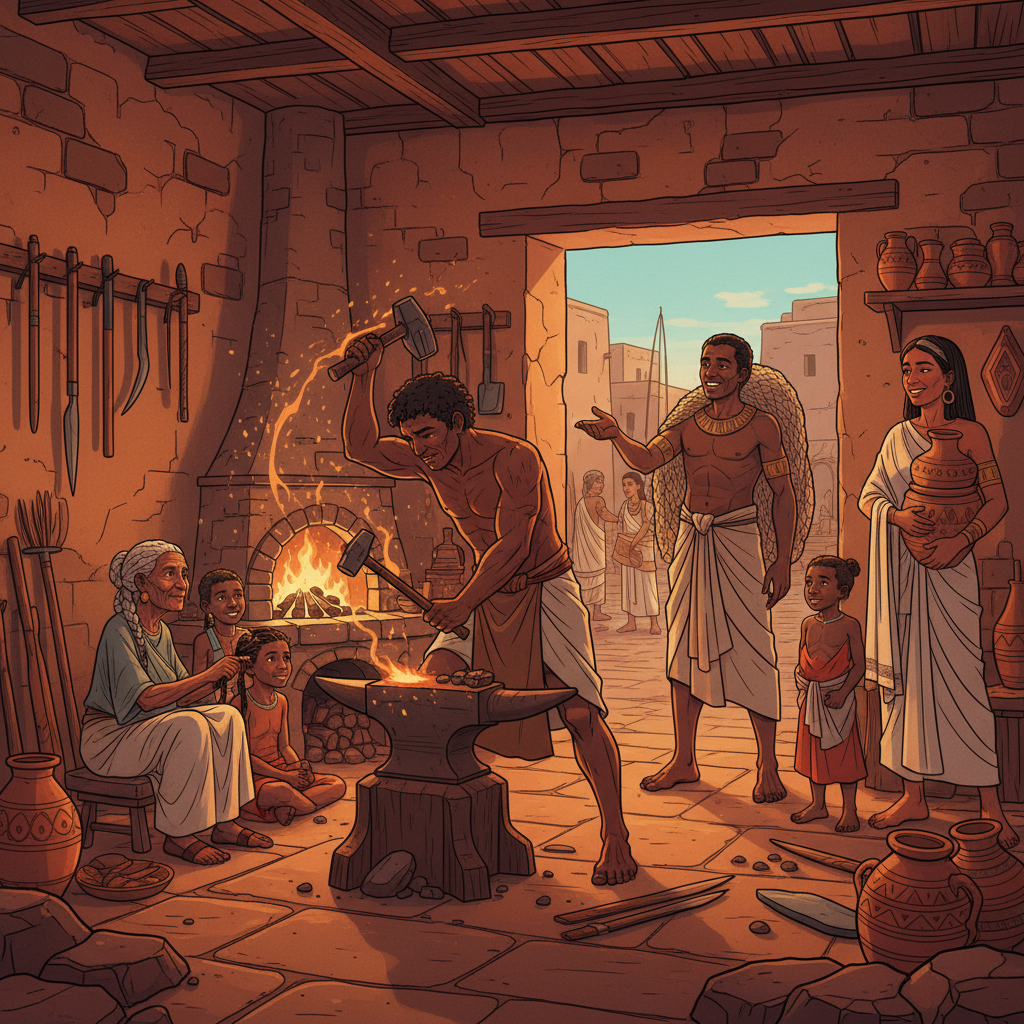
The craftsman Pentu, a broad-shouldered man with rich brown skin scarred from years at the forge, kept every family's tools in working order. He sharpened copper blades, repaired broken hoe handles, and fashioned new chisels when the old ones cracked against stone. The farmers could not grow food without Pentu's tools, and Pentu could not eat without the farmers' harvests. Neither side kept count. Neither side said "you owe me." The balance was understood. There was also Kiya, who wove linen so fine that traders from downriver offered gold for it. And Nebamun, whose fishing nets fed three families during the months when the grain stores ran low. And Takhat, who made pottery jars that held water, beer, grain, and medicine — the vessels that every family needed but no one else knew how to shape. Every person gave what they were skilled at. Every person received what they needed. The circle turned like the sun across the sky of Kemet — constant, reliable, alive.
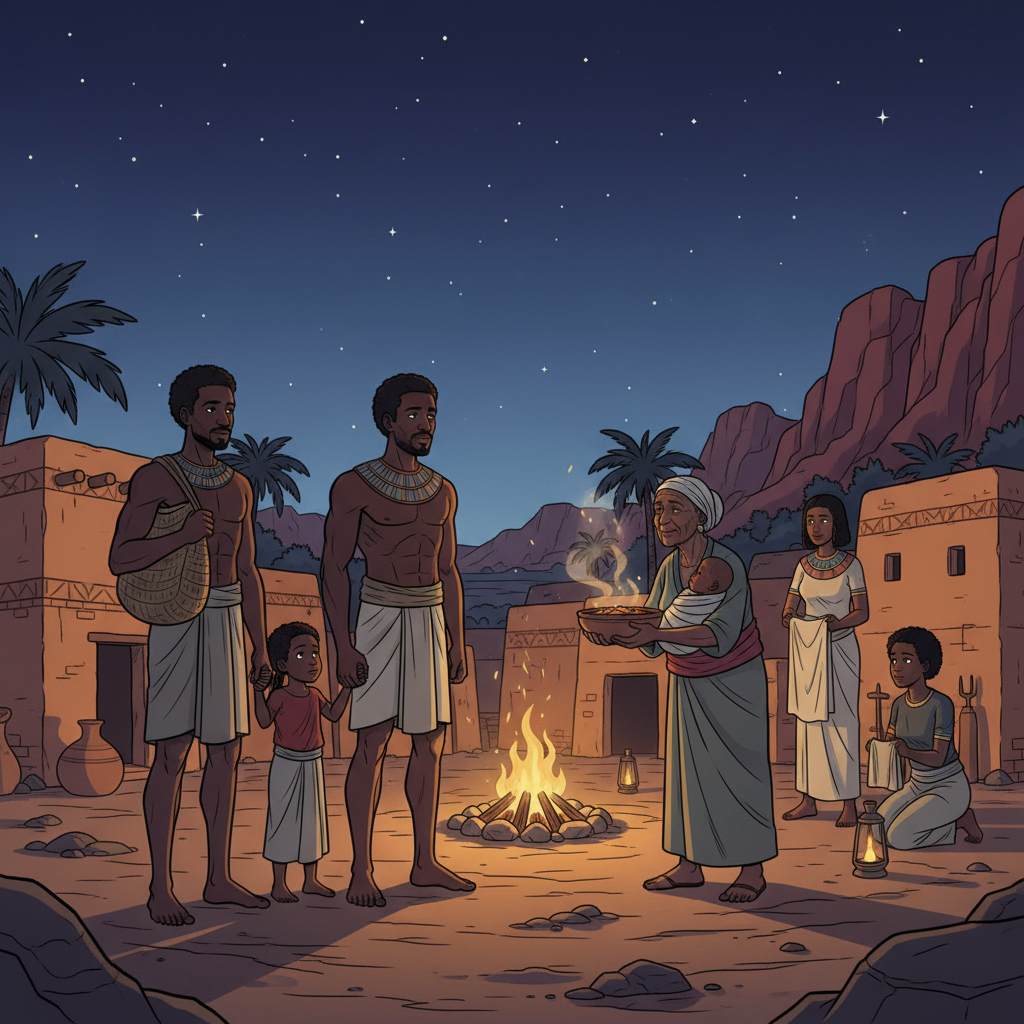
Then, during the season of Peret when the floodwaters pulled back and the planting began, a new family arrived from the north. Bek was a tall, muscular man with skin the color of river clay after rain. His wife Inet had gentle eyes and strong arms from years of grinding grain. Their three children — two boys and a girl — were thin and quiet, with the watchful look of people who had been moving for a long time and were not sure they had stopped. The five families did not ask where Bek came from or why he left. That was his business. What mattered was that he was here now, and here meant inside the circle. Djaou brought stew for the children that first night. Pentu and Nebamun spent three days helping Bek raise the walls of his new home. Senet checked the children for illness. Kiya gave Inet linen to make bedding. This was not generosity in the way a rich person tosses coins to a beggar. This was the circle opening to make room.
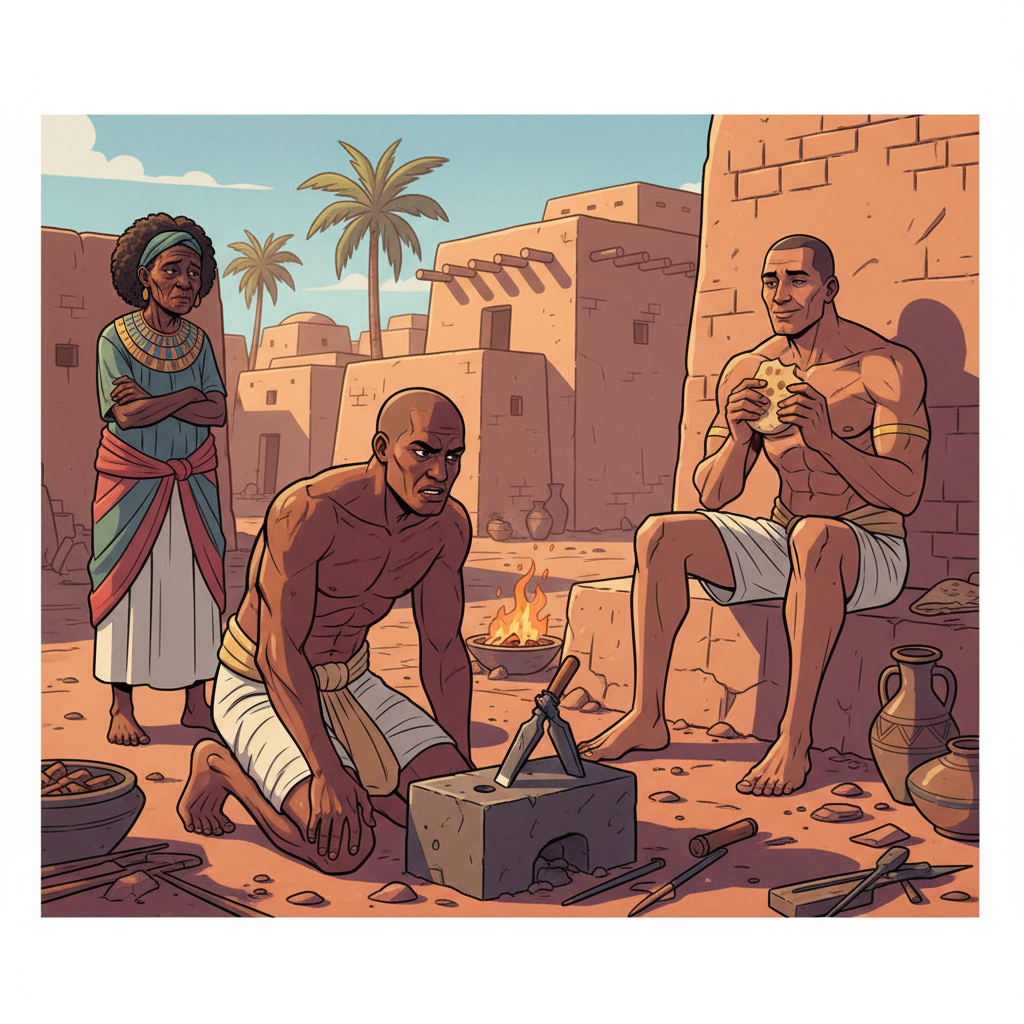
Bek smiled through all of it. He said "thank you" more times than anyone could count. He praised the stew, admired the tools, complimented the linen. His words were warm. But weeks passed, and his hands stayed still. The first sign was small. Djaou, whose old bones ached after watching nine children all day, asked Bek if he could take the children for one afternoon so she could rest. Bek said he had to inspect his new walls for cracks. The walls were fine — Pentu and Nebamun had built them well — but Djaou said nothing. The second sign came when Pentu's best chisel snapped during work. Everyone in the village knew Bek was skilled with his hands. He had been a metalworker in his old city. But Bek did not offer to help. He sat outside his home, eating bread the farmers had given him, and watched Pentu struggle.
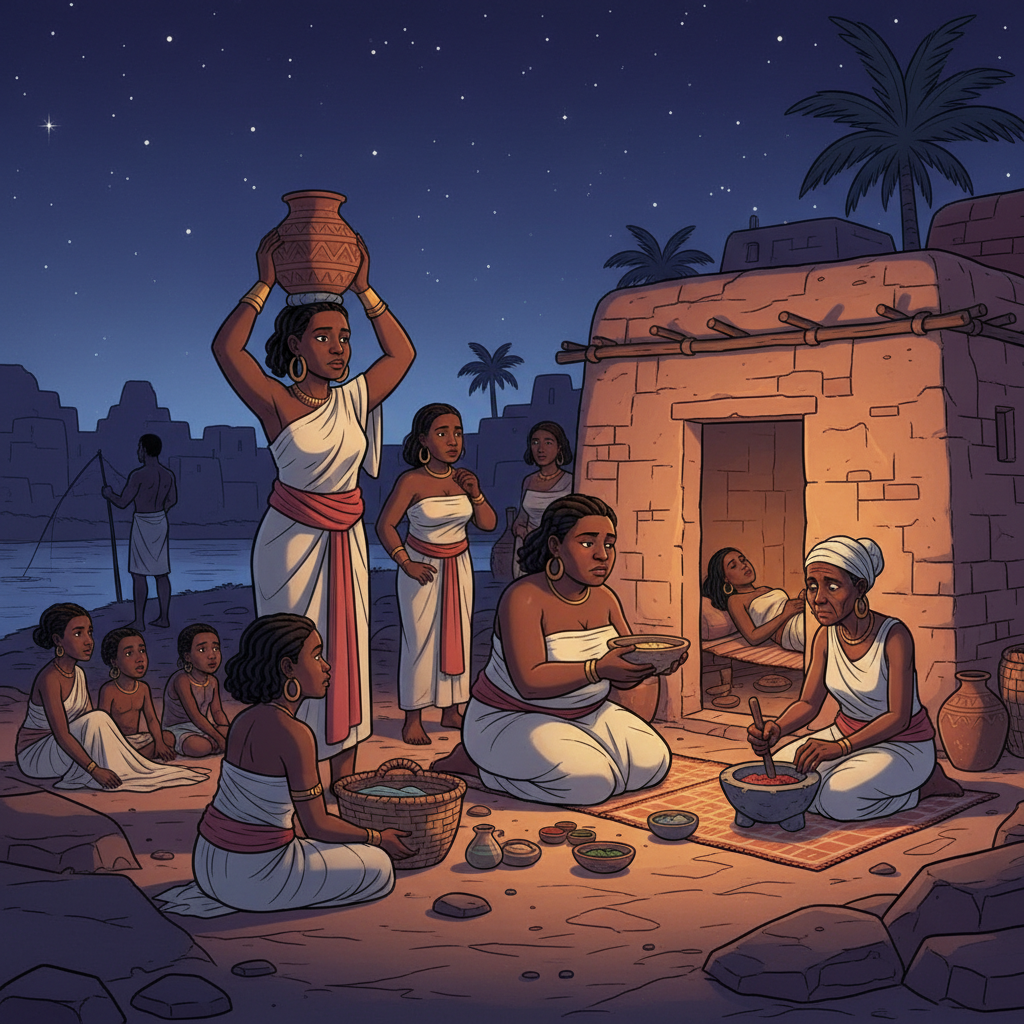
The third sign was the one that hurt. Senet, the healer who had never refused a sick person in her life, fell ill herself. A deep cough settled in her chest during the cold nights of Peret. She could not tend her herb garden. She could not grind medicine. The other families rallied as they always did — Kiya brought broth, Djaou made poultices from dried herbs, Takhat carried fresh water from the river three times a day. But Bek's family brought nothing. Not a bowl of porridge. Not a word of comfort. Inet kept her children inside, and Bek went fishing alone — for himself. The impact was real. Senet's recovery took longer because the circle was stretched thin. While four families covered the work of five, Djaou was watching all the children without rest. Takhat's pottery suffered because she spent her mornings carrying water for Senet instead of working at her kiln. Nebamun fished longer hours to make up for the food that Bek's family consumed but never replenished. One person's refusal to give did not just affect one person. It strained everyone.
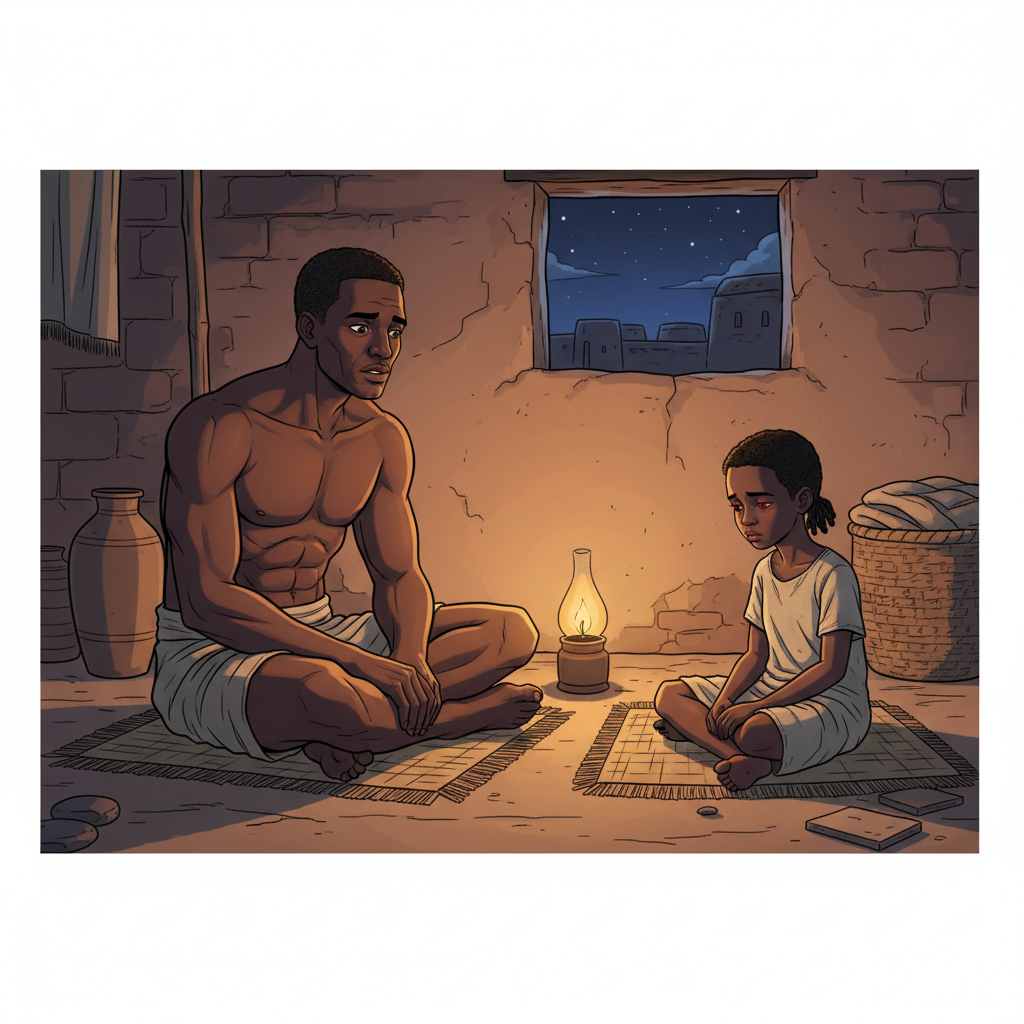
The children felt it too. Bek's daughter, Neferet, played with the village children every day. She ate the food that Djaou prepared for all of them. She wore a linen dress that Kiya had woven. But the other children began to notice. "Your father never helps," a boy named Kha said to her one afternoon. "My mother says your family only takes." Neferet's dark face burned with shame. She did not know what to say because she knew it was true. That night, Neferet asked her father a question that cut deeper than any elder's rebuke. "Baba, why don't we help the other families? They help us." Bek looked at his daughter for a long moment. He opened his mouth, then closed it. He had no answer that would not sound selfish. So he said, "Go to sleep, Neferet." But neither of them slept well that night.
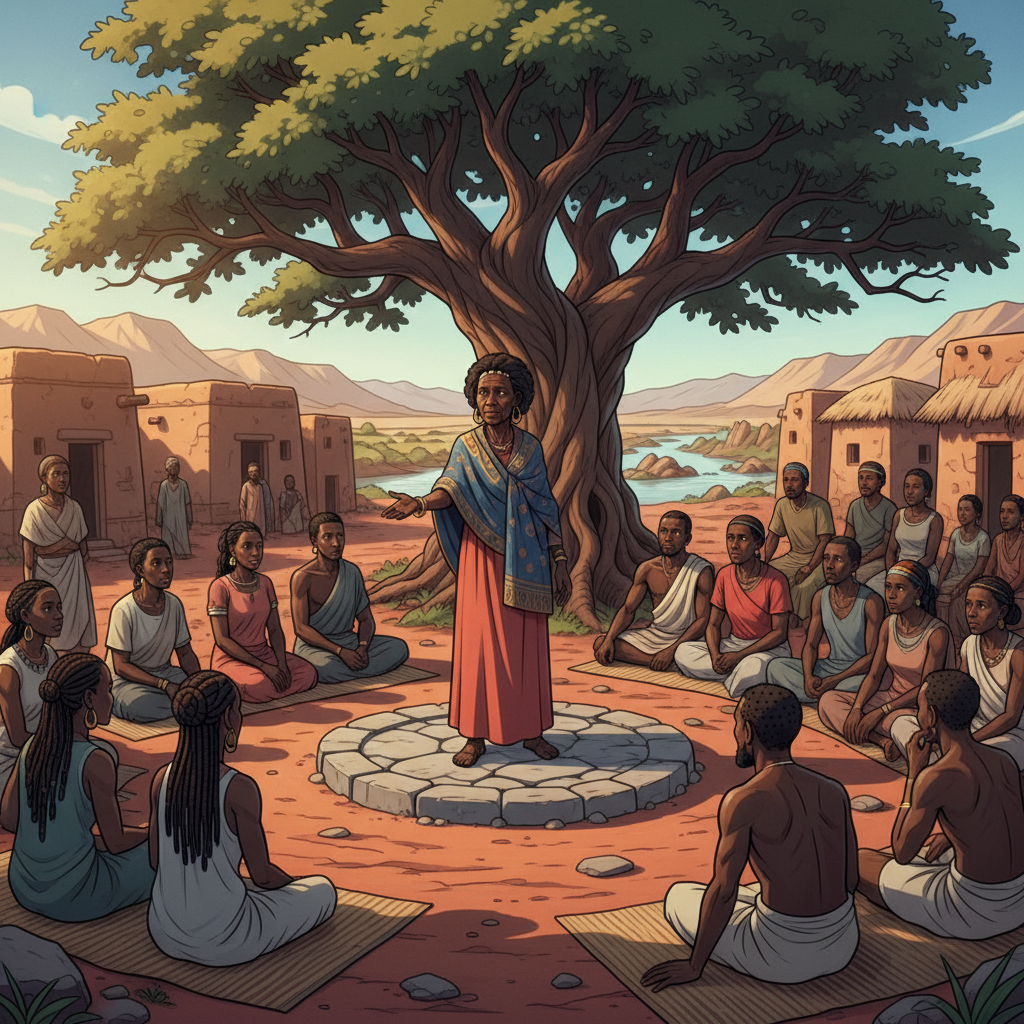
The elders gathered under the old tamarind tree the next morning — the tree where every important village matter was discussed. The five original families were all represented. Old Djaou spoke first, her voice steady despite her weariness. "Bek is living in isfet," she said. "He takes but does not give. I do not say this with anger. I say it because a circle that only flows one way is not a circle. It is a drain. And we are being drained." Nebamun, the fisherman, agreed. "I have fished extra hours every week since Bek arrived. My nets are wearing thin. My own children see me less. I welcomed Bek gladly — but welcome is not the same as forever carrying someone who will not walk." They decided to speak directly to Bek. Not with anger. Not with punishment. But with Ma'at's three questions, the questions that the ancestors used to restore balance in any dispute: What happened? Was balance kept? What must be fixed?
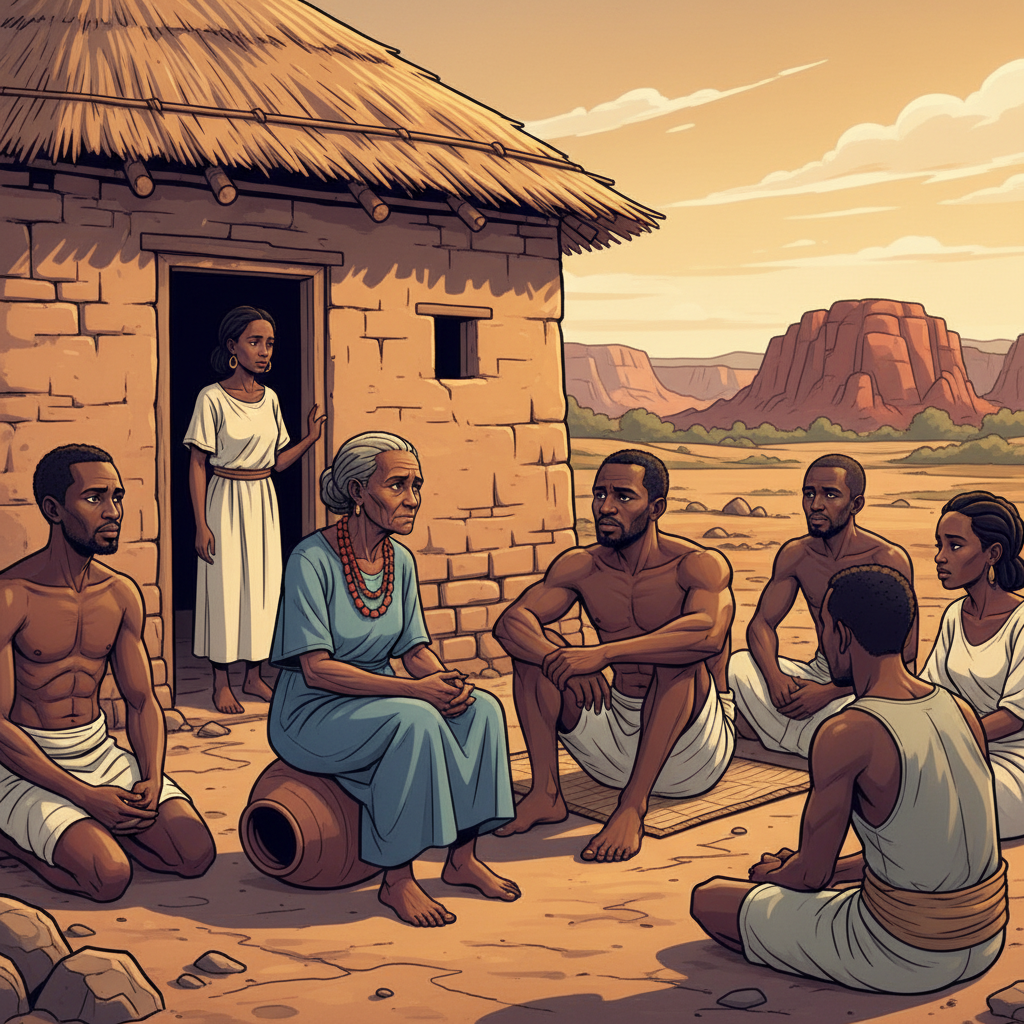
They sat with Bek in front of his home as the sun moved past midday. All five family heads were present. Bek's wife Inet stood in the doorway, listening. Djaou spoke first, her voice gentle but unshaking. "Bek, you have received much from this circle. Food when you arrived hungry. Hands to build your walls. Medicine for your children. Linen for your beds. We gave freely, and we would give again. But a circle requires flow in both directions." She paused and let the silence hold. "When you take without giving, you break the balance that holds us all. Senet is still coughing, and your family did not bring her even a cup of broth. Pentu's chisel broke, and your metalworker hands stayed idle. I asked for one afternoon of rest, and you refused. These are not accusations, Bek. These are facts. And Ma'at asks us to face facts honestly." Bek's deep brown face showed something complicated — not just shame, but something older and heavier. Something carried from far away.
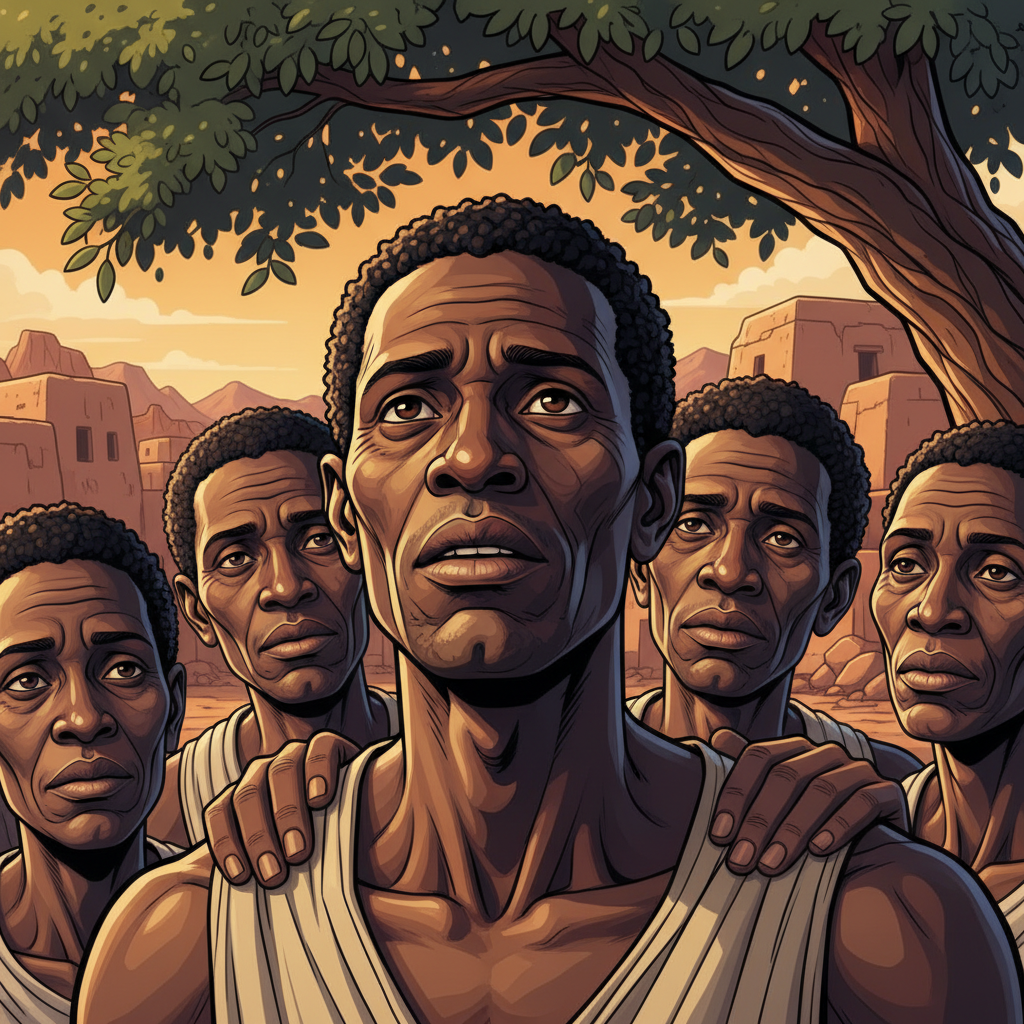
For a long time, Bek said nothing. Inet placed her hand on his shoulder from behind. Finally, he spoke, and his voice was rough. "In the city where I came from, there was no circle." He stared at the ground between his feet. "In Men-nefer, everything cost something. If you needed a healer, you paid in copper or you suffered. If your wall cracked, you hired a builder or it stayed cracked. Neighbors did not help neighbors. They competed with them." He looked up at the faces around him — dark faces, patient faces, faces that were tired but not hateful. "When I was young, I helped a man fix his cart. He never thanked me. When my daughter was sick, I begged a healer for help. He turned us away because I had no copper. I learned that giving gets you nothing. That the only person who will take care of your family is you." His voice cracked. "I brought that lesson here. And I see now that it is the wrong lesson for this place."
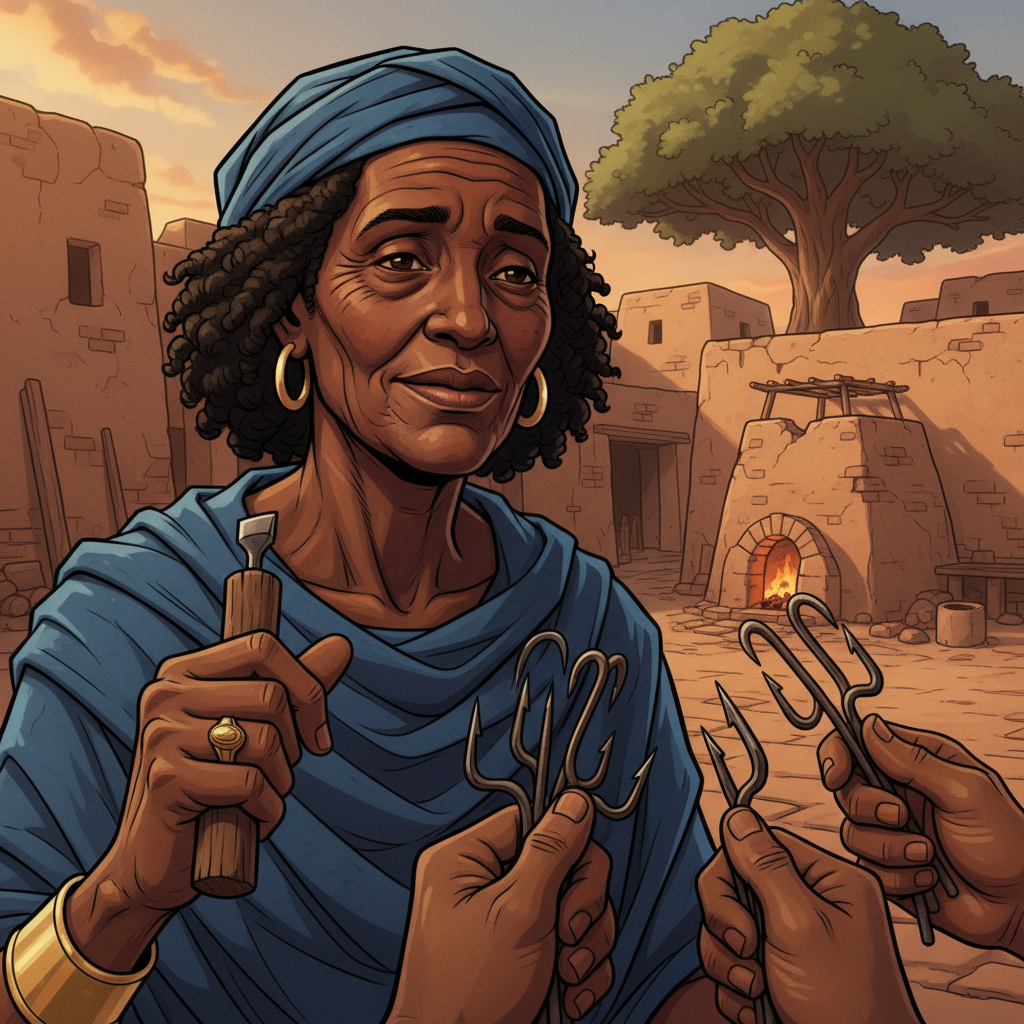
Djaou nodded slowly. She had seen this before — people broken by isfet who carried the brokenness with them like a stone in their chest. "What happened to you in Men-nefer was real," she said. "That pain is real. But pain is not permission to pass the wound forward. You were hurt by people who refused to give. And now you are becoming one of those people. The cycle of isfet does not break itself, Bek. Someone has to choose to break it." Pentu, the craftsman, leaned forward. "We are not asking you to repay a debt. There is no debt. The circle does not keep count. We are asking you to be part of it. Your hands know metal. My chisel is broken. Nebamun's fishhooks are dull. Takhat's kiln needs a new grate. These are not punishments, Bek. These are invitations. The circle is offering you the thing that Men-nefer never did — a place where your skills matter and your family is held."
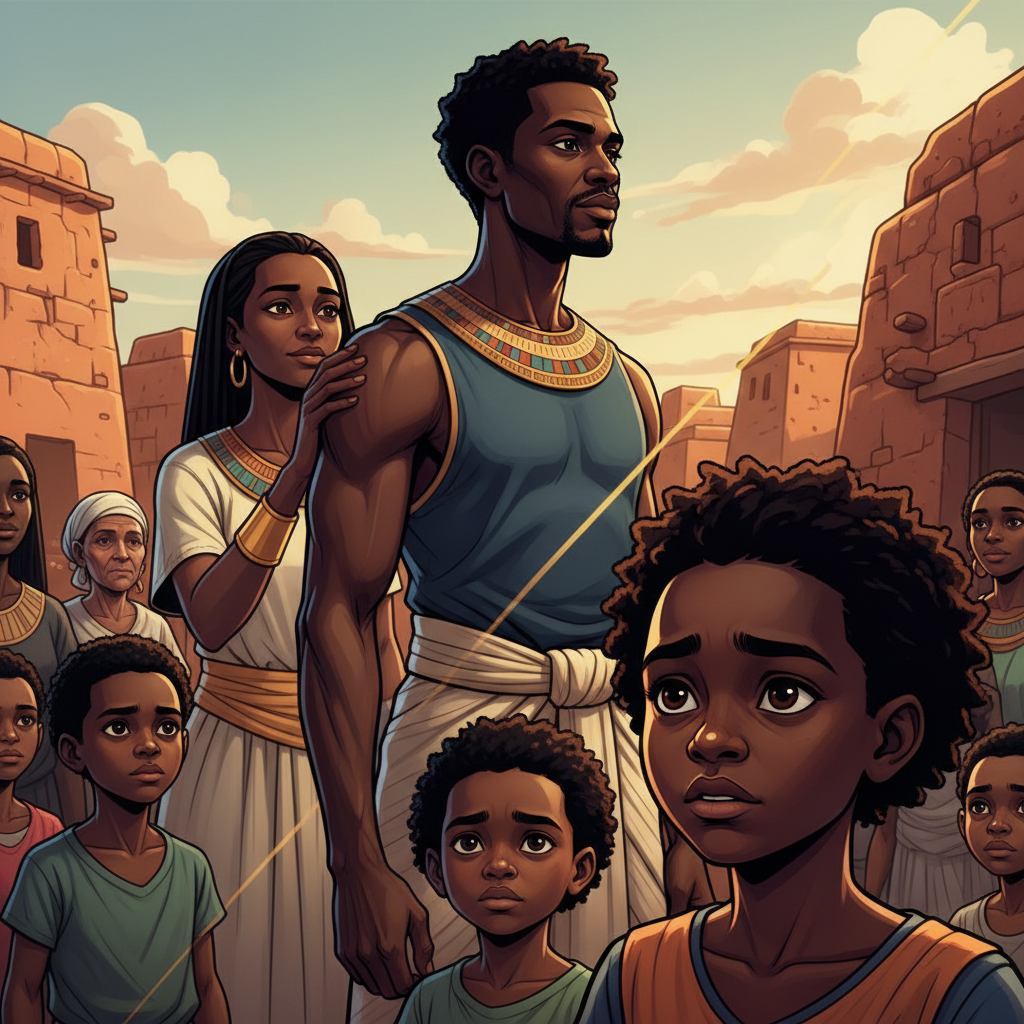
Something shifted behind Bek's eyes. Inet squeezed his shoulder. He looked at his daughter Neferet, who stood at the edge of the gathering with the other village children, watching her father with wide dark eyes. He thought about her question from the night before: why don't we help? And he realized the answer he could not give her was the answer he could no longer accept himself. Fear. He had been afraid. Afraid that if he gave, he would be taken advantage of. Afraid that generosity was weakness. Afraid that the circle would collapse the way everything in Men-nefer had collapsed, and his family would be left with nothing. But sitting here, looking at the faces of people who had fed his children and built his home and treated his family's fevers, Bek understood something his years in the city had beaten out of him: obligation is not a trap. It is the thread that holds people together. When everyone gives, no one goes without. When one person stops giving, the thread frays. He had been fraying the thread. He stood up. "Tell me what you need. I will begin today."
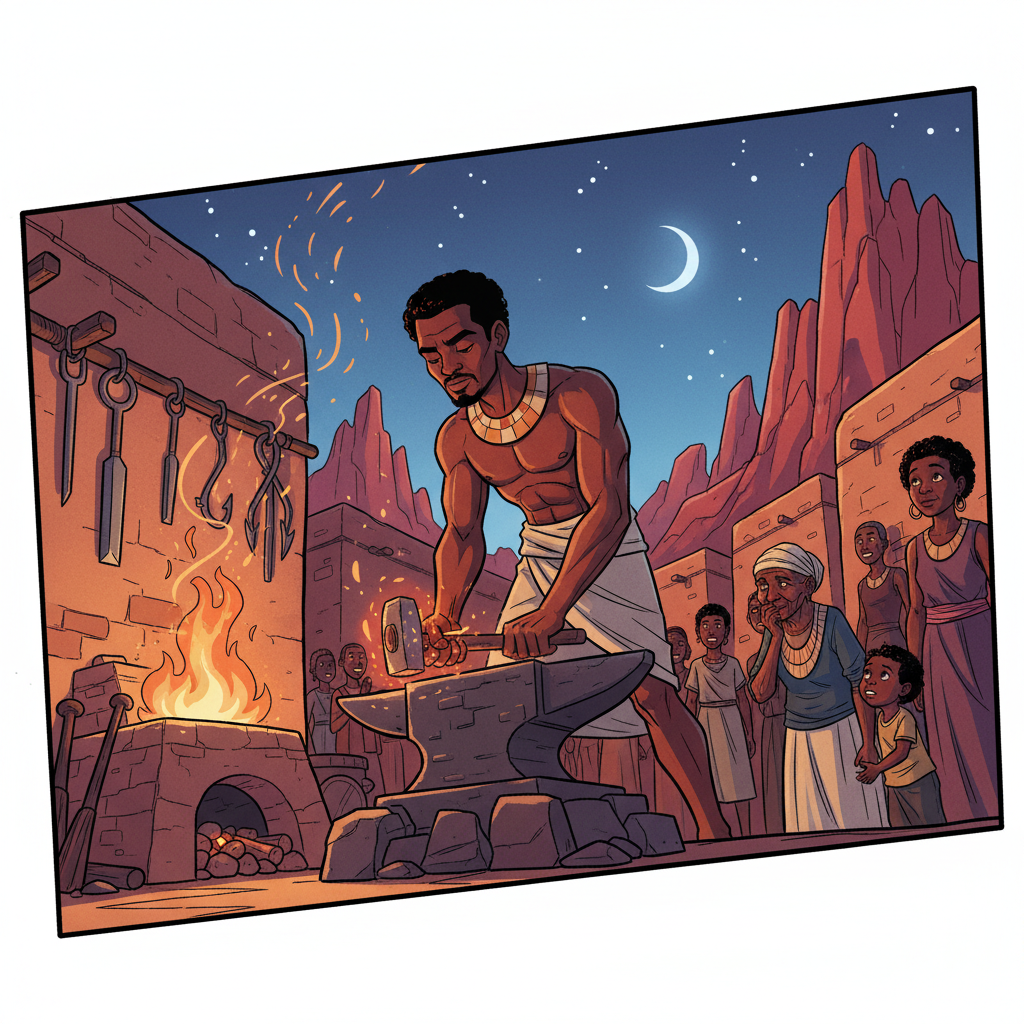
That evening, Bek built a fire outside Pentu's workshop and began forging. His hands remembered the work even though his heart had tried to forget. He repaired Pentu's chisel, sharpened Nebamun's fishhooks until they gleamed, and fashioned a new copper grate for Takhat's kiln. The sound of his hammer rang through the village as the stars appeared over Kush, and people came out of their homes to watch. Not to gloat. Not to say "finally." But because the sound of someone joining the circle is a sound that every community recognizes and celebrates. The next morning, Bek woke before dawn. He walked to Djaou's home and told her to rest. He watched all nine children that day — told them stories about the great forges of Men-nefer, showed them how to shape soft copper into small animal figures, and made Neferet laugh harder than she had laughed in months. When Djaou woke from her first full rest in weeks, she found a small copper ankh on her doorstep. Bek had made it during the night. It was not payment. It was gratitude, finally given form.
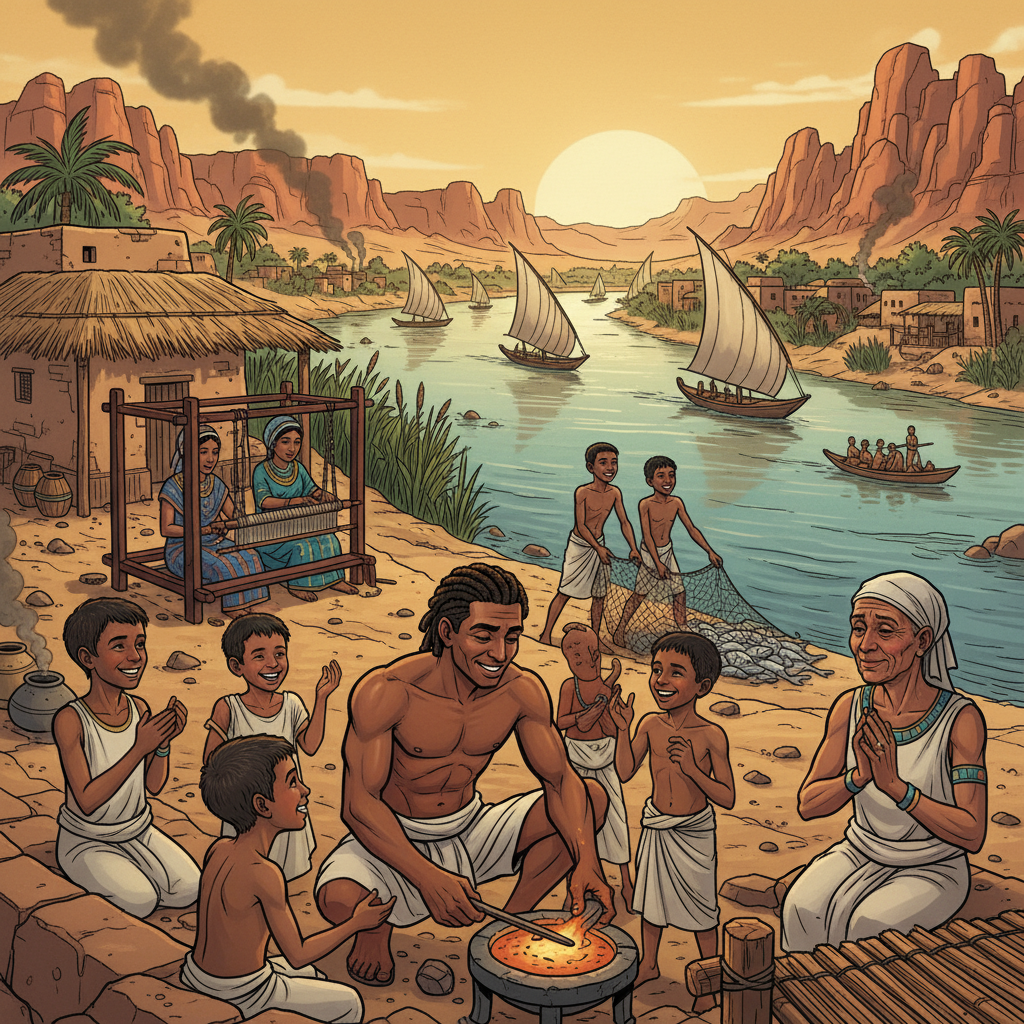
Over the following weeks, the circle repaired itself — not all at once, but steadily, the way the Nile refills after the dry season. Bek began teaching the village children basic metalwork, a skill none of the other families possessed. Inet joined Kiya at the loom and learned to weave, adding another pair of hands to the labor that clothed the village. Even Bek's sons, who had been quiet and withdrawn since arriving, began helping Nebamun haul in the fishing nets each morning. The circle did not just return to what it was. It grew stronger, because it now included skills and hands it had never had before. This is how villages across Kemet and Kush survived for thousands of years. Not through money. Not through contracts. Through circles of mutual obligation where every person's skill fed another person's need. The farmer fed the craftsman. The craftsman equipped the farmer. The healer treated everyone. Everyone sustained the healer. The potter made vessels for the whole community. The fisherman shared the river's bounty. No one was above the circle. No one was outside it. This was not a primitive way of living. It was one of the most sophisticated systems of community ever created — and it built civilizations that lasted three thousand years.
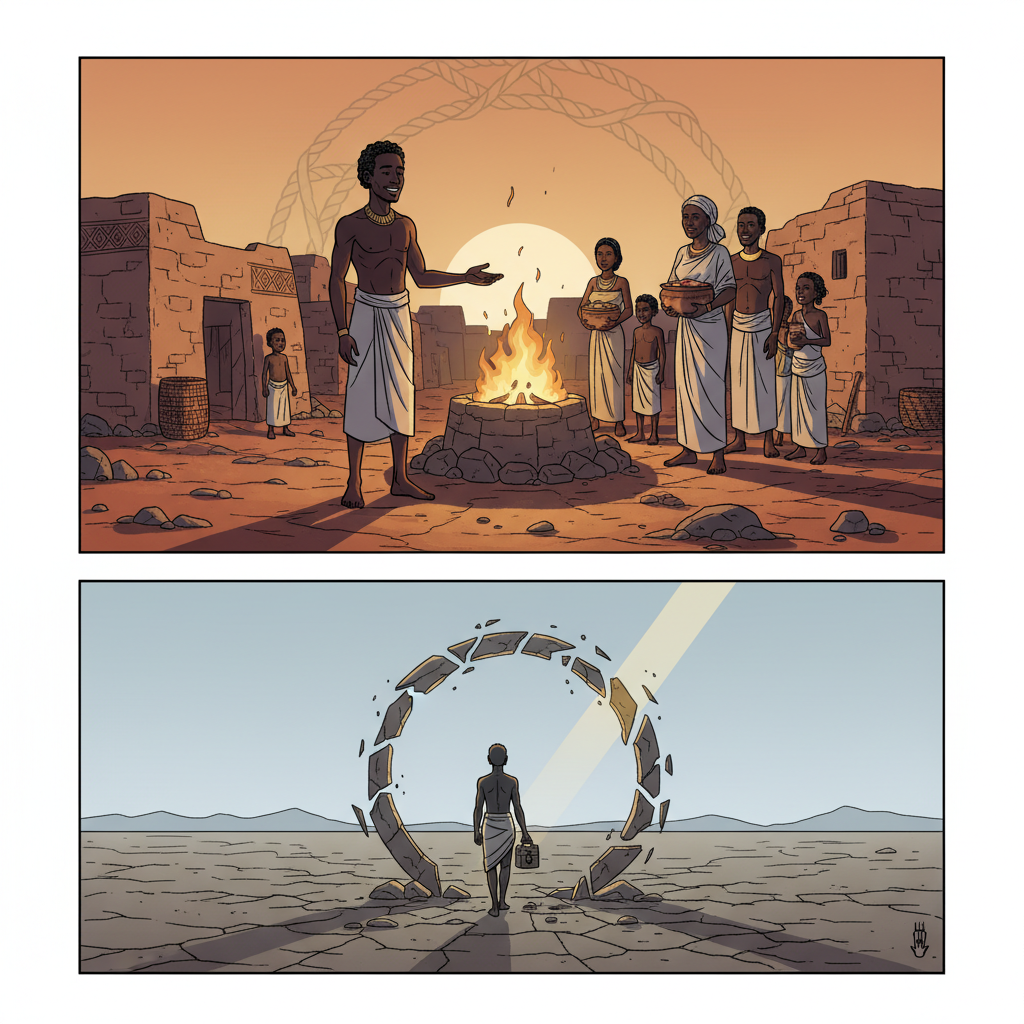
The circle held that season, and for many seasons after. Bek became one of its strongest links — the man who could fix what no one else could fix, whose forge fire burned late into the night whenever a family needed something made or mended. He never again confused receiving help with weakness, or giving help with losing. And when another new family arrived the following year, it was Bek who brought them food on their first night. It was Bek who helped raise their walls. It was Bek who said to them, quietly, "This village works because everyone gives. You will receive much here. When you are ready, give back. That is all we ask." The circle holds today, too — in every neighborhood where people check on each other, in every school where students help classmates who struggle, in every family where chores are shared and no one is left to carry the weight alone. And the circle breaks today, too — when people take without giving, when communities become collections of strangers, when someone decides that their comfort matters more than their duty to others. Ma'at is not an ancient idea. It is a living choice. The ancestors understood that no person's ka thrives alone. We rise together, or we fall apart. That was true by the Second Cataract three thousand years ago. It is true wherever you are reading this right now.