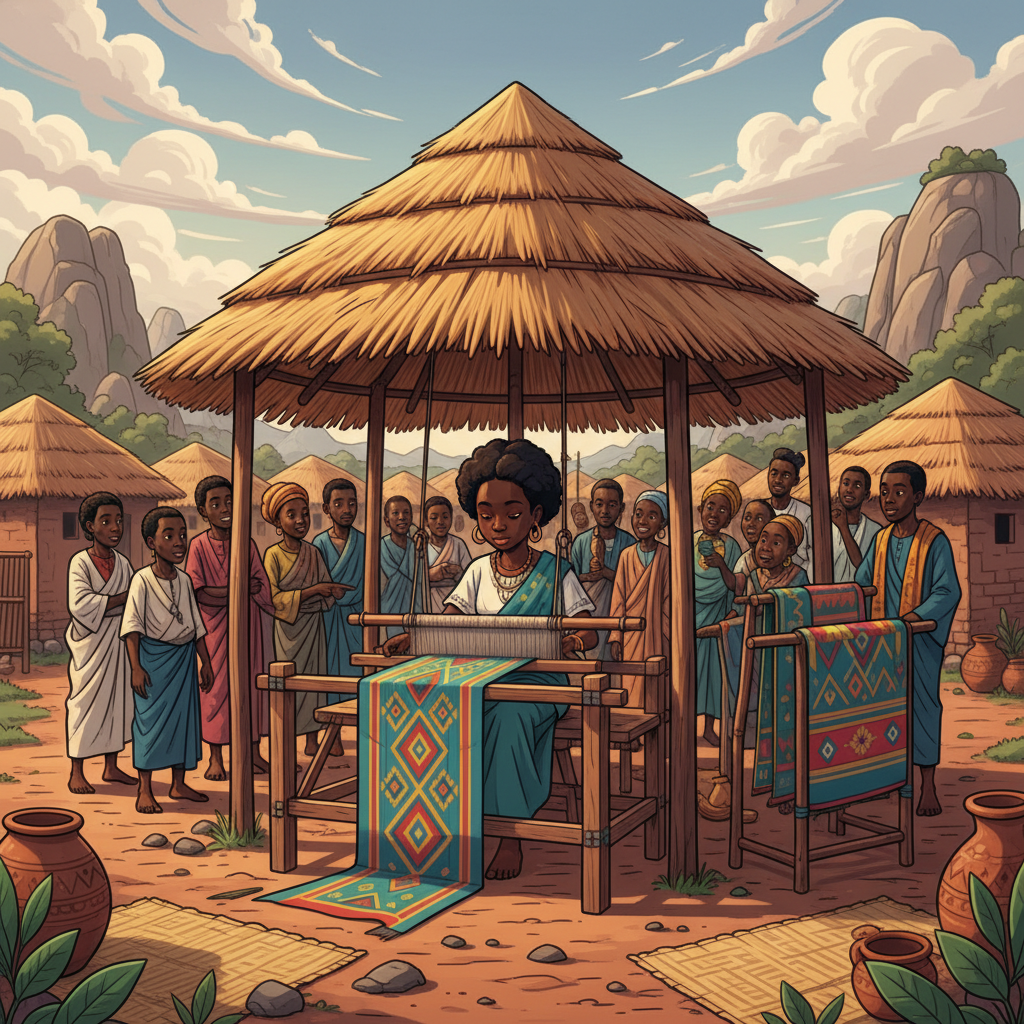
Omolara’s fingers danced across the loom, a blur of motion as she worked the heddles and shuttle. Her small compound in the heart of Abeokuta buzzed with the gentle rhythm of her weaving. Even at thirteen, Omolara was known for her exceptional skill. She made aso-oke, the beautiful hand-woven cloth of the Yoruba people, with patterns so intricate they seemed to whisper ancient secrets. Each thread lay perfectly, each color flowed into the next without a single flaw. Visitors from distant villages would marvel at her precision, admiring the vibrant geometric designs and the smooth, even texture of her fabric. Omolara took immense pride in her work, knowing that her cloth was a testament to her dedication and talent.
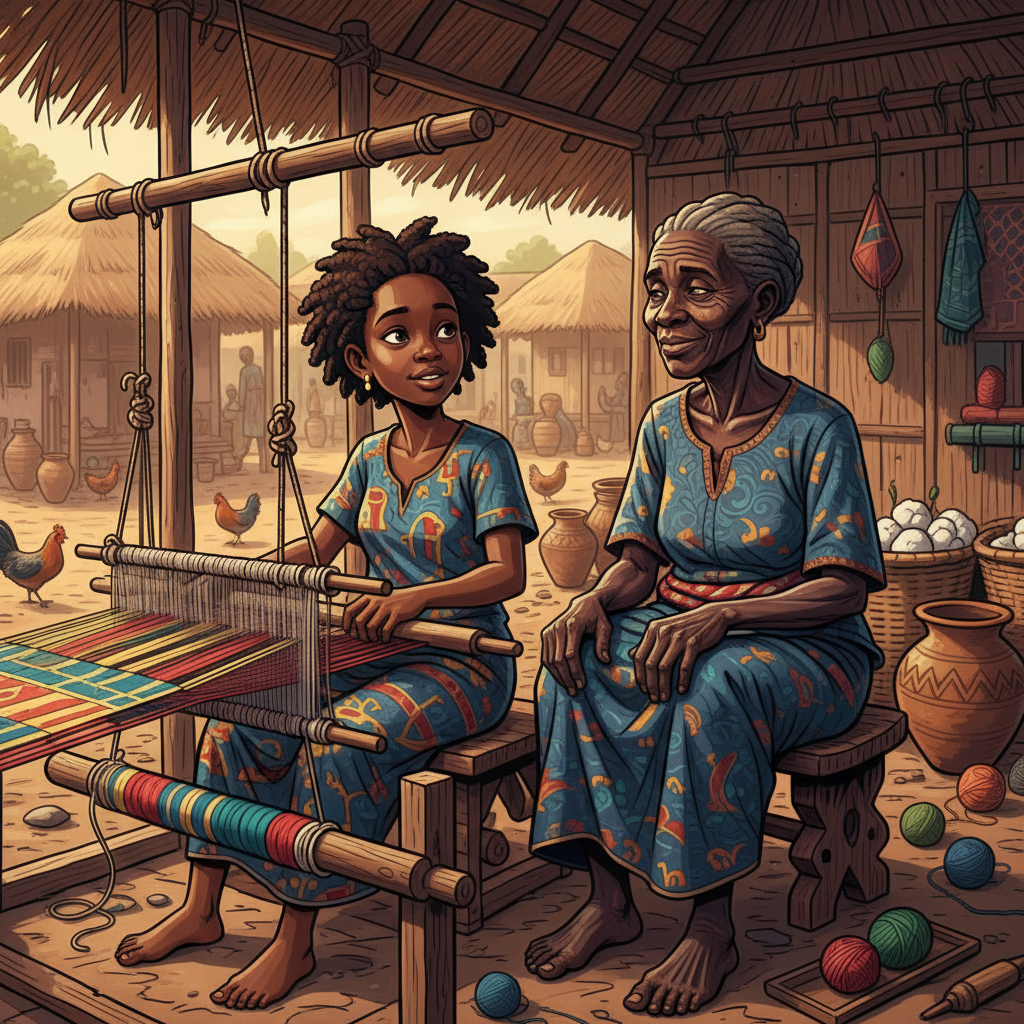
Her grandmother, Iya Abosede, a woman whose skin held the deep wisdom of many seasons, often sat beside her. Iya Abosede’s own hands, gnarled and strong, had woven countless cloths in her younger days. She would watch Omolara with a serene expression, her eyes, though clouded by age, missing nothing. Omolara would sometimes glance at her grandmother, expecting a nod of approval, a word of praise for her latest masterpiece. But Iya Abosede would simply hum a soft, ancient tune, her gaze fixed on the threads as they intertwined, forming the visible tapestry. Her silence was not disapproval, but something else entirely, something Omolara could not quite decipher.
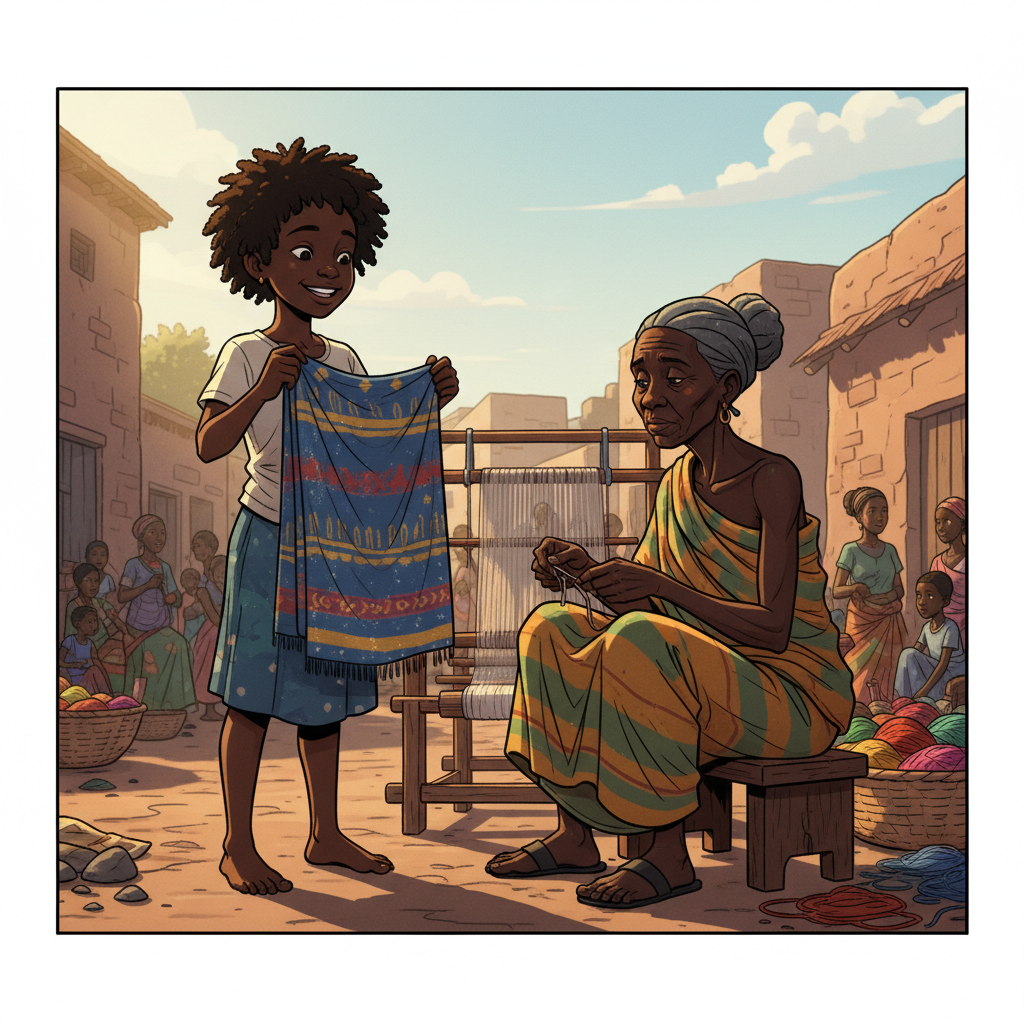
One sun-drenched afternoon, Omolara finished a particularly complex piece: a rich blue cloth shot through with threads of gold and crimson, destined for a chieftain’s festival robe. She carefully cut it from the loom, holding it up for her grandmother to see. “Iya, look,” she said, her voice brimming with quiet triumph. “Is it not perfect? The lines are straight, the colors sing, and not a single thread is out of place.” Iya Abosede took the cloth, her fingers tracing the patterns, feeling its weight and drape. Omolara waited, her heart a hopeful drum against her ribs. She was so certain this time, her grandmother would finally offer the praise she longed to hear.
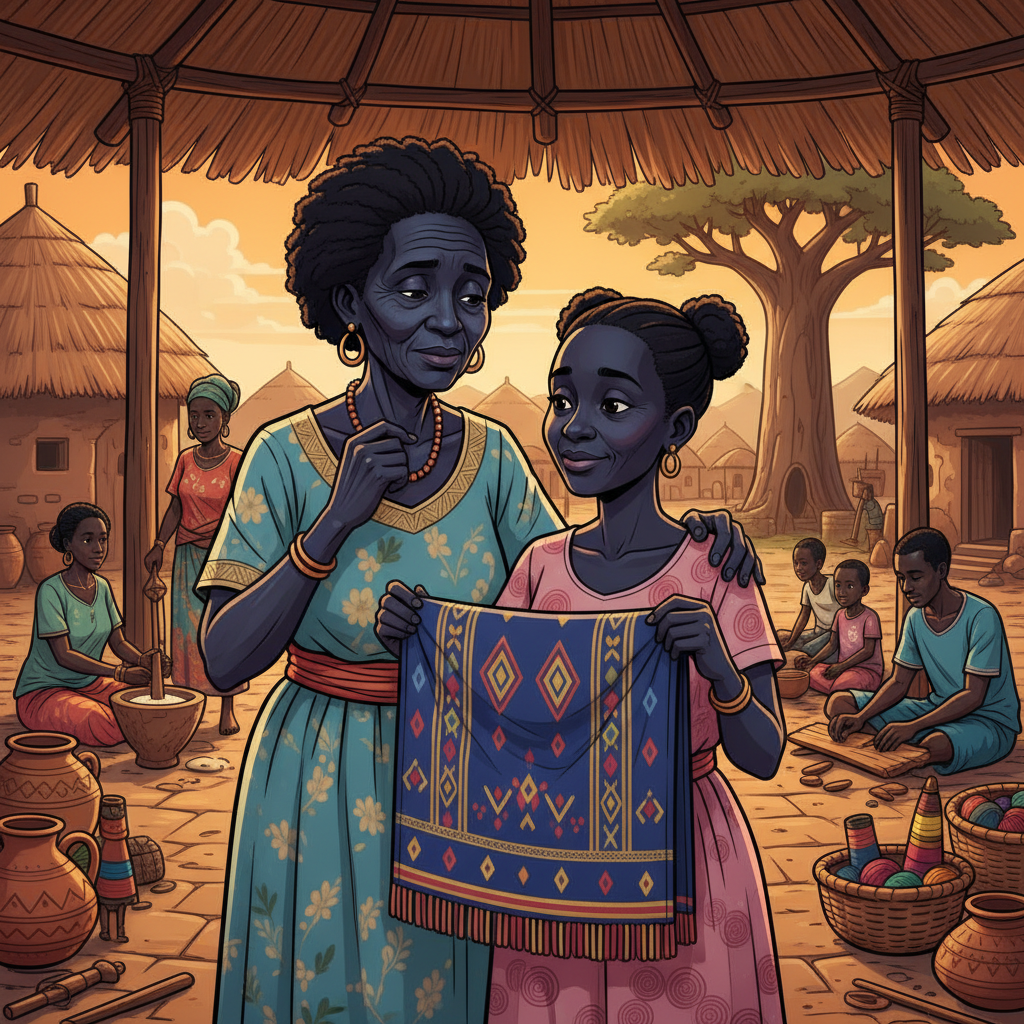
Iya Abosede nodded slowly, her expression thoughtful. “It is beautiful, Omolara. Truly, your hands are blessed with skill. The threads you have chosen, the patterns you have created, they are a joy to behold.” Omolara felt a warmth spread through her, a rare smile gracing her lips. But then, Iya Abosede’s gaze sharpened, moving beyond the visible surface of the cloth. “Yet,” she continued, her voice soft but firm, “there is no ase.” Omolara’s smile faltered. “Ase?” she repeated, confusion clouding her eyes. “What do you mean, Iya? It is strong, it will last for many years, it is beautiful to wear.”
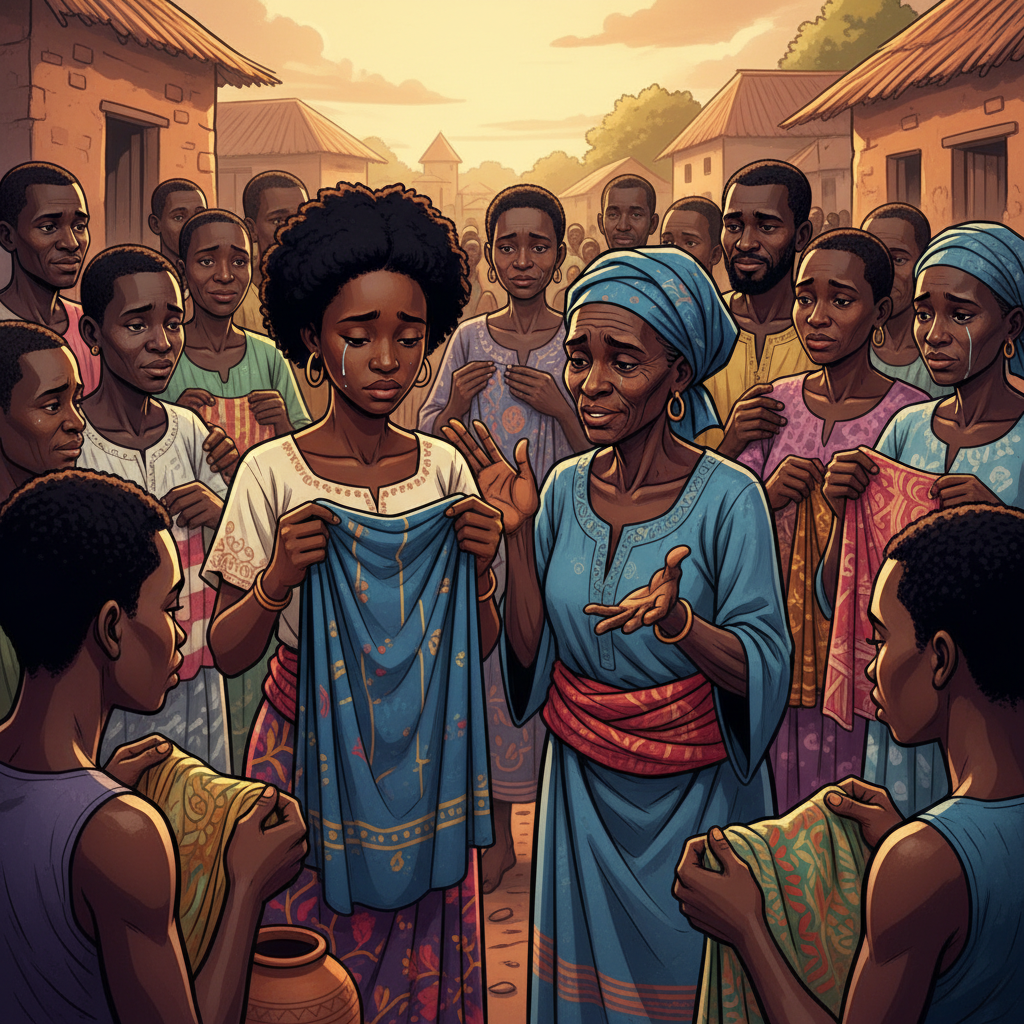
Iya Abosede gently shook her head. “Ase is not merely strength of fiber, nor is it the beauty of visible patterns. Ase is the power, the spiritual essence, the life force that makes things happen, that makes things truly *be*. Your cloth, Omolara, is like a beautiful shell without the spirit inside. It is perfect to the eye, yes, but it does not speak. It does not carry the whispers of the ancestors, nor the hopes of those who will wear it. It lacks the hidden heart.” Omolara looked at the cloth in her hands, then at her grandmother’s knowing face. The joy of her accomplishment vanished, replaced by a deep sense of perplexity.
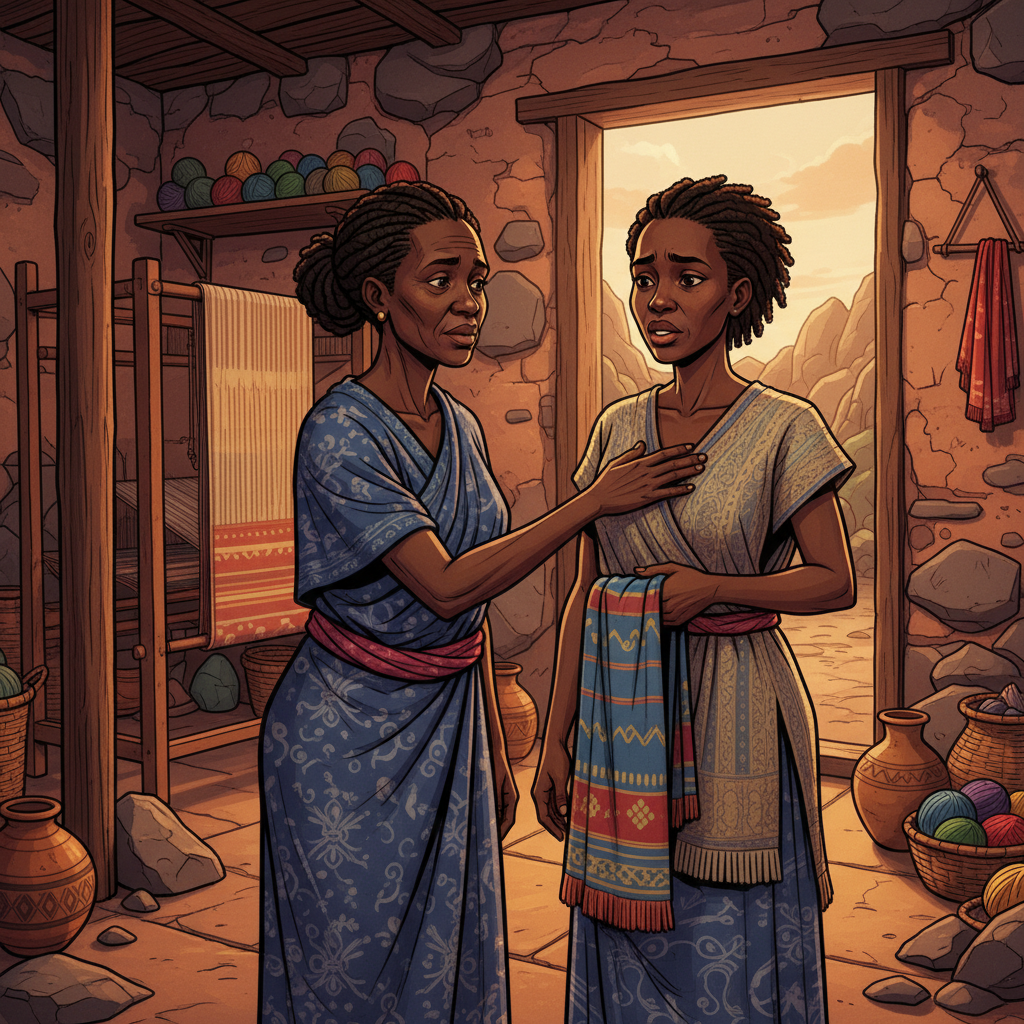
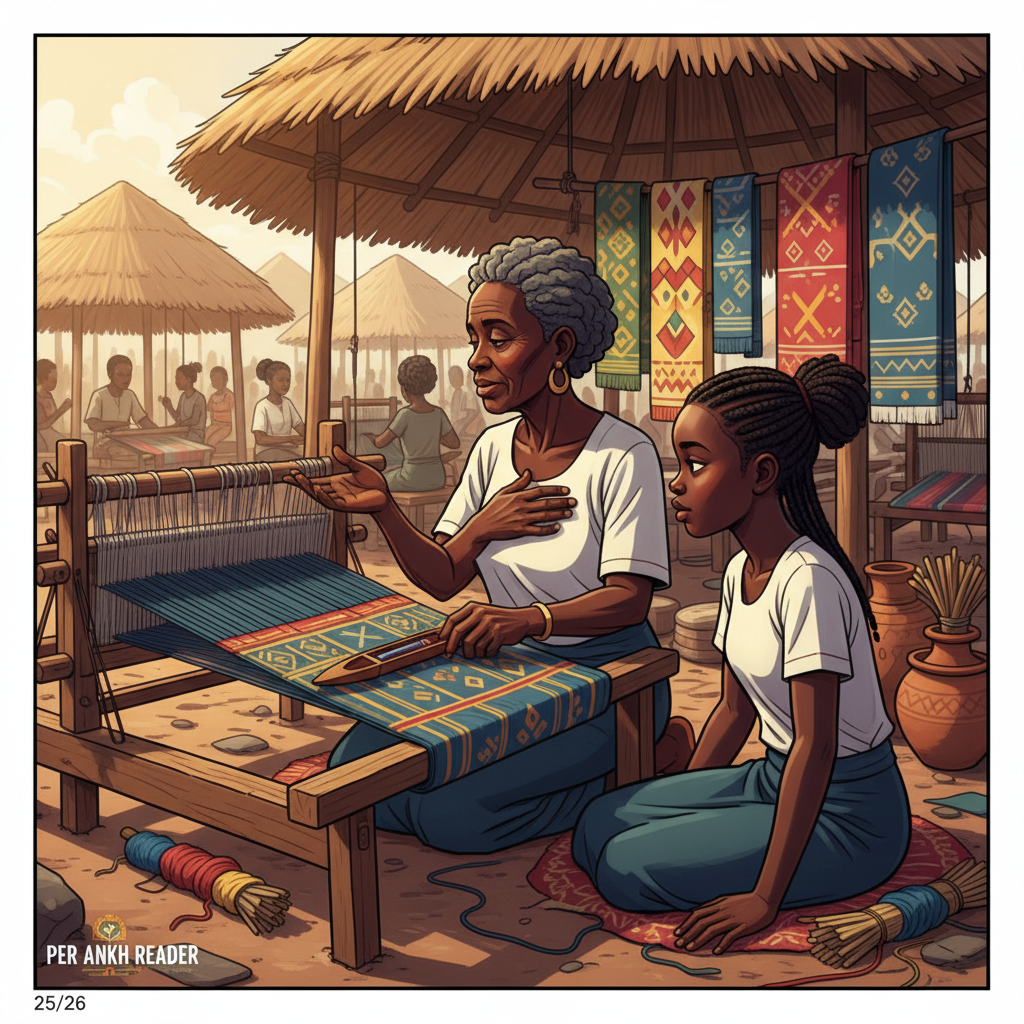
“But Iya,” Omolara began, “I measure every thread. I count every pick. I choose the dyes with such care. What more could I possibly put into the cloth that is not already there?” Iya Abosede reached out and gently touched Omolara’s chest, right over her heart. “The thread you see, my child, is only half. The true cloth is woven not just with cotton and silk, but with intention, with feeling, with breath. The prayer woven into the warp is what makes cloth speak. That is the hidden part, the part that gives it ase, the part that turns mere fabric into a vessel of spirit.”
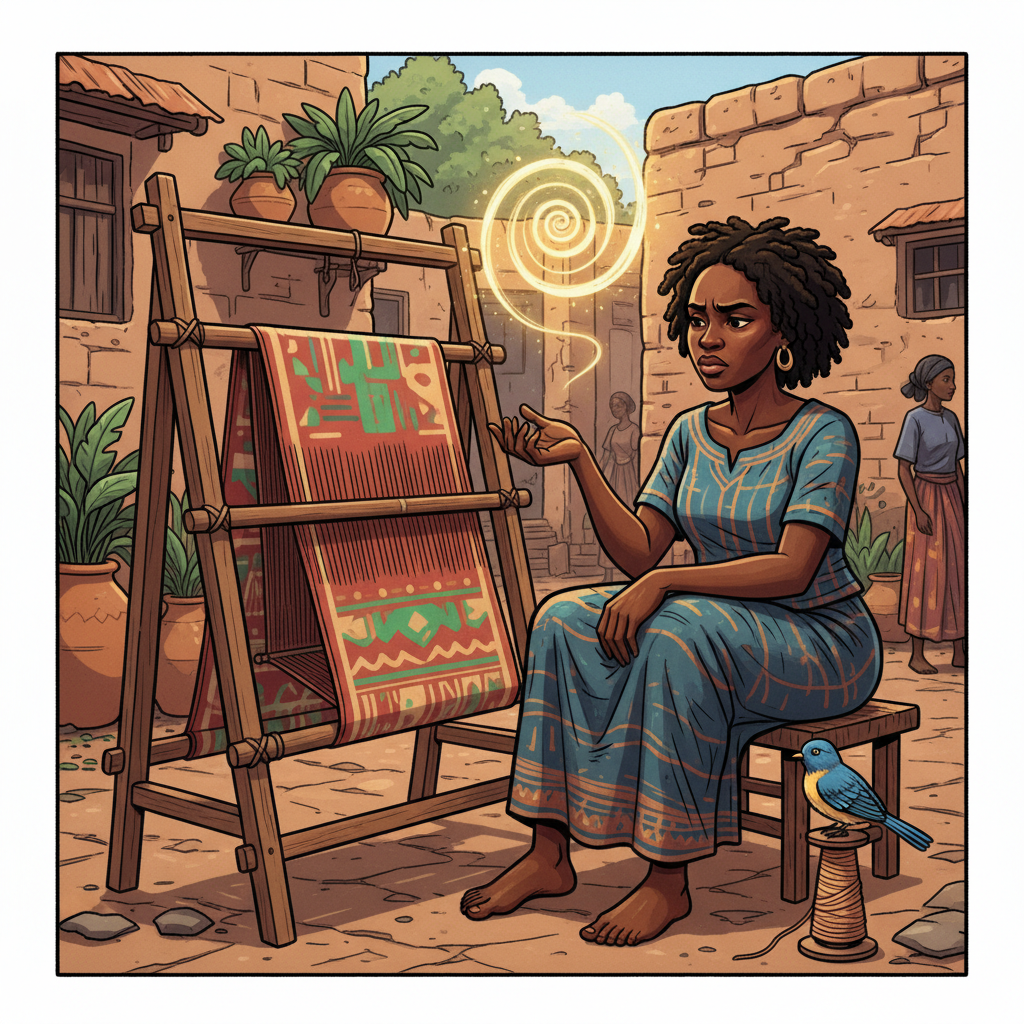
Omolara’s brow furrowed. She understood skill, she understood precision, she understood the visible world of patterns and colors. But prayer woven into a warp? How could something invisible, something felt only in the heart, become part of a tangible object? It seemed impossible. She spent the rest of the day in quiet contemplation, her loom silent. The idea of a hidden prayer, a hidden intention, began to circle in her mind like a shy bird. She had always focused on what her eyes could see, what her hands could manipulate. Now, her grandmother was asking her to weave with something beyond sight and touch.
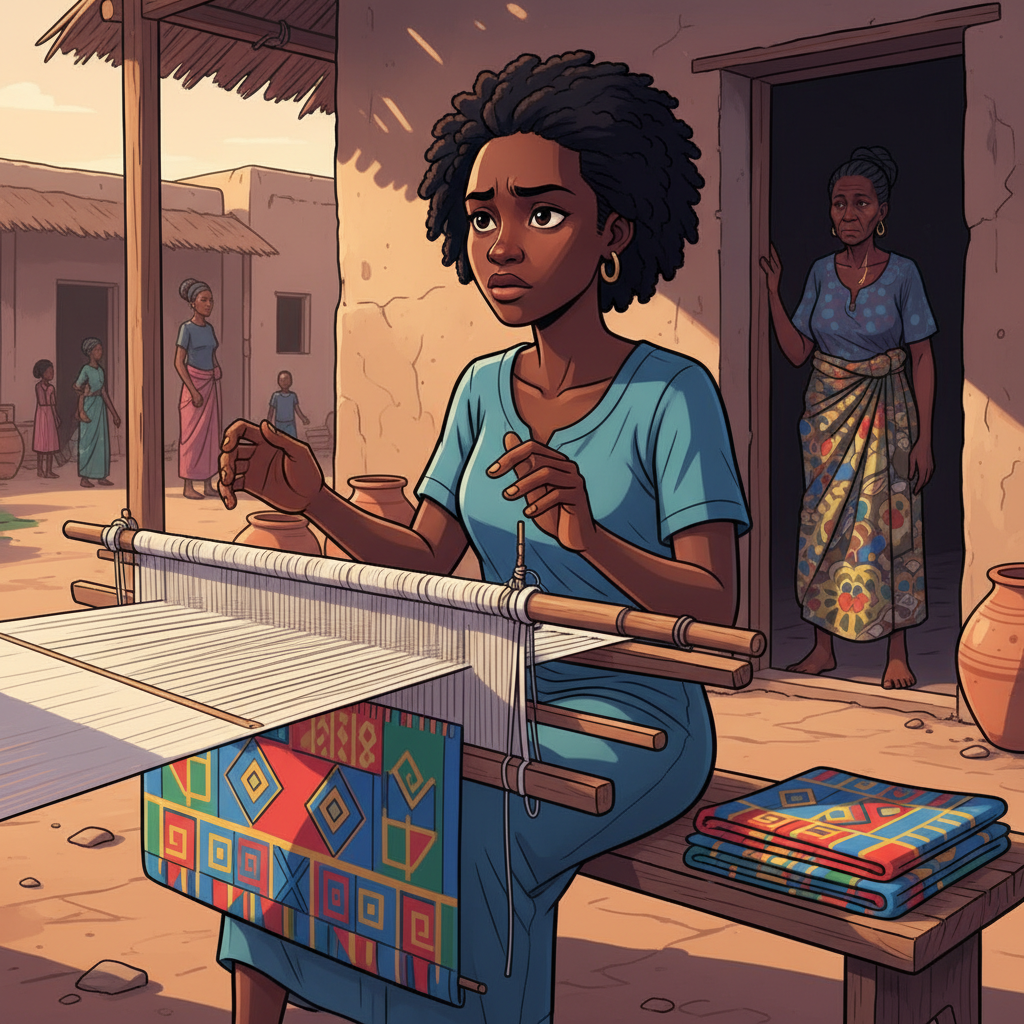
For days, Omolara tried to understand. She sat at her loom, but her hands felt hesitant, unsure. She looked at the threads, seeing only their visible beauty, unable to grasp the hidden element her grandmother spoke of. She tried to think of prayers as she wove, but they felt separate, like words floating above the loom, not sinking into the warp and weft. She created several more cloths, each technically perfect, each still lacking the mysterious ase. Frustration began to prickle at her. Her grandmother’s words were a riddle she could not solve, a shadow over her once bright confidence.
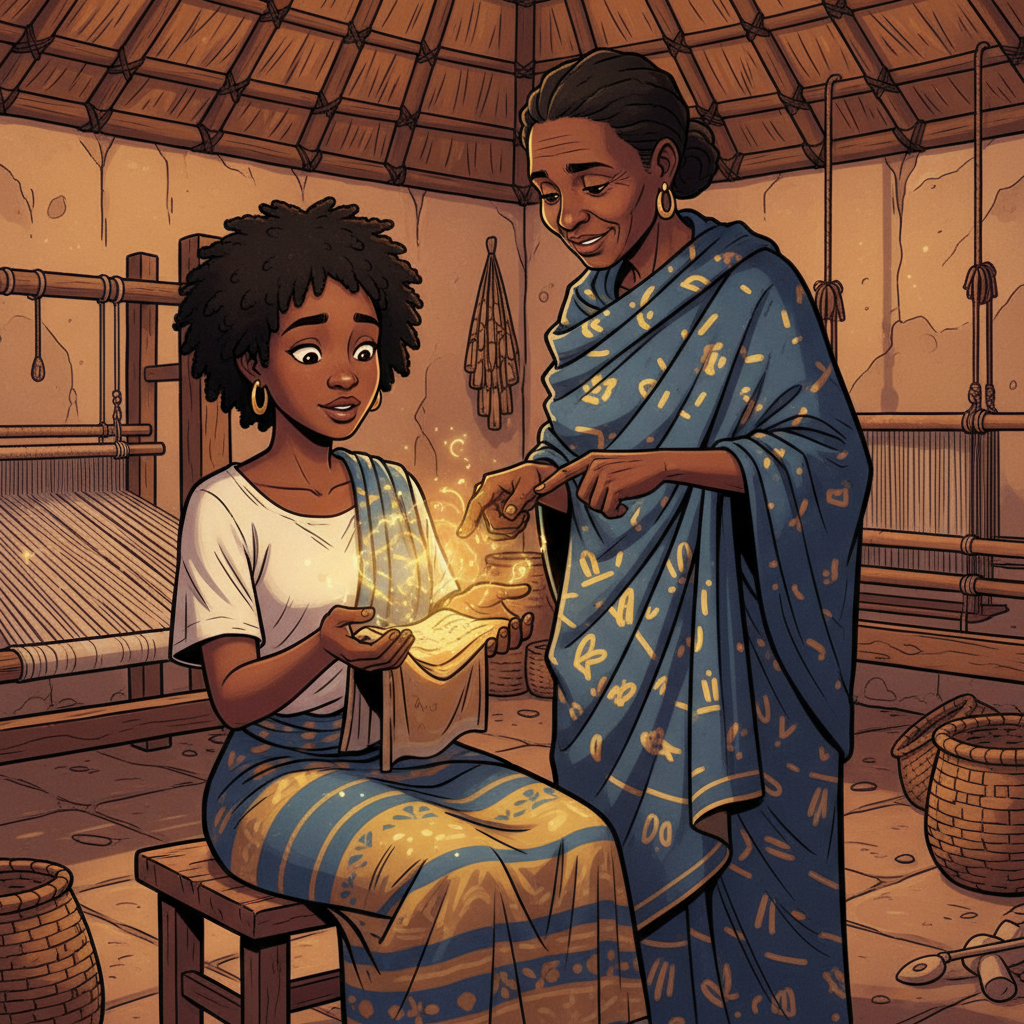
One morning, Iya Abosede brought Omolara a small, faded piece of aso-oke. It was simple in design, the colors muted by time, but as Omolara held it, a strange warmth spread through her fingers. It felt… alive. “This was your great-grandmother’s wedding cloth,” Iya Abosede said softly. “She wove it herself, praying for a loving home, for strong children, for peace. Every tie, every throw of the shuttle, was a whisper of her heart’s deepest desires. The visible threads are old, but the hidden prayers, the ase, they are still strong, still present.”
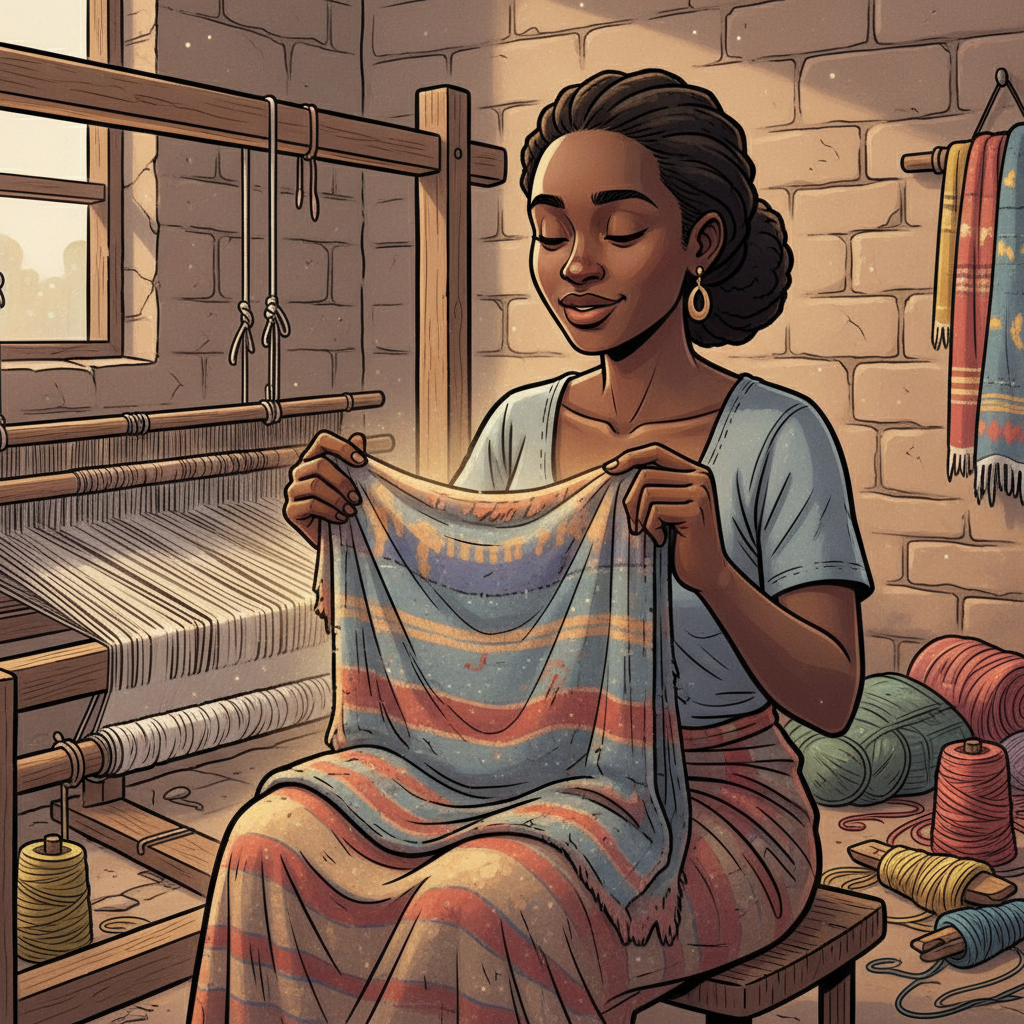
Omolara ran her fingers over the ancient cloth. It was not as smooth as hers, the edges were not as crisp, yet it hummed with an energy her own flawless creations lacked. She felt a connection, a sense of history and quiet strength emanating from the fabric. It was then she began to understand, not with her mind, but with a stirring in her heart. The ase was not something you added like a dye; it was something you *became* as you wove. It was the presence of your spirit, visible through the carefulness of your hands, but truly hidden in the depths of your intention.
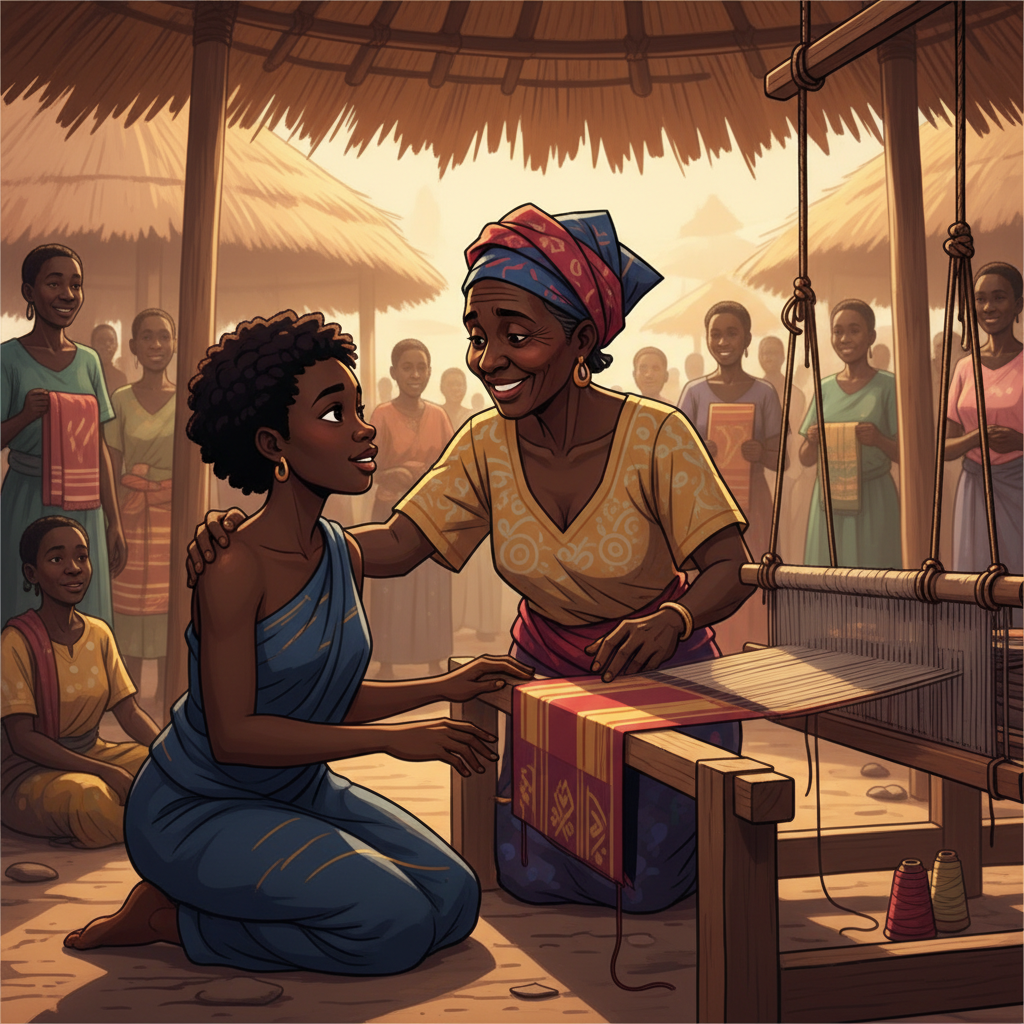
“Iya,” Omolara whispered, “how do I put my spirit into the threads? How do I make the hidden visible, not just as a pattern, but as… feeling?” Iya Abosede smiled, a deep, knowing smile that crinkled the corners of her eyes. “You do not *put* it in, my child. You *are* it. When you sit at the loom, empty your mind of distractions. Think of the person who will wear this cloth, think of the joy you wish for them, the protection, the celebration. Let your fingers move, but let your heart guide them. Each thread is a thought, each knot a wish. Breathe your life into the warp.”
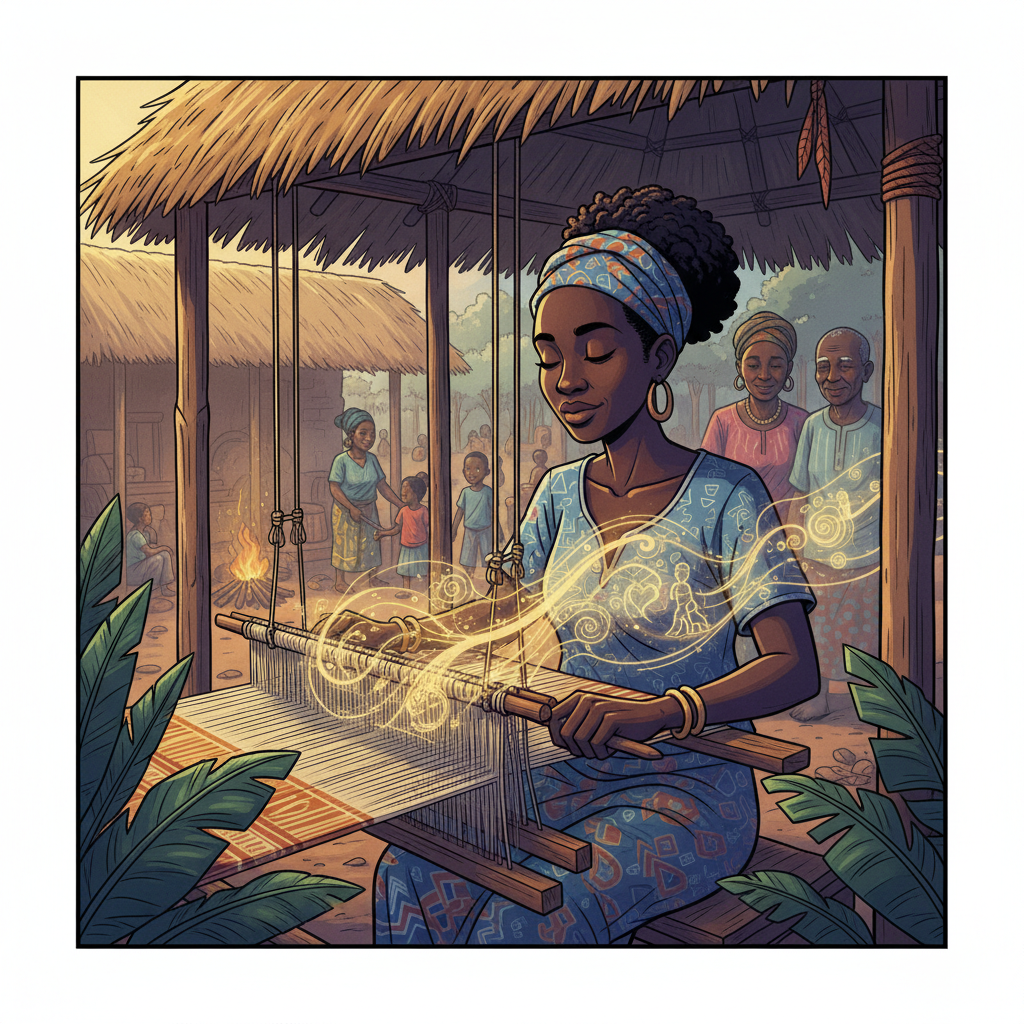
Omolara returned to her loom, but this time, something was different. She did not just see the colorful threads; she saw the potential within them, the stories they could hold. She closed her eyes for a moment, breathing deeply, letting the rhythmic sounds of the compound fade. She thought of her mother, strong and kind. She thought of her father, wise and gentle. She thought of the future, a future filled with warmth and laughter, and she began to weave. She chose a simple pattern, one she knew well, so her hands could work almost without conscious thought, freeing her mind and heart.
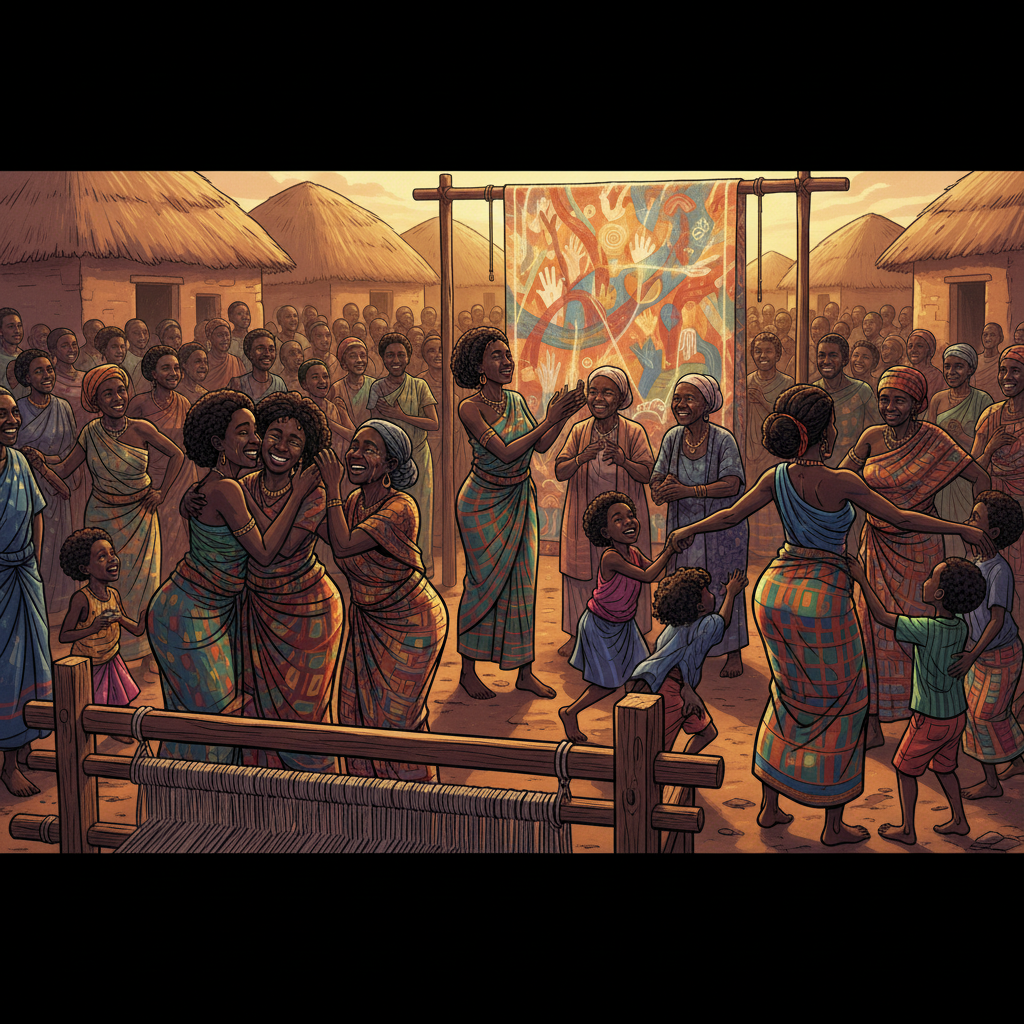
As her fingers worked, Omolara began to speak, not aloud, but within her heart. She wished blessings upon the cloth. She wished strength into its fibers. She wished joy into its colors. Each throw of the shuttle became a silent affirmation, each adjustment of the heddles a quiet prayer. She felt a new connection, not just to the loom and the threads, but to something larger, something ancient that flowed through her. It was as if her ancestors were guiding her hands, whispering forgotten techniques and timeless intentions into her soul.
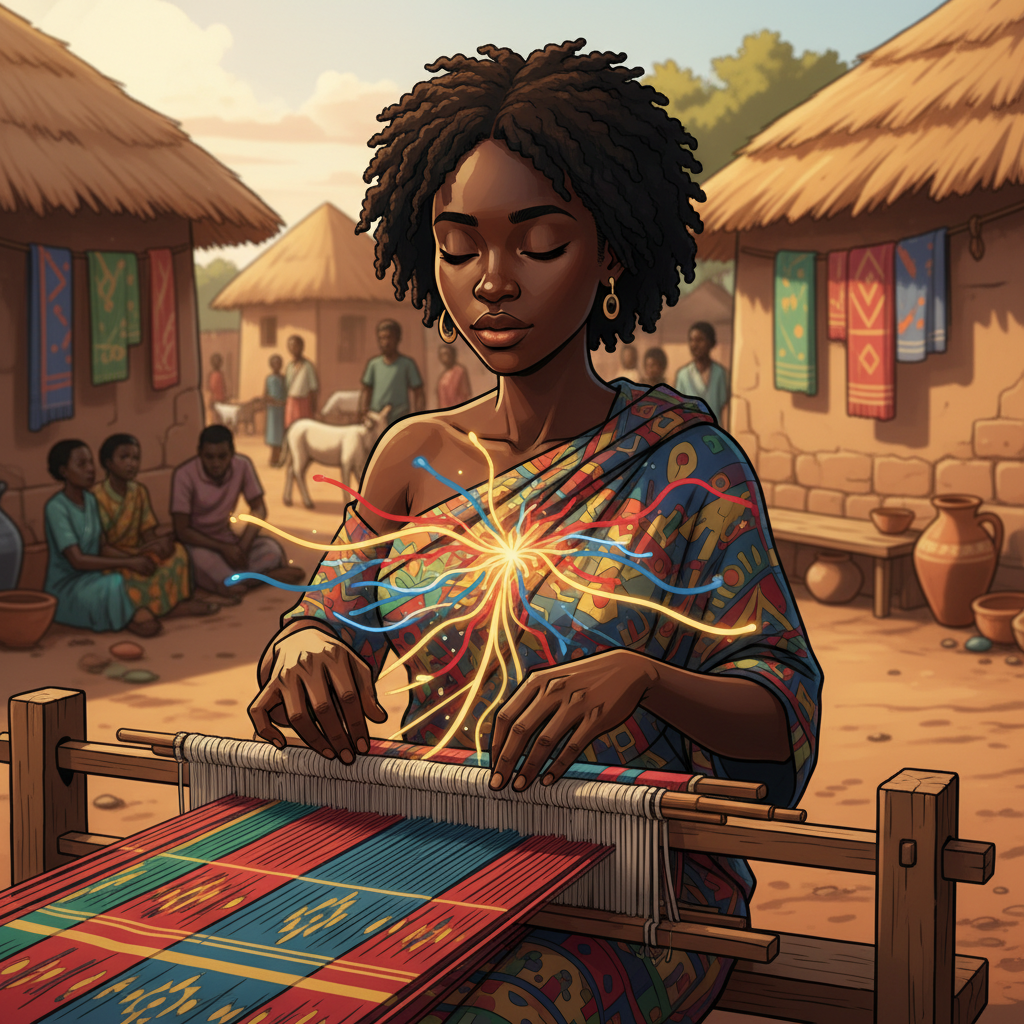
Days turned into a week, and Omolara worked diligently, patiently. She was not rushing, not striving for visible perfection alone, but for a deeper, hidden truth. Sometimes, she would pause, close her eyes, and feel the threads beneath her fingertips. They no longer felt like inert strands; they felt like conduits, carrying her thoughts and hopes. The rhythm of the loom became a meditation, a dance between her body, her mind, and her spirit. She was no longer just a weaver; she was a channel, allowing something profound to flow from her heart into the visible world.
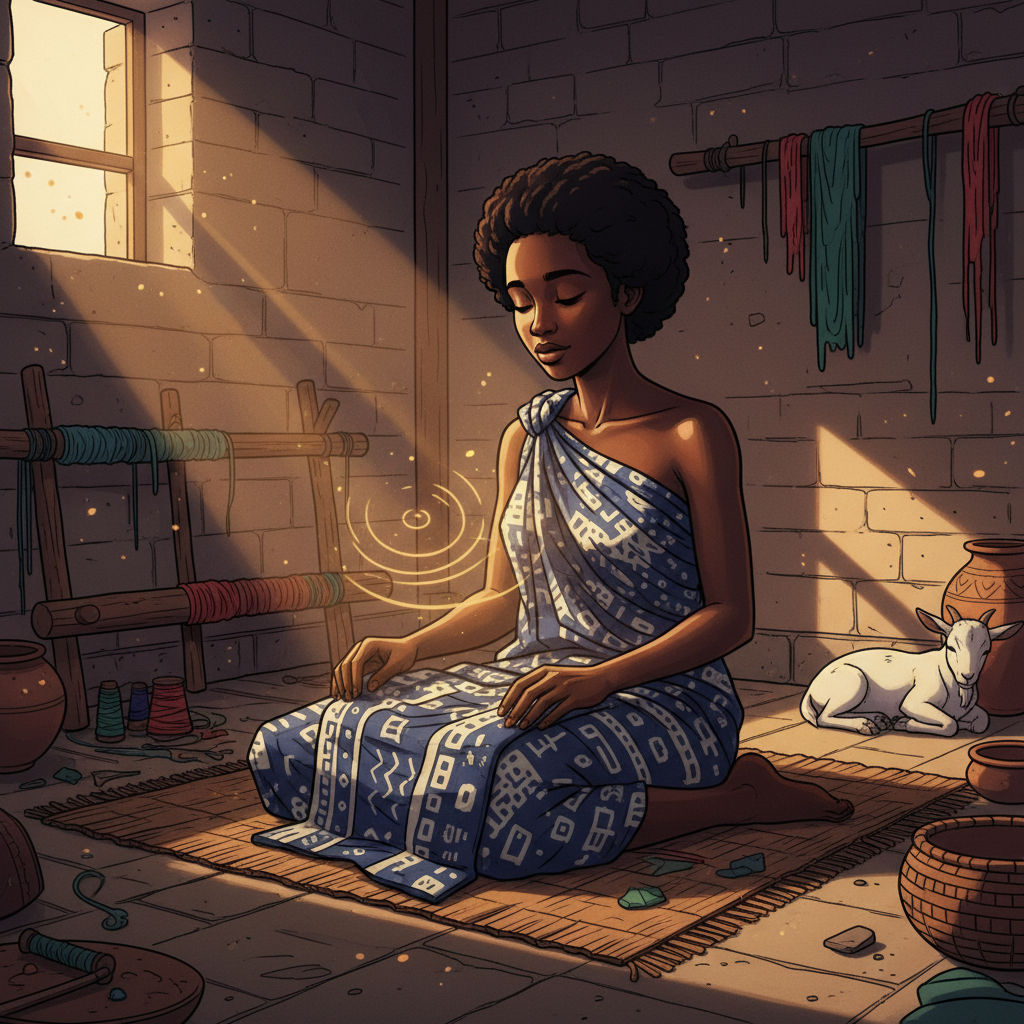
Finally, the cloth was complete. It was a modest piece, a simple wrapper of deep indigo and cream, intended for daily wear rather than grand ceremony. Omolara cut it from the loom, her movements slow and deliberate. She did not rush to show it to Iya Abosede. Instead, she sat with it, holding it in her lap. It felt different. It felt… warm, almost as if it had a heartbeat. The colors were the same, the weave was still precise, but there was an undeniable vibrancy, a quiet hum that resonated from its very core. It was not just threads; it was a story, a feeling, a prayer.
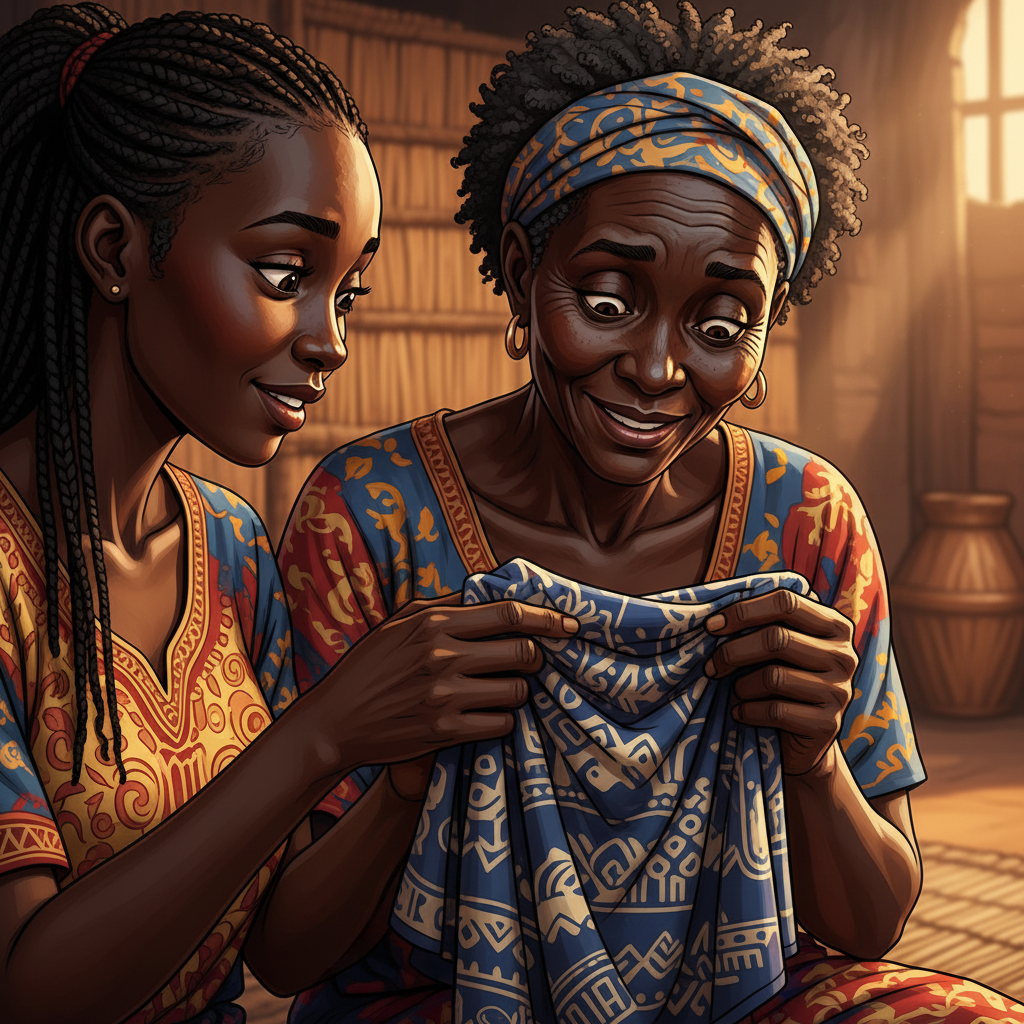
Iya Abosede approached, her steps soft on the packed earth floor. She did not speak, simply sat beside Omolara and gently took the cloth. Her eyes, usually so serene, widened almost imperceptibly as her hands closed around the fabric. She held it for a long moment, her head slightly bowed. Then, slowly, a wide smile spread across her face, a smile that reached her eyes and made them sparkle. “Ase,” she whispered, her voice thick with emotion. “Yes, my child. This cloth has ase. This cloth speaks.”
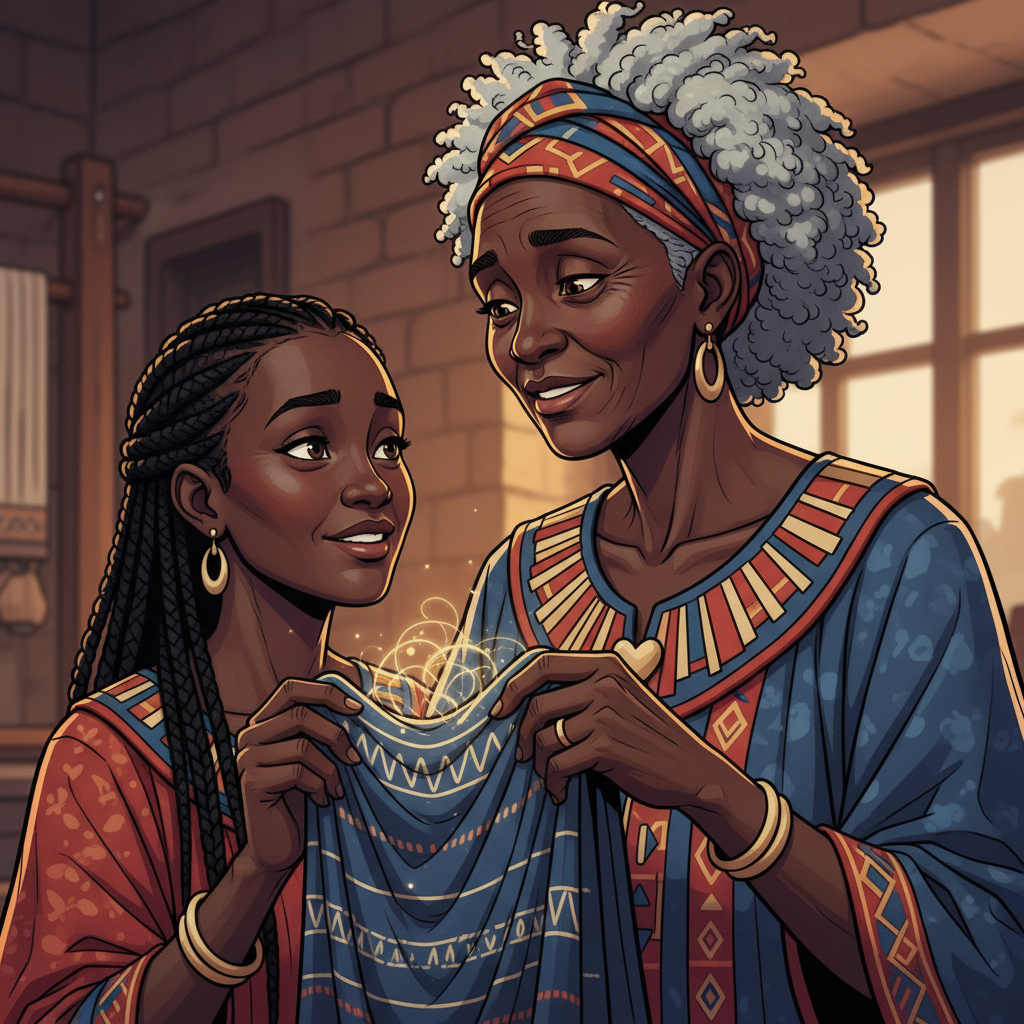
Omolara felt a rush of relief and understanding. It was not a physical change her grandmother saw, but a spiritual one, a resonance that only a heart attuned to hidden energies could perceive. “How did you know, Iya?” Omolara asked, her voice barely audible. Iya Abosede looked at her, her eyes twinkling. “I felt it, my dear. I felt the warmth of your intention, the strength of your blessings, the quiet power of your prayers woven into every single thread. The visible cloth is beautiful, but the hidden truth woven within it is what gives it life.”
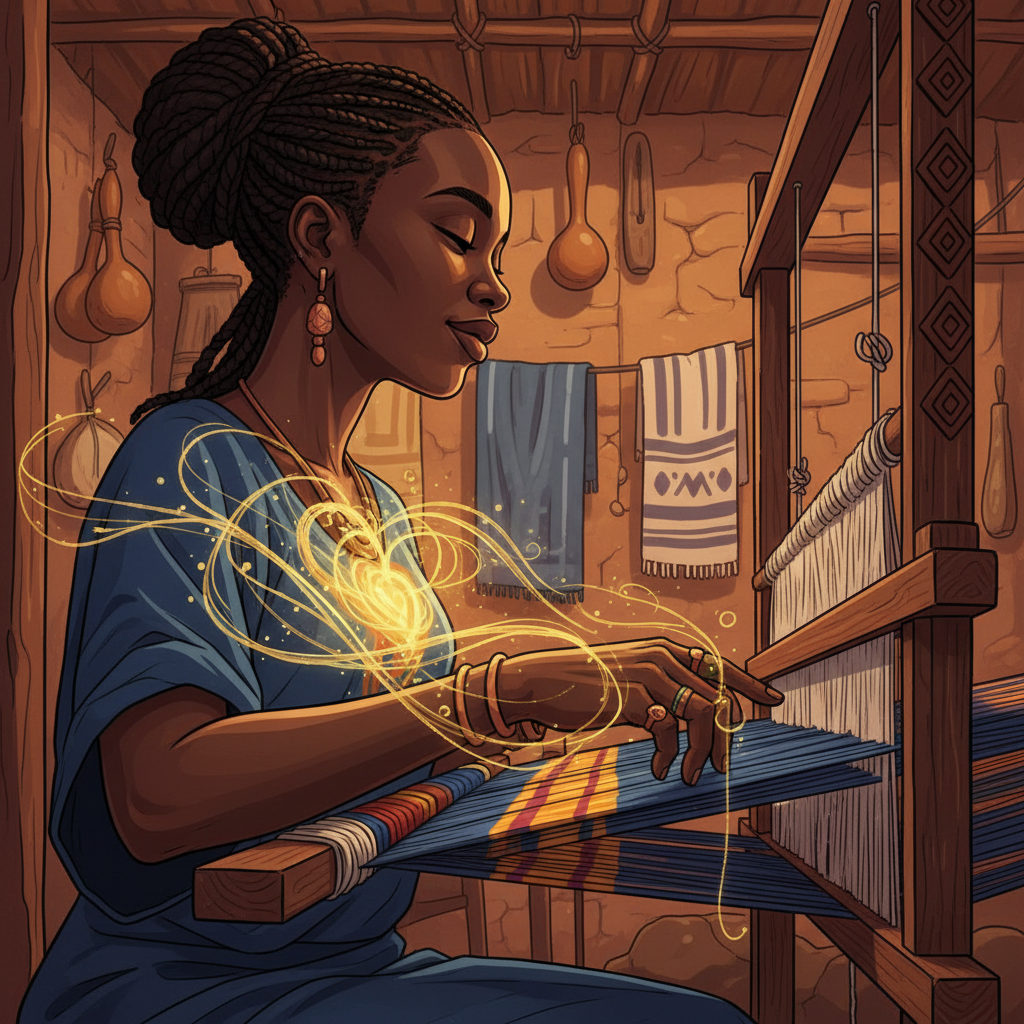
From that day forward, Omolara’s weaving changed. She still maintained her exceptional precision and her eye for color and pattern, but her approach to the loom transformed. She began each new cloth with a quiet moment of reflection, focusing her heart and mind on the purpose of the fabric and the person who would wear it. She understood that the true beauty of aso-oke lay not just in what was seen, but in what was felt, in the invisible spirit woven into its very core. Her fingers still danced, but now, her heart danced with them, a silent prayer guiding every movement.
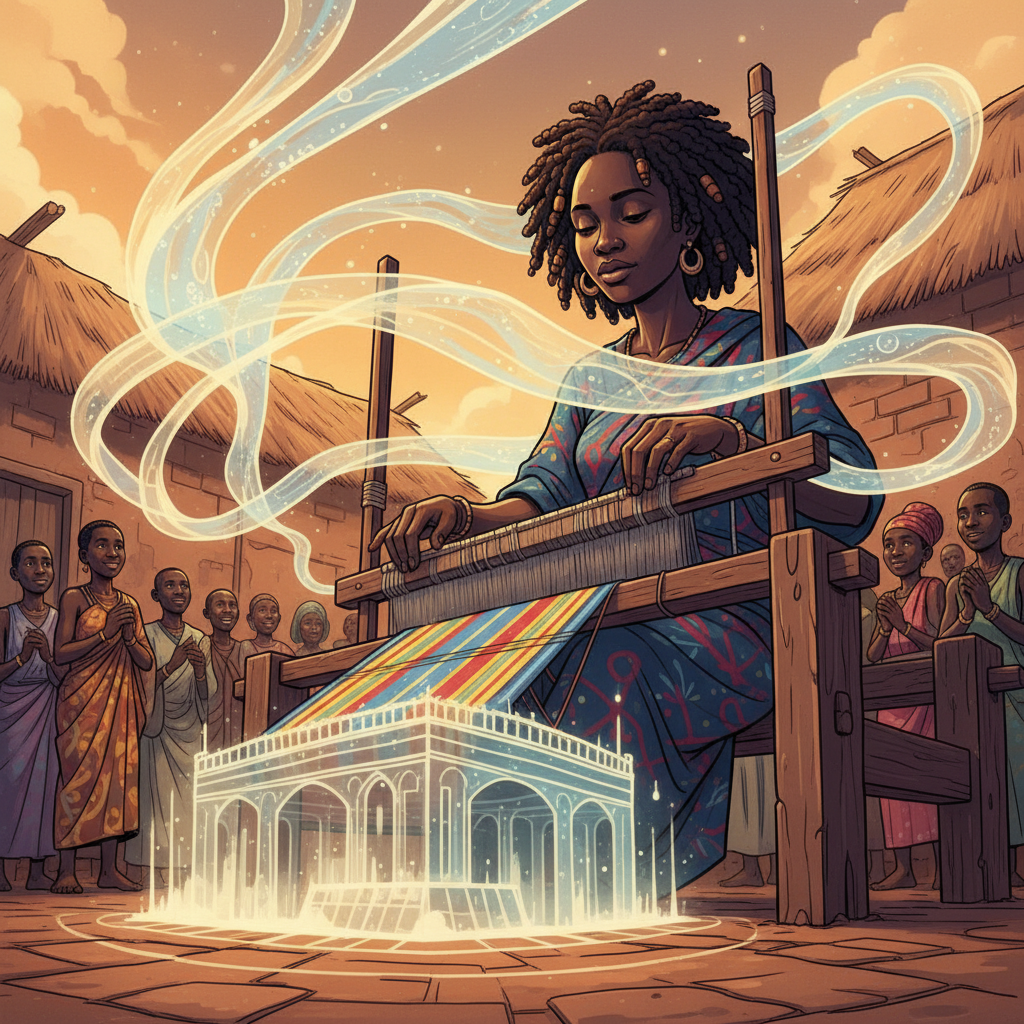
Her cloths became renowned, not just for their stunning appearance, but for the peaceful, almost magical feeling they evoked. People would say that wearing Omolara’s aso-oke brought good fortune, comfort, or a sense of peace. They did not understand *how* she did it, but they felt the difference. Omolara herself knew. She knew that she was weaving cloths of two worlds: the world of visible threads and vibrant colors, and the hidden world of intentions, hopes, and prayers. Her loom was no longer just a tool; it was a bridge between these two realms.
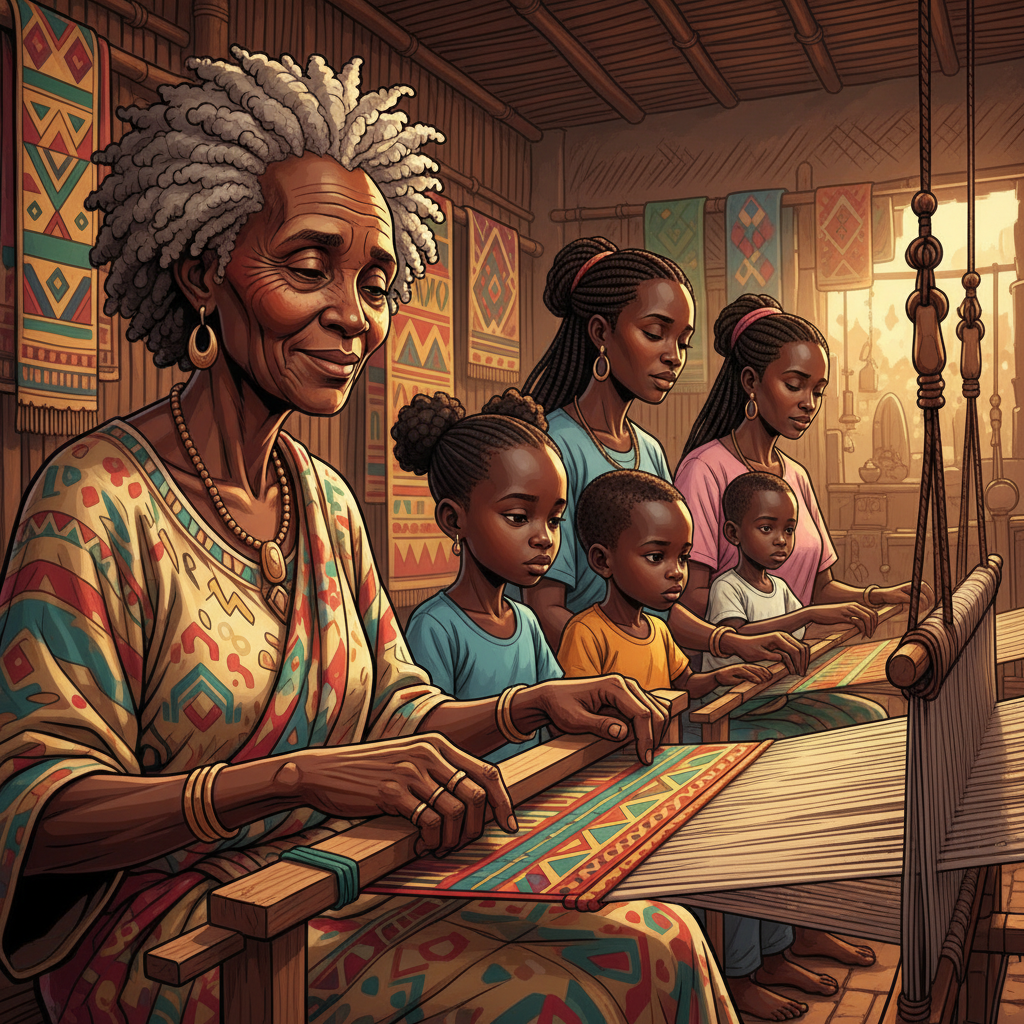
Years passed, and Omolara grew into a wise woman, her own face etched with the lines of deep thought and gentle smiles. Her children and grandchildren learned to weave at her side, just as she had learned from Iya Abosede. She passed on not just the techniques of aso-oke, but the profound philosophy of ase, of weaving with the heart. She taught them that the most beautiful things in life are often those that cannot be fully seen, but only deeply felt. The visible is important, but the hidden gives it meaning and life.
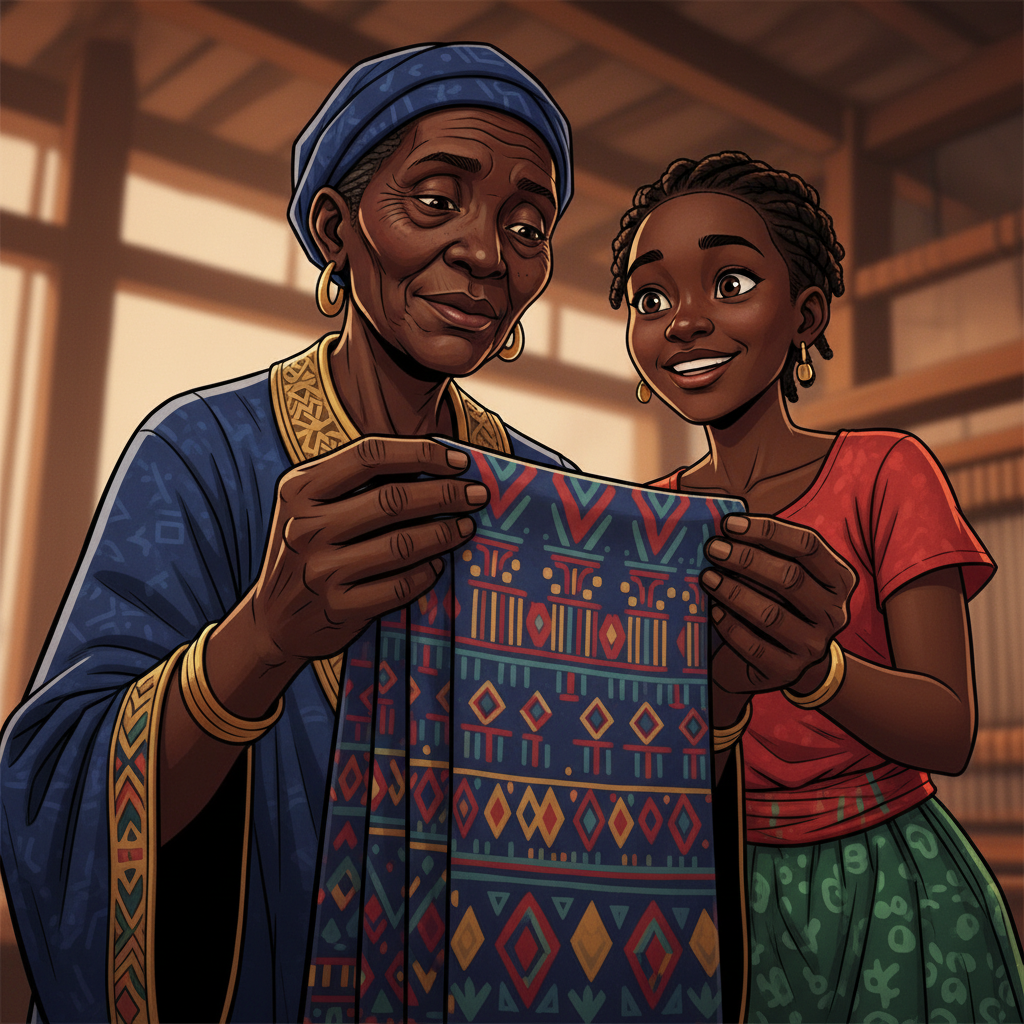
One day, a young, eager weaver, much like Omolara herself once was, brought her a perfectly woven cloth. “Mama Omolara,” the girl said, her eyes shining with pride, “Is this not flawless? I have worked so hard to make every stitch exact.” Omolara took the cloth, her seasoned fingers feeling its texture, her wise eyes observing its patterns. It was indeed perfect to the eye, a marvel of technical skill. But as she held it, she felt only the threads, not the quiet hum of spirit she now sought.
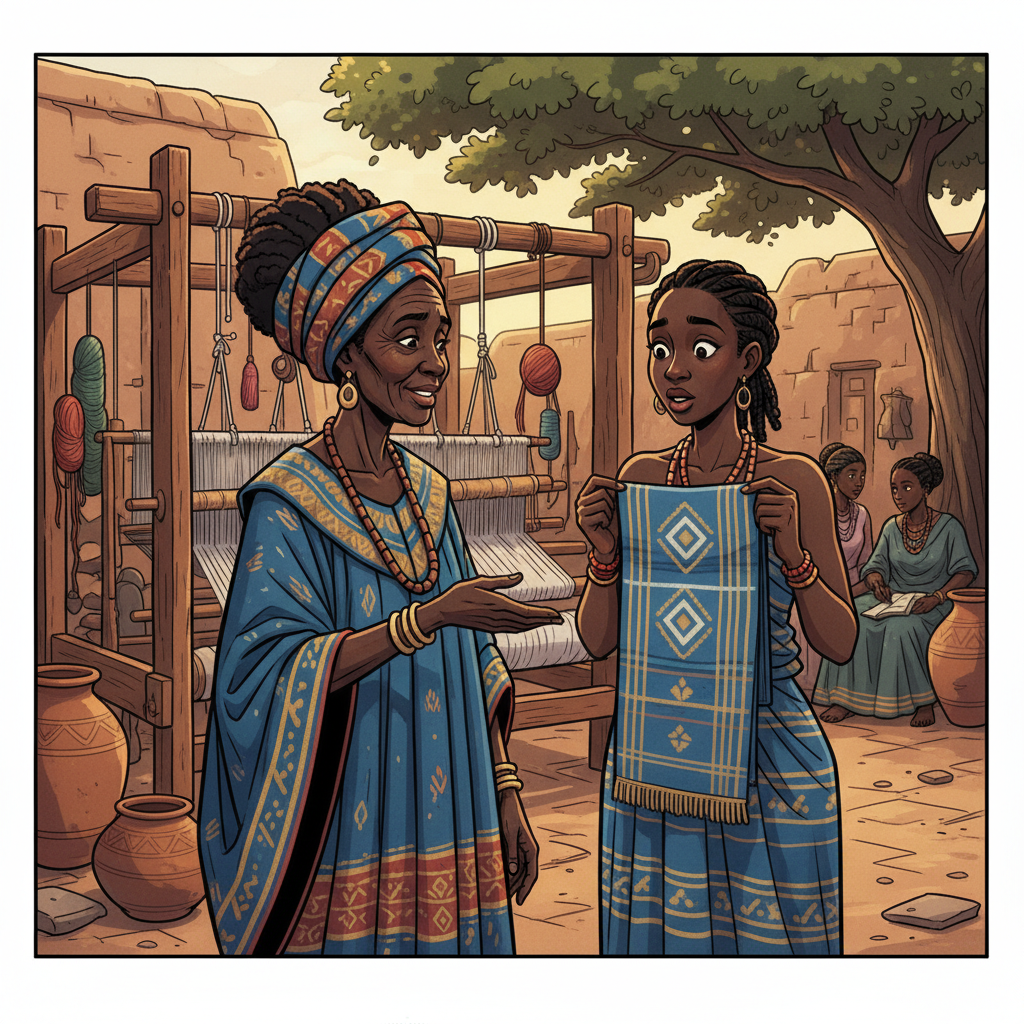
Omolara smiled, a gentle, knowing smile that reminded the young weaver of her own grandmother. “It is truly magnificent, my dear. Your hands are gifted. But tell me, as you wove, what did your heart whisper into the warp? What dreams did you tie into these threads?” The young girl blinked, surprised. She had thought only of straight lines and even tension. She had focused only on the visible output. Omolara chuckled softly. “The thread you see is only half,” she said, echoing Iya Abosede’s ancient wisdom. “The prayer woven into the warp is what makes cloth speak.”
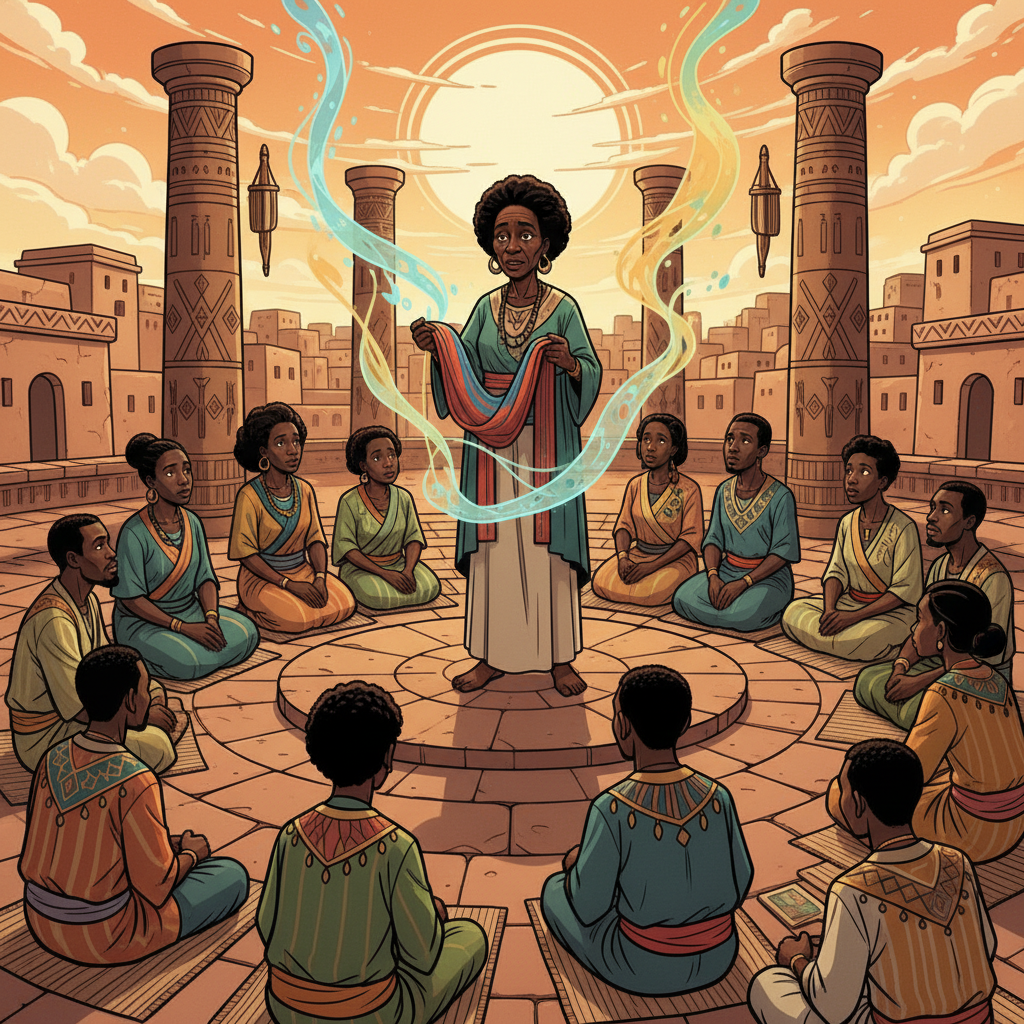
The young weaver, perplexed but intrigued, listened carefully as Omolara shared the wisdom passed down through generations. She spoke of the ase, the hidden energy that gives life to all things. She explained that the visible world, with all its beauty and order, is only a reflection of a deeper, unseen reality. To truly create, one must engage both worlds: the tangible and the spiritual, the seen and the unseen. The cloth, she explained, was a powerful symbol of this connection, a bridge made of both material and spirit.
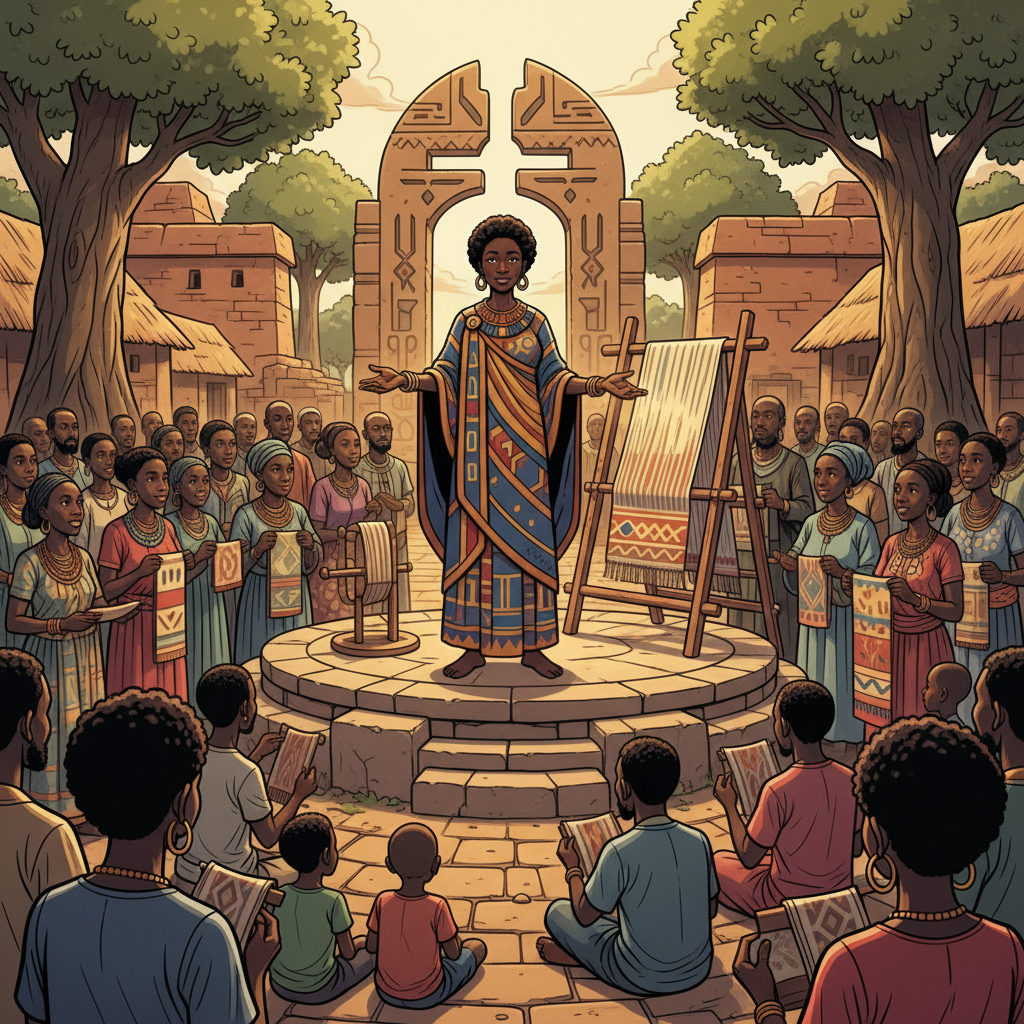
And so, the tradition continued, woven from visible threads and hidden intentions. The weavers of Abeokuta learned that their craft was more than just a trade; it was a sacred practice, a way to imbue everyday objects with spirit and meaning. Omolara’s legacy was not just her beautiful cloths, but the understanding she fostered: that true mastery involves seeing beyond the surface, recognizing the power of the hidden, and allowing one’s heart to guide one’s hands. The cloth, in its silence, always spoke the truth of its making, carrying the ase from the weaver’s heart to the world.
This was the wisdom of the Cloth of Two Worlds, a wisdom passed down from Iya Abosede to Omolara, and then to countless others. It taught them that while the eye delights in visible perfection, the heart seeks deeper meaning. It showed them that the most profound beauty often lies in what is unseen, in the intentions and prayers that form the true foundation of creation. And as the looms continued their rhythmic song in Abeokuta, each new length of aso-oke became a silent testament to this beautiful, enduring truth: that the hidden gives life and soul to the visible.
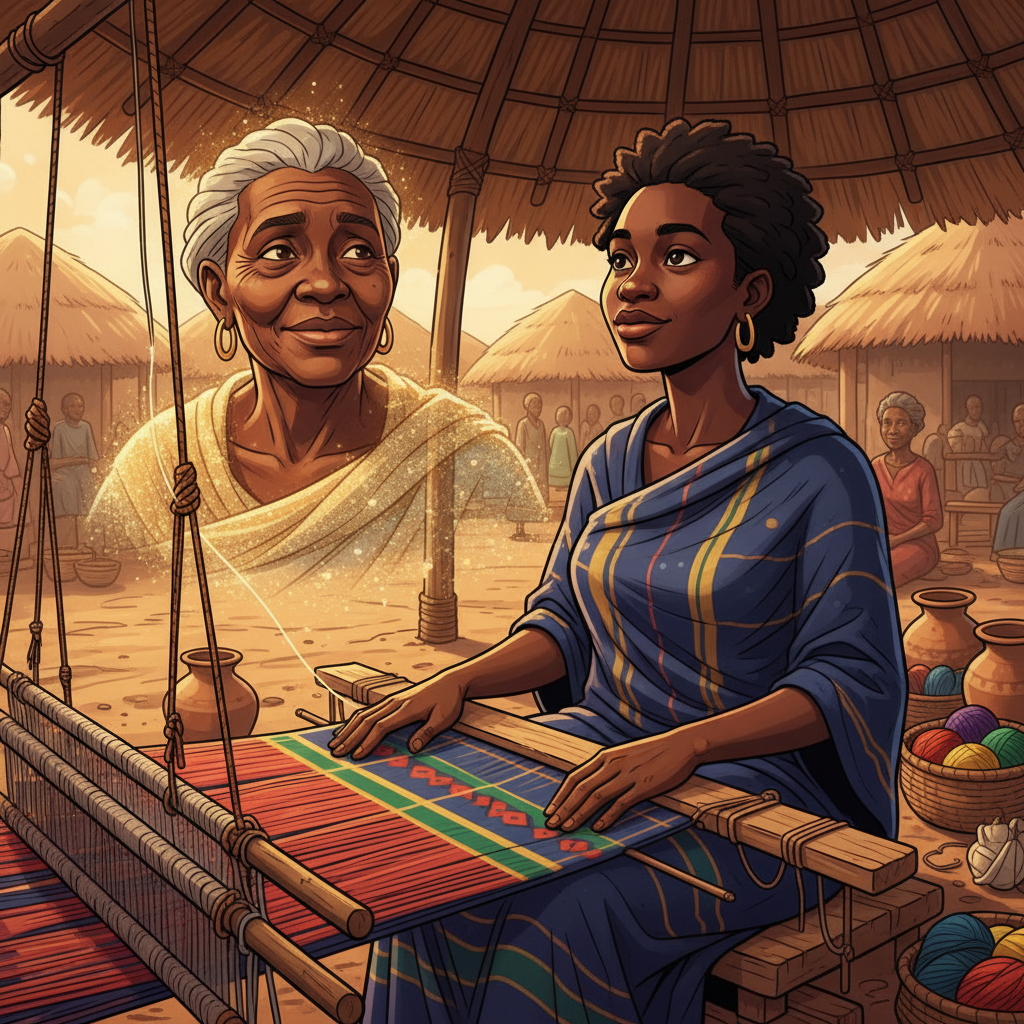
Omolara often thought of her grandmother, Iya Abosede, and the quiet lessons she had imparted. She understood now that her grandmother had not withheld praise out of unkindness, but out of a deeper love, a desire to guide her to a richer, more meaningful understanding of her craft and of life itself. The journey from visible perfection to hidden wisdom had been long and sometimes frustrating, but it had transformed her work and her spirit. Every cloth she made was a reminder that true artistry connects the tangible world with the invisible, a bridge of threads and prayers, forever linking the seen with the unseen.