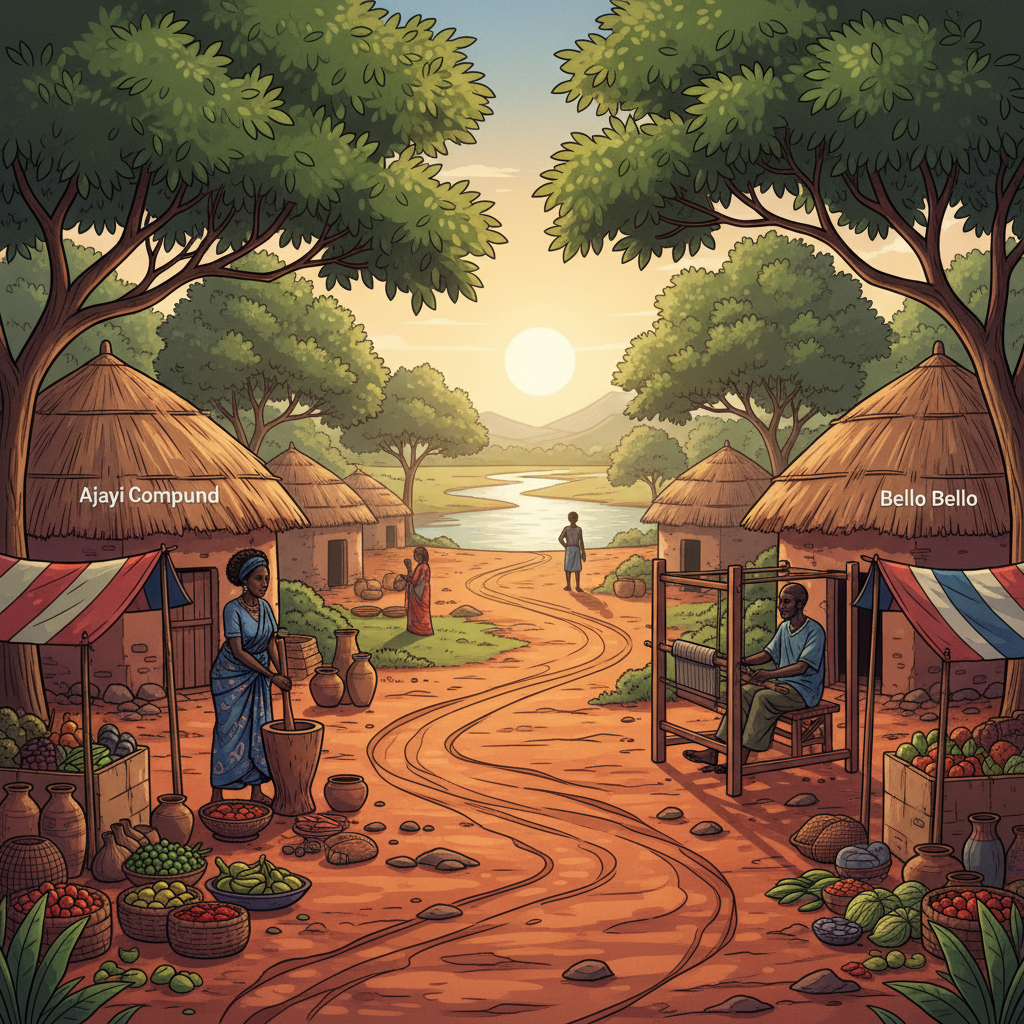
The path to the river was worn smooth by generations of feet. It wound through the village of Oyo, past the busy market, and down a gentle slope where the Ajayi and Bello compounds stood side-by-side. Adewale, whose skin was dark as polished ebony, knew every stone and root along that path. He knew the way the morning sun dappled through the mango trees, painting shifting patterns on the red earth. He knew the sound of Mama Ajayi’s mortar and pestle before dawn, and the quiet hum of Baba Bello's loom late into the night. Their families had been neighbors, friends, and allies since long before Adewale was born, their lives woven together like threads in a strong fabric.
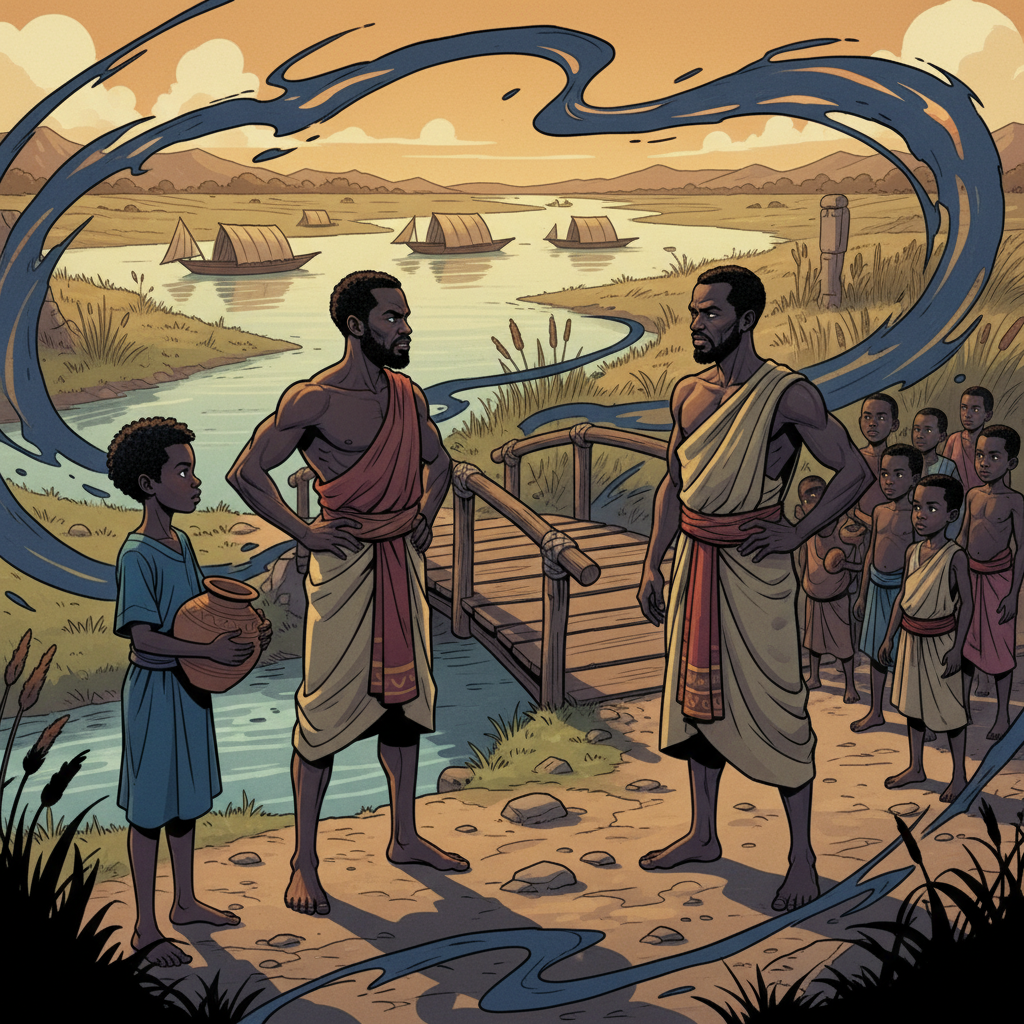
Every day, Adewale walked the path to help his mother carry water from the river. Today, however, something was different. A murmur, like agitated bees, hung in the air near the small wooden bridge that spanned the narrow stream just before the river's edge. Children, usually playing in the dust, stood still and watched. Adewale saw his father, Papa Ajayi, standing with his hands on his hips, his face tight. Across from him, Baba Bello stood equally stiff, his gaze fixed on the bridge. The harmony that usually settled over this part of the path had vanished, replaced by a strange, sharp tension.
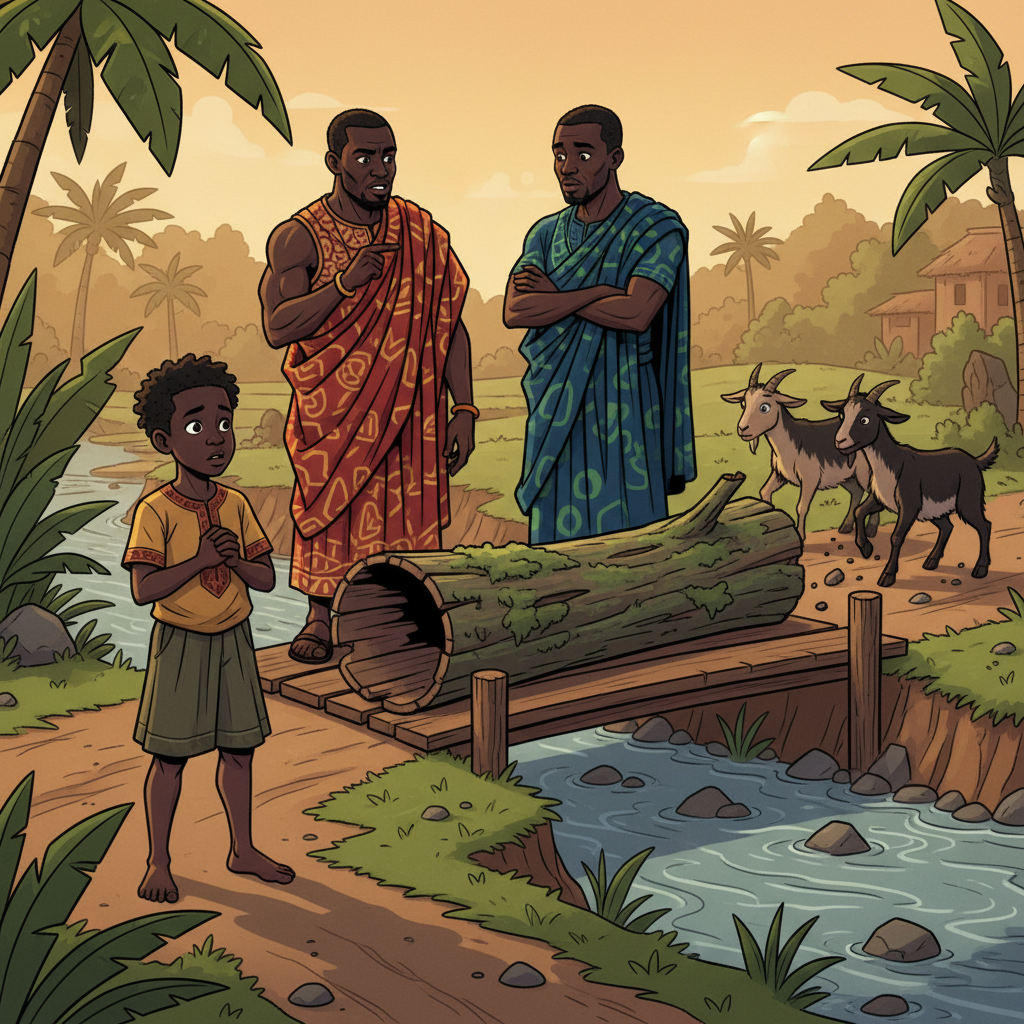
As he drew closer, Adewale could see the problem. A heavy log, thick with moss and mud, lay half-across the wooden bridge, blocking half of its width. It looked as if it had fallen from the riverbank, perhaps dislodged by the recent rains. Papa Ajayi was gesturing with his chin. “Look at this, Bello! Your goats must have dislodged it, scrambling up from the stream. They always take this way. Now it blocks the path for everyone.” Papa Ajayi’s voice was usually like rolling thunder, but now it was a tight, clipped sound that made Adewale’s stomach clench.
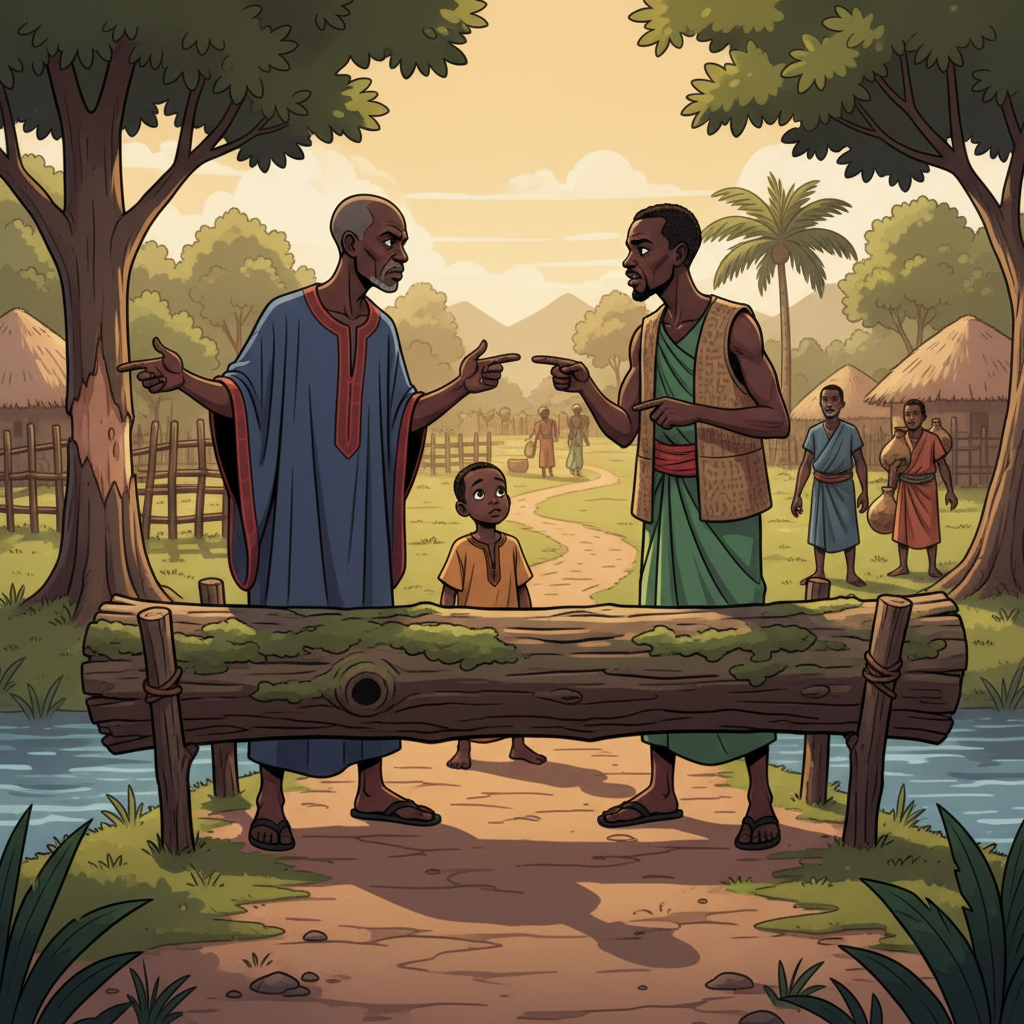
Baba Bello, whose skin was the rich color of kola nuts, shook his head slowly. “My goats are penned, Ajayi. They have not been here. But your workers, with their heavy loads of palm oil, they always take this corner too sharp. See how the bark on that tree is scraped? The log was already loose. It was their haste, not my animals, that brought it down.” Baba Bello’s voice was soft, but there was an edge to it that Adewale had never heard before. Both men stood their ground, their eyes locked, seeing only what they believed to be true.
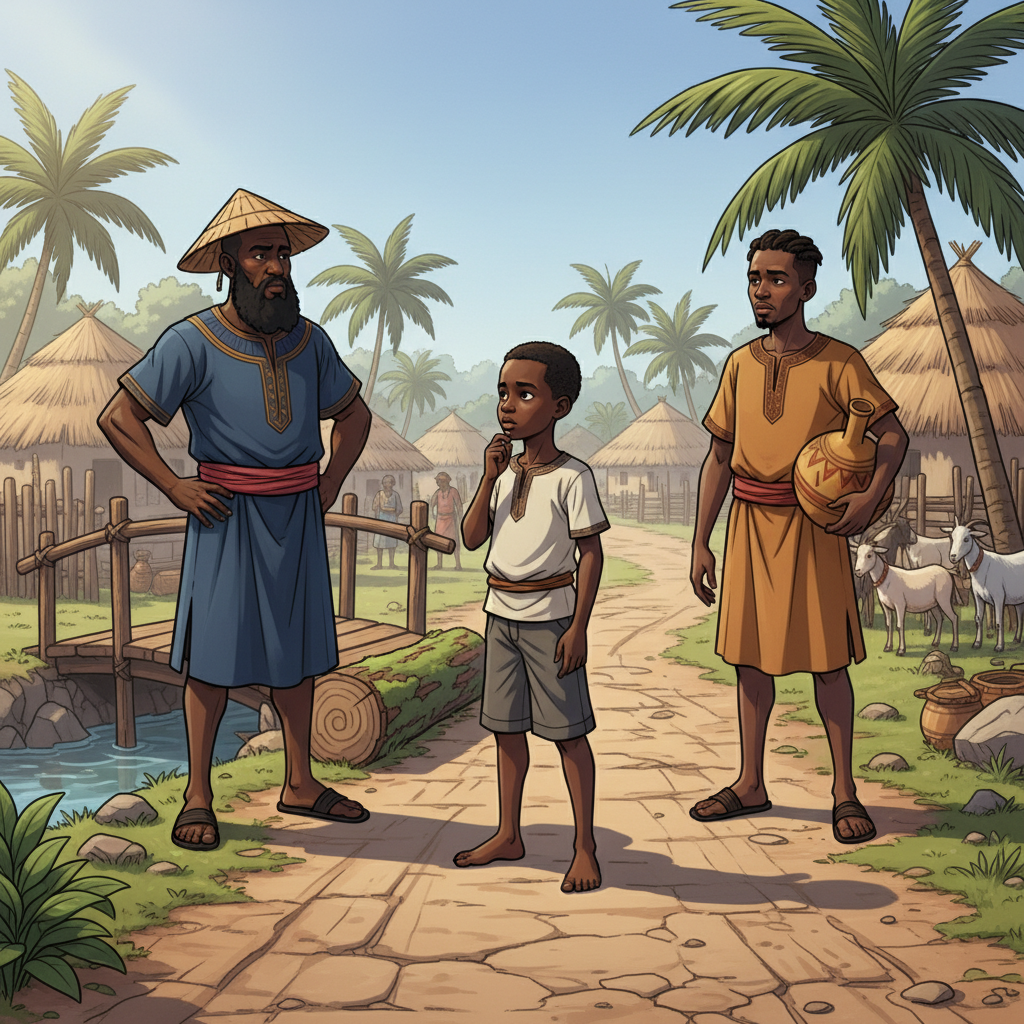
Adewale looked from one man to the other. He had walked this path countless times. He knew the Ajayi goats did sometimes scramble up from the stream here, often nudging things with their strong horns. But he also knew the Bello workers, rushing to market, would sometimes cut the corner sharply, their heavy palm oil gourds swaying. He could see how either explanation could be true, depending on what you focused on. The log itself lay silent, offering no testimony, only its mossy weight. The sun, climbing higher, made the air shimmer with unspoken heat.
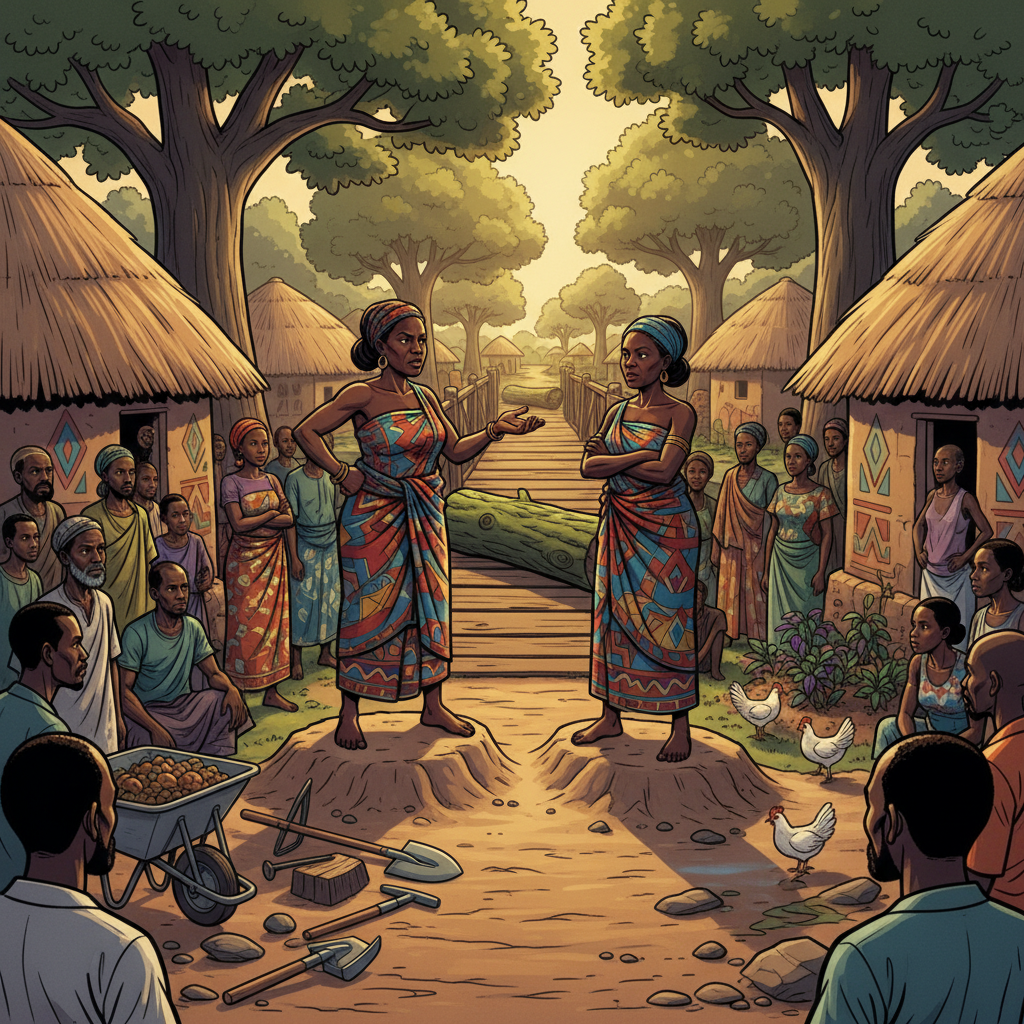
The argument grew louder, drawing more villagers. Mama Ajayi came, her wrapper tied tight, her eyes flashing. She spoke of the children’s safety, of the way the Bello family’s farming tools were often left near the path. Then Mama Bello arrived, her voice a low, steady hum, defending her family’s careful ways, mentioning the Ajayi chickens that sometimes strayed into her herb garden. The log on the bridge seemed to grow heavier with each word, a physical barrier now between the two families who had always shared so much.
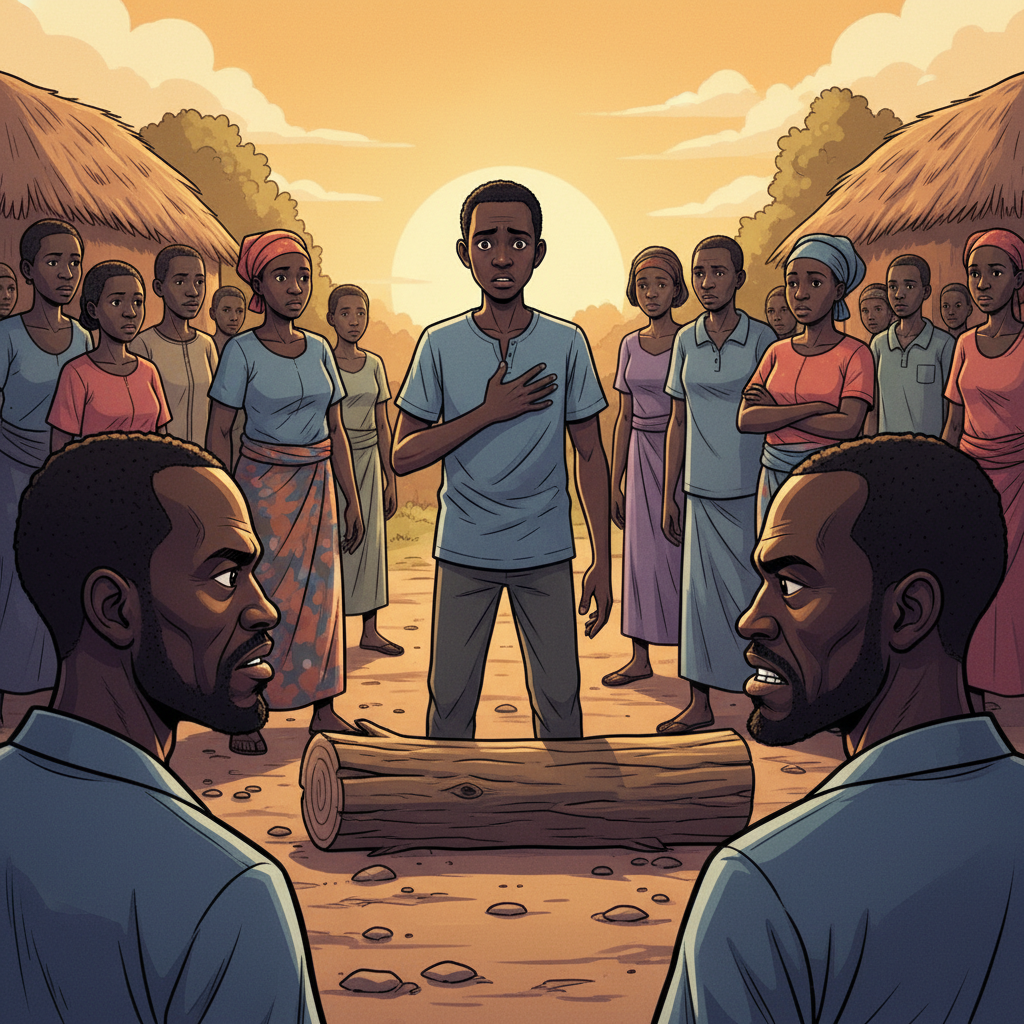
Adewale felt a knot tighten in his chest. This was not the Oyo he knew. The easy laughter, the shared meals, the way their compounds felt like one large home – all of it seemed to shrink in the face of this stubborn disagreement. He wanted to pull the log away himself, to make the path clear again, but he knew the log was not the real problem. The real problem was in the hard lines of his father’s mouth, and the unyielding set of Baba Bello’s jaw. The truth, it seemed, was not a single, clear thing today.
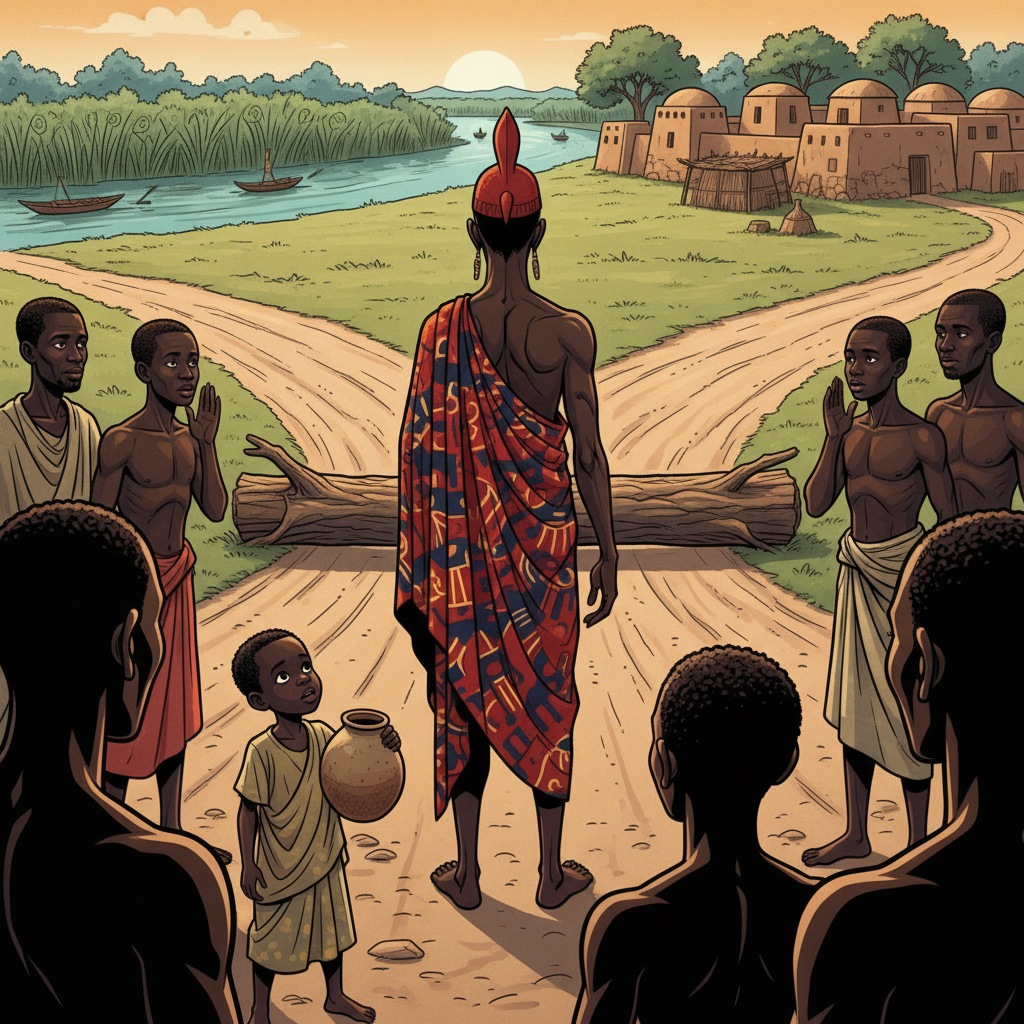
For three days, the path remained partially blocked. The log was too heavy for one person to move easily, and neither family would ask the other for help, nor would they offer it. Villagers took turns squeezing past, casting uneasy glances at the compounds. The river felt farther away, the water heavier in Adewale’s calabash. He heard whispers about Eshu, the Orisha who stood at the crossroads, the one who saw both sides, or perhaps, revealed how many sides there truly were. But Adewale did not understand what Eshu had to do with a fallen log.
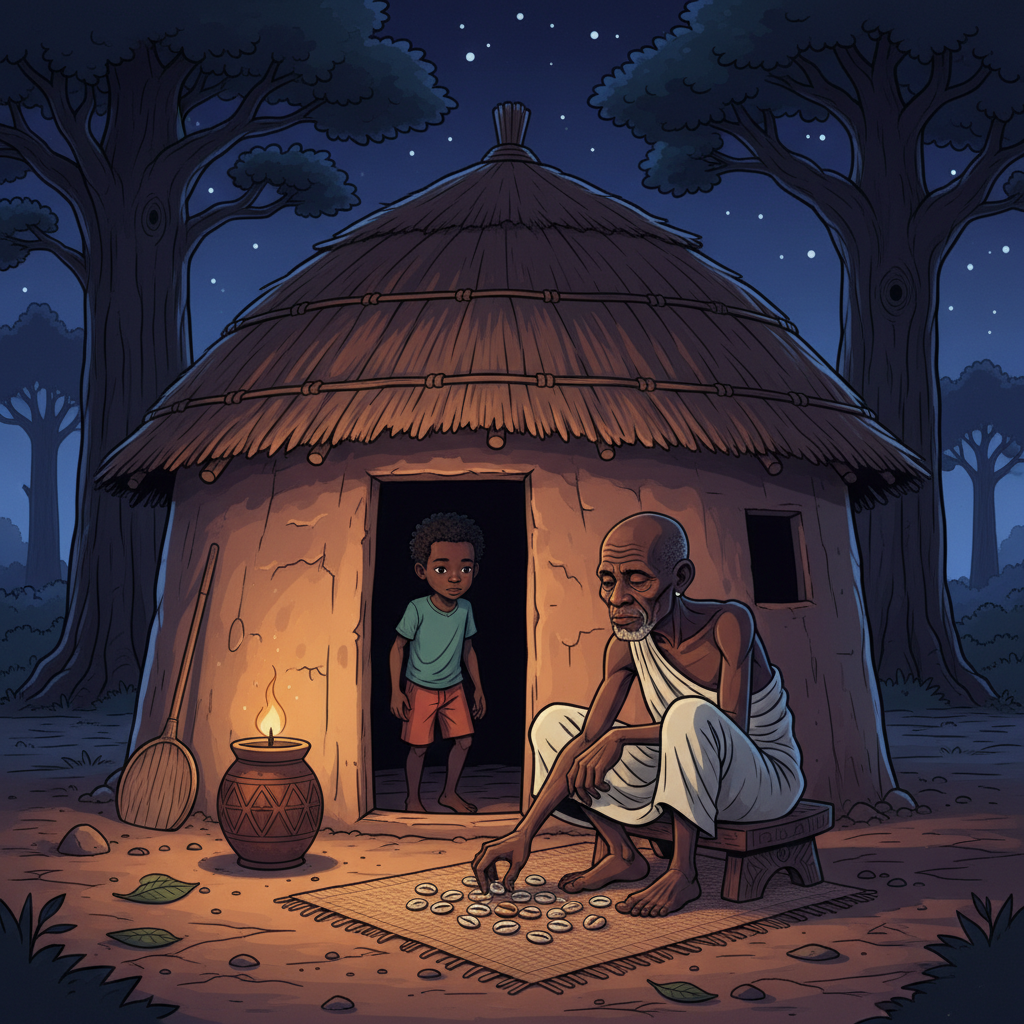
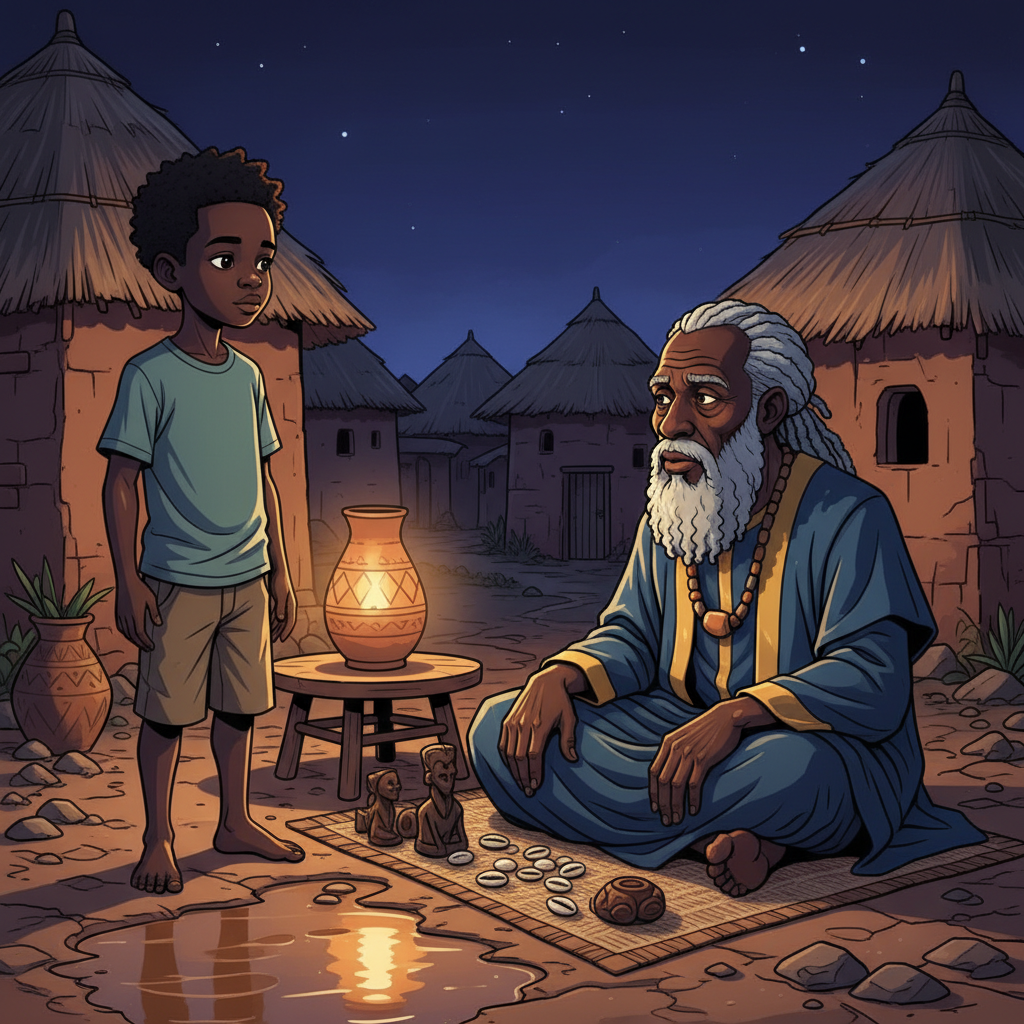
He decided to seek out the Babalawo, the elder priest, who lived in a small hut at the edge of the village, surrounded by ancient iroko trees. The Babalawo was a quiet man, his face a map of wisdom, his eyes holding the depth of many seasons. His skin, like rich, dark soil, seemed to absorb the light rather than reflect it. Adewale found him sitting on a low stool, sorting cowrie shells for divination. The air in the hut smelled of dry leaves and quiet contemplation.
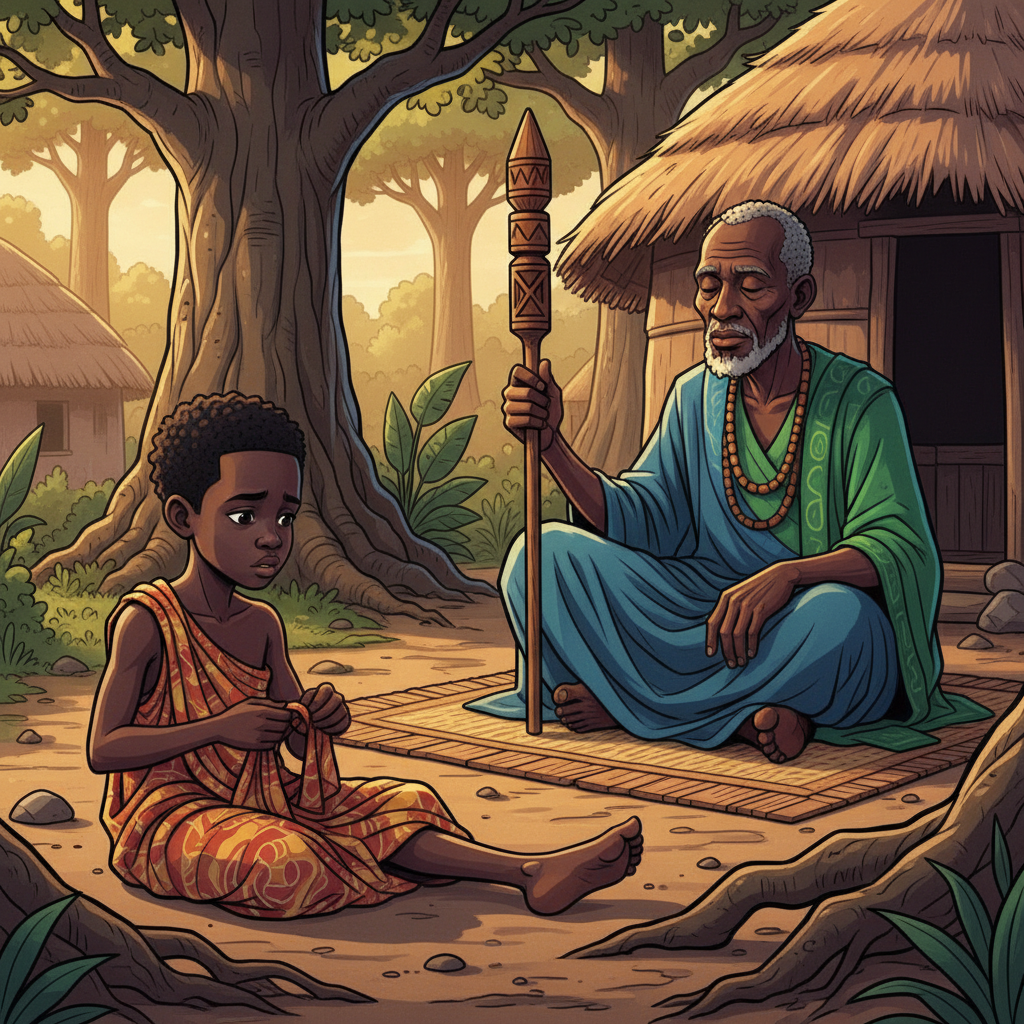
“Babalawo,” Adewale began, his voice small. “The path to the river… the Ajayi and Bello families… they are arguing. About a log. My father says the goats. Baba Bello says the workers. Both see the truth. But their truths are not the same. Why?” He looked down at his hands, twisting the hem of his wrapper. He felt the weight of the dispute in his own young heart, unsure how two clear truths could lead to such a tangled mess.
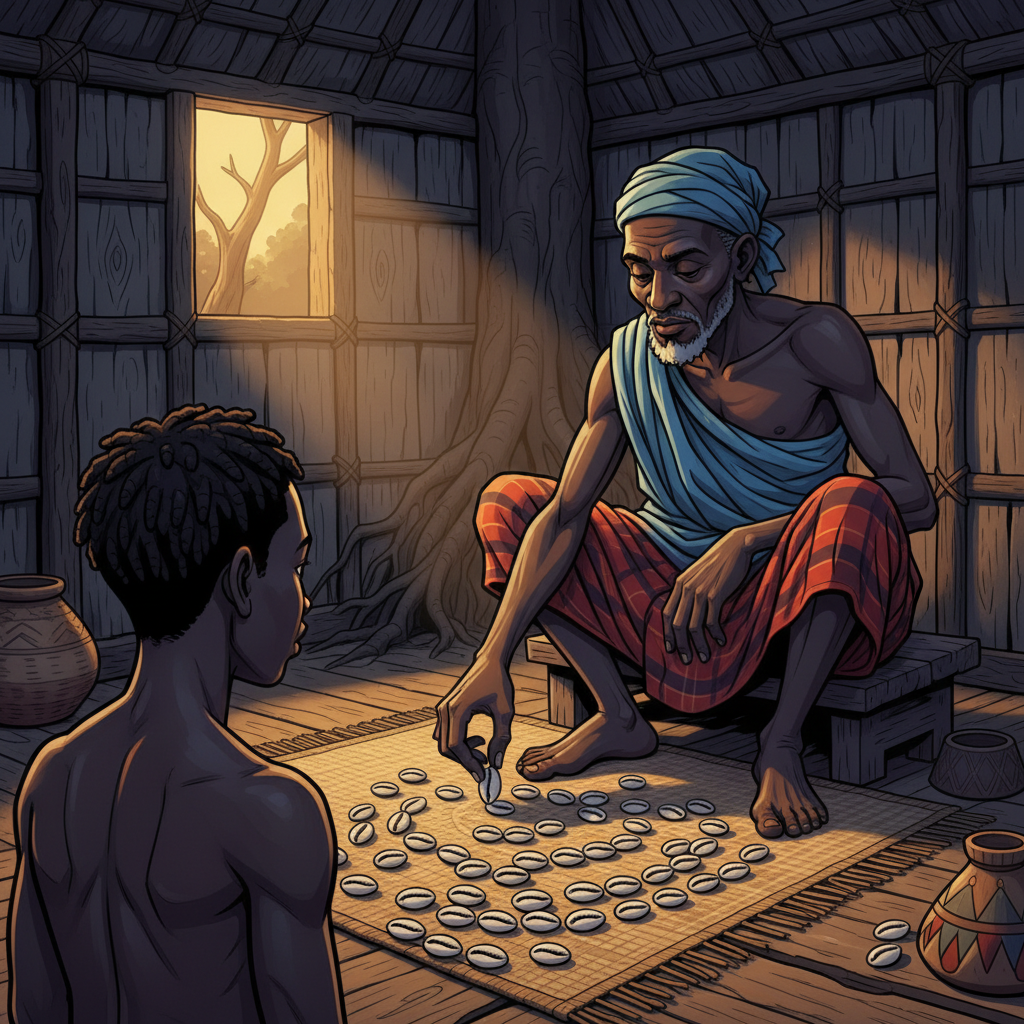
The Babalawo did not look up immediately. His fingers continued to sort the cowries, arranging them into patterns Adewale could not decipher. “You have seen Eshu at work, Adewale,” he said at last, his voice a dry whisper, like leaves rustling. “Eshu stands at the crossroads. He has a hat, black on one side, white on the other. One person sees white. Another sees black. Both are true.” He paused, placing a single cowrie shell with deliberate care.
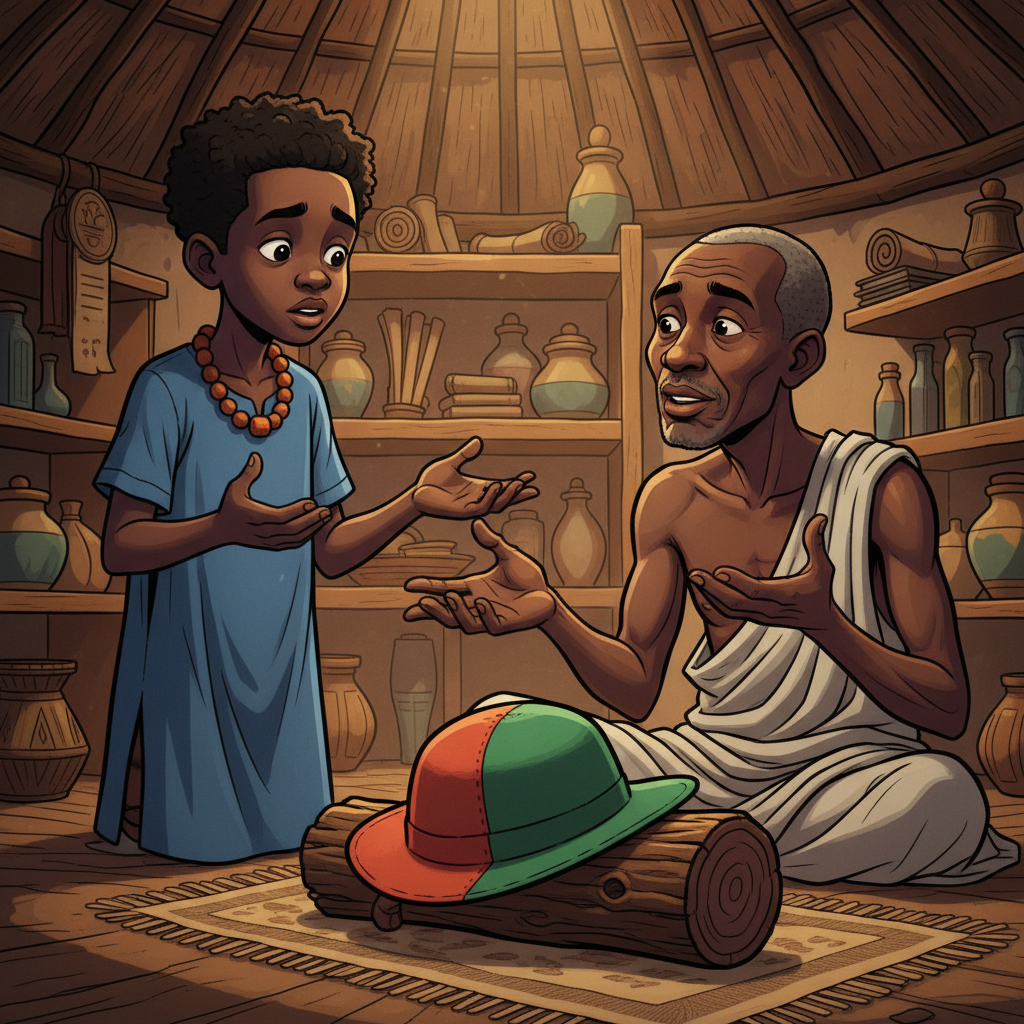
Adewale frowned. “But the hat is only one thing, Babalawo. And the log is only one log.” He still didn’t understand how this simple image explained the anger that now separated the families. If something was true, shouldn’t it be true for everyone, from every angle? He thought of the sun, which rose in one place and set in another, but was always the same sun, warm and bright for all.
“The sun,” the Babalawo said, as if hearing Adewale’s thoughts, “warms your back, it burns your face. Both are true. The path is muddy on this side, dry on that. Both are true. The error is to say the sun has only one warmth. The error is to say the path has only one feel.” He finally looked at Adewale, his eyes, dark and knowing, held a gentle light. “Eshu does not lie. He shows what is. The truth has many faces. The lie is to only see your own.”
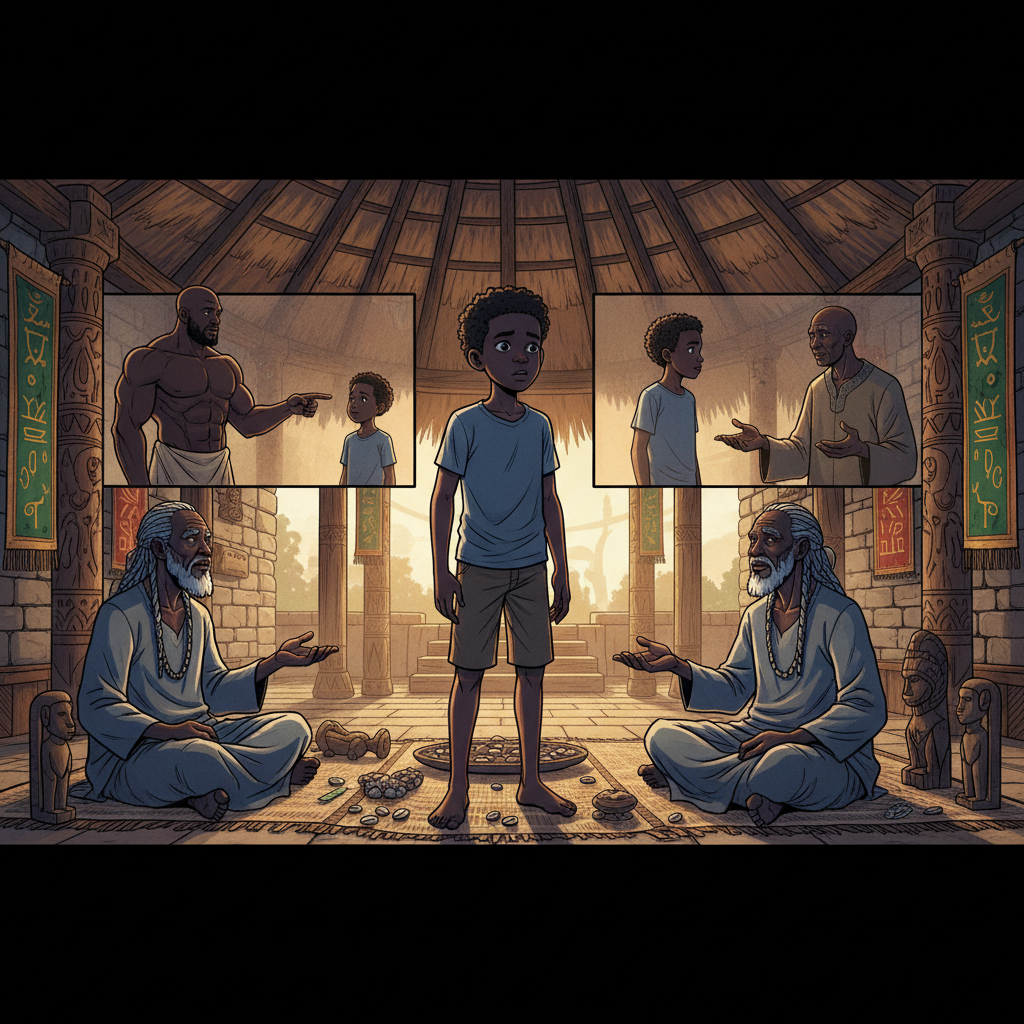
“So, are both my father and Baba Bello lying?” Adewale asked, confused. The idea that his father, a man of such strength and honesty, could be lying was unsettling. He thought of all the times his father had taught him the importance of speaking truth, of standing firm in what was right. This wisdom from the Babalawo seemed to turn everything he knew on its head, leaving him feeling dizzy.
“No,” the Babalawo replied, his voice softer now. “They are not lying. They speak what they see. They speak their truth from where they stand. But they forget that truth stands in many places. They forget that others also stand. Eshu brings disruption not for chaos, but to shake us from the idea that our small corner of the world is the whole world. He forces us to look around, to listen.”
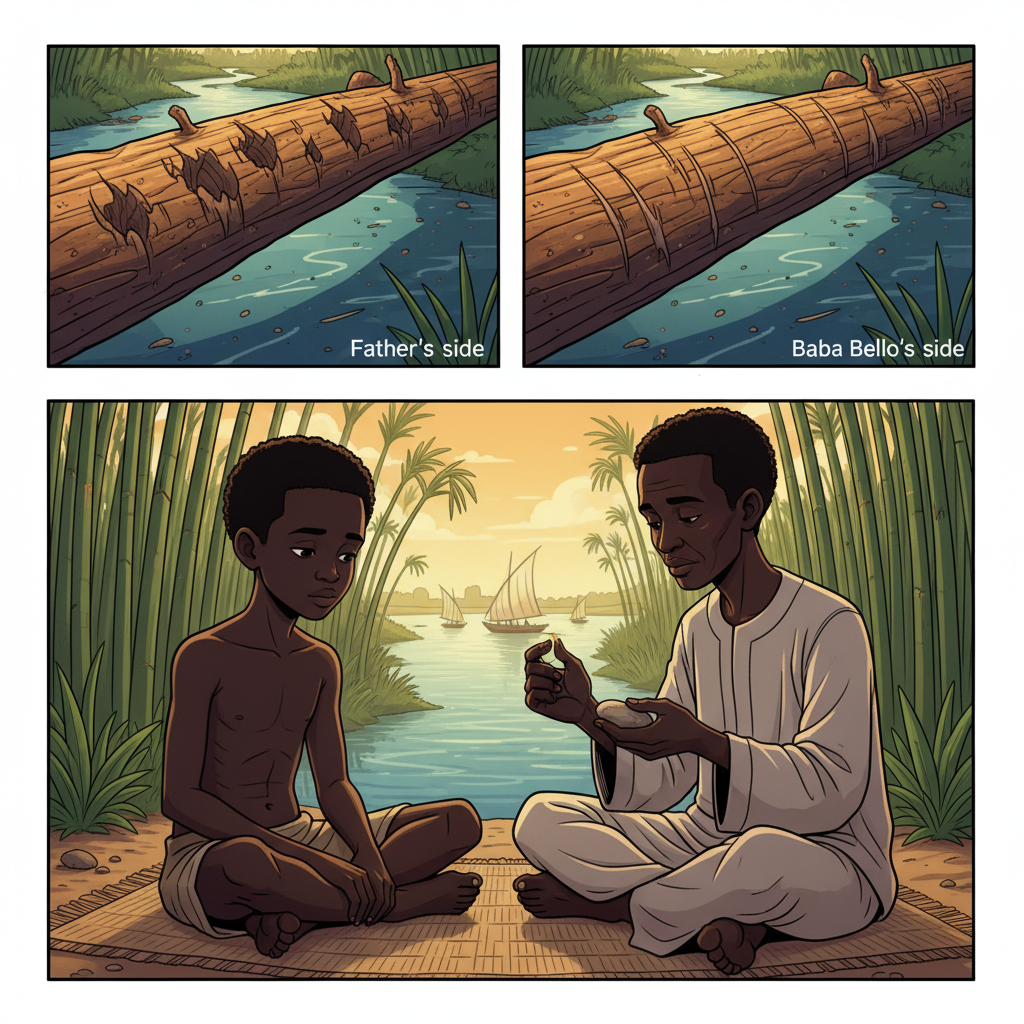
Adewale thought of the log on the bridge. From his father’s side, the marks of goats were clear. From Baba Bello’s side, the scraped tree bark from the palm oil gourds was visible. Both observations were facts. Both contributed to the log’s eventual fall. It was not one or the other. It was both, and perhaps more. He felt a different kind of knot form in his mind, one that began to unravel the first, tighter one. The Babalawo picked up a small, smooth river stone, turning it in his fingers.
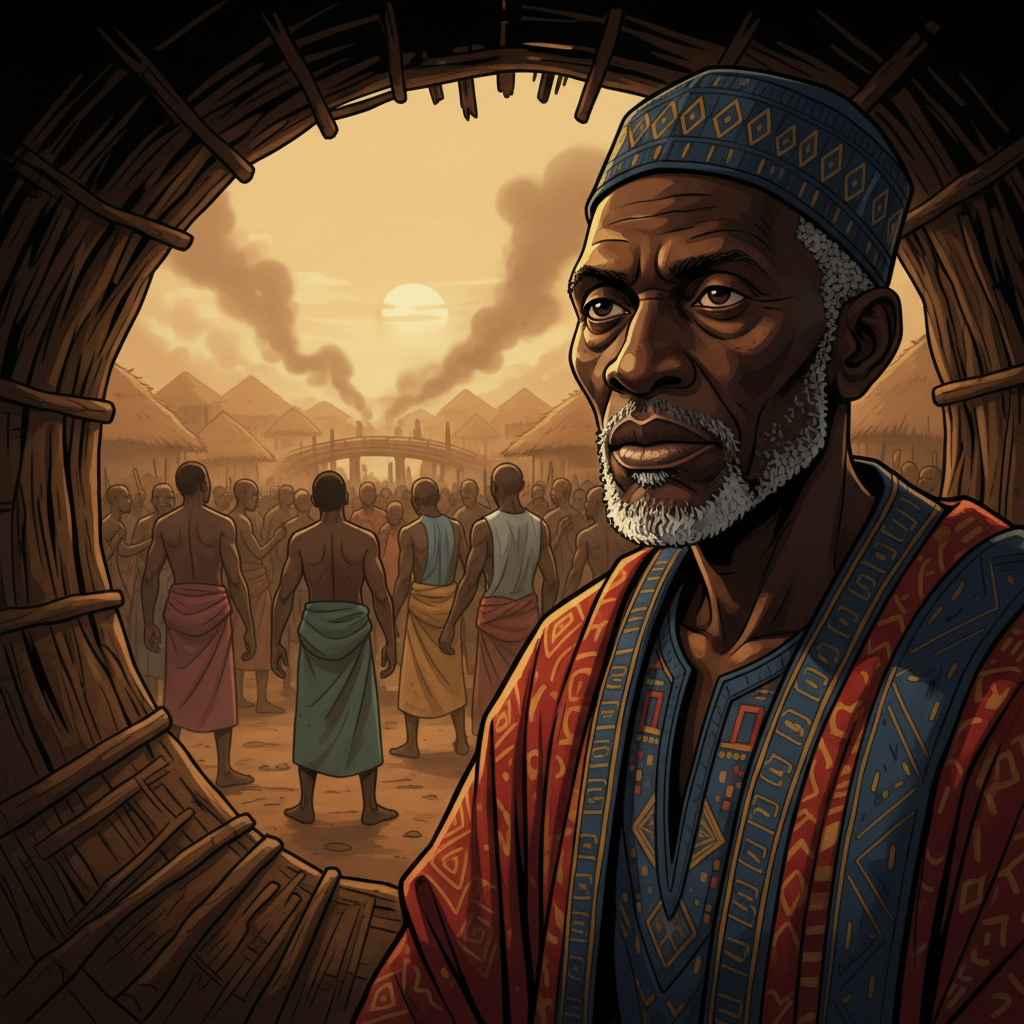
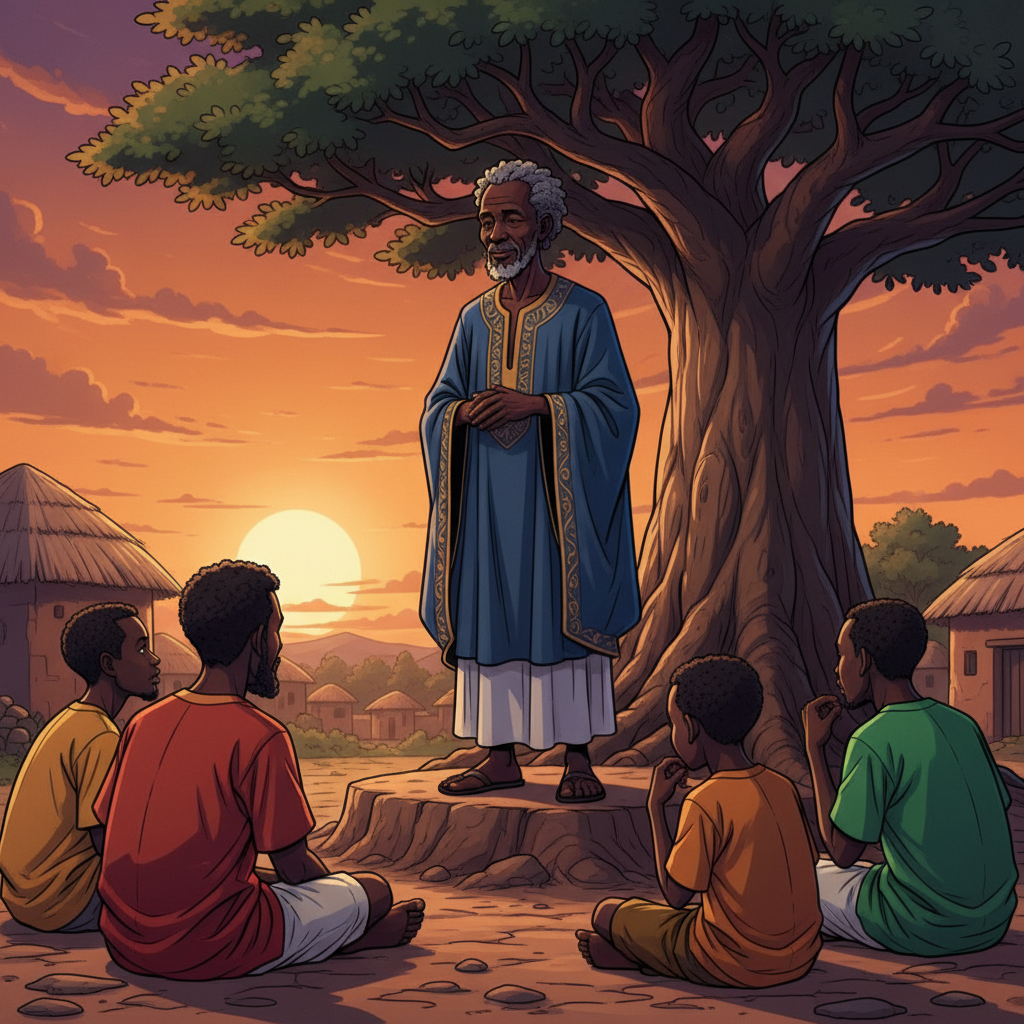
“The path,” the Babalawo continued, “is made by many feet walking together. When one foot insists it is the only one, the path becomes broken. Eshu, the messenger, asks us: How wide is your seeing? How far does your understanding reach? Does it only touch your own shadow, or does it embrace the shadows of others?” He looked out the hut’s opening towards the sound of distant voices, the village still simmering with disagreement.
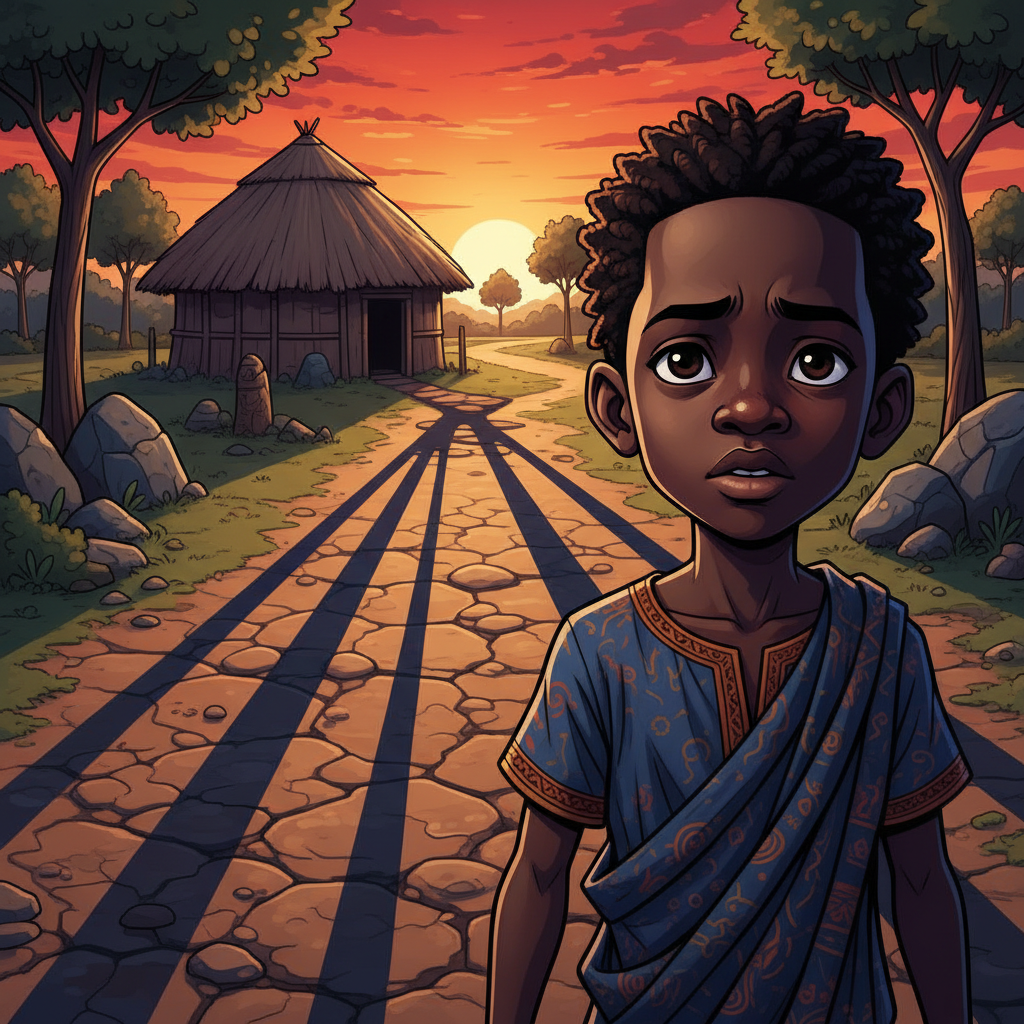
Adewale left the Babalawo’s hut feeling both heavier and lighter. He carried the weight of the unanswered question – how to make his father and Baba Bello see beyond their own truths? But he also felt lighter, as if a part of his confusion had been lifted. The world was not as simple as he had thought. Truth was not a straight line, but a circle, and everyone stood on a different point of its edge. He walked slowly back towards the path, noticing the way the shadows stretched long and thin, like fingers pointing in many directions.
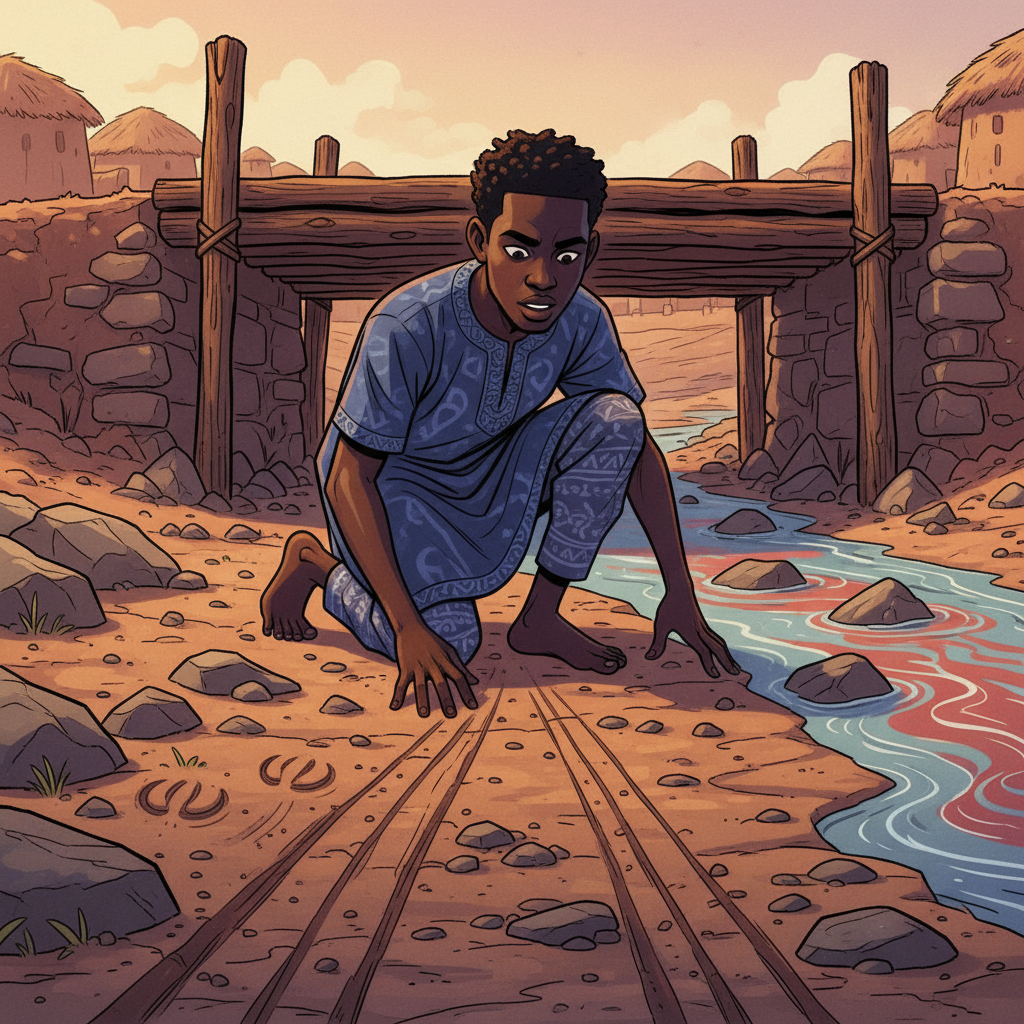
When he reached the bridge, the log was still there. But now, instead of seeing just the log, Adewale saw the path itself. He saw the faint hoof marks of goats in the mud near the stream. He also saw the deep grooves in the earth where the heavy palm oil gourds had been dragged over time. He saw the small, loose stones that dotted the riverbank, and the way the stream itself, after the rains, could erode the soil beneath the bridge’s supports. The fall of the log was not one simple thing.
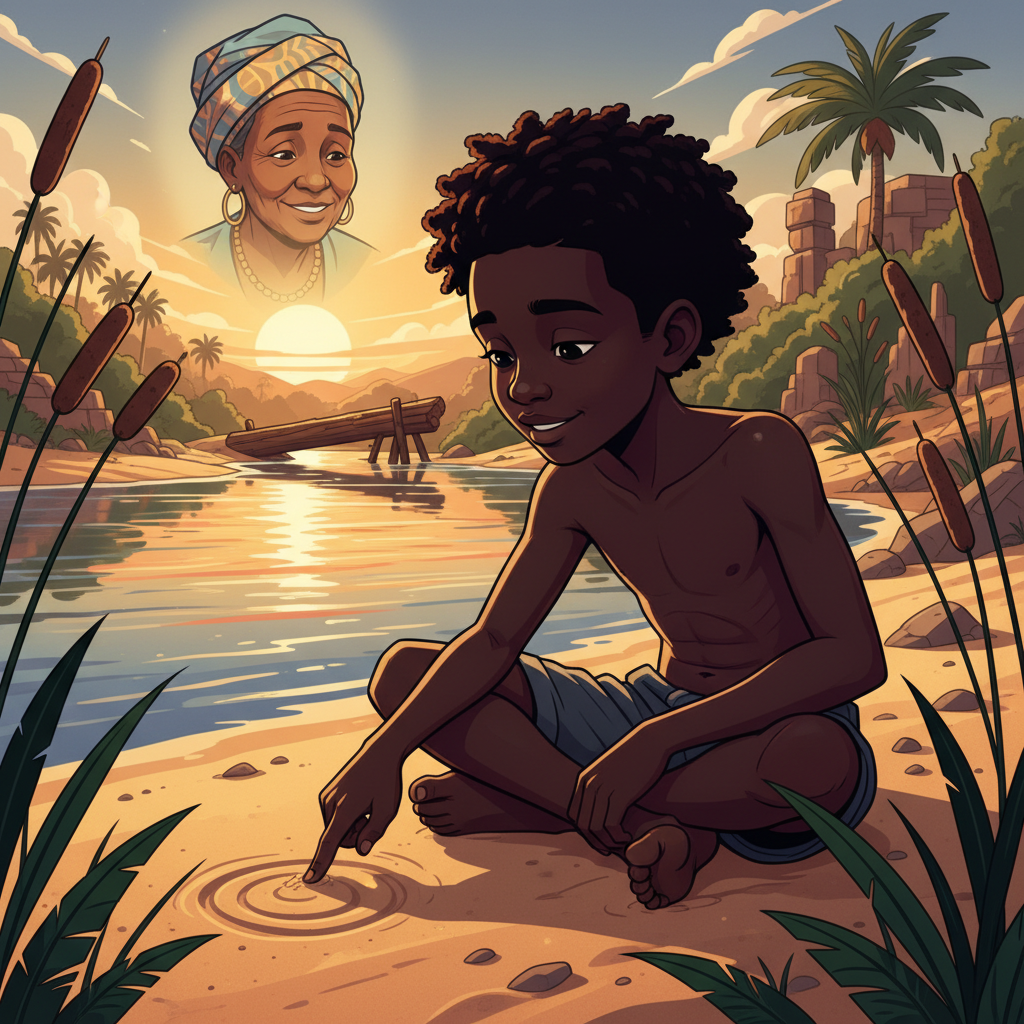
He sat on the riverbank, tracing patterns in the sand with his finger. He remembered his grandmother telling him that Eshu was often blamed for troubles, but that his purpose was to open the mind. He forced people to reconsider, to look deeper. The log was a trouble, yes, but it was also a message. A message that the path, the shared space, needed to be seen from all sides, understood by all who used it.
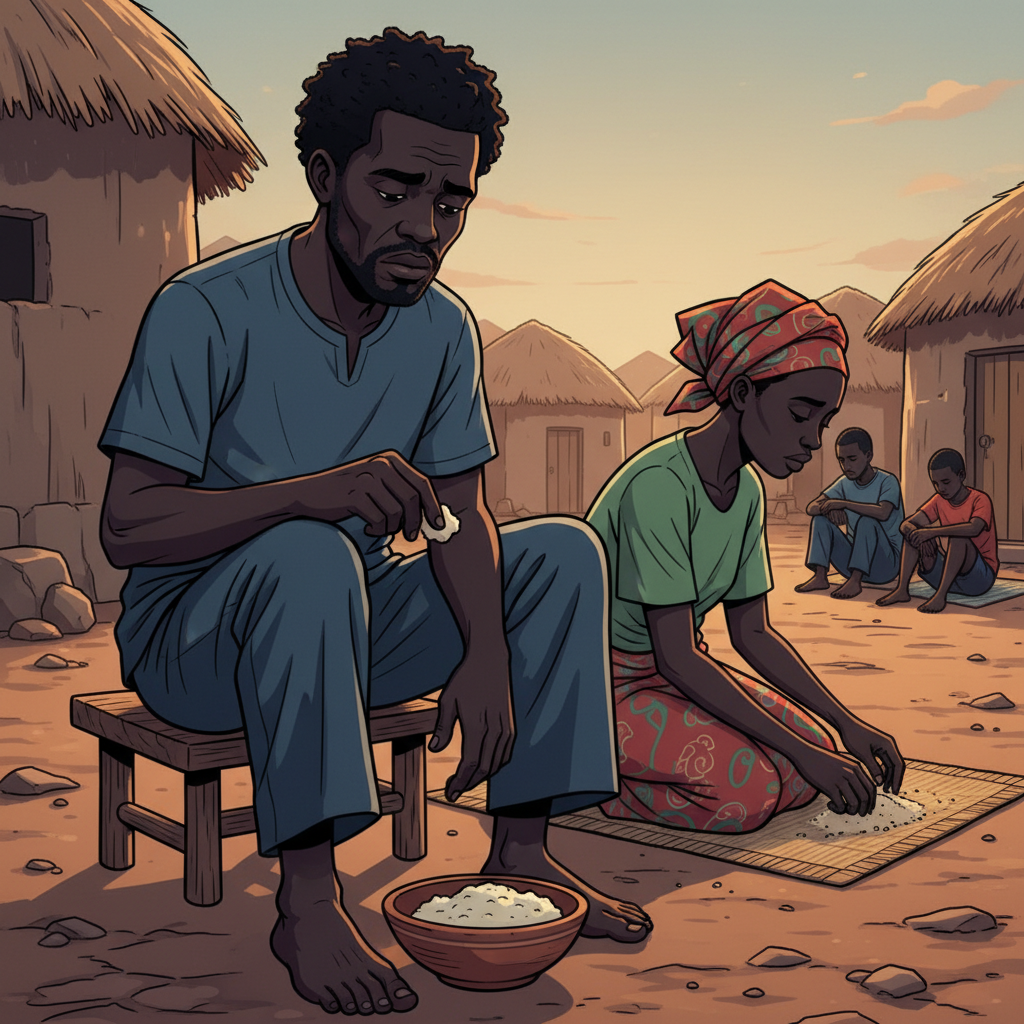
That evening, Adewale did not speak about the Babalawo’s words. He simply watched. He watched the way his father ate his fufu, his brow still furrowed. He watched Mama Ajayi prepare for the next day, her usual songs quiet. He saw the same quietness in the Bello compound, a silence where laughter used to be. The village, usually a tapestry of sounds, felt like a thread had been pulled loose, leaving a gap.
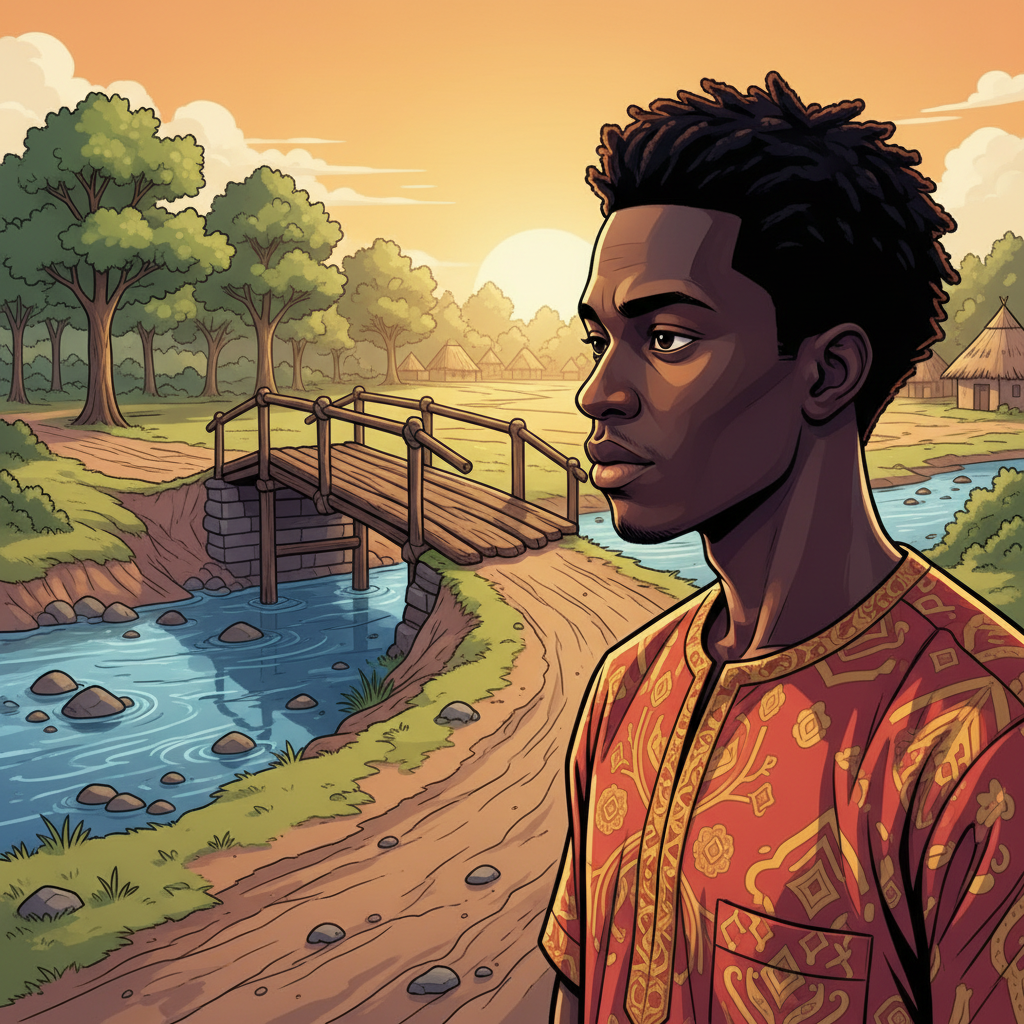
The next morning, Adewale walked to the bridge again. He didn't know what he was looking for. Perhaps a sign. He just stood there, observing the log, the stream, the banks, the paths leading to it. He thought of Eshu’s hat, black on one side, white on the other. He thought of the sun warming his back and burning his face. He thought of the truth having many faces, all of them real, all of them part of the whole picture.
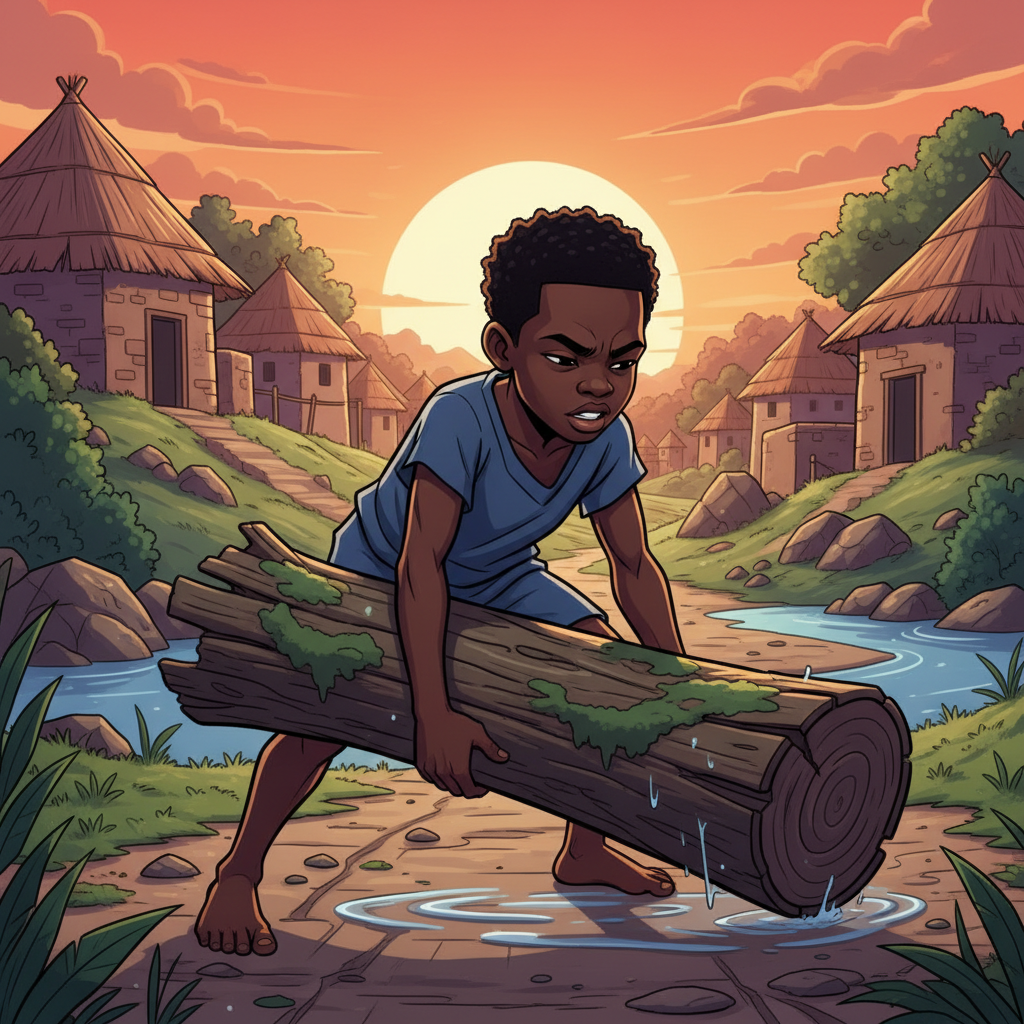
He took a deep breath. He walked to the log, wrapped his hands around its rough, wet bark, and pulled. It was heavy. Too heavy for him alone. But he pulled anyway. He pulled with the strength of his young arms, with the weight of his new understanding. He knew it wasn’t his burden alone, but he also knew that waiting for others to change their view would keep the path blocked forever. He strained, his muscles burning.
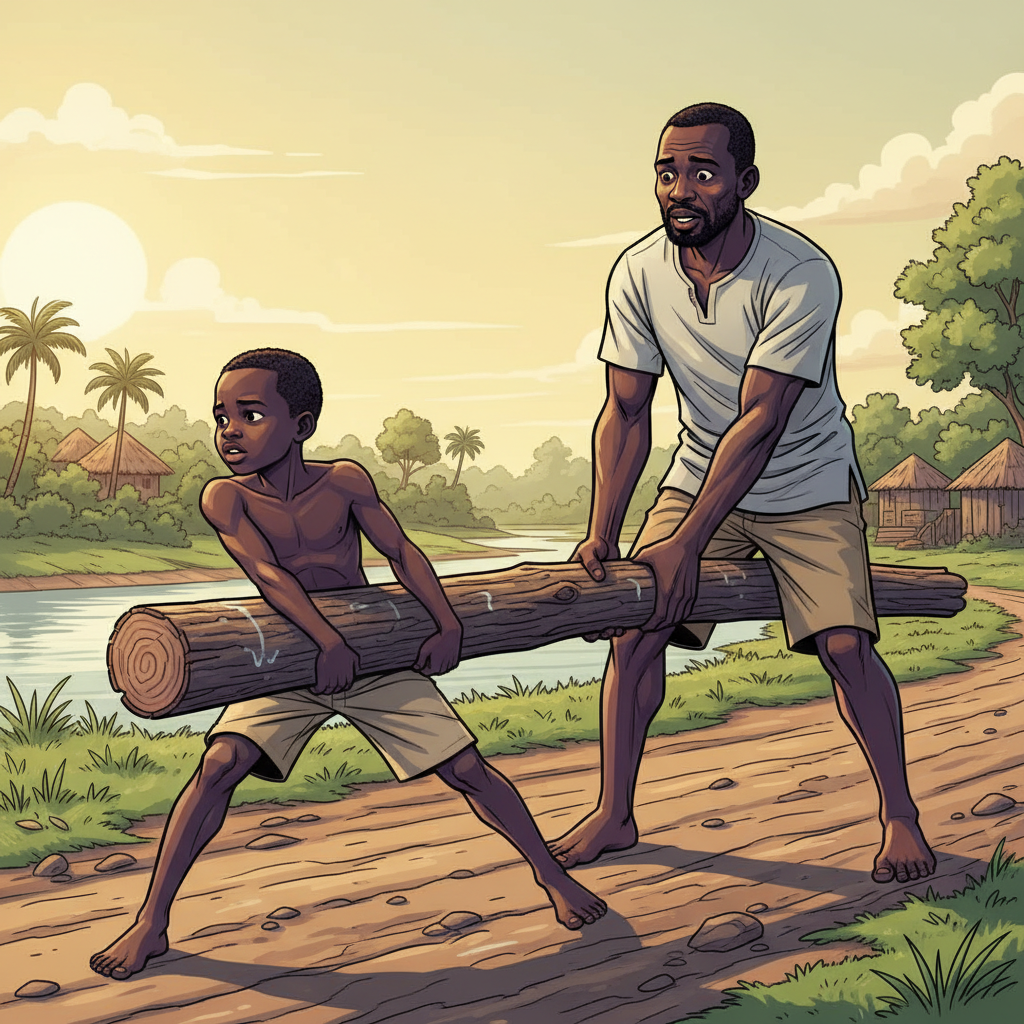
Just then, he heard footsteps. It was Papa Ajayi, his father, coming down the path, his face still etched with the weariness of disagreement. He stopped short when he saw Adewale straining against the log. He watched his son for a long moment, then, without a word, he came to the other end of the log and grasped it. His skin, like polished ironwood, flexed with effort. Together, they pulled.
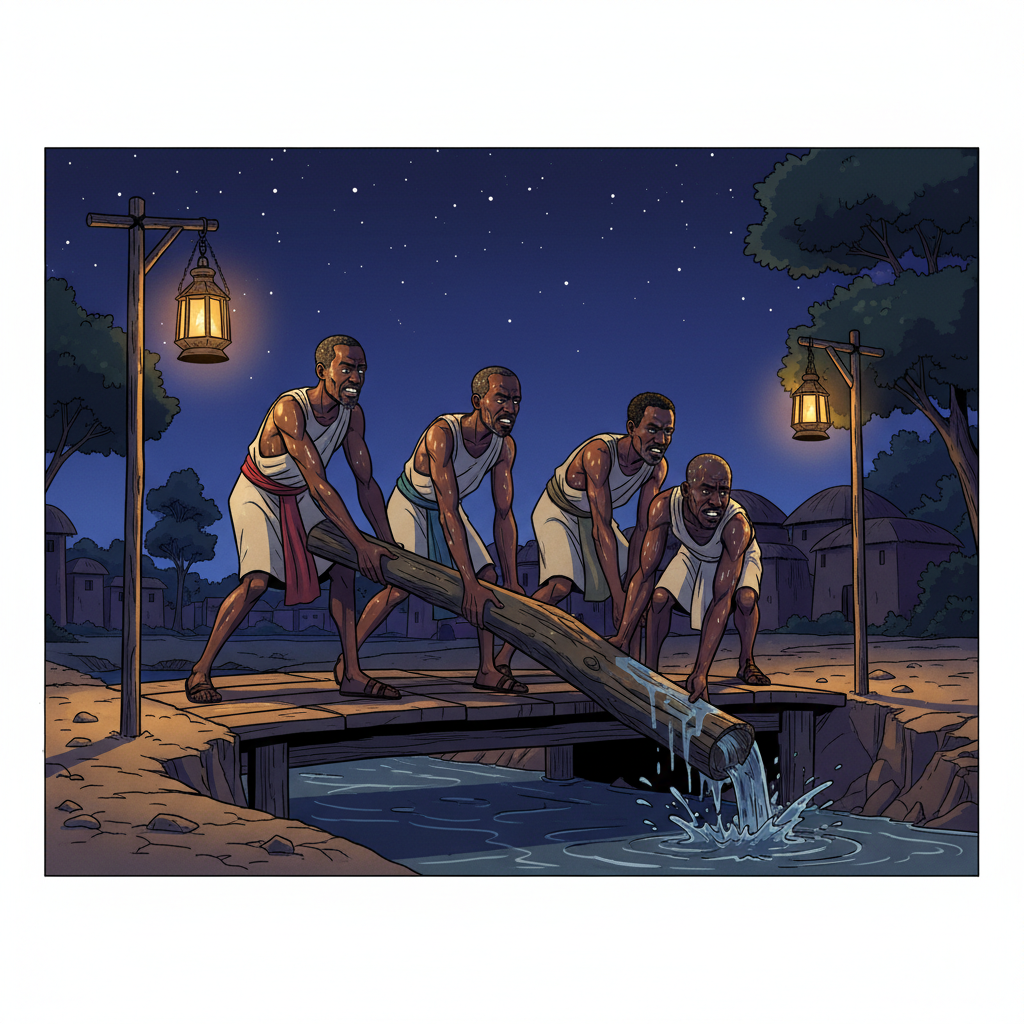
It was still hard, but with two sets of hands, the log began to shift. Just as it cleared the main part of the bridge, another pair of hands joined them. Baba Bello, his dark skin gleaming with sweat, had come to help. No words were exchanged. Only the grunts of effort, the shifting of the log, the splash as it finally rolled into the stream below, floating lazily downstream. The path was clear.
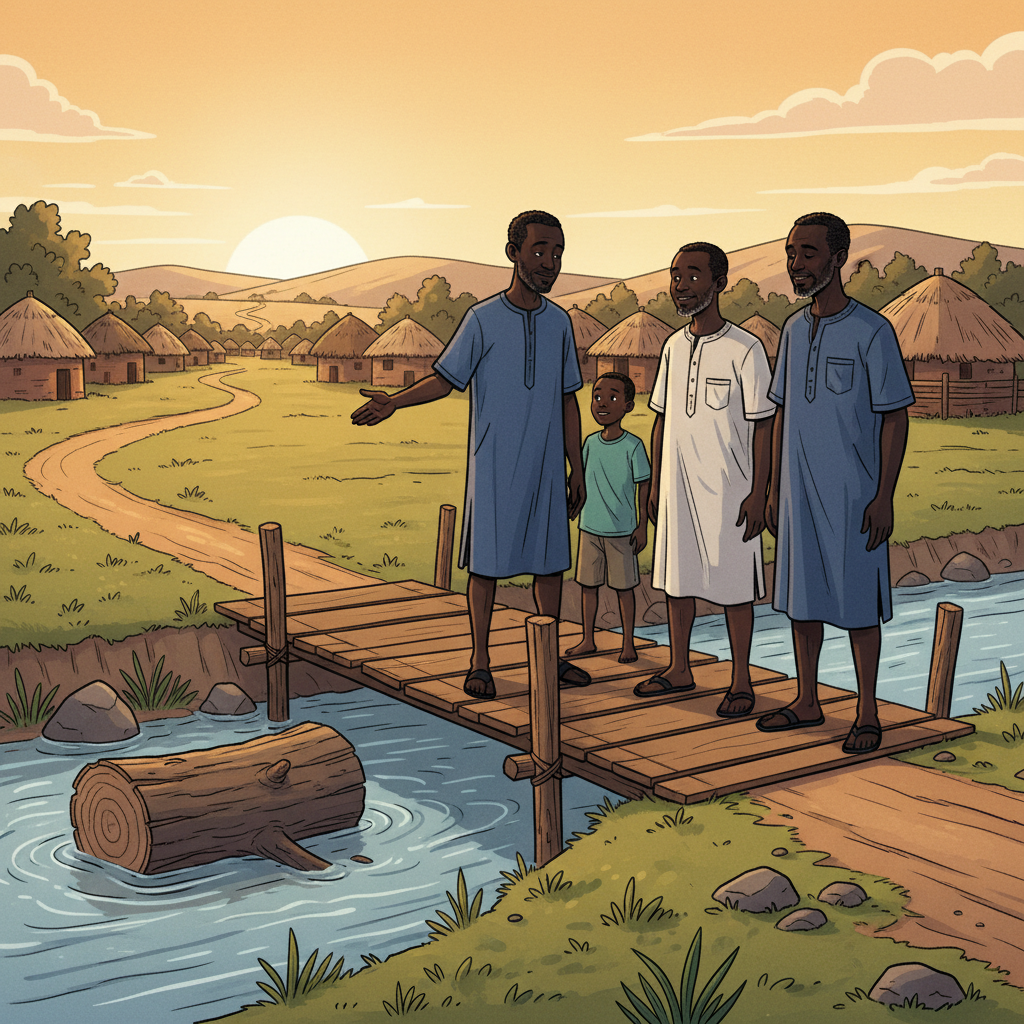
The path was clear. But the air between the men was not. They stood for a moment, breathing heavily, looking at the now empty bridge. Papa Ajayi turned to Baba Bello. “It seems,” he said, his voice less tight than before, “the stream needed a new resting place for that log.” Baba Bello nodded. “And the path,” he replied, a small smile touching his lips, “needed to breathe again.” Adewale watched them, understanding that the clearing of the path was only the beginning of a longer journey, one that started with seeing beyond a single truth.
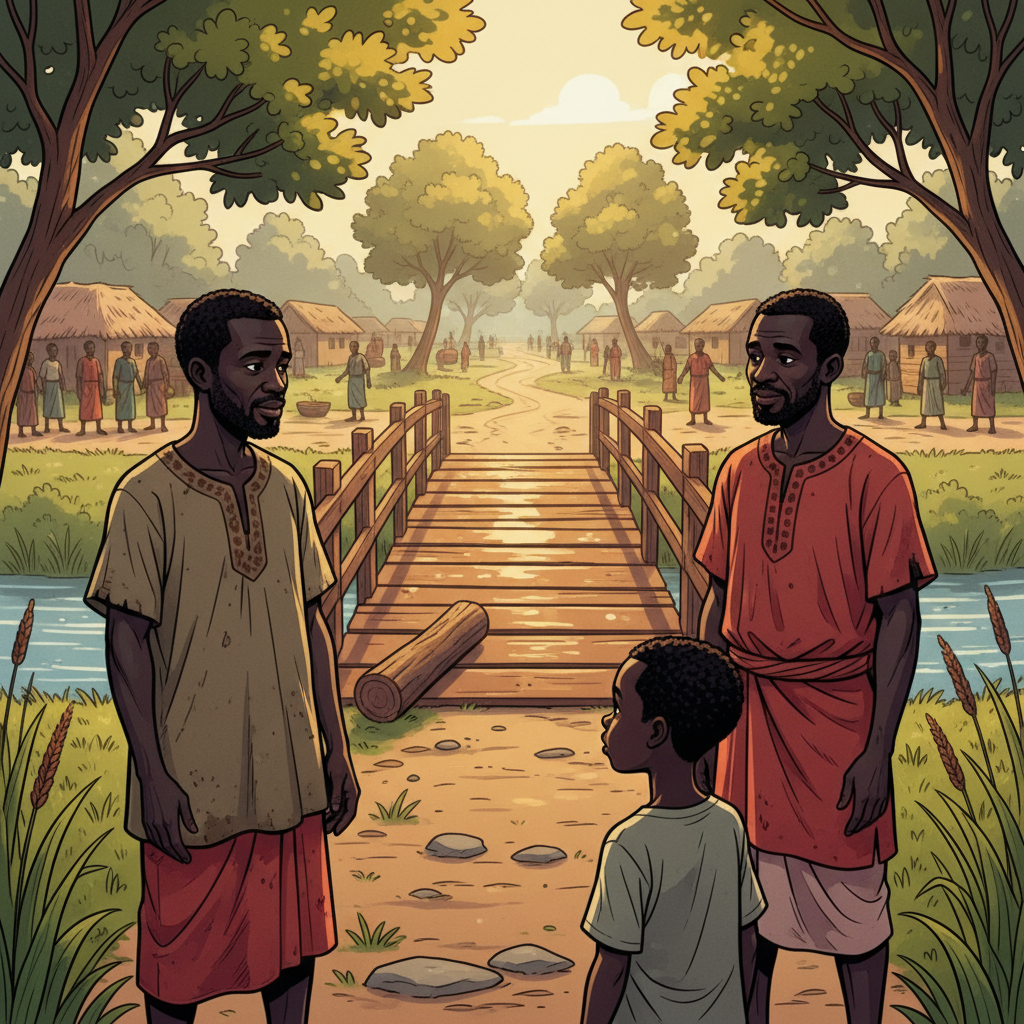
The sun, high above, shone on the now-clear bridge, making the wet wood gleam. The path was open for all. Adewale looked at his father, then at Baba Bello. They still had their separate truths about how the log fell, but in that moment, pulling together, they had found a shared truth – the path needed clearing. He thought of Eshu, the trickster, the messenger, not causing trouble, but revealing the need for eyes to see more, for hearts to hold more. The village hum began to rise again, a little softer, a little wiser, like a song remembered after a long silence.