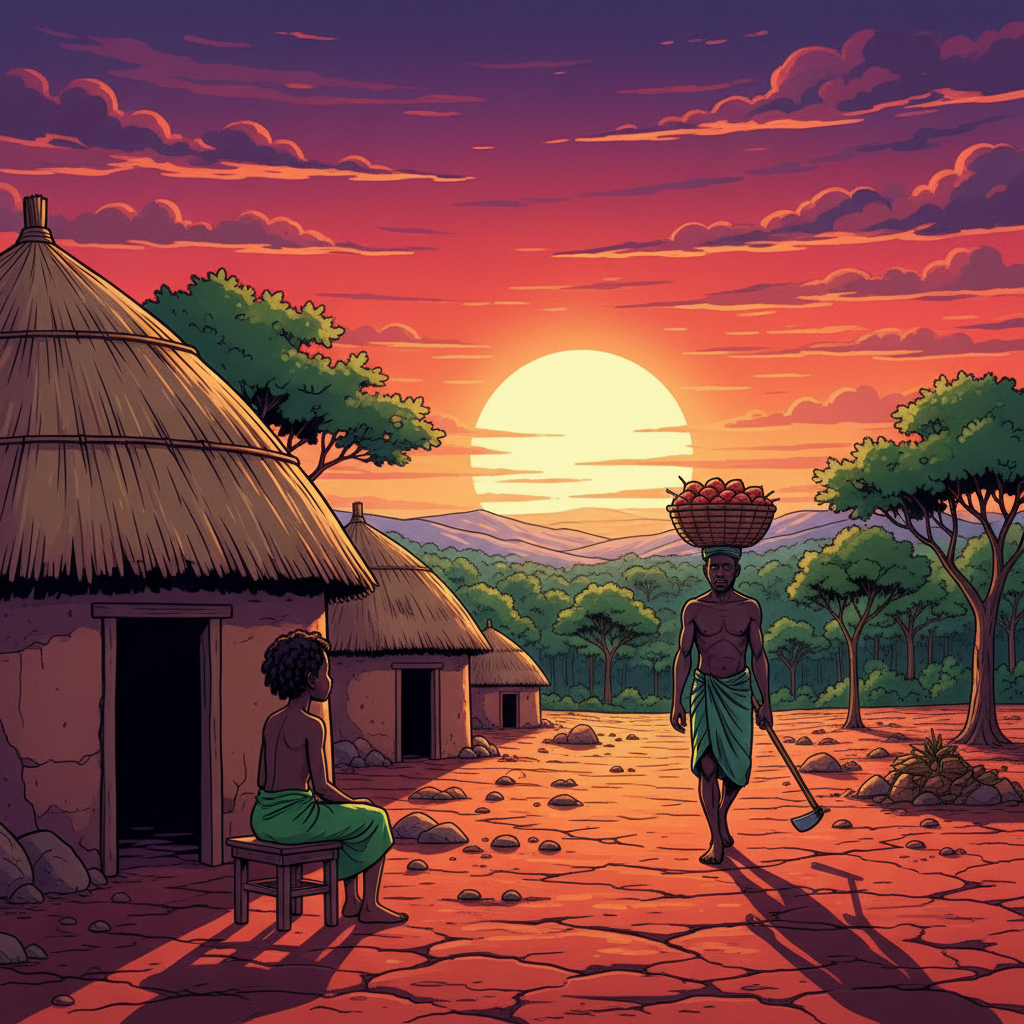
The sun, a generous orange orb, dipped below the horizon, painting the sky in hues of purple and deep red. Chiamaka sat on the worn wooden stool outside their compound, watching her father, Obinna, return from the yam farm. His back, usually straight and proud, seemed a little more stooped this evening. The air hummed with the quiet anticipation of the harvest season, a time of both hard work and joyous celebration in their Igbo village. Soon, the Ahiajoku festival would arrive, honoring the yam deity and ensuring continued bounty from the earth. Chiamaka loved the festival, the vibrant music, the communal feasts, and the feeling of belonging that wrapped around everyone like a warm blanket. But this year, a tiny seed of worry had begun to sprout in her mind, a quiet observation she could not quite shake. It was about her father, the yams, and the way things were done.
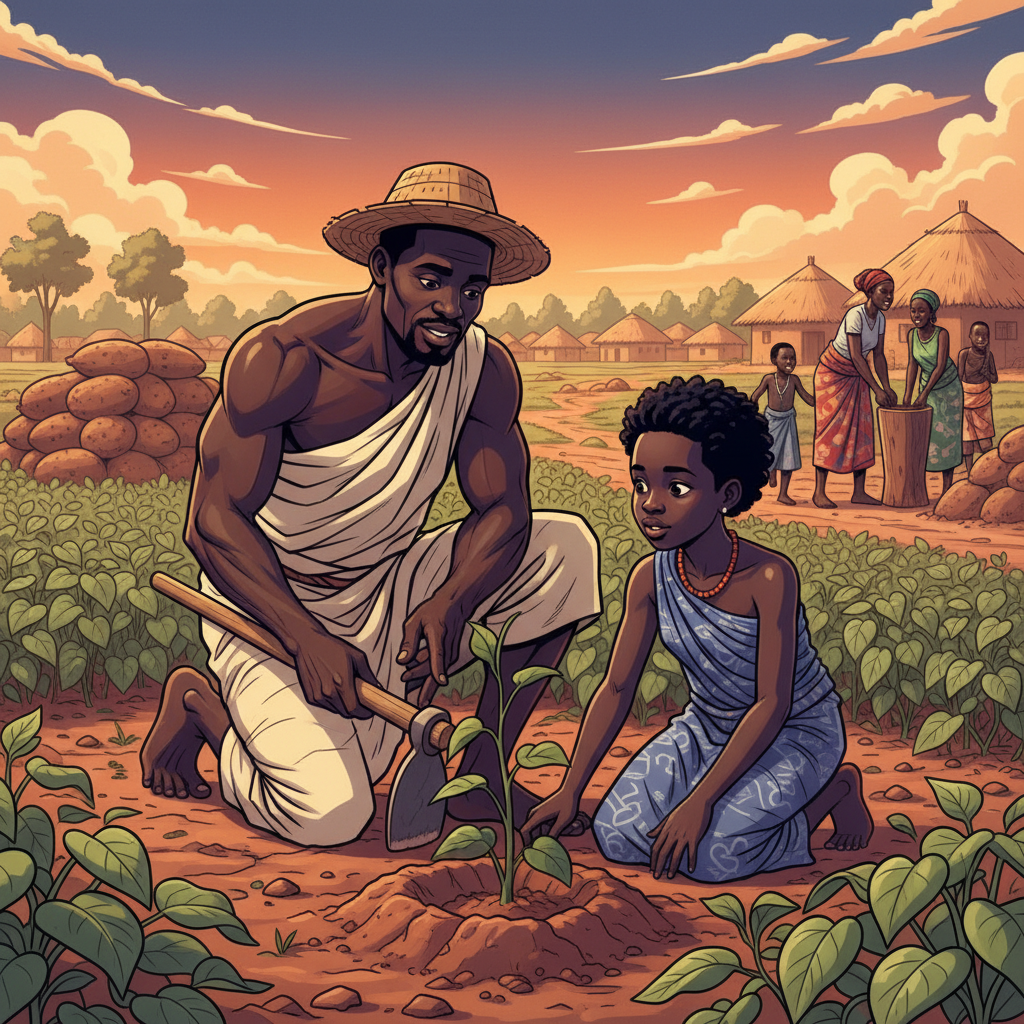
Preparations for the Ahiajoku festival were already underway in the village of Umunneato. Women sang ancient songs as they pounded fufu, their rhythms echoing through the dusty paths. Children, their laughter like bells, chased each other amidst stacks of freshly harvested yams, their skin glistening under the afternoon sun. Obinna’s farm, historically one of the most productive, contributed significantly to the village’s prosperity. He was a respected farmer, known for his strength and knowledge of the soil. Chiamaka often followed him to the fields, learning the names of plants, the best times to weed, and the subtle signs the earth gave when it needed something. She understood the deep connection between the people and the land, a bond woven through generations of toil and tradition. It was this understanding that made her recent observations feel so out of place, like a single discordant note in a familiar melody.
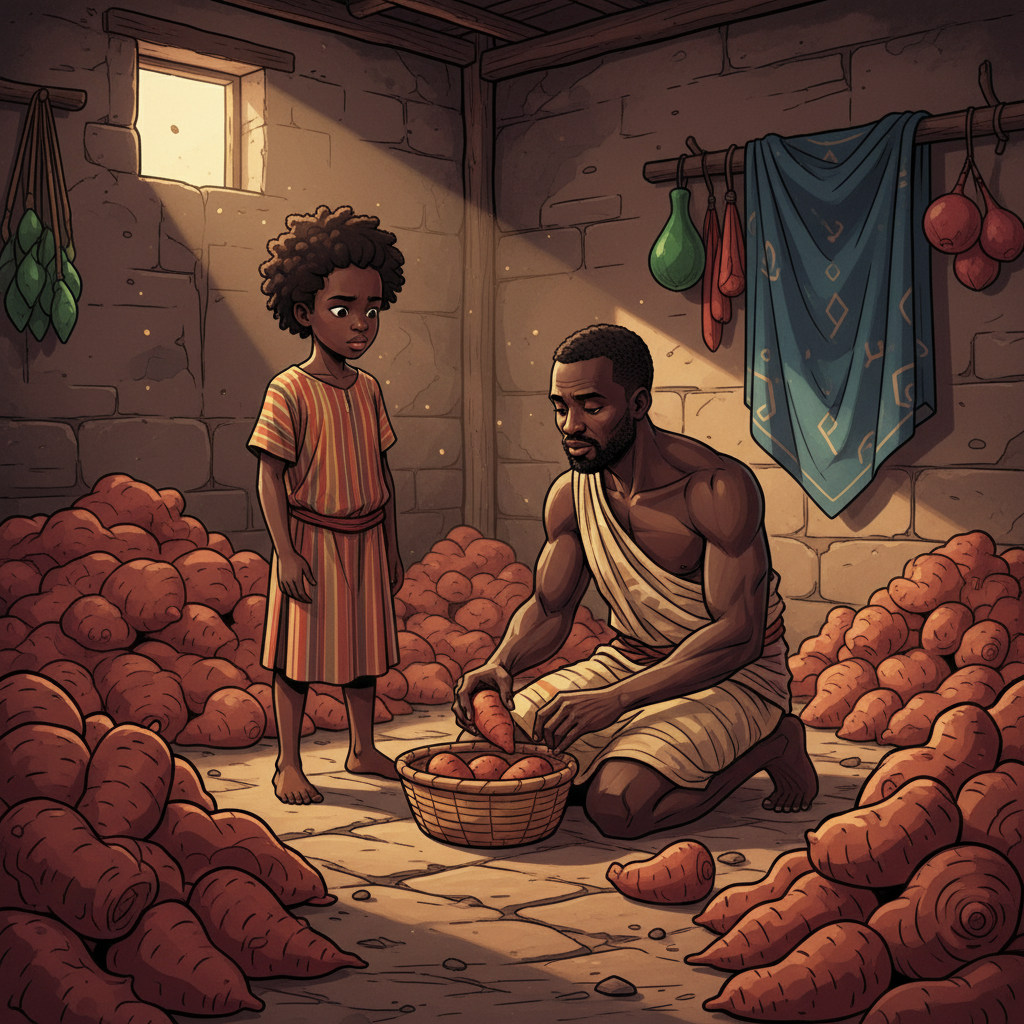
Days before the main festival, each family would select their finest yams for the offering. These were not just any yams; they were chosen with reverence, perfect in shape and size, representing the best the land had given. Chiamaka watched her father in their storage shed. He moved with a practiced hand, carefully sorting through the mounds of plump, earthy tubers. His pile for market and family consumption grew steadily, a testament to his hard work. Then, he turned to the smaller basket meant for the offering. Chiamaka’s brow furrowed slightly. From the vast bounty surrounding them, her father chose three yams. They were good yams, certainly, but they seemed… small. Not the biggest, not the most flawless, just three modest yams. She wondered if her eyes were deceiving her, or if there was something she was missing about the tradition.
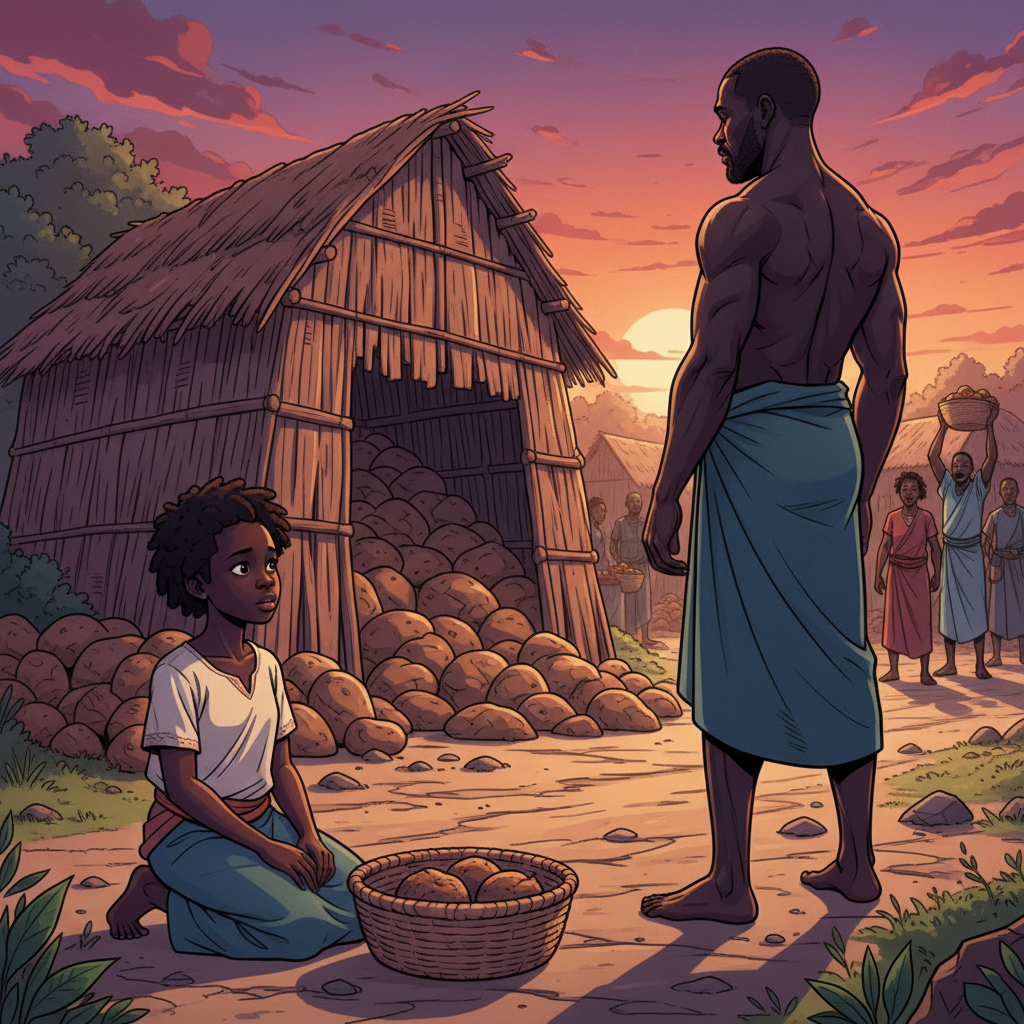
Chiamaka knew the stories, heard them from her grandmother and the village elders. The yam was life, a sacred gift from the earth and from Ahiajoku, the spirit of the yam. The offering was a way of saying “thank you,” of acknowledging the source of their sustenance. It was a promise of respect, a recognition of the balance between taking and giving back. Yet, her father’s offering seemed to tilt that balance. He had harvested such an abundant yield this season, more than many others in the village. His storage shed was full to the brim, the yams stacked high like brown mountains. And still, his offering basket held only those three modest tubers. Chiamaka felt a quiet unease settle in her chest. She did not understand why her father, a man so wise in the ways of farming, would offer so little when he had received so much.
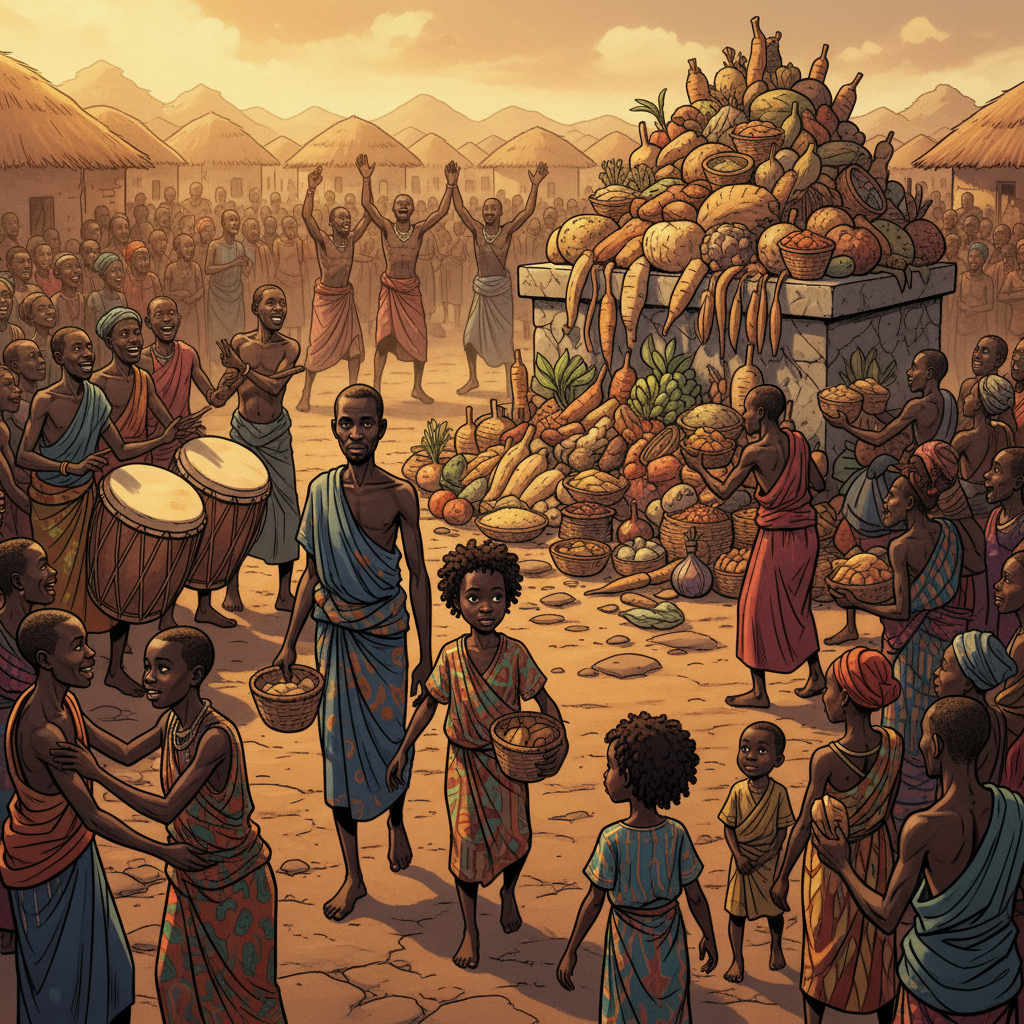
On the day of the Ahiajoku festival, the air throbbed with drums and the joyful cries of the villagers. Everyone wore their finest clothes, fabrics dyed in rich indigos and earth tones, intricate patterns telling stories of their ancestors. The central square was alive with activity. Offerings from every family were placed before the altar, creating a vibrant display of gratitude. Chiamaka walked alongside her father, carrying their basket. She saw the other offerings – some were overflowing with yams, others held fewer, but each seemed to represent a family’s heartfelt thanks. Her father placed their small basket among the many. He straightened up, his face impassive, and then joined the men in the ceremonial dances. Chiamaka watched him, then glanced back at their modest offering. The quiet confusion she felt deepened, a silent question forming in her young mind.
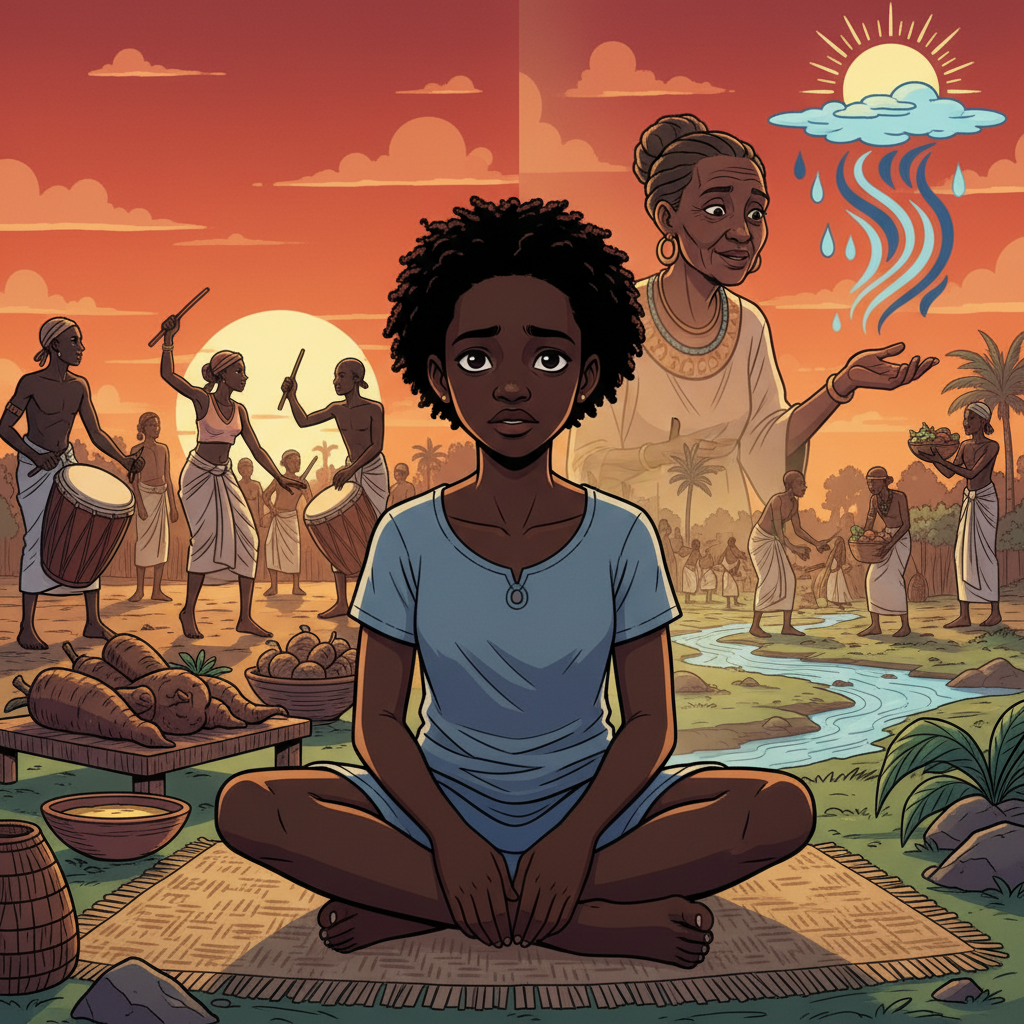
Throughout the feasting and dancing, Chiamaka tried to distract herself. She ate roasted yam with palm oil, listened to the tales of heroes and spirits, and joined the children in their games. But the image of her father’s small offering kept returning. She knew her father worked tirelessly, rising before the sun and returning long after it set. He deserved the abundant harvest he received. But did the land not also deserve its due? Did Ahiajoku not deserve the best, just as they received the best? She thought about the stories her grandmother, Nneka, often told, tales of ancient times when people lived in perfect harmony with nature, always mindful of the exchange, the constant flow of energy and gratitude. Chiamaka wished she could understand. She wished someone could explain this subtle discrepancy.
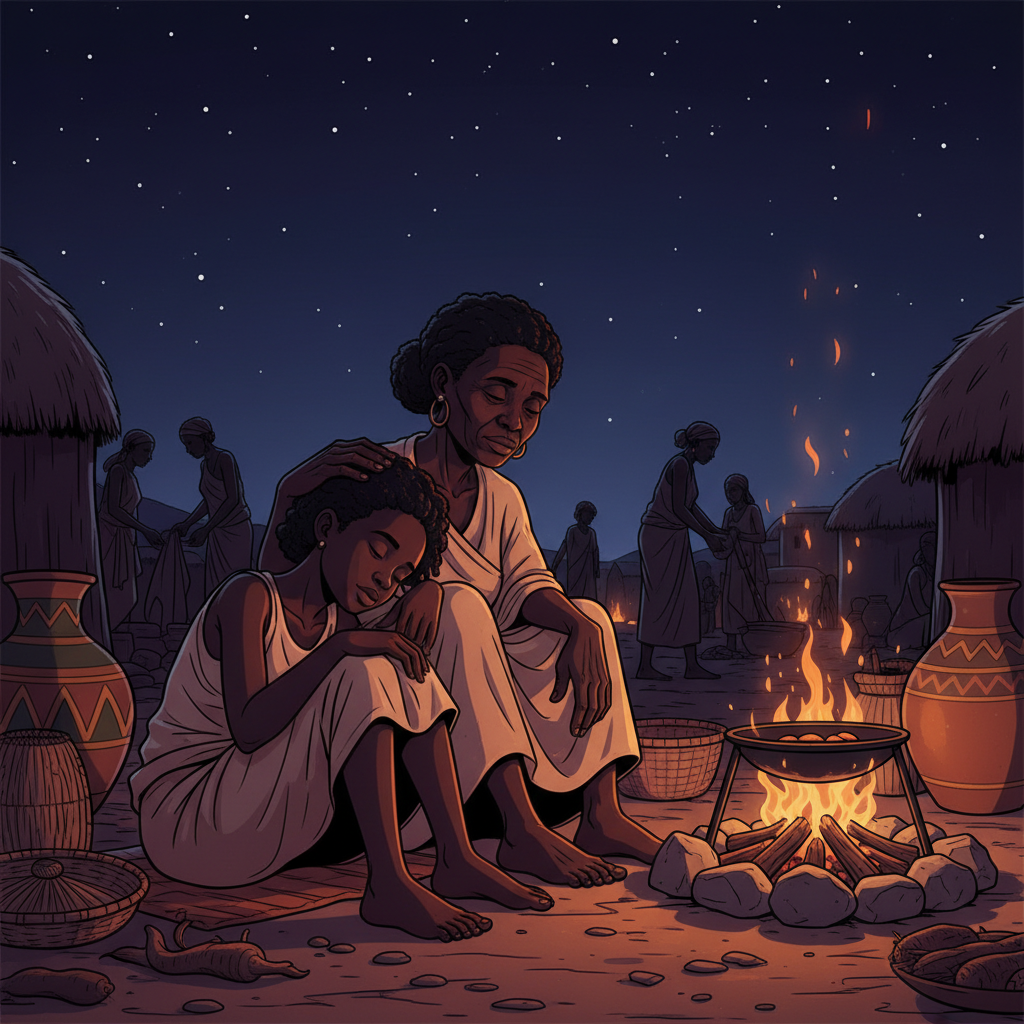
Later that evening, as the festival wound down and the stars began to pepper the inky sky, Chiamaka found her grandmother, Nneka, sitting by the dying embers of the cooking fire. Nneka’s face, etched with the wisdom of many seasons, glowed softly in the firelight. Chiamaka sat beside her, leaning her head on Nneka’s knee. "Nneka," she began, her voice barely a whisper, "why do we give offerings to Ahiajoku?" Nneka’s hand, gnarled but gentle, stroked Chiamaka's hair. "We give, my child, because it is the way of things. The earth gives to us, and we must give back. It is a dance, a conversation." Chiamaka hesitated, then gathered her courage. "But if we have much, should we not give much? Papa gives only a little, but takes so many yams. Does Ahiajoku not notice?"
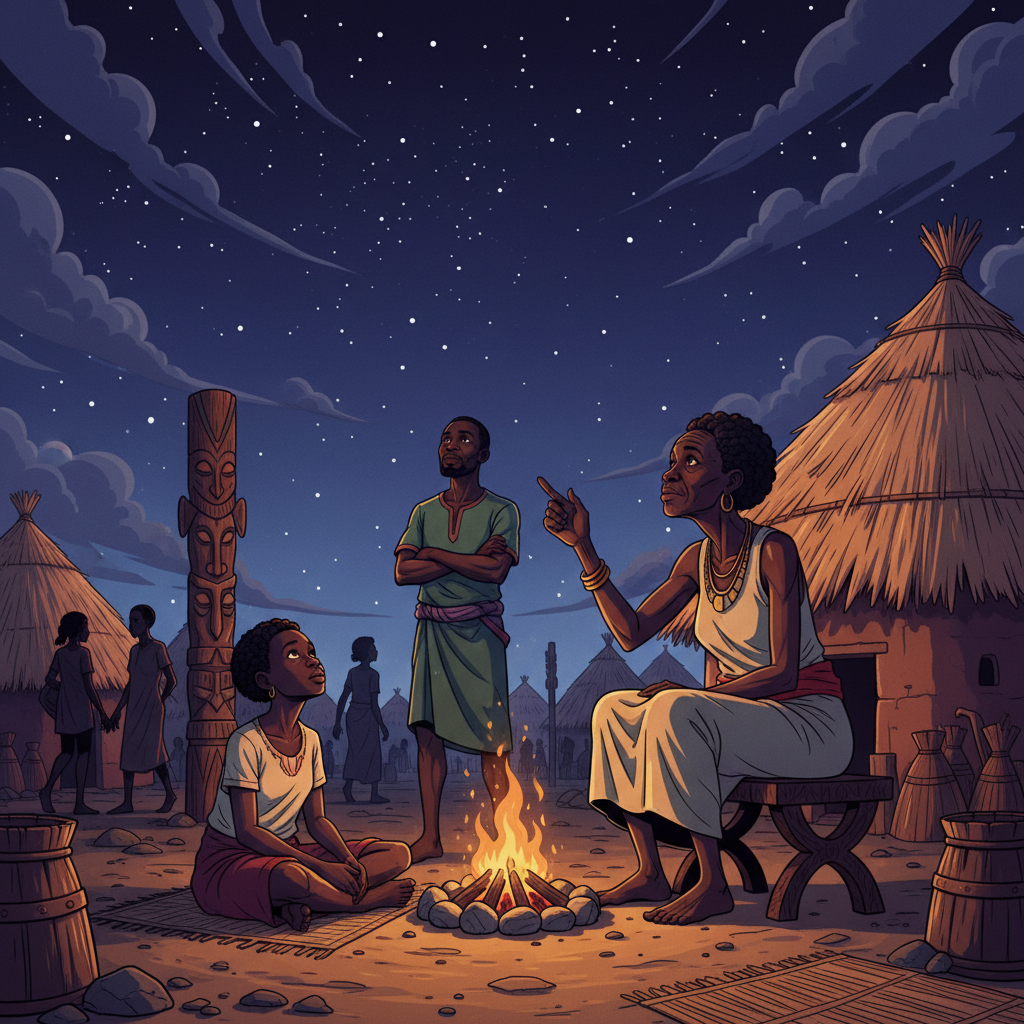
Nneka’s gaze turned to the distant stars. "Ahiajoku sees everything, my dear. The spirits of the land see everything." She paused, then continued, her voice soft but firm. "Think of the rain, Chiamaka. The rain does not fall because you asked for it today, or because you promised a large feast tomorrow. It falls because something was given before you were even born. Generations before us nurtured the land, respected its cycles, and gave thanks freely. Their efforts, their generosity, their understanding of reciprocity – that is what brings the rain, the sun, and the fertile earth to us now. We are simply continuing a long chain of giving and receiving. If we take more than we give, or give less than is due, the chain weakens. The land remembers." Chiamaka listened, the words sinking deep into her young heart.
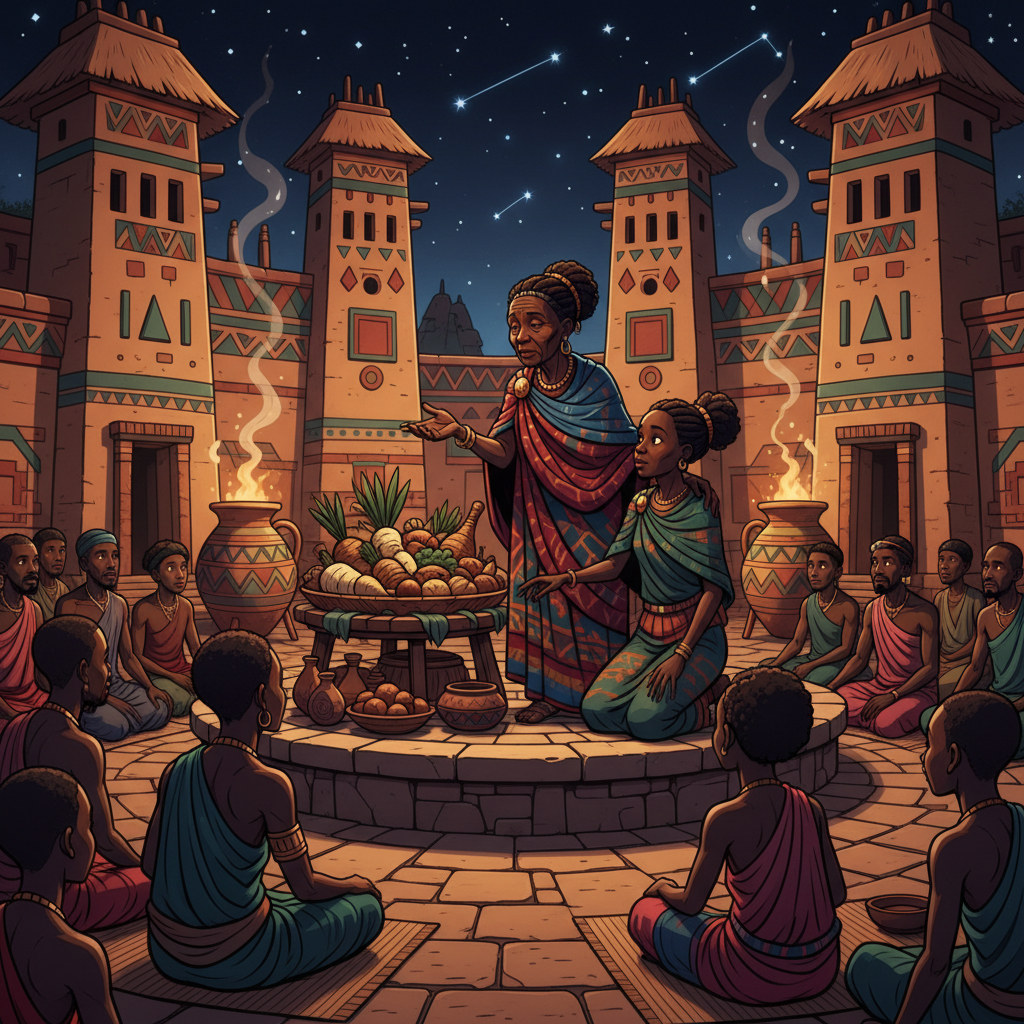
“The Ahiajoku festival is not just a celebration, Chiamaka,” Nneka continued, her voice like a rustling leaf. “It is a sacred covenant, a promise. It is our way of showing gratitude not only for the harvest we have received but also for the harvests yet to come. It is an acknowledgement that we are but a small part of a much larger rhythm, a give-and-take that keeps the world in balance. If we forget this, if we become too focused on only taking, then the balance shifts. The earth, like a friend who feels unappreciated, might grow quiet. It might hold back its gifts. This tradition, these offerings, they are not about appeasing an angry god; they are about maintaining a relationship, a deep respect for the source of all life.” Chiamaka nodded slowly, understanding dawning in her eyes.
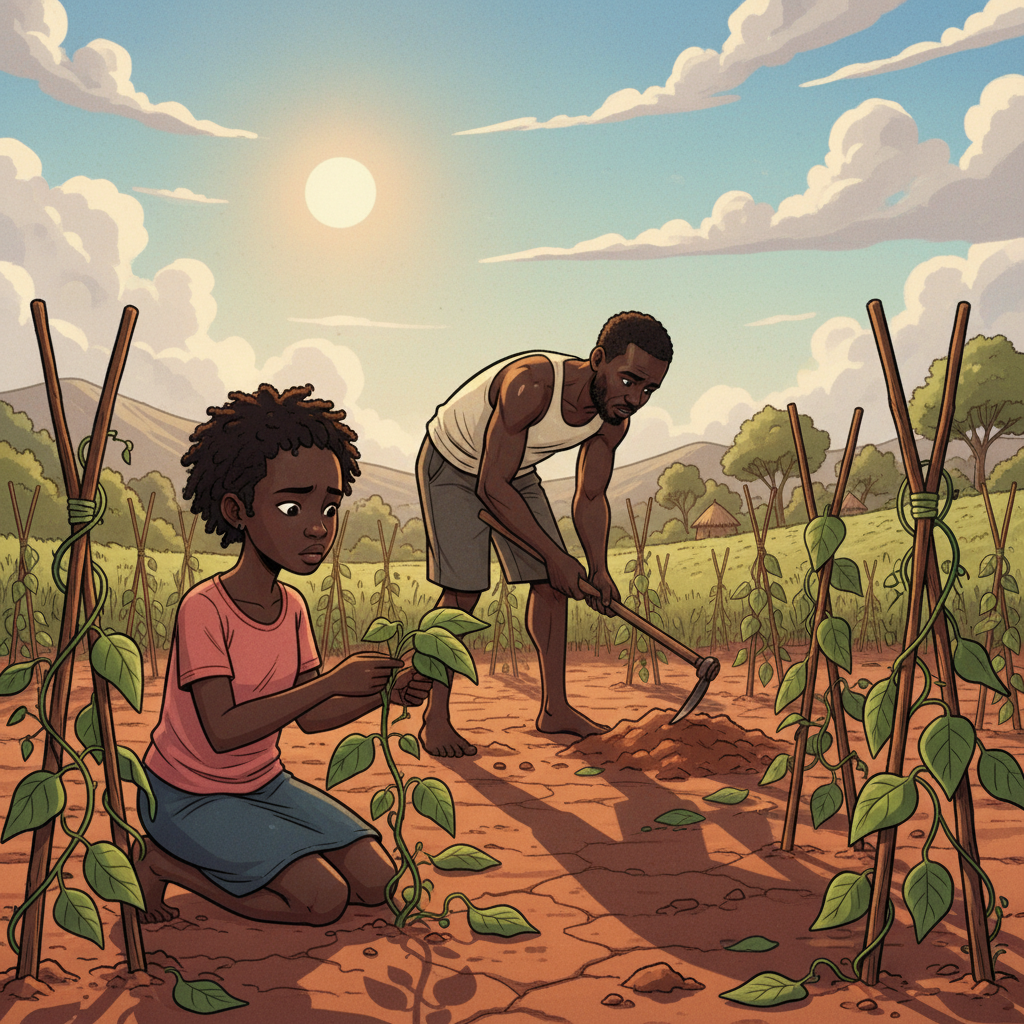
The next growing season arrived, heralded by the first gentle rains. Obinna, as always, tilled his fields with diligence and care. Chiamaka, now carrying Nneka’s words in her mind, watched the young yam shoots emerge from the soil. They seemed a little less vigorous than before, a subtle observation that might have gone unnoticed by others. As the season progressed, the changes became more apparent. The yam vines, usually lush and sprawling, seemed sparser. The leaves, though green, lacked the vibrant health of previous years. Obinna worked harder, weeding more meticulously, mounding the soil around the struggling plants with extra effort. He sweated under the sun, his brow often furrowed in concentration and perhaps, a hint of worry. He blamed the inconsistent rains, the unpredictable weather patterns. Chiamaka said nothing, but she remembered Nneka’s words about the rain.
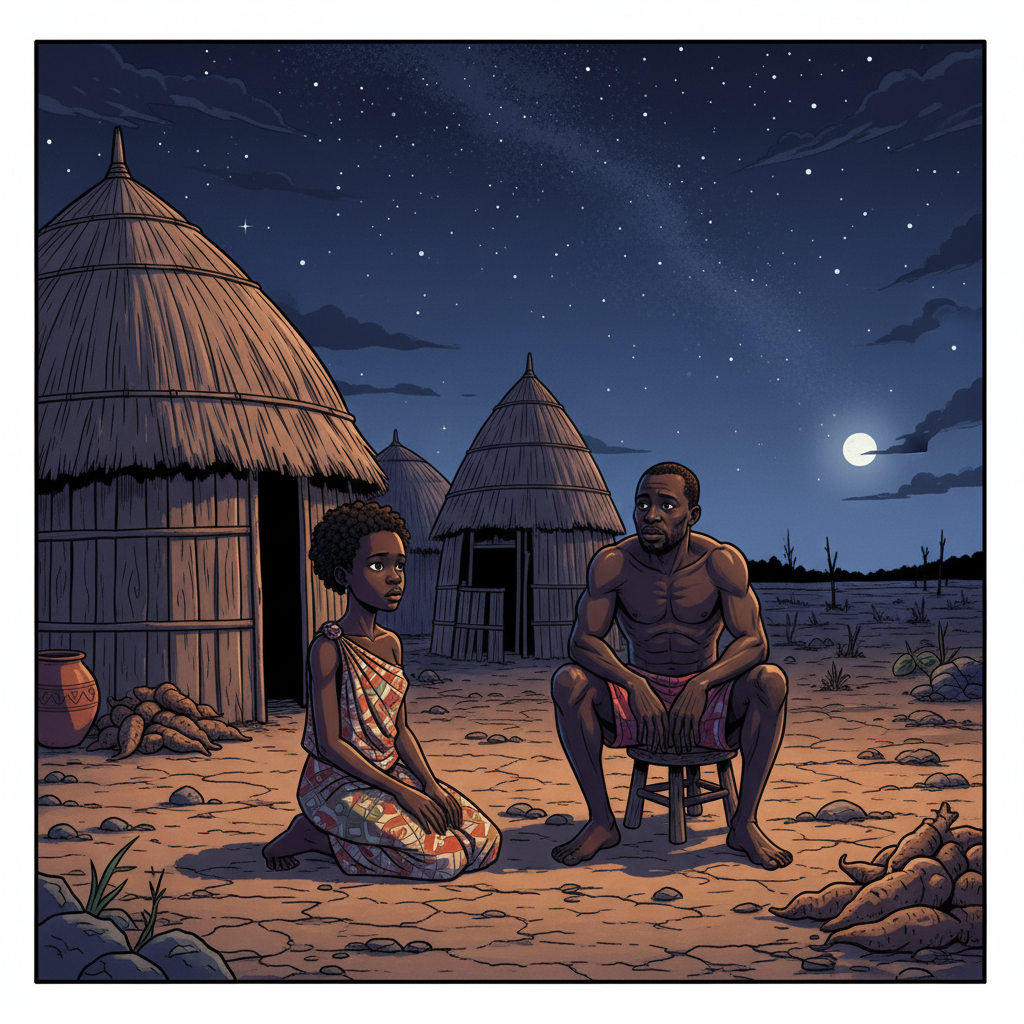
The following year brought an even starker decline. The yams, when finally harvested, were smaller, many of them gnarled and less sweet than usual. Obinna's once overflowing storage shed now had empty spaces. The bountiful stacks of previous years were gone, replaced by modest piles that barely met their family's needs, let alone providing enough for sale at the market. A quiet tension settled over their home. Obinna, usually a jovial man during harvest, grew quiet and withdrawn. He spent long hours staring at his fields, his face a mask of bewilderment and frustration. He tried different planting techniques, consulted with other farmers, but nothing seemed to reverse the trend. Chiamaka watched her father, her heart aching for his distress. She also watched the land, seeing the quiet exhaustion in its tired soil.
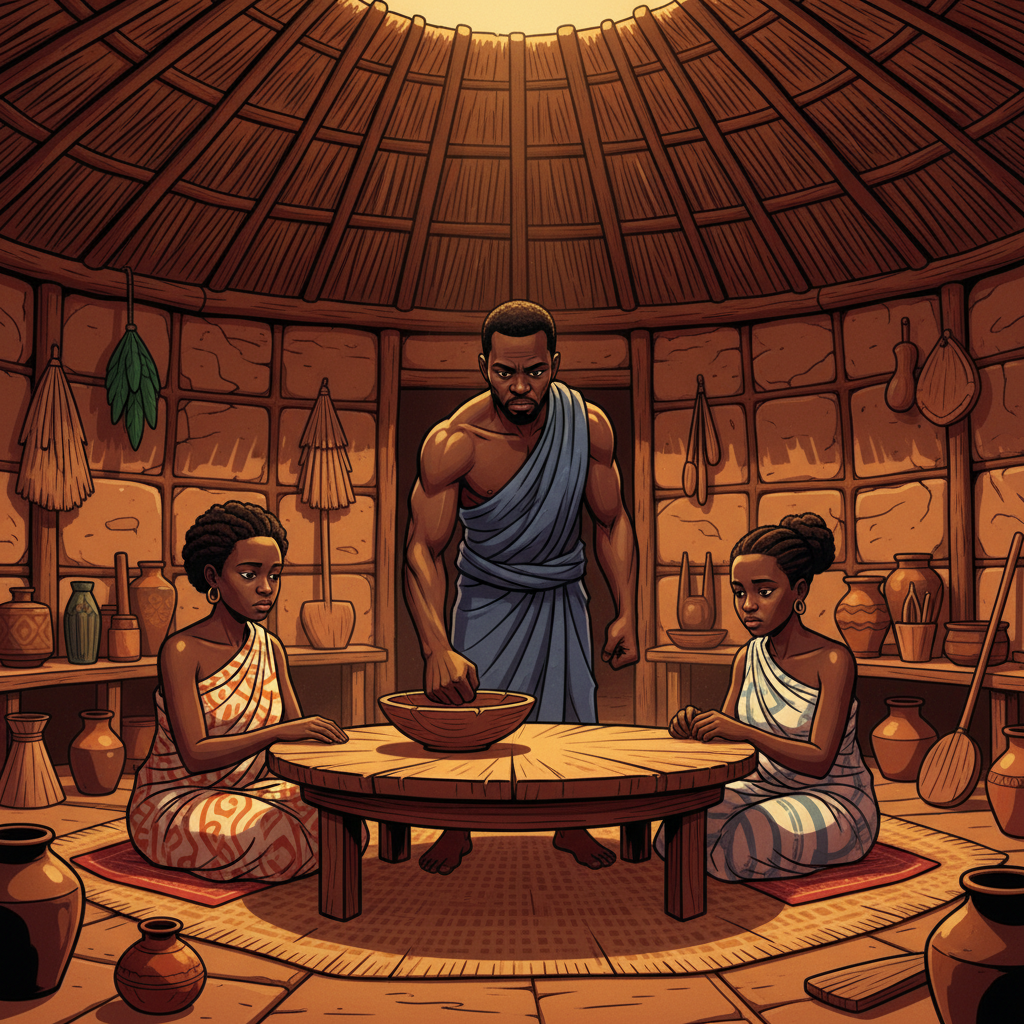
Obinna’s frustration eventually boiled over. “The land is ungrateful!” he exclaimed one evening, slamming his fist on the table. “I work harder than any man in this village! I clear the brush, I weed, I water when I can, and still, the yams dwindle. What more does it want from me?” Chiamaka and her mother sat in silence, their eyes downcast. No one dared to contradict him when he was in such a mood. But Chiamaka knew, deep in her heart, that the land was not ungrateful. It was simply… less generous. It was not taking, but perhaps, it was not being given enough. The balance Nneka spoke of felt increasingly out of alignment, and Chiamaka could not shake the feeling that her father’s approach to the Ahiajoku festival, his small offerings, played a role in this growing hardship.
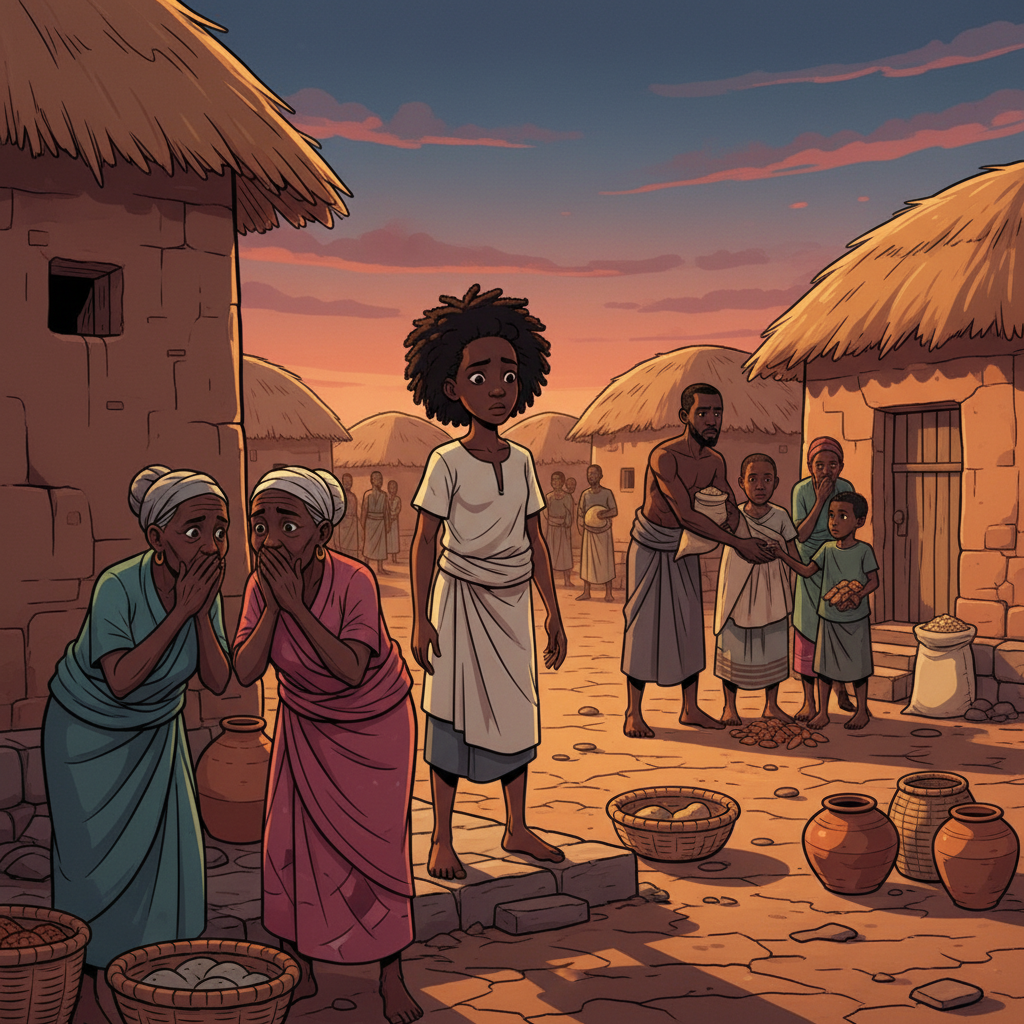
Chiamaka continued to observe, her young mind connecting the dots. She remembered her father’s pride in his large harvests, his focus on the quantity he could extract from the earth. And she remembered the small, almost perfunctory offering he made each year. It was not malicious, she knew; her father was a good man, hardworking and dedicated to his family. But perhaps he had simply forgotten the deeper meaning, the unspoken agreement between farmer and land. The village, too, began to feel the pinch. Other farms, while not as severely affected as Obinna’s, also reported lower yields. The communal spirit of abundance that usually characterized the harvest season was tinged with a collective worry. Chiamaka saw it in the hushed conversations, the worried glances, the way people hoarded their dwindling provisions.
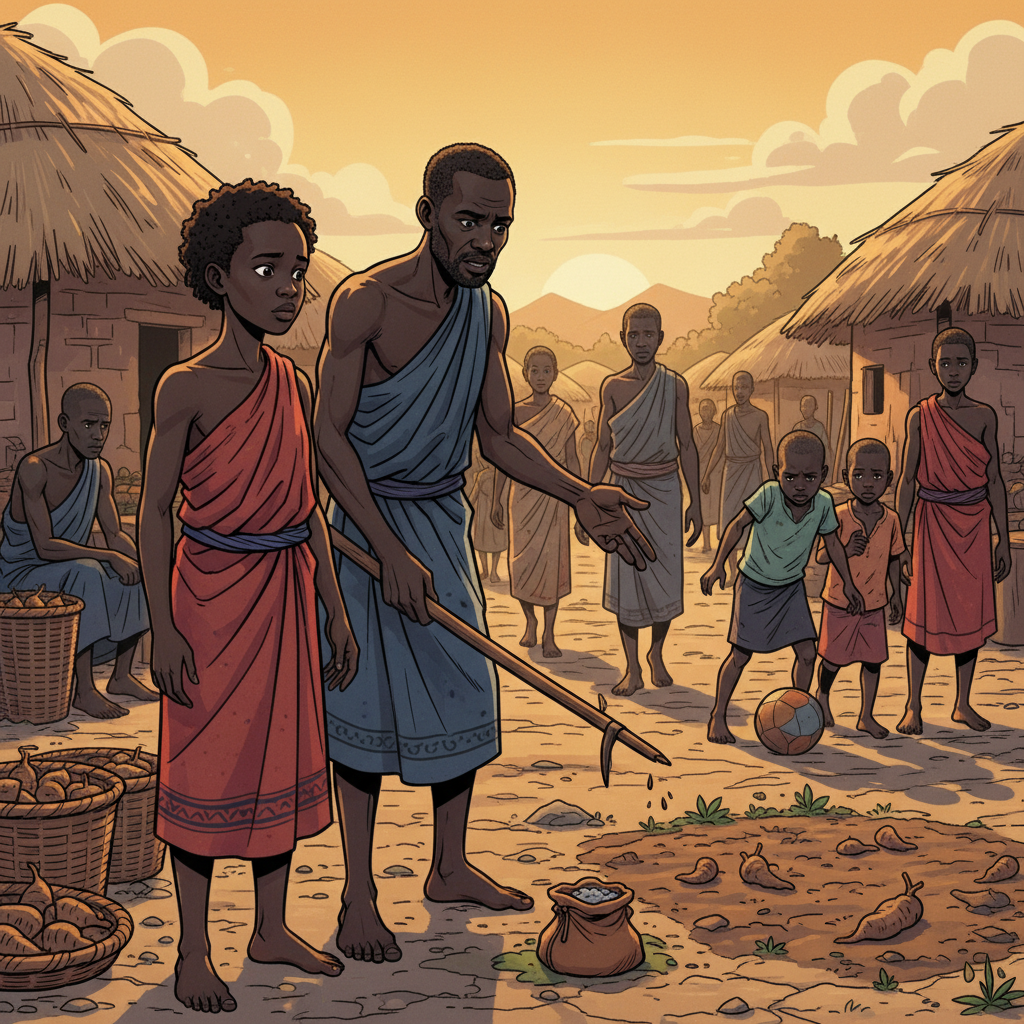
The once vibrant markets now had fewer yams, and those that were available fetched higher prices, putting a strain on families. The joyous songs during fufu pounding were softer, sometimes absent altogether. Even the children seemed to play with a subdued energy, sensing the shift in the adult world around them. Chiamaka saw her father trying every possible method to coax the land back to its former glory. He bought new tools, tried different fertilizers, even sought advice from distant healers who claimed to appease the spirits. But none of it seemed to work. The land remained quiet, its generosity withdrawn. The cycle of taking and giving back, which had sustained their people for generations, seemed broken, leaving a void that no amount of human effort alone could fill.
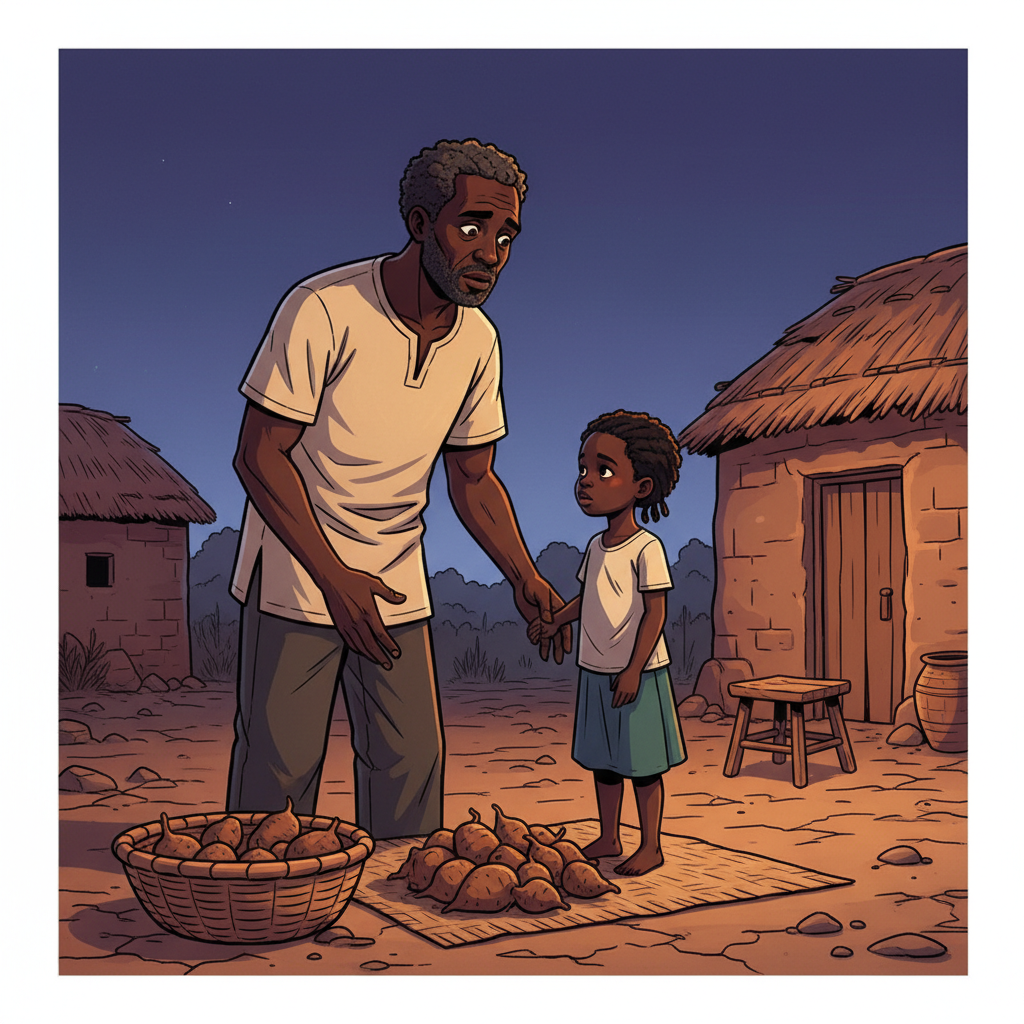
The next Ahiajoku festival approached, but the usual excitement was absent. It felt more like a solemn obligation than a joyous celebration. Obinna, his face etched with fatigue and worry, began to select yams for the offering. Chiamaka watched him, her heart heavy. This year, his market pile was smaller, much smaller, reflecting the meager harvest. He turned to the offering basket, and for a moment, he hesitated. He picked up a yam, then put it down, his gaze distant. Chiamaka quietly approached him. “Papa,” she said, her voice soft. “Nneka once told me that the rain falls because something was given before we were born. She said the land remembers.” Obinna stopped, his hand hovering over the yams. He looked at Chiamaka, his eyes clouded with a mix of weariness and dawning comprehension.
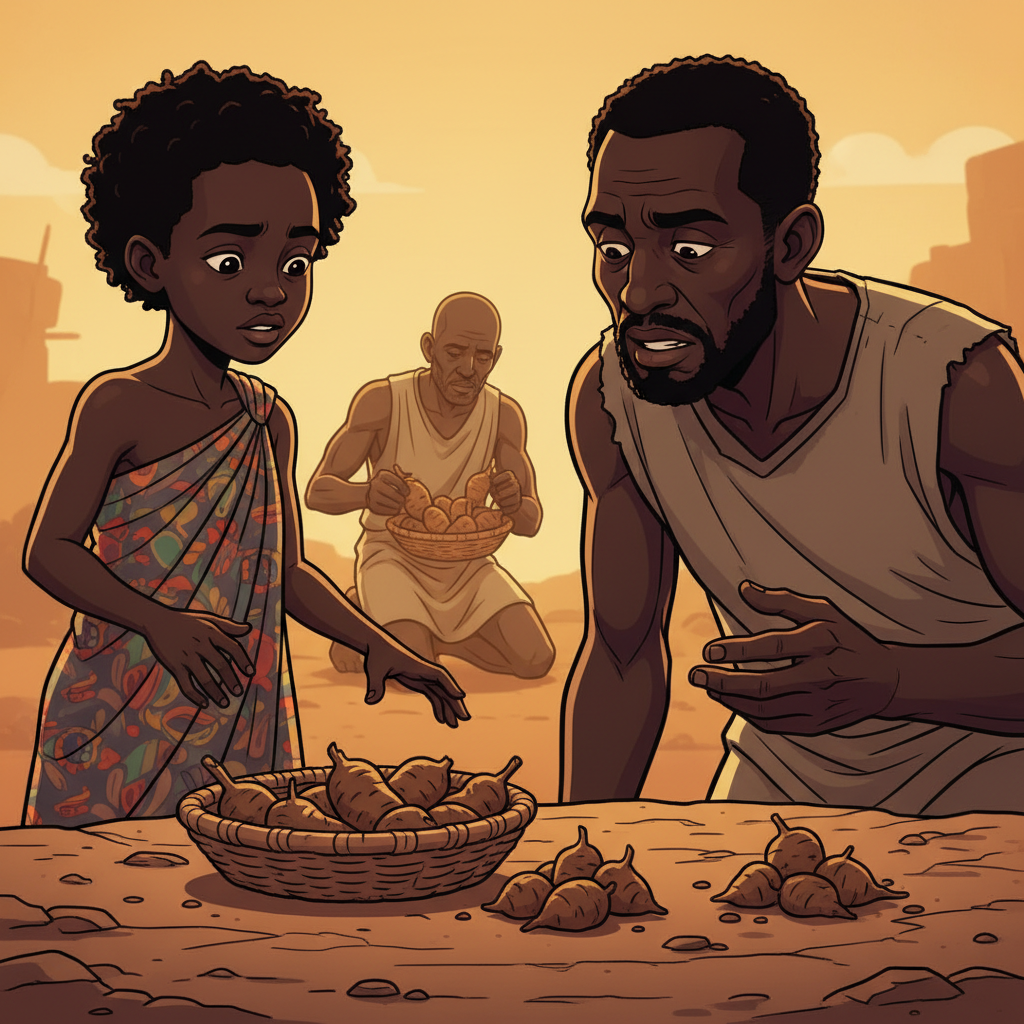
Obinna sighed, a deep, weary sound. “Child, I work so hard. I give my sweat, my strength to this land. What more does it want from me?” His voice was filled with a frustration that bordered on despair. Chiamaka took a deep breath. “Nneka said it is about respect, Papa. About gratitude. About giving back the best, just as the land gives us its best. She said if we only take, the chain weakens.” She spoke the words gently, not as an accusation, but as a plea, a sharing of the wisdom she had absorbed. Obinna looked at the yams in the offering basket, then at the meager piles meant for his family. He remembered his own father, a man who always picked the finest, plumpest yams for the offering, even in leaner times, saying, “We honor the source, my son, so the source will continue to honor us.”
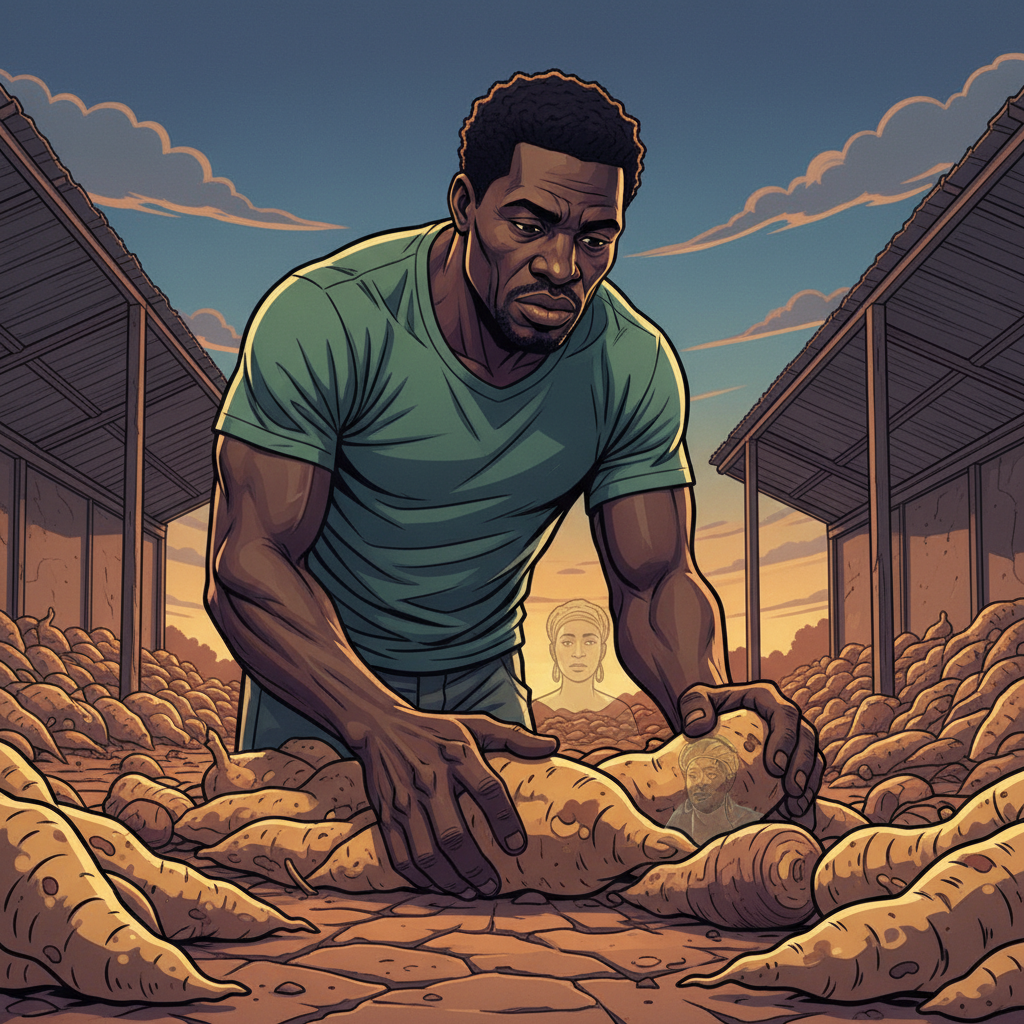
Obinna did not respond immediately. He just stood there, his gaze fixed on the yams, as if seeing them for the first time. The words of his daughter, echoing the wisdom of his mother, began to chip away at his hardened disbelief. He had always been a practical man, focused on hard work and tangible results. The idea of appeasing spirits or maintaining an unseen balance felt less real than the calloused hands and aching back he brought home each day. But the declining yields were undeniably real. The empty spaces in his storage shed were real. The worry in his wife’s eyes and the subdued laughter of his children were real. And Chiamaka’s quiet, persistent questioning had opened a crack in his certainty, allowing a different truth to seep in, slow and steady like water through dry earth.
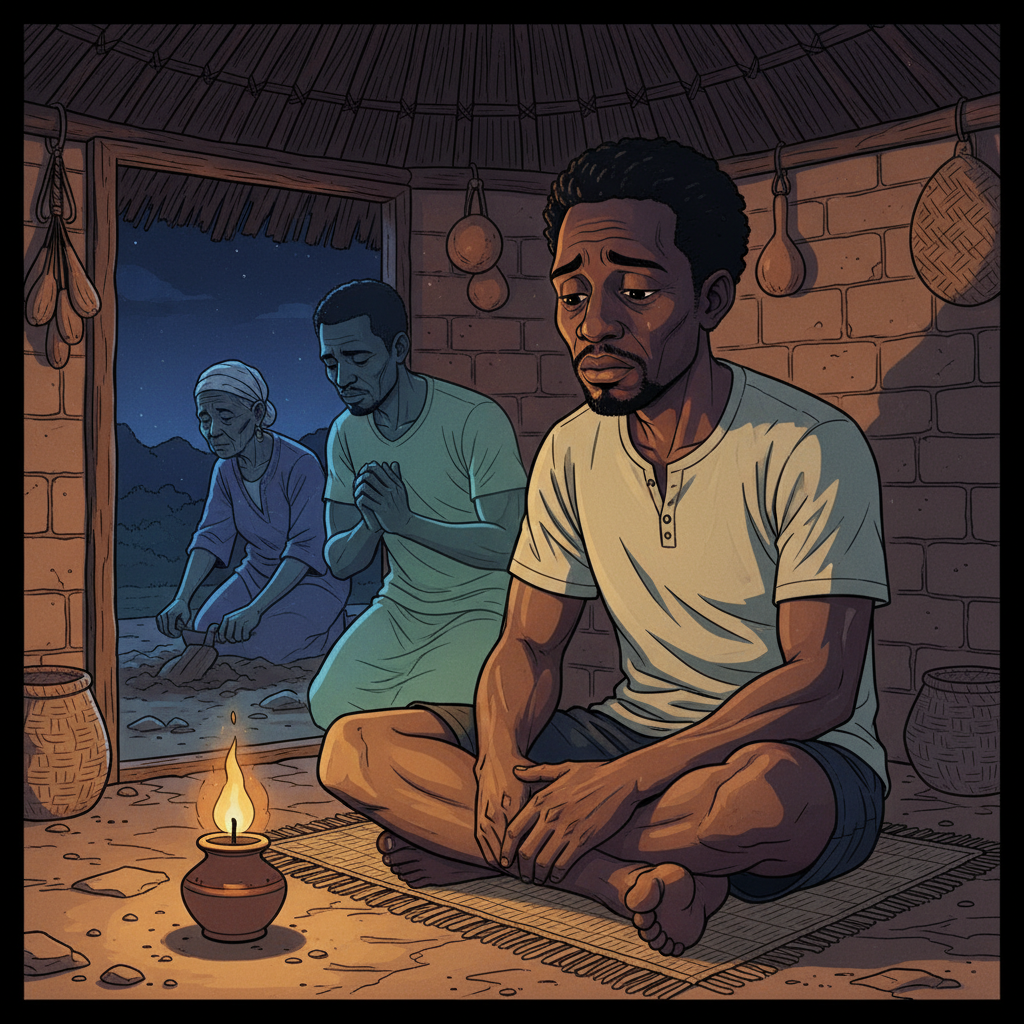
Later that night, Obinna sat alone by the flickering oil lamp, the familiar sounds of the sleeping compound around him. He thought about his grandmother, a woman whose hands had tilled the same soil as his, whose wisdom had guided generations. He thought about his own father, whose reverence for the land was as deep as his roots. He had, somewhere along the way, started to see the land merely as a resource to be exploited, a source from which to take. He had forgotten the sacred covenant, the act of giving back. He had become focused solely on the taking, on maximizing his harvest, on the visible gains. The principle of reciprocity, the ancient understanding of give and take, had slowly faded from his practice, replaced by a more transactional approach. This realization settled upon him, heavy and undeniable.
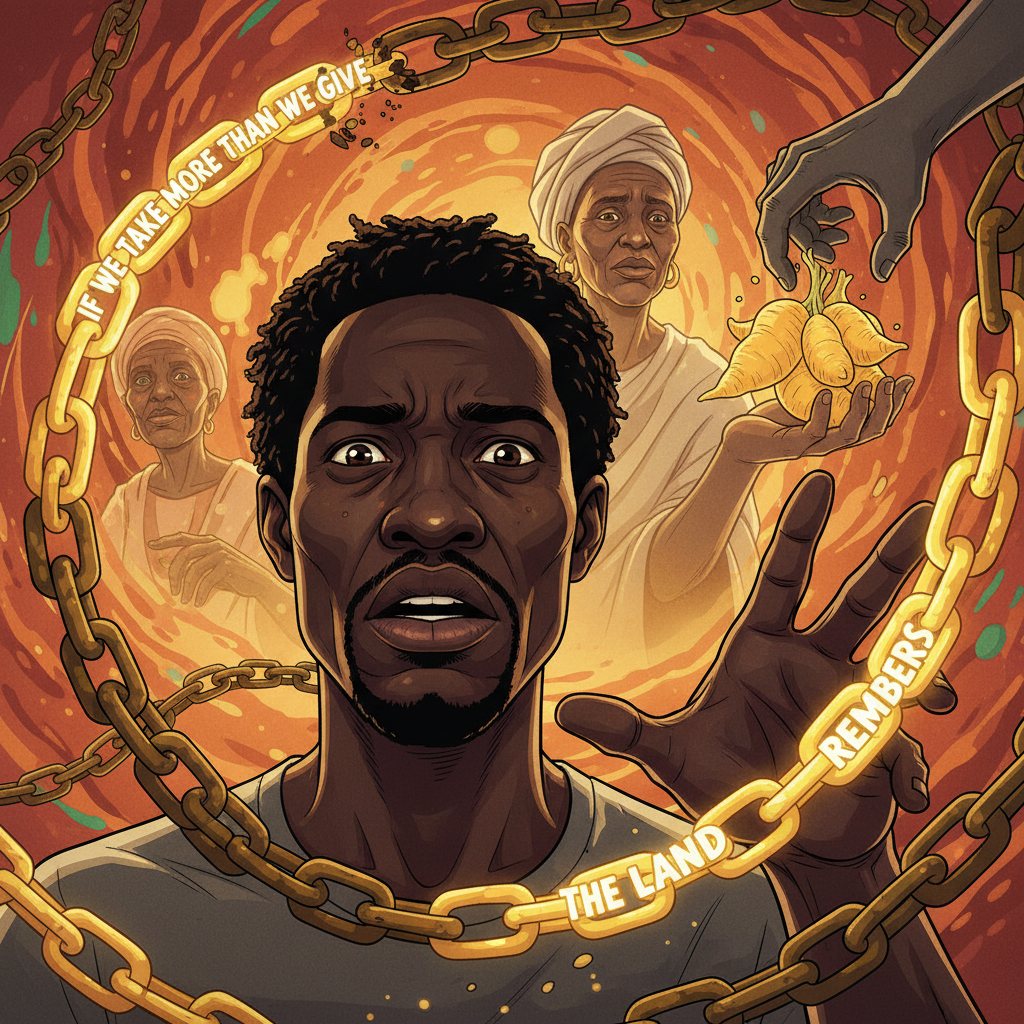
He remembered the joy he once felt during harvests, a joy that came not just from abundance but from the feeling of being in harmony with the earth. He remembered the stories of Ahiajoku, not as a demanding god, but as a generous spirit, appreciative of sincere gratitude. His grandmother's words came back to him with startling clarity: "If we take more than we give, or give less than is due, the chain weakens. The land remembers." He had been so focused on what he could *take* from the land, that he had neglected to truly *give back* to it, not just in effort, but in spirit and gratitude. He had forgotten the essence of the Ahiajoku festival. This year, his offering had been a mere formality, a ritual performed without the true intention of reciprocity that fueled its power.
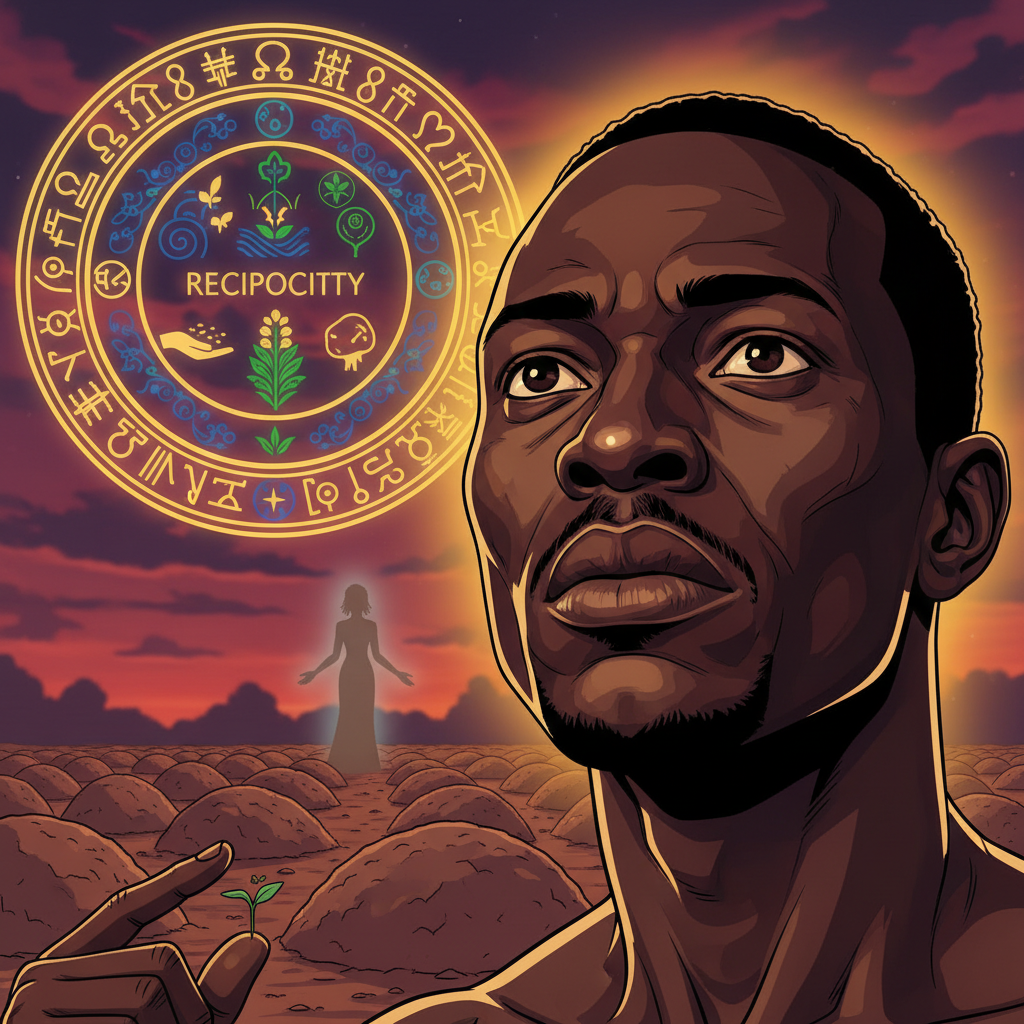
A quiet shame warmed Obinna’s cheeks, but it was quickly followed by a sense of clarity. The land was not ungrateful; he had been the one who had forgotten his part in the ancient dance. He had believed that hard work alone was enough, overlooking the deeper spiritual connection, the respectful exchange. He realized that the decline in his yields was not just bad luck or changing weather, but a gentle, persistent reminder from the earth itself. It was the land, Nneka’s words, and Chiamaka’s innocent, searching questions that had finally opened his eyes. He understood now the delicate balance, the powerful principle of reciprocity that governed not just farming, but all of life. It was time for him to give back, truly give back, and not just with the bare minimum.
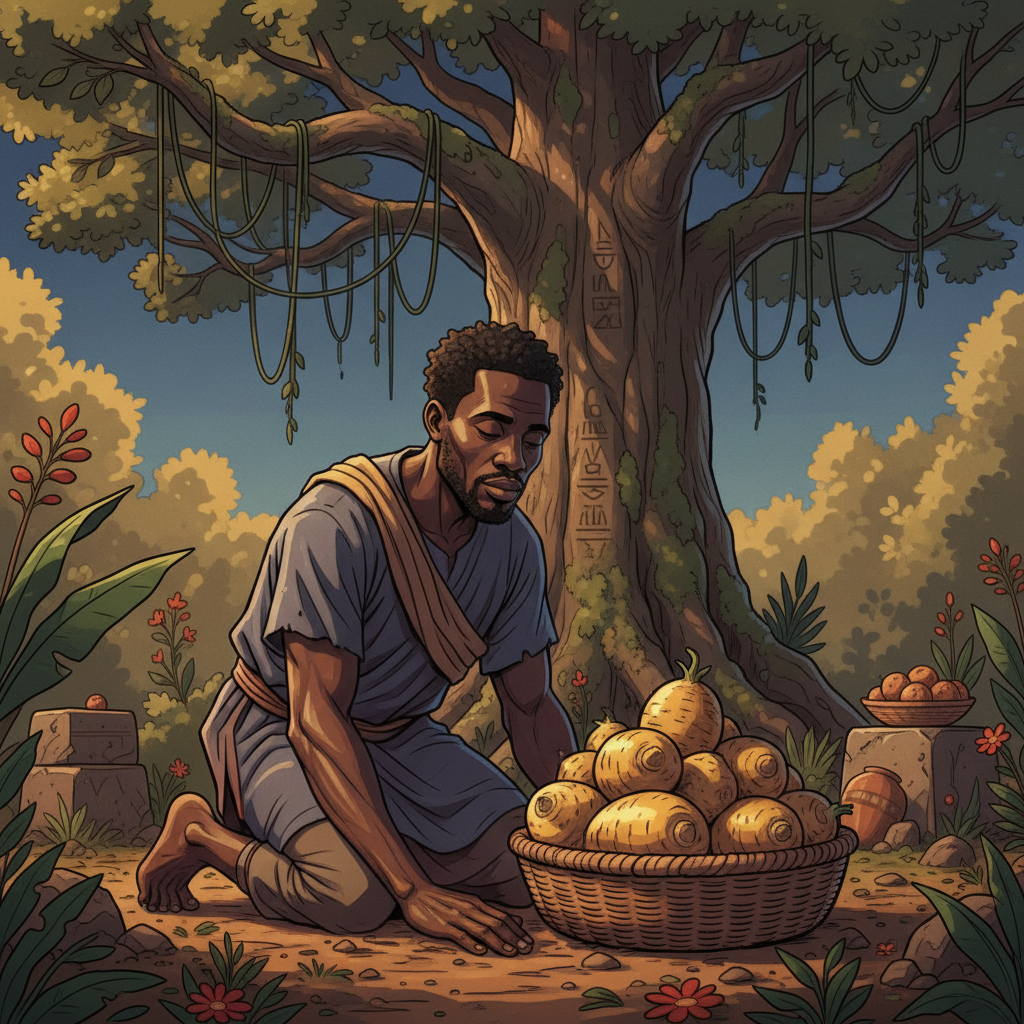
The next Ahiajoku festival was still months away, but Obinna did not wait. He walked out to his yam barn, his movements deliberate and thoughtful. He did not just pick any yams; he selected the very best, the plumpest, most perfect tubers, more than he had offered in years. He carefully cleaned them, polished their skins until they shone, and placed them in a large, clean basket. This was not for the festival, not yet. This was a private offering, a personal gesture of apology and renewed commitment to the land. He carried the basket to a small, sacred grove near his farm, a place where generations of his family had made quiet offerings. He knelt, placing the yams reverently on the earth, and spoke softly, not to a distant god, but to the spirit of the land itself, promising a renewed cycle of true reciprocity.
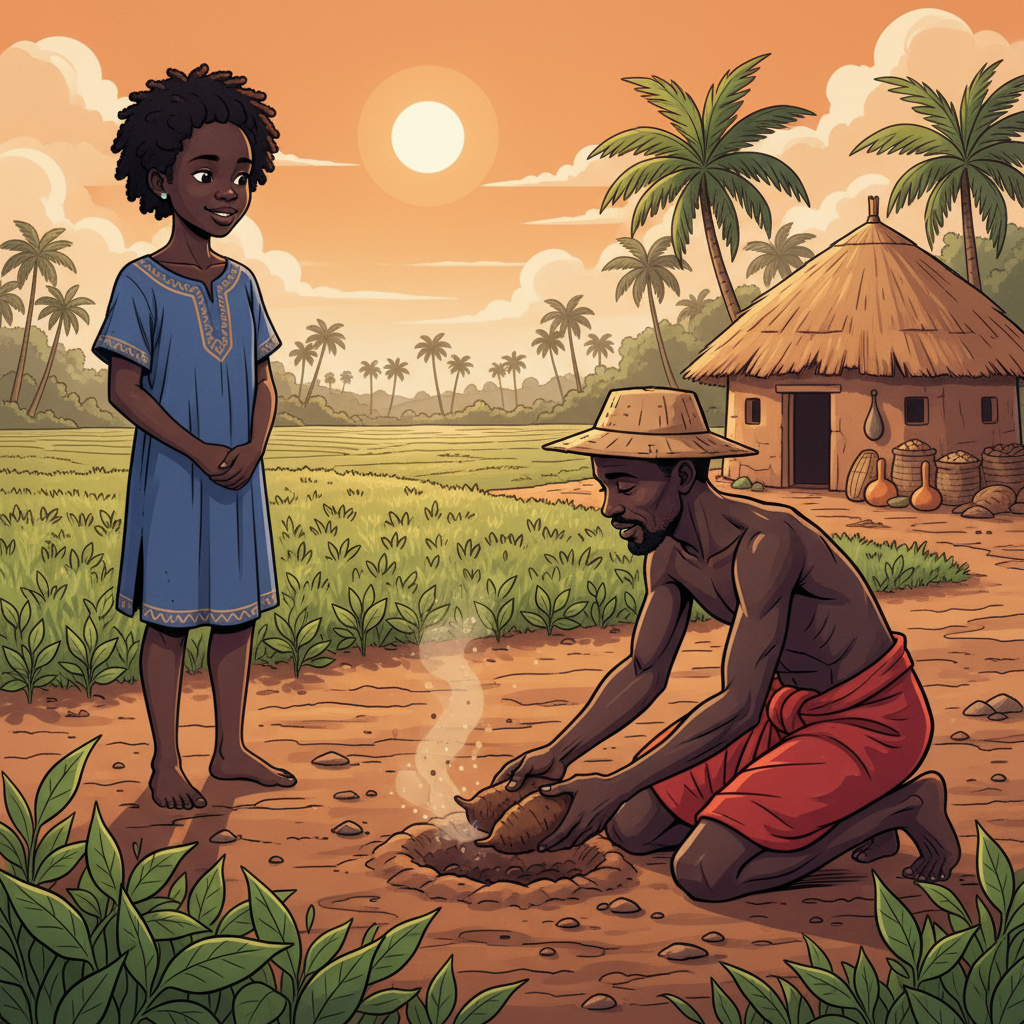
Chiamaka watched her father from a distance, her heart swelling with a quiet understanding. She did not know what he said, but she saw the sincerity in his posture, the careful way he placed the yams, the deep breath he took before returning. The next planting season, Obinna worked with a new vigor. He still toiled tirelessly, but there was a lightness in his step, a quiet reverence in his touch. He talked to the soil as he planted, whispered encouragement to the young shoots, and observed the land with a heightened sense of awareness. He was not just taking; he was tending, nurturing, and truly giving back with his spirit, not just his sweat. Chiamaka saw the change in him, a profound shift that went deeper than just farming techniques.
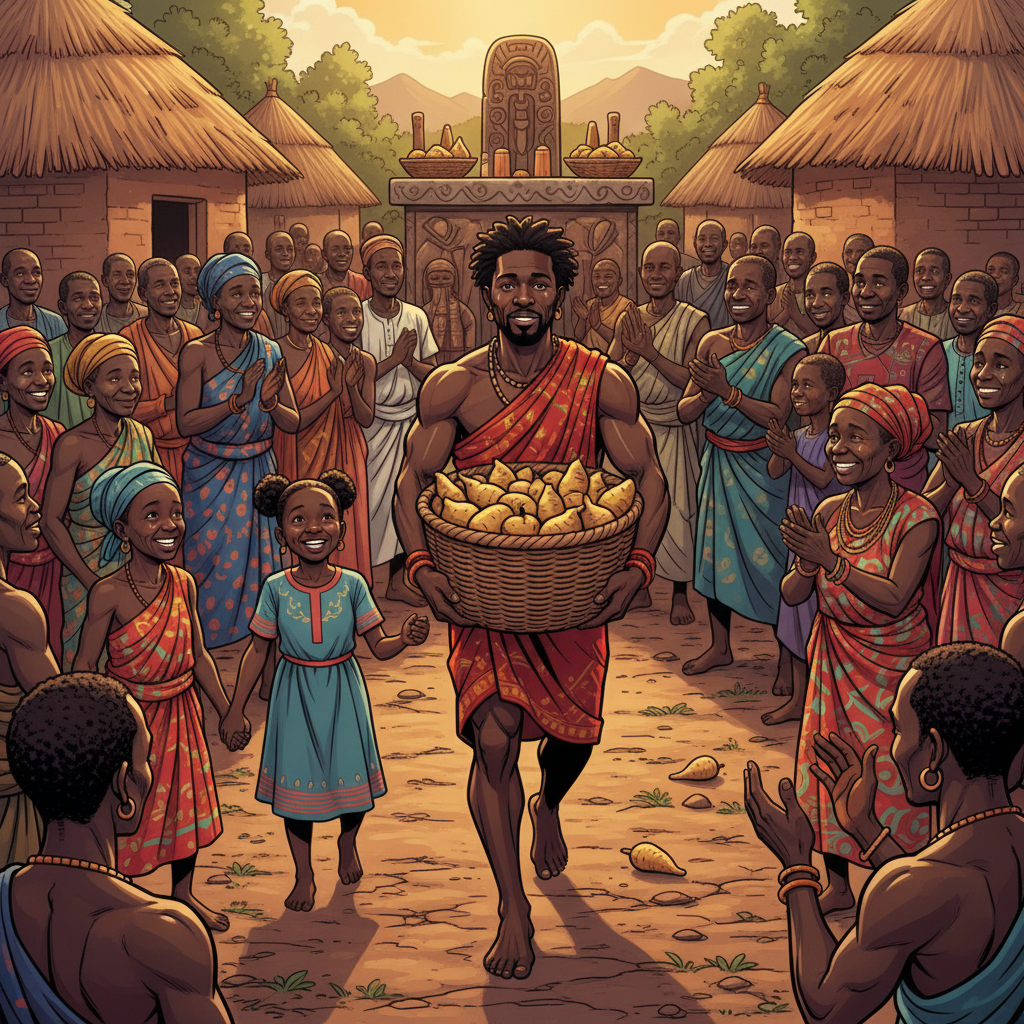
When the next Ahiajoku festival arrived, Obinna prepared his offering. Chiamaka watched with a smile. This time, the basket was full, overflowing with the finest yams from his farm. He chose them with pride and deep gratitude, each yam a silent promise. He carried it to the altar with a strong, purposeful stride, his head held high. The village elders noticed, and a murmur of approval rippled through the crowd. Chiamaka stood beside her grandmother, whose eyes held a knowing twinkle. The offering was not just a ritual now; it was a heartfelt statement, a re-establishment of the ancient covenant. It was the best of what they had, freely given, a true reflection of the bounty they had received and hoped to continue receiving.
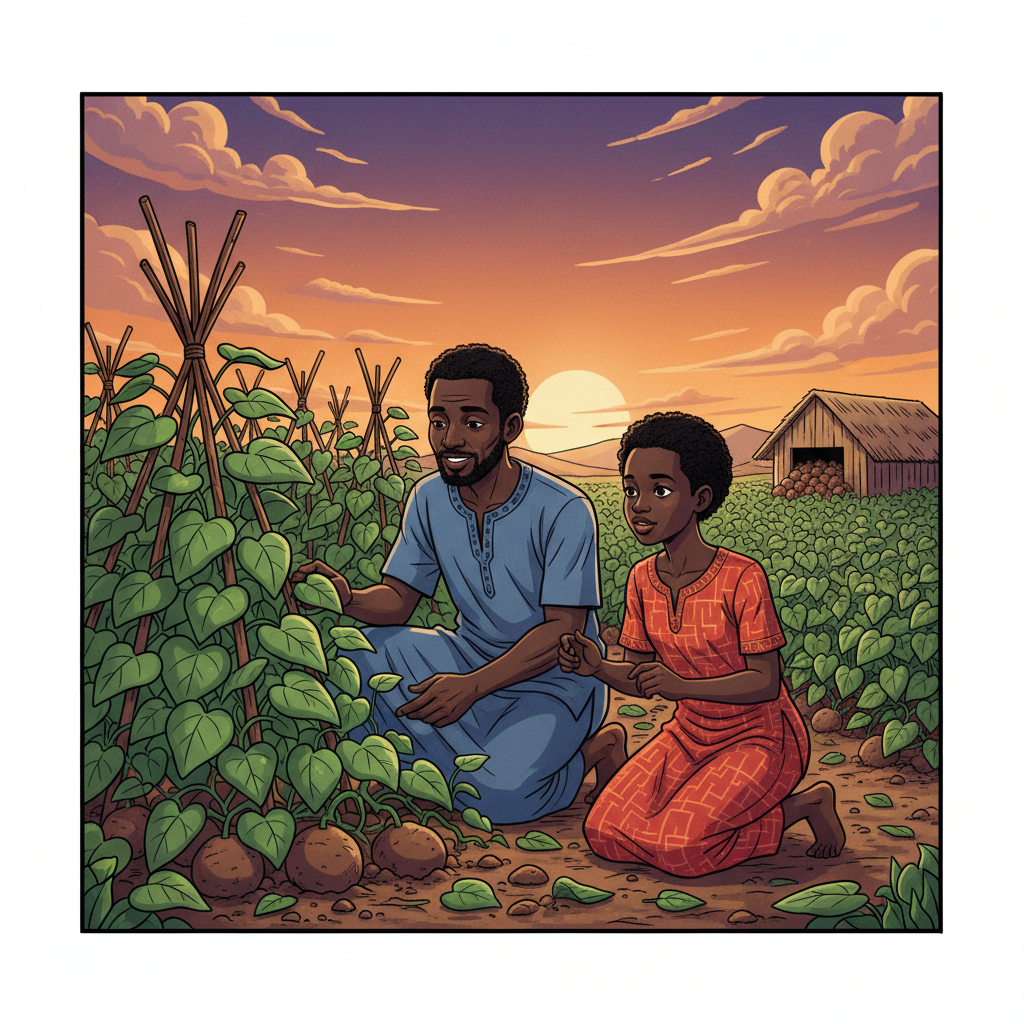
The seasons that followed brought a gradual return to abundance. The yam vines grew lush and strong, their leaves a vibrant green. The tubers, when harvested, were plump and sweet, a testament to the land's renewed generosity. The family's storage shed slowly began to fill again, a comforting sight. Obinna still worked hard, but the struggle and frustration had been replaced by a quiet contentment. He understood now that the land was not merely soil and plants; it was a living entity, a generous partner that required respect, gratitude, and a continuous cycle of giving back. Chiamaka, now a little older, often walked the fields with her father, learning not just how to grow yams, but how to live in harmony with the earth. The debt of rain, and the debt to the land, was not just about payment, but about an endless, reciprocal dance.
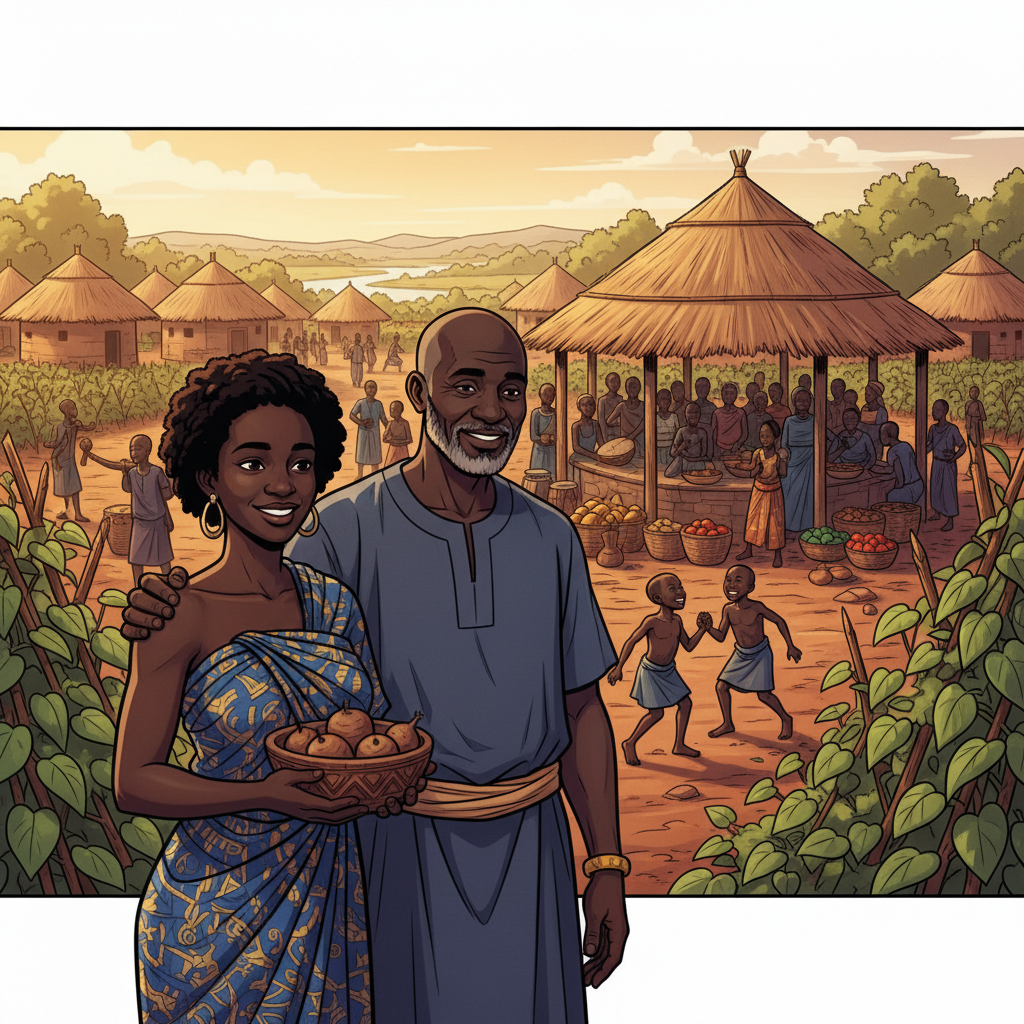
The village, too, slowly recovered its vibrancy. The markets flourished, the songs returned, and the laughter of children once again filled the air with unburdened joy. Obinna became an even more respected elder, his story a quiet lesson for those who might forget the old ways. Chiamaka, carrying her grandmother’s wisdom and her father’s transformed understanding, knew that true prosperity came not from simply taking, but from the mindful, heartfelt act of giving back. It was a principle woven into the very fabric of their lives, as essential as the sun and the rain. The land, in its quiet way, had taught them that generosity begets generosity, and that the greatest harvests are reaped when the cycle of reciprocity is honored above all else. The debt of rain was understood, and graciously repaid.