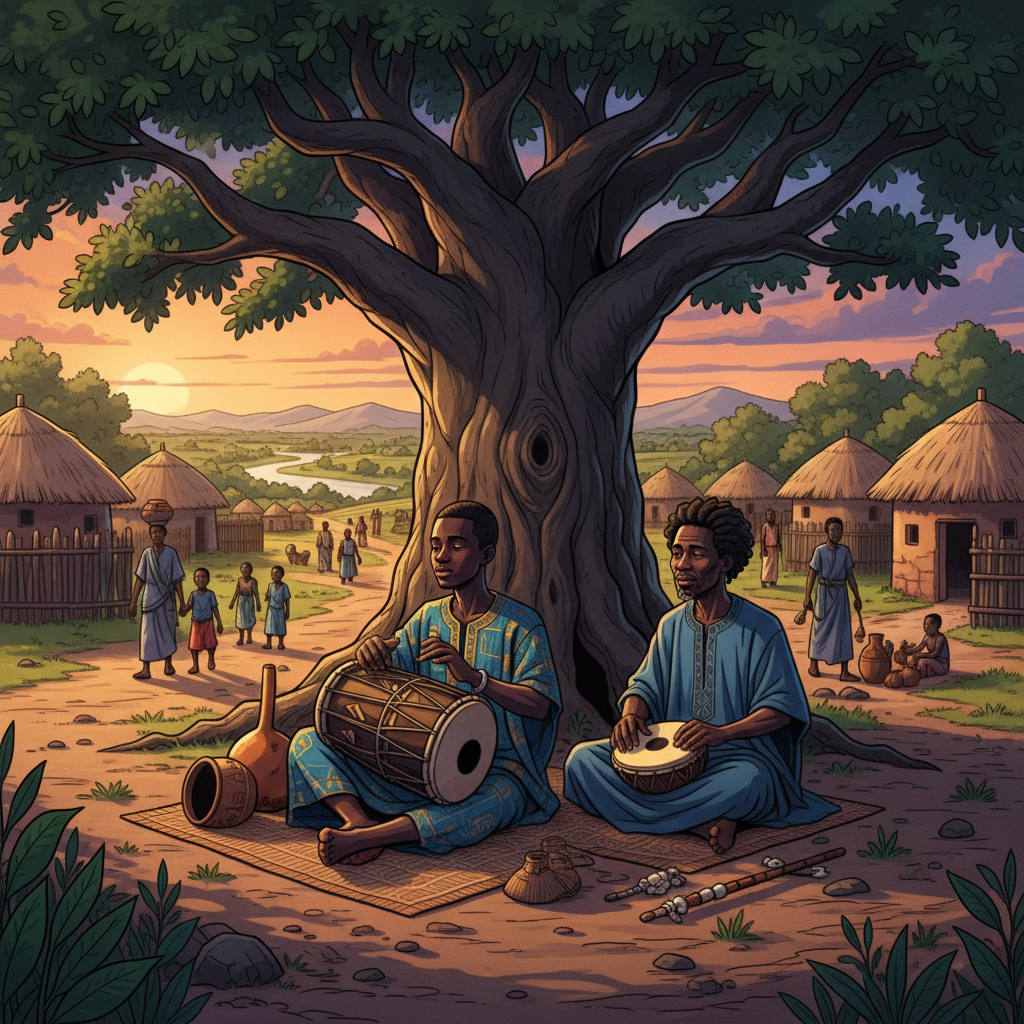
Damilola’s fingers danced across the tension strings of his dundun. The talking drum hummed, then sang, then cried in the complex tones of the Yoruba language. He was quick, his movements precise, his skin like polished ebony against the dark wood of the drum. Every rhythm he called, every phrase he articulated, was a testament to years of diligent practice. He could make the dundun mimic the chattering of monkeys or the low growl of a leopard, summon the praise names of ancestors, or weave tales of ancient Oyo battles with a flick of his wrist. His master, Baba Ayinde, watched from the shade of the iroko tree, his own drum silent on his lap.
Baba Ayinde was old, his skin like river stones smoothed by generations of water, his eyes holding the wisdom of countless festivals. He was a master of Ayan, the spirit of the drum, and his dundun did not just speak words; it spoke to the very soul of the village. When Baba Ayinde played, the air crackled, and even the oldest grandmothers found their feet tapping a forgotten rhythm. Damilola could play faster, perhaps, and with more dazzling flourishes, but sometimes, when Baba Ayinde began to play, Damilola felt a deep quiet settle in the compound, a hum that was more than just sound.
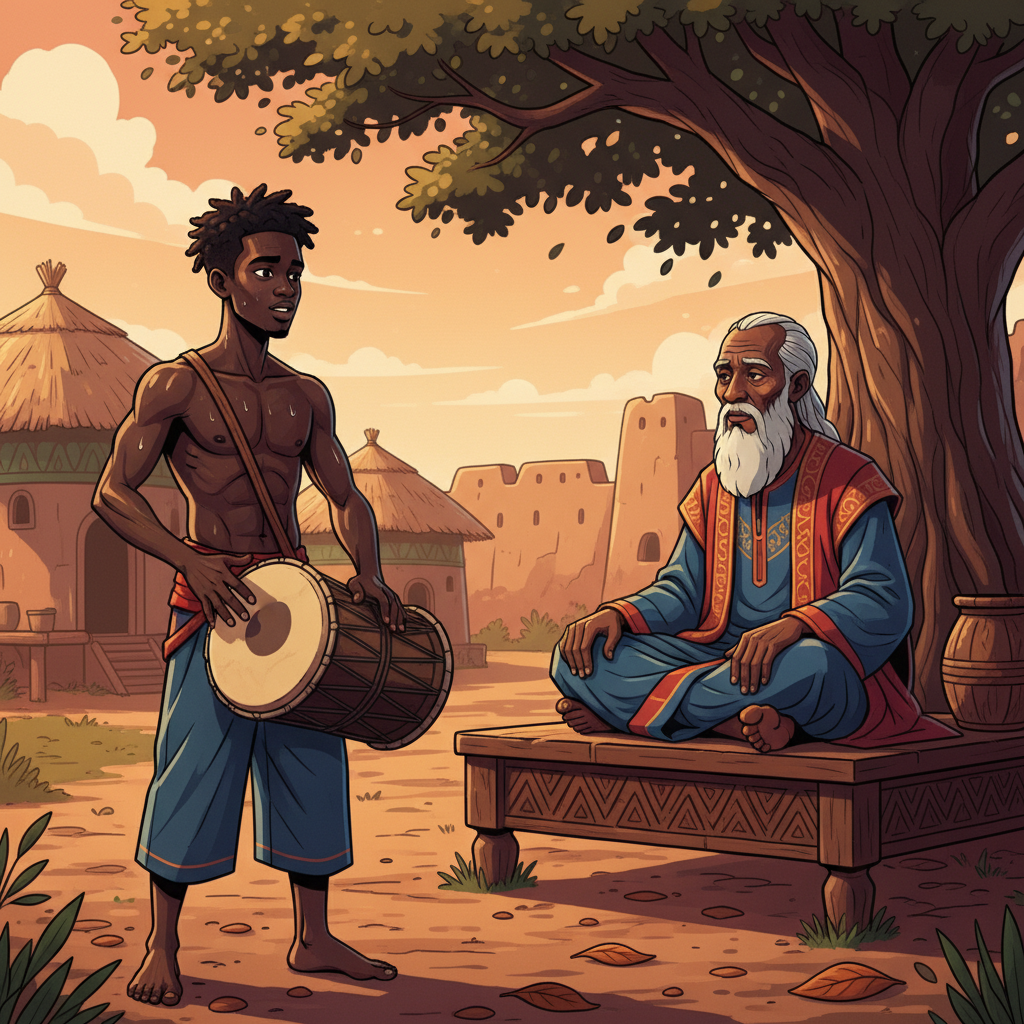
“You speak to the drum, Damilola,” Baba Ayinde said one afternoon, his voice soft as the rustle of dry leaves. Damilola had just finished a particularly intricate praise song for the Oba, the king, his brow beaded with sweat but his heart soaring with pride at his own skill. He had poured all his energy into the drum, commanding it to sing with all its might. The dundun had responded, its voice clear and strong, echoing across the quiet compound. Damilola waited for the usual nod of approval from his master, but Baba Ayinde only watched him with those ancient, knowing eyes.
“Yes, Baba,” Damilola replied, his chest swelling. “I make it sing the very words of the ancestors. I make it tell the stories.” He tightened the tension strings of his dundun, ready to demonstrate again, to show the old man the swiftness of his hands, the sharpness of his ear for tone. He believed he had understood. To speak to the drum, he thought, was to master its language, to make it an extension of his own voice, his own thoughts, his own desire to express.
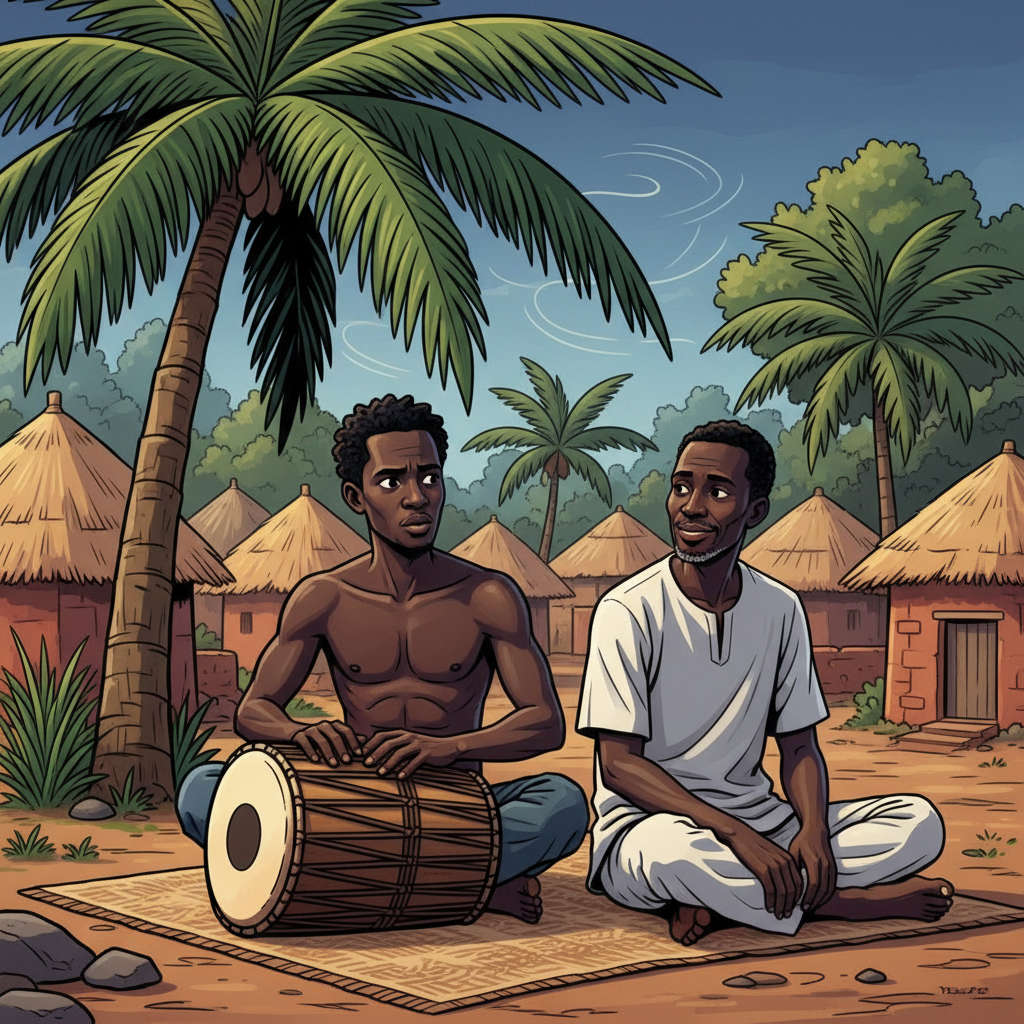
Baba Ayinde only smiled, a slow, gentle curve of his lips. “The drum speaks to the people, Damilola.” He paused, and a breeze whispered through the palm fronds, carrying the scent of woodsmoke and damp earth. “But you,” Baba Ayinde continued, his gaze drifting over the distant rooftops of the village, “you do not listen to what the people speak back.” Damilola frowned. He listened to the drum, of course. He listened to the tones, to the rhythm, to the way the sound filled the air. What else was there to listen for?
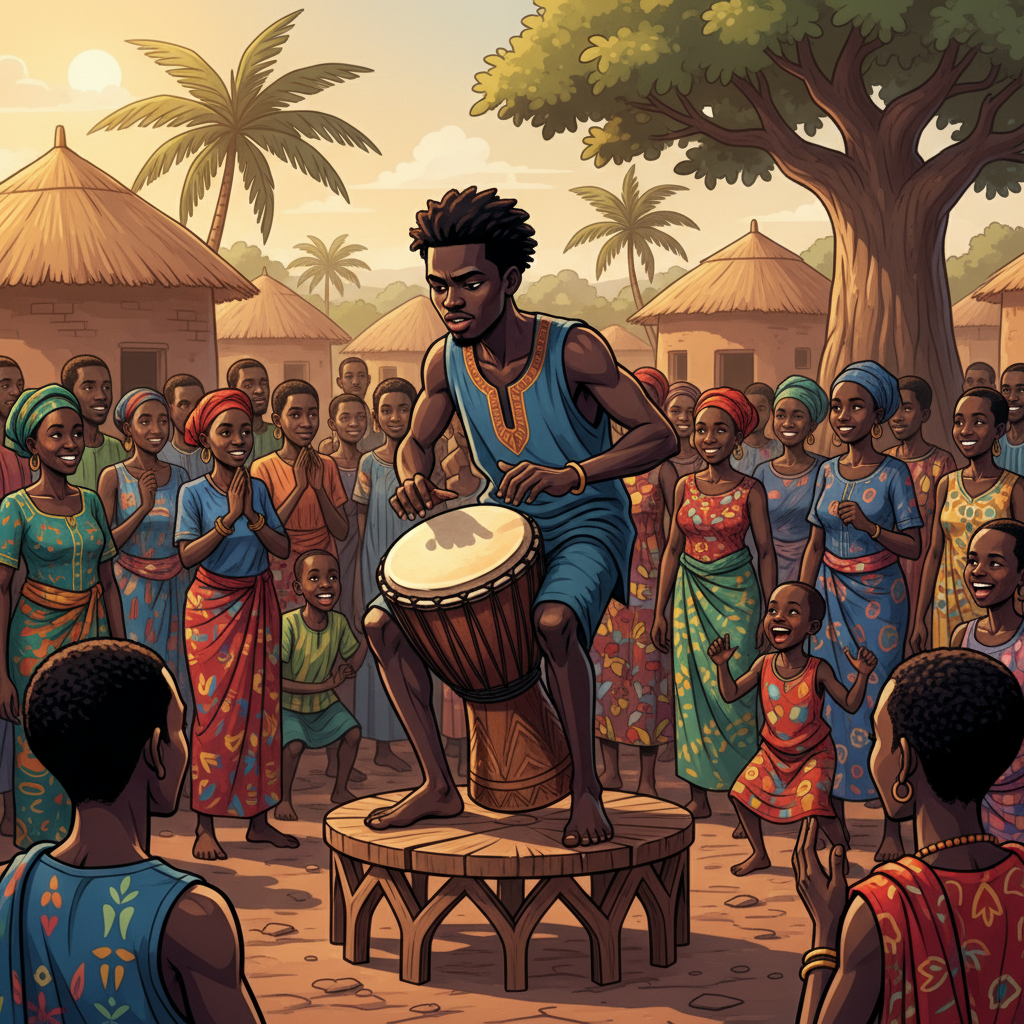
Damilola spent the next days practicing with a new thought echoing in his mind: *listen to what the people speak back*. He tried to imagine the village listening to his drum. He played with even more precision, trying to make the drum’s voice so clear, so undeniable, that no one could possibly misunderstand. He made the drum laugh, made it warn, made it dance with joy. He imagined the villagers nodding, smiling, perhaps even whispering praise for his skill. He believed that if his voice was strong enough, true enough, it would compel their response. He focused on the drum’s voice, and his own.
The annual Festival of the Harvest Moon was approaching, a time of great feasting and joyous celebration in old Oyo. It was the night when the entire village would gather at the ilo, the village square, to dance under the benevolent gaze of the ancestors, giving thanks for the earth’s bounty. The drummers, especially the dundun players, were the heart of the festival, their rhythms guiding the feet and lifting the spirits of the community. Damilola had been chosen to play a significant part this year, a mark of Baba Ayinde’s confidence in his talent.
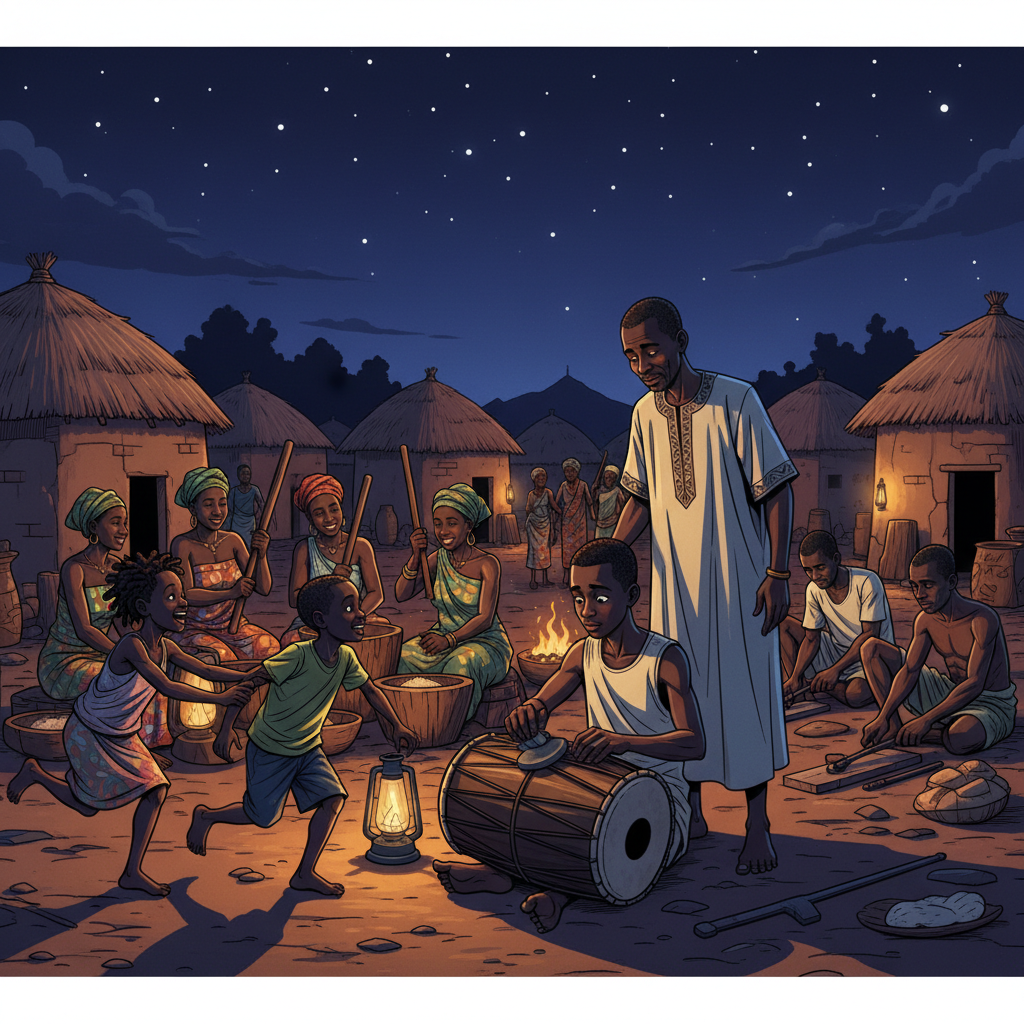
Excitement buzzed through the compound like a swarm of bees. Children chased each other, their laughter bright against the backdrop of women pounding yam and men sharpening tools for the communal feast. Damilola felt a tremor of nerves mixed with his usual eagerness. “Remember, Damilola,” Baba Ayinde said that evening, as Damilola polished his dundun until its wood gleamed like liquid midnight. “Ayan lives in the drum. But Ayan’s breath is shared by all who hear. The drum does not merely speak *at* them. It speaks *with* them.”
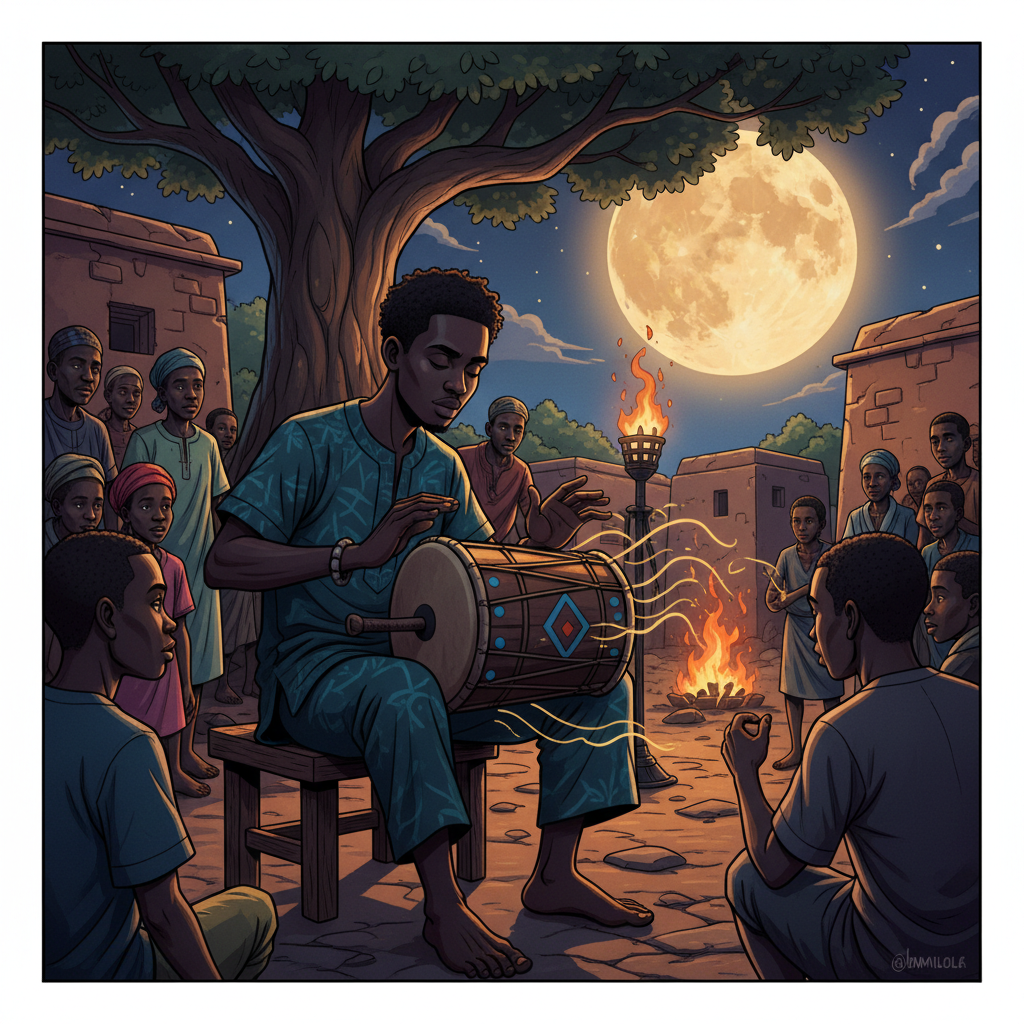
Damilola nodded, trying to absorb the words, but his mind was already picturing the vast crowd, the expectant faces. He imagined his drum’s voice soaring above the other instruments, a clear, irresistible call to dance. He practiced a new, complex rhythm that night, one he felt was particularly grand and exciting. It was a rhythm of triumph, of strength, of the harvest’s peak. He felt certain that this rhythm, meticulously crafted, would move the people. He focused on how he would initiate, how he would lead.
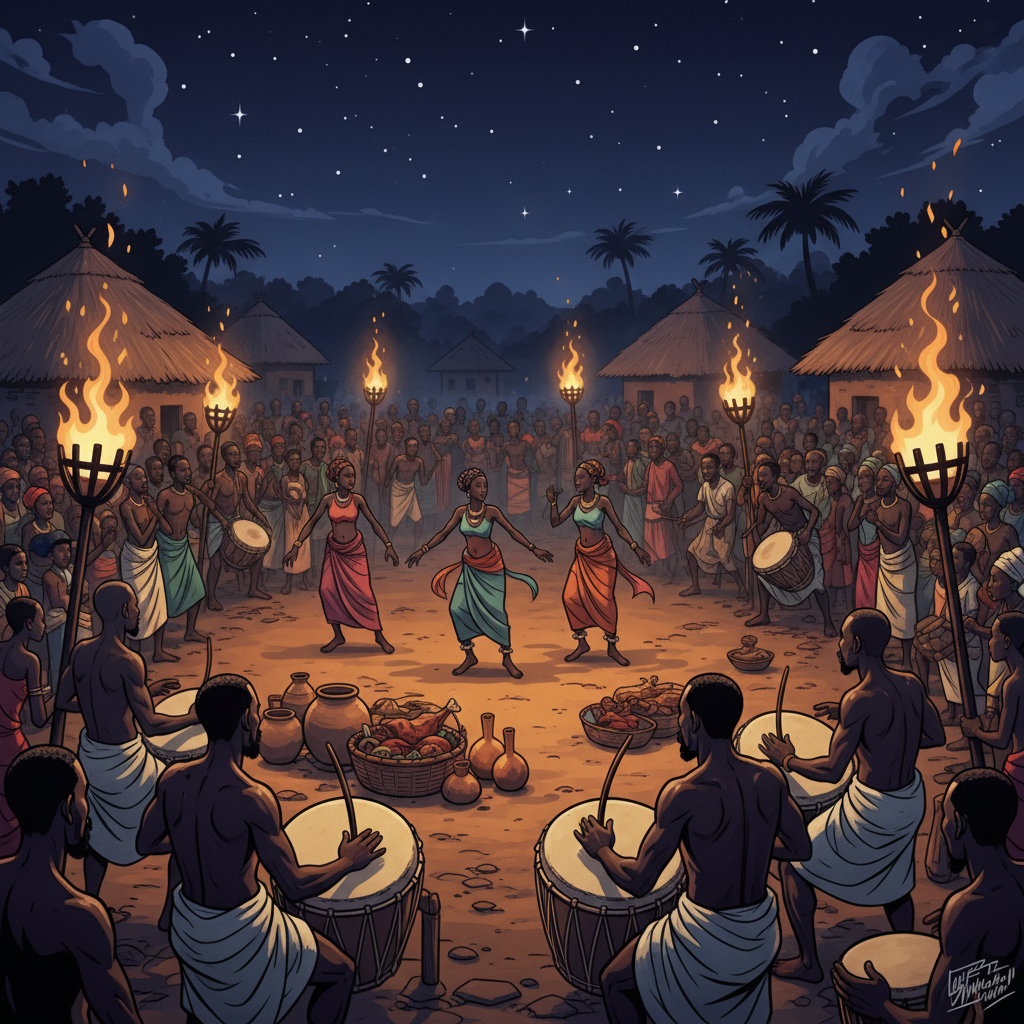
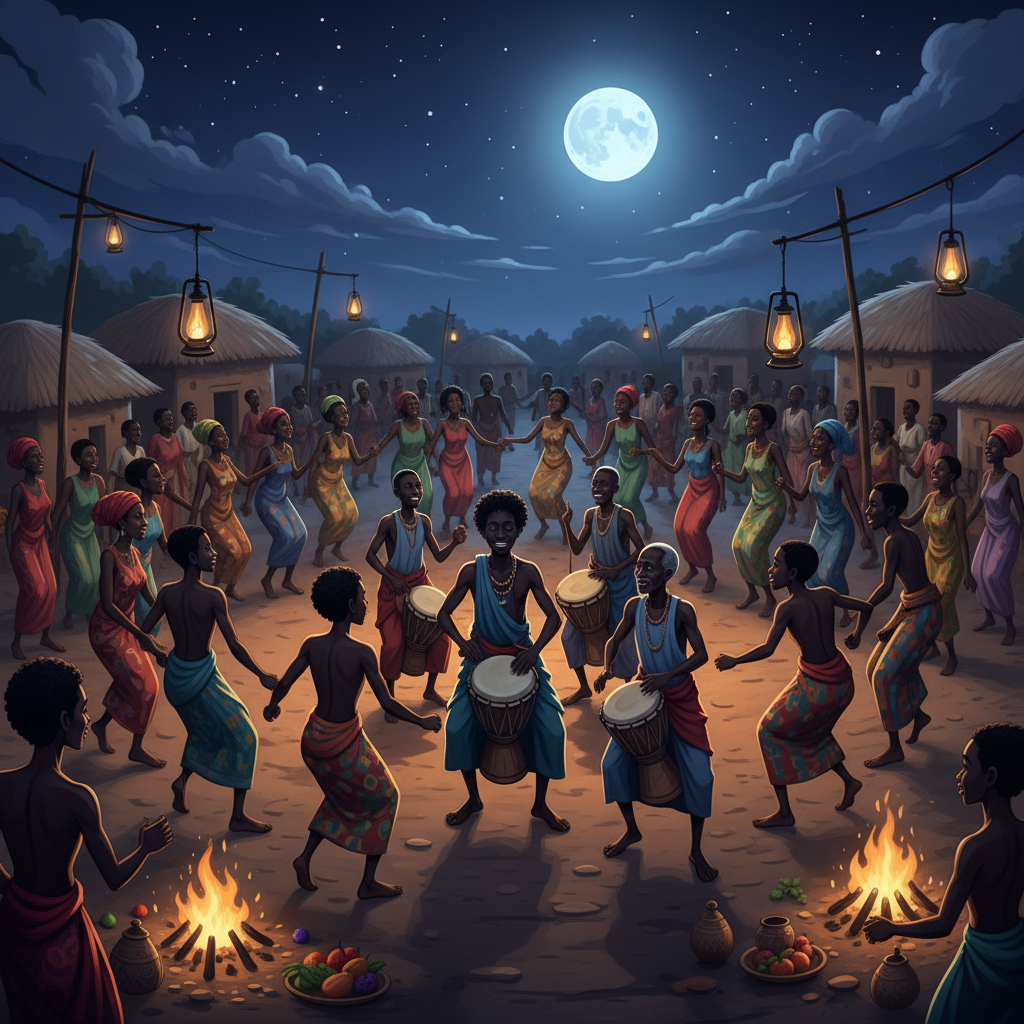
Finally, the night of the festival arrived. Torches flickered around the ilo, casting long, dancing shadows. The air was thick with the scent of roasting meat and brewing palm wine. Other drummers laid down steady, pulsing beats – gbedu drums thundered, bata drums chatted in quick bursts. The first dancers stepped forward, their movements fluid and graceful, their dark skin gleaming with sweat under the moonlight. The energy of the crowd rose and fell with the ebb and flow of the music, a living, breathing thing.
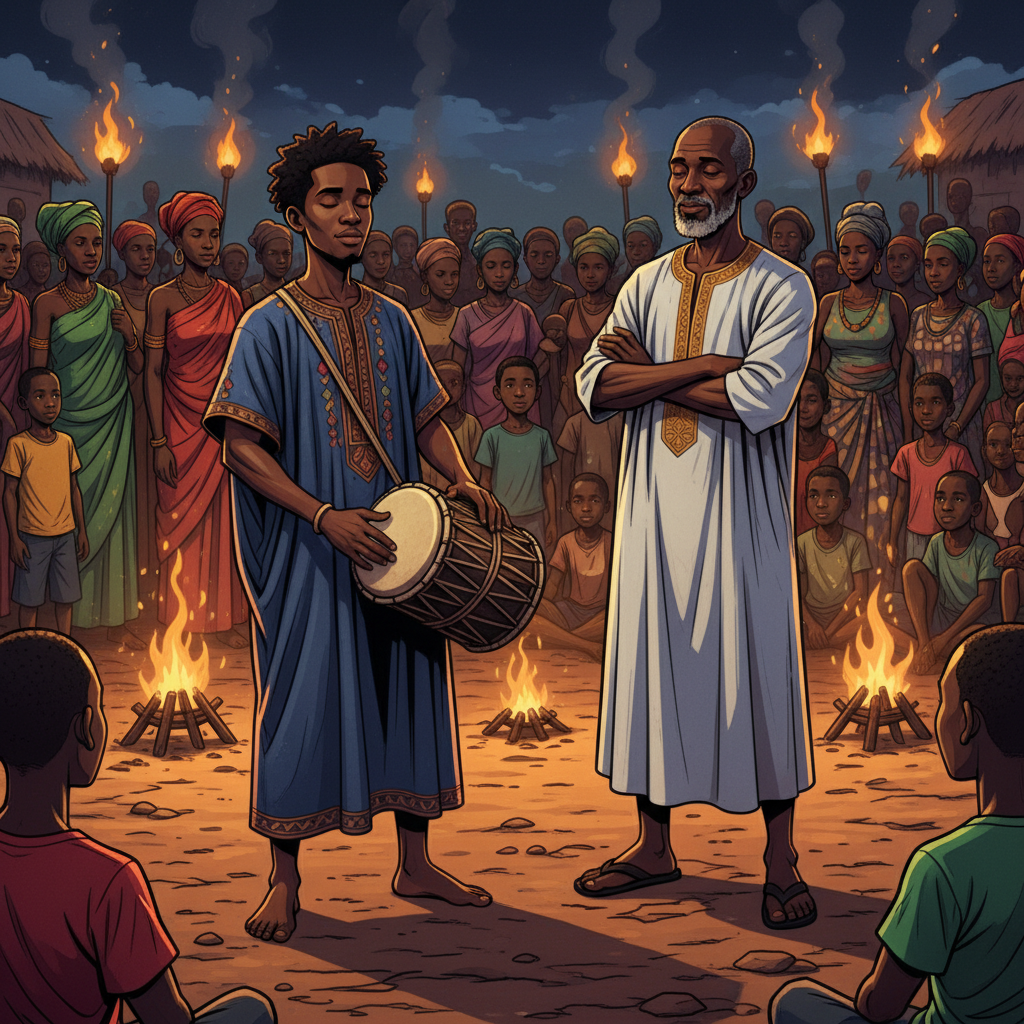
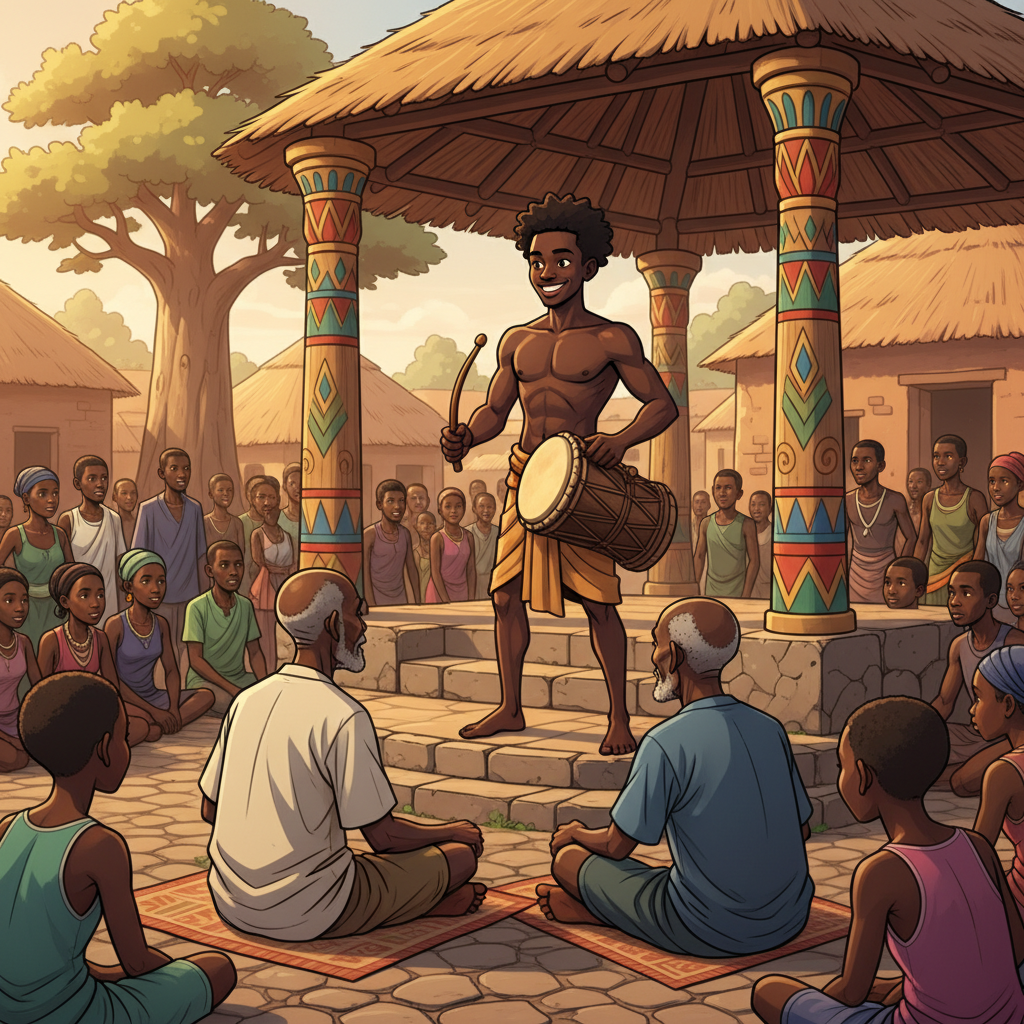
Then it was Damilola’s turn. He took his place at the center, his dundun held firmly. Baba Ayinde stood nearby, his gaze steady, his presence a quiet anchor. Damilola took a deep breath, feeling the pulse of the village in his own veins. He thought of his years of practice, of the mastery he had achieved. This was his moment. He closed his eyes for a brief second, envisioning the rhythm he had perfected, the powerful message he intended to send.
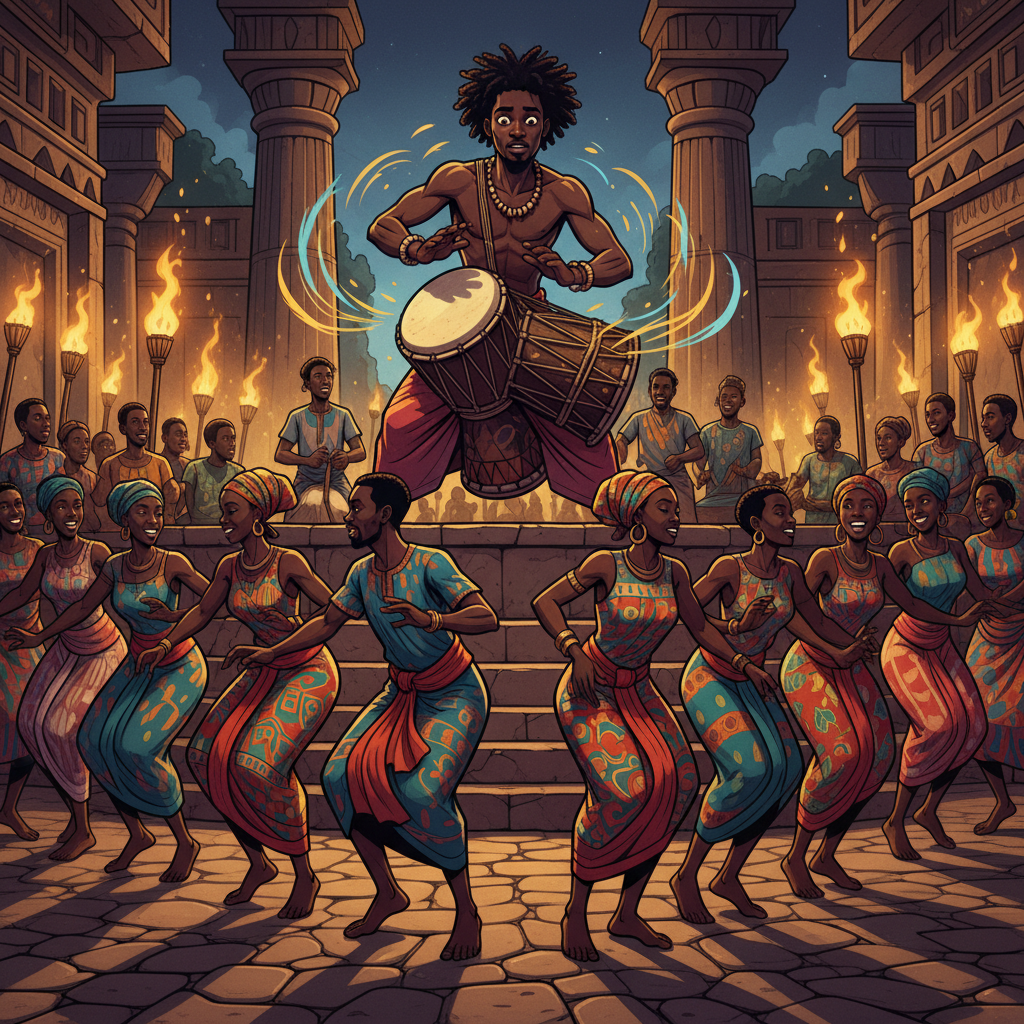
He began to play. His rhythm was swift, intricate, and technically flawless. The drum sang the triumph of the harvest, its voice strong and commanding. He wove in complicated variations, praise names, and calls to the ancestors, all perfectly articulated. He watched the dancers, expecting them to fall into his powerful new rhythm, to be swept away by its undeniable energy. He focused on making his drum’s voice the clearest, the loudest, the most compelling sound in the square.
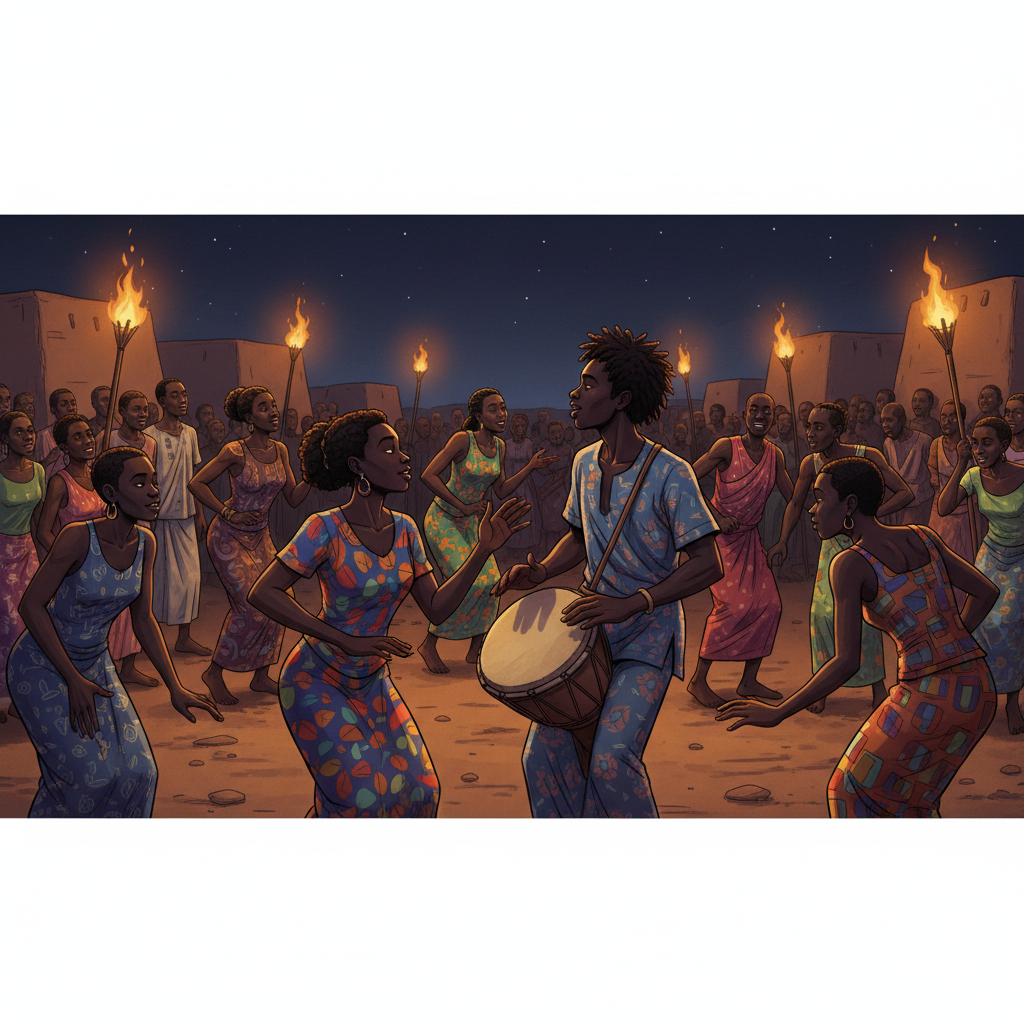
But something was… different. The dancers continued their movements, but they did not shift into his rhythm. They kept to the older, more familiar beats from the other drums. Their smiles remained, but their eyes, usually alight with the fierce joy of communal dance, seemed a little distant. Some swayed politely. Others continued their own steps, as if Damilola’s intricate drumming was a beautiful monologue, separate from their conversation. The energy of the ilo, instead of rising with his drum, seemed to hold steady, waiting.
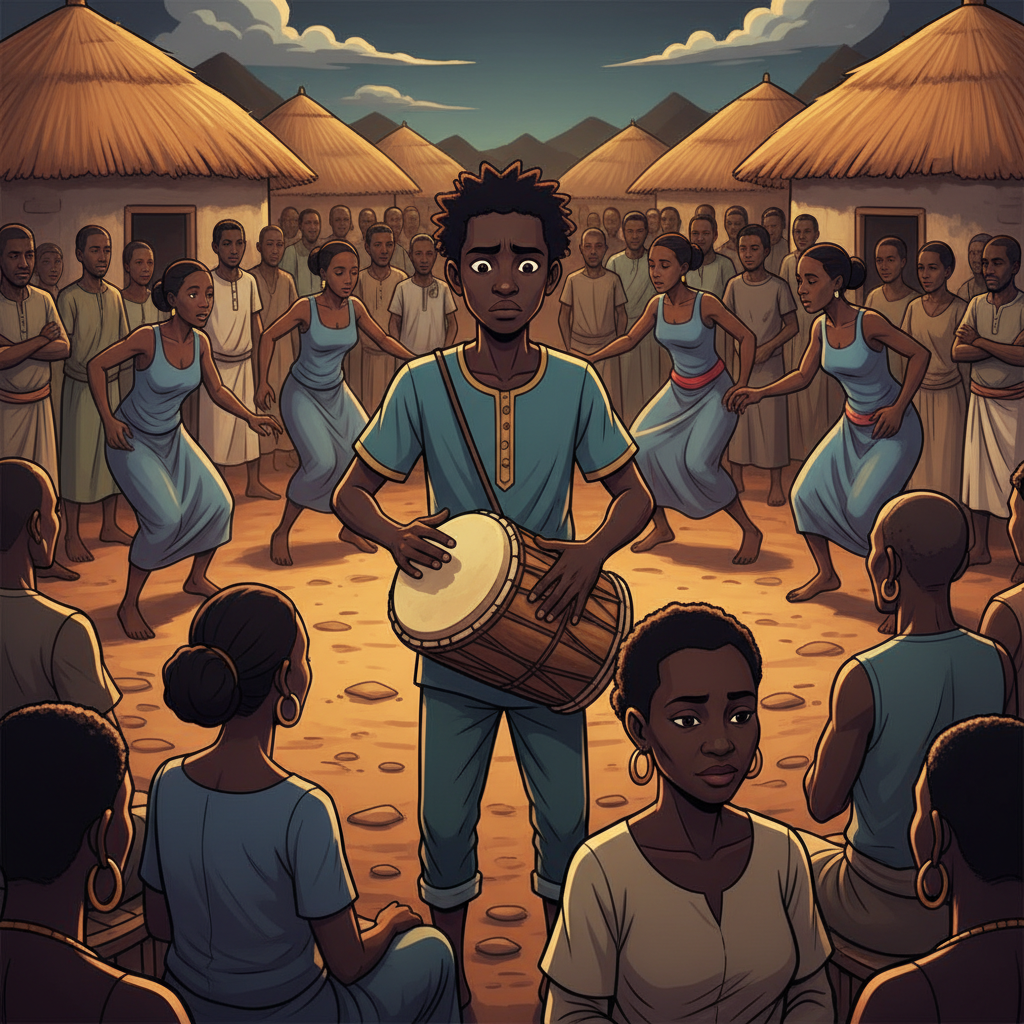
Damilola felt a cold knot form in his stomach. He tried a variation, a louder call, a more insistent phrase. The drum responded perfectly, but the dancers did not. It was as if his drum was speaking a language no one quite understood, or perhaps, a language no one felt compelled to answer. He saw his mother in the crowd, her face still, her hands resting quietly at her sides. He searched for Baba Ayinde, his heart sinking with a strange, heavy weight. The drum was speaking, but it was speaking into a void.
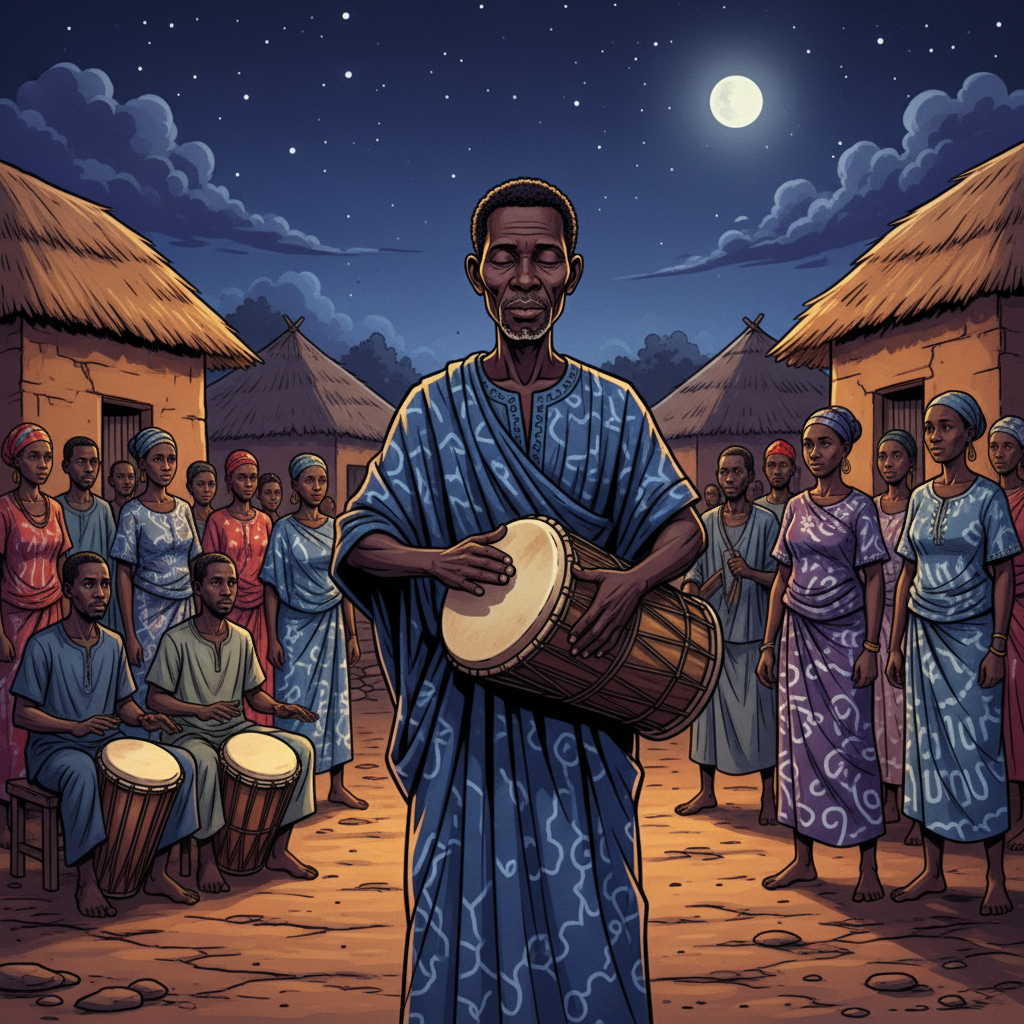
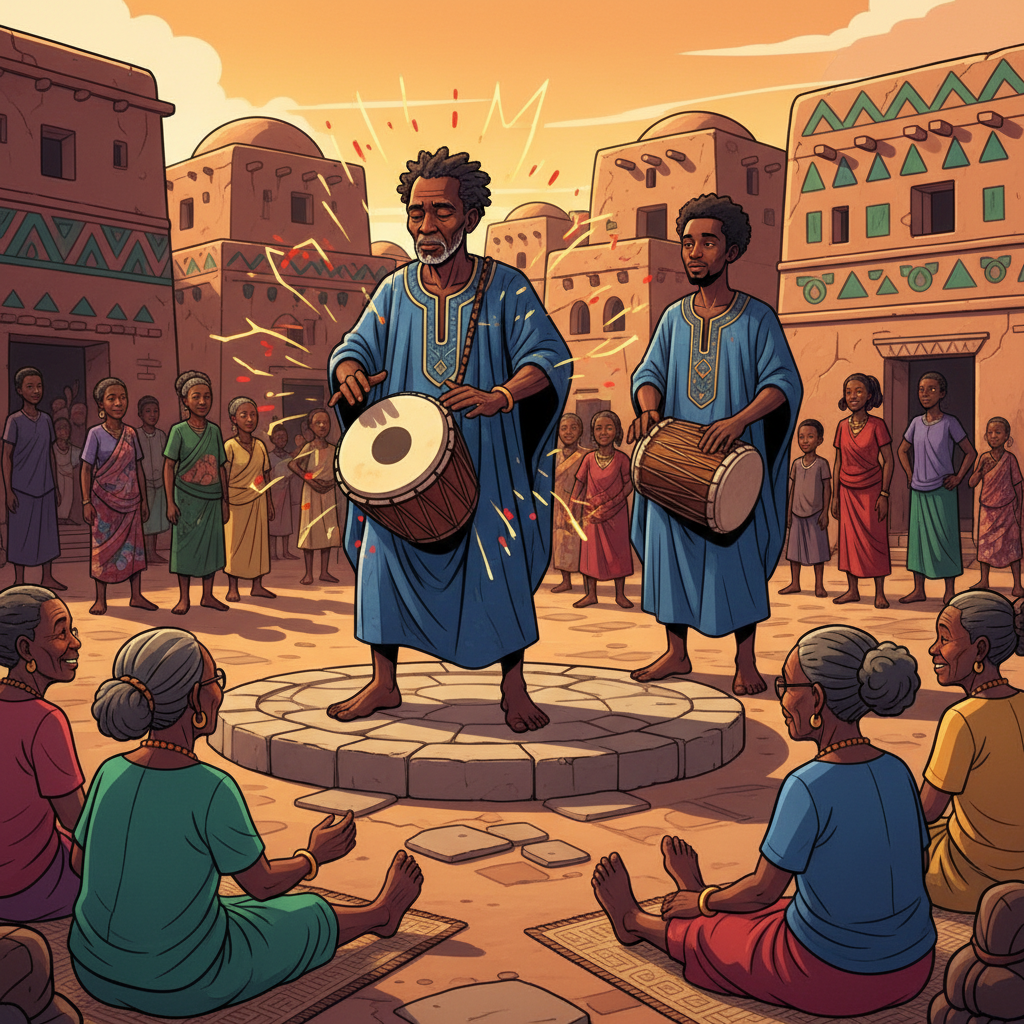
Baba Ayinde stepped forward then, his own dundun now cradled in his arms. He didn’t look at Damilola, but his eyes, dark as the fertile earth, swept across the faces of the villagers. He watched their feet, their shoulders, the subtle sway of their bodies. He listened to the other drummers, to the rustle of their clothes as they moved, to the very breath of the crowd. He closed his eyes for a moment, absorbing the atmosphere, feeling the collective pulse of the community gathered under the harvest moon.
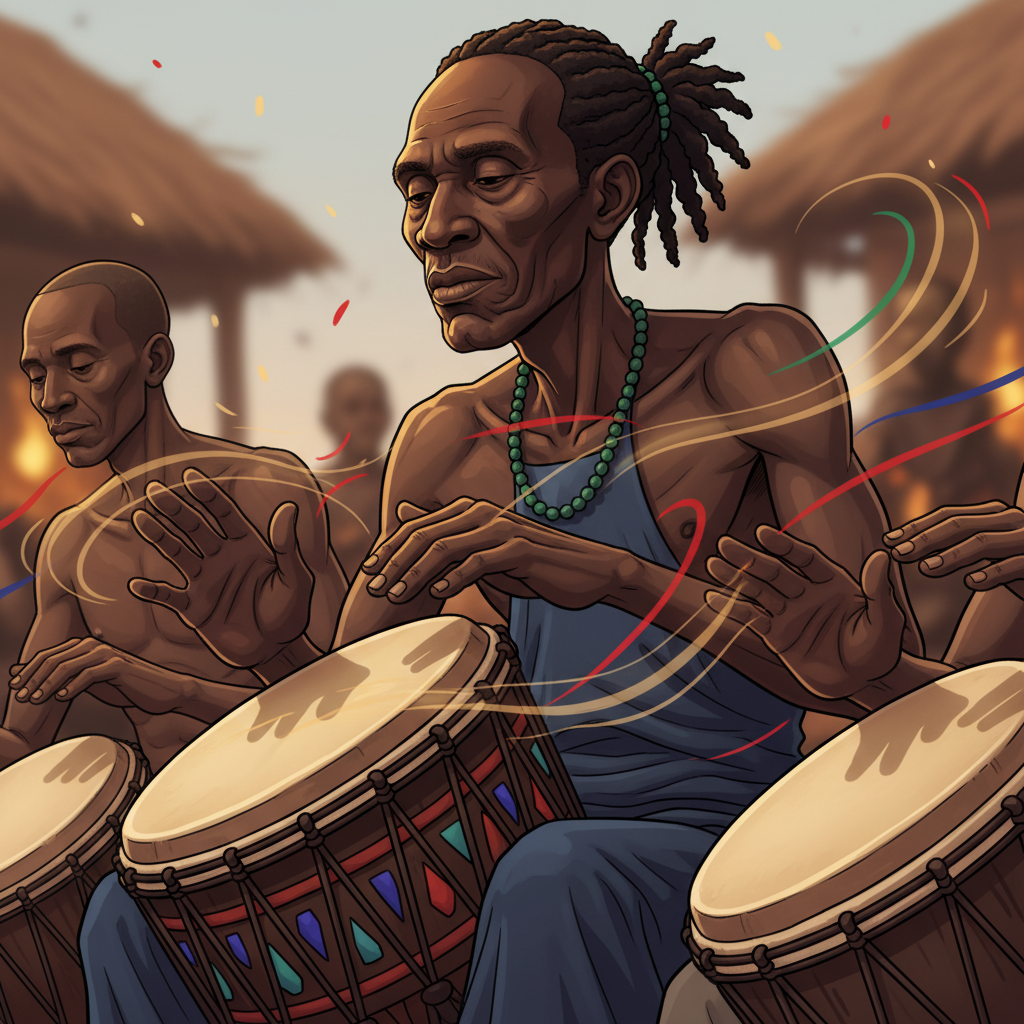
Then, Baba Ayinde began to play. His first notes were not loud or demanding. They were soft, almost a question, a gentle echo of the rhythms that were already flowing from the gbedu and bata drums. He joined the existing conversation, rather than trying to start a new one. His drum spoke the familiar comfort of home, the shared history of their village, the simple joy of being together. His skin, aged and dark, moved with a subtle grace that belied his years, coaxing the drum to sing.
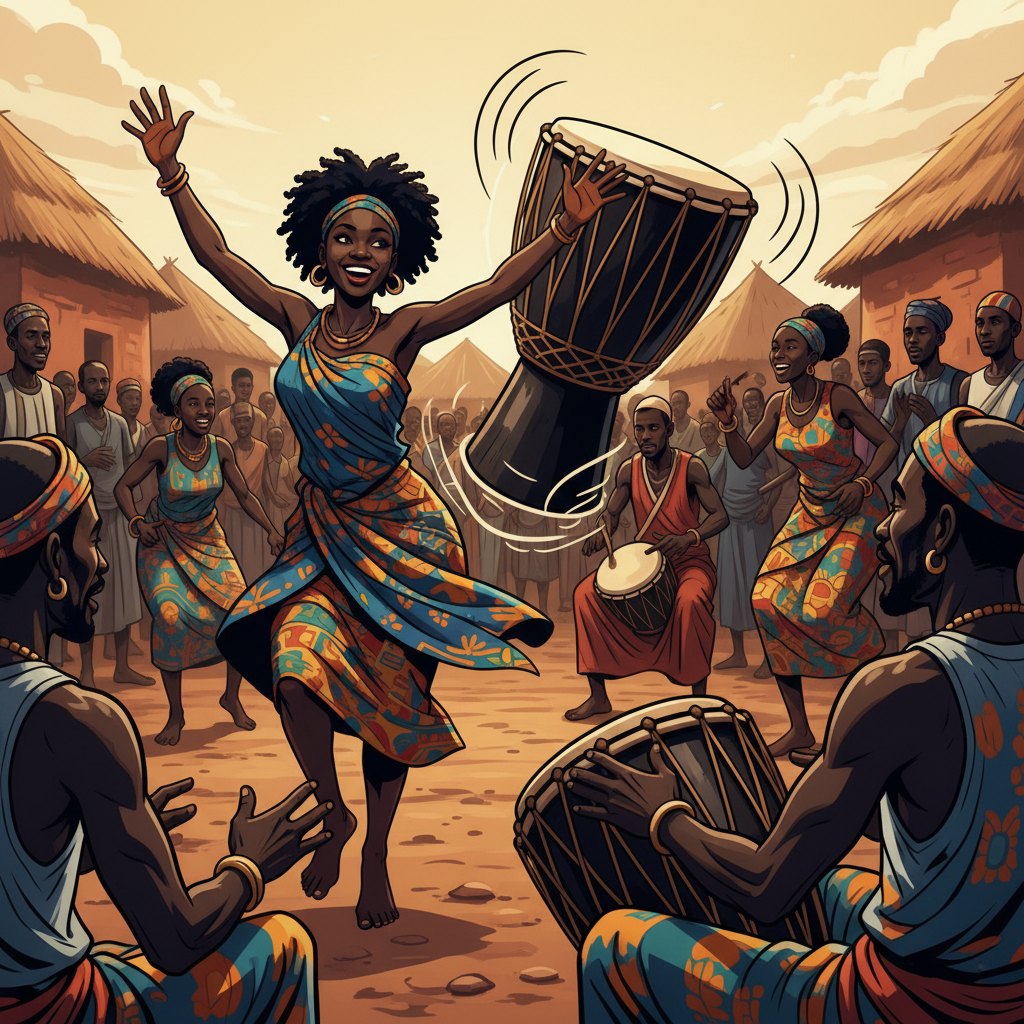
Slowly, imperceptibly at first, the energy shifted. The dancers’ steps became more assured, more vibrant. Their smiles broadened, their eyes sparkled. A woman in a brightly patterned wrapper spun, her arms flung wide, her voice rising in a joyous ululation. The other drummers, hearing Baba Ayinde’s subtle lead, adjusted their own rhythms, weaving their voices around his, creating a rich tapestry of sound that enveloped the ilo. The air hummed with a renewed, collective vitality. The drum now truly spoke, and the people answered.
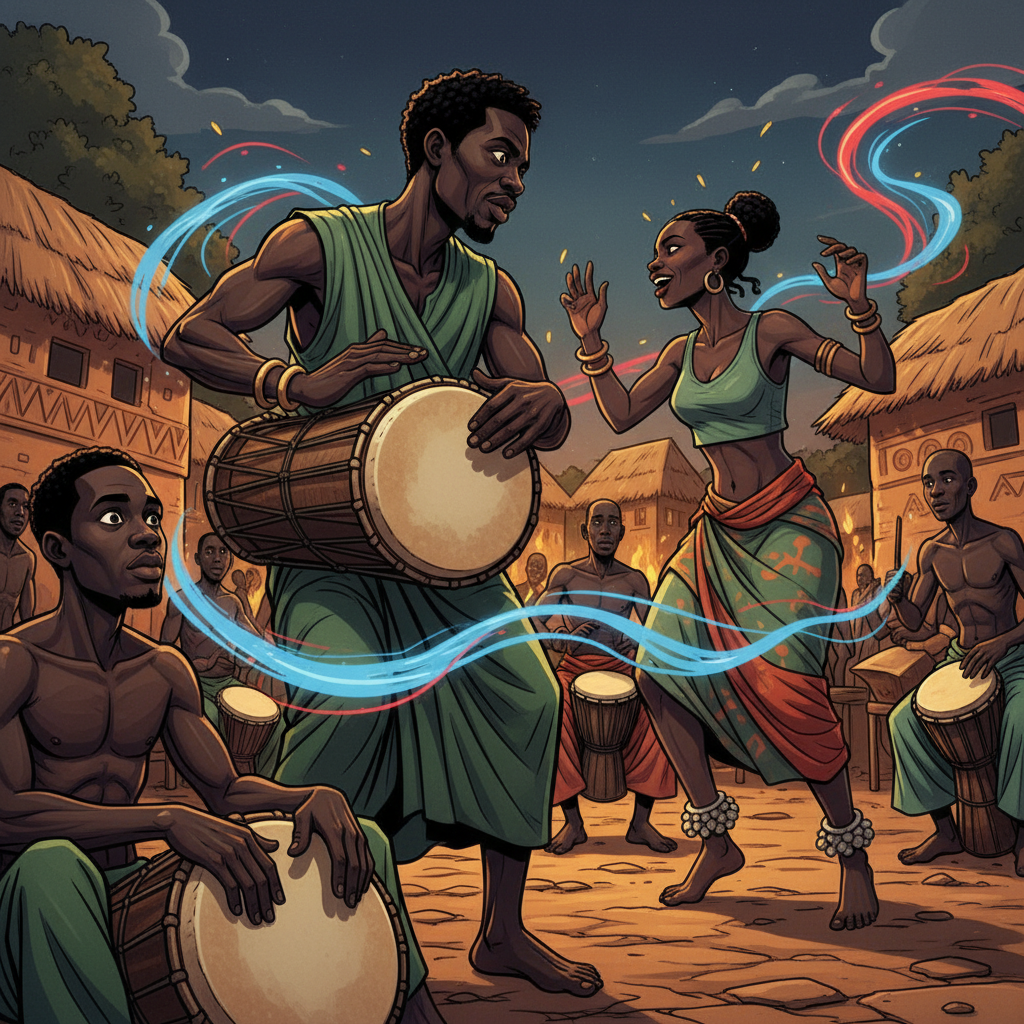
Damilola watched, his own drum silent beside him. He saw the way Baba Ayinde’s eyes met those of the dancers, a silent exchange passing between them. He saw how the drummers nodded at each other, their rhythms flowing together like the currents of a great river. Baba Ayinde wasn’t just playing; he was listening with his whole body, his whole spirit. He was responding to the unspoken needs of the community, to the rhythm that already lived within their hearts, waiting to be called forth. He wasn’t just speaking to the drum; he was allowing the drum to listen through him.
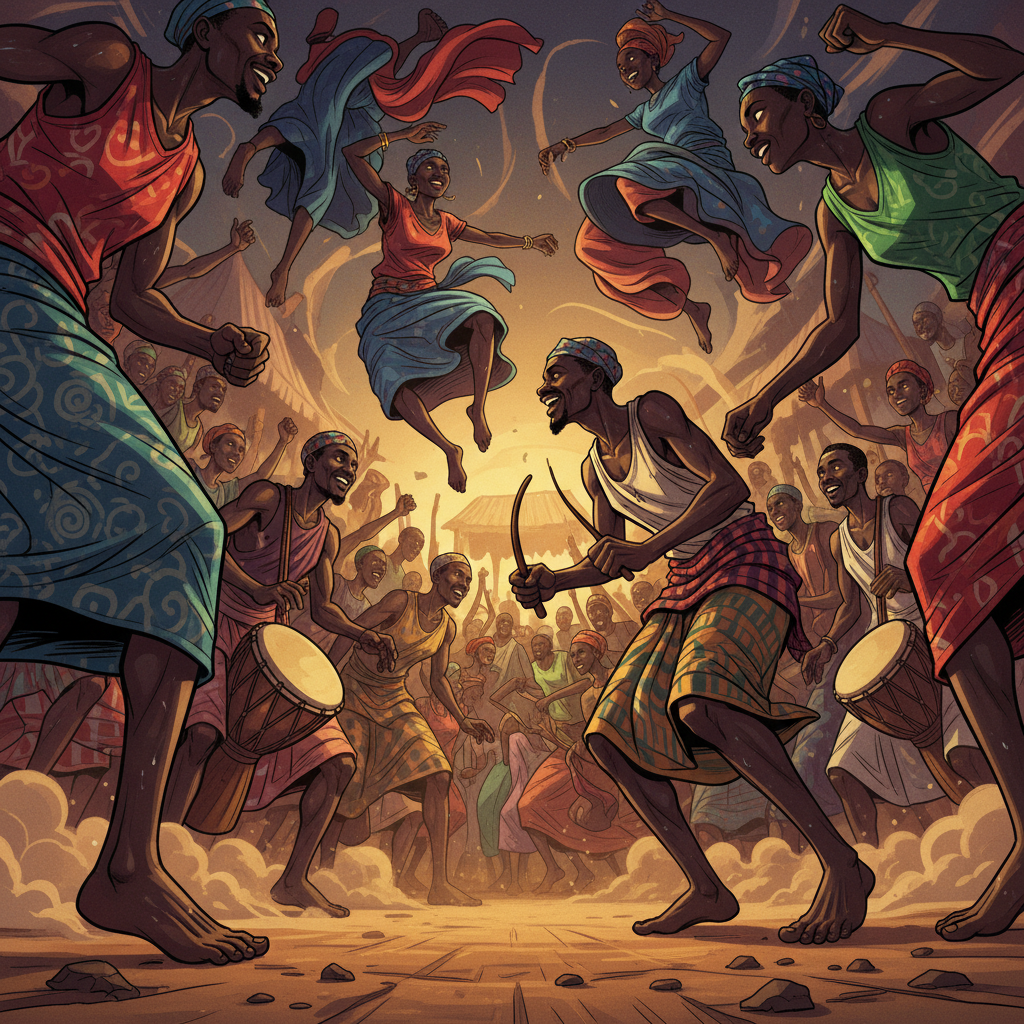
The festival swelled, a tide of sound and movement. The feet of the villagers pounded the earth, a steady, joyful heartbeat. The drums spoke, and the people’s bodies spoke back. It was a true conversation, a cycle of giving and receiving, of call and response. Damilola felt a warmth spread through him, chasing away the cold knot of confusion. It was as if Ayan, the very spirit of the drum, had opened his ears, not just to the drum’s voice, but to the silence and the sound all around him.
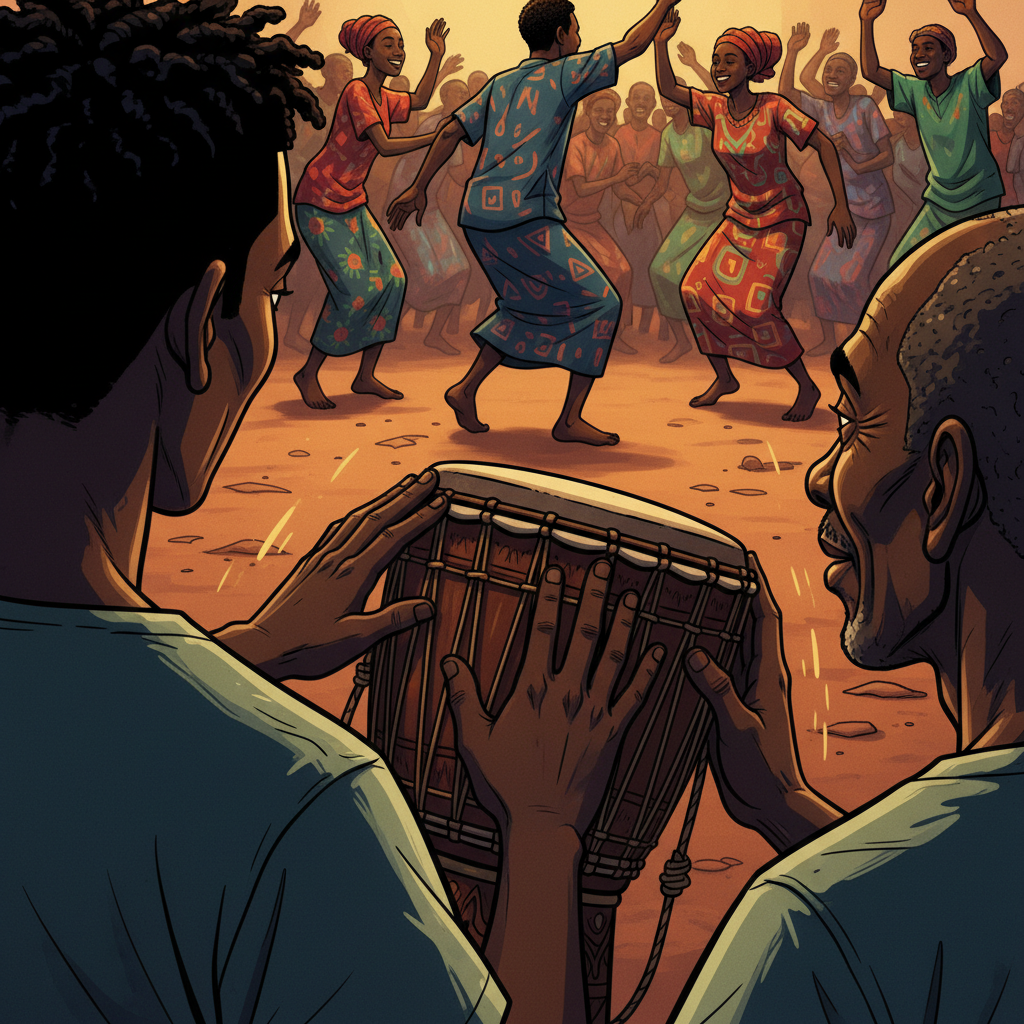
When Baba Ayinde finally handed his dundun back to Damilola, the elder’s hands were steady, his breath even. He offered no words of explanation, no lecture. He simply nodded towards the dancing crowd, his eyes crinkling at the corners. Damilola looked at his own drum, then at the pulsating heart of the festival. He understood that the drum was not just a tool for his voice, but a bridge, a living conduit between the drummer and the collective spirit of the people.
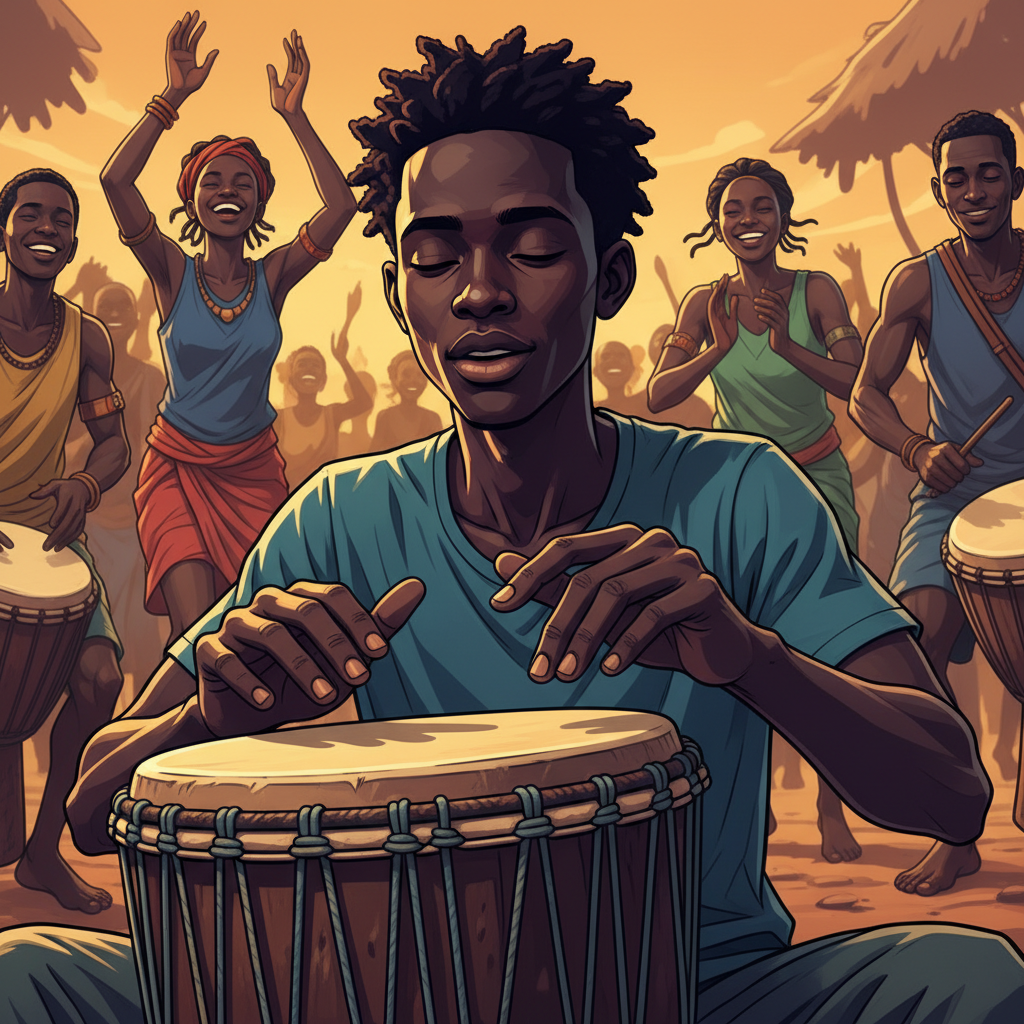
He took his place again, this time with a different approach. He didn’t try to lead immediately. Instead, he listened. He listened to the feet, to the laughter, to the subtle shifts in the other drums. He felt the pulse of the gathering, the unspoken desire for a familiar comfort, a shared joy. Then, softly at first, he began to join the conversation, weaving his drum’s voice into the existing tapestry, responding to the energy that was already there, amplifying it.
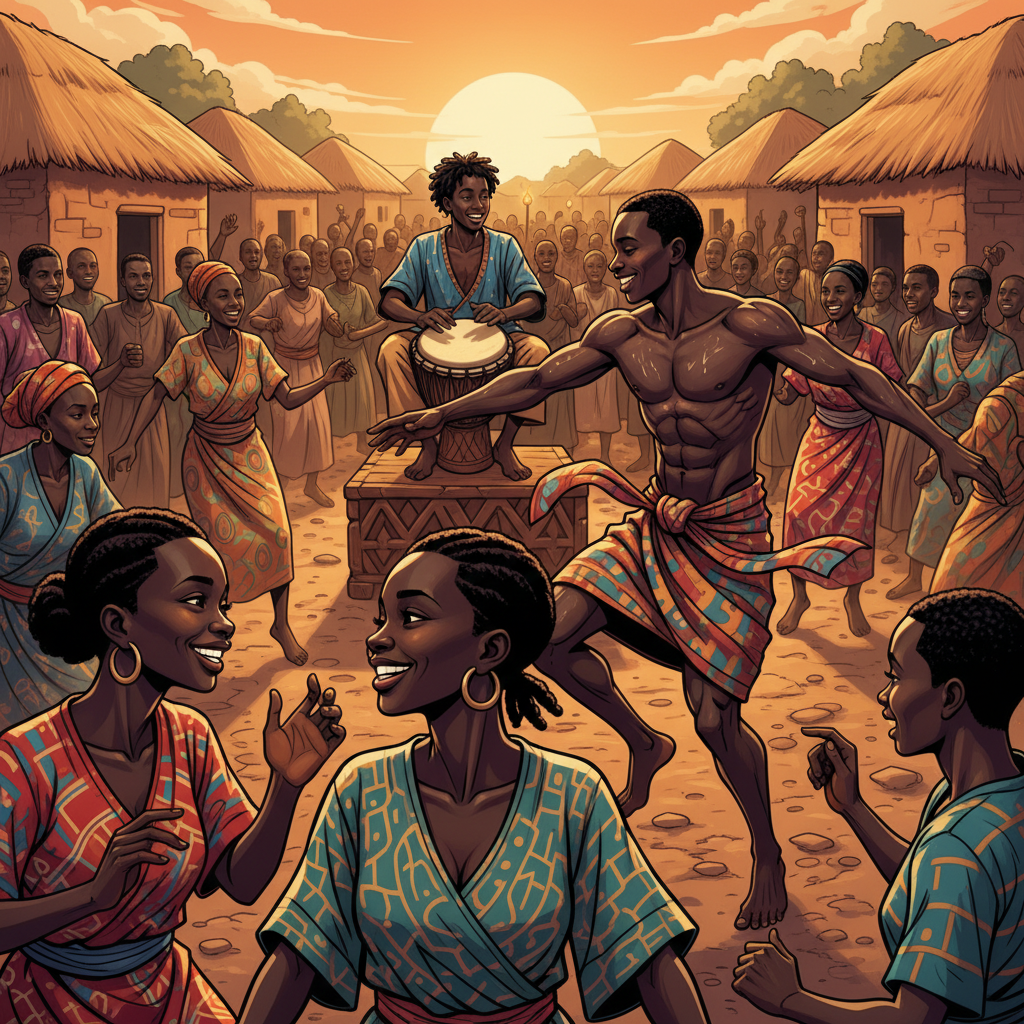
And this time, the response was immediate. A woman turned, caught his eye, and her smile bloomed. A young man, his body shining with sweat, shifted his weight and spun into Damilola’s rhythm, his movements powerful and free. The drum now truly spoke twice. It spoke from Damilola’s hands, and it spoke back from the bodies of the dancers, a continuous, joyful exchange that filled the ilo with an intoxicating energy. Damilola felt a connection he had never known before.
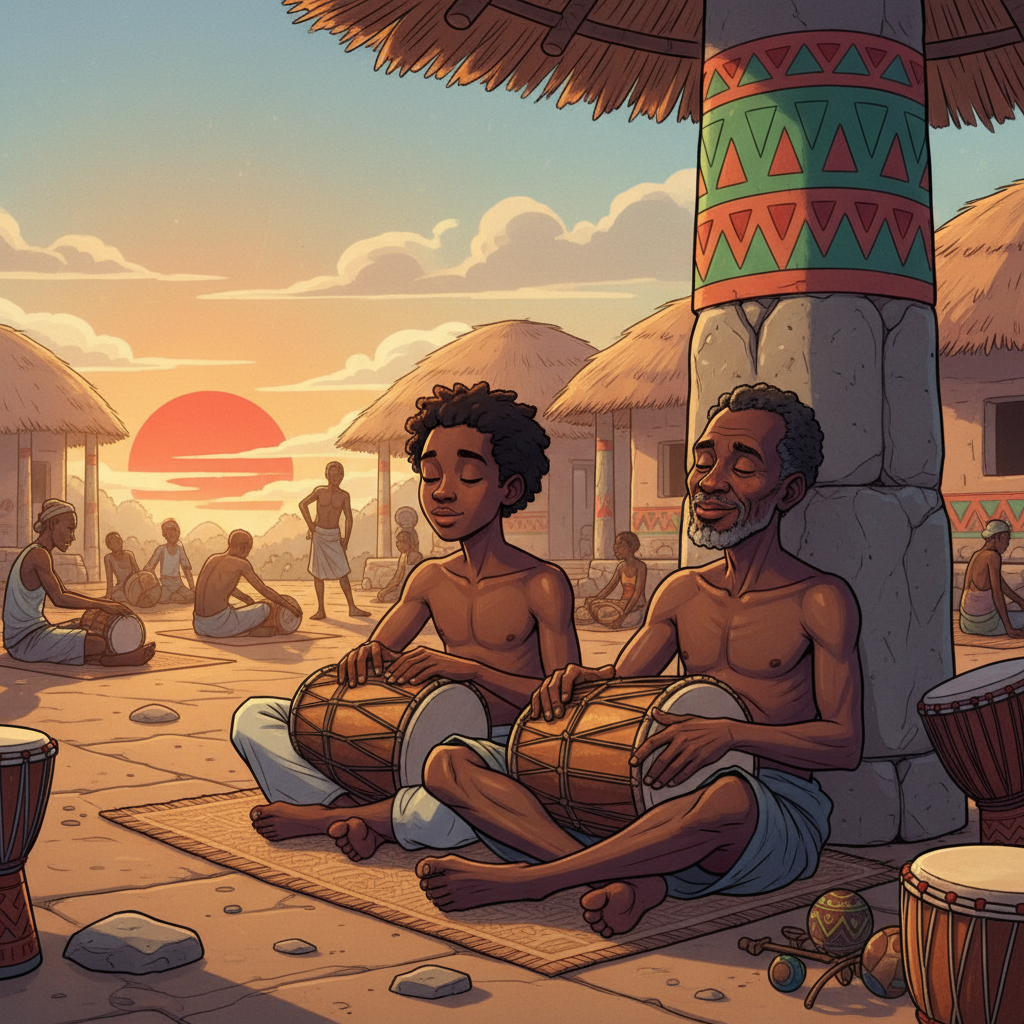
The festival ended in the soft light of dawn, the air still humming with residual energy. Damilola sat beside Baba Ayinde, the older man’s eyes closed in quiet contentment. “The drum carries Ayan,” Baba Ayinde said, his voice a whisper, not quite opening his eyes. “Ayan hears what the people need to say, even when their mouths are silent. Your hands must speak for Ayan. Your ears must hear for Ayan.”
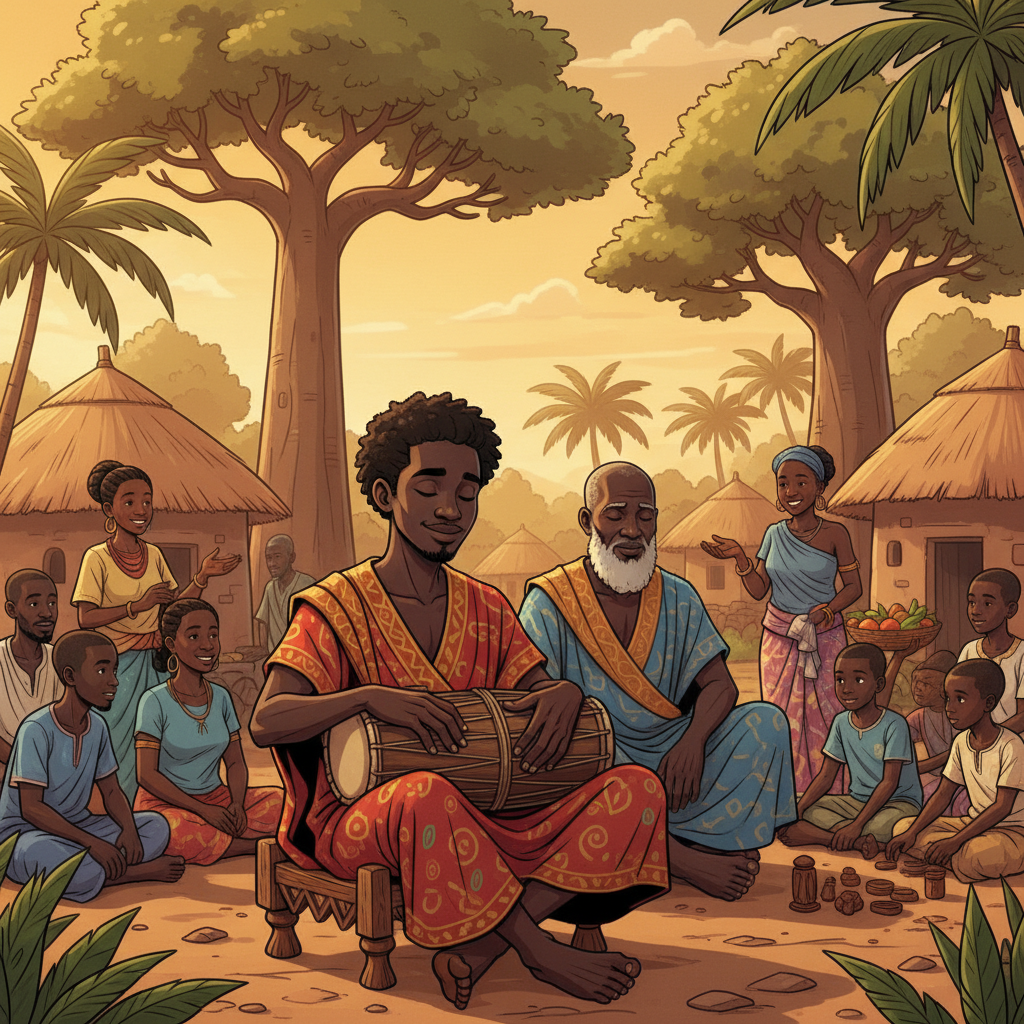
Damilola nodded, a new understanding settling deep within him. He now knew that mastery of the dundun was not just about the swiftness of his fingers or the sharpness of his ear for tone. It was about opening himself to the world around him, to the unspoken language of the community, to the collective heartbeat that pulsed through the village. It was about being a vessel, not just a voice. The drum, he realized, was not just his to command, but a shared instrument.
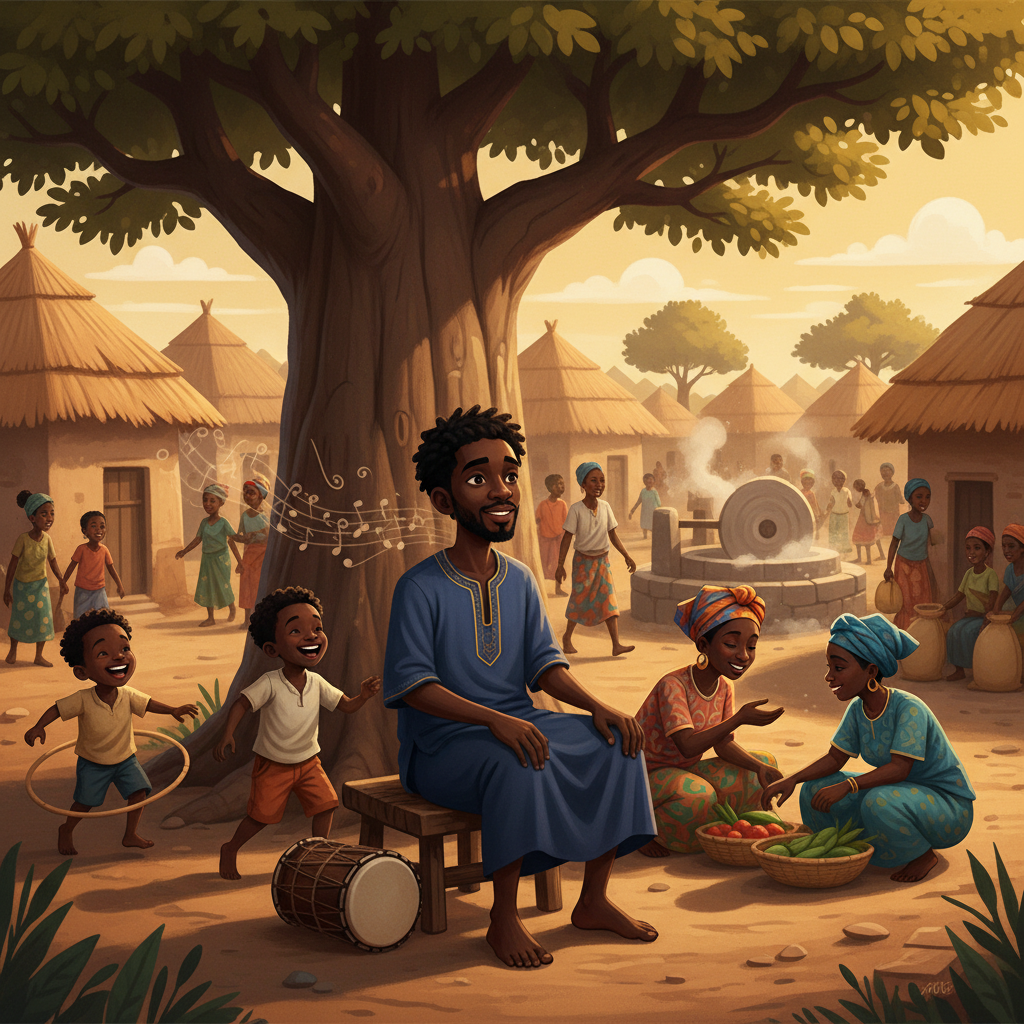
From that day forward, Damilola’s practice changed. He still perfected his technique, but now he also spent hours simply observing the village, listening to the rhythm of daily life, to the laughter of children, the laments of market women, the slow, steady grind of the millstones. He sought to understand the unspoken language of his people, the subtle shifts in their moods, the deep currents of their shared existence. His drum became not just a speaker, but a listener.
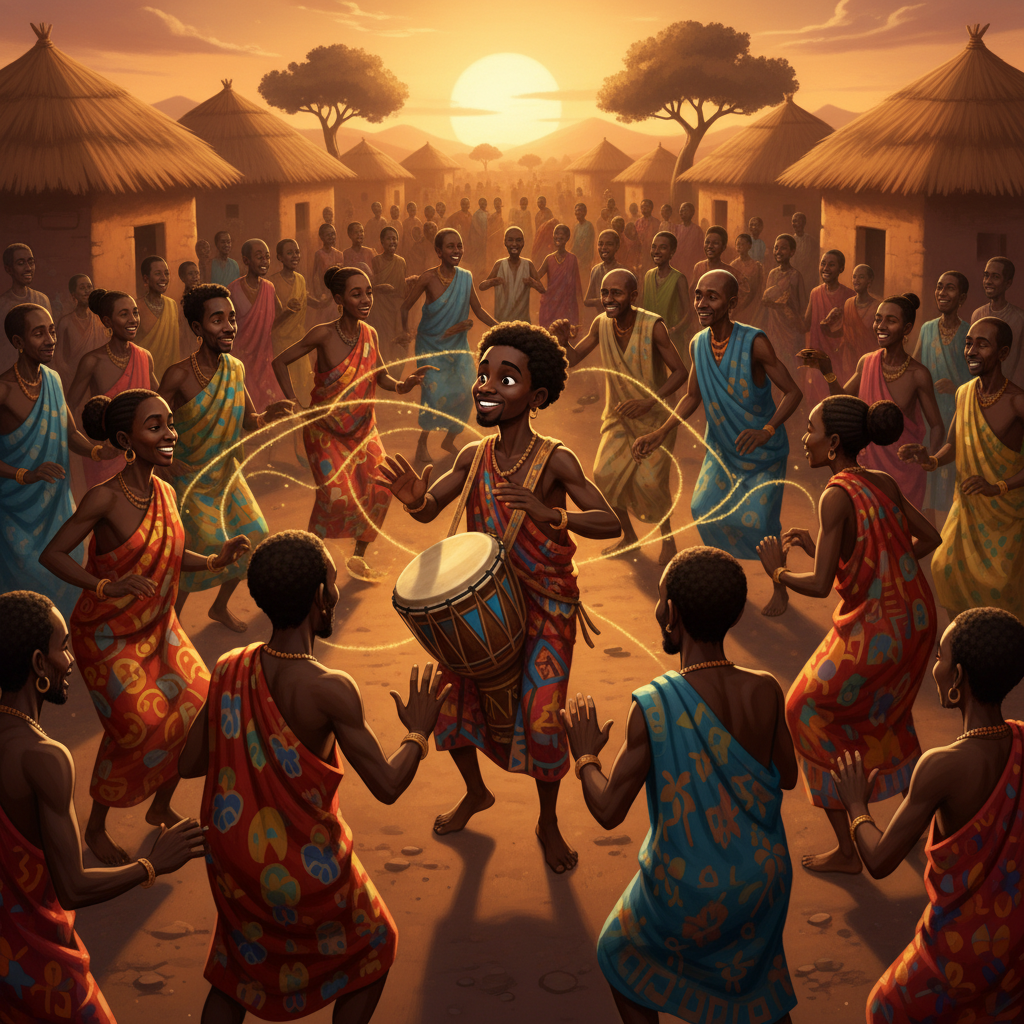
And when he played, his dundun no longer just echoed his own thoughts. It echoed the thoughts and feelings of the entire village. It spoke to them, and they spoke back, their bodies and spirits engaging in a vibrant, reciprocal dance. His drum truly spoke twice, a continuous conversation between himself, Ayan, and the people of Oyo, weaving them all together in the ancient, sacred rhythm of life.