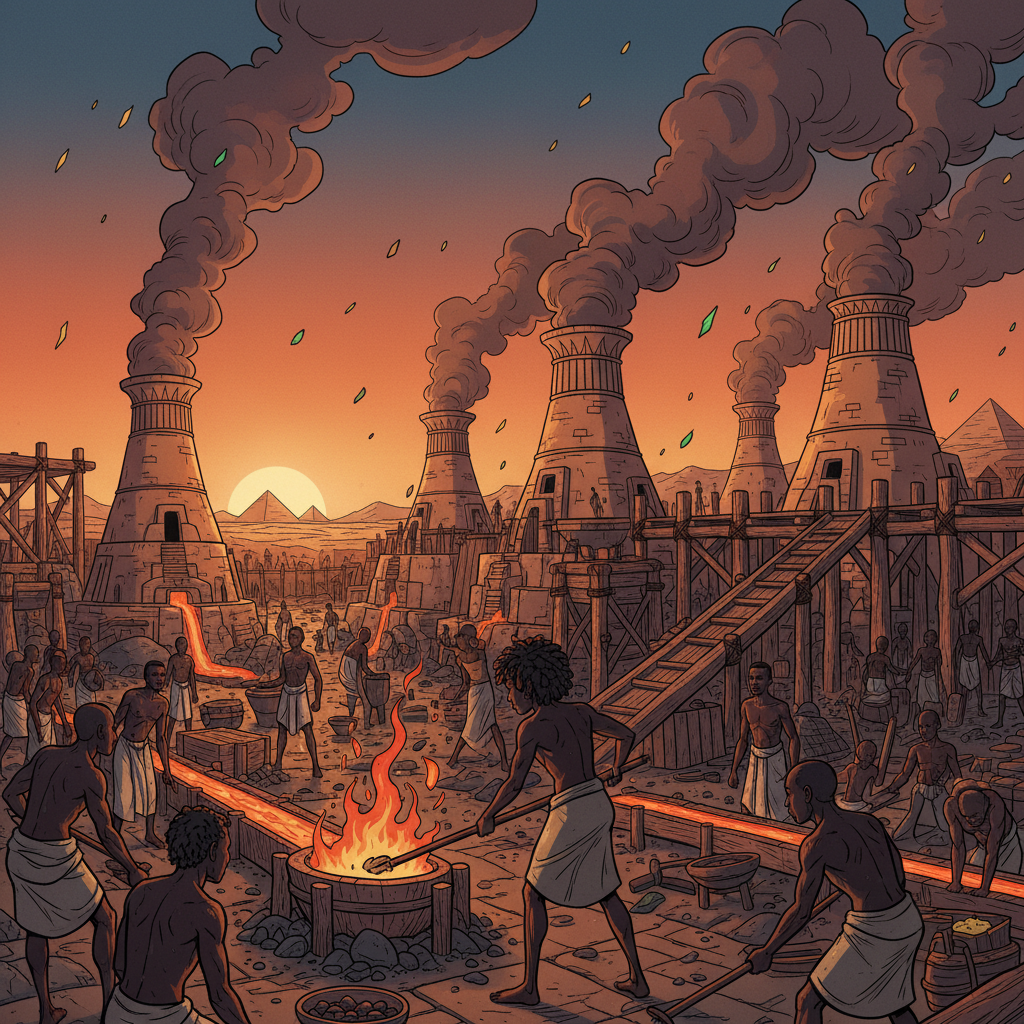
The Meroe iron district hummed with a deep, rhythmic heartbeat. It was the sound of hammers striking, bellows sighing, and furnaces roaring. Amara, fourteen seasons old, loved this sound more than any song. Her strong arms moved with practiced ease as she stoked the coals, her dark skin gleaming with sweat in the furnace's fiery glow. Her thick, wrapped 4C hair felt hot against her scalp, but she barely noticed; her world was fire.
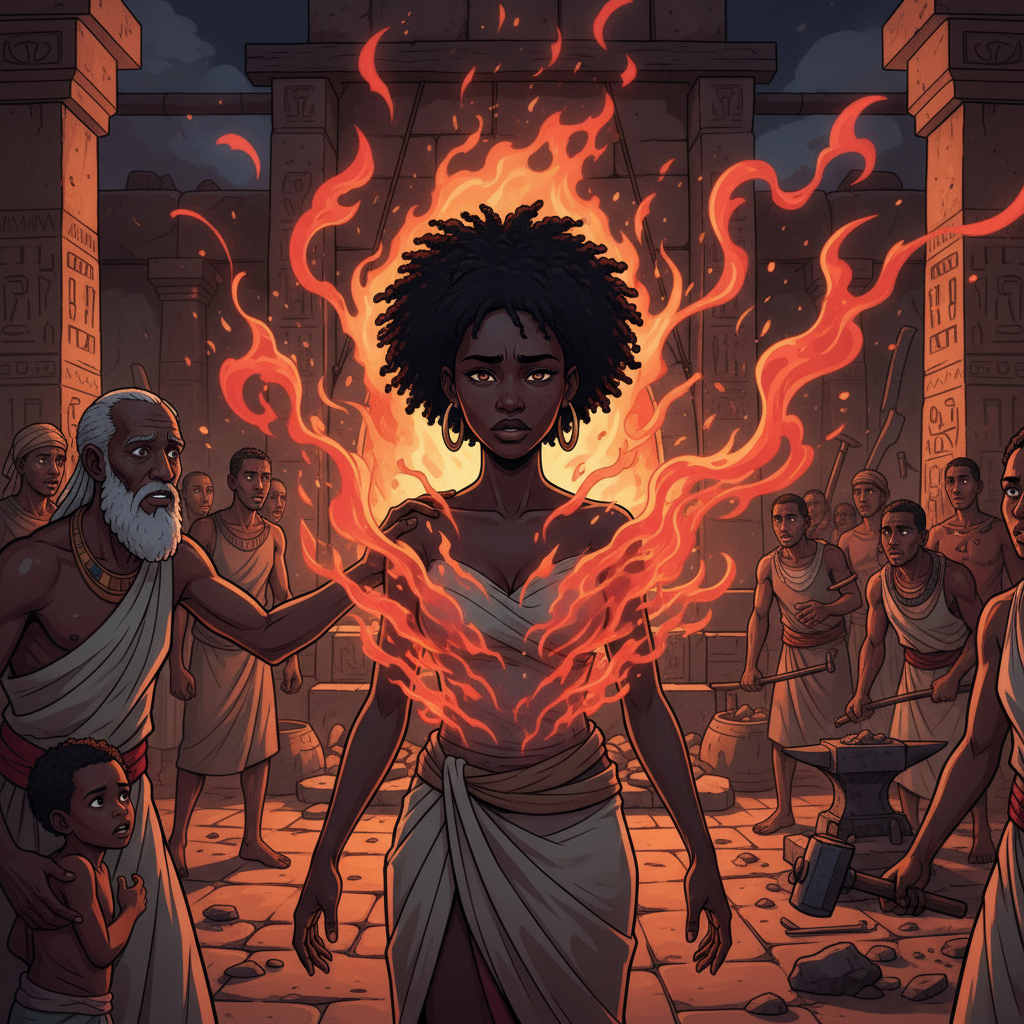
Amara's spirit burned as fiercely as the coals she tended. She felt everything with an intensity that often surprised others. A small injustice could ignite a powerful anger within her, a beautiful sunset could bring a flood of joy. She saw this deep feeling as a gift, a connection to the `Netjeru`, but sometimes it felt like an uncontrolled fire, threatening to consume everything around her, including herself. Today, her fire felt particularly restless.
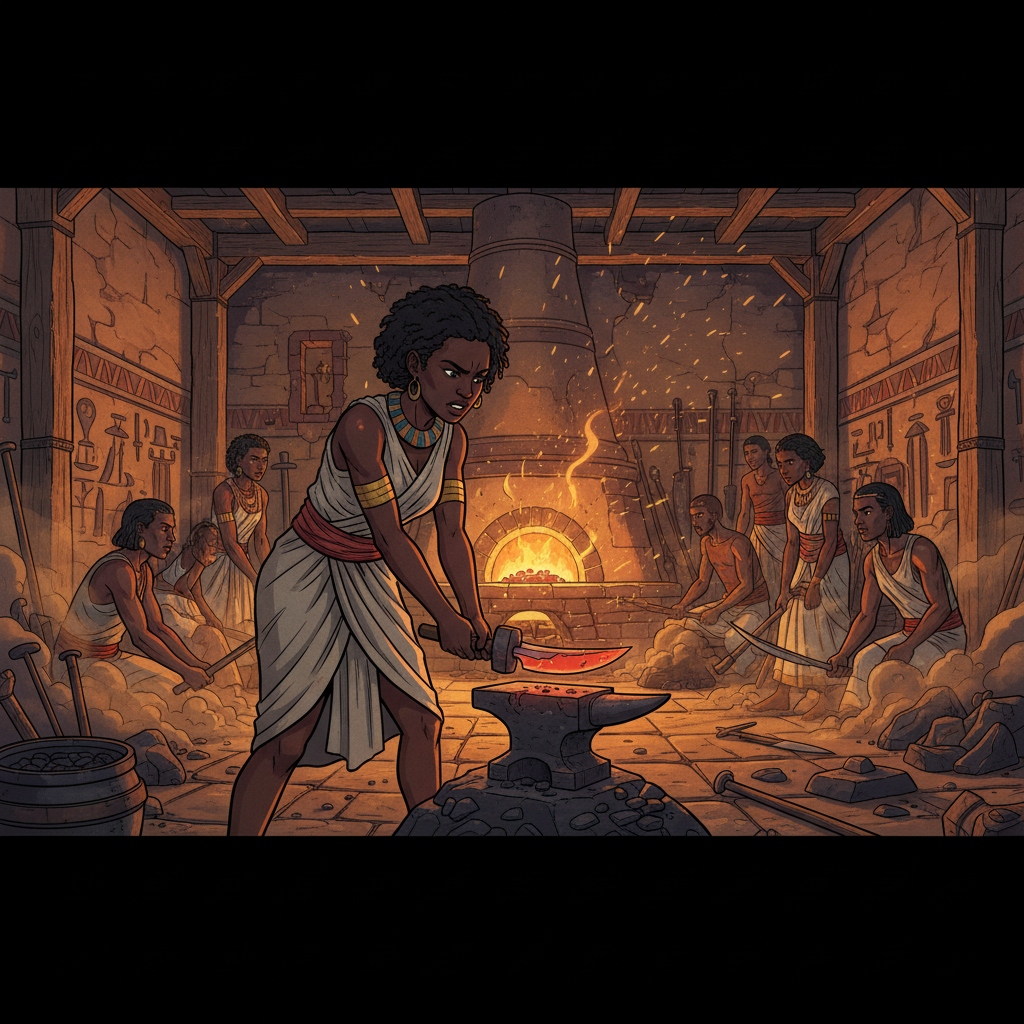
They were forging new tools for the upcoming harvest festival, a communal effort that brought every family to the great workshops. Amara was tasked with shaping smaller blades, a job requiring patience and a steady hand. She hammered with speed and precision, but a persistent knot of frustration tightened in her stomach. The iron wasn't bending quite right, resisting her will with stubborn defiance, and a dull ache throbbed in her temples. She felt a familiar heat building inside.
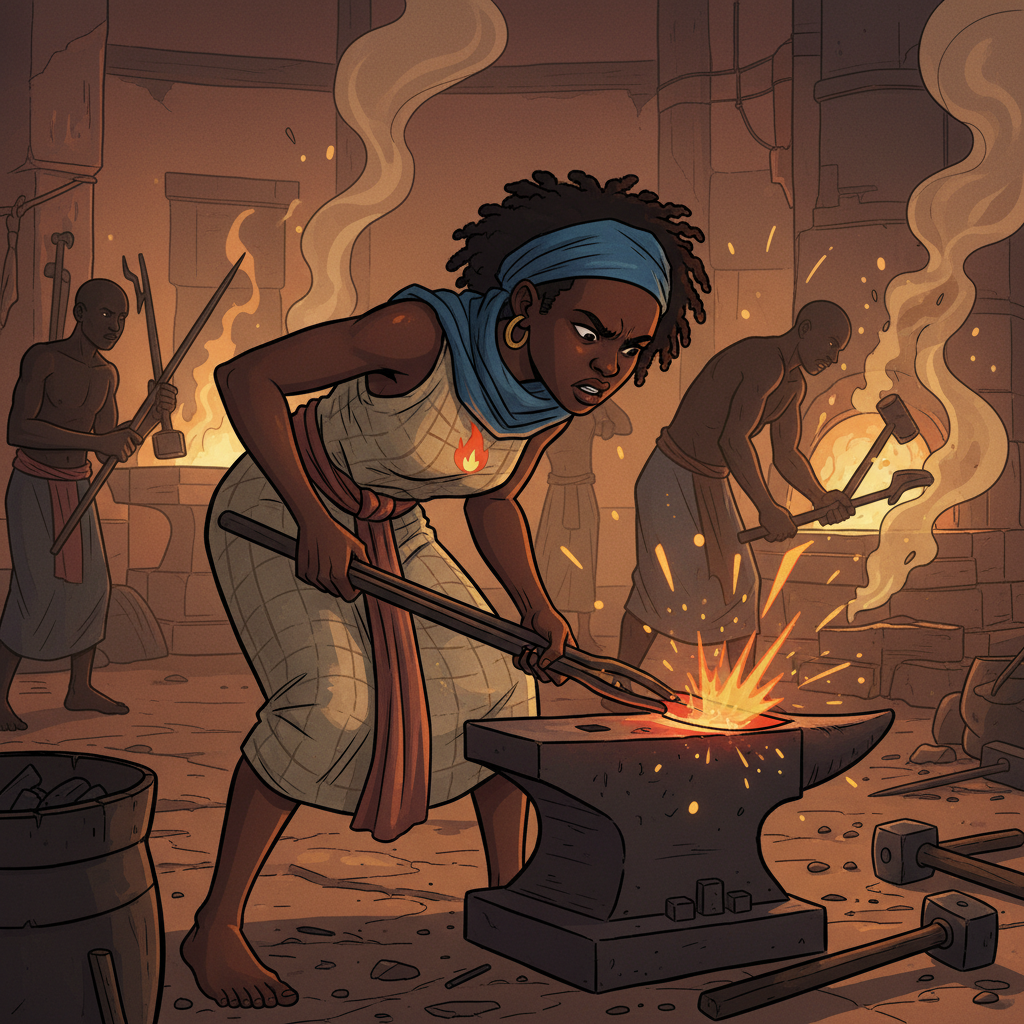
Her breath hitched, and a spark of impatience flickered in her heart. She wanted the blade to form *now*, perfectly, without struggle. Each stubborn resistance from the metal felt like a personal challenge, making her inner fire burn hotter. She gripped the tongs tighter, her knuckles white. The air grew thick with the smell of smoke and exertion, and the rhythmic clang of other hammers seemed to mock her rising frustration. Her focus narrowed, blinding her to everything but the red-hot iron.
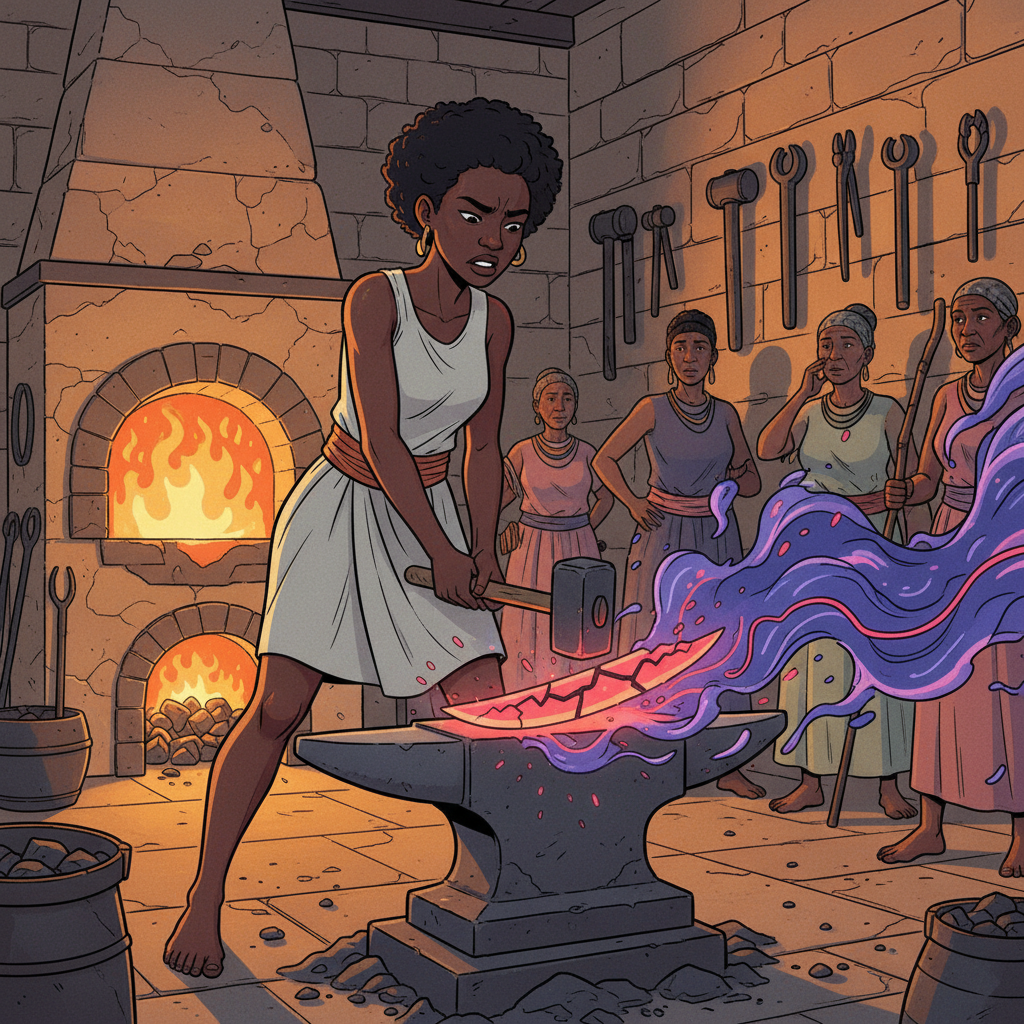
With a sudden surge of strength, she brought her hammer down harder than necessary. The metal shrieked, bending awkwardly, and a jagged crack snaked across its surface. It was ruined. A wave of `isfet`, a sense of disorder, washed over her. She had been so focused on forcing the metal to her will that she had forgotten the delicate balance needed for a perfect forge. The metallic tang of failure filled her nostrils, a bitter reminder of her lack of control.
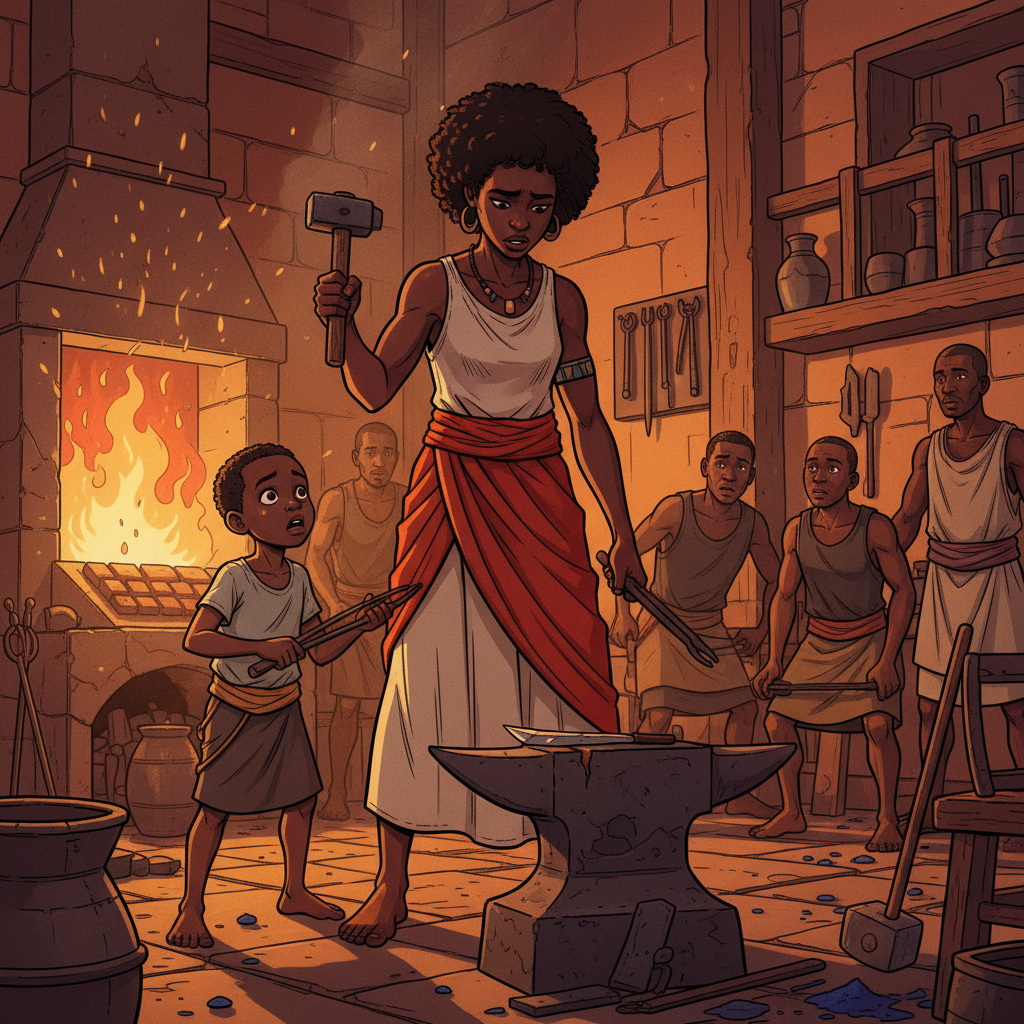
A younger apprentice, barely ten seasons, looked at her with wide, startled eyes. Amara felt a flush creep up her neck, hot with shame. She had not only ruined her own piece but had also startled the boy, disrupting the peaceful rhythm of their shared work. The hum of the workshop, usually a source of comfort, now felt like a judgment. Her strong emotions, once her pride, had once again led to a moment of uncontrolled chaos, a whisper of `isfet` in the forge.
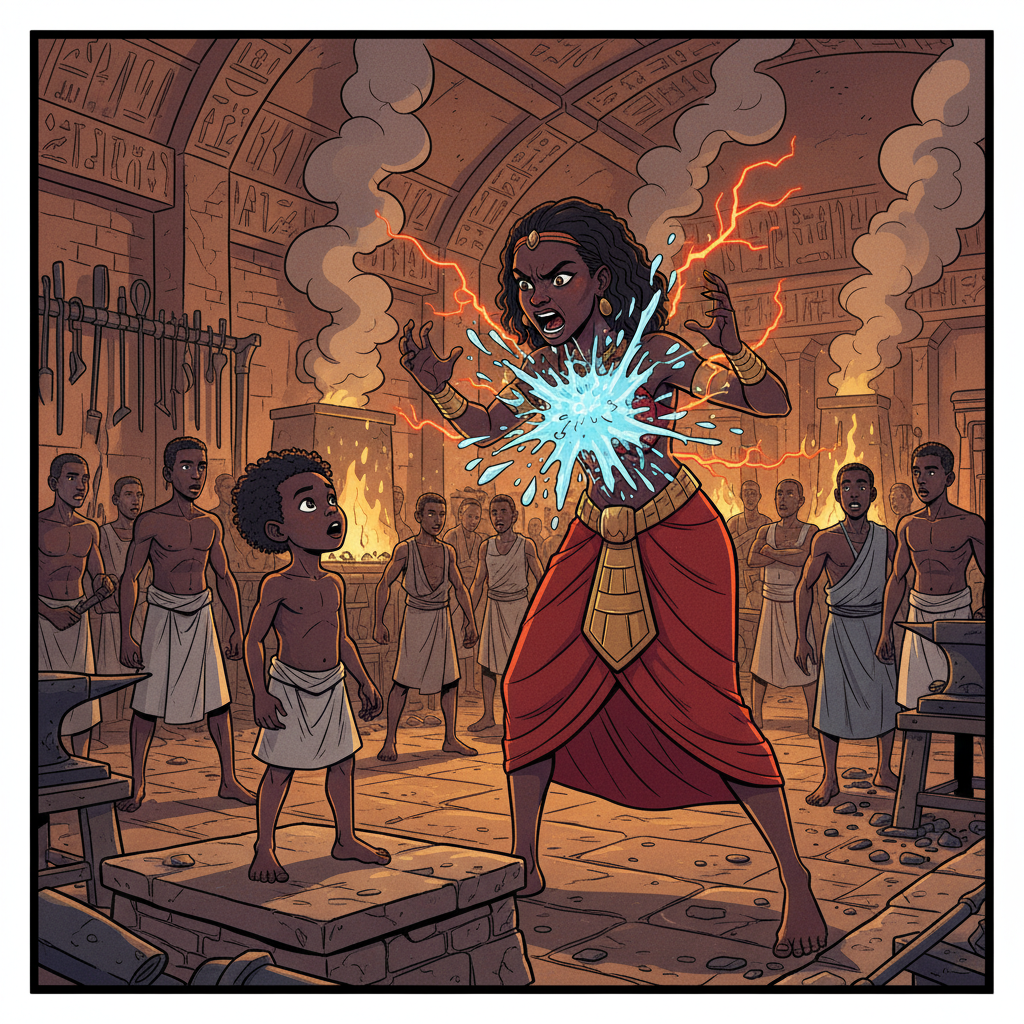
“Can’t you just *listen* to the metal?” the apprentice asked, his voice small but clear. The words struck Amara like a cold splash of water. Her inner fire, already raging, exploded into a burst of sharp words. “It's not that simple! You don’t understand!” she retorted, her voice echoing too loudly in the workshop. She knew immediately she had spoken out of turn, her anger blinding her to the wisdom of a simple question. The air crackled with her uncontrolled `sekhem`.
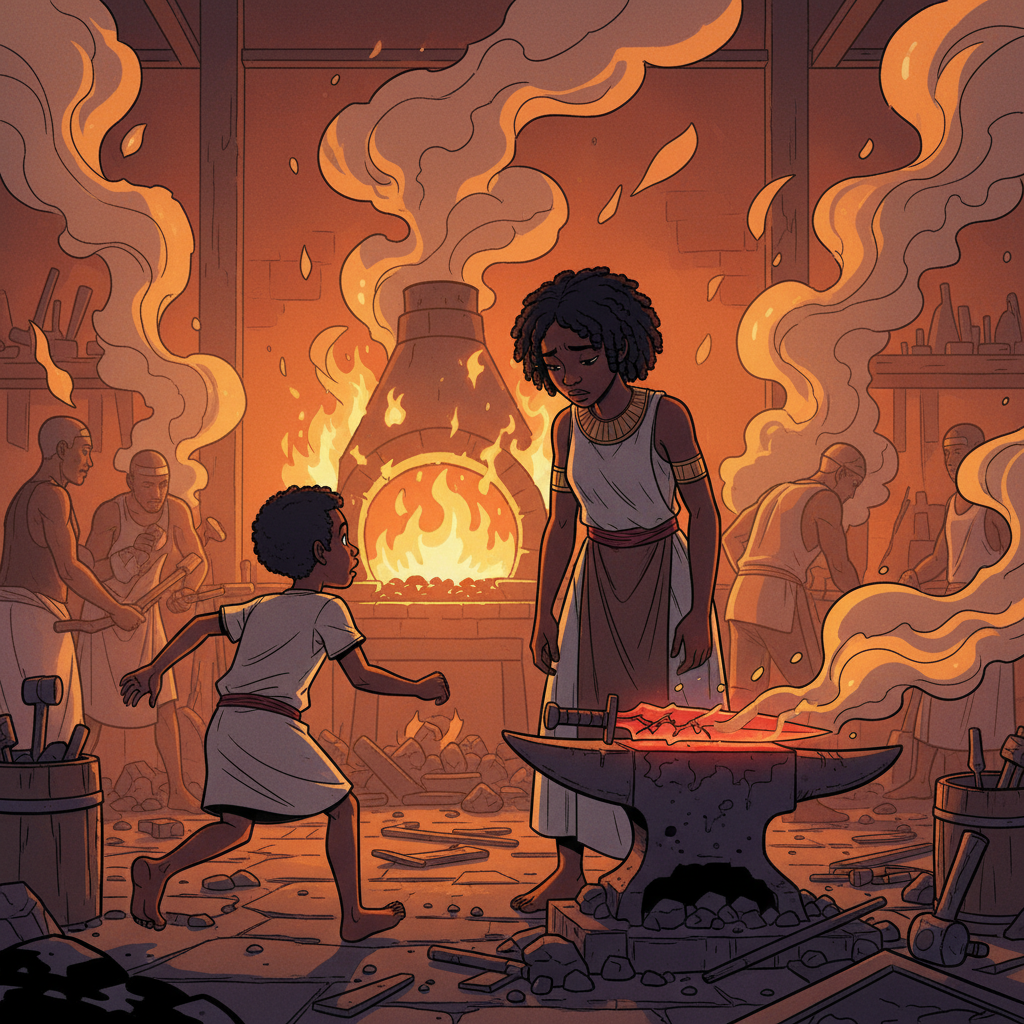
The apprentice flinched, shrinking back. Amara watched him go, a heavy knot forming in her chest. The damaged blade lay cooling on the anvil, a monument to her impatience. The rhythmic clang of hammers around her seemed to slow, emphasizing her mistake. She had allowed her internal `isfet` to manifest externally, creating disharmony. Her strong feelings, usually so vibrant, now felt like a burden, weighing her down with regret. She wished she could melt into the smoke.
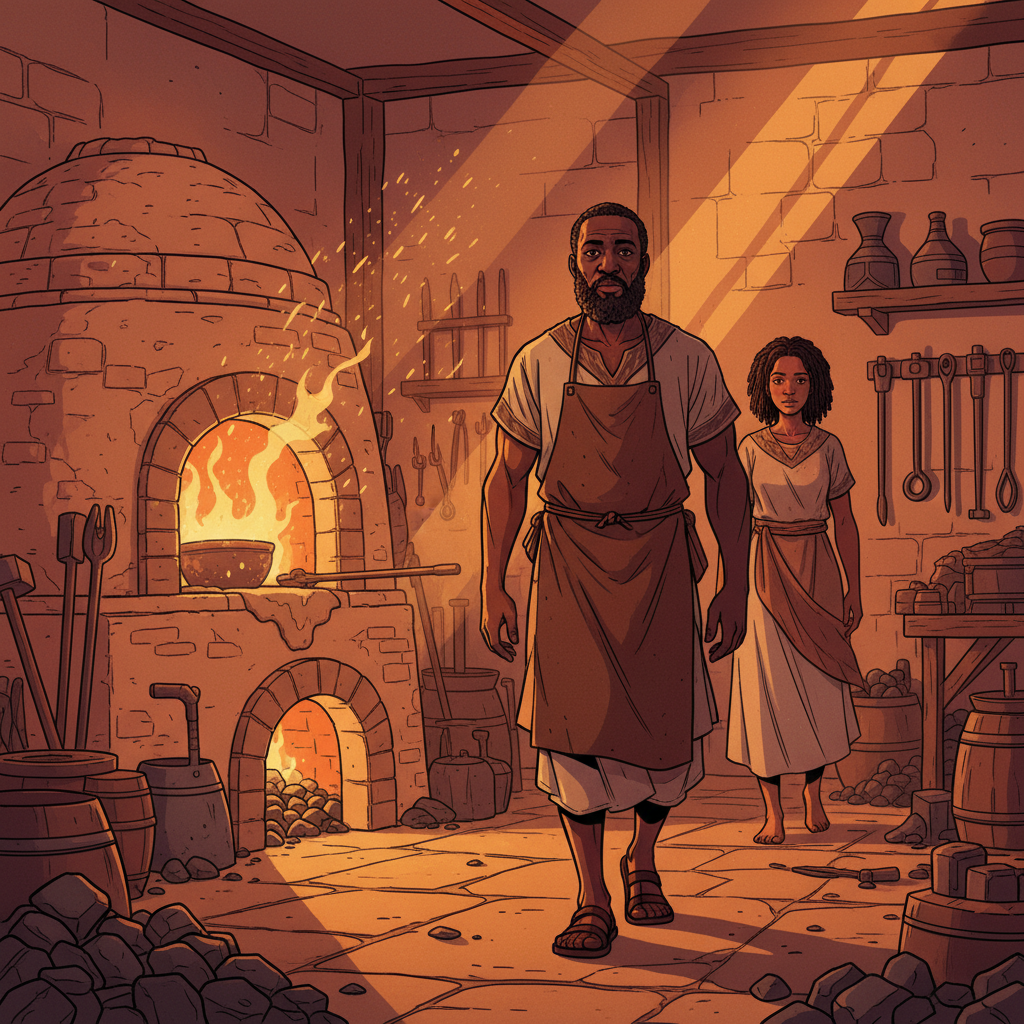
Seba Anu, the oldest and wisest smith in Meroe, had been watching from across the workshop. His eyes, deep and knowing, held no anger, only a quiet understanding. He did not scold Amara, nor did he rush to offer comfort. Instead, he simply walked towards the main furnace, his movements slow and deliberate, a silent invitation in his steady gait. Amara felt a strange pull, a mix of apprehension and a desperate hope for guidance, to understand the `Maat` of her own heart.
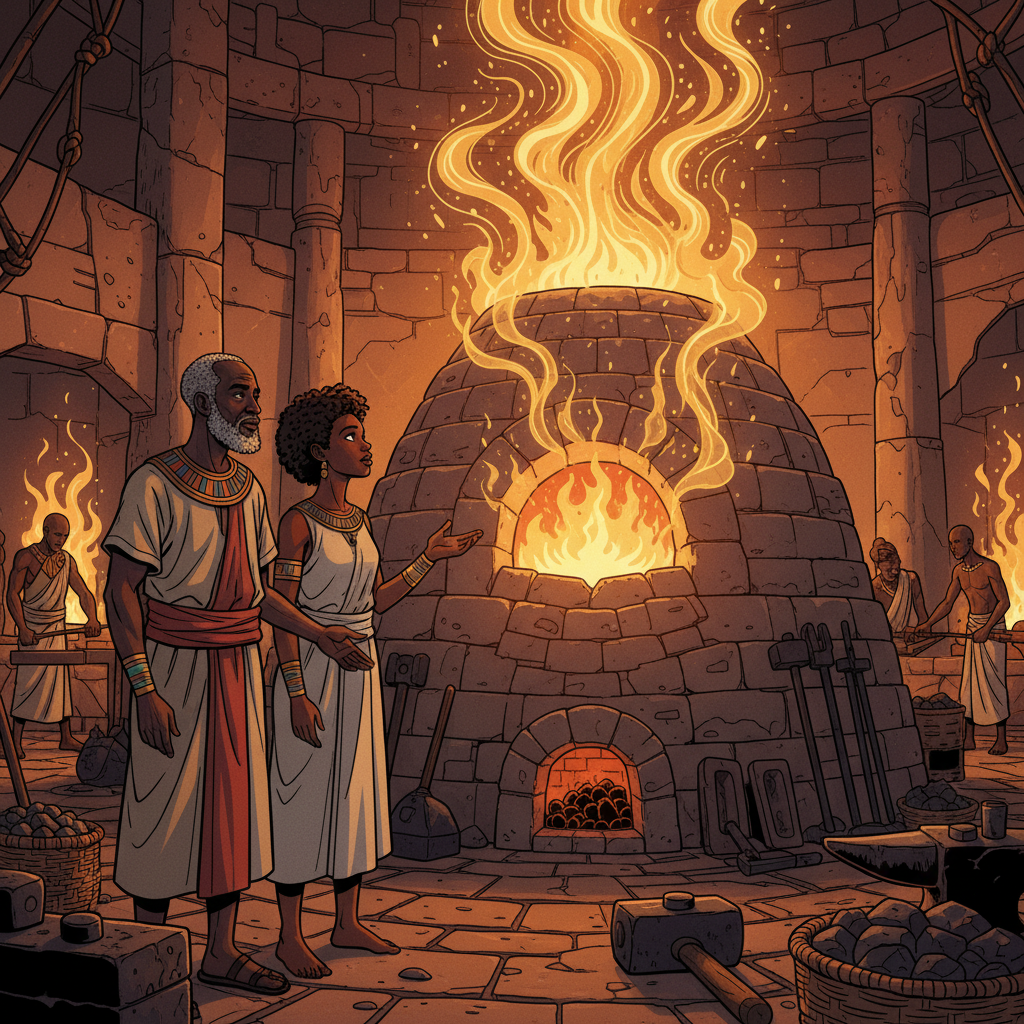
He gestured for her to follow. The main furnace, a massive stone structure, glowed like a captured sun, its heat radiating outwards in palpable waves. It was the heart of the forge, where raw ore was transformed into the purest iron. Amara felt its power, a primal energy that both awed and intimidated her. The air shimmered above its opening, a dance of heat and light, a visible manifestation of `sekhem`. She swallowed, her throat suddenly dry.
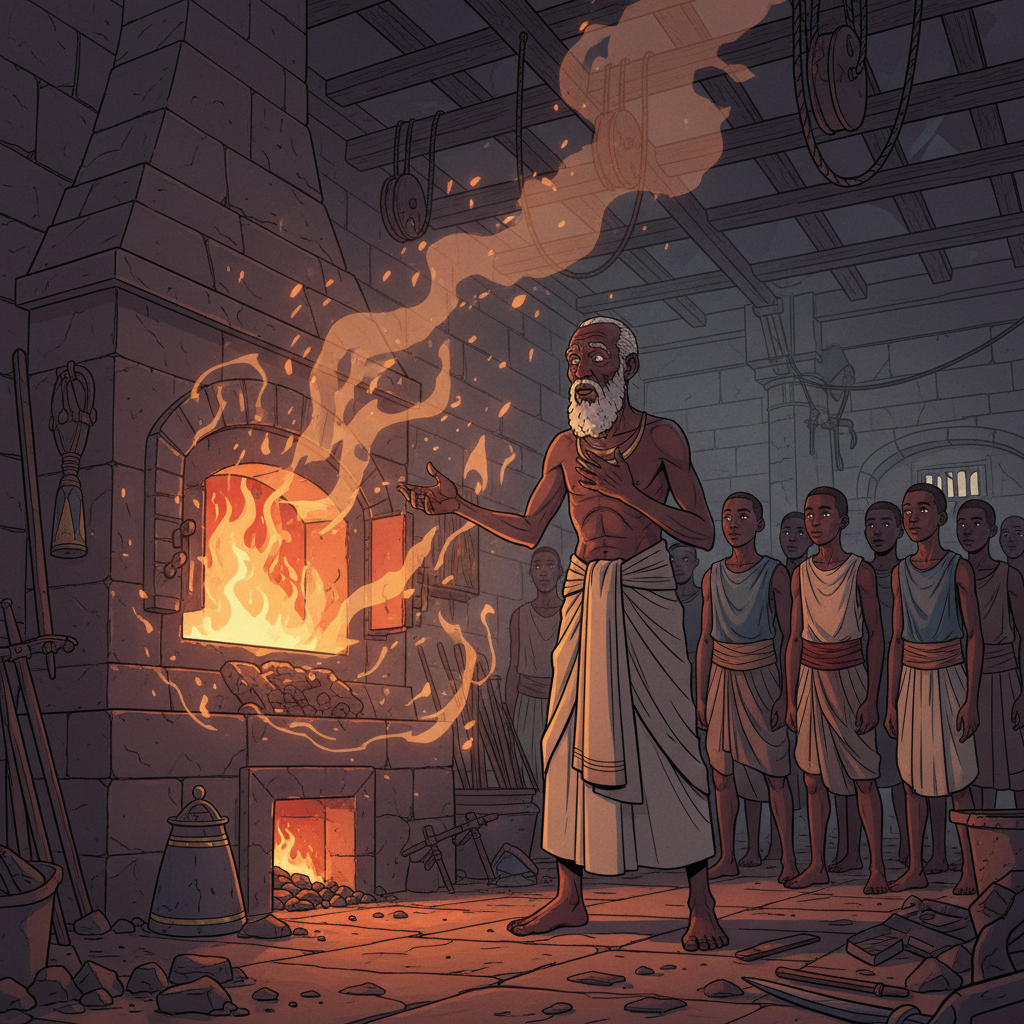
Seba Anu stood before it, his face illuminated by the fiery light. “The fire,” he began, his voice calm, yet resonating like a deep drum, “does not care if it builds or destroys. It simply *is*.” He paused, looking into the heart of the flames. “It is pure `sekhem`, pure life force, pure `Ka`. But without direction, without a vessel, it becomes `isfet`, a wild thing that burns indiscriminately. Its true nature is neutral.” He motioned towards the intense heat, a powerful lesson.
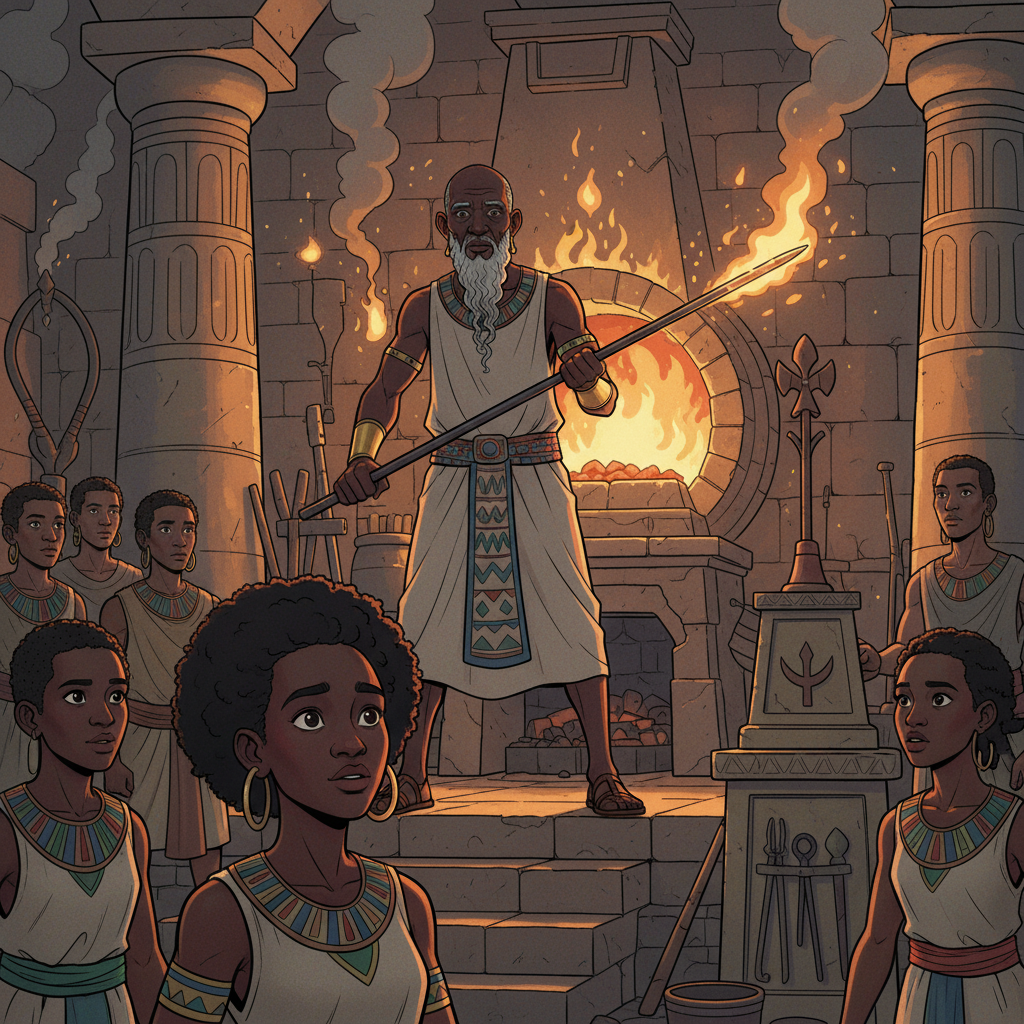
“The purpose of the forge,” Seba Anu continued, his voice steady, “is to hold this power, to give it form and purpose. It is the channel, the `was` scepter that directs the `sekhem`. It takes the wild energy and makes it useful, beautiful, strong.” He picked up a long, iron rod, its tip glowing orange from the heat. Amara watched, captivated, the earlier shame momentarily forgotten in the face of this profound wisdom. This fire was not so different from her own heart.
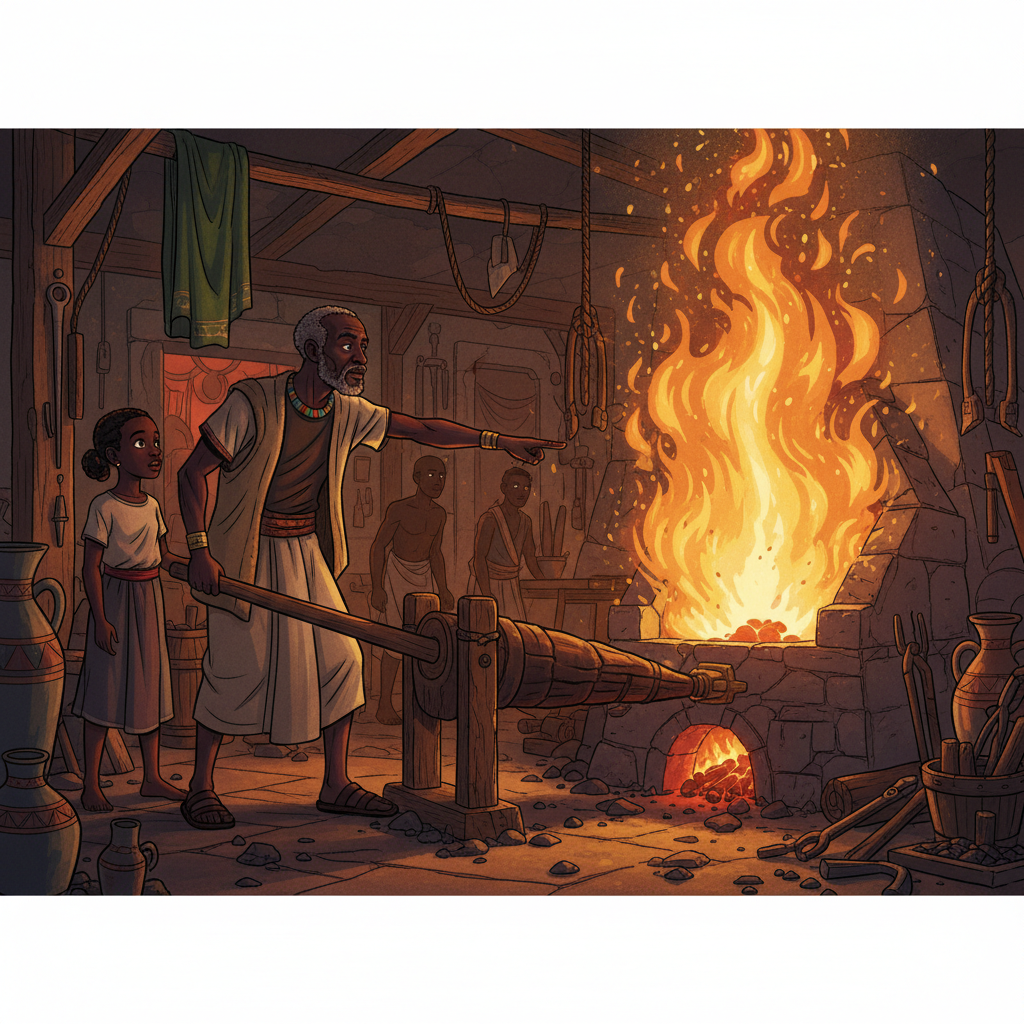
He pointed to the enormous bellows, made of tough hide and wood, their levers taller than Amara herself. “This,” he said, placing his hand on the smooth, worn wood, “is how we breathe life into the fire, and how we control its rage. It is the heart's rhythm, the breath of the forge. It is `heka`, sacred speech, shaping the very air.” He pulled the lever, and with a great sigh, the bellows sent a rush of air into the furnace, making the flames leap higher, brighter. It was a powerful display of focused intent.
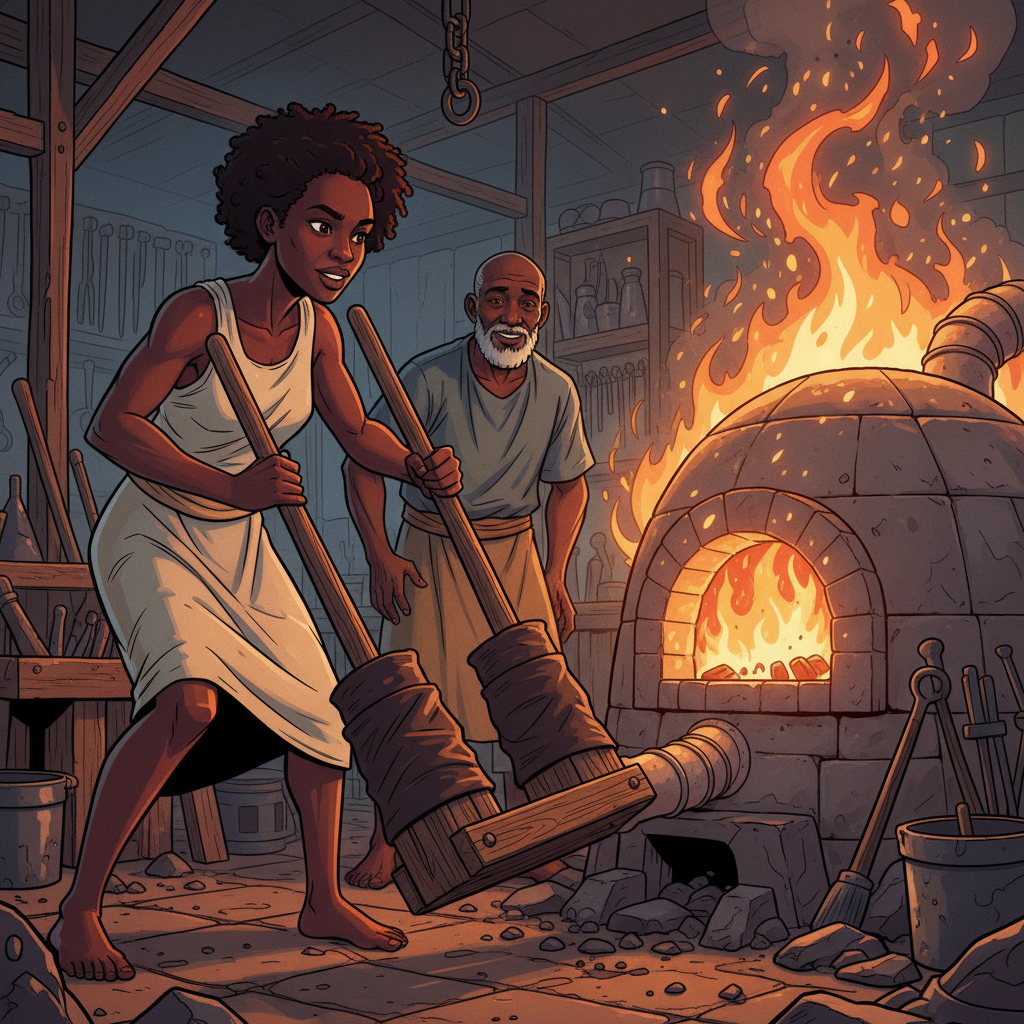
“Come, Amara,” Seba Anu said, stepping aside. “Work the bellows. Feel their power. Feel how *your* breath, *your* effort, directs the fire.” Amara hesitated for a moment, then approached the massive levers. She grasped them, surprised by their weight. She pulled, then pushed, finding a rhythm. The air rushed in and out, the fire in the furnace responding to her every movement, rising and falling with her effort. This was active control, not passive observation, a direct connection to the elemental power.
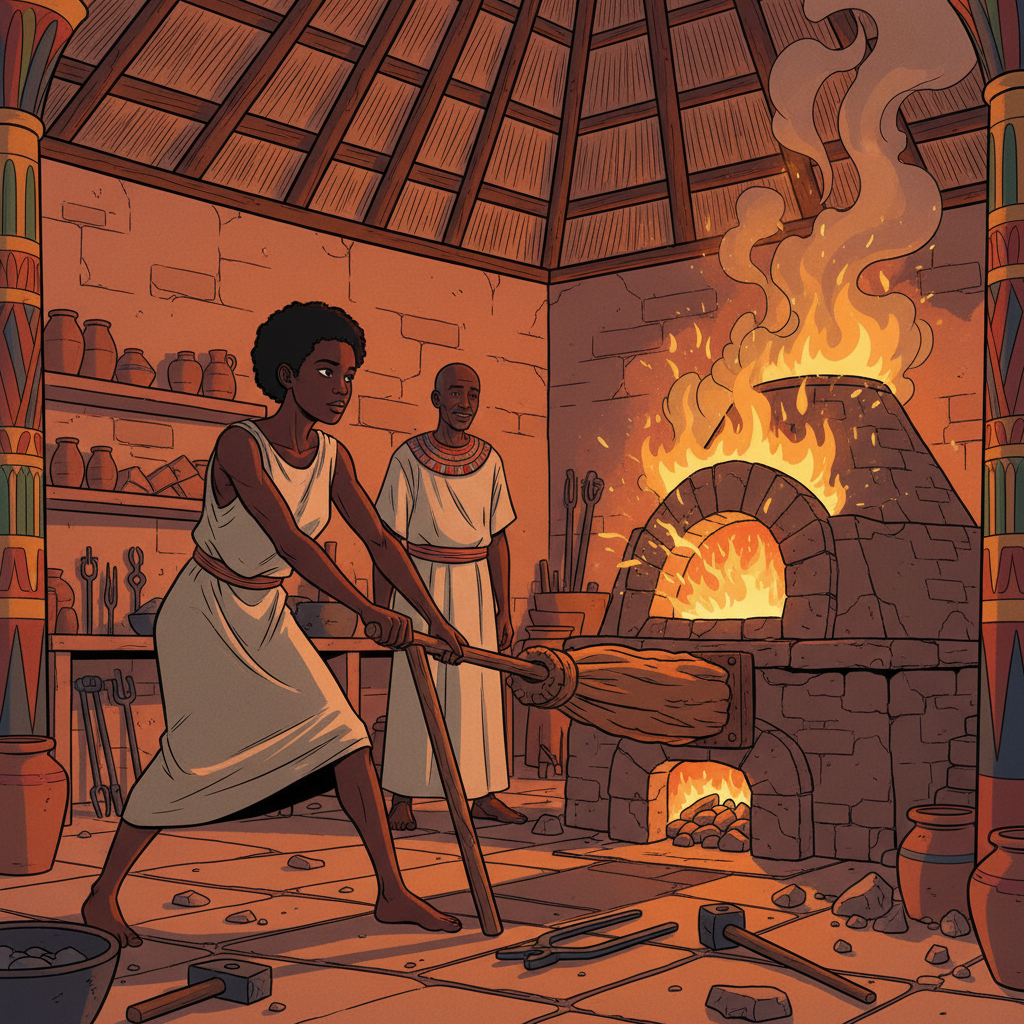
With each pull and push, she felt a different kind of strength, a mindful power. It wasn't the force of pure anger or frustration, but a steady, focused energy. The heat of the furnace warmed her face, and she began to understand. The fire was not good or bad; it simply existed, waiting for direction. Her intense feelings were like this fire, a raw, potent `sekhem` that needed her to be the bellows, to provide the rhythm and control. Her body hummed with this new understanding.
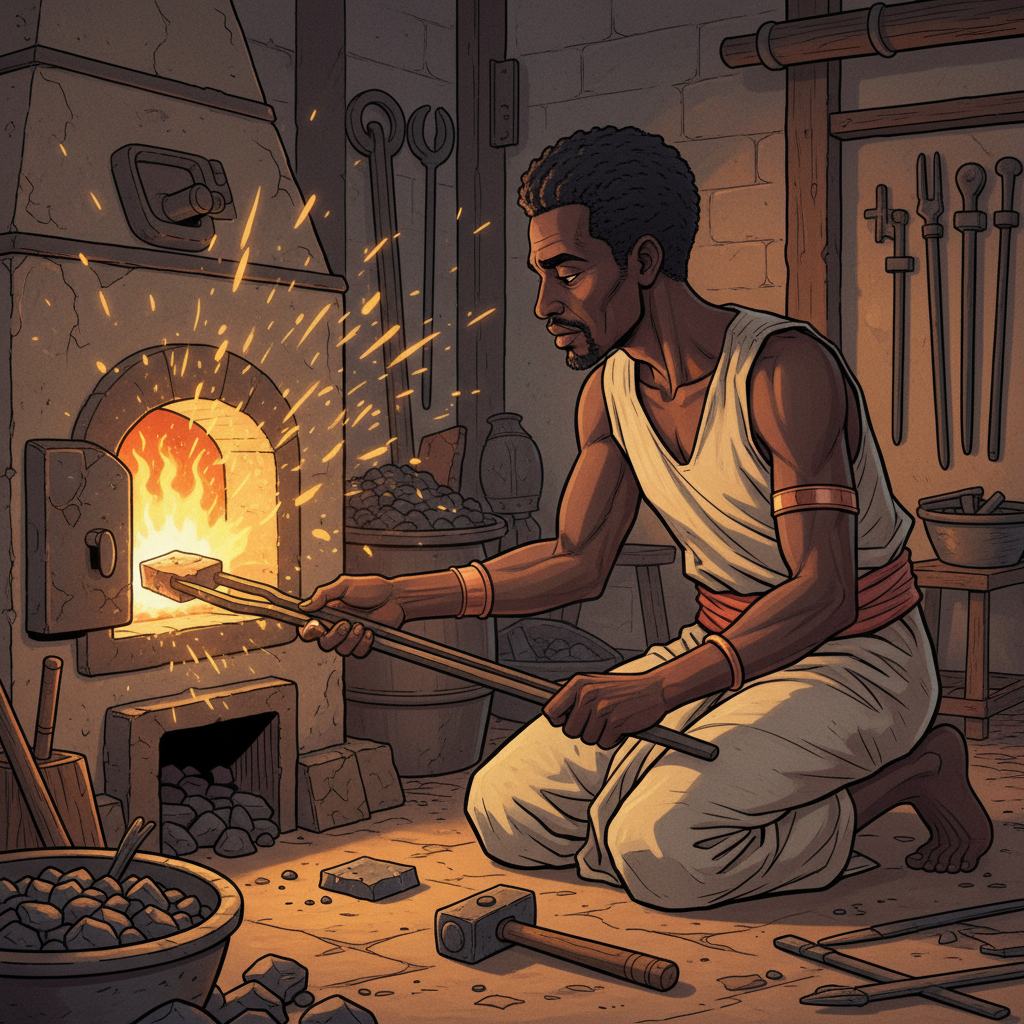
Seba Anu placed a small, irregularly shaped piece of iron into the white-hot core of the furnace. It glowed orange, then yellow, then almost white. “Observe,” he instructed softly. “This iron holds potential. Like your spirit, it can be anything. But without a guiding hand, without patience, without `Maat`, it will become nothing useful.” He picked up a smaller hammer, his movements deliberate, his eyes fixed on the metal, a master of his craft. The wisdom of generations flowed through his hands.
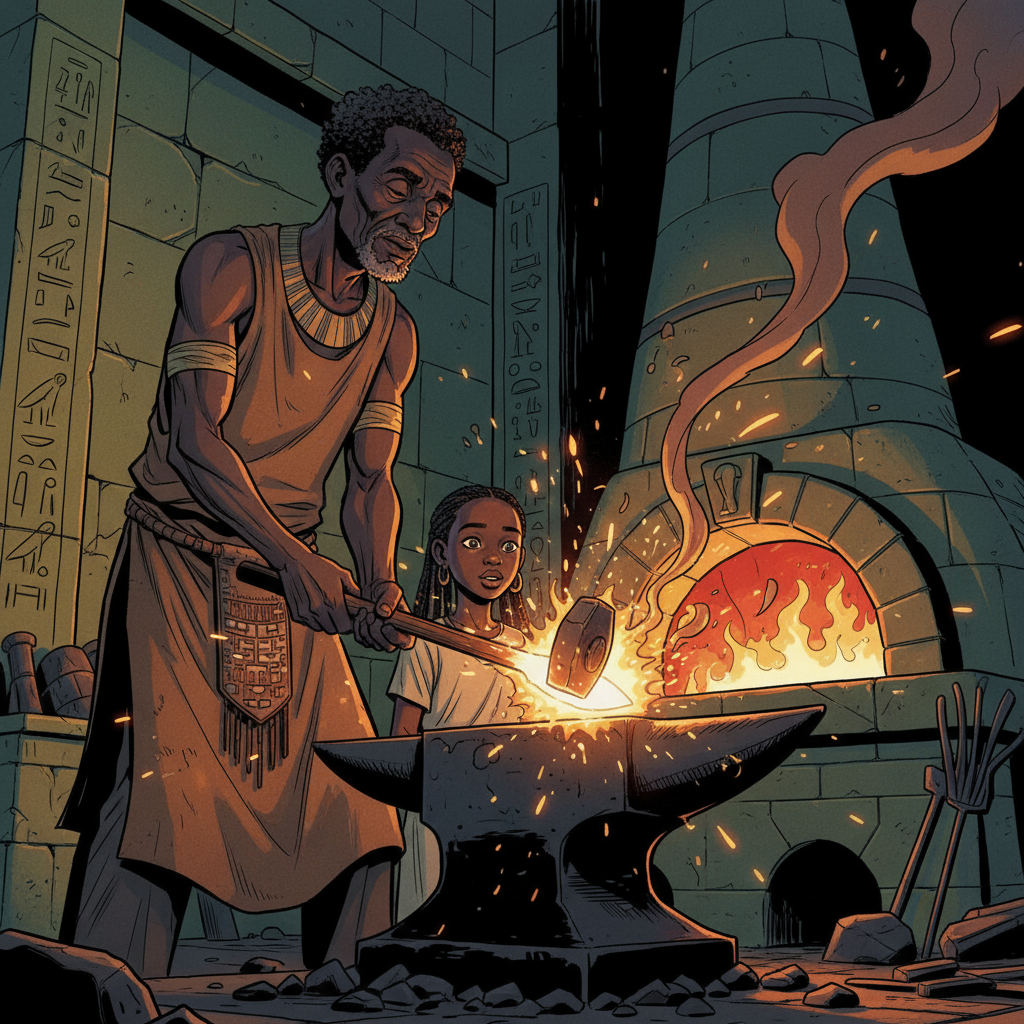
He pulled the iron from the fire, its heat radiating outwards, and began to tap it gently, then with more force, shaping it. He returned it to the fire, then hammered again, repeating the cycle. Each strike was measured, each heating purposeful. “If I rush,” he explained, “the iron breaks. If I let it cool too much, it becomes stubborn. It is a dance, Amara, between the heat and the hammer, between release and control, between `sekhem` and `Maat`.” He guided the iron with calm `Ren`.
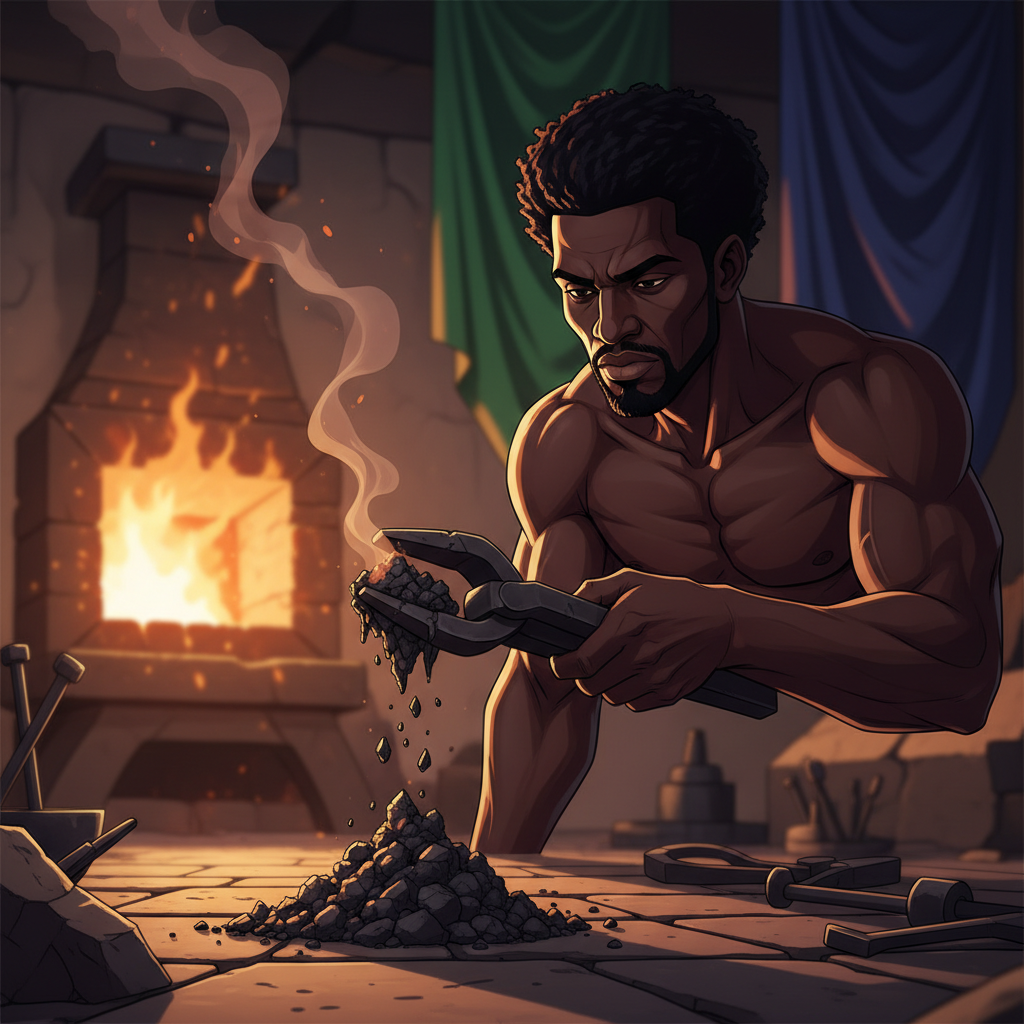
Then, he purposefully left a small piece of iron in the furnace, allowing it to stay in the intense heat for too long, without the guiding hand or the precise timing of the forge. The metal shimmered, then began to soften, losing its form, becoming molten and then, as he pulled it out, turning into brittle, useless ash. It crumbled in his fingers, a stark reminder of power misused. The air felt heavy with the silence, the weight of a lesson learned through demonstration.
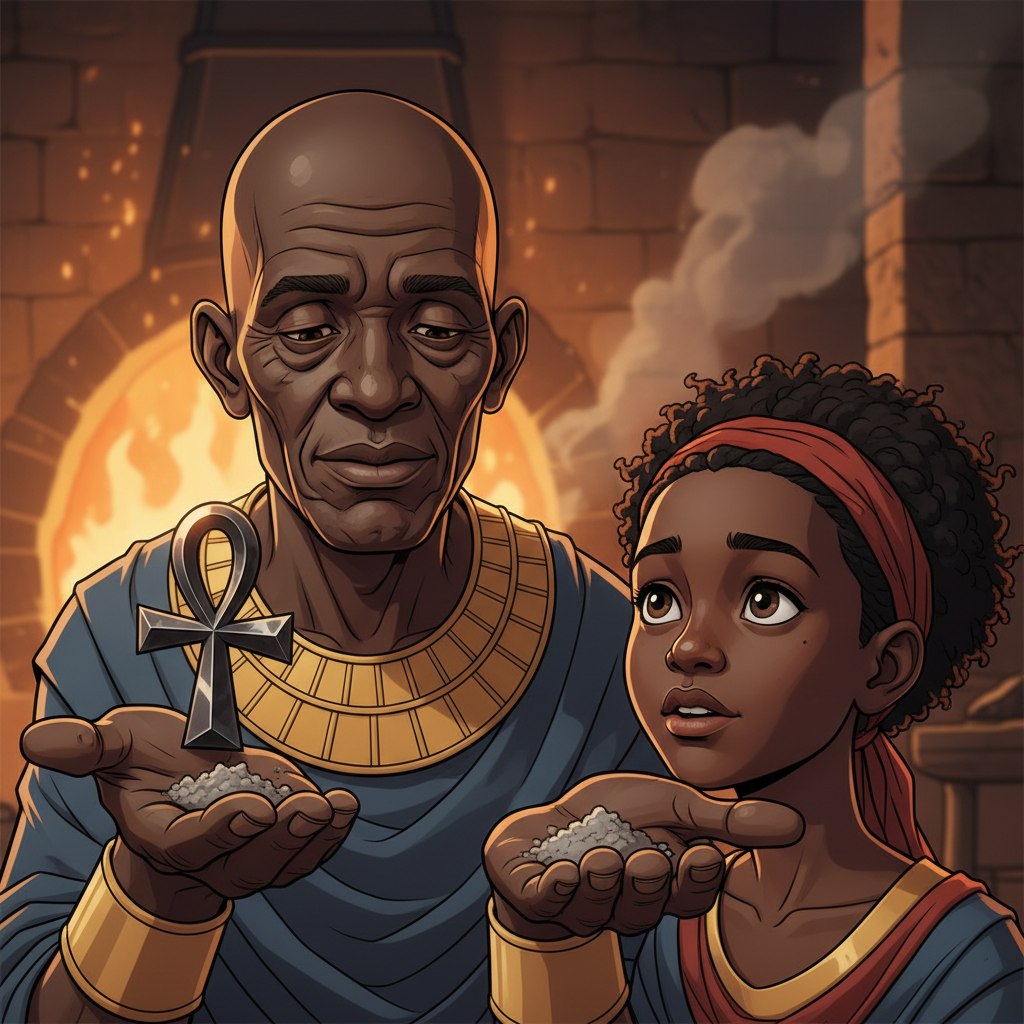
Seba Anu held up two things: in one hand, a small, perfectly formed `ankh` symbol, gleaming with the dark luster of polished iron. In the other, a pile of the fine, grey ash he had just created. The contrast was stark, the lesson clear in the radiant metal and the dusty remains. Amara’s eyes darted between the two, a sudden realization dawning on her, a connection between the metal and her own fiery heart, a moment of profound clarity.
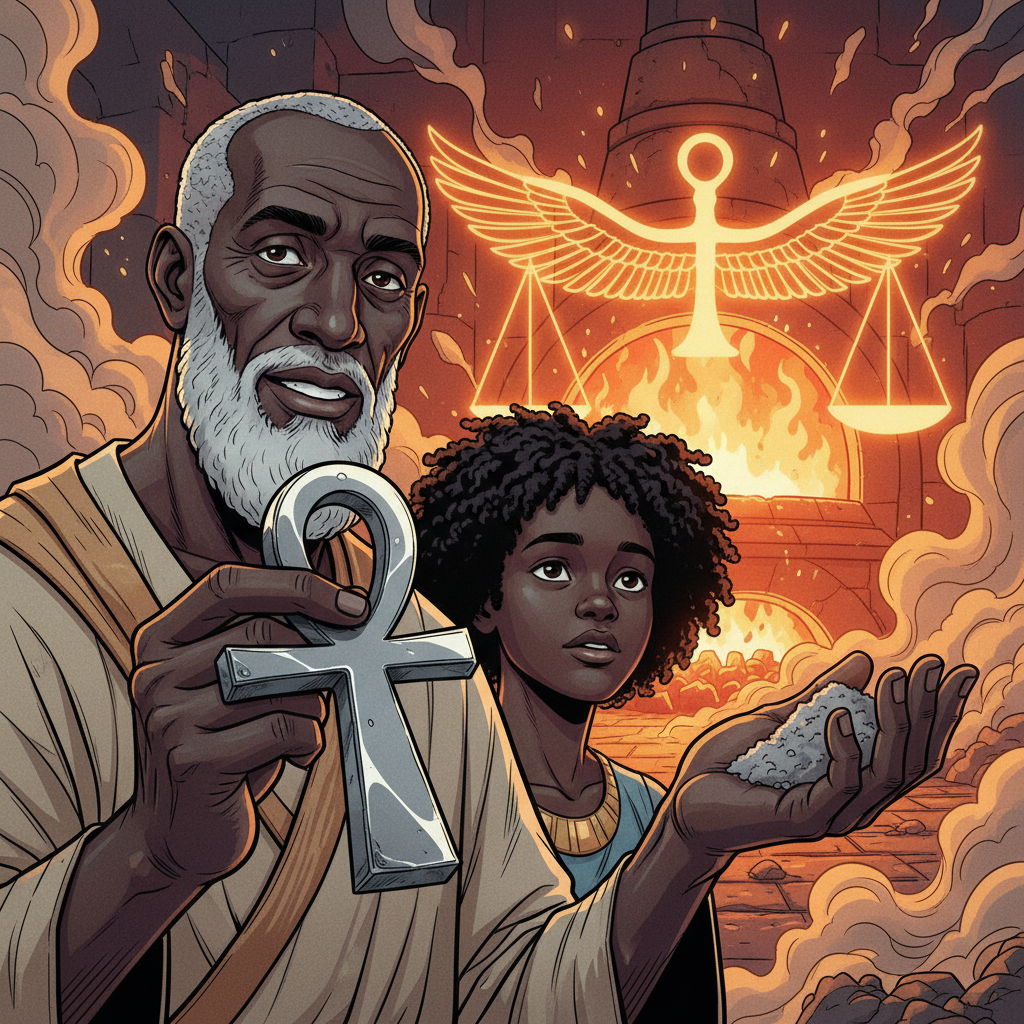
“Same fire made both, Amara,” Seba Anu said, his voice soft but unwavering. “The difference is not the fire — it is the forge that holds it. It is the hand that directs it. Your `Ka`, your life force, burns brightly, like this furnace. It is a gift of the `Netjeru`. But without the forge of `Maat`, without your inner bellows to direct its power, it can turn even the strongest iron to ash.” He looked at her, his gaze unwavering, full of compassion and ancient wisdom.
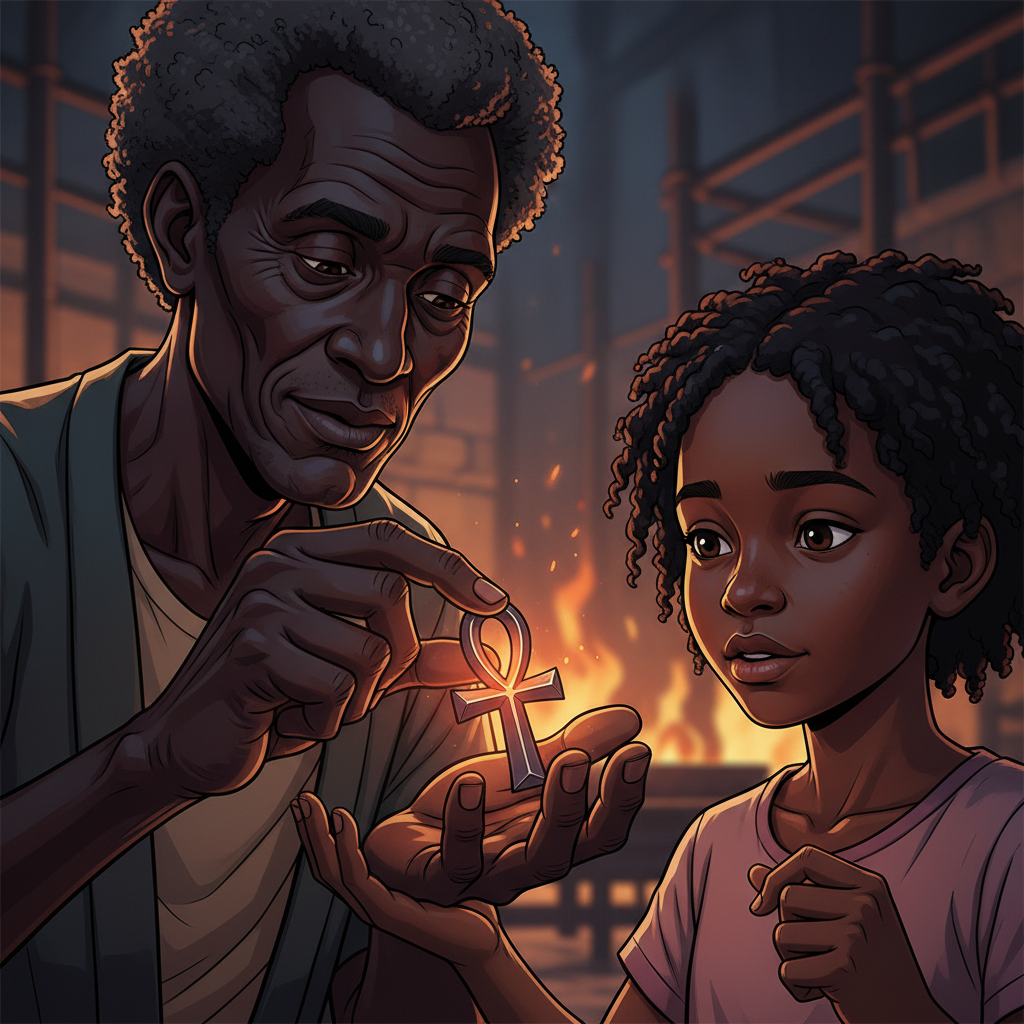
He placed the `ankh` symbol in her hand. It was warm, solid, perfect. “When the fire rises in you,” he instructed, “remember the bellows. Breathe. Take a deep, slow breath, just as you did here. Feel your own internal rhythm. Direct your `sekhem`. This is how you build your inner forge, how you hold your power with `Maat`.” He demonstrated a slow, deliberate breath, his chest rising and falling evenly, a model of calm, focused energy. Her fingers closed around the `ankh`.
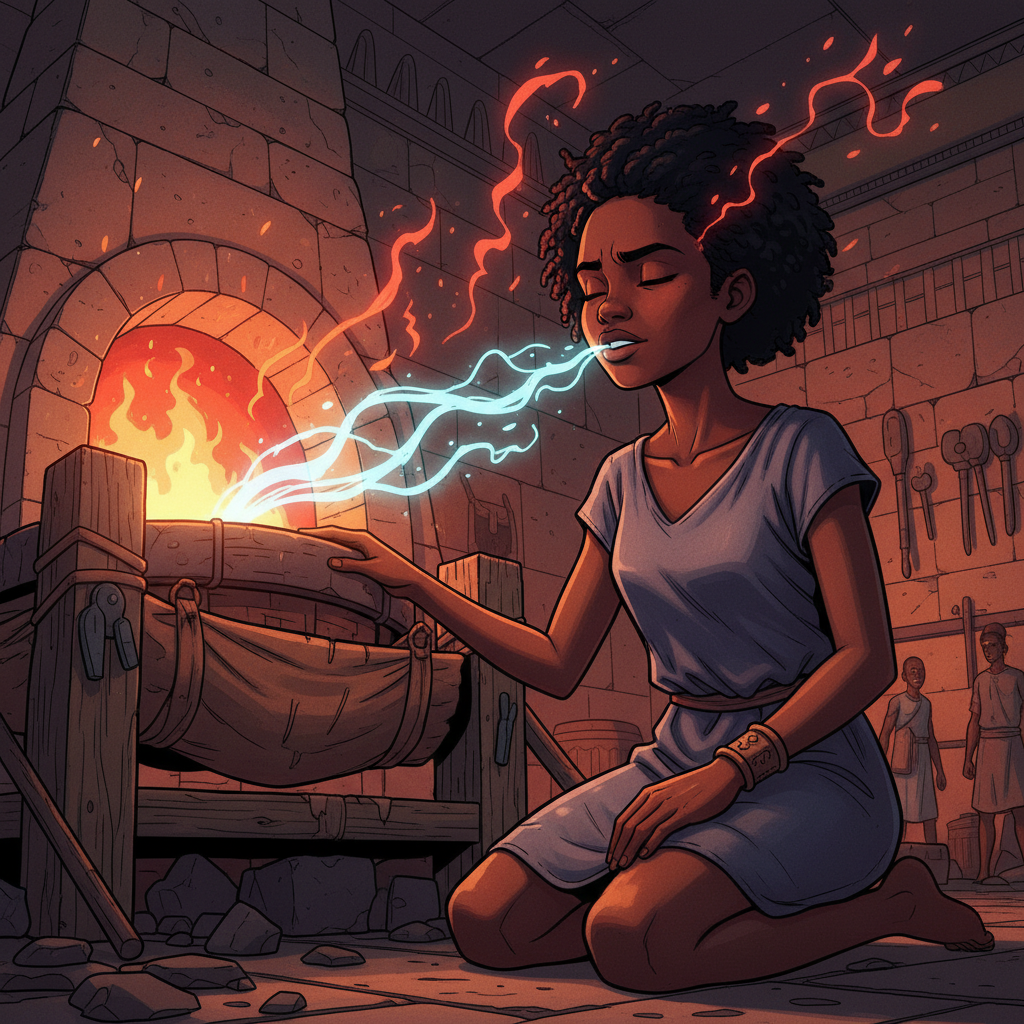
Amara spent the rest of the day by the bellows, not working iron, but working herself. She practiced the slow, deliberate breathing Seba Anu had shown her. When a frustration would prickle, or a surge of impatience tried to ignite her, she would focus on her breath, imagining it as the air guiding the furnace. It wasn't easy; the raw power of her emotions still surged. But now, she had a tool, a way to channel that energy instead of letting it burn wildly. She felt a glimmer of hope.
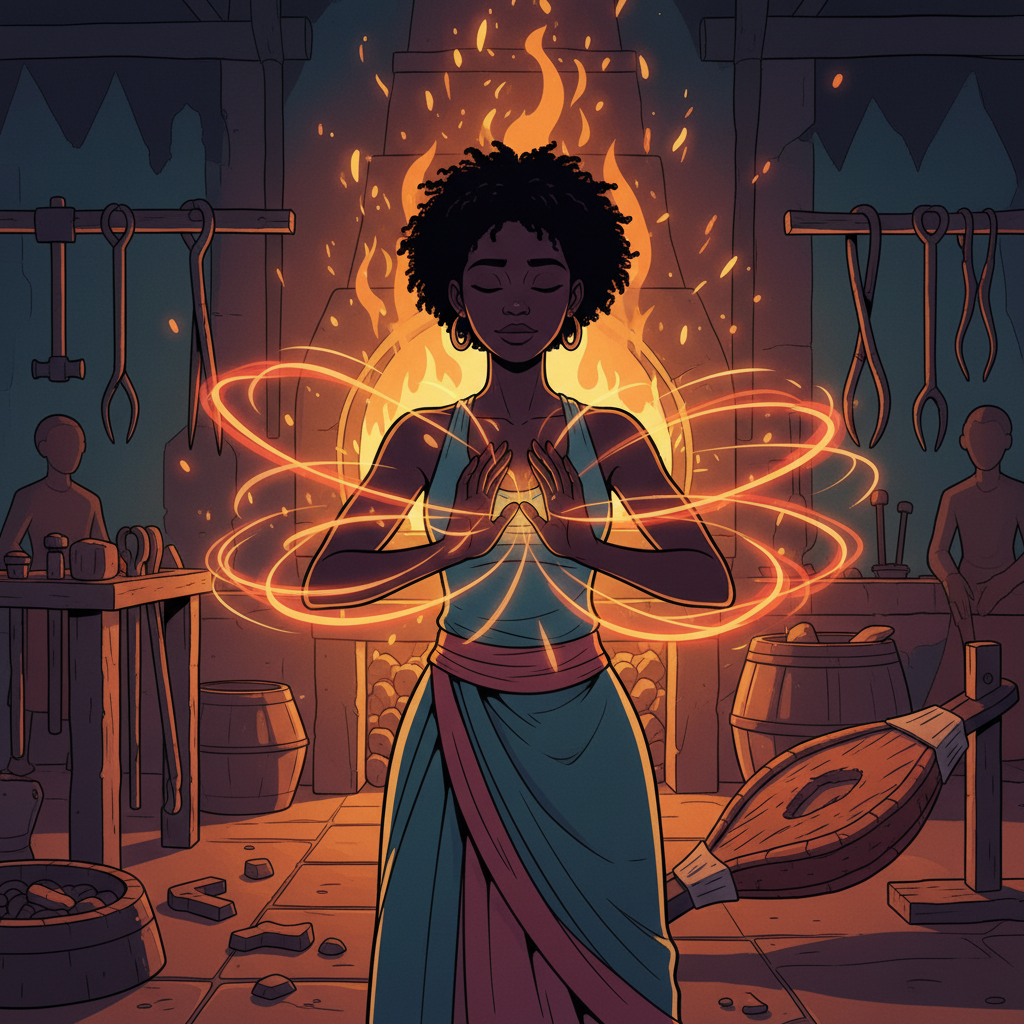
Slowly, over the next few weeks, Amara began to transform. She still felt her emotions intensely, but now, instead of being overwhelmed, she saw them as raw, powerful `sekhem`. Her breath became her bellows, a constant, gentle guide. She learned to pause, to breathe, to find her inner forge before reacting. The `isfet` of uncontrolled outbursts gave way to the `Maat` of thoughtful action. Her strong feelings were no longer a burden but a source of focused strength.
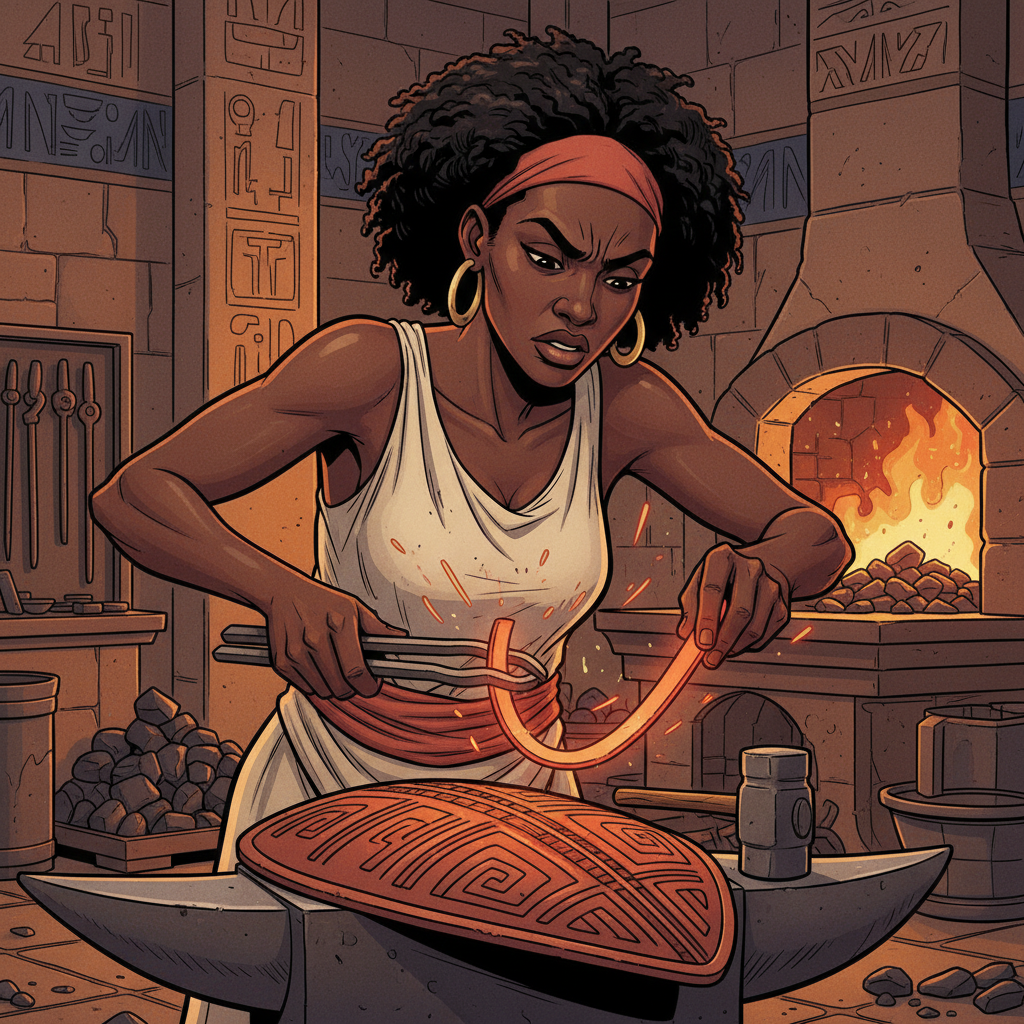
A few weeks later, a challenging task arrived: forging an intricate pattern for a ceremonial shield, meant to honor the `pharaoh` of Kush. It required exceptional precision and hours of focused effort. Amara felt the familiar stirrings of impatience when a delicate curve refused to form correctly. Her hands clenched, and the heat in her chest began to rise, threatening to overwhelm her. The pressure of the important task felt immense, a heavy burden.
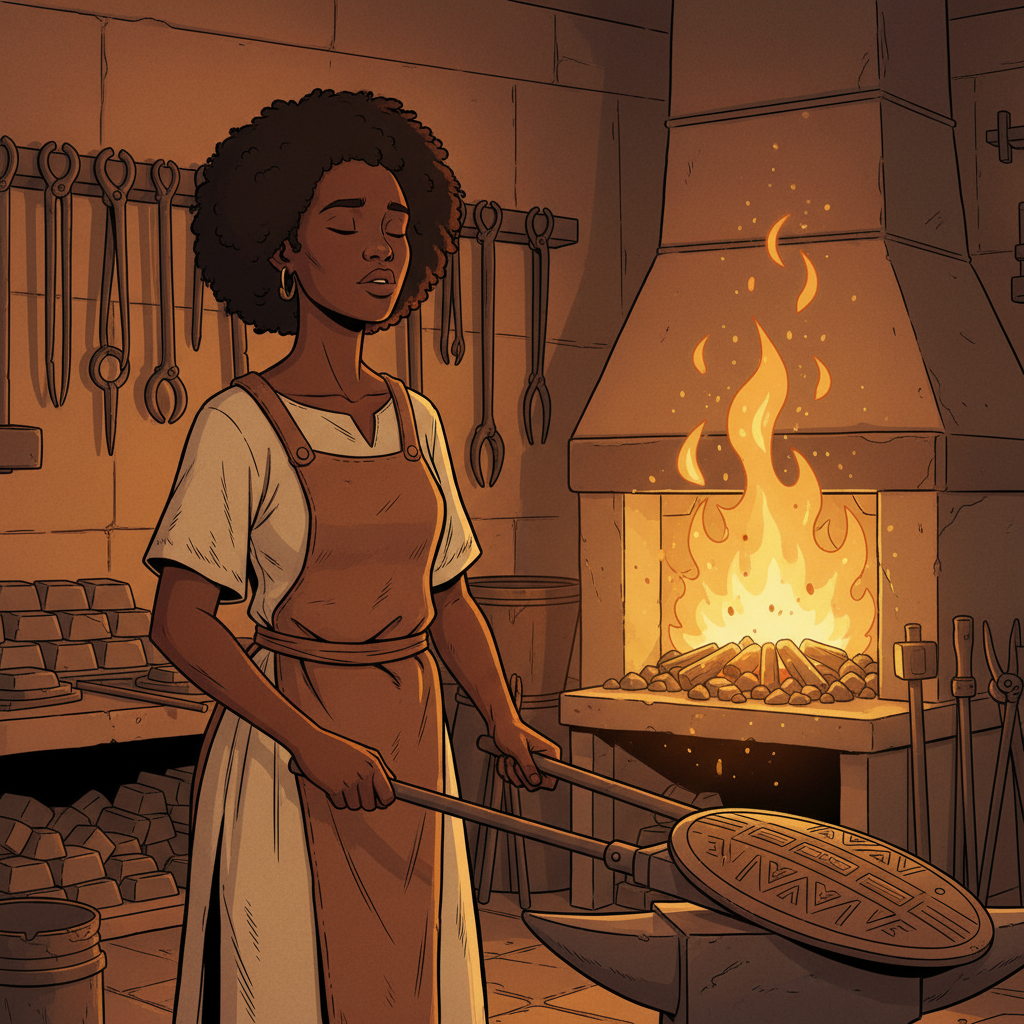
But this time, she remembered. She stopped. She closed her eyes for a moment, taking a deep, slow breath, feeling her chest rise and fall. She imagined her breath as the steady, guiding air from the bellows, directing the immense heat of the furnace. She felt her internal `sekhem` begin to settle, to channel, instead of scatter. The frustration was still there, a hot ember, but it was now contained within the forge of her `Maat`. She opened her eyes, clear and focused.
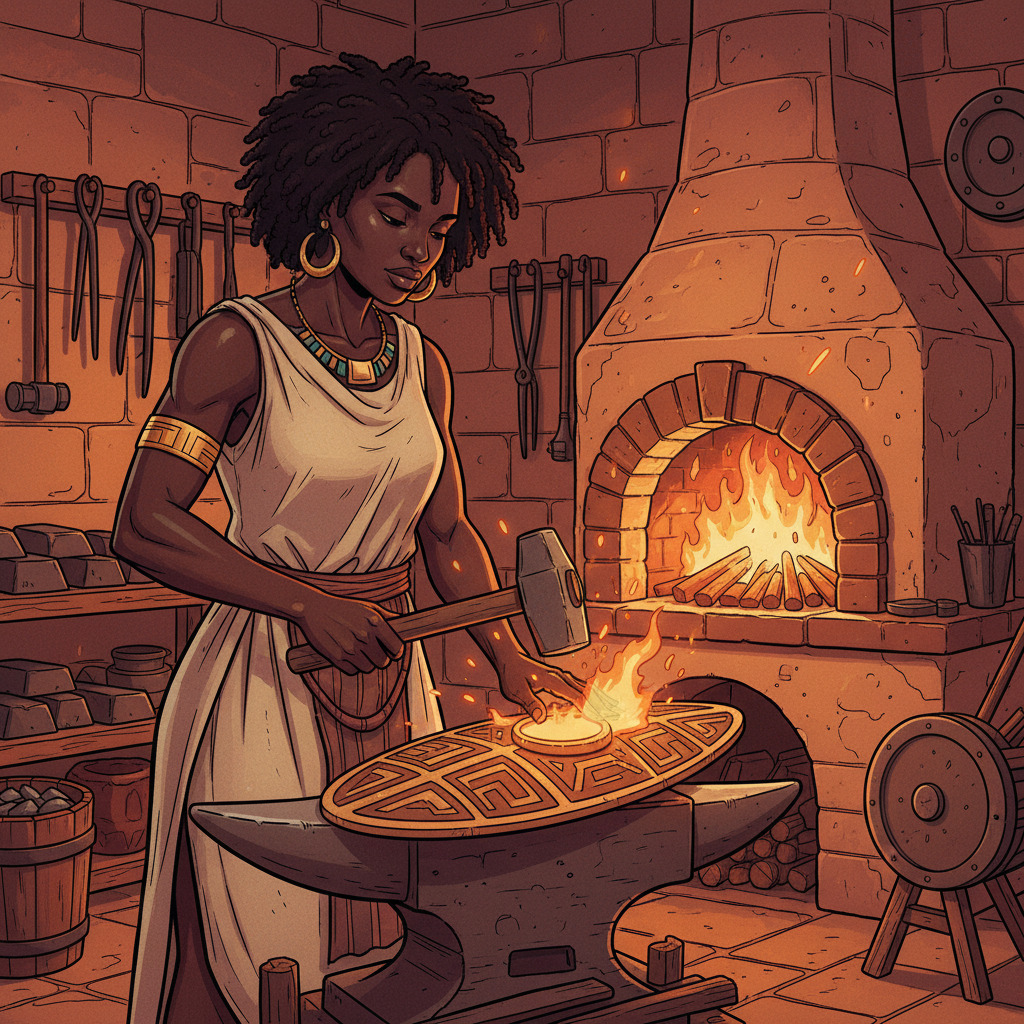
She returned to the shield, her movements deliberate and calm. Each hammer blow was precise, each heating of the metal perfectly timed. She guided the fire, letting its immense power shape the iron with exquisite detail. The intense focus that used to overwhelm her now became her greatest ally, a sharp, channeled energy. The complex pattern began to emerge, beautiful and strong, a testament to her newfound `Maat`.
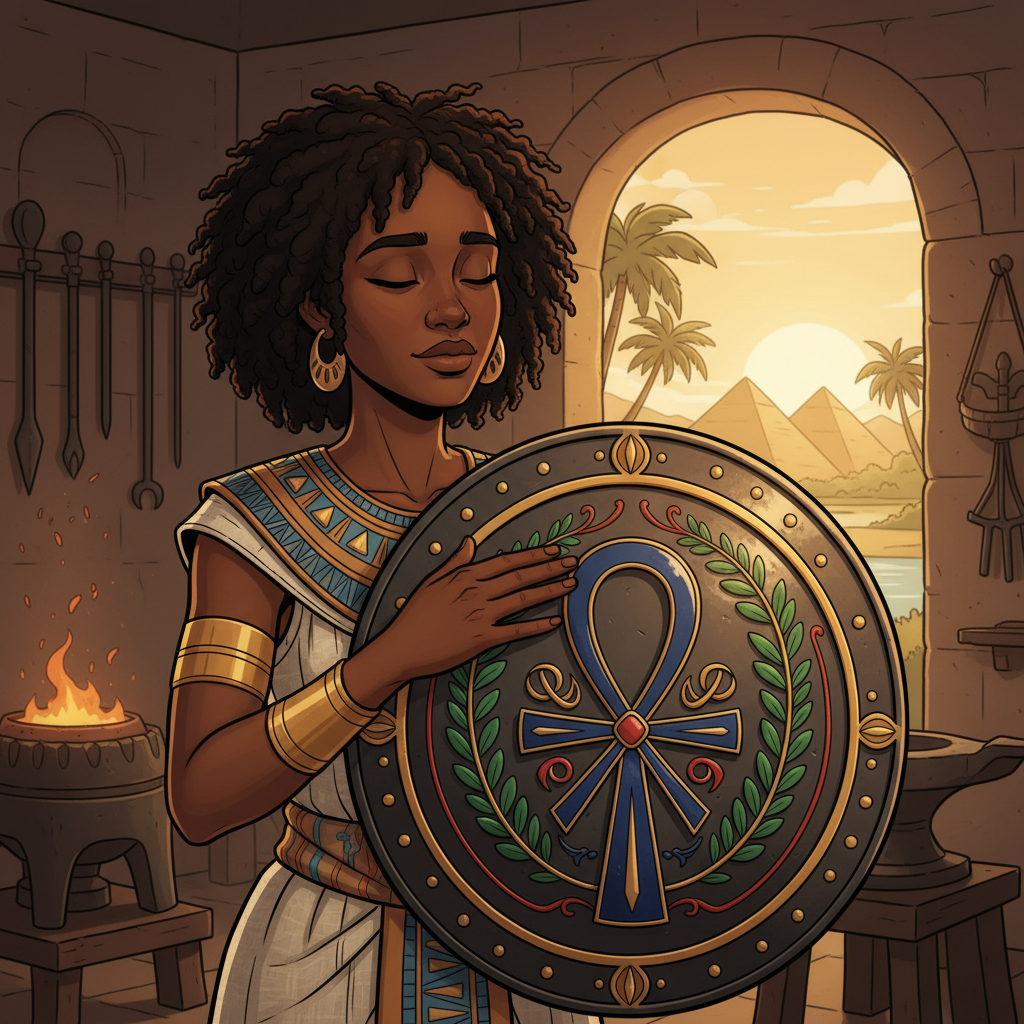
When the ceremonial shield was finally complete, its surface gleamed, showcasing a stunning `ankh` interwoven with symbols of the Nile. It was a masterpiece, forged not just by skill, but by balanced `sekhem`. Amara ran her hand over its smooth, strong surface. She knew now that her intense fire was not a curse, but a profound gift. With her inner bellows, she could direct its heat, not to destroy, but to create `Maat`, strong and beautiful, like the iron forged in Meroe.