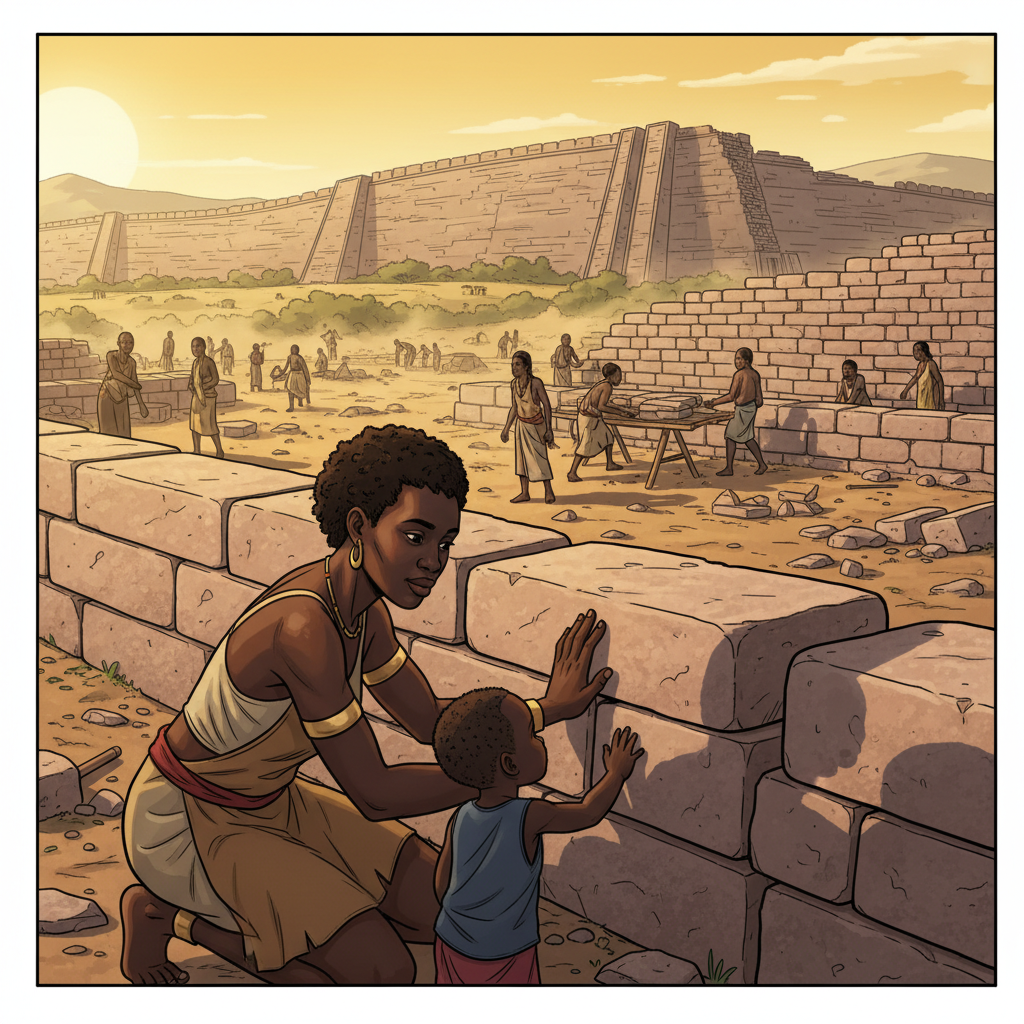
Chipo was twelve years old, and her hands already knew the language of stone. She was the daughter of Nyaradzo, the senior mason of the rising eastern curve of the Great Enclosure — the wall that was, even unfinished, already the largest stone wall in the long memory of the southern highlands. Chipo had grown up at her mother's feet at the work site, watching the dust rise in the morning light, watching the men and women in leather aprons fit one block of grey-pink granite to the next without a single dab of mortar between them. Her earliest memory was of her mother lifting her up at five years old and pressing her small palm flat against a finished section of wall and saying, "Tell me what you feel." Chipo had said, that day, "It is warm." Her mother had nodded slowly, and the nodding had been a kind of acceptance — the way an elder nods when a younger one has spoken the first true sentence in a long apprenticeship. The wall was warm because the morning sun had been on it. Her mother had said, "Good. Now feel the next one." Chipo had moved her palm two stones over. "This one is colder." Her mother had nodded again. "That stone is in the shadow of the upper course. It has not been touched by the sun yet. You felt the difference. That is how we begin. A mason who cannot feel the difference between two stones is not yet a mason."
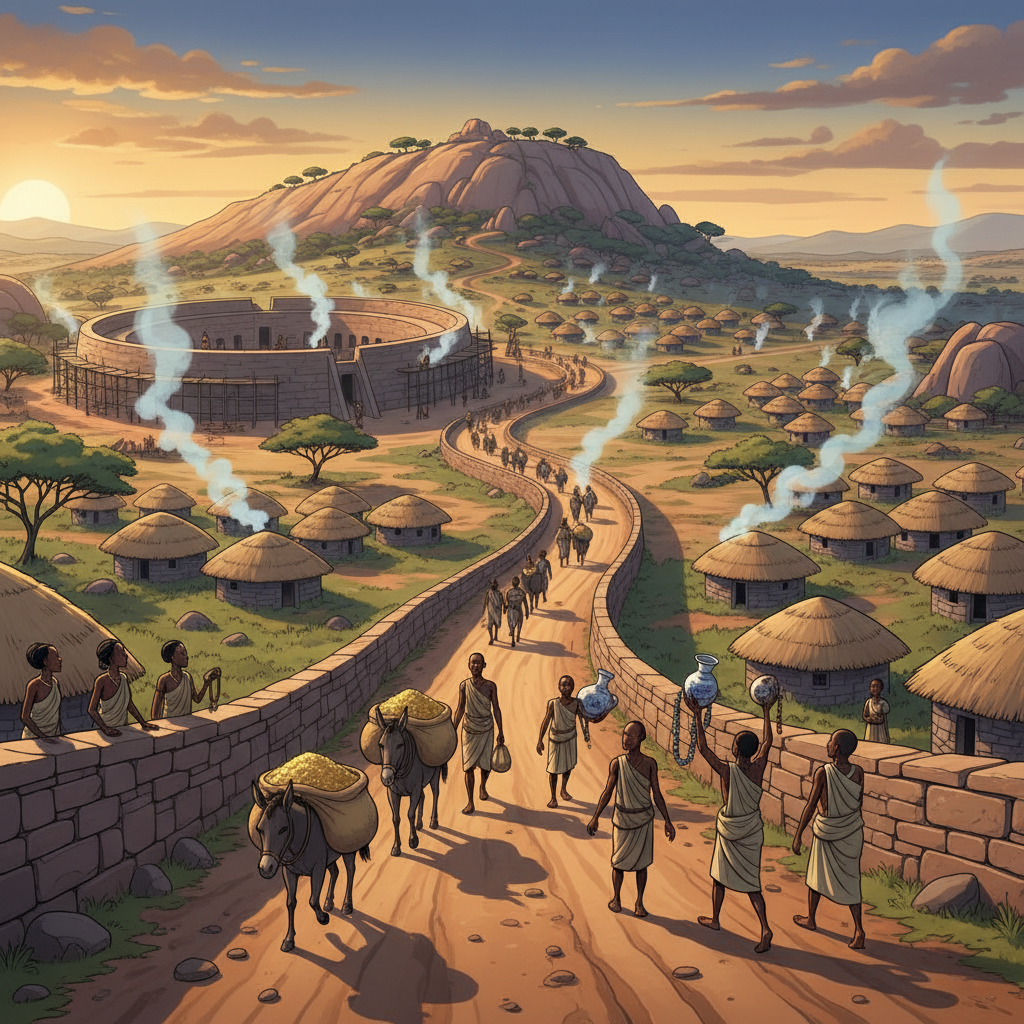
The city the wall belonged to was called Great Zimbabwe. It was the largest city Chipo had ever seen — a city of perhaps eighteen thousand people built on the hills and the valley between, with thatched stone houses clustering around the granite enclosures, and the smoke of cookfires rising in slow blue threads from every quarter at sunrise. The hill above the valley held the older sanctuary; the valley below held the Great Enclosure her mother was building; and a road of beaten earth wound between them where traders walked every day with sacks of gold dust from the inland mines, headed for the long path that ran east toward the coast and the dhow ships of the Swahili sea. The traders did not come empty-handed back. They returned with Chinese porcelain wrapped in cloth, with glass beads the color of the sky from the markets of the Persian Gulf, with cowrie shells and copper coins from the city of Kilwa on the eastern coast. Chipo had handled all of these in her father's small storeroom. Her father was a trader; her mother was a mason. Between the two of them, Chipo had grown up knowing that her city stood at the meeting of two great rivers of work — the river of stone, which did not move, and the river of trade, which moved across the whole eastern half of the continent and back.
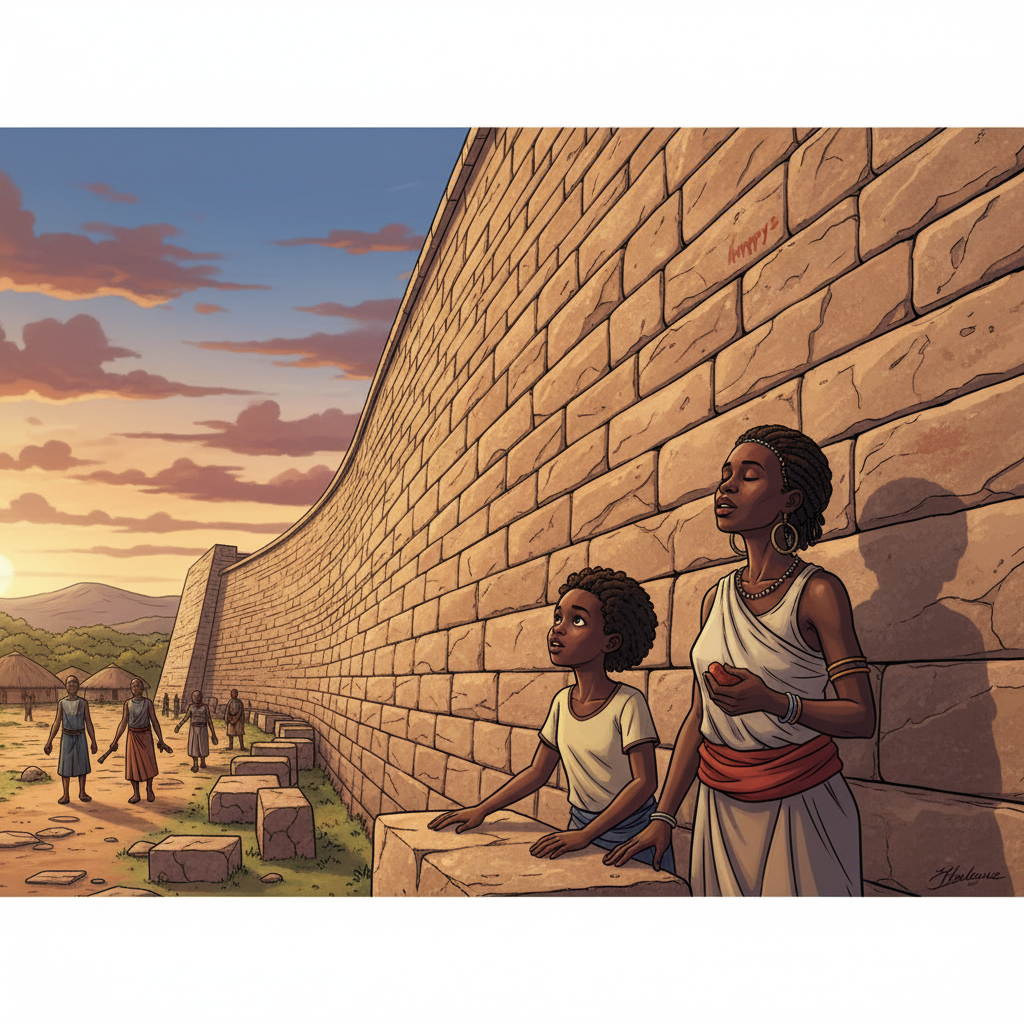
The Great Enclosure was rising. That was the work of this year and the next. The wall had begun, when Chipo was eight, at knee-height. By the time she was ten, it had reached her mother's shoulder. Now, in her twelfth year, it rose above her mother's head in most sections, and along the southern arc it had already climbed to twice a grown person's height. The plan, drawn in chalk on the floor of her mother's workshop, called for the wall to reach thirty feet at its tallest. Thirty feet of dry granite, no mortar, no metal pins, no wooden frame — held together only by the careful fit of one stone against the next, course after course, the weight of the upper stones pressing the lower stones down into perfect locked alignment. Nyaradzo had been chosen as senior mason for the eastern curve because she could read stone the way some elders could read the sky. She walked the unfinished wall every morning before the workers arrived. She laid her own palm on each stone laid the day before. She closed her eyes. She listened — not with her ears, because stones do not speak with sound, but with the small careful attention of a woman who has spent thirty years asking stones what they need. If a stone was unhappy with its position, Nyaradzo would mark it with a small chip of red ochre and the workers would lift it back out and re-fit it before the next course was begun.
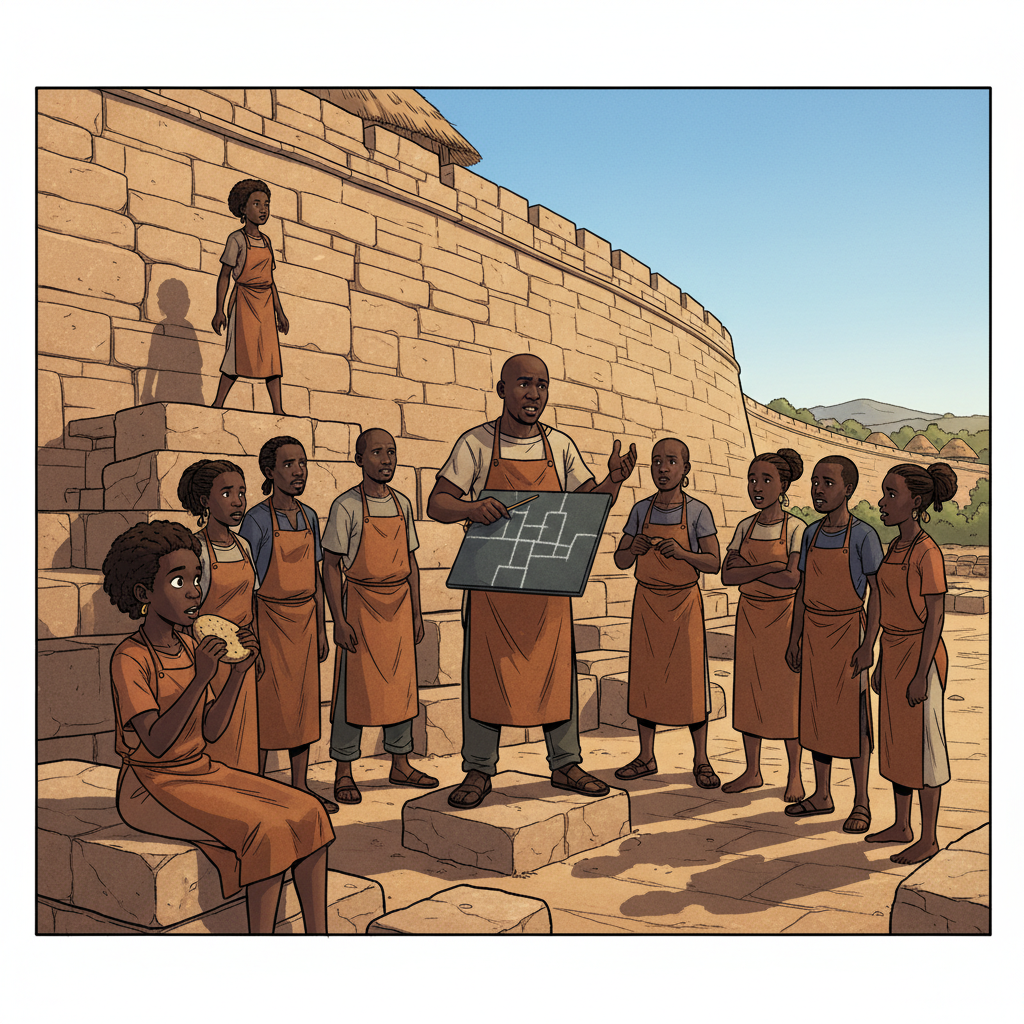
On the morning the trouble started, Chipo was at the work site early, sitting on a low stack of dressed blocks at the edge of the eastern curve, eating a small piece of millet flatbread her grandmother had pressed into her hand at dawn. Her mother was walking the wall. The workers — twelve of them this morning, six men and six women in their leather aprons — were gathered in a loose circle around the foreman, a tall broad-shouldered man named Tafara, who was speaking with his hands as much as with his voice. Chipo could not hear all of what he said, but she could hear the tone, and the tone was the tone of a man who had decided something and was explaining it to people he expected to agree. Tafara was holding up a chalk drawing on a flat piece of slate. The drawing showed a section of the wall. He was tapping at it with the end of his stylus, marking off lines, dividing the wall into sections. Chipo could see, from where she was sitting, that the sections he was marking were larger than the usual courses. He was proposing — and she understood this only as she heard the workers begin to murmur — that the next eight courses of the eastern curve use larger blocks than the previous courses. Larger blocks meant fewer blocks. Fewer blocks meant faster work. Faster work meant the wall could reach thirty feet before the next rainy season, instead of the season after.
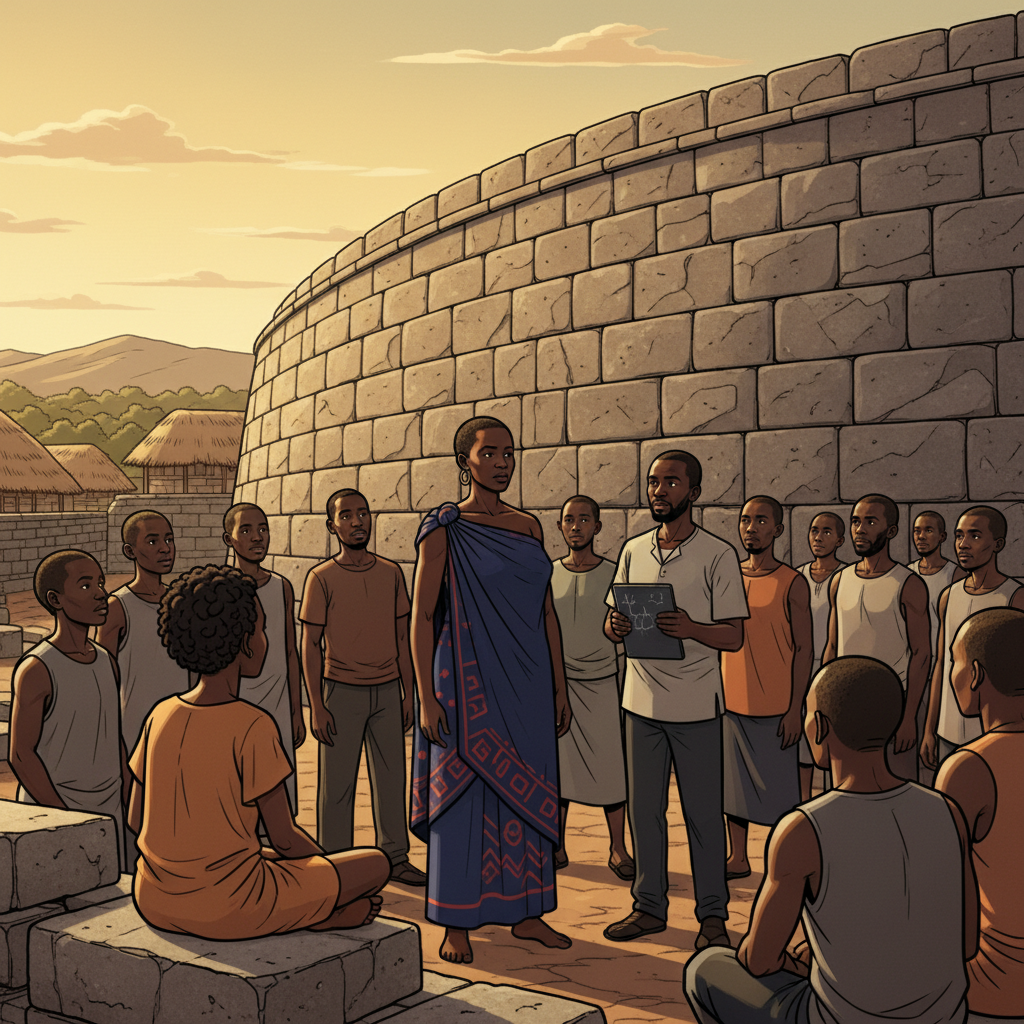
Chipo watched her mother walk slowly back from the far end of the eastern curve. Nyaradzo had heard the murmur. She did not hurry. She never hurried at the work site. She arrived at the edge of the gathered circle and stood quietly until Tafara noticed her and turned. "Senior mason," Tafara said, in the careful tone of a foreman addressing the master who had chosen him. "We were discussing the courses for the next moon. I have proposed larger blocks." He held up the slate so Nyaradzo could see. "We would finish the eastern curve a full season faster. The senior council would be pleased. The wall would be ready for the festival of the long rains." Nyaradzo took the slate from his hand. She studied it. She did not speak for what felt to Chipo like a long time. The workers had gone quiet. They were watching the senior mason's face the way people watch the sky before a decision about whether to plant. At last Nyaradzo handed the slate back. "Tafara," she said. Her voice was level. "I have heard your proposal. I have seen your drawing. The answer is no. We will not change the size of the blocks for the next eight courses. We will continue as we have begun." She did not raise her voice. She did not explain. She handed back the slate and she turned to walk along the wall again.
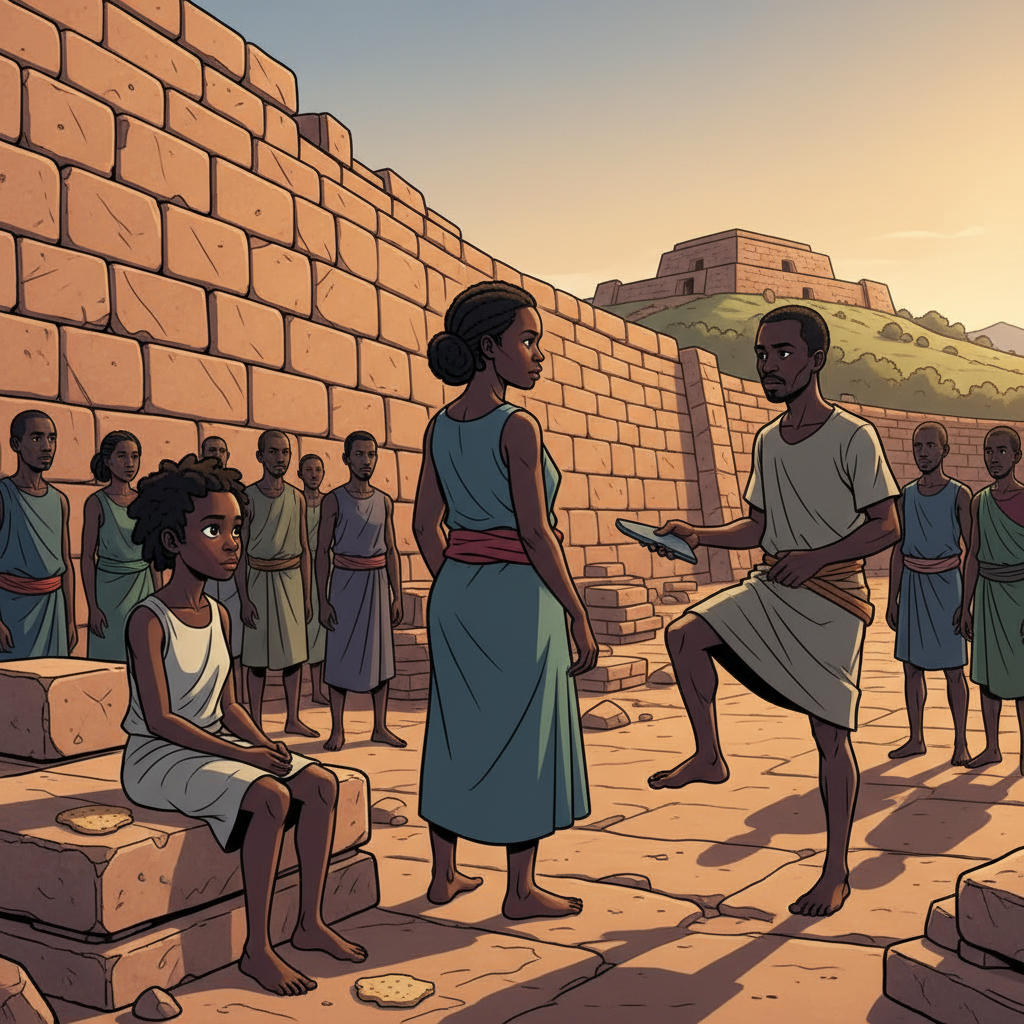
Tafara stood very still for a moment. Then he stepped after her — not respectfully, but with the half-step of a man who feels he has been refused without being given a hearing. "Senior mason," he said. "May I ask why? The larger blocks have been used in the older sanctuary on the hill. They are strong. The senior council would understand. The festival is important. Our city's prestige —" Nyaradzo stopped walking. She turned. The workers were watching closely now. Chipo set down her flatbread and sat very still on her stack of stones, because she had never seen her mother's face go quite this still before. "Tafara," Nyaradzo said. "Come with me. Bring your slate. The senior mason's answer is no. But the senior mason's reason — I will give you the reason. I will give it to you on the wall itself, where the wall can be the witness." She looked across the circle of workers. "All of you. Come. The lesson is for everyone. We will walk the wall together. We will stop where I tell you to stop. And we will put our hands where I tell you to put them. Chipo." She had not looked at her daughter yet. Now she did. "Daughter. You come too. You walk at my side. You are old enough today."
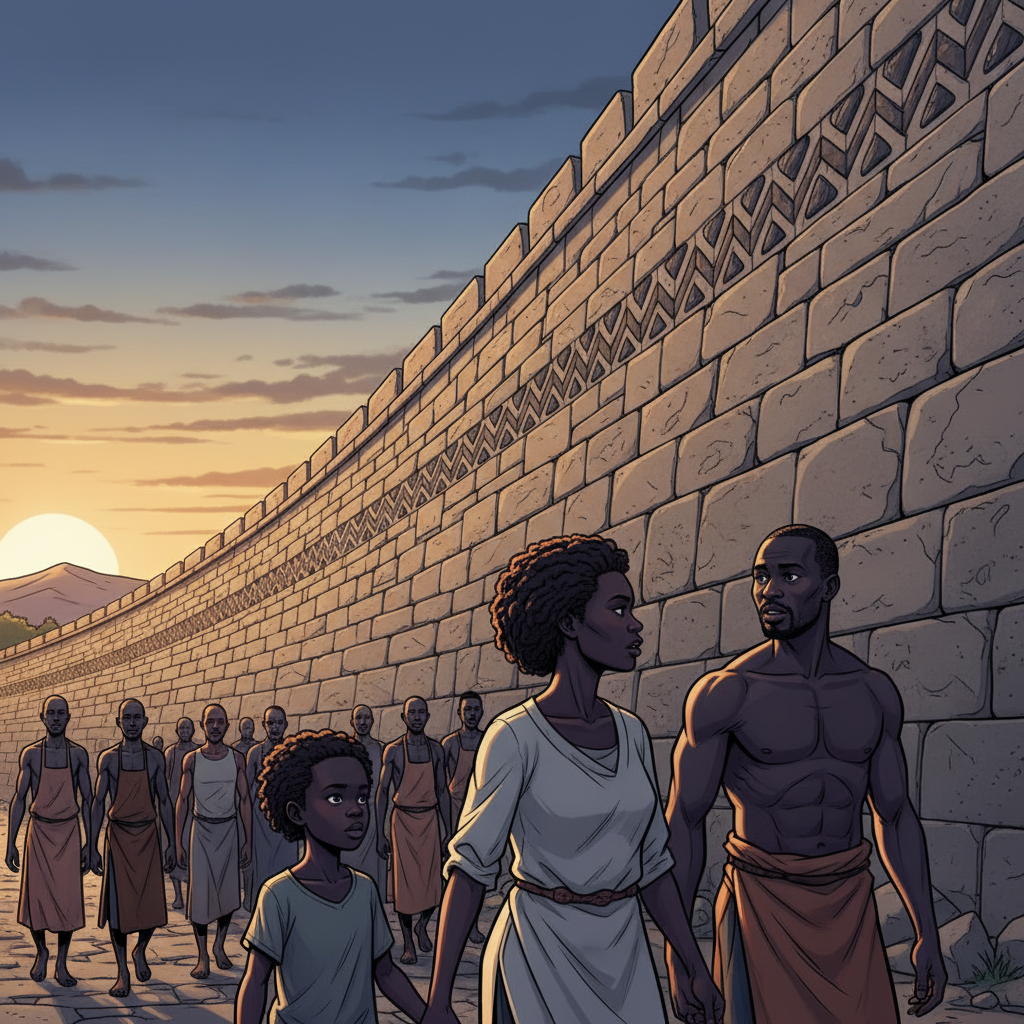
Chipo slid down from her stack of blocks. Her heart had begun a small fast drumming inside her chest. She had walked the wall at her mother's side many times, but never with the full crew of workers walking behind them, and never as the daughter whom the senior mason had publicly told to stand at her side. She fell in beside her mother's left hip. Tafara fell in on her mother's right. The twelve workers fell in behind in a loose line, their leather aprons rustling, their tools left in the dust at the work site. The procession moved slowly along the inside curve of the rising wall, and the morning sun came up over the eastern hills as they walked, raking across the granite at a low angle and casting long shadows where each course met the next. Nyaradzo walked them past the first three sections without stopping. She walked them past the section where the wall first rose above her own head. She walked them past the section where the chevron pattern had begun — the small decorative dark stones laid in a slanting line along the upper courses, the pattern that travelers from the coast would later say looked like the wing of a great bird. She walked them three hundred paces along the inside of the curve. Then she stopped. The procession stopped behind her. Nyaradzo turned to her right, faced the wall, and laid her own palm flat against a single stone at chest height.
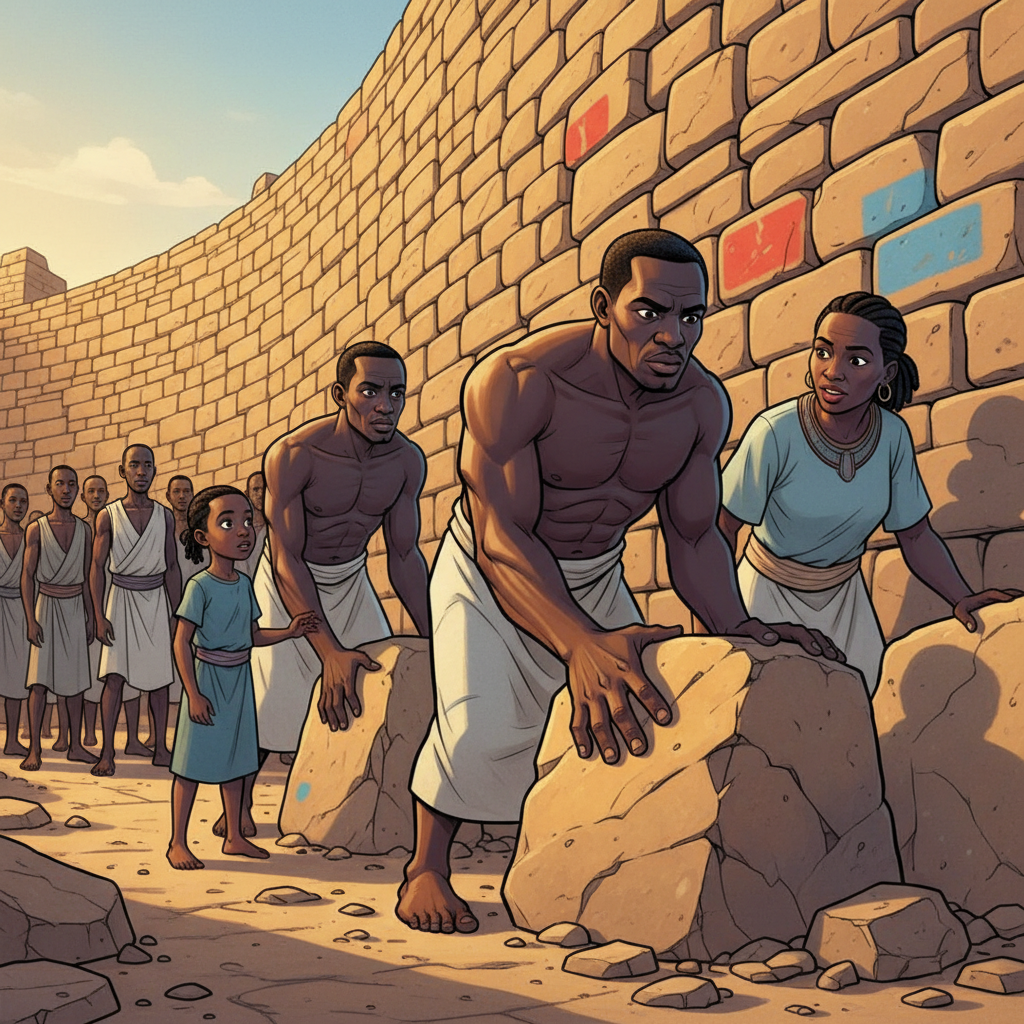
"This stone," she said, "was laid four days ago. Tafara, you laid it. You laid it well. The fit on the lower edge is excellent. The upper edge will receive the next course cleanly. There is no fault in your work as far as the eye can see." Tafara nodded carefully, waiting. The workers were watching. Chipo, standing at her mother's left elbow, could feel the morning sun on the back of her own neck. Nyaradzo did not move her palm from the stone. "Now," she said. "Tafara. Put your palm on this stone next to mine. Then I want you to walk three stones to your left, and put your palm on that stone. Then come back and tell me what you felt." Tafara hesitated only a moment. Then he stepped forward and laid his broad calloused palm on the stone beside his master's. He stood there for a count of three. Then he stepped three stones to his left and laid his palm there. He stood for another count of three. Then he came back. "Senior mason," he said. "They feel the same. Both warm from the morning sun. Both the same temperature. I do not feel a difference." Nyaradzo nodded once. "Of course you do not feel a difference. Your hand is the hand of a grown man who has worked stone for twenty years. Your palm has the calluses of twenty years. Your skin can no longer feel the small differences." She turned. "Chipo. Step forward."
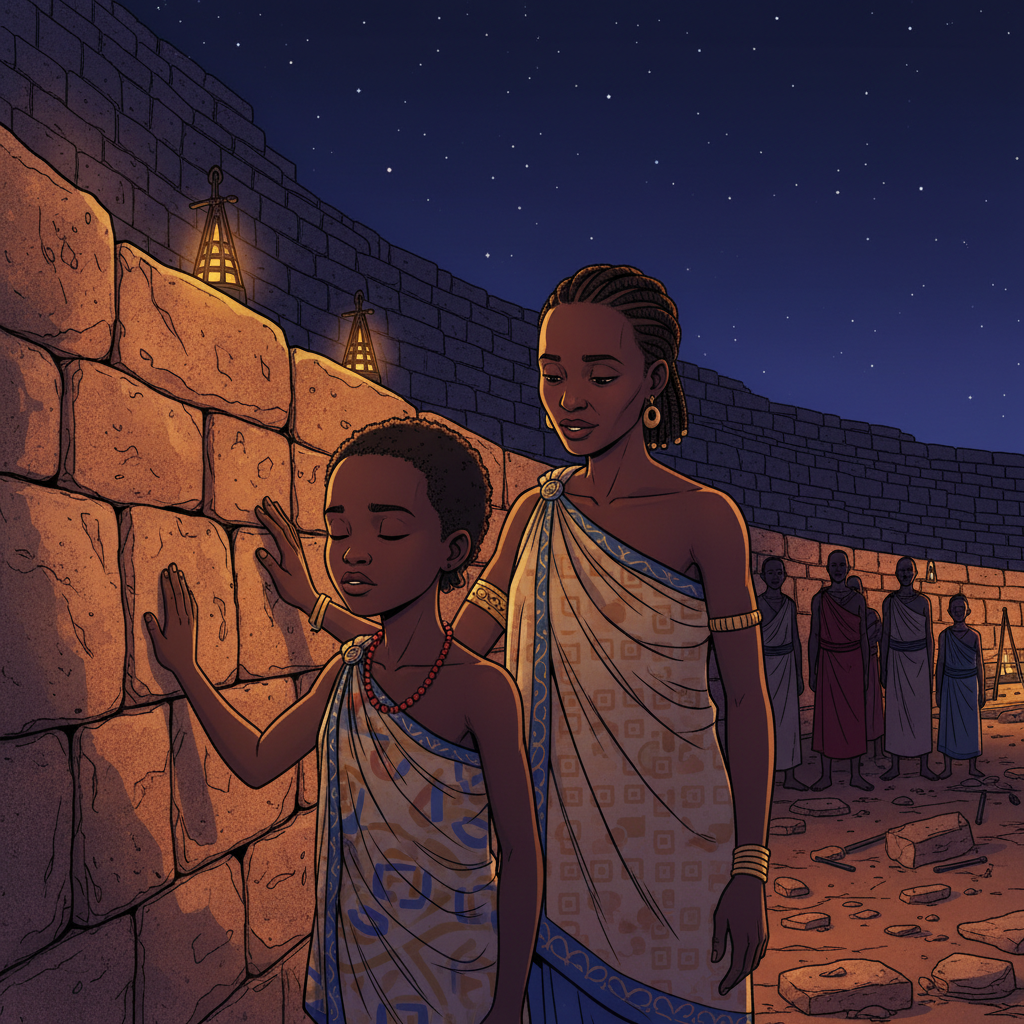
Chipo stepped forward. She had been waiting for her mother to call her, and yet now that she was called she felt her knees soften the way knees soften before something important. She came to stand in front of the stone where Tafara's palm had just been. Her mother lifted her own palm from the wall and stepped back one pace. "Daughter," Nyaradzo said. "Put your palm here. Tell me what you feel." Chipo placed her small dark palm flat against the granite. The stone was warm. She closed her eyes the way her mother had taught her. She held her palm there for a count of five, the way her mother had taught her, breathing slowly so that the small heat of her own blood did not confuse the reading. Then she opened her eyes. "It is warm, mother." Nyaradzo nodded. "Now move three stones to the left. The way Tafara did. Put your palm there. Tell me what you feel." Chipo stepped sideways. She placed her palm on the third stone over. She closed her eyes again. She counted. She breathed. The workers behind her had gone completely still — Chipo could hear, very faintly, the small sound of a single dust-fly somewhere down the wall. The stone under her palm felt — she searched for the word — it felt the same and yet not the same. It was the same temperature. But the warmth was sitting on the surface in a different way. The warmth was not coming up from inside the stone the way it had on the first stone.
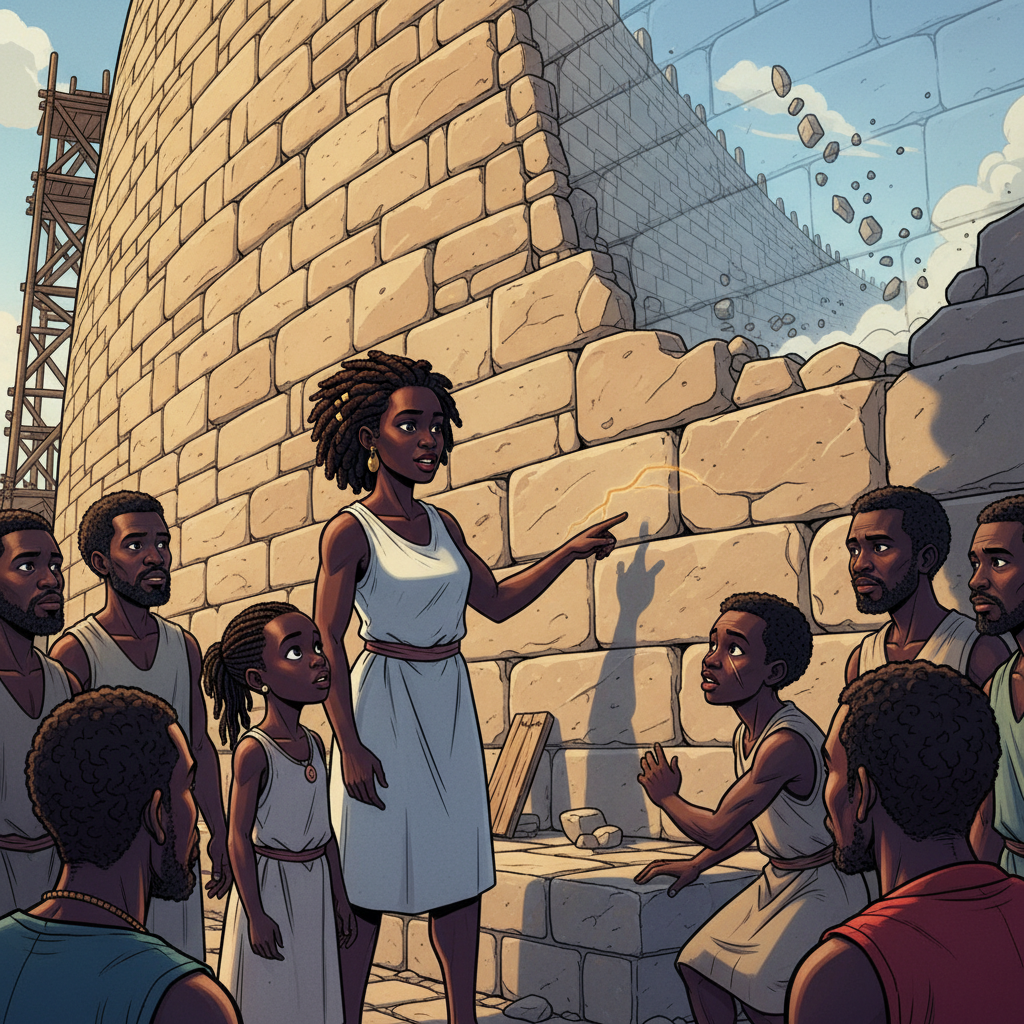
Chipo opened her eyes. She looked at her mother. "It is warm, mother. But it is — different." She struggled for the word. "The warmth on the first stone came UP. From inside. This one — the warmth is sitting ON it. On the surface. The inside of this stone is — quieter. Cooler. I cannot say it well." Nyaradzo did not smile, but her eyes warmed in the particular way they did when Chipo had spoken a true sentence. She turned to the gathered workers. "You heard her. The first stone heats evenly through its body. This stone — the third one over — the morning sun has heated only its surface. The inside is not taking the heat. Why?" She paused. The workers were silent. Tafara was looking at the third stone now with a new kind of attention. "Because," Nyaradzo continued, "this stone has a fault. A hairline crack runs through its body — invisible to the eye, but real. The crack interrupts the heat as it travels inward. The body of the stone is divided. When the rains come and the water finds the crack, the water will freeze in the cold nights and expand. The crack will widen. In ten years, in twenty years, perhaps in fifty, the stone will split. The wall above this stone — which by then will be the full thirty feet — will lose its support at this one point. And the wall, which is held together only by the fit of one stone against the next, will begin to lean. And in a hundred years it will fall." She paused. "This is the stone we replace today. Before the next course goes up. Mark it, Tafara."
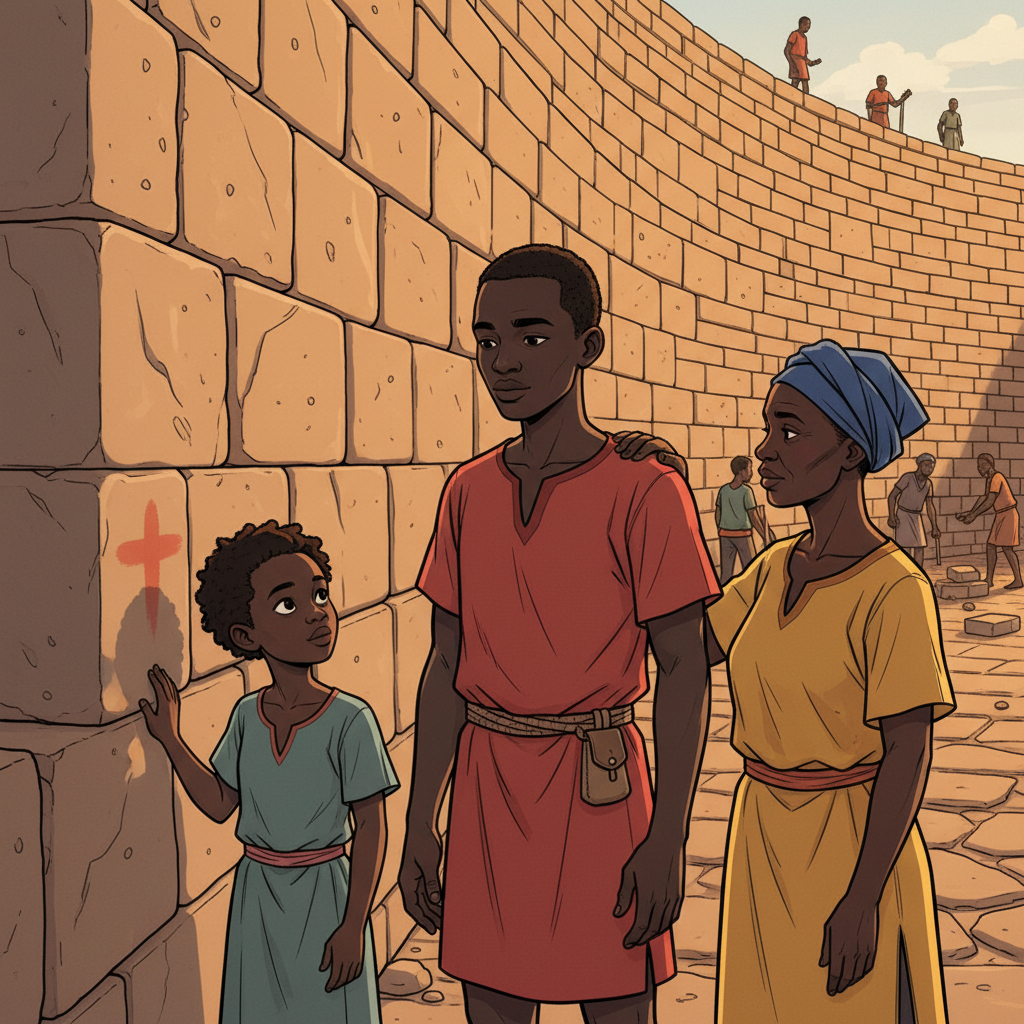
Tafara stepped forward slowly. He marked the third stone with the small chip of red ochre from the pouch at his belt — the mark the workers all knew meant lift this one out before the day is over. He stood back. He looked at his master. He looked at Chipo, the twelve-year-old whose small palm had felt what his own calloused twenty-year hand had not. He did not speak for a long moment. Then he said, quietly: "Senior mason. I withdraw my proposal about the larger blocks. I understand now why the courses must stay as they are. Larger blocks would mean fewer hands testing each one. Larger blocks would mean more stones the size of which no child's palm could be laid against. I had not thought of this. I beg your forgiveness." Nyaradzo placed her own hand on Tafara's shoulder — not hard, not soft, the way a master places a hand on a foreman who has just remembered the work he has been doing. "Tafara. There is nothing to forgive. The festival is real. The senior council's pleasure is real. The pressure to build faster is always real. But our wall is not for the festival. Our wall is for the children who will be born in a hundred years. Their hands will lay on these stones the way Chipo's hand has laid on this one. If the stone fails them, they will know — even if they cannot read the mason's mark — that someone in our generation hurried. Every stone bears witness for its mason forever. That is the law of our trade."
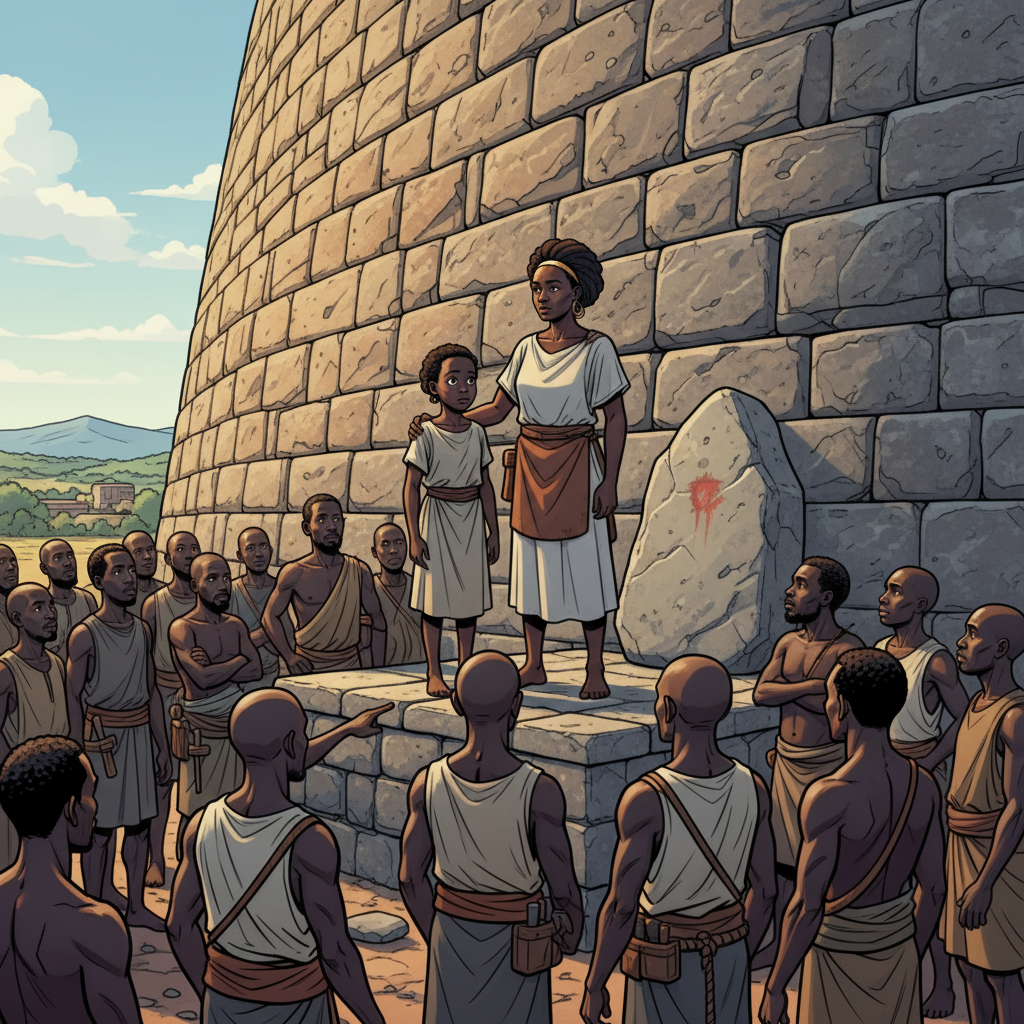
Chipo stood very still beside her mother as the workers gathered closer. The morning sun had climbed higher now. The shadows along the wall had shortened. The cracked stone — the third one over — sat in the wall looking exactly like every other stone, except for the small red mark Tafara had made on it. Chipo realized, with the slow clear realization that comes only once or twice in a child's life, that she had been brought into a circle her mother had been preparing for her since the day she was five years old. The lesson about the warm and cold stones at five had been the first lesson. This one — at twelve, in front of the full crew, in front of the foreman — was the second. Nyaradzo turned to the workers. "Today we lift the third stone. We replace it. The next course waits one more day. Tomorrow we resume at our usual pace. Chipo —" she looked at her daughter. "You will walk the wall with me every morning from now on. Before the workers arrive. You will lay your palm on each stone we laid the day before. You will tell me what you feel. If you feel a stone that is not right, you will mark it with the red ochre yourself. Do you understand?" Chipo nodded. Her throat was tight. She could not yet trust her voice. Her mother saw it, and she put her hand on her daughter's opposite shoulder, and the two of them stood for a moment in front of the marked stone, the Great Enclosure curving away behind them in the long morning light.
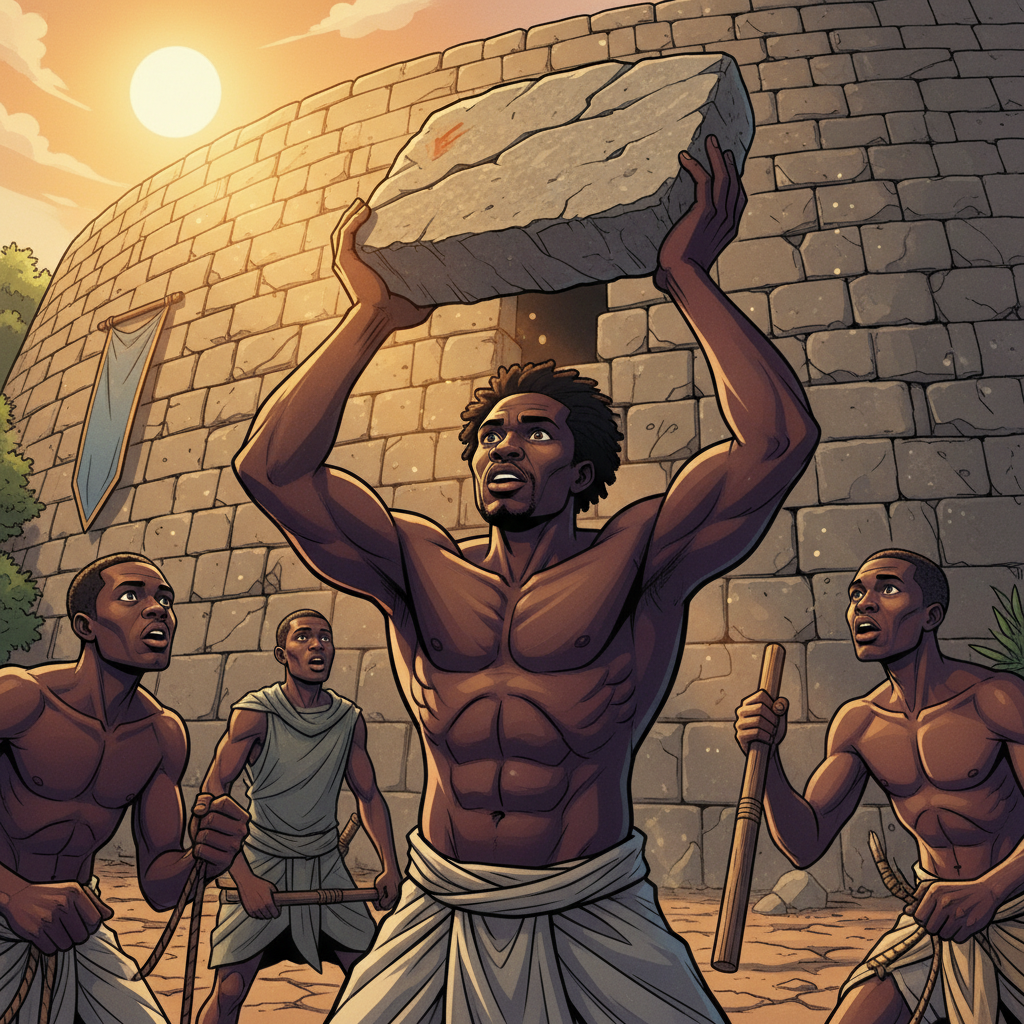
The replacement of the third stone took the rest of the morning. Tafara himself led the lifting crew. They wedged thin wooden levers into the joints above and below the cracked stone, working with the patience of people who knew that one slip would loosen the courses beside it. When the stone came free, Tafara turned it over in his hands and held it up to the sun. From a certain angle, Chipo could see what her palm had felt — a thin dark hairline running diagonally through the body of the stone, almost invisible, but real. The men around her drew breath. Tafara passed the stone to the senior fitter, who would keep it as a teaching specimen for the apprentices. A new stone was selected from the dressing yard. Nyaradzo herself walked over to inspect it before the lifting. She laid her palm on it. She closed her eyes. She breathed. After a count of five she nodded once. Then she turned and looked at her daughter across the work site. "Chipo," she called. "Come here. Tell me what you feel." Chipo walked across the dust to her mother's side. She placed her palm on the new stone. She closed her eyes. The stone was cool — it had been in the shade of the dressing-yard wall — but the cool was an even cool, the cool of a stone whose body was unbroken. She opened her eyes. "It is sound, mother. The cool comes evenly. Through the whole body." Nyaradzo nodded. The new stone was lifted into place.
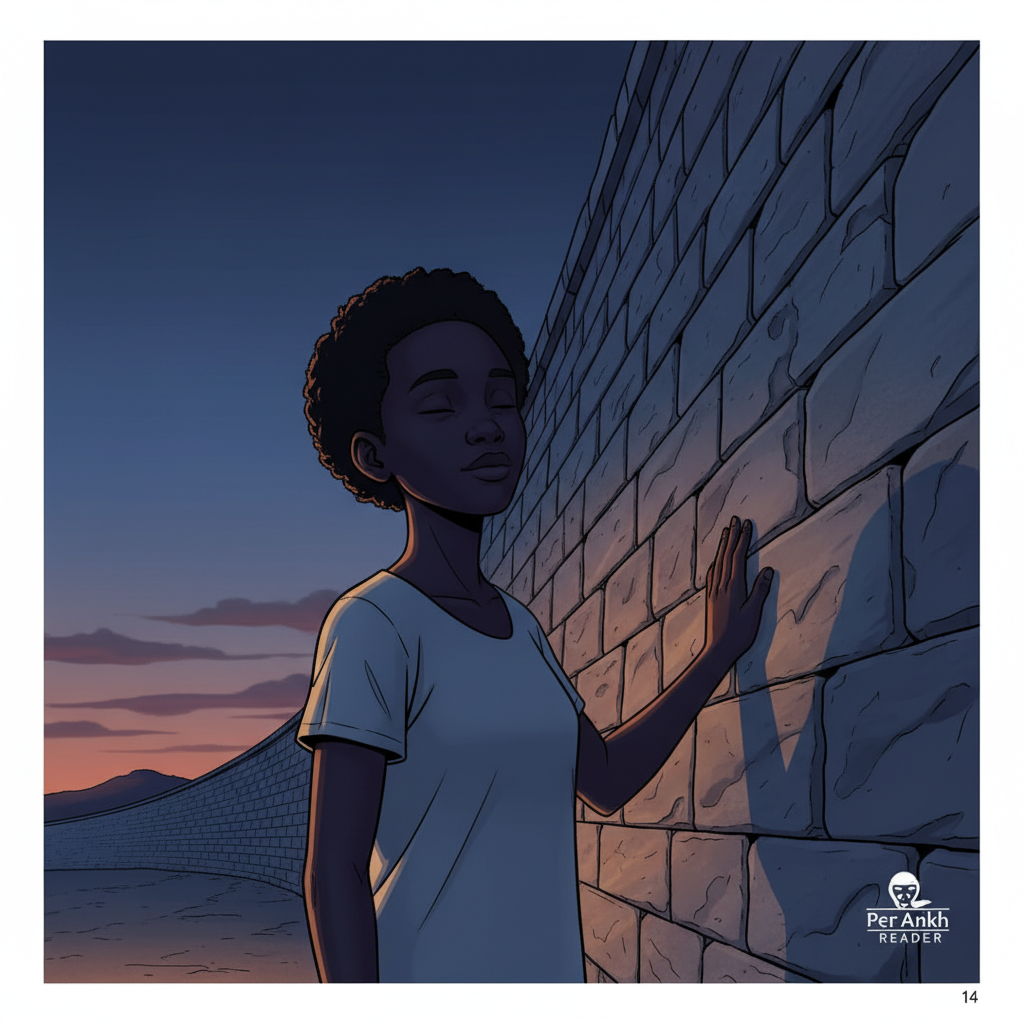
That evening, after the workers had gone home and the long blue dusk had settled across the valley between the hill and the Great Enclosure, Chipo walked back to the wall alone. Her mother had given her permission. The wall was quiet at dusk. The day's heat had gone out of the upper stones, and the lower stones still held the last of the afternoon's warmth. She walked the inside of the curve slowly. She laid her palm on stones at random — the second course, the fifth course, a stone near the foundation that had been laid before she was born. Each one had its own small story under her palm. Some warm. Some cool. Some, on the older sections, holding the kind of patient settled coolness that comes only after many years of weather. She came at last to the replaced stone — the one that had taken the place of the cracked one. She laid her palm on it. It was cool now. The sun had left it. But the cool was even — the cool of a stone whose body was whole. She held her palm there for a long count, the way her mother had taught her. She thought about the cracked stone, sitting now in the senior fitter's shed as a teaching specimen. She thought about the children who would be born in a hundred years and who would walk along this wall when the wall would be already old to them. She thought about her own great-granddaughter, whose small dark palm might one day lie flat against this very stone. She would not feel a fault. The fault had been caught. The mason had been Chipo, age twelve, on the morning her mother had brought her into the circle.
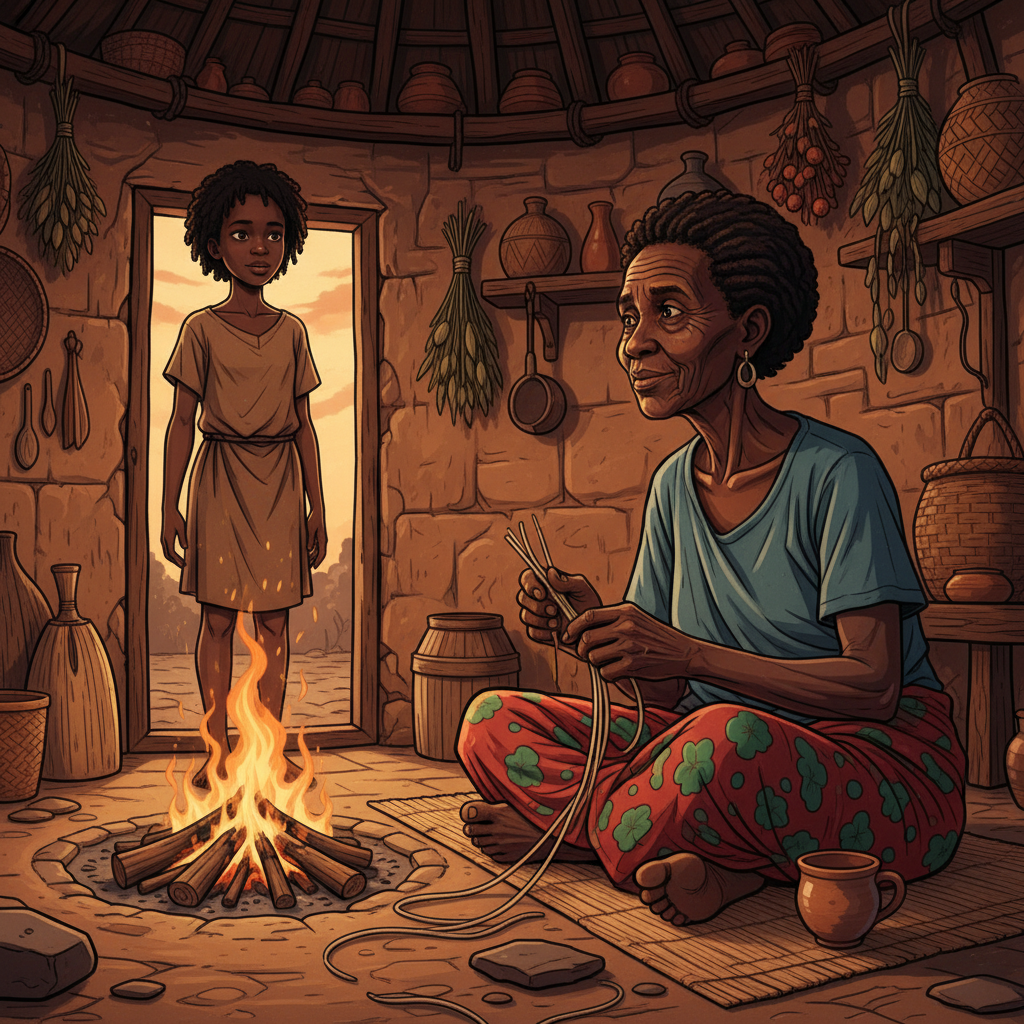
When Chipo returned home that night, her grandmother — her mother's mother, an old woman named Sekai who had been a mason herself in her youth and who now sat by the cookfire weaving sisal — looked up as Chipo came through the doorway. Sekai did not need to ask. She had heard from the workers, who had passed by her doorway in the late afternoon, that the senior mason had brought her daughter into the circle that morning at the eastern wall. Sekai patted the woven mat beside her at the fire. Chipo sat. Sekai handed her a small clay cup of warm millet beer, the kind given to a young person on the evening of a passage. "Chipo," Sekai said. "Tell me what you learned today." Chipo thought for a moment. She had learned many things. The hairline crack. The way the heat moves through sound stone evenly and through cracked stone unevenly. The replacement procedure. The senior fitter's teaching shed. But she knew, when her grandmother asked, that the real thing she had learned was something else. "I learned, grandmother," she said slowly, "that every stone bears witness for its mason. Forever. Mother said it on the wall this morning. The festival is real. The hurry is real. But the children who will be born in a hundred years will walk along these stones. The stones will speak about us to them. The stone you laid in a hurry will speak. The stone you laid carefully will speak." Sekai nodded slowly. "Yes," she said. "That is the law of our trade. That is the order."
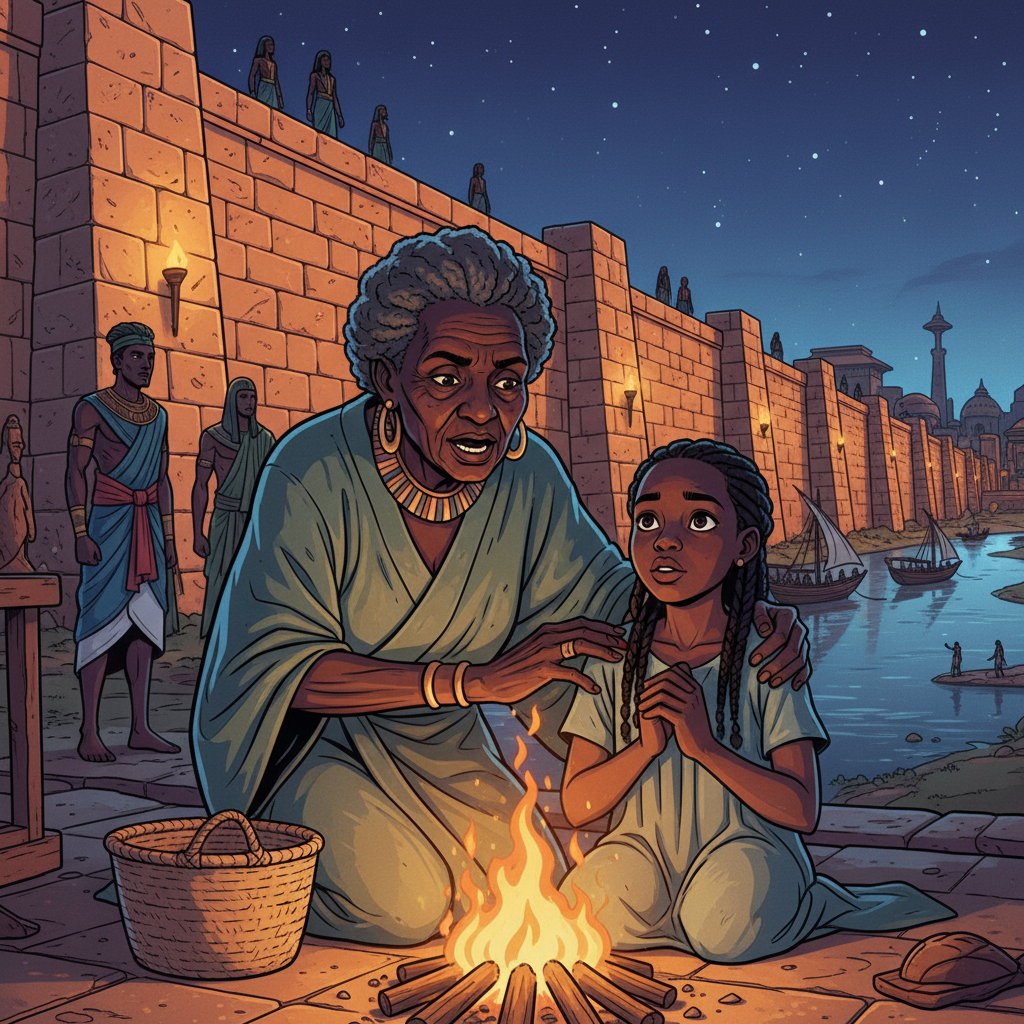
Sekai set down her weaving. She turned to face her granddaughter fully in the firelight. "Listen, Chipo. There is something I must tell you that your mother has been waiting to say herself, but I will say it tonight because you have come to the door of it on your own. The wall your mother is building — the Great Enclosure — it is not only a wall. It is a city's witness. Every kingdom that trades with us — the dhow captains from Kilwa, the porcelain merchants from far China, the bead-traders from the Persian Gulf — they all know our walls. They have all walked along them. They charge our gold the price they charge because of these walls. Our walls say to them: this is a city that builds with care. This is a city whose word can be trusted. Order in our stone is order in our trade." "And there is more, granddaughter. The men who will come long after us — the men from across the great water in the far north — some of them will try to say that our walls were not built by us. They will say we could not have built them. They will say someone else must have come and built them for us. This is a lie. Our walls are ours. The masons were our mothers and grandmothers. The hands were dark like yours. The palms were small like the palm you laid against the cracked stone this morning. When you hear that lie in your life, Chipo — and you will hear it — you will know what to answer. You will say: I helped my mother build them. I was twelve. I felt the crack with my own hand."
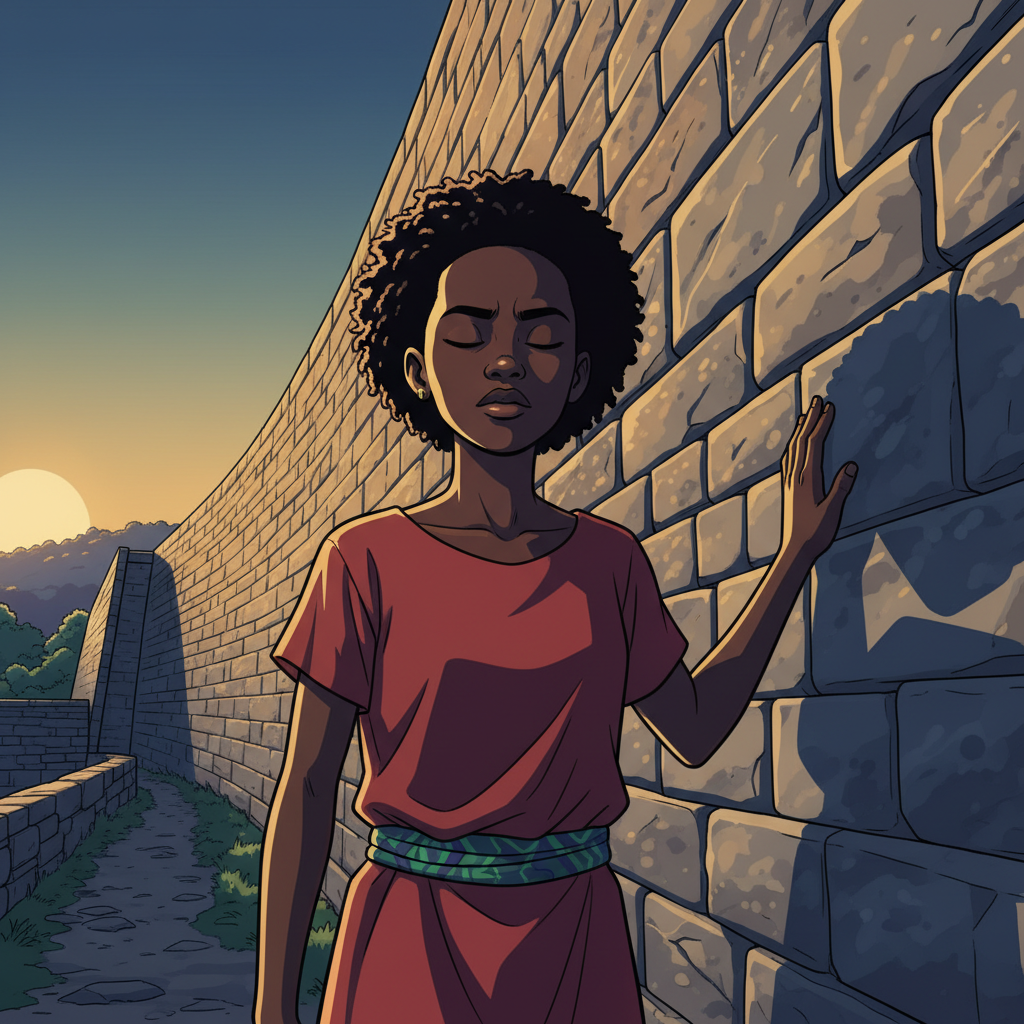
Chipo did not sleep well that night. She lay on her sleeping mat with her grandmother's words turning in her chest. The men from across the great water in the far north. She did not yet know what that meant. She had not yet met a man from across the great water. She did not know what such a man would look like, or why he would say her walls were not her own. But she remembered the words. She remembered them in the careful way her mother had taught her to remember teaching — by placing the words on a shelf inside herself, and visiting them again in the morning to check that they had stayed where she had put them. In the morning she rose before her mother. She walked through the still-blue lanes of Great Zimbabwe to the eastern wall. The workers had not yet arrived. The morning sun was just beginning to lift over the hill. The wall curved away from her in the half-light, the granite still cool from the night. She walked the inside of the curve slowly, the way her mother had walked it for thirty years. She laid her palm on the first stone of the morning. She closed her eyes. She listened. The stone was cool, and the cool was even, and her palm — her small dark twelve-year-old palm — could feel that the stone was sound. She moved to the next stone. She laid her palm. She listened. She breathed.
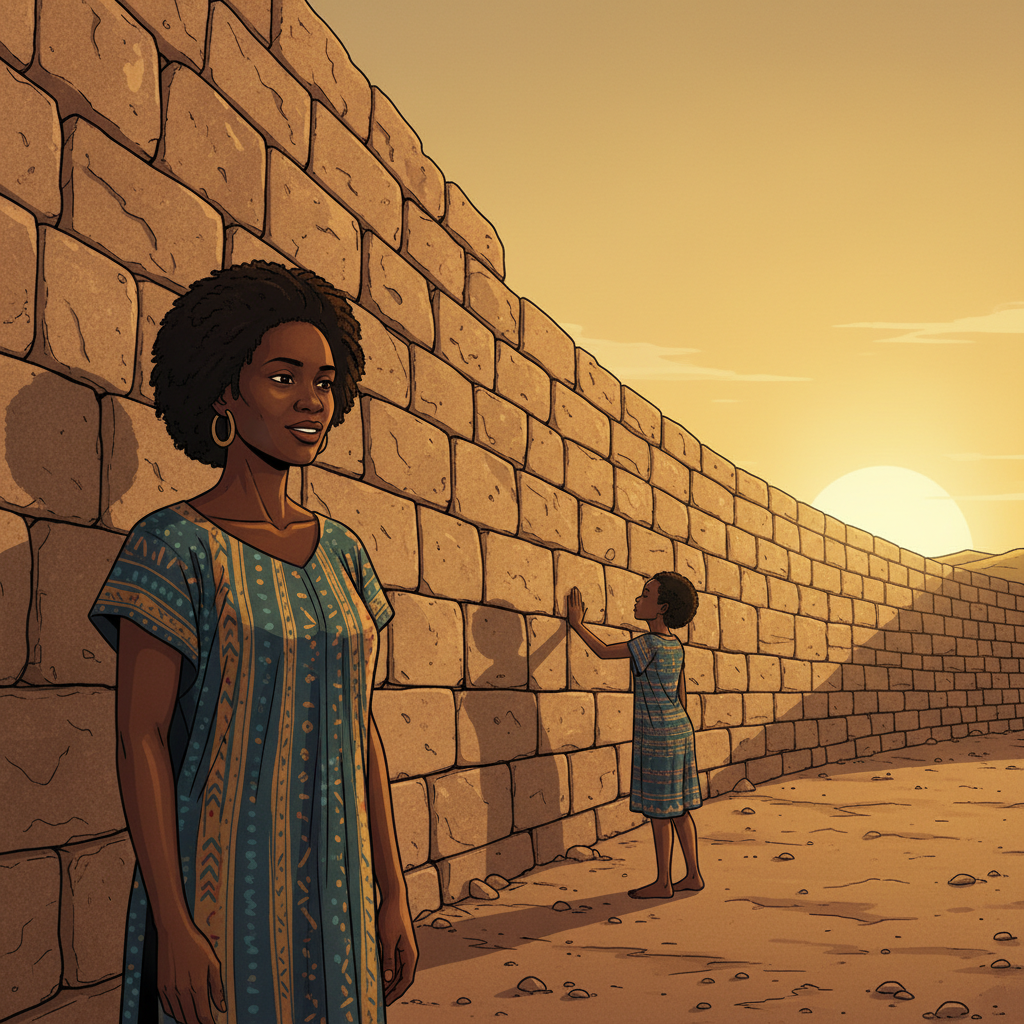
Her mother arrived at the eastern wall as the sun was clearing the hill. Nyaradzo did not speak at first. She stood at the southern entrance of the curve and she watched her daughter — small in the long light, palm flat against the granite, eyes closed, breathing slowly, the morning shadows raking across the wall behind her. After a long moment Nyaradzo walked along the inside of the curve until she came to Chipo's side. "Daughter." Chipo opened her eyes. "Mother." They walked together for a while in silence. They stopped at four stones along the way. At each one, both of them laid their palms. Both of them closed their eyes. Both of them breathed. At the fourth stone, Chipo opened her eyes and turned to her mother. "Mother. This one is cool, but the cool is — not even. It comes up faster on the right side than the left. I think there is a small fault. On the right." Nyaradzo laid her own palm on the same stone. She closed her eyes. She held her palm there for a count longer than usual. Then she opened her eyes. She did not smile. She nodded once, slowly. "Yes, Chipo. There is a small fault on the right. The fault is not as serious as yesterday's. The stone might last a hundred years before it begins to give. But we do not lay stones that might give in a hundred years. We lay stones that will not give. Mark it." She handed her daughter the red ochre.
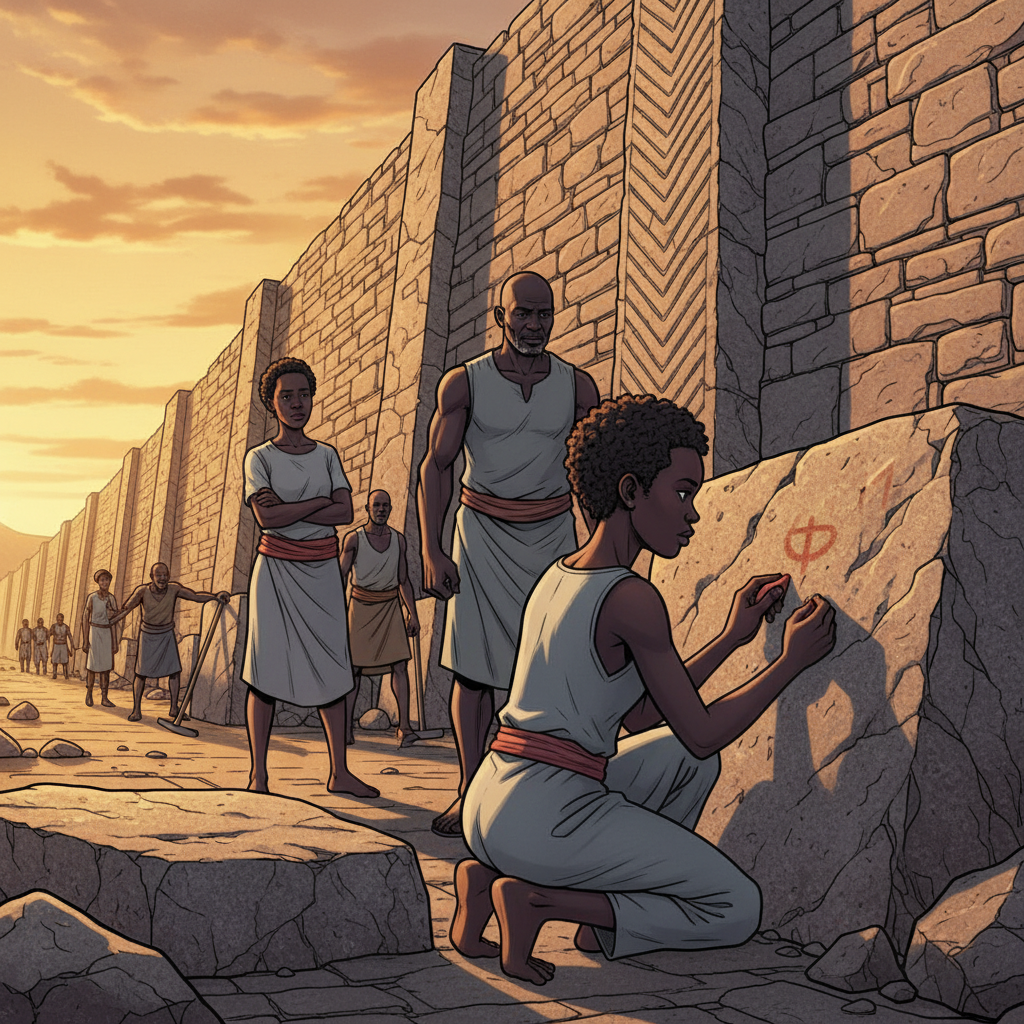
Chipo took the red ochre. Her hand shook only a little. She drew the small red mark on the right side of the stone — the side where she had felt the fault. The mark was the smallest one along the eastern wall that morning. The workers arrived not long after. Tafara saw the new mark. He did not ask which of them had made it. He understood. He walked to the senior mason's side and bowed his head once, briefly, in the way a foreman bows to a master who has welcomed a new mason into the circle. Then he turned to the lifting crew and called for the levers to be brought. The wall rose, that season and the next. The eastern curve reached fifteen feet, then twenty, then twenty-five, then thirty. The Great Enclosure was completed in the third year after the morning Chipo had laid her palm on the cracked stone. The festival of the long rains was celebrated inside the curve. The senior council praised Nyaradzo. The chevron pattern along the upper course had become — in the eyes of the traders from the coast — the symbol of the city, painted in miniature on the porcelain bowls they shipped abroad. Chipo, by the end of the third year, was fifteen. She was now one of the four mason apprentices whose palms walked the wall every morning before the workers arrived.
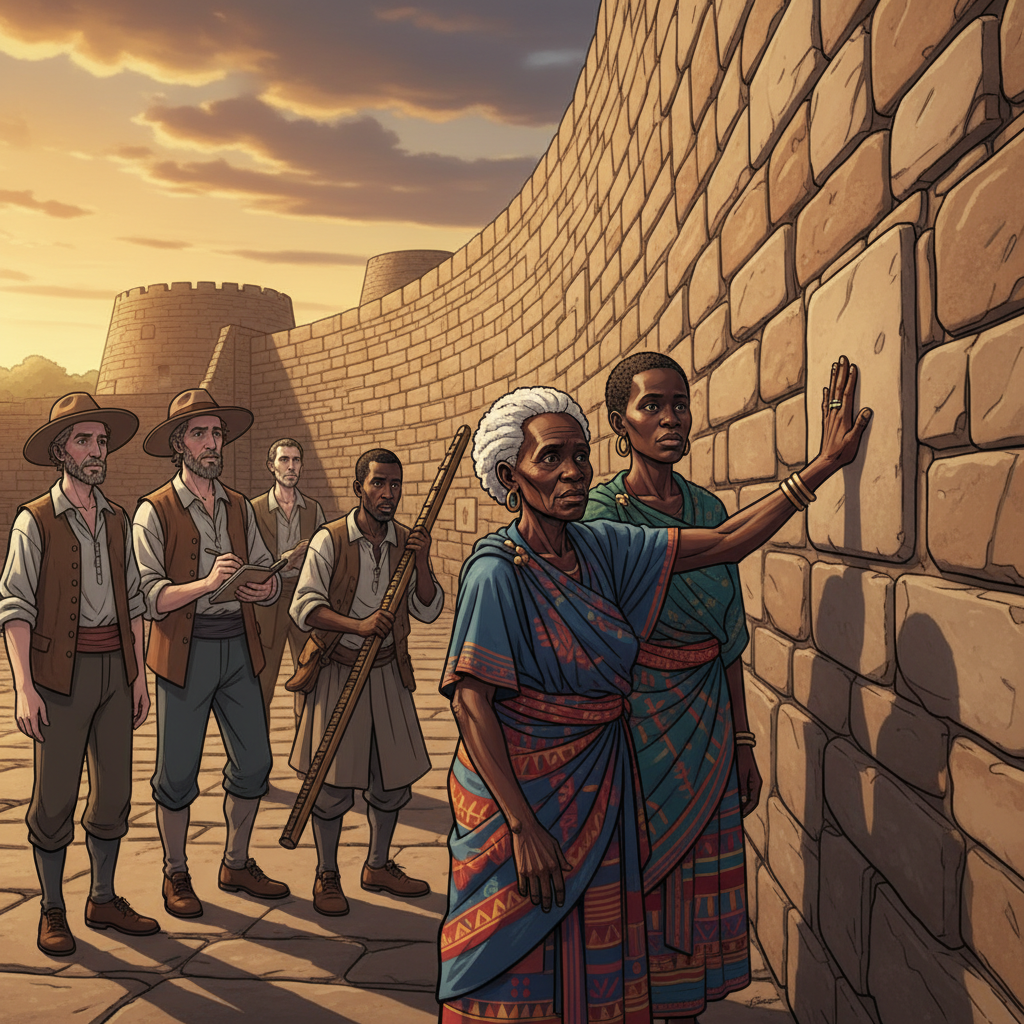
Many years later — when Chipo herself was the senior mason of the eastern wall, with her own daughter walking beside her in the morning shadows — a group of strangers did come to Great Zimbabwe. They came from across the great water in the far north, as her grandmother Sekai had said they would. They were paler than any people Chipo had ever seen, and they spoke a hard quick language she could not understand. They walked along the walls. They measured them with their strange long instruments. They wrote in their notebooks. They spoke to each other in low voices that Chipo could feel, even without the words, were the voices of men who had decided something before they arrived. One of them, through a coastal translator, asked Chipo who had built the walls. Chipo was sixty years old by then. Her hair was nearly white. Her hands were the hands of forty-eight years of masonry, dark and knotted and strong. She did not answer with anger. She did not raise her voice. She simply walked to the nearest section of the eastern curve and laid her old palm flat against a granite block at chest height. She turned and beckoned the stranger over. "Put your palm here," she said, through the translator. "Tell me what you feel." The stranger hesitated. Then, awkwardly, he stepped forward and laid his pale palm beside hers on the stone. He stood for a moment. Then he stepped back. He did not say what he felt. Chipo nodded, once. She let the stranger walk away with his measurements and his notebooks. She knew what she had given him to carry.
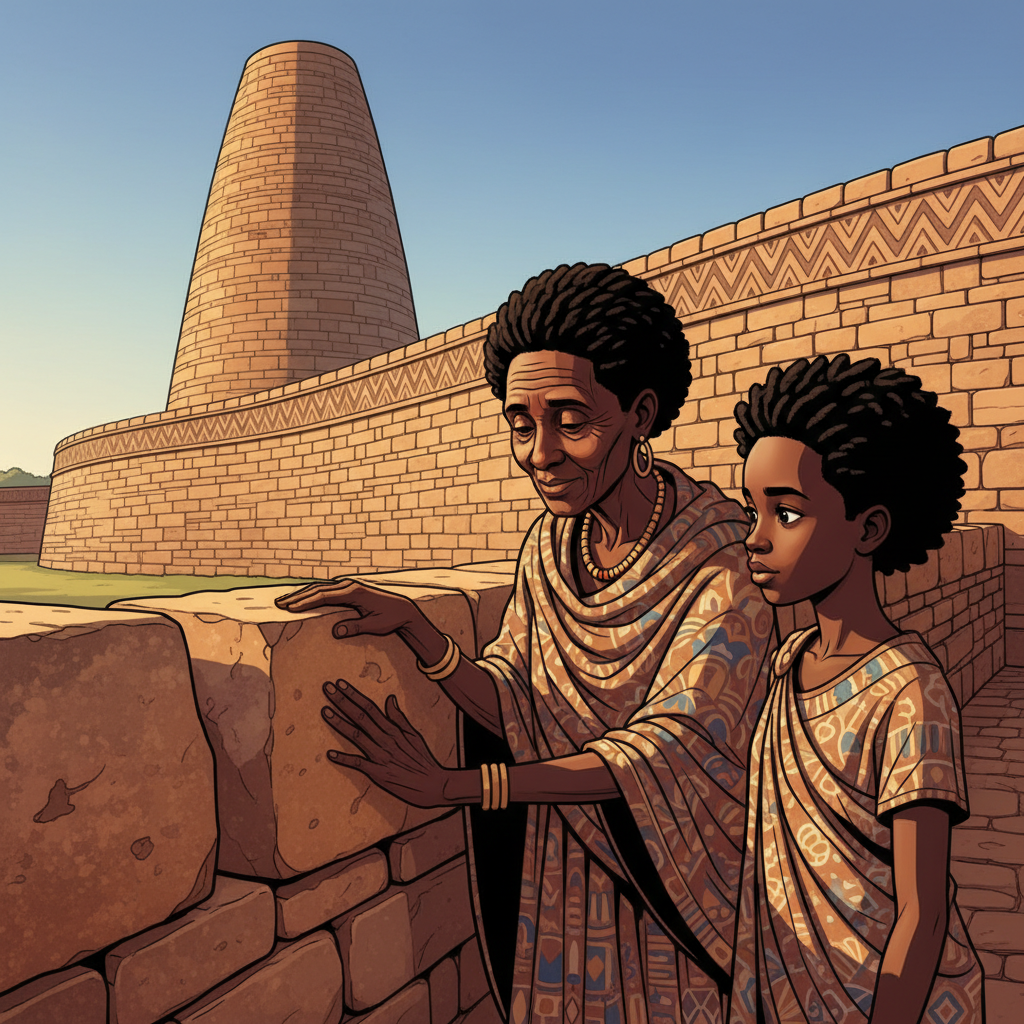
Six hundred years later, the walls of Great Zimbabwe were still standing. The thirty-foot eastern curve had not moved. No mortar had ever been added. No stone had needed replacing in the courses above the one Chipo and her mother had marked on that long-ago morning. The conical tower at the heart of the Great Enclosure still rose toward the sky, its purpose still discussed by the descendants of the masons whose hands had built it. The modern nation that takes its name from these ruins — Zimbabwe — was born of the people whose grandmothers laid these stones. The chevron pattern along the upper course is the national symbol. The hands that built were dark. The masons were African. The walls are theirs. In the village near the ruins today, an old grandmother sometimes walks her own granddaughter to the base of the wall in the morning. She lifts the small dark palm of the child and presses it flat against the granite. The granite is warm in the morning sun. The grandmother says, in the language of her people, the words that have been said in this place for many hundreds of years, from mother to daughter, from grandmother to granddaughter: "Put your palm here. Tell me what you feel." And the child says what Chipo said, and what Nyaradzo said before her, and what Sekai said before her — the child says, "It is warm, grandmother." And the order of the wall, and the order of the trade, and the order of the city that was, lives on for one more generation in the small dark palm of one more twelve-year-old girl.