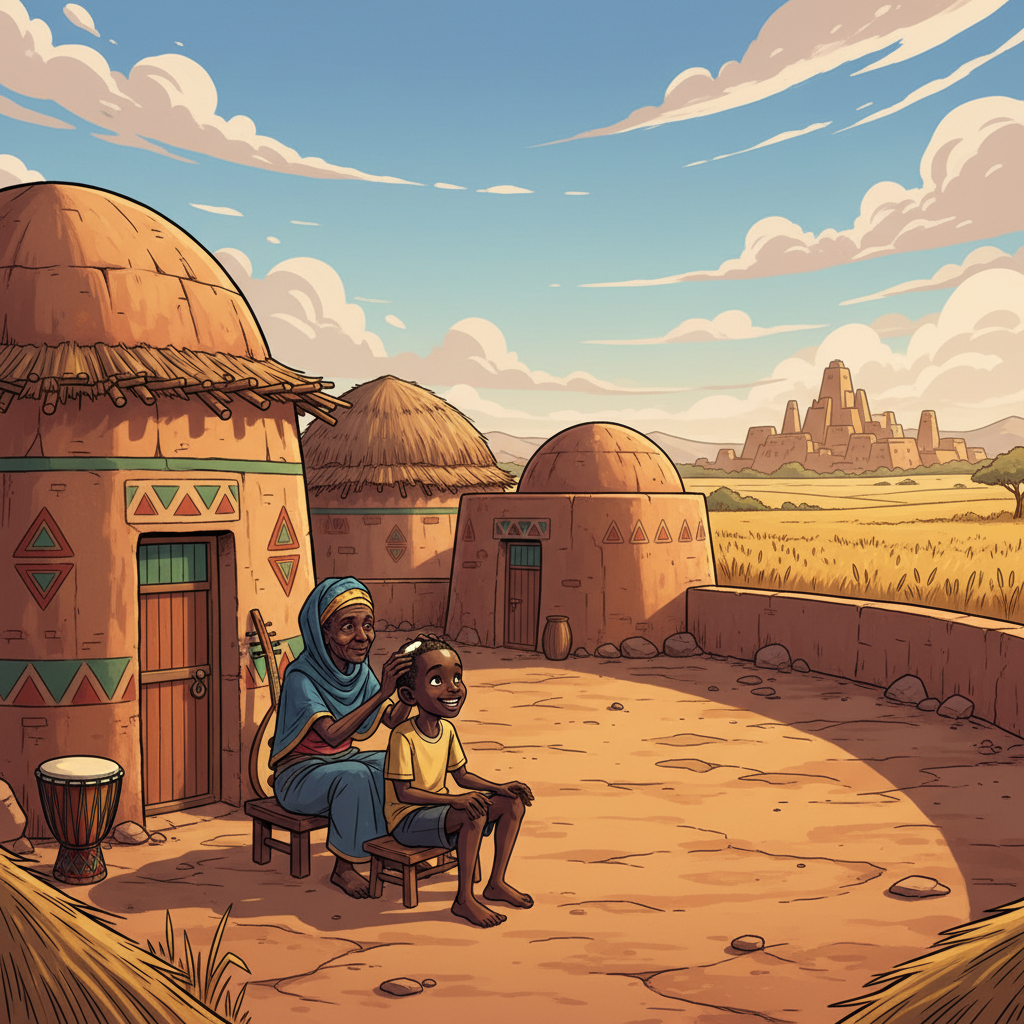
The compound of the Kouyaté family sat at the edge of the great city, where the last mud-brick buildings gave way to fields of millet and the wide golden sweep of the savanna. It was a place where music lived in the walls themselves — where the sound of kora strings drifted through every doorway and the rhythms of the djembe drum echoed in the packed-earth courtyard from dawn until the stars appeared. Djeli Kouyaté was eleven years old, with skin the color of dark bronze and 4C hair that his grandmother kept trimmed close, rubbing shea butter into his scalp each evening until it gleamed in the firelight. His hands were long-fingered and restless, always drumming on his knees or plucking at invisible strings. His eyes were quick and bright, and when he smiled — which was often — his whole face opened like the sky after a storm.
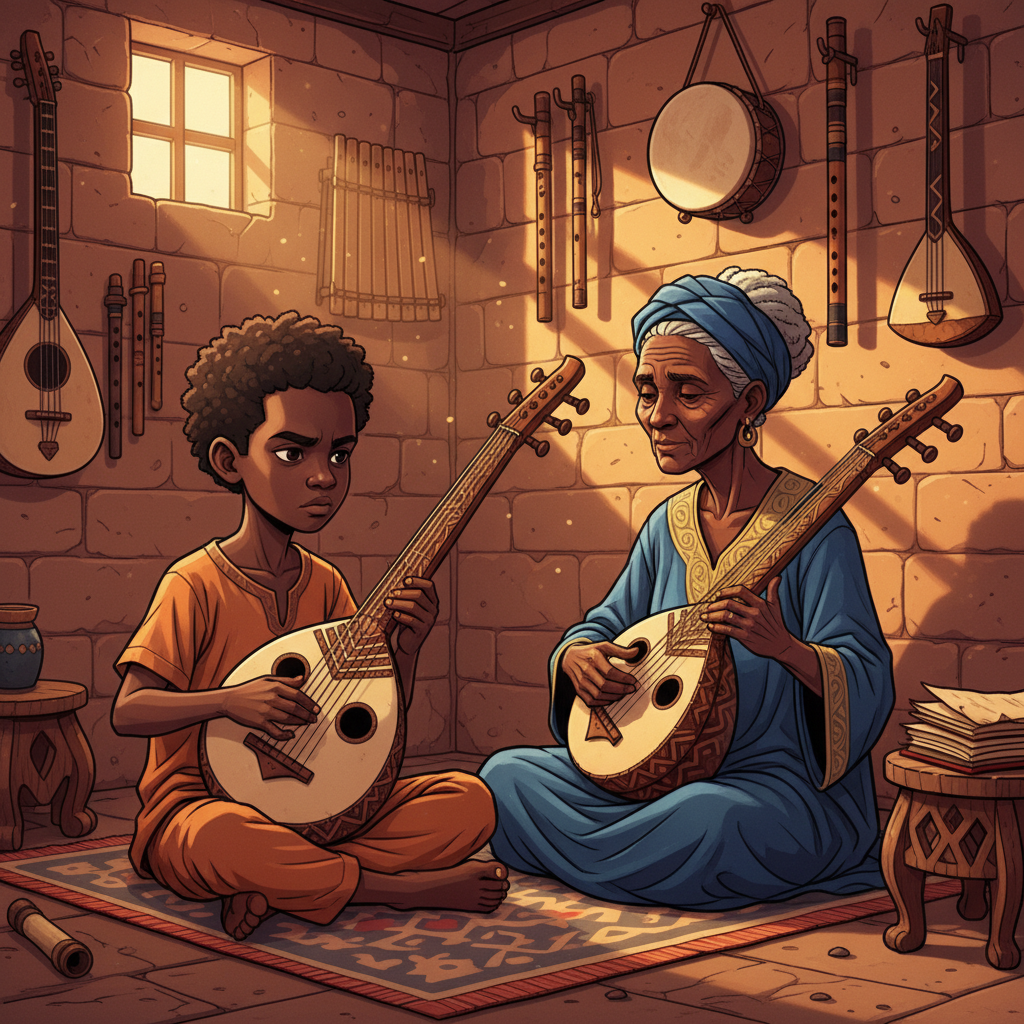
Djeli came from one of the oldest griot families in all the Mali Empire. The Kouyatés had been griots since the time of Sundiata himself — the great lion king who had united the Mandinka people and forged an empire that stretched from the Atlantic coast to the bend of the Niger River. It was a Kouyaté griot, the legendary Balla Fasséké, who had been Sundiata's own trusted companion and keeper of history. Every Kouyaté child grew up knowing that truth was their family's sacred inheritance. But knowing your destiny and living it were two very different things. Djeli was learning this the hard way, one aching finger at a time, in the small practice room behind his grandmother's house where the kora lessons happened every single day without exception, rain or shine, sickness or health, from the moment the morning prayers ended until the afternoon heat drove everyone into the shade.
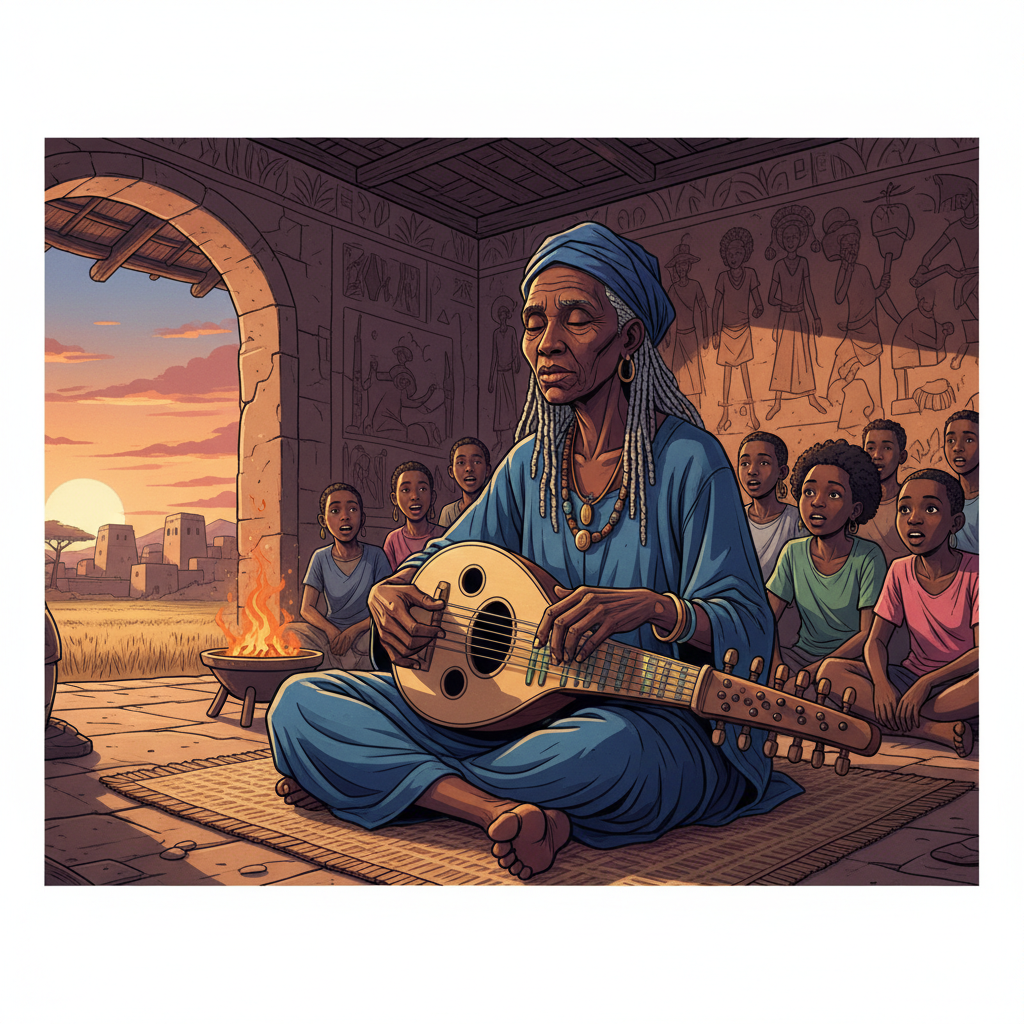
His grandmother, Nana Kumba, was the finest griot in the region and perhaps in all the lands between Timbuktu and Djenné. She was small and wiry, with deep ebony skin that was crosshatched with the fine lines of seven decades of laughter and worry and song. Her 4C hair, now silver-white, she wore in thin twists gathered beneath a cloth of indigo blue. Her fingers, though aged, moved across the twenty-one strings of her kora with a speed and precision that made younger players weep with envy. She had performed for three different mansas in the great court. She had sung the genealogies of families so ancient that their histories stretched back before the founding of Timbuktu itself. She knew ten thousand names, ten thousand stories, and the exact melody that belonged to each one — because in the griot tradition, every great family had its own song, and to sing a family's song incorrectly was an offense as grave as speaking a lie in a court of law.
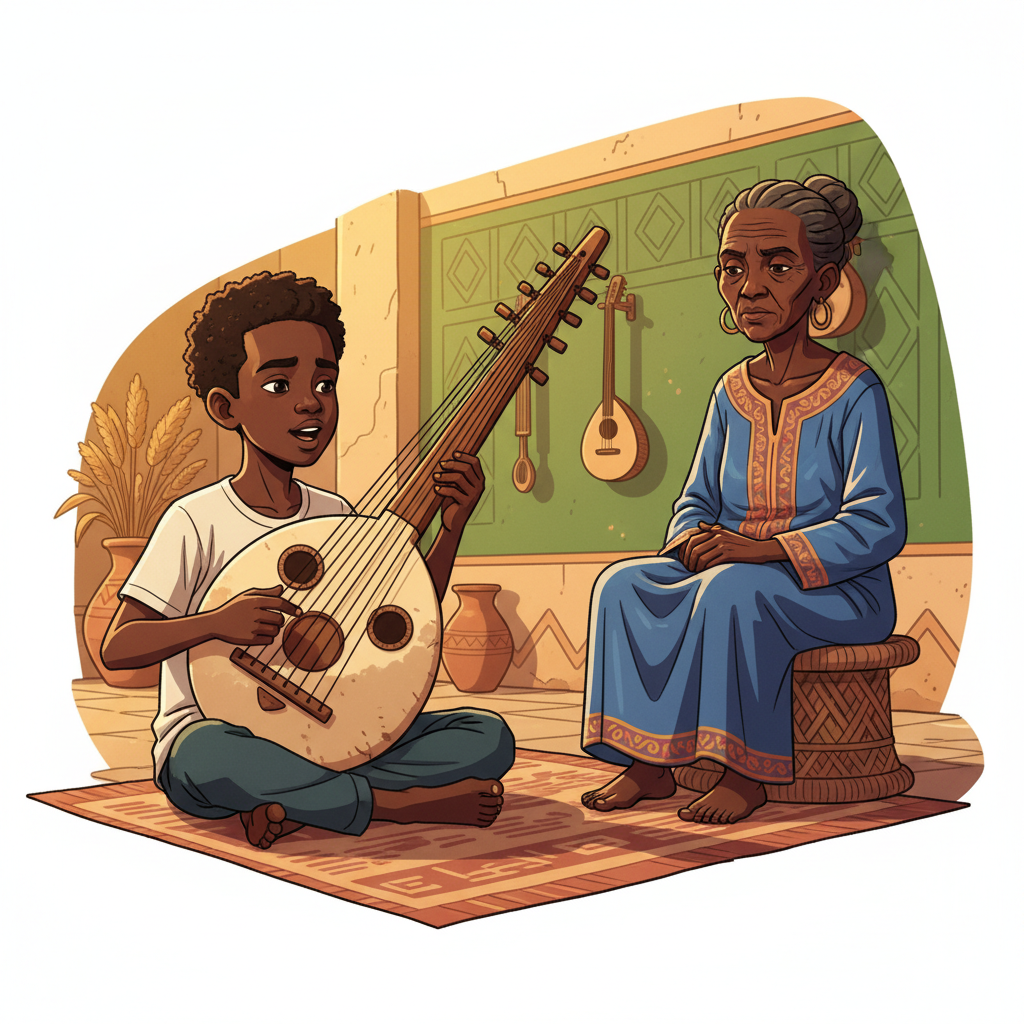
Every morning, Djeli sat cross-legged on a woven mat before Nana Kumba, his kora balanced in his lap. The instrument was nearly as large as he was — a great calabash gourd cut in half and covered with cowhide, from which rose a long wooden neck strung with twenty-one strings of braided fishing line. The strings were arranged in two rows, one for each hand, and producing even a simple melody required both hands to work independently, like two separate minds living in one body. "Again," Nana Kumba would say, her voice dry as the harmattan wind. "From the beginning of the Keita lineage. And this time, do not rush past the third generation as if they were weeds to be stepped over. Every name matters." Djeli would take a breath and begin. His dark brown fingers would find the strings, pulling the bright ringing tones from the kora while his voice rose to carry the words — the sacred genealogy that traced the Keita royal family from its founding ancestor through every mansa, every marriage, every branch and tributary of blood and alliance.
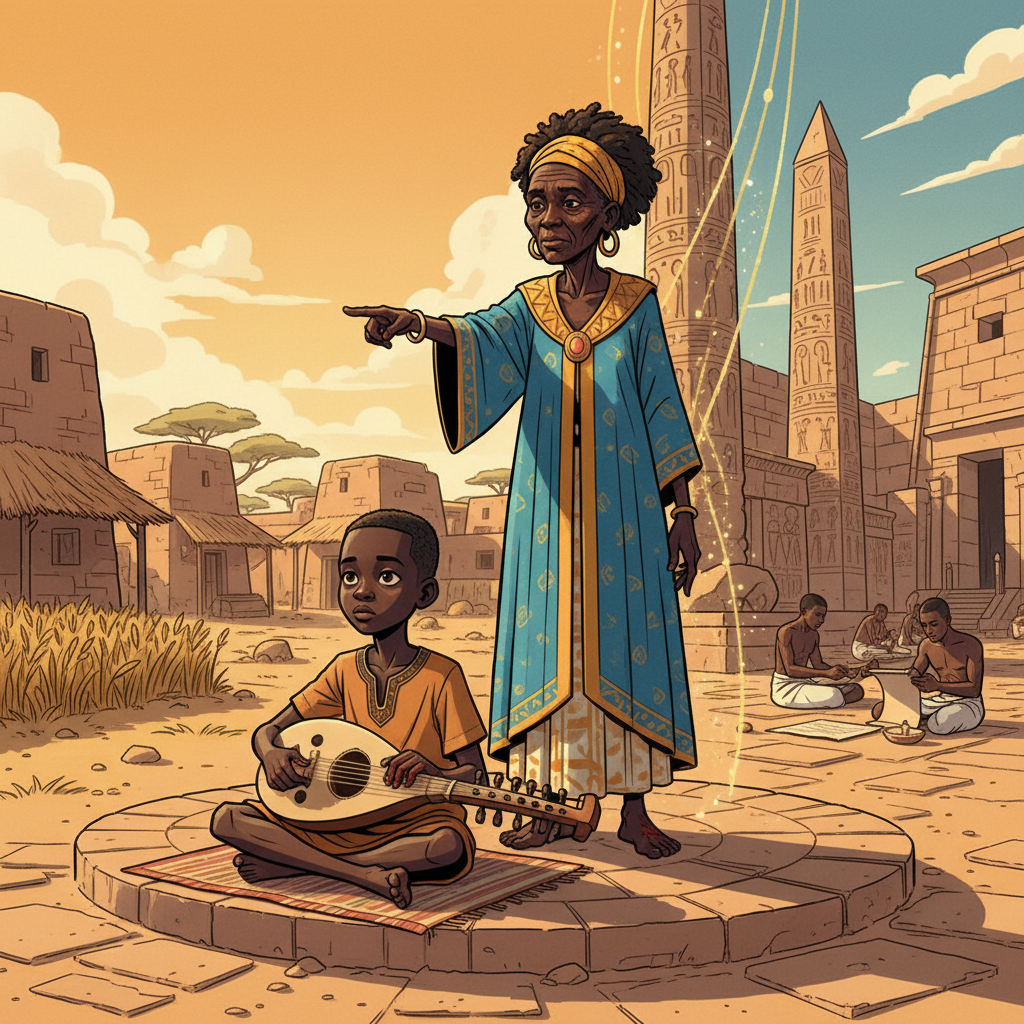
The songs were impossibly long. The genealogy of the Keita family alone took nearly an hour to recite in full, and that was just one family among dozens that a griot was expected to know. There were the Kouyatés, the Diabatés, the Konés, the Traorés — each with their own history stretching back centuries, each with names that had to be spoken in the correct order, with the correct melody, with the correct emphasis on each syllable. A misplaced name was not a small error. It was a betrayal of truth itself. "A griot who forgets a name destroys a family," Nana Kumba told him one morning when he stumbled over the lineage for the fifth time. Her dark eyes were serious, the playfulness gone from her weathered face. "A griot who changes a word changes history. Truth is our sacred duty. Far to the east, the scribes of Kemet preserved truth on papyrus. Here, the griots carry truth in their voices. Both serve the same ancient principle — that truth must survive, or the world falls to chaos." Djeli nodded, his fingers aching where the kora strings had pressed red grooves into his skin. He understood her words in his mind. But understanding something in your mind and understanding it in your heart were, as Nana Kumba often said, as different as knowing the river and swimming in it.
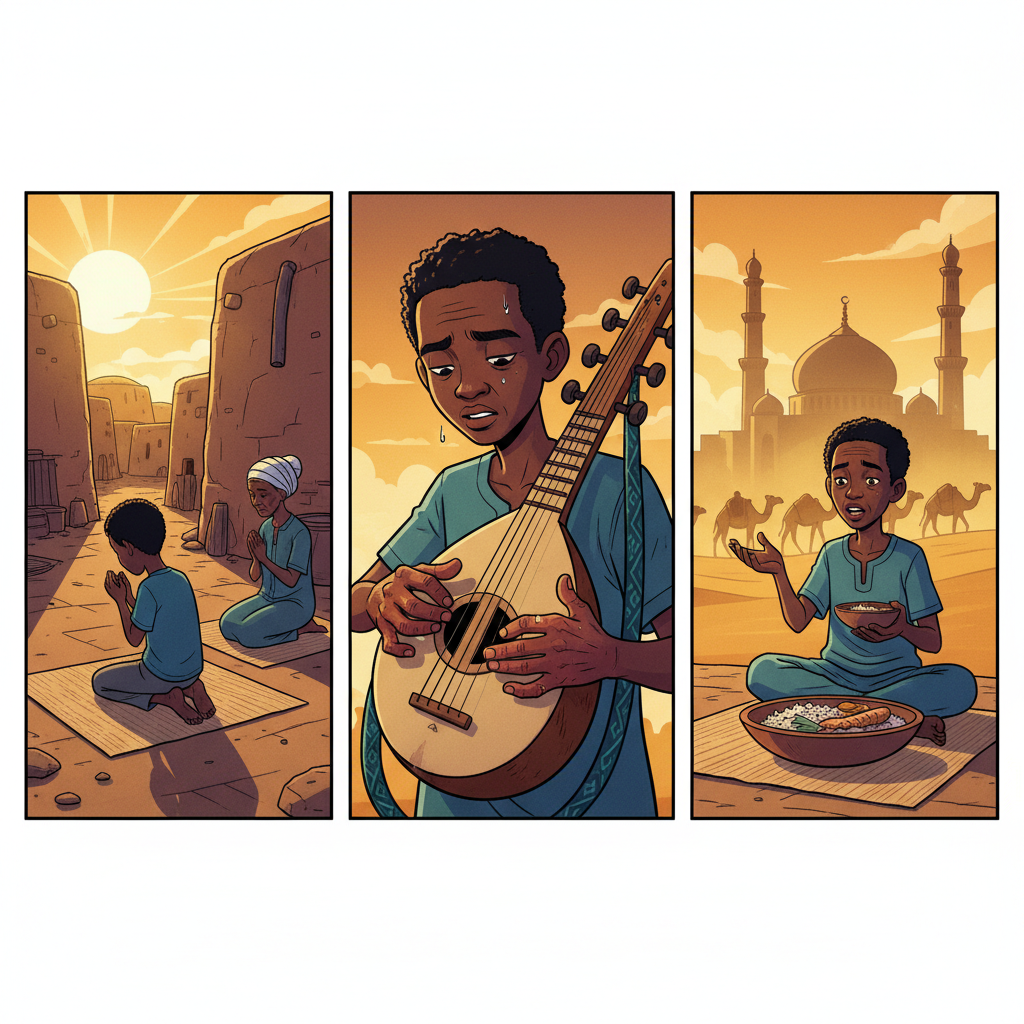
The days blurred together in a rhythm of practice and repetition. Wake before dawn. Prayers. Kora practice until midday. Lunch of rice and fish stew with groundnut sauce. Afternoon lessons in history — not just the genealogies, but the great events: the founding of the Mali Empire, the battle of Kirina where Sundiata defeated the sorcerer-king Sumanguru, the building of the great mosques at Djenné and Timbuktu, the establishment of the university at Sankoré where scholars came from across the world to study. Djeli loved the history lessons. When Nana Kumba described the caravans that crossed the Sahara carrying gold and salt and books, Djeli could almost see the long line of camels stretching across the dunes, could almost feel the hot wind against his face. When she told of Mansa Musa's great pilgrimage, carrying so much gold that he disrupted the economies of every city he passed through, Djeli's mouth hung open with wonder. But the kora — the kora was his enemy and his torment. His fingers blistered and bled. The calluses formed and then tore open again. Some nights he soaked his hands in warm water mixed with leaves from the shea tree, and even then they throbbed with a deep ache that crept up into his wrists.
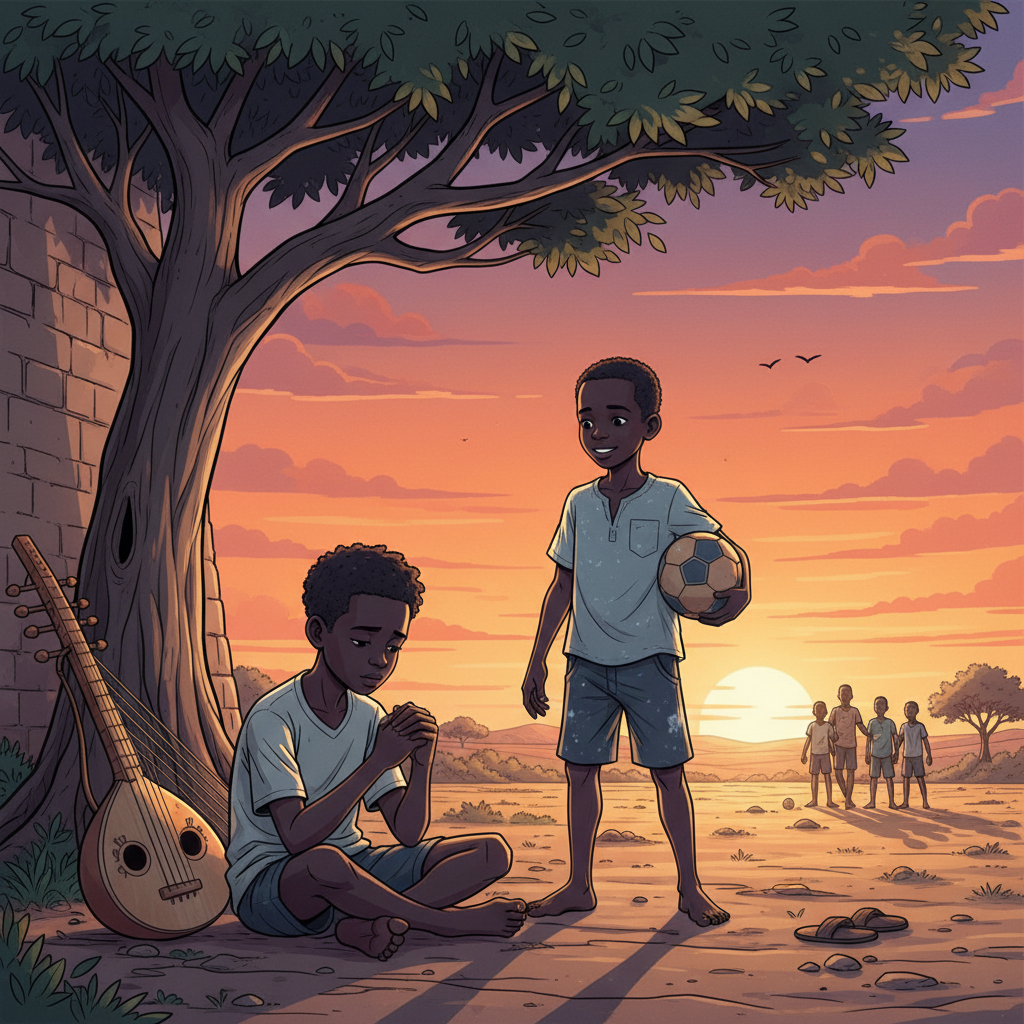
One evening, after a particularly difficult practice session in which Djeli had tangled the melody of the Diabaté lineage so badly that Nana Kumba had simply closed her eyes and sat in silence for a full minute, Djeli walked to the edge of the compound and sat beneath the great neem tree. The sun was setting, painting the sky in bands of orange and deep purple, and the air was cooling to that perfect temperature where the breeze felt like silk against your skin. A boy from the neighborhood, a weaver's son named Moussa, found him there. Moussa was the same age as Djeli, with dark skin that was always dusted with cotton fibers from his father's loom. "Come play football with us," Moussa said, bouncing a ball made of rags tied together. "You are always practicing. Your grandmother works you like a donkey at a well." "She works me like a griot," Djeli corrected quietly, but there was no fire in his voice. He looked at his blistered fingers, then at the rag ball, then at the group of boys already marking goals with sandals in the dusty street. Something ached inside him that had nothing to do with his hands. He wanted to run and shout and be an ordinary boy, just for one evening. But Nana Kumba's voice echoed in his mind: "The kora does not wait. The names do not wait. Every day you do not practice, a piece of history slips further from your grasp."
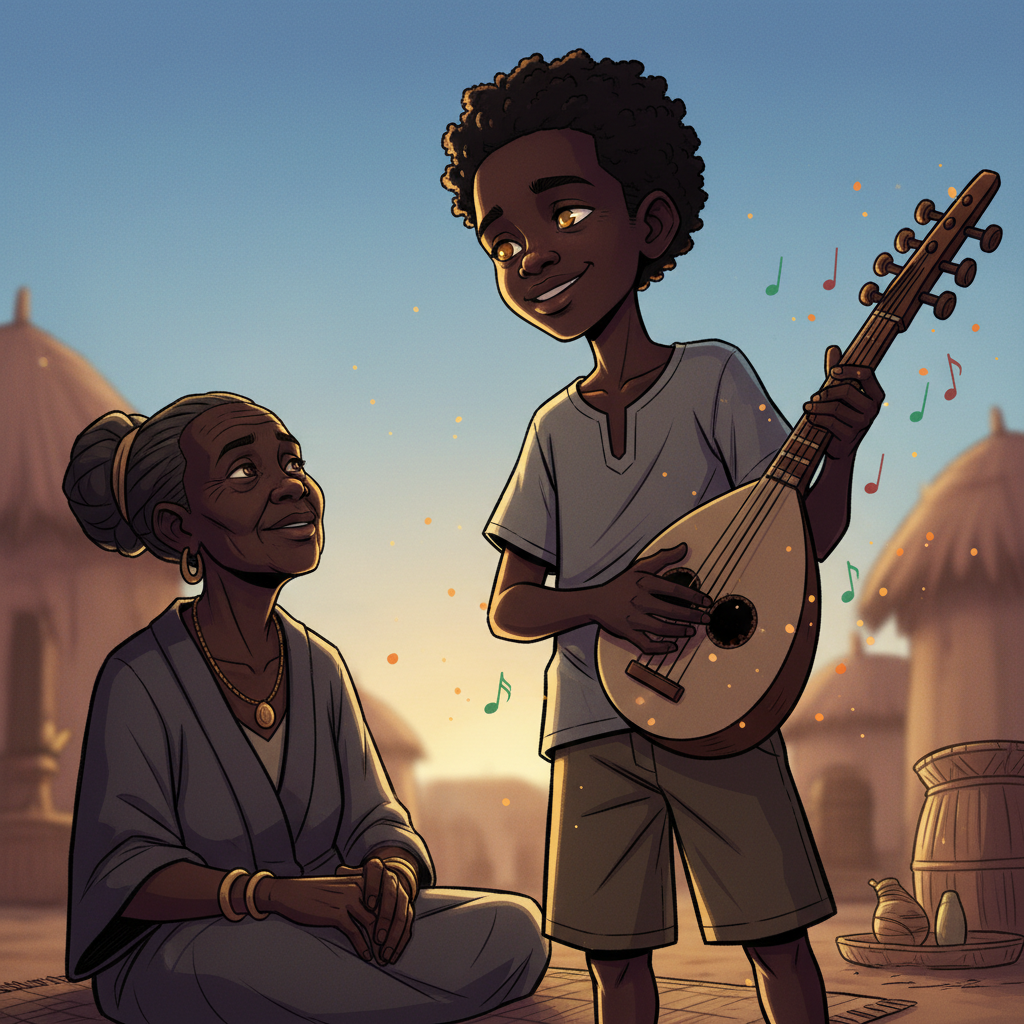
Djeli did not go play football that evening. Instead, he returned to the practice room and picked up his kora. In the lamplight, the calabash gourd glowed warm and golden, and the strings hummed faintly even before he touched them, as if the instrument were breathing. He played until the moon rose high and white above the compound, until his mother called him to eat, until the village fell silent around him. And somewhere in the deep hours of that night, something shifted. His fingers found a path through the strings that they had been searching for all along — not forcing the notes, but letting them come, the way water finds its way downhill without being told. The Keita genealogy flowed from his mouth and his hands together, the names riding the melody like birds riding the wind. For the first time, Djeli did not feel like he was fighting the kora. He felt like the kora was singing with him. He did not tell Nana Kumba about this moment. Some things were too fragile to speak aloud, like the first green shoot pushing through dry soil. He held it inside him like a secret flame and returned to practice the next morning with something new in his eyes that his grandmother noticed but did not name.
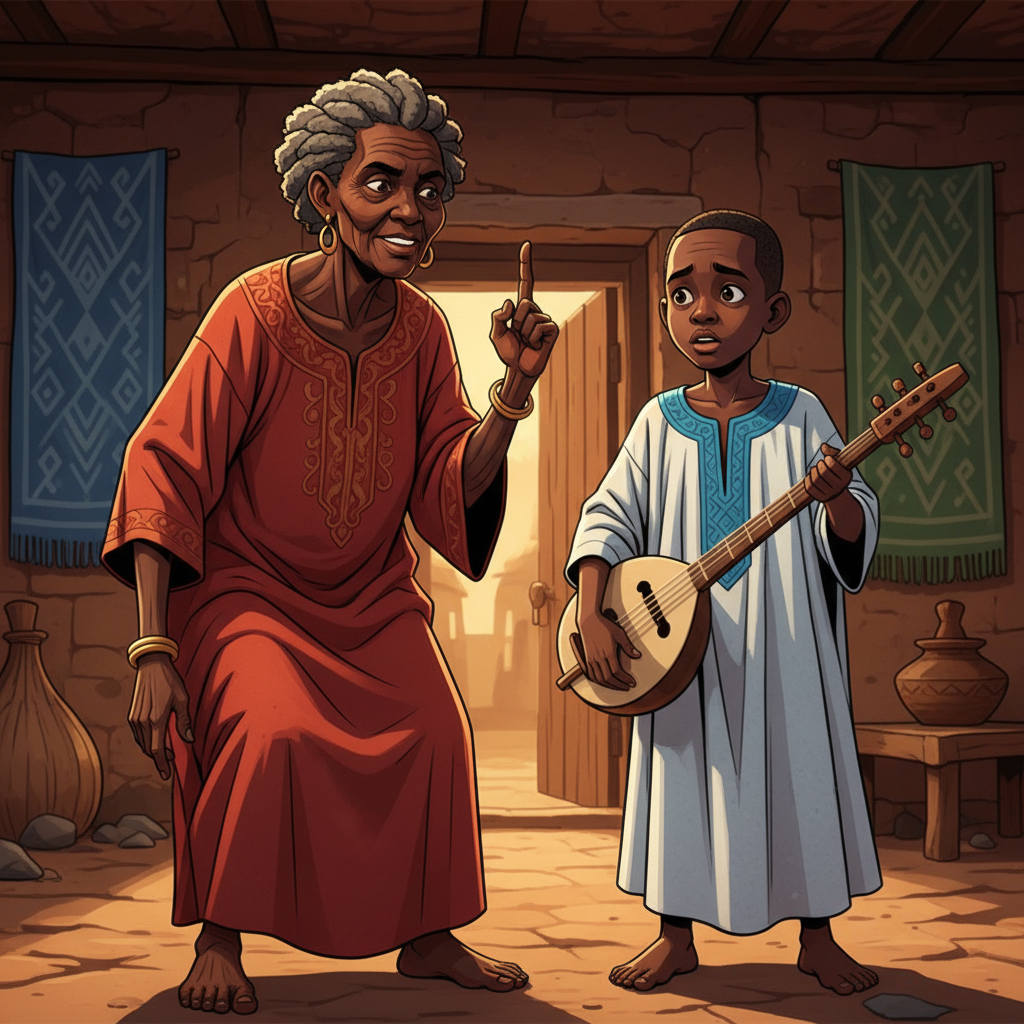
Two weeks later, the village headman's family announced a naming ceremony for their newborn son. This was one of the most important events in Mandinka life — the moment when a child received the name that would follow them through the world, connecting them to their ancestors and declaring their place in the great web of family and history. And every naming ceremony required a griot. Nana Kumba came to Djeli that morning with a look on her face that was equal parts pride and sternness. "Today you will sing the genealogy of the headman's family," she said. "Not me. You." Djeli's stomach dropped as if the floor had vanished beneath him. He opened his mouth to protest, to say he was not ready, to remind her of all the times he had stumbled and fumbled and lost his way in the tangle of names. But Nana Kumba held up one wrinkled finger. "A bird does not learn to fly by sitting in the nest forever," she said. "Today you fly, or you learn how far the ground is. Either way, you will be closer to being a griot than you were yesterday." Djeli dressed in his finest boubou — a flowing robe of white cotton with blue embroidery at the neck and sleeves — and tucked his kora under his arm. His hands were trembling. His heart was a drum beating wildly out of rhythm.
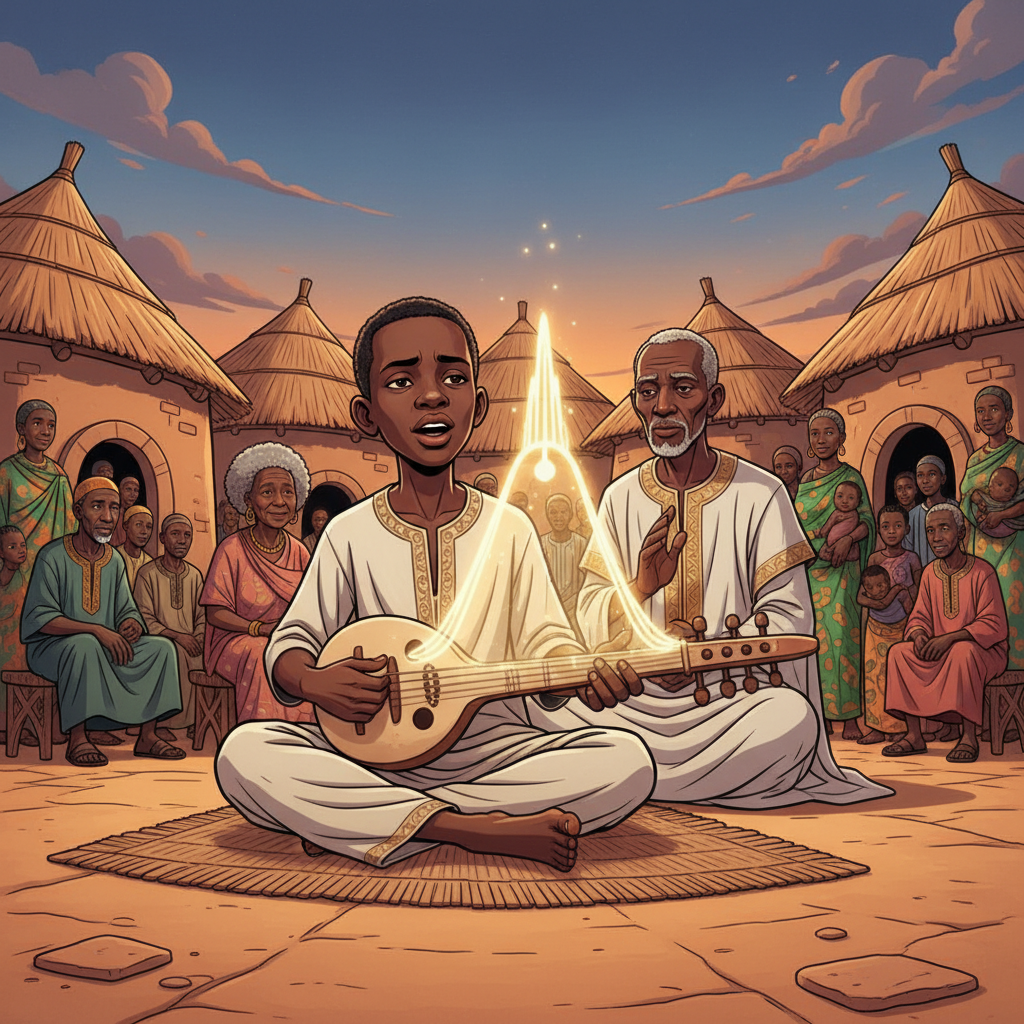
The naming ceremony took place in the headman's compound, which was the largest in the village — a wide courtyard surrounded by round houses with thatched roofs that pointed at the sky like fingers. The compound was packed with people. Elders sat on carved wooden stools, their dark faces grave with ceremony. Women in brilliant wraps of green and gold and crimson held babies on their hips and whispered to one another. Children peered around doorways, their bright eyes wide with curiosity. Djeli sat on a mat at the center of the courtyard with his kora balanced between his knees. Nana Kumba sat behind him, close enough that he could feel the warmth of her presence at his back, but far enough that everyone could see — this was his performance, his moment, his test. The headman's father, a tall elder with silver hair and skin deeply lined by years under the sun, nodded at Djeli. It was time. Djeli's fingers found the strings. He pulled the first note from the kora, and it rang out across the courtyard like a bell made of light. His voice rose to meet it, strong and clear at first: "I sing the lineage of the house of Fané, whose roots reach deep into the soil of this land..."
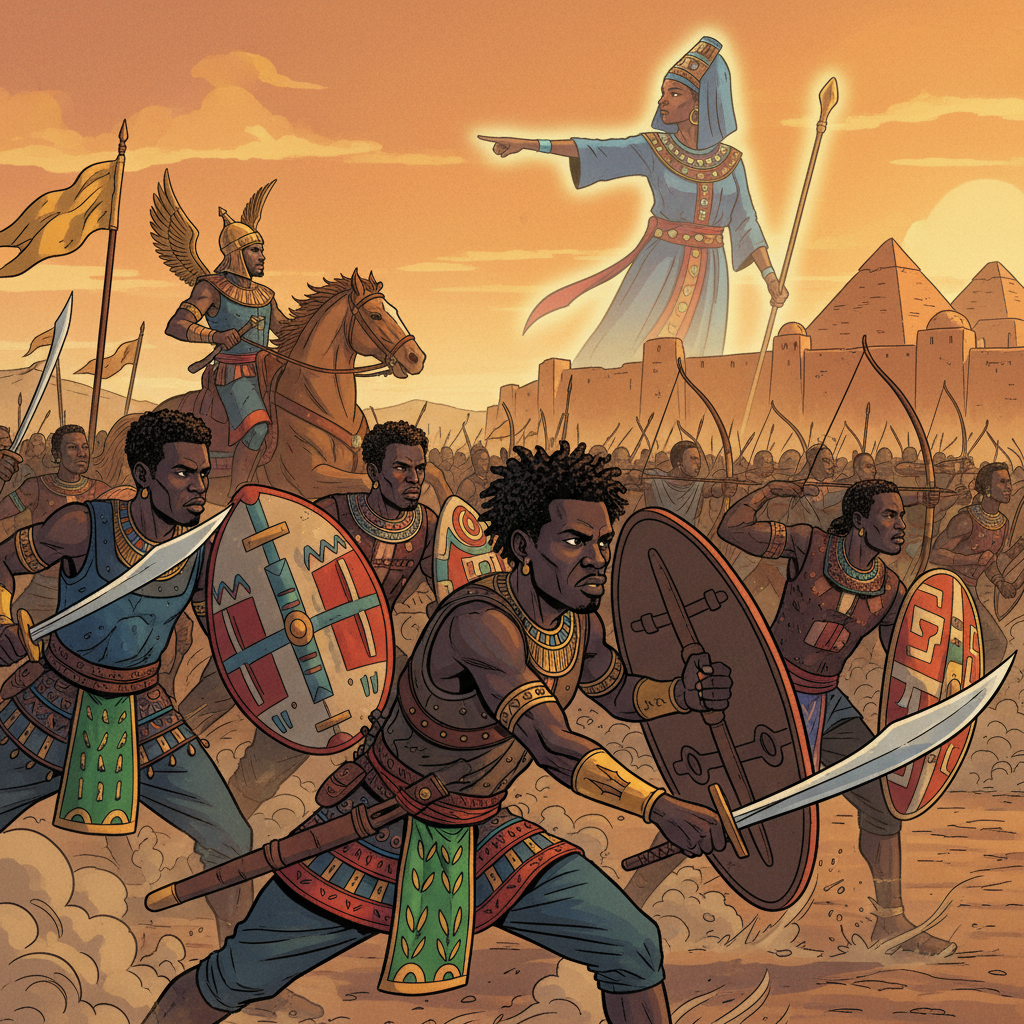
The names came flowing — grandfather, great-grandfather, the warrior ancestor who had fought beside Sundiata at Kirina, the wise woman who had advised the first mansa of their region. Djeli's voice and fingers moved together, carrying the history forward like a river carrying precious cargo. And then, seven generations deep, his mind went blank. The name was gone. Simply gone, as if someone had blown out a candle in a dark room. Djeli's fingers kept playing, but his voice faltered, cracked, and stopped. The silence that followed was enormous. Every eye in the compound was on him. He could feel their weight, heavy as stones piled on his chest. His throat closed tight. Sweat beaded on his forehead and slid down his dark skin. He heard a murmur ripple through the crowd — confusion, concern, the beginning of embarrassment on his behalf. Djeli's eyes burned. He wanted to set down the kora and run. He wanted the earth to open and swallow him whole. He could feel the isfet — the chaos, the disorder — creeping in, ready to claim this moment and turn it to shame.
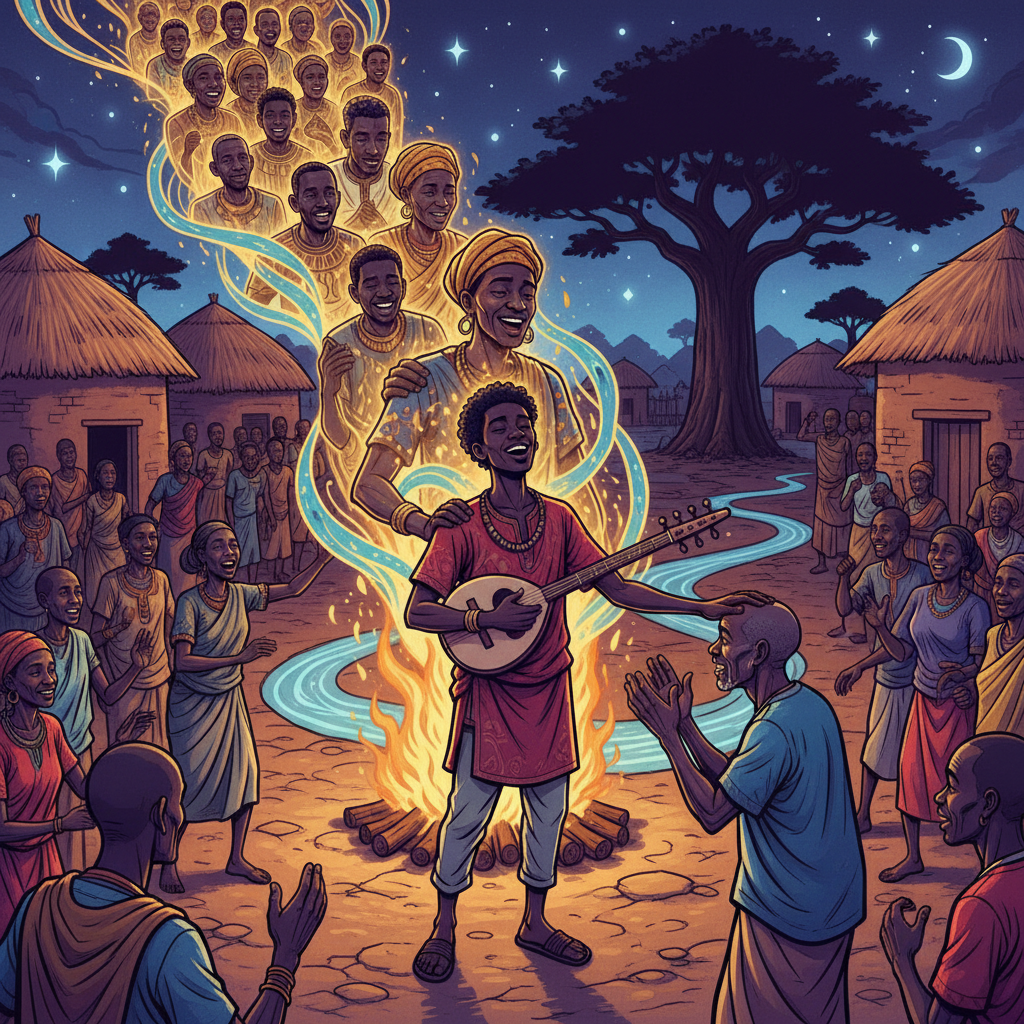
And then he felt it — a warm breath against the back of his neck, and a voice softer than a whisper, meant only for him. Nana Kumba. She spoke a single name: "Mamadou Fané." The missing name. The bridge between generations that his memory had dropped. Djeli's fingers were still moving on the strings, the melody cycling, waiting, holding the space open like a door that had not yet closed. He seized the name. His voice rose again from the silence like a bird taking wing from still water. "Mamadou Fané, who planted the first baobab at the crossing of two rivers..." And the genealogy poured from him again, stronger now, fueled by something deeper than memory — fueled by the understanding that he was not carrying this truth alone. That Nana Kumba stood behind him, and behind her stood generations of Kouyaté griots, and behind them stood the ancient principle that truth must be preserved and spoken and passed forward, or the world would lose its shape. When the last name was spoken and the last note faded from the kora strings, the compound erupted. The headman's father rose to his feet, tears glistening on his dark cheeks. "You have spoken our family true," the old man said, his voice shaking with emotion. "Every name in its place. Every ancestor honored." He pressed his weathered hand to Djeli's forehead — a blessing, a recognition, a passing of trust from one generation to the next. Nana Kumba placed her hand on Djeli's shoulder from behind. He could not see her face, but he could feel her pride like warmth radiating from a fire. Later that night, walking home beneath a sky blazing with stars, she said only five words, and they were enough: "You are becoming a griot." Djeli held his kora close to his chest and felt the truth of her words humming in the strings, humming in his bones, humming in the ancient and unbroken chain of memory that he was now, at last, a living part of.