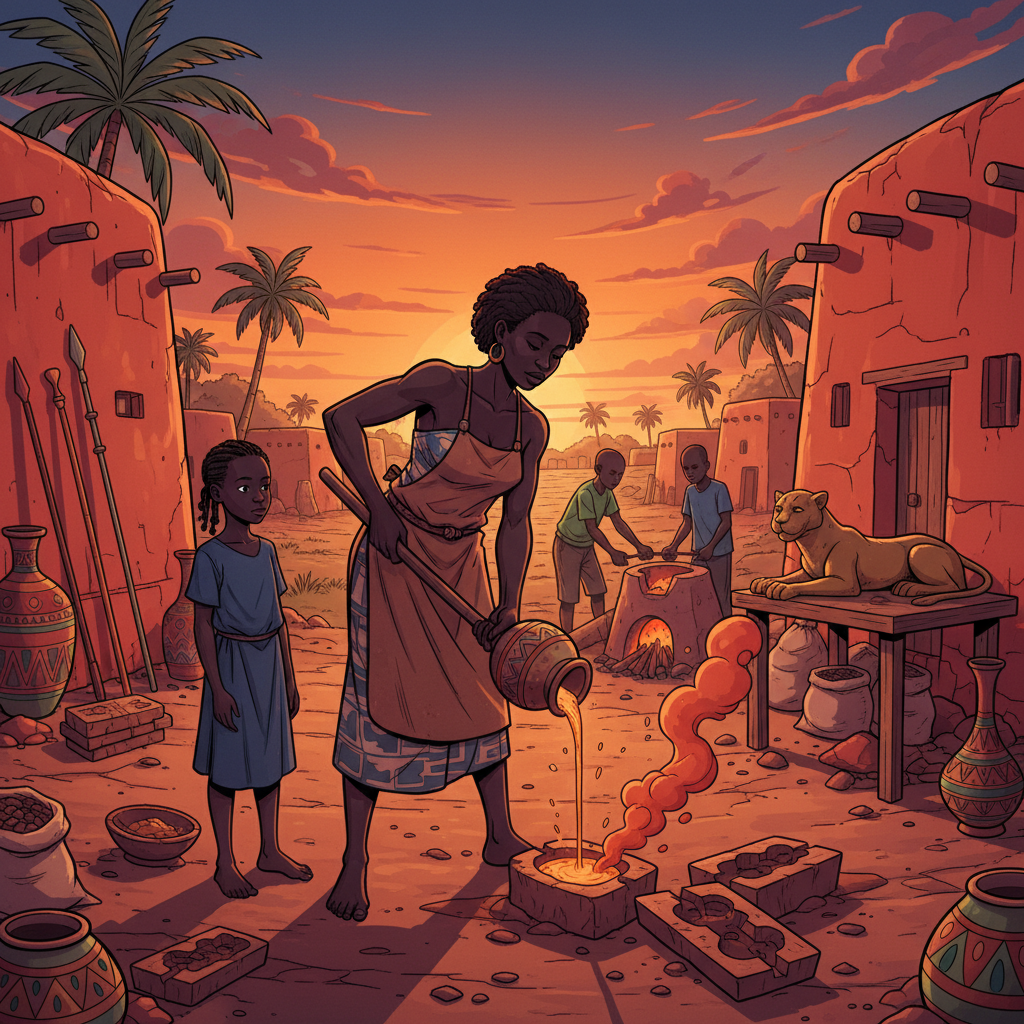
Adaeze was eleven years old, the youngest of three children, and the only girl in a family of bronze-casters. The workshop sat at the edge of the Igbo-Ukwu village, in the soft red light that the kaolin-clay walls threw at sunset. Her father was Ezeani, the master bronze-caster, whose name was known in three nearby villages and whose work — ceremonial vessels, ritual staffs, a great bronze leopard for the eze's palace at the next town — was talked about in the markets as far north as the Niger River. Her mother was Onukwube, the workshop's head ladle-pourer — the woman who actually tipped the heavy clay crucible and poured the molten bronze into the prepared mold. Adaeze had grown up with the smell of charcoal-smoke and beeswax and red kaolin dust, and she could not imagine a life that did not contain those smells.
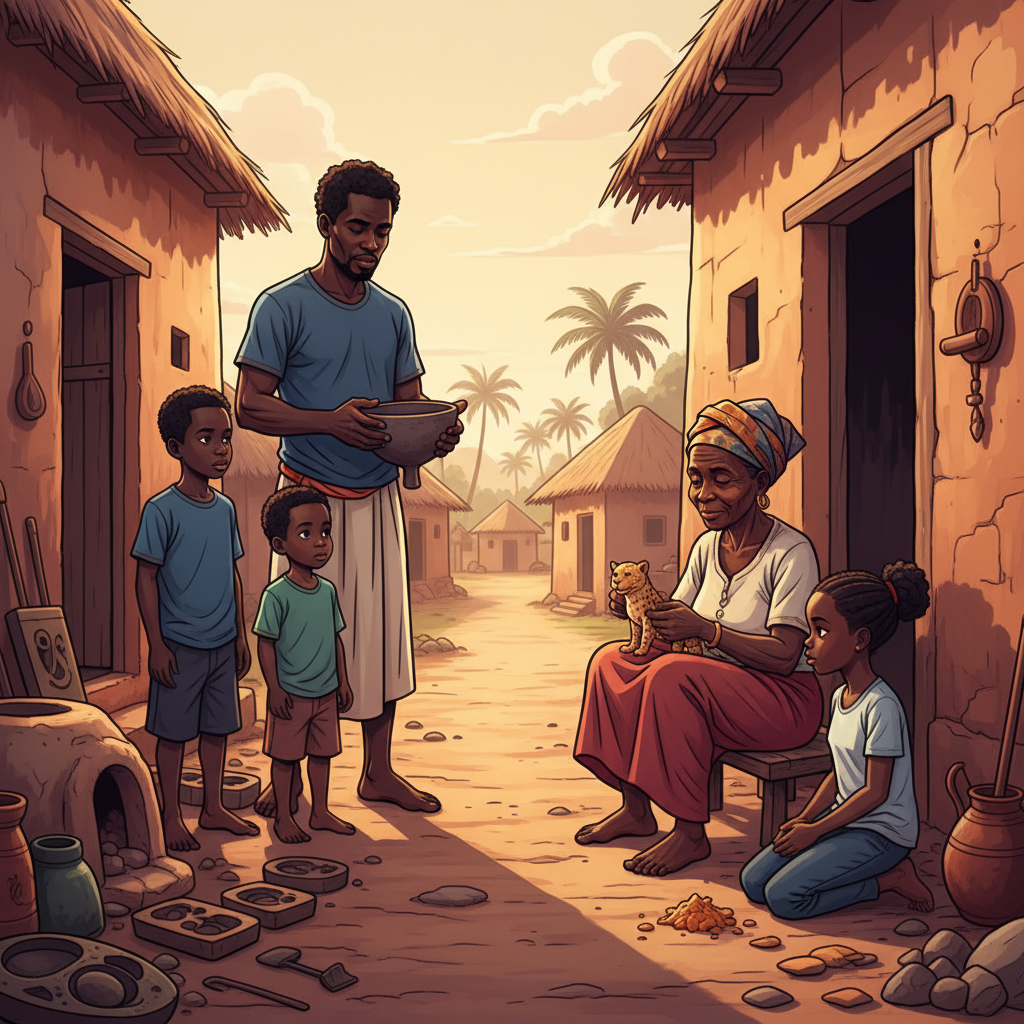
Adaeze's older brother Chike was sixteen. He had been apprenticing in the workshop since he was twelve. Her middle brother Ekene was thirteen, and he had been apprenticing for one year. Adaeze had no formal apprenticeship. She was a girl, and the workshop tradition said that the master would train his sons, and the wax-shop next door — where the soft wax models were carved before being coated in clay and melted out — would train the women who worked in wax. The wax-shop was run by Mama Adamma, an elder cousin of Adaeze's father, whose hands could shape a wax leopard so finely that the individual whiskers were visible. Adaeze had been hanging around the wax-shop since she was four. Mama Adamma had not formally apprenticed her either. But Mama Adamma had quietly handed Adaeze leftover wax scraps every afternoon for seven years, and Adaeze had taken them home and practiced.
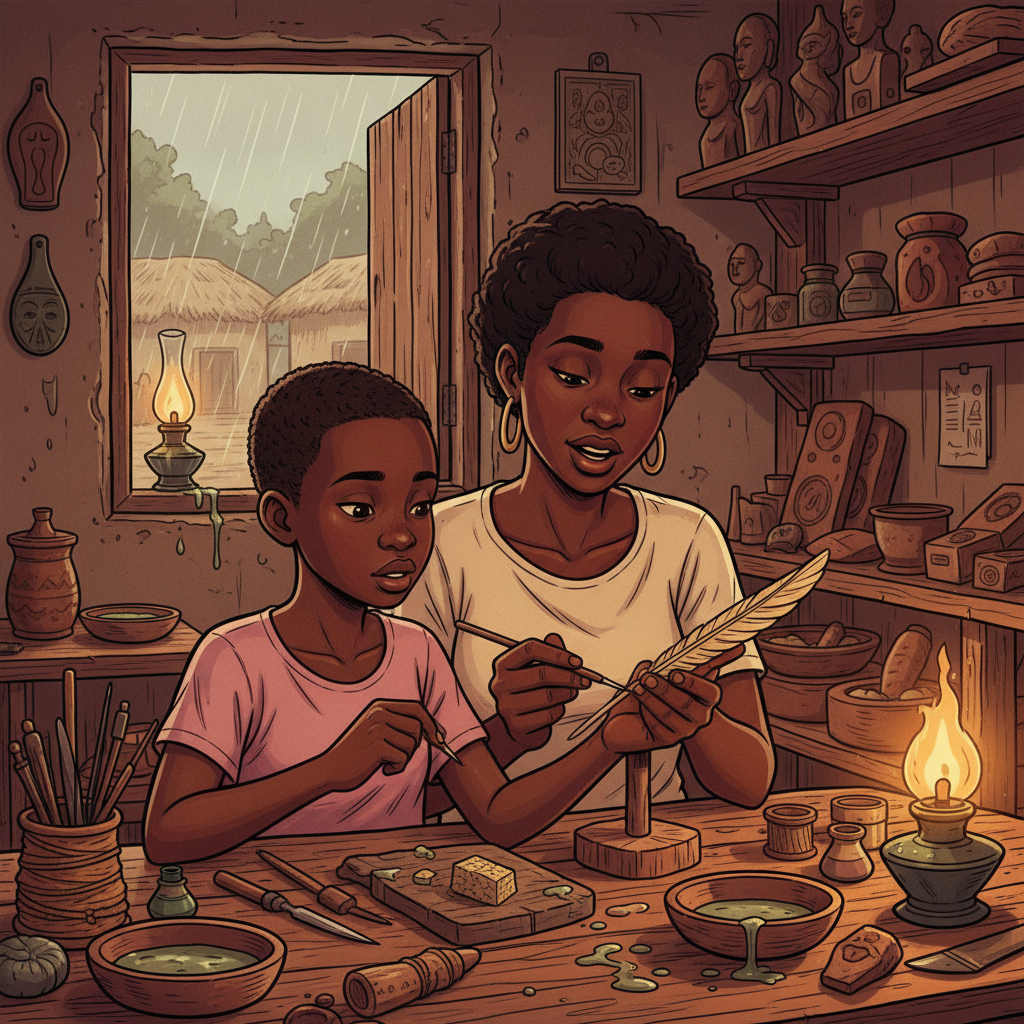
In the wax-shop, the senior apprentice was a young woman named Ngozi, who was sixteen and had been working with Mama Adamma since she was twelve. Ngozi had taught Adaeze, over the years, how to score the wax surface so that fine details — like the texture of a feather, or the rings on a fingernail — would carry through the casting. Ngozi was the one who had said to Adaeze, one rainy afternoon when they were both sitting in the wax-shop's back room, "Wax forgets. Bronze remembers. Whatever you press into wax, the bronze keeps. That is why we are careful. The bronze does not lie about what your hands did." Adaeze had thought about this often. The bronze did not lie. The wax was the place where the truth was decided.
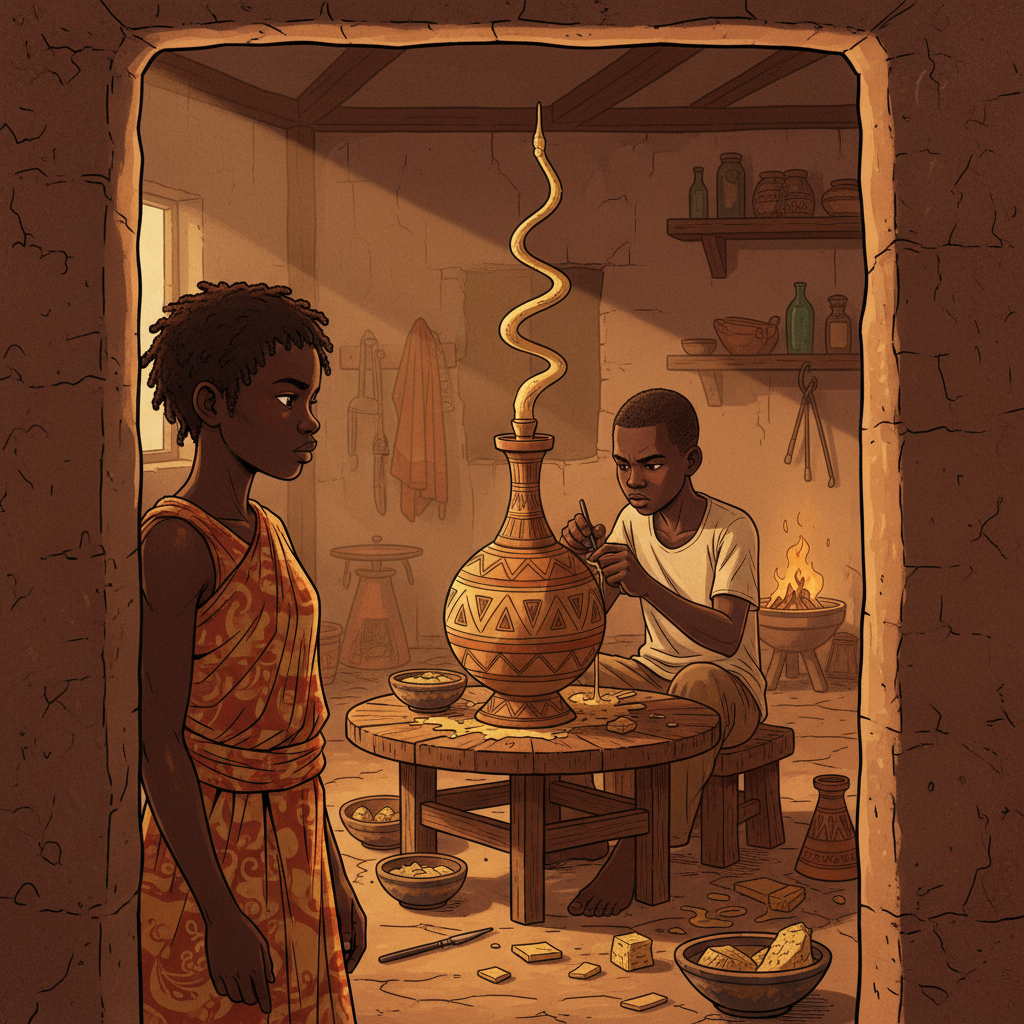
The big commission of that season was a ceremonial vessel — a large lidded bowl with a tall spiral handle — for an ancestor-rite that the village would hold at the new yam festival. The vessel would be filled with palm wine and offered at the ancestor-shrine. The casting had to be perfect. There would be no second chance: a flawed vessel would be a disrespect to the ancestors, and the whole village would feel the shame. Ezeani had given the wax model to Chike, his oldest son. Chike had been at the wax-table for three weeks, working on the spiral handle. Adaeze had watched him from the doorway. She did not say anything. But she had noticed, in the first week, that Chike was rushing. The spiral was thin in three places where it should be thicker. The handle would crack when the wax was burned out in the casting fire.
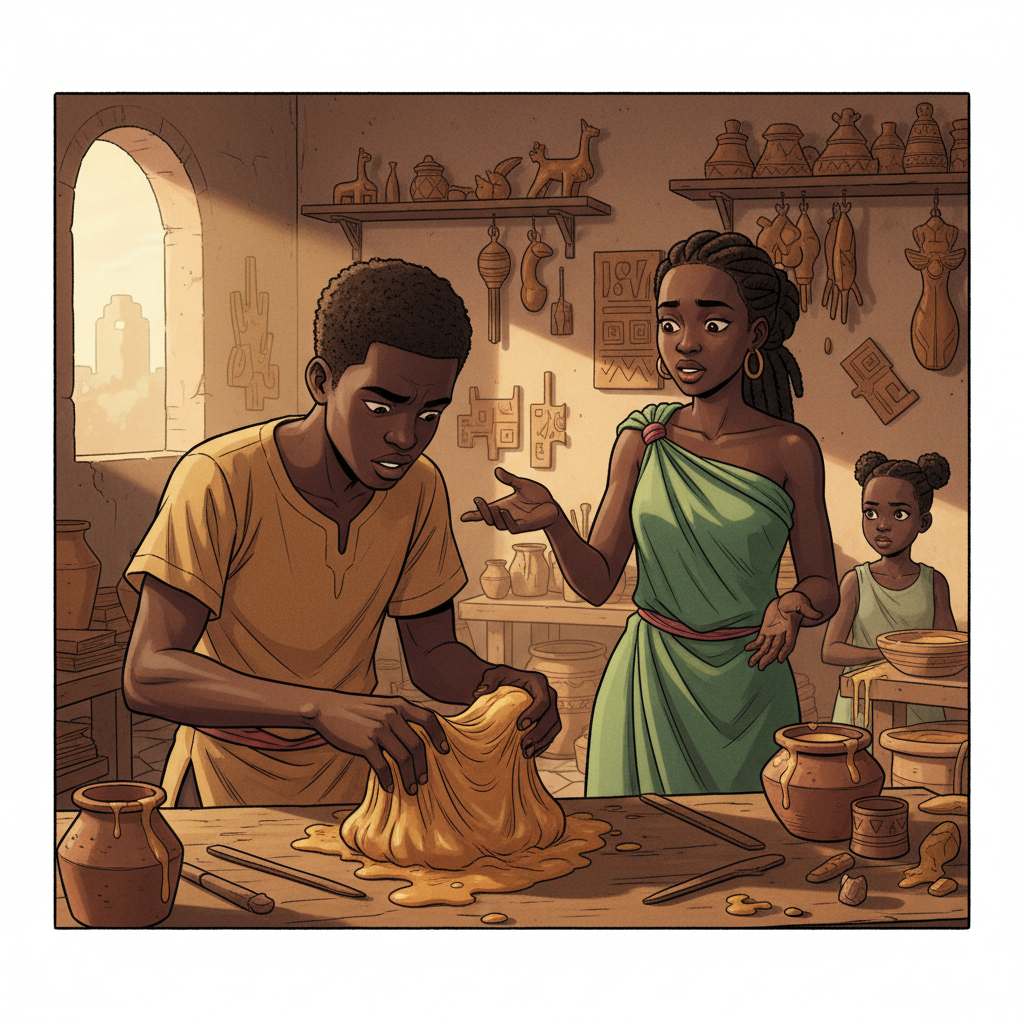
Chike was not lazy. He was not careless. He was impatient in the way that an older brother is impatient when he wants the casting to be his — the one that the village would remember, the one that his father would praise. He was rushing because he wanted to be done. He had also been making the wax a little too soft, which made it easier to shape quickly but meant the details he scored into it were shallower than they should be. Ngozi had mentioned this to him once, in passing. Chike had said, "I know what I am doing." Ngozi had nodded and let it go. She was a wax-shop apprentice. Chike was the master's eldest son. There were lines that an apprentice did not cross with the master's son, and Ngozi was wise enough not to cross them. But she had told Adaeze about it later, quietly, in the back of the wax-shop. Adaeze remembered.
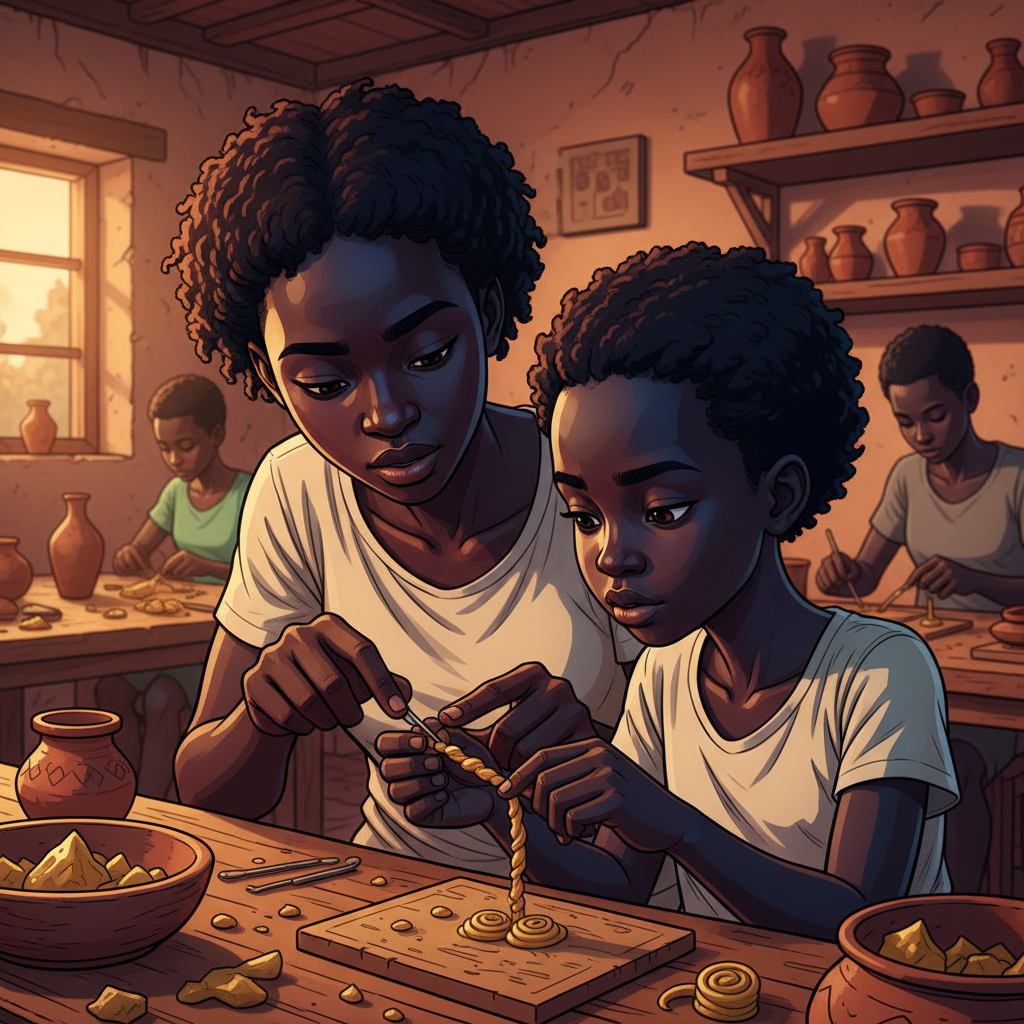
Over the next two weeks, Adaeze worked in secret on her own version of the spiral handle. She used the wax scraps Mama Adamma had given her — leftover bits from other commissions, mixed with a little extra beeswax that her mother kept for sealing the cooking-pots. She shaped it the way Ngozi had taught her: slowly, with the wax kept exactly the right temperature, the details scored deep. She added three small reinforcement-spirals at the base of the handle — places where extra wax made the handle thicker exactly at the stress-points that Chike had left thin. She showed the spirals to Ngozi after the work was done. Ngozi looked at the model for a long time. She turned it over in her hands. She set it down. She said only one sentence: "This will not crack."
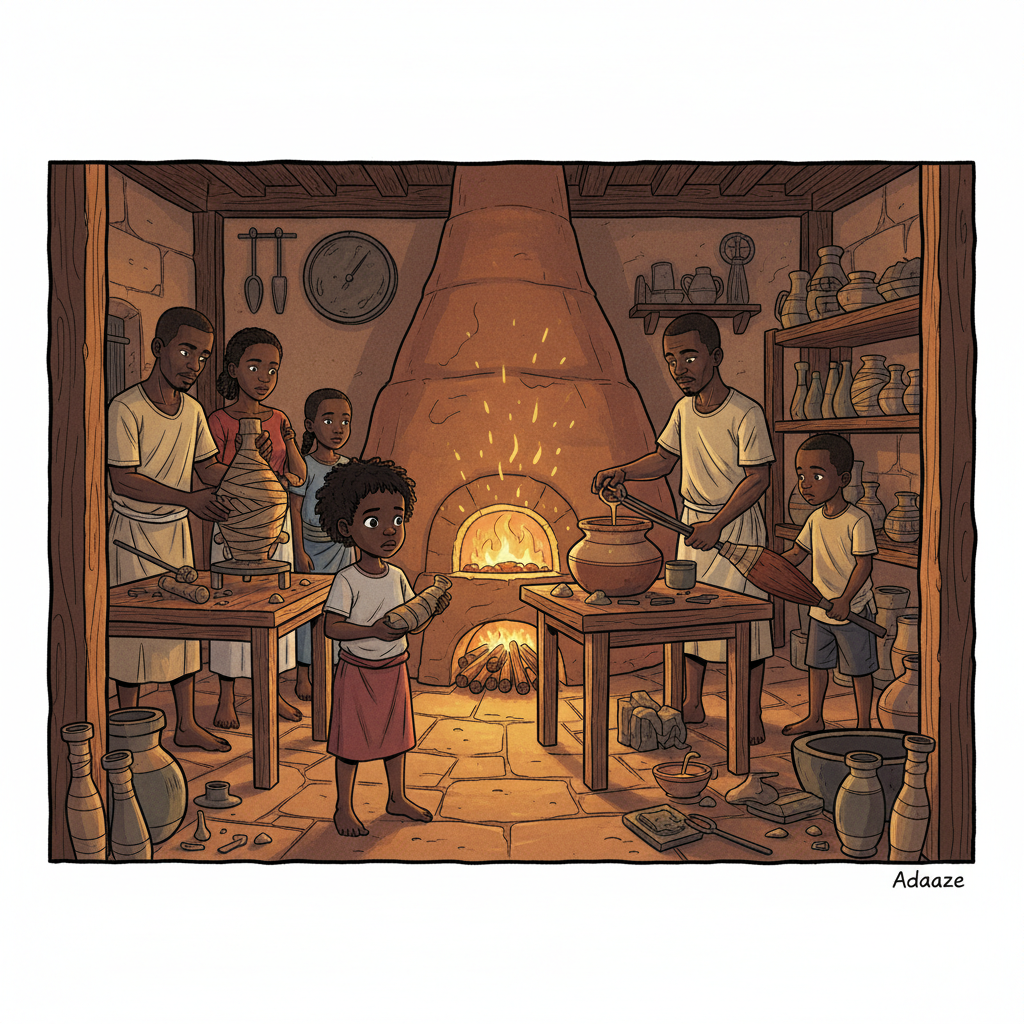
On the morning the casting was scheduled, Adaeze brought her own small clay-wrapped model into the main workshop. She had pressed the clay around her wax handle the day before, the way the workshop did for every wax-to-bronze casting. Her father was at the central work-table preparing the casting-furnace. Chike was at the secondary table with his own clay-wrapped model — the bigger one, the one for the ceremonial vessel's actual handle. Their middle brother Ekene was stoking the furnace. Onukwube was checking the crucible. Mama Adamma had come over from the wax-shop with Ngozi behind her to witness the casting. Adaeze stood at the wax-shop doorway holding her model. She did not walk to her father. She did not know how to begin. Her hands were full of clay-wrapped wax that her father had not asked her to bring.
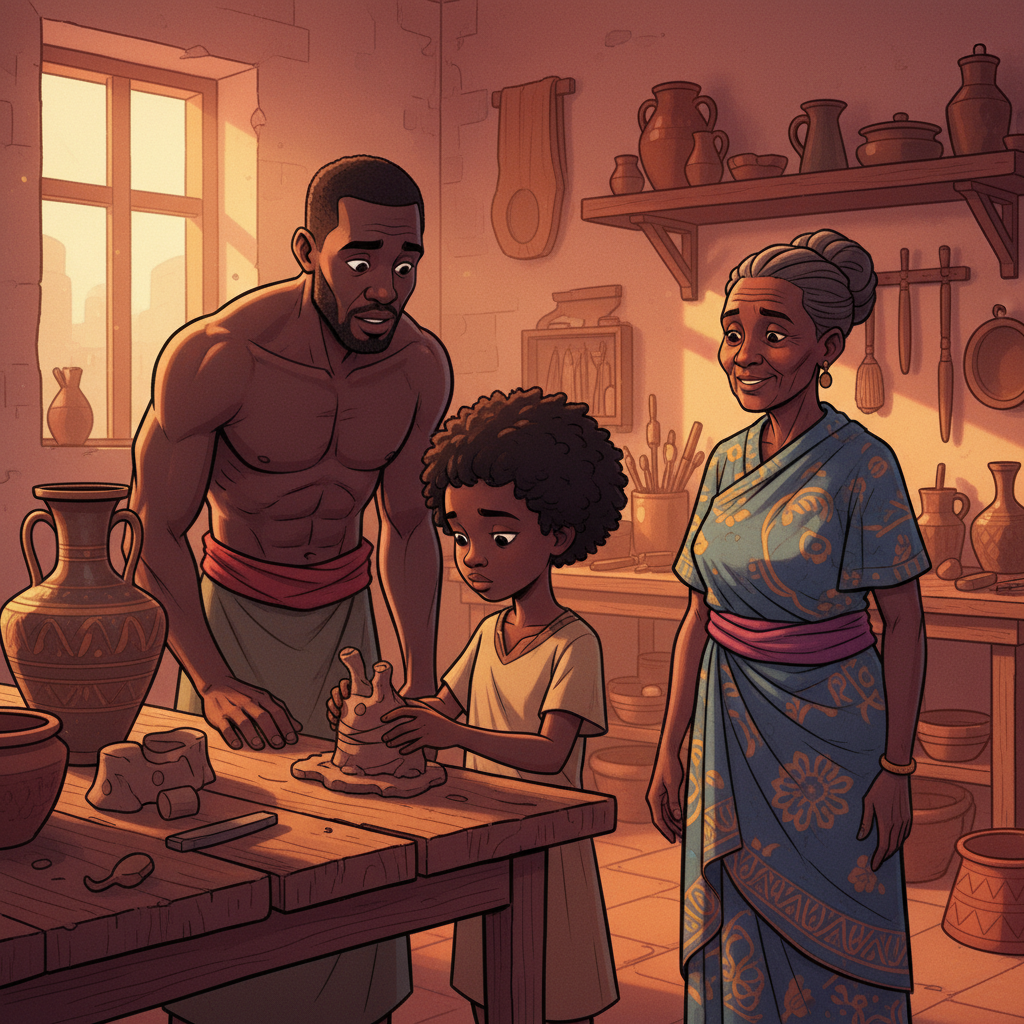
Mama Adamma saw her. The old woman crossed the workshop floor without speaking and came to stand beside her. "Show your father," Mama Adamma said quietly. "I have watched you for seven years. Show him now." Adaeze did not move. Mama Adamma did not push her. She simply waited. After a long moment Adaeze walked across the workshop and stopped at her father's table. She set down her small clay-wrapped model beside his work. Her father looked at it. He did not understand at first. He looked up at her. He looked at Mama Adamma. He looked at the model again. "What is this?" he said. Adaeze's voice came out very small. "It is the spiral handle for the vessel. With three reinforcements at the base. I made it. The wax inside is mine. Mama Adamma's scraps."
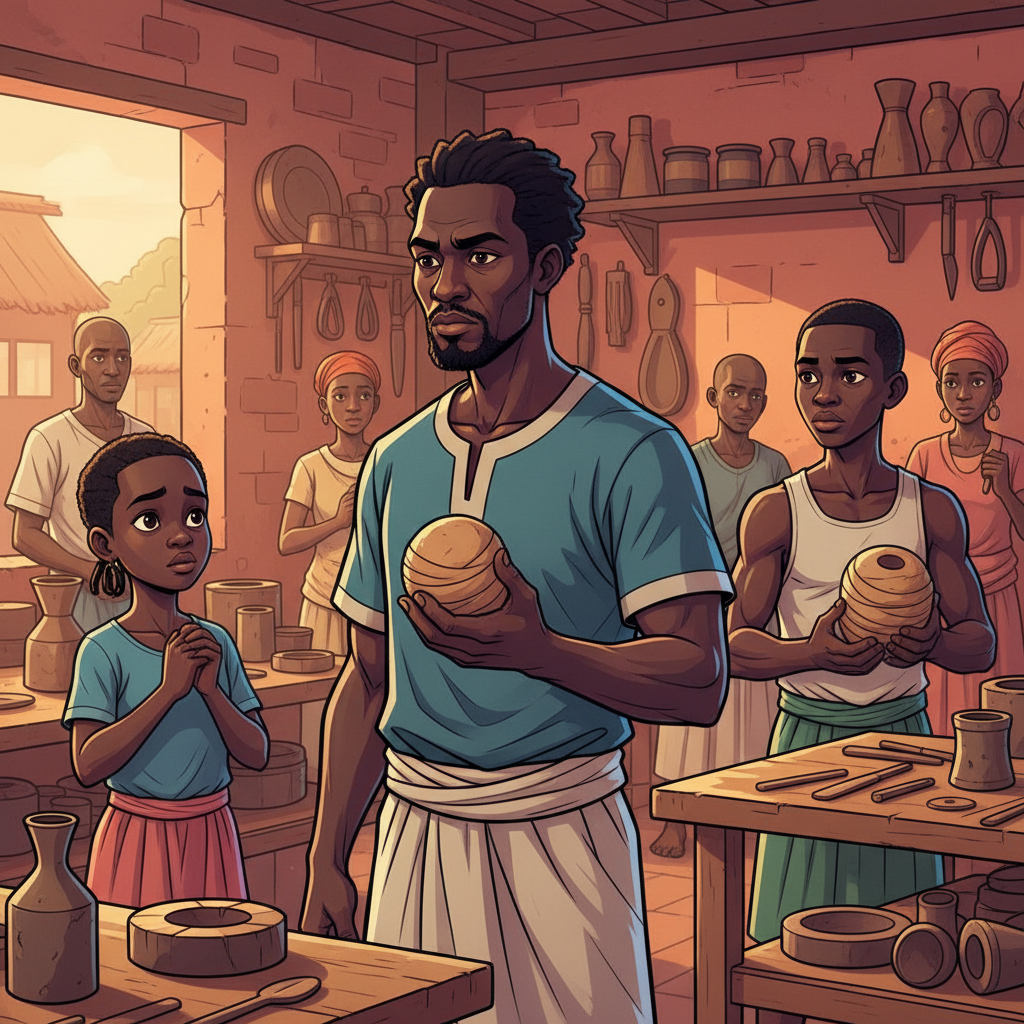
Ezeani picked up the small clay-wrapped model. He weighed it in his hand. He turned it over. He could not see the wax inside the clay — the clay would have to be broken away to see — but he could feel the weight of the design through the clay shell. He looked at his daughter. He looked at his son Chike, who was standing at his own work-table holding his own clay-wrapped model. Chike's model was bigger. Chike's model was the official commission. Chike's model was the one that the village was paying for. But Adaeze's model — Ezeani could feel it — was structurally different. He set it down. He walked over to Chike. He looked at his son's model. He put his hand on Chike's shoulder for a moment. Then he came back to Adaeze.
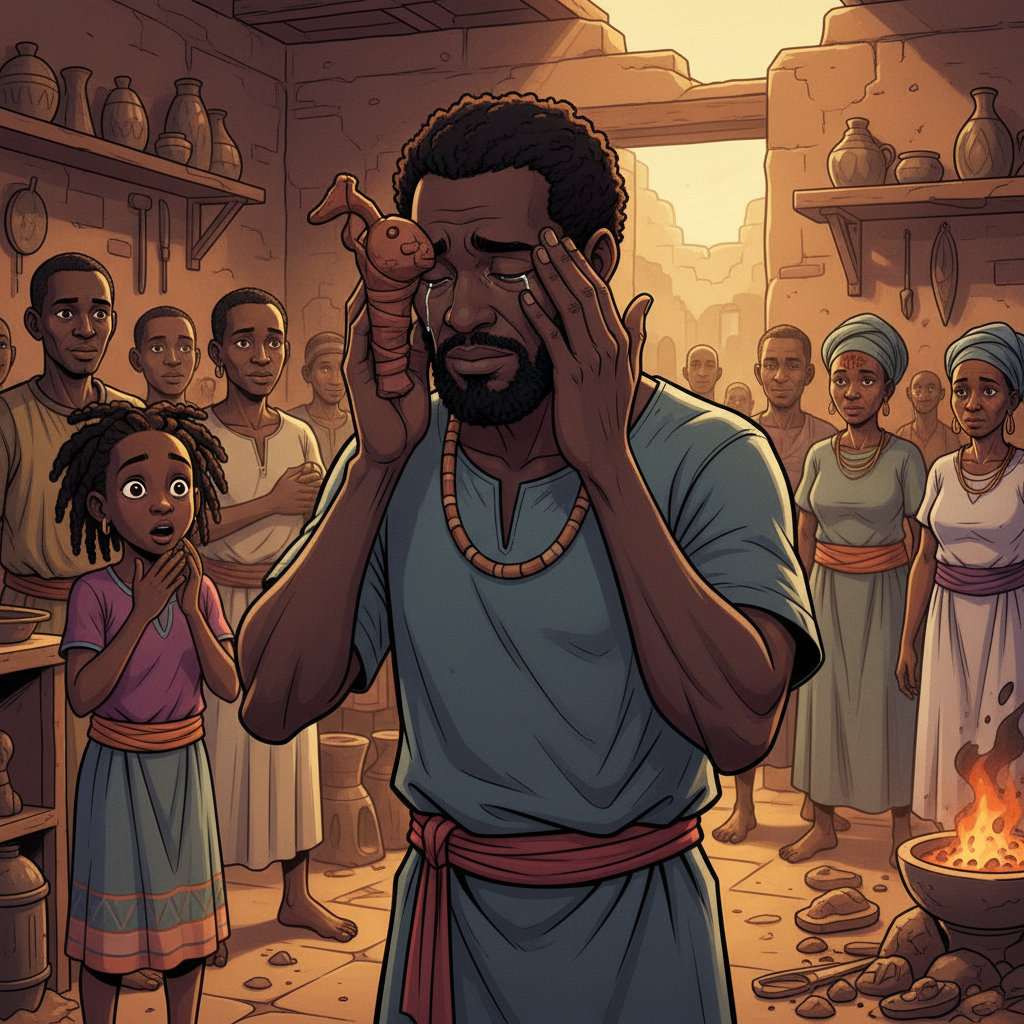
Ezeani picked up Adaeze's small clay model again. He held it in his open palm. Then — Adaeze would remember this gesture for the rest of her life, more clearly than anything else from the morning — he pressed the clay-wrapped model against his own forehead. He held it there for the count of three heartbeats. It was a gesture Adaeze had only seen at the ancestor-shrine before: the Igbo gesture of acknowledged honor, the way one received a gift from an elder. When he lowered the model from his forehead his eyes were wet. He turned to his sons and to Mama Adamma and to Ngozi and to his wife. He said: "We will cast my daughter's model today. Chike, watch your sister. She has been listening better than we have been teaching."
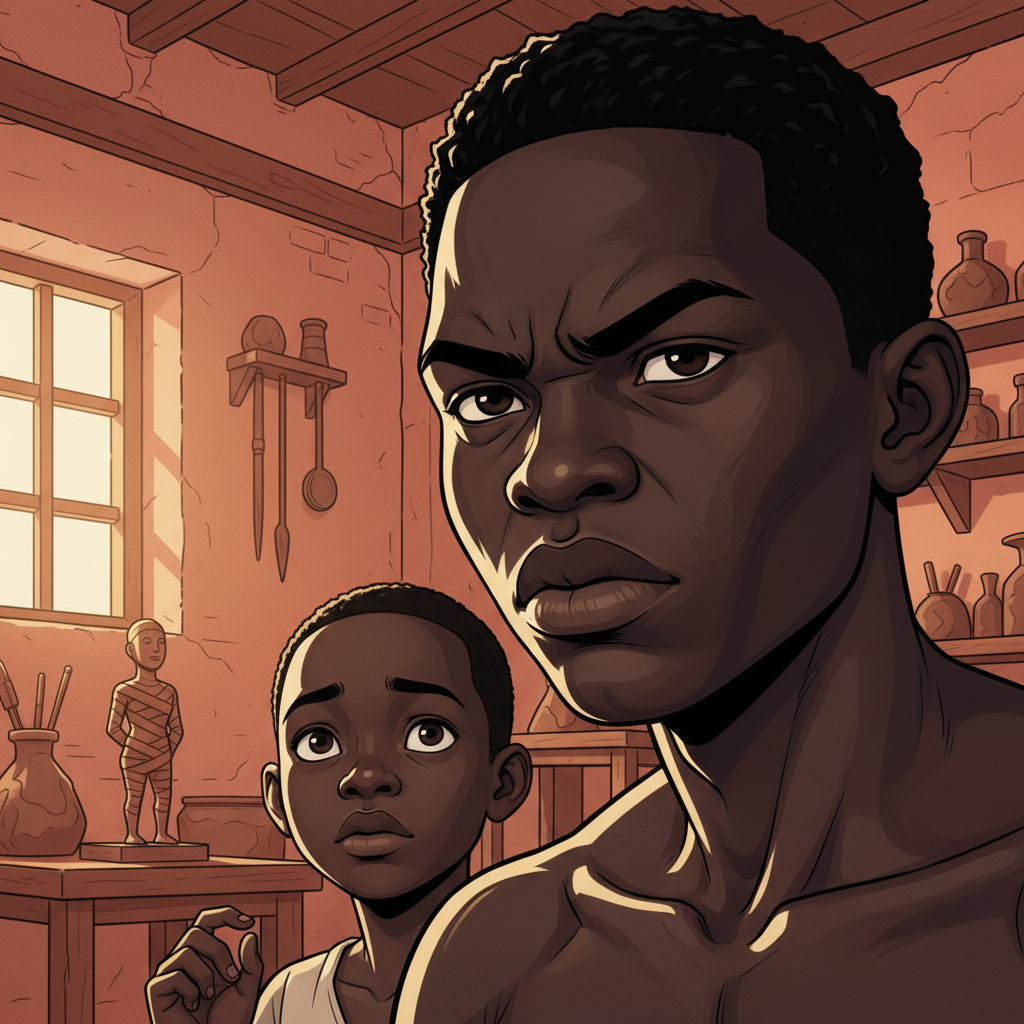
Chike did not say anything. His face did not move. Adaeze watched her brother's face very carefully. She knew that face. She had seen it before, when their father had once praised Ekene for a task Chike had wanted to do. The face was a face of held-still anger. Chike was a sixteen-year-old boy, the master's eldest son, and his father had just publicly preferred his eleven-year-old sister's work. Adaeze had not wanted this. She had wanted her own work to be good. She had not wanted her brother to be shamed. The teacher Acholonu, in books that would not be written for centuries, would say that Igbo metalwork was a tradition where the work spoke for itself — but the work spoke through the hands of a family, and a family's honor was woven through every casting. Adaeze felt, in that moment, the seam of the family pulling tight.
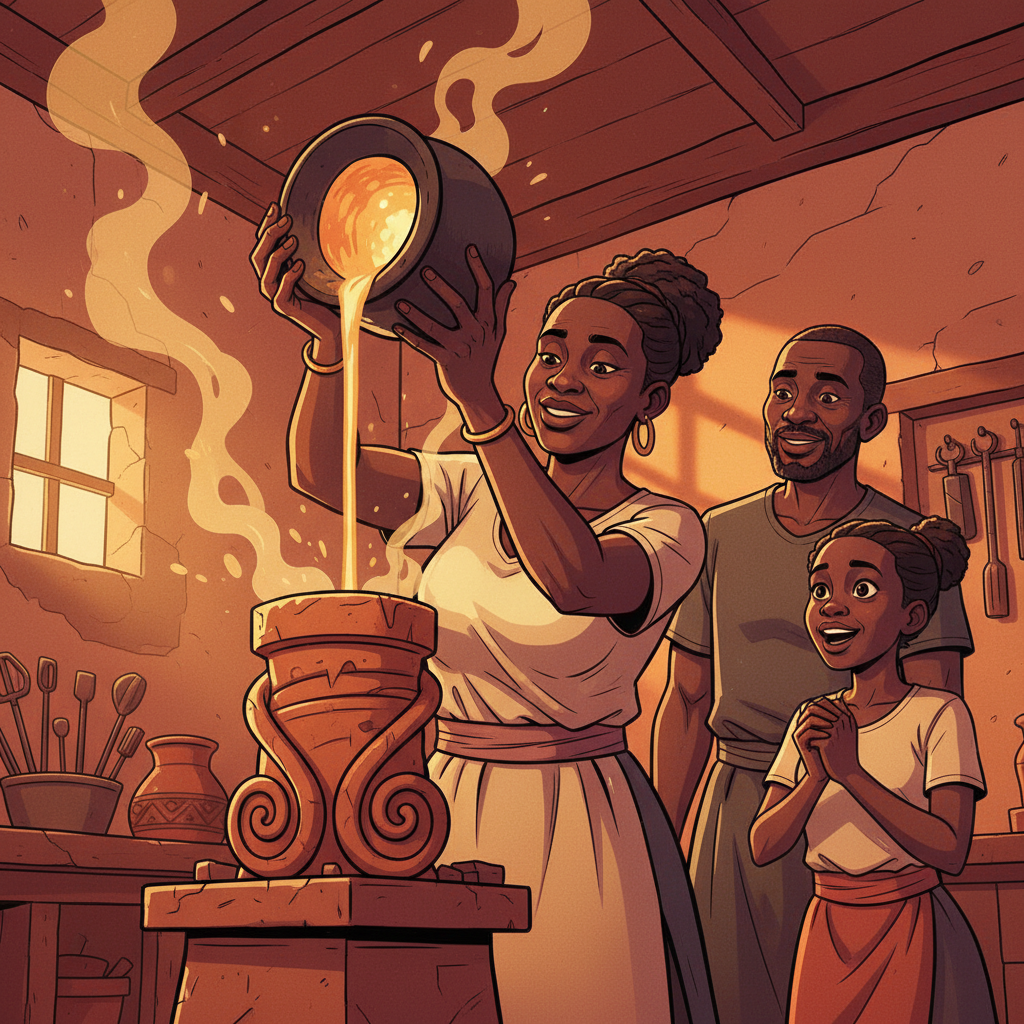
The casting itself went well. The furnace reached the right temperature in the second hour of the morning. The clay-wrapped wax was placed in the fire and the wax was burned out, leaving a perfect hollow mold the shape of Adaeze's spiral handle, including her three reinforcement-spirals at the base. Onukwube, Adaeze's mother, tipped the heavy crucible of molten bronze over the mold-opening. The bronze poured. It filled the spiral cavity. The reinforcements at the base filled. The clay shell hissed. The metal cooled for the rest of the morning. At midday the clay was broken away. The bronze handle that emerged was exactly what Adaeze had designed — graceful, strong, the three reinforcement-spirals invisible in the finished work but doing their work where they had to. The handle would not crack. The vessel would last.
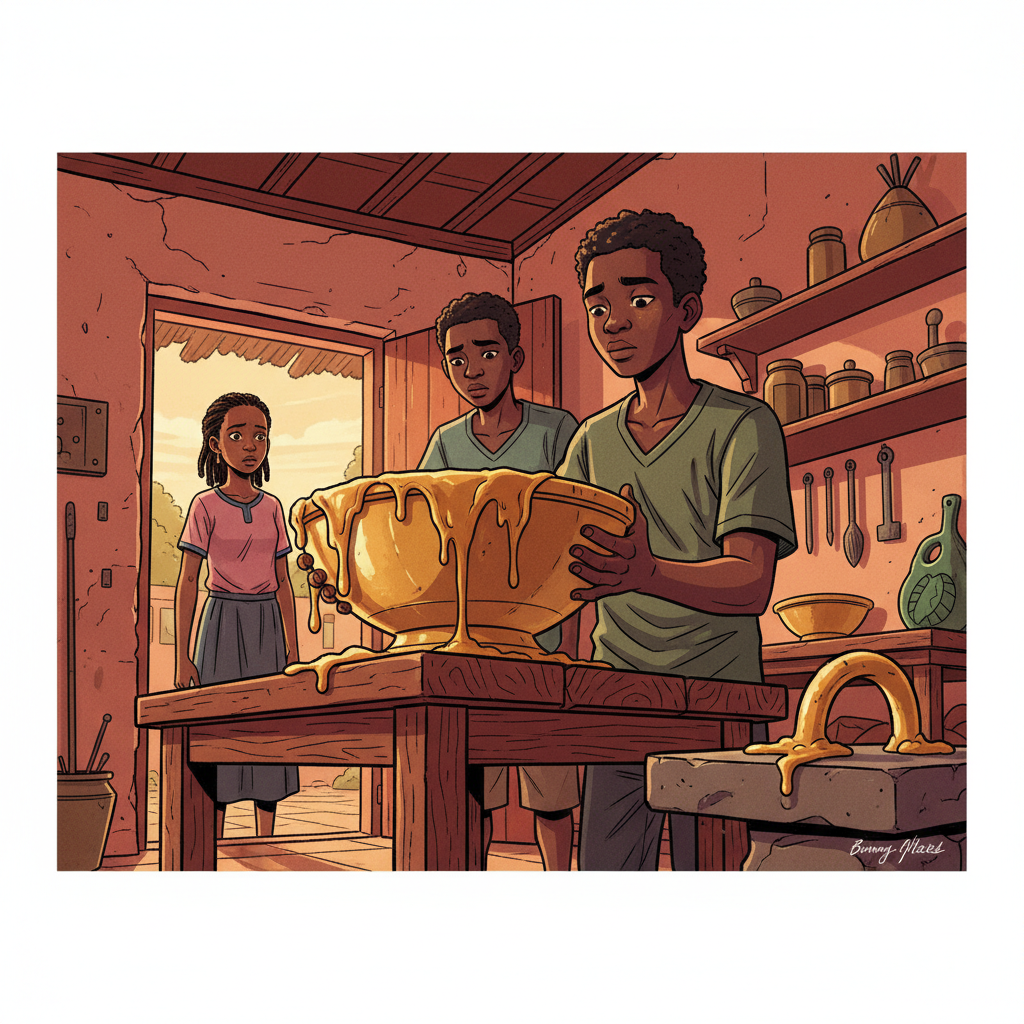
But the handle was only half the vessel. The bowl itself still had to be cast — and that work was Chike's. Chike had spent three weeks on the bowl's wax model. Adaeze had not seen that model in detail; her attention had been on the handle. Now, with the handle finished and resting on the cooling-stone, the workshop's attention turned to the bowl. Chike brought his wax model to the central table. Adaeze stood by the doorway and watched. She could see, even at a distance, that the wax was too soft. The bowl's rim — the part where the ancestor-libations would be poured from — had begun to slump slightly from the warm afternoon air. The bowl, as it was, would cast unevenly. The libations would drip down the side instead of pouring cleanly.
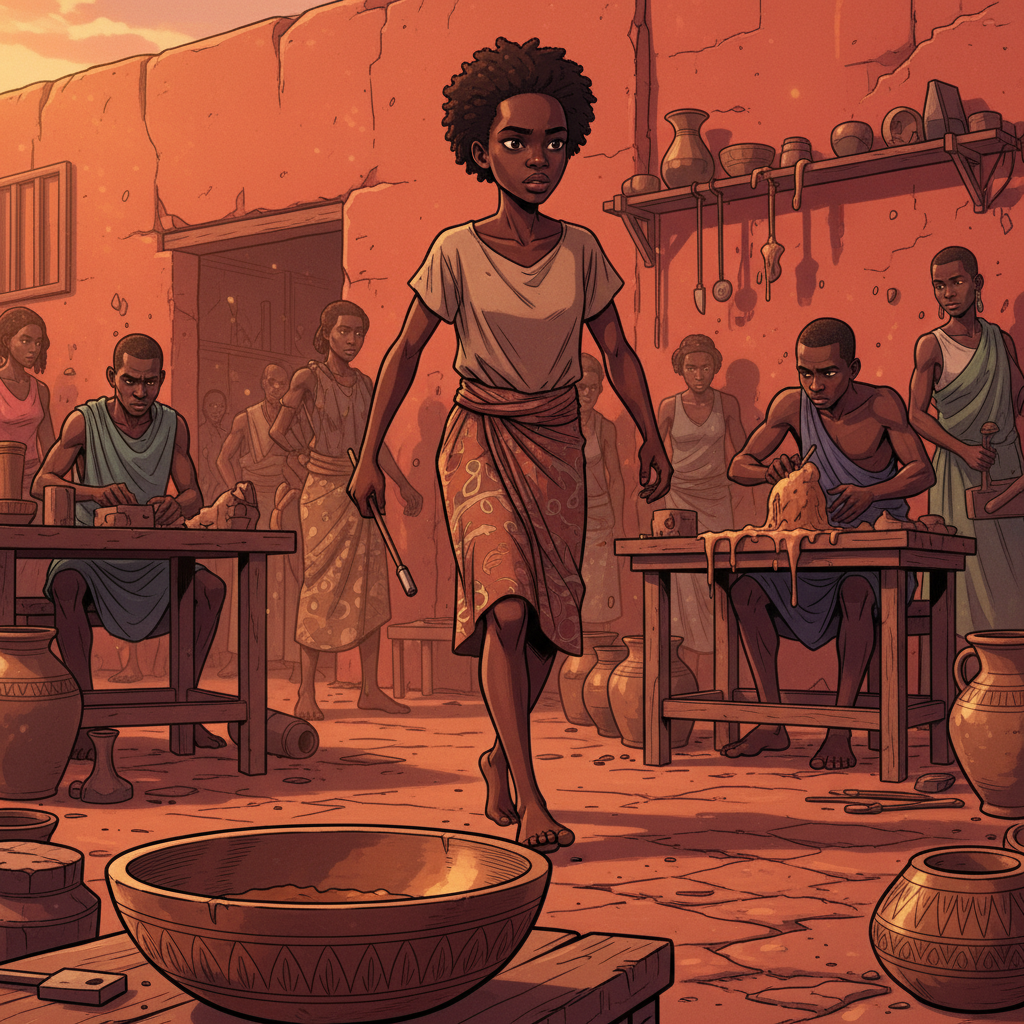
Adaeze did not know what to do. She had already, that morning, taken her brother's commission away from him for the handle. To say anything now about the bowl — that his wax was too soft, that his rim was slumping — would be to take the rest of the commission as well. It would be the second public correction in one morning. It would not be propriety. The teacher Acholonu would later write that propriety in Igbo work was not the rule of being silent. It was the rule of right action at the right moment. There was a third way. Adaeze had been thinking about it since the moment her father had pressed her wax against his forehead. She walked across the workshop. She did not stop at her father's table. She stopped at Chike's table. She set down a small reed-tool — the wax-cooling iron, used to firm up a soft wax before casting. She set it beside her brother's hand. She did not speak.
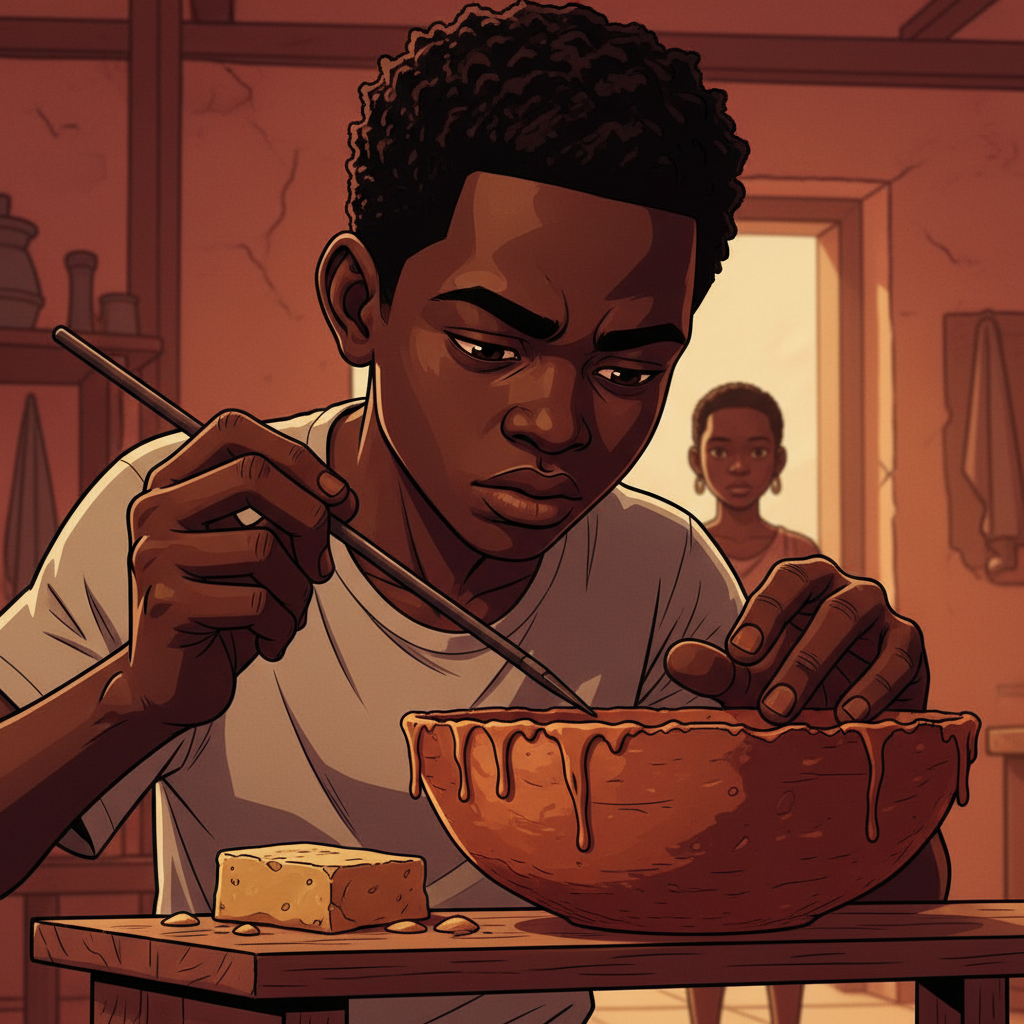
Chike looked at the cooling-iron. He looked at his wax. He understood. He did not look at Adaeze. He picked up the cooling-iron. He laid it gently against the soft rim of the bowl. He worked the rim, slowly, with the patience he had not had during the three weeks before. The wax firmed. The rim straightened. After ten minutes the bowl was ready to cast. Chike set the cooling-iron down. He looked at Adaeze for the first time since the handle-casting. He did not smile. But he nodded. It was a small nod — the kind of nod a sixteen-year-old gives when he is not ready to speak but is ready to acknowledge. Adaeze nodded back. She went back to the wax-shop doorway. The casting of the bowl began.
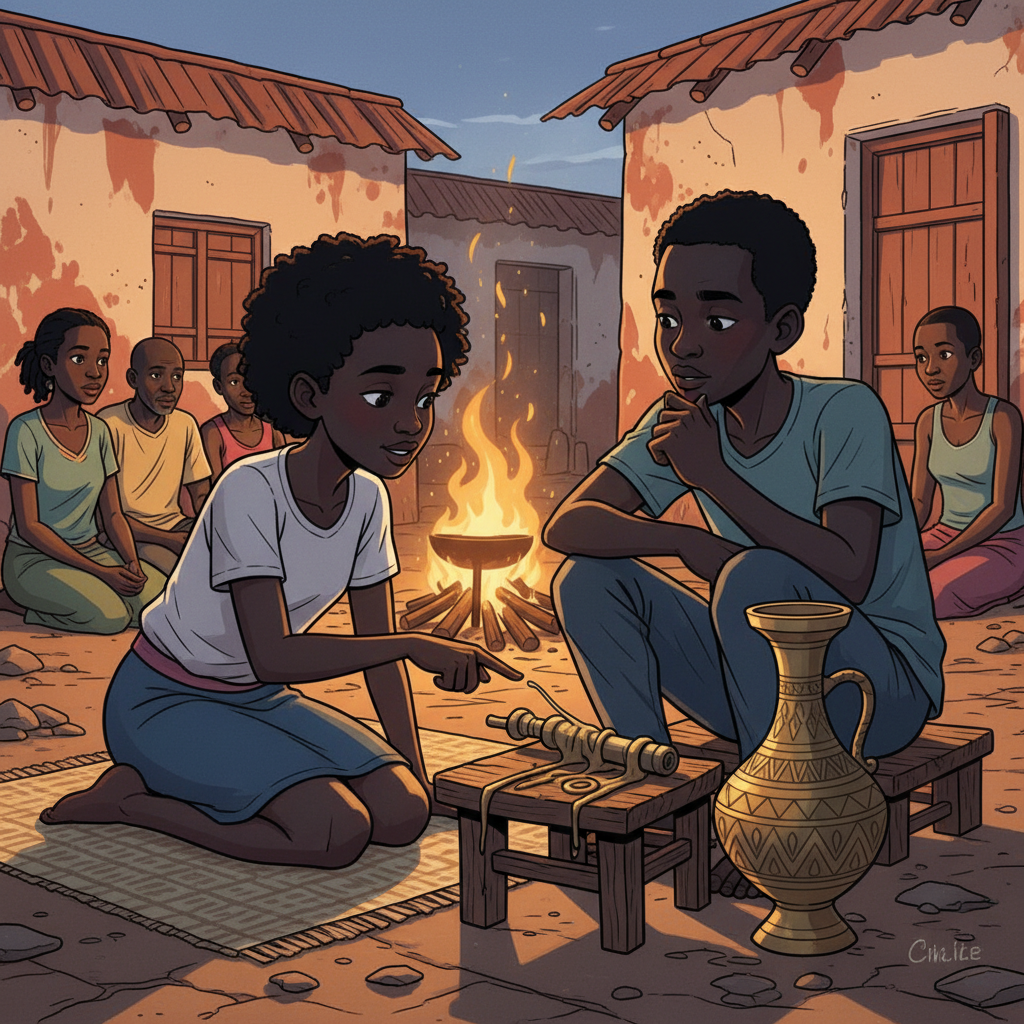
The bowl came out clean. The handle was fitted to the bowl with a bronze braze-weld that Ezeani himself did, the way he had done a hundred times before for a hundred commissions. By the end of the day the ceremonial vessel was complete — Chike's bowl, Adaeze's handle, Ezeani's weld. At the evening meal, when the workshop was cleaned and the family was sitting around the cooking-fire, Adaeze brought Chike's unfinished original wax-handle model — the one he had been working on for three weeks, the one her father had set aside that morning — across the courtyard. She set it down beside her brother. She said, very quietly: "We will cast this one next month. With these corrections." She pointed at the three thin places in the spiral. "Reinforcement-spirals here, here, and here. You can do the corrections yourself. The original was a good design. It just needed three more weeks."
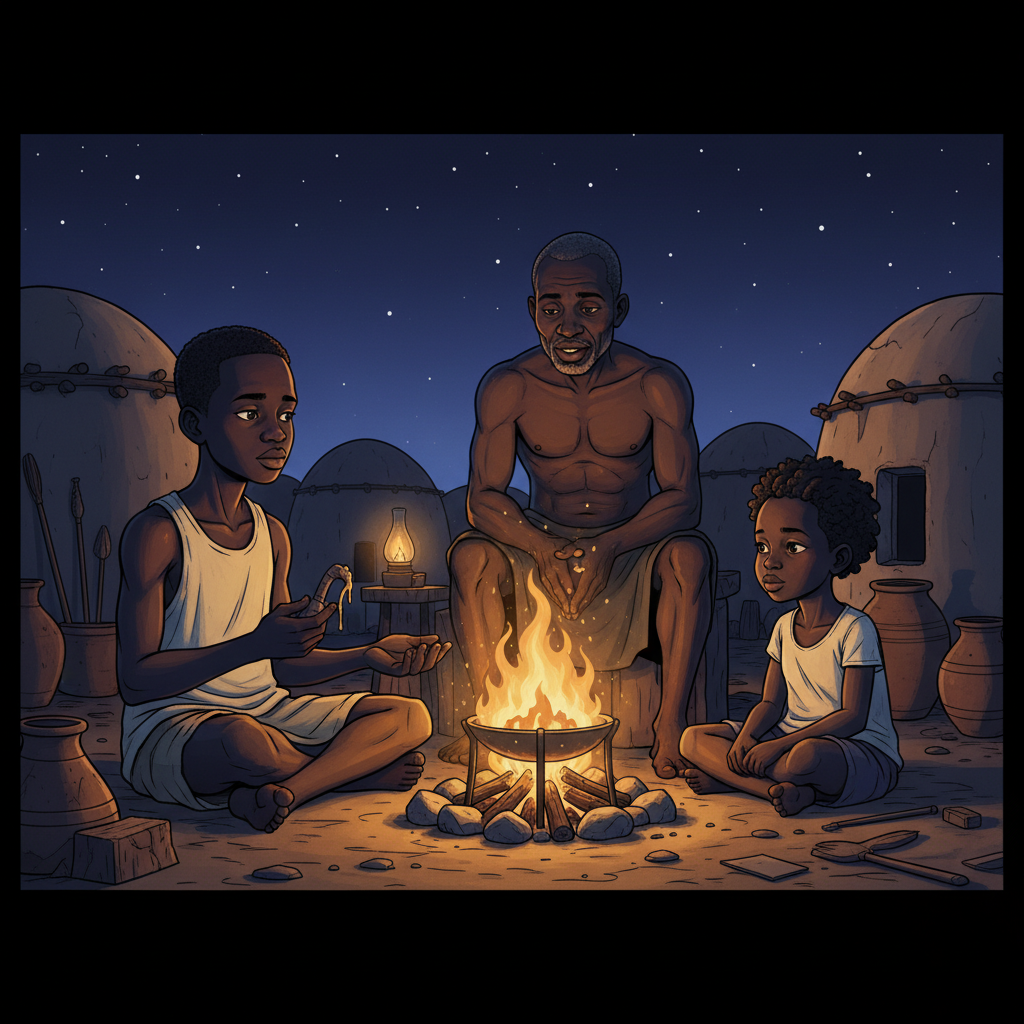
Chike looked at her. He looked at the model. He looked at his father, who was watching from across the cooking-fire. Ezeani did not speak. After a long moment Chike picked up the wax model — his own work, his three weeks of effort — and set it back on his lap. "Yes," he said. "Three more weeks. With the corrections." He looked at Adaeze. He did not smile. His face was the face of a sixteen-year-old who had been publicly outdone by his eleven-year-old sister and was not going to pretend otherwise that night. But he nodded once. He did not push the model away. He set it carefully across his knees and turned back toward the cooking-fire. Adaeze did not press. She returned to her own seat. The corrections would be made next month. The teaching, if it came, would come later — in its own time, on Chike's terms, not hers.
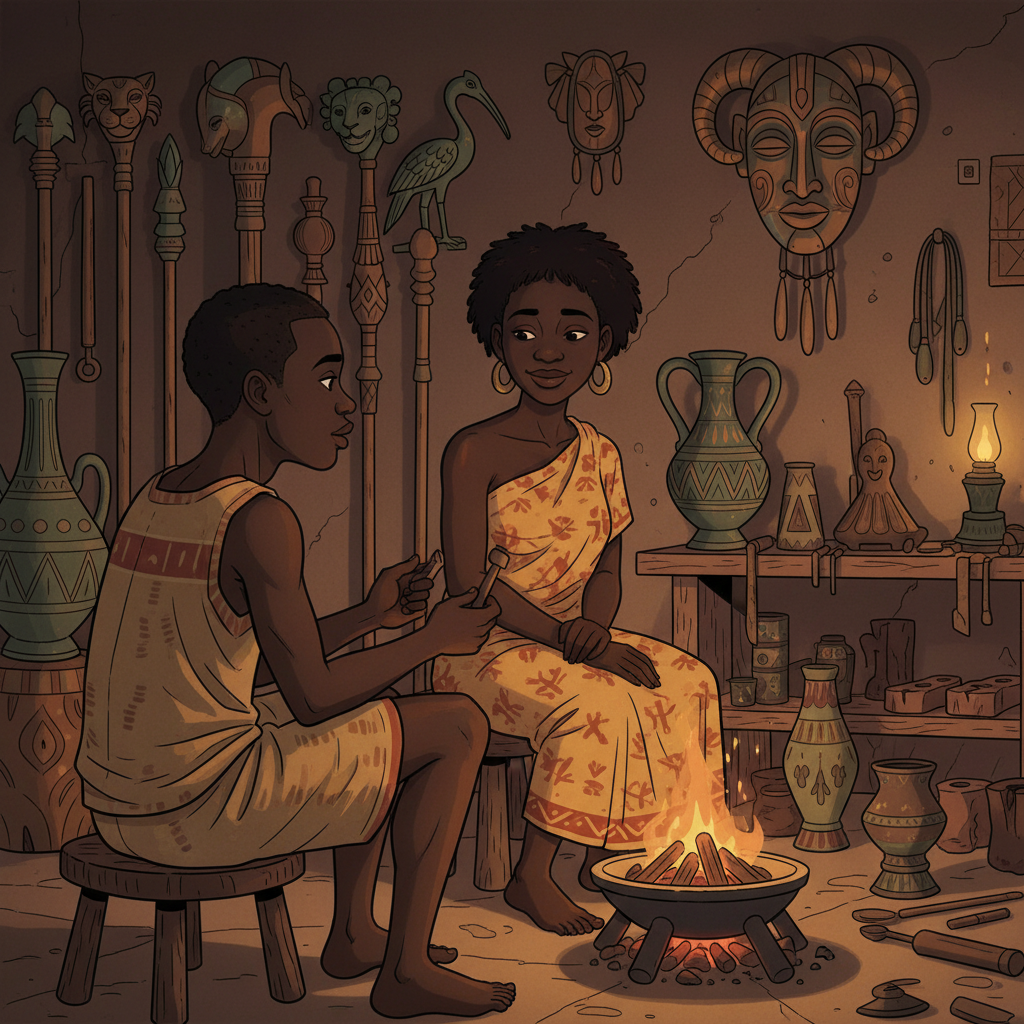
Five years passed. Adaeze grew up. She married a young man from the next village — a quiet bronze-caster named Obika who specialized in animal forms, leopards and ibises and small ritual snakes. In the second of those five years, on a quiet evening when the workshop fires were banked low and only Adaeze and Chike remained, her older brother had finally spoken. "Sister," he had said, his face turned toward the dying embers and not toward her. "Teach me where you learned the reinforcement-spirals." Adaeze did not boast. She did not say anything about Ngozi or Mama Adamma or seven years of leftover wax scraps. She just said: "I have been watching. Tomorrow morning at the wax-shop. Come early." Three more years passed after that morning. The Igbo-Ukwu workshop grew. Adaeze became the workshop's lead designer of ceremonial vessels. Chike, who had then spent five years apprenticing under his younger sister's eye, became the workshop's lead caster of staffs and ritual jewelry. Ekene became the head of the wax-shop after Mama Adamma retired. Ngozi became Adaeze's closest collaborator. The four of them — Chike, Adaeze, Ekene, Ngozi — produced together, over the next thirty years, the pieces that, when a young farmer named Isaiah Anozie dug a well behind his house in 1939, would be unearthed by his hands almost intact: vessels and staffs and ornaments at the height of a thousand-year metallurgical tradition — already, then, what the Igbo-Ukwu workshops had been for centuries. Bronze that remembered. Bronze that did not lie. Bronze that, more than a thousand years after Adaeze laid the cooling-iron beside her brother's hand, would still be doing the work of propriety — speaking truly, every casting, every name, every hand.