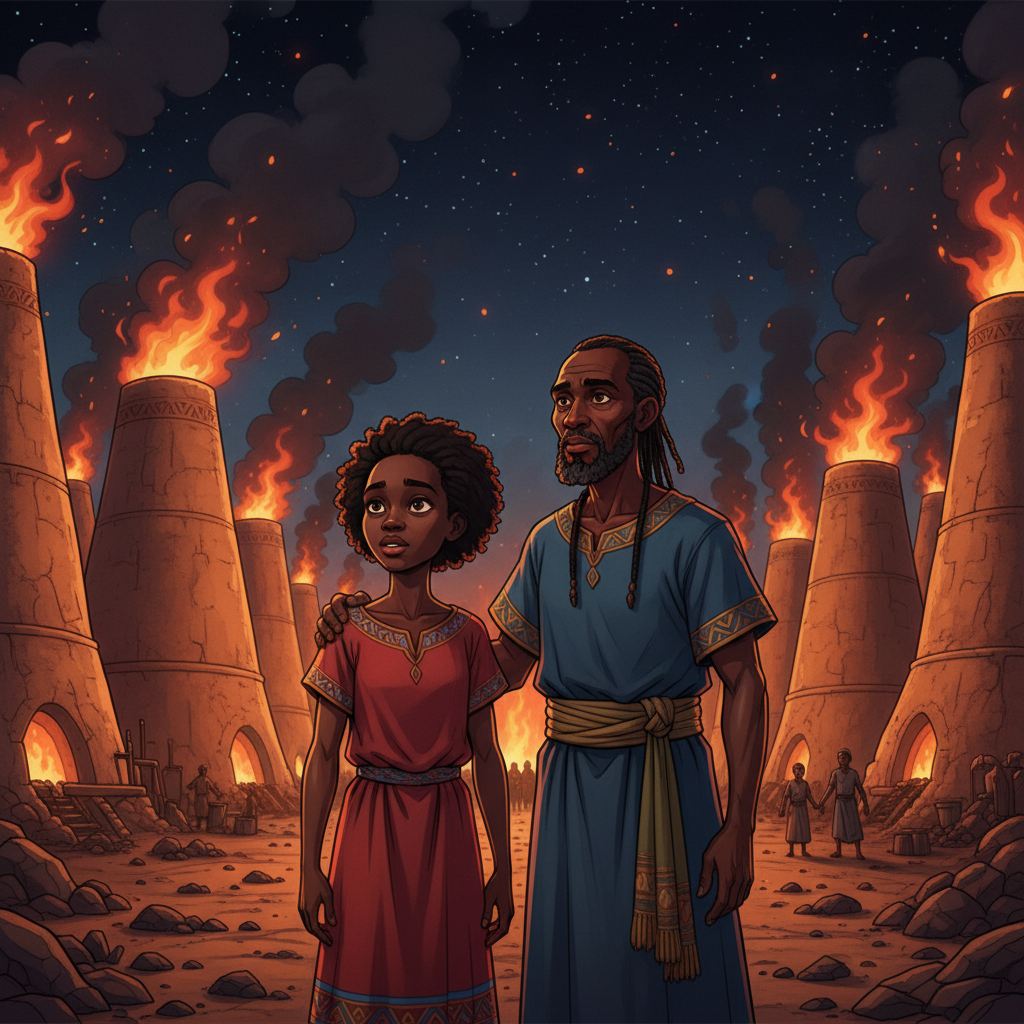
The great furnaces of Meroe glowed like captured stars against the night sky. Ten-year-old Amanishakheto stood with her grandfather at the edge of the smelting yard, her rich ebony skin lit orange by the roaring fires. The heat pressed against her face like a living thing. All around her, dozens of furnaces rose from the earth like clay towers, each one breathing smoke and flame into the darkness. Meroe was the iron capital of the ancient world. No other city in all of Africa — or anywhere else — produced as much iron as this place. The people of Kush had mastered the secrets of turning stone into metal, and that mastery had made their civilization powerful beyond measure.
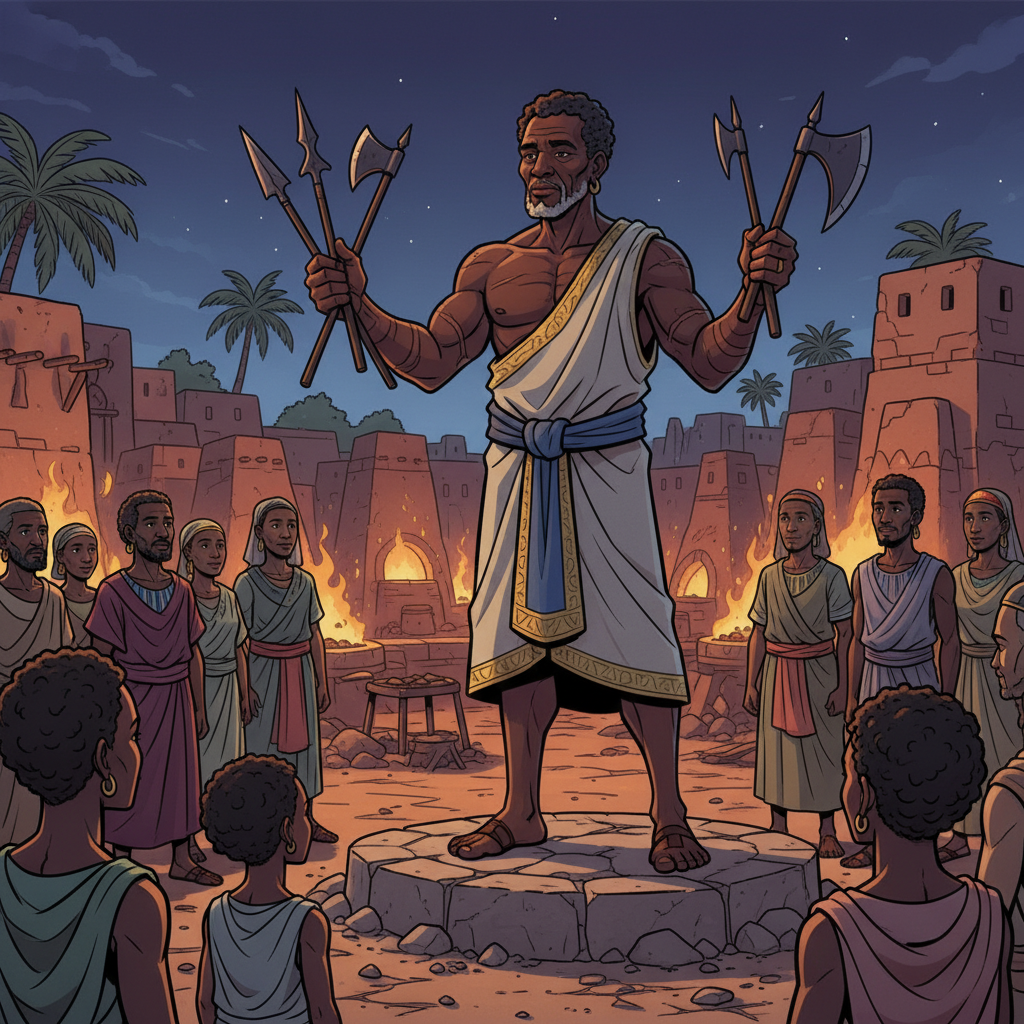
Her grandfather, Akinidad, was a master iron maker. His dark, muscular arms were mapped with old burn scars, each one a lesson learned from decades at the furnace. His broad hands had shaped countless spearheads, ax blades, hoe heads, and farming tools. He was respected throughout the city — iron makers held a place of honor in Kush, for they were the ones who turned the earth's hidden gifts into strength. "Iron is heka," he told her, his deep voice carrying over the roar of the flames. "We take dull rock from the belly of the earth and transform it into power. That is the oldest magic — not tricks or illusions, but knowledge so deep it changes the world."
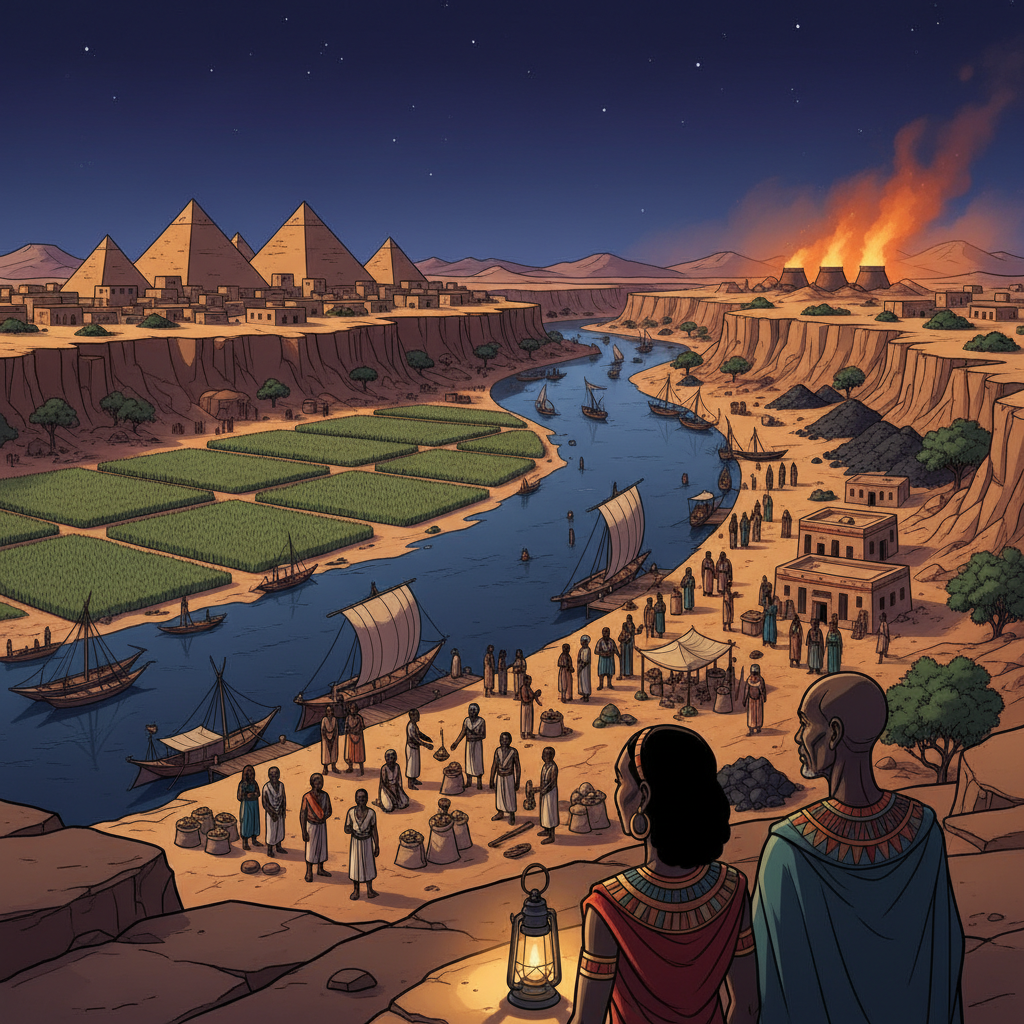
The Kingdom of Kush had stood for over a thousand years, and Meroe was its beating heart. The city sat along the great Nile, south of the sixth cataract, where the river carved its path through golden sandstone and dark granite. Green fields of sorghum and millet lined the riverbanks, fed by irrigation channels that Kushite engineers had dug generations ago. Traders came from Kemet to the north, from the great kingdom of Aksum far to the south, and from lands across the western desert where the sun seemed to set on fire. They brought gold, ivory, incense, and fine cloth. But what they wanted most was Meroe's iron — the metal that had changed everything.
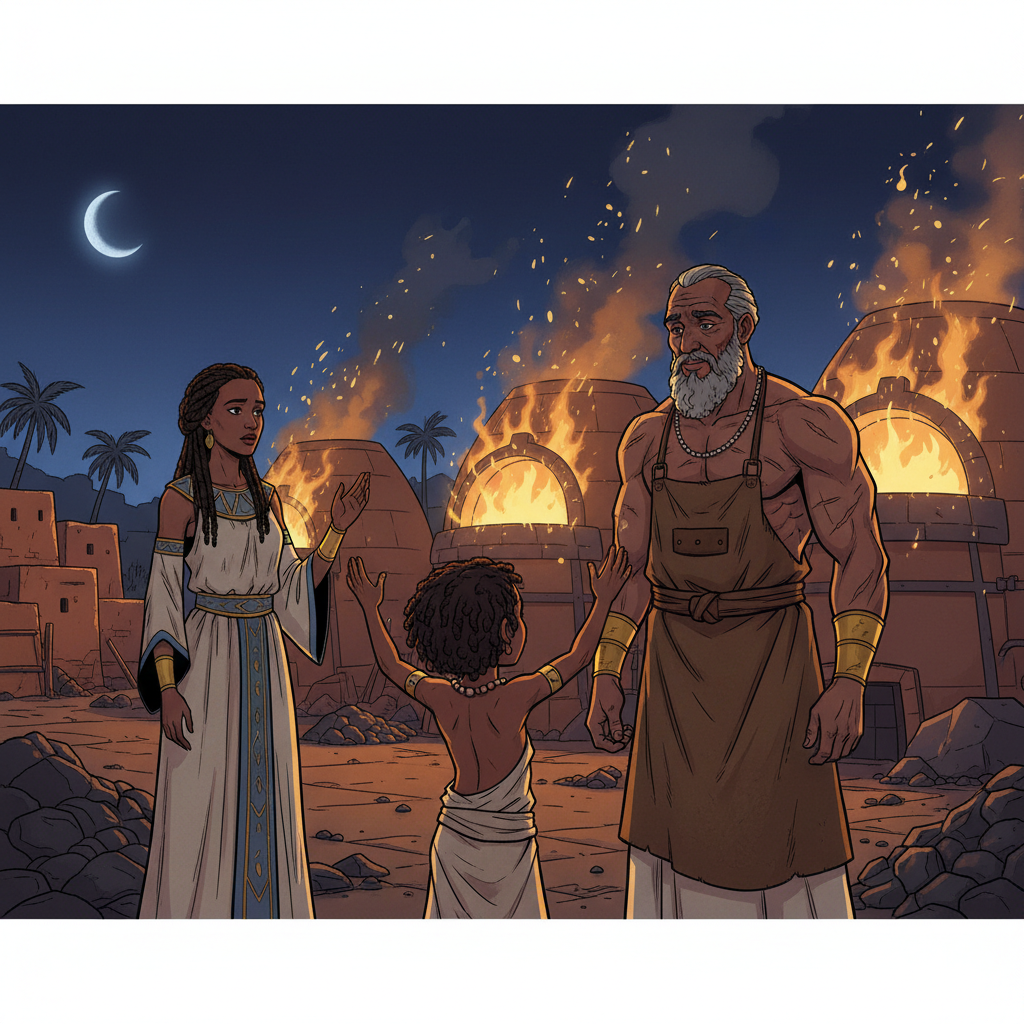
Amanishakheto had begged her grandfather for months to bring her to the smelting yard at night, when the real work happened. Her mother, a scribe at the Per Ankh, had been reluctant. "The furnaces are dangerous," she had warned. But Akinidad had spoken on her behalf. "The girl has the ka of a maker," he had said. "I see it in the way she watches, the way she asks questions. That fire in her spirit needs feeding, or it will turn to frustration." Now, standing here at last, Amanishakheto felt the truth of his words. Something inside her chest burned as hot as those furnaces. She did not just want to watch. She wanted to understand.
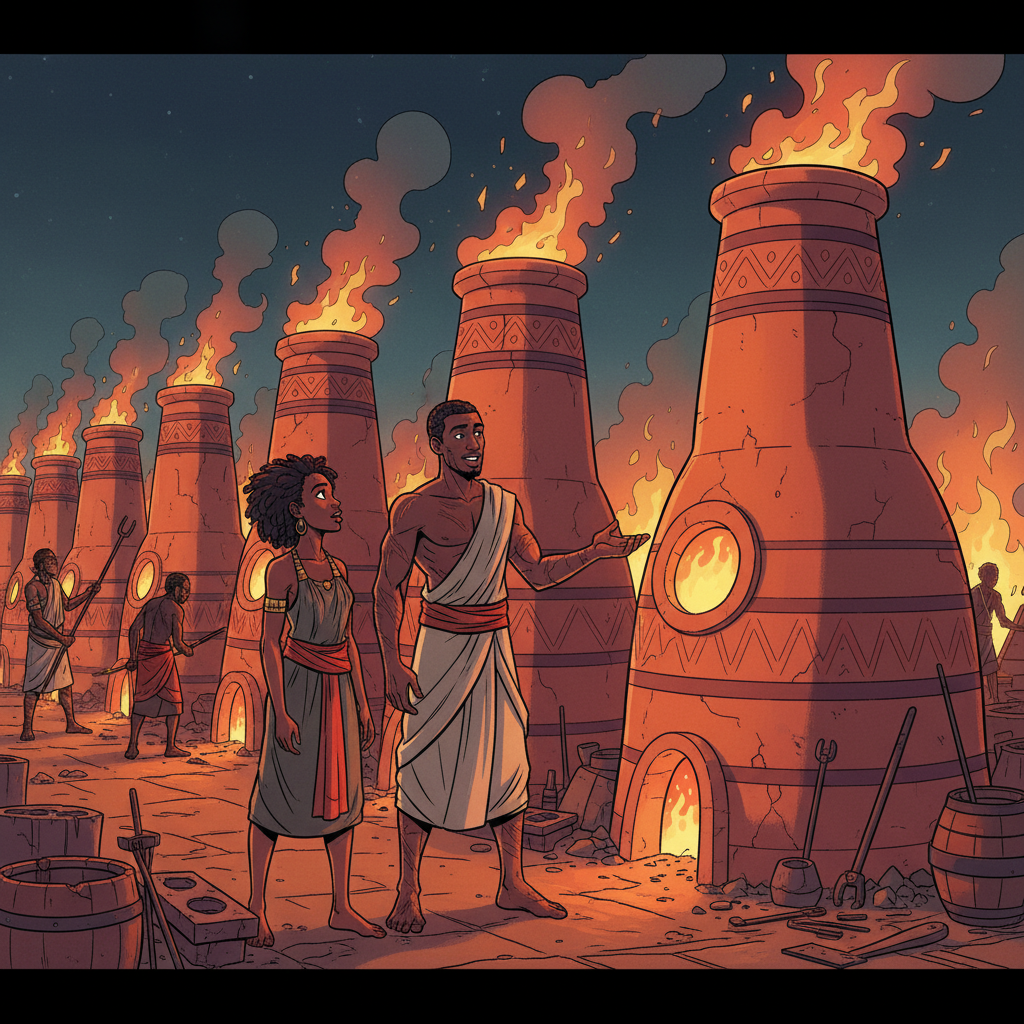
Akinidad walked her past the rows of furnaces, explaining everything. The furnaces themselves were brilliant inventions — cylindrical towers of clay, taller than a grown man, built to capture and intensify heat. "Our ancestors designed these," he said proudly. "No one taught us this. The people of Kush experimented for generations, learning how to make fires burn hotter, how to shape the clay so it would not crack, how to control the air flowing inside." This was something Amanishakheto had learned at the Per Ankh: Kush's iron smelting technology was developed independently, born from African ingenuity. The knowledge had been passed from master to apprentice for centuries, a living chain of wisdom that connected her to the very first iron makers.
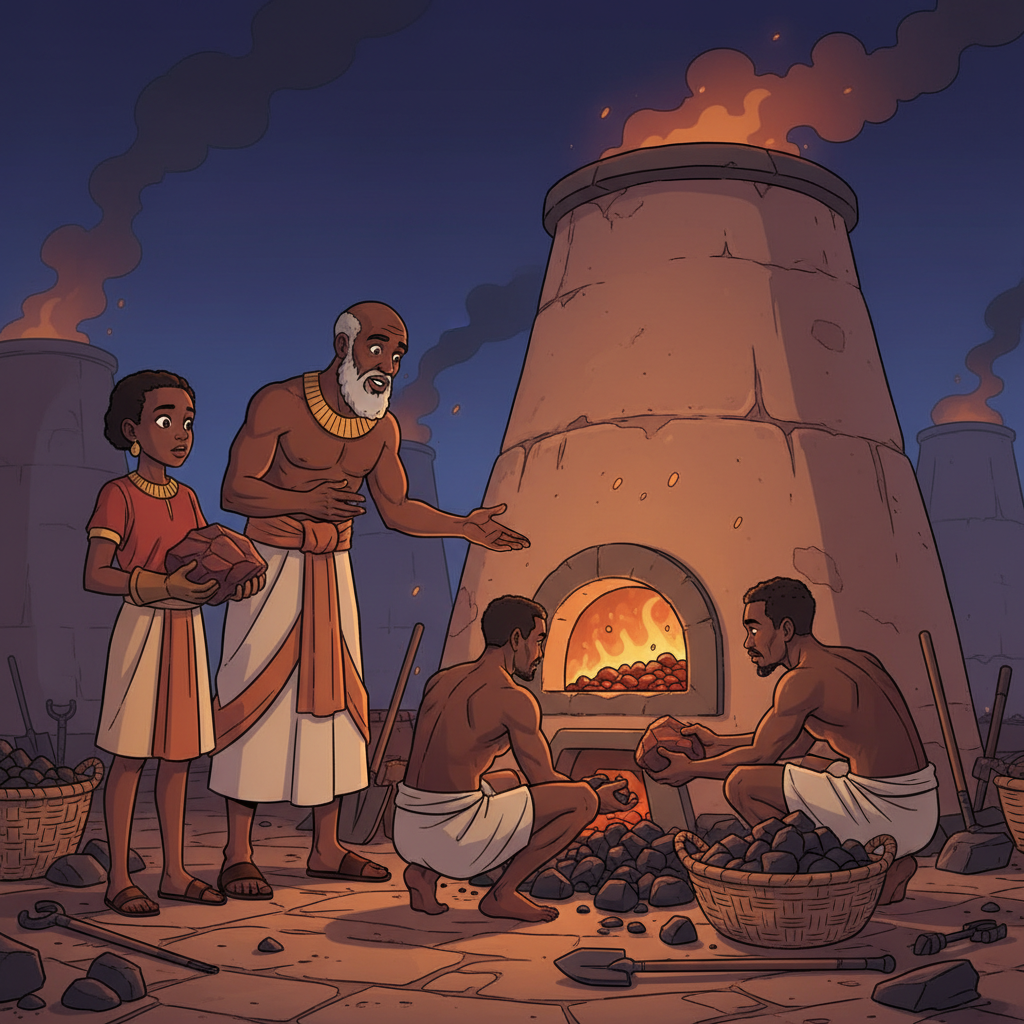
They stopped beside a furnace where workers were preparing a new smelt. Amanishakheto watched them layer iron ore — heavy, rust-colored rocks pulled from mines east of the city — with chunks of charcoal made from acacia wood. "The charcoal is the key," Akinidad explained. "When it burns hot enough, it pulls the iron free from the stone. The rock wants to hold onto its metal, but the fire and charcoal are stronger." She studied the dark ore in her hands. It looked like nothing — just rough, heavy rock with reddish streaks. It seemed impossible that a warrior's blade or a farmer's hoe could be hiding inside something so plain. But that was the miracle of iron making: seeing what others could not see.
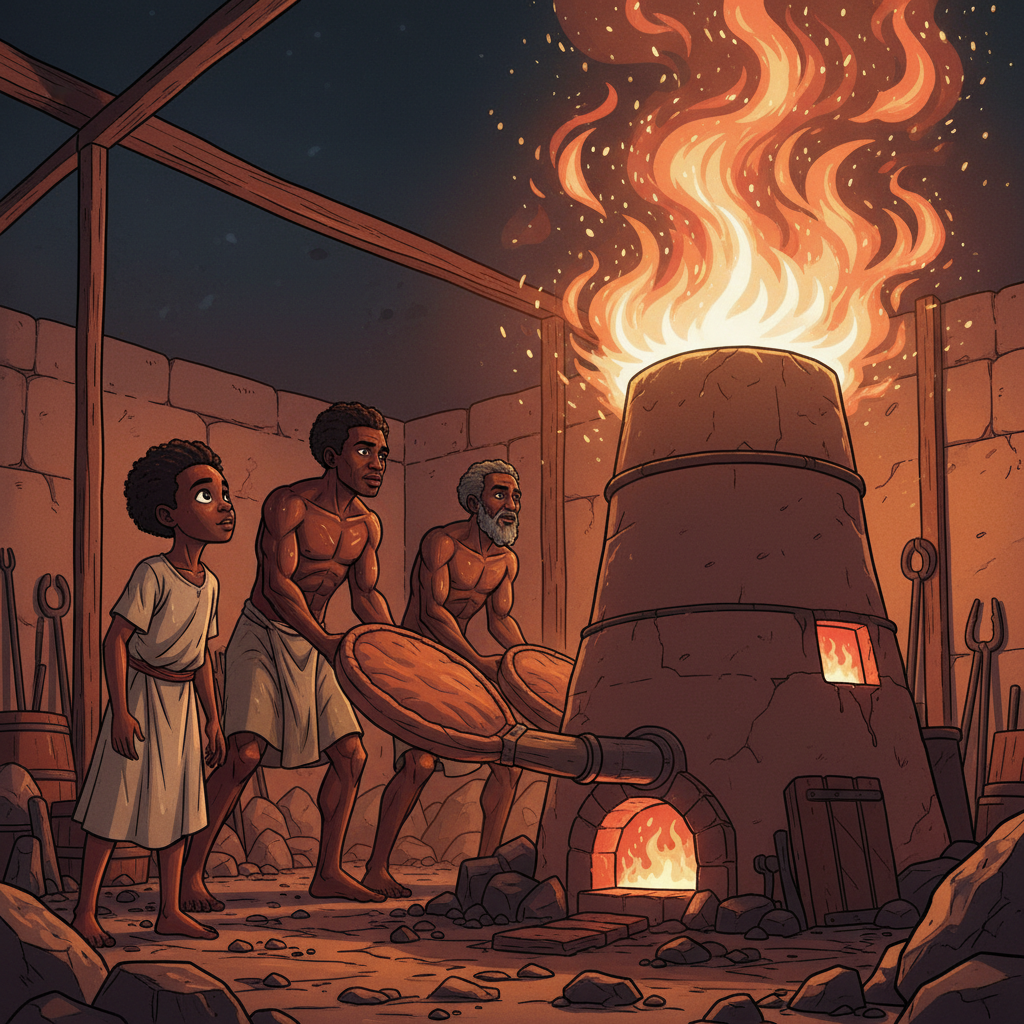
The workers began pumping the great bellows — pairs of goatskin bags attached to clay pipes that fed directly into the base of the furnace. Each pump forced a rush of air into the fire, and the flames responded with a deep, hungry roar. The temperature inside the furnace climbed higher and higher, far beyond what an ordinary fire could reach. "Air is the breath of the furnace," Akinidad said. "Without the bellows, the fire stays weak. But with enough air, pushed at the right speed, the fire grows fierce enough to break the bond between iron and stone. That is why the bellows pumpers are so important — they are the lungs of the whole operation." Amanishakheto watched their dark, sweat-gleaming bodies work in steady rhythm.
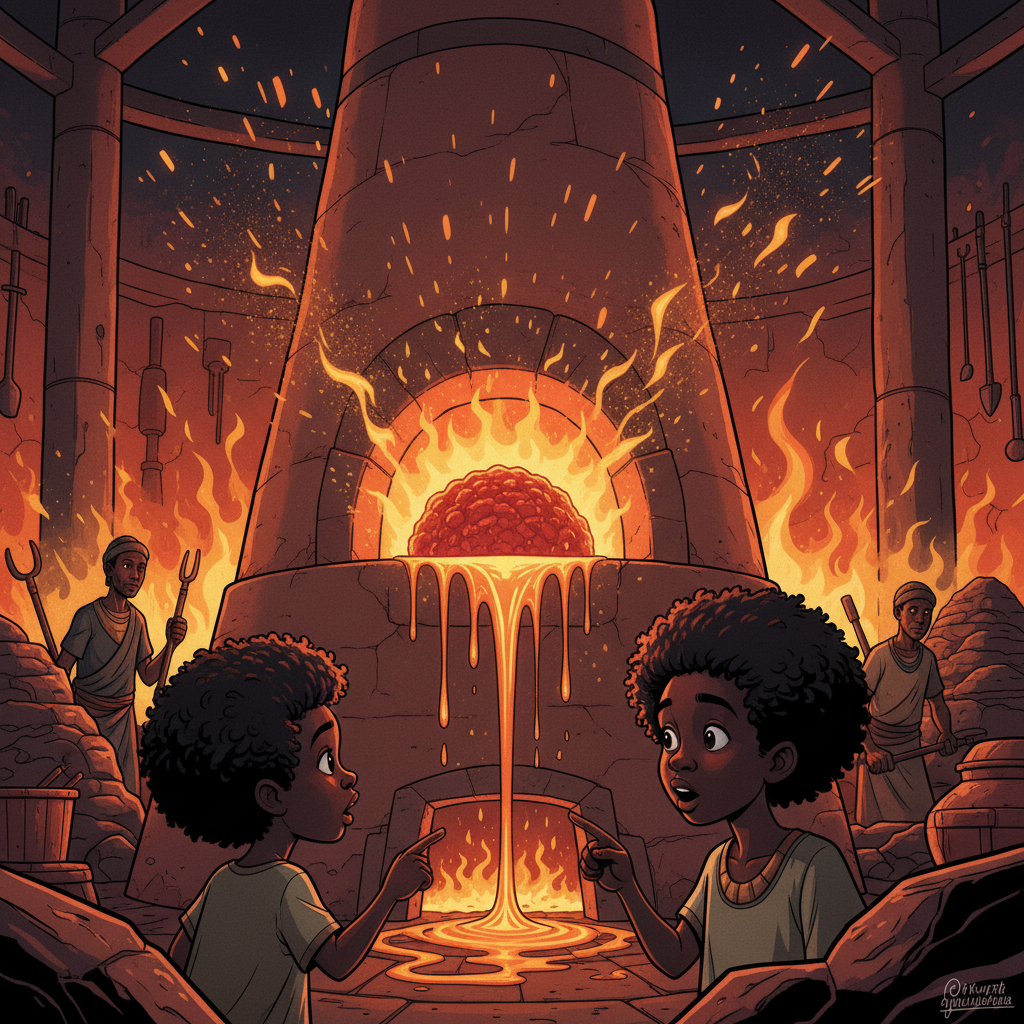
Inside the furnace, something extraordinary was happening. The charcoal burned at ferocious heat, and the iron ore began to change. The useless rock — the slag — melted and dripped downward like thick honey, separating from the heavier iron. It was like watching isfet, raw chaos, being pulled apart so that maat, beautiful order, could emerge. The iron collected at the bottom of the furnace in a rough, spongy lump called a bloom. "This is the moment of transformation," Akinidad said quietly, his dark face solemn in the firelight. "Chaos becomes order. Worthless stone surrenders its hidden treasure. Every smelt is a lesson, granddaughter — that maat must be worked for. It does not come easily. It must be won from the fire."
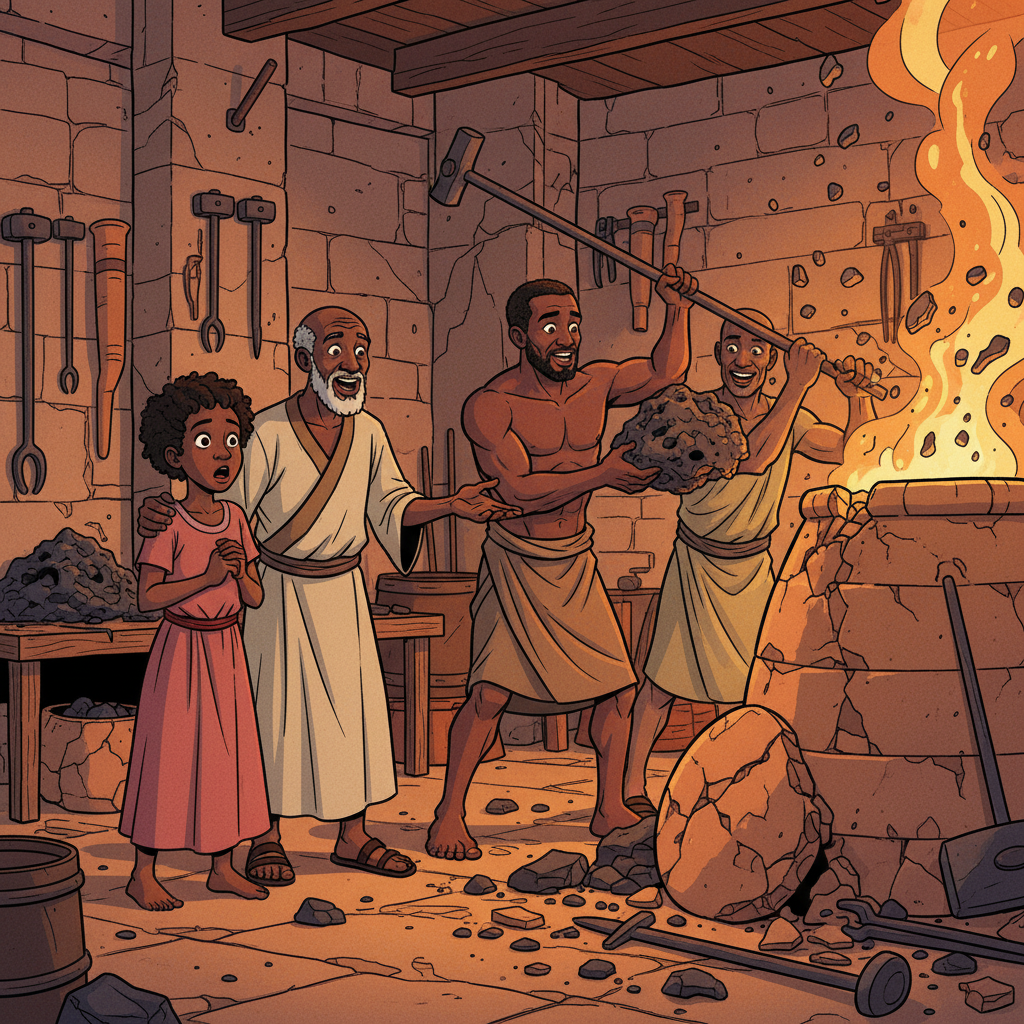
When the smelt was complete and the furnace had cooled enough, the workers broke open the clay shell to retrieve the bloom. Amanishakheto gasped. The iron bloom was rough, dark, and full of trapped slag and impurities. It did not look like a finished tool at all. It looked like a mistake. Akinidad laughed at her expression. "Do not judge by first appearances. The bloom holds good iron inside — but it must be hammered and folded, heated and hammered again, over and over. Each round of hammering drives out more impurities. The iron becomes stronger, purer, more useful. Just like a person," he added, looking at her meaningfully. "Difficulty does not ruin you. It refines you."
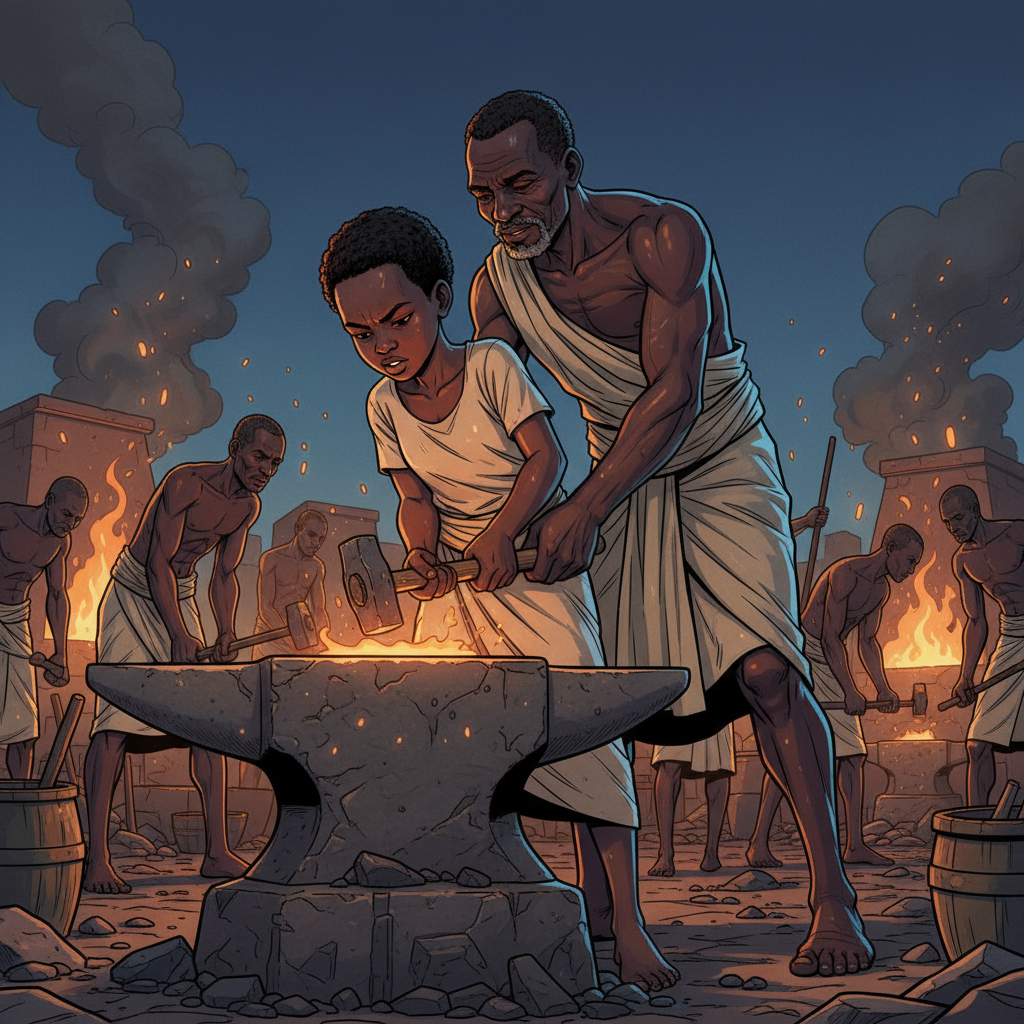
Akinidad brought the bloom to his anvil — a massive block of stone worn smooth by years of strikes. He heated the bloom in a smaller forge until it glowed like a piece of captured sunset, then began hammering. The clang of iron on iron rang out across the smelting yard, joining a chorus of other smiths doing the same work. Sparks flew like tiny stars with every blow. Then he turned to Amanishakheto. "Now you," he said, offering her a smaller hammer. Her heart pounded. She gripped the wooden handle with both dark-skinned hands and raised it above the glowing metal. "Strike with purpose," Akinidad instructed. "Every blow must mean something. A careless strike weakens the blade. A focused strike makes it strong."
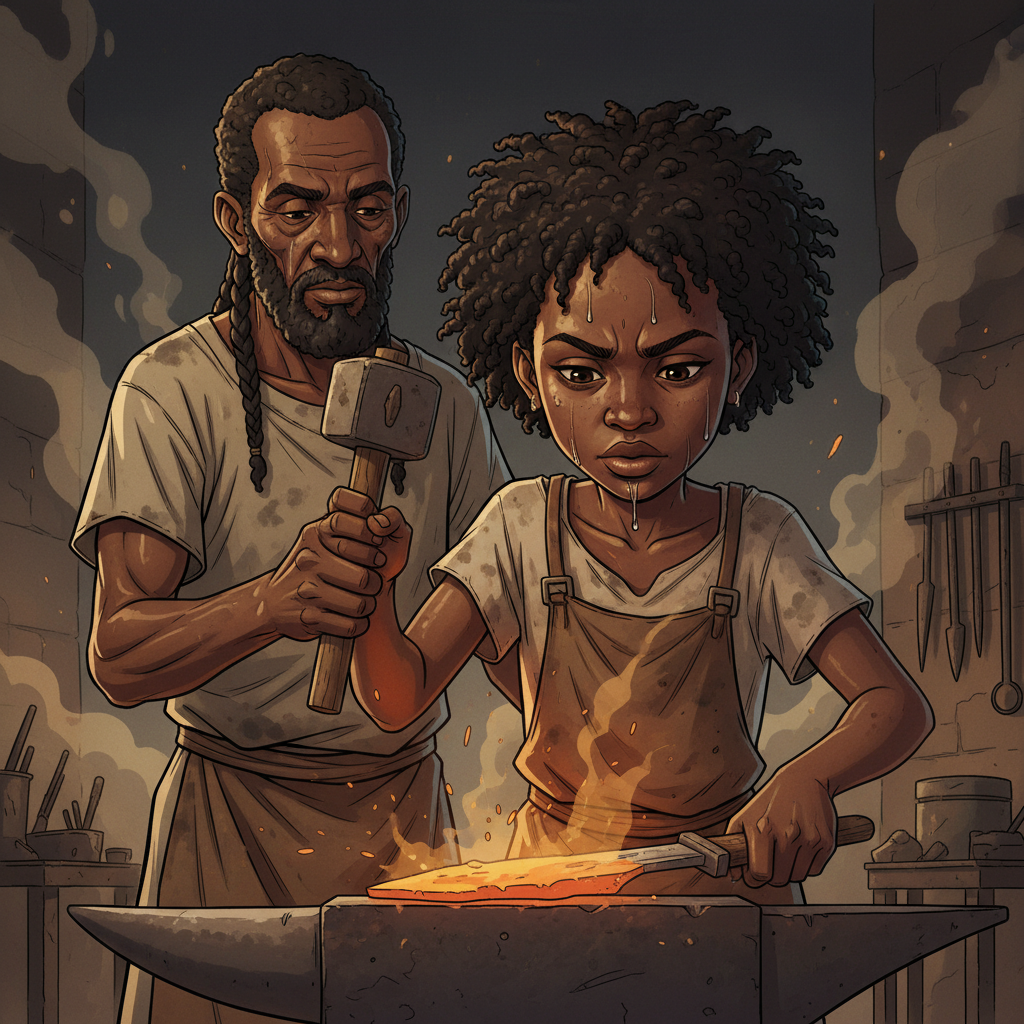
She brought the hammer down. The shock traveled up her arms and into her shoulders. The iron barely changed. She struck again, and again. Her arms burned. Sweat ran down her deep brown face and dripped onto the anvil, hissing into steam. She wanted to stop, but she thought about what her grandfather had said — that maat must be won from the fire. So she kept going. Blow by blow, the shapeless lump began to change. A flat edge appeared. A point emerged. Akinidad guided her hands, adjusted her angle, showed her where to strike and how hard. Slowly, painfully, the iron became something — a small knife, her very first creation. She held it up, and even in its roughness, it was beautiful. She had made order from chaos with her own two hands.
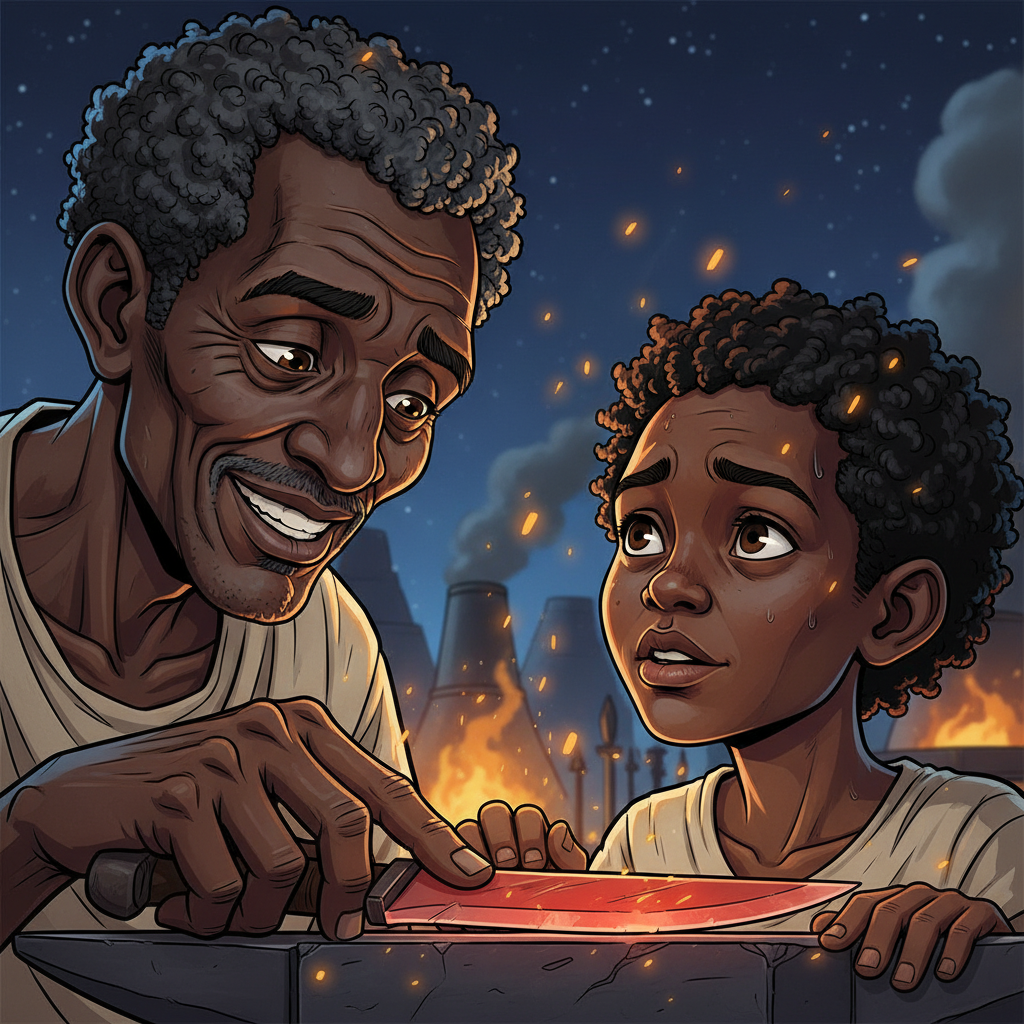
Akinidad smiled at her, and she saw something new in his eyes — not just love, but respect. "You feel it now," he said. "The tiredness in your arms, the sting of the sparks, the satisfaction of seeing something take shape. This is what it means to be a maker. Every tool that leaves this yard carries a piece of the maker's ka inside it." He placed his scarred hand over hers on the knife's handle. "The warriors of Kush carry iron spears because of what we do here. The farmers plant their fields with our hoe blades. Our knowledge gives them all strength. But remember this — iron can build a plow or a sword. What you choose to create with your knowledge is the most important decision you will ever make."
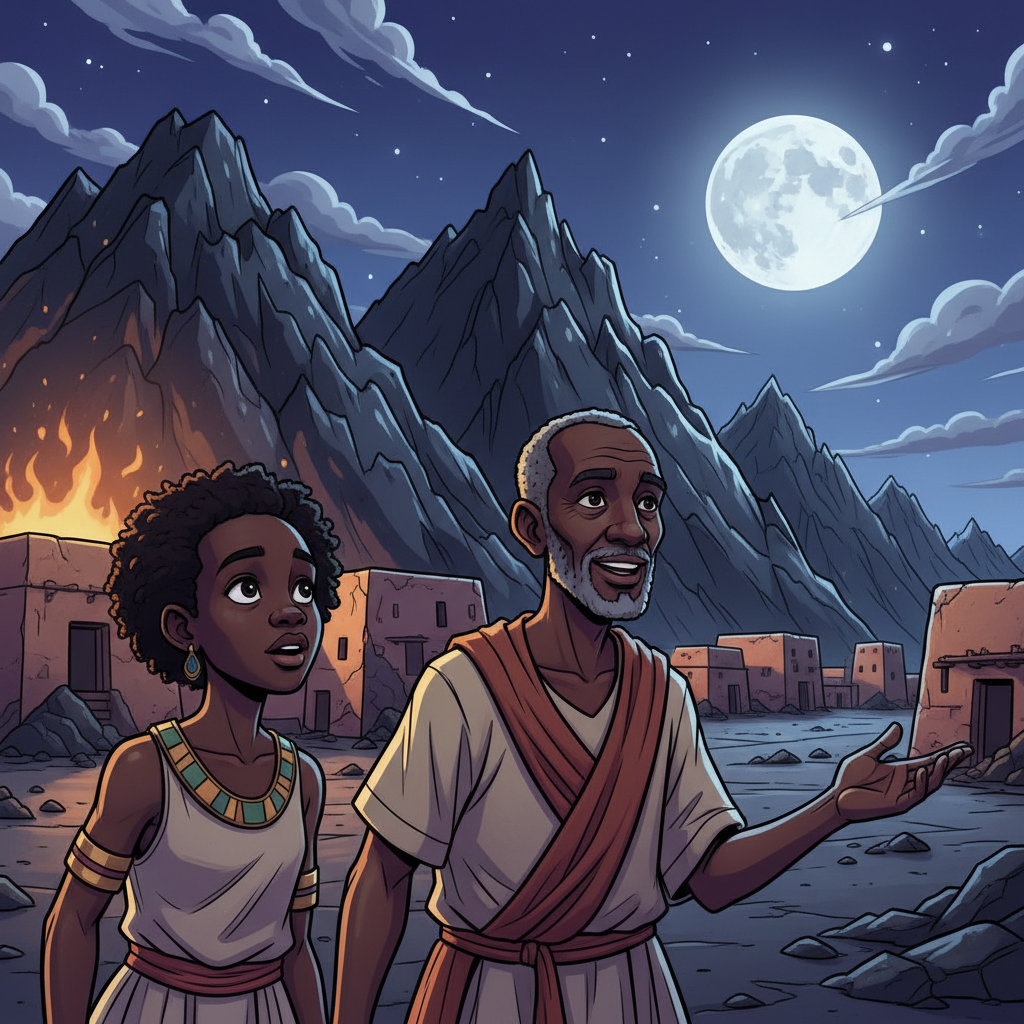
As they walked back through the smelting district, Amanishakheto noticed something she had never thought about before. Everywhere around the edges of the city, enormous mounds of slag rose from the ground — hills of glassy, dark waste rock left behind from centuries of iron smelting. Some of these mounds were taller than houses. They stretched across the landscape like monuments. "These slag heaps tell our story," Akinidad said, gesturing across the moonlit mounds. "Every grain of this waste is proof of what we built. Thousands upon thousands of smelts, generation after generation." The mounds were so massive, stretching so far across the landscape, that thousands of years later European archaeologists would stand before them in astonishment and call Meroe "the Birmingham of Africa" — comparing it to the greatest iron-producing city they knew. "Someday, even if the furnaces go cold and the city falls quiet, these mounds will remain. Anyone who sees them will know — a great civilization worked here. They will know that Africa made iron."
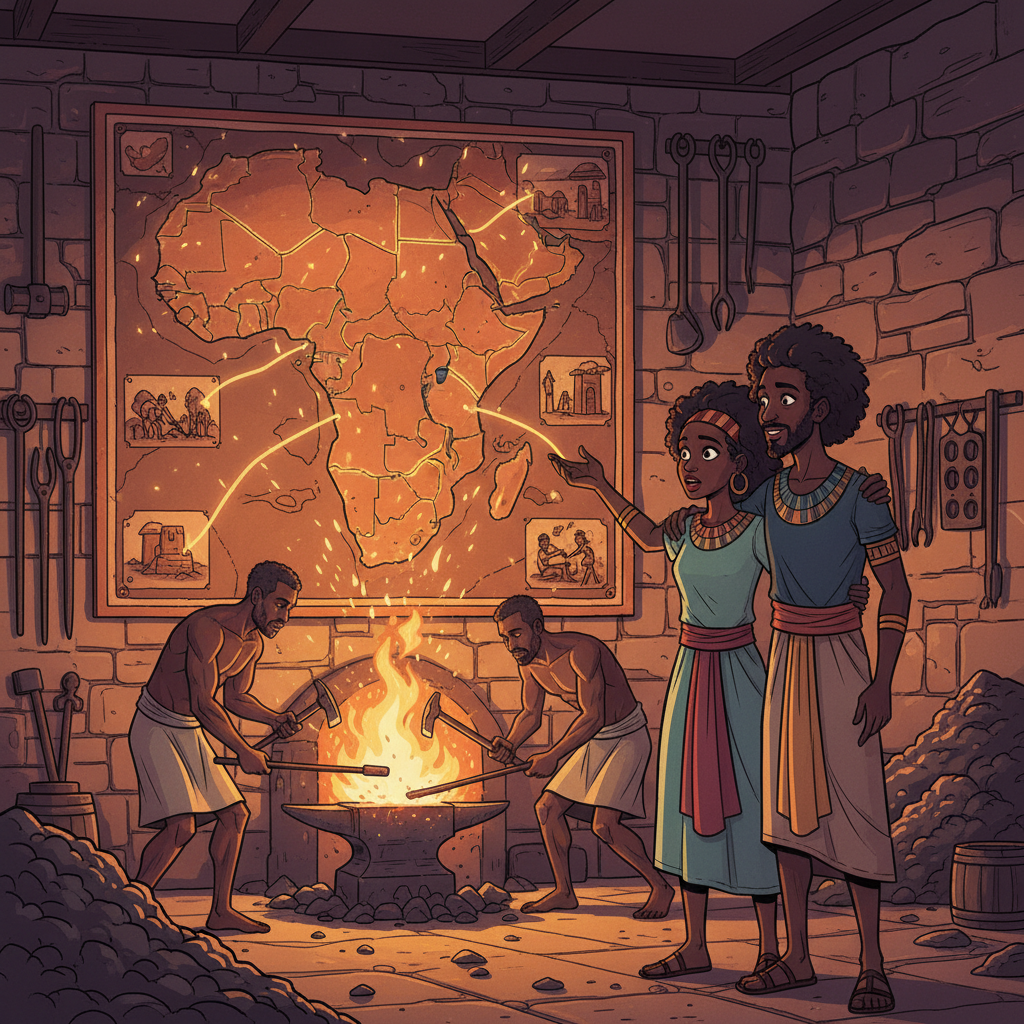
Akinidad told her how iron knowledge had traveled outward from Kush along the trade routes like seeds carried by the wind. Traders and traveling smiths brought smelting techniques south along the Nile, west across the Sahel, and into the great forests of central Africa. Wherever iron making arrived, everything changed — farmers could clear thick forests, builders could make stronger structures, and communities could defend themselves. "Knowledge does not grow smaller when you share it," Akinidad said. "It grows larger. One iron maker teaches five apprentices. Those five teach twenty-five more. This is the way of maat — wisdom must flow outward, or it dies. The Per Ankh scribes write it down, but we iron makers hammer it into the world with our hands."
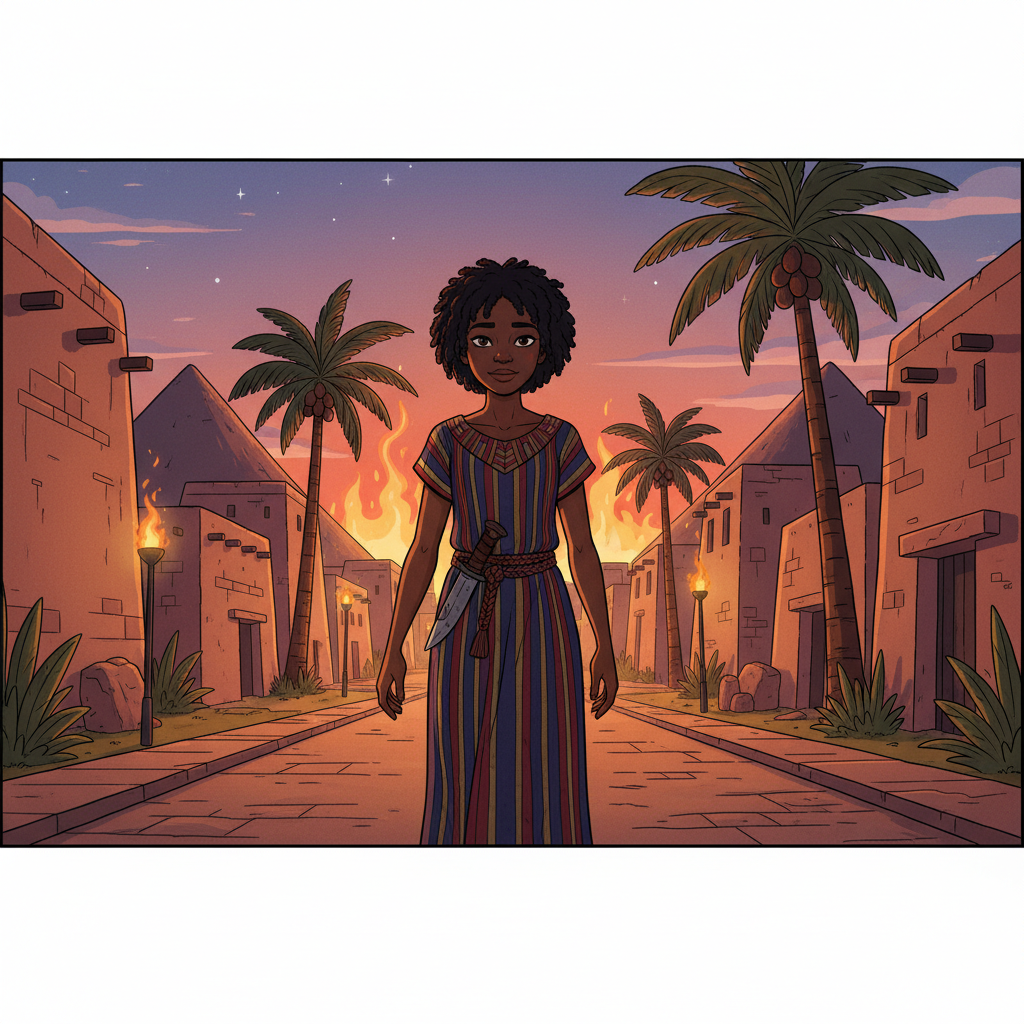
Amanishakheto walked home through the quiet streets of Meroe, her small knife tucked carefully in her belt. The stars above the city were faint compared to the glow of the furnaces behind her. She felt different — not just tired, but changed. She had gone to the smelting yard as someone who watched and wondered. She was leaving as someone who had shaped the world, even if only by a single small blade. Knowledge itself is neither good nor bad — it is heka, raw power drawn from understanding. It is what you choose to do with that knowledge that reveals your character. The iron makers of Meroe could have forged only weapons. Instead, they chose to make plows and hoe blades alongside spears. They chose to share their knowledge along the trade routes of Africa. They chose maat — and the great slag heaps of Meroe still stand today as proof of what they built.