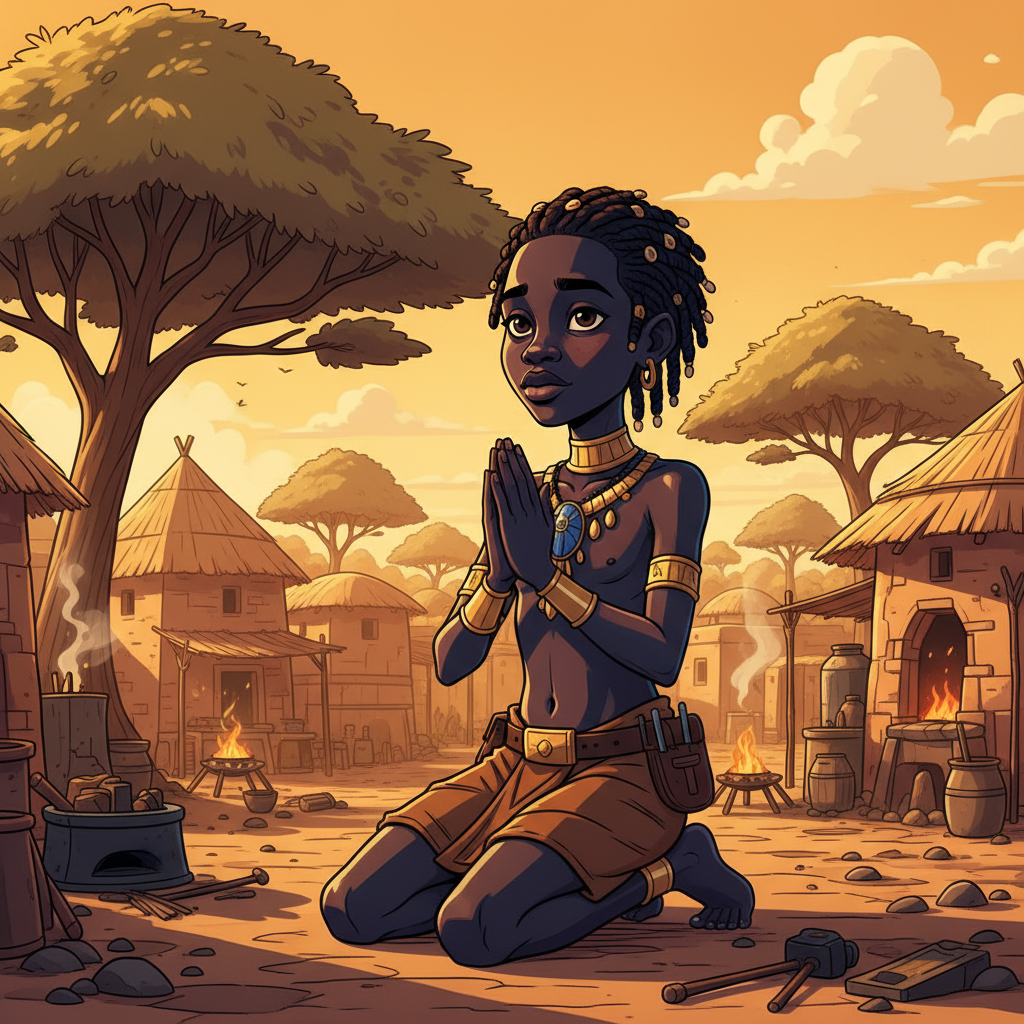
Twelve-year-old Shanakdakhete pumped the goatskin bellows with all her strength, feeding air into the clay furnace. Her ebony arms ached from hours of steady work, but she did not stop. The charcoal inside glowed white-hot, casting orange light across her deep brown face. She was apprenticed to the master smelters of Meroe in the kingdom of Kush, learning the sacred art of turning rock into iron. Around her, the great workshop hummed with activity. Other apprentices carried baskets of charcoal on their heads. Older smelters checked the temperature of their furnaces by the color of the flame. The air smelled of smoke and hot earth. This was the most important place in all of Meroe.
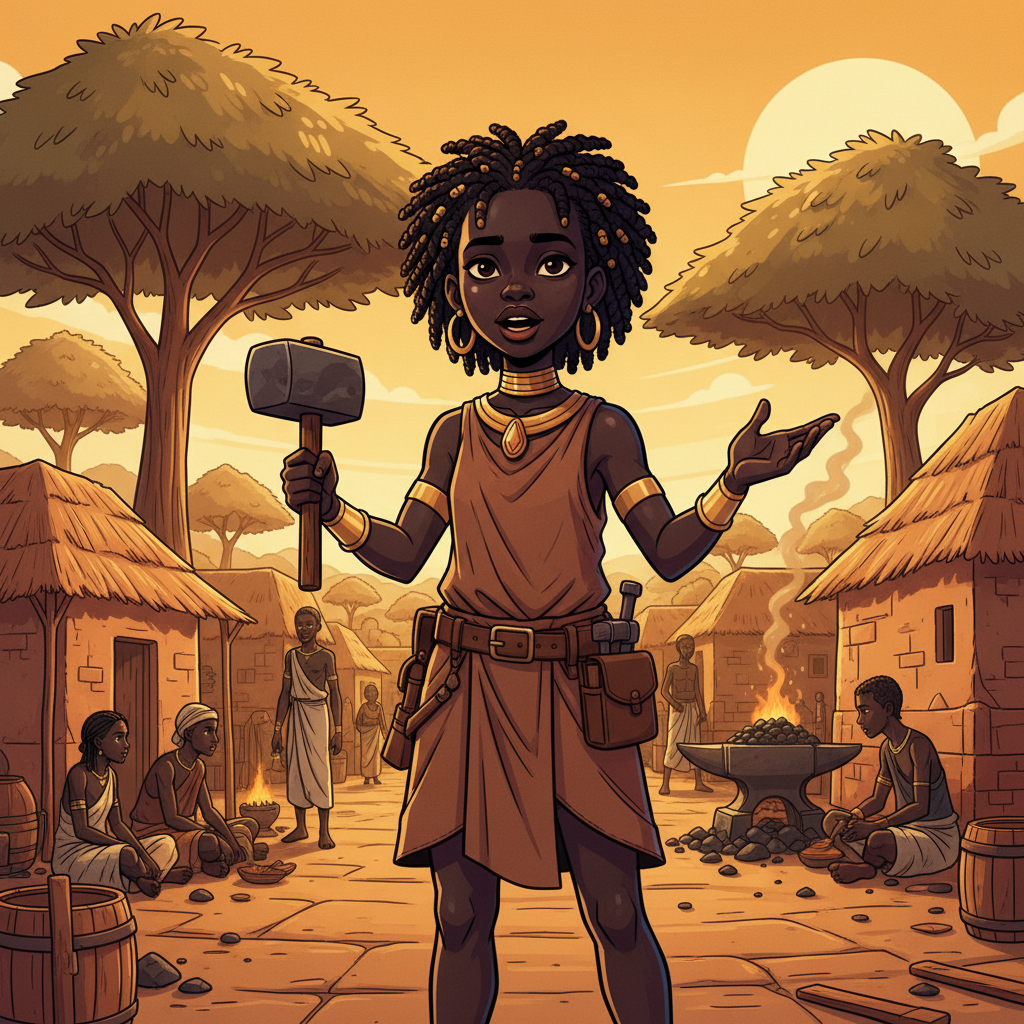
Her teacher, a deep brown-skinned woman called Tabiry, watched the furnace carefully. Tabiry had been smelting iron for thirty years. Her strong hands were rough from decades of shaping hot metal, and her dark eyes could read a furnace the way a scribe reads papyrus. "Our ancestors discovered how to pull iron from stone," she said proudly. "Meroe became the greatest iron-producing city in all of Africa. See the slag heaps?" She pointed to enormous mounds of waste material stretching across the landscape like dark hills. "Each one is proof of what our people built. Scholars will marvel at those mounds for thousands of years."
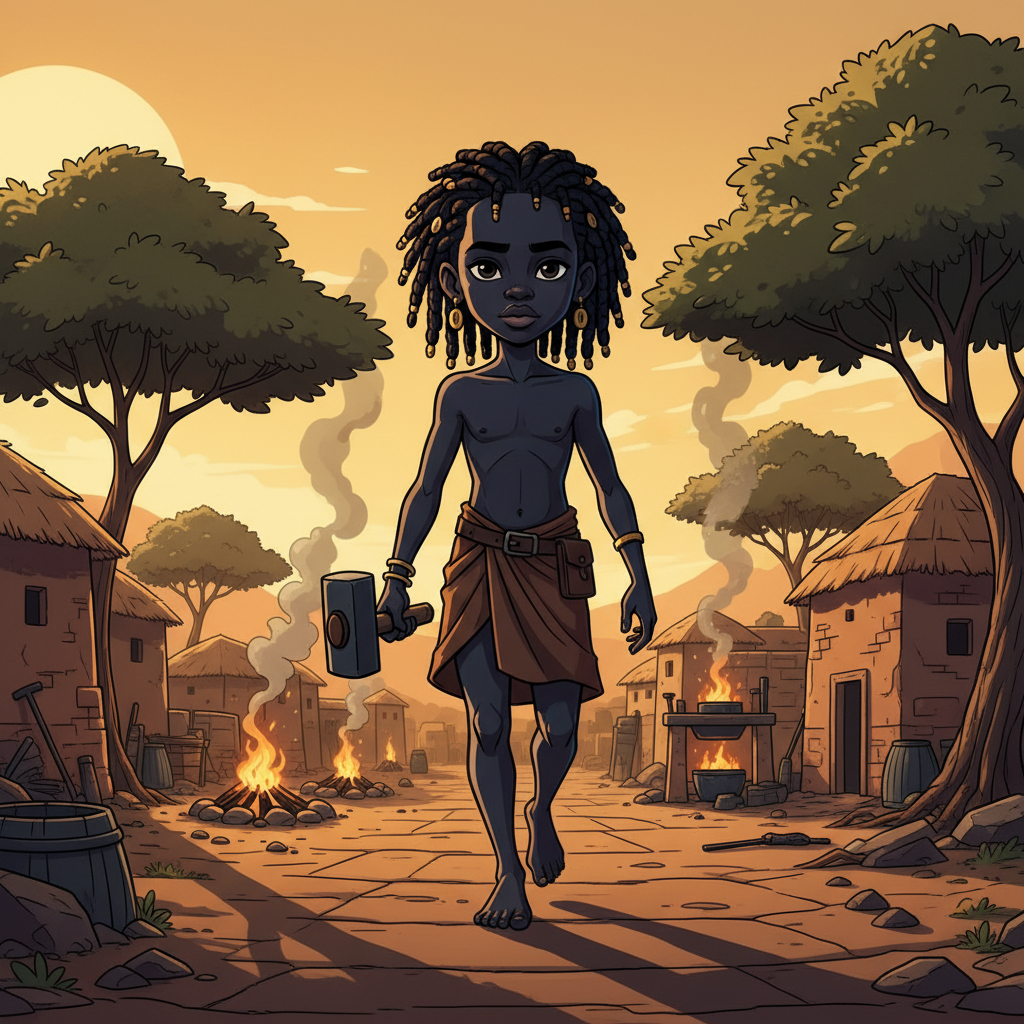
Shanakdakhete gazed at the slag heaps rising against the wide blue sky. There were dozens of them, some taller than the royal palace walls. Each mound represented countless smelts — thousands of furnaces fired, thousands of iron blooms pulled from the earth. The land around Meroe was rich with ironstone, and the forests along the Nile provided wood for charcoal. Her people had recognized this gift of the land generations ago. They built their furnaces near the river where the wind blew steady and strong. The location was perfect. Kush had everything needed to master iron, and master it they did.
Tabiry knelt beside the furnace and pressed her ear close, listening to the fire. "You must learn to hear the metal speaking," she told Shanakdakhete. "When the sound changes from a roar to a hum, the iron is separating from the stone. That is the moment of transformation." Shanakdakhete listened carefully. At first she heard only the rush of flames. But slowly, beneath the crackling, she noticed a low, steady tone — almost like a song. Her dark brown eyes went wide. "I hear it!" she whispered. Tabiry smiled, her ebony face warm with pride. "Good. Your ka is awake. The spirit inside you recognizes the spirit inside the iron."
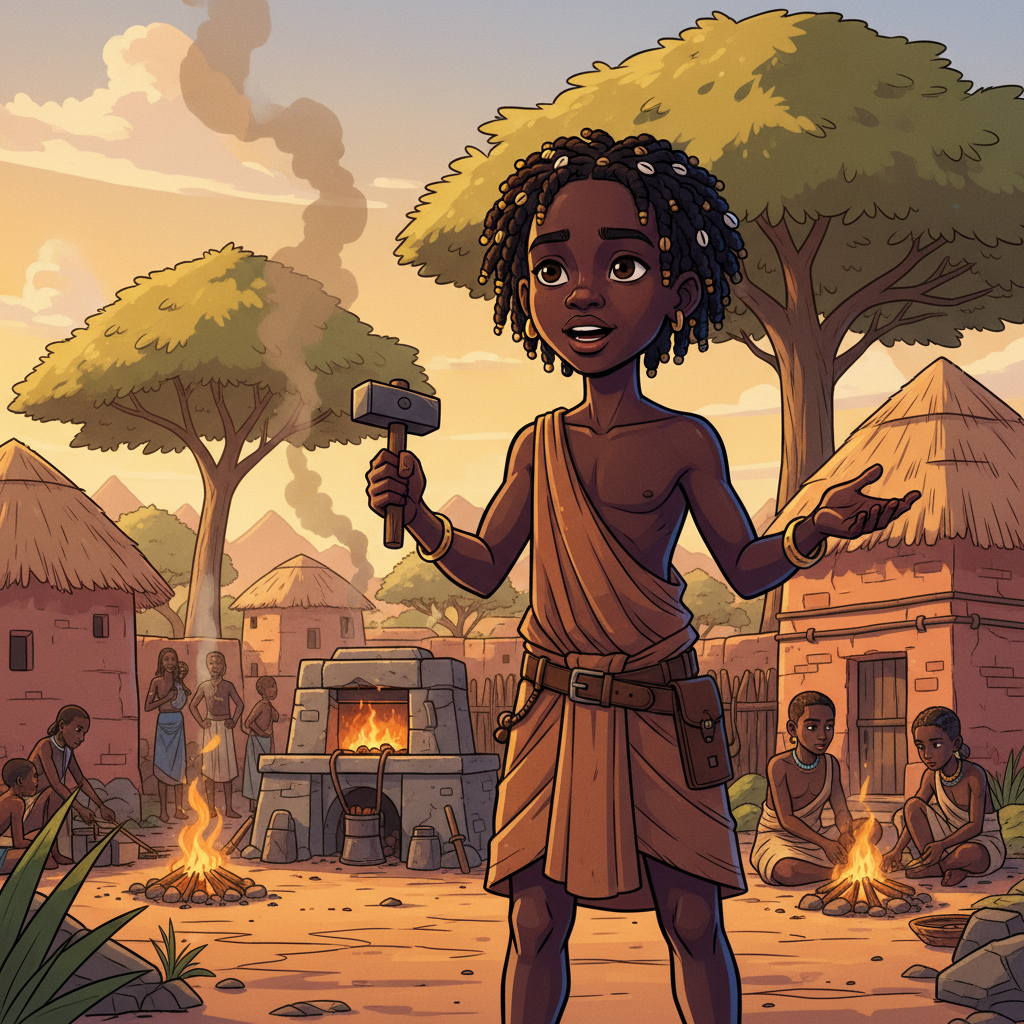
When the smelt was complete, Tabiry cracked open the clay furnace and pulled out a glowing bloom of raw iron with long tongs. The bloom pulsed with orange and red light. Shanakdakhete stared in wonder at the transformation. From simple rock and fire, her people created the strongest metal known to the world. Tabiry set the bloom on a flat stone anvil. "This is what changed everything," she said. "Before iron, our farmers used stone tools that broke easily. Our builders struggled with soft copper. But iron made stronger plows, better axes, and sharper blades. This technology transformed farming and building across the entire continent of Kemet and beyond."
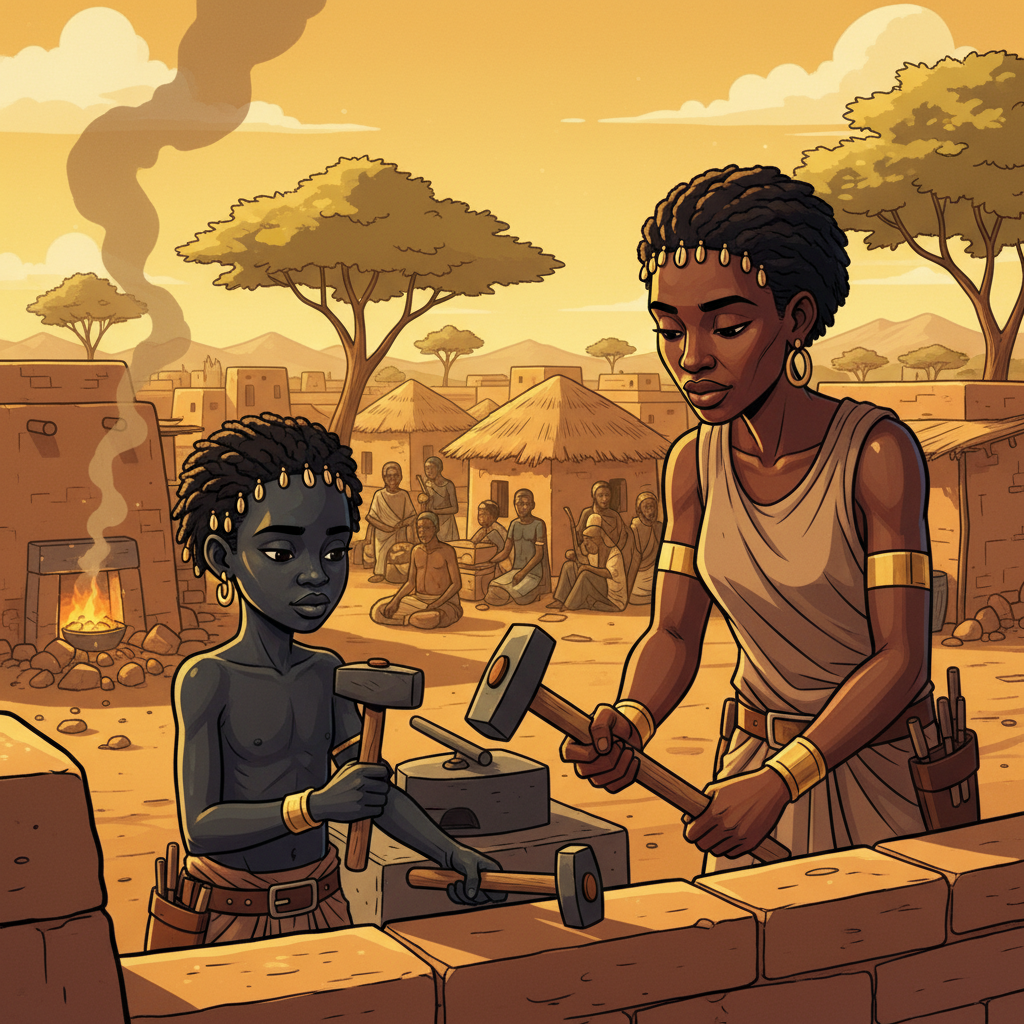
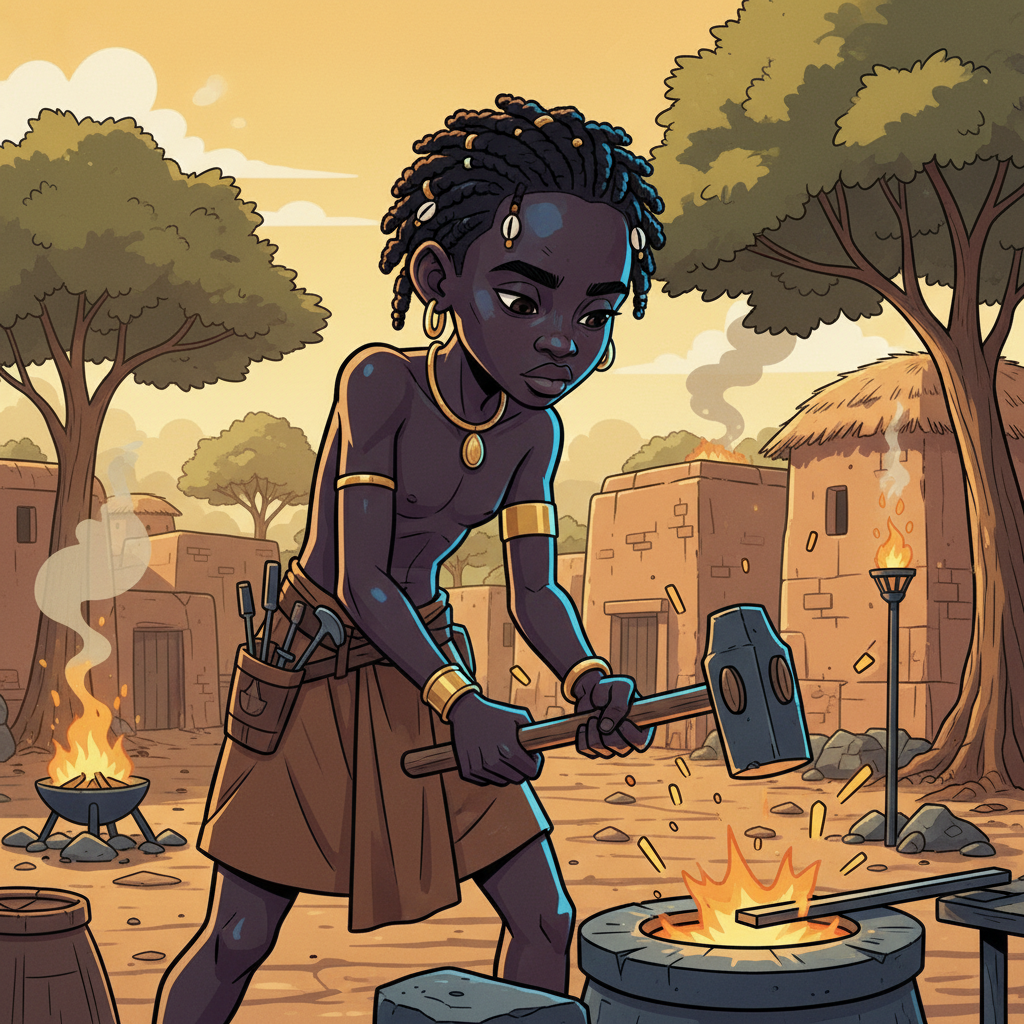
Tabiry began to hammer the bloom with powerful, rhythmic strikes. Sparks flew from the hot metal like tiny stars. With each blow, she folded impurities out of the iron, making it stronger and more pure. Her dark brown arms moved with a grace that came from years of practice. "Watch how I fold the metal," she instructed. "Each fold removes weakness. Each strike adds strength. A good smelter does not rush. Patience and skill matter more than force." Shanakdakhete memorized every movement. She understood that this knowledge had been passed from teacher to student for generations, an unbroken chain stretching back centuries.
"Iron knowledge did not stay in Meroe," Tabiry said, still shaping the hot metal with careful precision. "Travelers and traders carried our smelting techniques south and west along the great trade roads. Merchants took iron goods down the Nile to Kemet and across the desert by camel caravan." She paused to examine her work, turning the iron in the firelight. "People across Africa learned and adapted the craft to suit their own lands and needs. Some improved our methods. Some invented entirely new techniques. One discovery, shared freely, lifted many nations. That is how knowledge is meant to work — it grows when you give it away."
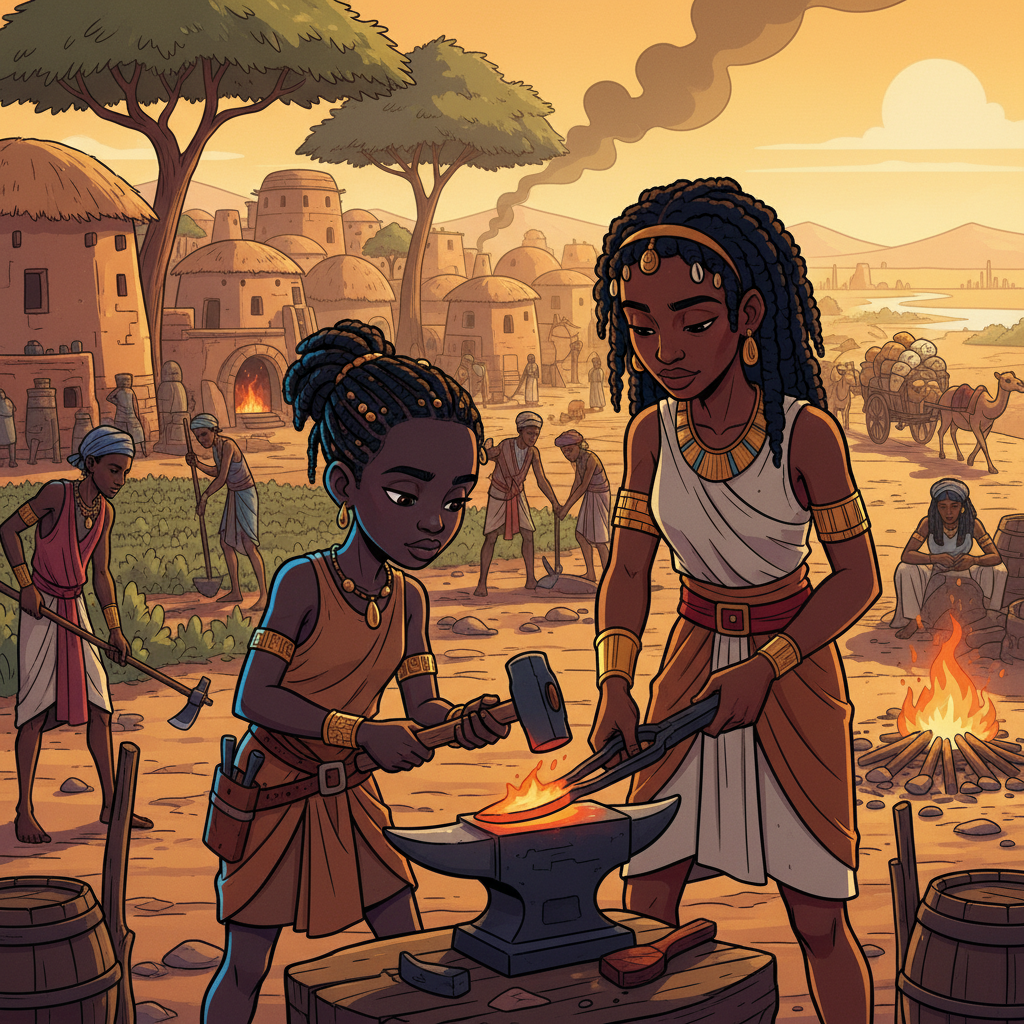
Shanakdakhete thought about all the places iron had traveled from Meroe. She had seen traders arrive from distant kingdoms, their caravans loaded with gold, ivory, and exotic cloth. They came to buy Meroe's famous iron tools and weapons. In return, they brought goods from across the known world. The trade roads connected Kush to kingdoms far to the west and deep into the southern forests. Iron hoes helped farmers grow more food. Iron axes helped builders clear land for new villages. Iron needles helped weavers create fine cloth. One metal, shaped by Kushite hands, helped countless communities thrive and grow stronger.
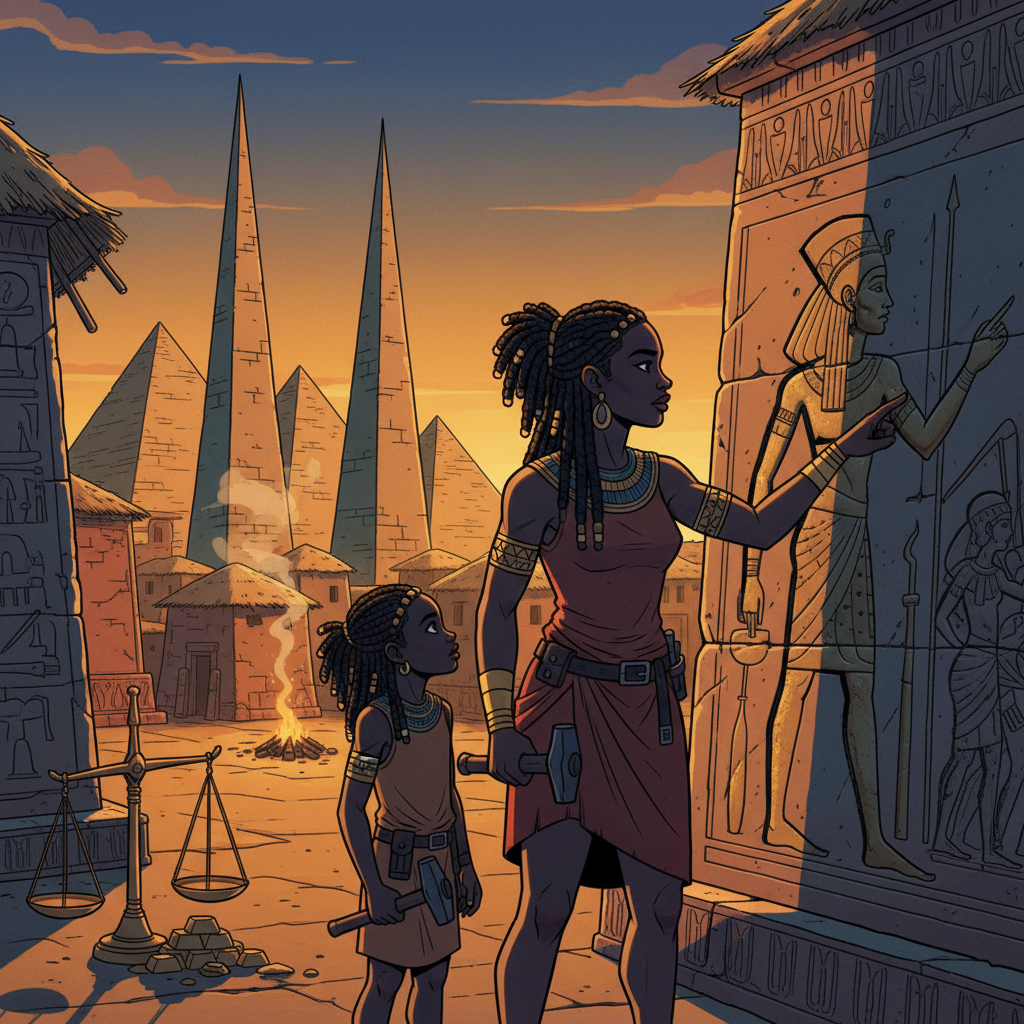
That evening, Tabiry took Shanakdakhete to the temple district of Meroe. Tall stone pyramids rose against the sunset sky, their sharp points catching the last golden light. These were the tombs of the kandakes and kings of Kush. Carved images of powerful queens decorated the stone walls. "Look at Kandake Amanirenas," Tabiry said, pointing to a carved relief of a queen leading warriors. "She fought the Roman Empire itself and won favorable peace terms. She was fierce, but she used her power to protect her people, not to dominate others. Her strength came from maat — truth, justice, and balance. That is real power."
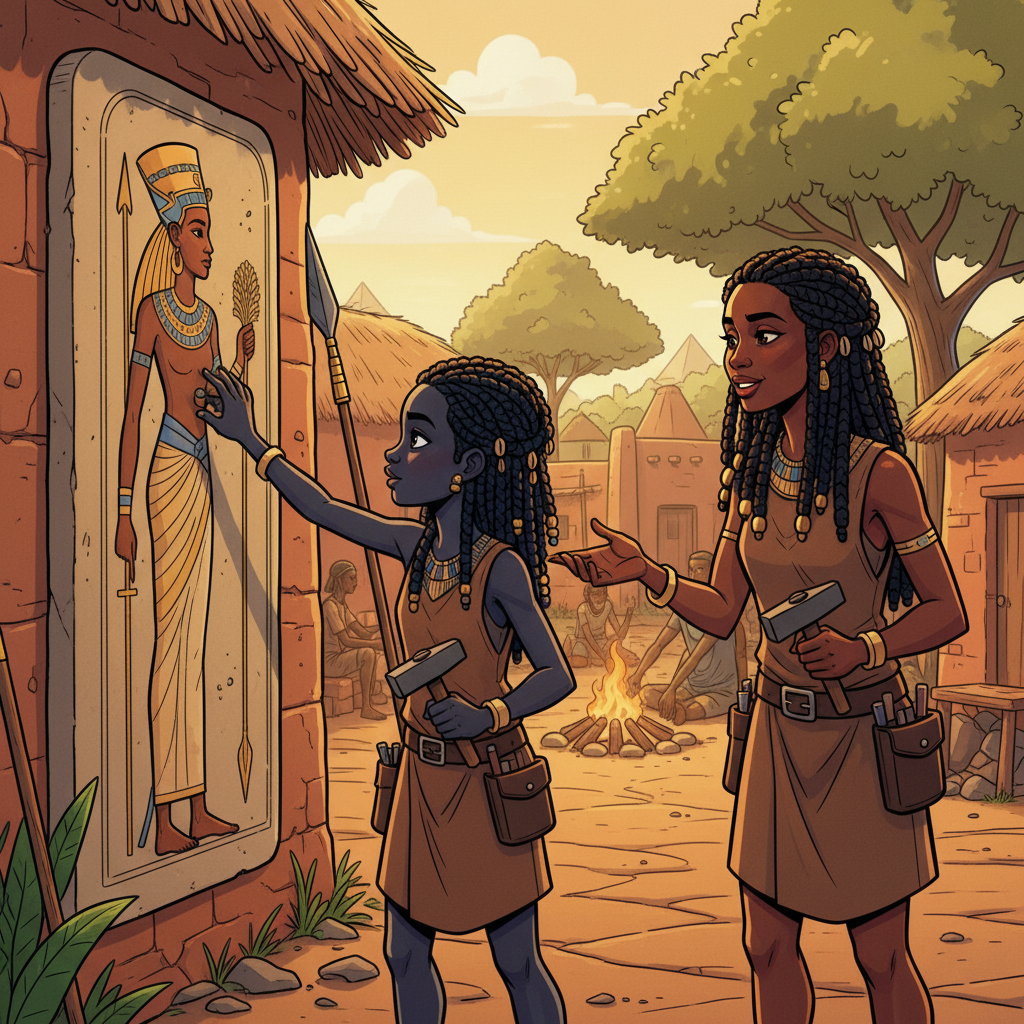
Shanakdakhete traced her fingers over the carved image. Kandake Amanirenas stood tall and proud, her deep brown skin rendered in careful detail by the ancient artist. She wore a crown and held both a spear and a sheaf of grain — symbols of protection and plenty. "The kandakes understood something important," Tabiry continued, her dark eyes reflecting the fading light. "A ruler's ka — her inner spirit — must be guided by maat. A queen who rules with justice makes her people strong. A queen who rules with isfet — chaos and cruelty — destroys everything, including herself. The kandakes chose maat, and Kush prospered for centuries."
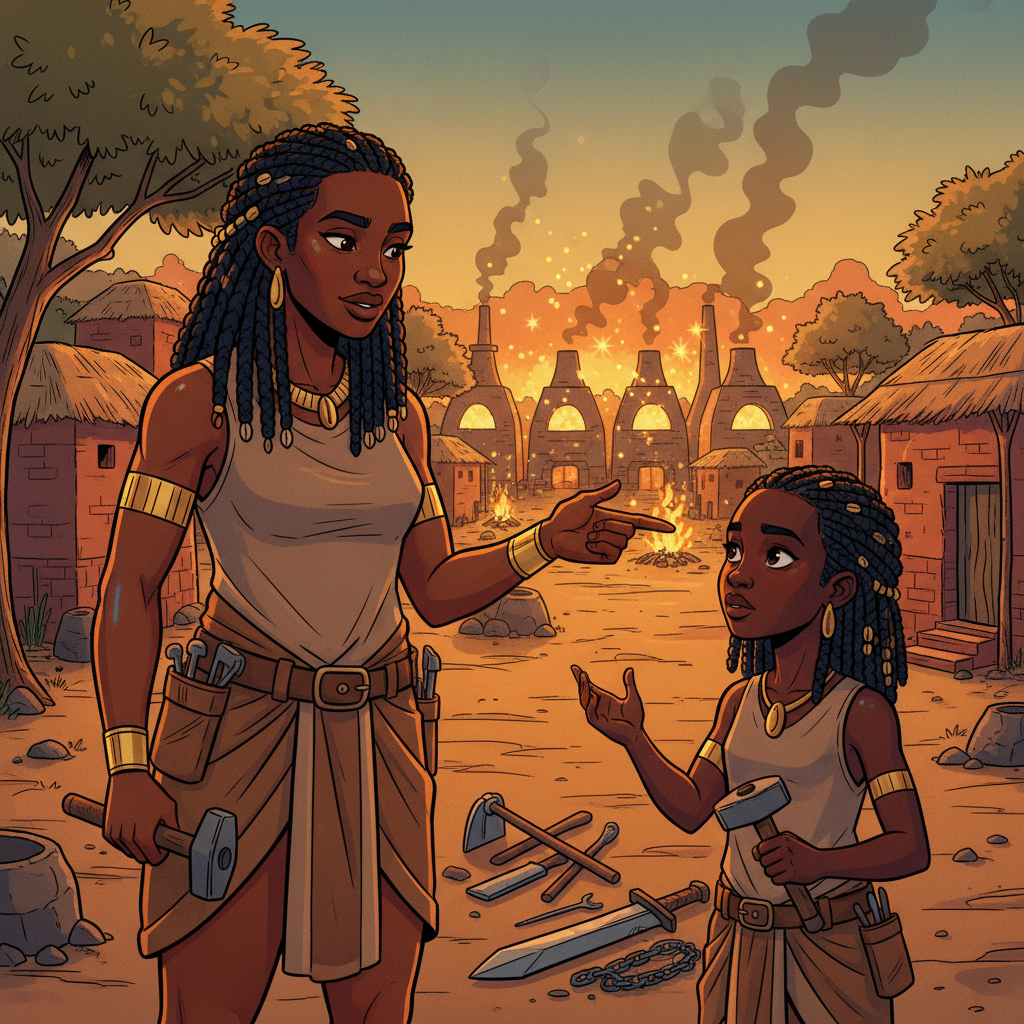
"But remember this," Tabiry said as they walked back toward the smelting grounds. The furnaces glowed in the darkness like a field of earthbound stars. Her ebony face was lit by the warm orange light. "Every powerful technology carries a choice. Used with maat, iron feeds people — it makes hoes for farming, tools for building, and needles for healing." She stopped walking and looked directly at Shanakdakhete. "Used with isfet, that same iron makes weapons for conquest and chains for captives. The metal does not choose. We do. The iron is innocent. The responsibility belongs entirely to the hands that shape it and the minds that direct those hands."
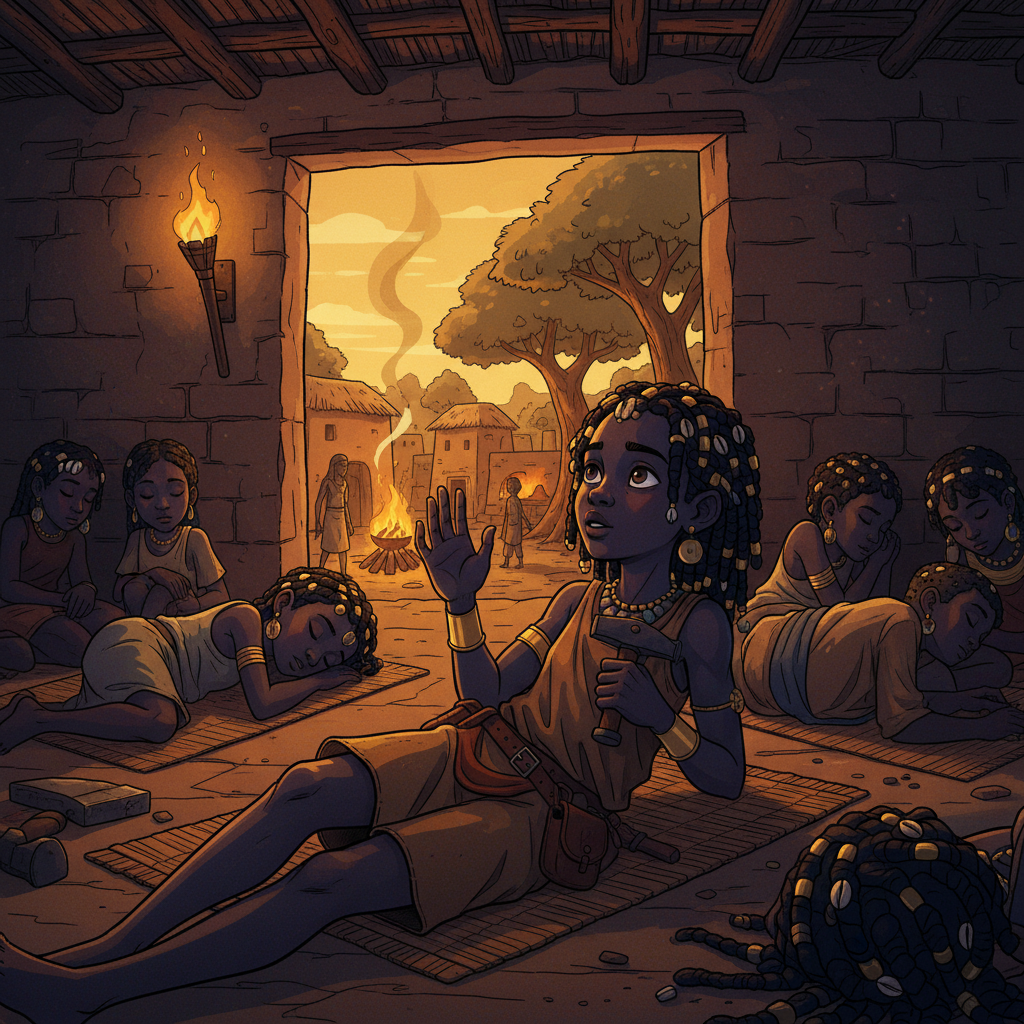
That night, Shanakdakhete could not sleep. She lay on her reed mat staring at the ceiling of the apprentice quarters. The other young smelters slept peacefully around her, but her mind was spinning with everything Tabiry had taught her. She thought about the raw power locked inside every piece of ironstone. That power could become a plow that fed a family or a blade that harmed one. The same fire, the same bellows, the same skill — the only difference was the intention of the maker. She whispered into the darkness, "I will choose maat. My ka will guide my craft toward justice." The words felt like a promise to herself and to her ancestors.
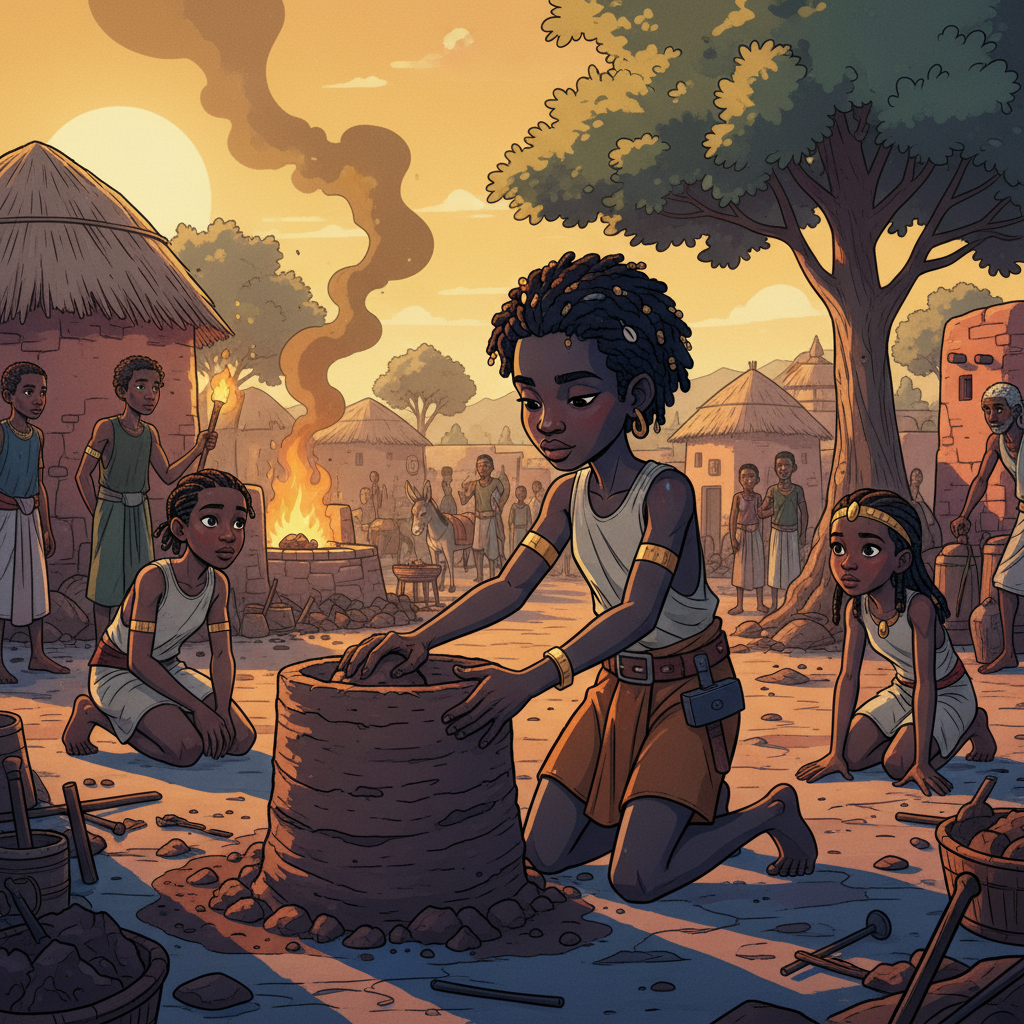
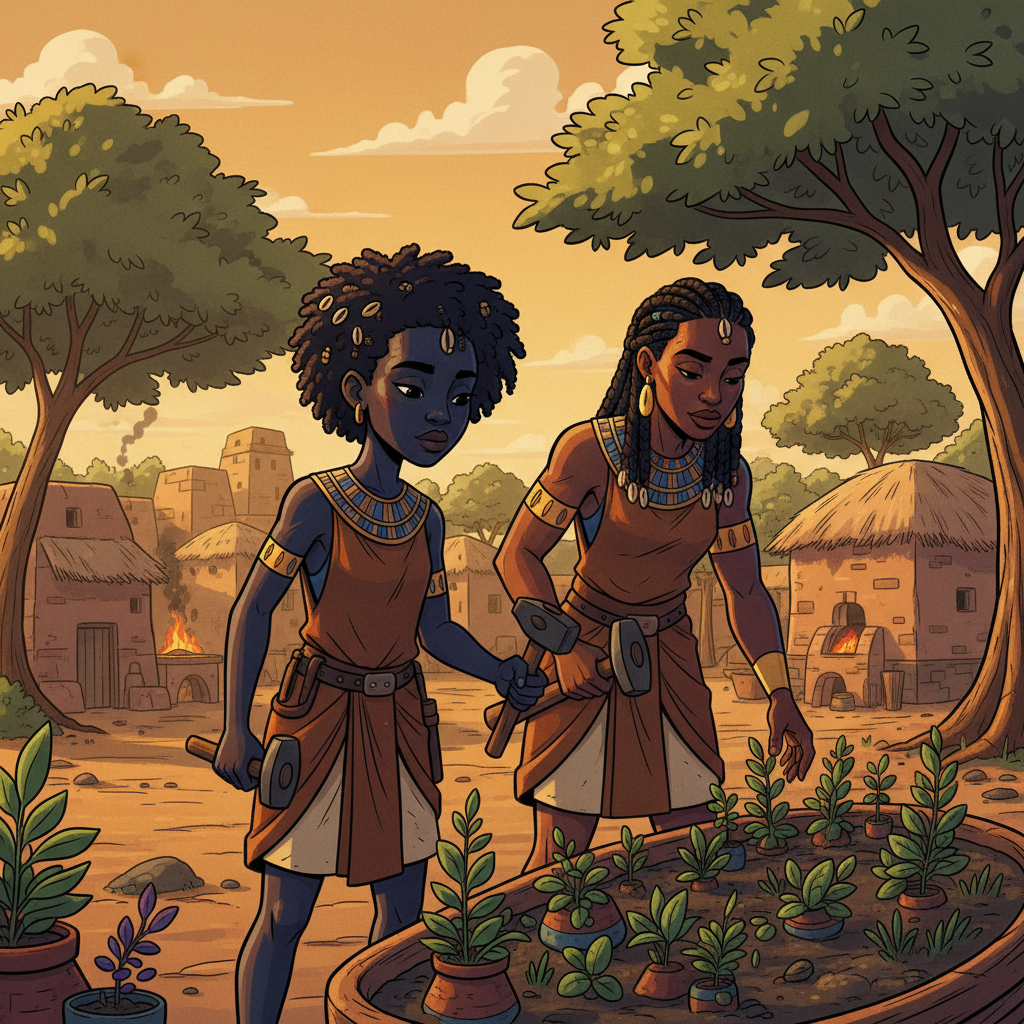
The next morning, Tabiry gave Shanakdakhete her first solo task. "Today you will build your own furnace from river clay," she said. "Every master smelter of Meroe must know how to build from the ground up. You cannot understand iron if you do not understand the fire that births it." Shanakdakhete gathered clay from the banks of the Nile. The dark, rich mud felt cool in her hands. She shaped the furnace walls carefully, remembering Tabiry's instructions about thickness and airflow. Other apprentices watched with curiosity. Building a furnace was a rite of passage in Meroe. If the walls cracked during the smelt, weeks of work would be lost.
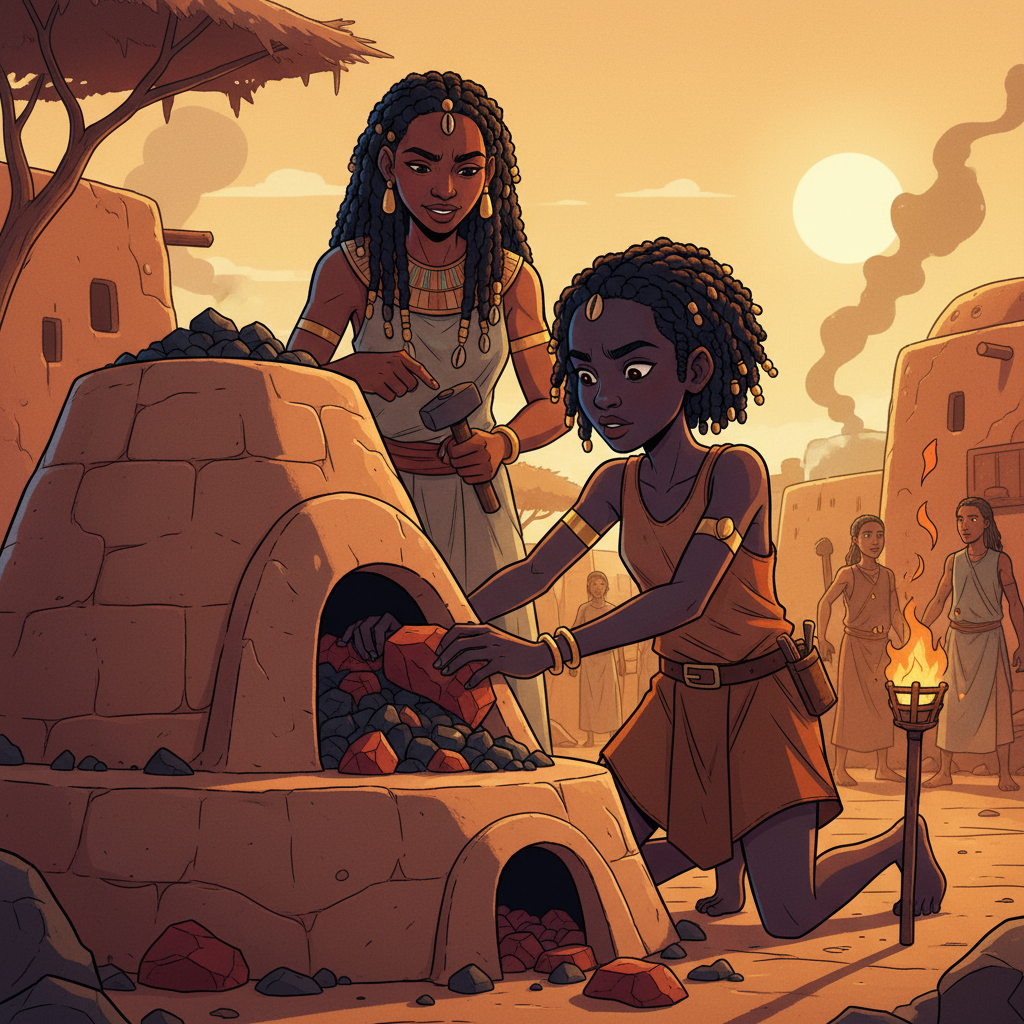
For three days, Shanakdakhete shaped and dried her furnace under the hot Kushite sun. She smoothed every surface and tested every joint. Tabiry inspected the work each evening, pointing out places that needed strengthening. "The furnace must be strong enough to hold the fire's power," she said. "Like a person, it needs a solid foundation." On the fourth day, the furnace was ready. Shanakdakhete packed it with layers of charcoal and ironstone, just as she had been taught. Her deep brown hands trembled slightly with excitement and nervousness. This was her moment. If the smelt succeeded, she would move one step closer to becoming a master smelter of Meroe.
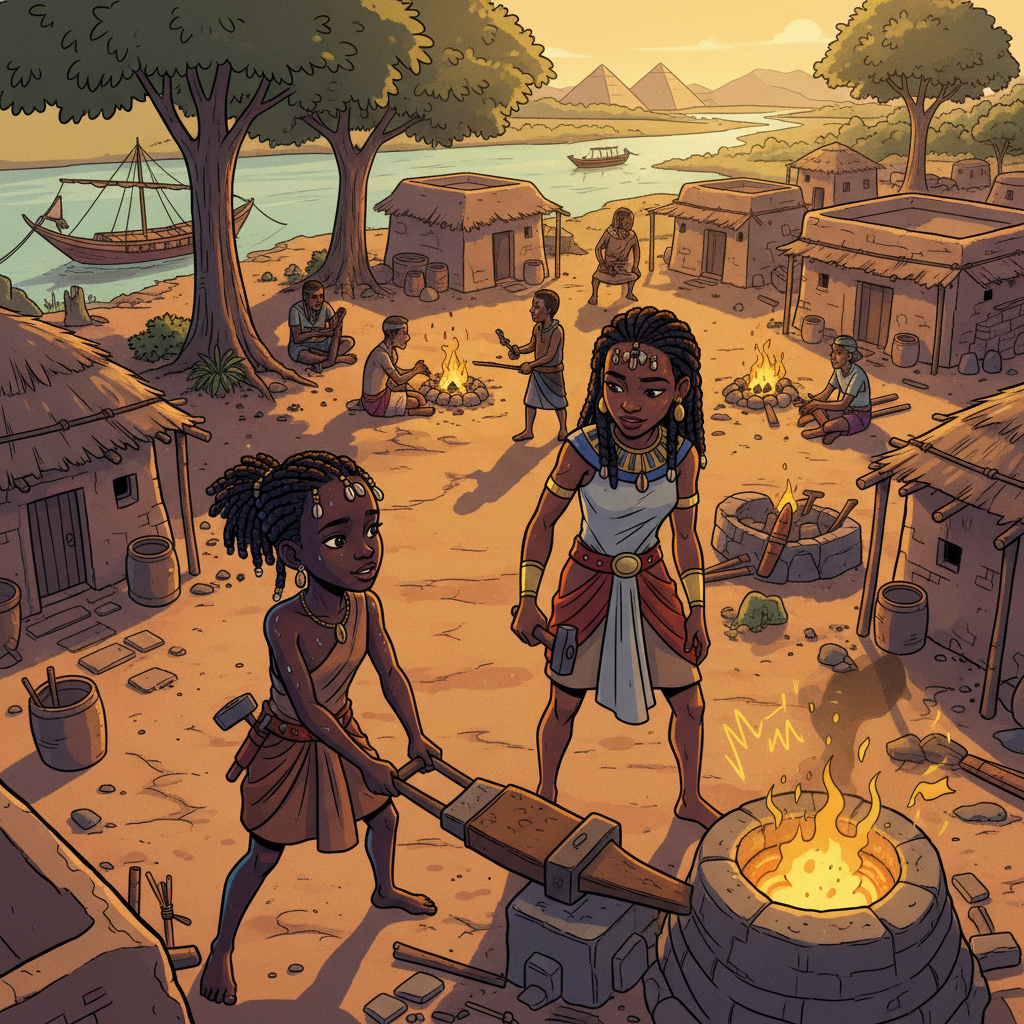
Shanakdakhete pumped the bellows steadily, feeding air into her furnace. The temperature climbed. She listened for the change in sound that Tabiry had described — the shift from roar to hum. Sweat ran down her ebony skin, but she kept her rhythm steady and strong. Hours passed. The sun moved across the sky. Other apprentices took breaks, but Shanakdakhete stayed at her post. She thought about the kandakes who had shown endurance in battle and patience in leadership. If they could face armies, she could face a furnace. Finally, she heard it — the low, singing hum of iron separating from stone. "Tabiry!" she called. "It is ready!"
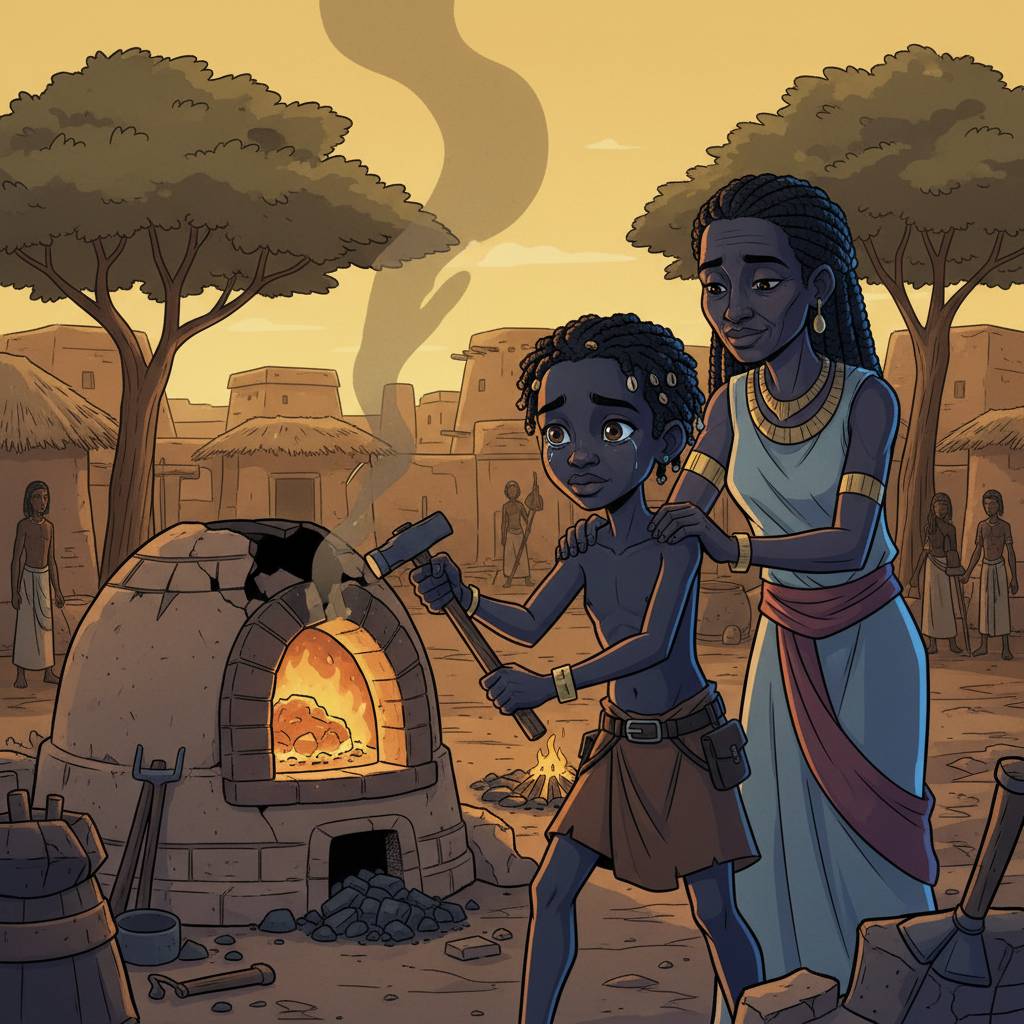
Tabiry came quickly and examined the furnace with experienced eyes. She nodded slowly. "Crack it open," she said. Shanakdakhete broke the clay shell with a careful strike. Inside, glowing like a captured sunset, sat a bloom of raw iron. It was small and rough, but it was real iron born from her own furnace. Tears of pride filled Shanakdakhete's dark brown eyes. She had done it. She had taken rock from the earth and fire from the charcoal and created metal with her own hands. Tabiry placed a hand on her shoulder. "Your ka is strong," she said quietly. "You carry the knowledge of our ancestors now. Use it with maat — always."
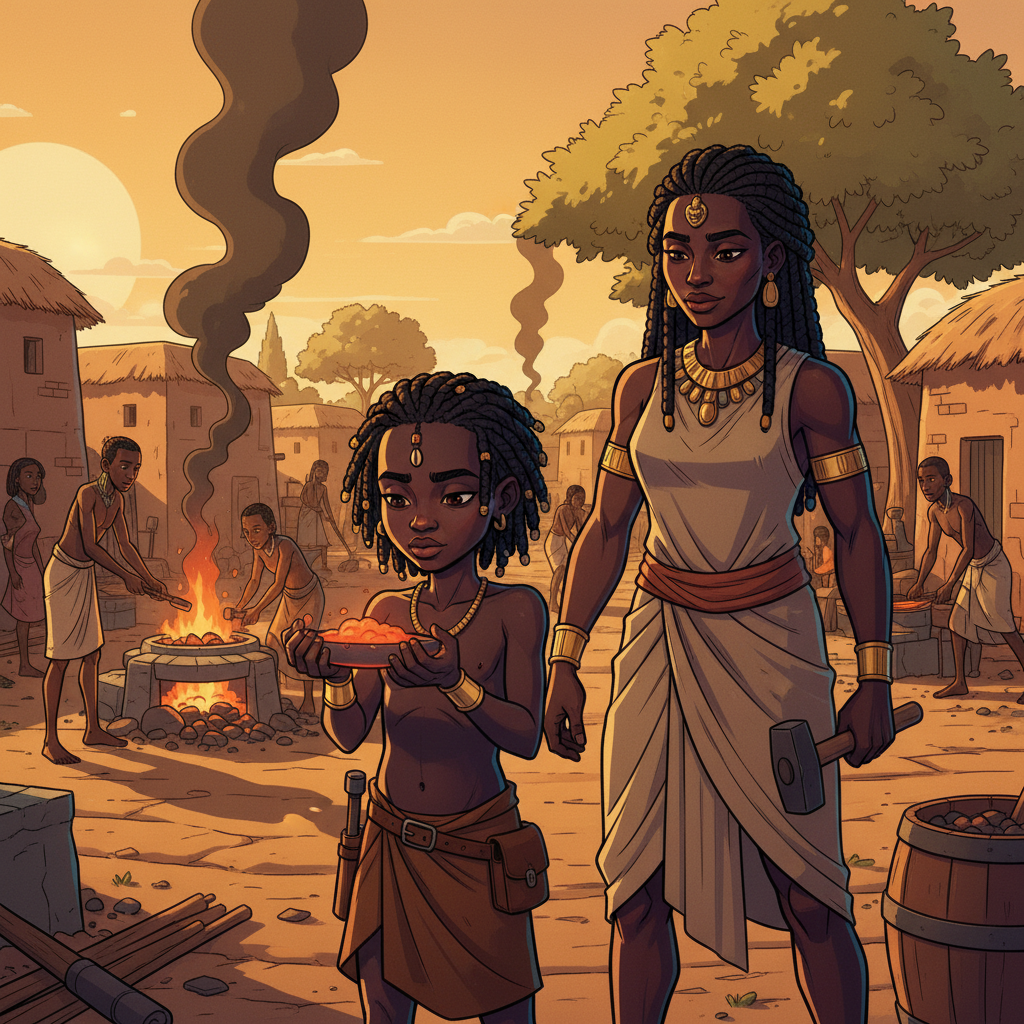
Shanakdakhete thought about the kandakes — the powerful queens of Kush — who had ruled wisely for generations. Kandake Amanirenas, Kandake Amanitore, and others had used Meroe's iron wealth to build their kingdom strong, not to crush their neighbors. They built temples, expanded trade, and fed their people. Power guided by maat builds. Power guided by isfet destroys. She held her small iron bloom in both hands and made a silent vow. She would become a master smelter and teach others as Tabiry had taught her. She would pass the knowledge forward with wisdom, ensuring that every student understood the choice that comes with power. The chain of knowledge would not break.
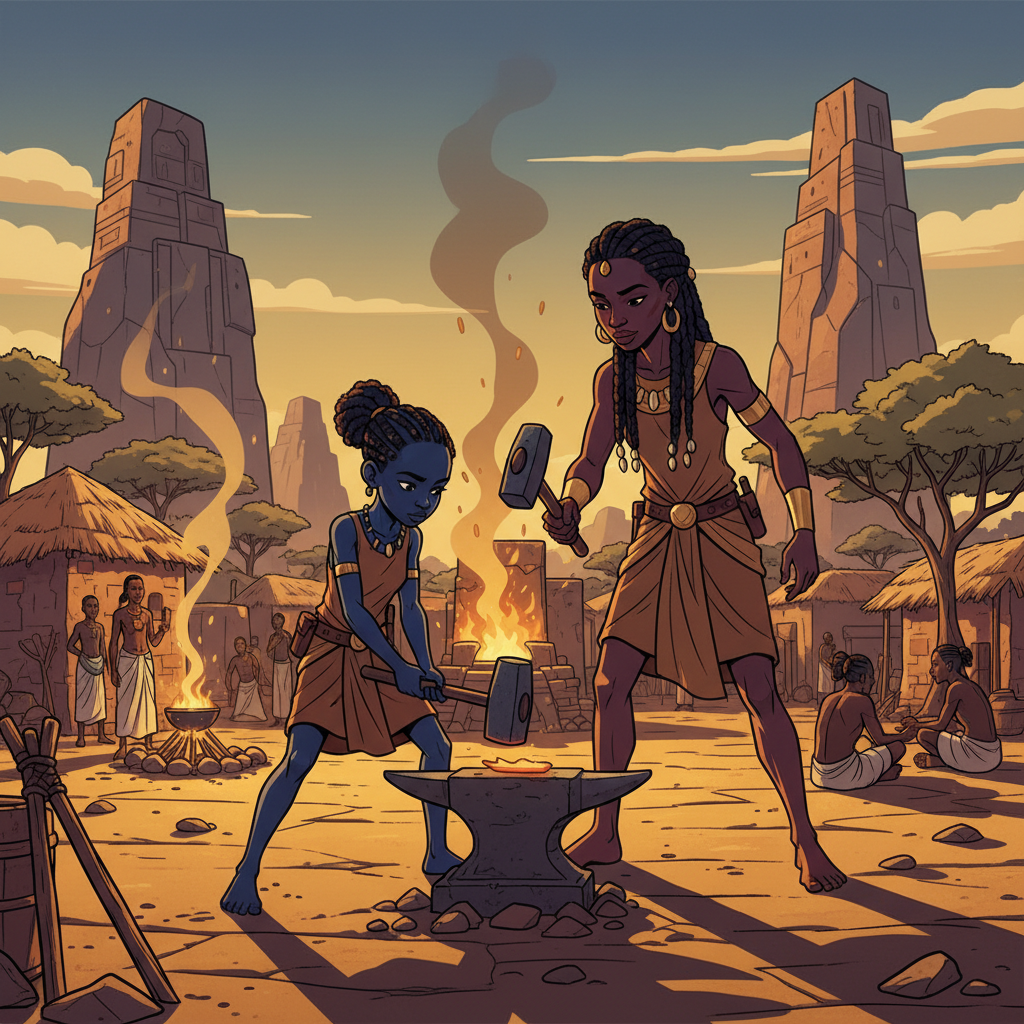
Today, technology still carries the same choice the iron workers of Meroe understood thousands of years ago. Computers, machines, and science can heal or harm depending on who controls them and why. Every invention — from iron smelting to the internet — comes with a responsibility to use it for good. The slag heaps of Meroe still stand in modern Sudan, enormous monuments to African innovation and skill. They remind us that the people of Kush were pioneers of technology who understood that true power is not just the ability to create. True power, guided by maat, is the wisdom to ask: will this help or will this harm? That question is the iron secret of Meroe.