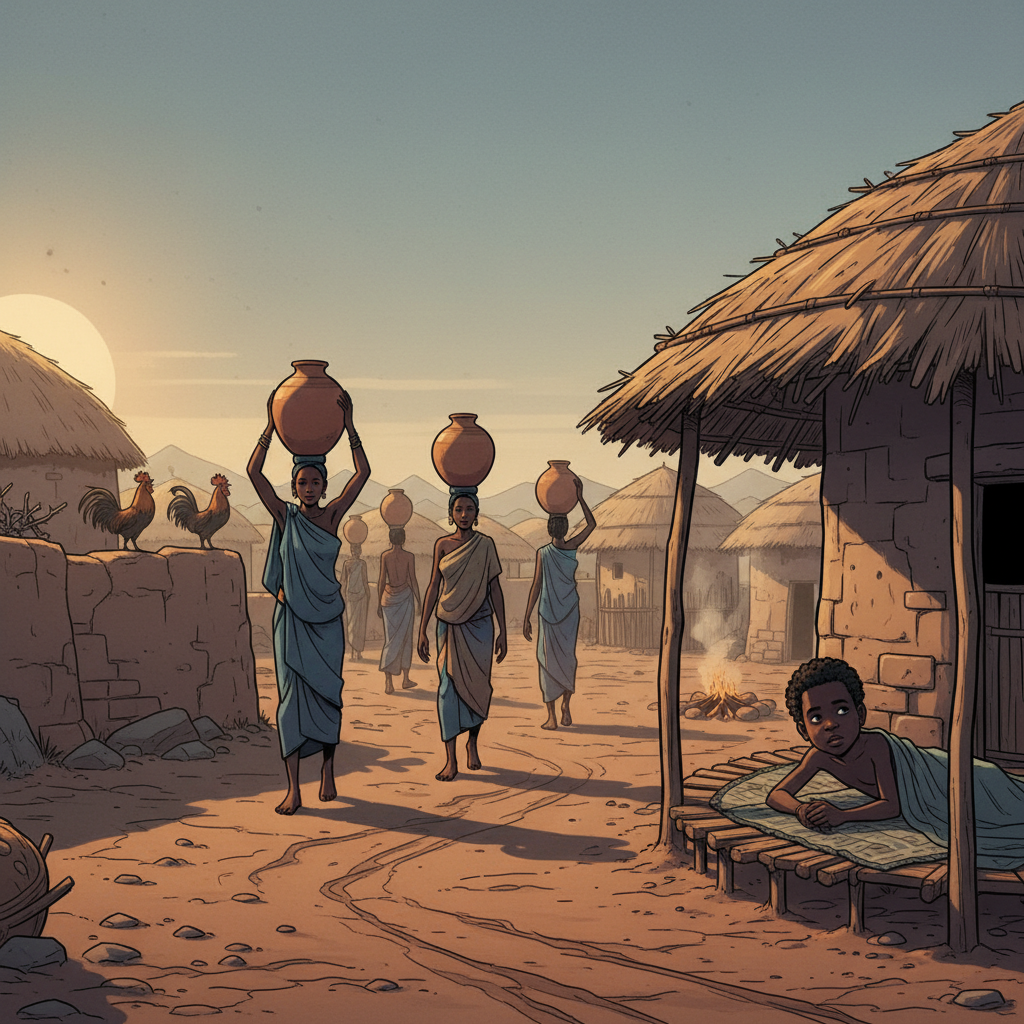
The village of Mema woke slowly in the gray light before dawn, the way it always did — with roosters calling from the tops of mud-brick walls and the soft pad of women's feet on packed earth as they carried water jars balanced on their heads. The air smelled of wood smoke and shea butter and the faint dusty sweetness of the dry season, when the harmattan winds blew fine sand from the great desert to the north. In a small compound at the edge of the village, a boy named Sundiata lay on his sleeping mat, listening to the world wake up around him. He was seven years old, with skin the color of rich earth after the first rain, and dark brown eyes that held a quiet fire even when he smiled. His hair was thick and tightly coiled, cut close to his round head by his mother's careful hands.
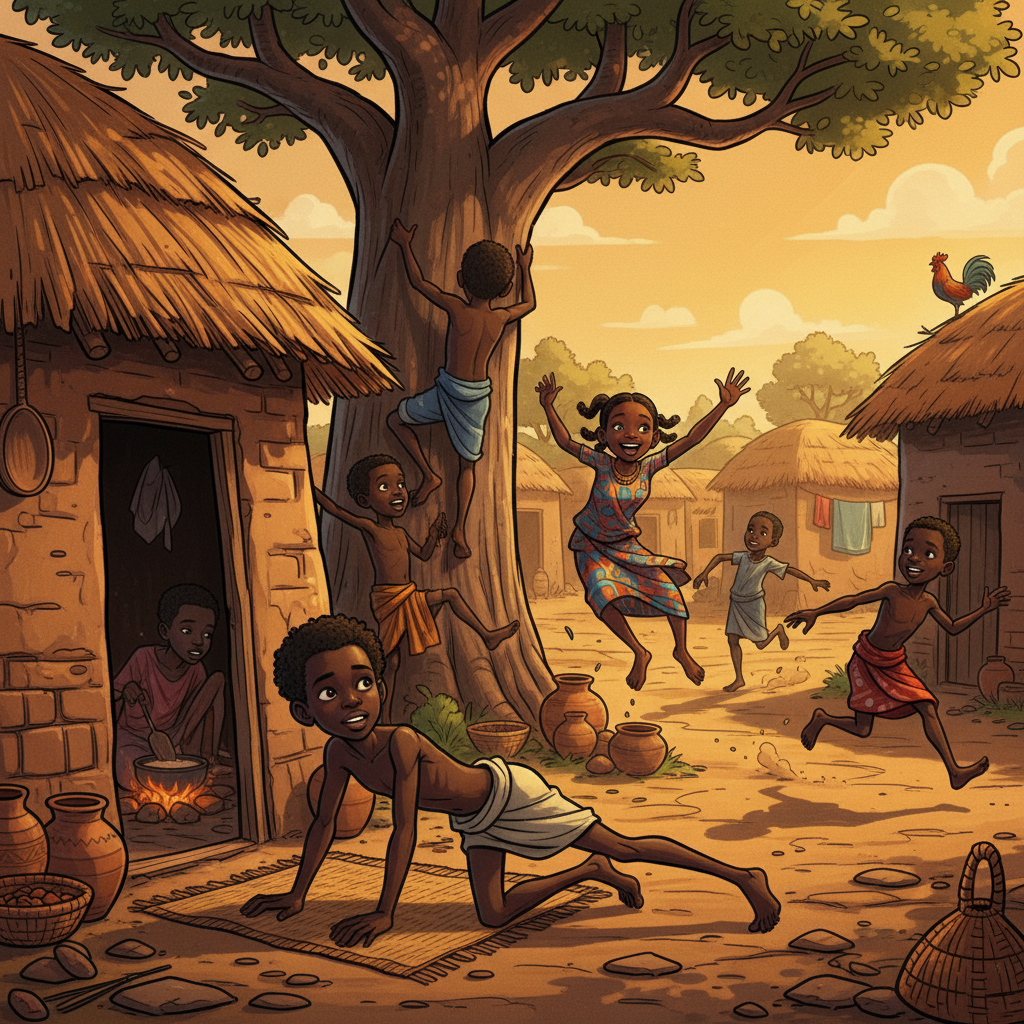
Sundiata could hear everything from his mat — the clatter of clay pots, the murmur of his mother Sogolon singing softly as she prepared the morning porridge, the high bright laughter of other children already running barefoot through the village paths. He could hear all of it, and he wanted to be part of it more than anything in the world. But Sundiata could not walk. His legs, thin and twisted beneath him, would not obey no matter how fiercely he commanded them. Since the day he was born, they had refused to carry him the way other children's legs carried them — running, jumping, dancing, climbing the thick trunks of baobab trees. Sundiata could only crawl, dragging himself forward with his strong arms while his legs trailed behind him like forgotten things.
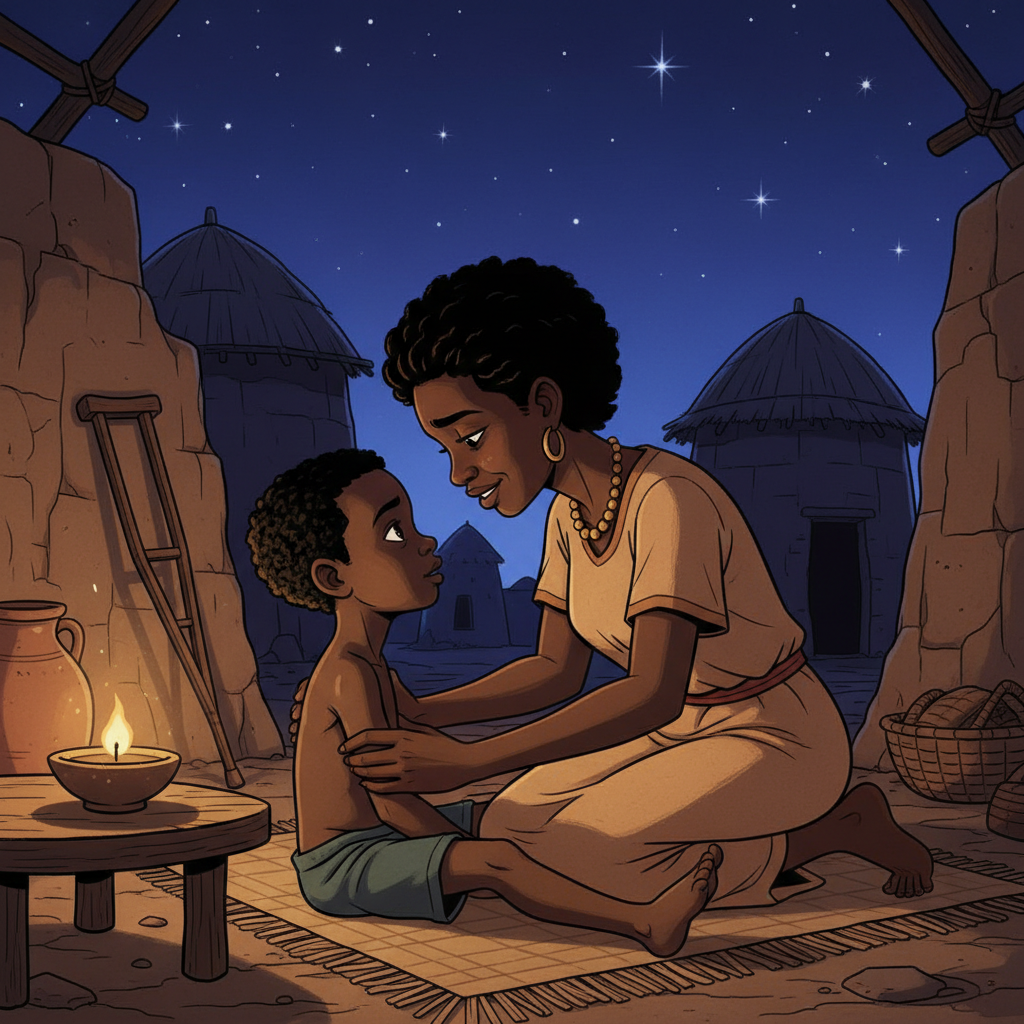
Every morning, his mother Sogolon would come to his mat and help him sit upright. Her hands were strong and gentle at the same time, and her deep ebony skin smelled of the shea butter she rubbed into her arms each night. She would look at him with eyes full of love and something else — something that looked like pain she was trying to hide behind her smile. "Good morning, little lion," she would say, pressing her forehead to his. It was what she always called him, even though some people in the village laughed at the name. A lion who cannot walk, they whispered. A lion who crawls in the dirt like a snake. Sogolon pretended not to hear them, but Sundiata saw how her jaw tightened and how her eyes glistened when she turned away.
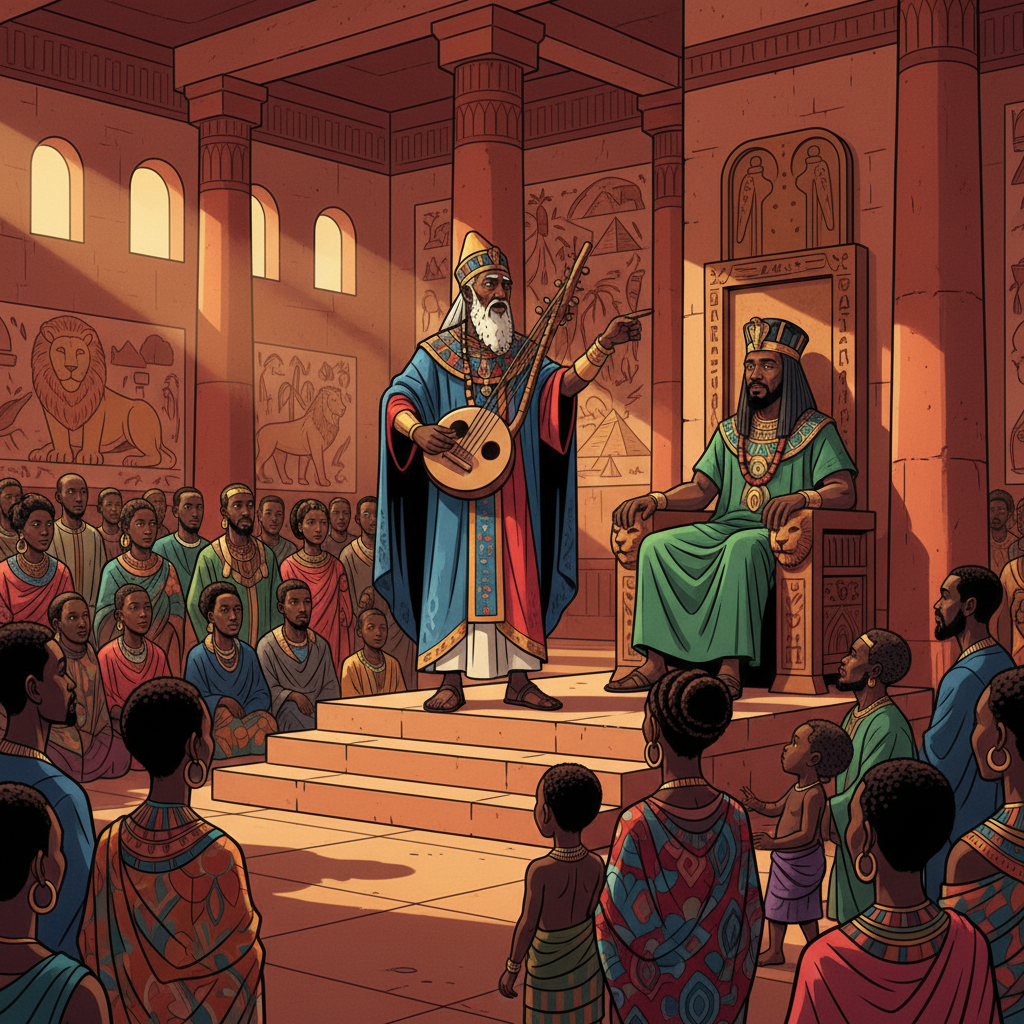
Sundiata's story had begun far from this village. He was born a prince — the son of Naré Maghan Konaté, king of the Mandinka people. A great griot had prophesied before his birth that Sundiata would one day become the mightiest mansa the world had ever known, a king whose empire would stretch from the forests to the desert and whose name would be spoken for a thousand years. But when Sundiata was born and could not stand, when his legs curled beneath him like roots that would not straighten, many people lost faith in the prophecy. The king's other wives mocked Sogolon openly. "Your son will be mansa?" they laughed, their voices sharp as thorns. "He cannot even stand to greet the sunrise." When the old king died, Sundiata and Sogolon were driven into exile, forced to flee to the distant kingdom of Mema where no one knew them or cared about ancient prophecies.
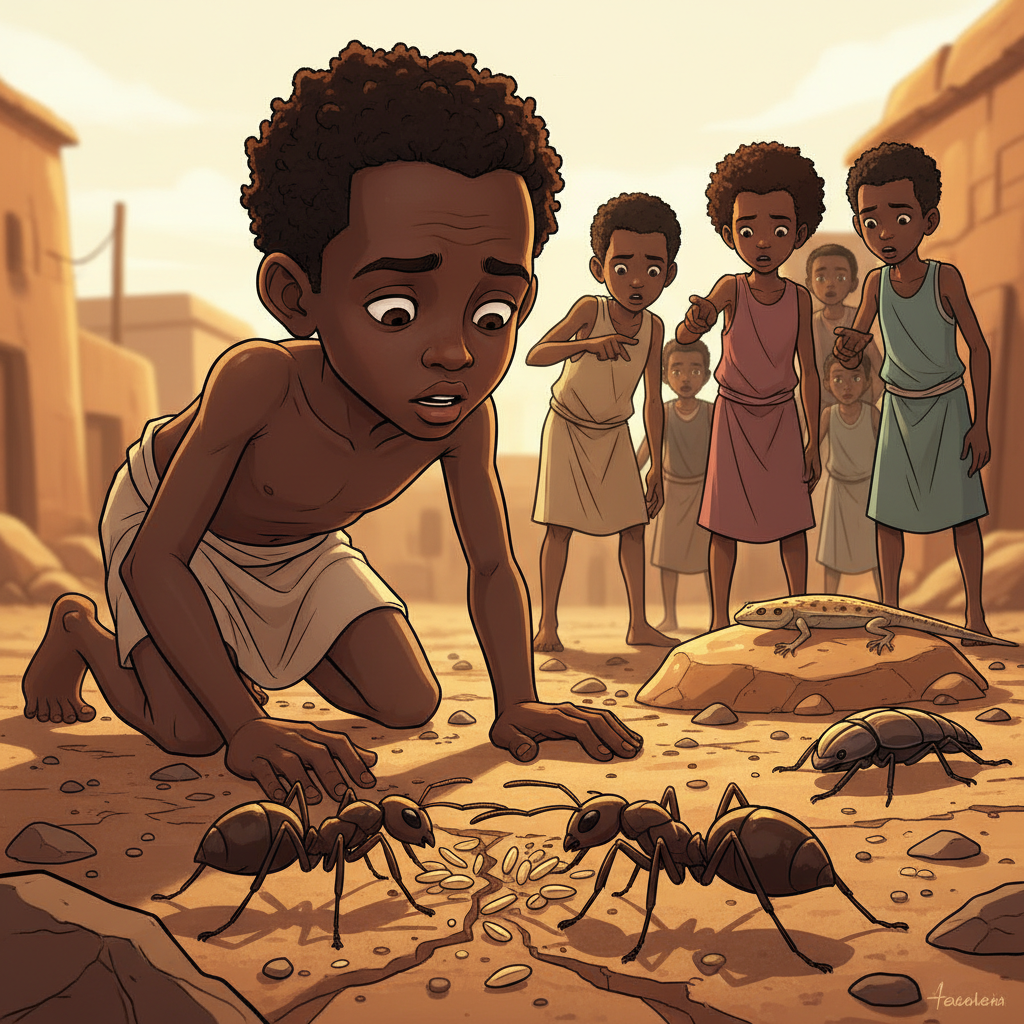
Now, in Mema, Sundiata spent his days watching the world from close to the ground. He watched ants carry loads ten times their own weight across vast distances of packed earth. He watched beetles navigate around pebbles that must have seemed like boulders to them. He watched lizards press their bellies flat against warm stones, soaking in the heat of the sun. The ground was a whole world of its own, and Sundiata knew it better than any child who had ever lived. But the other children of Mema did not see wisdom in his closeness to the earth. They saw only a boy who crawled. And children, when they are afraid of what they do not understand, can be as cruel as hyenas circling a wounded animal.
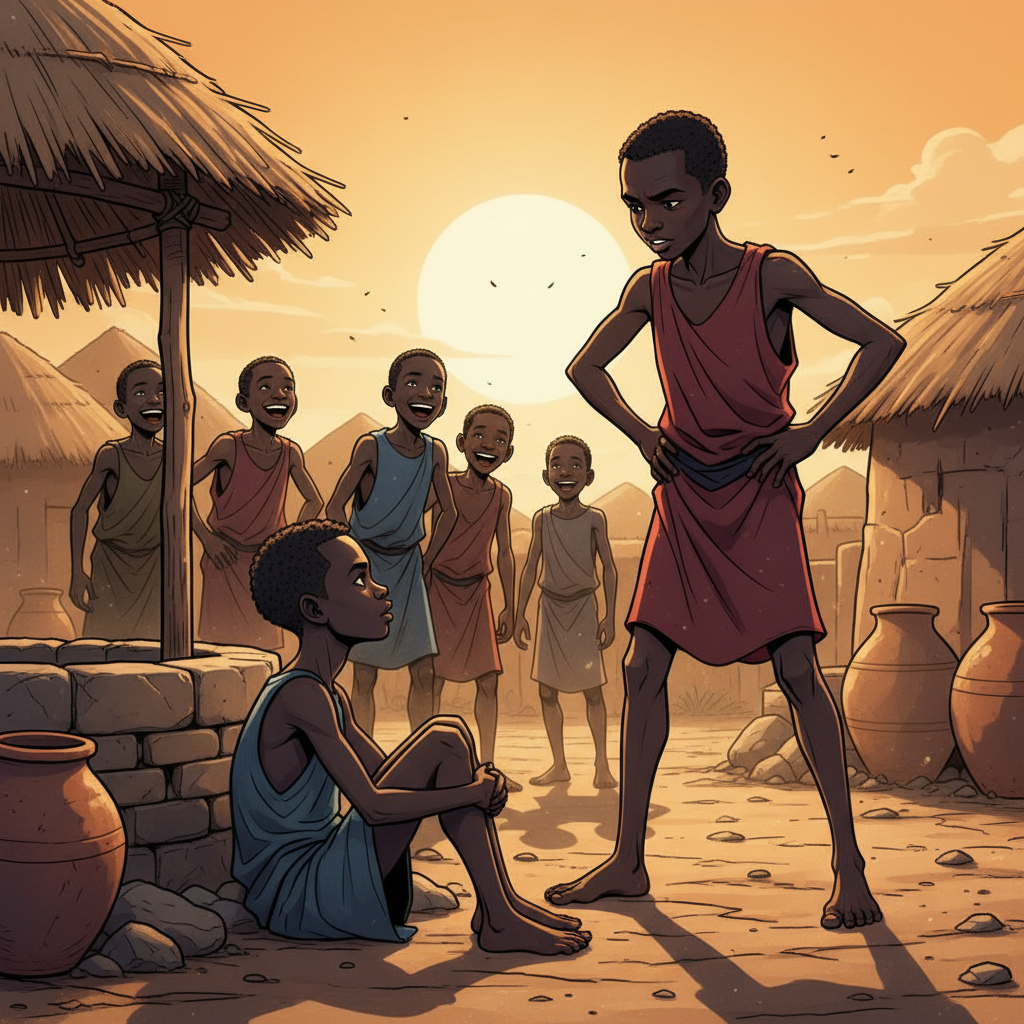
One morning, a group of boys surrounded Sundiata near the village well. Their leader was a tall boy named Fakan, whose dark brown skin was always dusty from wrestling matches he won too easily. Fakan stood over Sundiata with his hands on his hips, blocking the sun so that his shadow fell across Sundiata's face like a dark cloth. "The crawler is thirsty," Fakan announced, loud enough for everyone nearby to hear. "Should we pour water on the ground so he can lap it up like a dog?" The other boys laughed, their voices bouncing off the mud-brick walls of the compound. Sundiata felt heat rise in his chest — not shame, but something fiercer. He looked up at Fakan with steady eyes and said nothing. Sometimes silence was the strongest answer a person could give. But Fakan was not finished. "My father says your mother claims you will be a great king one day," he sneered. "A king who crawls. What will you rule — the ants?" More laughter, sharp and stinging like sand thrown by the wind.
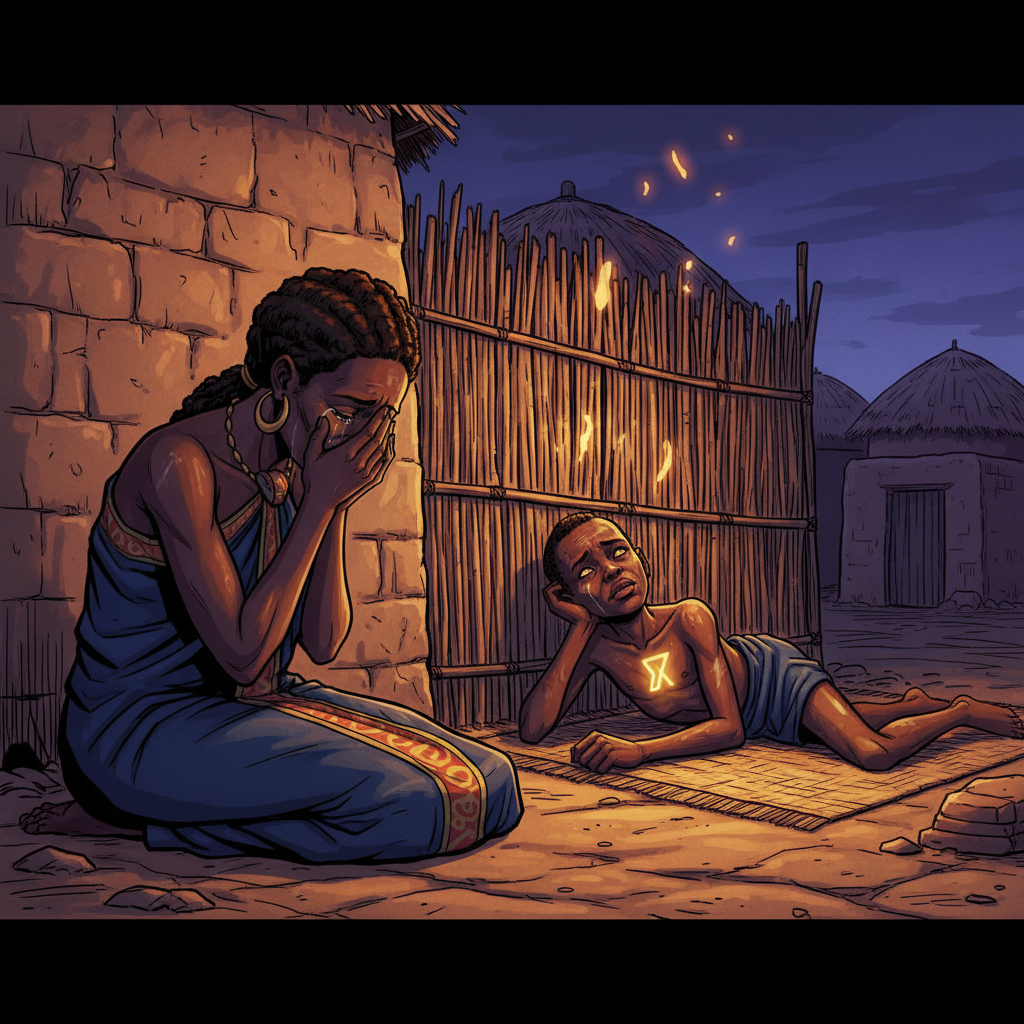
Sundiata dragged himself home that afternoon with dust on his chin and fury in his heart. When Sogolon saw his face, she did not need to ask what had happened. She had heard the mocking too — not just from children, but from the women at the well, from the elders who shook their heads when Sundiata crawled past. The whispers followed them everywhere like shadows that could not be outrun. That evening, Sogolon sat behind her compound and wept. She thought Sundiata could not hear her, but sound carried easily through the woven reed walls, and Sundiata heard every shaking breath, every choked sob. Each of his mother's tears felt like a hot coal pressed against his heart. He lay on his mat in the darkness, staring at the ceiling where firelight made shapes that danced and flickered, and he made a decision. In the land of Kemet, far to the east, they teach that every person carries a Ka — a spirit force that determines their true strength. Sundiata's Ka was the mightiest in the land, even when his legs could not carry him. And tonight, that Ka burned brighter than it ever had before.
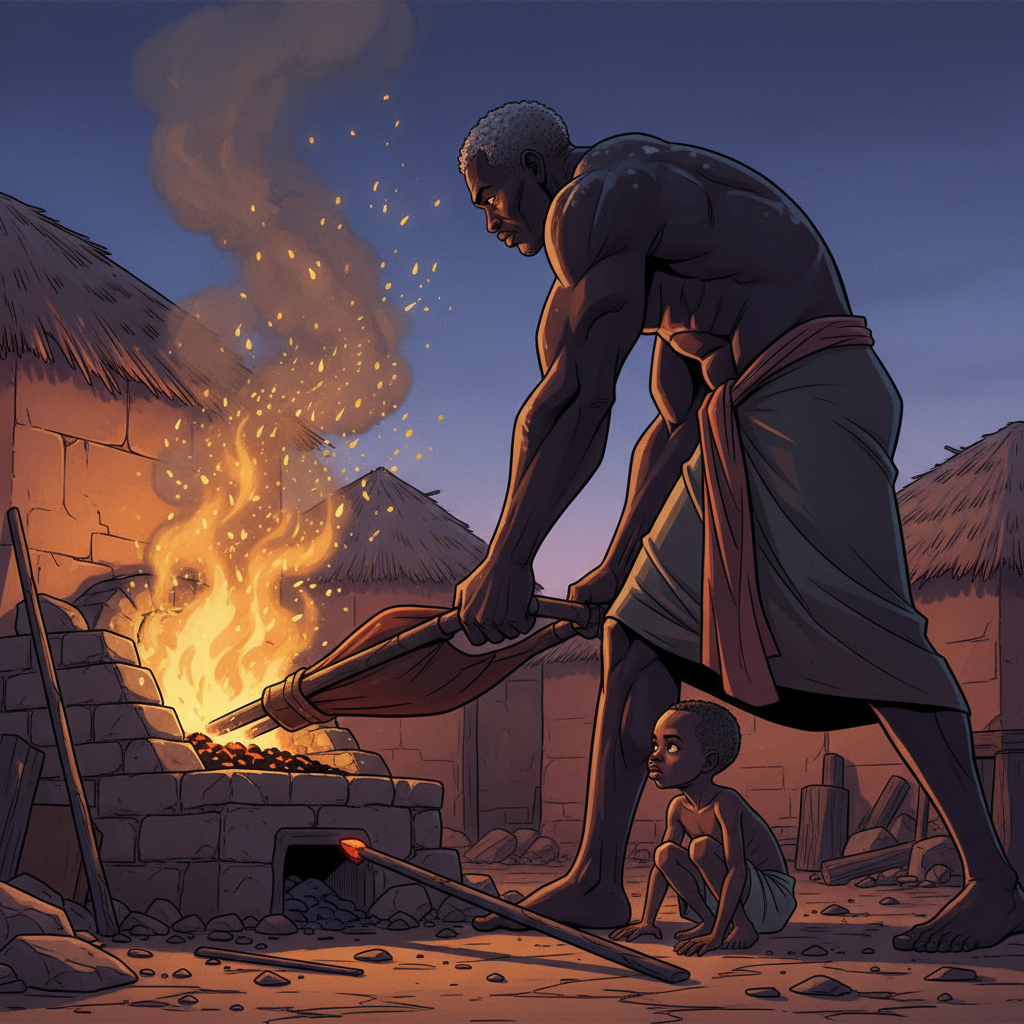
The next morning, before the roosters had begun their calling, Sundiata crawled out of the compound and made his way through the quiet village to the forge of the blacksmith Nounfari. The forge was a sacred place — blacksmiths in the Mandinka world were not ordinary men. They were masters of fire and iron, holders of deep knowledge passed down since the first ancestors learned to pull metal from stone. Nounfari himself was enormous, with arms thick as tree branches and skin so dark it seemed to hold the night inside it. His 4C hair was cropped short and dusted with ash from the forge. Sundiata found him already awake, pumping the great bellows that fed the charcoal fire. Sparks rose into the pre-dawn sky like tiny orange stars. The heat pressed against Sundiata's face like a warm hand. The air smelled of hot iron and burning charcoal and something ancient that Sundiata could not name but that made him feel brave. "Nounfari," Sundiata said, his voice firm despite the early hour. "I need an iron rod. The strongest one you have."
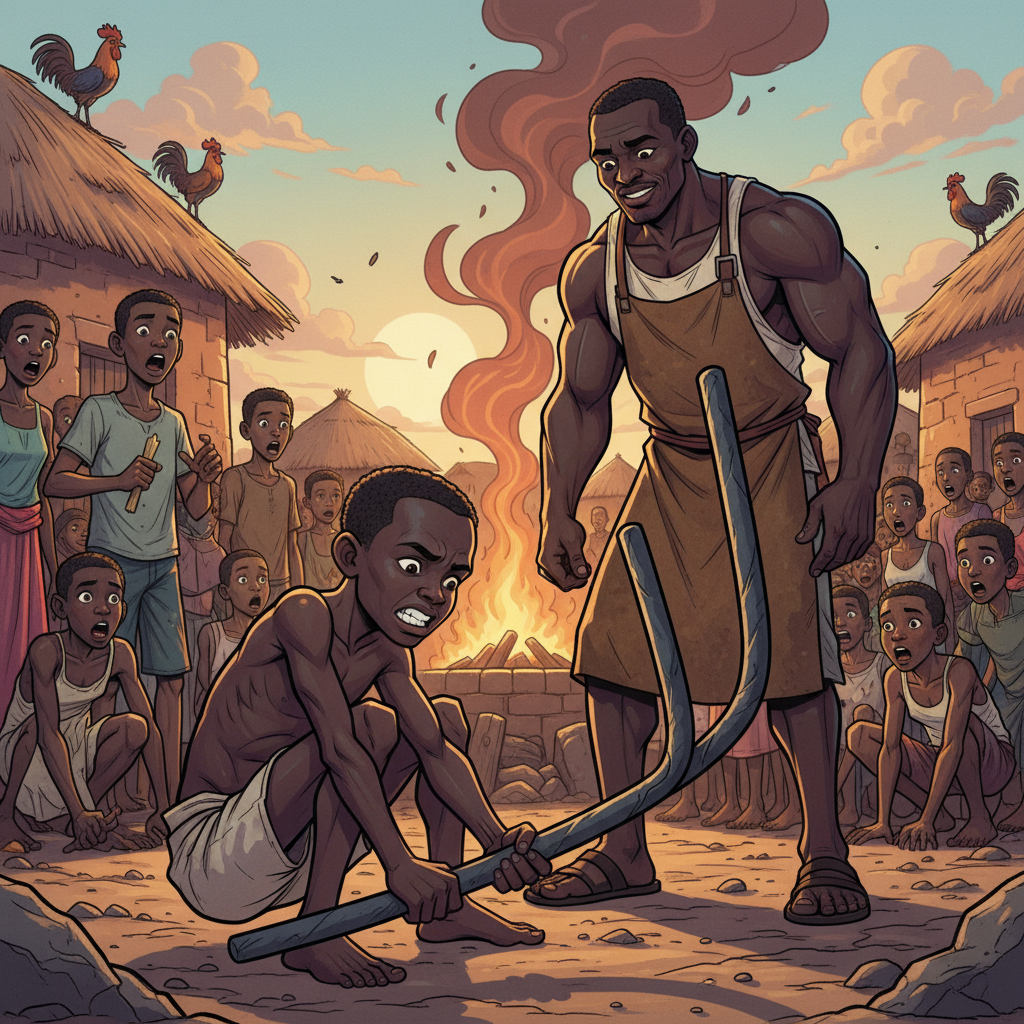
Nounfari looked down at the boy who sat in the dust before his forge. He did not ask why. Blacksmiths understood things that other people did not — they read the fire and the metal and the hearts of those who came to them. He turned without a word and pulled from his rack a long iron rod, as thick as a man's thumb and taller than Sundiata himself. He placed it in the boy's hands. Sundiata gripped the rod and drove it into the earth beside him. The village was waking now — people emerging from their compounds, rubbing sleep from their eyes. One by one, they noticed the boy at the forge and stopped to watch. Fakan appeared, chewing on a stick of sugarcane, and elbowed his friends. Sundiata pulled. He pulled with every drop of strength in his arms, which were powerful from years of dragging his body across the ground. His dark brown fingers turned pale at the knuckles from gripping so hard. His teeth clenched. Sweat broke across his forehead. The iron rod bent — slowly, steadily, like a reed bowing in a strong wind — and then it buckled completely, curving into a useless arc. A gasp went through the gathered crowd. The iron had bent before the boy could stand.
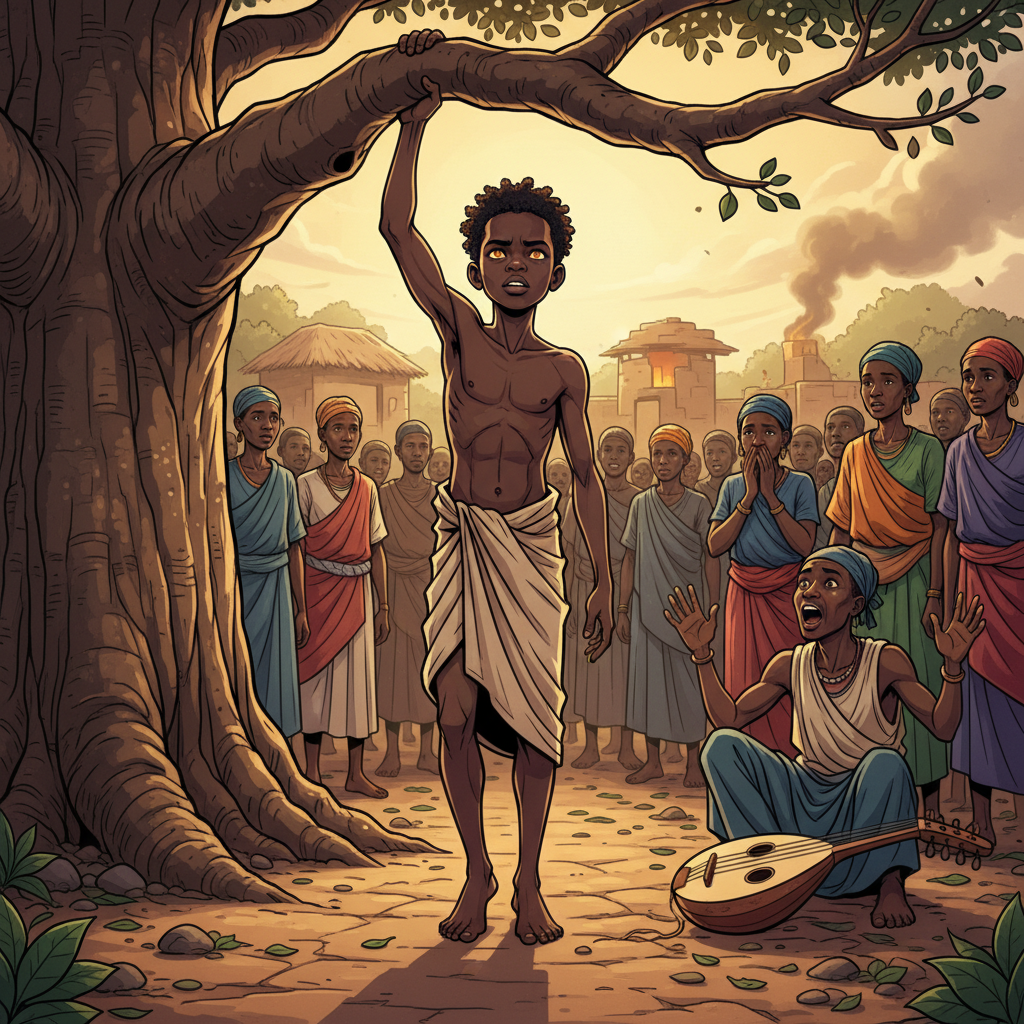
For one terrible moment, the silence was absolute. Then Sundiata heard the beginnings of laughter from somewhere in the crowd, and he felt something break open inside him — not defeat, but something more powerful. He reached up and grasped the lowest branch of the great baobab tree that grew beside Nounfari's forge. The branch was thick and rough, its bark like the skin of an ancient elephant. Sundiata's dark fingers closed around it with a grip that nothing on earth could have loosened. He pulled. His whole body shook. The muscles in his arms stood out like ropes beneath his skin. His legs, those stubborn forgotten legs, trembled and stirred beneath him as if waking from a long sleep. The baobab branch groaned. Sundiata's feet pressed flat against the earth. And then — slowly, impossibly, magnificently — Sundiata stood. The crowd went silent. A griot who had been passing through the village dropped his kora and stared. Sogolon, who had come running when she heard the commotion, pressed both hands to her mouth. Tears streamed down her deep ebony cheeks. Sundiata stood straight and tall, his legs shaking but holding, his chin raised, his eyes blazing like twin fires. The griot found his voice and it rang out across the morning air like a trumpet: "The lion of Sogolon has risen! The lion has risen!" And every person who had ever mocked, every person who had ever whispered, every person who had ever doubted — stood in stunned and reverent silence as the boy who could not walk took his first trembling, glorious step. The griot would sing of this day for the rest of his life. And he would tell every listener that the mansa who united all the peoples of Mali into the greatest empire West Africa had ever known began his journey not with a crown, but with a single, impossible step.