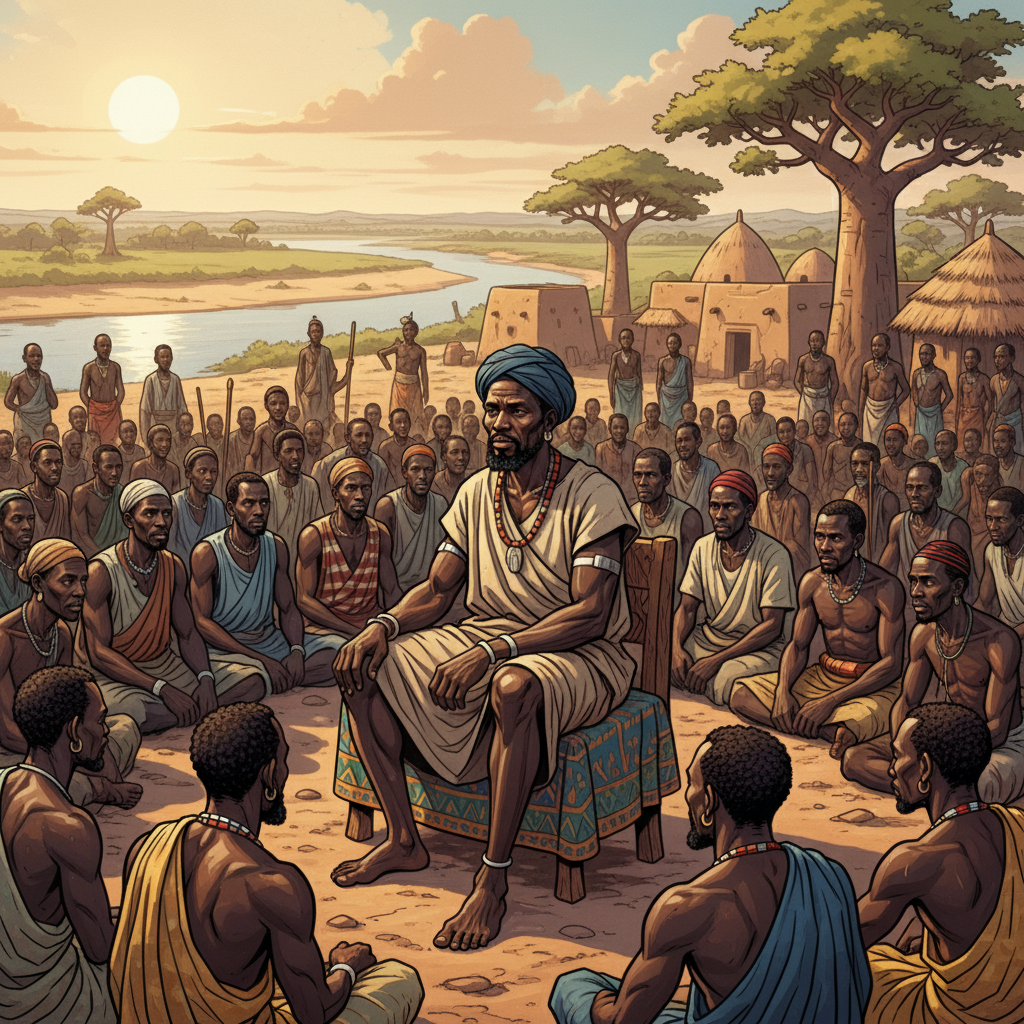
The air in Kangaba, 1235 CE, crackled with a tension thicker than the humid breath of the Niger. Two moons had waxed and waned since the thunderous Battle of Kirina, where Sundiata Keita, the Lion King, had shattered the sorcerous empire of Soumaoro Kanté. Now, chiefs and elders, hunters and griots, women and men from every corner of the newly forged Mali Empire gathered. Their skin, a spectrum of rich, deep browns, gleamed with sweat in the afternoon sun. Broad noses, full lips, and tightly coiled 4C hair framed faces etched with the scars of war and the hope of a new dawn. Sundiata, their `mansa`, sat at the center, his gaze both weary and resolute, knowing that military victory was only the first step towards true peace.
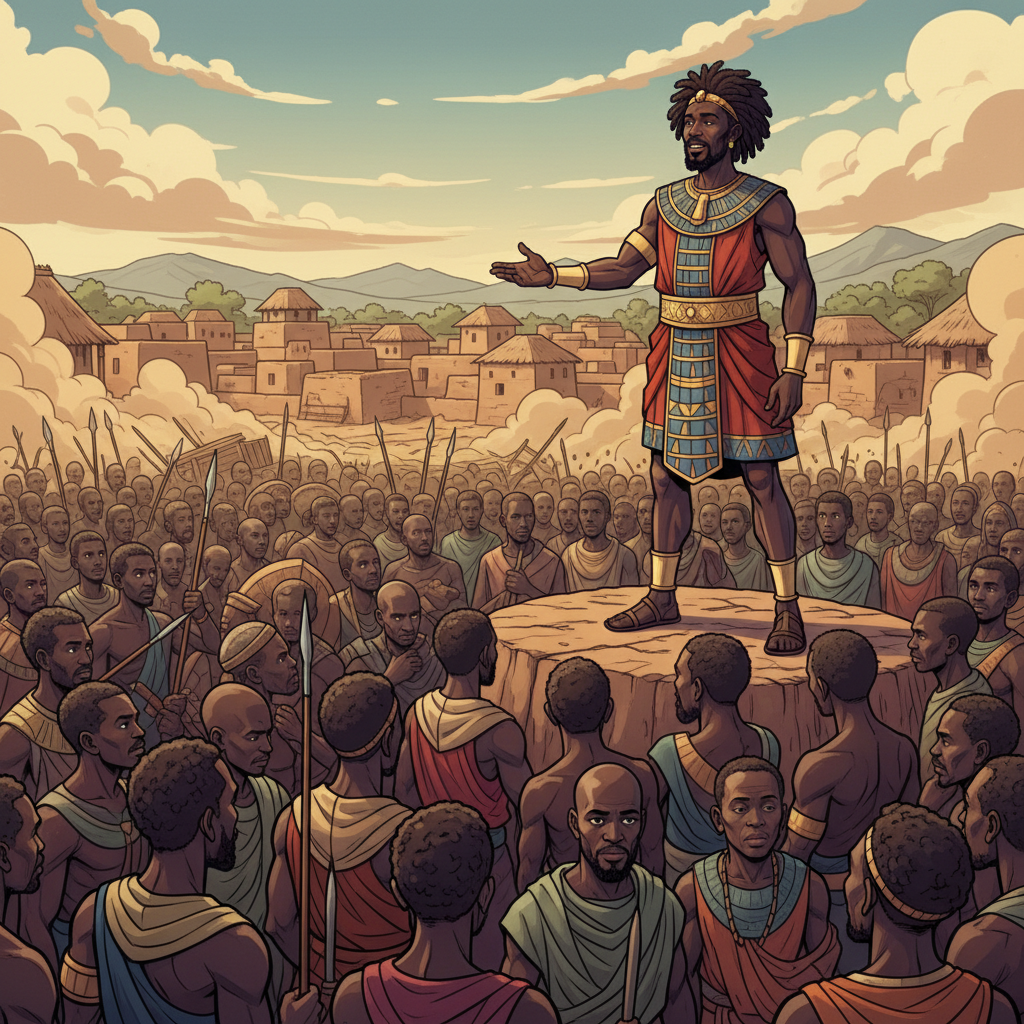
Sundiata’s voice, though calm, carried the weight of a thousand battles. “We have cast out the darkness of Soumaoro,” he began, his hand sweeping across the assembly. “But true peace is not merely the absence of war. It is the presence of `maat` – of justice, order, and balance. We stand at a crossroads. Will we build an empire on the shifting sands of conquest, or on the enduring rock of shared principles? The `isfet` of the past, with its enslavement, its unchecked greed, and its disregard for human dignity, must be swept away, never to return.” Murmurs rippled through the crowd, a mix of agreement and apprehension.
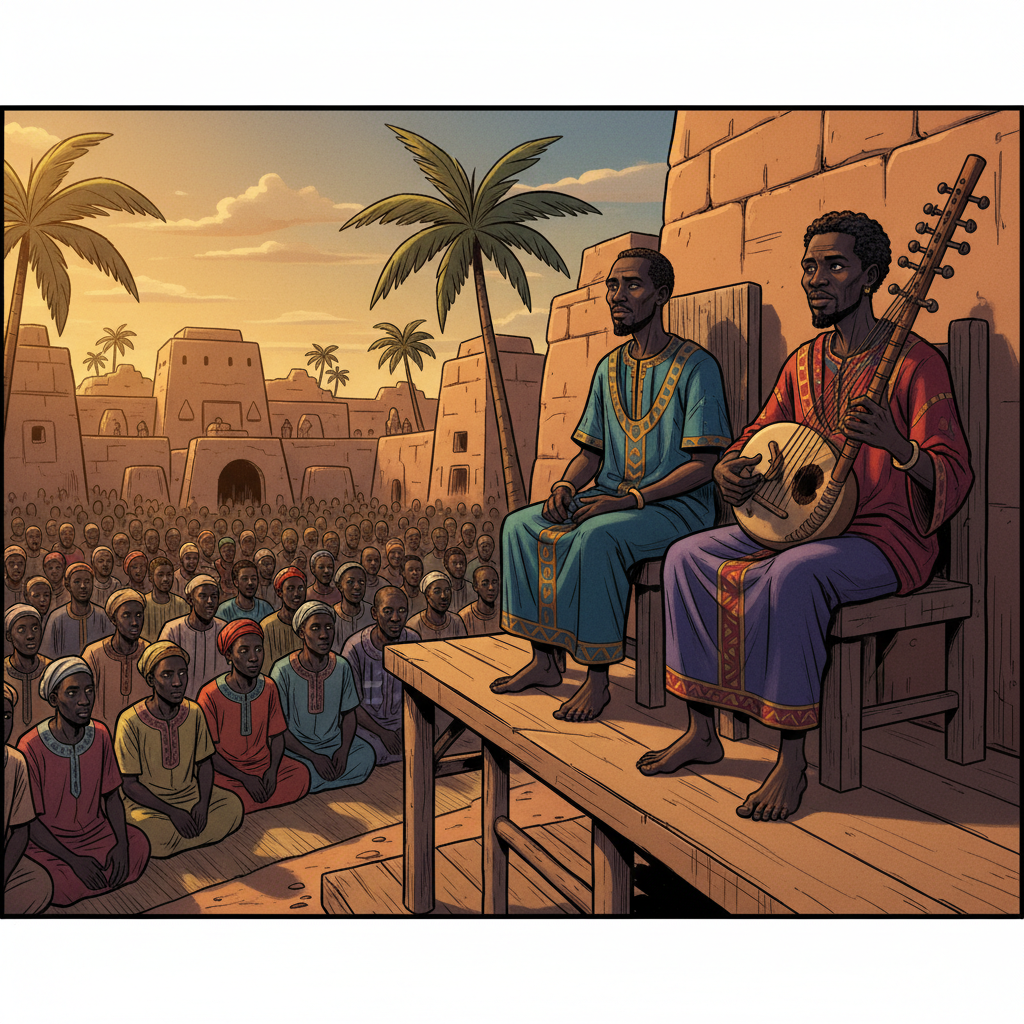
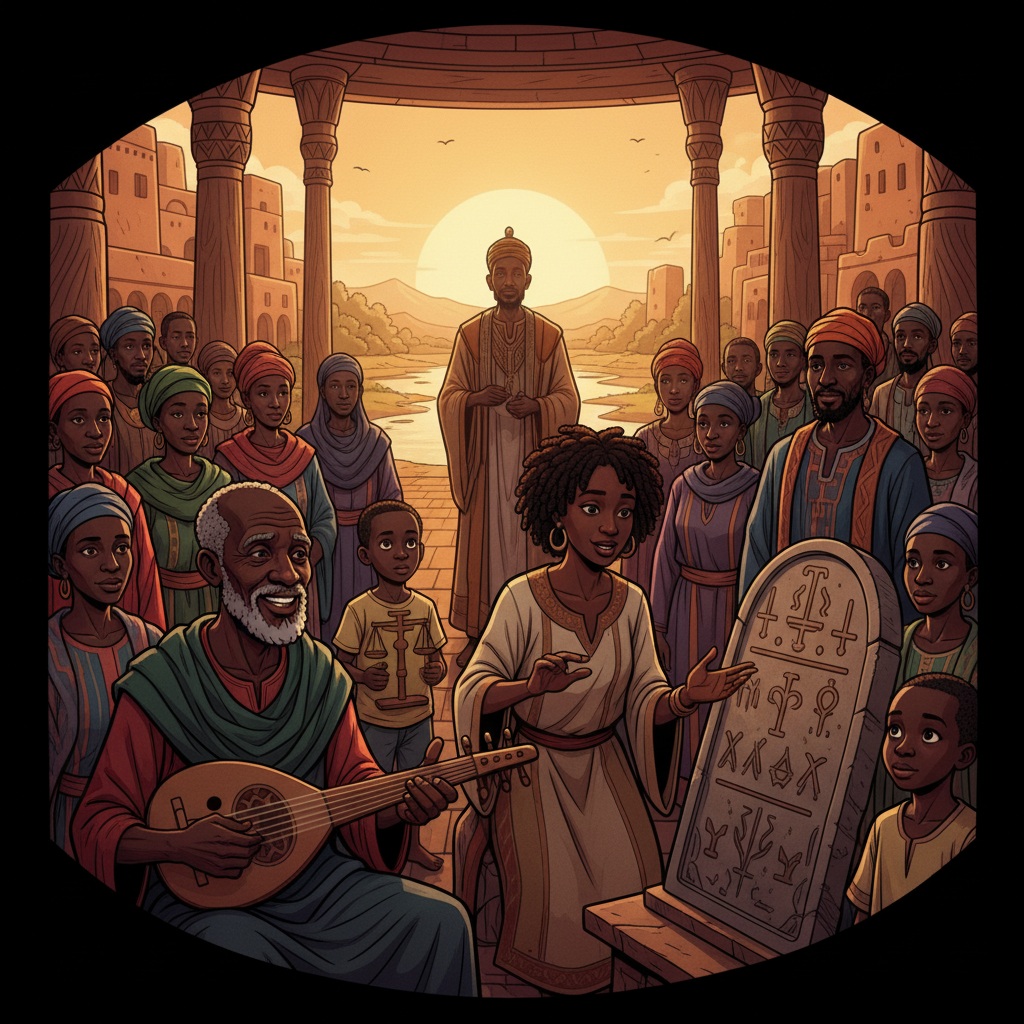
Beside Sundiata sat Balla Fasseke, the `griot` of griots, his fingers already plucking a gentle melody from his `kora`. His dark, wise eyes held the ancient stories of the Manden, a living library of tradition and law. He was the memory keeper, the bridge between ancestors and descendants. His role, as scholar Djibril Tamsir Niane would later extensively document, was critical in ensuring the oral transmission of history and values. “Before us,” Balla Fasseke’s resonant voice declared, “lie the principles of our ancestors. Principles often forgotten, trampled by ambition. We seek to reclaim the `ka` of our collective spirit, to breathe life into the very essence of what it means to be Manden.”
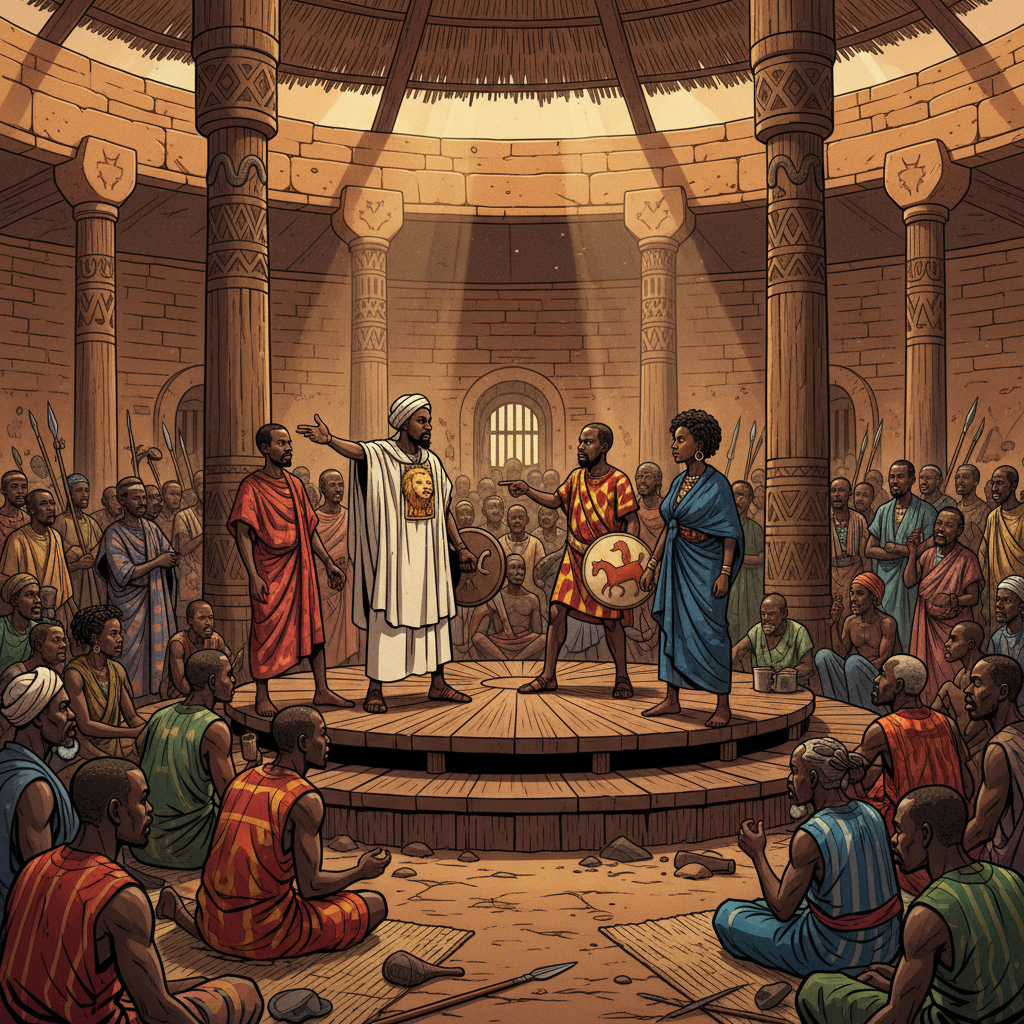
The first debates were fierce. Representatives from the numerous clans, each with their own traditions and interests, rose to speak. The Keita, the Traoré, the Konaté – all had contributed to the victory, but their visions for the future diverged. Some argued for a swift return to established hierarchies, even those that had allowed for the subjugation of certain groups. The very concept of a universal code of conduct was alien to some, especially those who benefited from the old ways. The echoes of `isfet` were not easily silenced; they clung to the assembly like dust from the battlefield, threatening to obscure the path to `maat`.
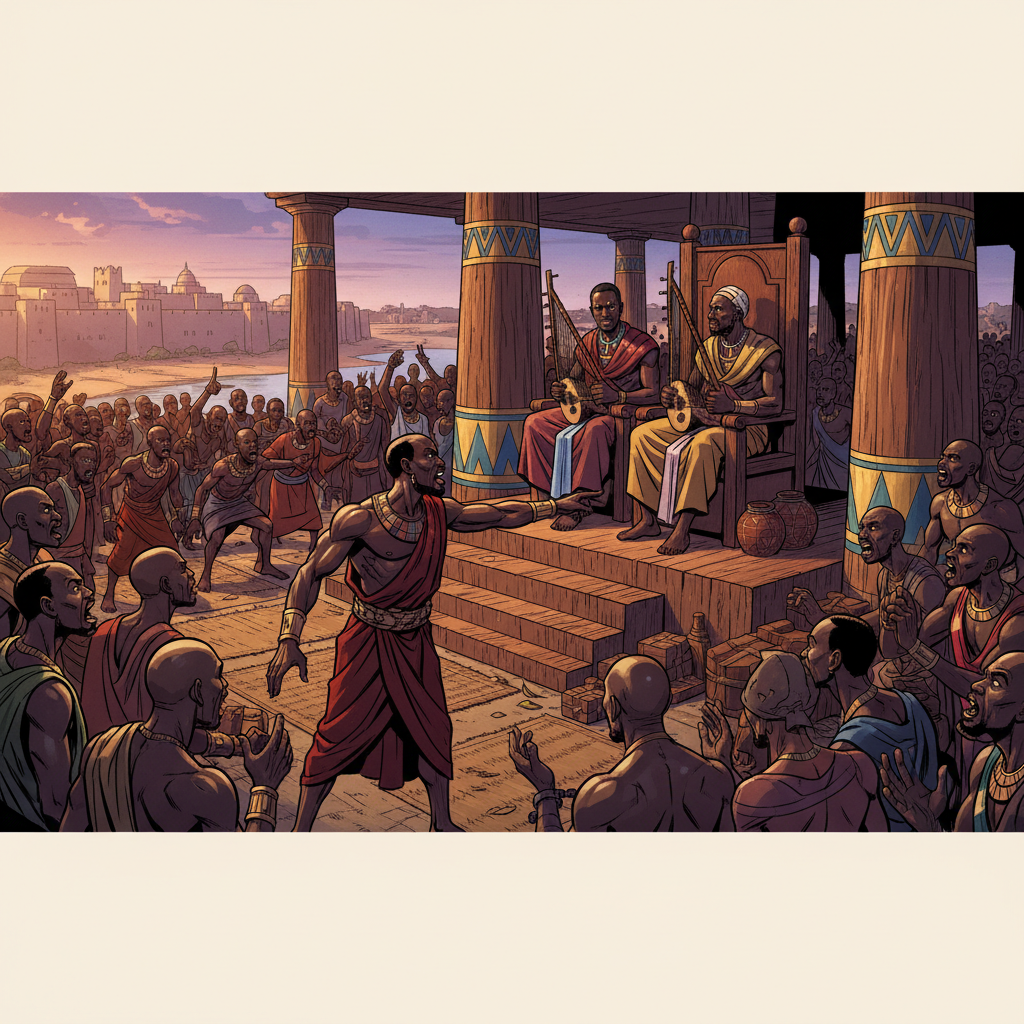
Sundiata listened, his expression unreadable, often exchanging glances with Balla Fasseke. He knew that true governance, as scholar Maulana Karenga emphasizes, must be rooted in ethical principles and communal well-being, not just brute force. But how to forge unity from such disparate voices, especially when some clung fiercely to practices like raiding and enslavement? The economic realities of a war-torn land loomed large. A leader from the Soso clan, their dark skin glistening, argued that abolishing certain labor practices would cripple their recovery, sparking heated debate among the assembled chiefs. Sundiata’s challenge was immense: to elevate justice without fracturing the fragile new empire.
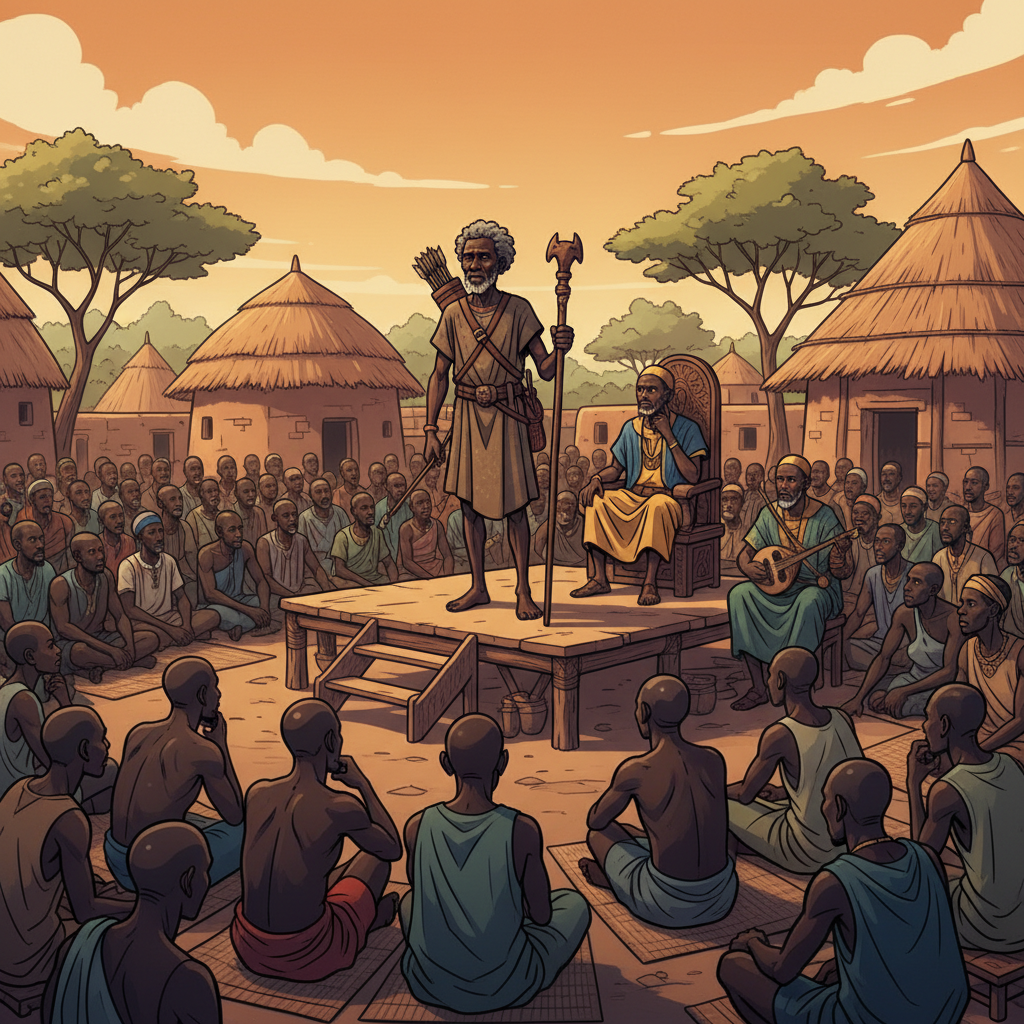
A hush fell as a venerable hunter, his face a roadmap of wrinkles, stepped forward. His name was Doka, from the Do clan, renowned for their connection to the land. His voice, raspy but clear, recounted the ancient Hunter’s Oath, a code of conduct passed down through generations. “A hunter,” he declared, “does not kill for pleasure, nor does he take more than he needs. He respects the animal, the forest, the river. He shares his kill. He protects the weak. This is the `heka` of the hunt, a sacred agreement with nature and with one another.” He paused, allowing his words to sink in. “Why should our laws for men be less compassionate than our laws for the hunt?”
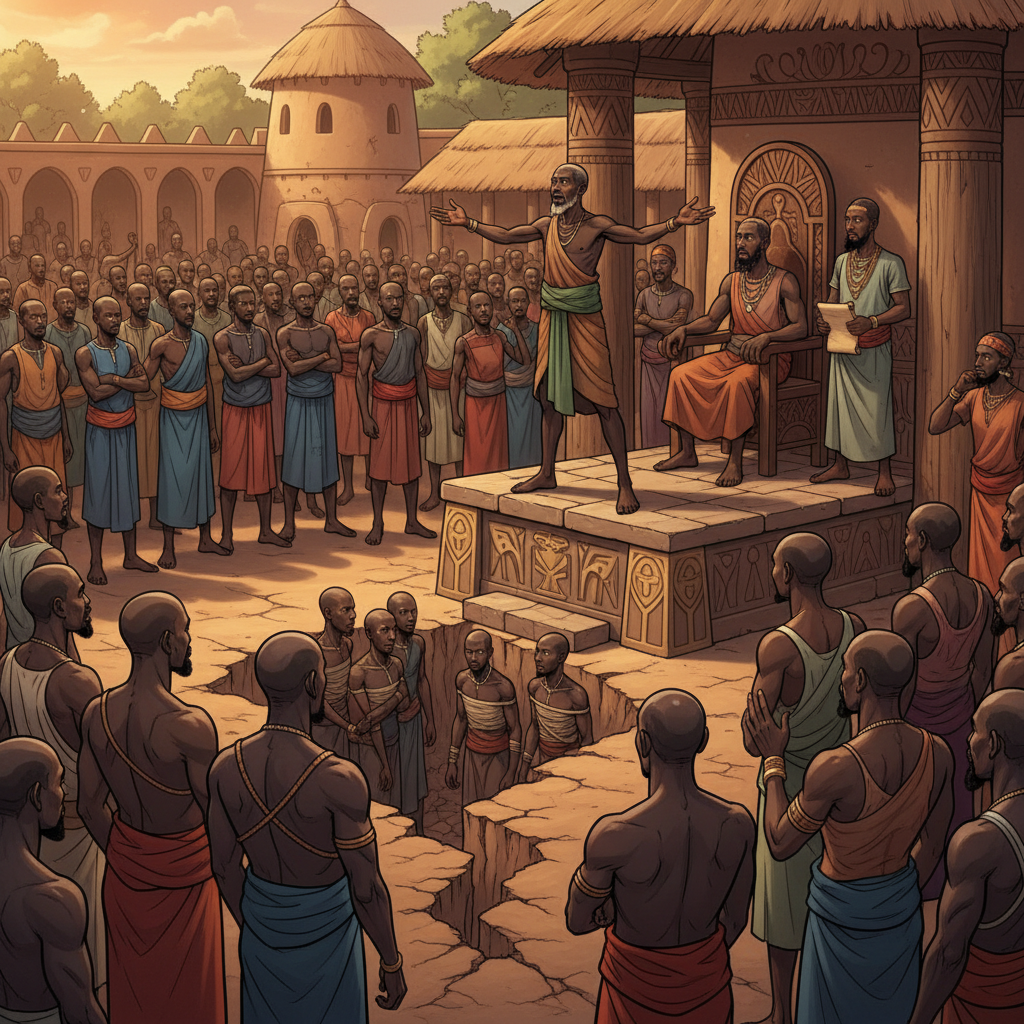
This powerful analogy resonated deeply. The Hunter’s Oath, a testament to ecological wisdom and shared responsibility, laid a foundational stone for what would become the `manden-charter`. It spoke of respect for life, for resources, for the balance of the natural world – principles that mirrored the Kemetic understanding of `maat` in the environment. But translating this respect for nature into universal human rights, particularly regarding the contentious issue of slavery, remained a chasm to bridge. The Manden people, diverse in their practices, were now asked to unite under a single moral vision.
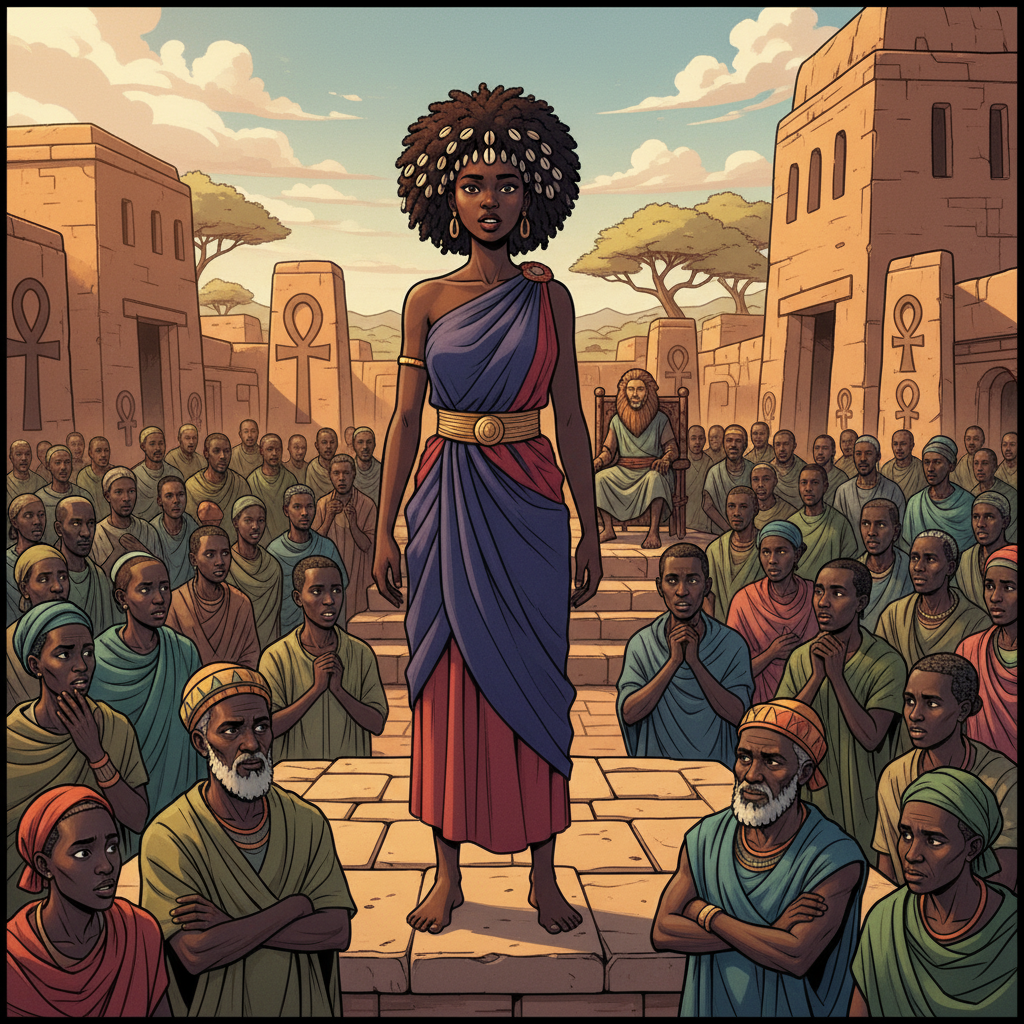
Then came the issue of human bondage. A young woman named Niani, her 4C coils adorned with cowrie shells, stepped forward. Her voice, though soft, carried the weight of generations of subjugation. She spoke of her kin, of those taken in raids, of the inherent indignity of one person owning another. “Our victory,” she proclaimed, her dark eyes flashing, “will be hollow if we merely replace one oppressor with another. If we say we are free, yet others among us remain shackled, then where is the `ankh`, the true life, in our new empire? The very `ka` of our Manden spirit demands better.” Her words stirred the assembly, forcing many to confront uncomfortable truths.
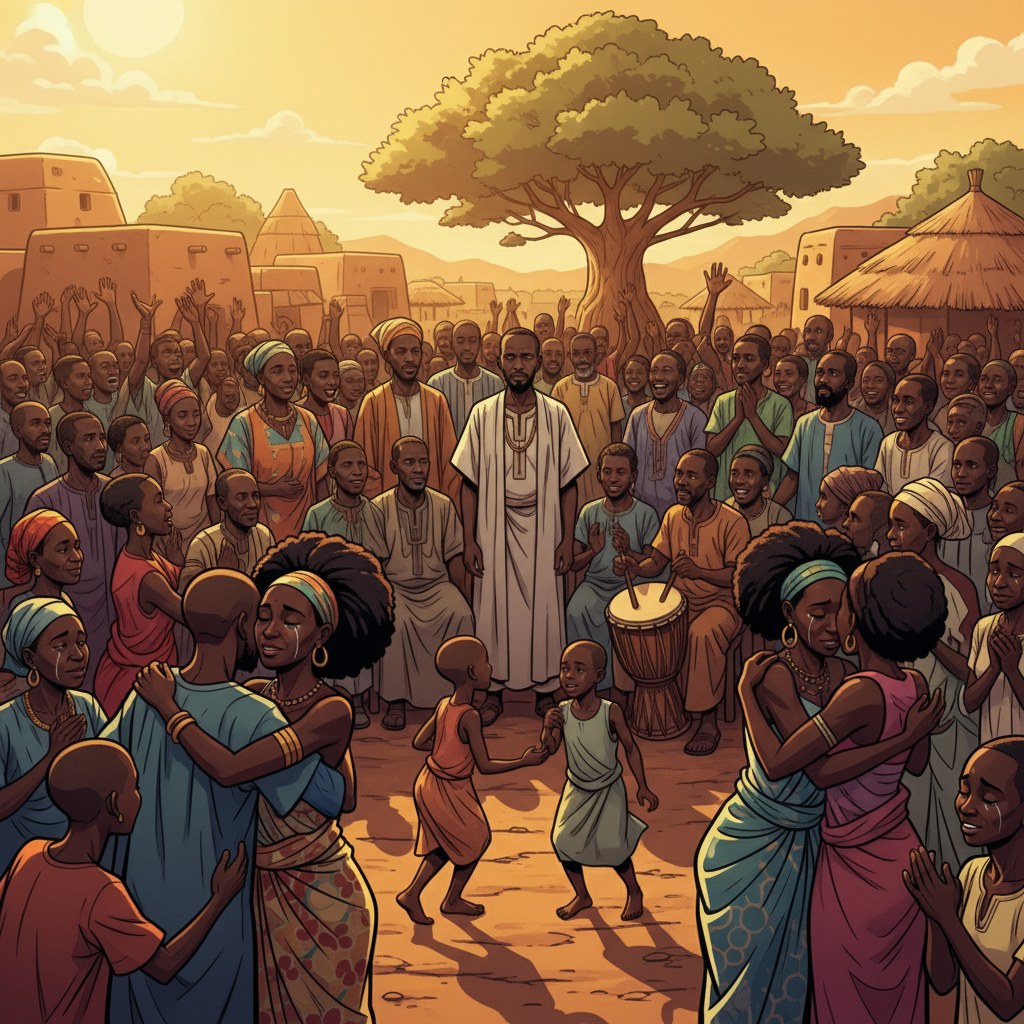
The debates raged for days. Sundiata, ever the strategist, understood that a charter imposed by force would never truly hold. It had to be embraced, however reluctantly by some. He consulted with his council, particularly with the wise women elders, who reminded him of the collective wisdom of `ubuntu` – the profound belief that ‘I am because we are.’ Maulana Karenga’s work on African communalism speaks directly to this principle, where individual well-being is inextricably linked to the well-being of the community. The challenge was to integrate this communal ethic into a legal framework that also recognized individual rights and dignity.
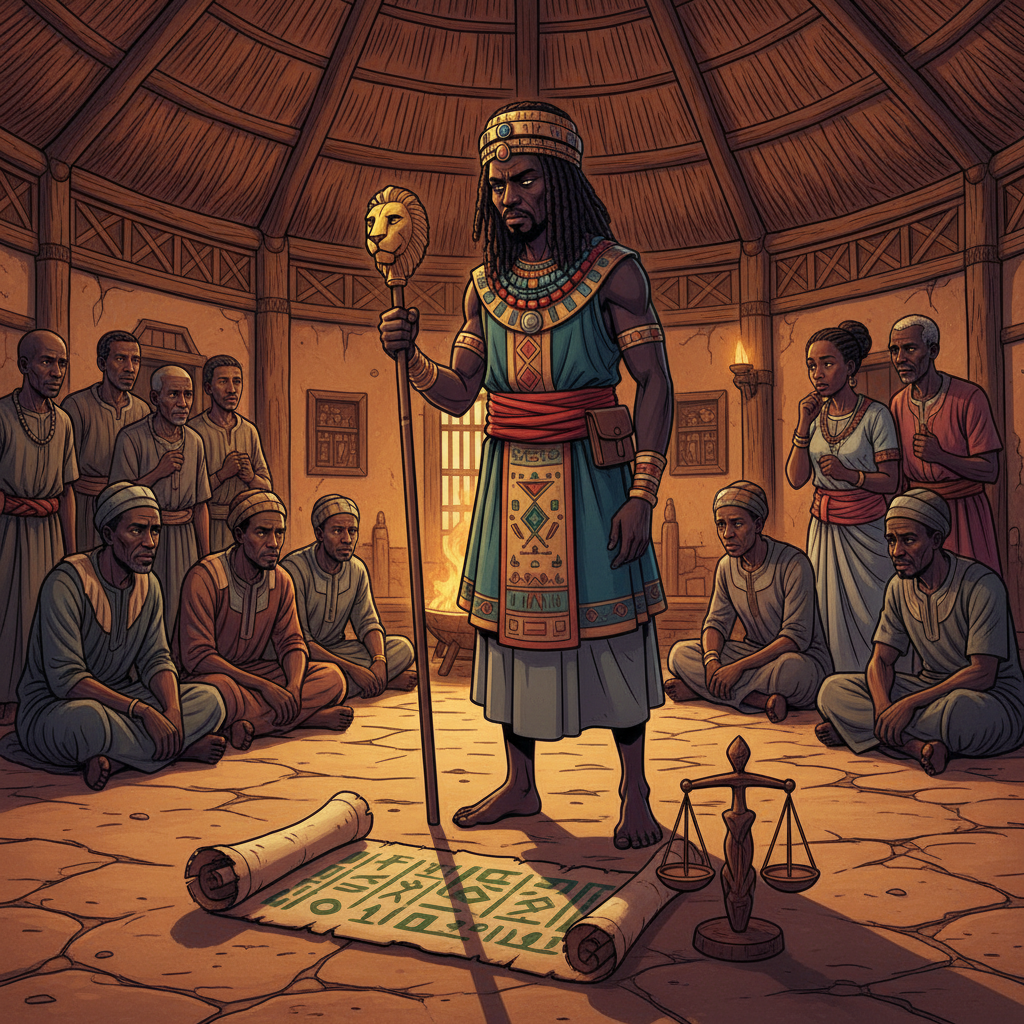
Compromises were inevitable. Full, immediate abolition of all forms of servitude proved too radical for some powerful clans whose economies relied heavily on such labor. Sundiata, a pragmatist as much as a visionary, understood that pushing too hard might fracture the nascent empire. The `manden-charter` would abolish slavery among the Mande peoples themselves, and severely restrict the practice for others, with a clear path towards eventual elimination. This was a complex moral dilemma: Was it `maat` to take a half-step toward justice, or was it a concession to `isfet`? The burden of this decision weighed heavily on the `mansa`.
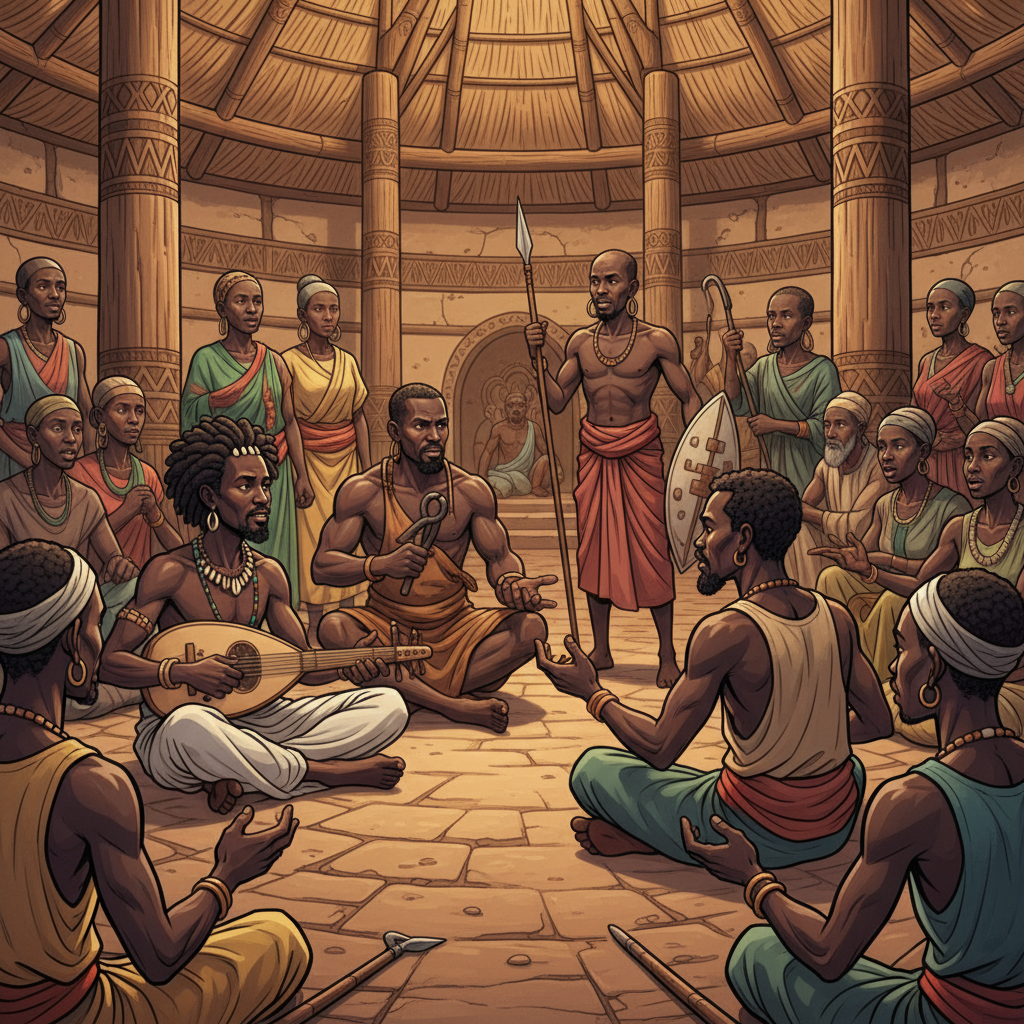
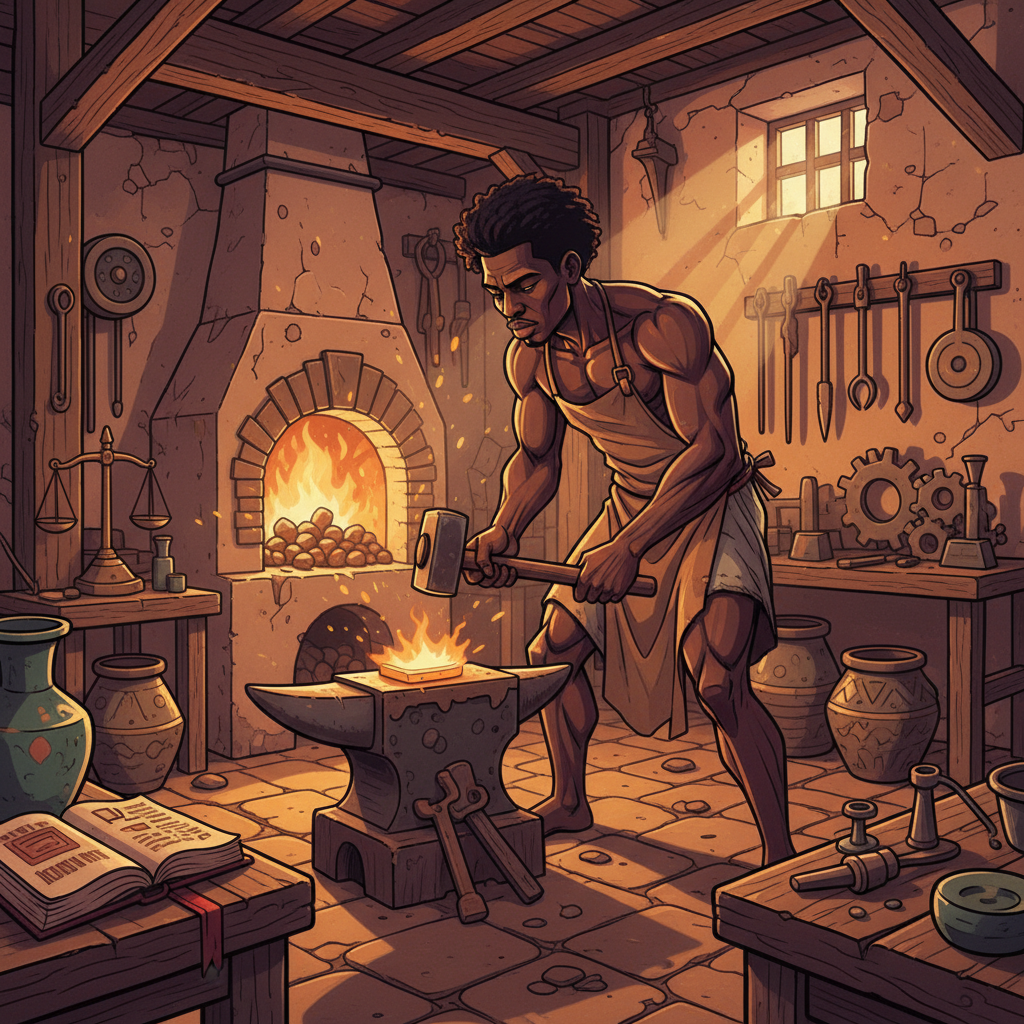
The division of clans into specific roles was another hotly debated point. The `griot` clans, the blacksmith clans, the warrior clans – each had their traditional functions. The charter sought to formalize these roles, ensuring mutual respect and cooperation. Balla Fasseke explained that this was not about rigid caste, but about a symphony of skills, each vital to the whole. “Just as a body has many parts,” he sang, his `kora` echoing, “so too does our nation. Each part with its unique `ka`, its spirit, its contribution. To deny one part its function is to weaken the whole.” This principle aimed to prevent any single group from dominating or being diminished.
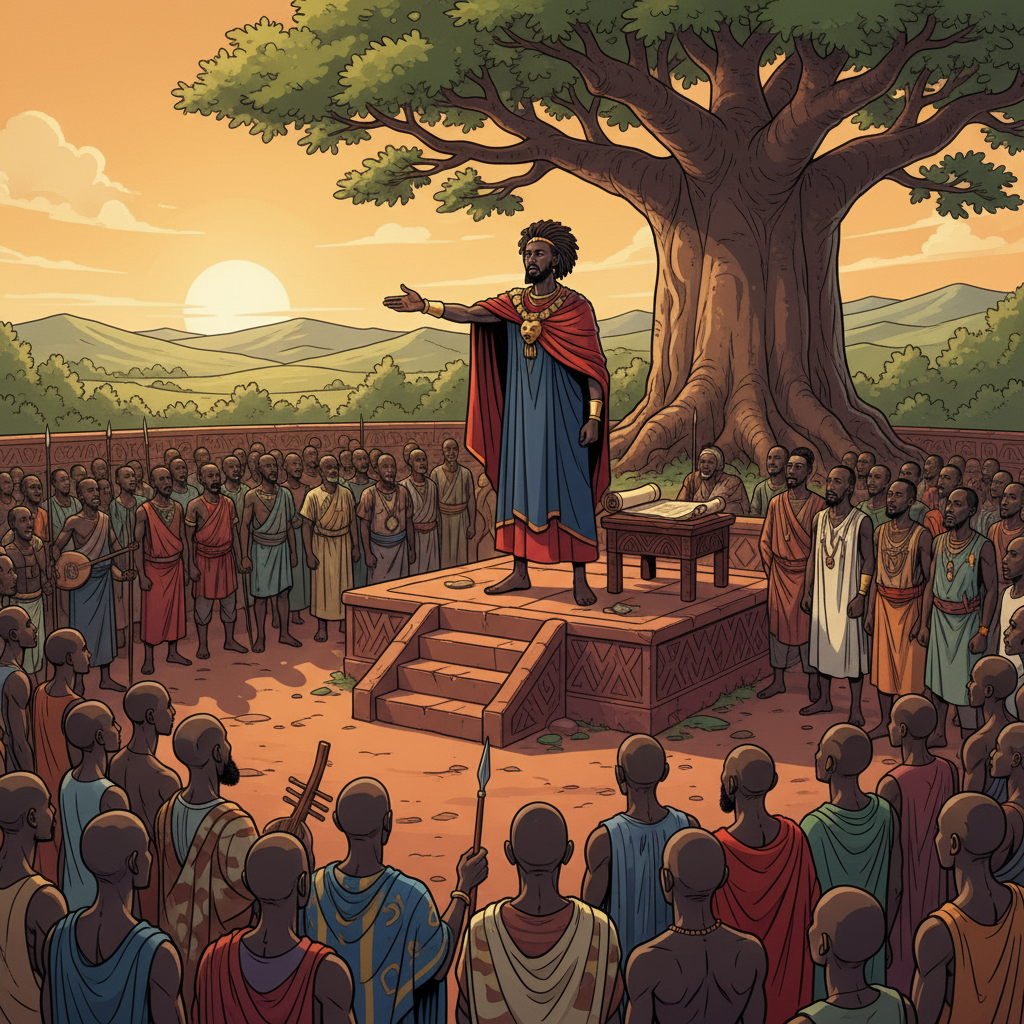
After weeks of intense deliberation, the final articles were brought forth. Sundiata, standing tall before the assembly, declared, “The Kouroukan Fouga, the `manden-charter`, is not merely a list of rules. It is a covenant. A promise we make to ourselves, to our ancestors, and to the generations yet unborn. It is the heart of our `maat`, etched into the very fabric of our being.” His words, imbued with `heka`, resonated with the deep understanding that laws are only as strong as the collective will to uphold them. The charter was to be more than law; it was to be a way of life.
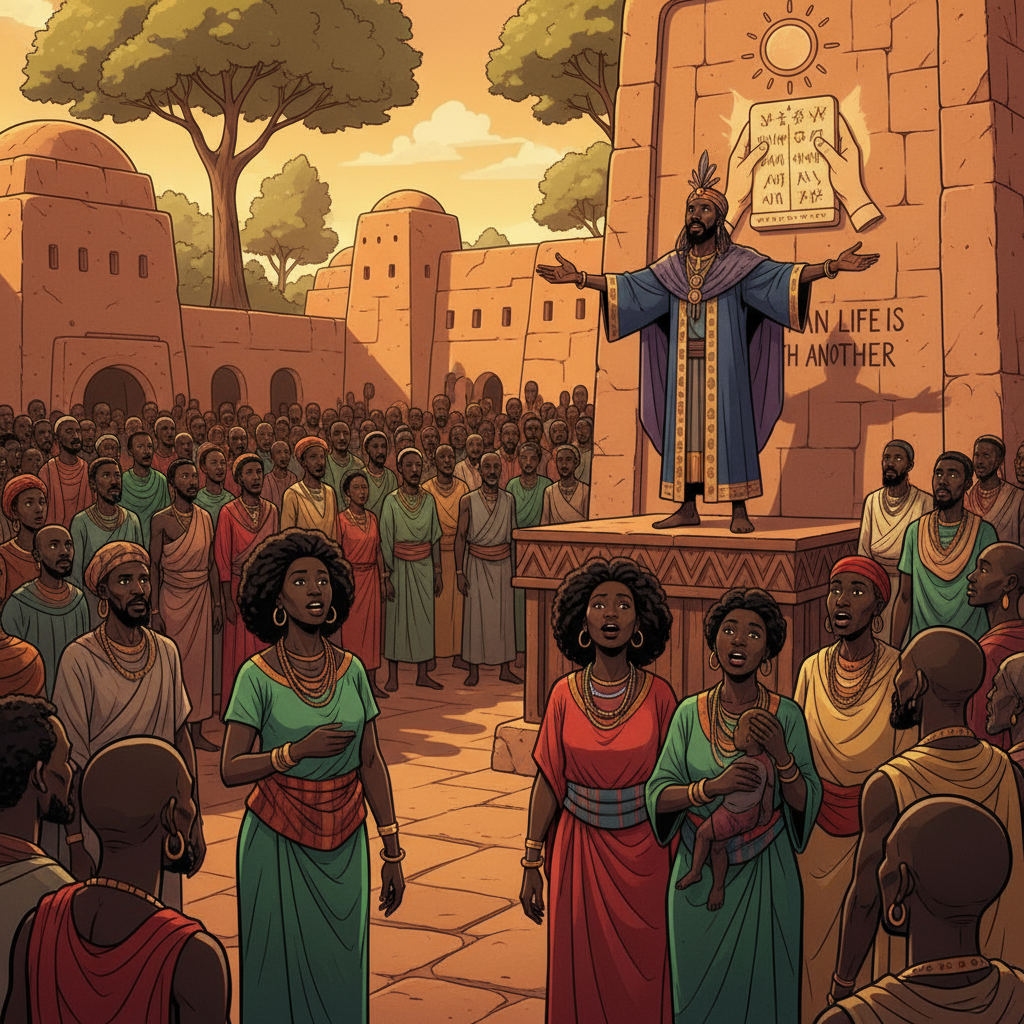
The Charter’s core tenets were revolutionary for their time. It famously declared: “One human life is worth another,” laying the groundwork for equality. It formally abolished slavery among the Mande, recognizing the inherent dignity of all people. Women were given significant rights, including the right to inheritance and divorce, a progressive stance not seen in many parts of the world for centuries. Environmental protection was enshrined, urging respect for forests, rivers, and wildlife. These principles, rooted in `ubuntu` and `maat`, offered a stark contrast to the `isfet` that had plagued the region for so long.
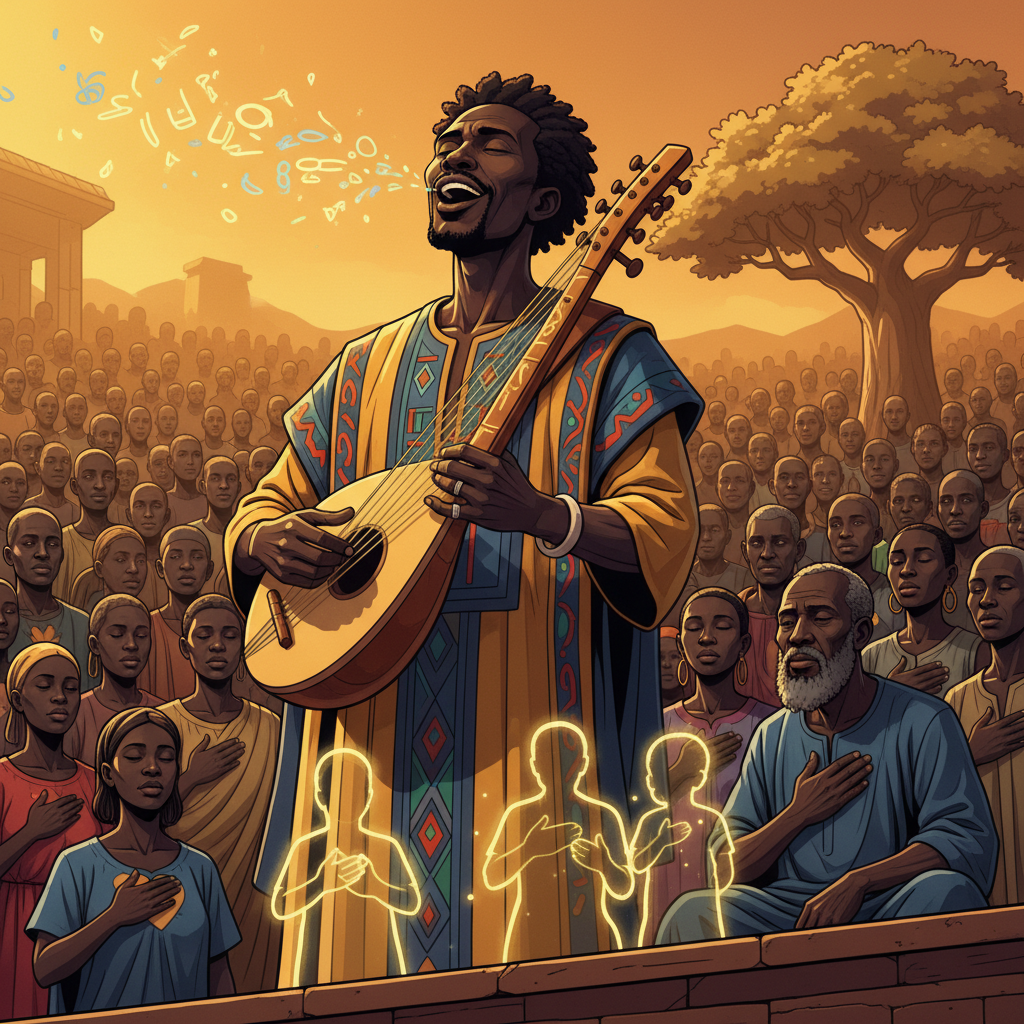
Balla Fasseke then stepped forward, his `kora` now strumming a triumphant chord. “These words,” he announced, his voice carrying across the vast gathering, “will not be written on parchment that can burn or fade. They will be carved into the hearts of our people. They will be sung by `griot`s in every village, whispered by mothers to their children, debated by elders under the baobab tree. This `manden-charter` will live in the breath of our story, passed from generation to generation, ensuring its `heka` endures.” His pronouncement solidified the oral tradition as the primary mode of preservation, a fact Djibril Tamsir Niane’s later work would highlight.
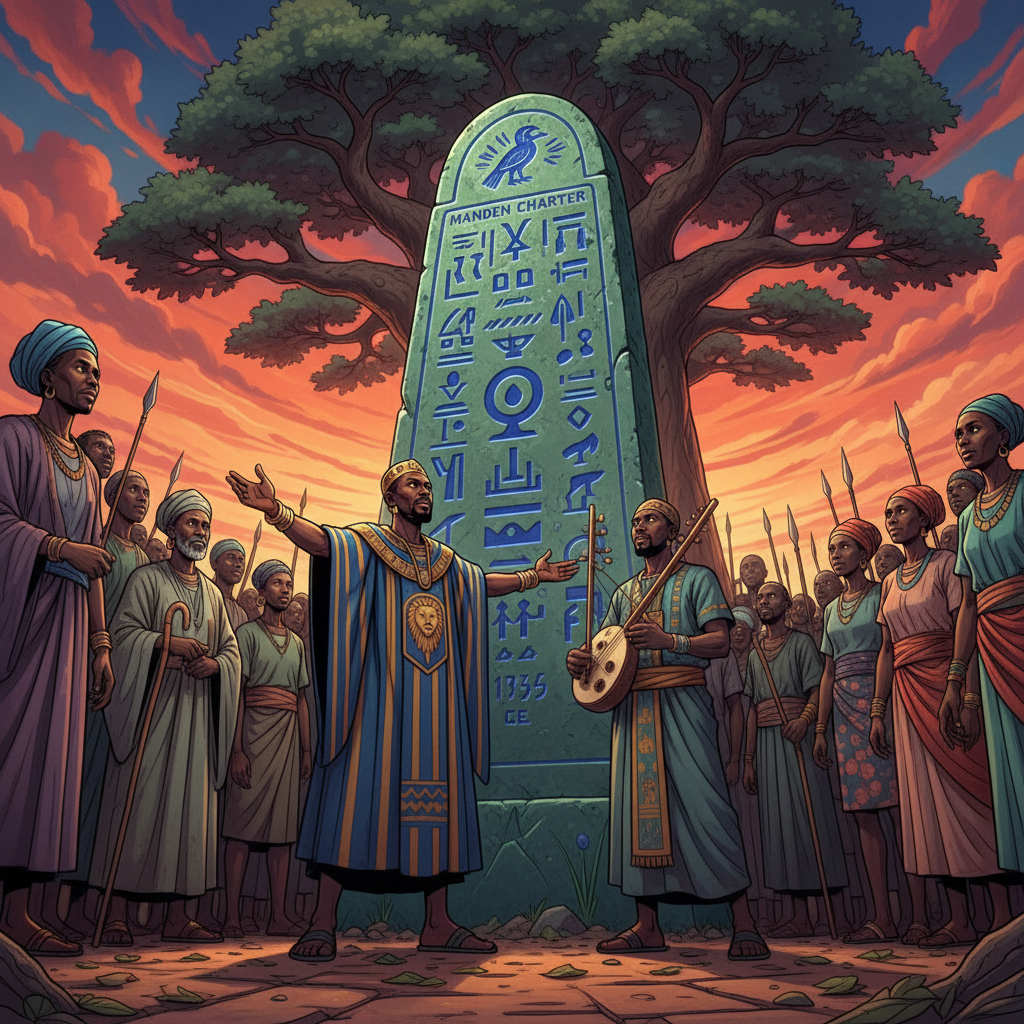
The Manden Charter, proclaimed in 1235 CE, truly spoke first. It predated England’s Magna Carta by twenty years, offering a blueprint for human rights and ethical governance that emerged from an African context. It was a testament to the sophisticated political thought of the Mali Empire, demonstrating that principles of `maat` and `ubuntu` were not abstract ideals but practical foundations for a just society. Yet, the work was not done. The charter was a seed, not a fully grown tree. Its principles had to be actively cultivated and defended against the ever-present threat of `isfet`, both within and without the empire’s borders.
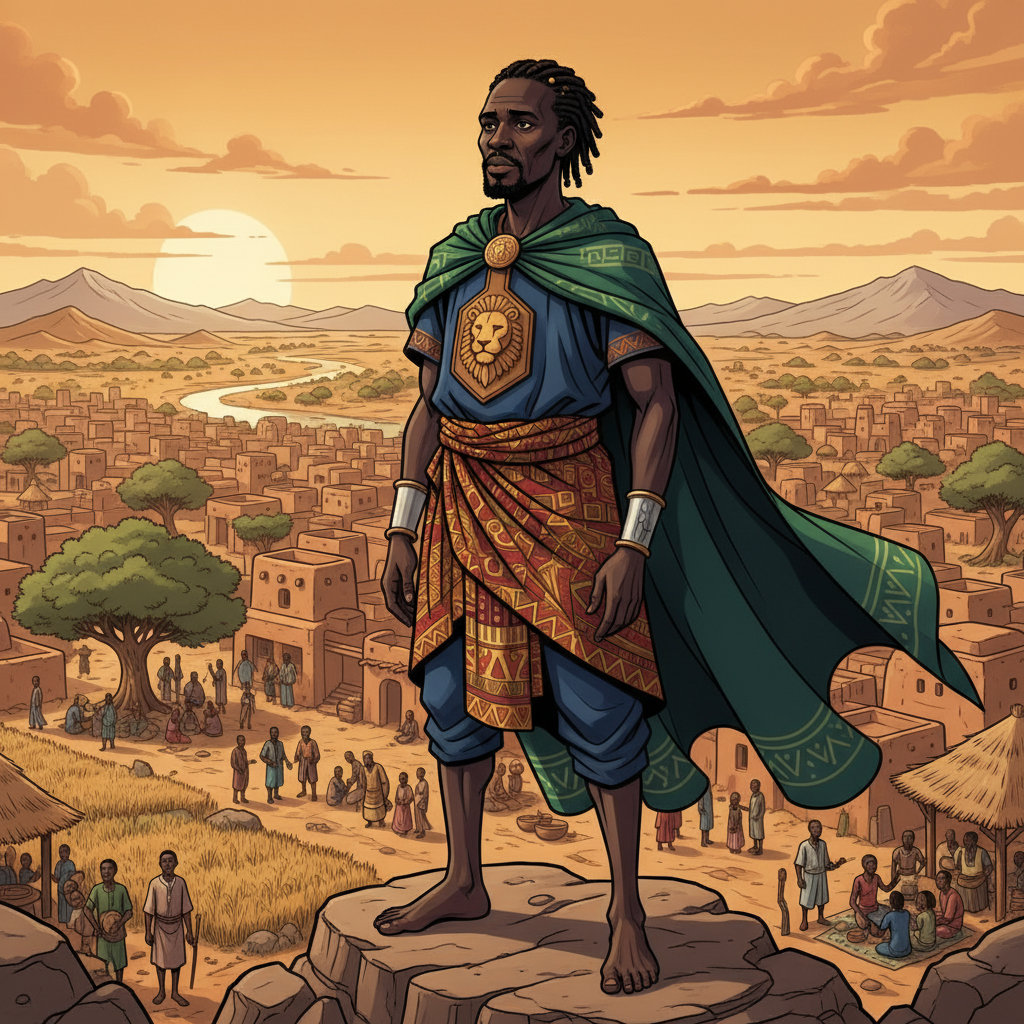
The `mansa` Sundiata, having guided his people through this profound transformation, understood the enduring challenge. He had woven together diverse clans, reconciled conflicting interests, and laid the foundation for an empire that would flourish for centuries. His actions demonstrated the complex interplay between leadership, community, and the persistent pursuit of `maat`. He navigated the difficult space between idealism and pragmatism, making decisions that, while imperfect by absolute standards, advanced the cause of justice for the greatest number of people in his time.
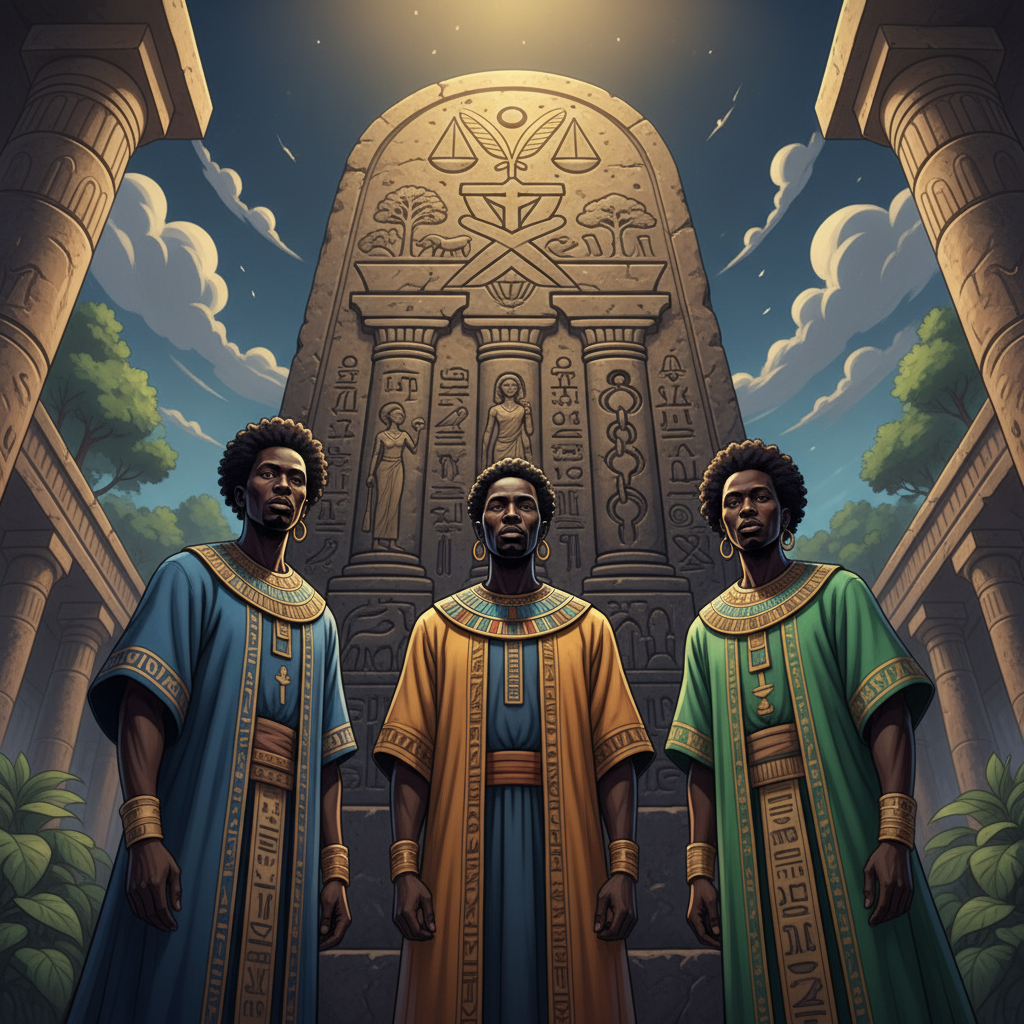
The scholars of the Per Ankh Reader remind us that the `manden-charter` stands as a powerful example of African ingenuity in governance. It embodies the Kemetic idea that `maat` is not merely a philosophical concept, but a practical guide for law and order. The commitment to ecological balance, to the rights of women, and to the abolition of slavery were not minor clauses; they were central pillars. This ancient document, preserved through oral tradition, offers invaluable lessons for understanding the roots of human rights and justice, showing how these ideas blossomed independently in African societies.
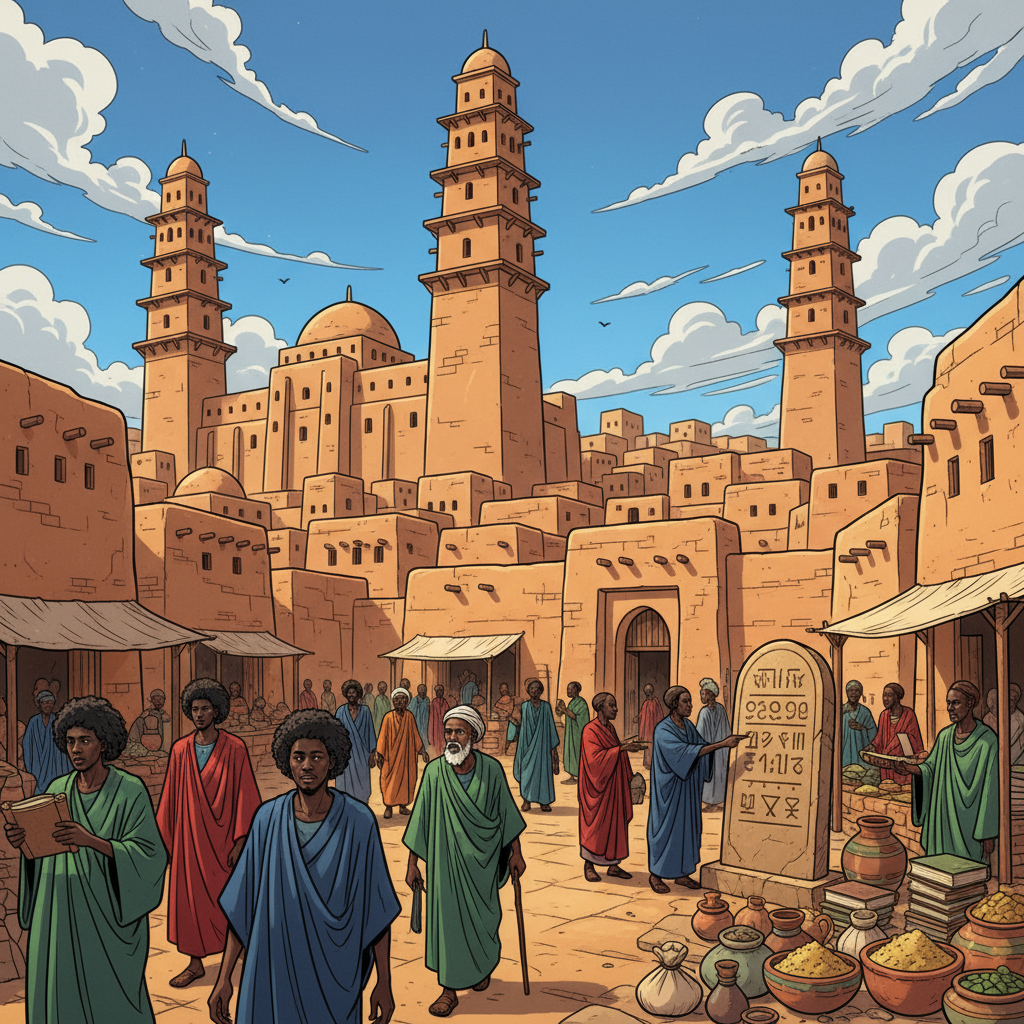
The legacy of the Kouroukan Fouga extended far beyond Kangaba. It influenced subsequent `mansa`s of Mali, fostering an era of relative peace and prosperity. The great cities of Timbuktu, `Sankore`, and `Djenne` would rise as centers of learning and commerce, built upon the stable foundation laid by Sundiata’s charter. The principles of the charter became ingrained in the collective consciousness, a cultural `ankh` that sustained the Manden identity through periods of both strength and challenge. This living document continued to shape their interactions and aspirations.
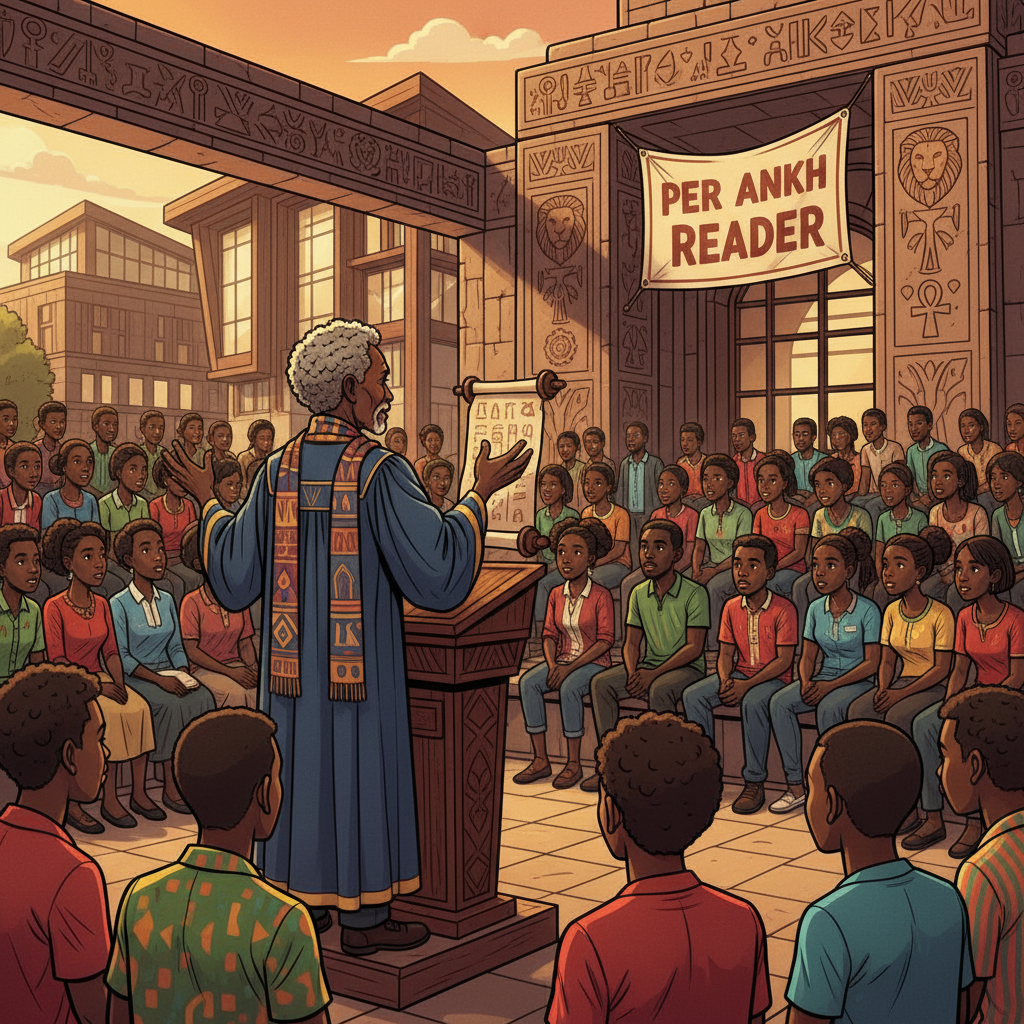
Centuries later, the words of the `manden-charter` still resonate, a testament to the enduring power of justice declared from the heart of a people. Scholar John Henrik Clarke often emphasized the importance of understanding such indigenous African systems of governance, which offered sophisticated models of justice and human dignity long before European thought began to grapple with similar concepts. The charter's existence challenges narratives that often minimize Africa's contributions to global legal and ethical frameworks, reminding us of the continent's profound intellectual heritage.
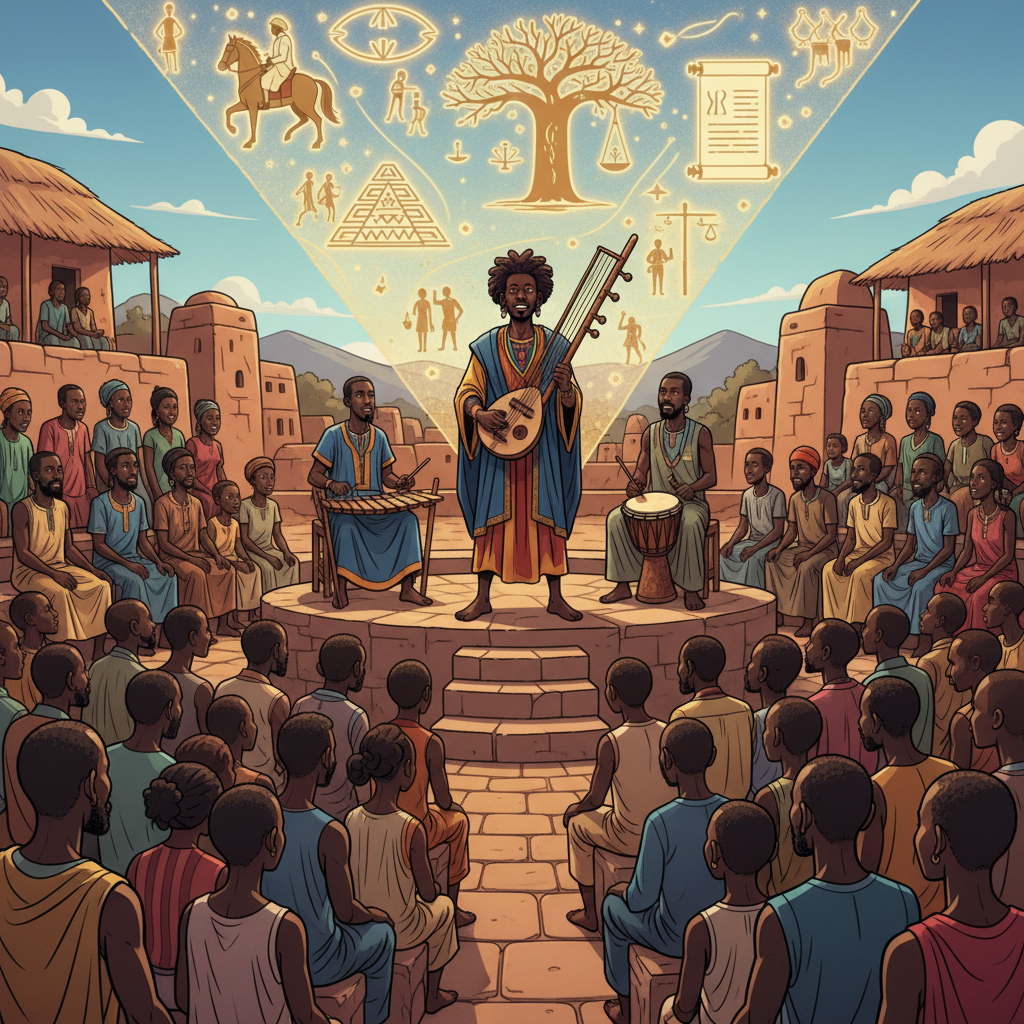
The `griot`s still sing of Sundiata and the Charter that spoke first, weaving its principles into the very fabric of their stories. They remind us that `maat` is a constant pursuit, a daily commitment to balance and truth. The `heka` of the charter lies not just in its words, but in the spirit of collective responsibility and `ubuntu` that brought it into being. It stands as a beacon, illuminating the path forward for those who seek to build societies founded on respect, equity, and the inherent worth of every human `ka`.
For us, in the `per-ankh` tradition, the Manden Charter is not just history; it is a living lesson. It teaches that justice is not a gift from above, but a struggle from below, a collective agreement forged in the crucible of debate and compromise. It embodies the essence of African humanism, urging us to consider how we can apply these ancient principles of `maat` and `ubuntu` to the complex challenges of our modern world. How do we ensure that our own societies truly reflect these values, and that the `isfet` of inequality and injustice is continuously challenged and overcome?
The story of the Charter that Spoke First is a powerful affirmation of the `ka` of African civilization, its capacity for profound ethical and political innovation. It is a reminder that the quest for `maat`, for a world where justice reigns supreme, is an ongoing journey. Sundiata's legacy, preserved by generations of `griot`s like Balla Fasseke, continues to inspire, proving that even in times of great upheaval, humanity can choose to build a future founded on principles of respect, dignity, and a shared commitment to the well-being of all.