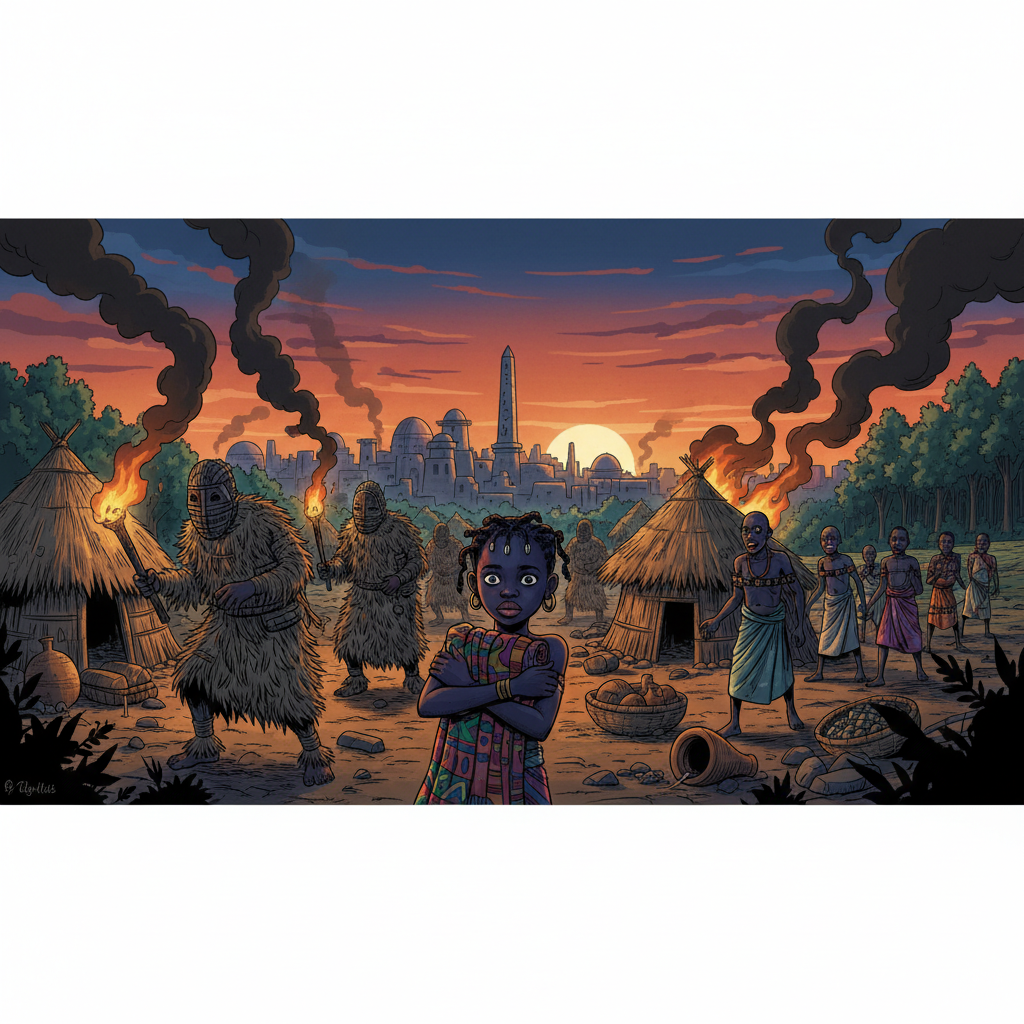
In the time before time had a number, when the city of Ile-Ife was the center of the Yoruba world and the place where the gods had first touched the earth, there came a terror from the forest. The raiders appeared at the forest's edge without warning — figures wrapped in raffia, their faces hidden behind masks of woven palm frond and dried grass, their bodies bulked with layers of fiber until they seemed larger than any human being. They swept into the farmlands around Ife, taking captives, burning granaries, and vanishing back into the forest before the Ife warriors could organize a defense. The people called them the Igbo, the forest people, and they feared them the way you fear something you cannot understand. Arinola was nine years old, a girl who helped her mother sell dyed cloth in the Ife market. Her skin was as dark as the indigo dye her mother worked with, her 4C hair gathered in small twists held with cowrie shells.
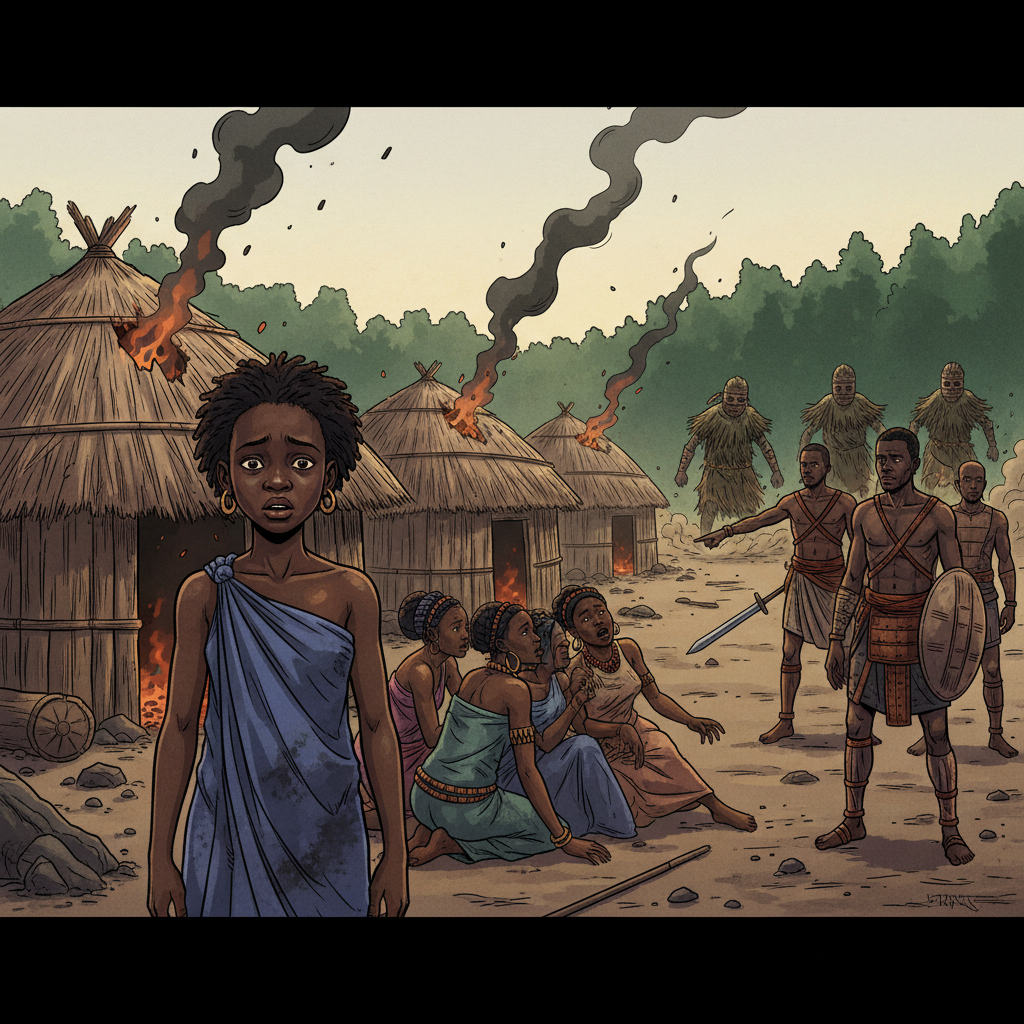
The raids came three times in a single season, each one bolder than the last. Arinola saw the aftermath of the second raid — the burned storage huts, the wailing of women whose children had been taken, the grim faces of warriors who had arrived too late. The masked raiders were terrifying not because they were larger or stronger than the Ife warriors but because no one knew who they were, where they came from, or what lay beneath the masks. Fear of the unknown is always greater than fear of the known. The Ooni of Ife, the supreme ruler, called his council. Warriors proposed attacks into the forest. Priests proposed sacrifices to the gods. But Queen Moremi — wife of the Ooni, a woman whose beauty was spoken of across Yorubaland but whose intelligence was the sharper blade — proposed something that no one else had the courage to suggest.
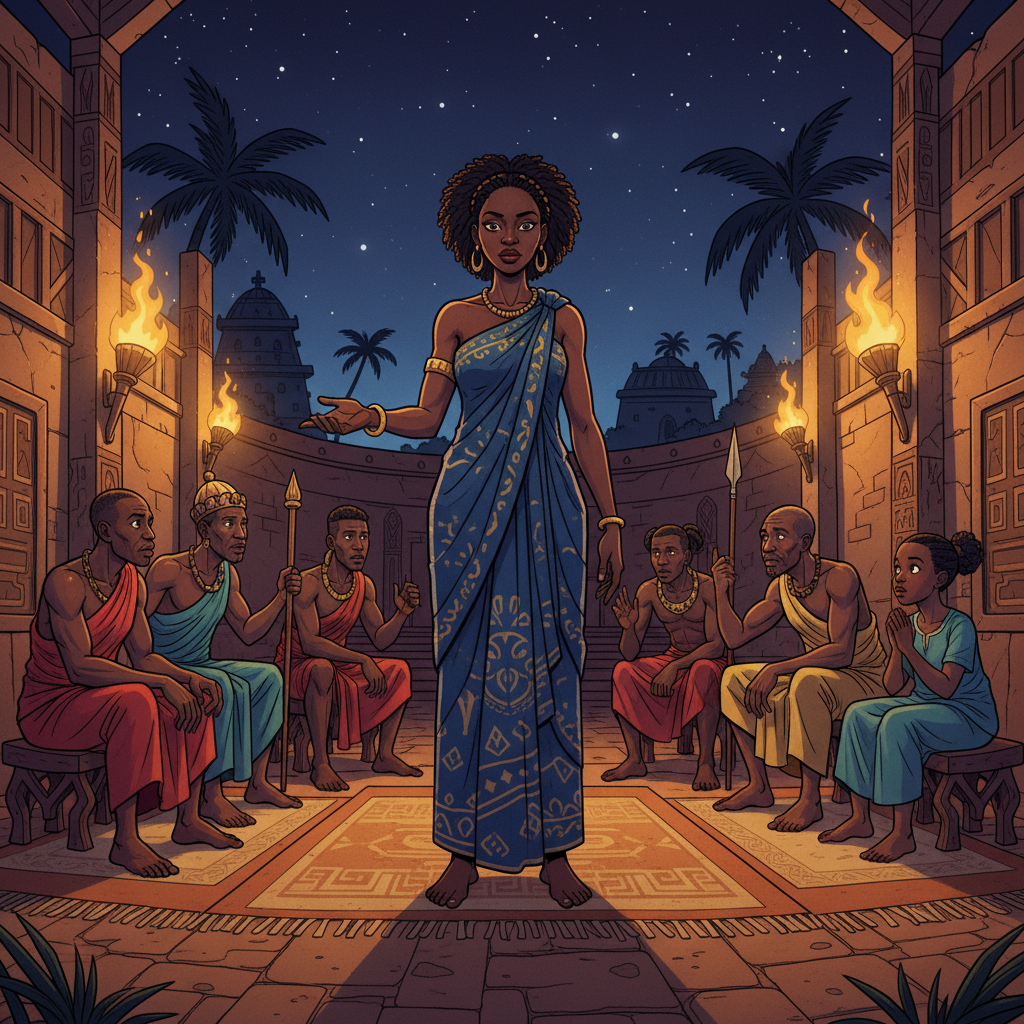
"Let them take me," Moremi said. The council fell silent. Arinola heard the story later from her mother, who had heard it from a woman who served in the palace. Moremi had stood before the council — tall, her very dark skin gleaming in the torchlight, her face composed with a calm that unsettled even the warriors — and offered herself as a weapon. "We do not know who they are because no one who is captured ever returns," Moremi said. "But if someone allowed herself to be captured — someone with eyes to see and a mind to remember — she could learn their secrets. She could discover what lies beneath the masks. And she could find a way to escape and bring that knowledge home." The Ooni protested. The warriors protested. But Moremi was not asking permission. She was announcing a decision.
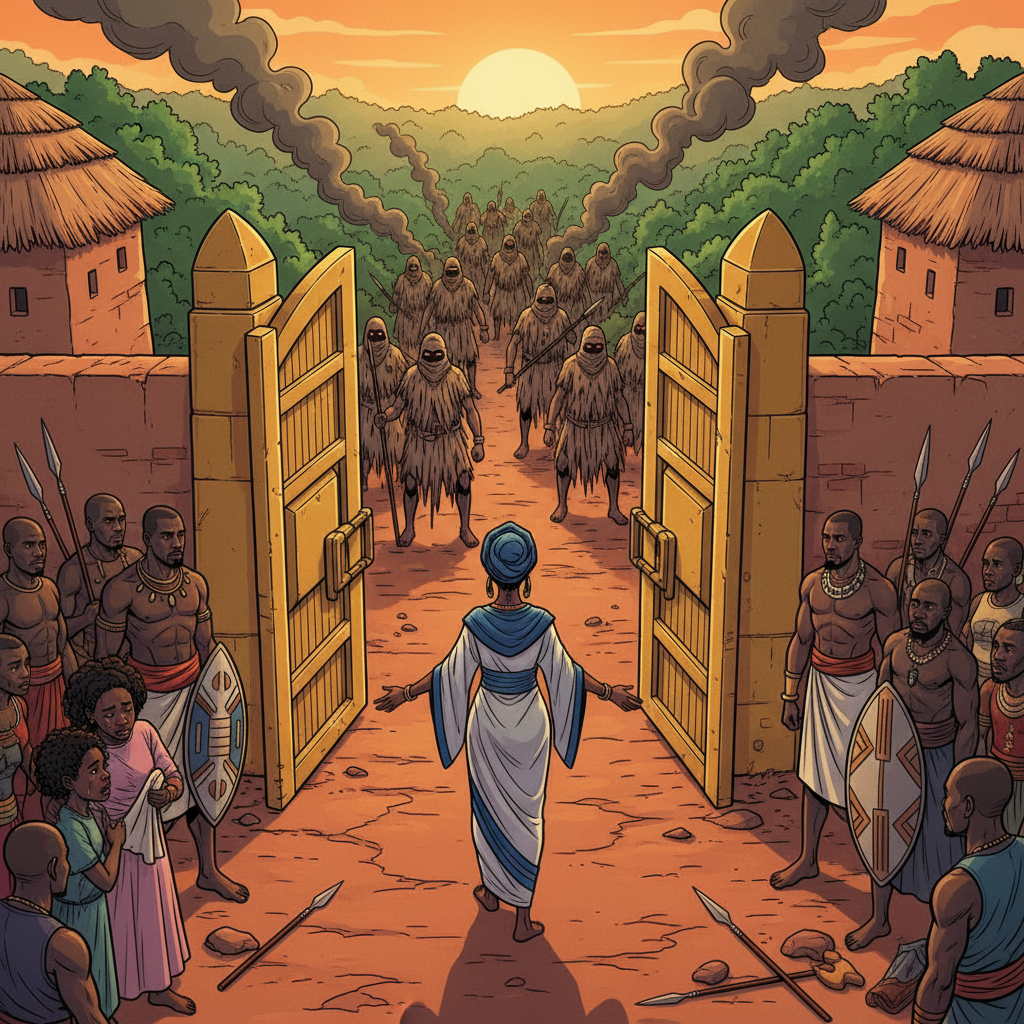
Arinola tried to imagine it — choosing to be captured. Walking toward the very thing everyone else was running from. She thought about the masked figures and the sound of their drums and the way grown warriors flinched at the mention of them. And she thought about Moremi, standing before all those men, telling them she would do what none of them had offered to do. The next time the raiders came, Moremi walked out of the city and into their path. She was taken. The city mourned her as if she were dead, because everyone assumed she would be killed or enslaved and never seen again. Arinola's mother wept in the market, and even the warriors who had opposed Moremi's plan spoke of her with a respect that bordered on reverence. She had done the thing they could not bring themselves to do.
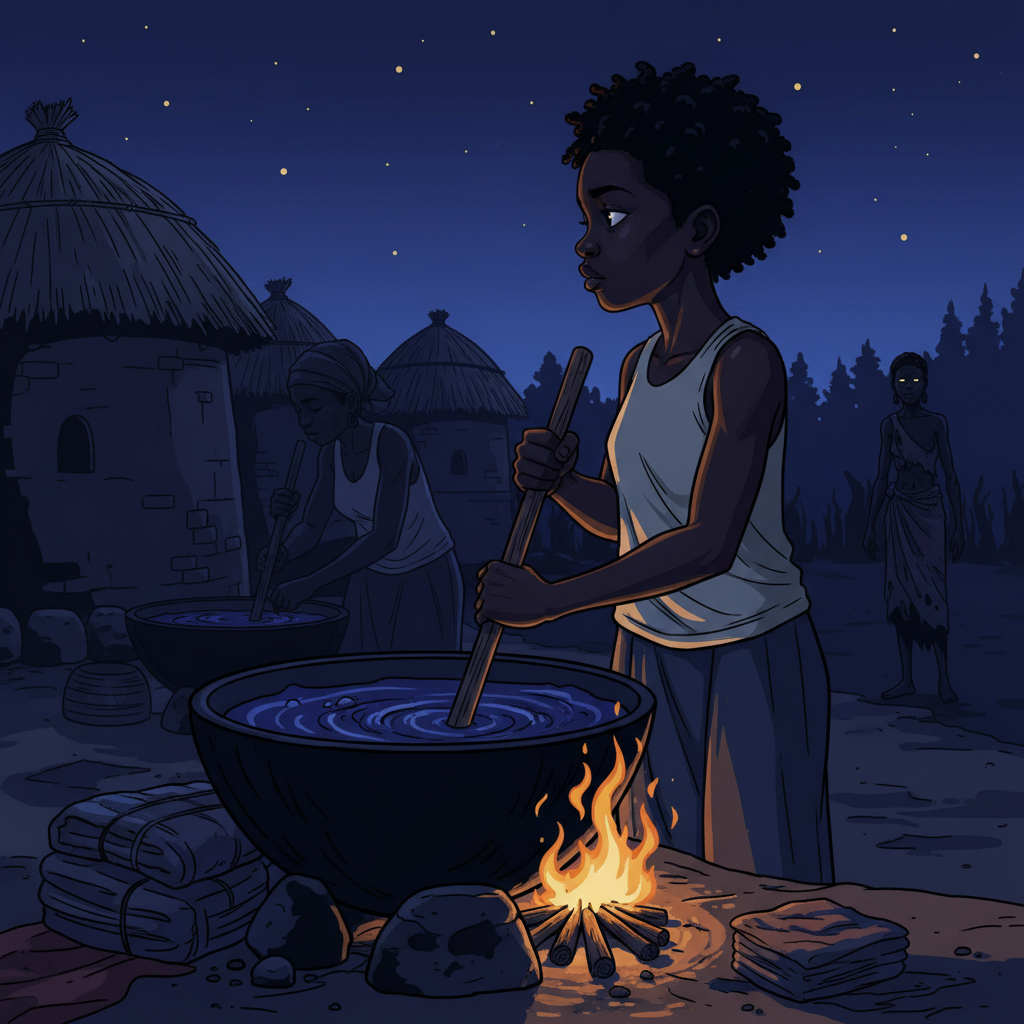
Weeks passed. The rains came and went. The market continued, subdued. Arinola helped her mother with the dye pots, stirring the indigo until her arms ached, and thought about the queen who had walked into darkness on purpose. Then, one morning, a figure appeared at the forest's edge. Moremi came back. She was thinner, her dark skin marked by the scratches of forest travel, her clothing torn and stained. But her eyes — Arinola saw them later, when the queen returned to the palace — her eyes burned with something that was not anger and not triumph but something harder to name: the look of someone who has seen what she needed to see and paid the price of seeing it.
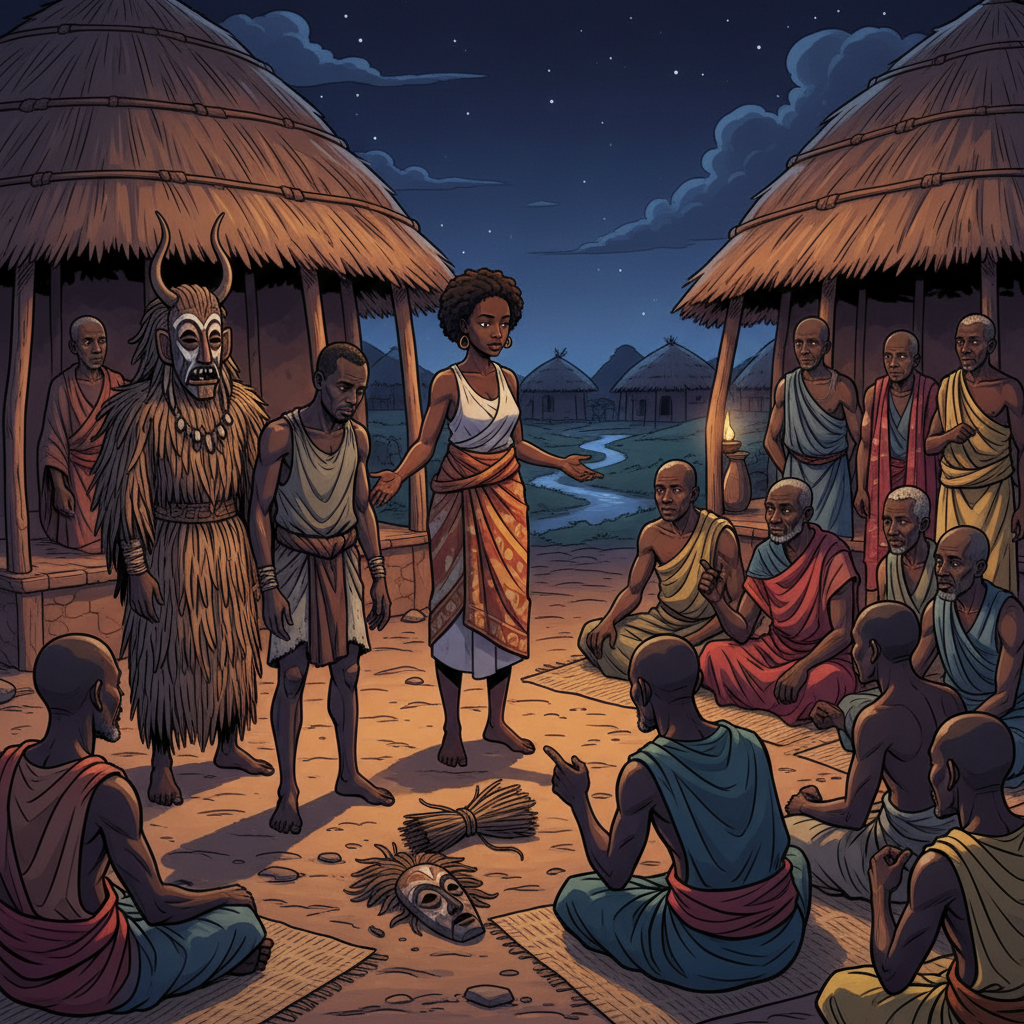
Moremi had learned the raiders' secret. The masks and raffia costumes that made the Igbo appear to be forest spirits were just that — masks and costumes. Beneath them were ordinary men, no larger or stronger than Ife warriors. Their power lay entirely in the fear they created through disguise. They used the masks to convince the Ife people that they were fighting supernatural beings, and that fear did more damage than any weapon. Moremi had also learned their camp's location, their patrol patterns, and the routes they used to approach Ife. She had escaped by wading through a river at night, the water black and cold around her waist, the forest sounds pressing in from every side. The knowledge she brought changed everything.
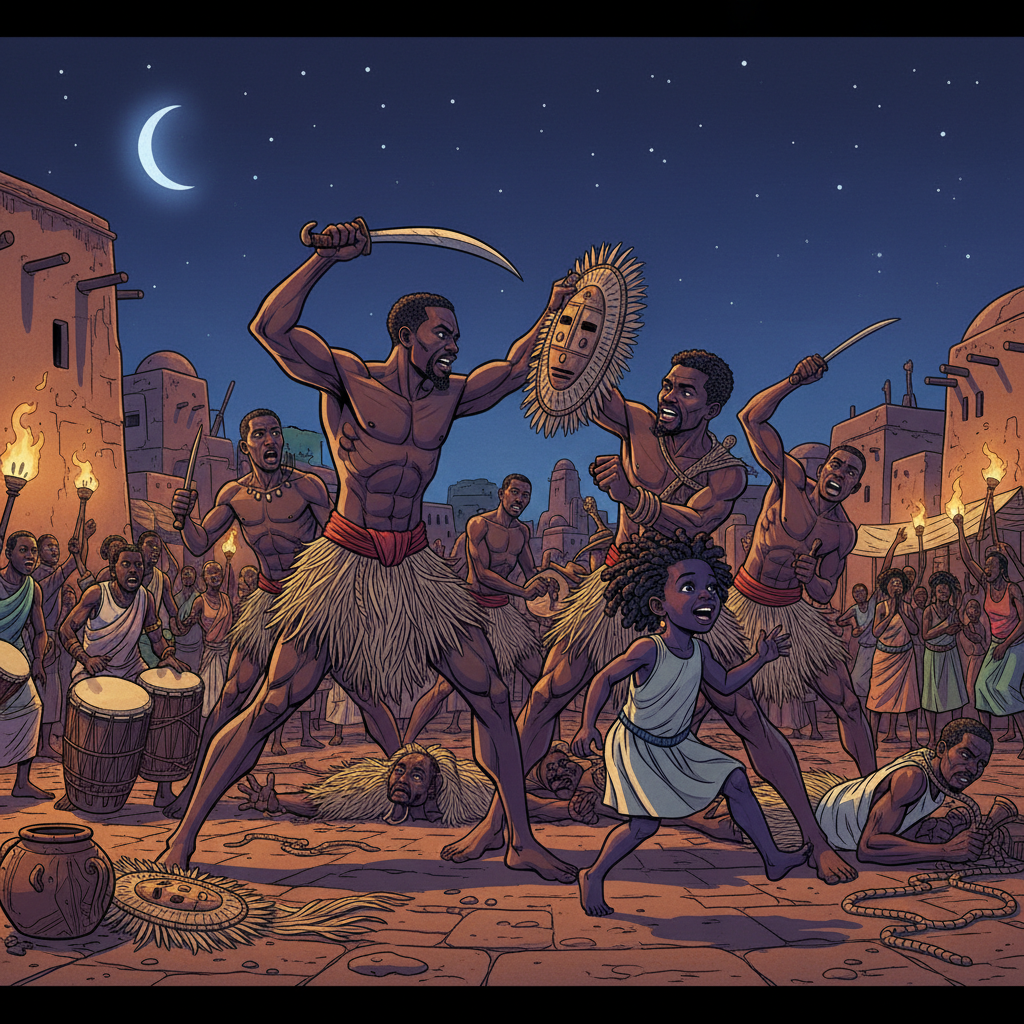
Armed with Moremi's intelligence, the Ife warriors prepared an ambush. When the raiders came again, the warriors were ready. They struck the masked figures before the fear could take hold, tearing away the raffia disguises to reveal the ordinary men beneath. The sight of the unmasked raiders — human, vulnerable, bleeding like any other men — broke the spell of terror that had paralyzed Ife for months. The Igbo raiders were defeated. Some were killed, some were captured, and the rest fled into the forest and did not return. The city celebrated with a joy that shook the walls — drums, dancing, the ululations of women who could finally breathe without fear. Arinola danced with the other children in the market square, her dark feet stamping the earth in rhythms she had known since she could walk.
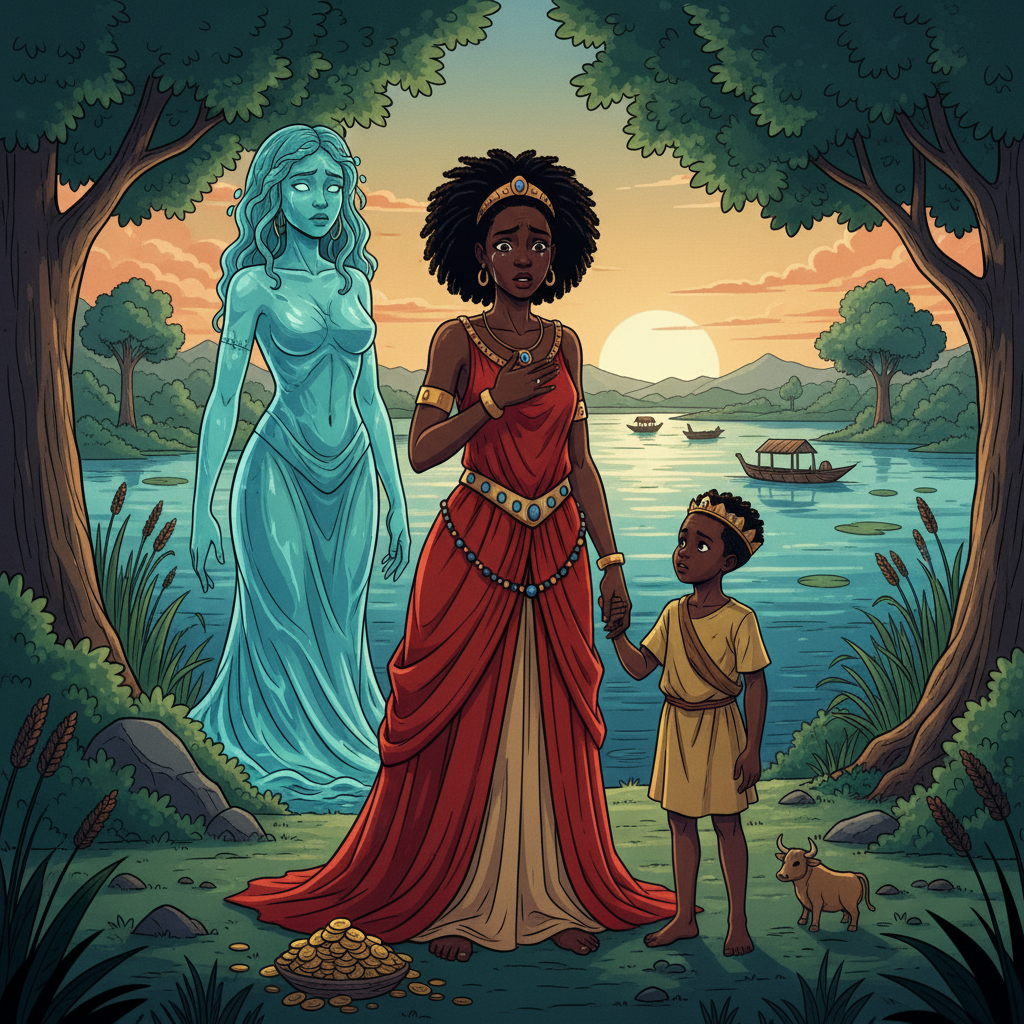
But the celebration was not complete. Because Moremi's victory had come at a cost that no one had anticipated, and the weight of that cost fell on a single person — a child. Before Moremi had allowed herself to be captured, she had gone to the river goddess Esinmirin and made a promise. She asked Esinmirin for protection during her captivity and escape. The goddess agreed but demanded a price: the most precious thing Moremi possessed. Moremi had offered gold. Esinmirin refused. Moremi had offered cattle. Esinmirin refused. Moremi offered her own life. Esinmirin refused. Then Moremi understood what the goddess wanted. The most precious thing she possessed was not a thing at all. It was her only son, Oluorogbo.
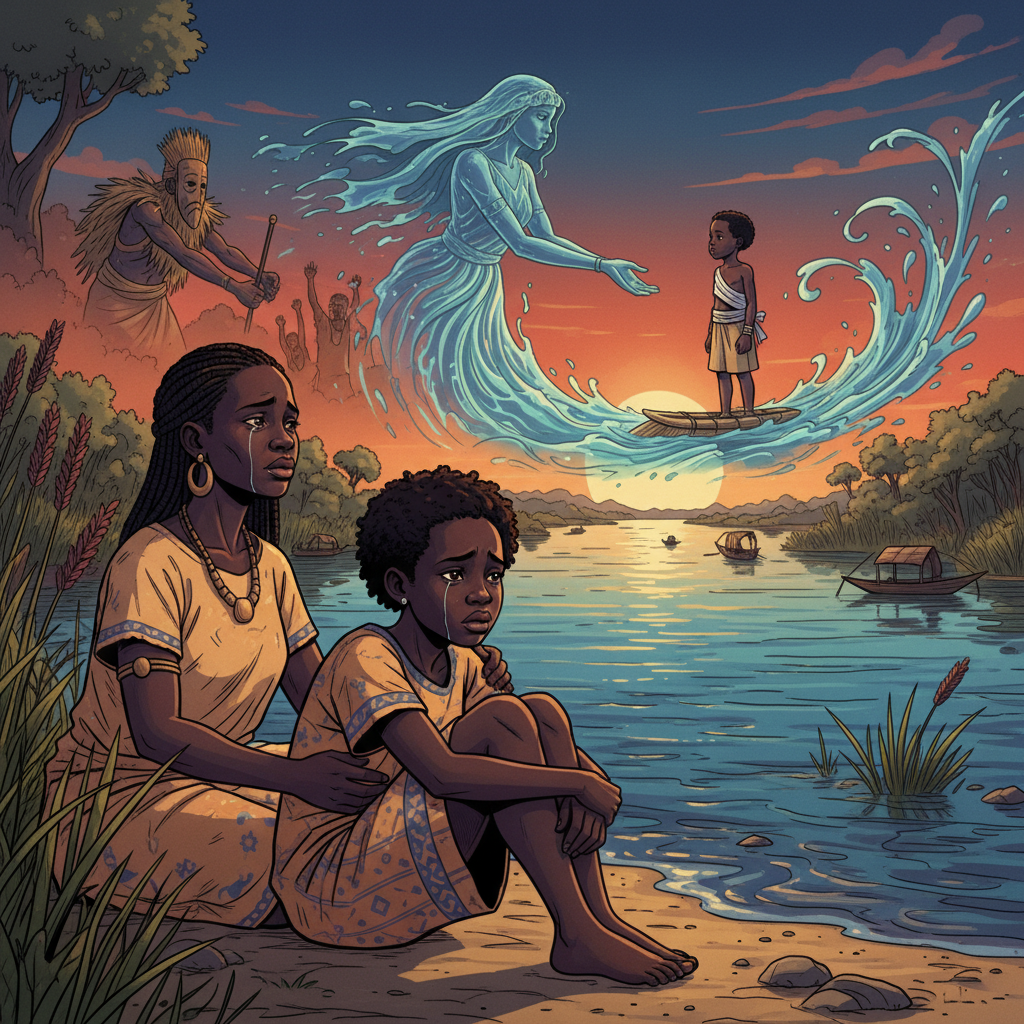
Arinola did not learn this part of the story until later — much later, when she was old enough for her mother to tell her truths that were too heavy for a child's hands. Moremi had promised her son to the river goddess. The sacrifice of Oluorogbo — a boy not much older than Arinola herself — was the price of Ife's freedom from the masked raiders. The idea of it made Arinola's stomach clench with something beyond sadness. She tried to imagine her own mother making such a choice — looking at her daughter and knowing that saving the city meant losing the person she loved most in the world. The thought was too large to hold, too sharp to touch without bleeding. Moremi had saved an entire city. And it had cost her everything that made the city worth saving.
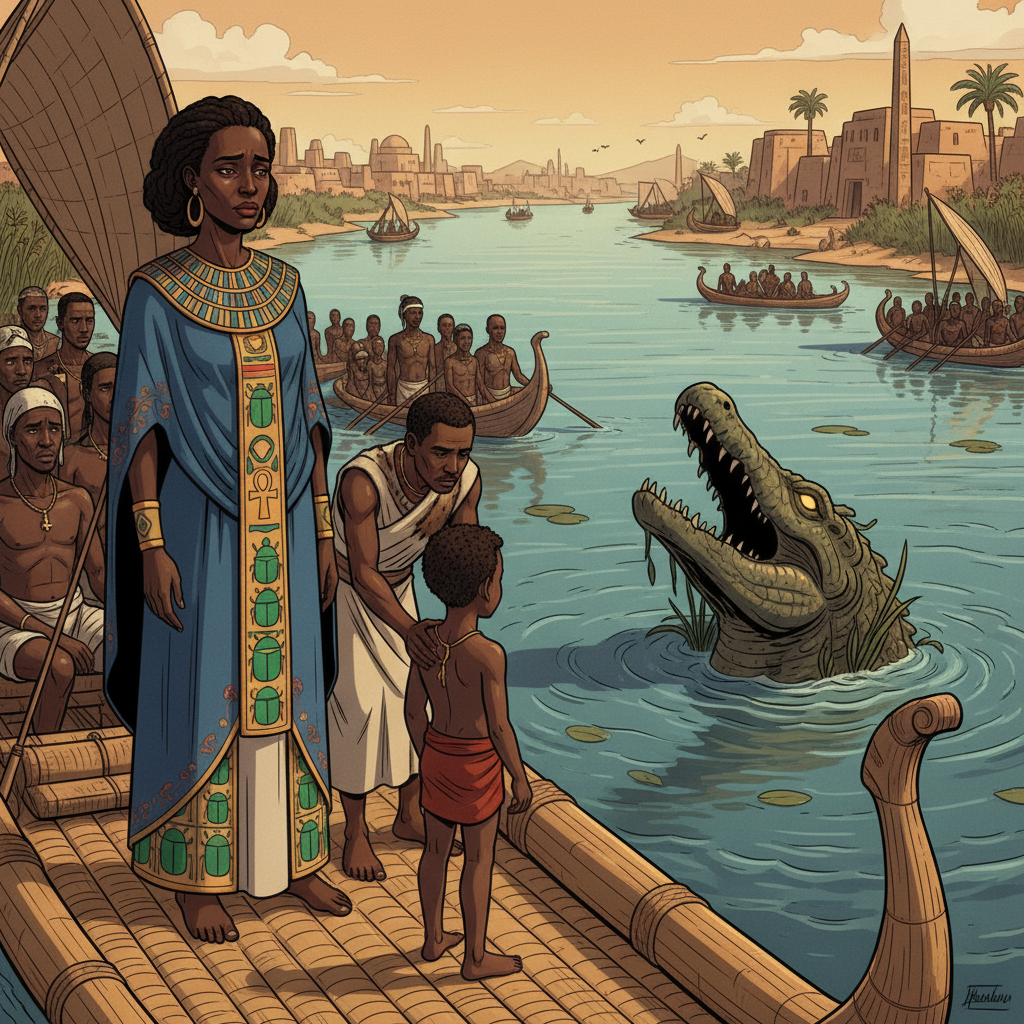
The sacrifice of Oluorogbo is the wound at the heart of Moremi's story. It is the element that separates this tale from simple heroism and makes it something more difficult and more human. Heroes in simple stories make sacrifices that cost them nothing they cannot afford to lose. Moremi made a sacrifice that hollowed her out, that took the center of her life and gave it to the river. Arinola heard, years later, that after the sacrifice, Moremi did not weep publicly. She returned to the palace and performed her duties as queen. She attended councils. She participated in ceremonies. She was, by every outward measure, the same woman she had been before. But the women who attended her said that her eyes, those burning eyes that had returned from the forest alight with purpose, had grown quieter.
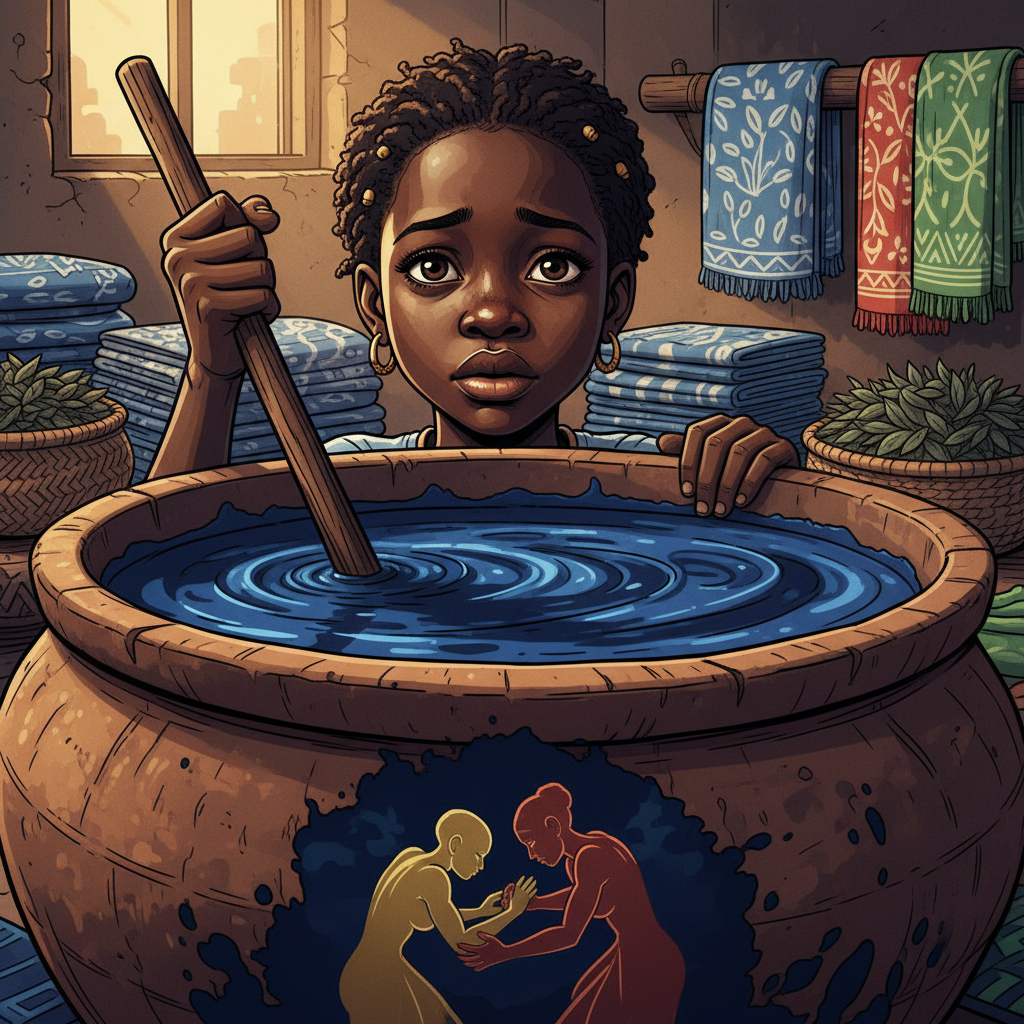
Arinola grew up with this story embedded in her understanding of what it meant to love a community. Her mother, stirring the indigo vats, spoke of Moremi the way one speaks of a wound that has healed but left a scar. "She did not sacrifice her son because she did not love him," her mother said. "She sacrificed him because she loved him and loved Ife and could not save both. The world is sometimes shaped so that the things you love most are at war with each other, and there is no path that does not leave you bleeding." Arinola watched the indigo swirl in the pot — dark blue becoming darker, the color of deep water, the color of things that lie beneath the surface. She was beginning to understand something about compassion that she had not understood before.
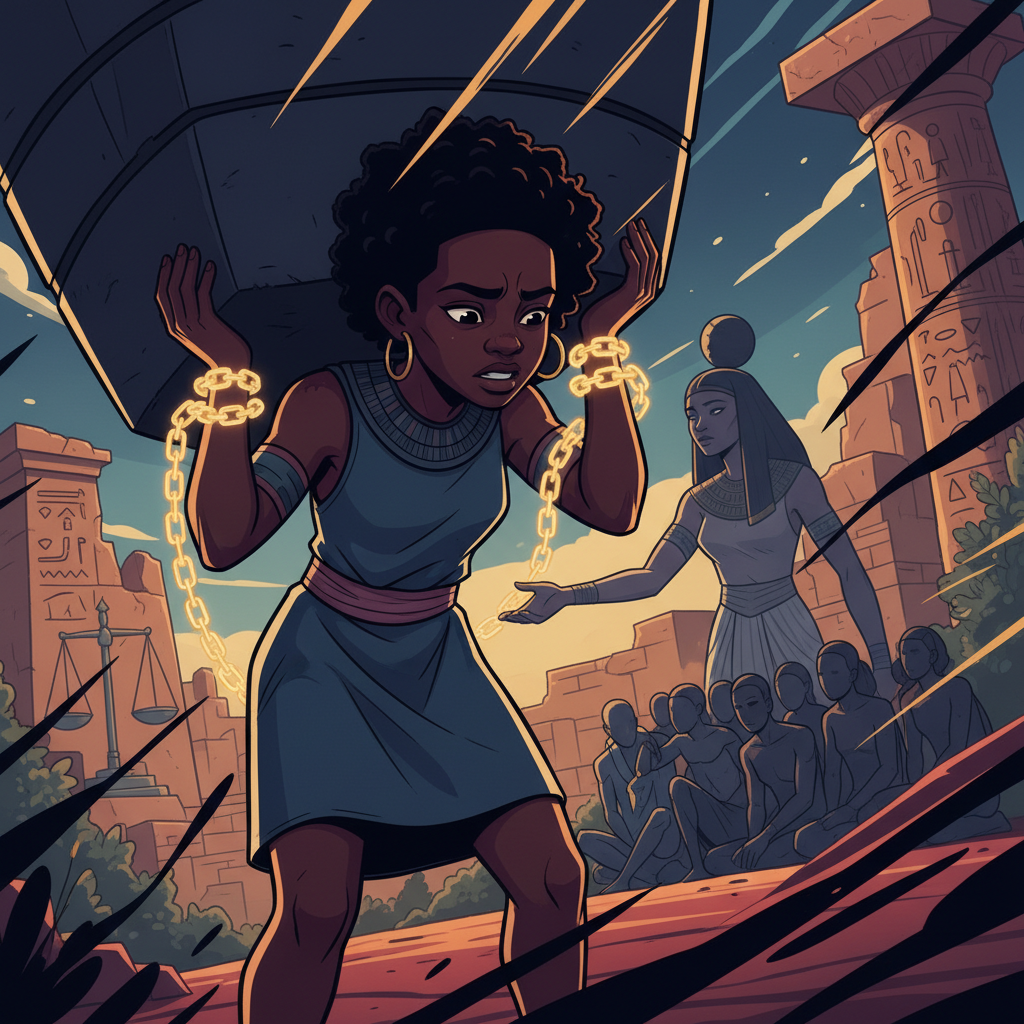
Compassion, Arinola was learning, is not the same as kindness. Kindness costs you little. Compassion costs everything. Kindness is a gentle word, a shared meal, a hand extended to help someone up. These are good things. But compassion — true compassion, the kind that Moremi demonstrated — is the willingness to take another's suffering into your own body, to bear a weight that destroys you because putting it down would destroy others. The Kemetic concept of Maat includes this dimension of compassion. The Negative Confessions — the forty-two declarations of moral purity that the soul speaks in the Hall of Judgment — include not only prohibitions against harm but affirmations of care: "I have not caused suffering." "I have fed the hungry." "I have given water to the thirsty." These are not passive virtues. They are active commitments that may demand sacrifice.
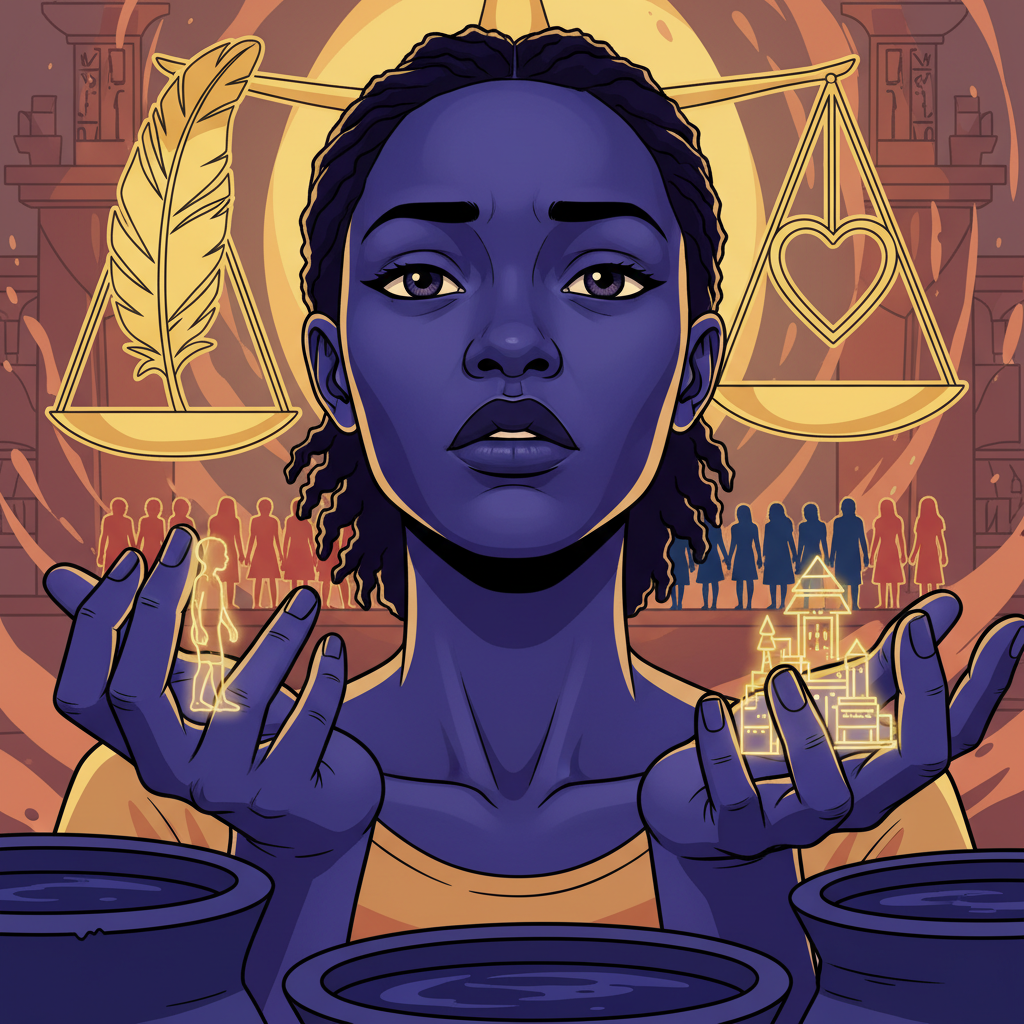
But Maat also asks a harder question: where is the limit of sacrifice? Is it just to sacrifice one person — even willingly, even your own child — for the survival of many? The Kemetic philosophers did not shy from this question. The Hall of Judgment does not weigh communities against individuals. It weighs each heart separately, on its own merits, against the feather of Maat. Moremi's heart, weighed on those scales, holds the weight of a city's salvation and the weight of a child's life — both at once, forever. Arinola, growing older, growing wiser, growing into a woman whose hands were permanently stained with indigo, carried this question the way Moremi carried her grief: openly, honestly, without pretending it had an easy answer.
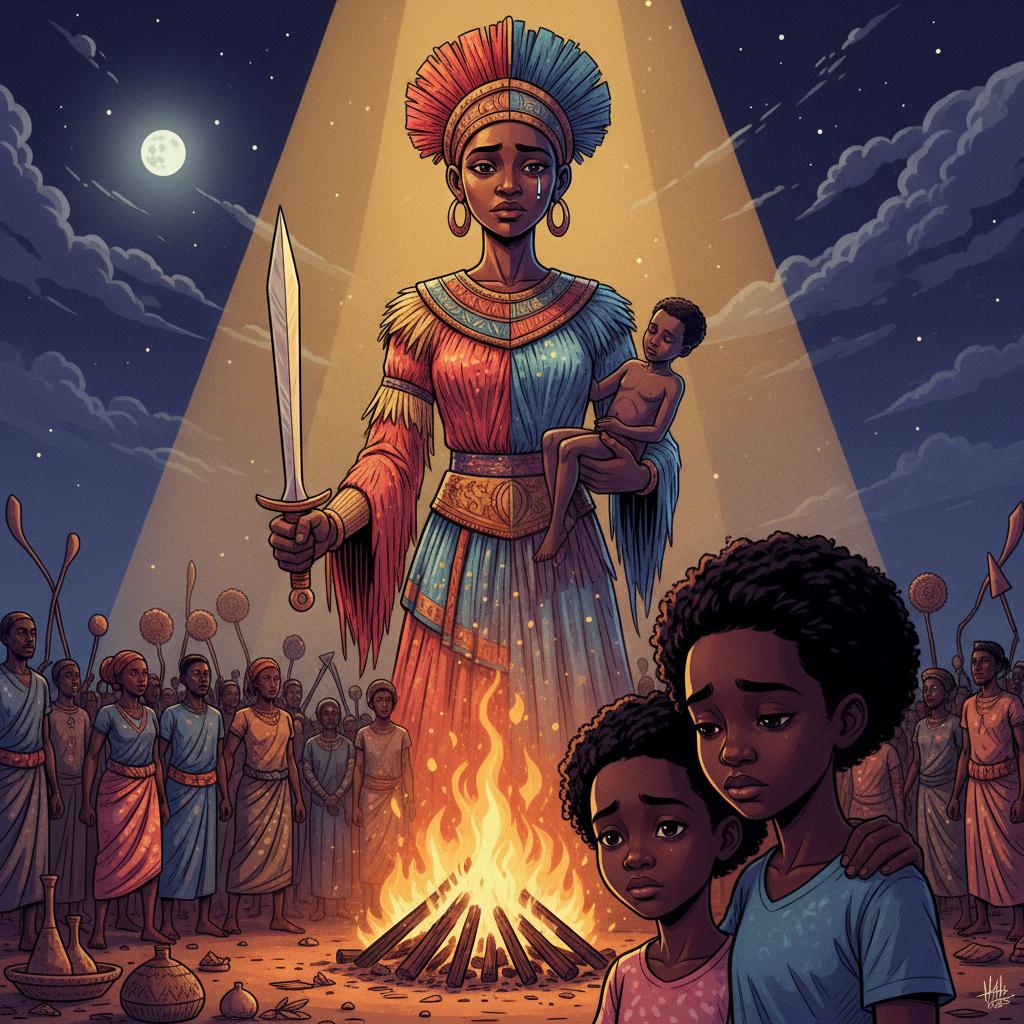
There is a festival in Ile-Ife called the Edi Festival that honors Moremi to this day. During the festival, the people of Ife remember both the queen's courage and her sacrifice. They celebrate the liberation from the masked raiders, but they also acknowledge the price that was paid. The festival does not simplify Moremi into a pure hero. It holds her in her full complexity — a woman of extraordinary courage and extraordinary grief, a mother who saved a nation and lost a son, a queen who walked into darkness so her people could walk in light. Arinola attended the Edi Festival every year until she was old. Each year, she understood a little more. Each year, the story grew larger inside her, the way a tree grows — not by replacing what was already there but by adding new rings around the old.
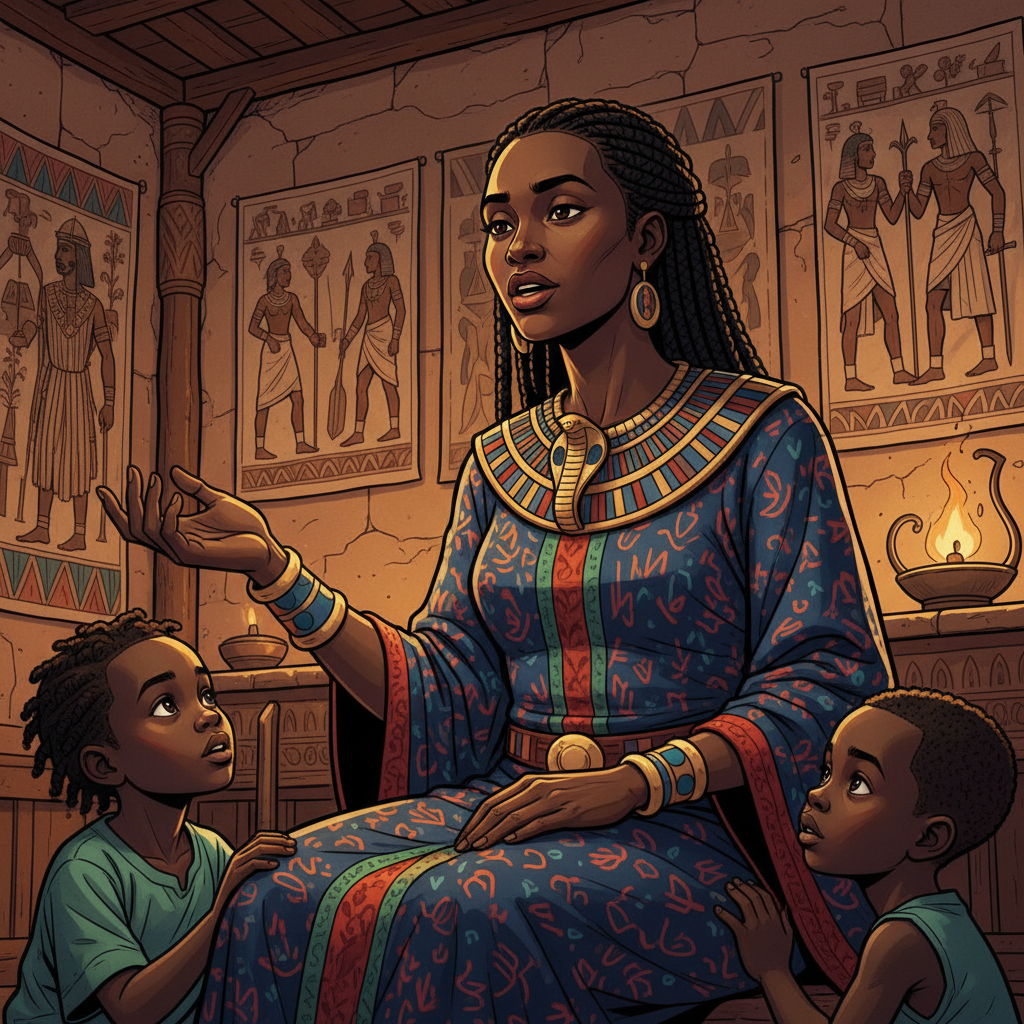
She told Moremi's story to her own children, and she told it whole. She did not remove the sacrifice of Oluorogbo to make the story more comfortable. She did not soften the impossible choice to make it more digestible. She told them about a woman who loved her city enough to walk into captivity, who was clever enough to learn her enemy's secrets, who was brave enough to escape through a river in darkness — and who paid for all of it with the life of the person she loved most. "Is it a happy story, Mama?" her youngest asked. Arinola thought about this for a long time. "It is a true story," she said. "And true stories carry both the light and the weight. You cannot have one without the other."
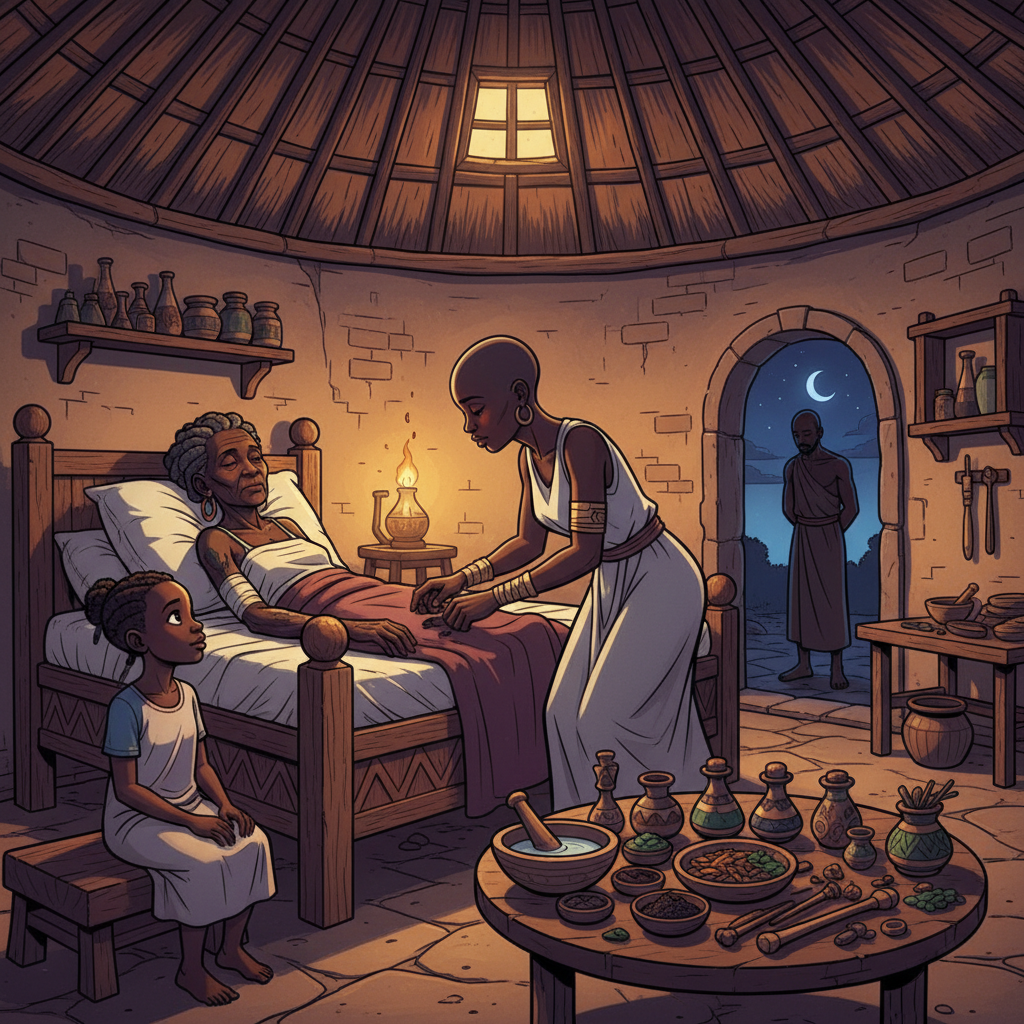
The legacy of Moremi lives in every person who has ever been asked to give more than they can afford for the sake of something larger than themselves. It lives in parents who sacrifice comfort for their children's education. It lives in community leaders who spend their health serving others. It lives in anyone who has ever looked at a situation that demanded everything and said, quietly, "I will go." But Moremi's story also asks us to sit with the cost. To remember that behind every liberation, there is a price. To honor not just the victory but the wound. Compassion without this awareness is incomplete — it celebrates the feast without acknowledging who went hungry to prepare it.
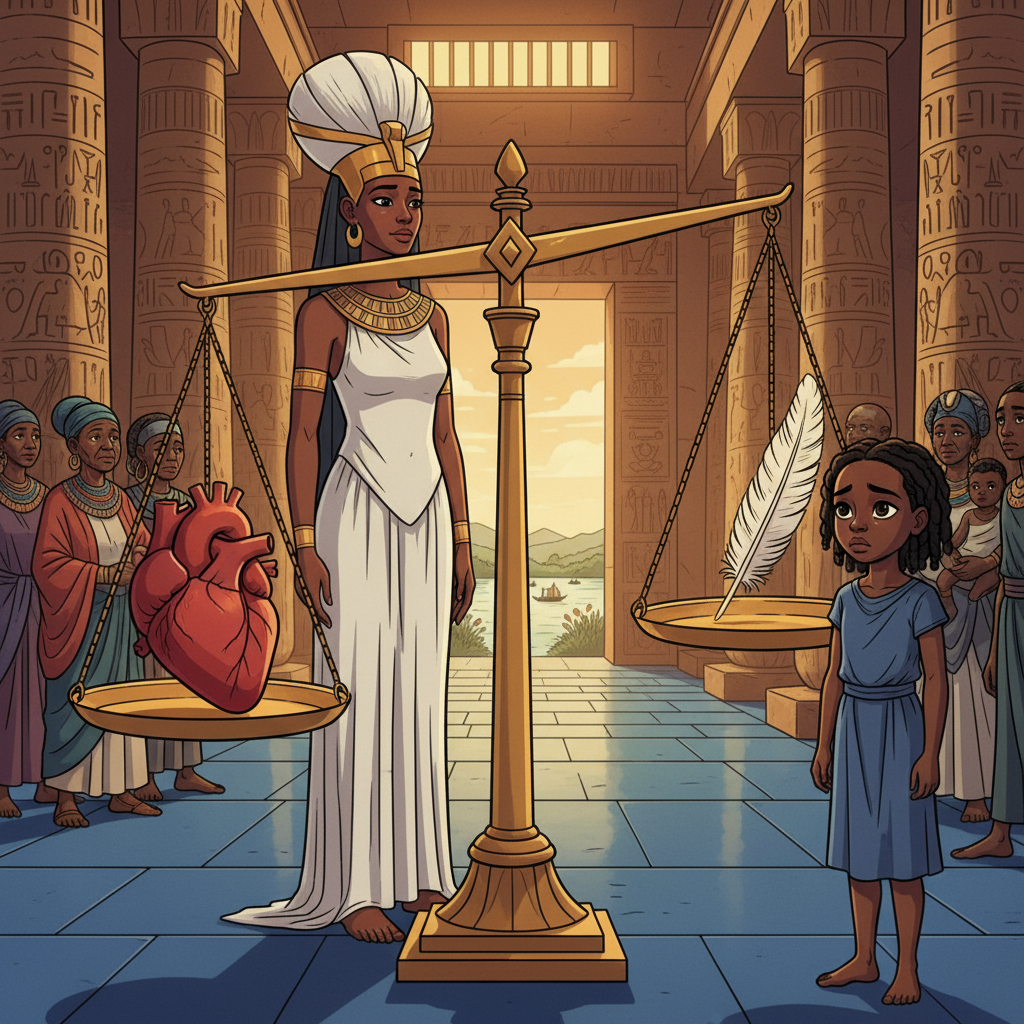
In the Kemetic Hall of Judgment, the heart is weighed against the feather of Maat. The feather is truth — light, unbearable truth. Moremi's heart, if placed on those scales, would not be light. It would be heavy with the weight of a mother's grief, heavy with a sacrifice no soul should be asked to make. But it would also be heavy with courage, with intelligence, with the fierce love that made a queen walk into captivity so her people could walk free. Maat does not ask that our hearts be light. It asks that they be true. Moremi's heart was true — terribly, beautifully, completely true. And the tears she shed for Oluorogbo water the roots of every Yoruba life that followed, because without her sacrifice, those lives might never have been lived.
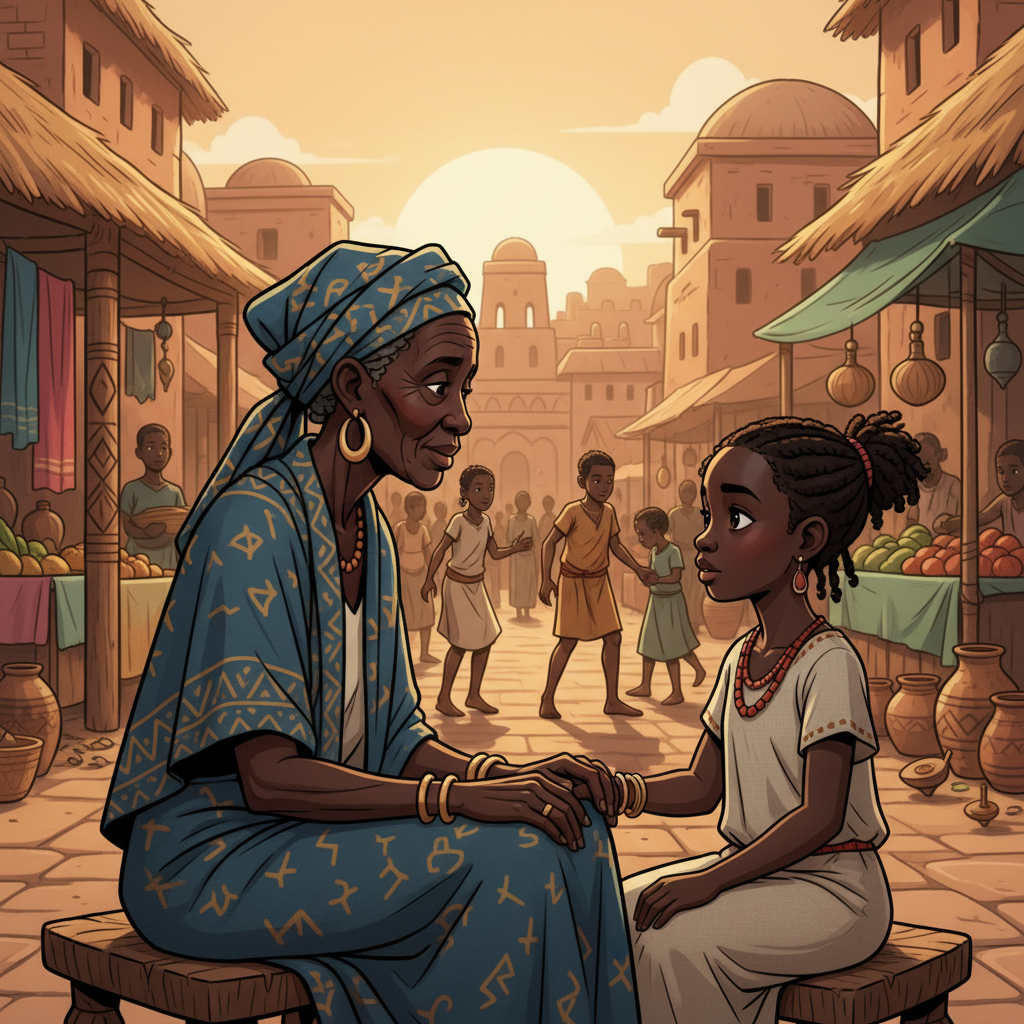
Arinola lived to be very old — old enough to see her grandchildren play in the same market square where she had danced as a child when the raiders were defeated. She told the story one last time to her youngest granddaughter, a girl whose dark skin and wide eyes reminded her of herself at nine years old, watching the world and trying to understand it. "Moremi teaches us that compassion is not soft," she said. "It is the hardest thing there is. It asks you to feel the pain of others so deeply that you are willing to carry it in your own body. It asks you to love so fiercely that you will break yourself rather than let those you love be broken." The girl was quiet. Then she asked: "Did Oluorogbo know?" Arinola did not answer. Some questions are meant to be carried, not answered. And this one — this question about a boy who may or may not have understood why his mother wept as she led him to the river — is perhaps the heaviest question in all of Yoruba memory. She carried it. She passed it on. And it is yours now, {name}, to carry too.