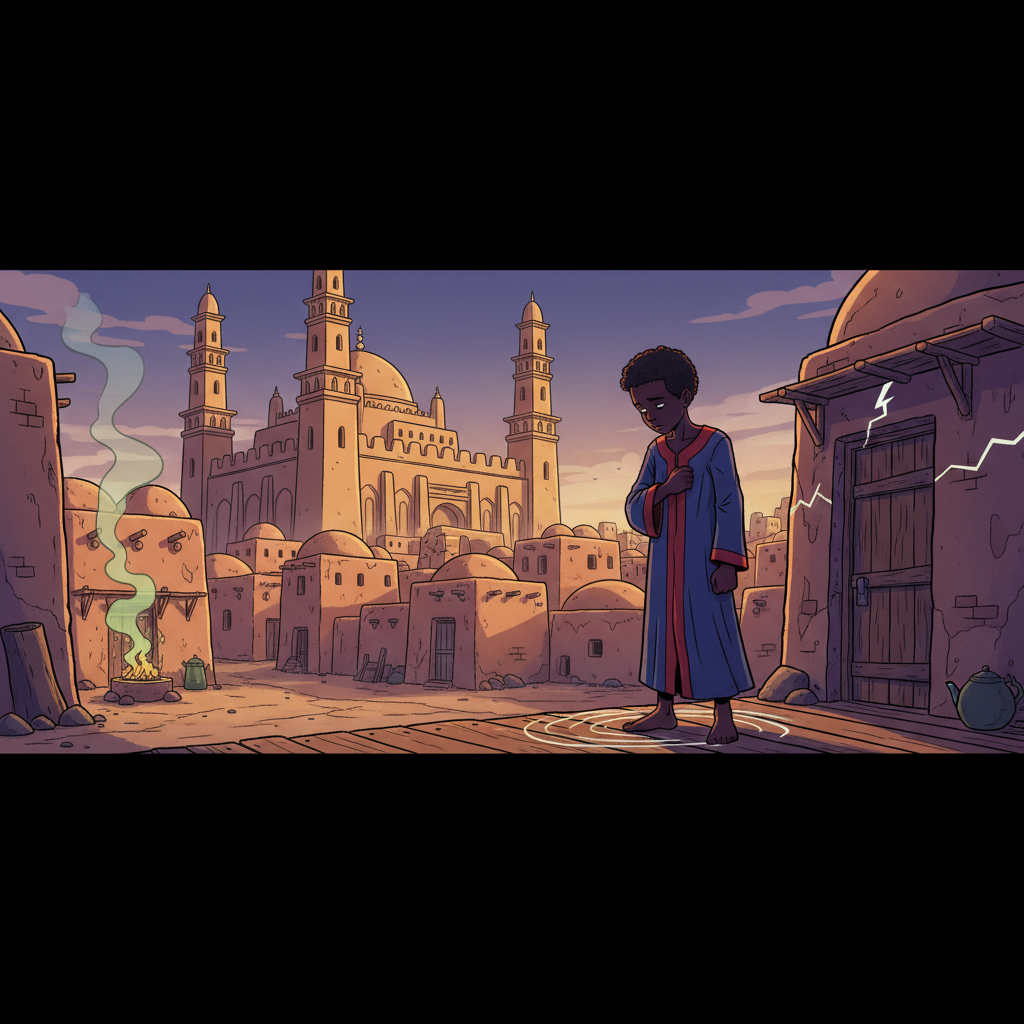
The morning air in Timbuktu, usually a soothing mix of brewing bissap tea and dry earth, felt heavy to Moussa. At thirteen, his scholar’s robe, typically precise, now clung to him slightly disheveled, mirroring the chaos that had erupted last night. He could still feel the tremor of the floorboards after his angry stomp, the sharp echo of the door slamming shut, a thunderous punctuation to his outburst. Their quiet home, so close to the revered Sankore mosque, had been filled with the discordant notes of his frustration. He clutched his hands, remembering the sting of his own harsh words.
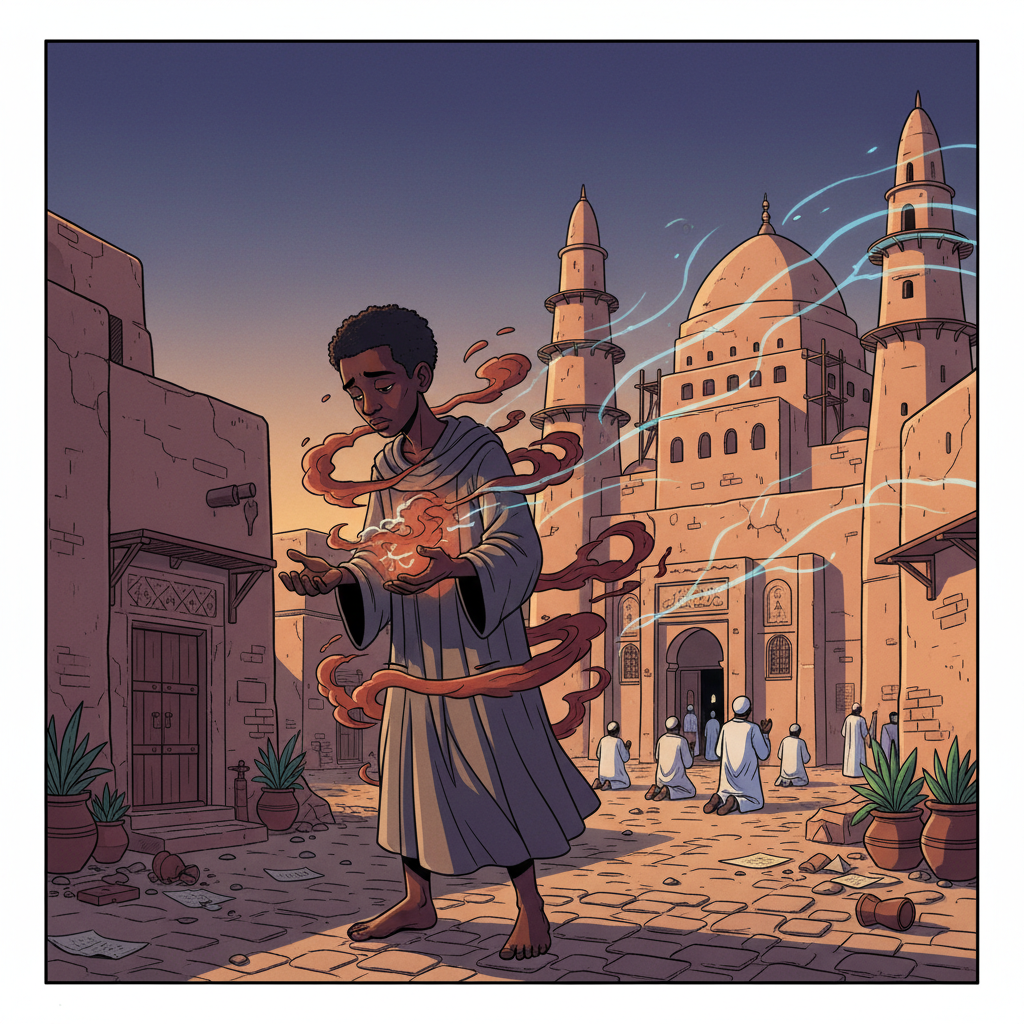
The sounds of morning prayers now drifted softly from the Sankore, replacing the echoes of his anger, but the heavy feeling persisted. It was a burden of Isfet, a disorder settling deep within his spirit, far from the Maat, the truth and balance his family lived by. He knew, even as the fiery emotions had consumed him, that he was straying from the path of wisdom. The familiar, tiresome cycle was already turning: the explosion of temper, followed by a crushing wave of deep regret, and then, the inevitable, carefully crafted apology. This pattern felt like a heavy chain.

He spent minutes, perhaps an entire Renpet, in his small room, meticulously rehearsing the words. He shaped them in his mind, sculpting each phrase with the care a master potter uses for precious clay. They would be beautiful, sincere, brimming with the raw truth of his remorse. He pictured his mother’s face, usually calm and serene like the flowing Niger River at sunrise, now etched with a weariness that went beyond physical tiredness. He hated that look, a silent reflection of his own volatile, chaotic Ka. He yearned for the peace that always followed his making amends, yet dreaded the vulnerability of the apology itself.
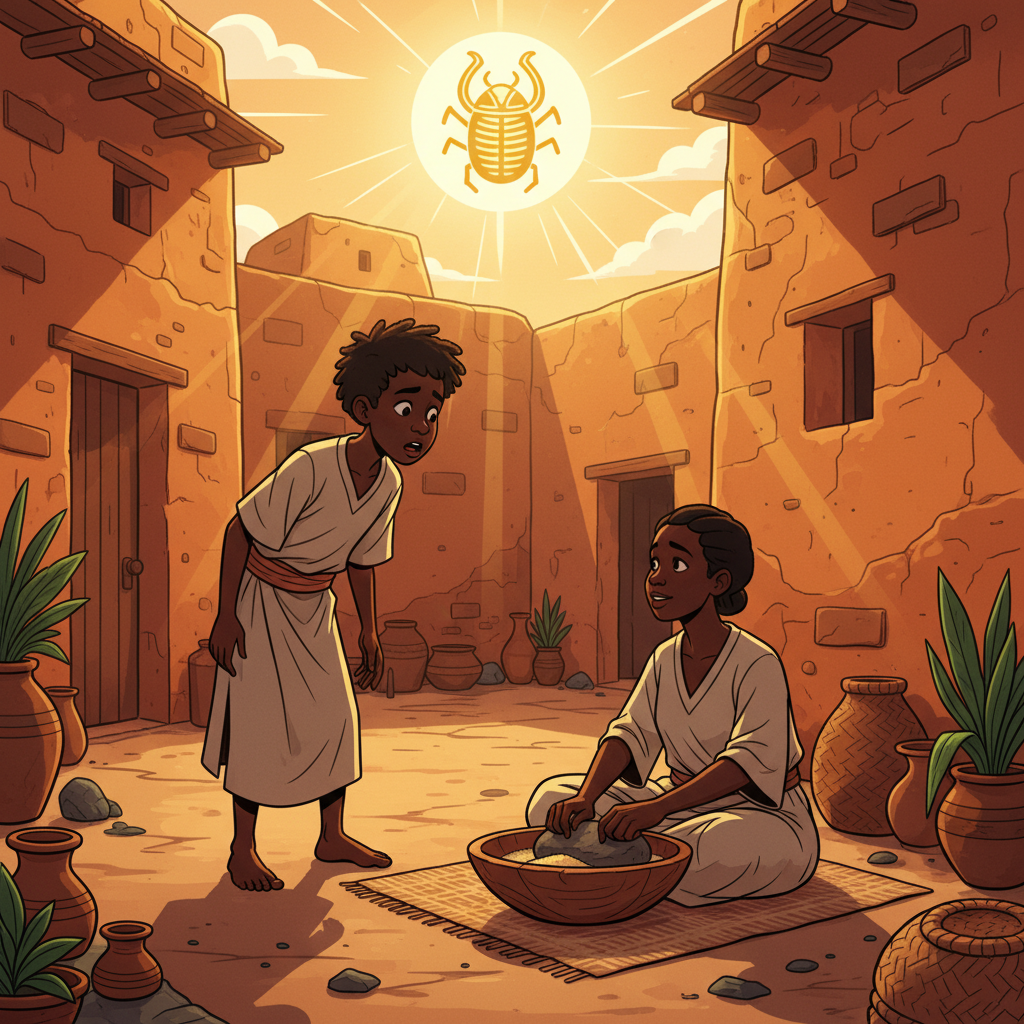
The golden khepera, the morning sun, climbed higher, its gentle rays painting the mud-brick walls of their home in warm, inviting hues. Moussa finally ventured out, finding his mother in the open courtyard. Her movements were slow, almost meditative, as her hands rhythmically ground millet for their morning meal, a stark contrast to the restless energy buzzing beneath Moussa’s own skin. He took a deep, deliberate breath, the cool desert air a brief comfort, and approached her, his voice barely a whisper, hoping to mend the tear in their family's peace.
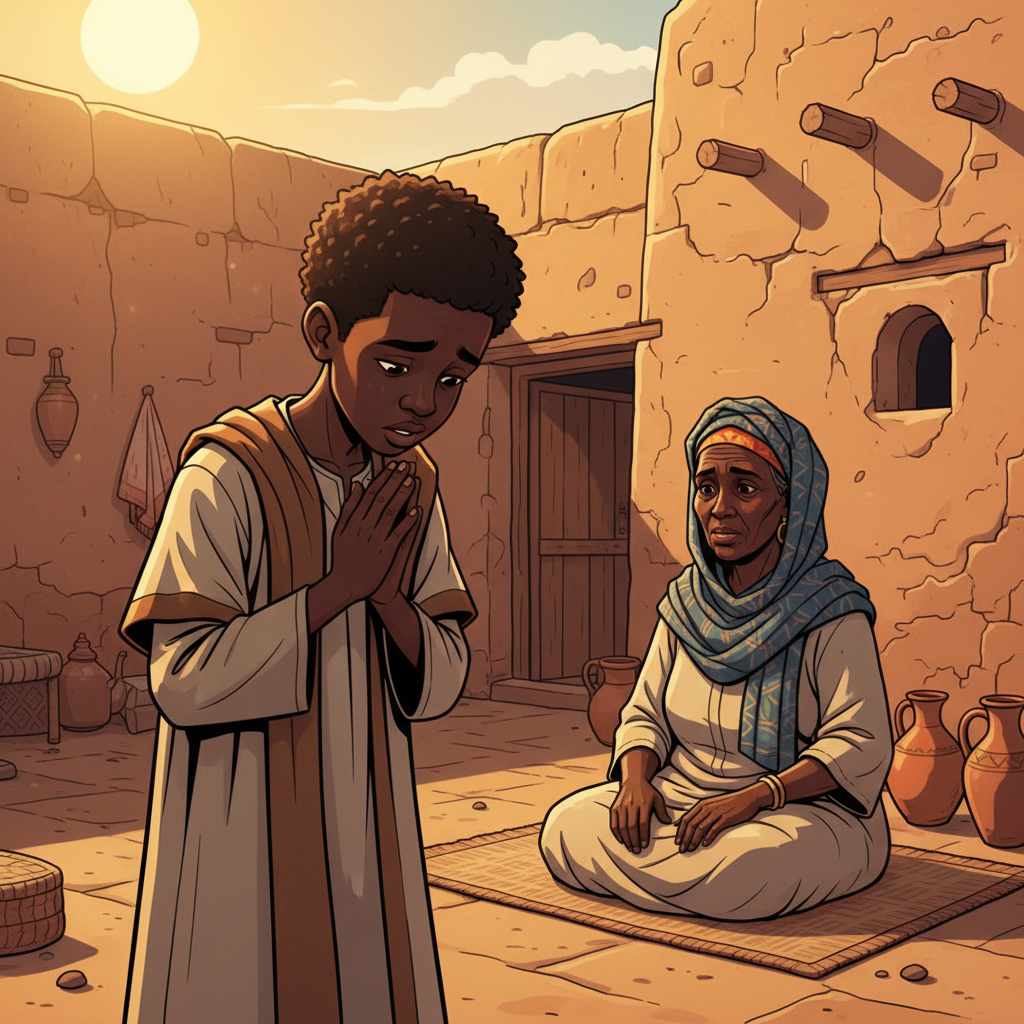
“Mama,” he began, his voice thick with a genuine emotion that tightened his throat. “My heart is truly heavy with a profound shame for the words I spoke last night. They were like jagged, sharp stones, carelessly thrown without a single thought, and they harshly bruised the delicate peace of our cherished home. I regret them deeply. I spoke from a place of unchecked Isfet, Mama, not from the clear, balanced path of Maat you have always patiently shown and instilled within me.” His head bowed low, his hands clasped tightly before him in a gesture of profound respect and humility.
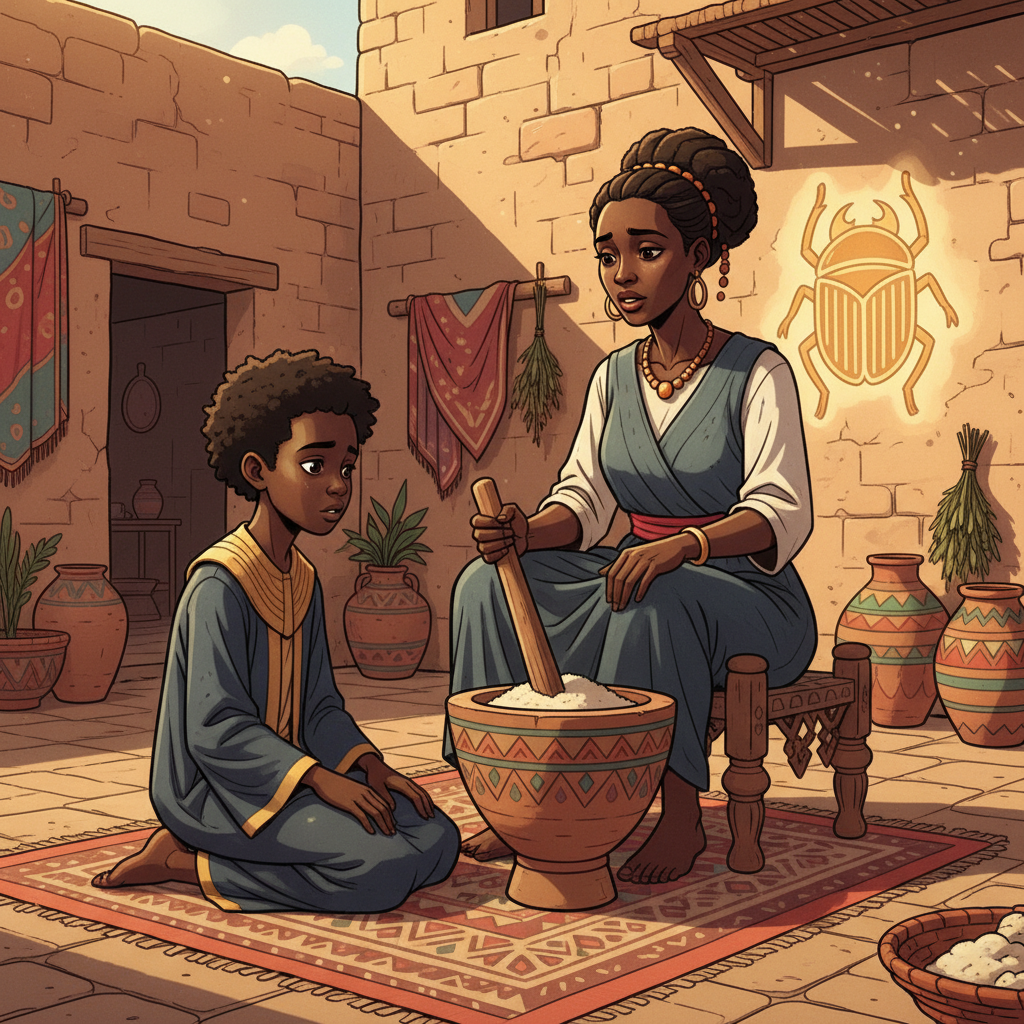
She paused her steady grinding, the heavy wooden pestle resting silently within the mortar. Her eyes, dark and deep like still, ancient pools reflecting the vast desert sky, met his with a gaze that held both understanding and a profound, quiet exhaustion. A sigh, so soft it was barely audible, escaped her lips, carrying a weight of repeated experience. “Moussa, my son,” she said, her voice gentle, yet carrying a subtle undertone of deep weariness, “Your words are indeed beautiful, like the sweetest, most eloquent poetry sung by a skilled djeli. I see the unwavering truth in your earnest eyes, the deep regret in your sincere heart. I forgive you, my dear child, as I always do.”
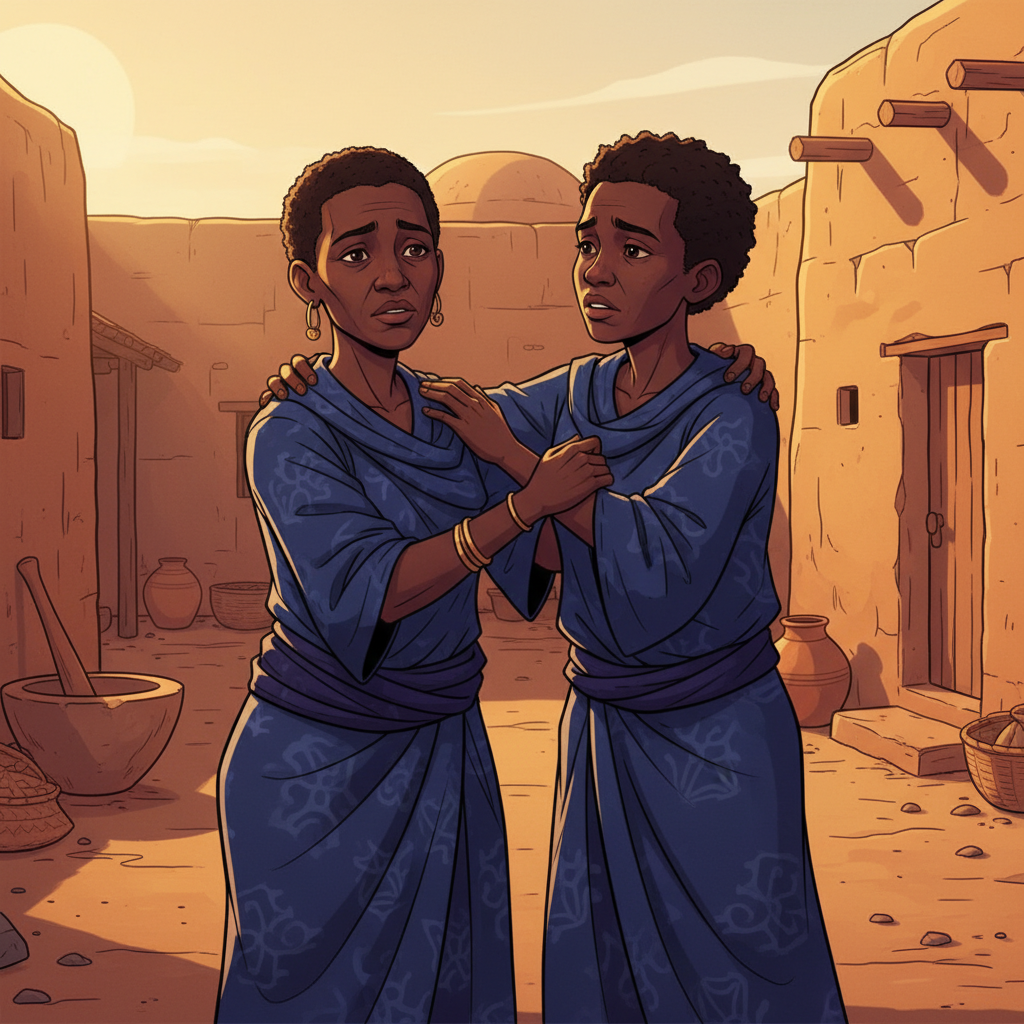
He felt the familiar, powerful wave of relief wash over him, a temporary calm settling in his spirit after the emotional storm had passed. He hugged her tightly, burying his face in the comforting, familiar scent of her indigo wrapper, a scent that always spoke of home and safety. It felt profoundly good, intensely right, to be forgiven once more. But as he reluctantly pulled away, he couldn't help but notice a flicker in her deep, knowing eyes—not anger, not even disappointment, but a deep, quiet sadness that settled on his heart like the finest, most pervasive desert dust, heavier than any spoken word.
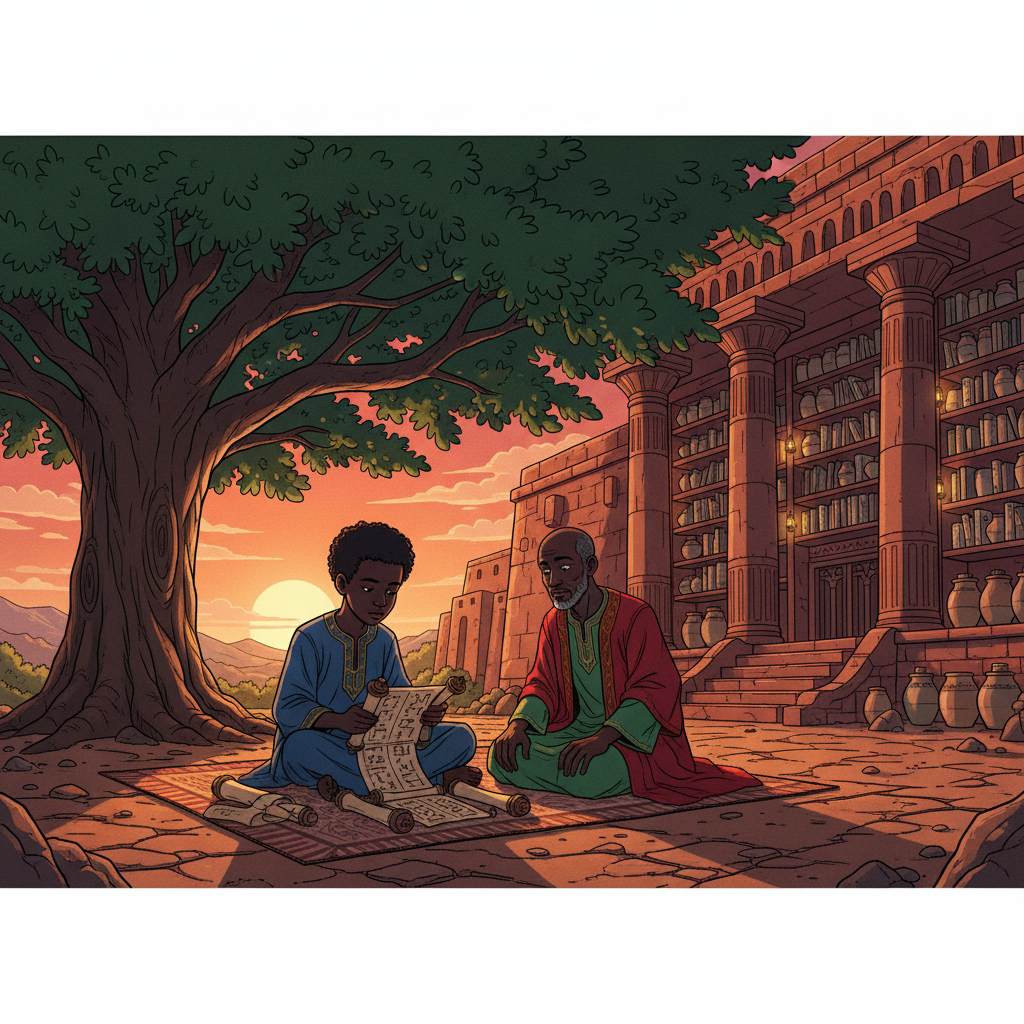
Later that day, the sun having reached its zenith and begun its slow descent, Moussa sat beneath the generous shade of a broad fig tree, diligently studying ancient scrolls. The intricate script of the hieroglyphs seemed to dance before his eyes, but his mind was still replaying the morning's interaction. It was then that Seba Cheikh, his esteemed elder scholar and trusted mentor, approached him. Seba Cheikh was renowned throughout Timbuktu for his profound calm and his deep, insightful wisdom, his face a map of countless stories and experiences, his eyes seeming to peer effortlessly beyond the mere surface of things. He settled himself gracefully beside Moussa, the soft rustle of his own aged, worn robes the only sound for a long moment, a silent invitation to contemplation.
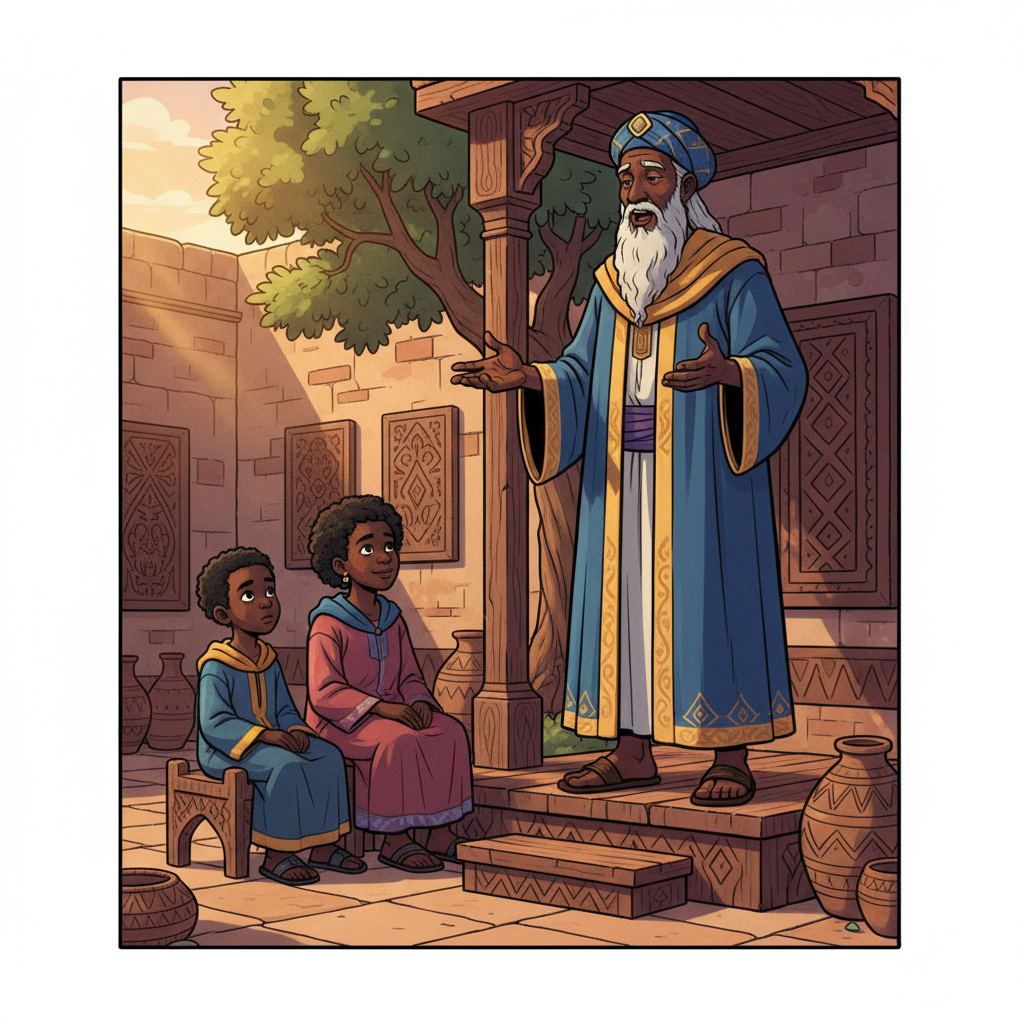
“The morning apology, Moussa,” Seba Cheikh began, his voice a low, resonant rumble that carried the weight of years. “It was indeed a beautiful offering, son, full of genuine sincerity. Your mother felt its truth, I am absolutely certain of that.” Moussa nodded, a small, fleeting sense of pride momentarily mixing with the lingering, familiar pang of guilt in his chest. He always strove to make his apologies perfect, believing that the more eloquent they were, the more truly they conveyed his remorse. He hoped that this time, perhaps, it would be different, that the cycle would somehow break.
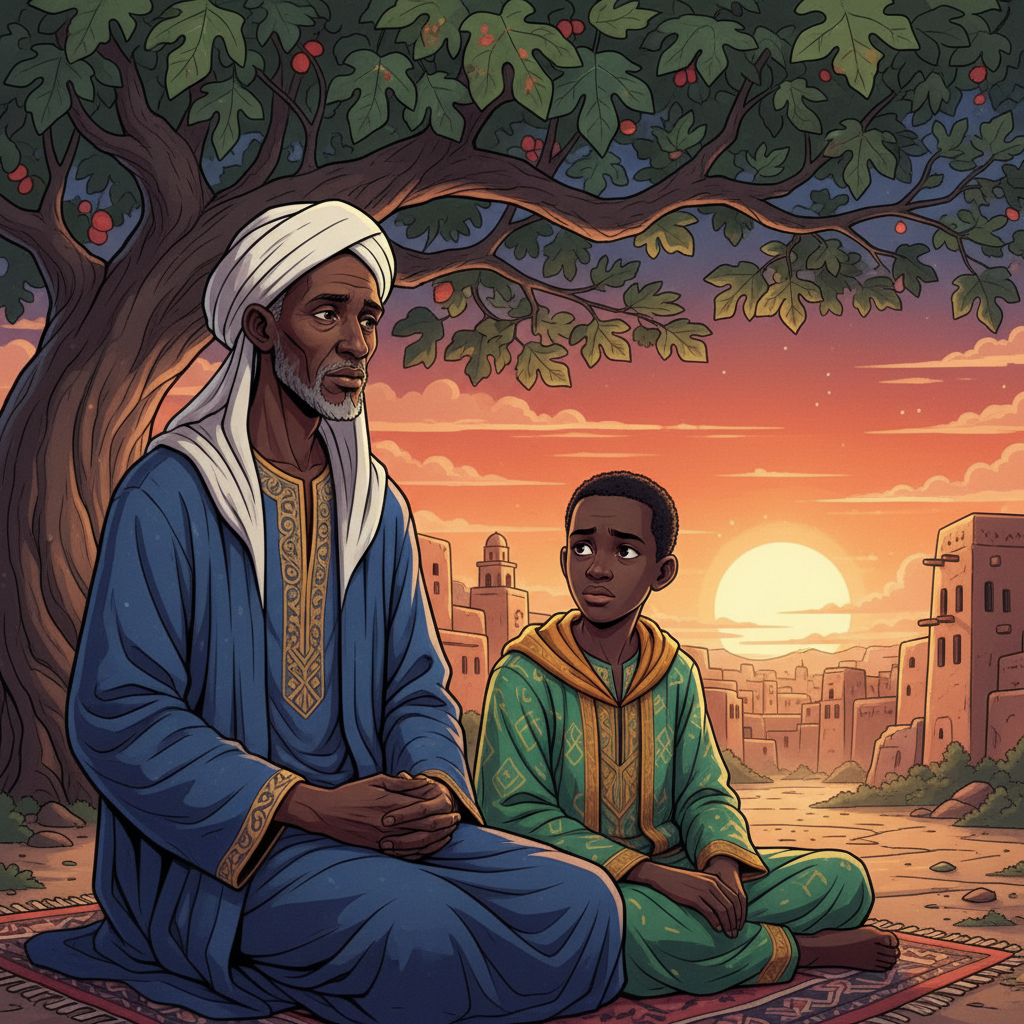
Seba Cheikh continued, his steady, unwavering gaze fixed on Moussa, yet seeming to look far beyond him, into the distant horizon. “But I have observed, my young scholar, that these powerful apologies have, over time, become a familiar and predictable rhythm in your life. They are like the constant, inevitable rising and setting of the sun, always following the storms of emotion that you yourself create. Tell me, Moussa, what deeper truth truly lies in a recurring pattern that, despite its sincere beauty, always seems to return precisely to its tumultuous beginning, never truly moving forward?”
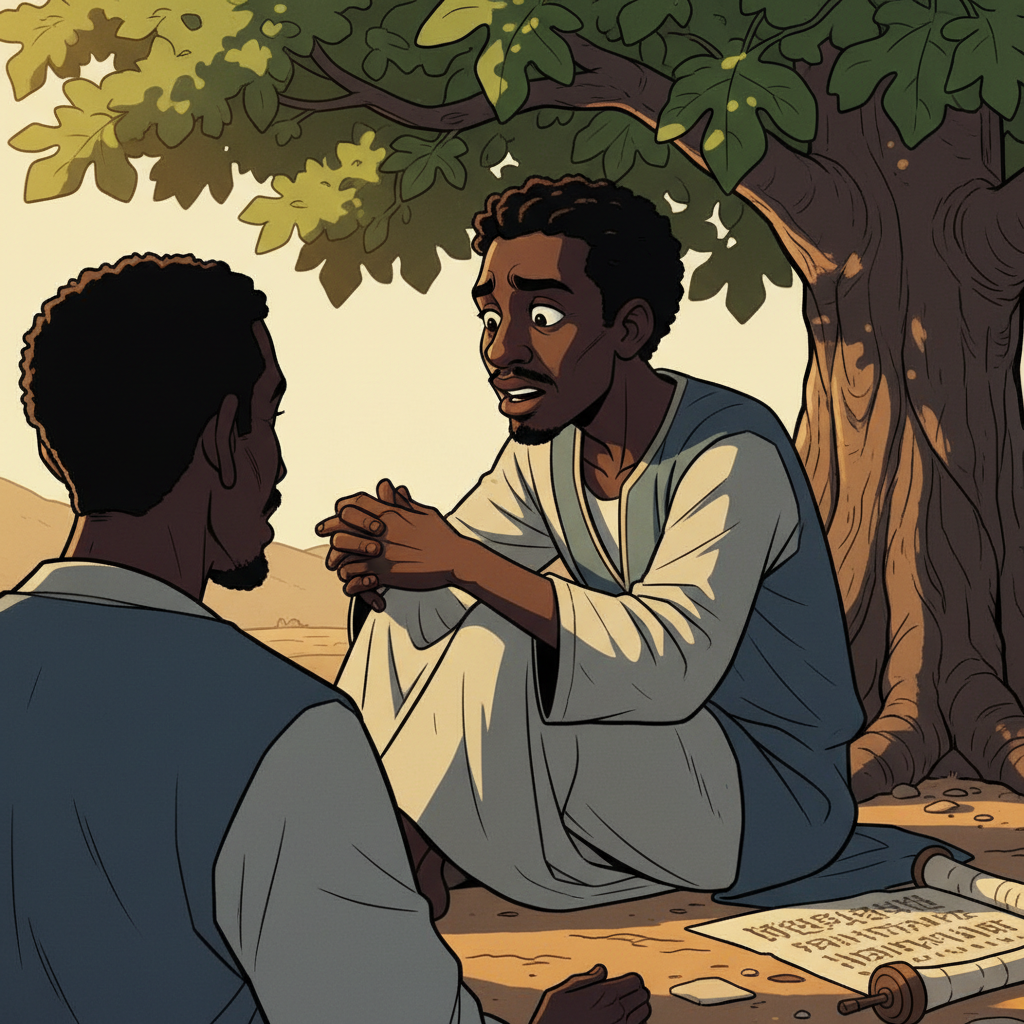
Moussa shifted uncomfortably on the sun-warmed earth beneath the fig tree. “Seba,” he began, his voice tinged with a defensive edge he hadn't intended, “My apologies are truly genuine. I sincerely regret my actions each and every time. My heart aches with real sorrow for the disruption and distress I unintentionally cause within our home.” He felt a prickle of misunderstanding, a sense that the elder was questioning his heartfelt sincerity. He genuinely felt profoundly awful after every single one of his emotional outbursts, the regret a heavy cloak upon him.
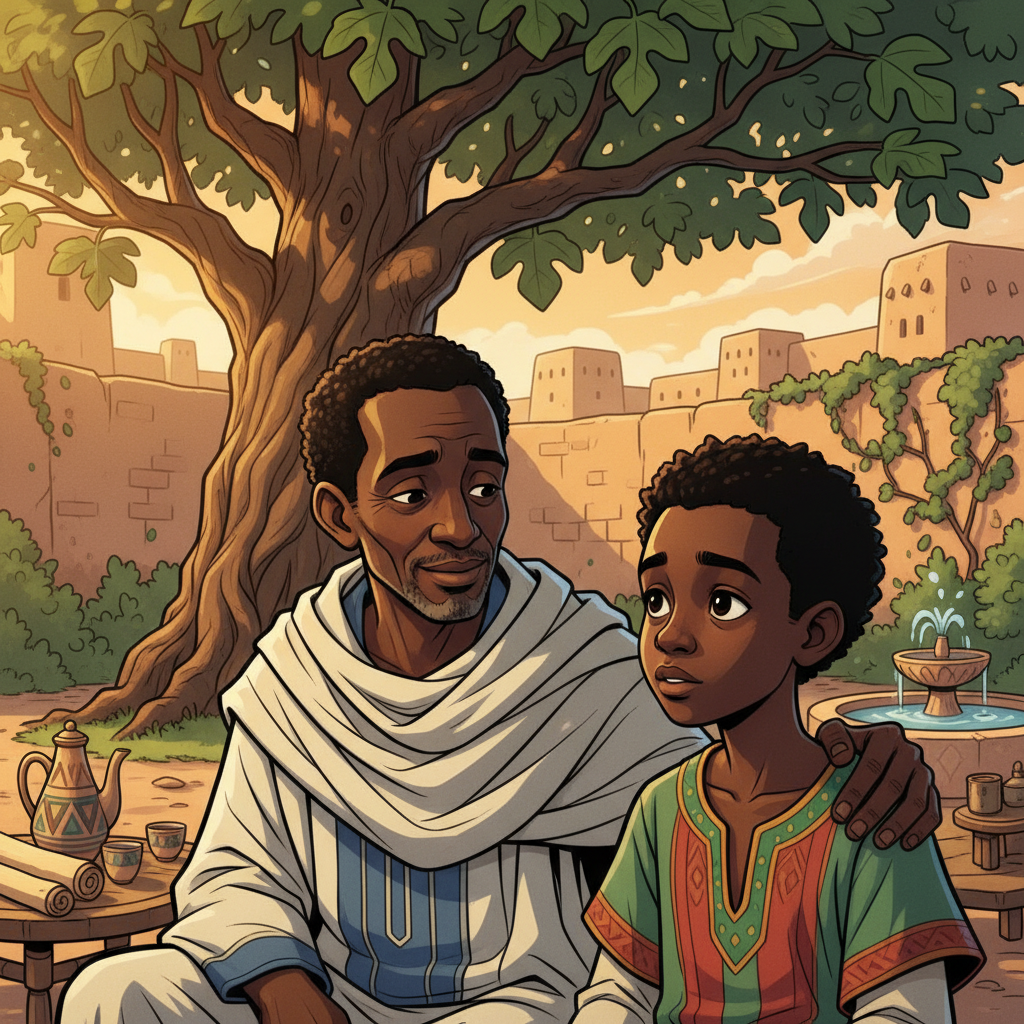
“I do not for a moment doubt your profound sincerity, Moussa,” Seba Cheikh gently reassured him, his calm, weathered hand resting lightly, comfortingly on Moussa's shoulder. “Your heart, my son, is wide open to the guiding light of Maat when the tempest of your emotions has finally passed, leaving only quiet introspection. But I ask you to consider, my dear child: where is the true, lasting truth in an apology if the profound wisdom and painful lessons gained from that experience do not effectively prevent the next inevitable storm from gathering its destructive force?”
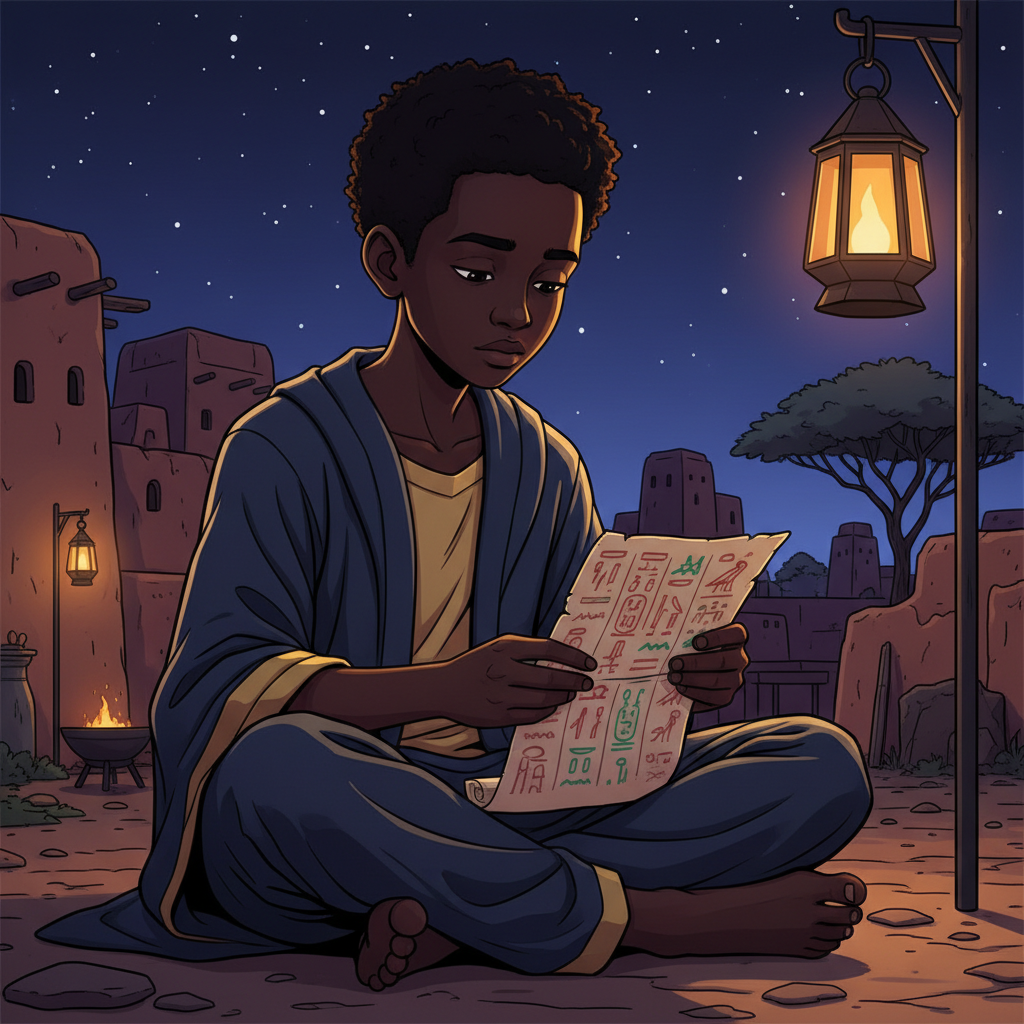
Moussa looked down at the delicate parchment in his lap, the intricate hieroglyphs, symbols of ancient wisdom, blurring momentarily before his quick eyes. He had genuinely never considered the recurring pattern in such a stark, challenging way. His entire focus had always been on making amends, on painstakingly repairing the emotional damage *after* it had already been done. The radical idea of actively preventing the damage *before* it even occurred felt utterly foreign to him, almost impossibly out of reach, like trying to grasp a dream.
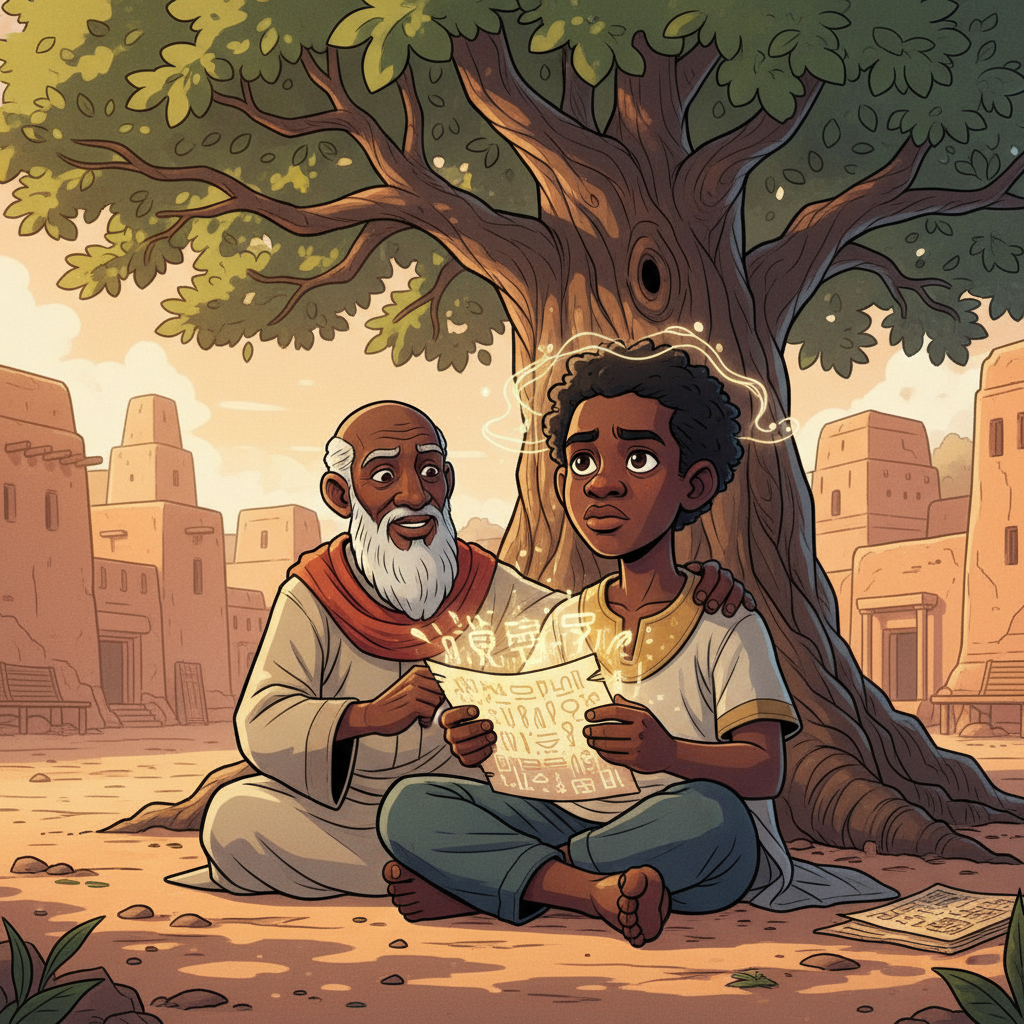
The elder's words hung in the warm, still air, a profound truth settling heavily yet clearly in Moussa's young mind. It was like a powerful Heka spell, a sacred utterance that suddenly unlocked an entirely new way of seeing, a new perspective on his long-standing problem. His apologies were indeed beautiful, he knew that, carefully crafted and deeply felt in the moment of remorse. But if they didn't fundamentally lead to a significant, lasting shift in his actions, were they truly serving the principle of Maat? Or were they simply a comforting, yet ultimately ineffective, ritual he performed?
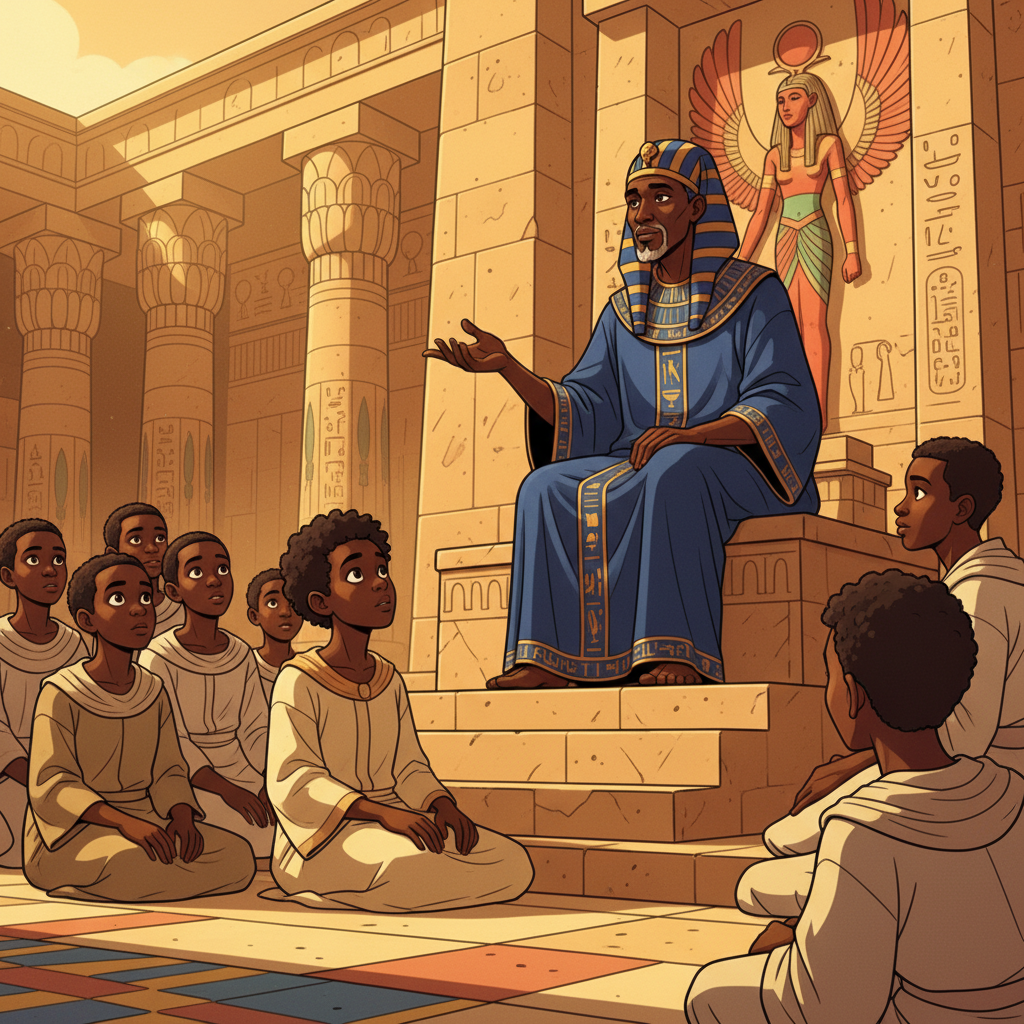
“The real, profound work of Maat, Moussa,” Seba Cheikh patiently explained, his voice low and thoughtful, “is not merely about restoring the delicate balance after the chaotic force of Isfet has forcefully taken hold and caused disruption. No, my son, it is far more profound. It is about diligently cultivating that essential balance and inner order within your very own spirit, so that Isfet, the spirit of disorder, finds no fertile ground, no welcoming space to grow and flourish within you. It is about mastering the art of ‘catching the wind before the storm’ truly begins.”
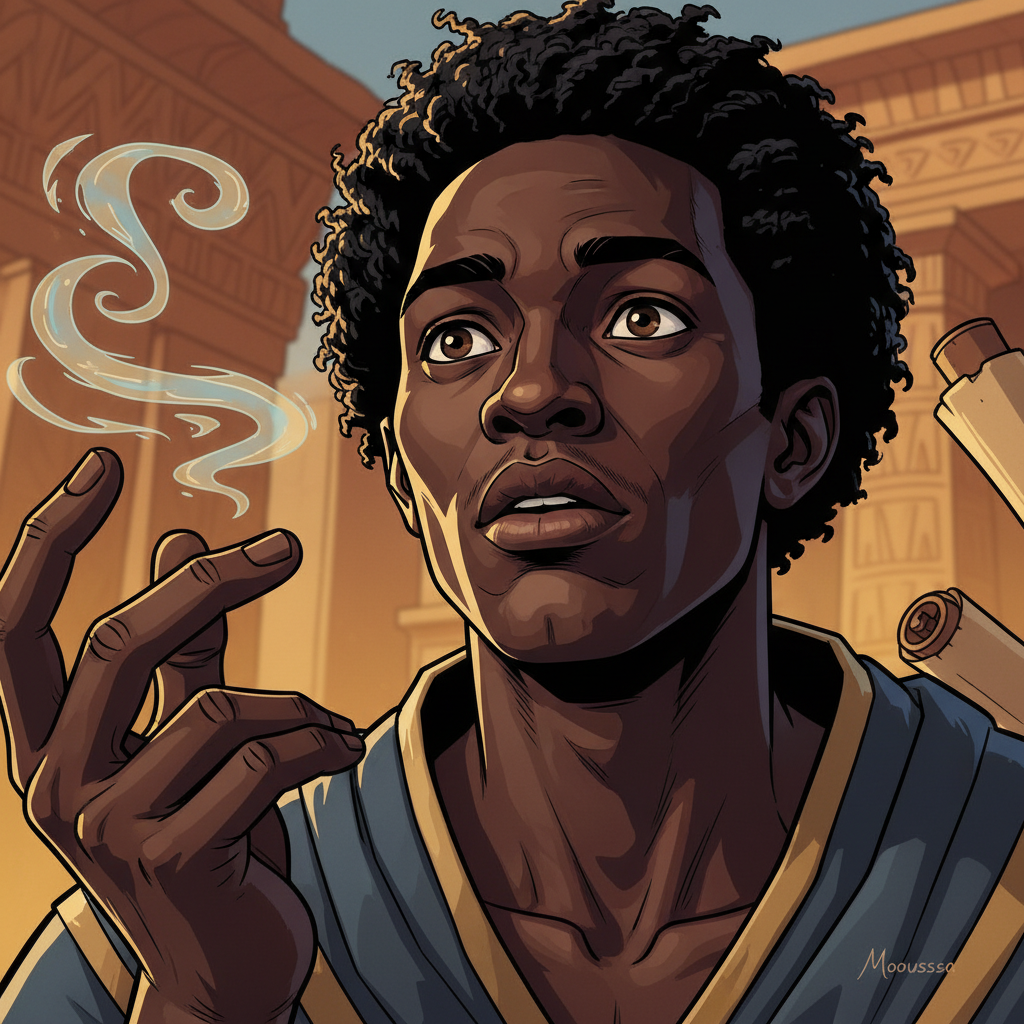
Moussa looked up, his quick eyes now wide with a fresh sense of intrigue and curiosity. “Catching the wind before the storm, Seba? How exactly does one manage to catch something so fleeting, so elusive, something that has no tangible form?” He tried to imagine grasping the swift, invisible desert breeze with his bare hands, an impossible task. His own strong emotions, when they swelled up powerfully inside him, often felt just as elusive, just as uncontrollable, like an untamed gust of wind threatening to sweep him away.
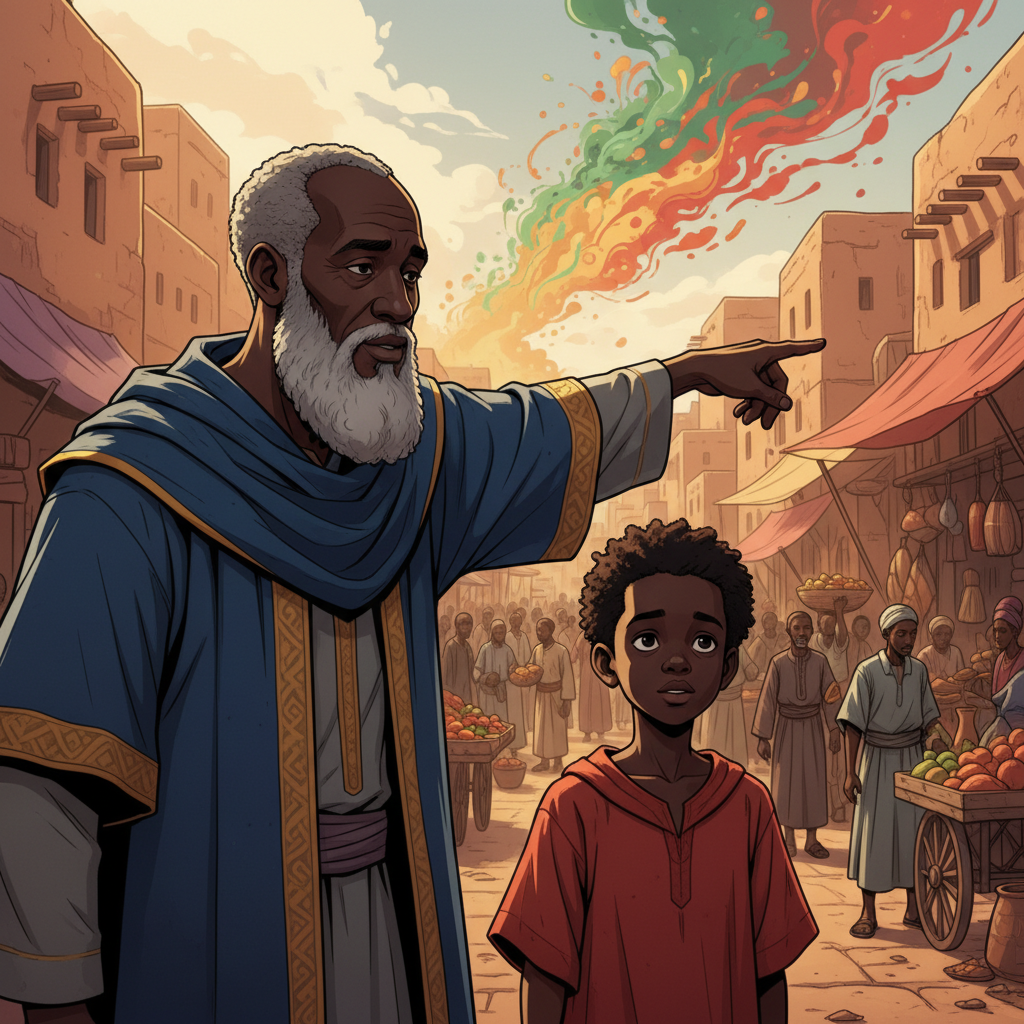
“It all begins with profound awareness, Moussa,” Seba Cheikh gently replied, his gaze now sweeping thoughtfully over the vibrant, bustling marketplace visible in the hazy distance, a place teeming with life and myriad emotions. “When you begin to feel that familiar tightness gathering in your chest, that unmistakable heat slowly rising through your body, that subtle quickening of your breath—these, my son, are the very first, faint whispers of the impending storm. These are the winds you must learn to recognize and heed.”
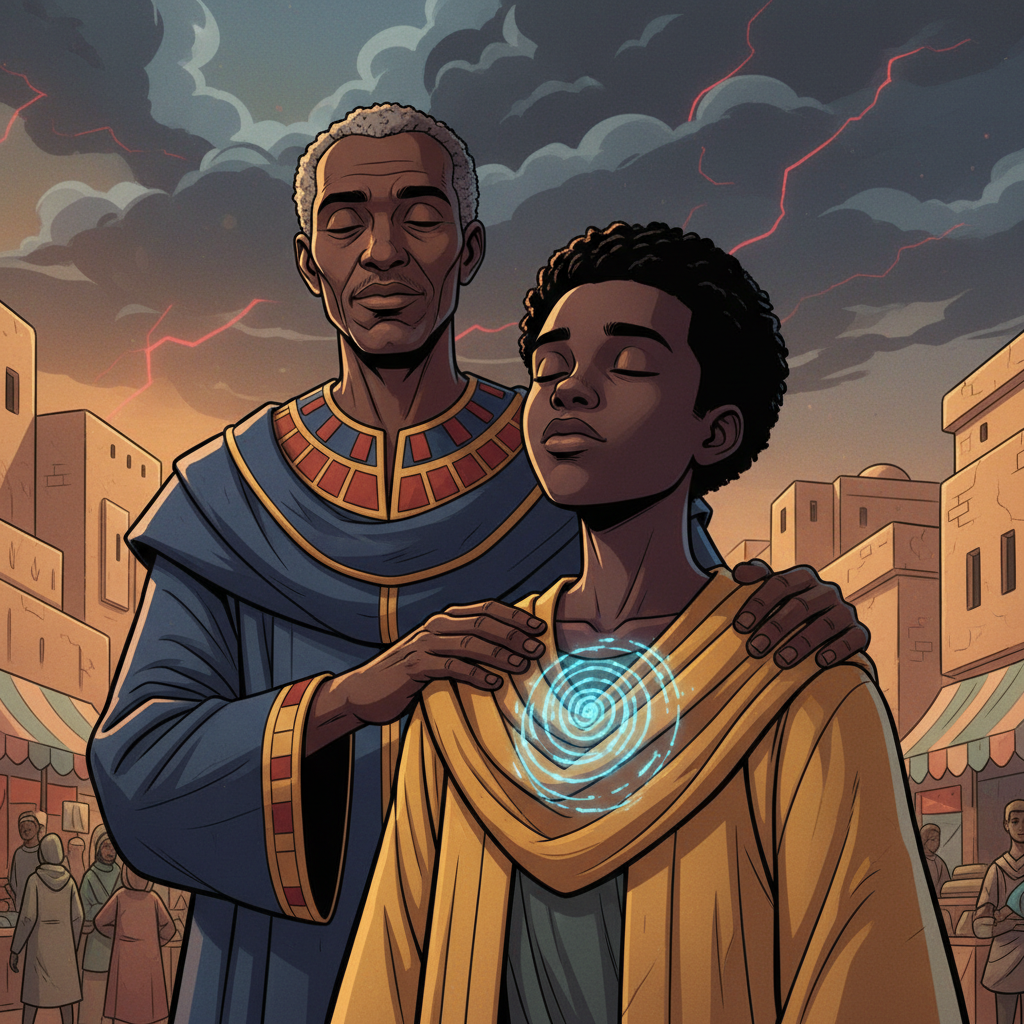
“Before the deep thunder rolls ominously and the bright lightning dramatically strikes,” Seba Cheikh explained further, his voice a calm, steady anchor, “there exists a crucial moment, a precious Renpet, when you possess the true power to consciously choose a fundamentally different path. This, Moussa, is what we call the Heka of Pause. Instead of reacting impulsively, instinctively, you deliberately pause. You take a conscious, deep breath. You simply observe the intense sensation without any judgment or immediate reaction, letting it just be.”

Seba Cheikh demonstrated the technique, taking a visibly deep, slow breath himself, his broad shoulders visibly relaxing as he exhaled slowly, fully. “It is like a mighty river, Moussa,” he continued, illustrating his point with a gentle hand gesture. “You can choose to let it flood its banks, causing widespread chaos and destruction, or you can, with foresight and discipline, construct careful channels and build strong barriers to slow its powerful flow. Your powerful emotions are indeed like that river, mighty and strong, but you, my son, are the wise master of your own vessel, your precious Ba.”

Moussa spent the next few days earnestly trying to apply Seba Cheikh’s profound teaching to his daily life. He focused intently on his inner landscape, becoming more attuned to the subtle shifts within him. One afternoon, when his younger sister, Nala, accidentally spilled a newly filled pot of ink all over his freshly written parchment, his first, familiar instinct was to snap angrily, to lash out with sharp words. But then, he vividly remembered the elder’s wise counsel about “catching the wind.” He felt the familiar heat rising, the tightness in his chest, the quickening pulse.

He paused, just as Seba Cheikh had instructed, taking a deliberate, conscious breath. He slowly counted to five in his mind, focusing all his attention on the cool air entering his nostrils and the warmth leaving his mouth. The intense, surging wave of anger didn't completely vanish, but it perceptibly softened, losing its sharp, cutting edges. He didn't explode. Instead, he simply let out a quiet sigh and, with a newfound calm, helped his sister patiently clean the dark, spreading spill, avoiding the usual storm.

It wasn't perfect, not yet. Later that same week, when a friend teased him mercilessly during a game of Mancala, he still felt a rush of intense frustration, and a sharp, unkind word involuntarily escaped his lips before he could stop it. But this time, the regret that followed was profoundly different. It wasn't the crushing, overwhelming weight of a full-blown emotional storm, but rather a quiet, clearer understanding of precisely where and how he had missed his crucial chance to pause, to breathe, and to choose a more balanced response.
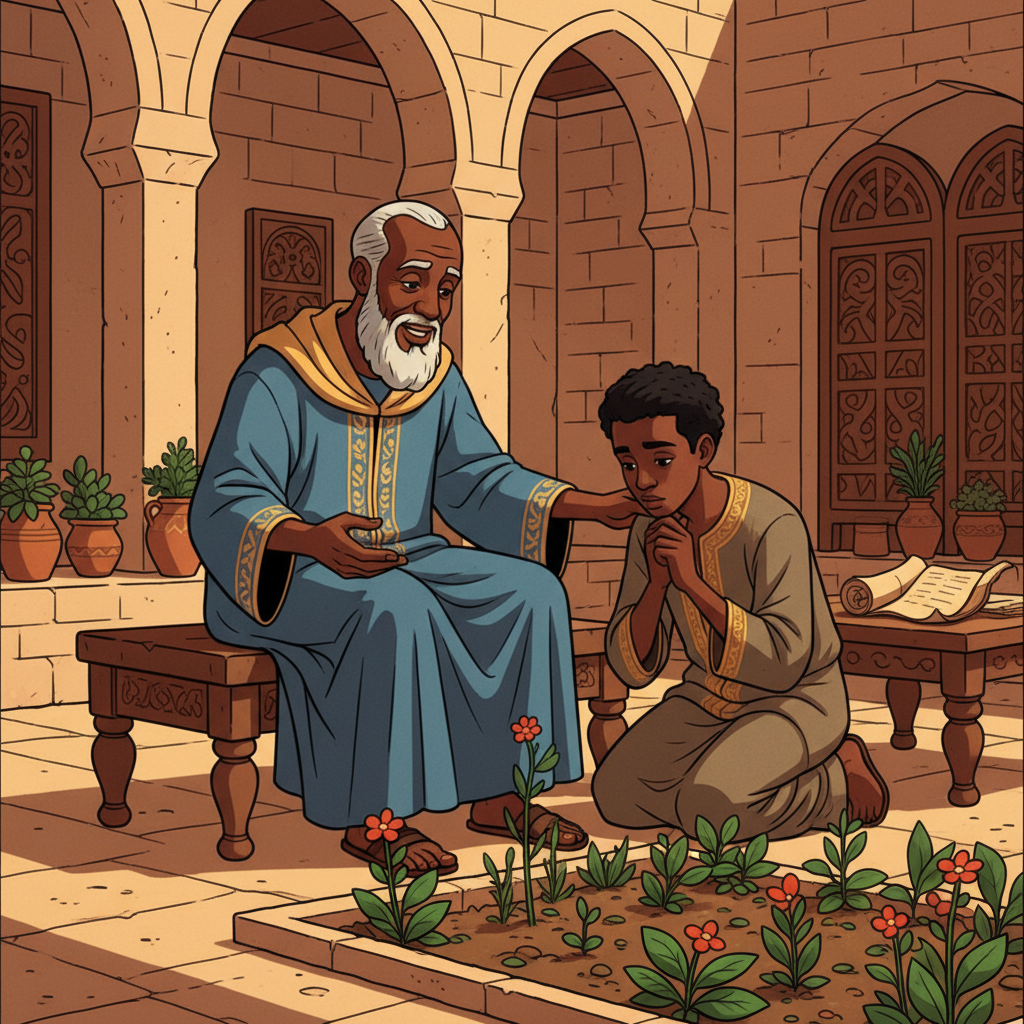
Seba Cheikh, with his ever-observant eyes, noticed the subtle yet significant shift in Moussa’s demeanor and reactions. “You are learning, my young scholar, to diligently tend to your inner garden before the unwanted weeds of anger and frustration can take firm root and completely take over, Moussa,” he wisely observed. “The sacred path of Maat is not about never experiencing strong, powerful emotions. Rather, it is about learning the profound art of guiding them, of shaping them, so that they do not inevitably lead to the chaos and disorder of Isfet.”
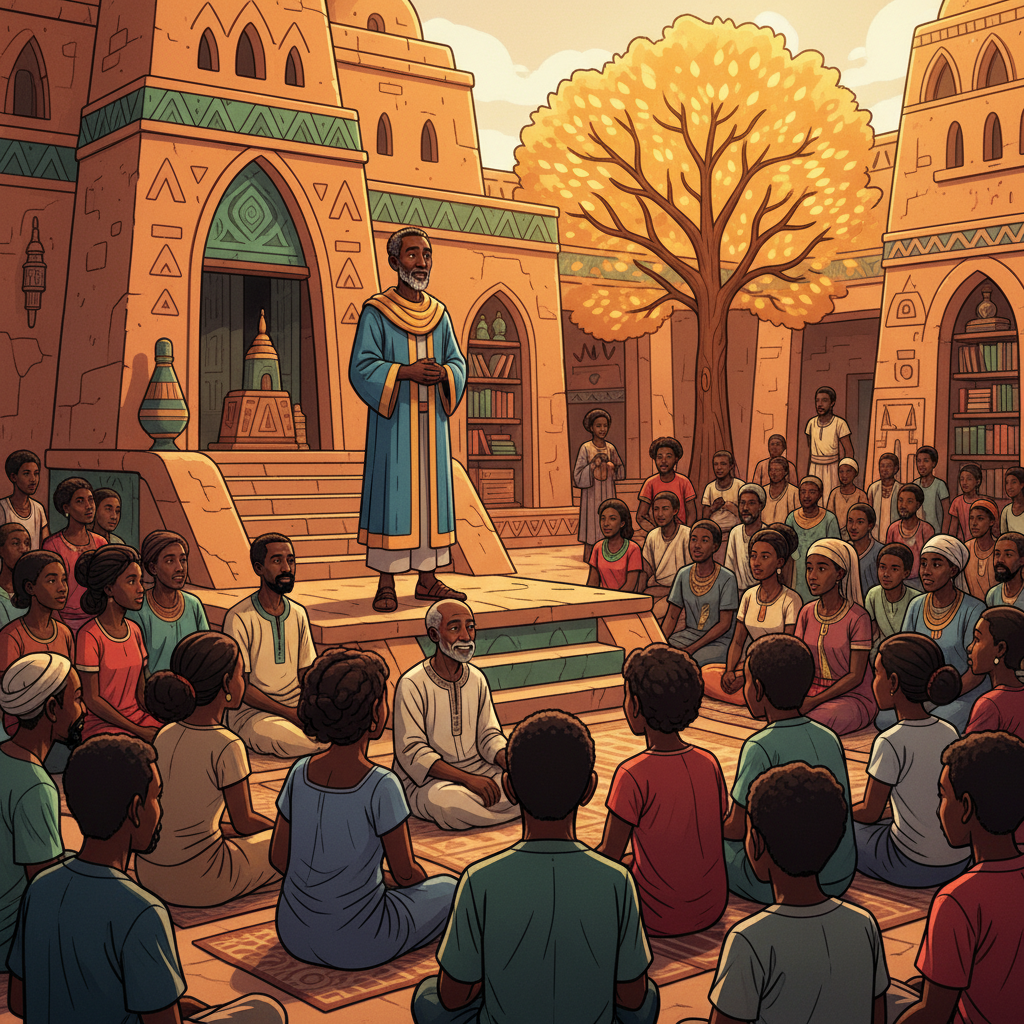
Moussa truly realized that applying the principle of Truth wasn't merely about uttering beautiful, sincere apologies after an outburst. It was, he understood now, about aligning his inner intention with his outer action, consistently and thoughtfully. It was about diligently building a new, more harmonious rhythm in his life, one not driven by the destructive cycle of explosion and subsequent regret, but instead by a profound inner awareness and a considered, thoughtful response. The lasting truth he had been searching for was found in those quiet, mindful moments *before* the storm, not just in the eloquent words spoken beautifully *after*.
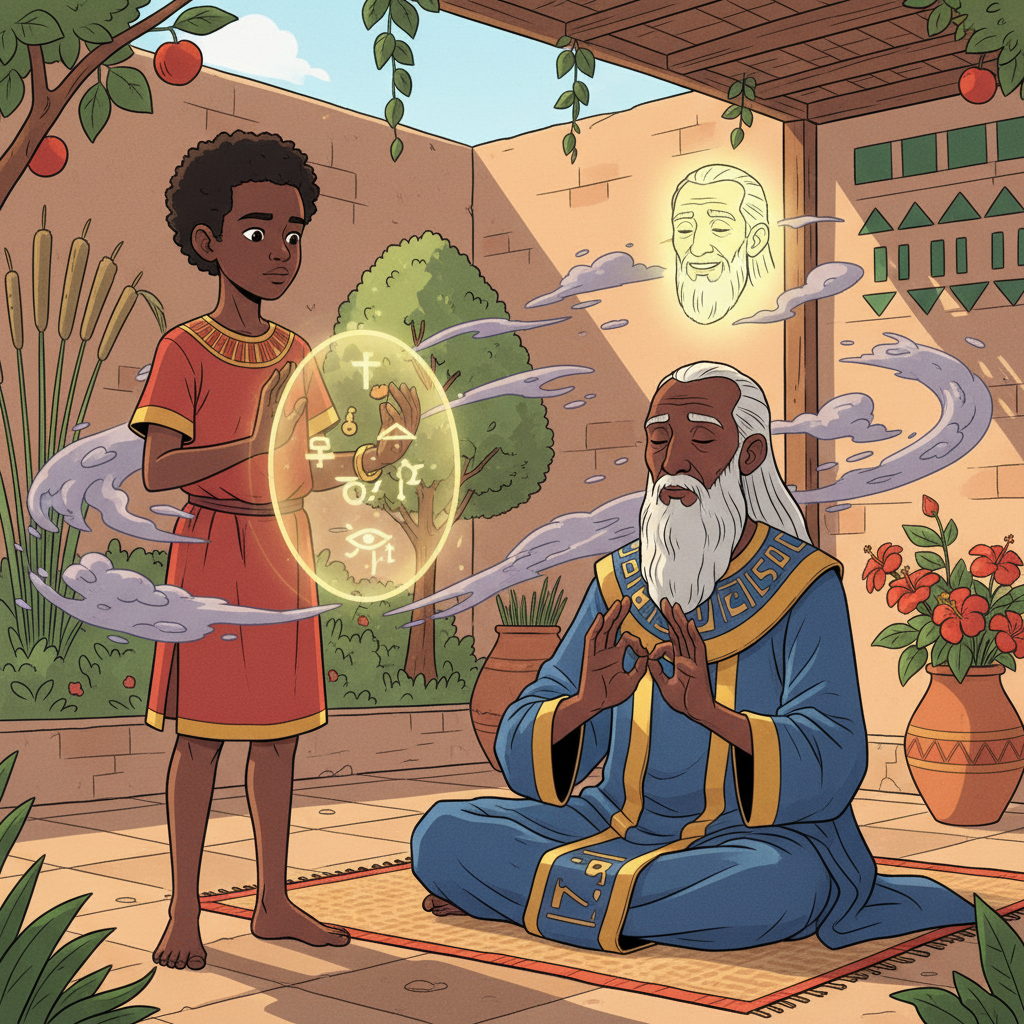
He still had moments where the emotional wind felt too strong, where the familiar storm threatened ominously to break through his newfound defenses. But now, critically, he possessed the vital tools he needed. He had the powerful Heka of Pause, the heightened awareness of his body’s subtle whispers, and the enduring wisdom of Seba Cheikh echoing calmly in his mind. He was actively learning to be his own gentle guide, his own wise Neb, steering his emotional vessel with greater skill and purpose through the currents of life, day by day, breath by breath.
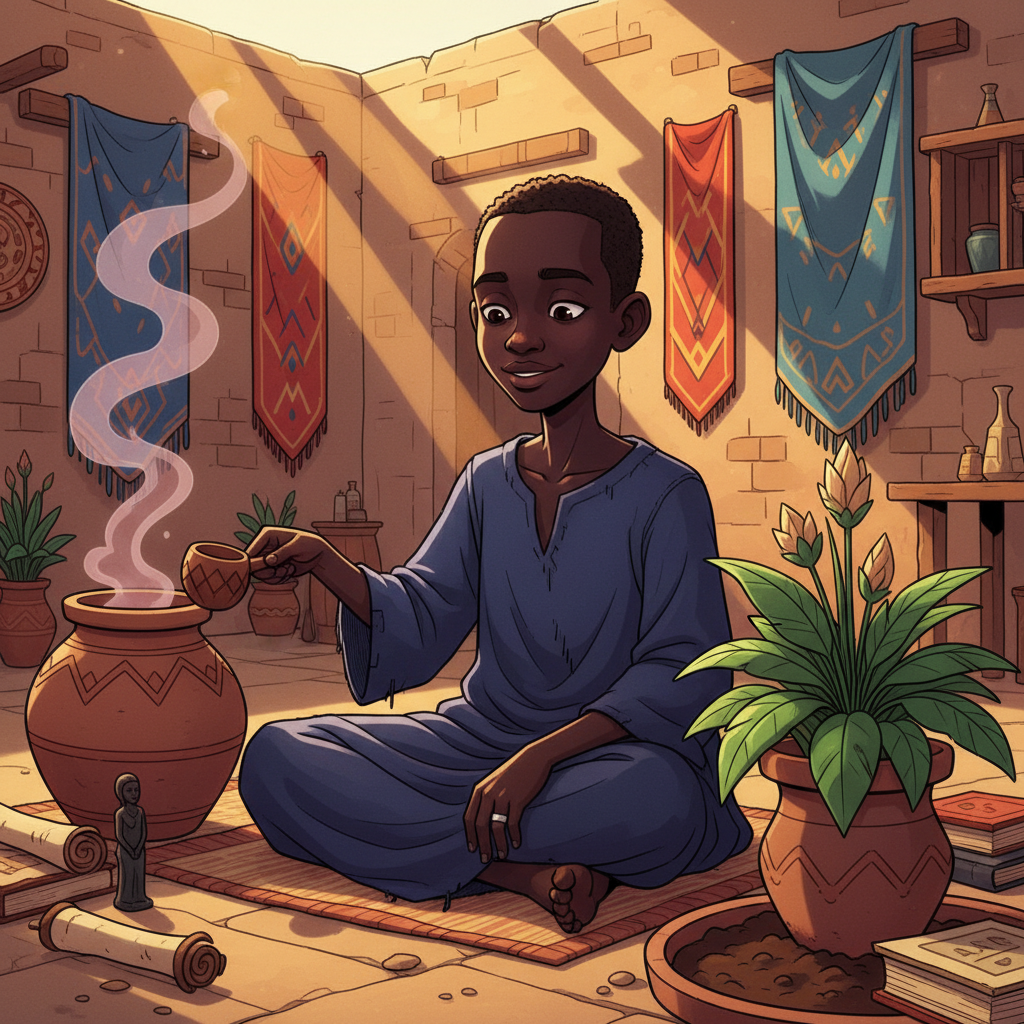
The sweet scent of bissap tea still gracefully filled the air each morning in their Timbuktu home, a comforting constant. But now, the persistent tightness in Moussa's chest was noticeably less frequent, less intense. His scholar’s robe remained, perhaps, slightly disheveled, a charming sign of his quick, lively spirit, but his dark, intelligent eyes held a new, quiet calm, a deeper, more profound understanding of the practical application of Maat in his everyday life. He was truly learning to carefully water the fertile soil of his future, rather than simply letting the beautiful rain fall and pass, nourishing nothing lasting.