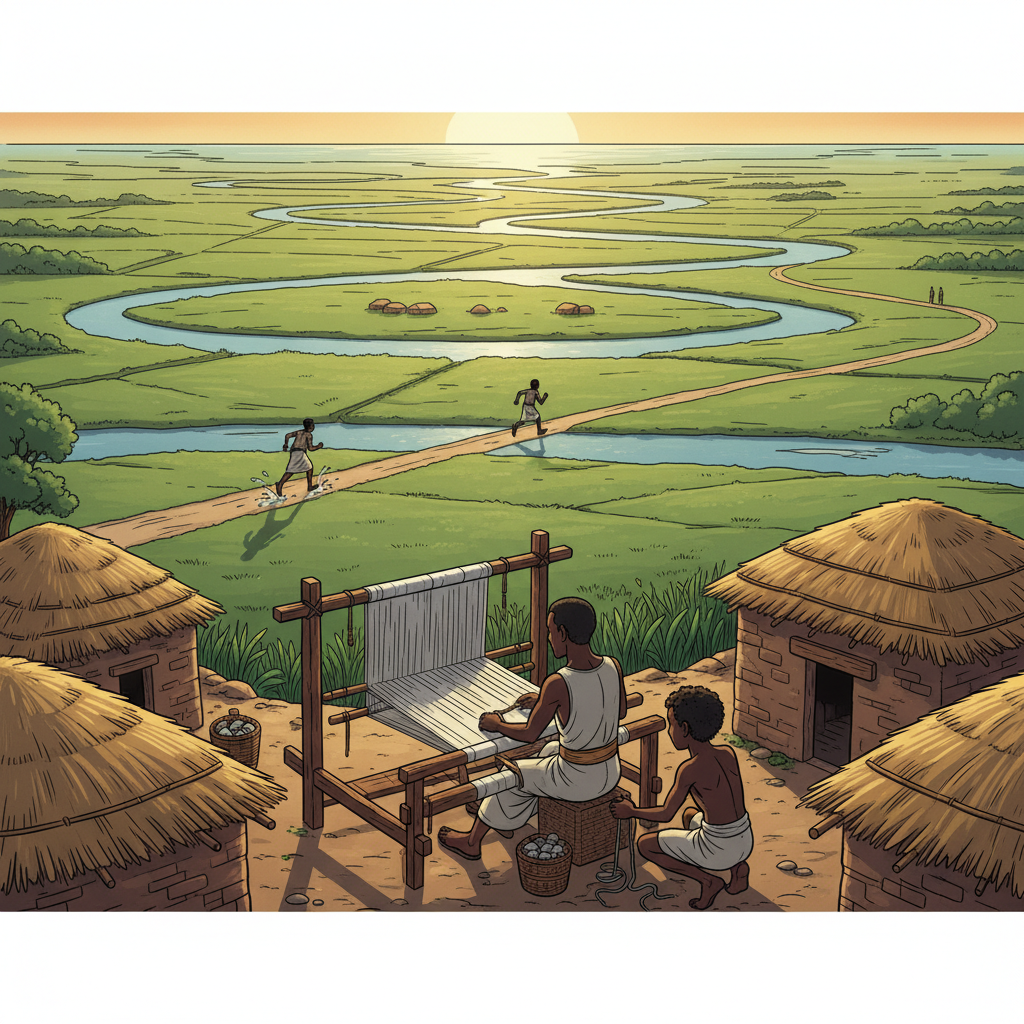
Hetep was twelve years old, and the first sound he heard every morning was the soft knock-and-slide of his father’s loom. His family were weavers in a village of the delta, where the great river split into many fingers before it reached the sea, in the land the people called Lower Kemet — the flat green north. Hetep’s skin was deep brown, his hands already quick at the threads, and he had been raised on one certainty: the linen his village wove was the finest in the Two Lands. On the morning this story turns, a runner came splashing along the dyke-path from the south, out of breath, and the loom went silent for the first time Hetep could remember.
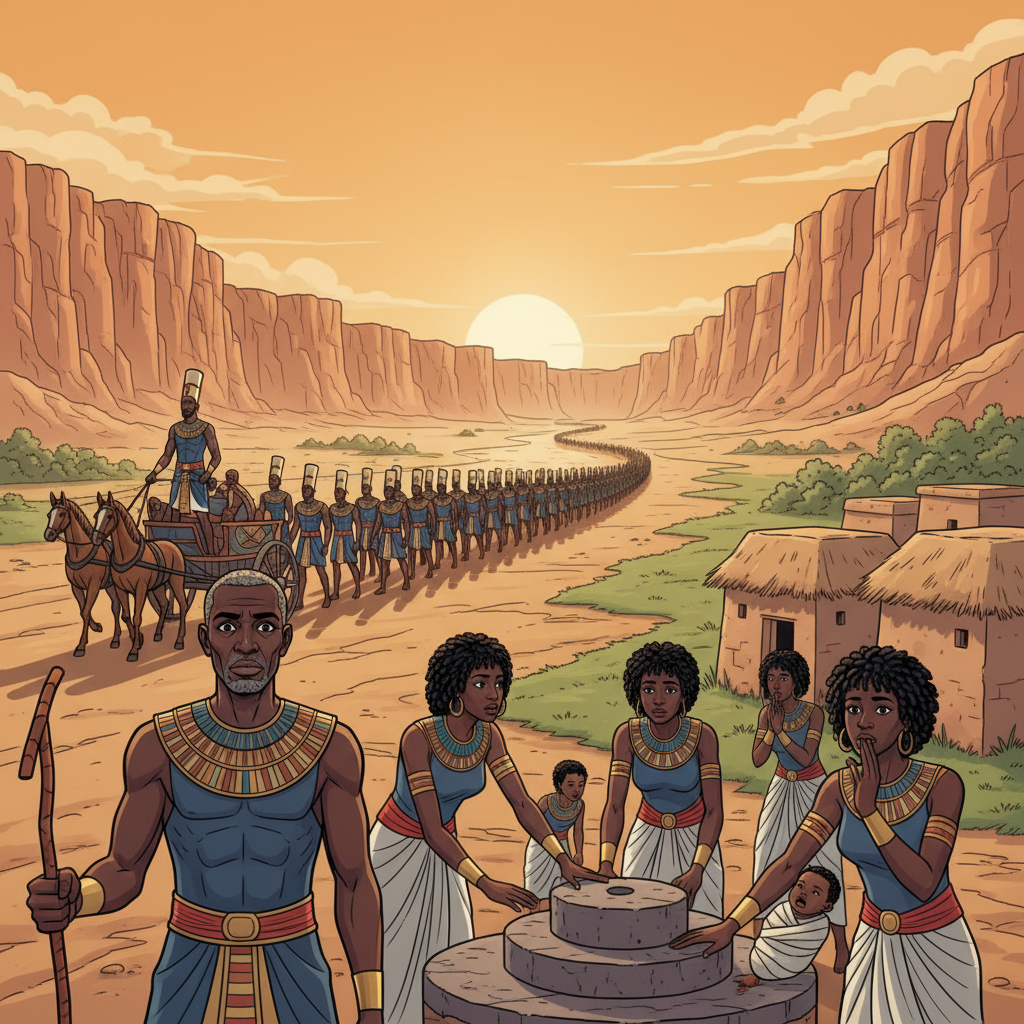
The runner’s news emptied the breath from the whole village. Narmer, the king of Upper Kemet — the narrow south, where the river ran between cliffs — was coming north with his army. He meant to join the Two Lands, the north and the south, into one kingdom under one crown. He was perhaps a day away. The chief of Hetep’s village stood very still. The women stopped grinding grain. Somewhere a baby cried and was hushed. To be "joined," everyone knew, could mean many things. It could mean partners. It could also mean swallowed.
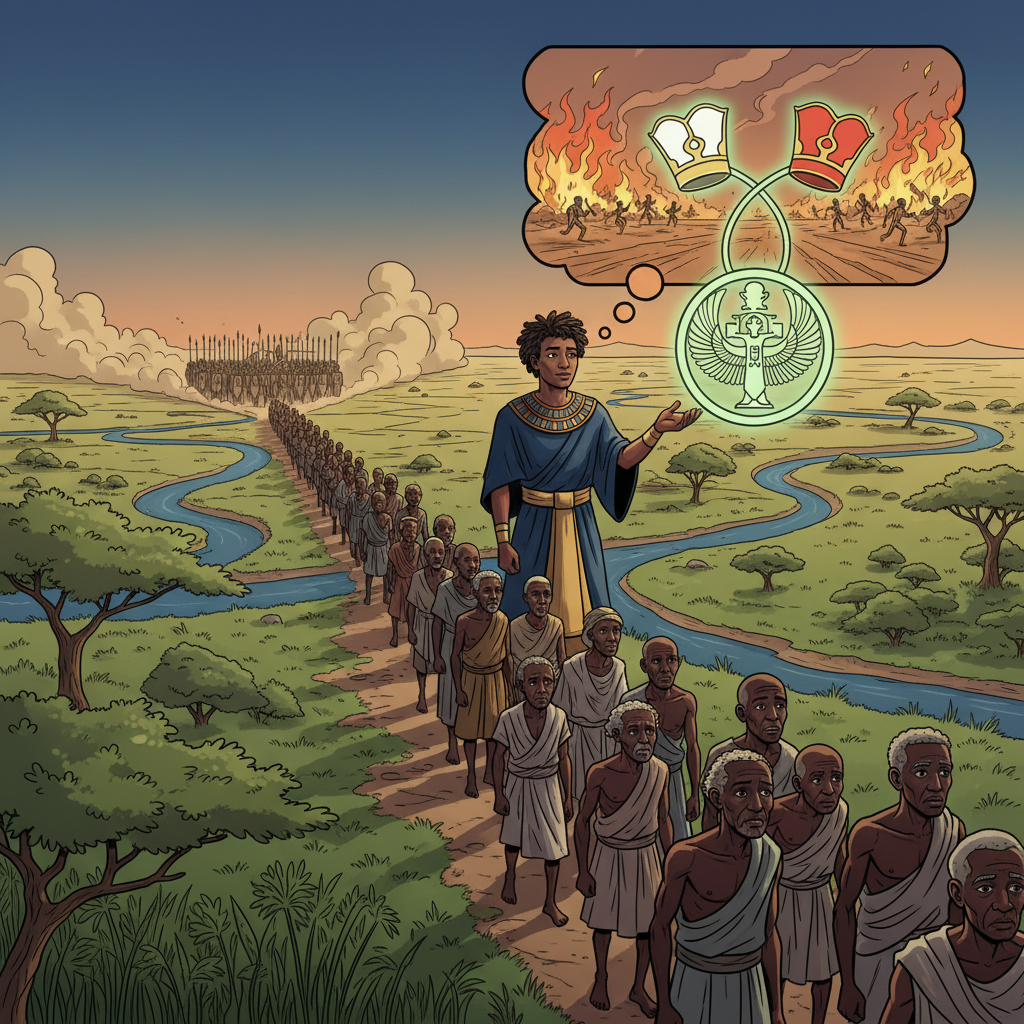
The oldest people in the village remembered the last war between north and south, when Hetep’s grandmother was a girl. They remembered which fields had burned and which families had not come back. The teacher Diop, in books that would not be written for thousands of years, would say that the joining of the Two Lands was one African people becoming one kingdom — not strangers conquering strangers, but two halves of the same river-civilization brought under a single Maat. But the village did not know that yet. They only knew an army was a day away, and that an army can give a kingdom or take one, and that you cannot always tell which until it arrives.
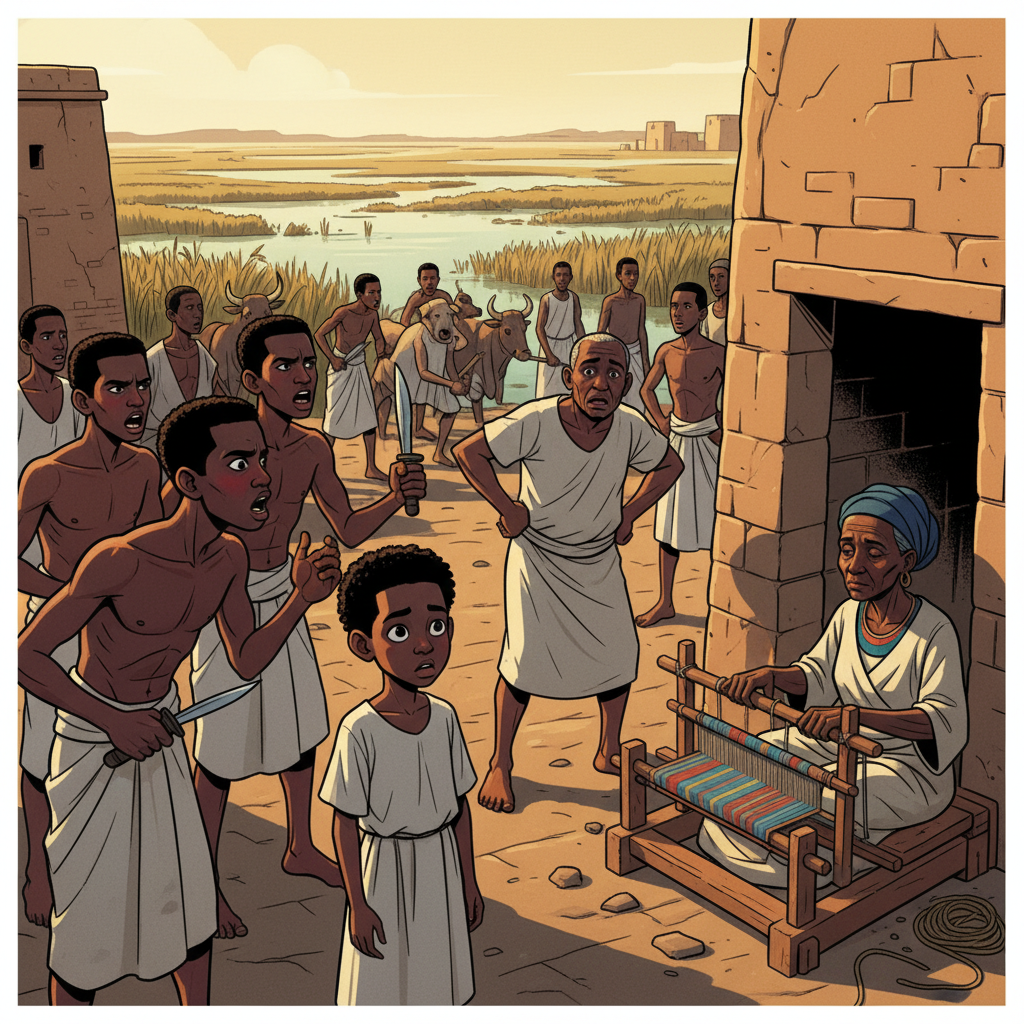
By midday the village had split into loud opinions. Some of the younger men were sharpening their fishing-knives and their reed-cutting blades, as if blades made for cutting flax could stand against an army. Some said the village should drive the cattle into the deep marshes and hide until the soldiers passed. The chief paced and could not decide. Hetep stood at the edge of it all, frightened, watching the grown-ups argue in circles, no one able to stop anyone else. And through all of it, in the shade of the doorway, one person had not stopped working: Hetep’s grandmother, Mama Tey, the oldest weaver in the village, sat at her small loom and wove.
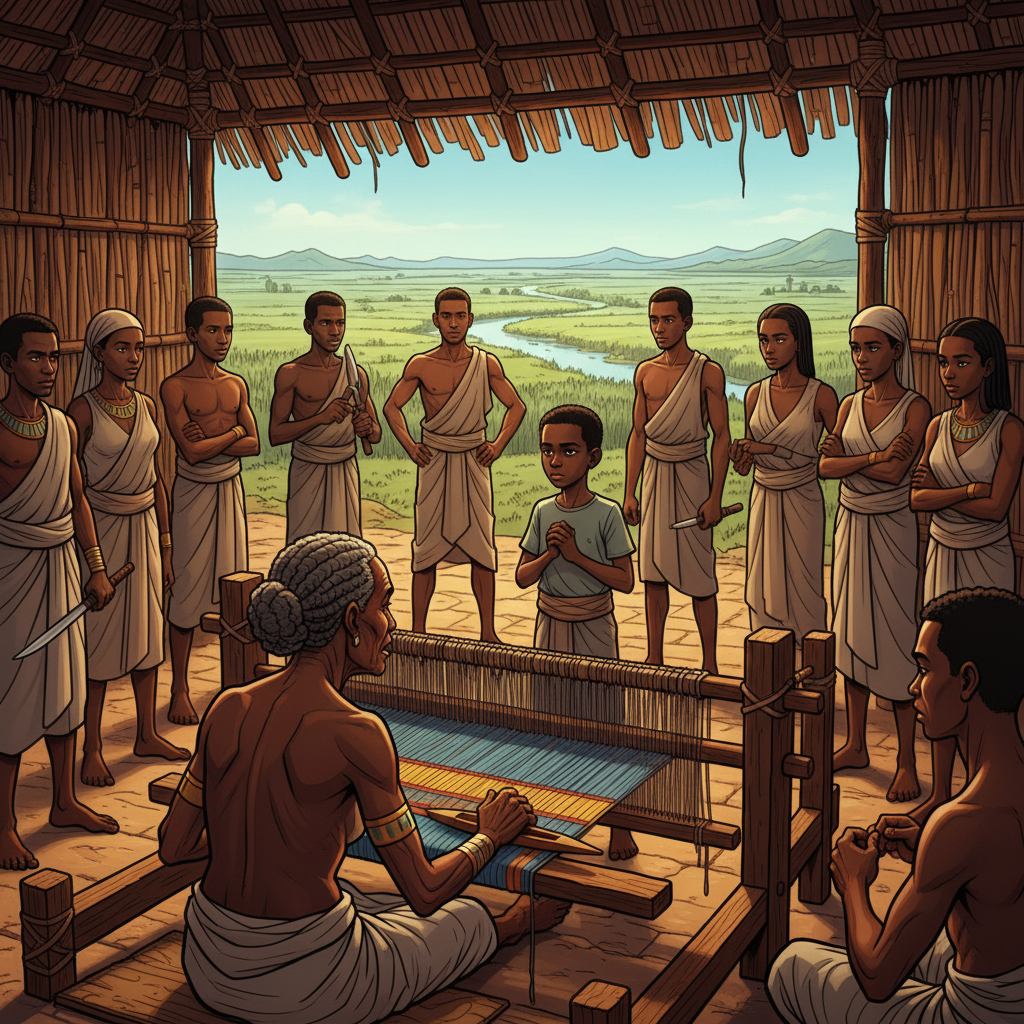
In the village there was a saying: the grandmother is the village’s veto. The chief could decide a thing, the men could shout for a thing — but if Mama Tey set down her shuttle and said no, the thing did not happen. She had earned that over seventy years. Now she let the argument run itself tired, and only when it had gone quiet did she speak, without lifting her eyes from the threads. "We do not run from people we have not yet met," she said. "And we do not fight an army with knives meant for flax. We will wait, and we will watch what the king does first. A man shows you who he is in the first thing he takes — or the first thing he gives."
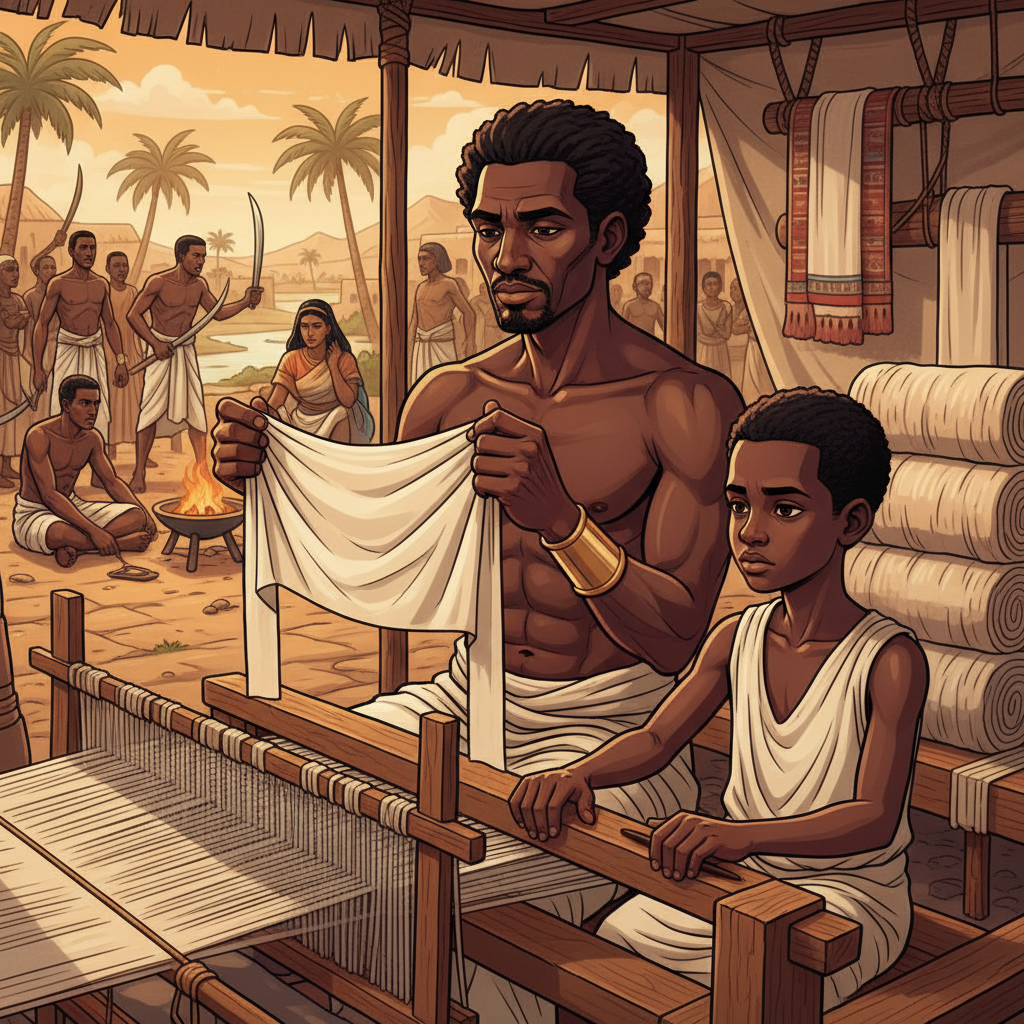
Hetep’s father, Bata, was the village’s master weaver. That afternoon, while the others argued, Bata kept Hetep at the loom and made him work, because work, Bata said, was a way to keep your hands from being afraid. As they wove, Bata talked about what their linen meant. The finest delta linen clothed the priests in the great temples, wrapped the bodies of the honored dead, and was traded the length of the river. "Other villages have grain. Other villages have cattle," Bata said. "We have this." He ran the cloth between his fingers. "A people’s strength is the thing only their hands know how to make. Remember that, whatever the king does. No army can carry away the knowing. It lives in the hands."
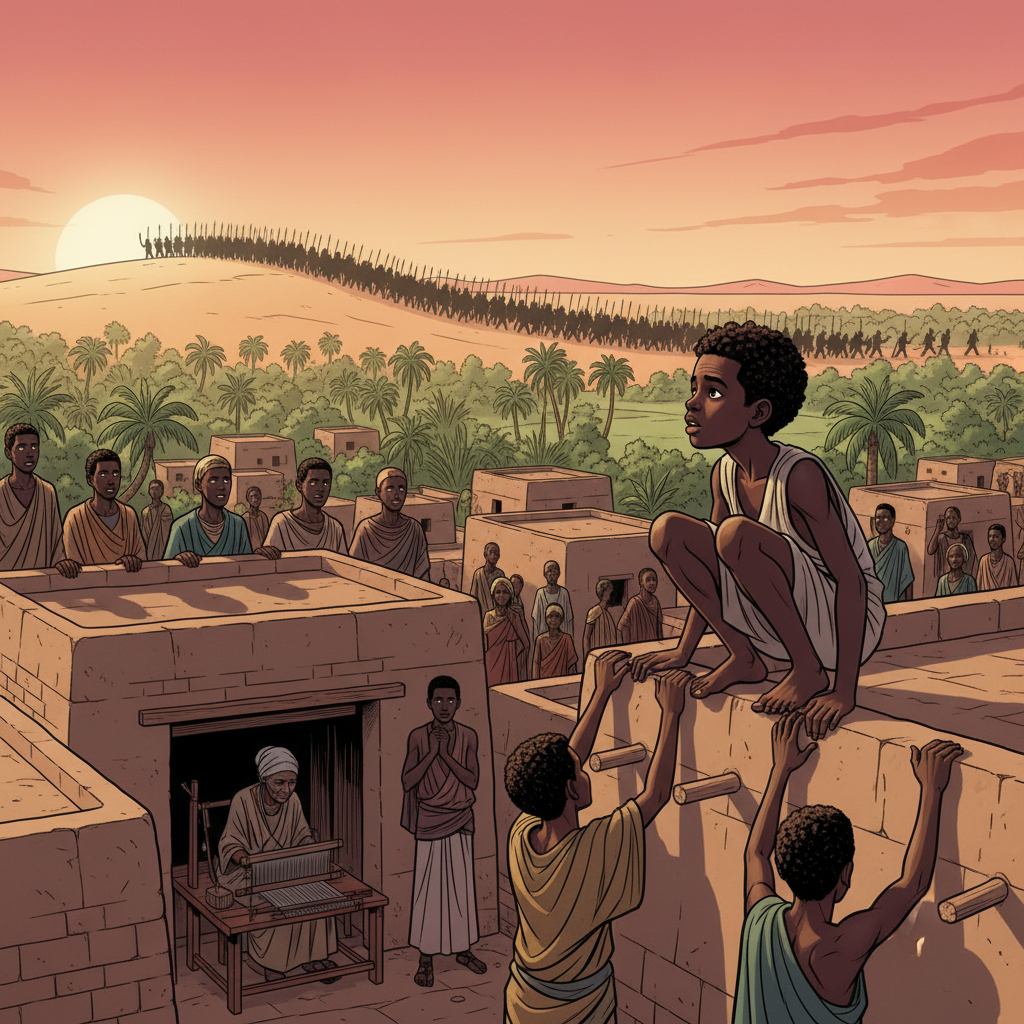
The army came at dawn. Hetep climbed to the roof and saw it crest the long sand ridge to the south — a line of spears black against a salmon-colored sky, more men than he had ever imagined in one place, moving slowly down toward the green. The whole village climbed up to watch, silent, hands gripping the mud-brick parapets. Only Mama Tey stayed below, in the shade of her doorway, at her loom. Hetep looked down and saw his grandmother weaving steadily, not lifting her head to the army at all, as if she had decided that the king could wait for her to finish her row, and not the other way around.
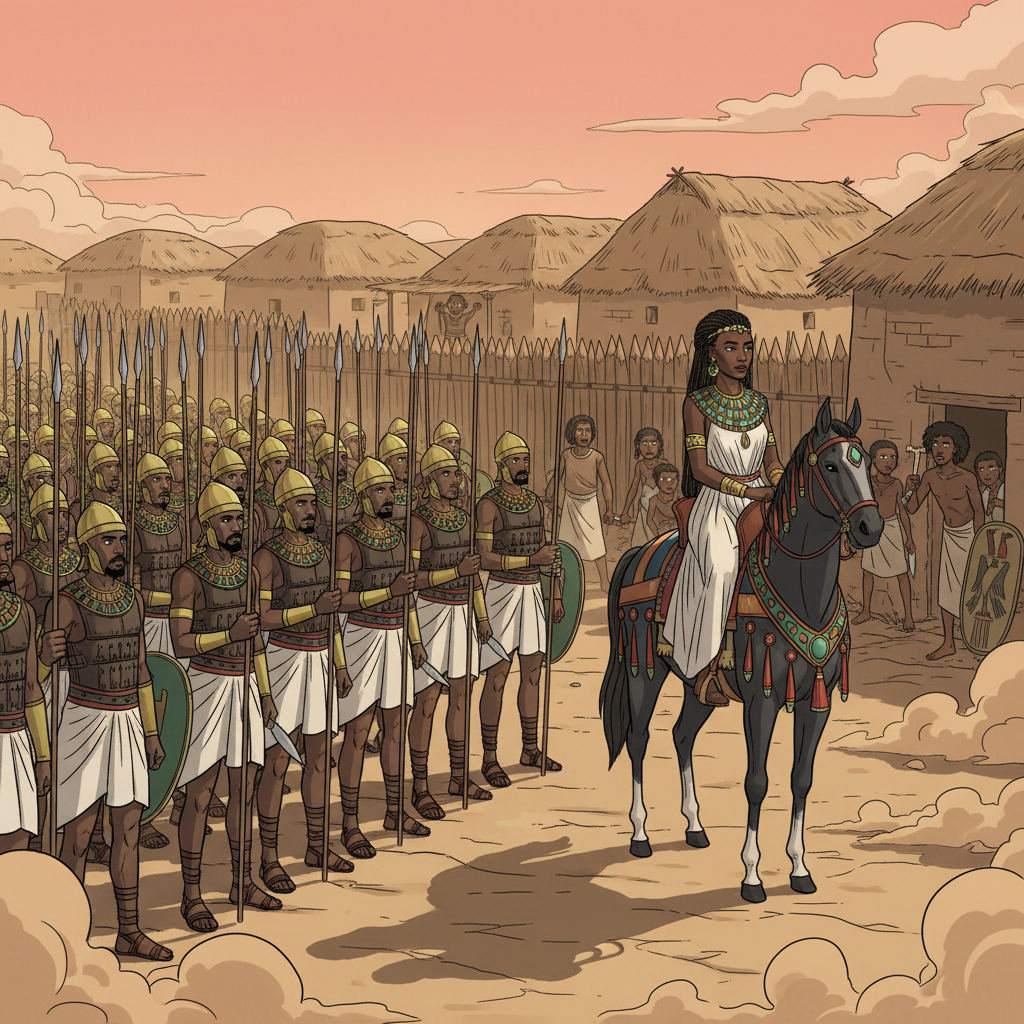
The army halted at the village’s edge. It did not charge. The soldiers stood in their lines and the dust settled around their feet, and for a long, terrible moment nothing happened at all. The young men’s hands tightened on their knives. The children had been pushed to the back of the houses. Then a single figure rode forward from the front of the army — and it was not the king, and it was not even a soldier. It was a woman, tall, in pleated white linen with a collar of green stone, sitting very straight, holding no weapon. She rode to the village’s edge and stopped, and waited to be received.
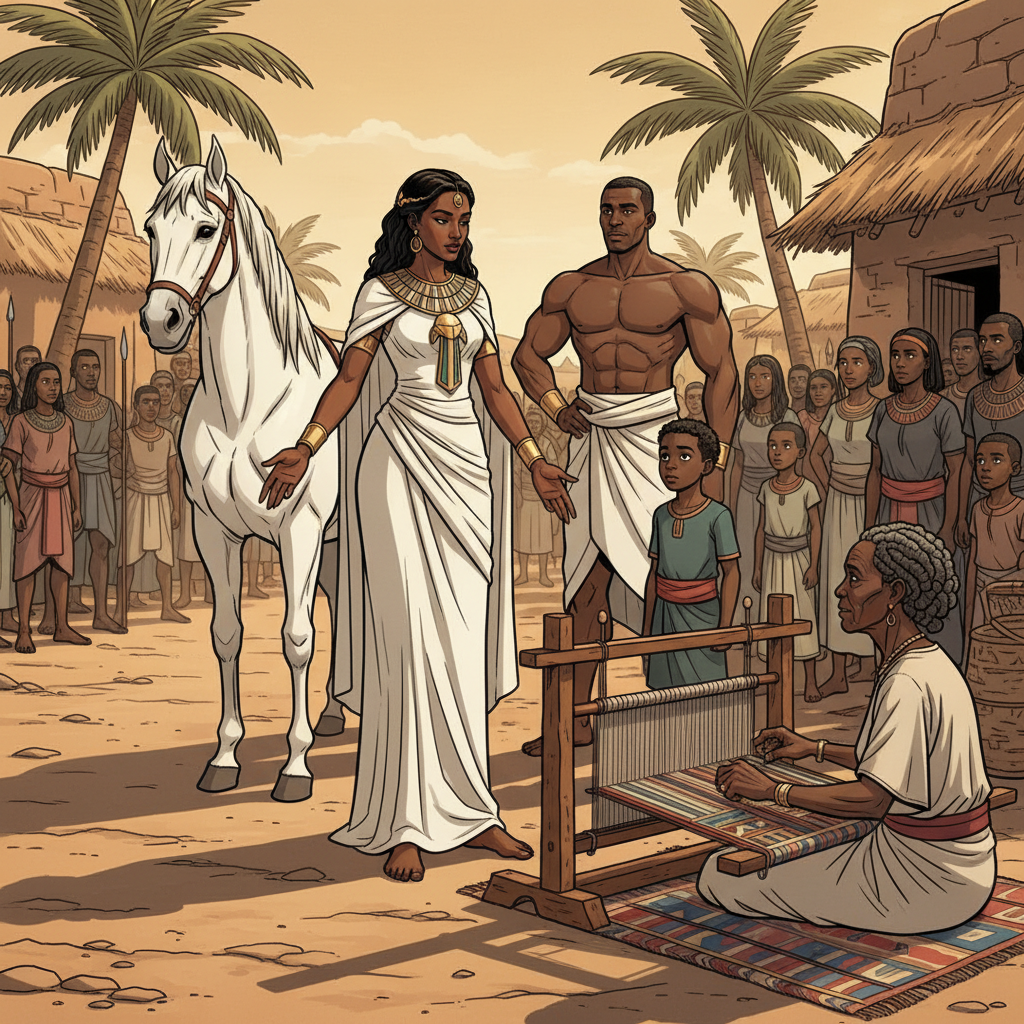
The woman’s name was Neith-hotep, and she spoke for the king — though Hetep would later understand she was far more than a messenger; she was one of the minds that had shaped the joining itself. She did not say "you are conquered." She said, "The king asks to speak with the one your village trusts most." The chief stepped forward quickly, straightening his shoulders. But Neith-hotep’s eyes moved past him, across the gathered village, and came to rest on the old woman in the doorway shade who had not stopped weaving. "Her," Neith-hotep said. And she climbed down from her horse and walked, in her fine linen, to sit on the ground beside Mama Tey’s loom.
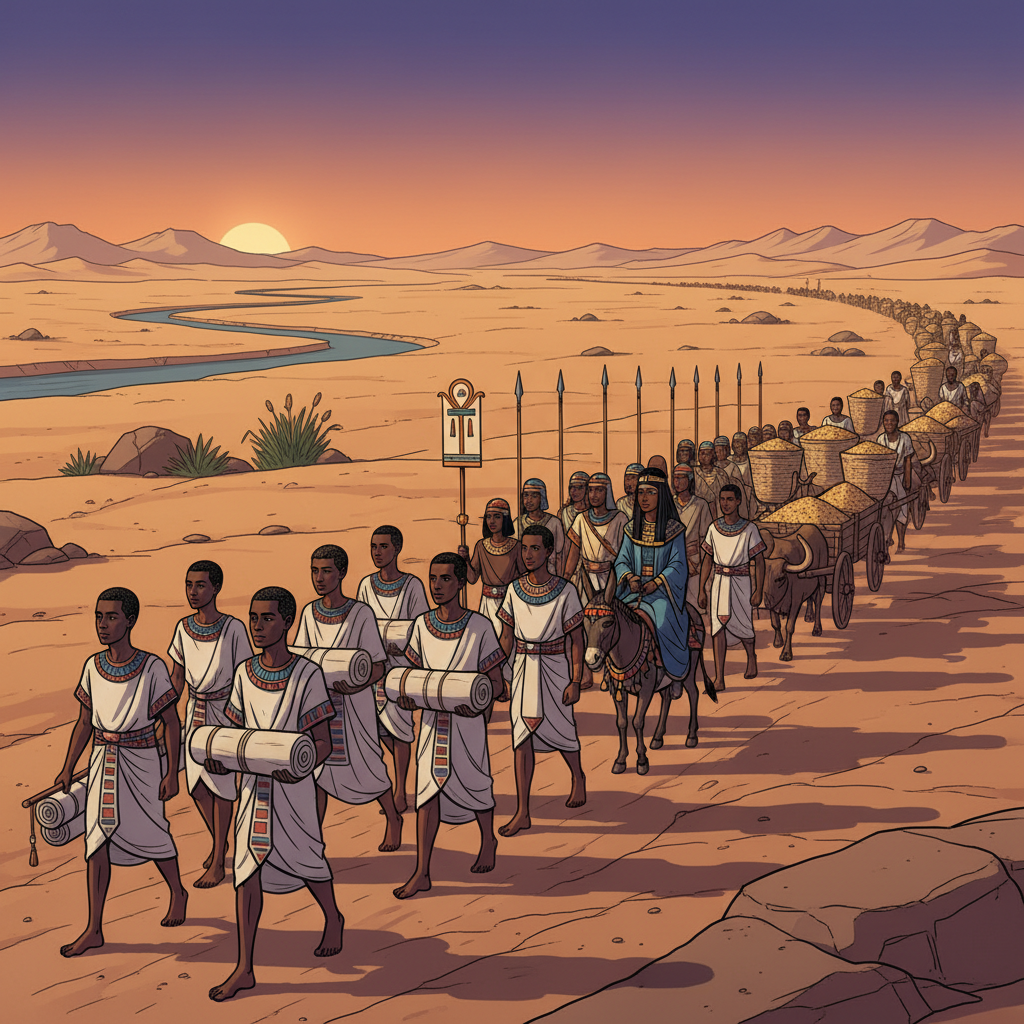
What Neith-hotep asked for was not what the village had braced itself to lose. Narmer did not want their grain, or their gold, or their young men for his army. His first request, carried by Neith-hotep, was this: send your weavers south, for a season, to teach the linen-craft to the villages of Upper Kemet — and in return, grain from the southern harvests will come north to you, every year, for as long as the Two Lands are joined. Hetep, listening from the doorway, did not understand at first. He had expected a taking. This sounded like the opposite of a taking. It sounded like a trade.
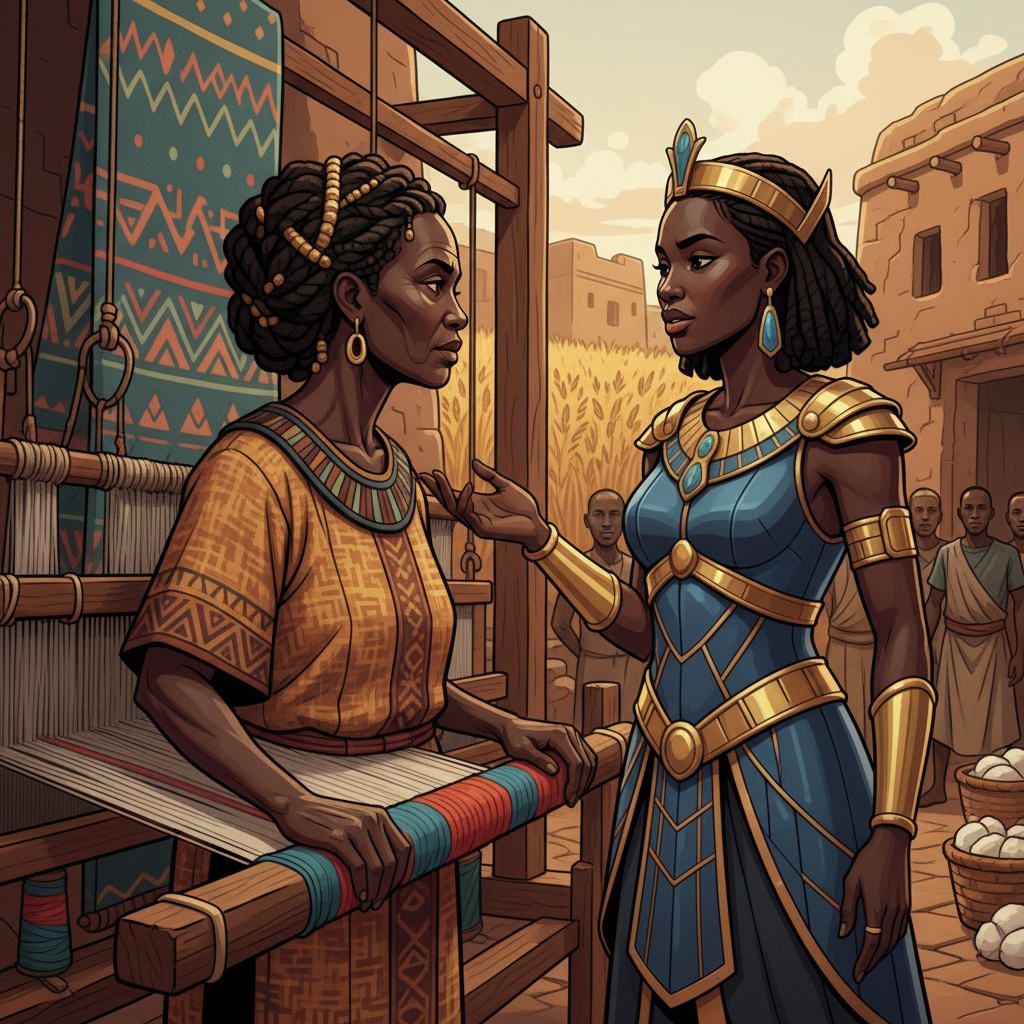
Mama Tey did not say yes. She was the village’s veto, and a veto does not say yes quickly. She set down her shuttle — the first time she had stopped weaving in two days — and looked Neith-hotep full in the face. "What do we give," she asked, "and what do you take? Say both plainly." Neith-hotep answered plainly: the weavers would go south to teach and would come home again; the knowing would be shared, not stolen. The grain would come north every harvest. "And if the grain stops coming?" Mama Tey asked. "Then the teaching stops," said Neith-hotep, "and you have lost nothing but a season. The cord pulls both ways, mother, or it is not a cord at all."
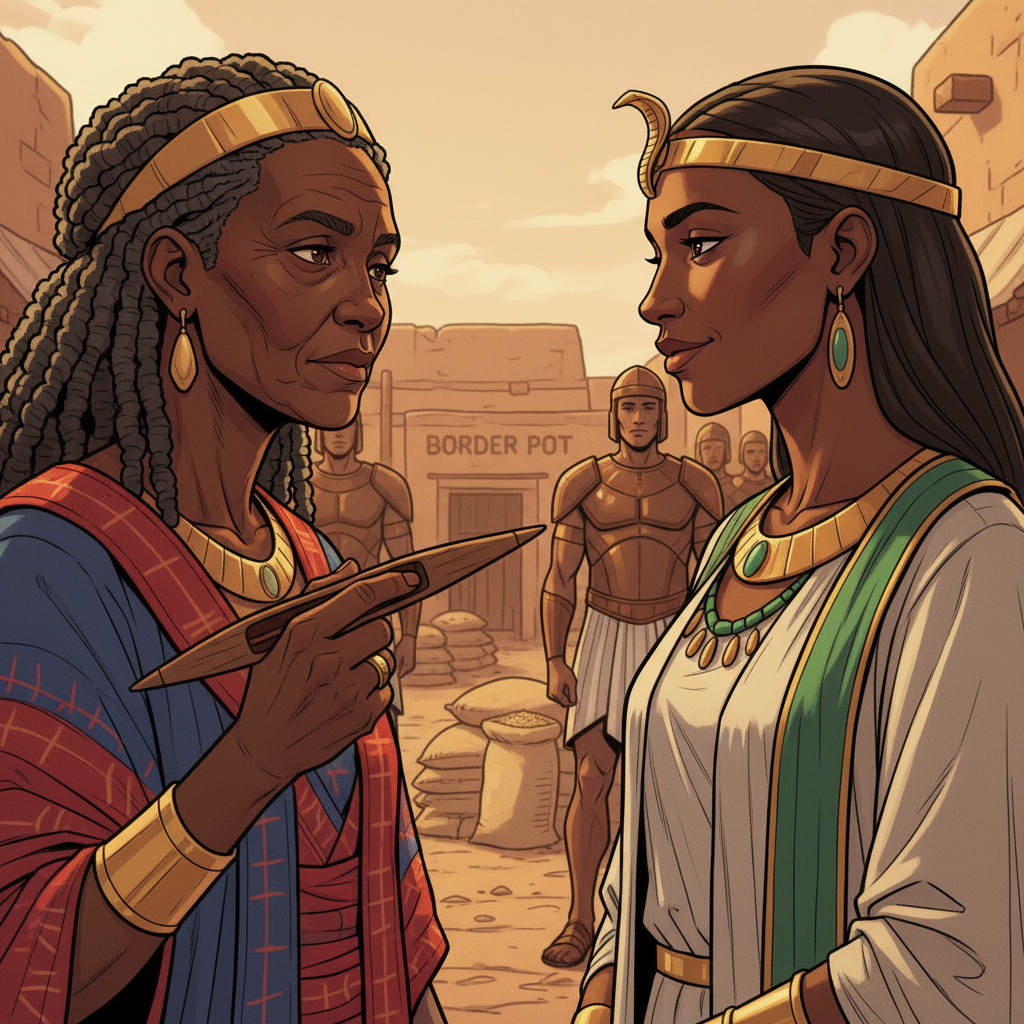
Mama Tey was quiet for a while, weighing it the way she weighed thread for strength. Then she said the thing Hetep would remember his whole life. "A king who takes is a conqueror. A king who trades is a partner. A conqueror makes two peoples into one by erasing the smaller. A partner joins two peoples and lets both keep themselves." She looked at Neith-hotep. "Which is your Narmer?" And Neith-hotep said, "He would be the second. But you should not believe me because I say so. Believe the grain when it comes. Judge him by what crosses the border, and in which direction." Mama Tey picked her shuttle back up. The veto had lifted — not in trust yet, but in willingness to watch.
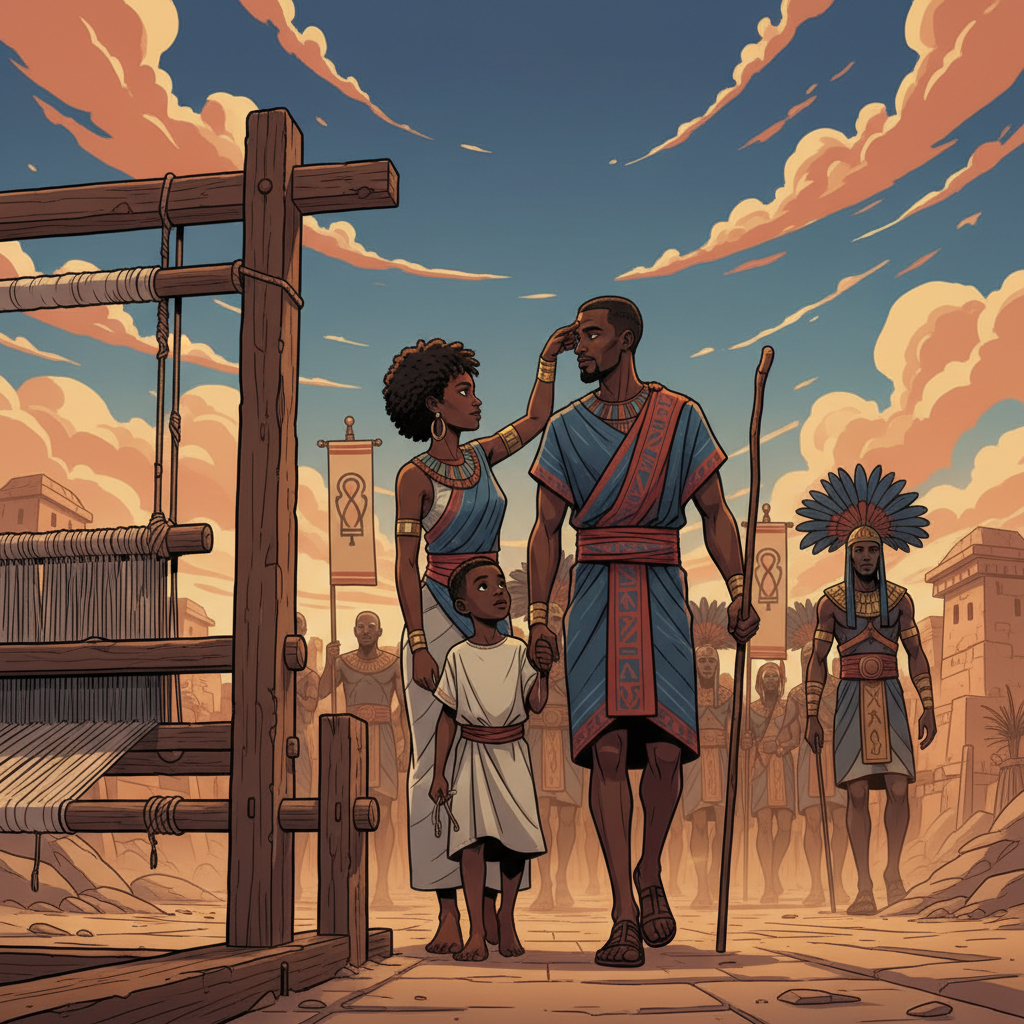
When the time came to choose which weaver would go south to teach, the village chose Bata, Hetep’s father — the master of the loom. It was an honor and a fear all at once. Bata would travel into the land that had, in living memory, been the enemy. Mama Tey blessed him at the doorway, pressing her thumb to his forehead. "Teach them everything," she told him. "A craft you refuse to share dies with you. A craft you give away outlives you in a hundred villages. That is not weakness. That is how a small people becomes a large memory." Hetep watched his father walk south with the king’s people, proud and terrified, and he understood that his family had just become a thread in something far larger than their loom.
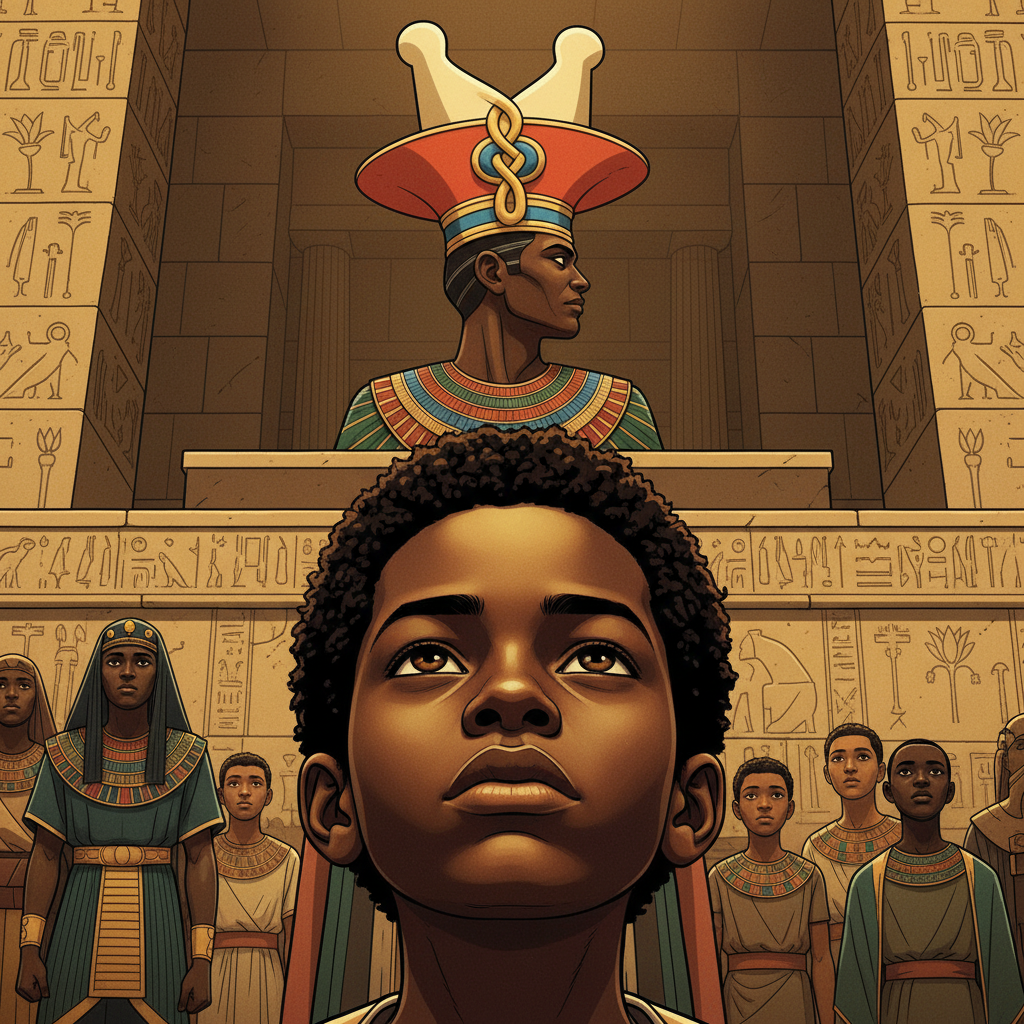
Hetep was taken, with other children of the delta villages, to see the joining ceremony. There, on a platform of stone, Narmer was crowned — not with one crown, but with two made into one. The Red Crown of Lower Kemet, the flat green north, Hetep’s own land, was set together with the White Crown of Upper Kemet, the narrow south, into a single double crown the priests called the Pschent. Hetep stared at it. The red of his own land was still there. It had not been melted down or thrown away. It sat joined to the white, the two of them holding each other up. Two crowns, made one, and neither one erased.
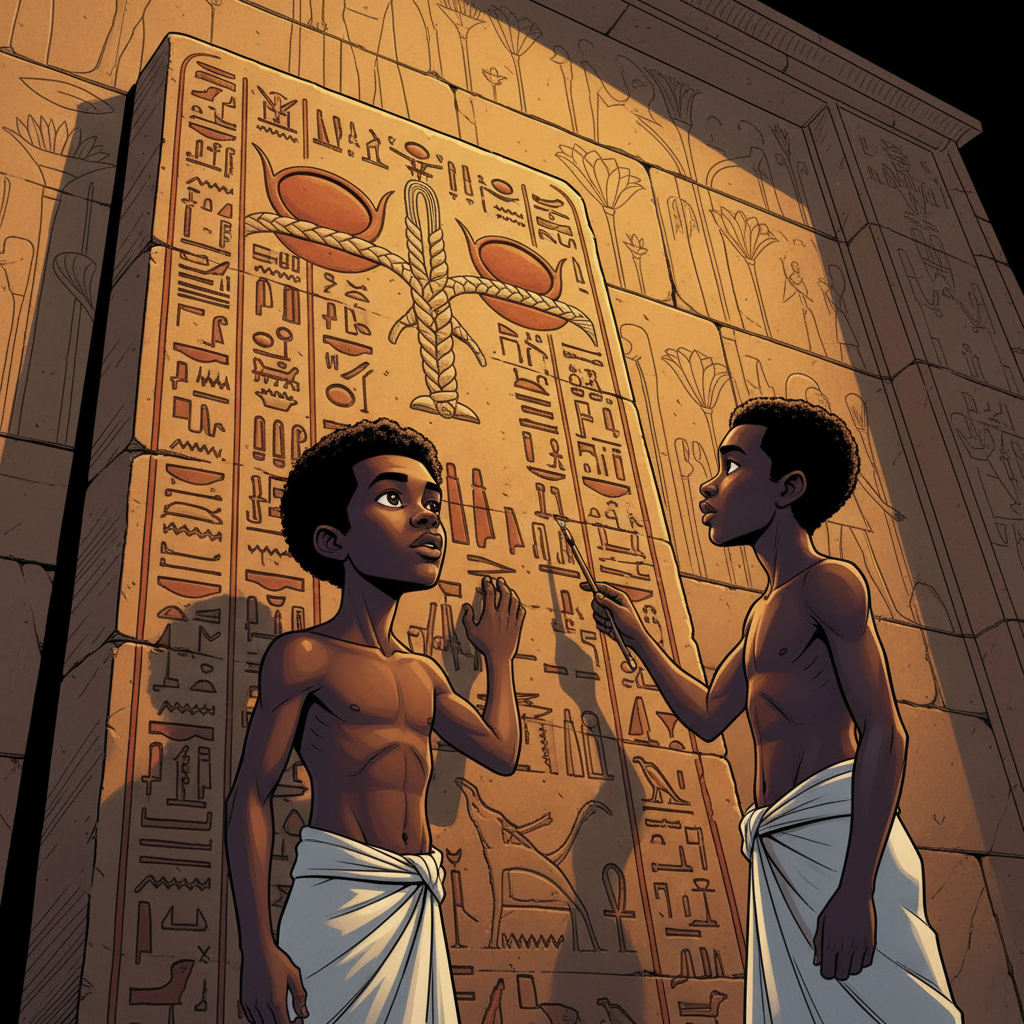
There was more. On a great flat stone — a palette taller than Hetep — the joining of the Two Lands was carved in the medu neter, the sacred signs, so that it would be remembered not as a story that could change in the telling, but as a thing written and standing forever. Hetep had a cousin training as a scribe who told him: the stone remembers. What is carved is harder to twist than what is only spoken. And Hetep understood that Narmer had not only joined the lands with an army and a marriage and a trade — he had joined them in writing, in stone, where the agreement could be read by anyone, in any year, and held to its word.
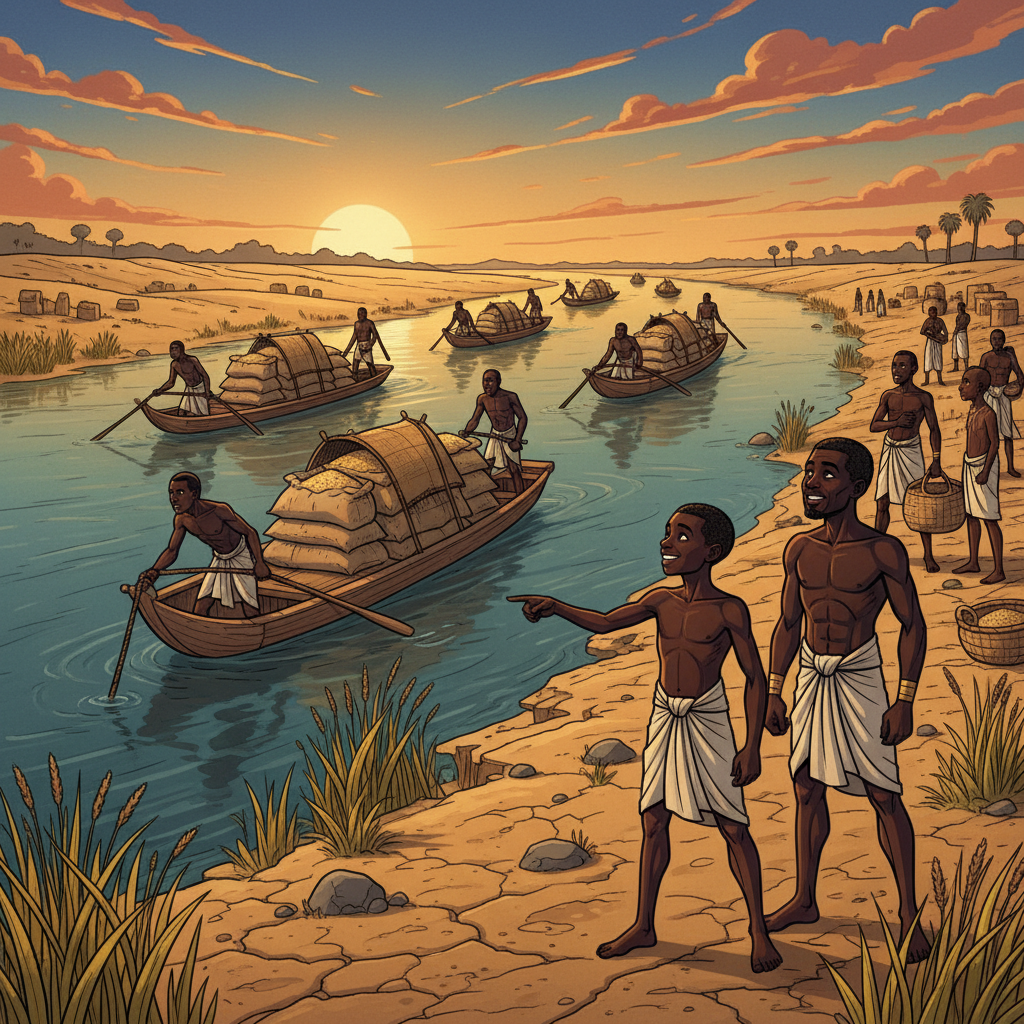
The first harvest after the joining was a thin one in the delta — the flood had been low. In the old days, a thin year was a hungry year, and a hungry year was when the strong took from the weak. But that autumn, as Neith-hotep had promised, grain came north from the southern harvests, up the river in flat barges, and Hetep’s village ate through the thin season without a single empty belly. Bata came home from the south that same season, having taught four villages the delta linen-craft, honored everywhere he went. The cord, so far, was pulling both ways. Order, Hetep was learning, was not a thing you set up once. It was a thing you kept checking, harvest by harvest, in which direction the grain flowed.
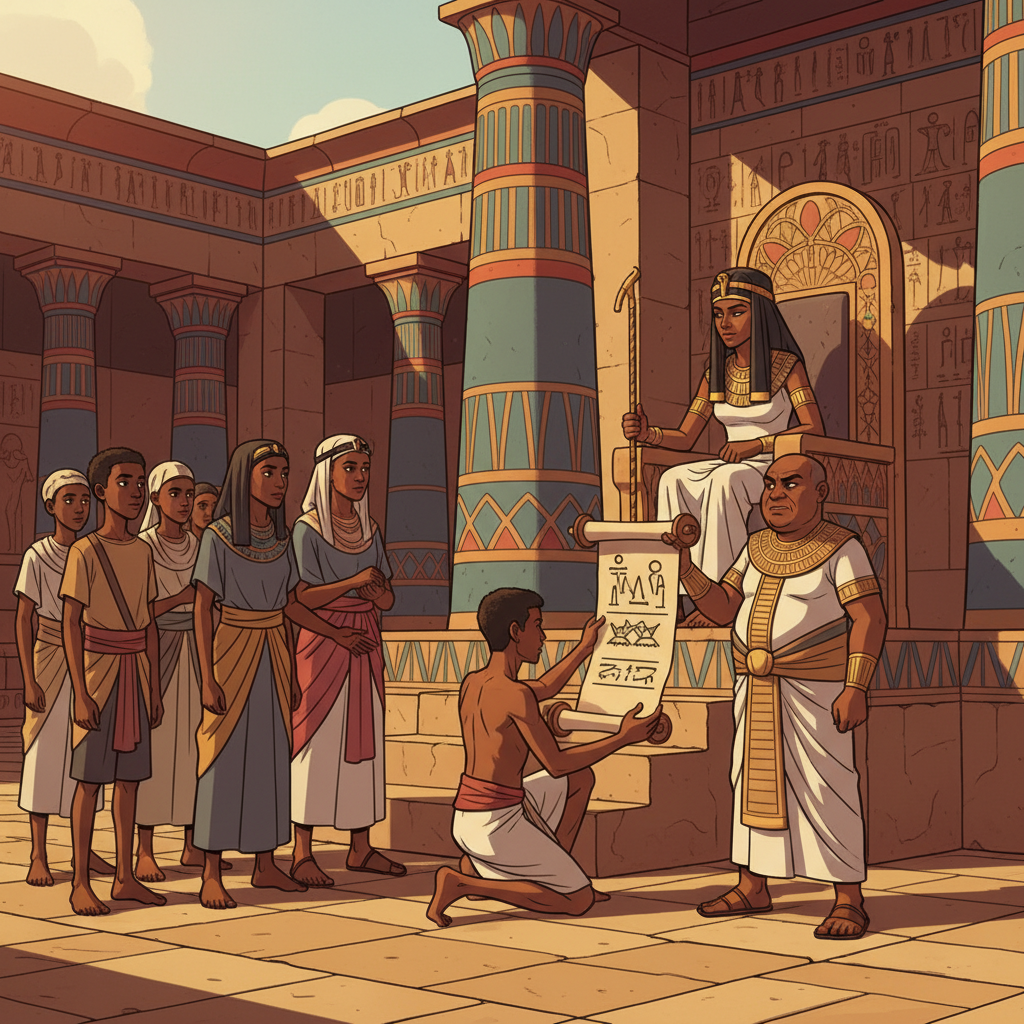
The test came two years later. An official from the south, grown proud, arrived in the delta and announced that the linen the village wove would now go south as tribute — given, not traded, with no grain in return. It was the old one-way taking, dressed in the new kingdom’s clothes. The young men reached for their knives again. But Mama Tey did not. She sent for the written agreement — the very words carved at the joining — and she had Bata carry the village’s case to Neith-hotep herself. The greedy official was overruled by the king’s own word. "The cord pulls both ways," the ruling said, "or it is cut." Hetep saw, then, that the writing in the stone had teeth. A promise you can read is a promise you can hold a king to.
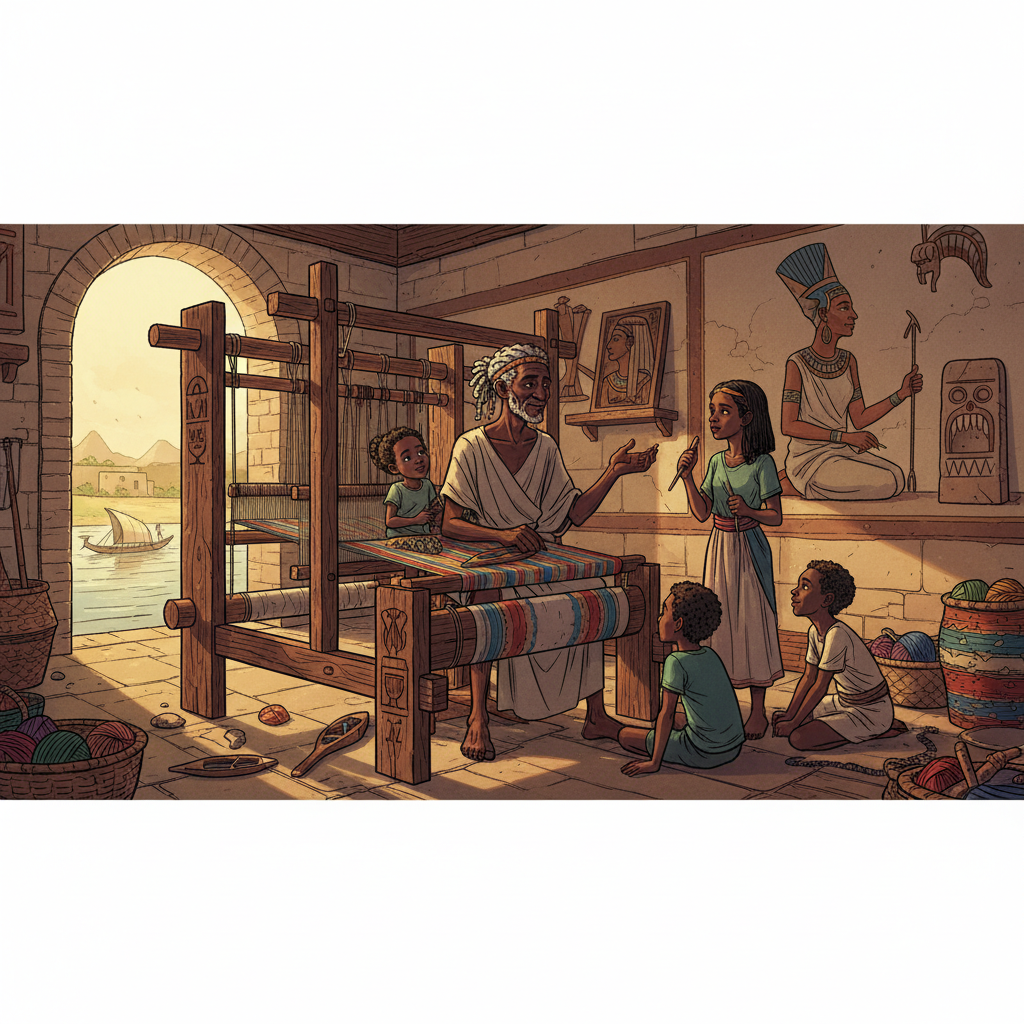
Hetep grew up to be a master weaver like his father, and he taught his own grandchildren at the same loom. When they asked him about the great king Narmer who joined the Two Lands, he would surprise them: he did not talk much about Narmer. He talked about Mama Tey, who made the king prove himself before she lifted her veto. He talked about Neith-hotep, who walked past the chief to sit on the ground beside an old weaver. He talked about the grain barges and the carved stone with teeth. "Maat is the cord that holds the two crowns together," he would say. "Order is what keeps two peoples from being made one at the cost of the smaller one. A king can crest the ridge with his spears. But it is the grandmothers and the weavers who decide whether a joining becomes a partnership — or a wound that takes a hundred years to close."