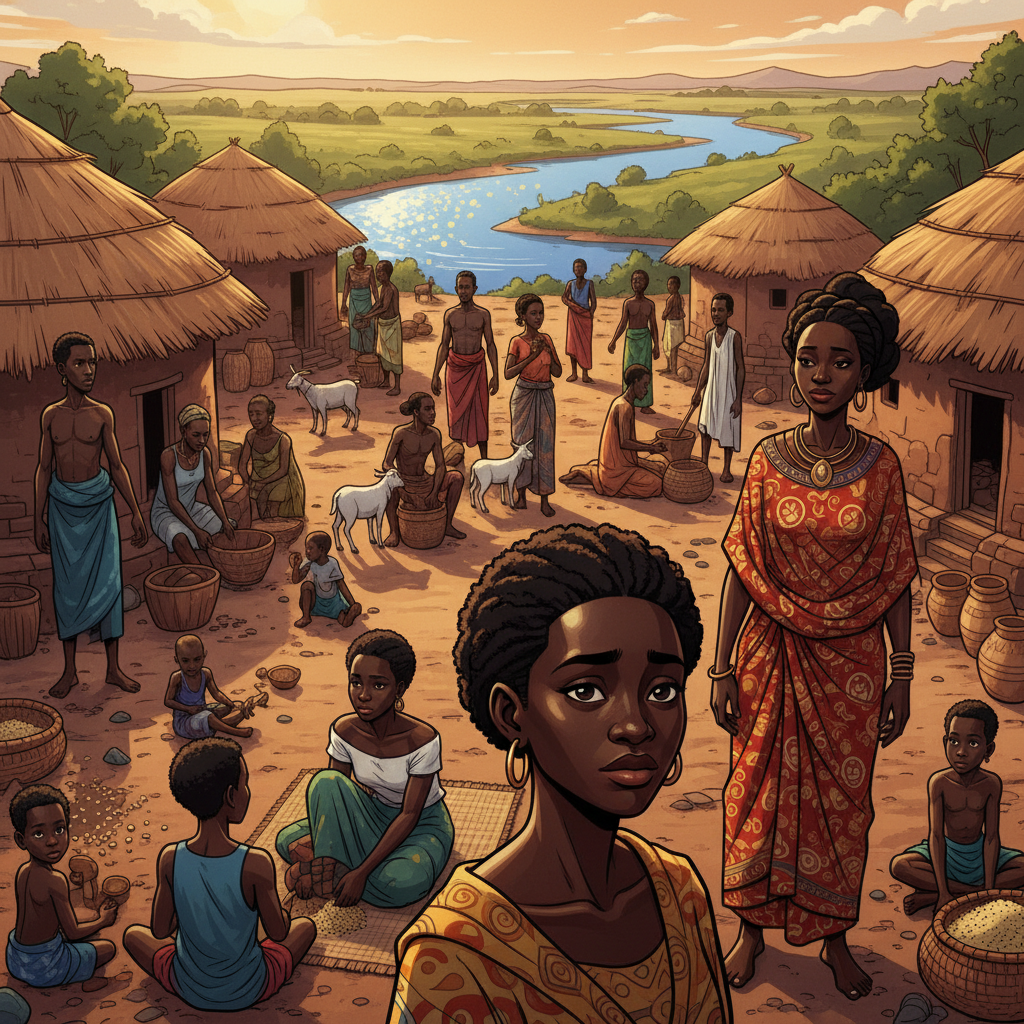
The Osun River flowed with an ancient, knowing grace, its surface an effervescent shimmer beneath the West African sun. Folake, a young woman of deep, rich ebony skin, spent her days observing its serenely ceaseless journey. The river was her confidante, its murmurs a soothing balm to her spirited heart. Lately, however, a shadow had fallen across her usually bright countenance. Her older sister, Adeola, was soon to embark on a new life, a marriage in a distant village, and the thought of her departure weighed heavily upon Folake. The air in their compound, usually filled with the lively chatter of their large, loving family, now carried an undercurrent of bittersweet anticipation. Folake tried to imagine her mornings without Adeola’s laughter, her evenings without her sister’s comforting presence, and a hollow ache began to settle deep within her chest. The river, for the first time, seemed to offer no immediate comfort.
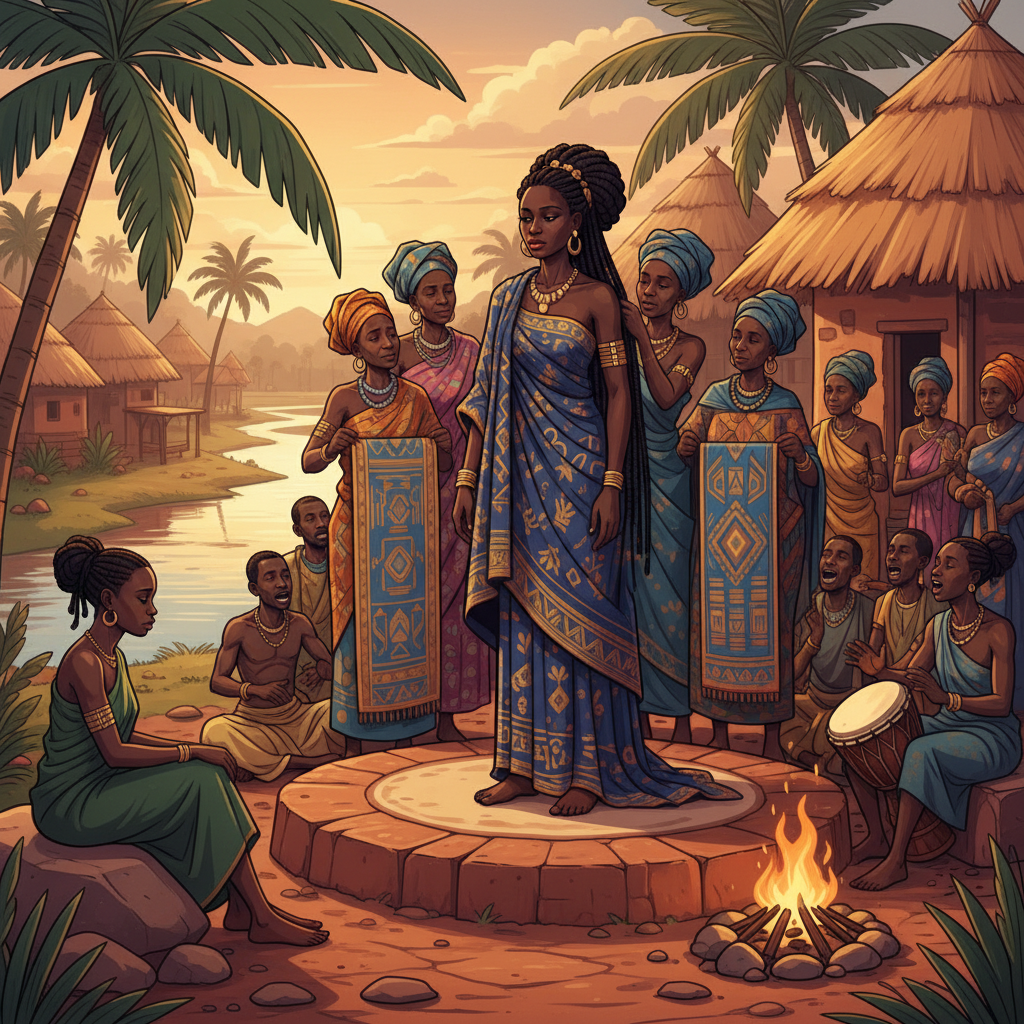
Adeola’s wedding preparations were a flurry of vibrant activity. Cloths of indigo and gold were woven, intricate hairstyles were practiced, and songs of celebration filled the evenings. Yet, amidst the joyous hum, Folake felt a growing sense of impending loss. She watched her sister, whose skin was like polished obsidian, move with a quiet dignity, accepting her fate with a grace Folake could not yet fathom. The village women, their faces etched with the wisdom of generations, offered Adeola advice and blessings, their voices a melodic chorus. Folake, however, often retreated to the solitude of the riverbank, her heart heavy. She loved her sister fiercely, and the idea of a life without Adeola’s immediate presence felt like a piece of her own being was being torn away. How could she possibly endure such a separation? The river continued its flow, indifferent to her sorrow, or so it seemed.
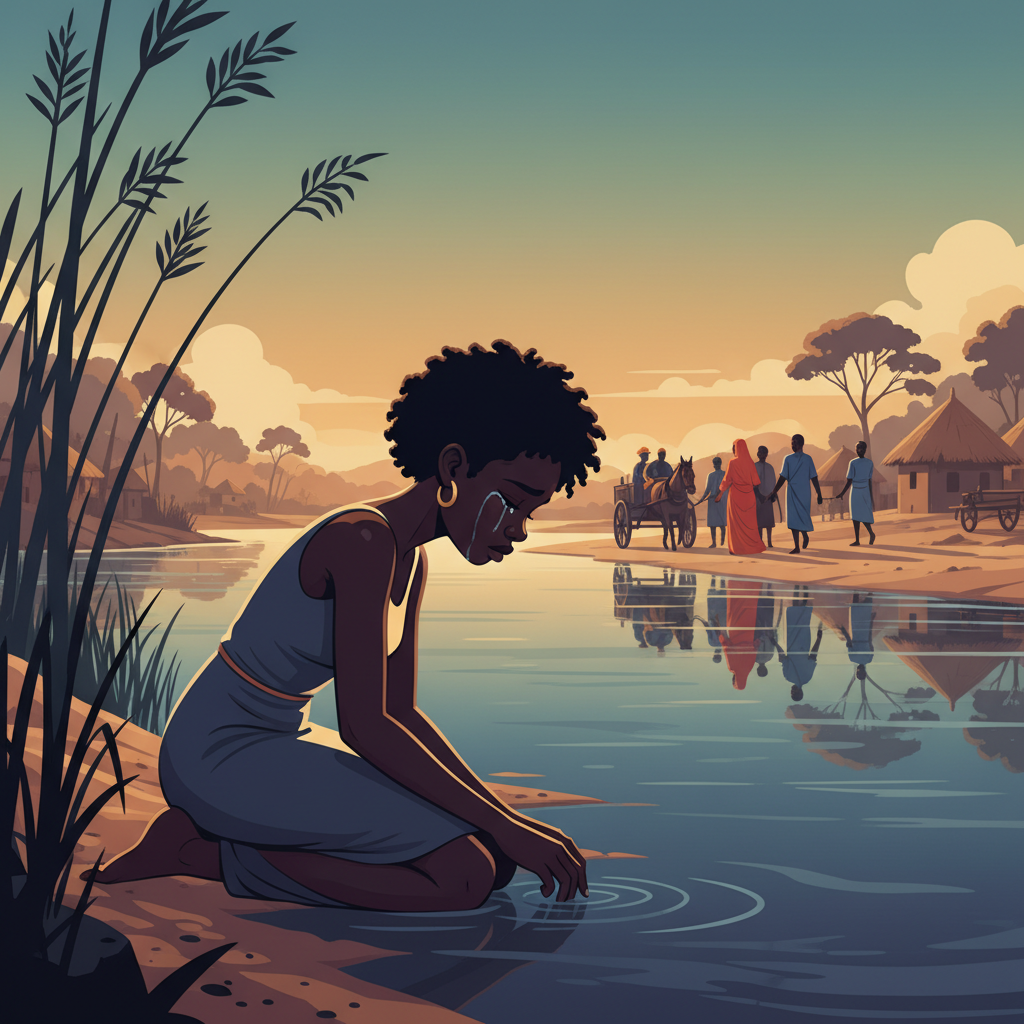
The day of Adeola’s departure arrived, cloaked in both sunshine and tears. The farewells were long and heartfelt, punctuated by embraces and promises to return. As Adeola, resplendent in her bridal attire, was led away by her new family, a profound silence descended upon Folake. The vibrant energy of the celebration faded, leaving behind an emptiness that reverberated through the very air. Folake felt truly desolate, a lone tree after its companion has been felled. She sought refuge by the Osun, her usual sanctuary, hoping its rhythmic flow would somehow mend the raw edges of her grief. She dipped her fingers into the cool, clear water, wishing she could hold onto Adeola as easily as she could hold a handful of river droplets. But the water slipped through her grasp, just as Adeola had slipped from her everyday life, leaving only a lingering chill.

Days turned into weeks, and Folake’s melancholy deepened. She spent increasing hours by the river, watching the water, seeking answers in its ceaseless motion. One afternoon, as the sun began its descent, painting the sky in hues of orange and purple, she noticed a figure by the water’s edge. It was Mama Ife, the revered Oshun priestess, her skin a testament to years spent under the sun, deeply creased but radiant with an inner light. Mama Ife moved with a quiet authority, her presence a powerful, grounding force. Folake watched as the priestess poured libations into the river, chanting softly in a language Folake did not fully understand but felt deeply in her soul. There was an ancient wisdom about Mama Ife, a connection to the sacred river that was palpable. Folake felt drawn to her, a moth to a flame, sensing that this woman might hold the key to understanding her own turmoil.

Mustering her courage, Folake approached Mama Ife, her voice barely a whisper. “Mama Ife,” she began, her gaze fixed on the river’s current, “my sister has gone, and my heart feels like an empty calabash. I do not understand how to be joyful when a part of me is absent. I wish I could keep her here, close to me, always.” Mama Ife turned her gaze towards Folake, her eyes, dark and deep like the river itself, held an ancient knowing. Her smile was gentle, tinged with empathy. “Ah, my child,” she responded, her voice a soft melody, “you speak of a truth many hearts grapple with. The pain of separation is a heavy burden, indeed. But tell me, Folake, what do you truly see when you look at our beloved Osun River?” Folake looked at the river, perplexed, unable to discern the deeper meaning behind the priestess’s question.
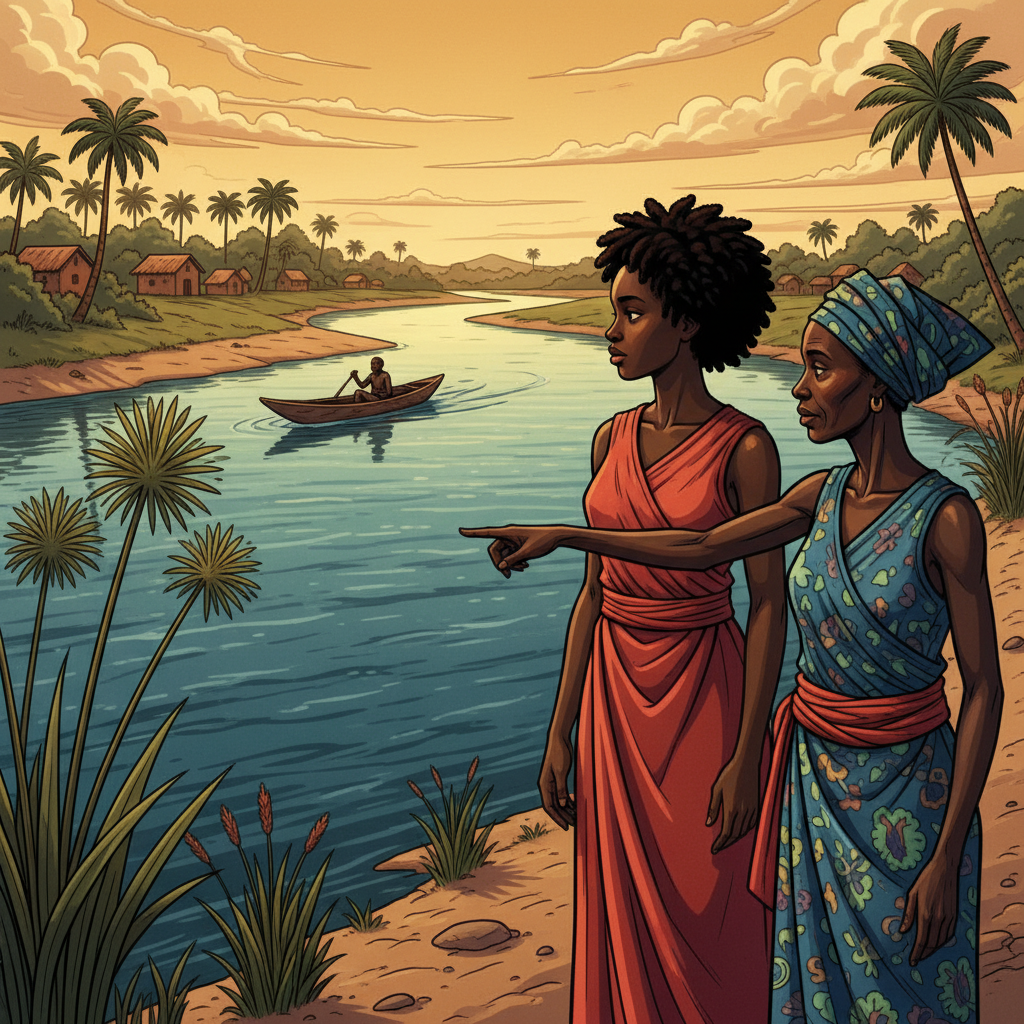
Mama Ife followed Folake’s gaze to the river, her eyes tracing its winding path. “Look closely, my dear,” she instructed. “The river flows, does it not? It does not hold onto the water that passes through it. If the river tried to keep all the water, to trap it within its banks, what would happen?” Folake pondered this for a moment. “It would become full, Mama,” she replied, “too full. It would overflow its banks and perhaps become a swamp, stagnant and lifeless.” Mama Ife nodded slowly, a profound understanding dawning in her eyes. “Precisely so. The river does not keep the water. If it did, it would cease to be a river; it would become a swamp, unable to sustain life, unable to refresh the land. Its very essence is its movement, its continuous letting go.” Folake listened, a flicker of new thought beginning to stir within her, though the connection to her sister’s departure was not yet clear.
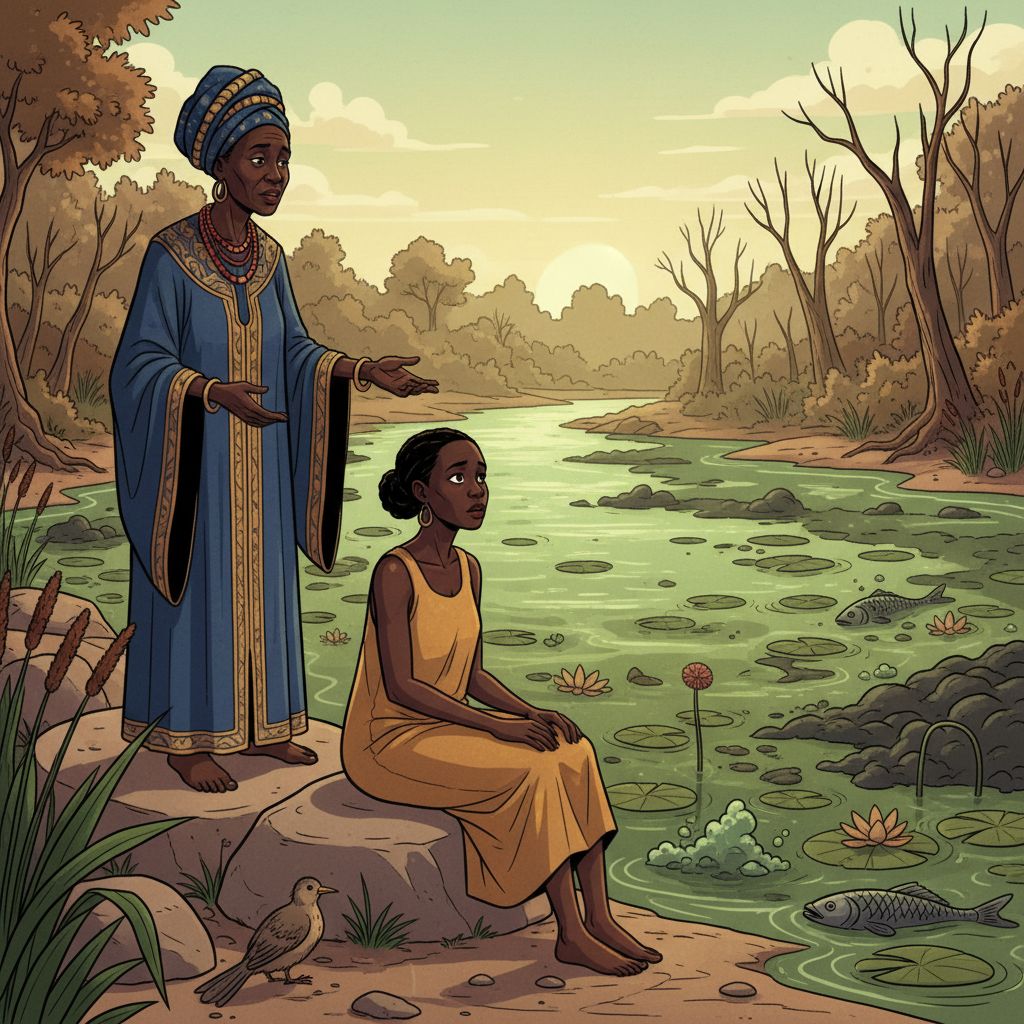
“Imagine,” Mama Ife continued, her voice soft but firm, “a river that attempts to hold every drop. It would become suffocated by its own desire to possess. The water would no longer be clean and vibrant; it would fester, becoming a source of illness rather than life. The fish would die, the plants would wither, and all the creatures that depend on its vitality would suffer. This is the way of all things, Folake. To hold on too tightly, to refuse to let go, is to stifle the very life you wish to cherish. It is to turn what should be a blessing into a burden, a source of stagnation rather than growth. The river teaches us the wisdom of impermanence, the necessity of flow. Do you understand this metaphor, my child, and how it might apply to the currents within your own heart?”
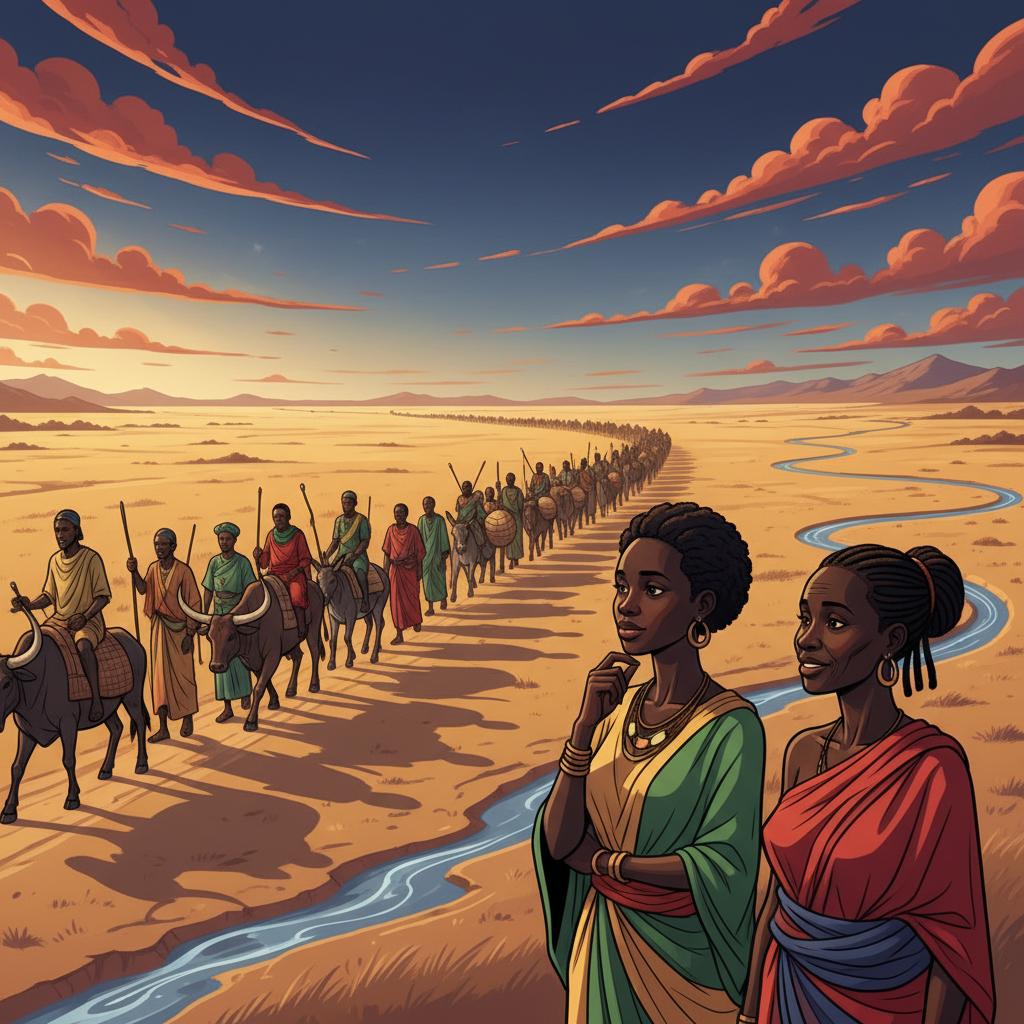
Folake considered Mama Ife’s words, a new perspective slowly unfolding within her. “So, Mama,” she ventured, “you mean that if I try to hold onto Adeola, to keep her with me always in my thoughts, it would be bad for me, and for her?” Mama Ife smiled. “Not bad, my child, but perhaps unyielding to the natural order. Love, like the river, must flow. It must be given space to move, to go forth, and to return. If we try to dam it up, to force it to remain in one place, we risk losing its purity and its power. True love does not demand possession; it offers freedom. It nurtures growth, even when that growth takes a loved one far away. The love you share with Adeola is not diminished by her journey; it simply transforms, waiting for its next ebb and flow. It is a constant force that endures beyond physical presence.”

Folake’s brow furrowed in thought, grappling with this profound wisdom. “But, Mama,” she confessed, “it still hurts. My heart still feels a deep emptiness. How can I simply let go of the pain when my arms long to embrace my sister, and my ears long for her laughter?” Mama Ife reached out, her dark, slender fingers gently touching Folake’s arm. “The pain is real, my dear, and it is a testament to the depth of your love. You do not simply ‘let go’ of the pain as one discards a broken pot. Rather, you allow it to flow through you, like the river allows the current to pass. You acknowledge its presence, you feel its force, but you do not build a dam against it. You cultivate resilience, understanding that sorrow is a part of life’s rich tapestry, but it does not define your entire being. This acceptance is the beginning of finding solace.”
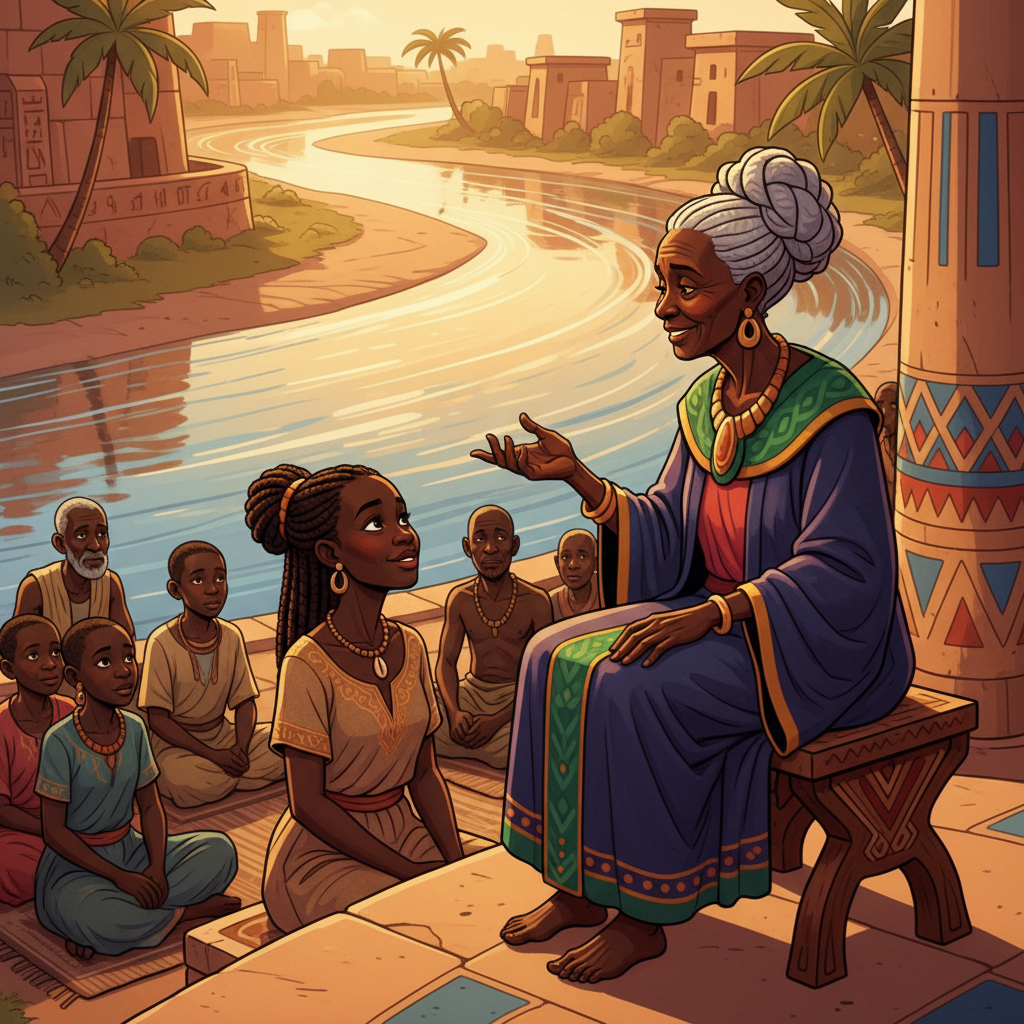
“And what then, Mama?” Folake asked, her voice tinged with a fragile hope. “If I let the water flow, if I do not try to keep it, what becomes of my love, of my sister?” Mama Ife’s eyes twinkled. “Ah, this is the most beautiful part of the river’s teaching. The river does not keep the water, but it remains the river, does it not? Its banks are constant, its bed unwavering. And the water, though it flows away, often returns, perhaps as rain, perhaps as another stream joining further down. To love is to be the place they return to. To be the steady bank, the comforting bed, the unwavering anchorage. It means creating a sanctuary in your heart, in your home, in your village, to which those you love will always feel welcome to return, knowing they will find you there, constant and open, just as the river awaits its waters.”
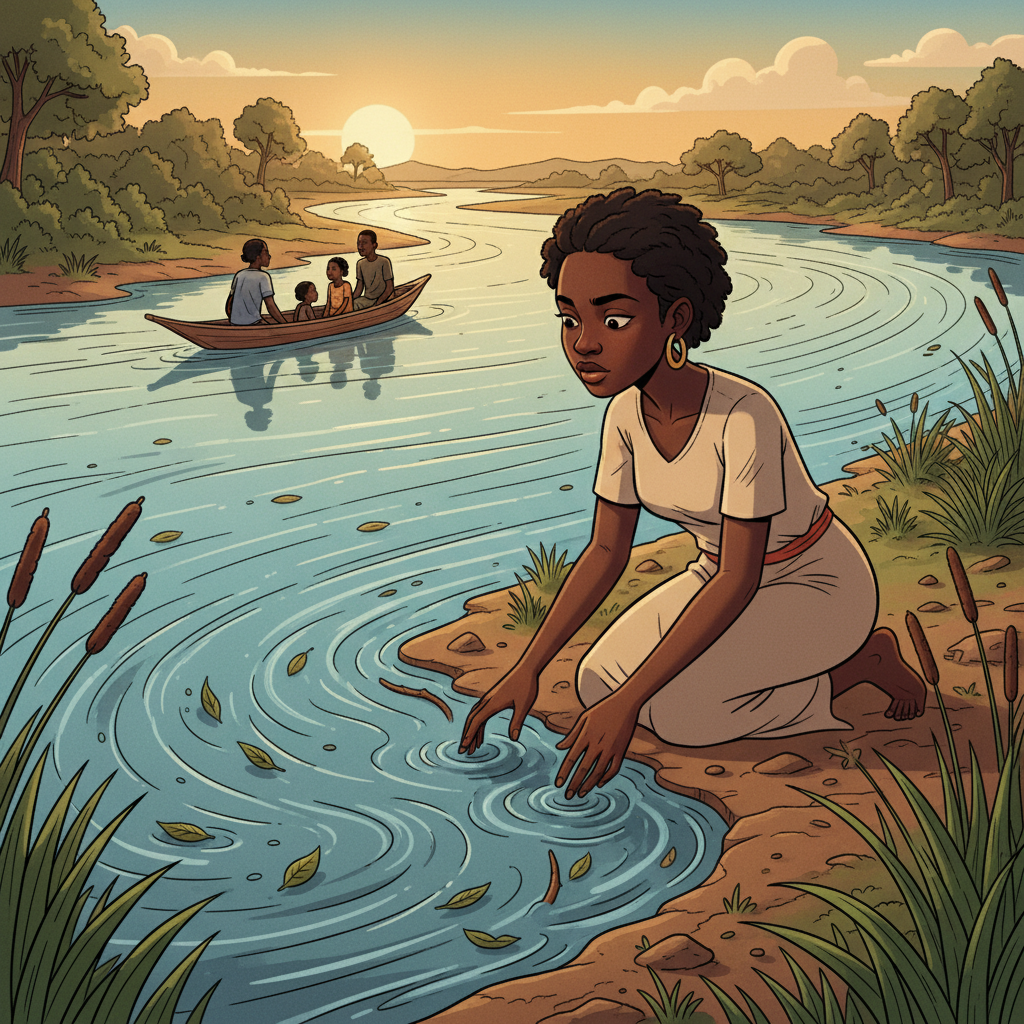
Folake spent the next few days by the Osun River, observing it with a newfound intensity. She watched the swift currents carry leaves and twigs downstream, never to return to the exact same spot, yet the river itself remained. The banks, rooted firmly in the earth, did not chase the flowing water; they simply held its path, steadfast and immutable. She saw how the river nourished the land around it, providing life to countless creatures and plants, even as its own waters moved onward. It was a paradox, a constant letting go that simultaneously fostered an enduring presence. Folake began to understand that her love for Adeola did not require Adeola’s physical presence every day to be real or strong. Her love could be like the river, flowing and yet ever-present, a silent promise of welcome.
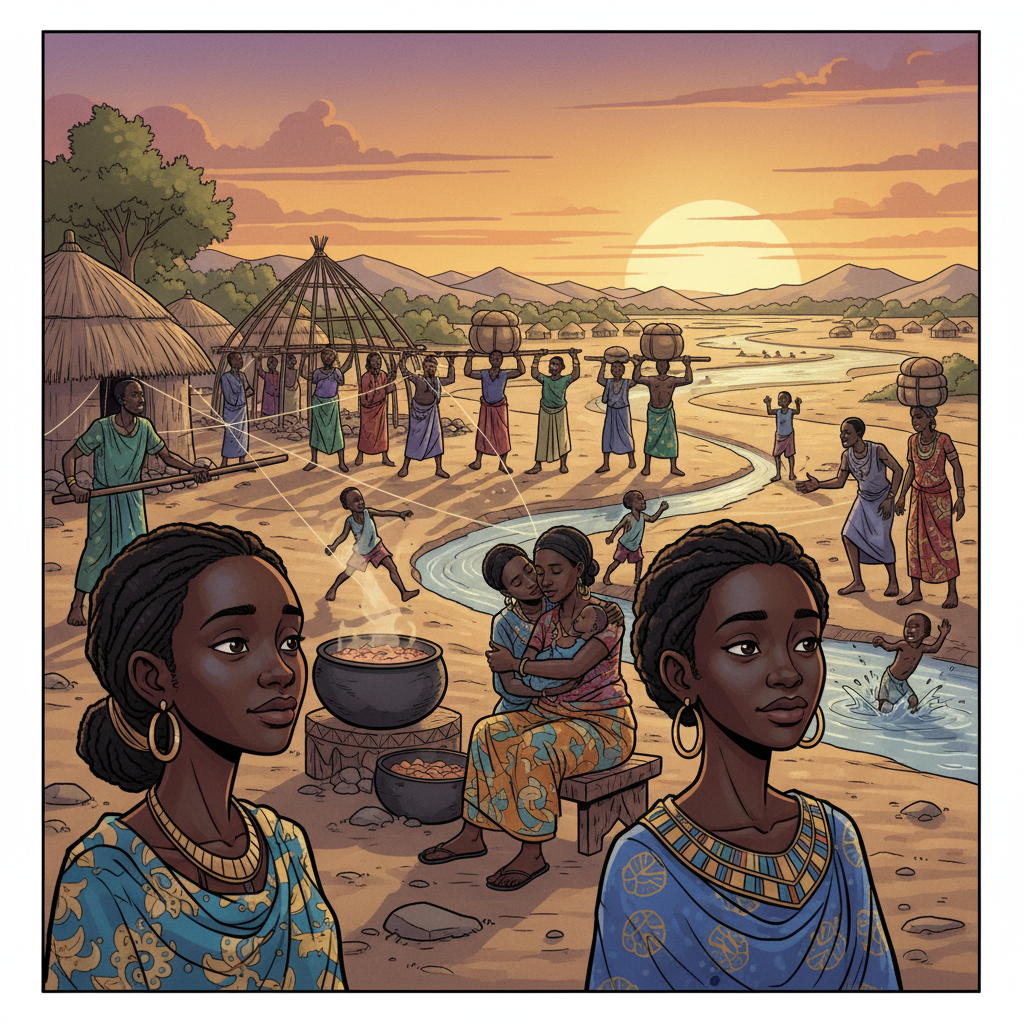
She also began to look at her village with a different perspective. She saw the intricate web of relationships, how families were interwoven, how neighbors supported each other through both joy and sorrow. People came and went, some moved for new opportunities, some returned after years away, yet the fabric of the community remained strong. It was a collective flow, a shared journey where individuals contributed their unique currents, enriching the whole. Folake observed how her mother, a woman of profound wisdom and resilience, embraced the comings and goings of family members, always maintaining an open heart and a welcoming home. Her mother was like the steadfast bank, providing a constant presence, a source of unwavering love that sustained them all. This realization brought a measure of peace to Folake’s troubled heart.

Folake started to consciously apply Mama Ife’s lesson to her own feelings. When pangs of loneliness for Adeola arose, she did not fight them. Instead, she acknowledged the feeling, allowed it to wash over her like a gentle wave, and then let it recede. She would recall a cherished memory of her sister, not with sadness for what was lost, but with gratitude for what had been shared. It was a subtle but profound shift. The river had taught her that holding on too tightly could lead to stagnation, but releasing did not mean forgetting or ceasing to care. It meant trusting in the enduring nature of connection, allowing love to find its own path, its own rhythm. This act of acceptance, of letting go and yet remaining, brought a sense of liberation she had not known before.
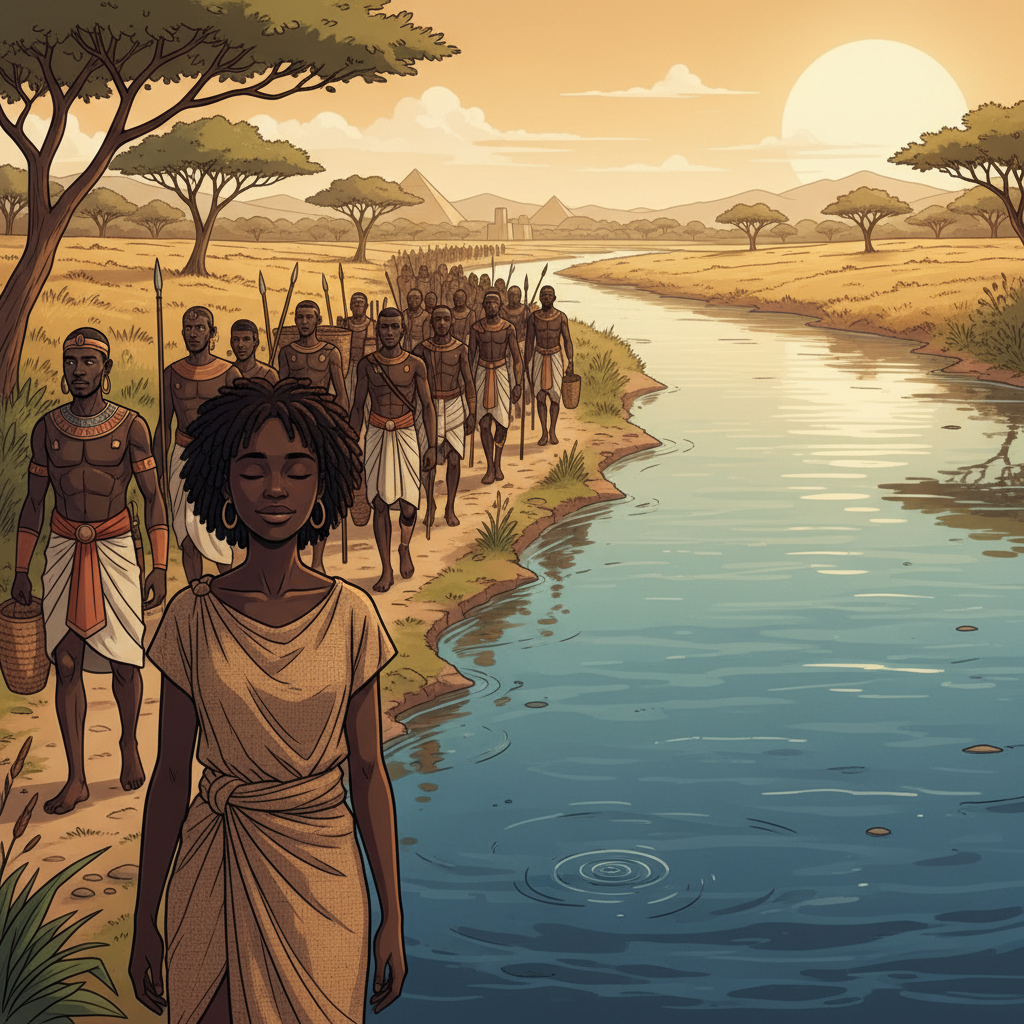
The Osun River, once a mirror for her sadness, now became a teacher of profound truths. Its constant, gentle murmur was a lullaby of acceptance, a reminder that life, like its waters, was meant to flow. Folake began to see the river not as something separate from her, but as a living, breathing entity that encompassed the very lessons she needed to learn. Its strength was not in its ability to contain, but in its capacity to release and renew. Its beauty was in its movement, its journey, its eternal promise of return. Folake felt herself becoming more like the river, open and receptive, yet grounded and strong. The quiet rhythm of its currents mirrored the growing tranquility within her own spirit, a serene calm that settled deep within her soul.
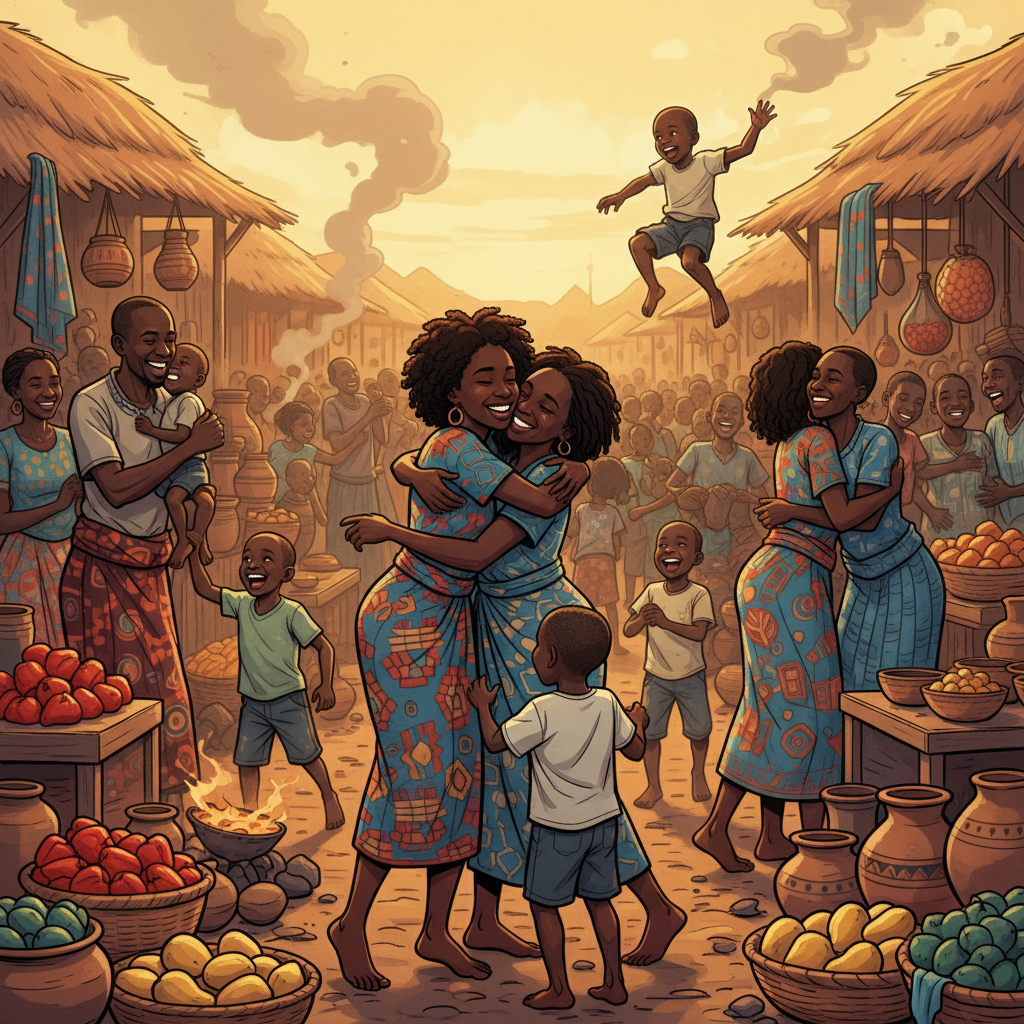
A lightness began to replace the heaviness in Folake’s heart. The vibrant colors of the market, the joyful shouts of children playing, the rich aroma of cooking food – all these elements of her daily life seemed brighter, more vivid. She found herself smiling more, engaging in conversations with a newfound ease. Her friends noticed the change, remarking on her renewed spirit. She still missed Adeola, but the ache was no longer a consuming fire; it was a gentle warmth, a quiet memory. She understood that absence did not diminish love, but rather, it refined it, distilling it to its purest essence. Her love for Adeola was now a deep, clear pool, not a turbulent stream, reflecting the tranquility she found within herself. She was learning to embrace the flow, to trust in the unseen connections that bound them.

Folake found joy in remembering the shared laughter, the secrets whispered under the moonlight, the comforting presence of her sister. These memories were not ghosts of what was lost, but vibrant, living parts of her identity, cherished and integrated into her present. She understood that Adeola's journey was her own, a path she must walk, and that Folake's role was not to hold her back, but to support her, even from afar. The love they shared was not bound by proximity, but by an intangible thread that stretched across villages and beyond physical sight. She realized that true affection did not imprison, but liberated; it did not demand, but offered. This profound understanding allowed her to hold Adeola in her heart with a gentle openness, rather than with a desperate, clinging grip.
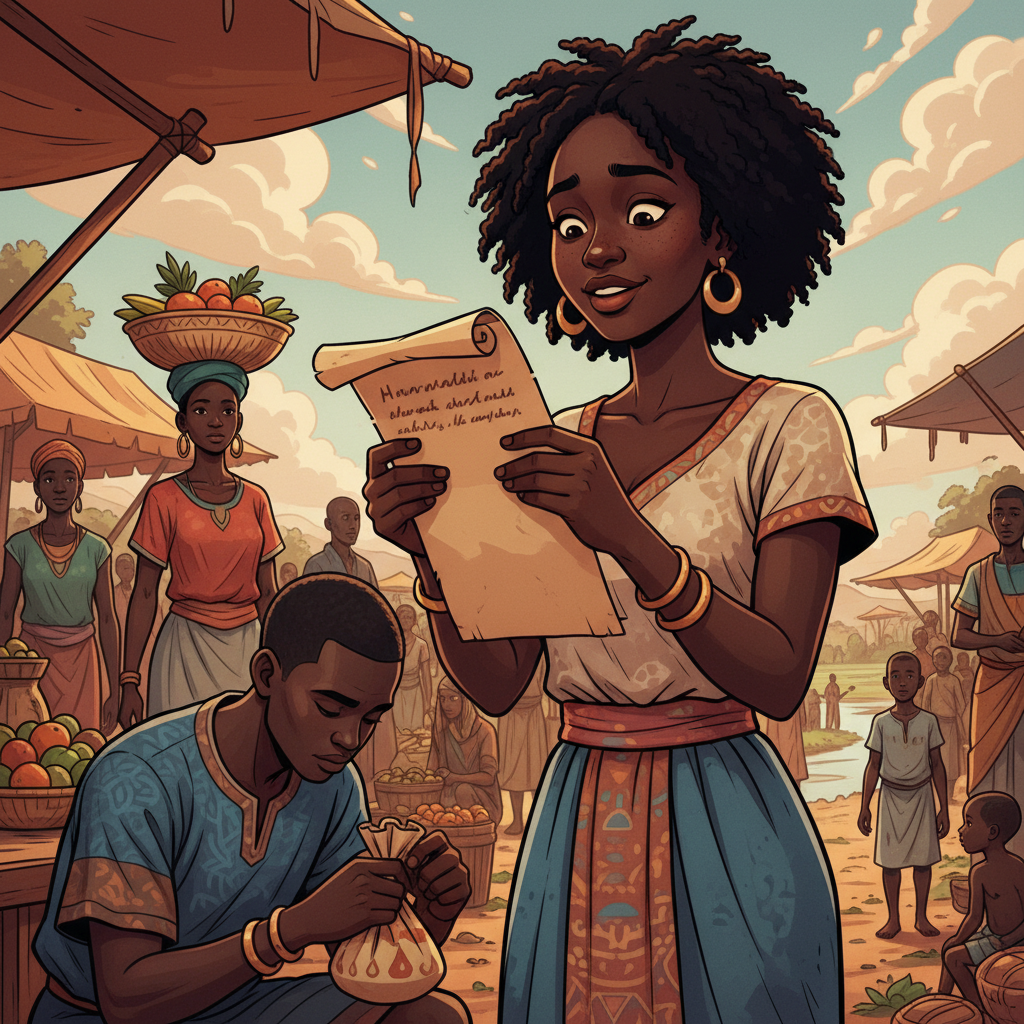
One market day, a messenger arrived from Adeola’s new village, carrying a letter. Folake’s heart fluttered with a mix of excitement and trepidation. She carefully unrolled the parchment, her dark eyes scanning the familiar script. Adeola wrote of her new home, her kind husband, and the new friendships she was forging. She described the bustling market, the fertile fields, and the beautiful sunrises over a different landscape. Yet, interspersed with her joyful accounts, there were subtle hints of nostalgia, a quiet longing for the familiar sights and sounds of her birth village, and especially for her family. “I miss you, my dear sister,” Adeola had written towards the end, “and I often think of our days by the Osun, a place I carry always in my heart.” Folake felt a pang of recognition, understanding her sister’s journey mirrored her own.

Folake read the letter again, this time with a profound sense of peace. Adeola’s longing was not a sign of unhappiness, but a natural human connection to what was cherished. It was the return current of the river, the inherent pull towards the source. Folake understood now that her sister did not need to be physically present for their bond to remain strong and vibrant. She could be the steady bank to which Adeola’s thoughts would return, the welcoming haven that always existed in her memory and her heart. This revelation brought an even deeper sense of illumination. The sadness that once clouded her vision had dissipated, replaced by a clear, unburdened perspective. She realized that by letting Adeola go, she had, in fact, allowed their love to grow, to encompass a wider, richer landscape of connection.

Returning to the Osun, Folake sat by its banks, listening to its ceaseless song. It seemed to sing of departure and return, of separation and reunion, a melodious rhythm that echoed the very pulse of life. The river’s wisdom had become her own. It did not hold, yet it remained. It gave freely, and in its generosity, it sustained all. Folake understood that her role was not to be a dam, but a welcoming shore, a constant presence that offered comfort and connection without demanding possession. She was learning to embody the spirit of the river, a quiet strength that embraced the flow of life, allowing people to come and go, knowing that true bonds were not broken by distance or time, but were woven into the very fabric of existence, waiting for the opportune moment to reconnect.
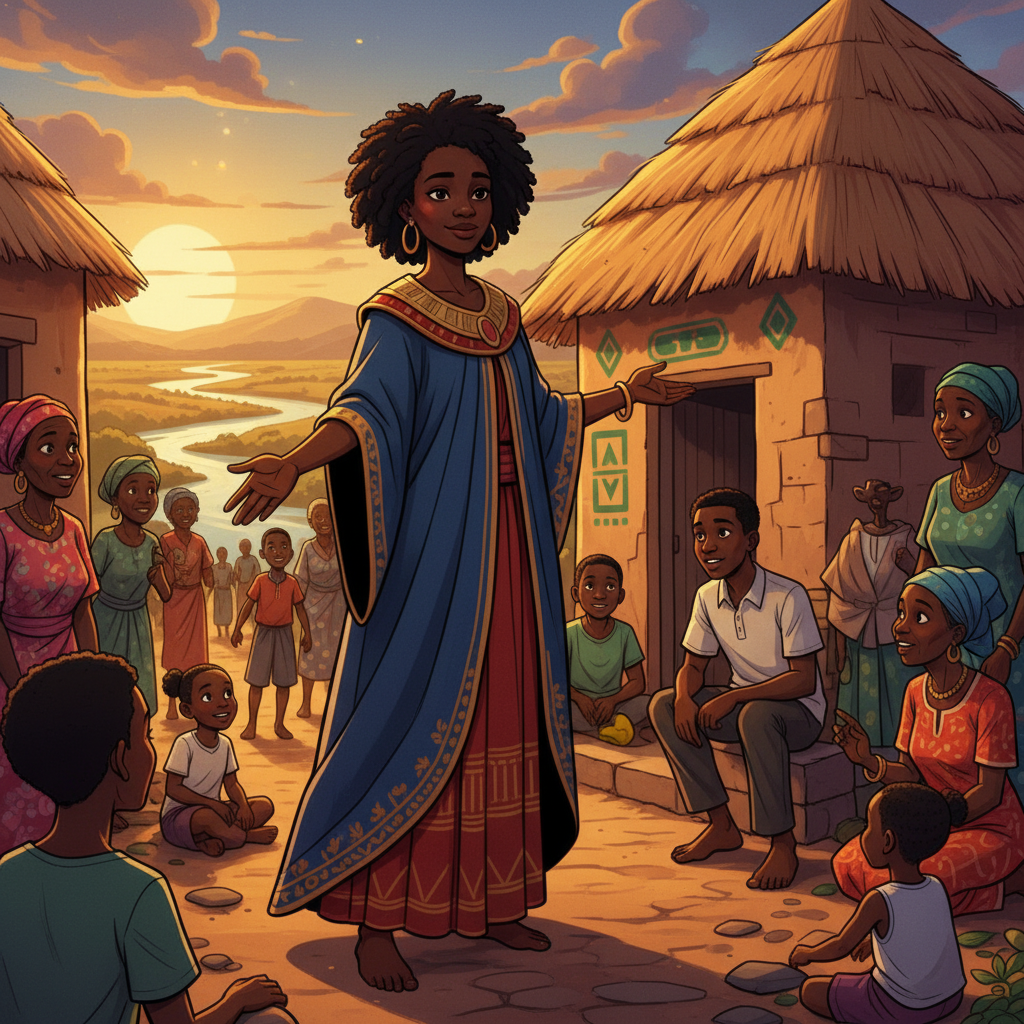
With this new resolve, Folake dedicated herself to being that welcoming place. Her home became a hub of warmth and hospitality. She listened more intently to her friends, offered comfort to those who were troubled, and shared her laughter freely. She became a source of quiet strength in her community, much like Mama Ife. She understood that her capacity for love was not diminished by letting go, but expanded. She did not cling to people, but rather, she offered them a stable, unwavering presence, a refuge they knew they could always find. The river’s teaching had transformed her from a girl consumed by personal sorrow into a young woman who understood the deeper, interconnected currents of life and love, ready to be a beacon for others.

Folake began to share Mama Ife’s wisdom with her closest friends, explaining the profound lesson of the river. She spoke of the importance of allowing loved ones their freedom, of being the steadfast earth that draws them back, rather than the tight net that attempts to capture. Her words resonated deeply within their hearts, offering a fresh perspective on their own relationships. She understood that true strength lay in acceptance and in the unwavering belief that connections, when nurtured with genuine affection, would always find a way to flourish, even across distances. Her empathy grew, and she became a confidante for many, guiding them gently towards understanding the balance between holding dear and letting flow, a delicate dance that enriched all human connections.
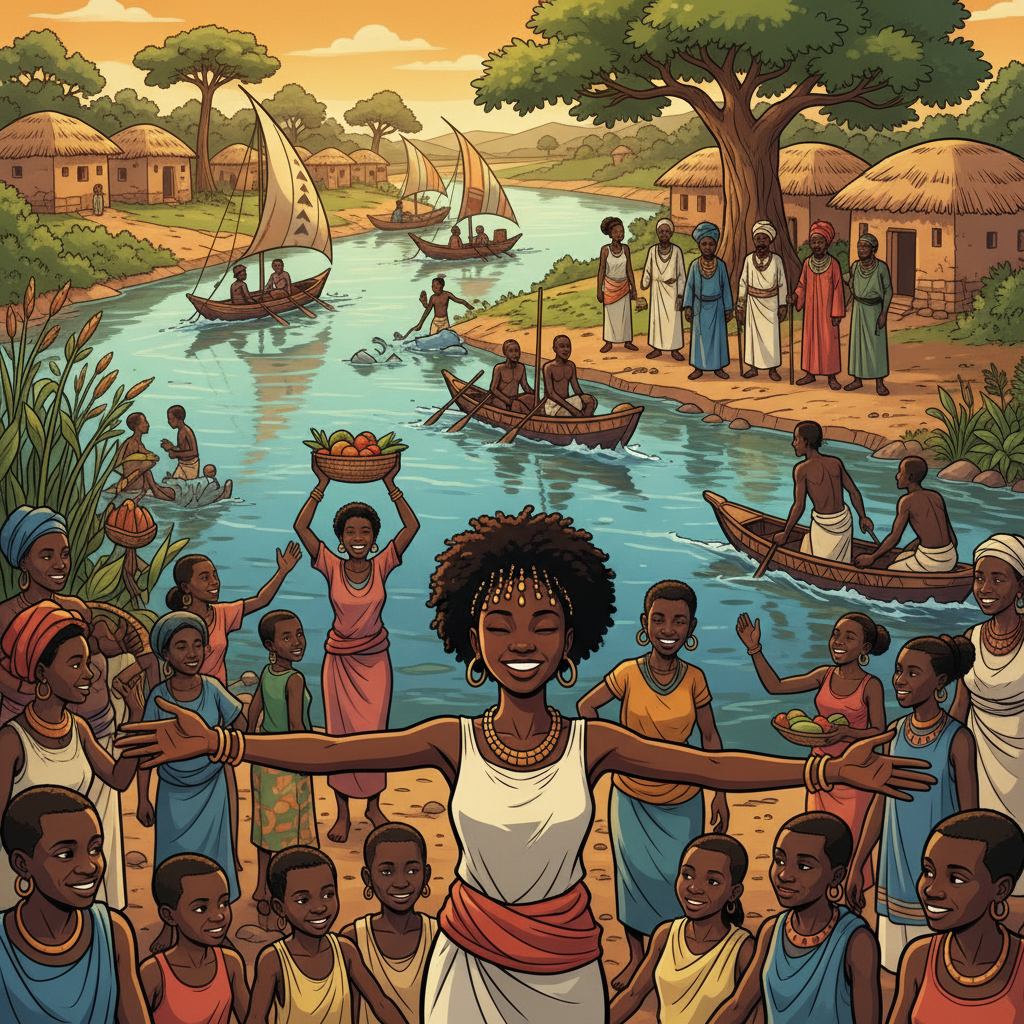
The community itself, Folake realized, was like the Osun River, a collective of individual streams flowing together. People moved, changed, and grew, but the spirit of their shared village, their interconnectedness, remained a constant force. Each person was a unique current, contributing to the greater flow. And just as the river’s banks guided its path, the elders and traditions provided the framework for their communal life, ensuring stability amidst change. Folake found a profound sense of belonging in this realization, understanding that she was a vital part of this perpetual flow, both a giver and a receiver of its sustaining energy. She was no longer a solitary figure mourning a loss, but an active participant in the ongoing, vibrant dance of life and connection.
The seasons turned, and the anticipation of Adeola’s first visit back home grew. Folake no longer felt the pang of dread she once associated with goodbyes. Instead, her heart swelled with a joyful eagerness, knowing that Adeola would return to a welcoming home, a place of unwavering love, and a sister who understood the true nature of their bond. She prepared Adeola’s favorite meals, cleaned their shared sleeping mats, and wove a new basket, her hands humming with happiness. There was no anxiety about Adeola leaving again; only pure, unadulterated joy for the impending reunion. Folake knew that their connection was not a fragile thread that could snap with distance, but a strong, resilient current, flowing ever onward, always ready to merge and rejoice in shared presence.

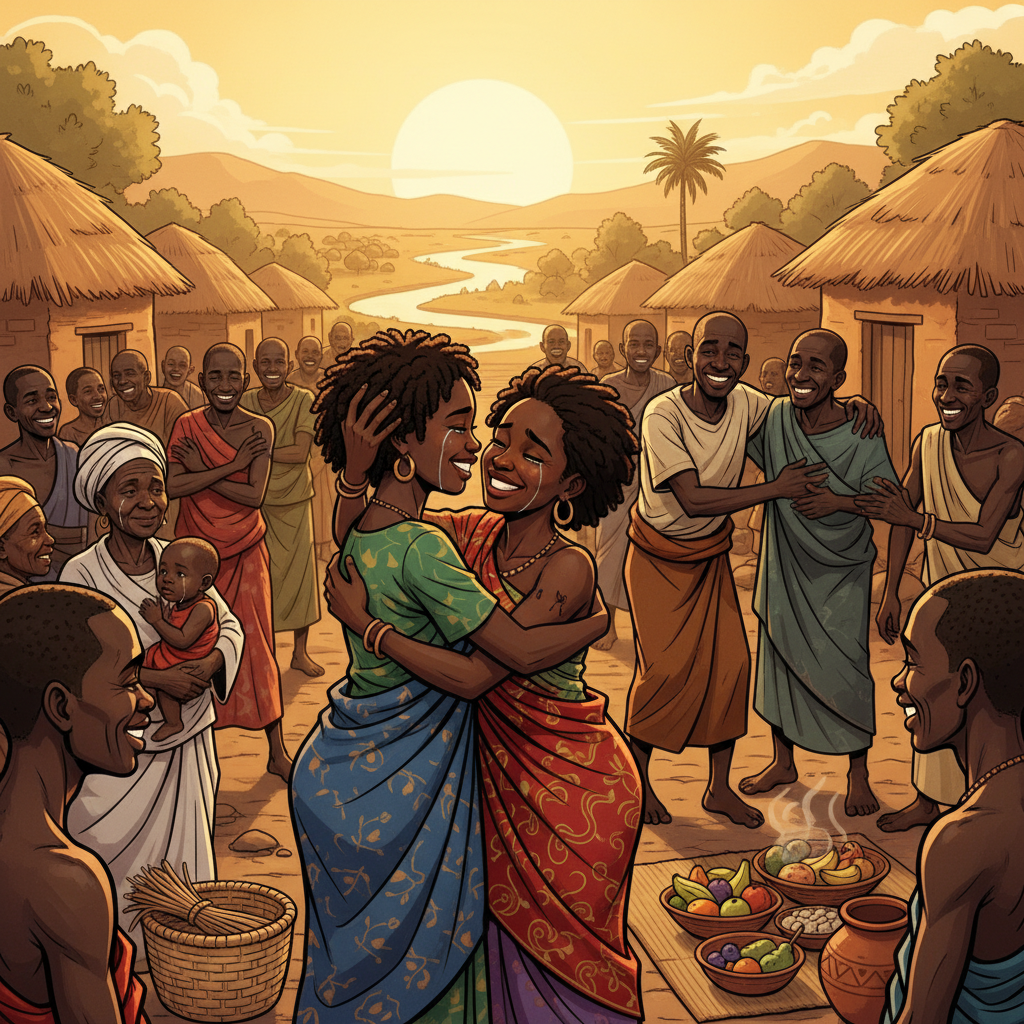
Finally, the day came when Adeola’s familiar figure appeared on the path leading to the village. Folake ran to meet her, her heart light and free. Their embrace was long and effusive, filled not with the sorrow of past farewells, but with the pure, unburdened joy of reunion. Adeola, her skin glowing, laughed, “Oh, Folake, my dear sister, I have missed you so!” Folake smiled, her eyes reflecting the wisdom of the Osun. “And I you, Adeola. But our love, like the river, flows ever onward, always connected, always returning.” Their conversation flowed easily, sharing stories of their separate lives, but with an underlying current of shared understanding. Adeola saw a new strength and serenity in her sister, a radiant peace that transformed her. The reunion was not merely a coming together, but a beautiful testament to growth.
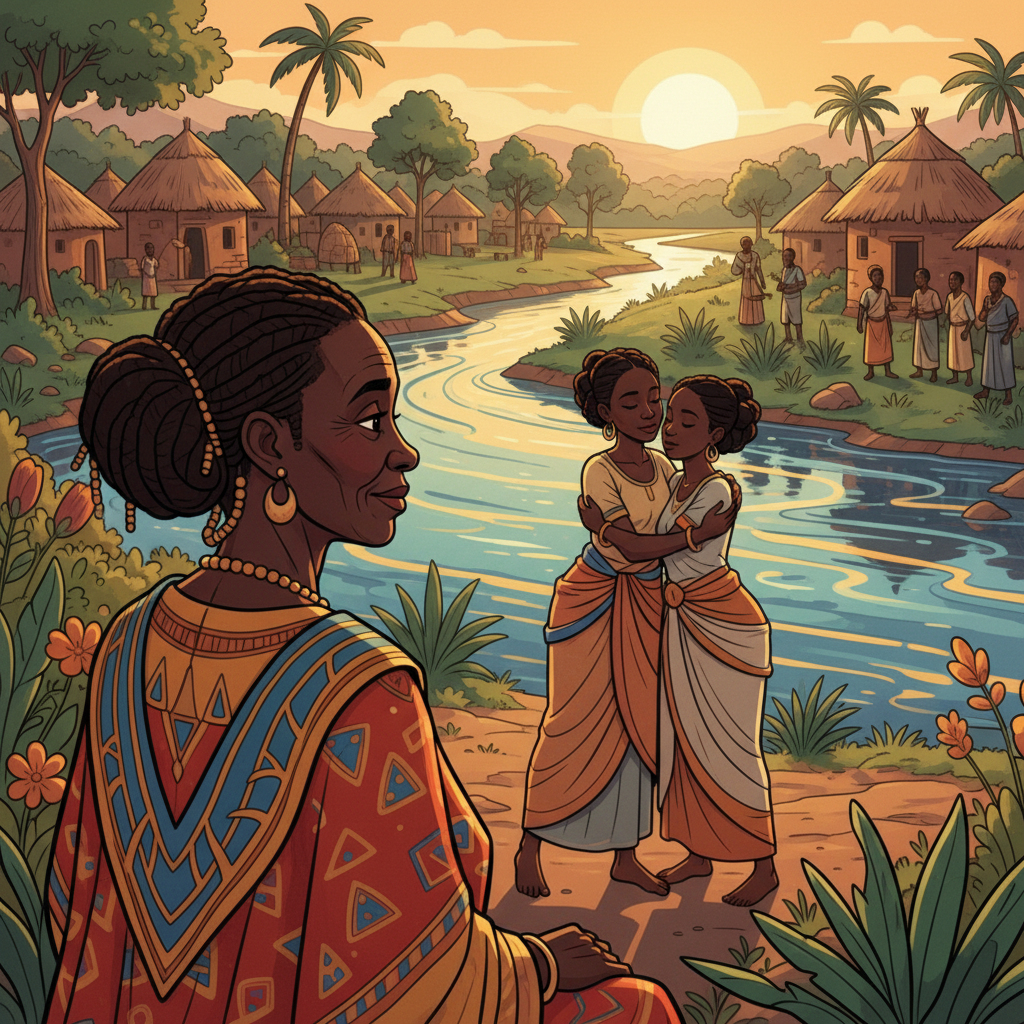
Mama Ife watched from a distance, her eyes, dark and knowing, observing the sisters’ reunion by the river. She saw the profound understanding that now radiated from Folake, a quiet strength that spoke volumes. The young woman had truly embraced the lesson of the Osun. The river had taught her that love did not mean possession, but rather, it was the unwavering space of return. It was the constant, accepting bank where all currents, no matter how far they traveled, would eventually find their way back, refreshed and renewed. Folake now understood that to love was not to hold onto the water, but to be the river itself, a source of life and connection that flowed eternally, inviting all its precious droplets to return to its nurturing embrace whenever they wished, free and unburdened.
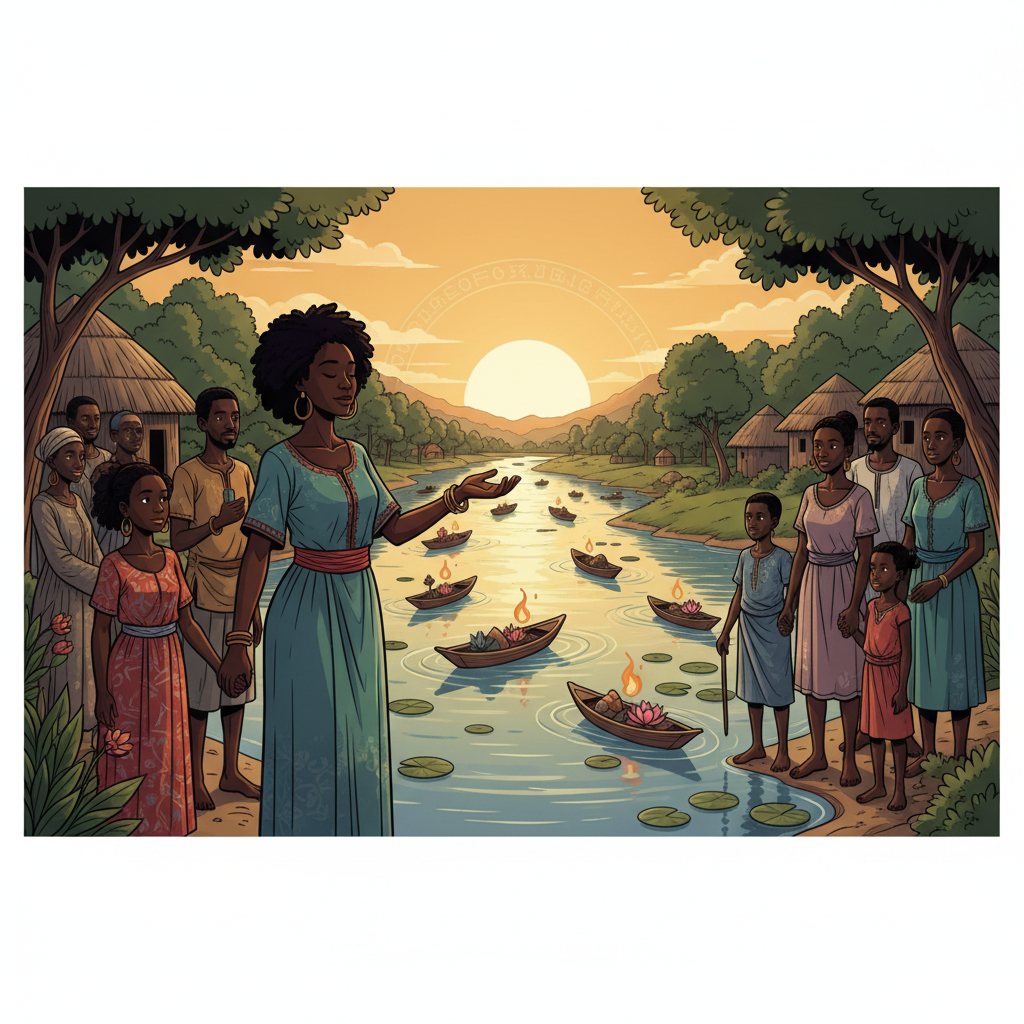
And so, Folake became known, quietly, as “The River Wife” – not a wife to the river itself, but one who embodied its profound wisdom in her relationships. She was the anchor, the steadfast bank, the welcoming haven for all who journeyed through her life. Her heart, once heavy with the fear of loss, now flowed with boundless love and acceptance. She understood that life was a continuous cycle of holding and releasing, of ebb and flow, and that true connection thrived not in static possession, but in dynamic movement and the promise of return. Her legacy was not in what she kept, but in how freely she loved, how openly she welcomed, and how deeply she understood that the most enduring bonds were those that allowed freedom, always providing a beautiful, constant place to which every beloved current could joyfully return.