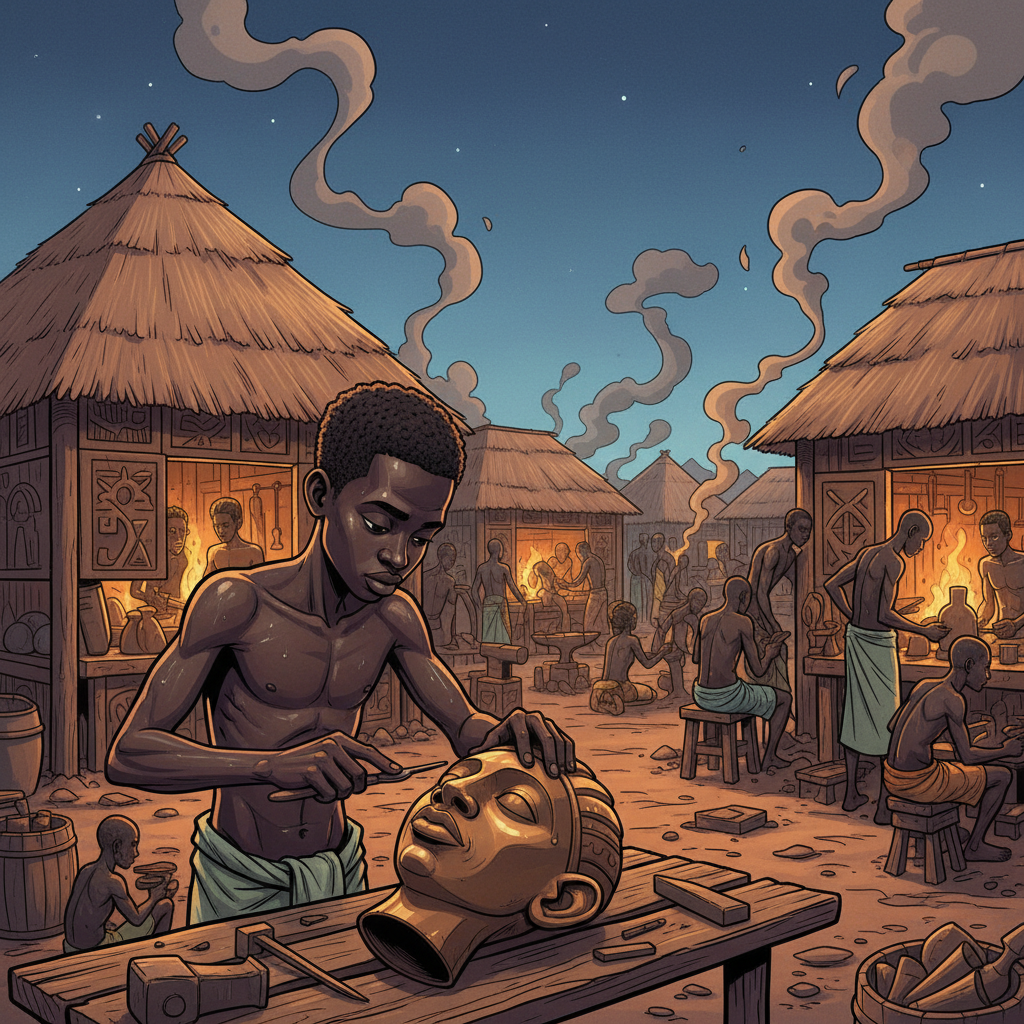
The air in the Benin bronze-casting guild quarter hummed with a metallic song. Osaze, at fourteen cycles, inhaled the familiar scent of woodsmoke and molten metal. His dark brown skin gleamed with a fine sheen of sweat as he meticulously filed the surface of a bronze head. Months of painstaking work, countless hours shaping the clay model, then the delicate wax, and finally, the arduous casting process, had brought him to this moment. The piece, a regal Oba's head, sat on his workbench, reflecting the flickering lamplight. Its features were strong, its gaze distant, embodying the spirit of his ancestors. He felt a profound sense of accomplishment, a deep satisfaction that settled in his chest like a warm stone. This was more than just a casting; it was a piece of his soul, poured into the enduring metal.
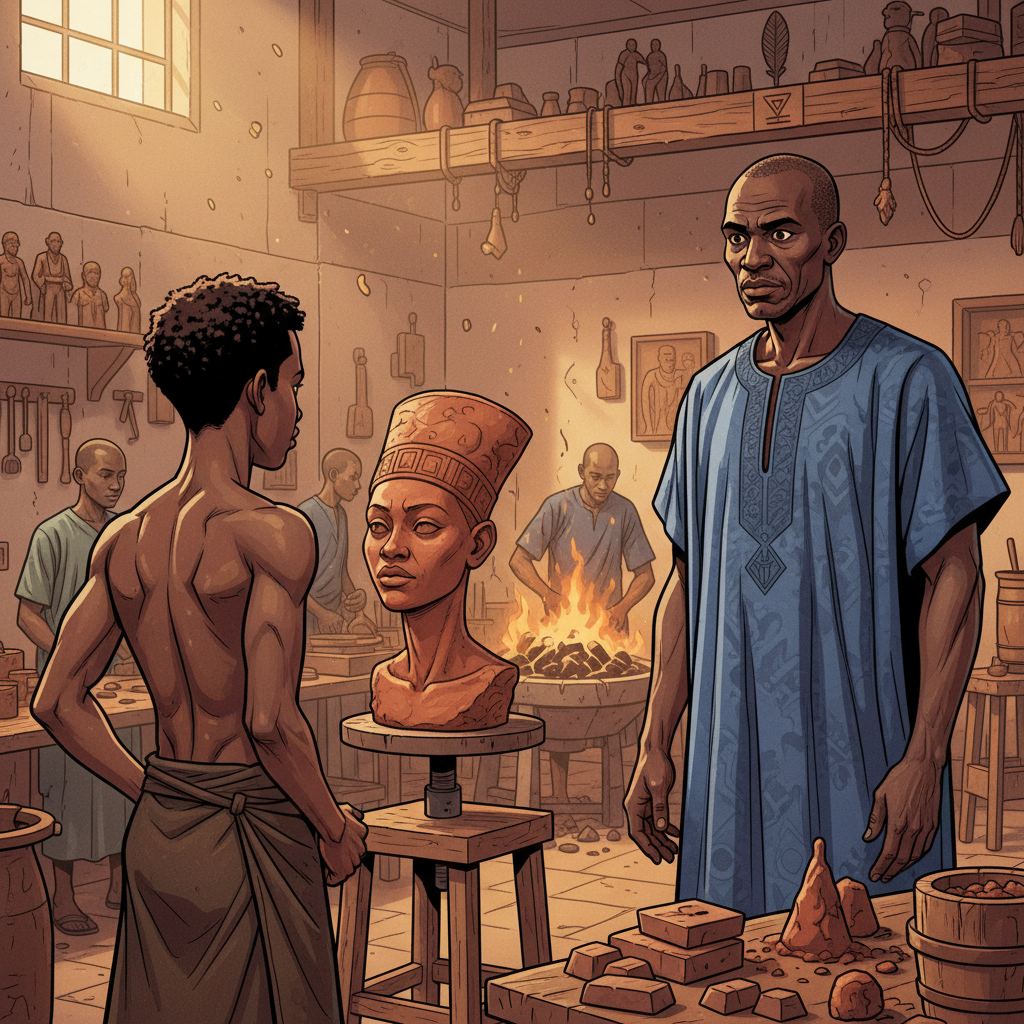
Master Obafemi, a man whose hands were as strong and gnarled as ancient Iroko roots, watched from across the workshop. His eyes, usually crinkled with good humor, held a serious intensity. Osaze’s heart beat a little faster. He had worked tirelessly, sometimes staying late into the twilight, long after the other apprentices had departed. He had poured every ounce of his burgeoning skill into this piece, striving for the perfection Master Obafemi always demanded. The Maat principle of balance, of giving one's best in all things, had guided his every stroke. Now, the moment of judgment was at hand. He wiped his hands on his simple apprentice wrap, his palms clammy with anticipation.
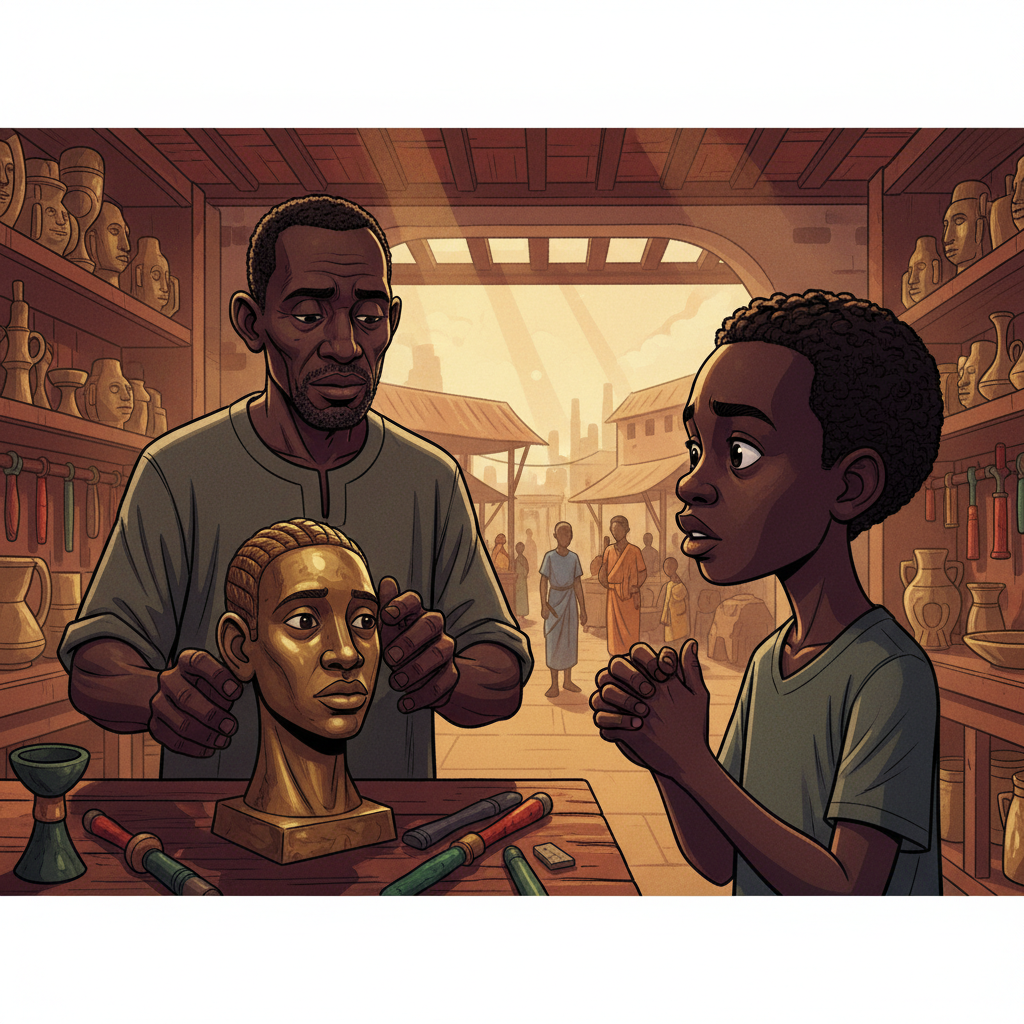
A thick silence descended upon the workshop, broken only by the distant sounds of market traders. Master Obafemi moved slowly, deliberately, approaching the workbench. His shadow fell over the bronze head, making the polished surface momentarily dim. Osaze held his breath, his gaze fixed on the master’s face. He tried to read the subtle lines around Obafemi’s eyes, searching for a hint of approval, a flicker of pride. But the master's expression remained unreadable, a mask of deep concentration. Osaze's mind raced, replaying every detail of his work, searching for any flaw he might have missed. He felt a nervous flutter in his stomach.
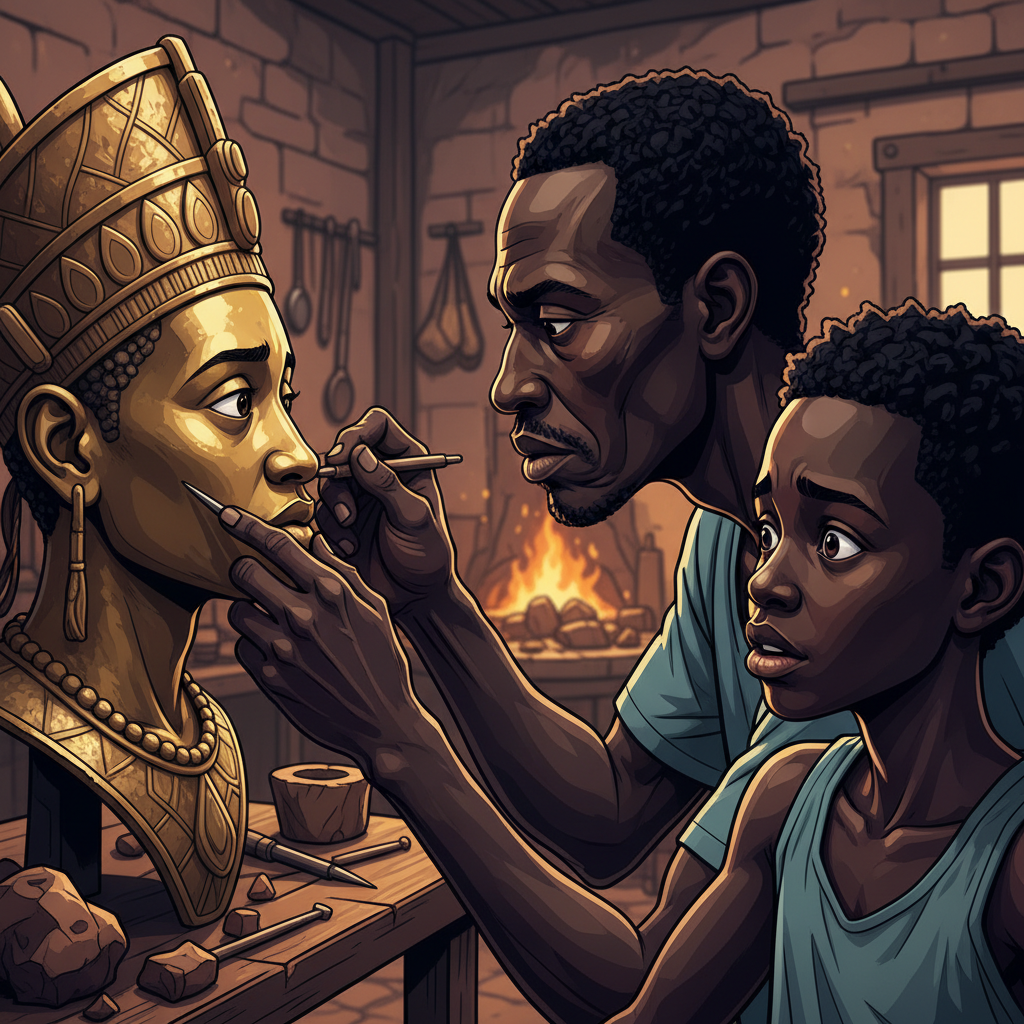
Master Obafemi reached out, his calloused fingers tracing the smooth curve of the bronze cheek. He tilted the head, examining it from different angles, his brow furrowed. He picked up a small carving tool and gently prodded the intricate details of the Oba’s crown. The silence stretched, growing heavier with each passing second. Osaze’s shoulders tensed. He imagined every possible imperfection, every tiny bubble or uneven surface. Was the patina not rich enough? Had he captured the Oba's dignity fully? His internal critic, loud and relentless, began to whisper doubts in his ear.
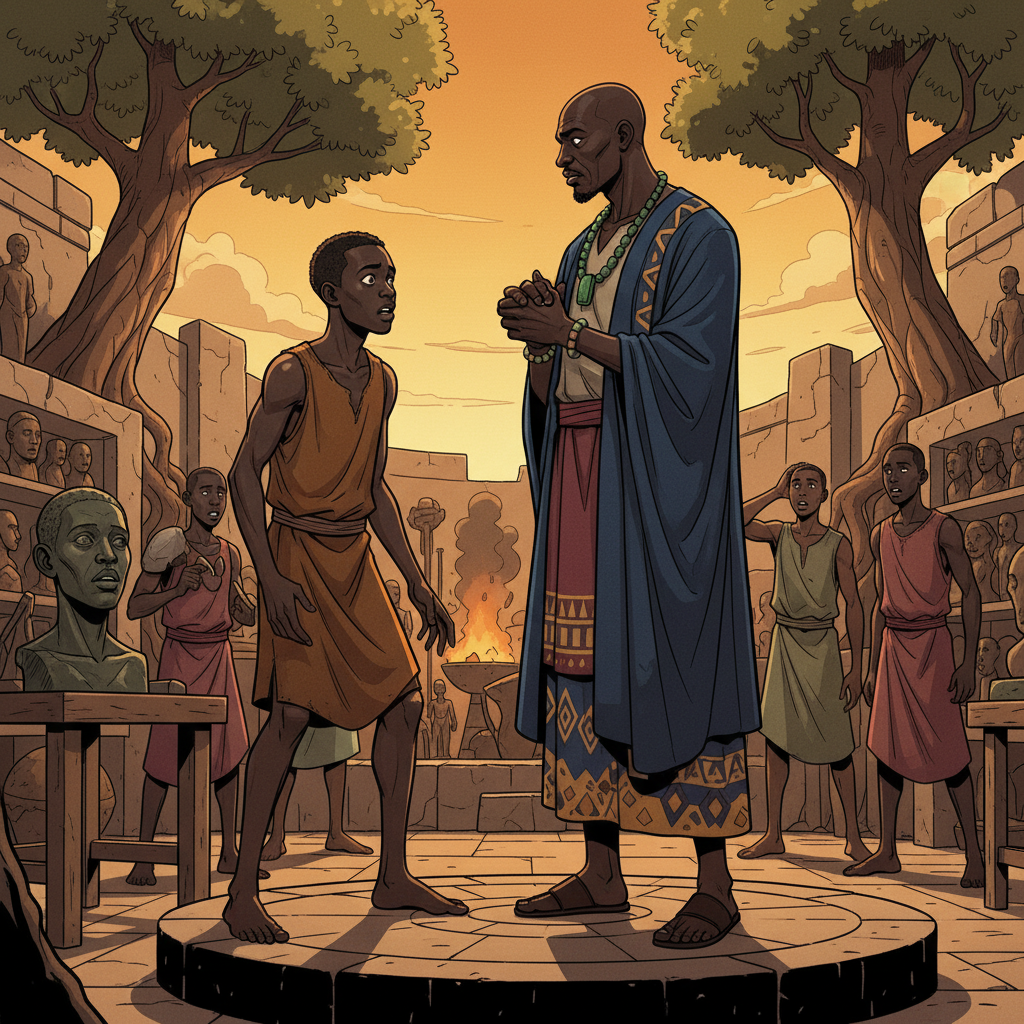
Finally, Master Obafemi straightened up. His deep voice, usually warm and resonant, was low and serious. “Osaze,” he began, his eyes meeting Osaze’s, “This… this is not right.” The words struck Osaze like a physical blow. The air rushed out of his lungs. Not right? After all his effort? A cold wave of shame washed over him, quickly followed by a searing heat of fury. His vision narrowed, blurring at the edges. The world seemed to tilt on its axis. All the late nights, all the sacrifices, all the meticulous attention to detail – for what? For these dismissive, crushing words?
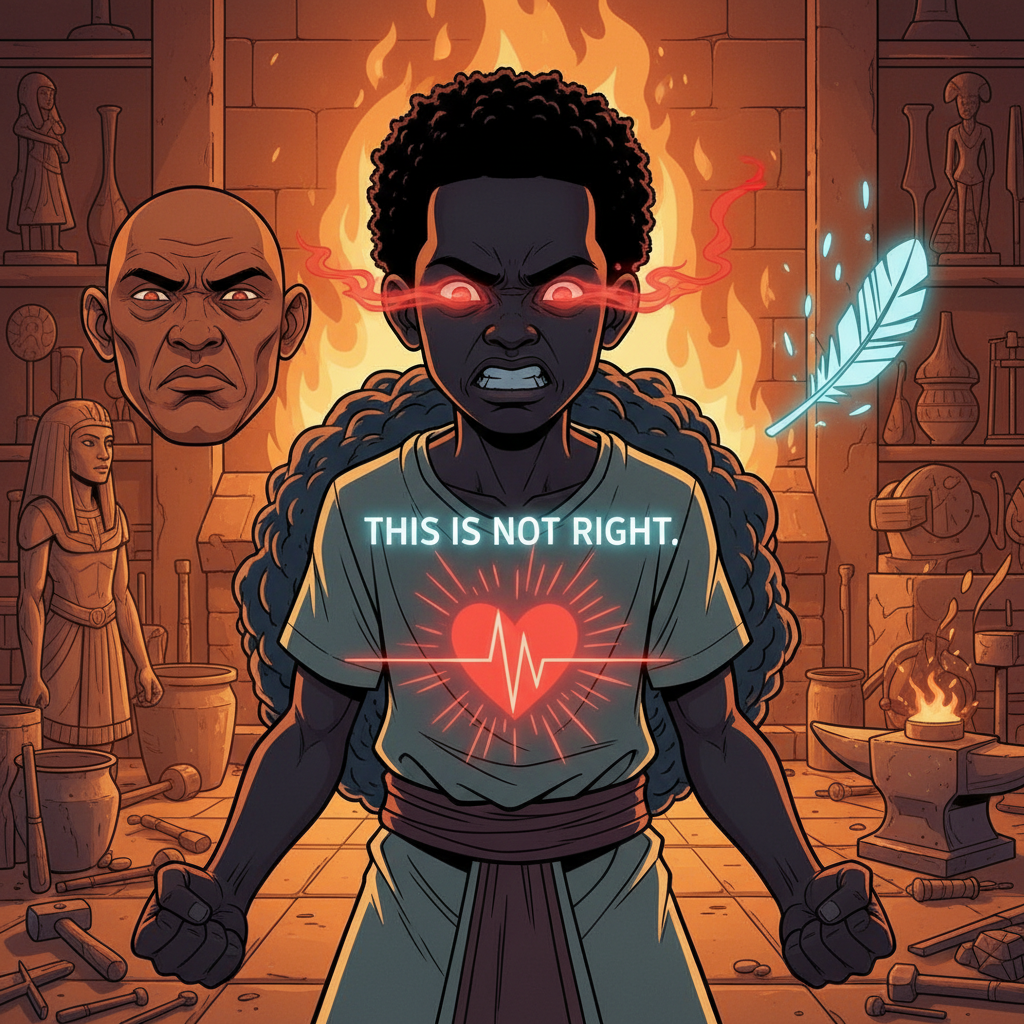
A red haze descended over Osaze’s eyes. His heart hammered against his ribs, a frantic drumbeat of anger and humiliation. He saw only the master’s stern face, heard only those devastating words, “This is not right.” The Maat principle of justice, of fairness, felt utterly abandoned. Where was the justice in pouring his soul into a piece only to have it dismissed so easily? He felt the heavy weight of his failure, a crushing burden that stole his breath. He clenched his fists, knuckles white, a tremor running through his body as his emotions threatened to overwhelm him.
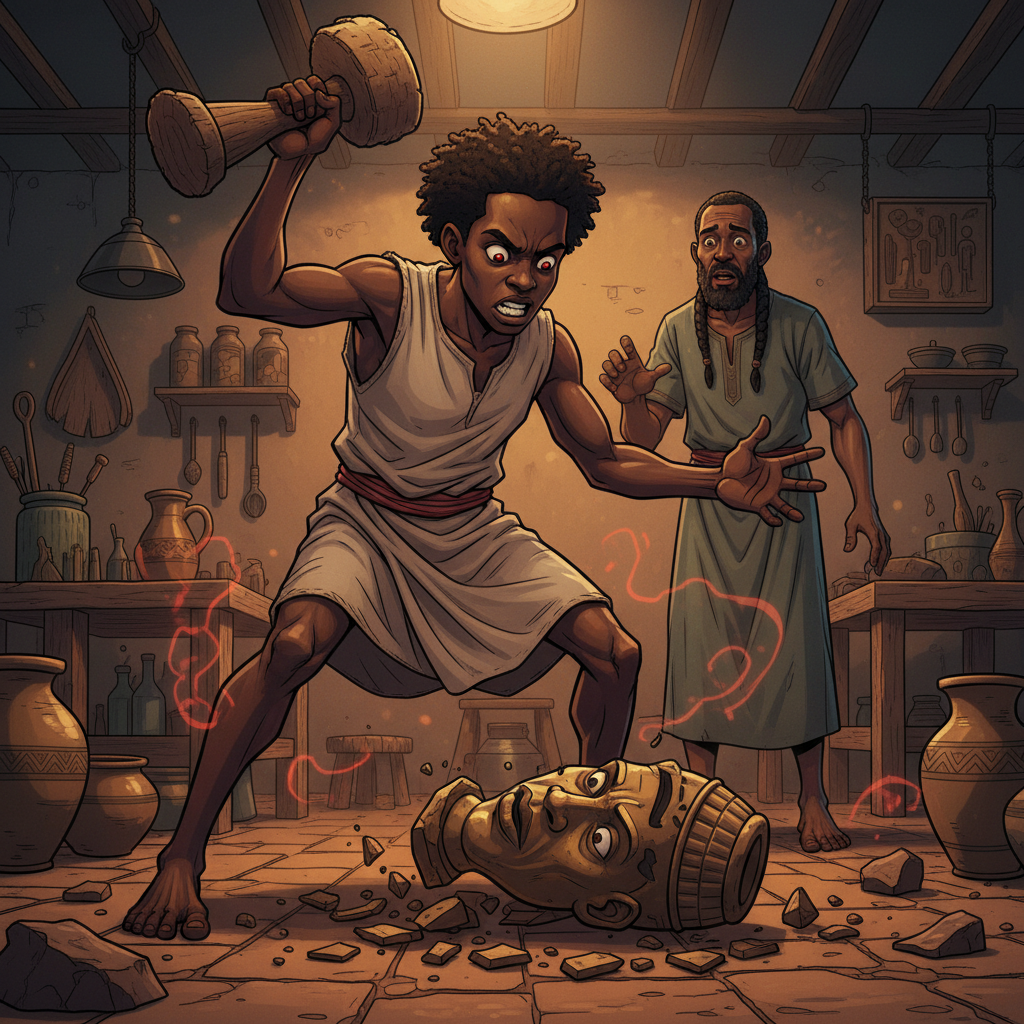
His mind, clouded by an uncontrolled burst of isfet, perceived a grave insult, a deep unfairness. He had been so proud, so certain of his achievement. Now, in an instant, it felt worthless. He couldn't bear to look at the bronze head, this symbol of his perceived failure. He couldn’t bear to face the master’s disappointment, or what he imagined was the master’s judgment. A primal urge, born of intense frustration and pain, took hold. He needed to erase the evidence, to destroy the source of his shame before the master could utter another word.
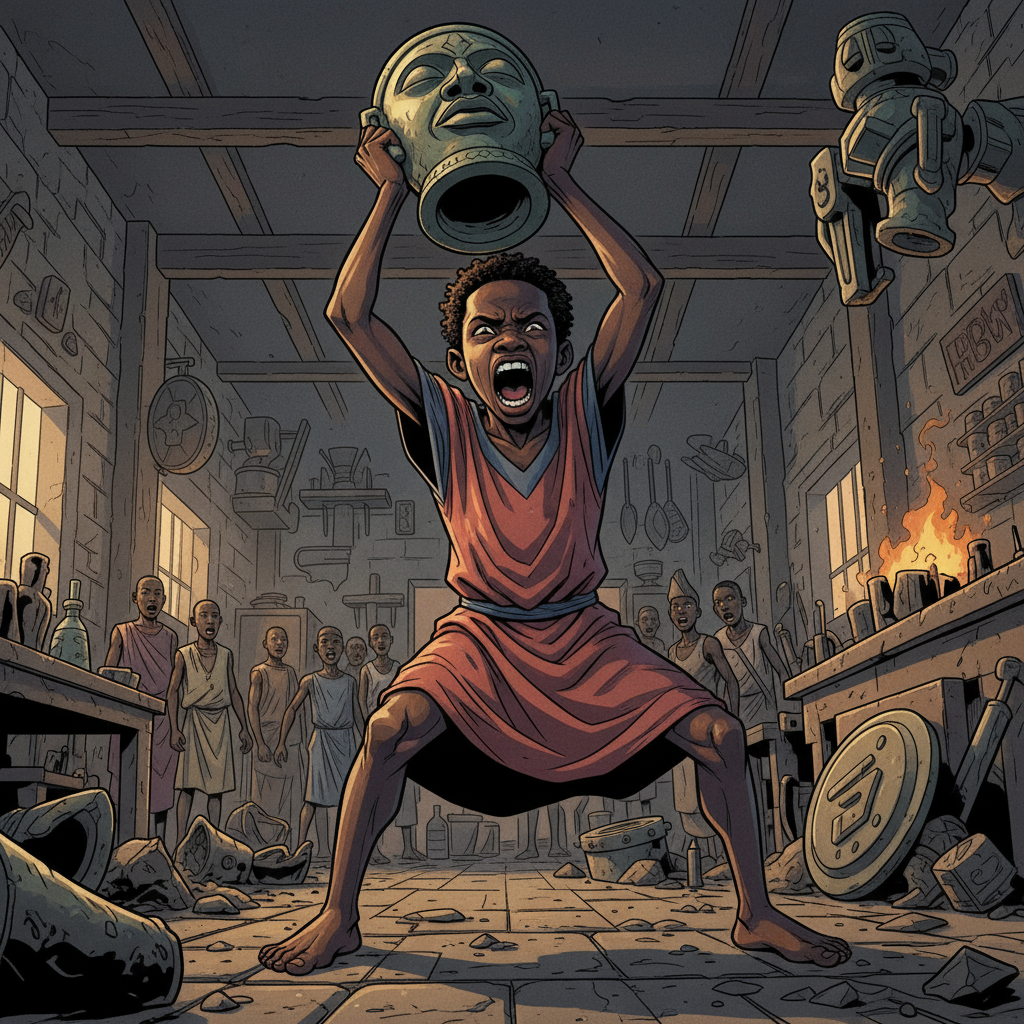
Without a moment’s thought, without allowing himself even a single breath to consider his actions, Osaze grabbed the bronze head. Its cold, heavy surface felt alien in his hands. With a guttural cry that ripped from his throat, a sound of pure, unadulterated anguish, he lifted the magnificent piece high above his head. He brought it down with all the force of his youthful rage, smashing it against the hard, stone floor of the workshop. A sickening crack echoed through the space, followed by the clatter of bronze fragments scattering everywhere.
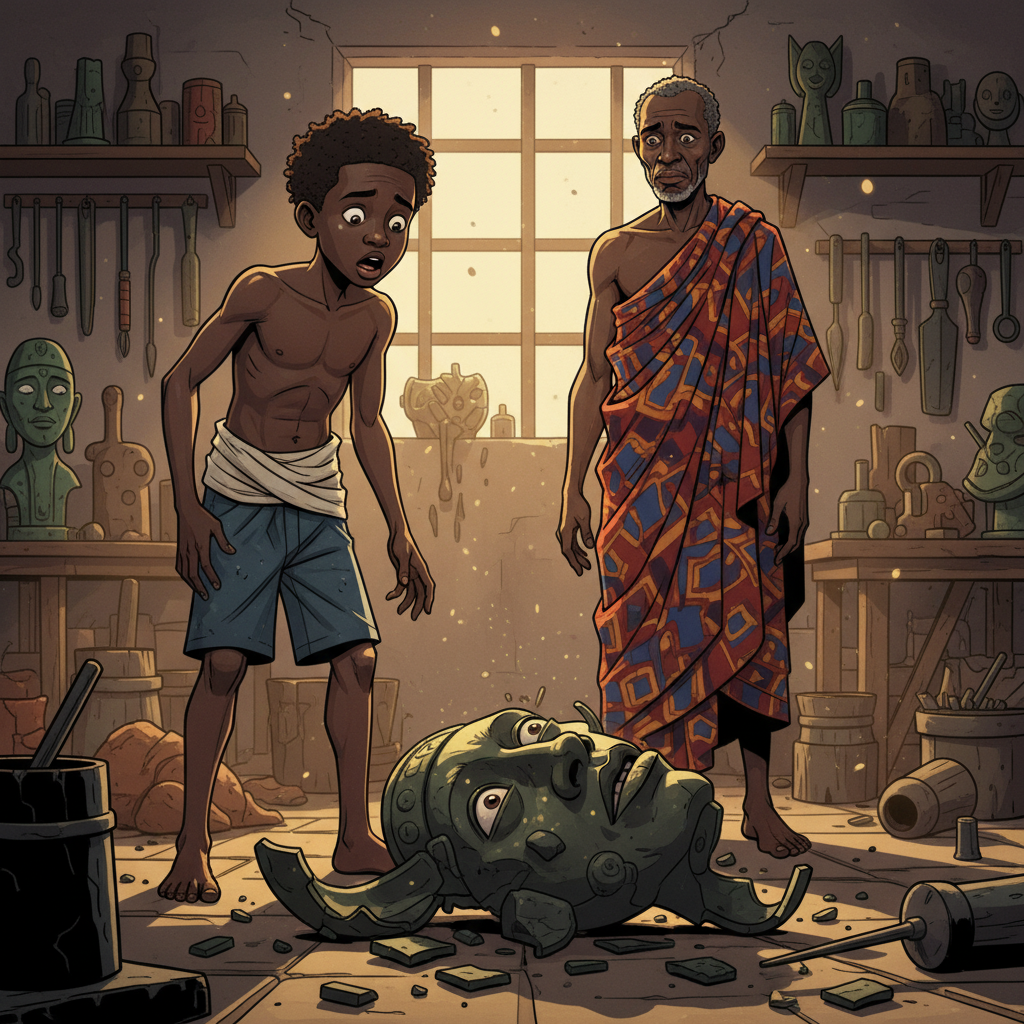
The silence that followed was even more profound than before. It was a shocked, echoing silence, filled with the dust motes dancing in the shafts of sunlight. Osaze stood panting, his chest heaving, his eyes wide and wild. The bronze head lay shattered, its once proud features now twisted and broken, a testament to his impulsive fury. He looked at the pieces, then at Master Obafemi. The master stood motionless, his face etched with something Osaze couldn’t quite decipher – not anger, but a deep, profound sadness.
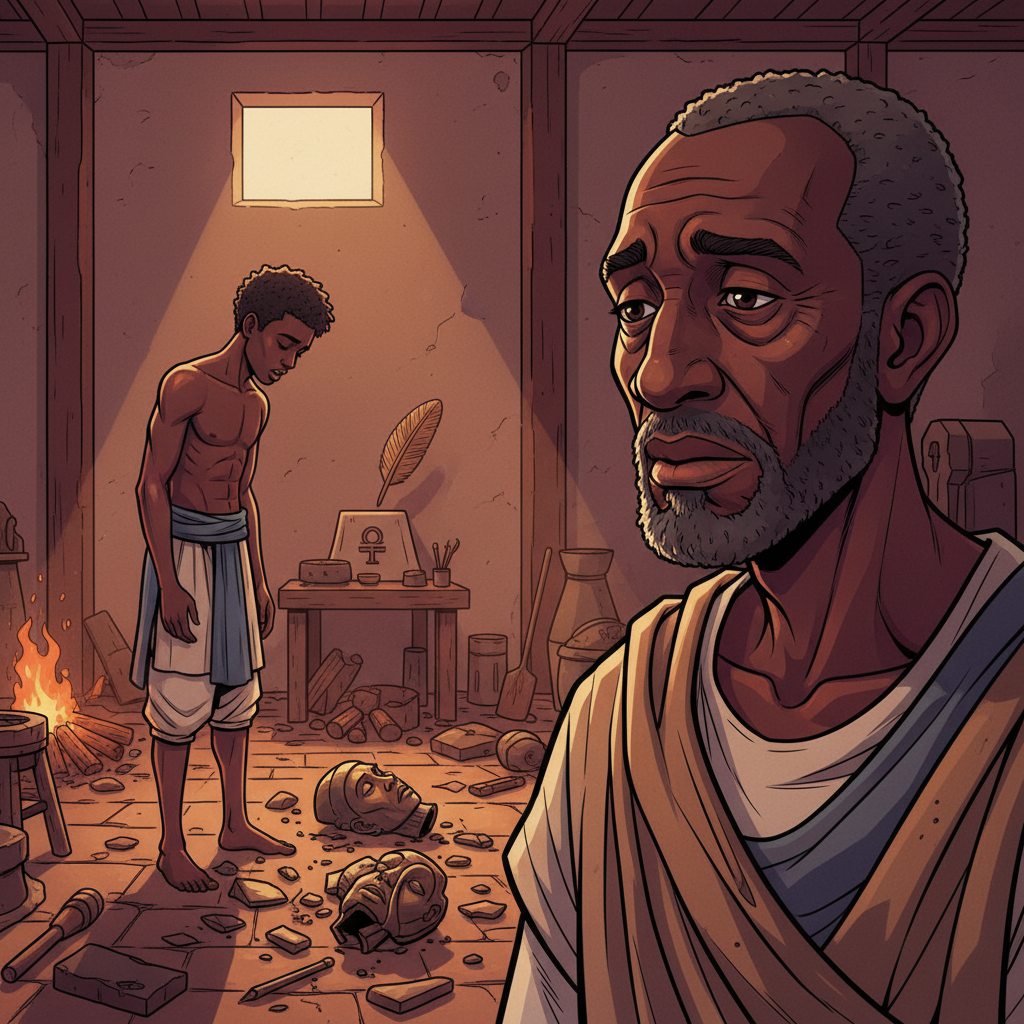
Osaze's rage, having spent itself in that violent act, suddenly evaporated, leaving behind a cold, hollow emptiness. He felt a chilling realization creep over him, an icy finger tracing down his spine. What had he done? The broken pieces on the floor seemed to mock him, reflecting his folly. His gaze fell upon the master’s face again, and he saw not judgment, but a sorrow that twisted his own gut. He had destroyed something beautiful, something he had painstakingly created, in a fit of uncontrolled emotion. The Maat of his inner self felt completely out of balance.
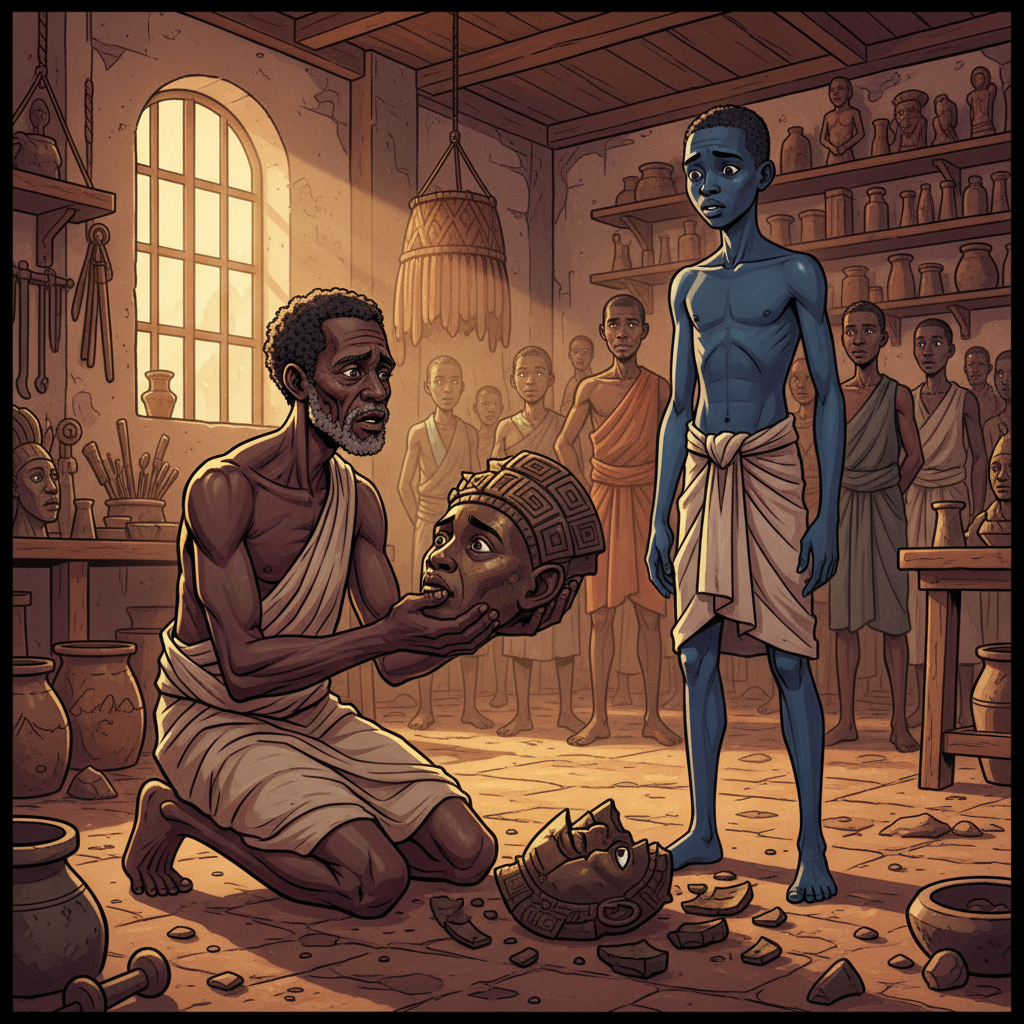
“Osaze,” Master Obafemi finally said, his voice soft, almost a whisper, “What have you done?” His words were not a question, but a statement of deep regret. He slowly bent down, his ancient hands carefully picking up a large fragment of the shattered head. It was the section of the Oba’s brow, still bearing the intricate patterns of the headdress. The broken edge gleamed sharply in the light. Osaze watched him, frozen, unable to move, unable to speak, the weight of his actions pressing down on him.
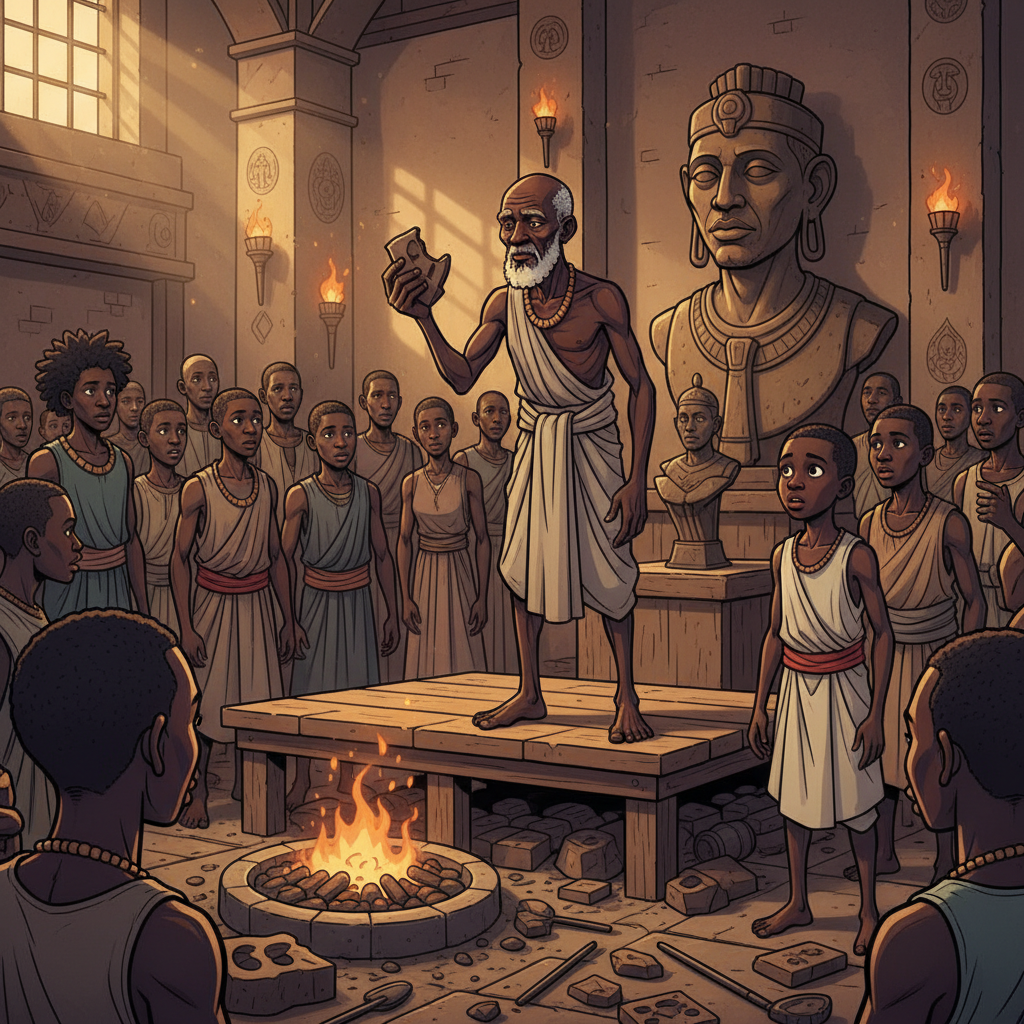
Master Obafemi turned the fragment over in his hands, his thumb gently caressing the cold metal. He looked from the broken piece to Osaze’s face, his eyes full of a quiet intensity. “I was going to say,” the master continued, his voice still soft, but now with a sharp edge of pain, “I was going to say this is not right… for an apprentice.” His gaze fixed on Osaze, unwavering. Osaze’s heart lurched. What did he mean? A flicker of confusion, then terror, began to dawn on him.
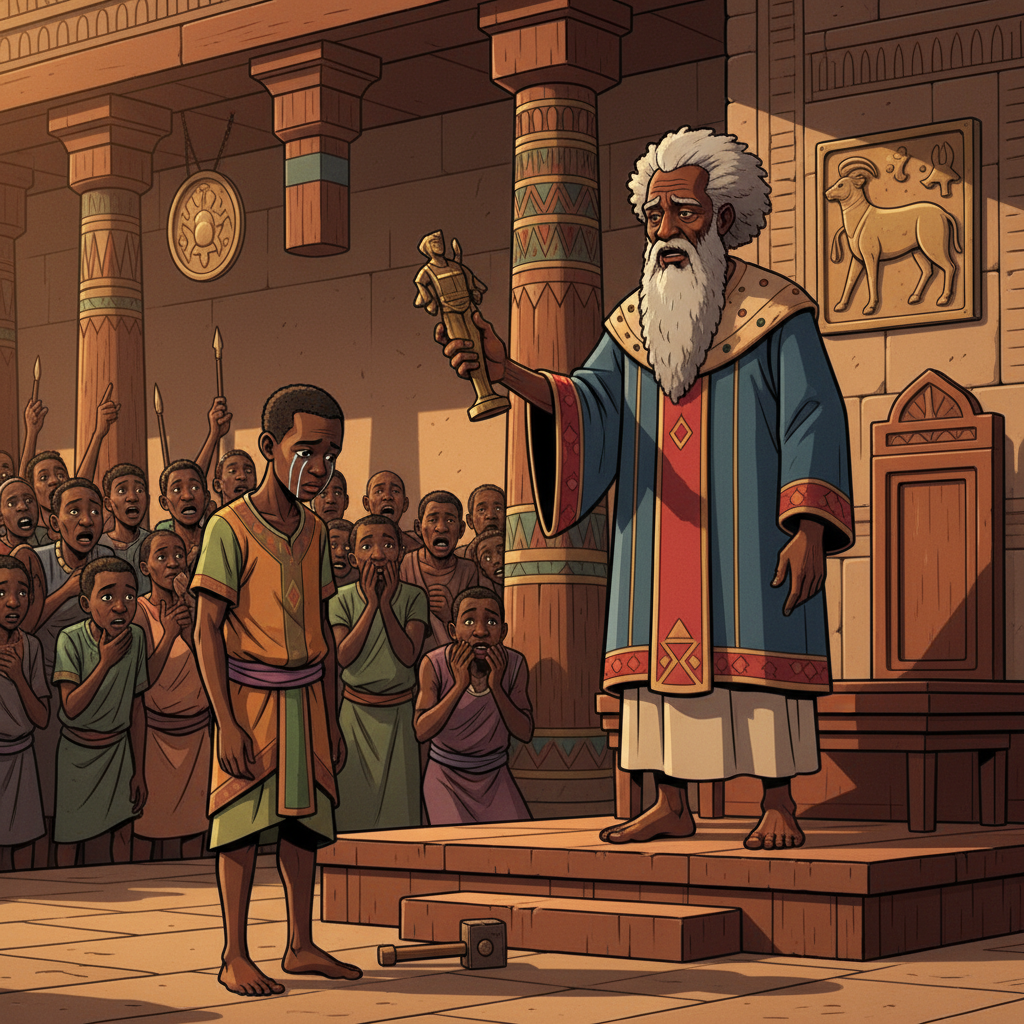
“I was going to say this is not right for an apprentice,” Master Obafemi repeated, his voice now gaining strength, “because it is the work of a master. You destroyed a masterpiece because you could not wait three more breaths for my next words.” The words hung in the air, heavy and inescapable. Osaze felt a searing pain, sharper than any anger, deeper than any shame. It was a pain of pure, unadulterated devastation. The truth, stark and brutal, slammed into him with the force of a battering ram.
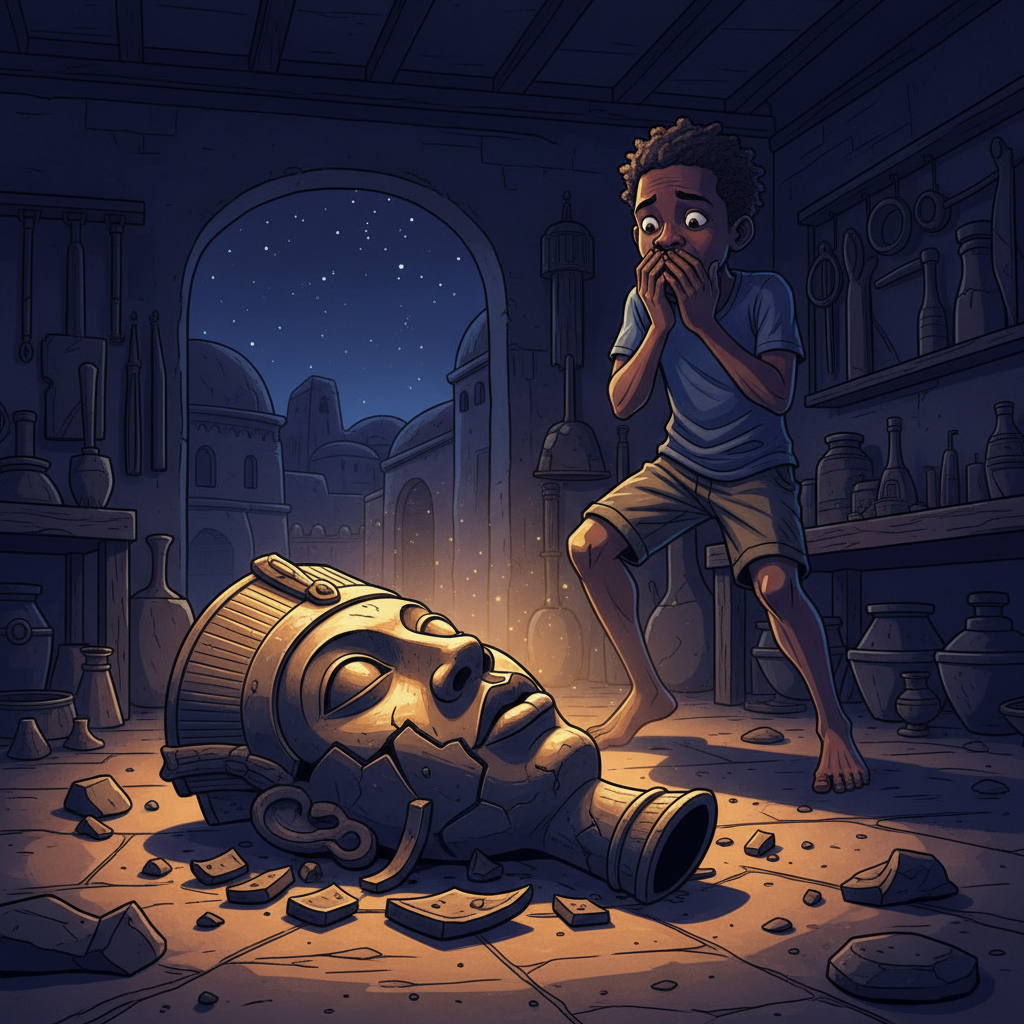
Osaze stumbled back, his legs suddenly weak beneath him. The workshop, which had moments ago felt like a crucible of his failure, now felt like a tomb for his greatest achievement. He stared at the shattered pieces, his masterpiece, lying in ruins on the floor. His hands flew to his mouth, stifling a gasp, a cry of profound regret. The carefully sculpted features, the regal dignity, the weeks of tireless dedication – all reduced to shards by his own impatient hand. He had let isfet, the chaotic surge of emotion, blind him to the truth.
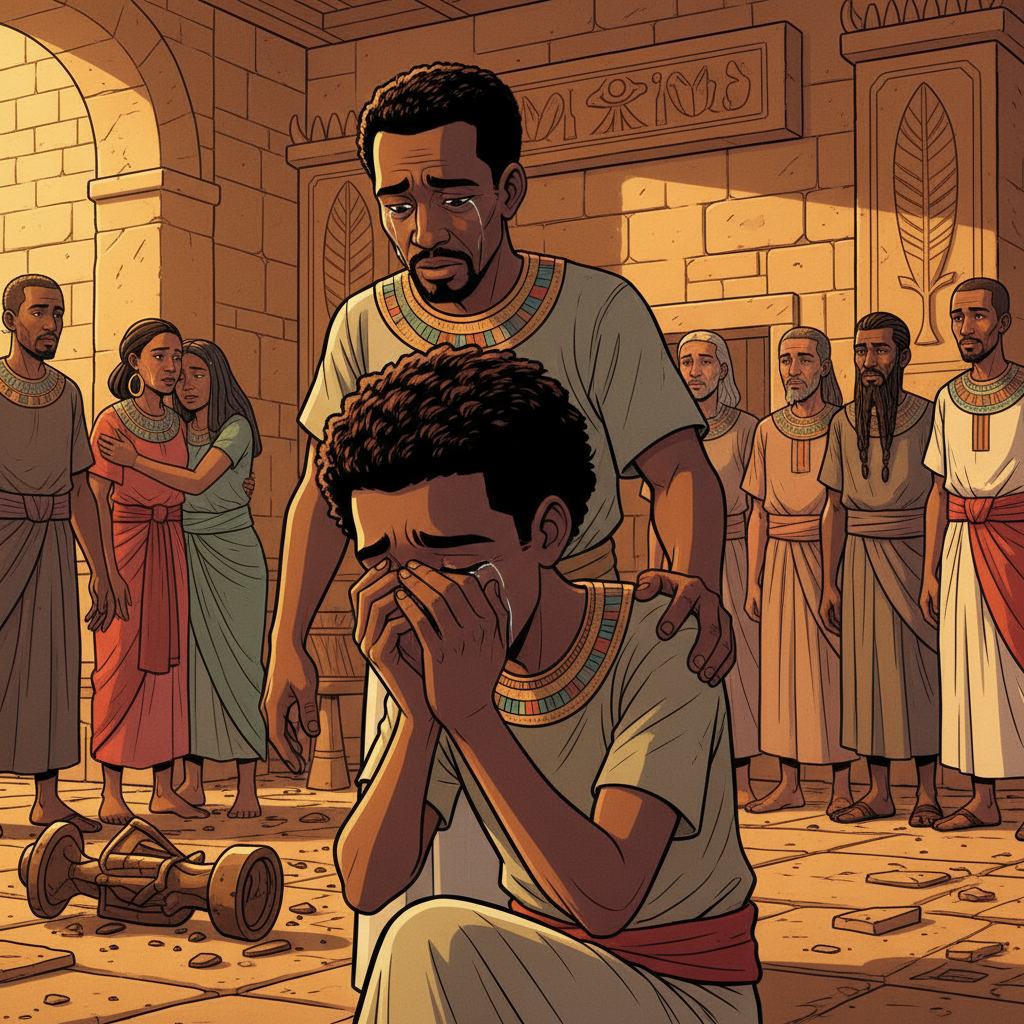
Tears welled in Osaze’s eyes, hot and stinging, blurring his vision. He hadn't just destroyed a piece of bronze; he had destroyed trust, destroyed the master’s pride in him, and destroyed a piece of his own potential. The Maat principle of listening, of seeking the full truth before acting, echoed in his mind, a painful reminder of his monumental failure. He had been so quick to react, so eager to protect his fragile pride, that he had missed the most important part of the message. He had allowed his first emotion to dictate his actions.
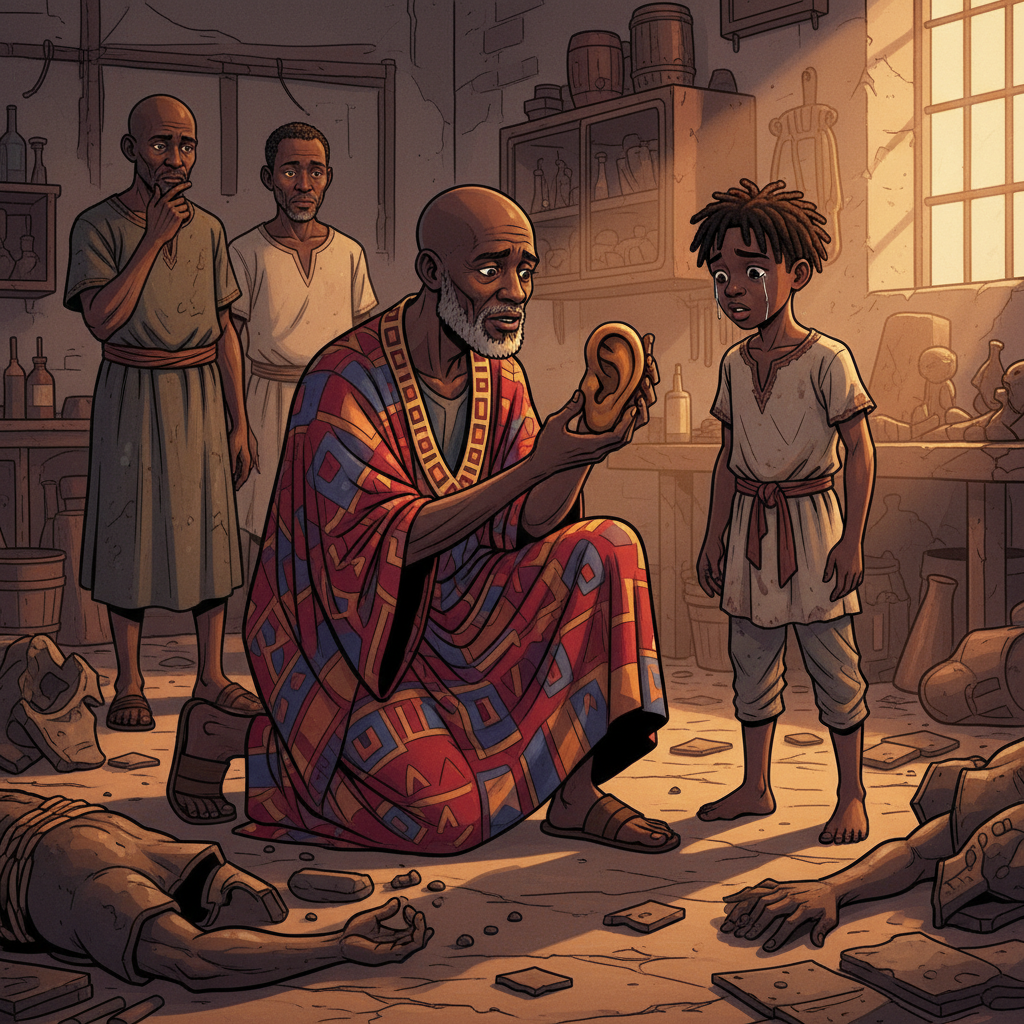
Master Obafemi knelt slowly, gathering some of the larger fragments. “Do you understand, Osaze?” he asked, his voice now gentle, but firm. “Do you understand the depth of this loss? Not just of the bronze, but of the opportunity to learn patience, to understand that the first emotion is rarely the whole truth.” He held up a piece – the ear, almost perfectly rendered, the small detail Osaze had labored over for days. “I was going to ask you to refine this one tiny curve on the left ear, and then it would have been truly flawless.”
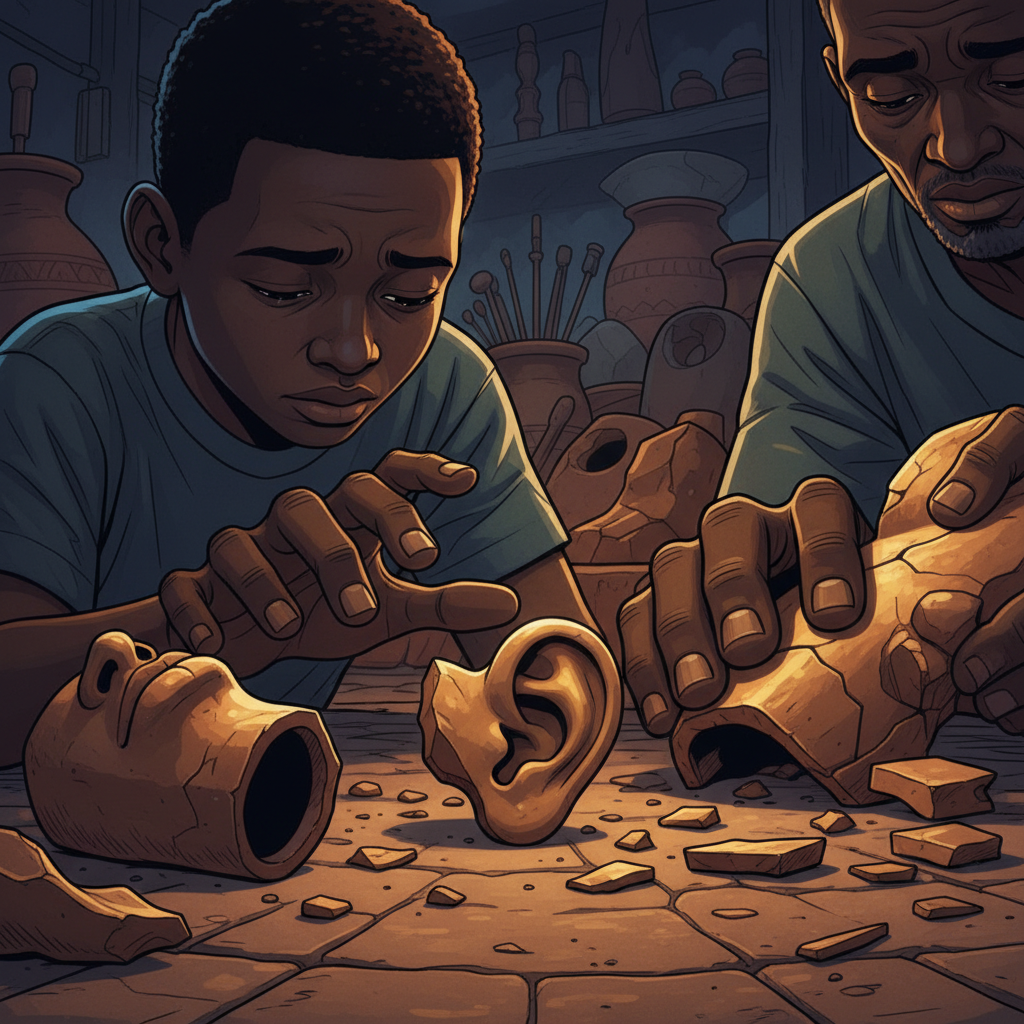
The full weight of his foolishness crushed Osaze. He dropped to his knees beside the master, his shoulders shaking with silent sobs. He saw the left ear, perfect in its broken state, and understood the immense, tragic irony. One tiny adjustment, one final touch, and it would have been complete. He had been so close to triumph, closer than he had ever imagined, and he had thrown it all away in a fit of rage. The injustice he had perceived was not from his master, but from his own uncontrolled impulses.
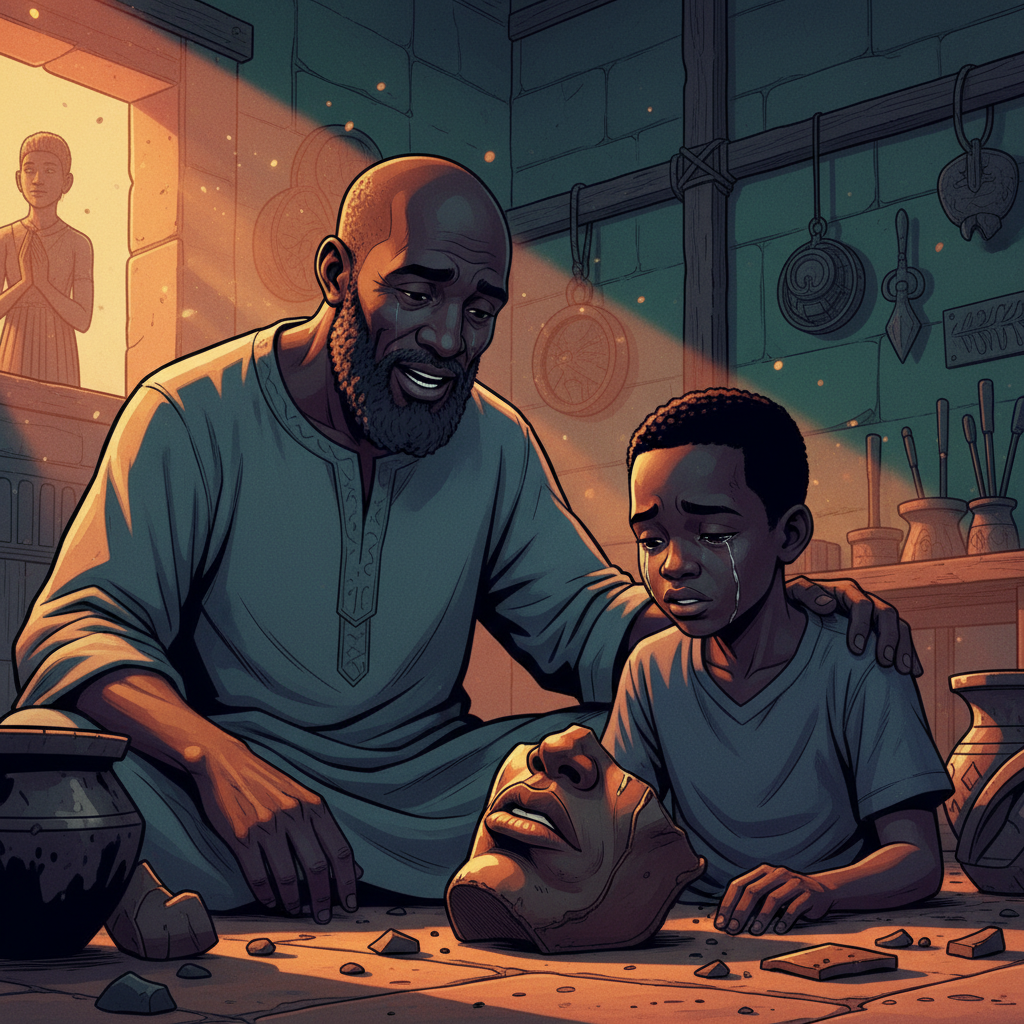
“Isfet,” Master Obafemi said softly, his hand resting on Osaze’s shoulder. “It blinds us, child. It makes us deaf to wisdom. True justice, true Maat, requires us to seek the complete picture, to allow the truth to unfold, not to impose our own immediate, limited understanding.” He picked up another fragment, a piece of the Oba’s chin, strong and defined. “This was your best work, Osaze. It still is. But now it is broken.”
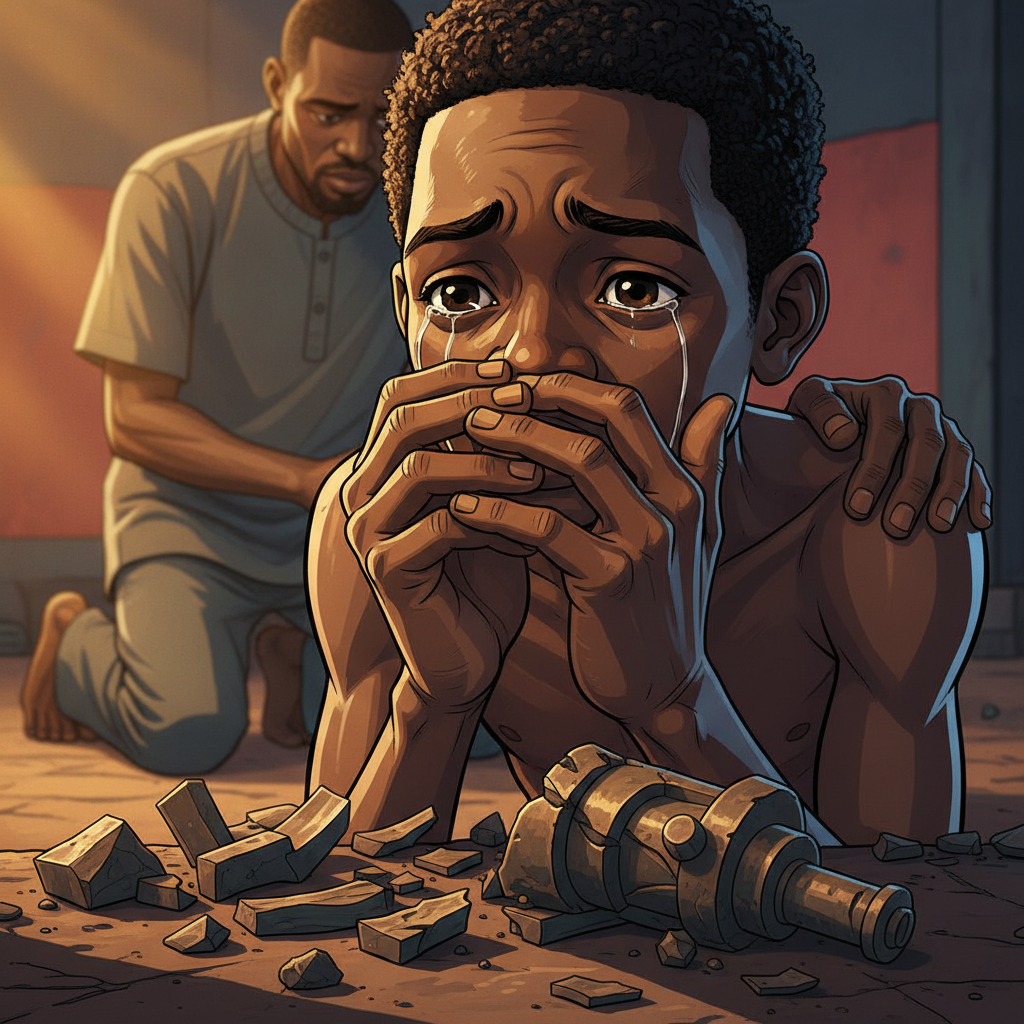
The silence that followed was filled with Osaze’s remorse. He looked at his hands, the very hands that had created such beauty and then, in a moment of madness, destroyed it. The shame burned, not as a hot, angry flush, but as a deep, aching wound. He knew he had to make amends, but how? How could he mend something so utterly shattered? The task seemed insurmountable, much like trying to gather scattered sand.
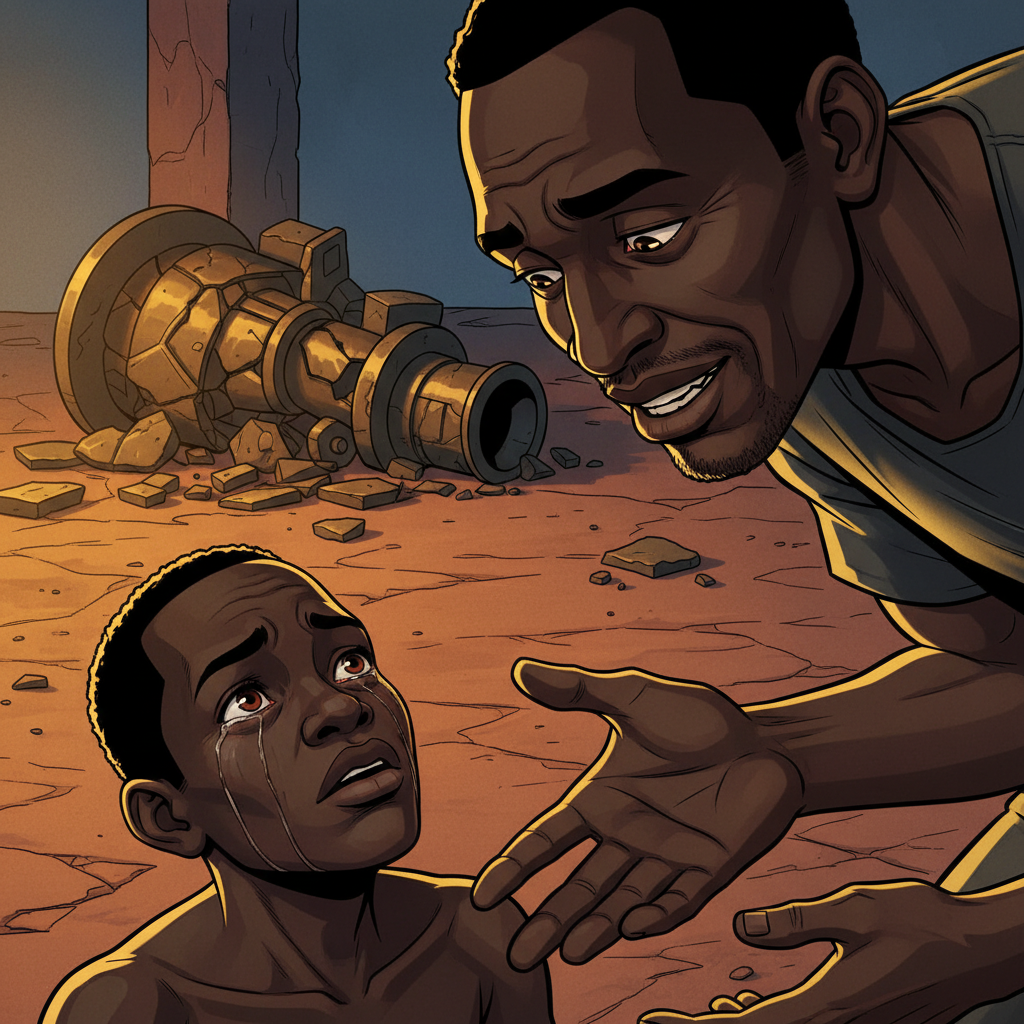
“What… what can I do, Master?” Osaze finally choked out, his voice hoarse with emotion. “I… I destroyed it.” Master Obafemi looked at him, his gaze compassionate. “You will gather every piece, Osaze. Every single fragment, no matter how small. Then, we will work together. We will try to mend this. It will not be the same, but it will be a testament to your learning, to your commitment to Maat.” He extended a hand, offering a way forward.
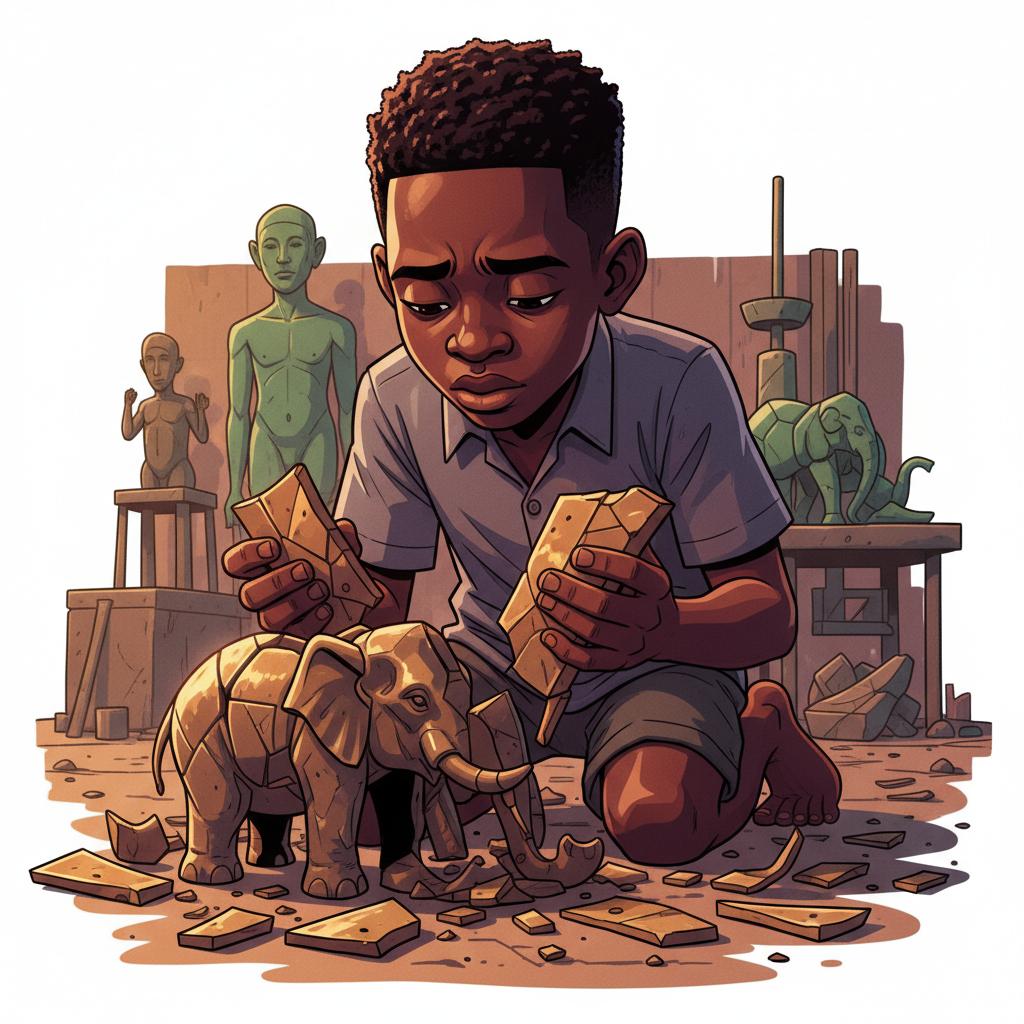
Osaze looked at the countless shards, his heart heavy. It seemed impossible. But then, he remembered the principle of Maat, of restoring balance, even when it felt hardest. He began to pick up the pieces, carefully, reverently. Each fragment he touched was a reminder of his rashness, but also a promise of rebuilding. This act of gathering was the first step on a long journey of repair, not just for the bronze, but for his own spirit. He understood that true strength wasn't just in creating, but in healing.
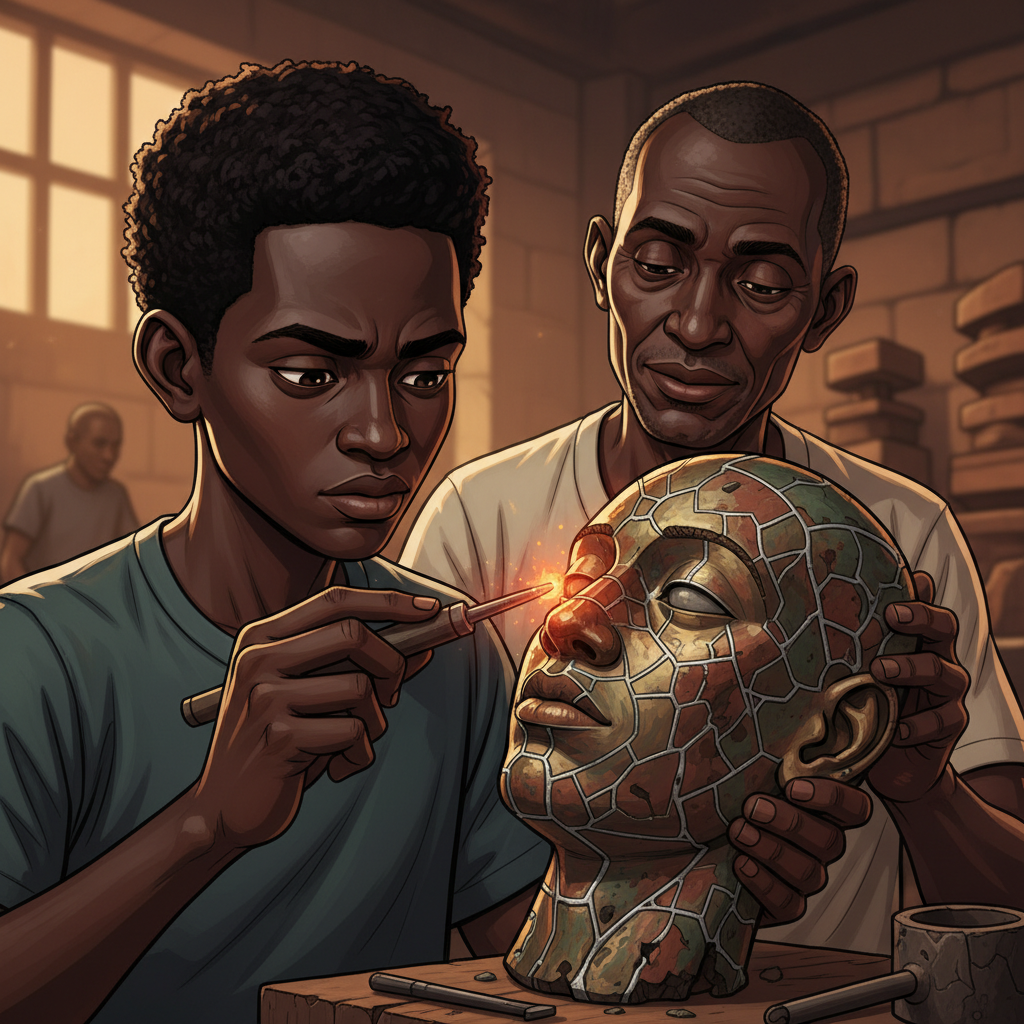
Days turned into weeks. Osaze spent every spare moment meticulously piecing together the broken bronze head. Master Obafemi guided him, teaching him the art of repair, of careful soldering and re-patination, a skill almost as intricate as the original casting. It was slow, painstaking work. The seams were visible, a spiderweb of silver lines across the Oba’s face, telling the story of its destruction and rebirth. Osaze no longer worked in a haze of ambition, but with a quiet, humble determination.
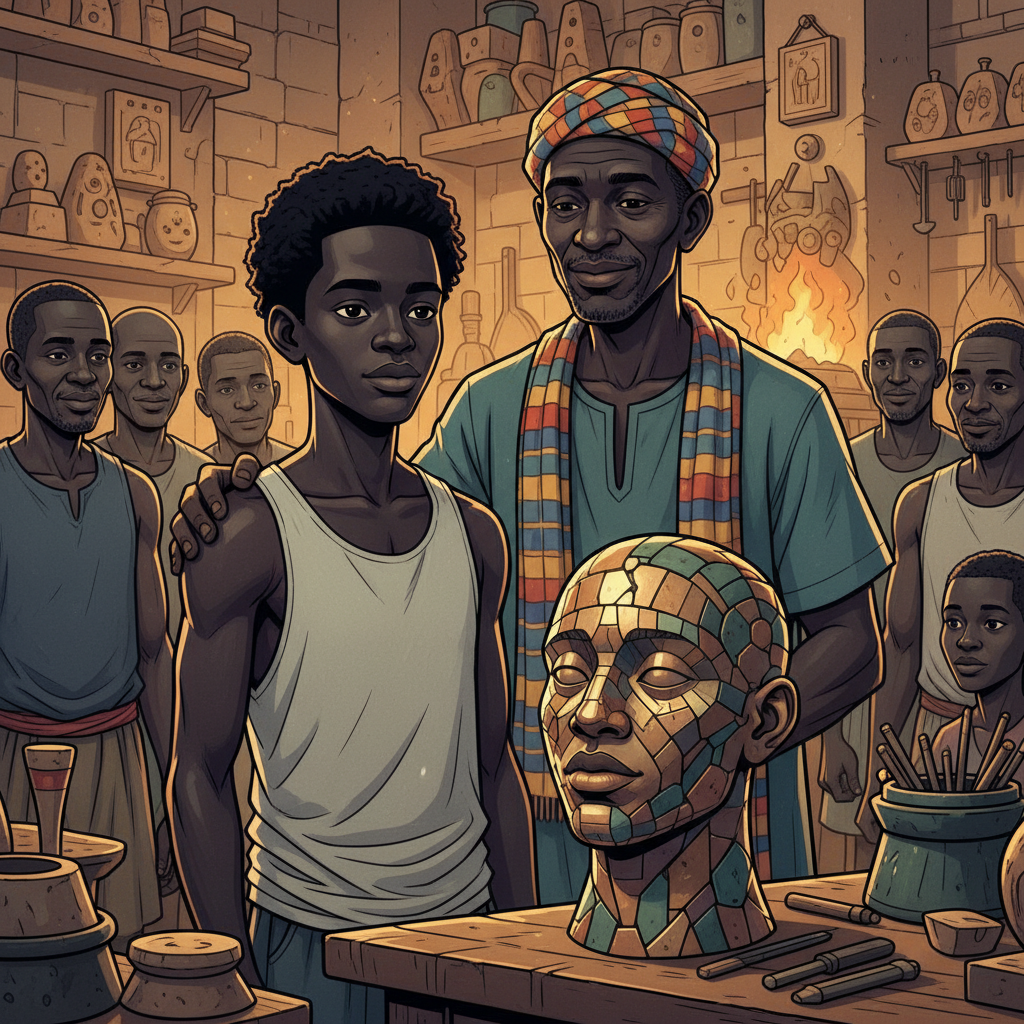
The mended head was finally complete. It sat on the workbench, a mosaic of its former self, scarred but whole. The scars were not flaws; they were a record of a profound lesson. Master Obafemi placed his hand on Osaze’s shoulder. “It is beautiful, Osaze,” he said, his voice filled with pride. “Not in spite of its scars, but because of them. They speak of lessons learned, of Maat restored through perseverance and honesty.” Osaze looked at the head, seeing not just the bronze, but the reflection of his own growth.
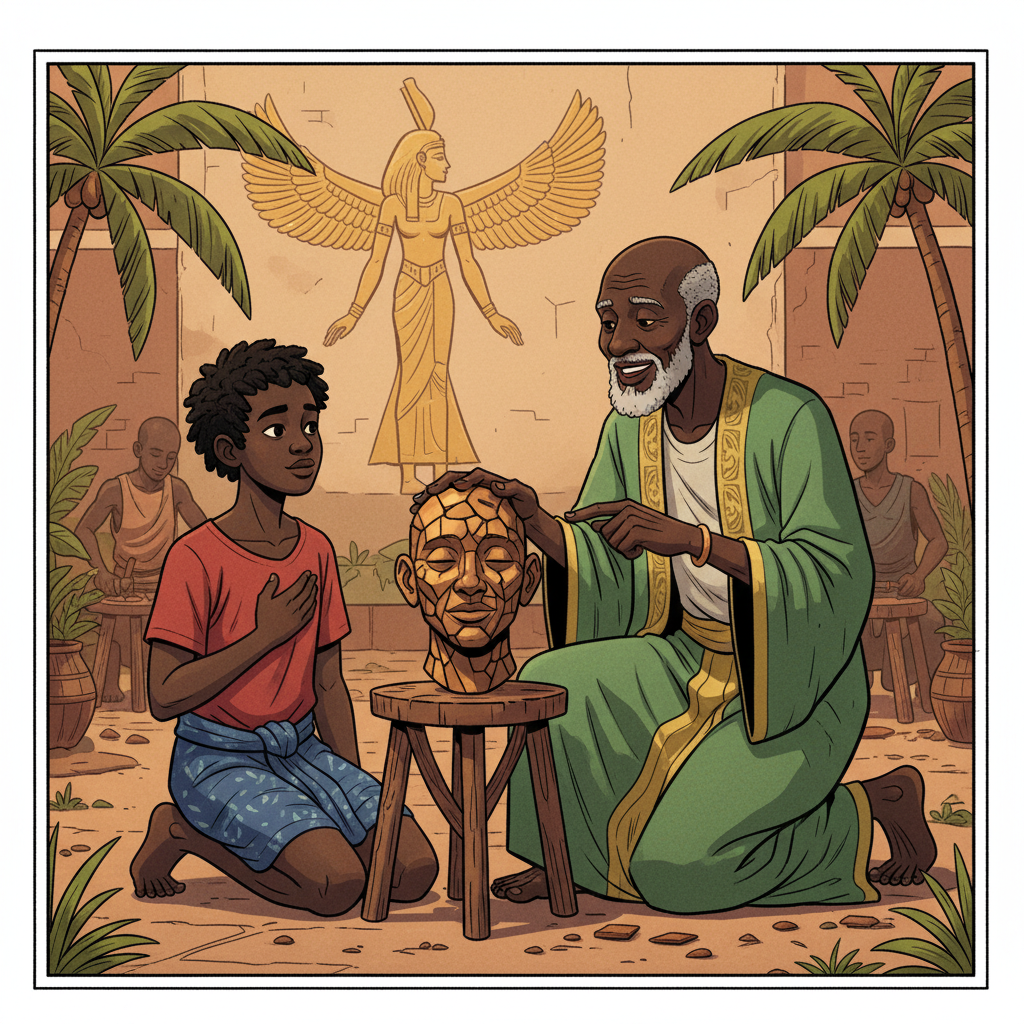
He had learned that justice wasn't just about what was fair to him, but about understanding the full truth, even when it challenged his assumptions. He had learned that the path of Maat required patience, self-control, and the courage to wait for understanding. His first emotion had been a storm, but the slow work of repair had brought a lasting peace. The bronze head, once a symbol of his rage, was now a silent teacher, a permanent reminder of the power of waiting for the full picture.
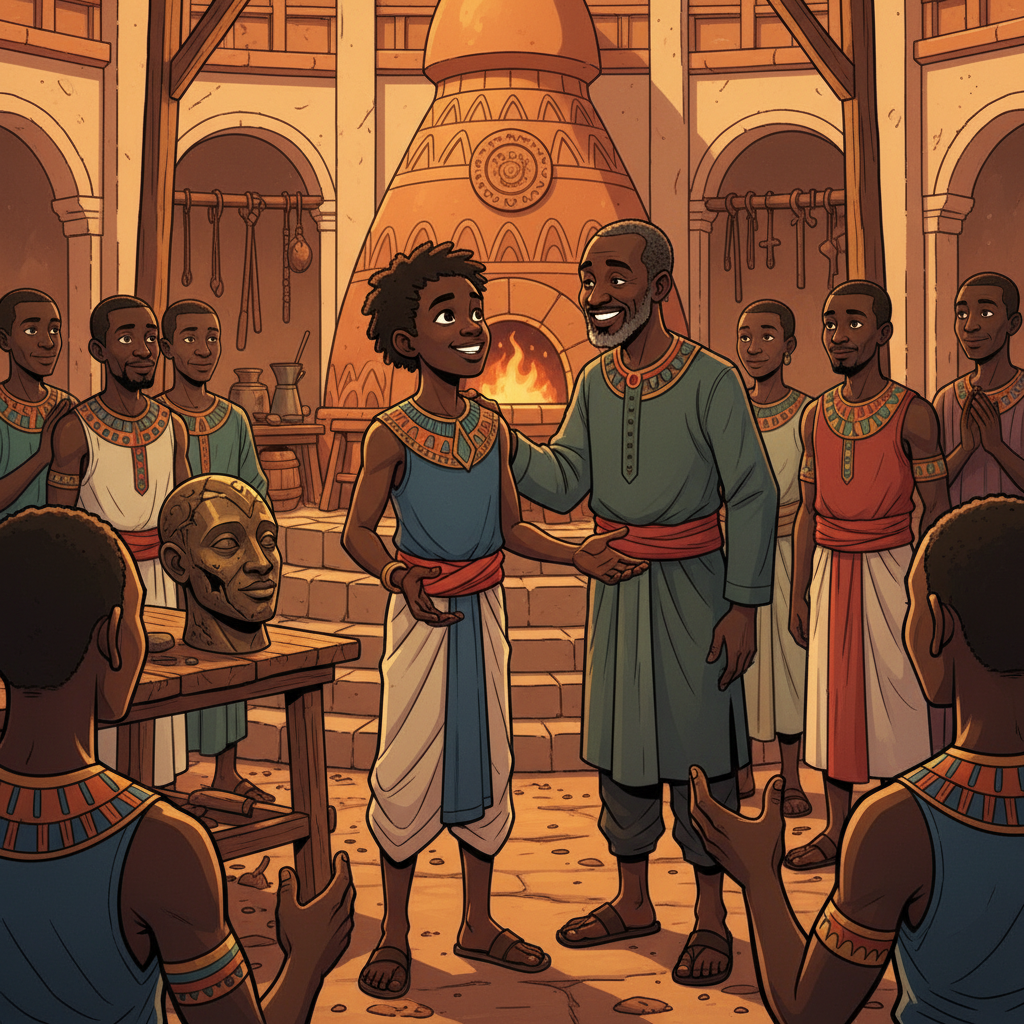
Osaze looked up at Master Obafemi, a genuine smile gracing his lips for the first time in weeks. “Thank you, Master,” he said, his voice steady. “Thank you for showing me how to mend not just the bronze, but myself.” He understood that true mastery wasn't just in creating perfect things, but in mastering oneself, especially in moments of intense emotion. He had embraced the painful lesson, allowing it to reshape him, much like the fire reshaped the metal.
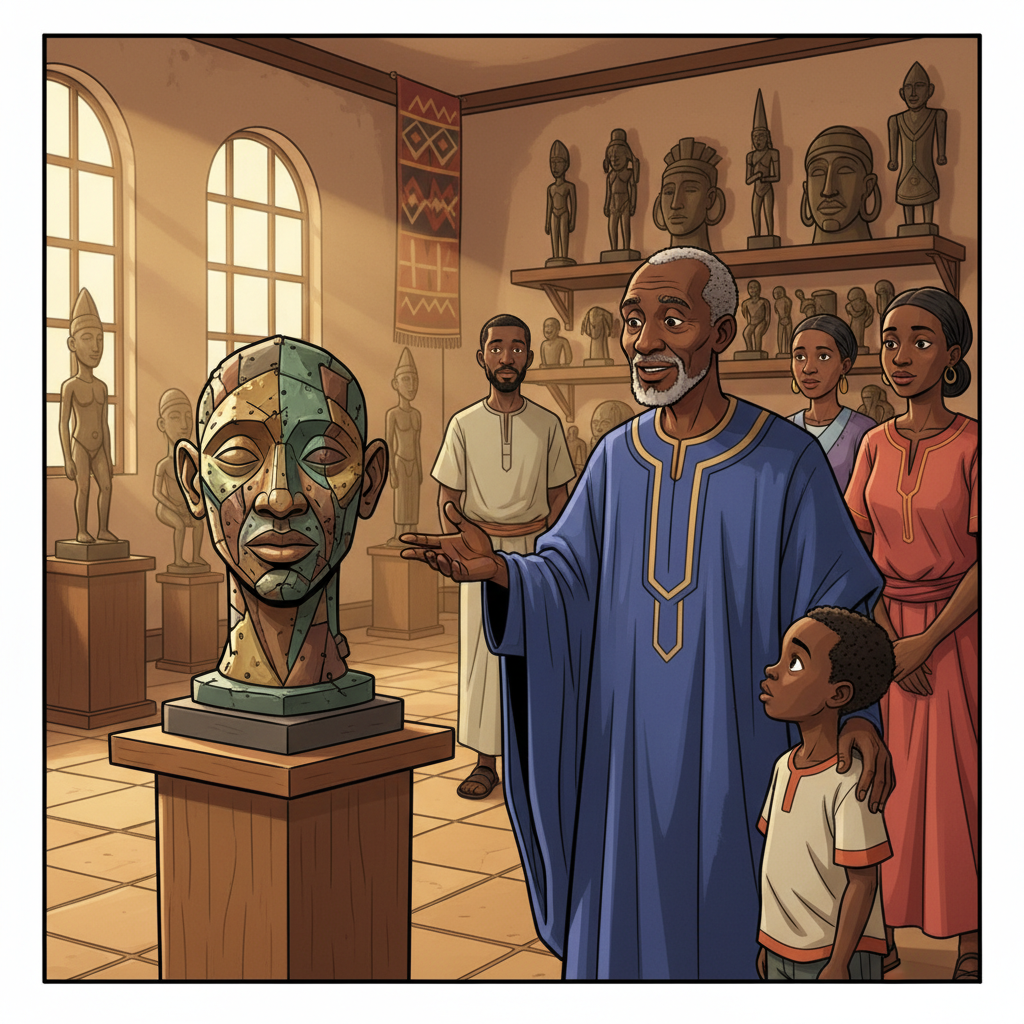
The mended Oba’s head took its place in the guild’s display, not hidden away in shame, but proudly exhibited. Visitors would often ask about its unique, scarred appearance. Master Obafemi would share the story, not as a tale of failure, but as a lesson in the path of Maat, of how even broken things can be made whole again, stronger and wiser for the experience. Osaze would stand by, listening, his heart full of quiet understanding. He had learned that true justice began with himself.
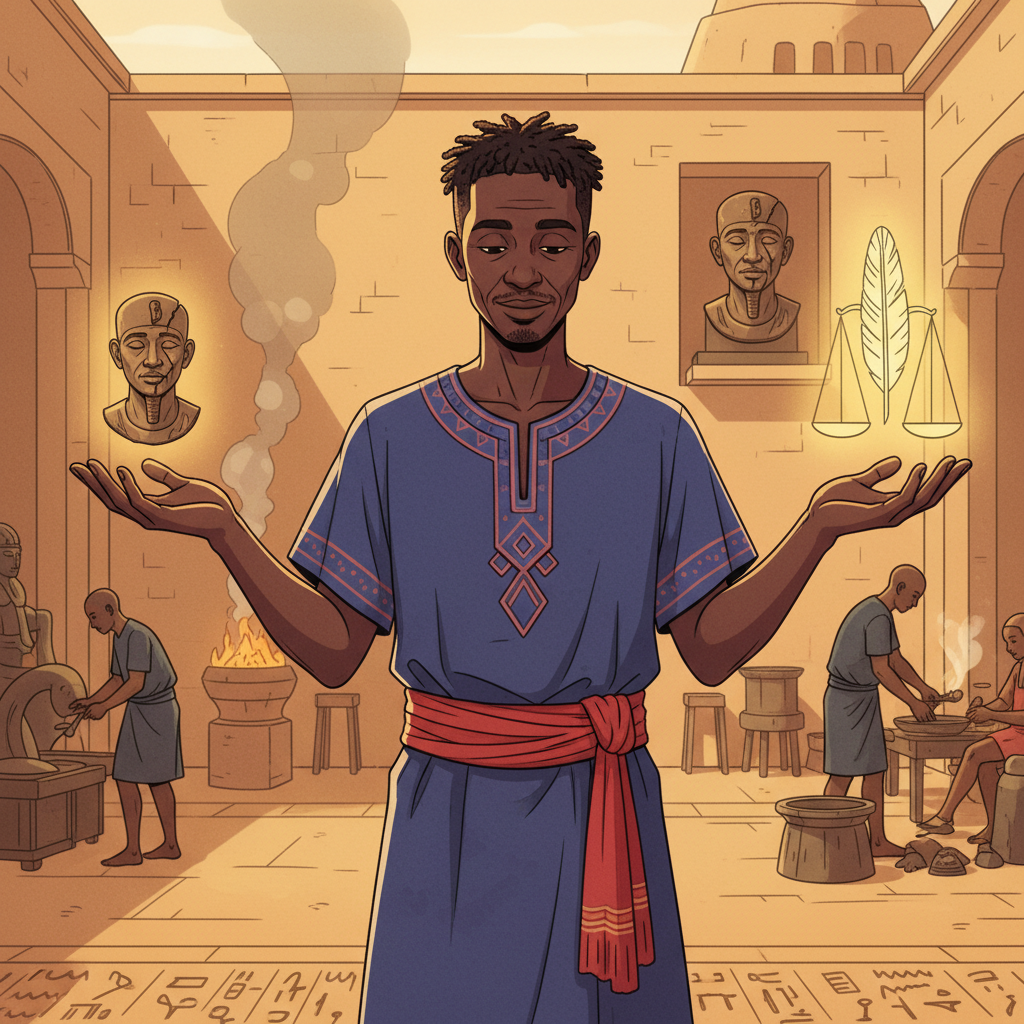
From that day forward, Osaze carried the lesson of the shattered bronze within him. When strong emotions threatened to overwhelm him, he would remember the look on Master Obafemi's face, the quiet devastation of the broken masterpiece, and the slow, arduous process of mending. He learned to pause, to breathe, to seek clarity before reacting. He understood that Maat was not just a philosophy, but a living practice, a constant striving for balance in thought, word, and deed. His hands, though still young, now carried the wisdom of an ancient lesson.