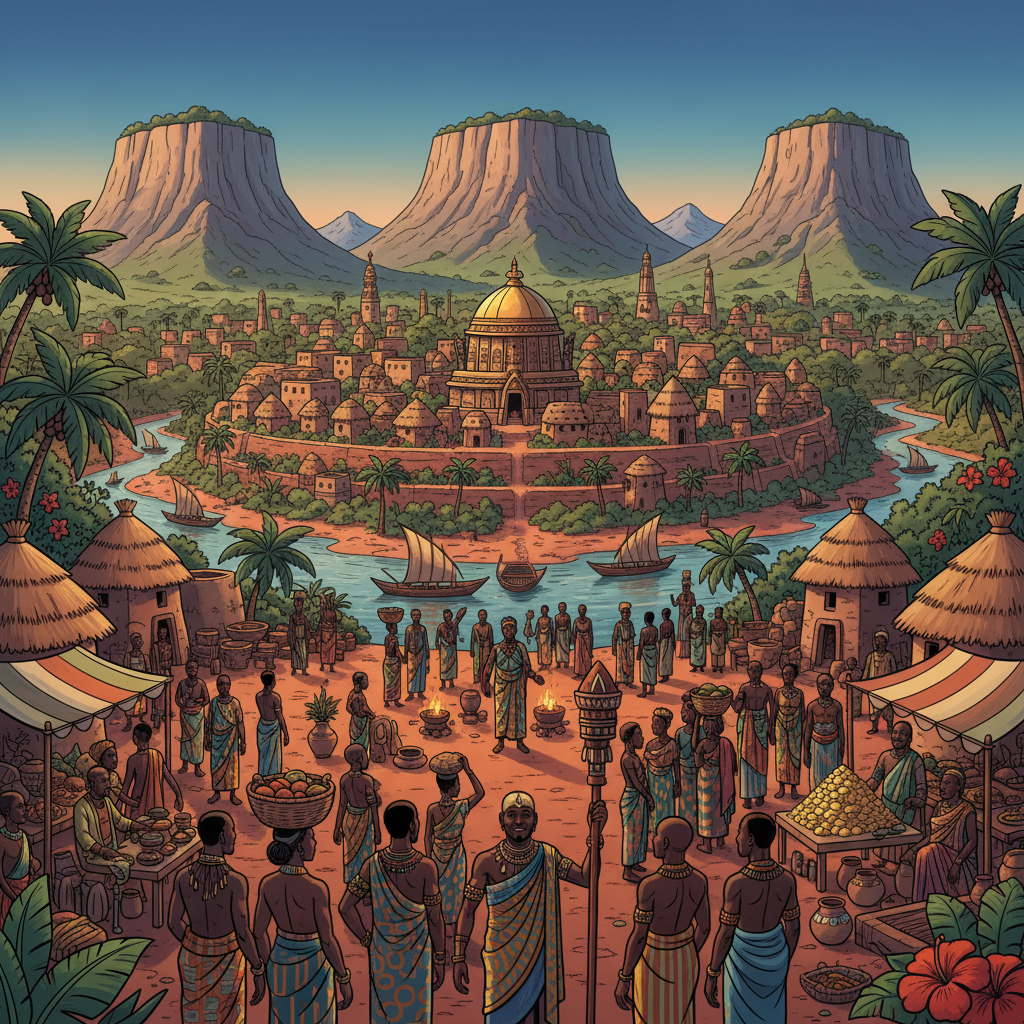
Of all the kingdoms that rose in the land the Igbo called home, none was stranger or more ancient than Nri. It was not strange because of its wealth, though it had wealth. It was not strange because of its power, though its influence stretched across Igboland for centuries. Nri was strange because it had made a choice that no other kingdom in the region had made — a choice so unusual that outsiders often refused to believe it. Nri rejected warfare. Not in the way of a people too weak to fight. The Nri were descended from the same ancestors who produced warriors across Igboland. Their men were strong, their hunters skilled, their smiths capable of forging weapons as deadly as any. But from the earliest days of the kingdom, the Eze Nri — the divine king — had established a principle: power would come not from the spear but from the ofo, the sacred staff of truth and authority. Nri would govern through ritual, through moral authority, through the power of the word spoken with justice. {name}, this is the story of what that choice cost, and what it made possible.
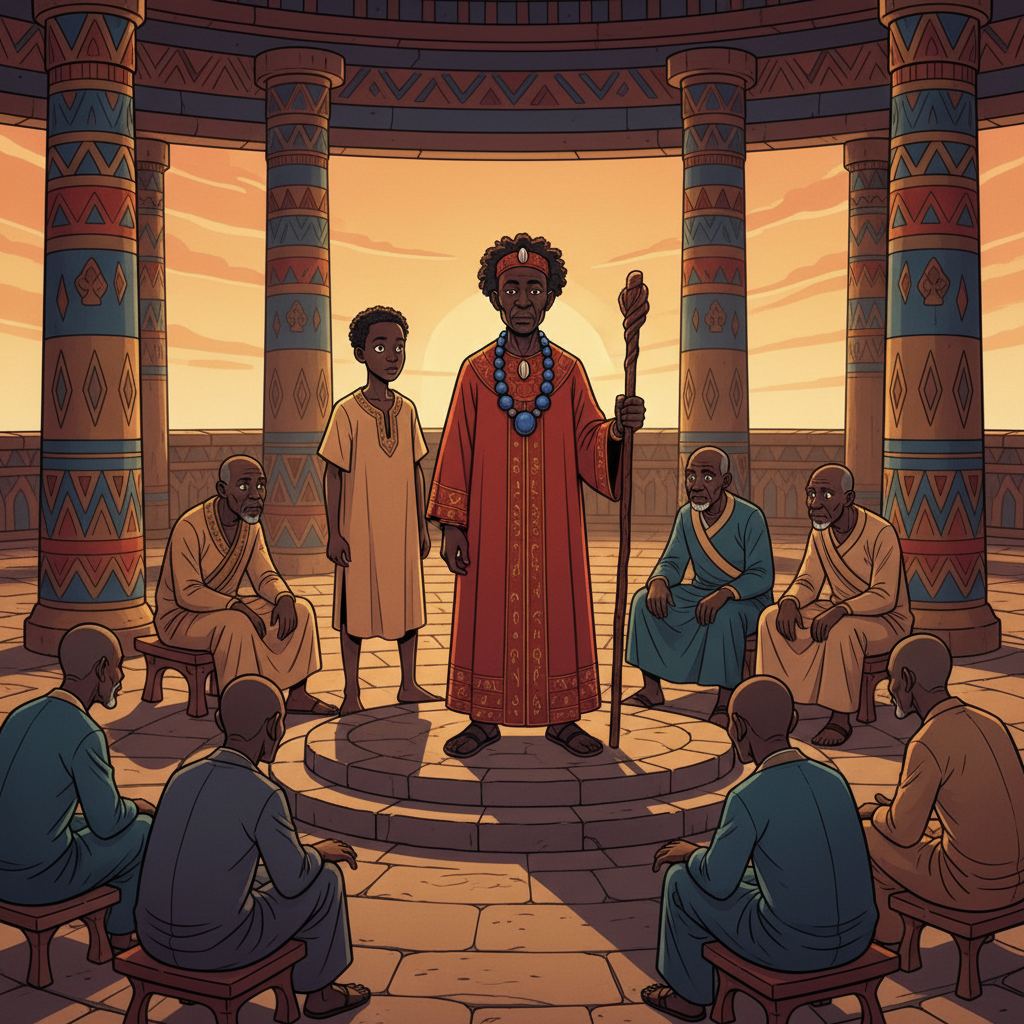
Obiora was sixteen when his training as an ozo priest apprentice began in earnest. His master, Nze Igwe, was one of the most respected ritual authorities in the kingdom — a man whose dark skin seemed to absorb light, whose broad features and tightly coiled 4C hair framed a face that rarely smiled but radiated a calm so profound it felt like standing near a deep well. When Nze Igwe spoke, even the titled men of the ndi ichie — the council of elders — leaned forward. Obiora was the opposite of his master in almost every way. Where Nze Igwe was still, Obiora was restless. Where the elder measured his words like a goldsmith weighing dust, the boy spoke in torrents, questions tumbling over each other. His body, lean and energetic, wanted to run when the rituals required standing. His mind, sharp as a smith's blade, wanted answers before the questions had been properly formed. "The ofo does not hurry," Nze Igwe would say, tapping the sacred staff gently against the ground. "Truth arrives when it arrives. Our work is to be present when it does."
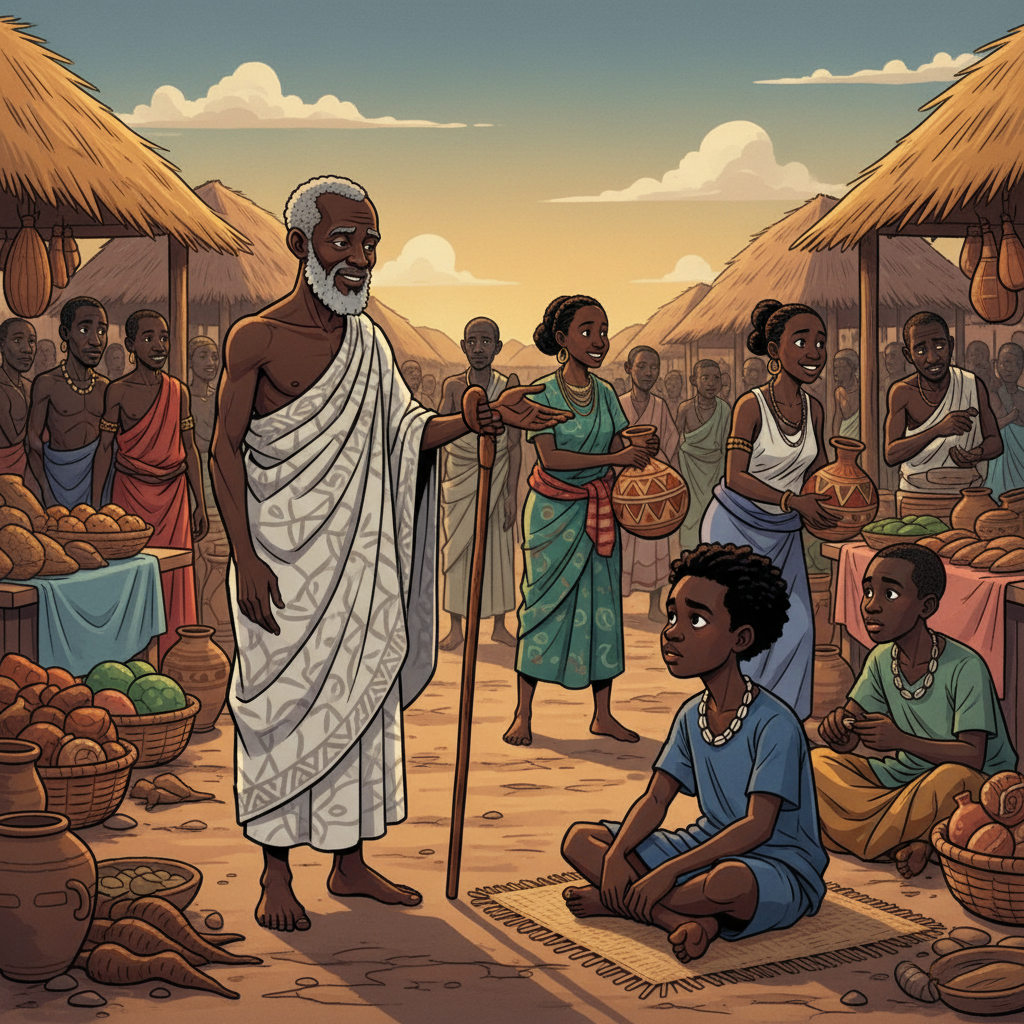
The training was demanding in ways Obiora had not expected. He had imagined learning secret incantations, hidden rituals, the mystical knowledge that gave Nri priests their authority over distant communities. Instead, Nze Igwe taught him to listen. "Sit with the farmer and listen to his complaint about the soil. Do not answer. Listen until you hear what he is not saying." "Sit with the widow and listen to her silence. Do not fill it with your own words. Listen until you understand what her silence holds." "Sit at the edge of the market and listen to the sounds of commerce. Do not buy or sell. Listen until you can hear the difference between fair exchange and exploitation." Obiora sat. He listened. He hated it. Every fiber of his young body wanted action — the decisive stroke, the clear answer, the immediate solution. But Nze Igwe was immovable. "The sword cuts once," the elder said. "The ofo mediates forever. Which takes more strength?" Obiora did not yet know the answer, but the question lodged in him like a seed in soil.
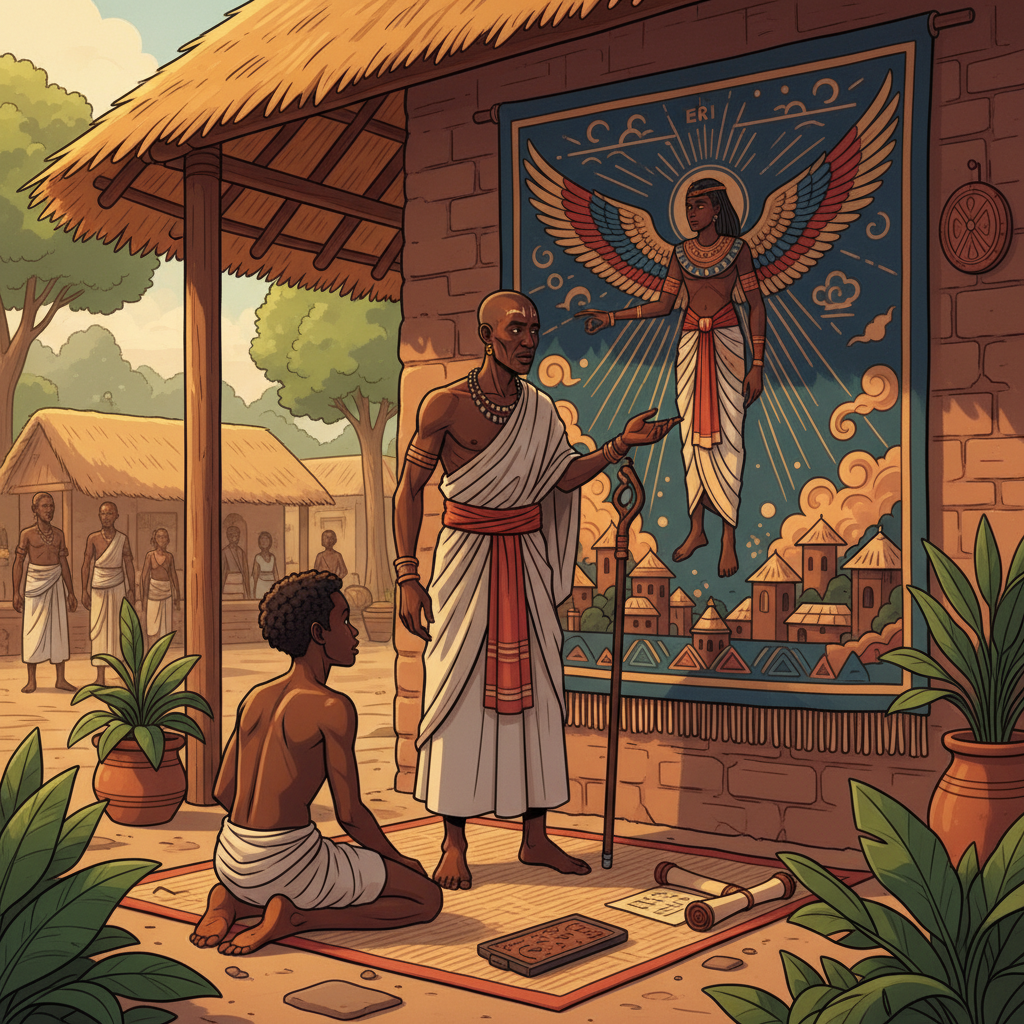
He also learned the history — the deep history of Nri that stretched back a thousand years before the first European ships appeared on the coast. The kingdom of Nri was founded, according to tradition, by Eri, a sky being sent by Chukwu — the supreme deity — to establish order on the earth. Eri's descendants, the Eze Nri, were not warriors but priests, not conquerors but mediators. Their authority came not from the ability to take life but from the ability to cleanse it. Nri priests could perform the ritual of ichi — the facial scarification that marked a man as ozo, a titled person of authority. They could cleanse land that had been polluted by violence or taboo violations. They could resolve disputes between communities that had reached an impasse. And they could impose nso — ritual sanctions — on communities or individuals who violated sacred law. Nso was Nri's greatest power and its most unusual weapon. A community placed under nso could not trade, could not participate in festivals, could not marry outside itself. It was social and economic isolation — a punishment that required no soldiers, no bloodshed, no physical force. Only the moral authority of the Eze Nri and his priests.
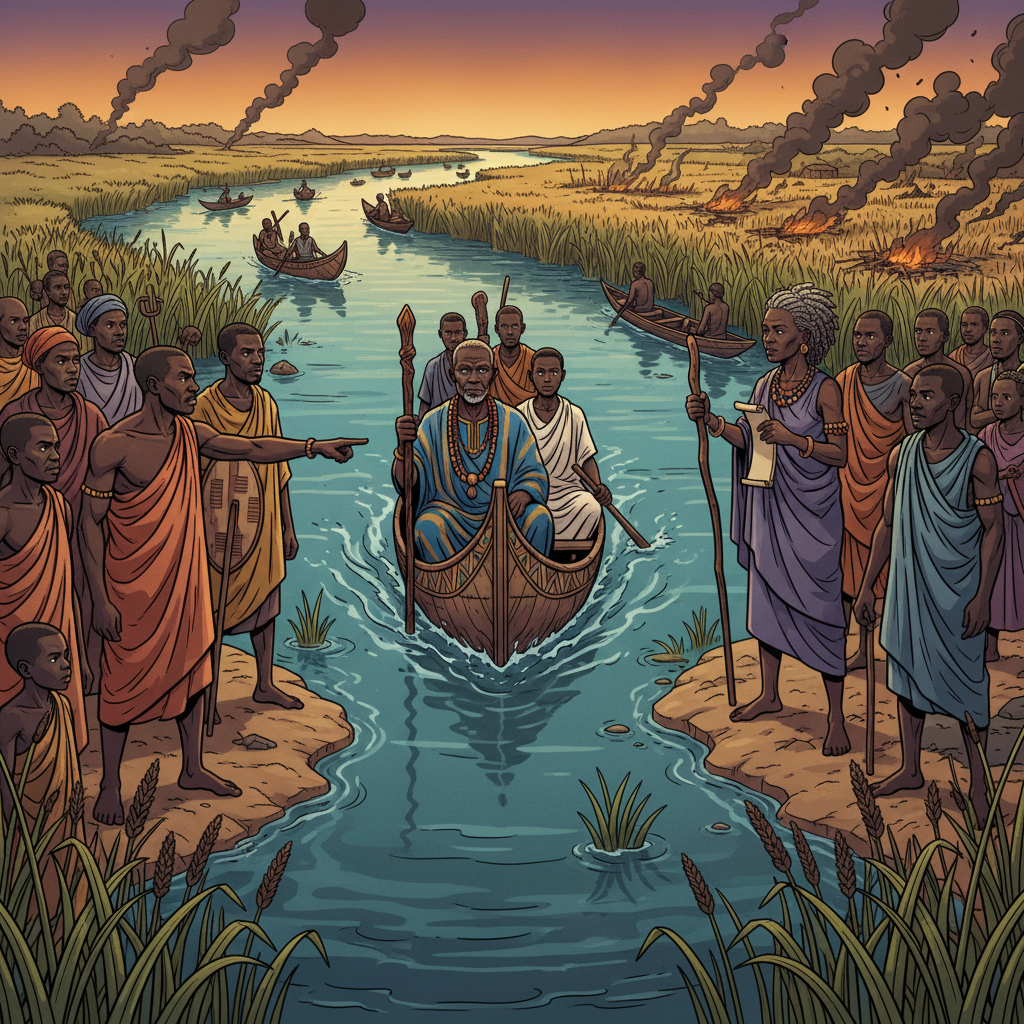
The test came in Obiora's second year of training. A message arrived from two communities — Aguleri and Umuleri — who had been locked in a land dispute for three generations. The conflict had claimed lives on both sides. Crops had been destroyed, homesteads burned, families scattered. Each community claimed the same stretch of fertile land along the Anambra River, and each had stories, genealogies, and witnesses that supported their claim. The dispute had reached a point where neither community would accept the judgment of the other's elders. War — real, sustained, destructive war — was imminent. Messengers from both sides had come to Nri, not because they trusted Nri's judgment (trust was in short supply) but because they had exhausted every other option. Nri mediation was the last resort, the final alternative to bloodshed. Nze Igwe accepted the mediation. And to Obiora's shock, he brought his apprentice along. "You will not speak," Nze Igwe told him. "You will watch. You will listen. And you will learn what the ofo can do that the machete cannot."
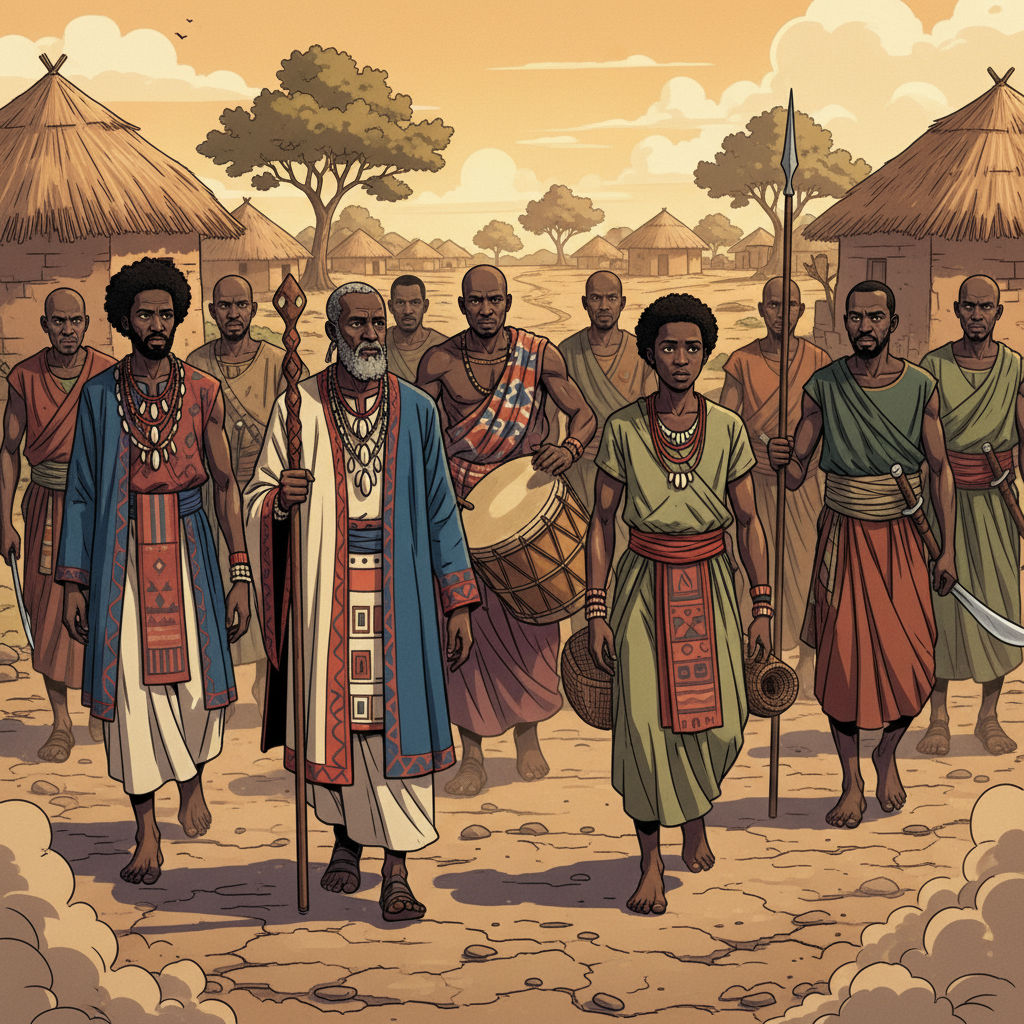
The journey to the disputed territory took four days. They traveled with a small entourage — two other Nri priests, a drummer whose rhythms announced their sacred mission, and bearers carrying the ritual items. Obiora noticed that they carried no weapons. Not a single machete, not a bow, not a knife. When he mentioned this to Nze Igwe, the elder's response was characteristically sparse. "A priest who carries a weapon has already admitted that his words are insufficient." They were received at the boundary between the two communities by representatives of both sides — grim-faced men with machetes at their hips and suspicion in their eyes. The contrast was stark: the armed, angry disputants and the unarmed Nri priests, whose only equipment was the ofo staff, the ritual chalk, and the sacred symbols of their authority. Obiora felt exposed. He was accustomed to the protected environment of Nri, where the kingdom's reputation preceded it. Here, in the charged air between two communities on the edge of war, the ofo felt like a very thin shield against very sharp blades.
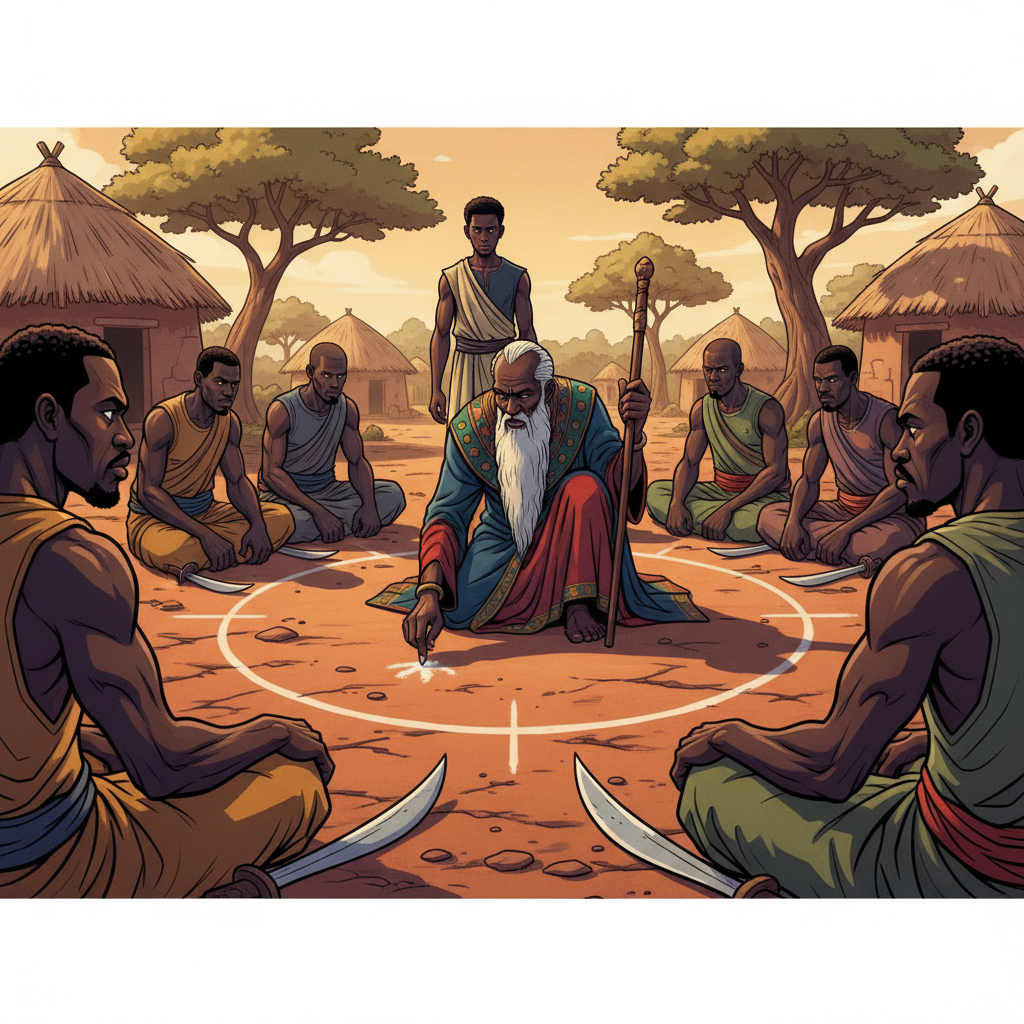
The mediation began the next morning in an open clearing between the two communities. Nze Igwe drew a circle in the earth with the tip of the ofo and marked the four cardinal directions with nzu — white chalk, the symbol of purity and honest intention. Both parties were invited to sit within the circle. The moment they crossed the chalk line, Nze Igwe announced, they were under the protection and the judgment of Ala — the earth deity — and Chukwu. Any violence within the circle would bring nso upon the offender's community. The tension was suffocating. Obiora could see the muscles in the men's jaws tightening, the way their hands drifted toward their machetes even as they sat. But they sat. The power of nso — the threat of total social and economic isolation — held them in check where no army could have. "Speak," Nze Igwe said to the Aguleri delegation. "Speak the truth of your claim, from the beginning. Leave nothing out, because Ala hears, and Ala does not forgive the tongue that bends."
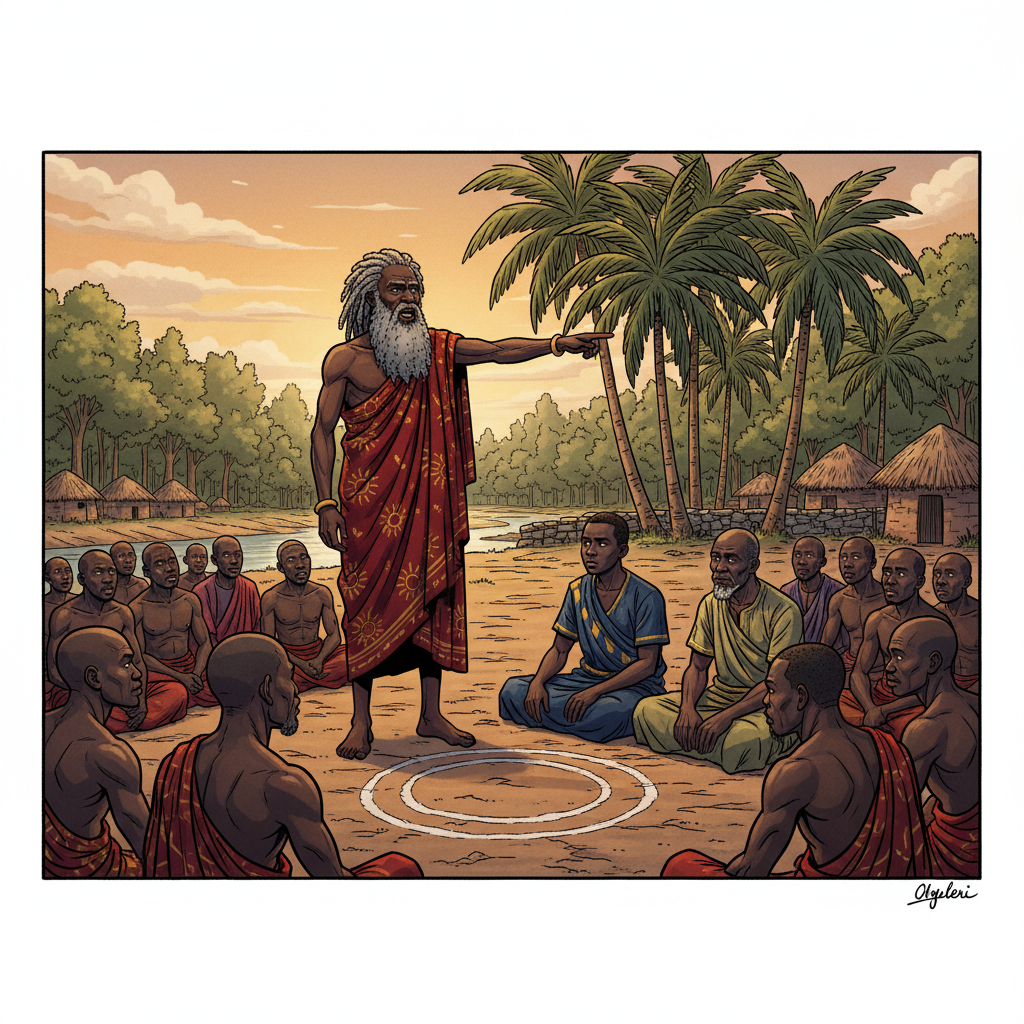
The Aguleri spokesman rose. He was an older man, his dark face weathered by years of farming the very land they disputed. His voice carried the weight of genuine belief. He traced his community's claim back five generations, naming ancestors, describing boundaries, citing the testimony of elders long dead. He spoke of the palm trees his great-grandfather had planted, the graves of his grandmothers buried at the river's edge, the shrines his people had maintained for decades. Obiora listened, as his training demanded. He heard the facts — names, places, dates. But he also heard what Nze Igwe had taught him to listen for: the emotion beneath the facts, the fear behind the claim. This was not merely a dispute about land. It was a dispute about identity. The land was not just soil and trees. It was the physical record of a people's history, the place where their dead rested, where their children would be born. To lose the land was to lose the proof of their existence. The Umuleri spokesman spoke next, and his story was equally compelling, equally rooted, equally real. Obiora realized, with a sinking feeling, that both claims were true.
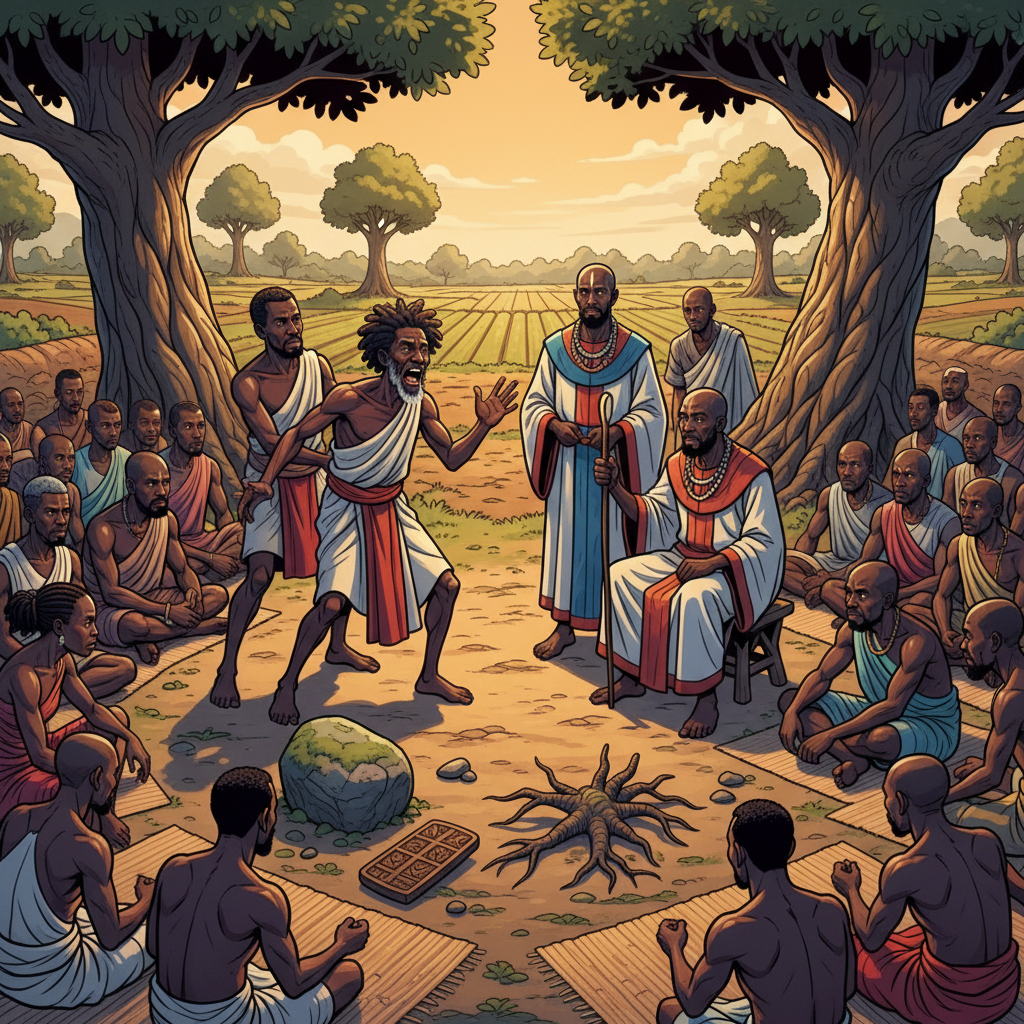
Two days of testimony followed. Witnesses from both sides spoke, their voices ranging from measured recitation to passionate outbursts that the other Nri priests gently but firmly contained. The evidence was examined — not just spoken testimony but physical markers: ancient trees, boundary stones, the patterns of farmland that told their own story of who had cultivated what and for how long. Nze Igwe listened to everything. He asked questions so precise they cut through layers of rhetoric to the bedrock of fact. He was not seeking to determine who was right and who was wrong — Obiora gradually realized this was not that kind of judgment. Both communities had genuine claims rooted in genuine history. The question was not who owned the land. The question was how two peoples with legitimate claims could live with each other on and around that land without destroying each other. "The machete answers one question," Nze Igwe told Obiora privately that evening. "Who is stronger? The ofo answers a harder question: How do we continue?"
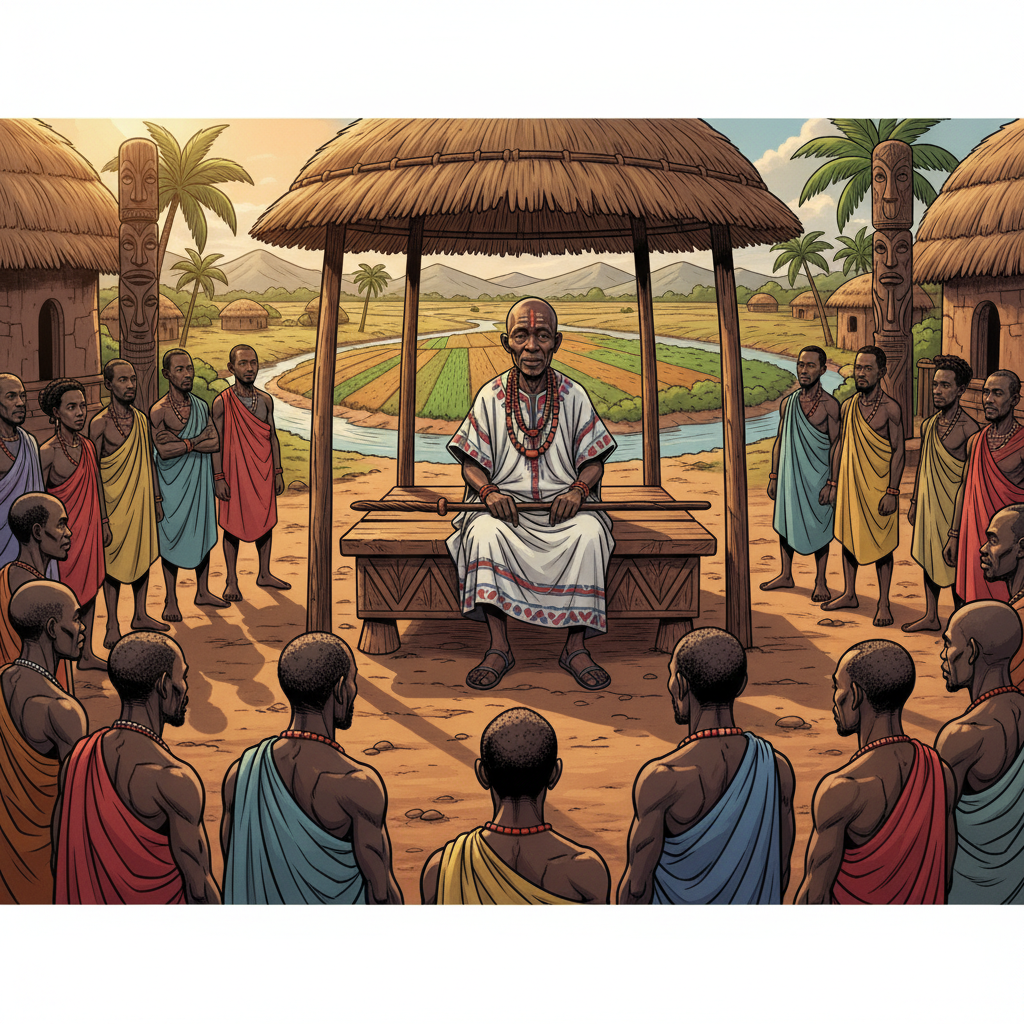
On the third day, Nze Igwe delivered his judgment. He did not stand or raise his voice. He sat, the ofo across his knees, and spoke with the quiet authority that came not from force but from the accumulated credibility of a thousand years of Nri mediation. "The land belongs to Ala," he said. "Not to Aguleri. Not to Umuleri. To Ala, the earth mother, who was here before either community was born and who will be here after both are dust." He paused, letting the words settle like rainfall on dry ground. "What Ala gives, she gives for use, not for ownership. You do not own the earth any more than you own the rain or the wind." He then laid out a specific arrangement: the disputed land would be divided not by a single boundary but by a system of shared usage. Certain sections would be farmed by Aguleri in one season and Umuleri in the next. The sacred sites of both communities would be maintained and respected by both. The river — the true source of the land's fertility — would remain common property, its fish and water available to all.
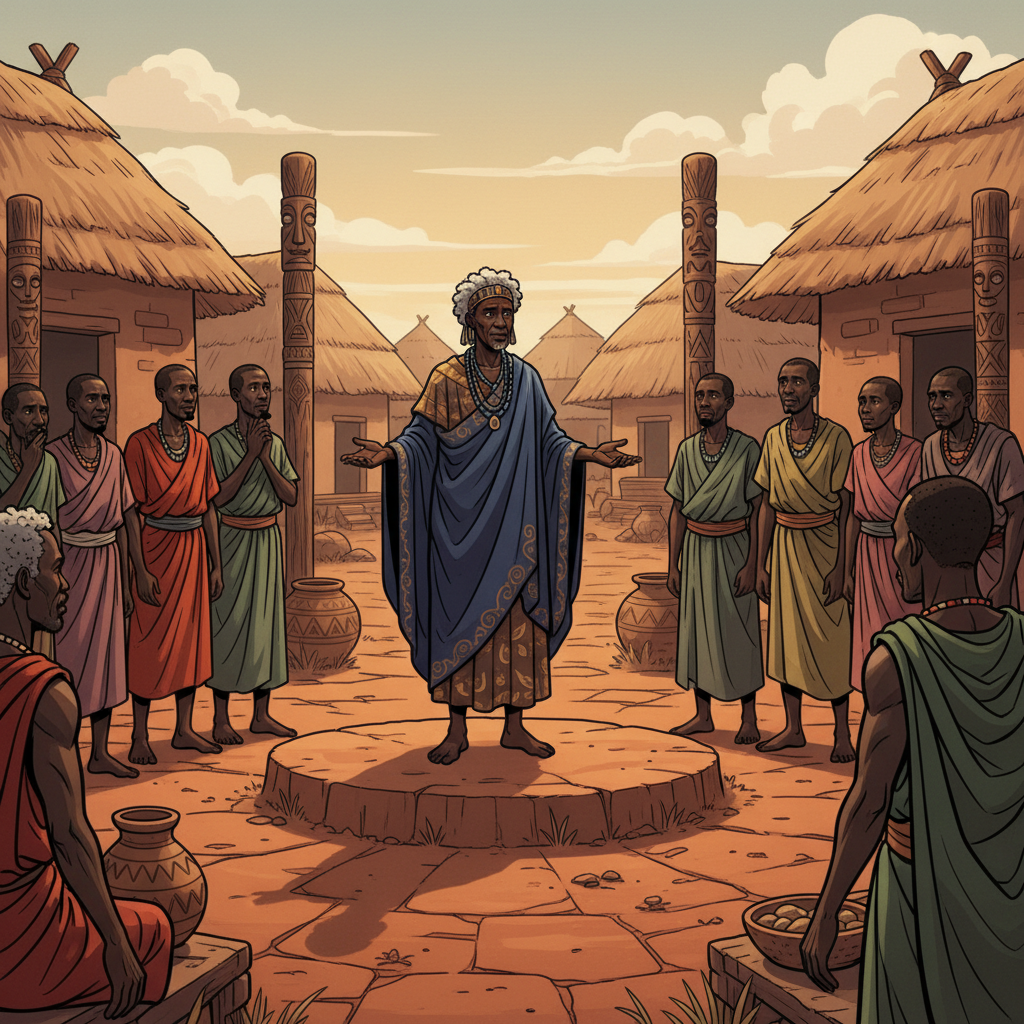
"And the enforcement?" the Aguleri spokesman asked, his voice skeptical. "If Umuleri violates the agreement — or if we do — who compels obedience? You have no soldiers, Nze." Nze Igwe nodded, acknowledging the question without defensiveness. "If either community violates this agreement, I will place that community under nso. They will be cut off from trade, from marriage alliances, from the festivals that bind our people together. Their ozo titles will be suspended. Their dead will not be given proper burial rites." He looked at both delegations with eyes that held no anger, only certainty. "You are free to reject this judgment and go to war. Many men will die. The land will be soaked in blood that will not make the yams grow better. And in the end, you will come back to this circle, or one like it, and try again. You can bleed first, or you can listen. The choice is yours." The silence that followed was profound.
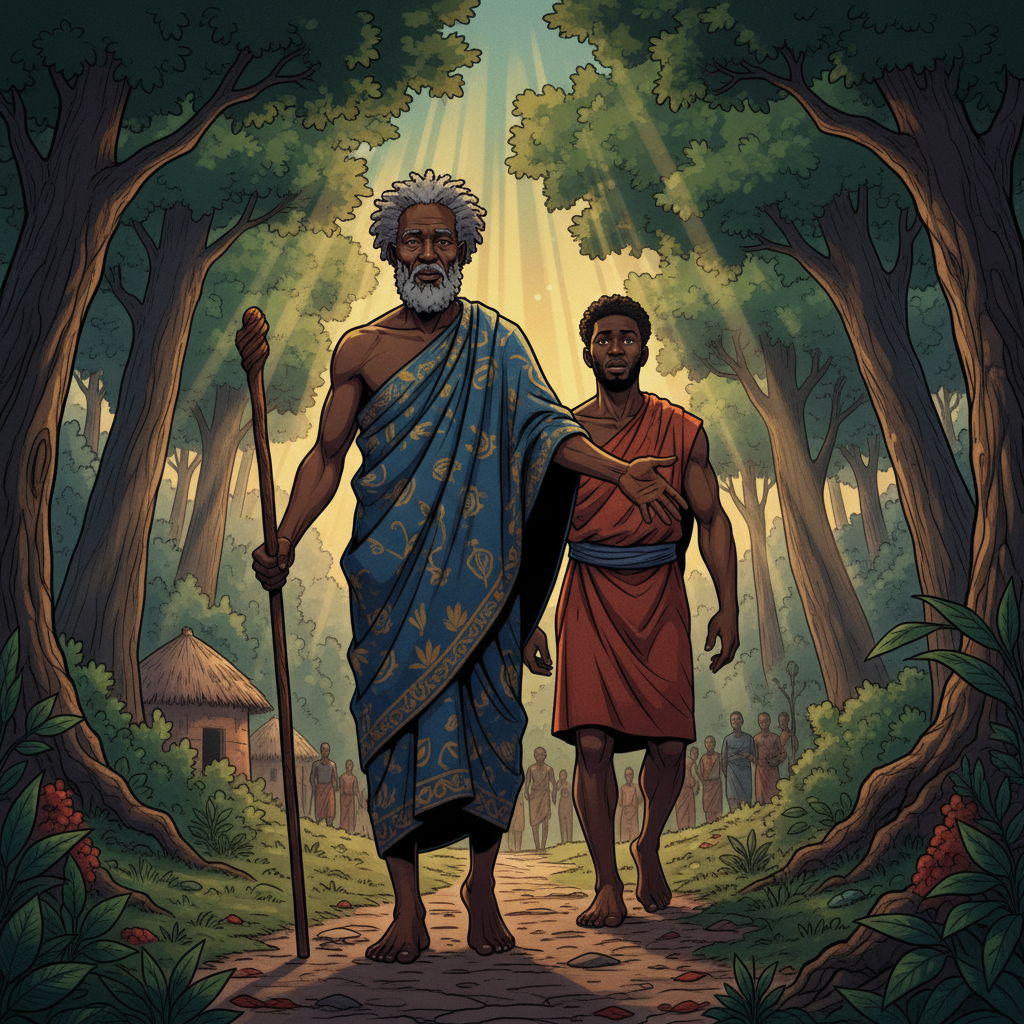
Both communities accepted the arrangement. Not with enthusiasm — Obiora could see the resentment simmering behind the formal agreements, the way men's hands still twitched toward their machetes. But they accepted it, because the alternative was a war that would consume their young men, their crops, and their futures, and because the threat of nso — total social isolation — was a punishment more devastating than any military defeat. As they prepared to leave, Obiora asked the question that had been building in him throughout the mediation. "Nze, what would you have done if they had rejected the judgment? If they had chosen war?" Nze Igwe was quiet for a long time. They were walking through the bush, the sounds of both communities fading behind them. The evening light filtered through the canopy in golden shafts. "I would have placed both communities under nso and walked away," he said. "You cannot force people to choose wisdom. You can only ensure that the choice is clearly presented. The ofo shows the path. It does not carry people along it."
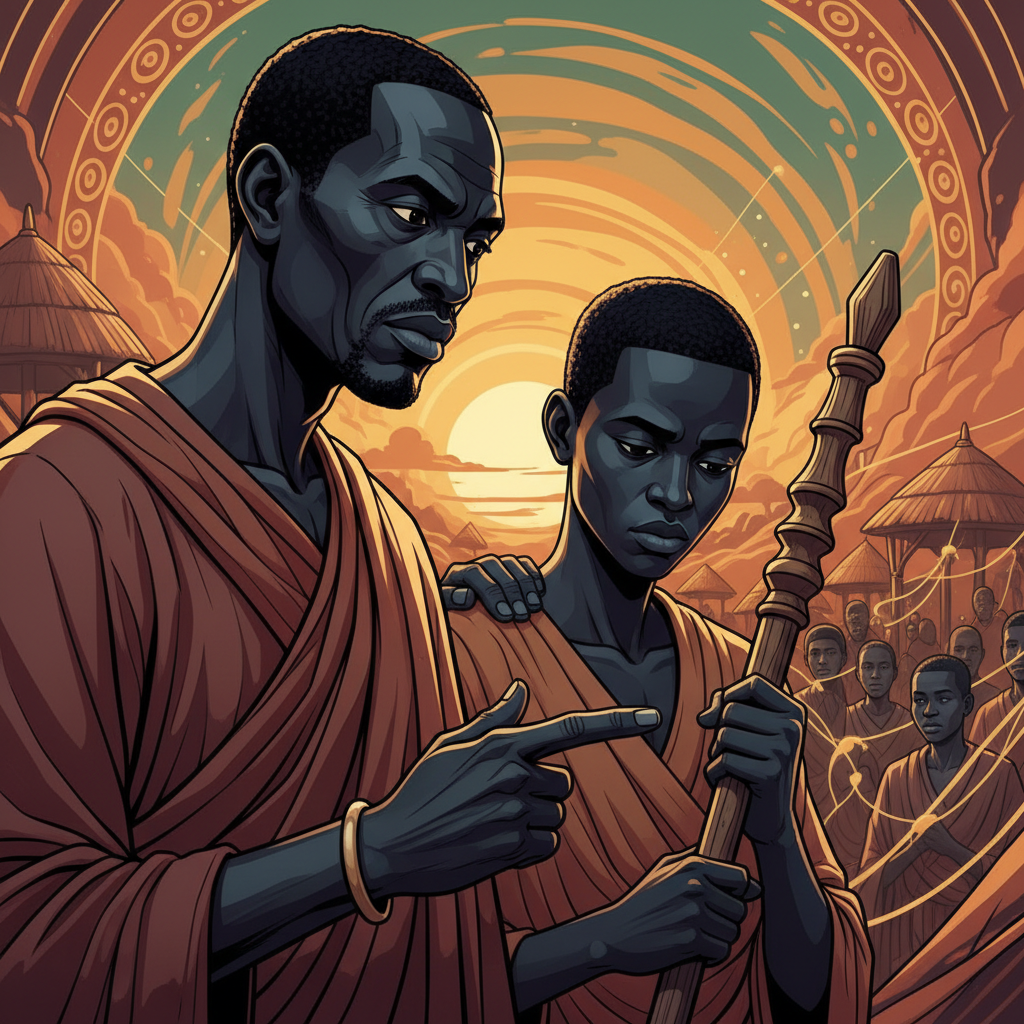
Obiora thought about this for days after their return to Nri. The mediation had worked — for now. But it worked not because Nze Igwe had some mystical power that compelled obedience. It worked because the entire system of Igbo social life — trade, marriage, festivals, burial rites — was interconnected, and Nri had positioned itself at the center of those connections. The threat of nso was effective because isolation in a deeply communal society was a form of death. "What if a community does not care about nso?" Obiora asked. "What if they are strong enough to survive alone?" "Then they are beyond our reach," Nze Igwe admitted. "And that is the limitation of Nri. We do not govern by force. We cannot. The moment we take up the sword, we become just another kingdom fighting for territory. Our power is moral authority, and moral authority only works among people who value their connection to the moral community." He looked at his apprentice. "This is why the training is so demanding, Obiora. The ofo must be held by someone the community trusts absolutely. Our lives, our conduct, our every word — all of it must be beyond reproach. We have no army to fall back on. We have only our integrity."
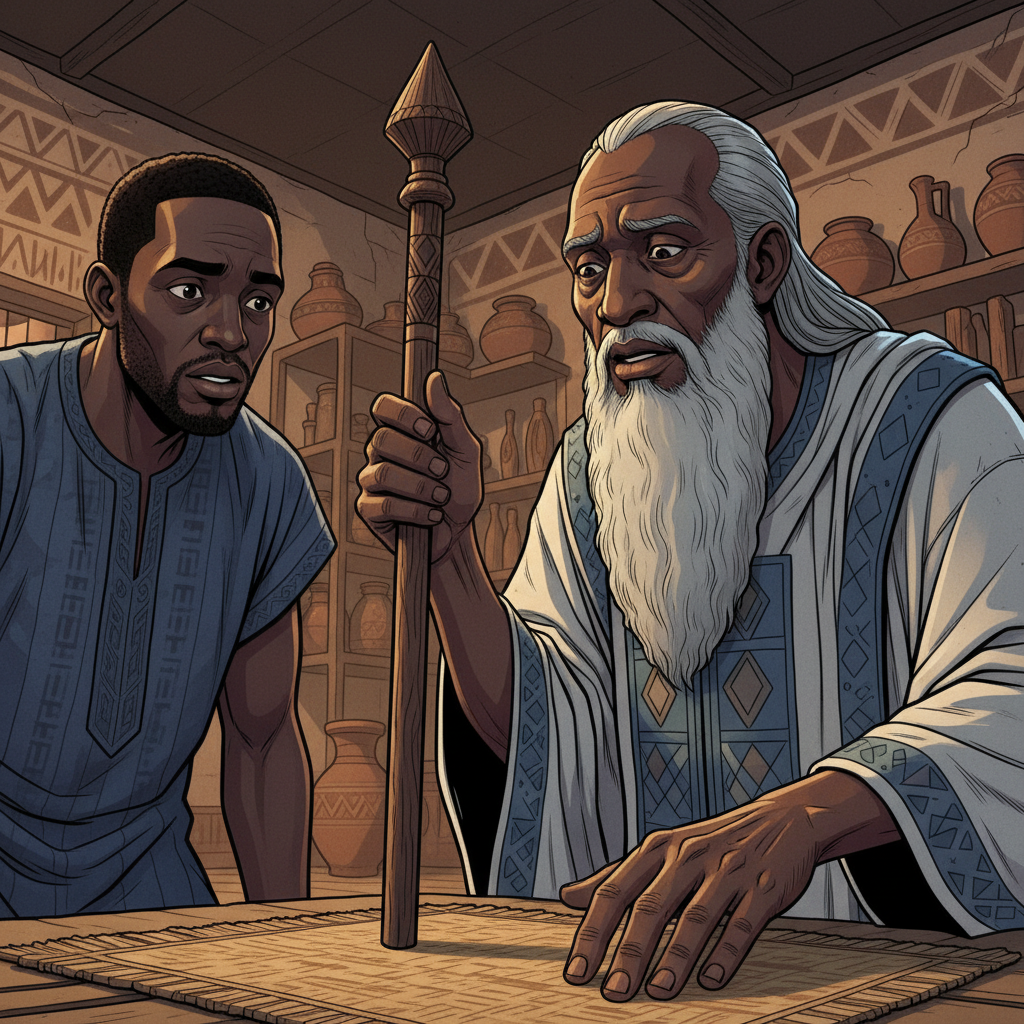
"What about the British?" Obiora asked one evening, months after the mediation. The question had been circling in him like a hawk, waiting for the right moment to land. Reports from the coast and from eastern Igboland had reached Nri — stories of white men with guns, of the Royal Niger Company, of communities burned for resistance. The Aro Expedition had destroyed the Long Juju at Arochukwu. The Ekumeku resistance in western Igboland was being systematically crushed. "What about them?" Nze Igwe replied. "Can the ofo stop them? Can nso work against an enemy who does not belong to our moral community? Who does not care about our trade, our festivals, our burial rites?" Nze Igwe did not answer immediately. When he did, his voice was slower than usual, as if each word carried more weight. "No. The ofo cannot stop a people who do not recognize its authority. Nso means nothing to those who have already separated themselves from the relationships that give it power." He set down the staff. "That is the truth, Obiora, and a priest who hides from truth is not a priest."
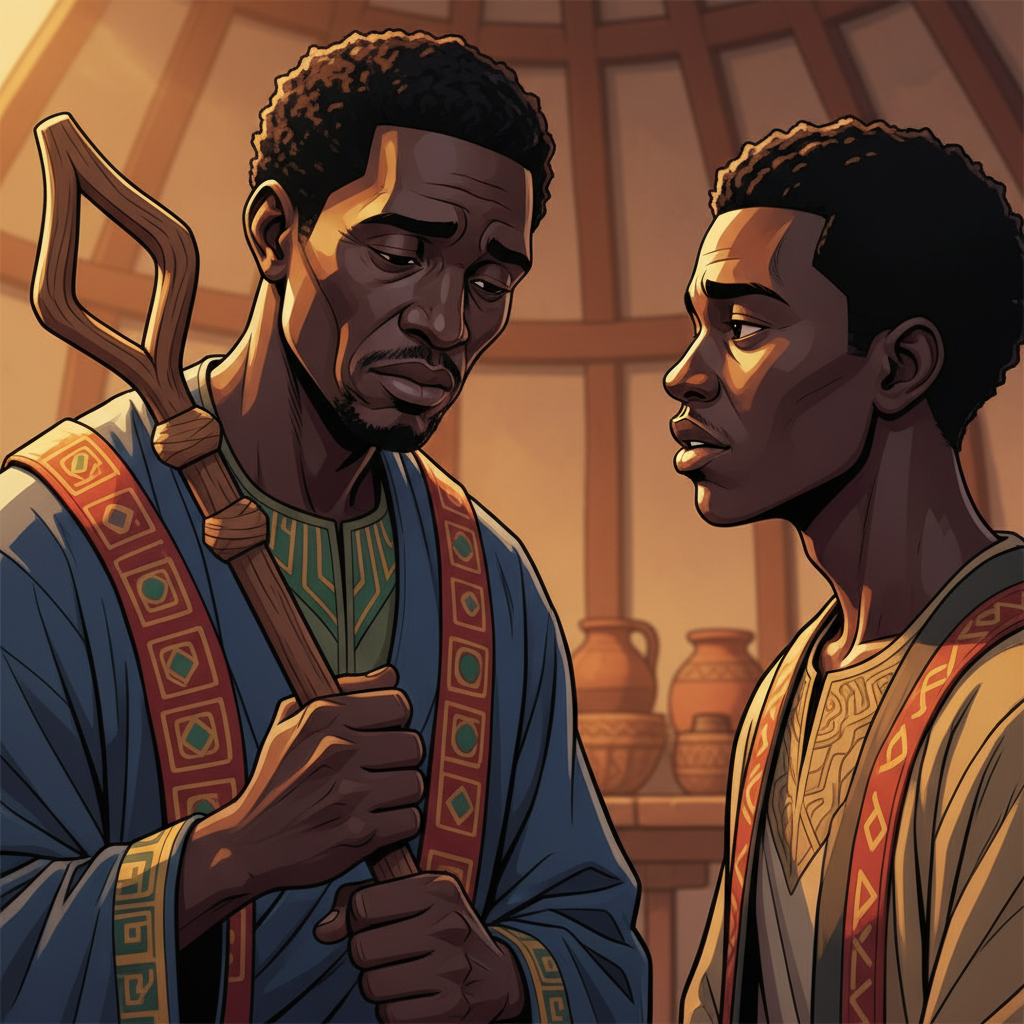
"Then what do we do?" Obiora felt the question like a wound. "We do what we have always done. We offer mediation. We maintain the rituals. We preserve the knowledge. And we accept that our way — the way of the word, of moral authority, of resolution without bloodshed — has limits." Nze Igwe picked up the ofo again, turning it slowly in his hands. "Every system of governance has limits, Obiora. The warriors who fight the British are brave, but they cannot match the guns. The traders who bargain are shrewd, but they cannot match the economic power. And we, who mediate, cannot mediate with those who do not seek mediation." "Is our way wrong, then?" Nze Igwe looked at him with an expression that held both sadness and certainty. "Our way has kept more people alive and more communities intact than any sword in Igboland. For a thousand years, Nri resolved conflicts that would have become wars. That is not nothing. That is the work of ten thousand lifetimes. But no, it is not a shield against every weapon. No way of life is."
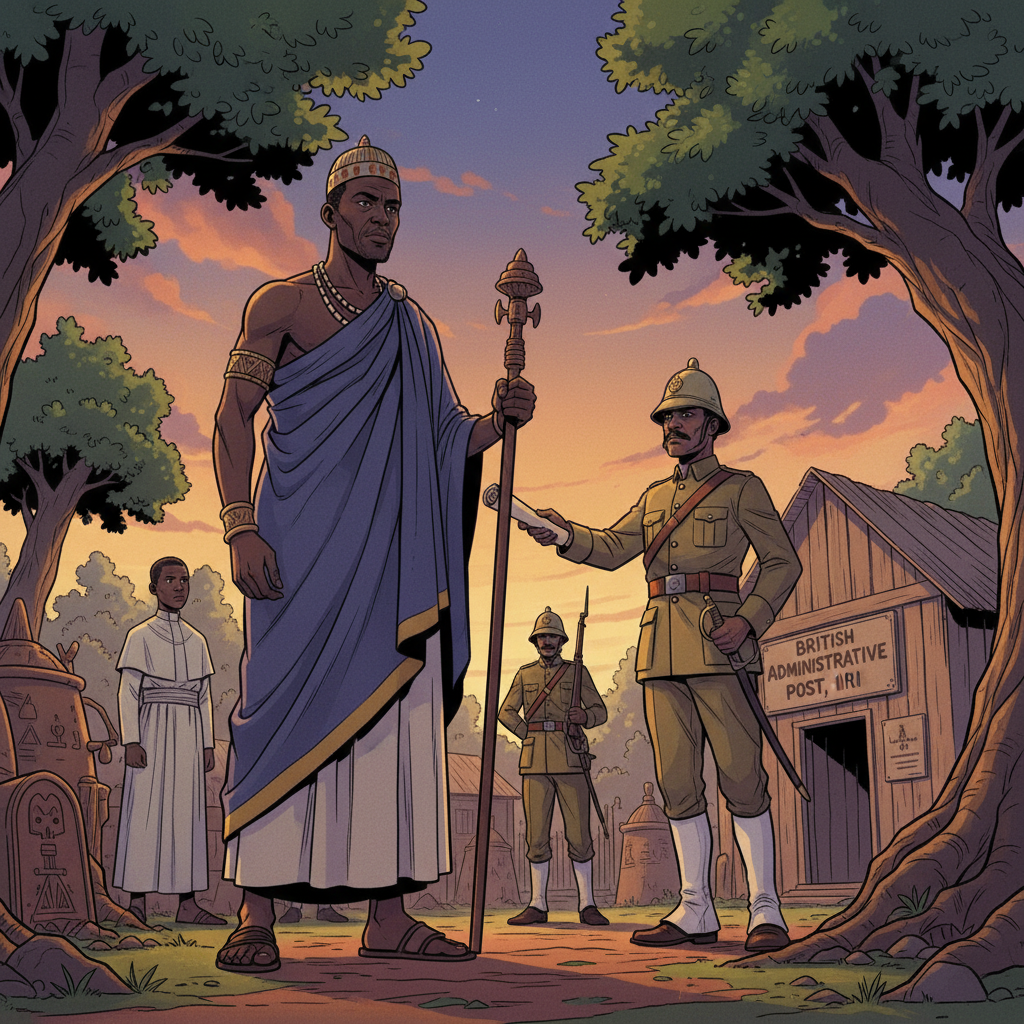
The British came to Nri in 1911. They came, as they came everywhere, with soldiers and demands. The Eze Nri at the time, Obalike, faced the same impossible choice that leaders across Igboland had confronted: fight and be destroyed, or submit and be governed. Obalike chose a third path, consistent with Nri tradition. He neither fought nor fully submitted. He negotiated — not from strength, not from weakness, but from the particular kind of authority that centuries of moral governance had given the Nri kingdom. He allowed the British to establish their administrative presence while quietly maintaining as many of the ritual and social functions of Nri authority as possible. It was an imperfect solution. Obiora, watching from his position as a junior priest, felt the compromise like a crack in a foundation — the system working, technically, but weakened in ways that would compound over time. The colonial courts absorbed cases that Nri priests had once mediated. The nso sanctions lost their force as the economic system shifted to colonial control.
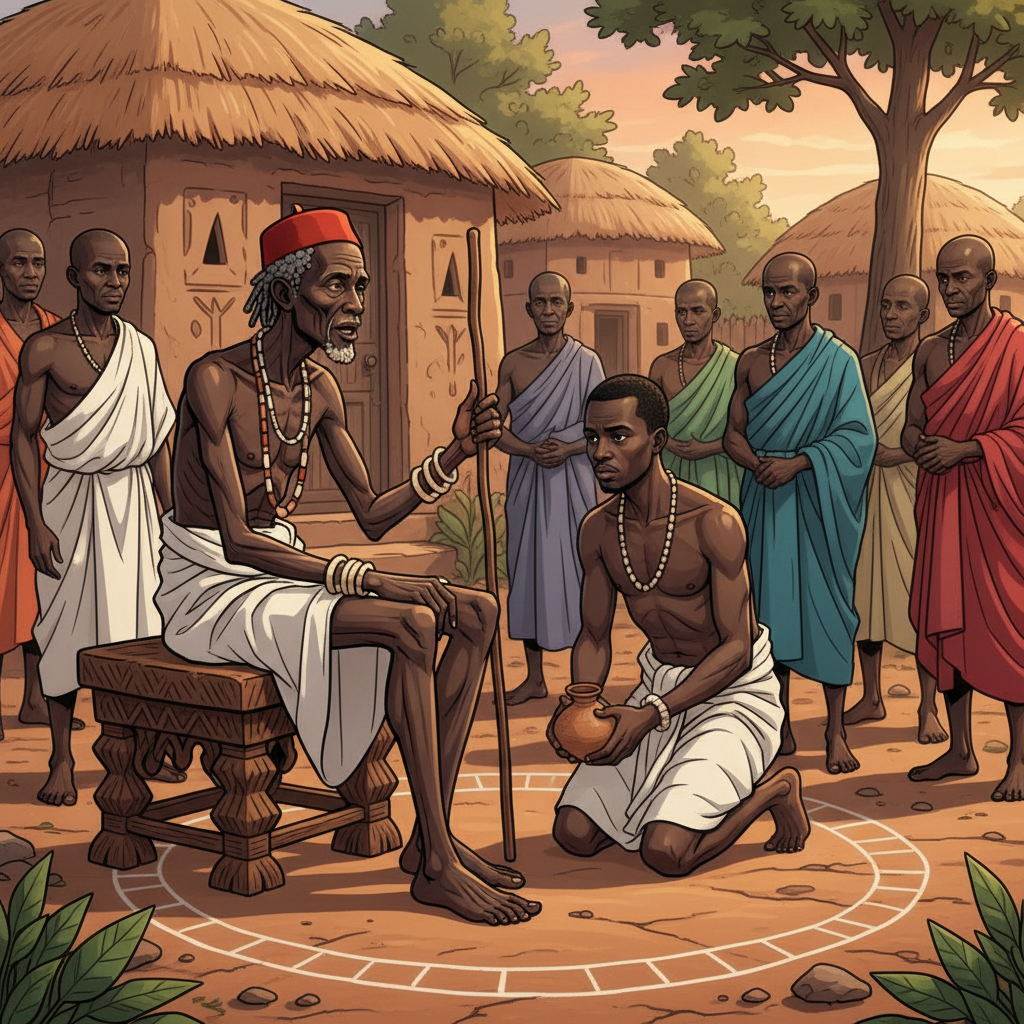
But something survived. The ozo title system continued. The ritual cleansing practices continued. The oral histories, the genealogies, the accumulated wisdom of a thousand years of conflict resolution — all of this was preserved, passed from elder to apprentice in the same careful way Nze Igwe had taught Obiora. "They can take our courts," Nze Igwe said, near the end of his life, his body frail but his voice still carrying the authority of the ofo. "They can take our trade. They can even take our land. But they cannot take the principle. The principle that power exercised through wisdom, through listening, through moral authority, is superior to power exercised through force. That principle does not need a kingdom to survive. It only needs people who believe in it enough to practice it." Obiora became Nze Obiora in time, carrying on his master's work in a world that had changed around him. He mediated disputes between families, between villages, between the old ways and the new. His tools were the same: the ofo, the chalk, the circle drawn in the earth, the patient listening, the question that went deeper than the argument.
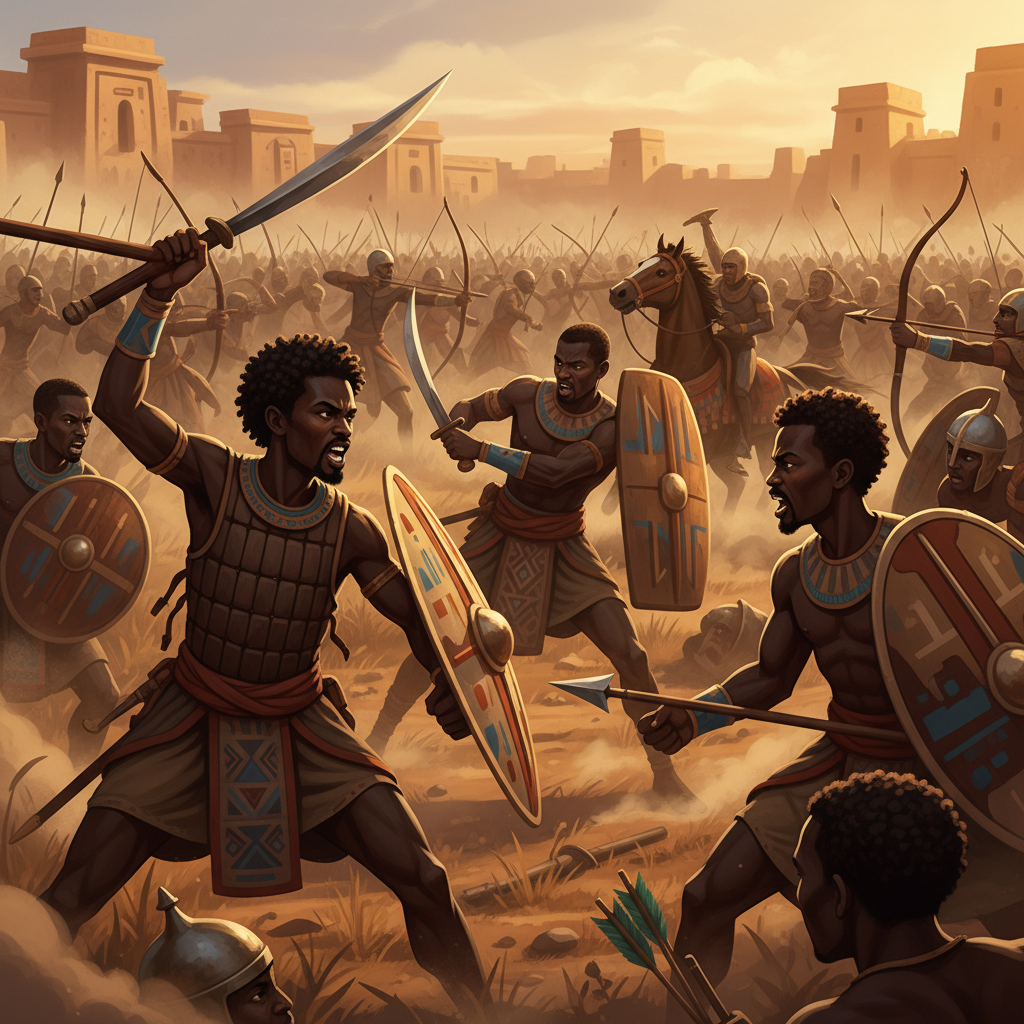
{name}, the Kingdom of Nri offers a profound challenge to the way we usually think about power. In a world that celebrates military might and equates strength with the ability to destroy, Nri built a civilization on the opposite principle — that true strength is the ability to create peace, to resolve conflict, to maintain order without shedding blood. This does not mean Nri's way was without flaws or limitations. The story shows us honestly that moral authority cannot stop an enemy who does not recognize it. The British came with guns, and the ofo could not deflect bullets. But the story also shows us that Nri's legacy outlasted the military resistance of kingdoms that fought the British with weapons. The ozo title system, the ritual practices, the mediation traditions — these survived colonialism because they lived in the relationships between people, not in physical structures that could be burned. Wisdom, in the Maat tradition, is not the same as intelligence. Intelligence solves problems. Wisdom knows which problems to solve and which to endure. The Nri chose wisdom — the patient, unglamorous, demanding wisdom of listening, mediating, and building peace one dispute at a time, for a thousand years.
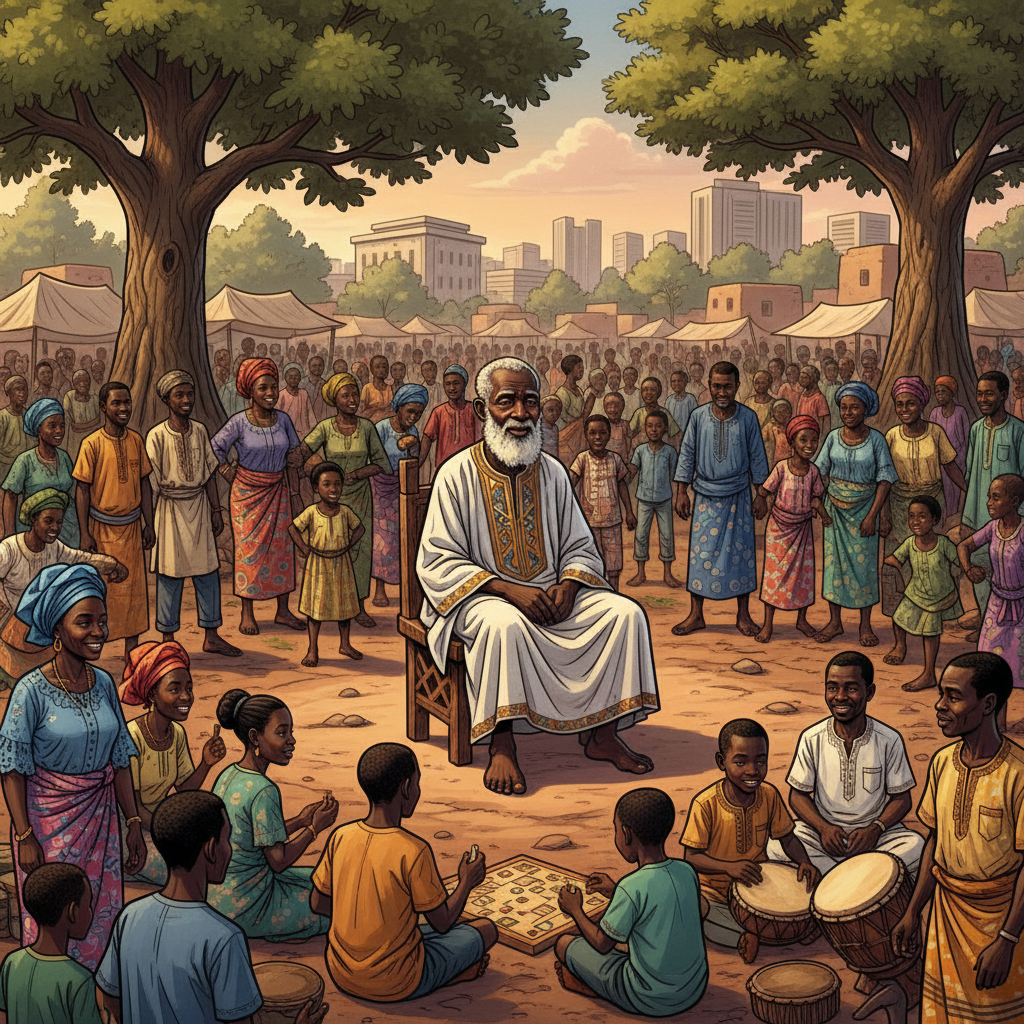
Nze Obiora lived to be very old. His apprentices became priests who carried the tradition forward into an independent Nigeria, where the principles of Nri mediation informed community dispute resolution long after the kingdom itself had ceased to function as a political entity. When his youngest apprentice asked him, near the end, whether the way of the ofo had been worth it — whether a thousand years of choosing words over weapons had truly made a difference — Nze Obiora gave an answer that Nze Igwe would have recognized. "Count the wars that did not happen," he said. "Count the children who grew up because their fathers came home alive from a mediation instead of dead from a battlefield. Count the communities that still trade, still marry each other's children, still celebrate together, because someone sat in a circle and listened instead of reaching for a machete." He smiled — one of his rare smiles. "You cannot see what did not happen. That is the burden and the glory of the peacemaker. The wars that never were — those are our monument."