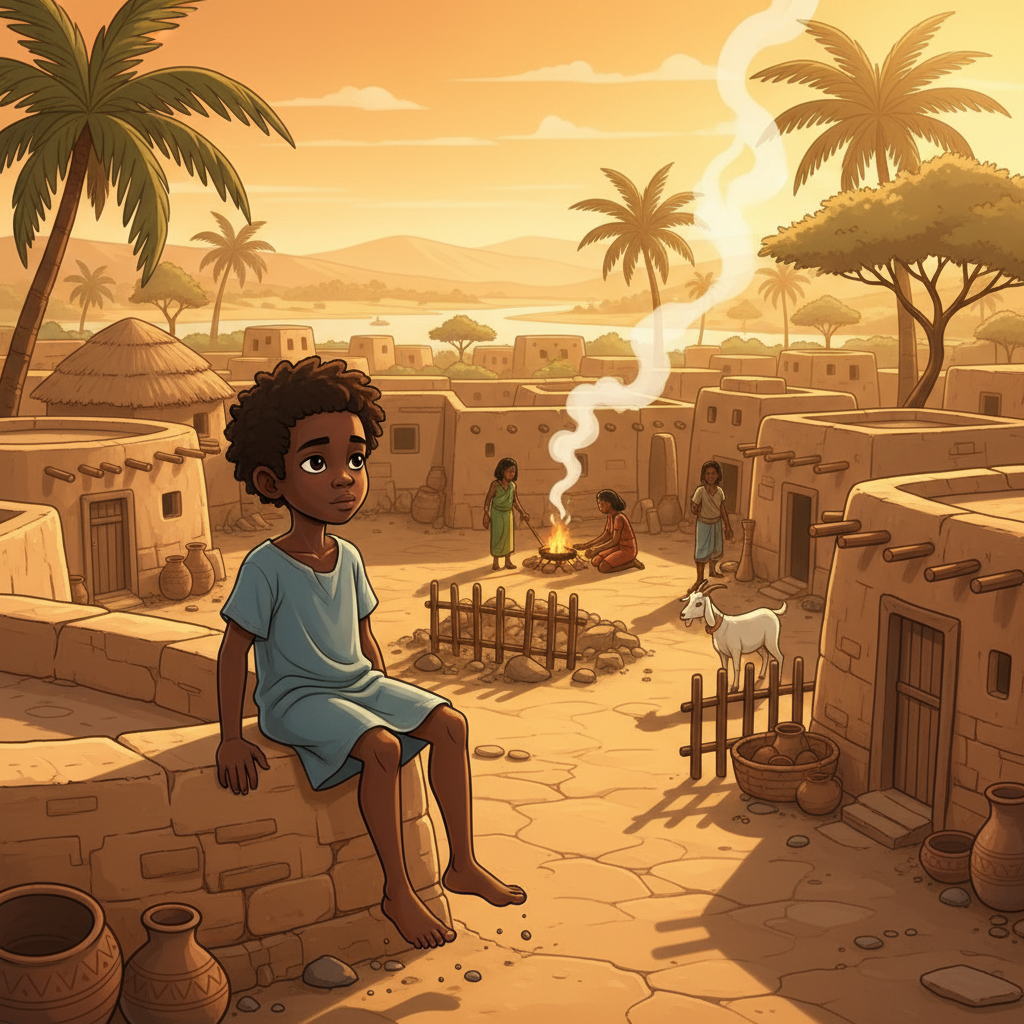
The morning sun poured golden light over the village of Ipet-Isut, filling every corner with warmth. Little Mensah sat on a mud-brick wall in the courtyard of his per, swinging his bare feet and watching the world wake up around him. He was seven years old, with deep ebony skin that glowed like polished wood in the early light. The air smelled of burning acacia wood and warm bread, and somewhere nearby a goat bleated for its breakfast. Mensah loved this time of morning, when everything felt slow and golden and safe.
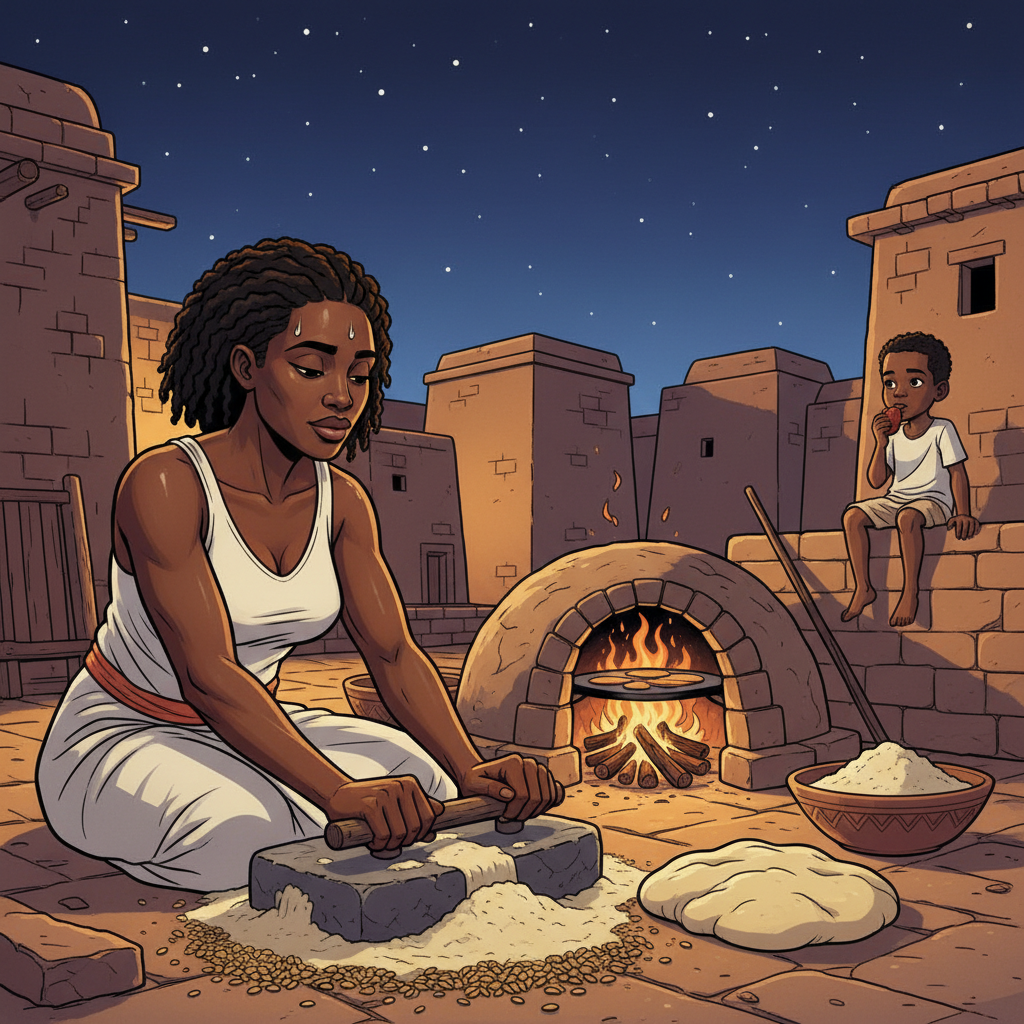
His mother moved through the courtyard like a river moves through the land — steady, never stopping. Her strong dark hands gripped the grinding stone and pushed it forward, crushing golden emmer wheat into fine flour. The muscles in her arms worked beneath her smooth brown skin, back and forth, back and forth. Sweat gathered on her forehead, but she did not wipe it away. She poured the flour into a clay bowl, then began kneading dough with her fists, pressing and folding. She stoked the fire with a long stick until the flames leaped up and licked the bottom of the baking stone. Mensah watched all of this from his wall, chewing on a piece of dried fruit, not moving.
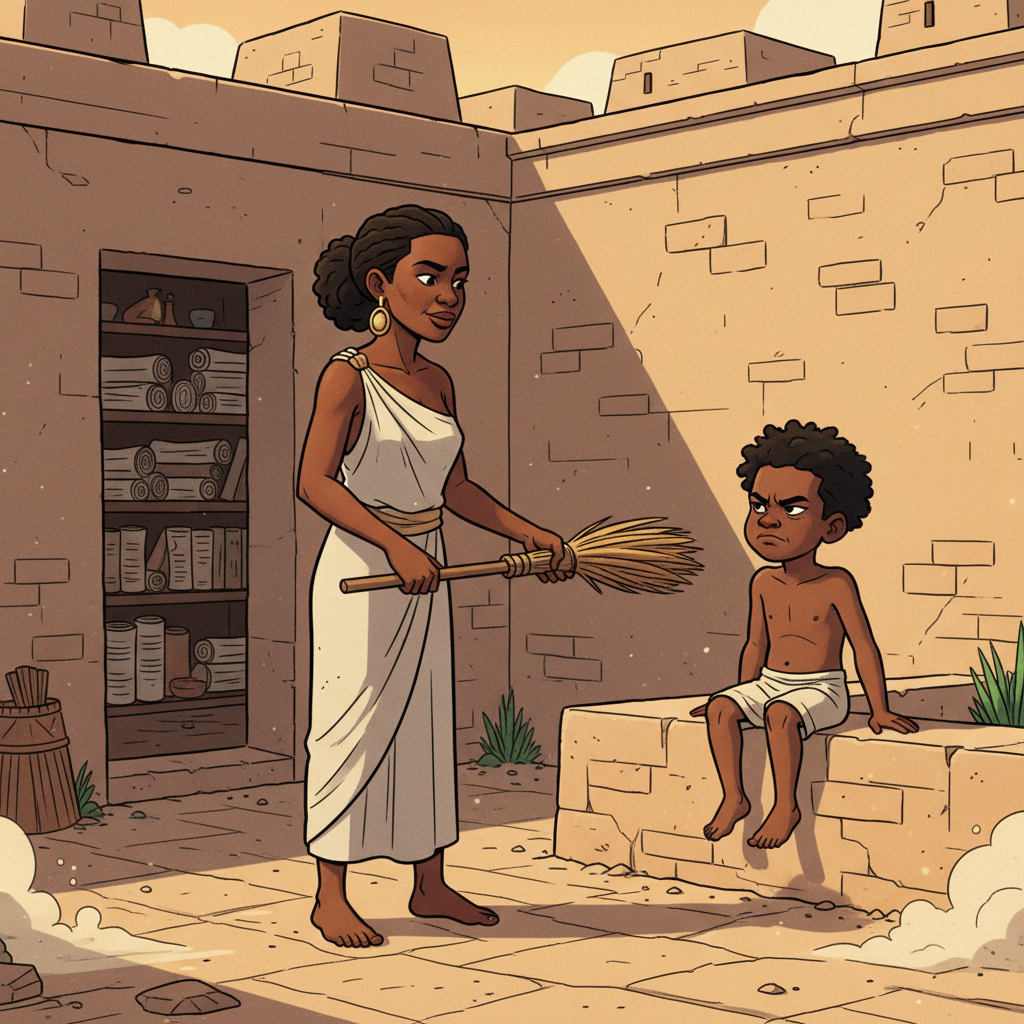
His mother finished placing the dough on the hot stone and wiped her hands on her linen wrap. She walked to the corner of the courtyard where a broom made of bundled palm fronds leaned against the wall. She picked it up and held it out to Mensah. "Sweep the courtyard," she said. "The dust is thick from last night's wind." Mensah looked at the broom like it was a dead fish. He wrinkled his nose. "Sweeping is not for boys," he said, lifting his chin high. "I am going to be a sesh. I will write important words on papyrus for the per ankh. I do not need to sweep."
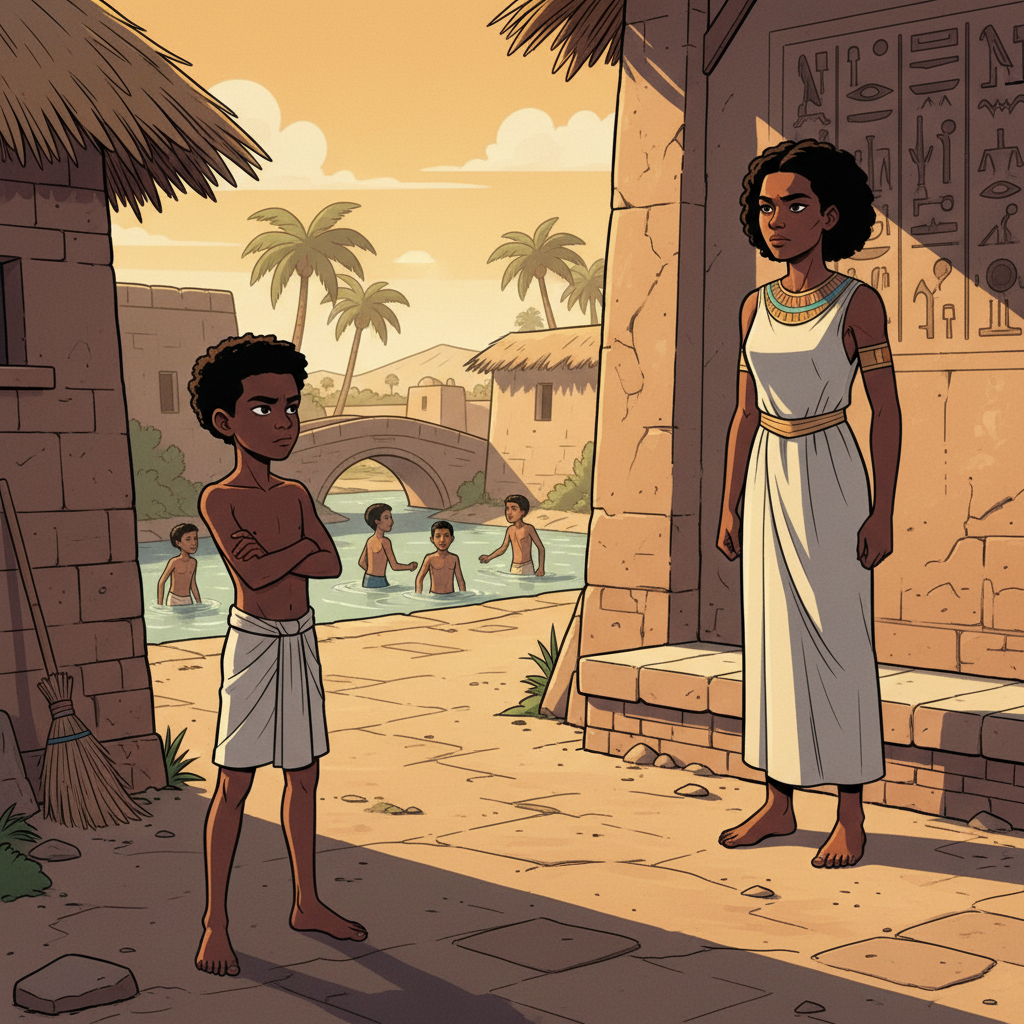
His mother's dark steady eyes did not blink. Her voice was low, and it carried weight like a stone carries the memory of the mountain it came from. "Who told you that sweeping is not for boys?" she asked. Mensah shrugged one shoulder. "No one told me. I just decided it myself." He crossed his arms over his narrow chest and looked away toward the canal where his friends were already playing.
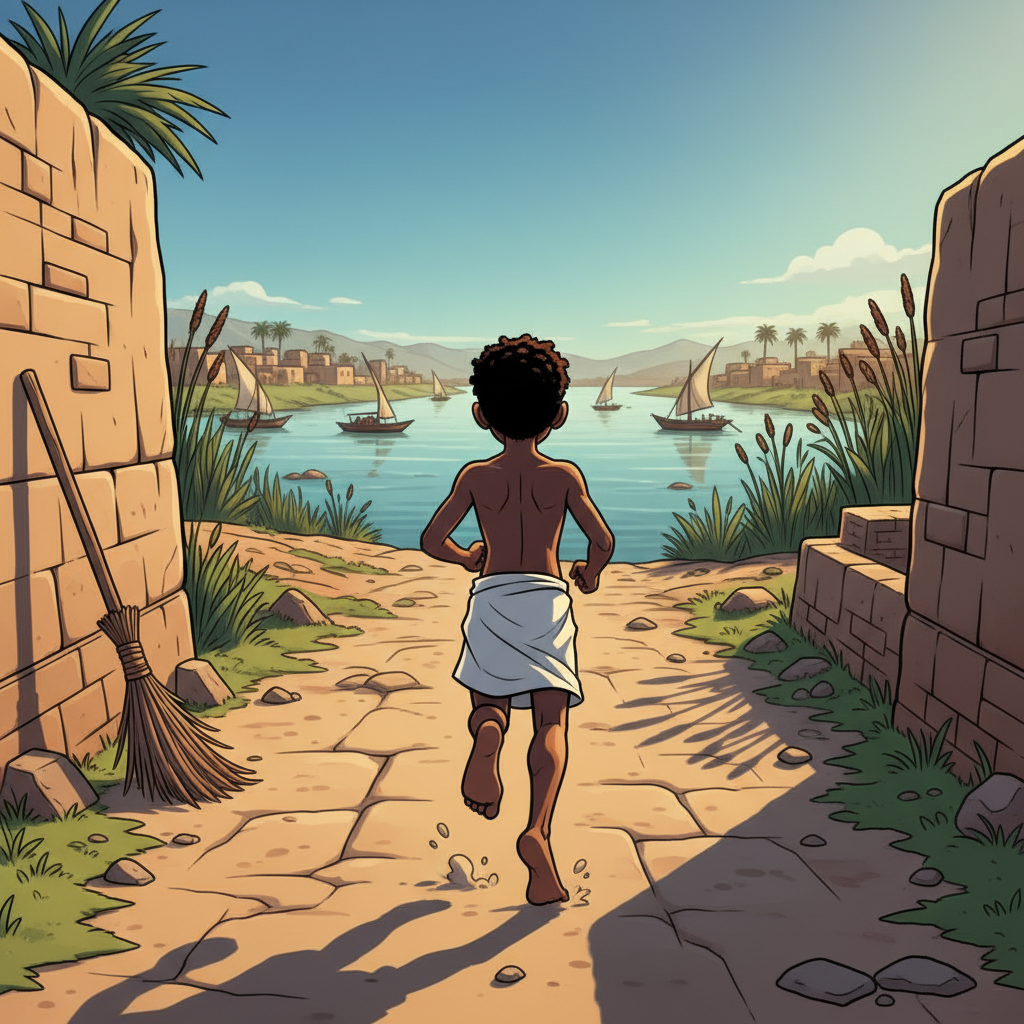
His mother set the broom down slowly, leaning it back against the wall. "You decided," she repeated. "But Ma'at did not decide that. Ma'at teaches us that every person in the per has work to do. The nebet per cooks and grinds. The father builds and repairs. The child sweeps and carries water. This is how order lives in a home." Mensah was already sliding off the wall. "I will sweep tomorrow," he called over his shoulder. He ran toward the canal path, his feet slapping the warm packed earth. Behind him, the courtyard sat dusty and still, and the broom leaned against the wall where no hand held it.

Down by the canal, the water sparkled like a thousand tiny fish made of light. Mensah splashed in the shallows with his friends Khufu and Esi, chasing frogs between the papyrus reeds. They threw mud balls at a dead palm trunk and pretended they were soldiers defending Kemet from invaders. The sun was hot on their backs and the water was cool on their legs and everything felt perfect. But something small and quiet sat in Mensah's chest like a pebble in a sandal. He kept thinking about his mother's hands on the grinding stone, pushing back and forth. He kept seeing the broom leaning against the wall. He shook the feeling away and dove under the green water, but when he came up, the feeling was still there, sitting quietly, waiting.
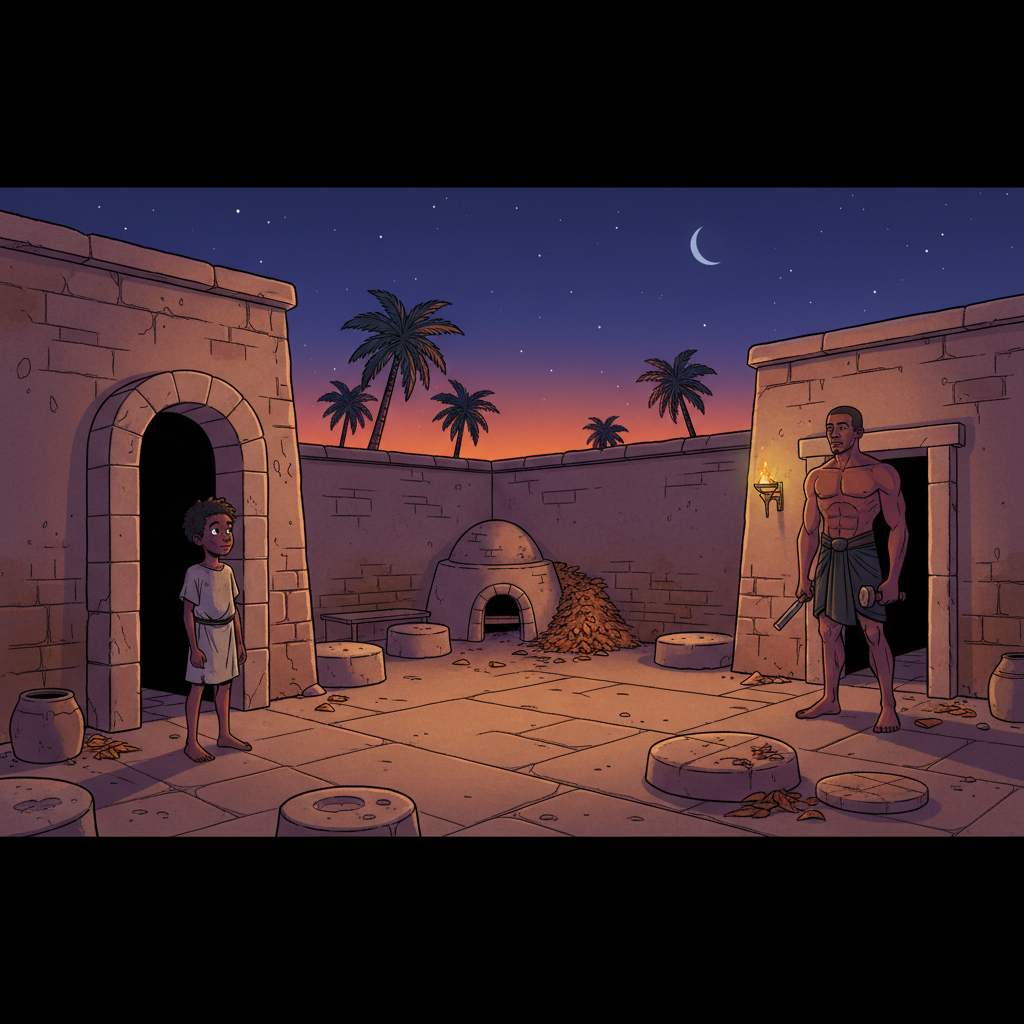
When the sun turned orange and sank behind the palm trees, Mensah walked home with wet feet and a tired smile. But when he stepped through the doorway of the per, his smile fell away like a leaf from a branch. The courtyard was exactly as he had left it. Dust covered the sitting stones. Dried leaves had blown against the cooking area. A thin layer of grit coated the baking stone where his mother made bread. His father stood at the entrance, home from the stoneworks where he carved blocks for the temple. His father was a tall man with powerful shoulders and skin as dark as the rich soil along the river. He looked at the dusty courtyard. He looked at the dirty sitting stones. He did not sit down. He did not say one word. Somehow his silence was louder than any shout Mensah had ever heard.
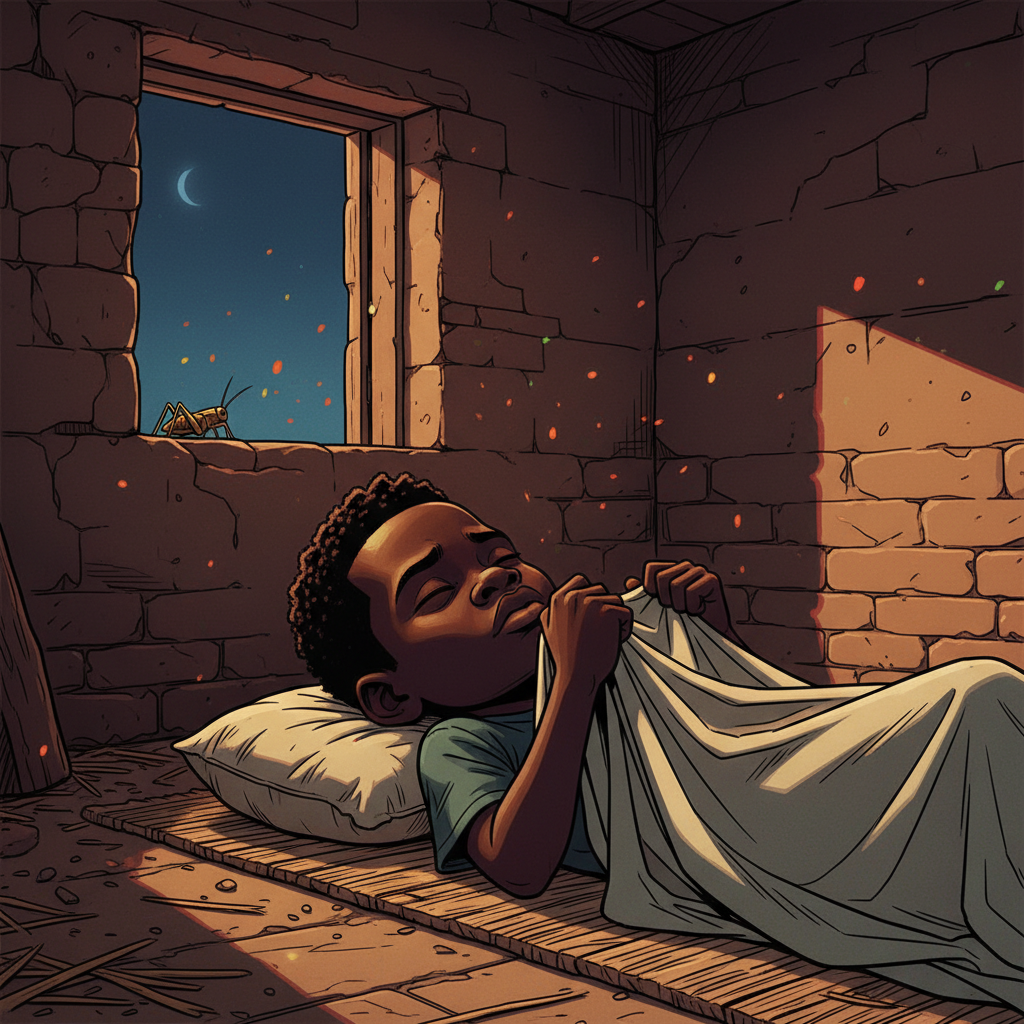
That night, Mensah lay on his sleeping mat and listened to the sounds of the per settling into darkness. A cricket sang outside the wall. The last embers of the cooking fire popped and hissed. His father had eaten his evening meal standing up because the stones were too dirty to sit on. His mother had said nothing about it. Nobody said anything at all, and the quiet felt heavy, like the air before a storm on the river. Mensah pulled his linen sheet up to his chin. He thought about what his mother had said about Ma'at. He thought about order, and how every person had a part. But he was going to be a sesh — someone important. Surely important people did not sweep. He closed his eyes and pushed the thoughts away, letting sleep carry him off like a boat on dark water.
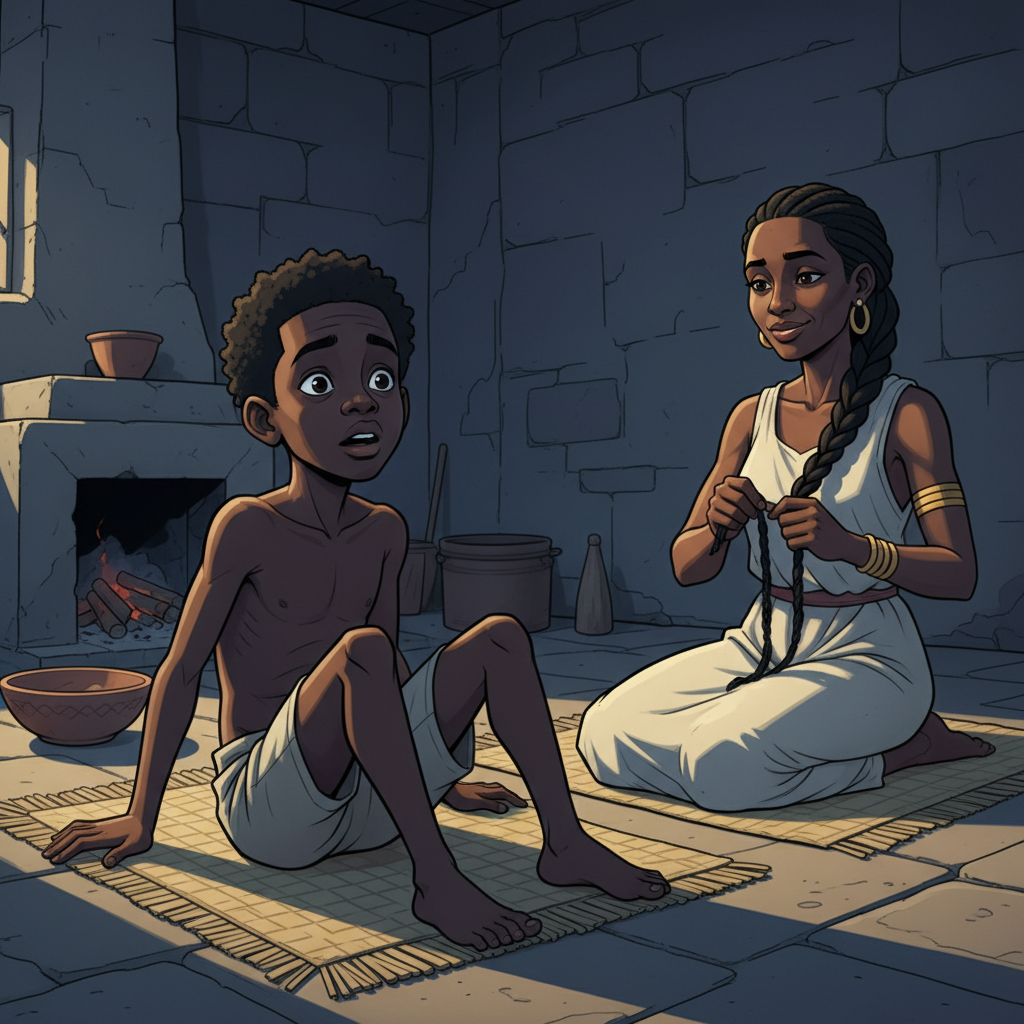
When Mensah woke the next morning, something was wrong. The golden smell of warm bread was missing. The sound of the grinding stone was missing. The crackle of the cooking fire was missing. He sat up on his mat and looked around. The hearth was cold and dark. No flames. No dough on the baking stone. No bowl of porridge waiting for him. His mother sat calmly on her mat, braiding her hair with slow, easy fingers. Mensah's stomach made a sound like a small angry animal. "Mother, where is the food?" he asked. She looked at him with those dark steady eyes and said, "I have decided that cooking is not for women. I am going to do something else instead." She smiled, just a little, at the corners of her mouth.
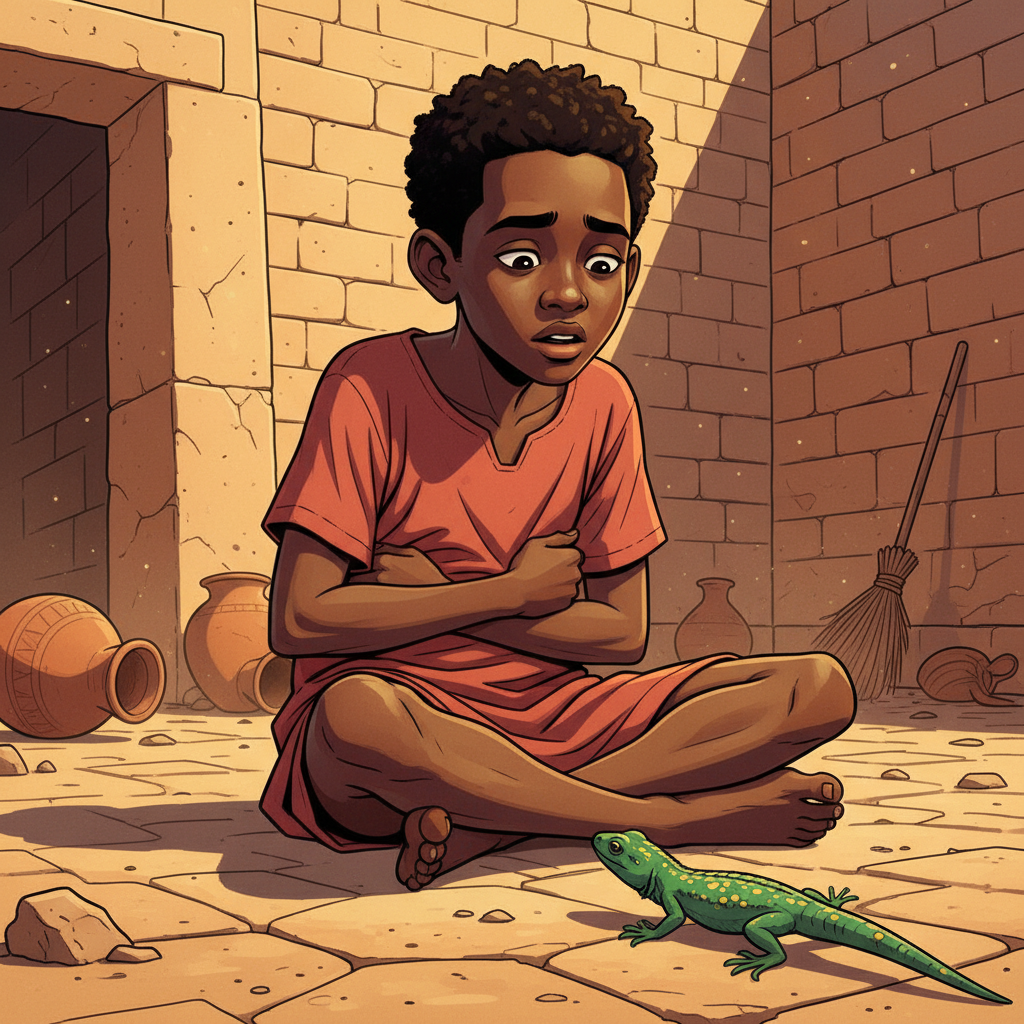
By midday, the sun was high and Mensah's stomach was a hollow drum. He sat in the dusty courtyard with his arms wrapped around his belly, feeling the emptiness gnaw at him like a mouse chewing through rope. His ka felt low and tired, like a flame with no oil to burn. He watched a lizard run across the dirty stones and disappear into a crack in the wall. And then, slowly, like the river rising in flood season, Mensah began to understand. His mother had stopped her work so he could feel what it meant when one person in the per refused their part. The home was a system, like the great irrigation channels that fed the fields. If one channel was blocked, the water could not flow. If one person refused their duty, the whole per suffered. This was not about boys or girls. This was about Ma'at — the sacred balance that held everything together. And when balance broke, what rushed in was Isfet — disorder, chaos, the enemy of all good things.
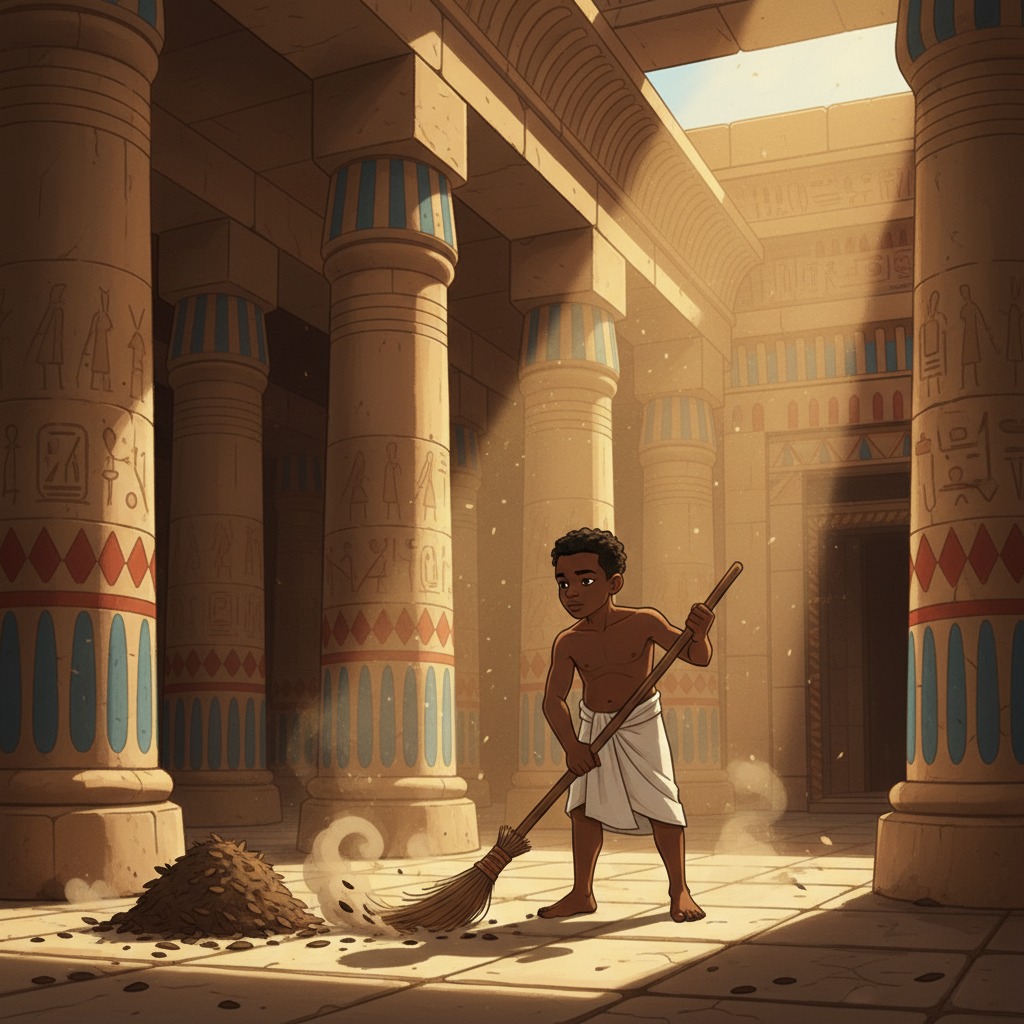
Mensah stood up. His legs felt shaky from hunger, but something inside him felt strong and clear, like a bell ringing in a quiet temple. He walked to the corner of the courtyard and picked up the broom. The palm fronds felt rough and real in his hands. He began to sweep. At first the dust rose up in clouds and made him cough. But he kept going, finding a rhythm — swish, swish, swish — like the rhythm of his mother's grinding stone, like the rhythm of his father's chisel on temple rock. The dust began to clear. The stones beneath his feet appeared, clean and smooth. Mensah swept the leaves into a pile. He swept the grit from the baking stone. He swept until the whole courtyard was clean and bright, and when he looked at what he had done, a warmth spread through his chest that had nothing to do with the sun.
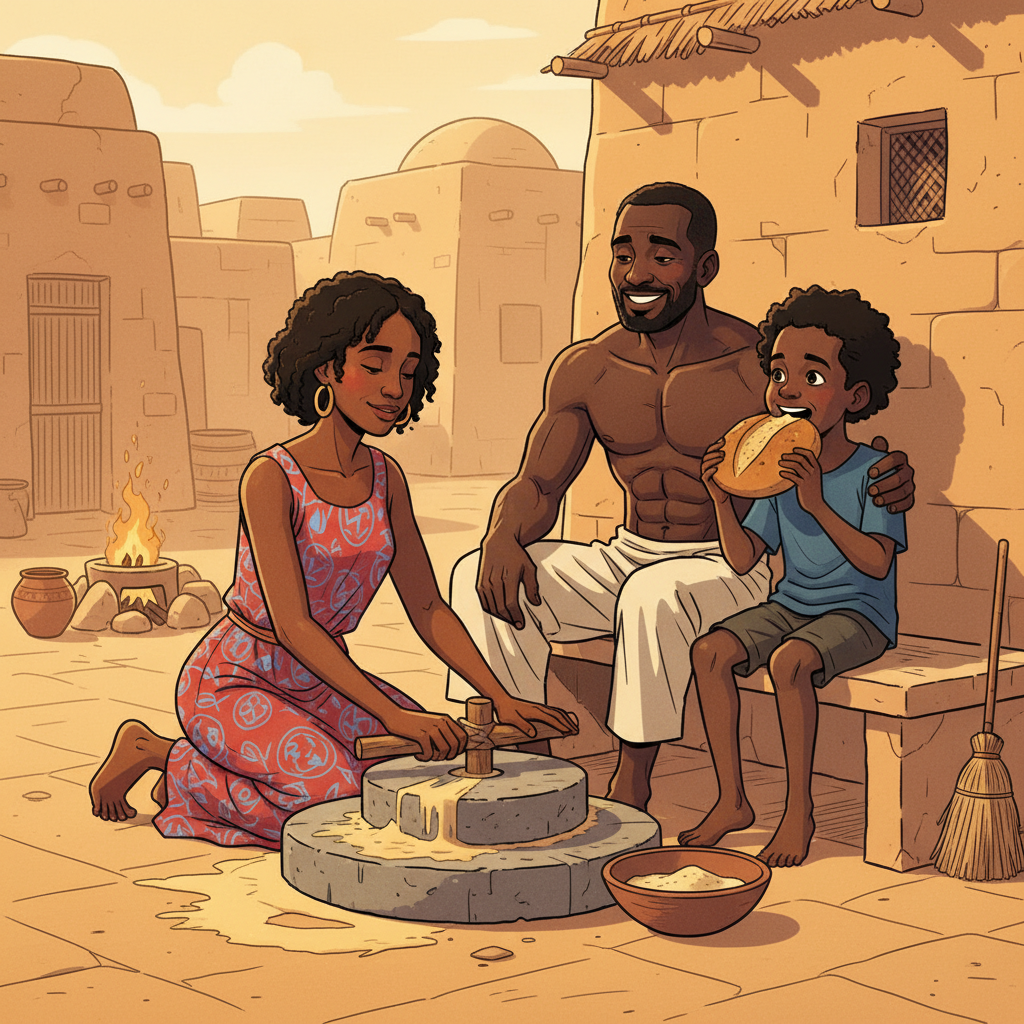
His mother rose from her mat. Without a word, she walked to the grinding stone and began to crush the golden grain. The sound filled the courtyard like music. His father came home and looked at the clean stones and sat down with a deep, satisfied breath. The smell of fresh bread floated through the per, and Mensah thought it was the most beautiful smell in all of Kemet. His father put a hand on Mensah's shoulder. His grip was firm and warm. "A man who cannot keep a home cannot keep anything," he said. "Not a temple. Not a kingdom. Not even his own ka. The broom is not beneath you, my son. The broom is where greatness begins." Mensah bit into the warm bread his mother had made, and it tasted like the first meal ever cooked in the history of the world. He understood now — the per was the first temple, and Ma'at lived in every small duty done with a willing heart.