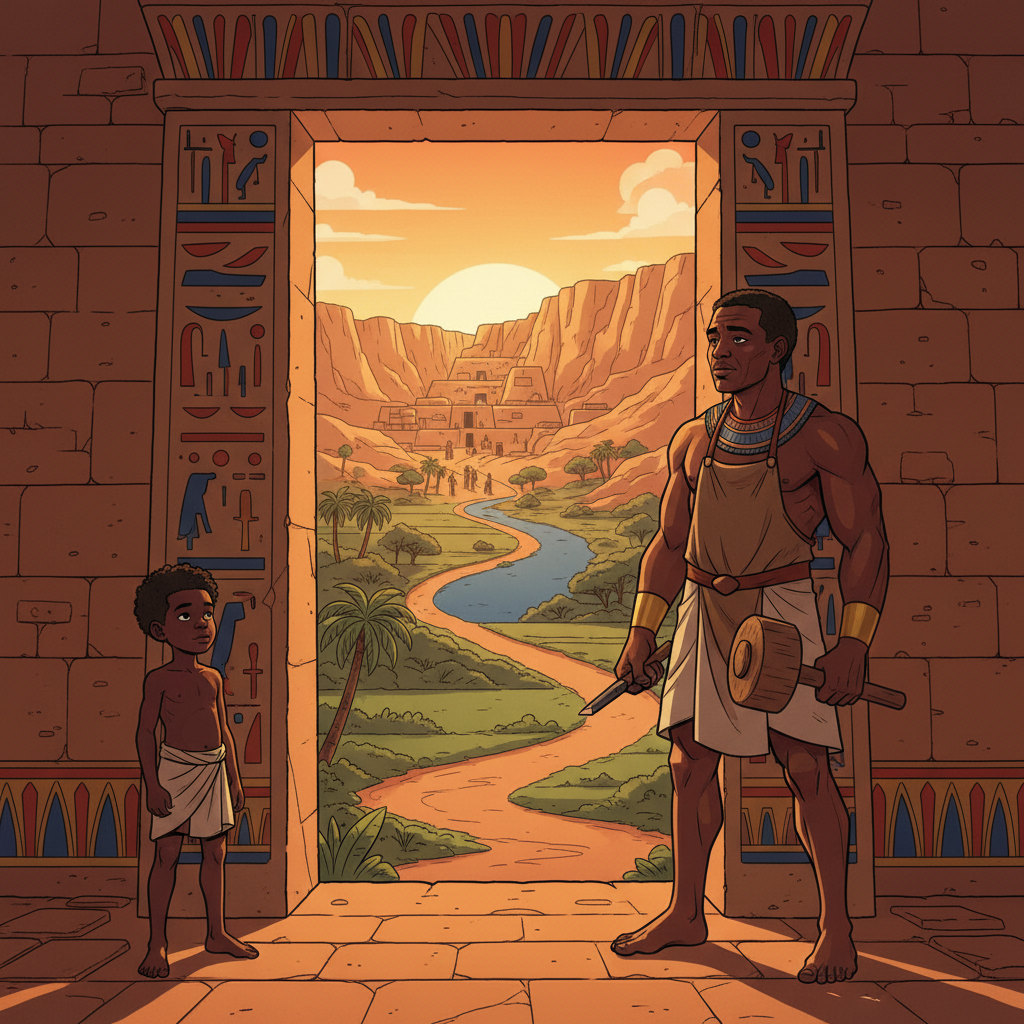
Kofi stood at the door of his family's per every morning and watched his father leave for the stone quarry. His father, Amenhotep, was broad-shouldered with skin the color of rich earth after the Inundation — deep, dark, and gleaming in the early sun. He carried himself like a man who could hold up the sky, his strong hands rough from years of shaping limestone. But what Kofi noticed most was not his father's strength. It was the moment at the door. Every single morning, without fail, Amenhotep stopped. He did not rush. He did not stumble through. He paused at the threshold as if the doorway itself demanded something from him.
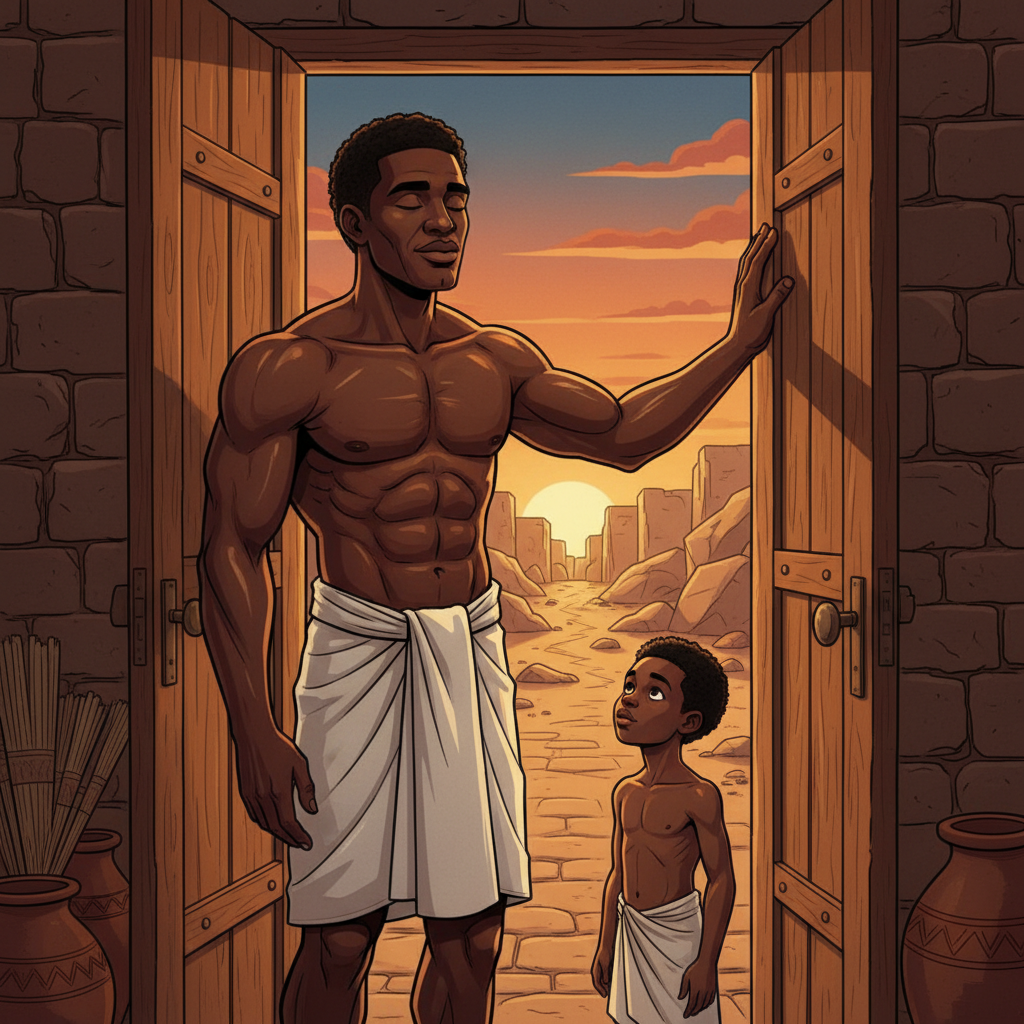
Every morning, Amenhotep paused at the threshold — the space between inside and outside. He placed one hand on the wooden doorframe, closed his eyes, and took one slow breath. Then he stepped through into the bright morning. Every evening, when he returned with stone dust on his skin and tiredness in his bones, he paused again before entering. He breathed. Then he stepped inside. Kofi asked him once: "Baba, why do you stop at the door? Nobody else does that." His father smiled — a slow, patient smile that Kofi would remember for the rest of his life. "Come sit with me," Amenhotep said. "I will tell you about the threshold."
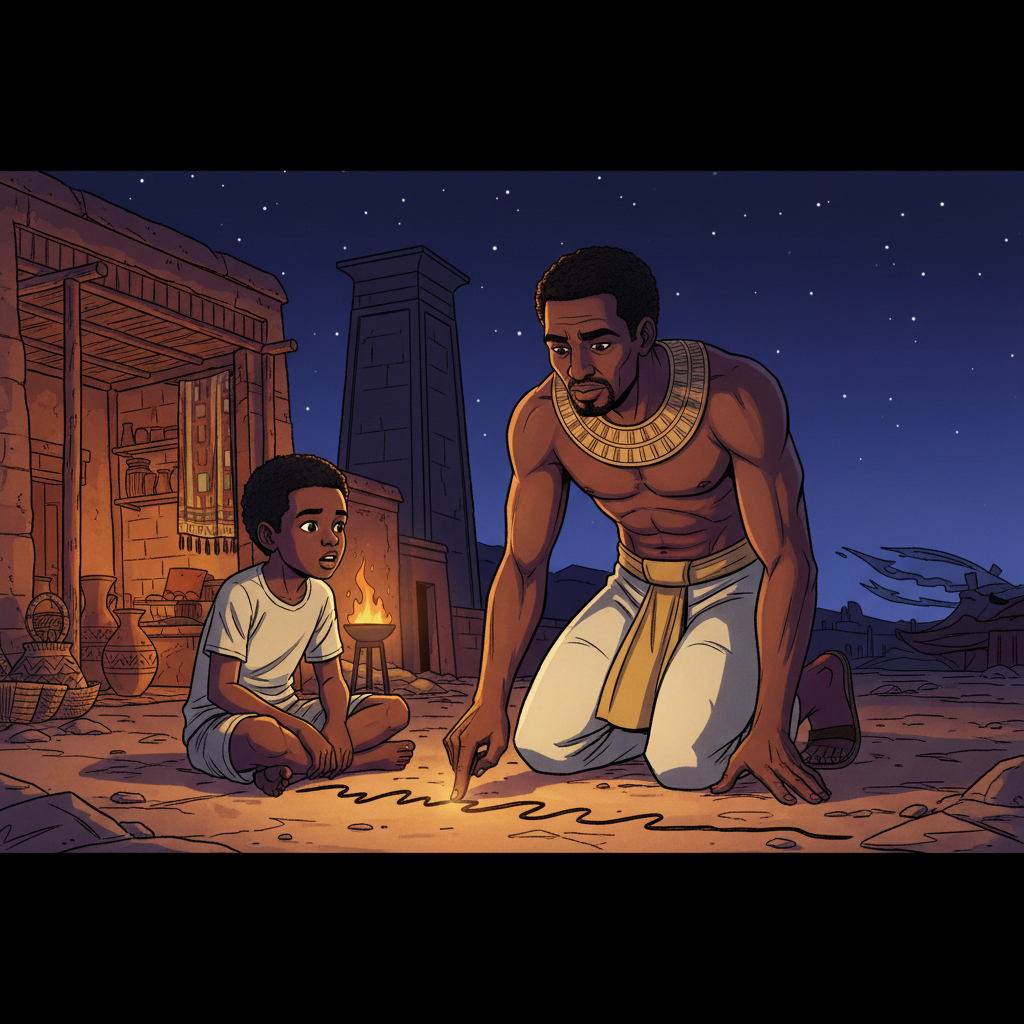
"In Kemet," his father began, "every per has a threshold. The builders place it with great care. It is not just a stone or a piece of wood at the bottom of the door. It is a boundary — a sacred line between two worlds." Amenhotep drew a line in the dust with his finger. "Outside is the world — hard, unpredictable, sometimes unjust. Inside is our per — ordered, safe, built by your mother's hands and blessed by our ancestors." "My job," his father said, his dark eyes steady and serious, "is to be the threshold. I make sure what is outside stays outside, and what is inside stays protected. Every temple in Kemet has a gateway guardian. In this family, that guardian is me."
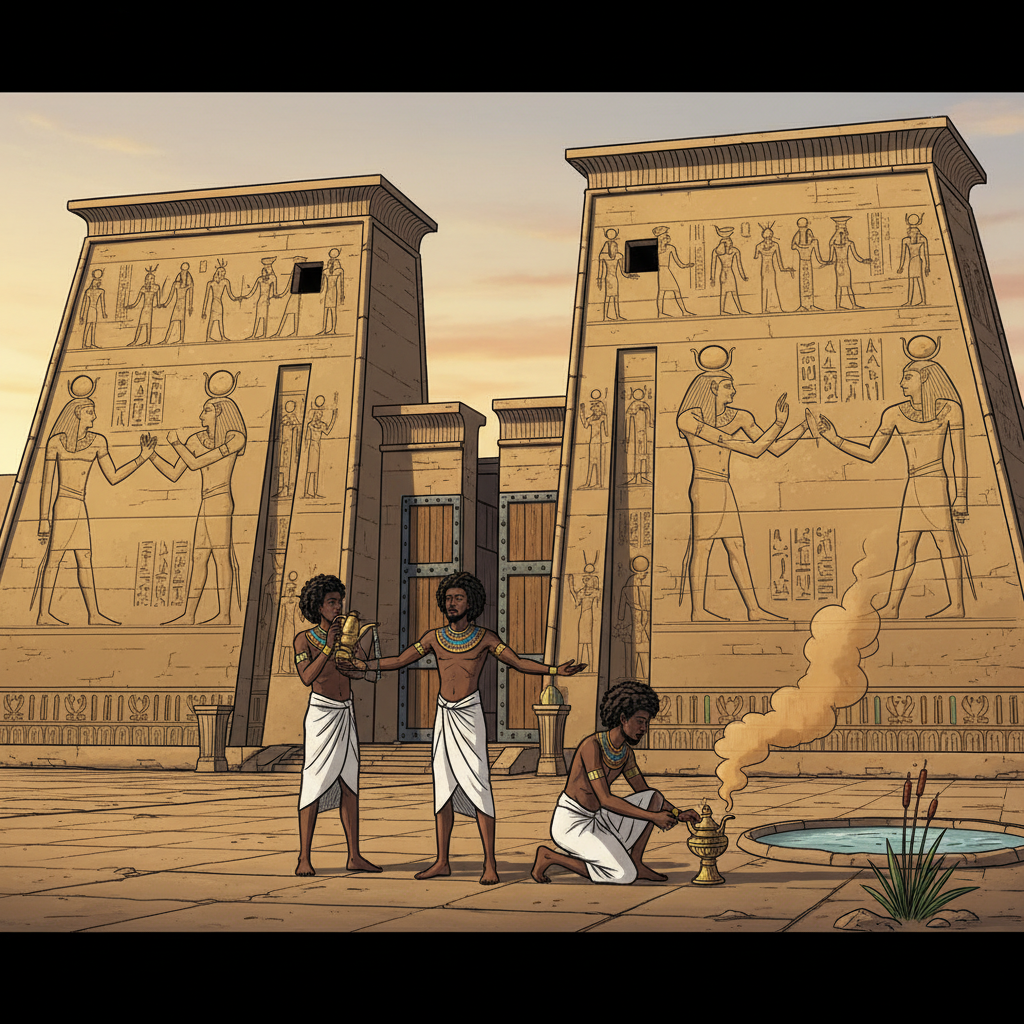
Kofi thought about the great temples he had seen from a distance — the massive pylons with their sloping walls, the heavy doors that separated the ordinary world from the sacred rooms within. Priests purified themselves before crossing those thresholds. They washed. They prayed. They prepared their ka — their inner spirit — before entering holy space. "Our per is like a temple?" Kofi asked. His father nodded. "Every home where a family lives in maat is a temple. Your mother is the priest who maintains the inner sanctuary. I am the gate. And what I carry through that gate matters more than anything I do at the quarry."
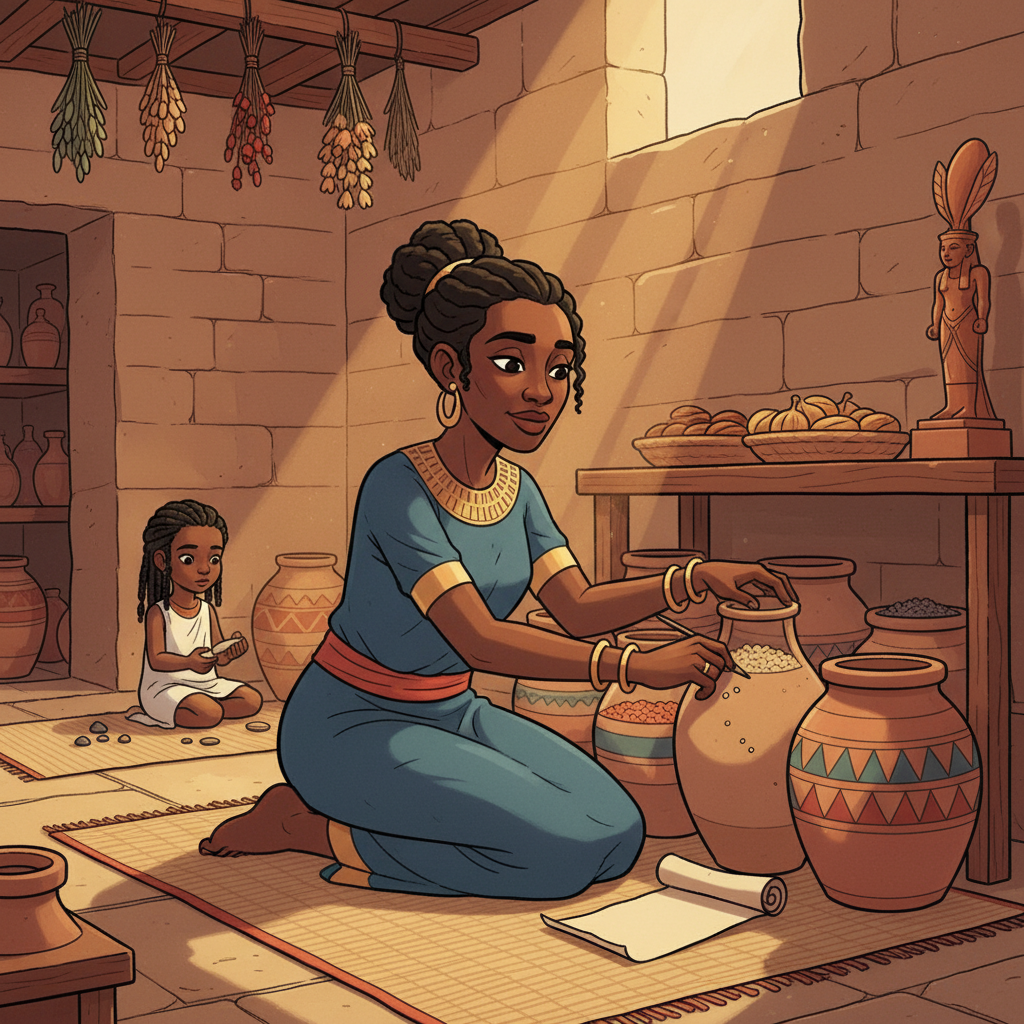
Kofi's mother was called Nefertari. She had skin like polished ebony and hands that never stopped moving — grinding grain, weaving linen, organizing the storage jars, teaching Kofi's younger sister to count. She woke before anyone and slept after everyone. The inside of their per was her creation: clean reed mats on the floor, dried flowers hanging from the ceiling beams, the smell of bread always in the air. She did not simply keep house. She kept order. She kept maat alive within those mud-brick walls. When Kofi's baby brother cried, she was calm. When supplies ran low, she planned. Nefertari was not a woman who panicked. She was a woman who built peace, brick by brick, every single day.
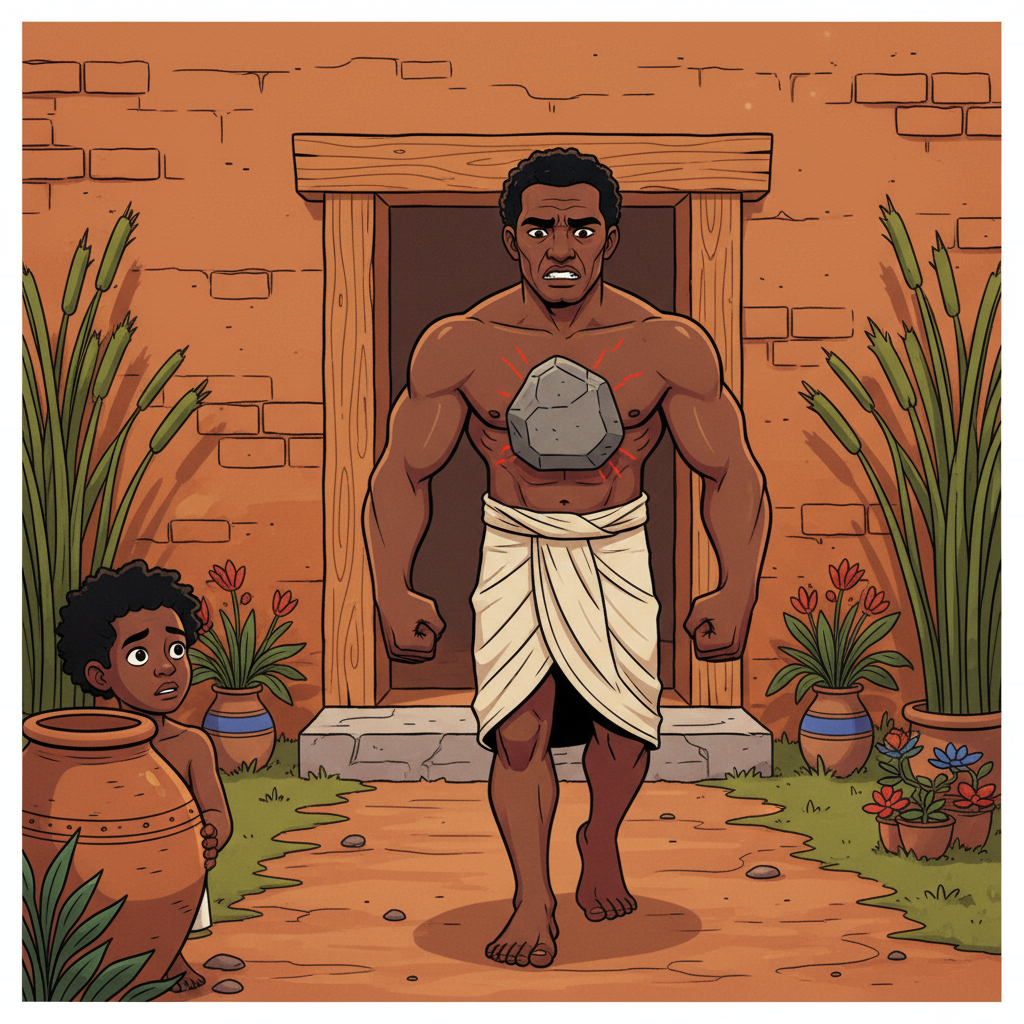
One day, Amenhotep came home with trouble in his eyes. A foreman at the quarry had cheated him out of a full day's wages — claimed he had arrived late when he had not. Kofi saw his father walking up the path and knew something was wrong. The usual steadiness was gone. His father's jaw was tight. His fists were clenched at his sides. The anger sat on him like a heavy stone pressing against his chest. But at the threshold, Amenhotep stopped. He placed his hand on the doorframe. He closed his eyes. Kofi watched his father's chest rise and fall — one long, deliberate breath. The fists unclenched. The jaw softened. Then, and only then, did his father step inside their home.
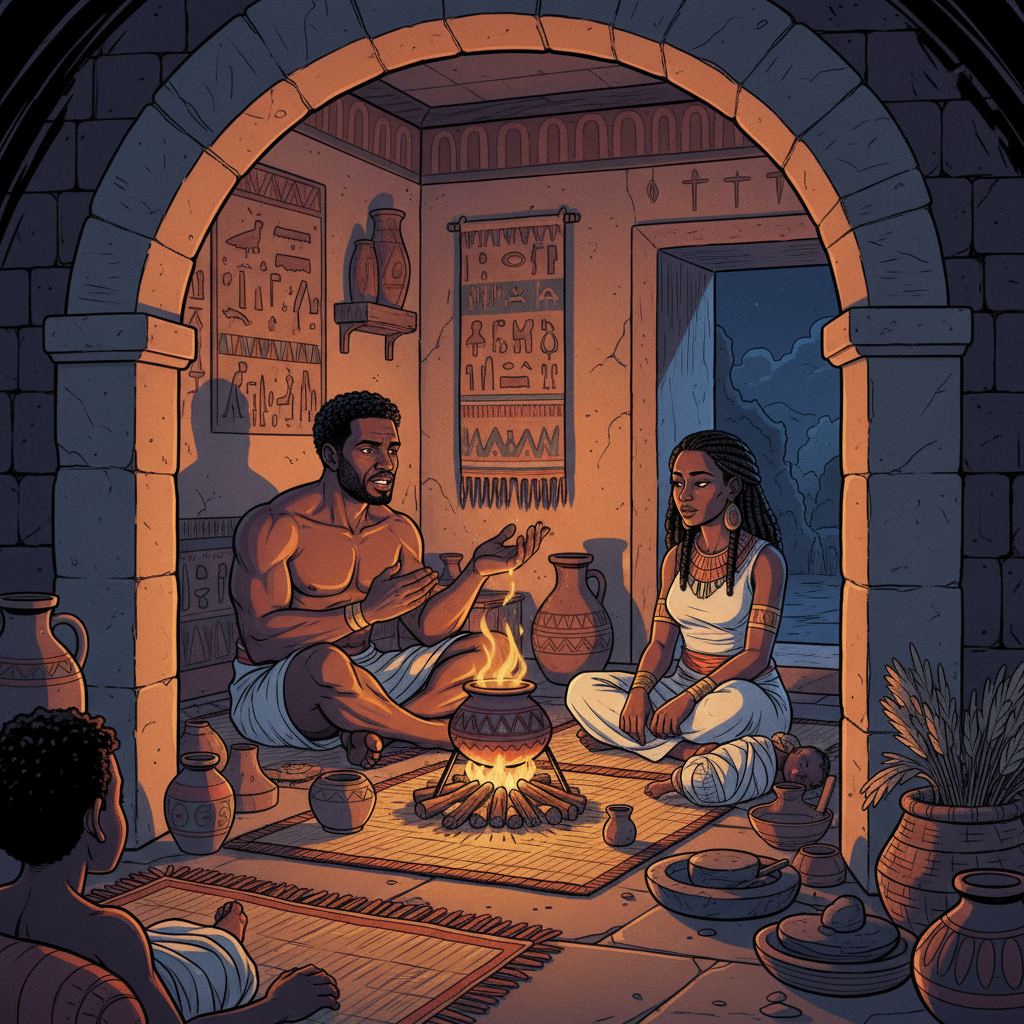
When he stepped inside, his voice was even. He greeted Nefertari by name and kissed the top of her head. He asked about the children — had Kofi finished his writing practice? Had the baby slept well? He sat on his mat and ate his meal of bread, onions, and dried fish calmly. He even laughed at something Kofi's sister said. Later, after Kofi was supposed to be asleep, he heard his parents talking quietly by the cooking fire. His father told his mother everything — the anger, the injustice, the foreman's lie, the way the other workers looked away. He told her his plan to confront the foreman the next day, and she helped him think it through. They were partners, working together like two hands shaping clay.
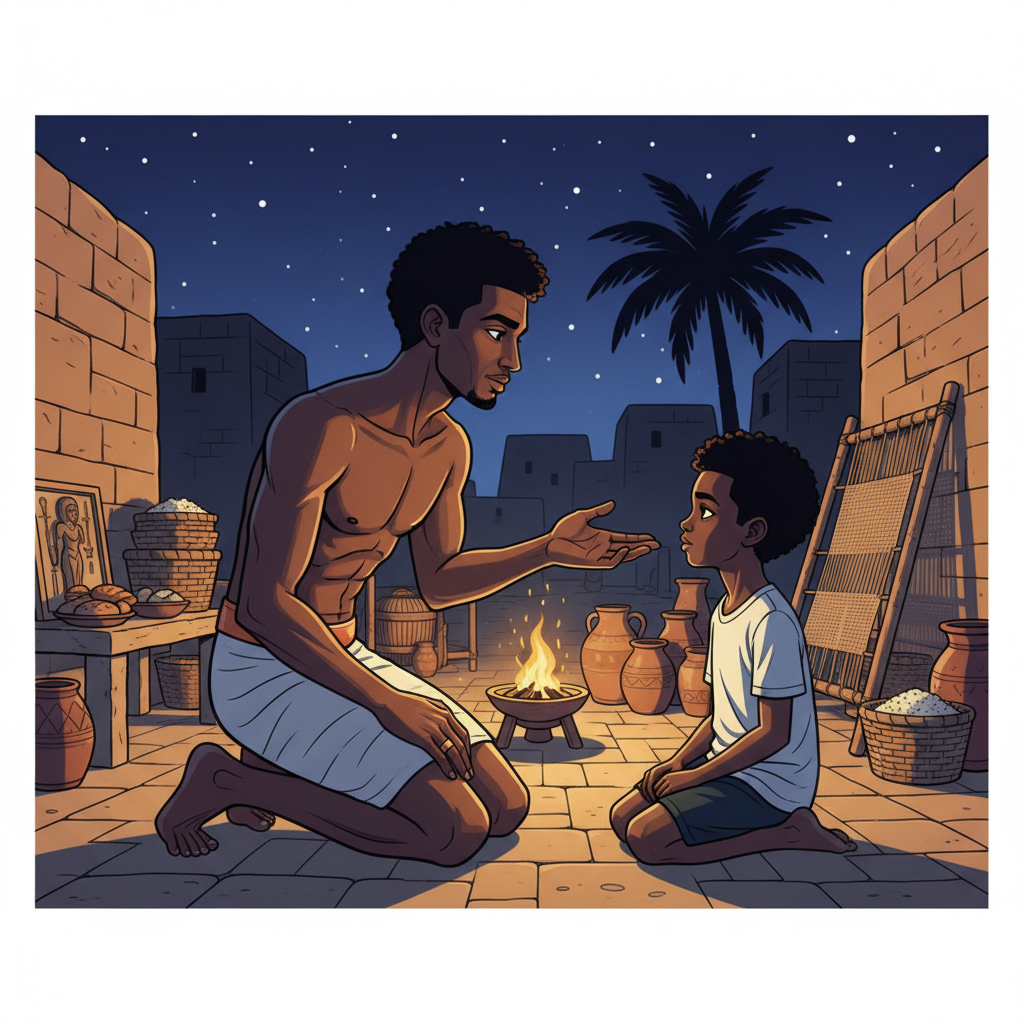
"Why didn't you yell when you came home?" Kofi asked the next morning. His father knelt down so their eyes were level — dark brown looking into dark brown. "Because yelling would bring the quarry's isfet into our home. Do you understand what isfet is, Kofi? It is disorder. Chaos. The opposite of everything your mother builds here." Amenhotep gestured around the room — the neatly stacked baskets, the swept floor, the small shrine to the ancestors in the corner. "Your mother works all day to keep this per in maat. She creates balance. If I carry disorder through that door — if I throw my anger into this space — I destroy in one moment what she spent all day building. What kind of man destroys his own home?"
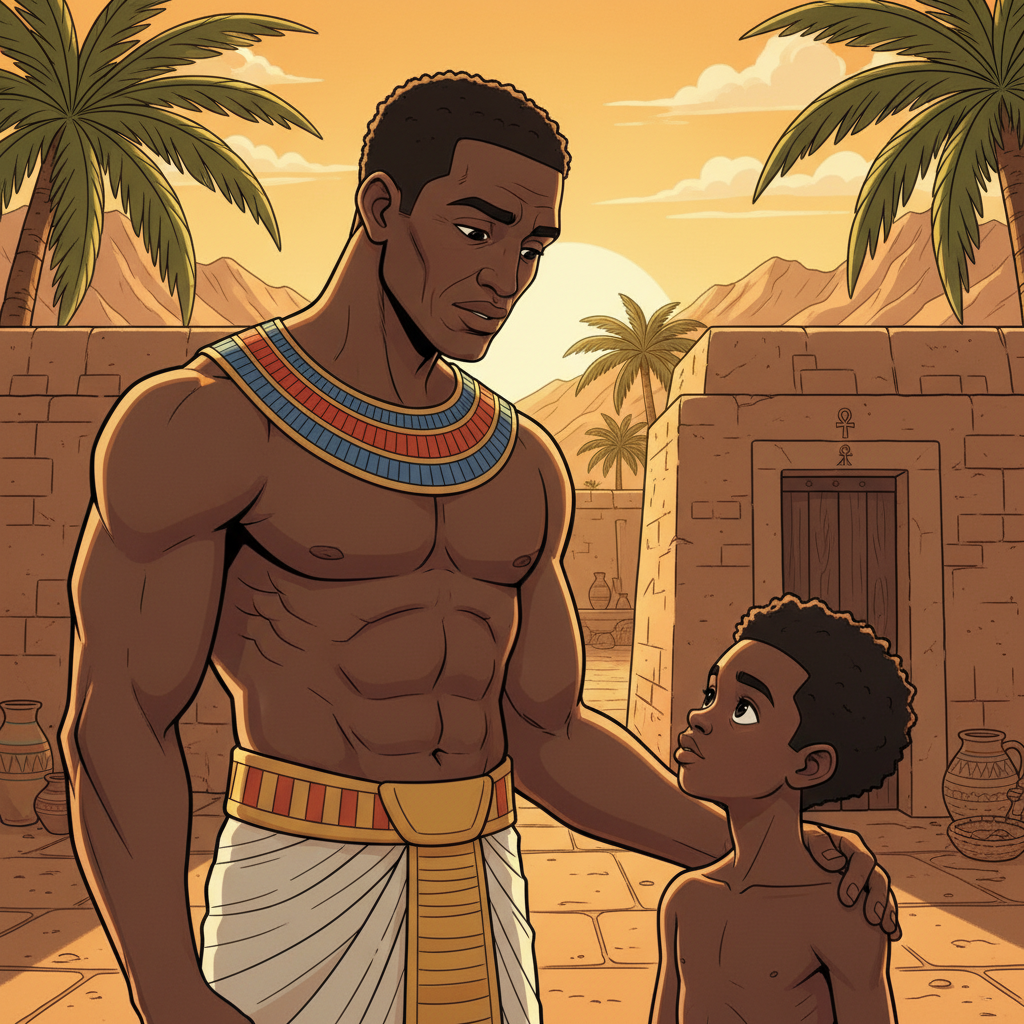
"The threshold man does not pretend bad things didn't happen," his father continued, standing now and placing a hand on Kofi's shoulder. "He does not swallow his anger and let it poison his ka. That is not what I am teaching you. A man who hides everything is just as dangerous as a man who throws everything." Kofi looked up at his father's serious face. "Then what does the threshold man do?" Amenhotep said: "He handles his burdens. He talks to his partner honestly, when the time is right. He makes plans. He takes action. But he does not throw his weight at the people who depend on him. That is what it means to carry difficulty without breaking the house."

Weeks passed, and Kofi tried to practice being a threshold. But it was harder than his father made it look. One afternoon at the river, a bigger boy named Sefu shoved Kofi and called his father a foolish quarryman. Kofi's blood went hot. His hands shook. He shoved Sefu back, and the two boys scuffled in the mud until an elder separated them. Kofi stormed home with mud on his kilt and fury in his chest. He did not pause at the threshold. He did not breathe. He burst through the door and kicked over a water jug, shattering it on the hard floor. His baby brother screamed. His sister froze. Nefertari looked at him — not with anger, but with something worse. Disappointment.
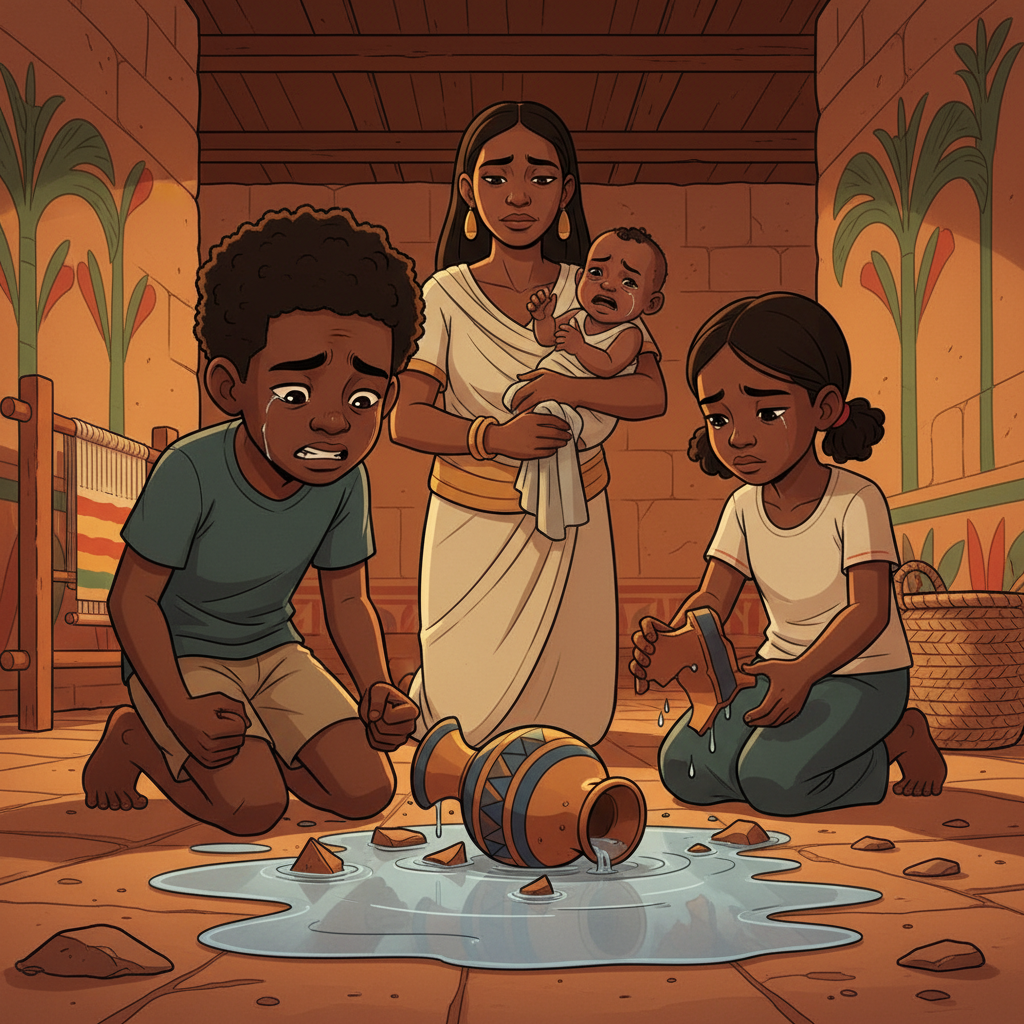
The silence in the per was terrible. Water spread across the floor. Kofi's baby brother was still crying. His sister picked up the broken pieces of the jug carefully, her small hands trembling. Nefertari calmed the baby first, then mopped the water with a cloth, then turned to Kofi. "Sit down," she said quietly. "You brought the river into our home," she told him. Her voice was not harsh, but it was firm. "Whatever happened out there — that was out there. In here, your brother was sleeping peacefully. Your sister was practicing her weaving. I had just finished cleaning this floor. You did not just break a jug, Kofi. You broke the peace that I spent all morning building." Kofi's eyes burned with shame.
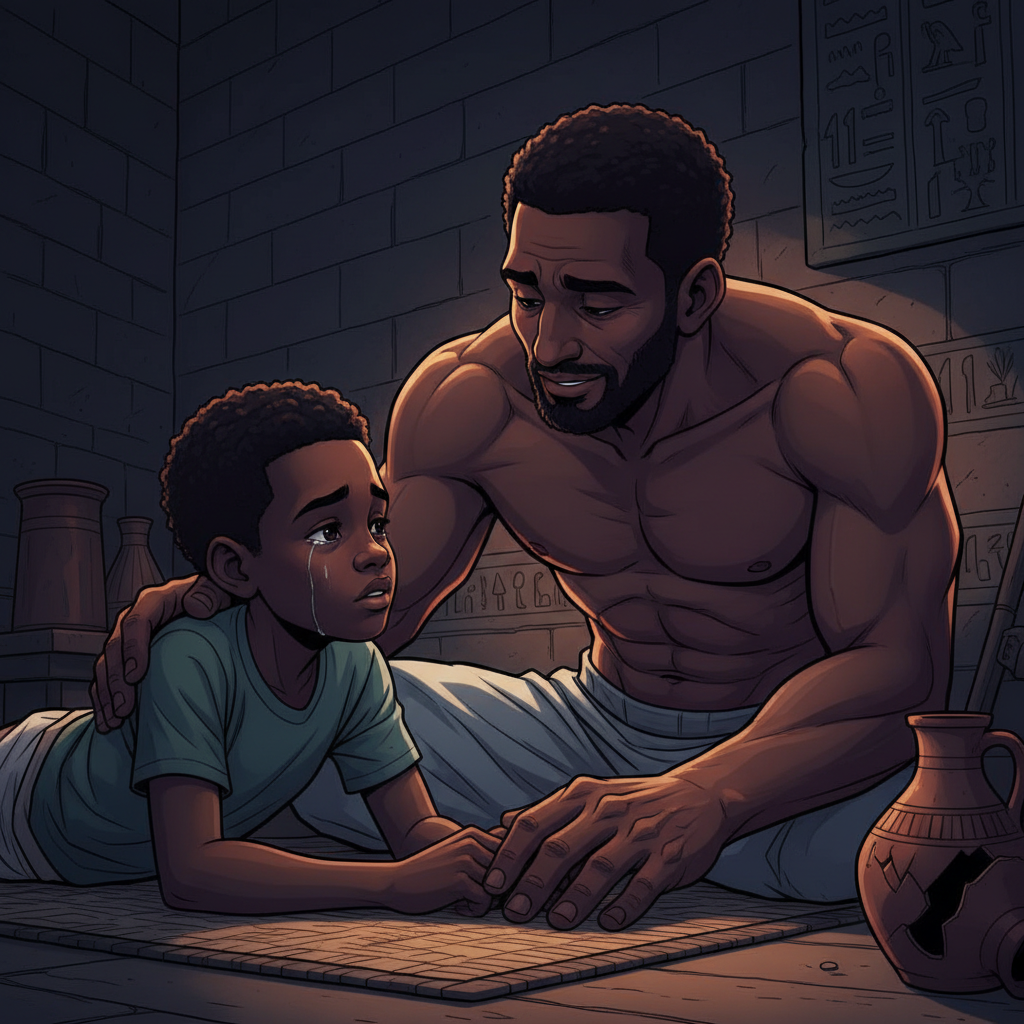
That night, Kofi could not sleep. He lay on his mat and stared at the ceiling, replaying the moment he had kicked the jug. He thought about his father pausing at the door every single day — after long hours, after unfair treatment, after exhaustion. His father made it look easy. But Kofi now understood it was not easy at all. It was a practice. A discipline. Like learning to write hieratic script at the per ankh — you failed many times before your hand became steady. Amenhotep came and sat beside him in the dark. "I heard what happened," he said softly. "You are not a bad son, Kofi. You are an untrained one. There is a great difference. Every man who ever guarded a threshold had to learn how. I did too."
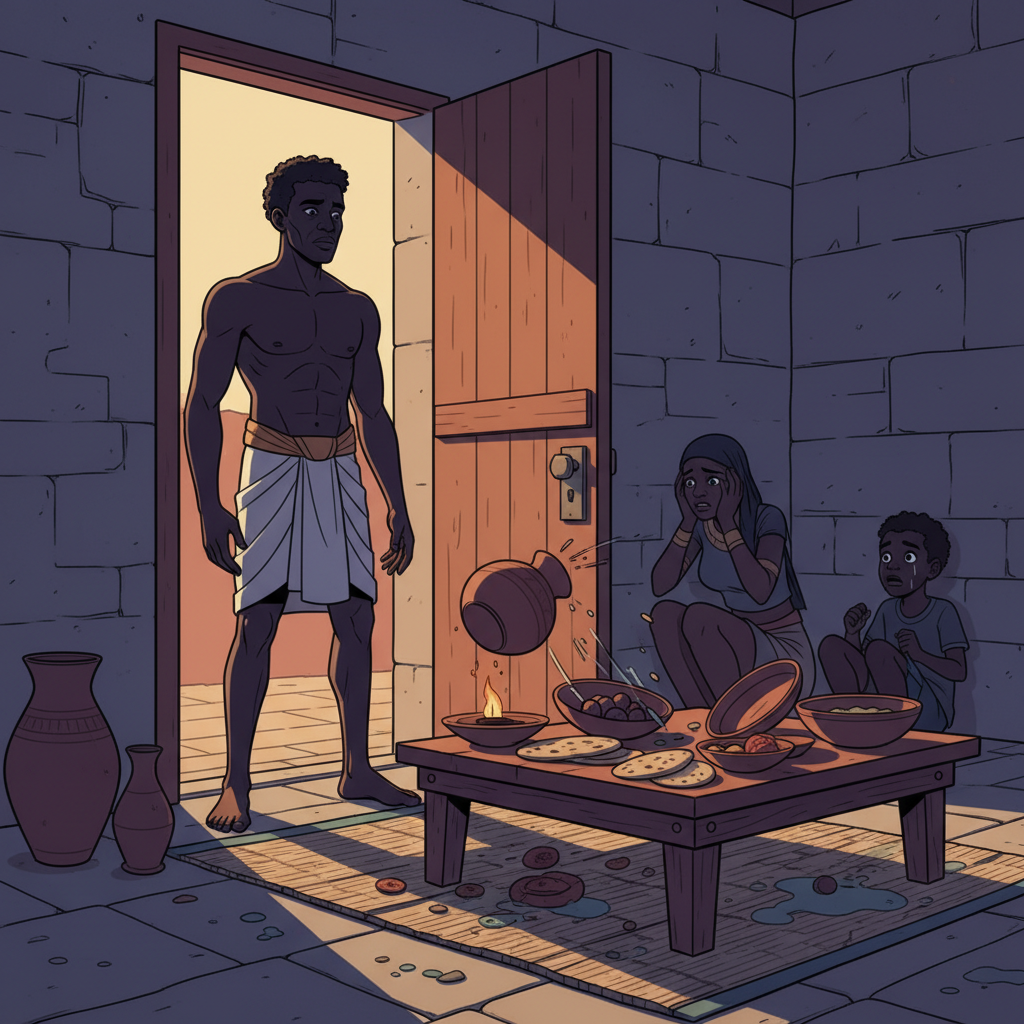
"When I was your age," Amenhotep said, "my own father came home one night after losing a contract. He was so angry that he knocked the evening meal off the table. Food everywhere. My mother cried. I swore that when I became a man, I would learn to stop at the door. But it took me years, Kofi. Years of practice. Years of failing and trying again." Kofi wiped his eyes. "How do you do it, Baba? How do you stop the anger?" His father thought carefully before answering. "I do not stop the anger. The anger is real — it comes from real injustice. What I do is give myself one moment at the threshold to remember who is inside. Your mother. Your sister. You. The baby. I remember what I am protecting. And that memory is stronger than the anger."
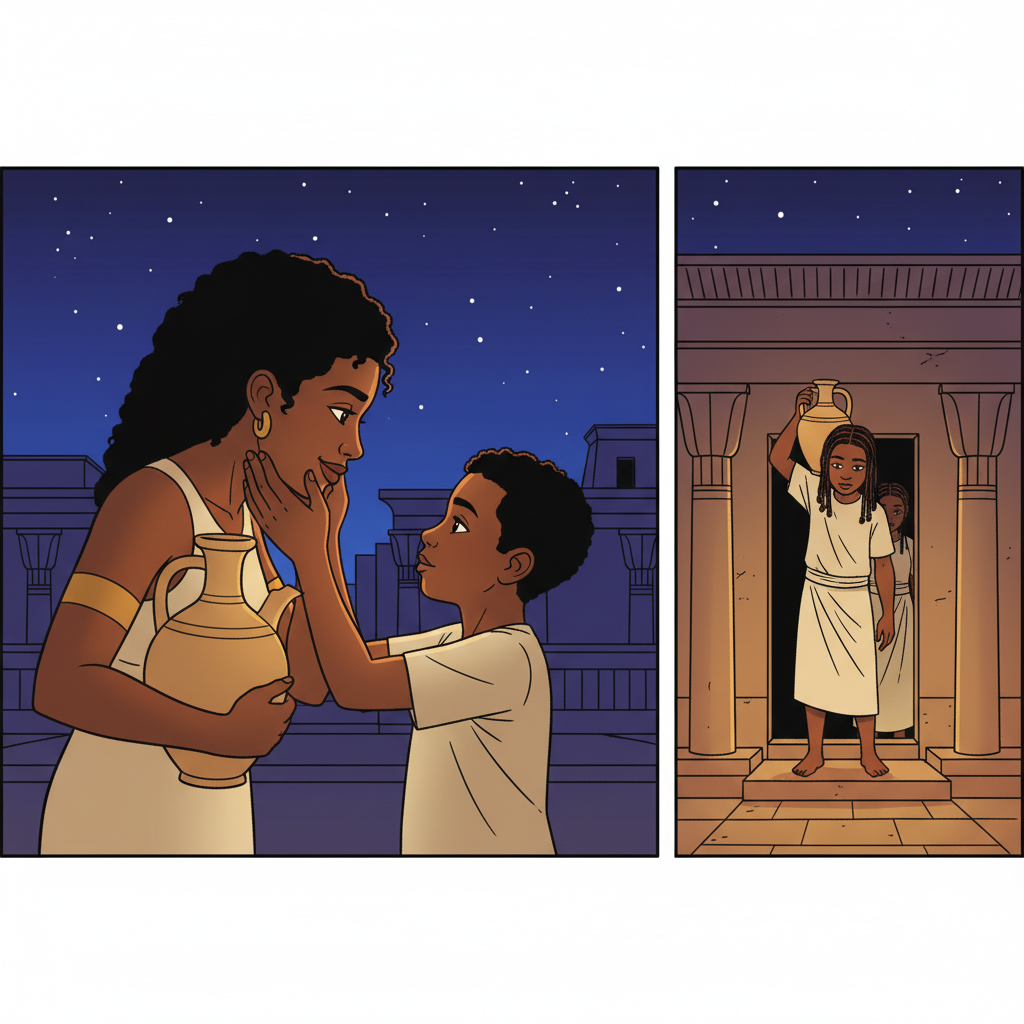
The next day, Kofi went to Nefertari and apologized. He did not make excuses. He told her what Sefu had said, and he told her that none of it justified what he did to her home. Nefertari cupped his face in her dark, strong hands and looked at him for a long time. "You are learning," she said. "That is all I ask. The practice of maat is not about being perfect. It is about returning to balance every time you fall." Then she handed him a new water jug. "Carry this from the river without spilling," she said, and there was the smallest smile at the corner of her mouth. "Consider it part of your training." Kofi carried that jug home like it was made of gold. At the threshold, he paused. He breathed. He stepped inside carefully. His mother nodded once. That nod meant everything.
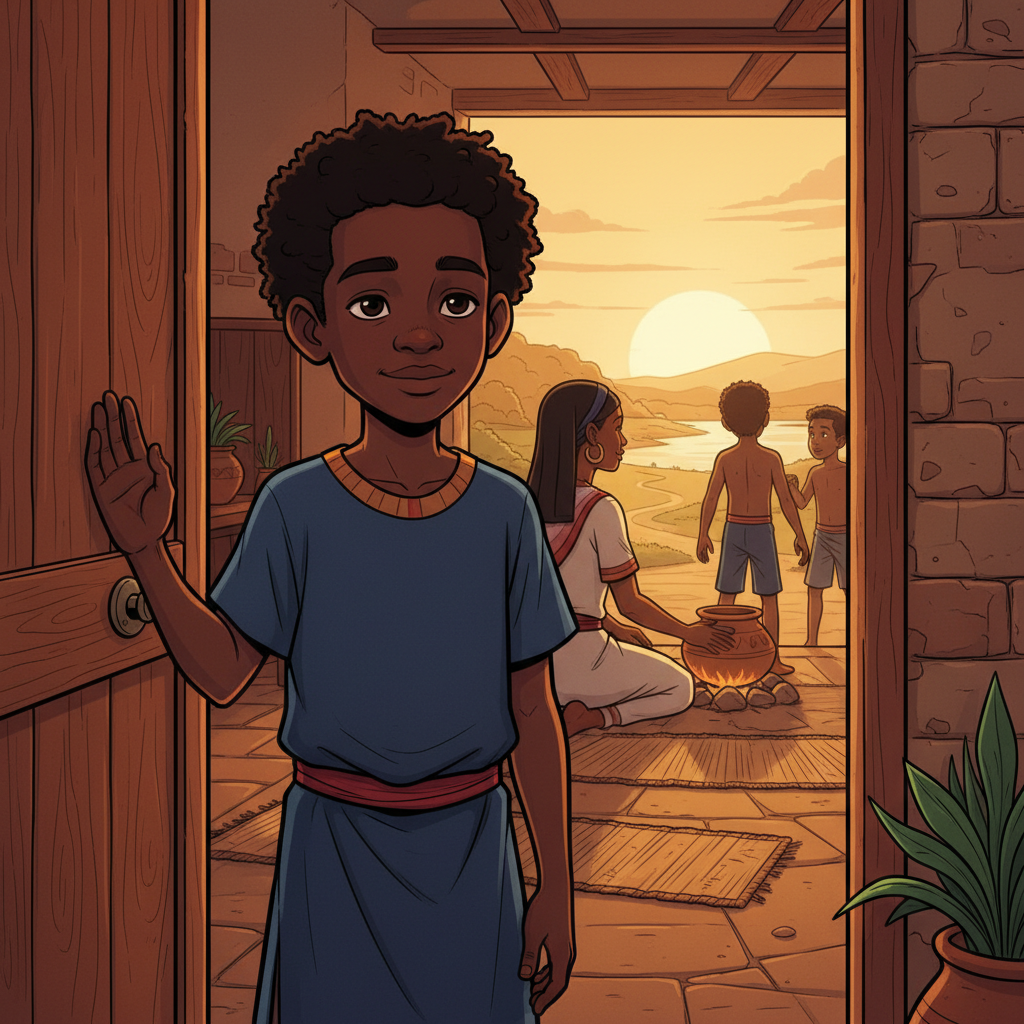
Kofi practiced being a threshold every day after that. He was not perfect — sometimes the anger still slipped through, and he had to apologize and try again. But he got better. When Sefu taunted him at the river weeks later, Kofi felt the heat rise in his chest. He clenched his fists. But this time, he walked away. And when he reached his family's per, he stopped at the door. He placed his hand on the frame, just like his father. He breathed. He stepped inside calmly and greeted his mother. He was nine years old now, and he was learning the oldest lesson in Kemet: a strong person is not someone who never feels pain or anger. A strong person is someone who absorbs difficulty without passing it to those who trust them. The threshold is not a place. It is a practice — one breath, one choice, one act of love at a time.