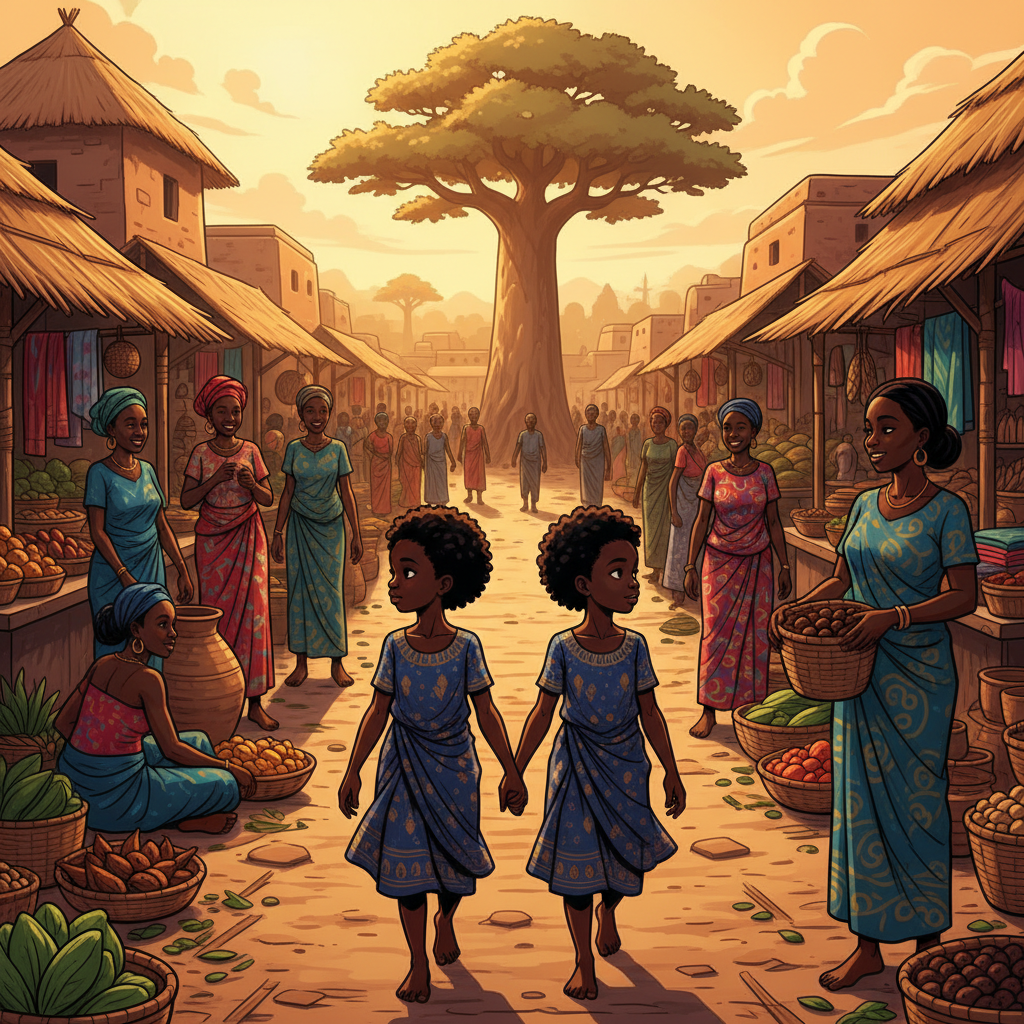
Adanna and Adaeze were twins, identical as two kernels from the same kola nut. Their skin, the deep shade of roasted yam, caught the morning sun in the same way, and their laughter often tangled into a single bright sound that made the women at the well pause their chatter. When they walked through the market square of Owerri, hands clasped, heads turning in perfect sync, people would smile and say, “Look, the twins!” as if they were one beautiful, moving sculpture. Even their mother, Nneka, sometimes had to look twice, a soft smile playing on her lips, before she could tell which was which by the flicker in their eyes or the way they held their shoulders.
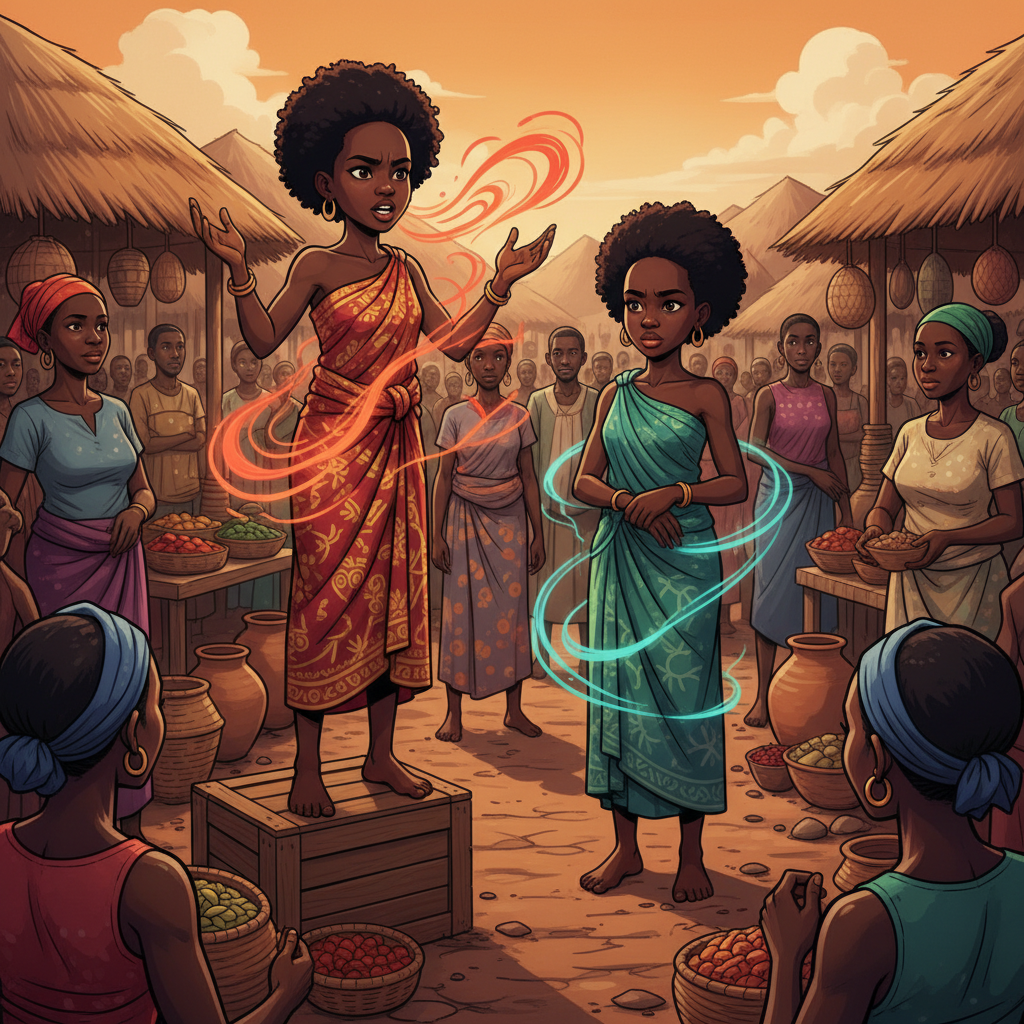
But the sameness stopped at their skin. Adanna was fire, quick and bright. Her voice, even when she spoke of simple things, carried the force of a market crier. She ran towards the sounds of argument, her brow furrowed, ready to untangle the knotted words. Adaeze, on the other hand, was like still water, deep and clear. Her observations came in quiet glances, and her words, when they finally came, were few, weighted with the things she had watched and considered. Adanna rushed in; Adaeze stood back, letting the world unfold before her, seeing the patterns others missed in their haste.
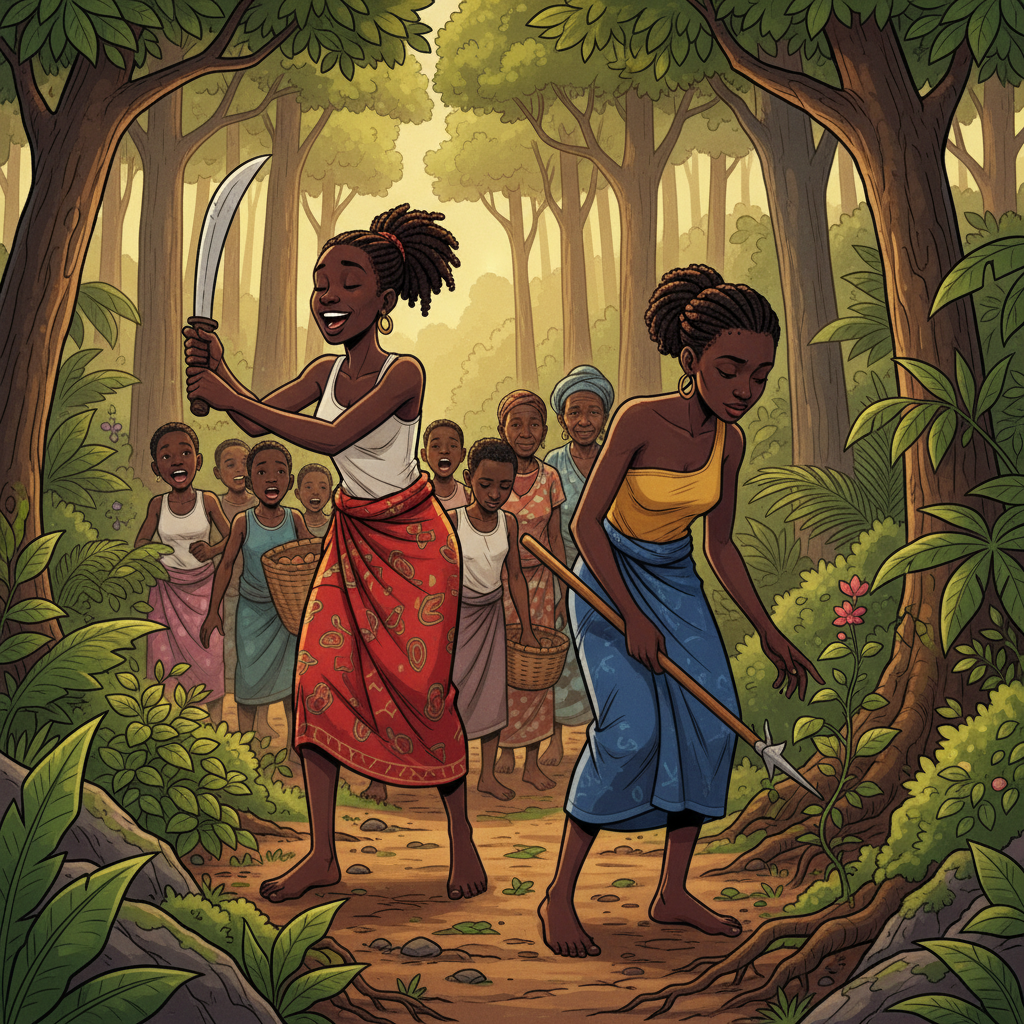
The village often struggled with their differences. When the age-grade gathered for chores, Adanna would lead the singing, her machete flashing as she cleared the bush, driving the rhythm for all. Adaeze would be there too, but her movements were measured, careful, her eyes on the small shoots to protect, the tricky roots to avoid. “The twins,” the elders would sigh, shaking their heads with affection, “always together, but always finding their own ways.” They wanted the girls to be harmonious, but often harmony was mistaken for sameness, and Adaeze felt the quiet pressure to be more like her boisterous sister.
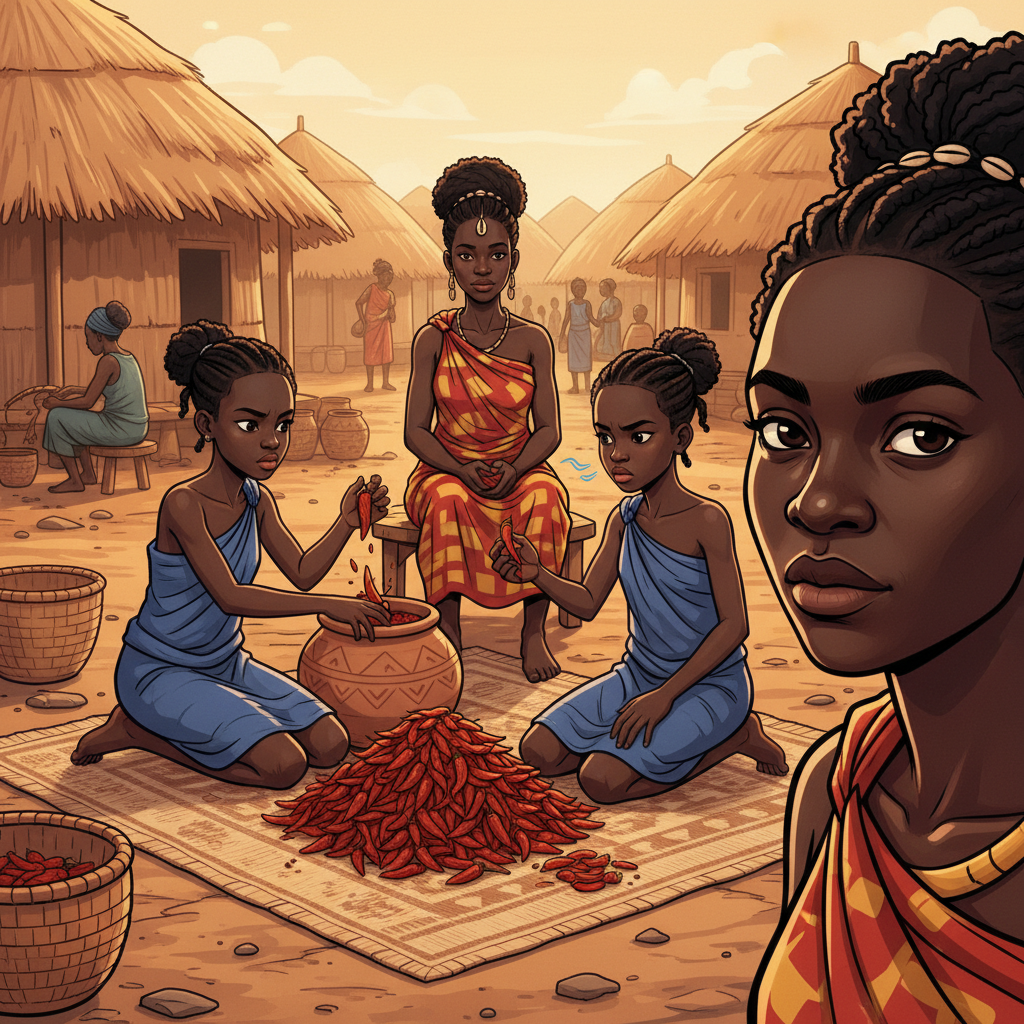
One afternoon, a small argument sparked between them as they helped their mother sort dried peppers. Adanna, swift and impatient, grabbed a handful and tossed them into the basket. Adaeze, who had been meticulously picking out the broken ones, frowned. “You missed many,” she said softly, pointing to the small pile of bruised peppers Adanna had ignored. “They are just peppers,” Adanna scoffed, her hands already reaching for more. “They still have flavour,” Adaeze insisted, her voice barely a whisper, but firm. Their mother watched, her dark eyes seeing more than just peppers.
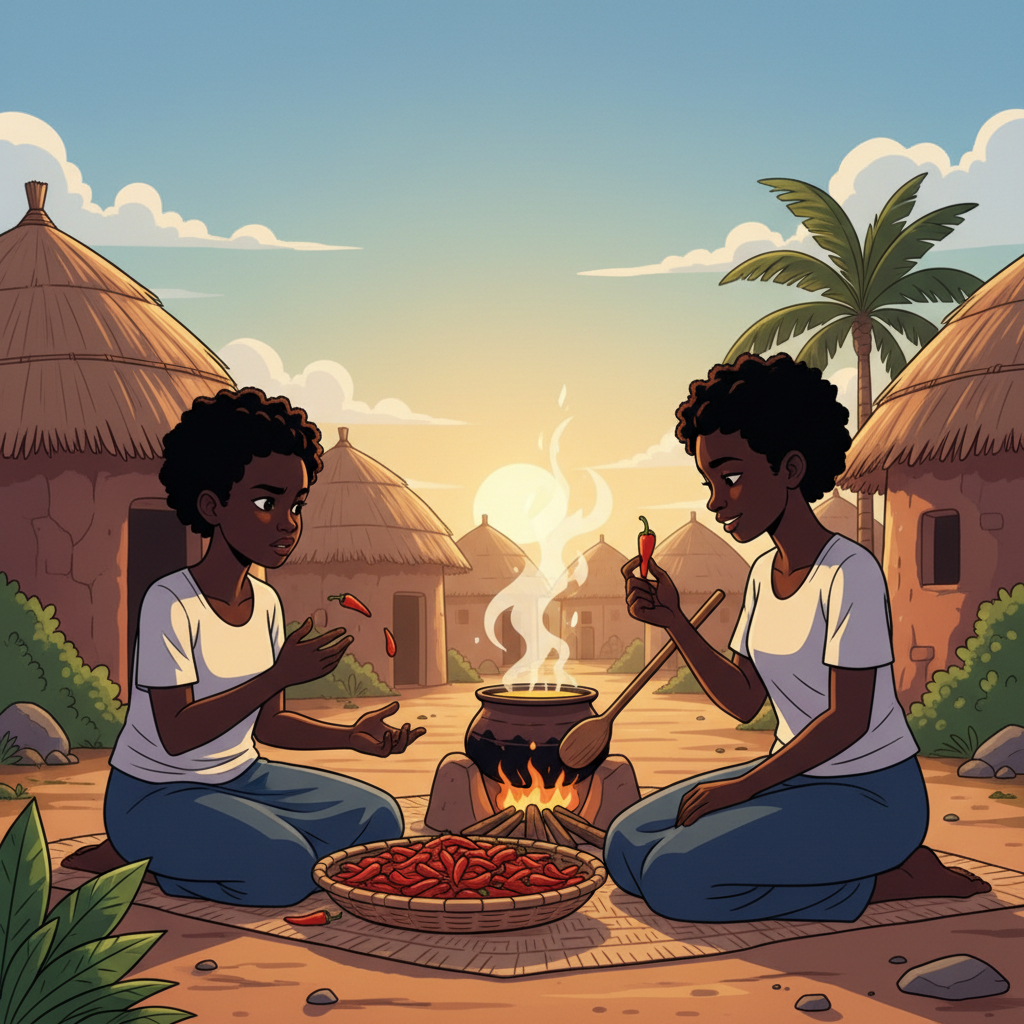
“Adanna sees the end of the task,” Nneka said, her voice a low hum as she stirred the palm oil in the pot. “Adaeze sees the journey of each pepper.” The girls looked at their mother, then at each other. Adanna saw the efficiency, the speed of getting things done. Adaeze saw the individual value, the care needed for each piece. They were both right, in their own way, but it was a truth that felt too large and untidy for their small argument. The peppers, vibrant red, lay between them, a silent testament to their differing paths.
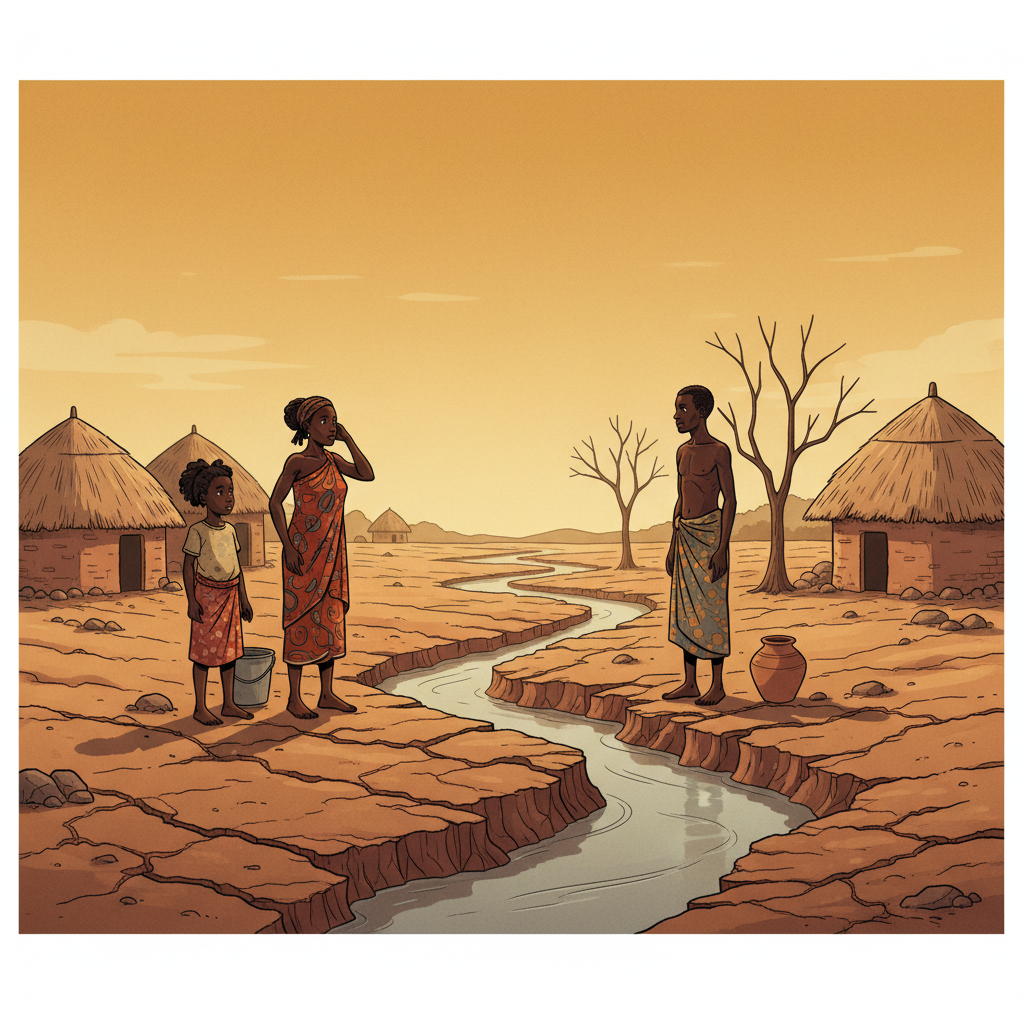
As the dry season deepened, so did the worries in Owerri. The stream, which usually sang as it flowed between their compound and the neighboring compound of the Okeke family, had shrunk to a murmur. Its banks, once green and lush, were now cracked and dusty. Both families depended on this stream for water, for washing, and for the small plots of greens they tried to coax from the parched earth. Now, each bucket drawn felt like a theft, each footprint on the bank a trespass. The usual morning greetings between the compounds grew stiff, then silent.
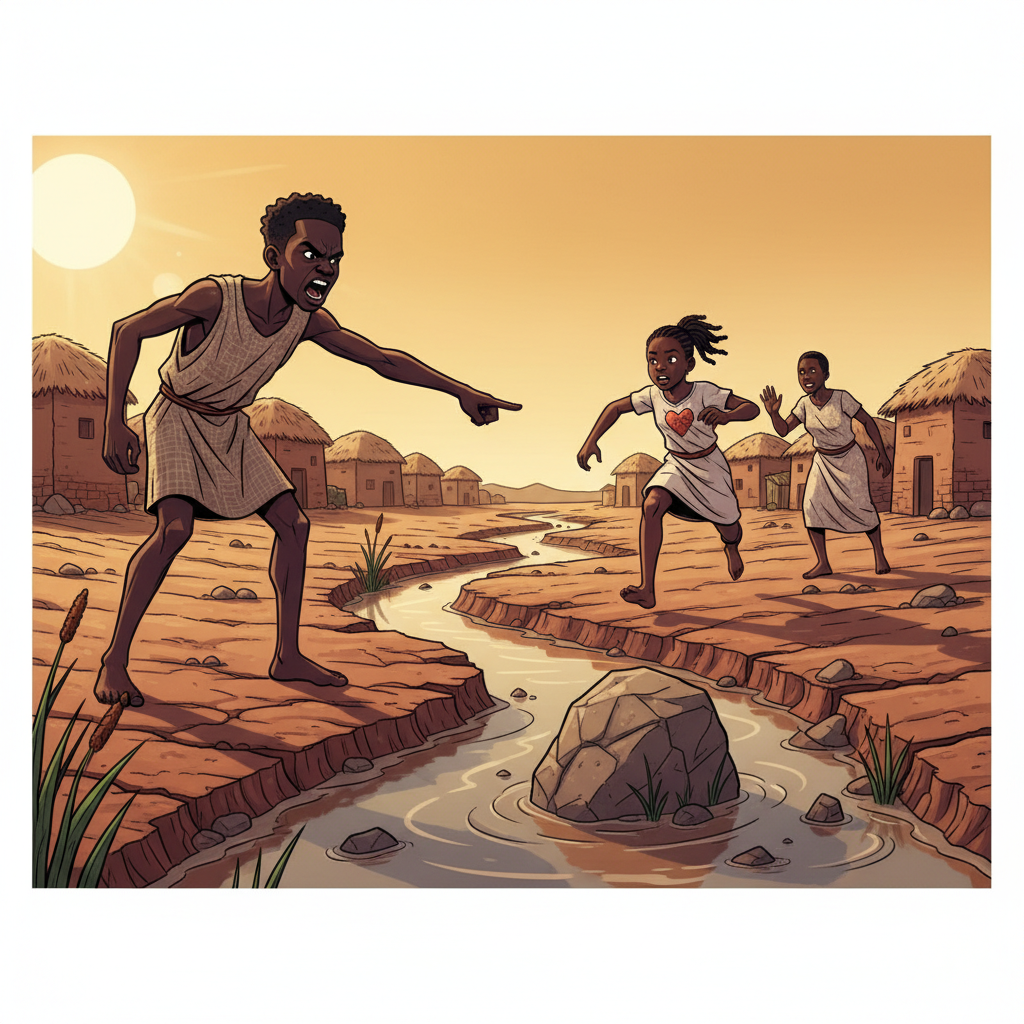
One morning, a sharp shout cut through the quiet. Obinna, a young man from the Okeke compound, stood at the stream bank, his face twisted in anger. “Someone has moved the marking stone!” he bellowed, pointing to a rock that traditionally marked the shared boundary. “Our water is disappearing because of your greed!” Adanna heard the cry and was on her feet instantly, her heart thudding like a drum. She rushed to the stream, her mother calling after her, “Adanna, wait!” But Adanna did not wait. She never did.
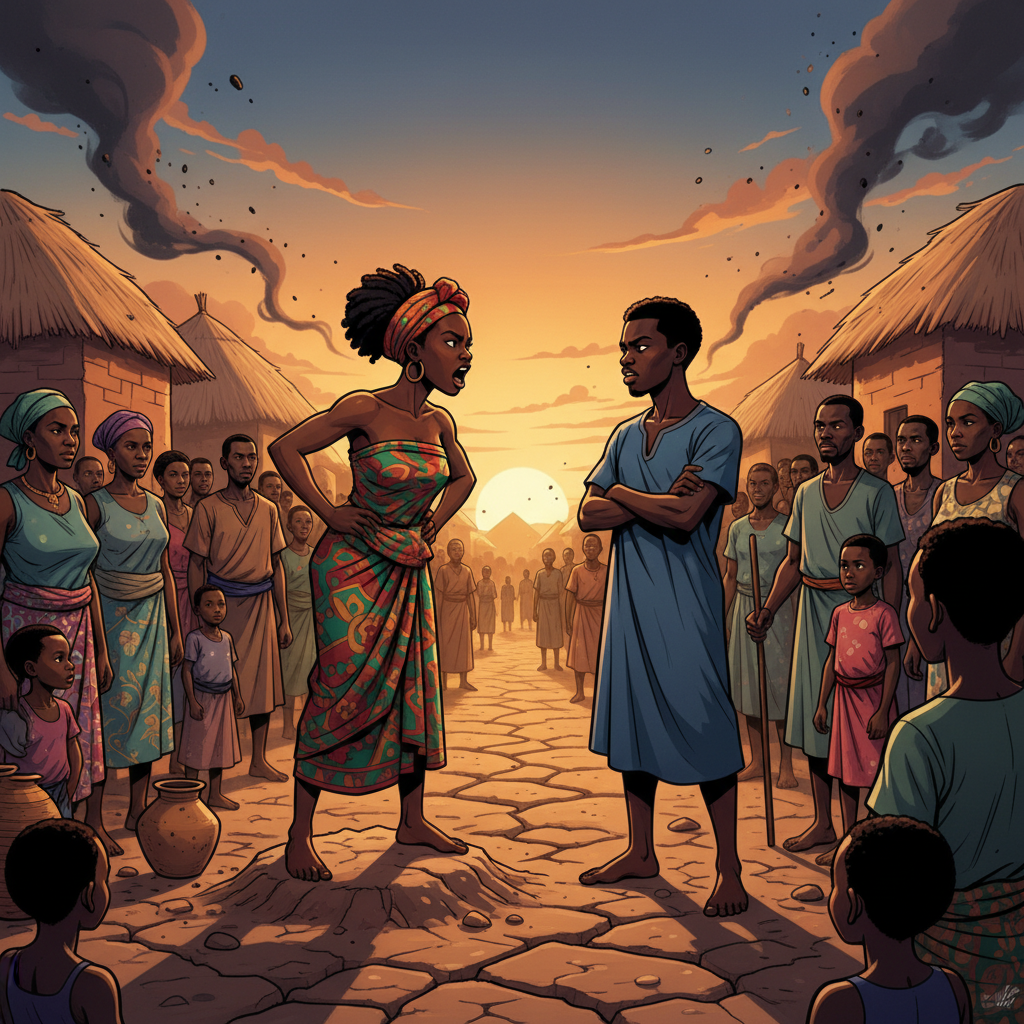
She reached the stream bank, her chest heaving, her dark eyes flashing. “Greed?” she challenged, planting her feet wide. “It is your family who has been drawing water at all hours, emptying the stream for your thirsty goats!” Her voice rose, matching Obinna’s, and soon other members of both compounds were gathering, their faces grim, their words like sparks. The air grew thick with accusation and old resentments. Adanna felt the surge of a familiar fire within her, the need to defend, to speak the loudest truth.
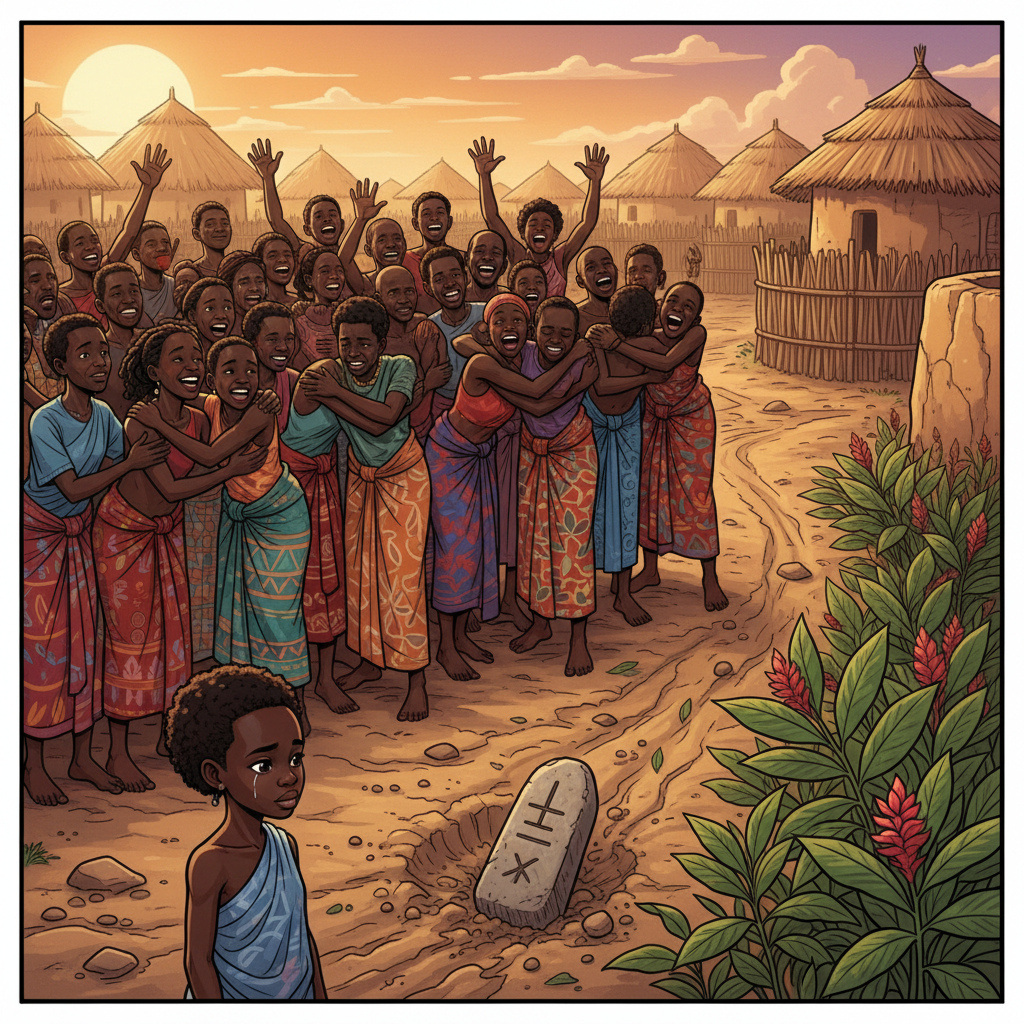
Adaeze, however, had followed her mother more slowly. She stood at the edge of the growing crowd, her gaze not fixed on the angry faces, but on the ground. She saw the new, raw scrape where the marking stone had clearly been dragged. She noticed how the soil around it was disturbed, not just by many feet, but by something heavier. Her eyes followed the faint trail, away from the stream, towards the dense cluster of wild ginger that grew near their compound’s edge.
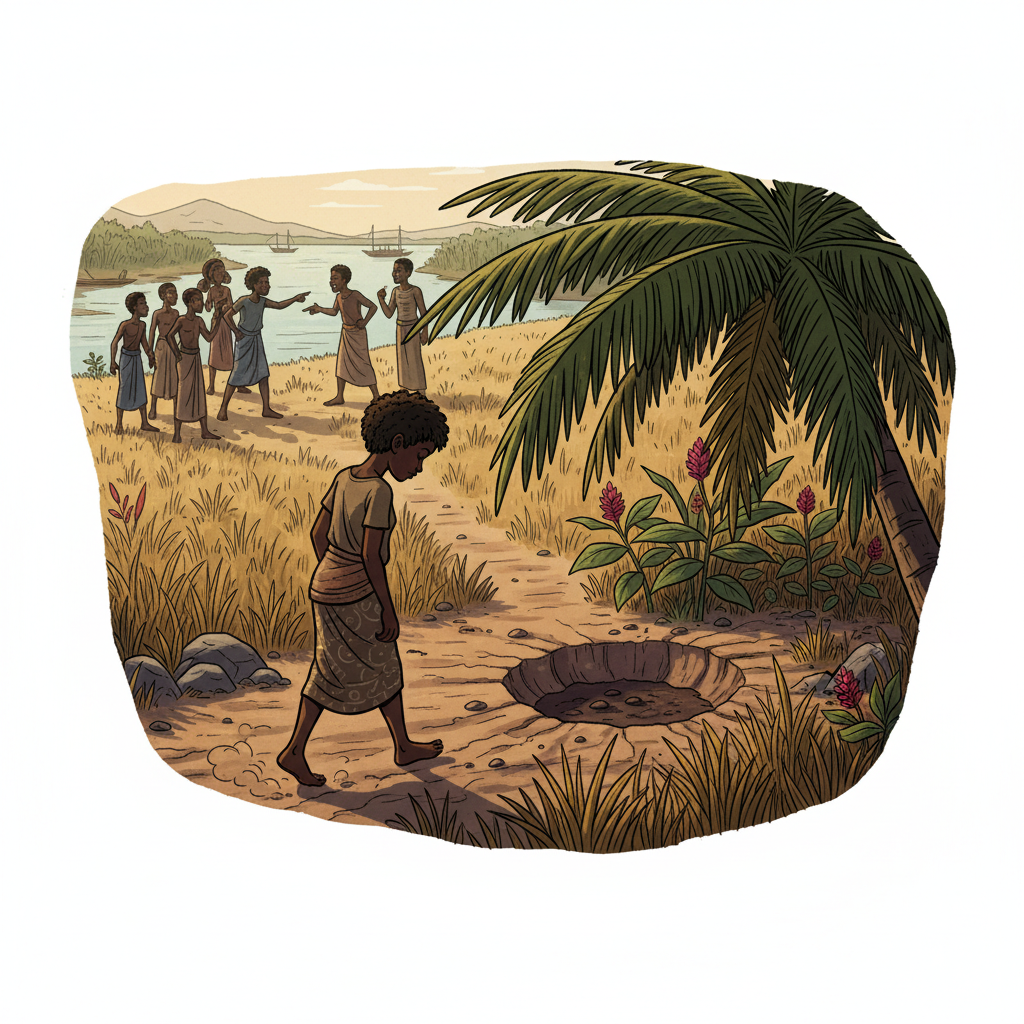
While Adanna traded sharp words with Obinna, arguing over who took more, who was at fault, Adaeze quietly walked away from the commotion. She moved through the dry grass, her head bowed, tracing the faint, almost invisible path. She saw it then: a small, deeply worn indentation in the earth, hidden beneath the overhanging leaves of a young palm tree. It was a place where water often collected after a heavy rain, a secret, forgotten seep that fed the wild ginger.
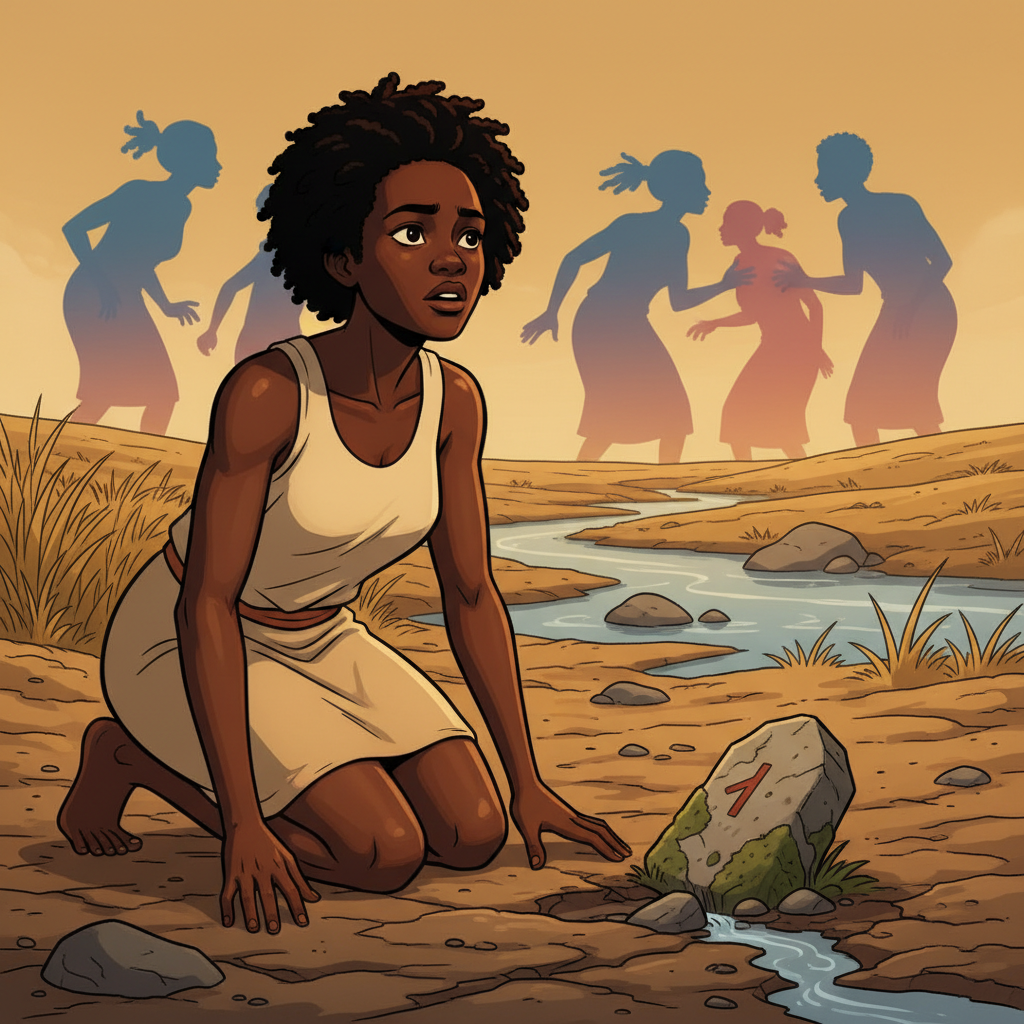
She looked up, her eyes scanning the stream bank again, then back to the hidden seep. The soil near the old marking stone had been soft, easily shifted. And the stone itself, though heavy, could have been dislodged by the very force of the stream’s shrinking flow, or even by a foraging animal seeking moisture. The accusations, she realized, were like shadows, dancing around a different truth. The problem was not greed; the problem was the stream itself, and the thirst of the land.
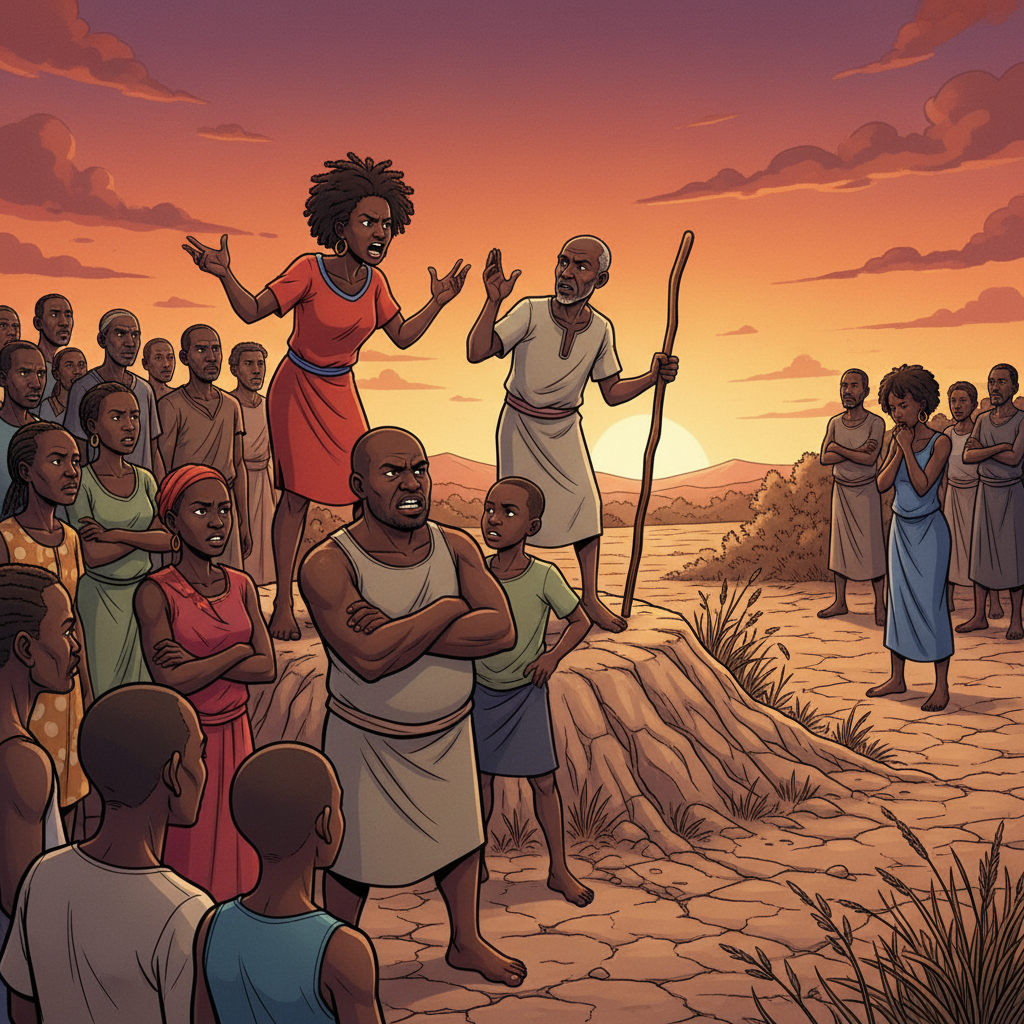
Meanwhile, the shouting at the stream grew louder. Adanna, now joined by her uncle, spoke of justice and fairness. Obinna’s father had arrived, his voice a rumble of indignation. It seemed the sun would set on a village divided, a problem too tangled to unravel. Adaeze returned to the edge of the crowd, her heart heavy, but her mind clear. She knew the anger would not bring water; it would only deepen the cracks in the earth and between their families.
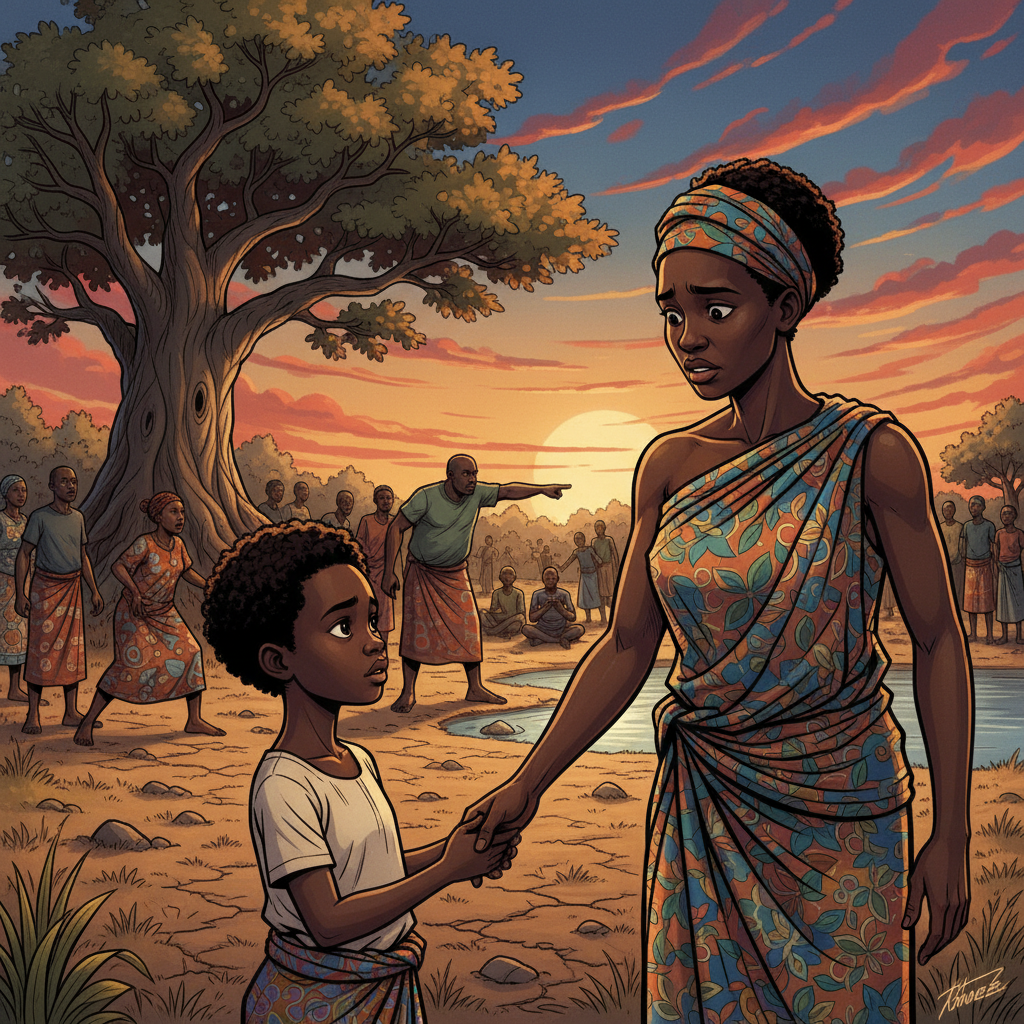
She approached her mother, who stood watching the argument, her face a mask of worry. Adaeze tugged gently on her wrapper. “Mother,” she whispered, her voice almost lost in the din, “the stone was not moved by hand, not by greed. And there is another place.” Her mother looked down at her, her dark eyes searching Adaeze’s face, seeing the quiet certainty there. Nneka put a hand on Adaeze’s shoulder, a signal of trust, then slowly, deliberately, walked towards the center of the dispute.
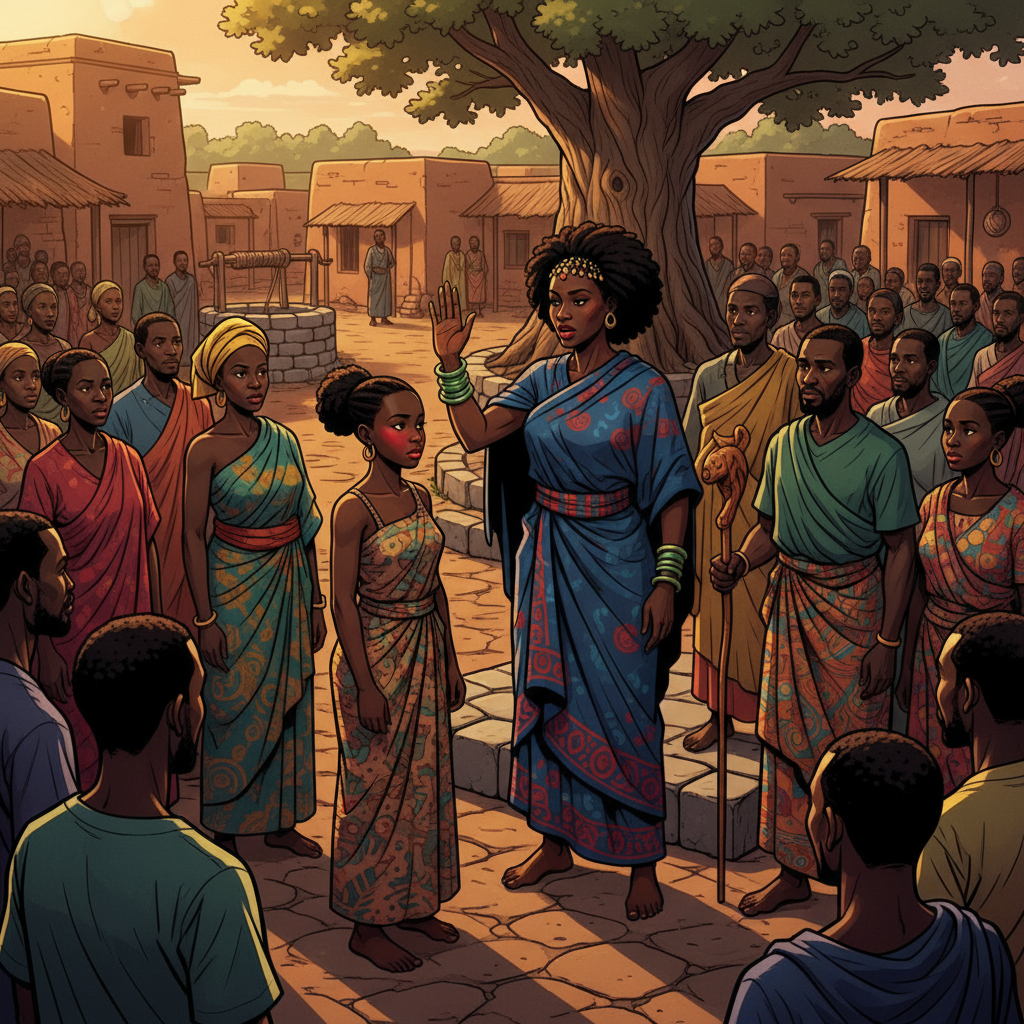
Nneka raised her hand, a gesture that commanded immediate, if reluctant, silence. Even Adanna and Obinna quieted, their arguments suspended. “My daughter, Adaeze, has seen something,” Nneka announced, her voice calm but carrying. All eyes turned to Adaeze, who suddenly felt the weight of every gaze. Her skin, usually dark as fertile earth, seemed to warm with a blush. She swallowed, then took a deep breath, her gaze fixed on her mother’s steady eyes.
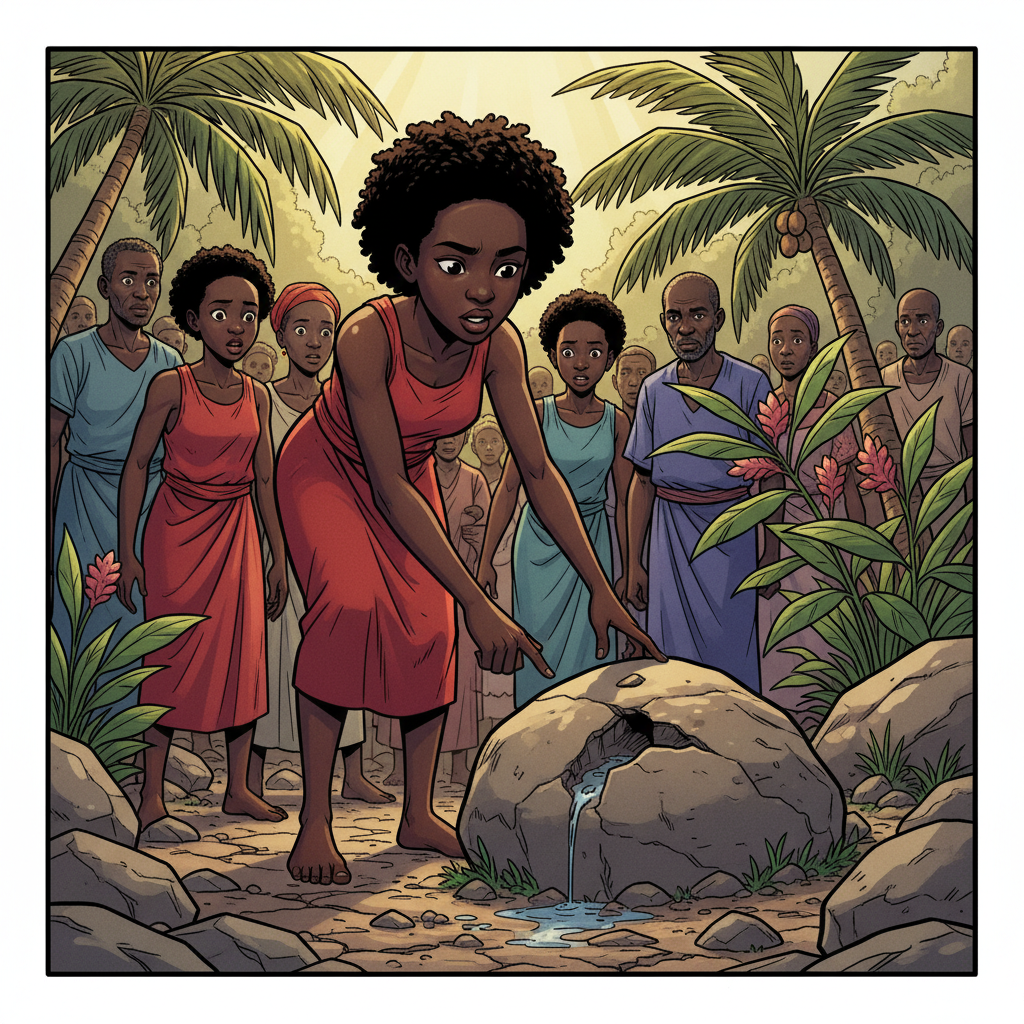
“The stream,” Adaeze began, her voice still soft, but clear in the sudden quiet, “it has shrunk so much that the earth around the old stone has softened. I think a large animal, seeking water, might have nudged it. The scrape is not a man’s mark.” She paused, then pointed towards the clump of wild ginger. “And over there, hidden by the young palm, there is a small seep. It gives water. Enough to share, if we clear the path and make it accessible.”
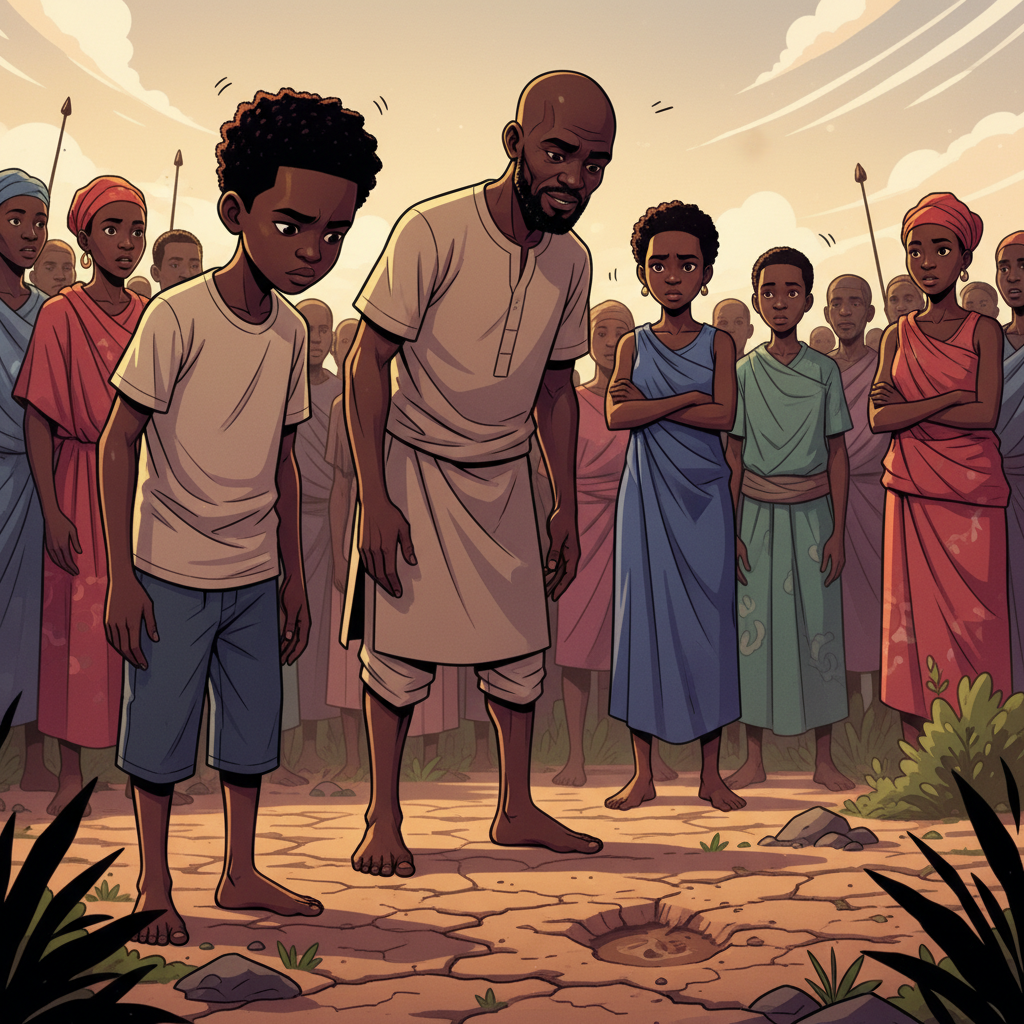
A murmur went through the crowd. Obinna, who had been ready to argue, now looked at the ground, then at the spot Adaeze indicated. His father, a man whose face rarely softened, nodded slowly. Adanna, who had been preparing her next fiery retort, stood silently, her brow furrowed in thought. She had seen the anger, the accusation. Adaeze had seen the small, hidden truth. The difference between them, often a source of friction, was now a bridge.
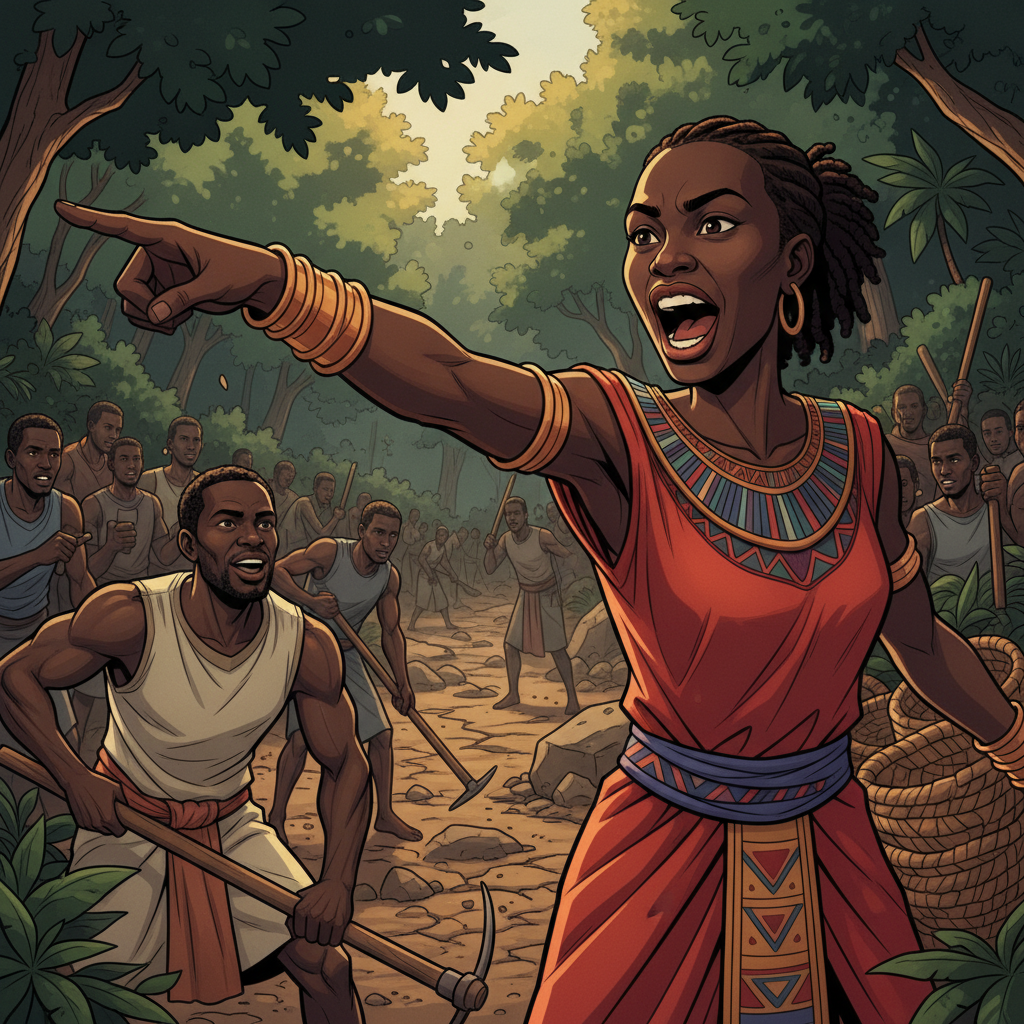
It took both sisters, in their own ways, to make the solution work. Adanna, with her strong voice and decisive nature, helped rally the men. She organized them, telling them where to dig, how to clear the brush, her energy infectious. She made sure everyone contributed fairly, ensuring no one felt cheated. She brought the structure, the drive, the visible force needed to turn Adaeze’s quiet observation into communal action. Her leadership was like a strong current, moving stones and clearing paths.
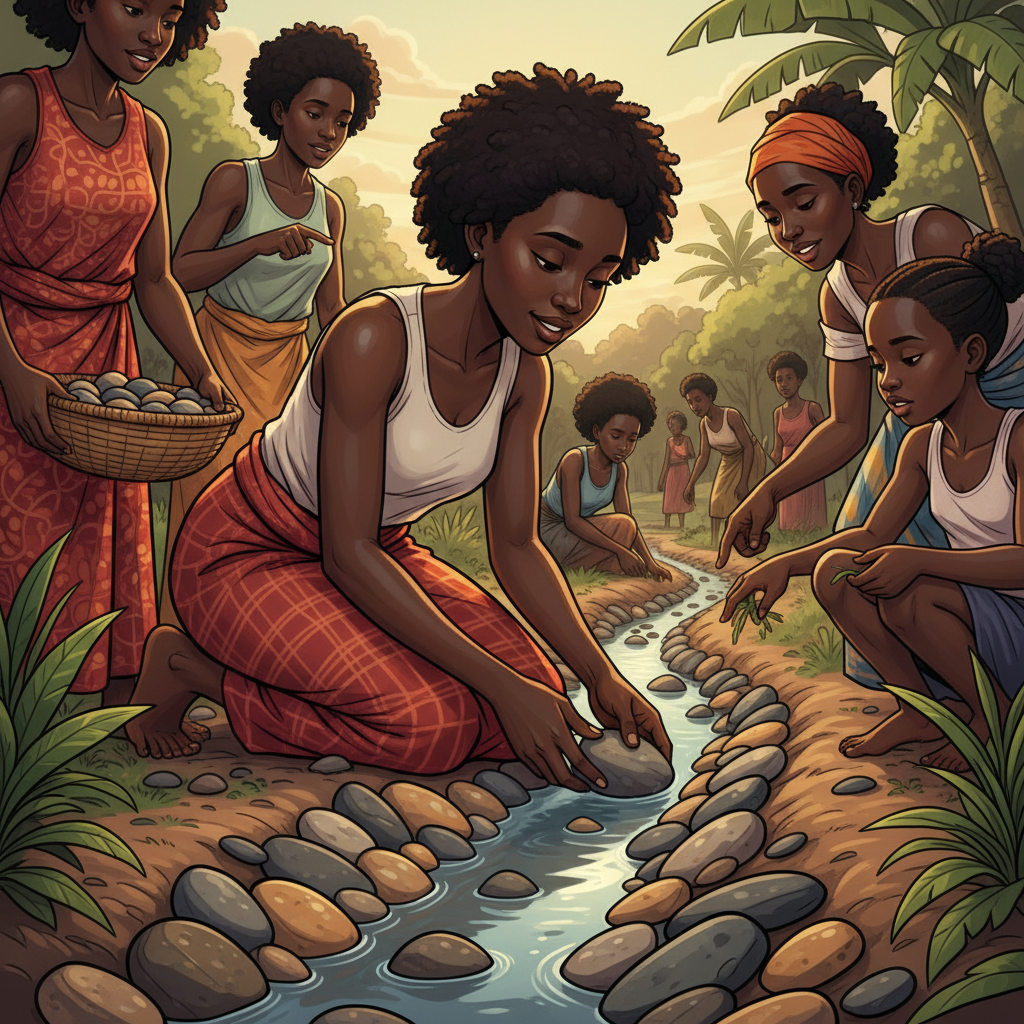
Adaeze, meanwhile, worked quietly alongside the women and children. She showed them the best way to clear the smaller plants without damaging the delicate roots of the new water source. She found the smoothest stones to line the new channel, her careful hands placing each one with precision. She listened to the murmurs of doubt, and with a soft word or a gentle gesture, reassured those who still harbored resentment. Her work was like the slow, steady drip of water, nourishing what was fragile and uncertain.

By sunset, a small, clear stream flowed from the newly cleared seep, joining the main stream further down. The water, though not as abundant as before, was enough. The air, once thick with anger, now held the soft sounds of shared labor and renewed hope. The elders of both compounds sat together, sharing kola nuts, their faces no longer grim. They spoke of the wisdom that came from looking beyond the surface, beyond the first angry words.
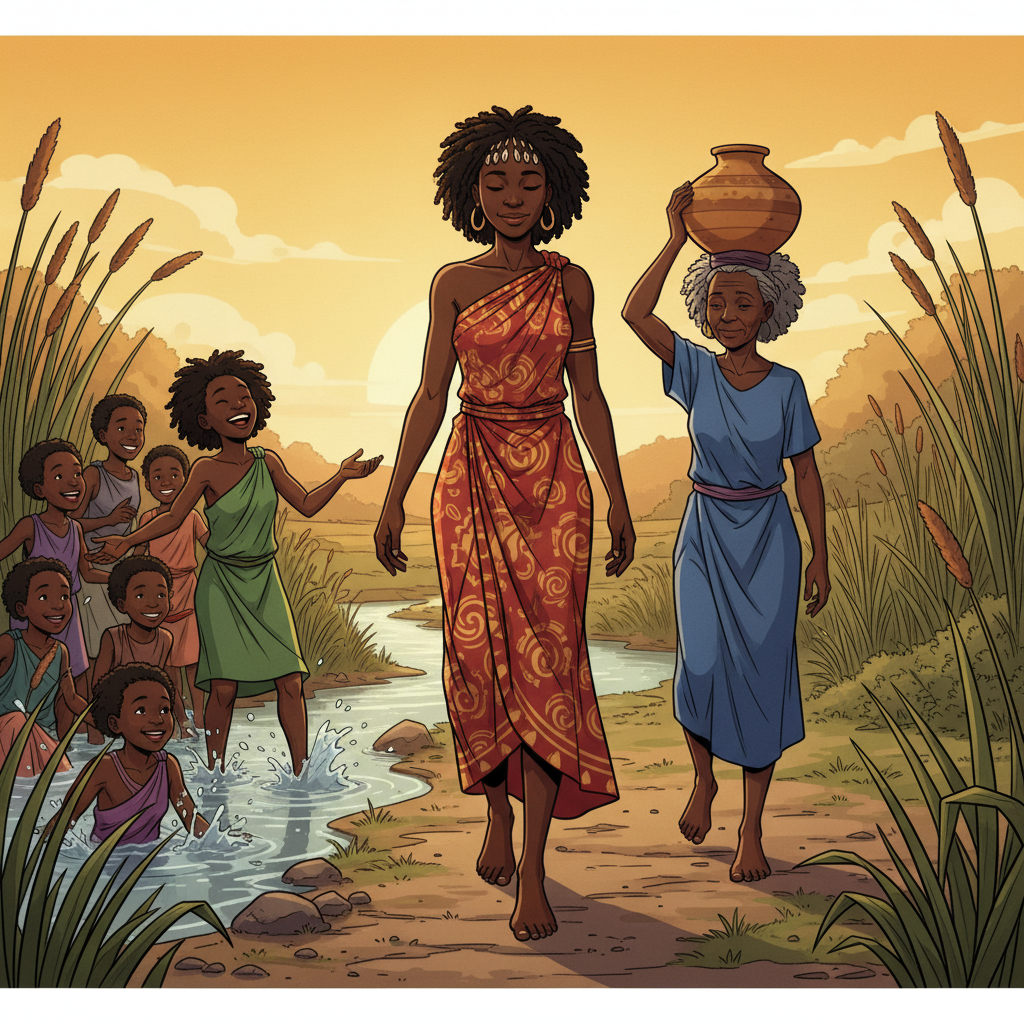
Nneka watched her daughters, one laughing loudly with the other children, the other quietly helping an elder woman carry a calabash of water. Their faces were still identical, two perfect halves of a single image. But in their movements, in the way they each met the world, the profound differences were clear. She walked over to them, her stride even, her smile soft.
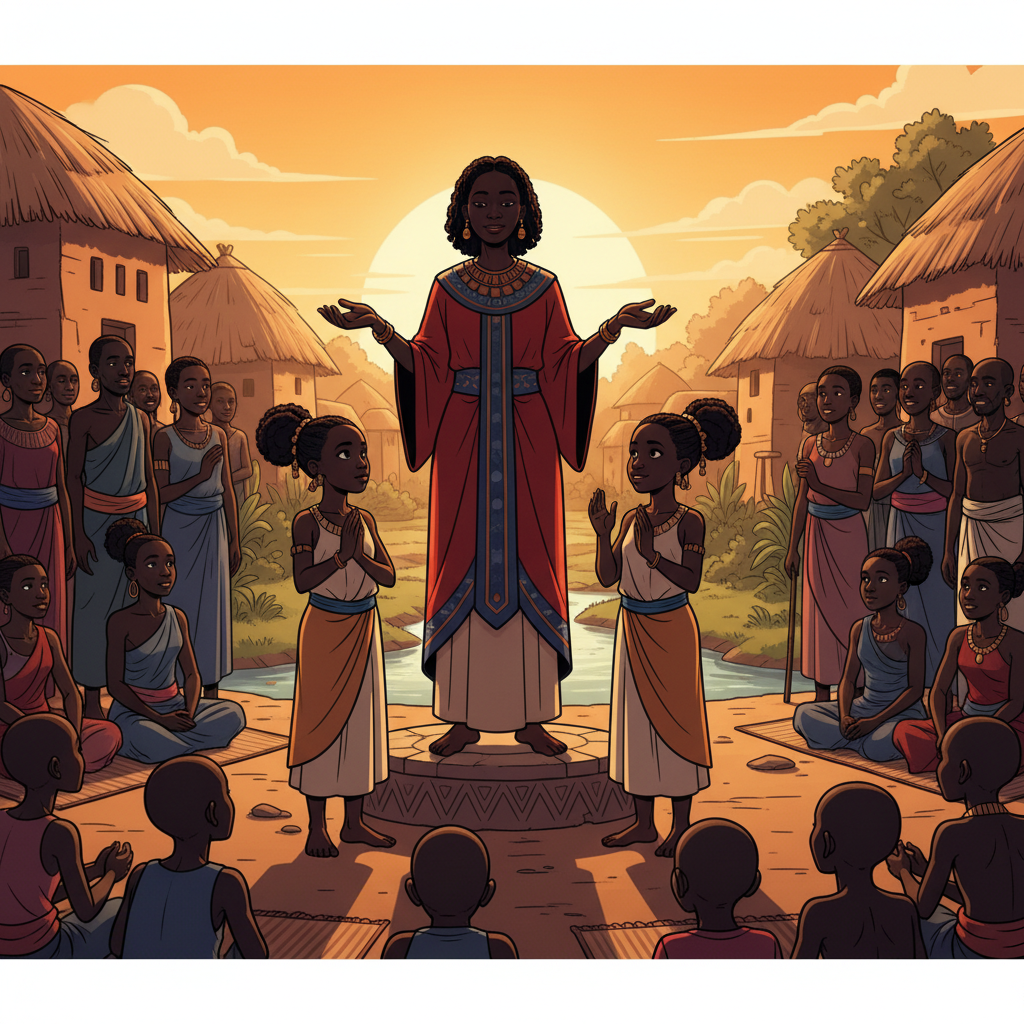
“My daughters,” Nneka said, her voice a gentle murmur, “Chi gave you the same face so the world would have to learn to see deeper than faces.” Adanna, usually quick to speak, was silent, her eyes on Adaeze. Adaeze, usually quiet, met her mother’s gaze, a small, knowing nod in her eyes. They understood that their sameness was a gift, but their difference was the path to completeness, like two hands, each unique, working together to clap a rhythm.
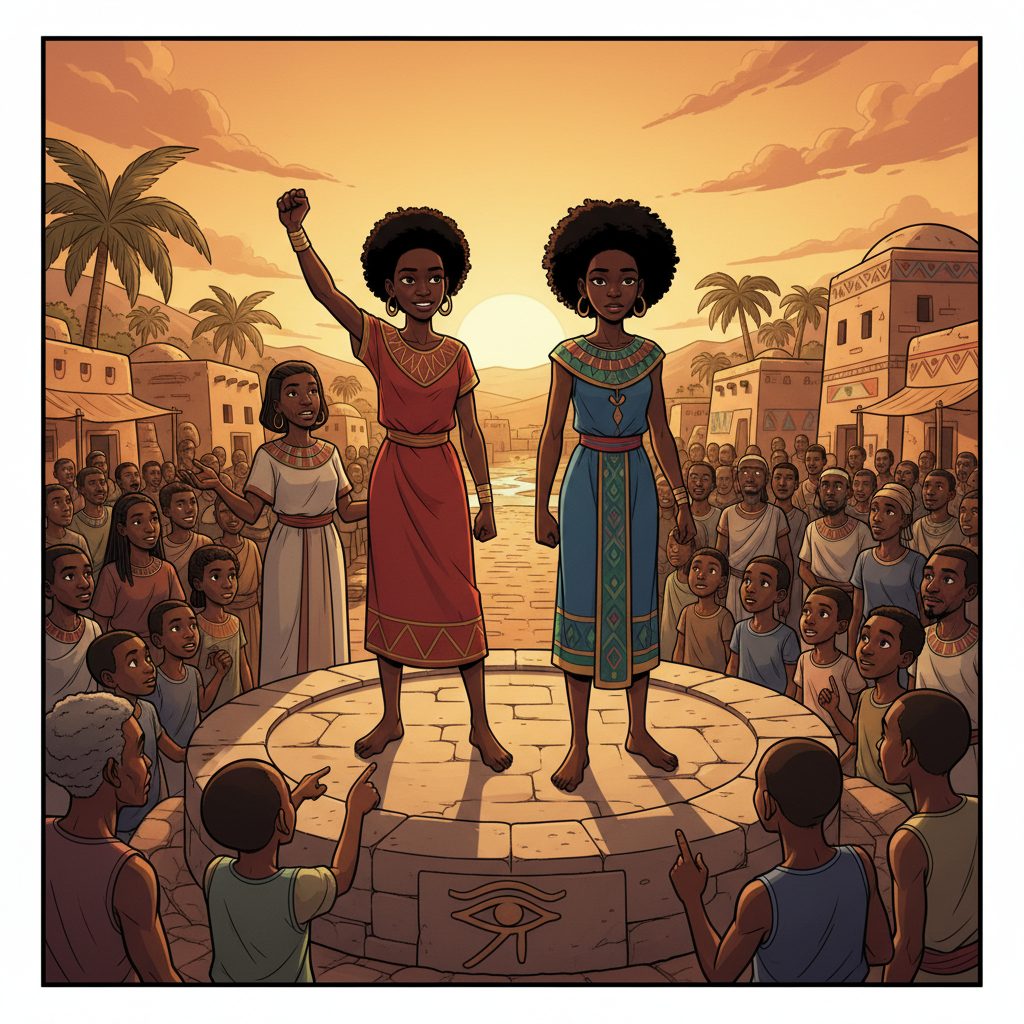
The village, too, began to see them differently. No longer just “the twins,” they were Adanna, the one who galvanized action, and Adaeze, the one who saw what was hidden. They were like the sun and the moon, both necessary, each with its own light, creating the rhythm of the days and nights. They were two halves of something whole, proving that true harmony did not mean two voices singing the same note, but two distinct melodies weaving together to create a richer song.
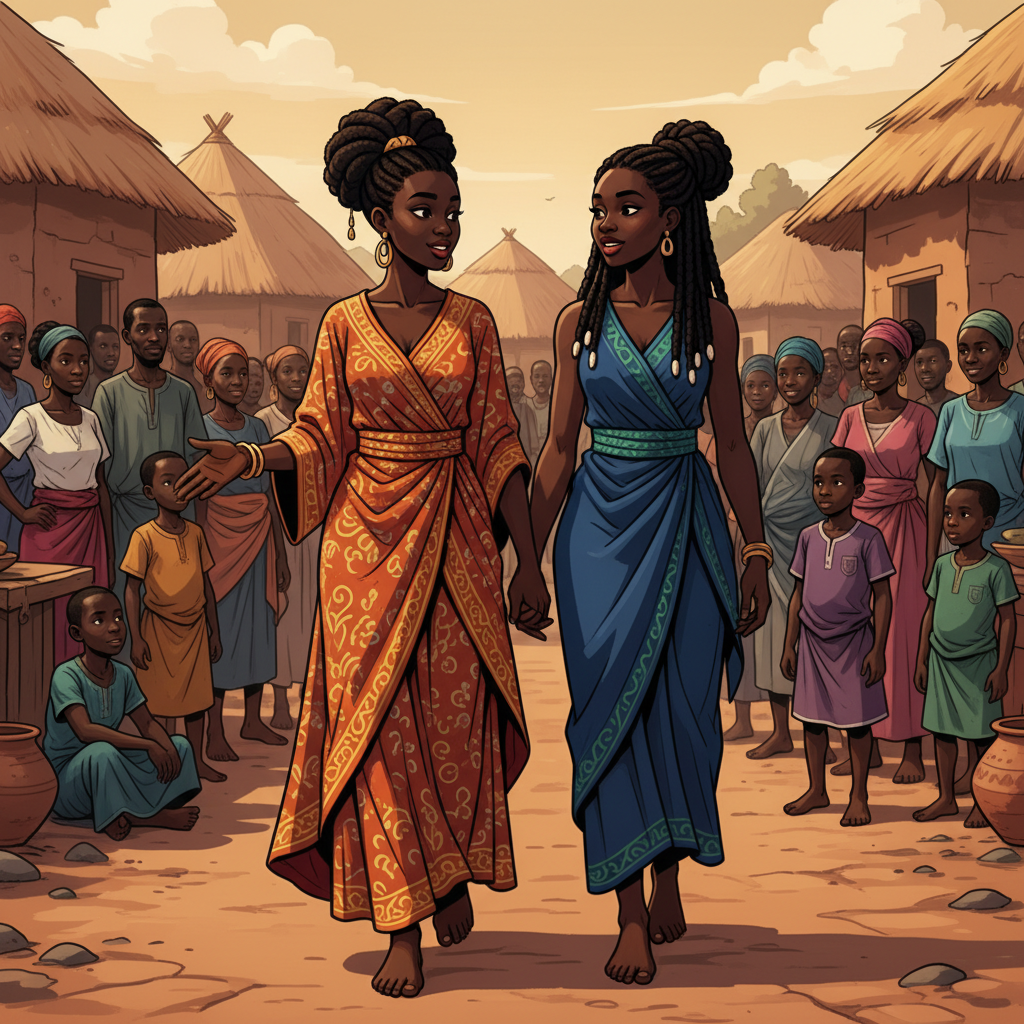
Their bond, once sometimes strained by the pressure to conform, now deepened, strengthened by respect for their individual strengths. Adanna learned to pause, to listen to the quiet observations of her sister. Adaeze learned to trust her own voice, knowing that her insights, though soft, carried weight. They were still identical, but the village now saw them with new eyes, seeing not one person, but two distinct, powerful spirits, walking side by side, making their way through the world.
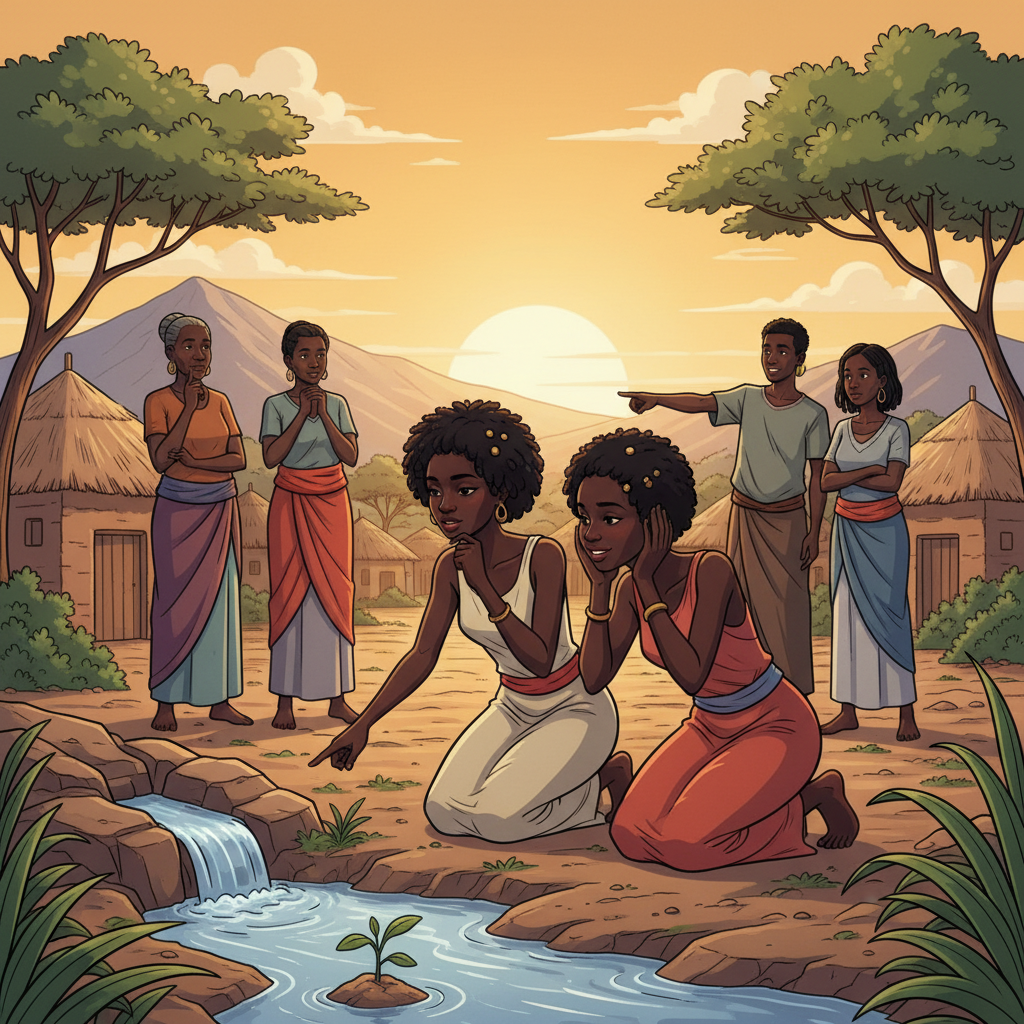
The small stream from the seep continued to flow, a testament to the day when two sisters, so alike on the surface, had shown their community the quiet power of seeing deeper. It reminded them that the world held many truths, and some of the most important ones were not shouted from the rooftops, but whispered from the earth, waiting for an observant eye and a listening ear.