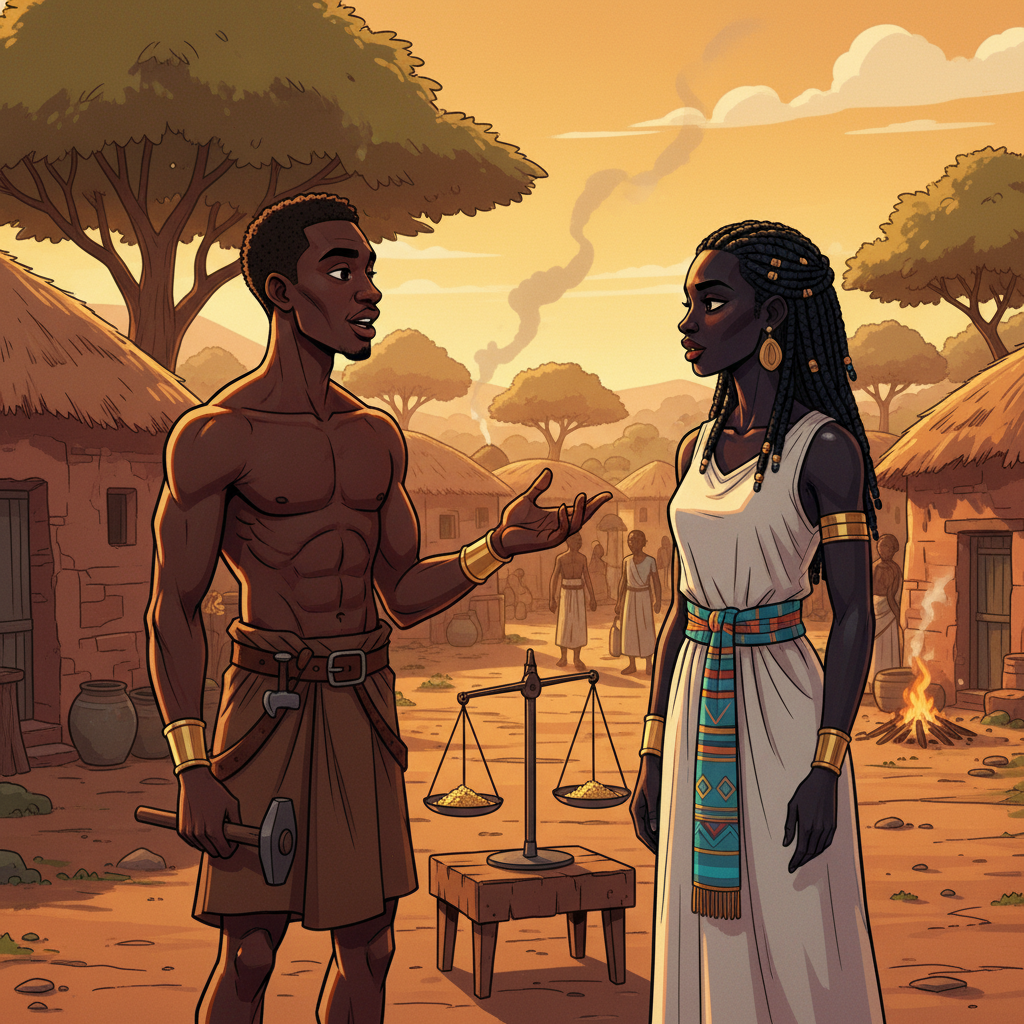
In the village of Waset, along the great river Nile, there lived a couple named Kha and Meryt. He was a craftsman who built furniture for the great temples of Kemet. She was the nebet per — the lady of the house — who managed their household with skill and wisdom. People said their per was the most balanced home in the whole village. Neighbors would stop and admire how their courtyard was always swept clean, how their children were well-fed and respectful, how the shrine to the ancestors always had fresh offerings. But it was not always that way. Their harmony had been earned through struggle, not granted by luck.
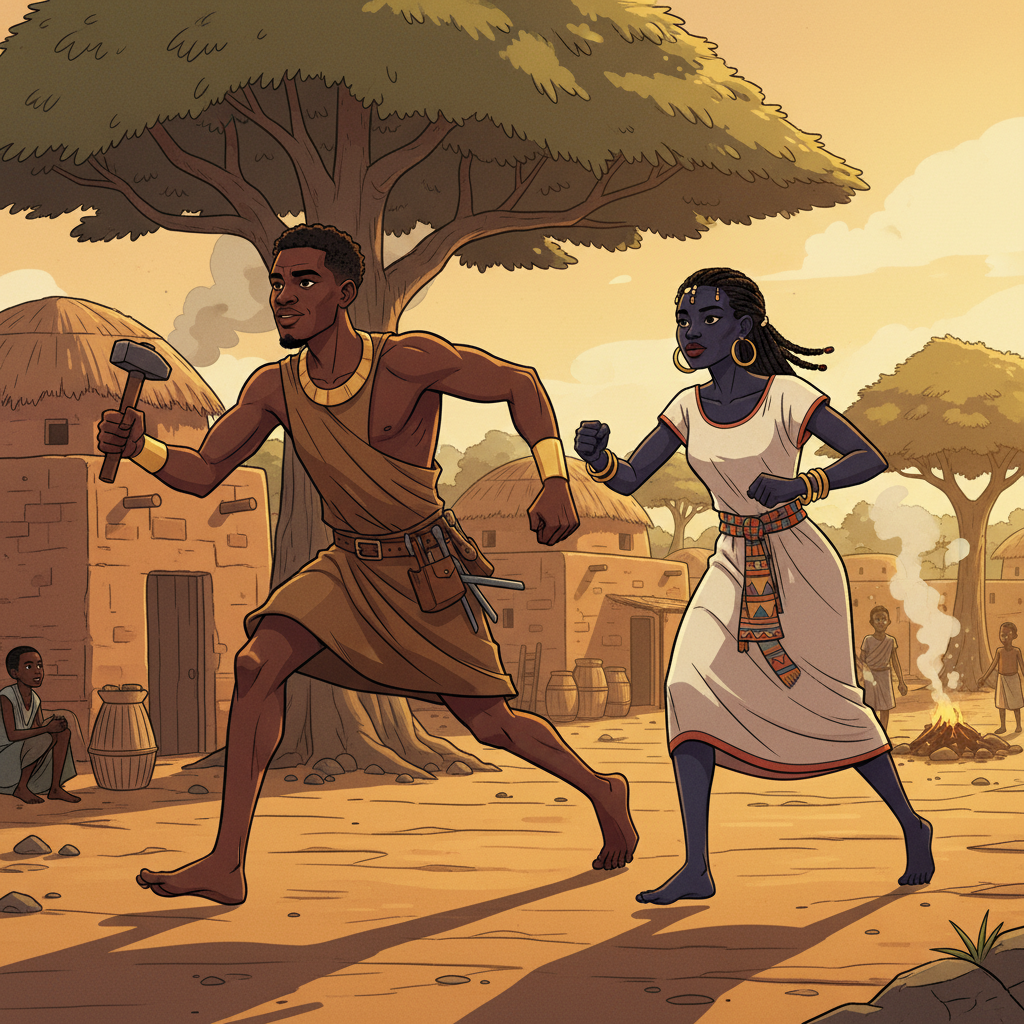
Kha was a tall man with deep brown skin that gleamed like polished cedar in the morning sun. His broad hands were rough from years of shaping wood — acacia, sycamore, and ebony — into chairs, headrests, and shrine cabinets for the temples. He took pride in every joint and every carved detail. The priests trusted his work because it was precise. Meryt was strong and graceful, her dark skin smooth as the river stones she collected for grinding grain. Her black hair was kept in neat braids, sometimes adorned with small blue beads. Her eyes were sharp and missed nothing — not a spilled drop of oil, not a child's hidden worry.
Their per was a modest mudbrick house with three rooms and a flat roof where the family slept on hot nights. A small courtyard held the outdoor kitchen, a grain storage bin, and a pen for two geese. Inside, Meryt kept the walls whitewashed and the floors swept. Dried herbs hung from the ceiling beams. Every morning before dawn, Meryt rose to light the small oil lamp at the household shrine. She whispered prayers for the family's ka — their life force and spiritual energy. She asked the ancestors to guide them through another day. This was her first duty, and she never missed it.

When they first married, Kha thought he was in charge because he earned the wages. He made decisions without asking Meryt. He spent resources without consulting her. If a neighbor needed a loan of grain, Kha agreed without checking their supply. If he wanted new tools, he traded for them without considering what the kitchen needed. One month, the grain ran out before the harvest. The children went to bed with thin soup instead of bread. Meryt had warned him three weeks earlier that the supply was low. She had asked him not to lend grain to his friend. He had waved her off. He had not listened.

Meryt did not shout. She did not weep. She sat across from him one evening while the children slept on the roof above. The oil lamp flickered between them, casting shadows on her steady, dark face. Her expression was calm but firm — like the great stone statues that guarded the temple gates. "Our per has two pillars," Meryt told him, her voice low and even. "I hold the inside — the food, the children, the rhythm of our days, the shrine. You hold the outside — the work, the trade, the community dealings. Neither pillar ranks above the other. But if one pillar decides it is the whole roof, the house collapses."

Kha was proud. He wanted to argue. He opened his mouth to say that a man leads his household, that this was the natural way. But the empty grain basket sat in the corner, arguing louder than he ever could. He had managed the money. Meryt had managed the home. He had overruled her judgment on resources, and the resources had failed. The evidence was clear: his judgment alone was not sufficient. They needed both minds working together. Isfet — disorder and chaos — had crept into their home not because of bad fortune, but because the balance between them had been broken. Kha swallowed his pride. It tasted bitter, but necessary.
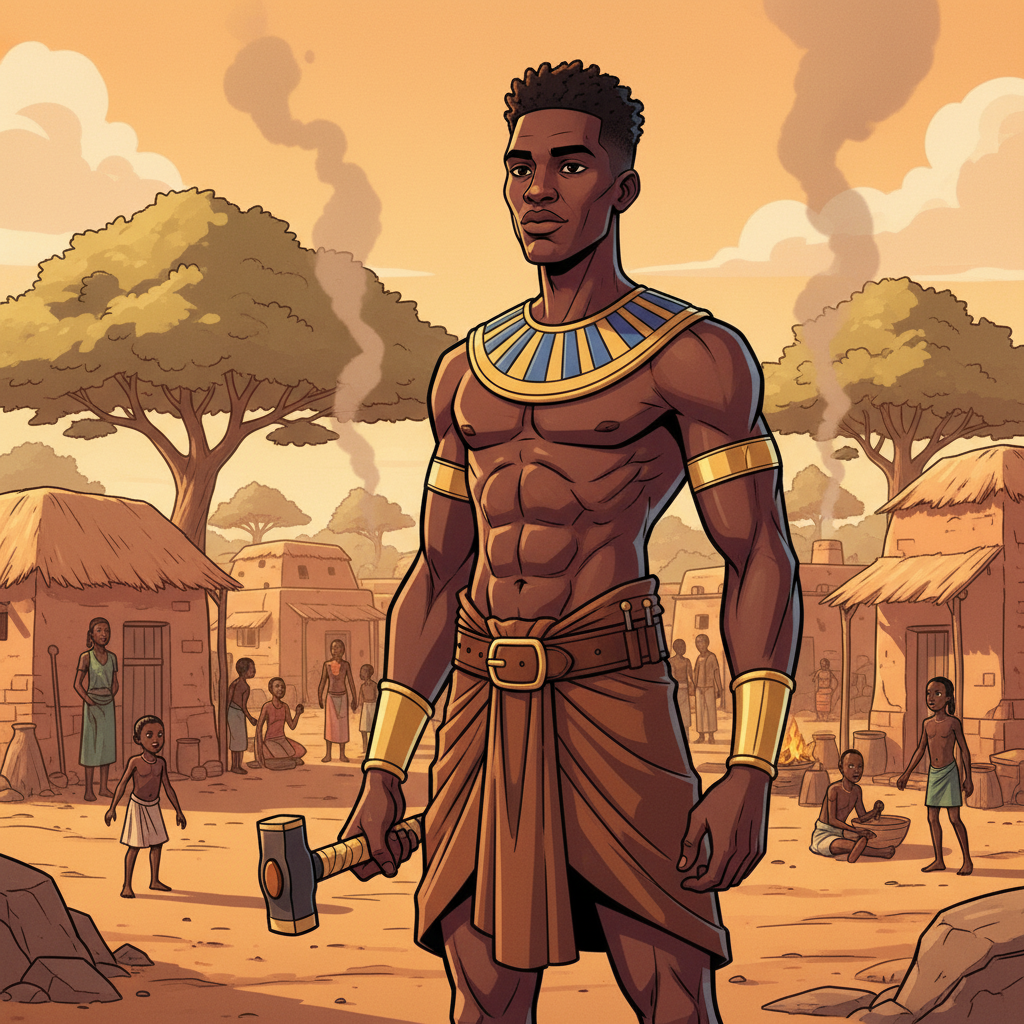
That night, Kha walked alone along the edge of the Nile. The great river moved steadily under the moonlight, wide and dark and ancient. He watched how the water flowed — not by force, but by following its natural path. It did not fight the banks. The banks did not fight the water. Together, they carried life to all of Kemet. He thought about Ma'at — the divine principle of truth, balance, and order that governed everything from the stars to the smallest household. Ma'at was not about power. It was about each part fulfilling its true function. He had confused leadership with control. They were not the same thing.
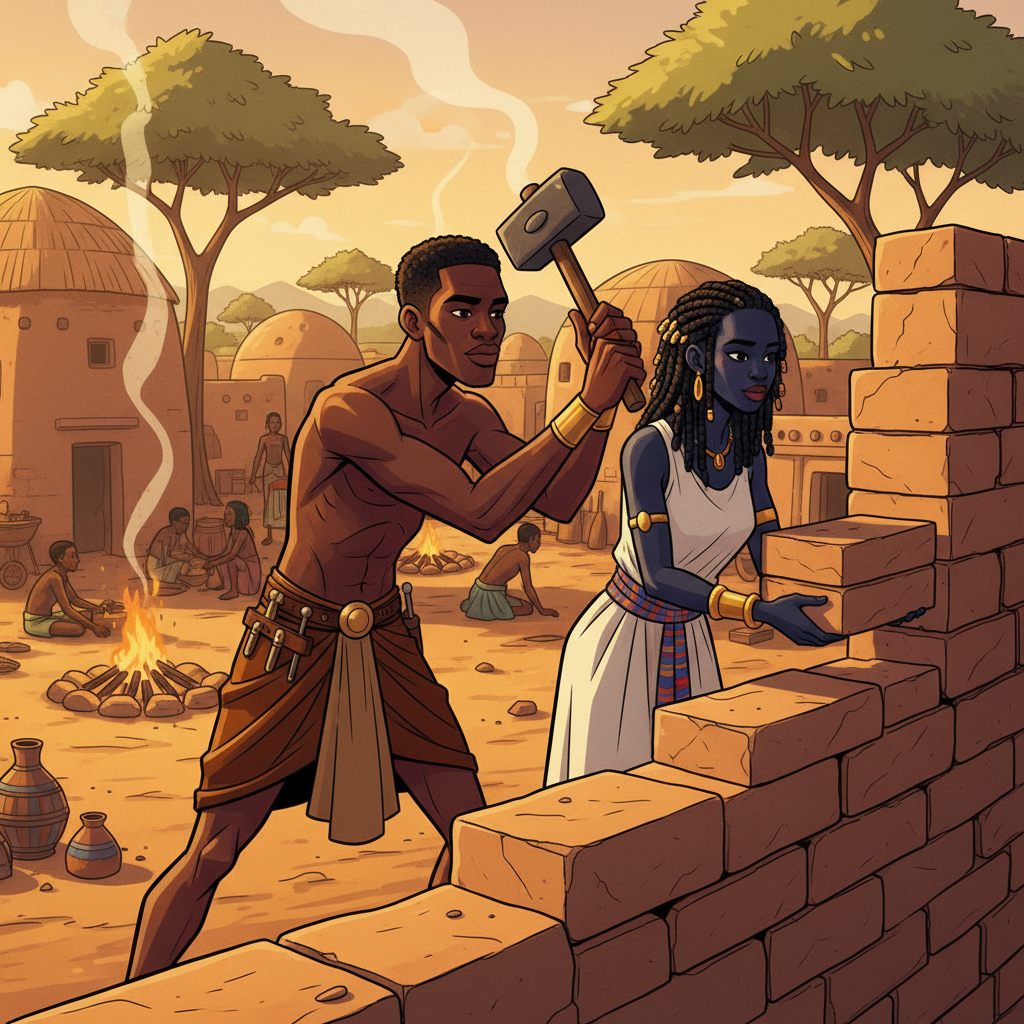
The next morning, Kha came to Meryt while she was grinding emmer wheat into flour. Her strong arms worked the stone back and forth in a steady rhythm. He knelt beside her. "You were right," he said. "I have been acting as if I were the only pillar. I forgot that a roof needs two." Meryt looked at him carefully. She had waited for these words, but she did not gloat. Gloating would be its own kind of isfet — creating imbalance through pride. "I do not need you to be small," she said. "I need you to be honest. When both pillars stand tall and true, the per stands strong."
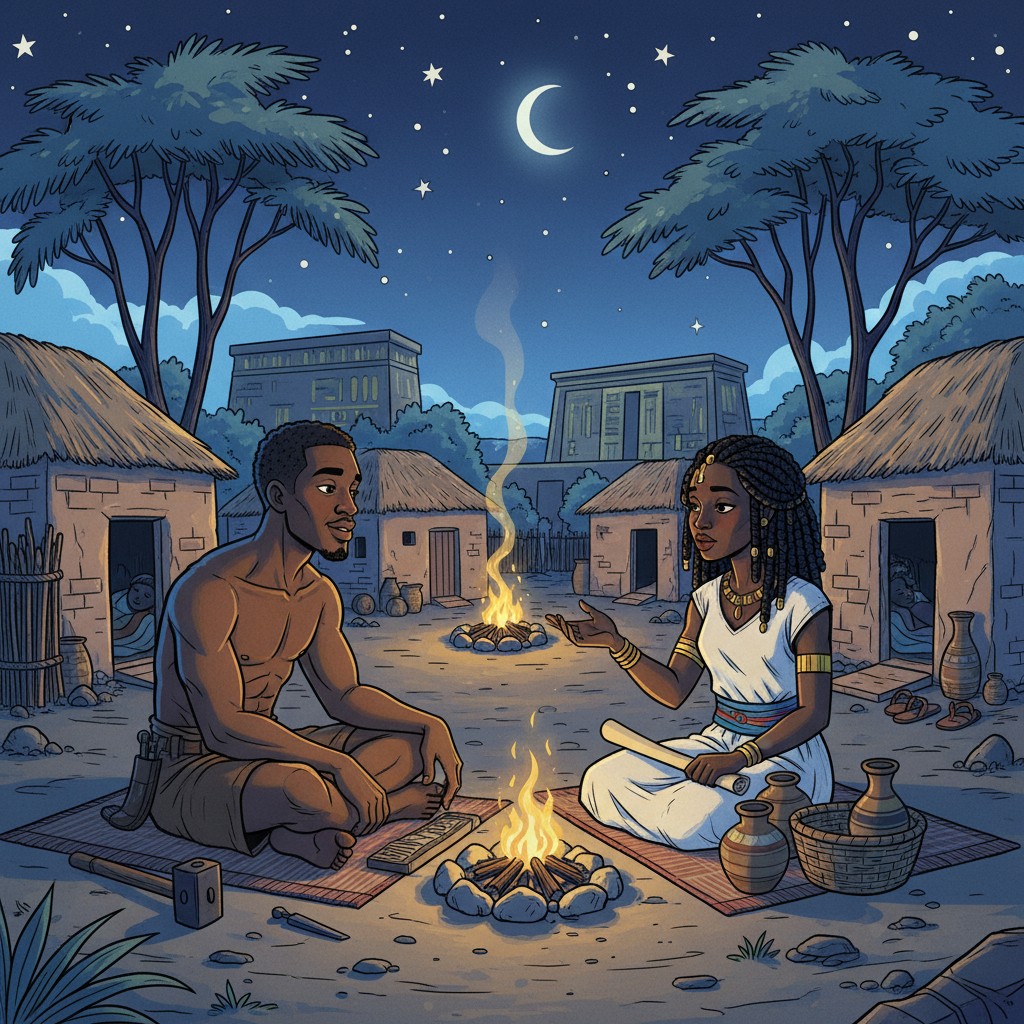
They made an agreement that very day. Every seven days, after the children fell asleep, Kha and Meryt would sit together in the courtyard under the stars. Meryt would report what the home needed — how much grain remained, whether the children needed new sandals, if the goose pen required repair. Kha would report what work was coming from the temple and what he expected to earn. Together, they planned. Neither made a large decision alone. If Kha wanted to lend resources, he discussed it with Meryt first. If Meryt wanted to trade for new linen, she talked with Kha. Two minds examined every choice, and their decisions grew wiser for it.
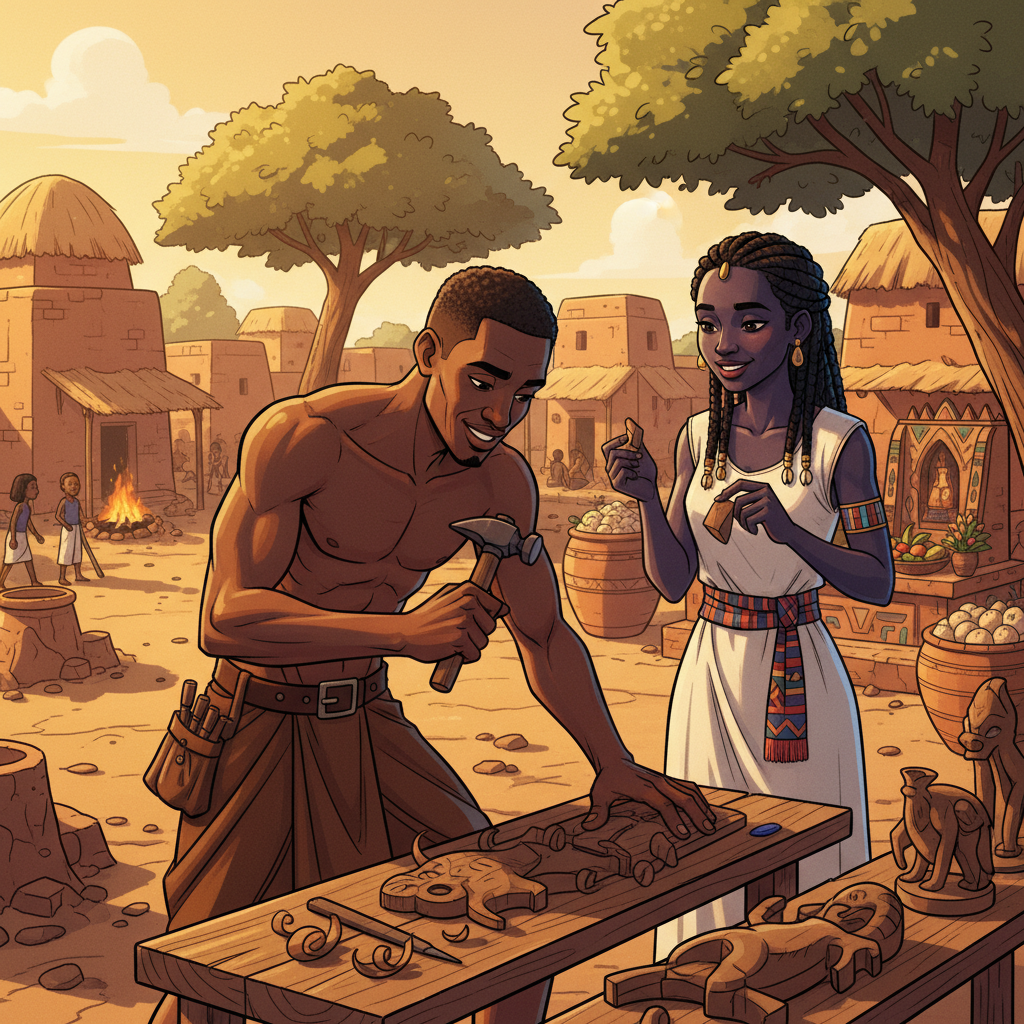
The change did not happen overnight. In the early weeks, Kha sometimes forgot and made promises to neighbors without consulting Meryt. Old habits clung to him like river mud. But each time, he caught himself and came home to discuss it before finalizing anything. Meryt was patient. She understood that reshaping a habit was like reshaping wood — it took steady pressure over time. Slowly, their system took root. The grain bin stayed full. The children ate well. The shrine received proper offerings. Kha noticed that his work improved too. When he was not worried about trouble at home, his hands were steadier. His carvings grew more detailed and beautiful.
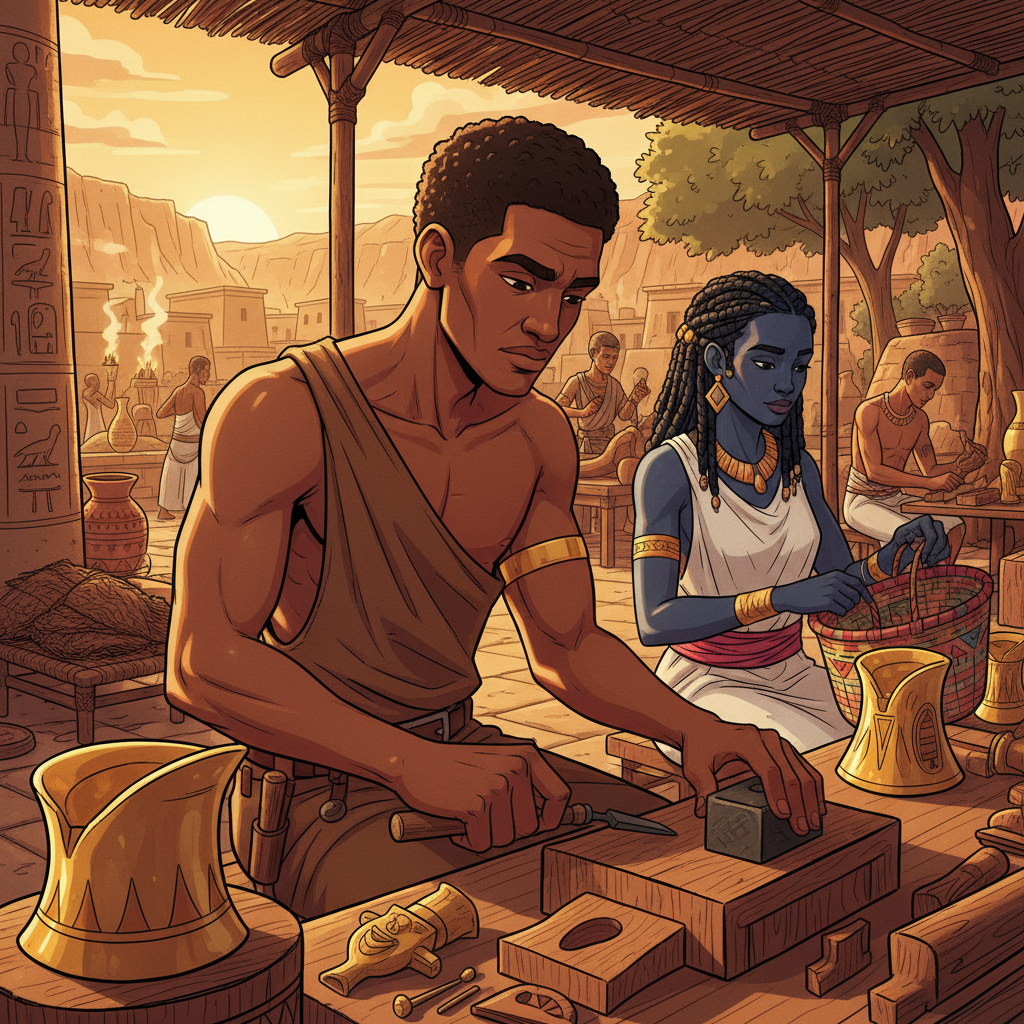
Kha's work at the temple brought him into contact with scribes and priests who oversaw the great building projects of Waset. Each morning, he walked through the village as the sun rose over the eastern cliffs, painting the mudbrick houses in shades of gold and amber. He carried his tools in a leather bag over his shoulder. At the temple workshop, he joined other craftsmen — carvers, painters, gilders. They worked in the shade of reed canopies, shaping wood into sacred furniture. Kha was known for his precision. He measured twice, cut once. The priests said his headrests carried good energy because he worked with a peaceful ka — a spirit undisturbed by household chaos.
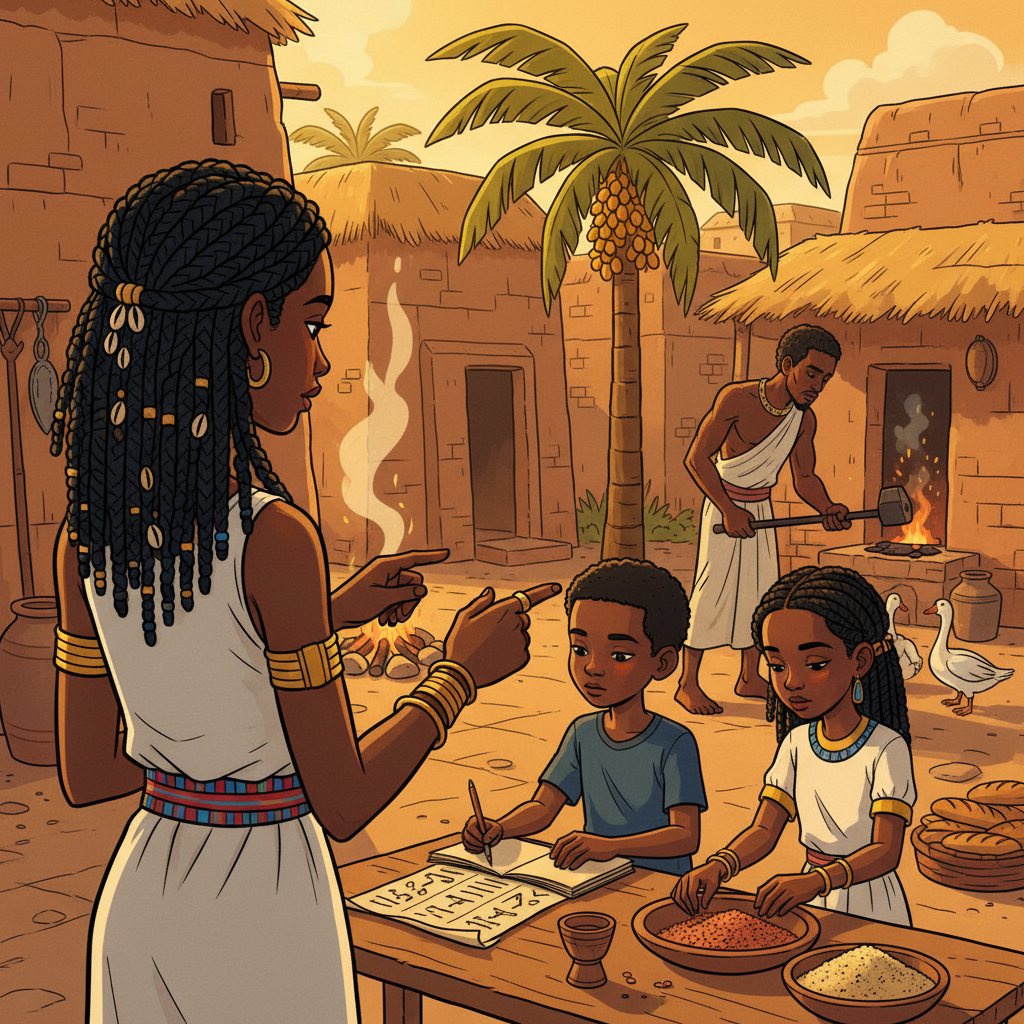
Meanwhile, Meryt managed the per with the skill of a general directing a campaign. She rose before anyone, prepared the morning meal of bread, beer, and figs, then organized the children's tasks. Their eldest son practiced his reading. Their younger daughter helped sort lentils and learned to count by measuring grain. Meryt tracked every resource. She knew exactly how many days of bread remained in the flour supply. She knew when the geese would lay and when the dates would ripen on the palm near their door. This knowledge was not simple — it was the deep intelligence of someone who understood that a household, like all of Kemet, ran on careful planning and honest accounting.

Their son, Amenhotep, was eleven years old with skin the color of rich Nile silt after the flood — deep, dark, and full of life. He had his father's strong build and his mother's watchful eyes. He was curious about everything and asked questions the way the ibis probed the mud — persistently and without embarrassment. One evening, as the family ate together in the courtyard, young Amenhotep studied his parents carefully. He had noticed their weekly meetings. He had seen how they spoke to each other — not with commands, but with respect. Something about it puzzled him. At school, the older boys said that men ruled their homes. But that was not what he saw.
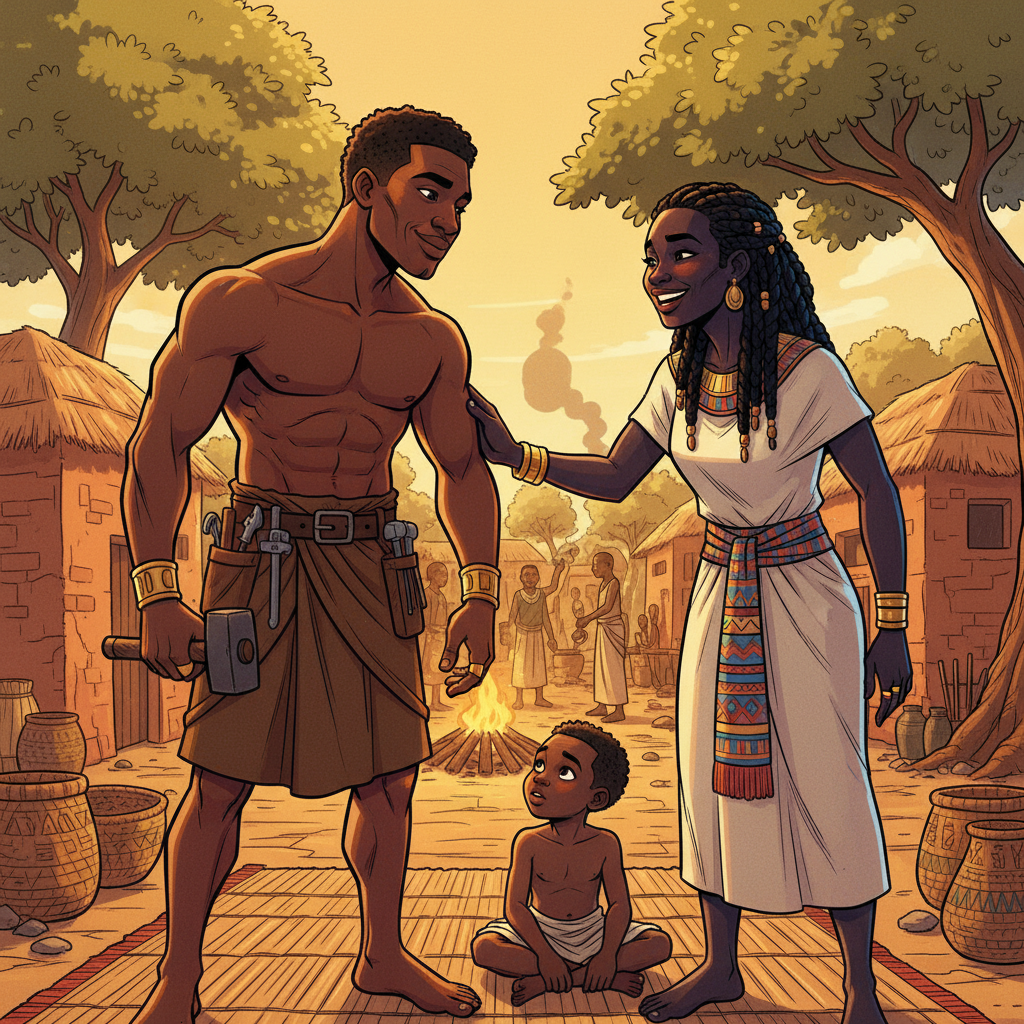
"Who is in charge?" Amenhotep asked suddenly. Kha and Meryt looked at each other across the reed mat and laughed — a warm, knowing laugh that carried years of hard-won understanding between them. Their dark faces glowed in the lamplight. "Ma'at is in charge," Meryt said, her voice gentle but serious. "Your father and I are both servants of Ma'at. He carries the household's order into the world. I build the household's order from within. We have different roles, but equal weight. If either of us stops doing our part, the whole system breaks. That is why we talk and plan together."
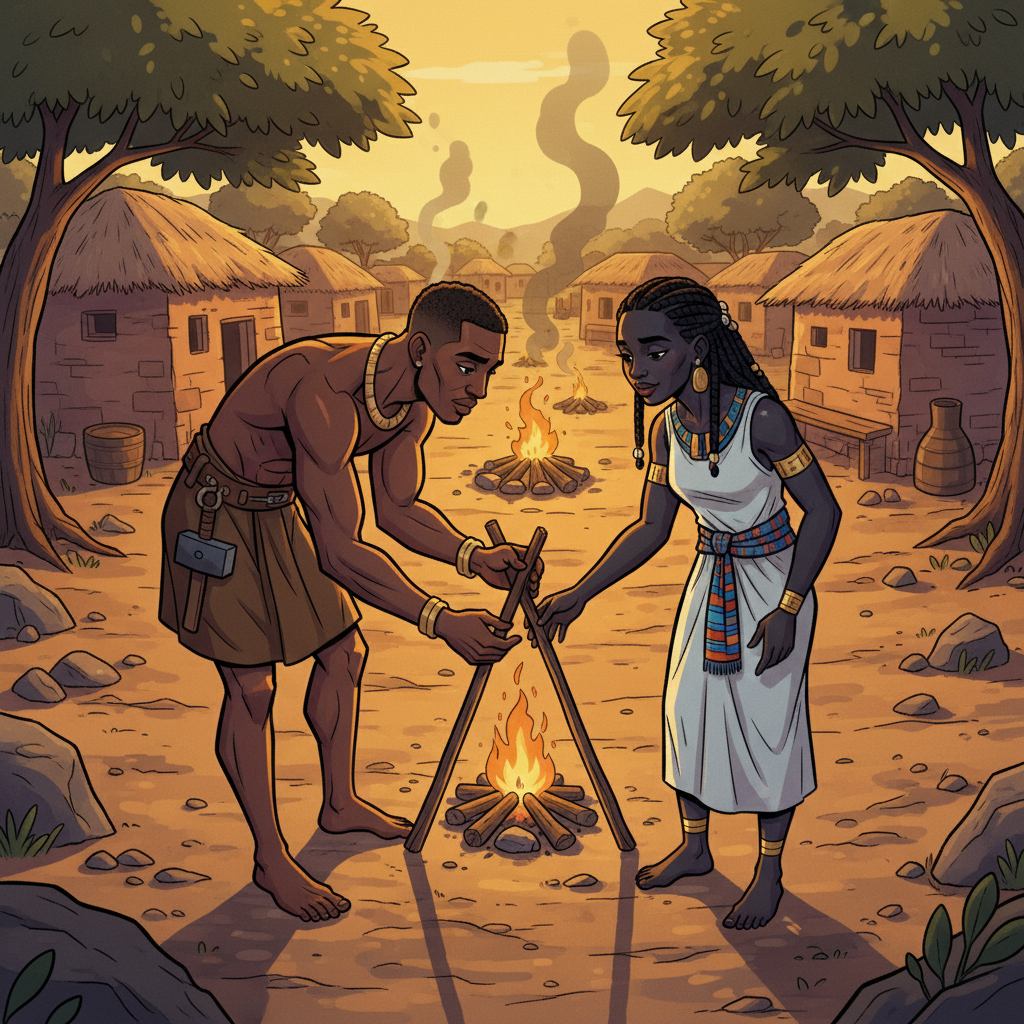
"Ma'at does not work through one person having all the power," Kha added, leaning forward so the firelight caught the strong lines of his jaw. "It works through complementary function — two different strengths serving the same purpose. Your mother is not my servant. I am not her servant. We are two pillars holding up the same roof." He picked up two sticks and leaned them against each other so they formed a triangle shape. "See? Remove either one, and the structure falls. Neither stick is more important. But they must both stand firm, and they must lean on each other with trust. That is how Ma'at works in a family."
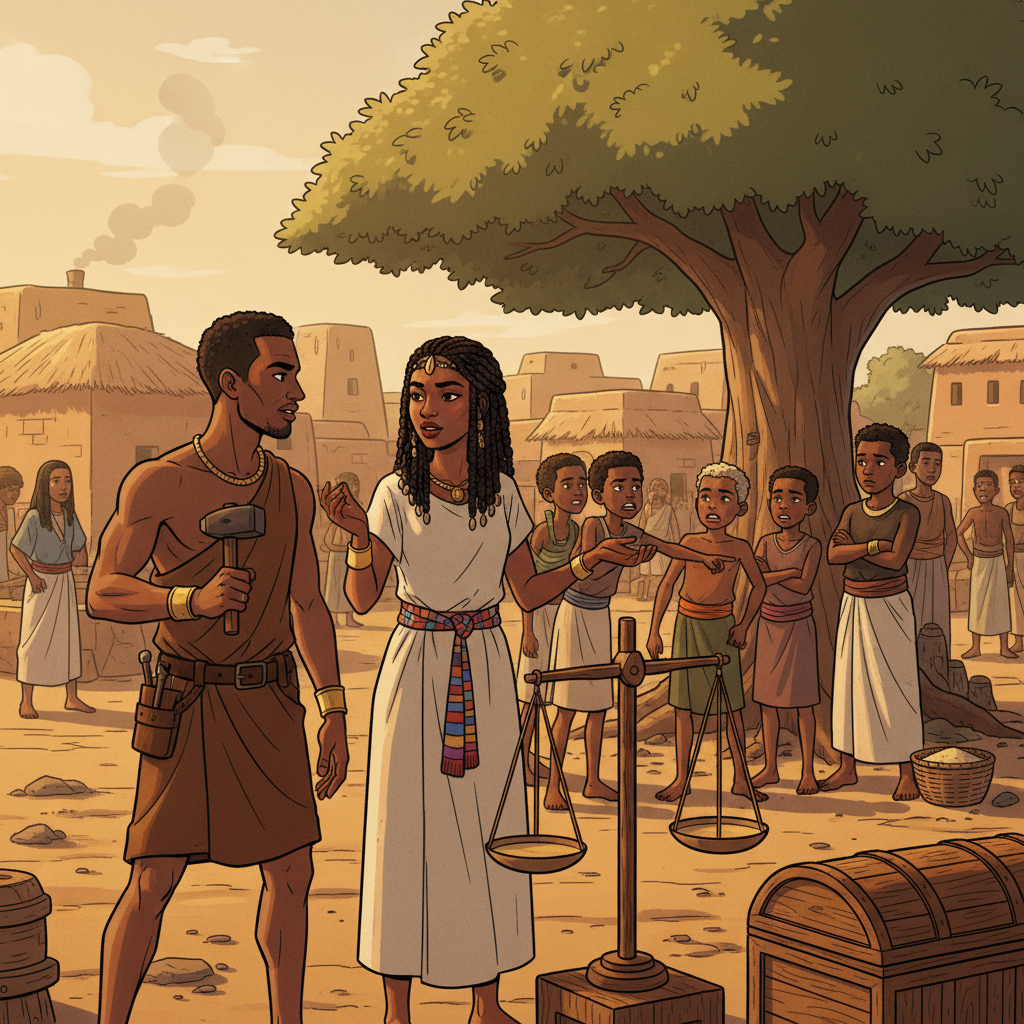
Amenhotep thought about this for many days. He watched his parents more closely now. He saw his father ask his mother's opinion before agreeing to build a neighbor's storage chest. He saw his mother consult his father before trading linen for pottery at the market. Every decision flowed through both of them, like the Nile flowing between its two banks. At school, when the older boys boasted about how their fathers gave orders at home, Amenhotep stayed quiet. He did not argue with them. But he noticed something — those same boys often complained that their homes were full of shouting. Their mothers were unhappy. Their grain ran short. Isfet lived where balance did not.
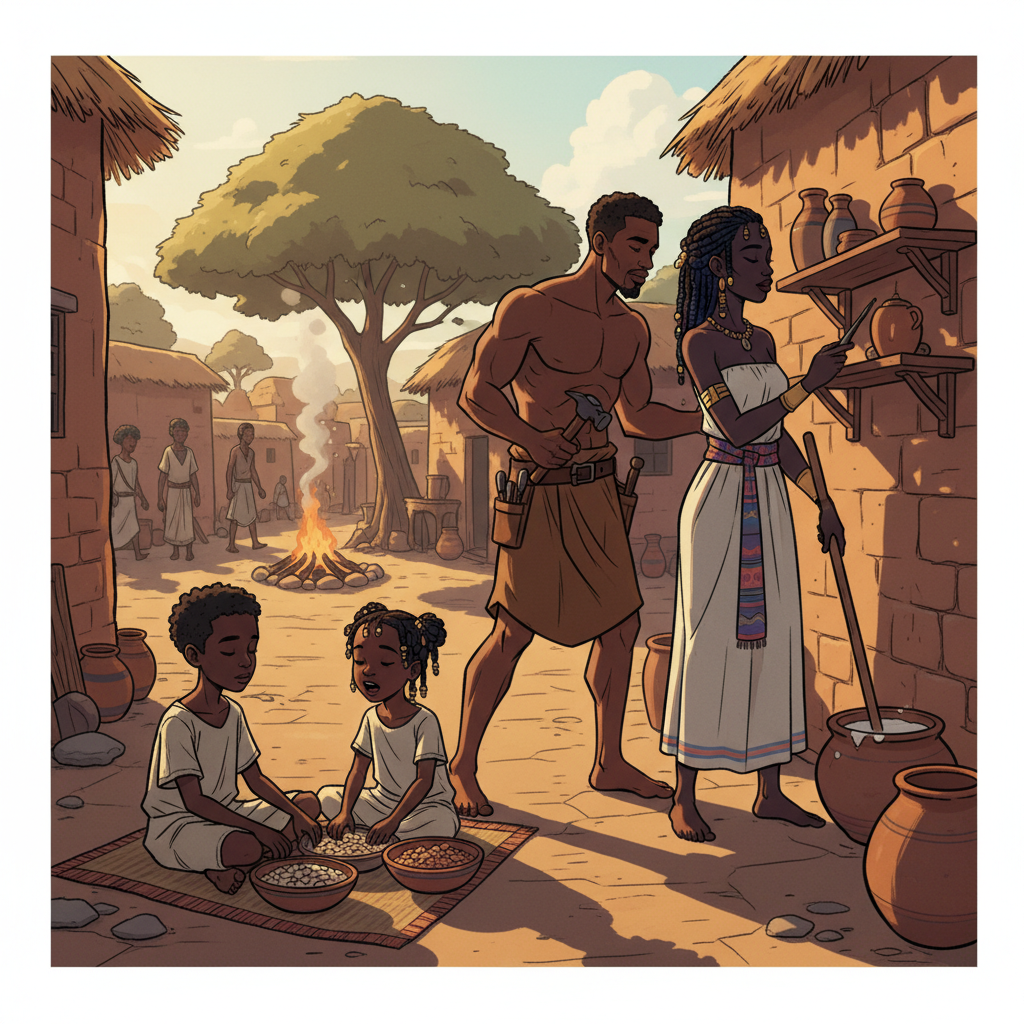
One afternoon, Amenhotep came home to find both his parents working together in the courtyard. Kha was repairing a broken shelf while Meryt mixed fresh whitewash for the walls. They moved around each other easily, handing tools back and forth without needing to ask. Their daughter sat nearby, singing softly while sorting dried beans. Amenhotep understood something in that moment. This was Ma'at made visible — not a grand temple ritual, but two people building a life together with mutual respect. The per was their temple. The daily work was their offering. He sat down and began helping his sister sort beans, adding his own small pillar to the family's structure.
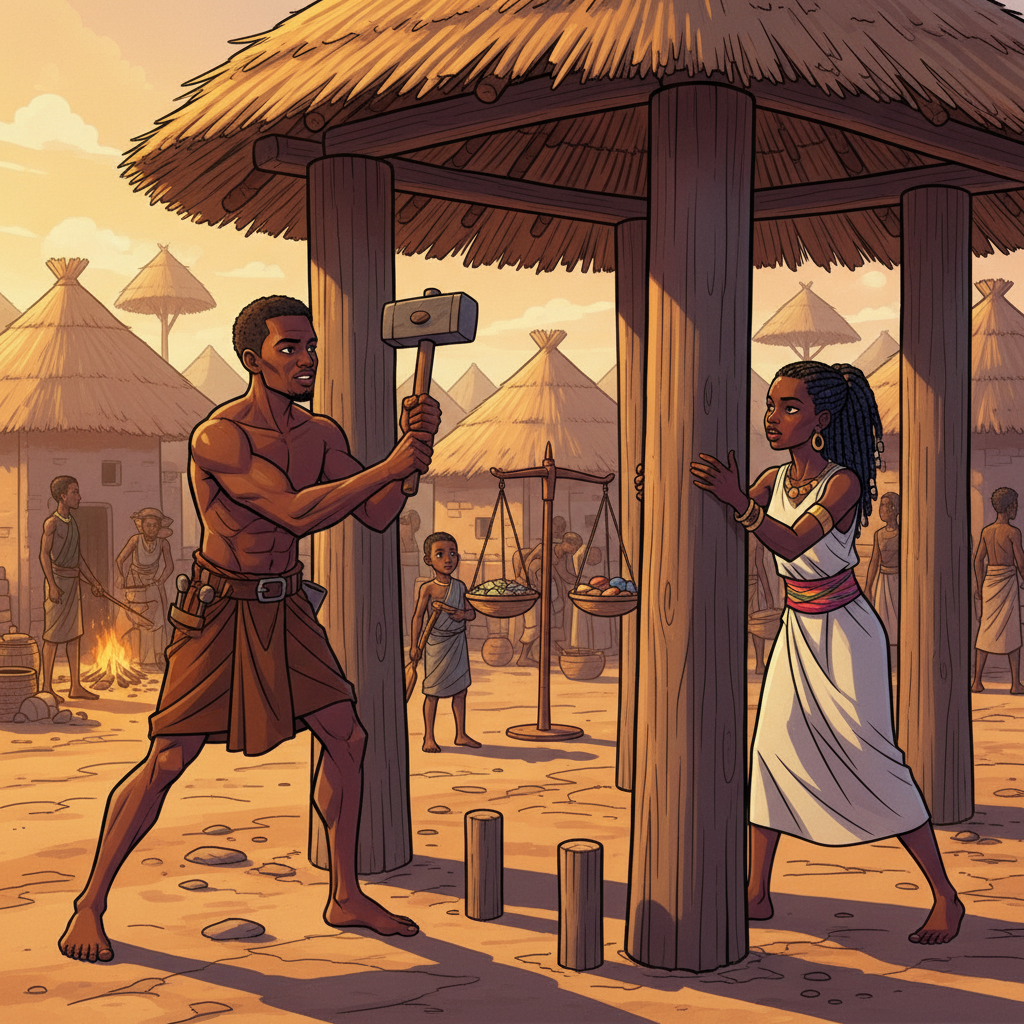
In modern life, many families struggle because one person tries to control everything, or because no one communicates about what the household needs. Arguments fester. Resources run out. Children grow up confused about what partnership means. Isfet creeps in through silence and selfishness, just as it crept into Kha and Meryt's home before they found their balance. But Ma'at teaches that a family works like a building — it needs pillars that share the weight equally. Two strong pillars, standing tall, supporting the same roof. When both partners bring their full strength and intelligence to the household, when they communicate honestly and plan together, they build a per that will shelter their children and their children's children for generations to come.