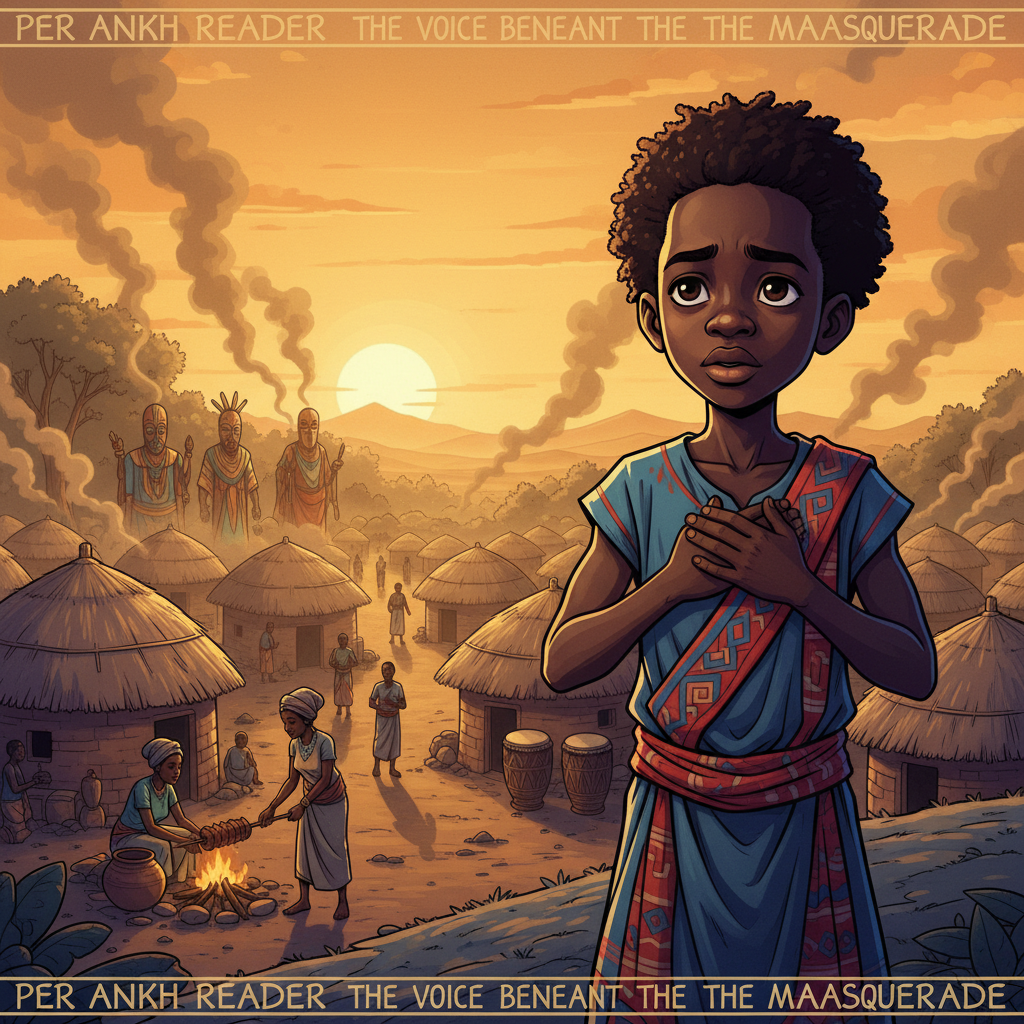
Obiora’s heart thrummed with the rhythm of the approaching Mmanwu festival, a pulse mirroring the distant beat of drums. The air in Umuofia village thickened with the scent of roasting yam and burning wood, carrying whispers of ancestral spirits soon to walk among the living. For weeks, anticipation had coiled within him like a spring, tighter than the knot in his mother’s headscarf. He was twelve seasons old, old enough to understand the sacredness, yet young enough to still feel the pure wonder of the masquerades. This year, the festival felt particularly important. A contentious land dispute between the families of Nnamdi and Okoro had divided the village, and the elders hoped the Mmanwu would bring clarity and justice. Obiora often overheard adults speaking in hushed tones about the dispute, their faces etched with worry, a concern that now settled upon his own young brow. He knew the masquerades, embodiments of the ancestors, were believed to speak with undeniable truth, a truth the village desperately needed.
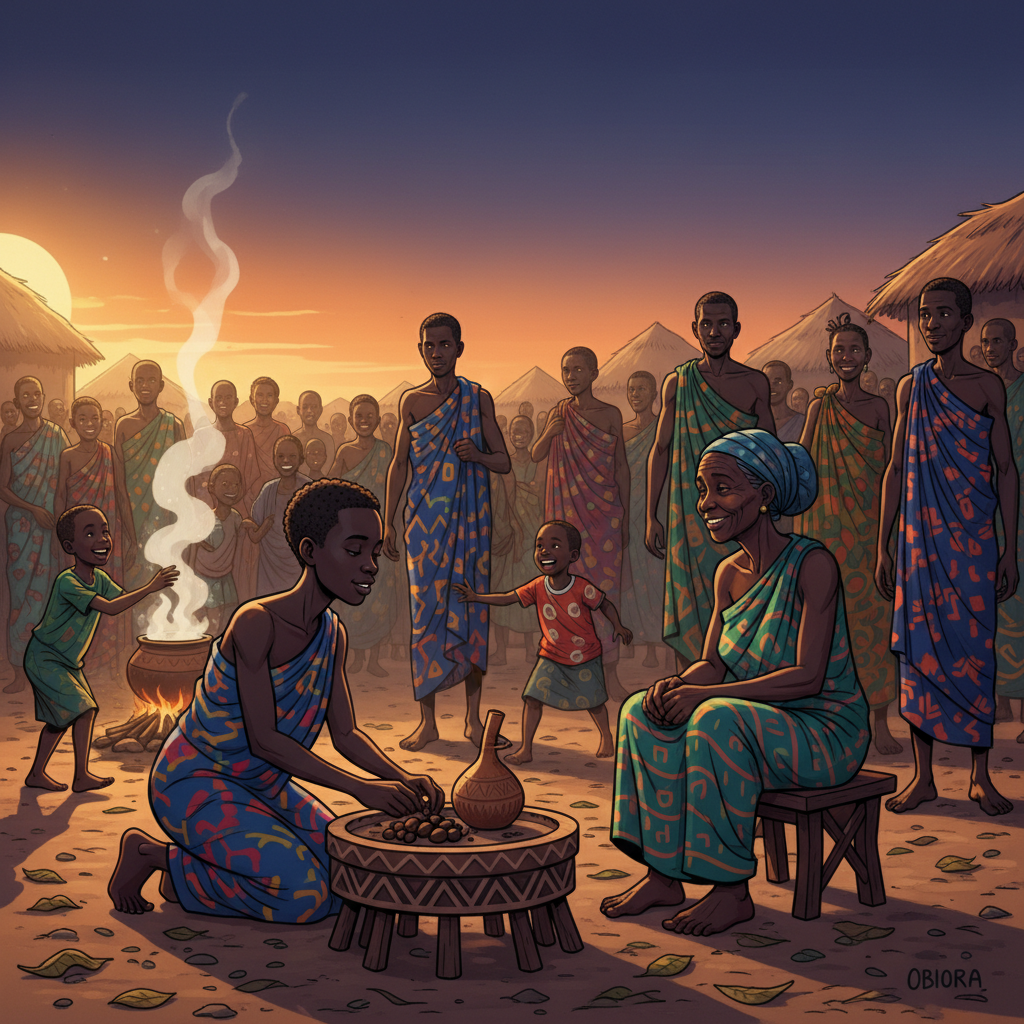
The morning of the festival dawned, painting the sky with hues of tangerine and deep indigo. Obiora rose before the sun, his small hut already filled with the excited chatter of his sisters preparing for the day. He helped his mother arrange kola nuts and palm wine on their small altar, a gesture of respect for the ancestors even before the masquerades appeared. Soon, the village square began to swell with people, a vibrant tapestry of dark skin, colourful cloths, and joyful expressions. Children chased each other, their laughter ringing like tiny bells. The scent of cooking stew mingled with the earthy fragrance of the dusty ground, creating a unique perfume of celebration. Obiora found his grandmother, Adaeze, sitting on a low stool, her face a map of ancient wisdom, her eyes sparkling with an inner light that always comforted him. She offered him a knowing smile, understanding his unspoken excitement.
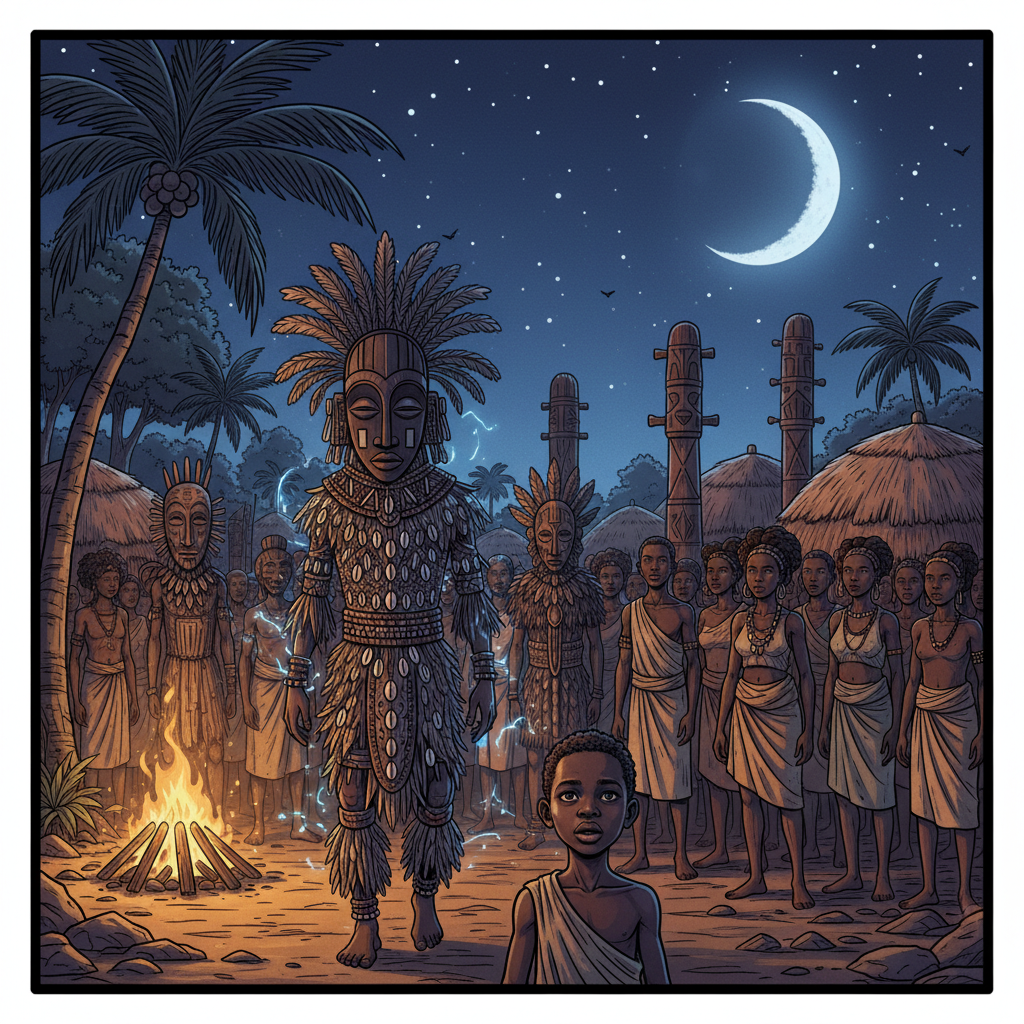
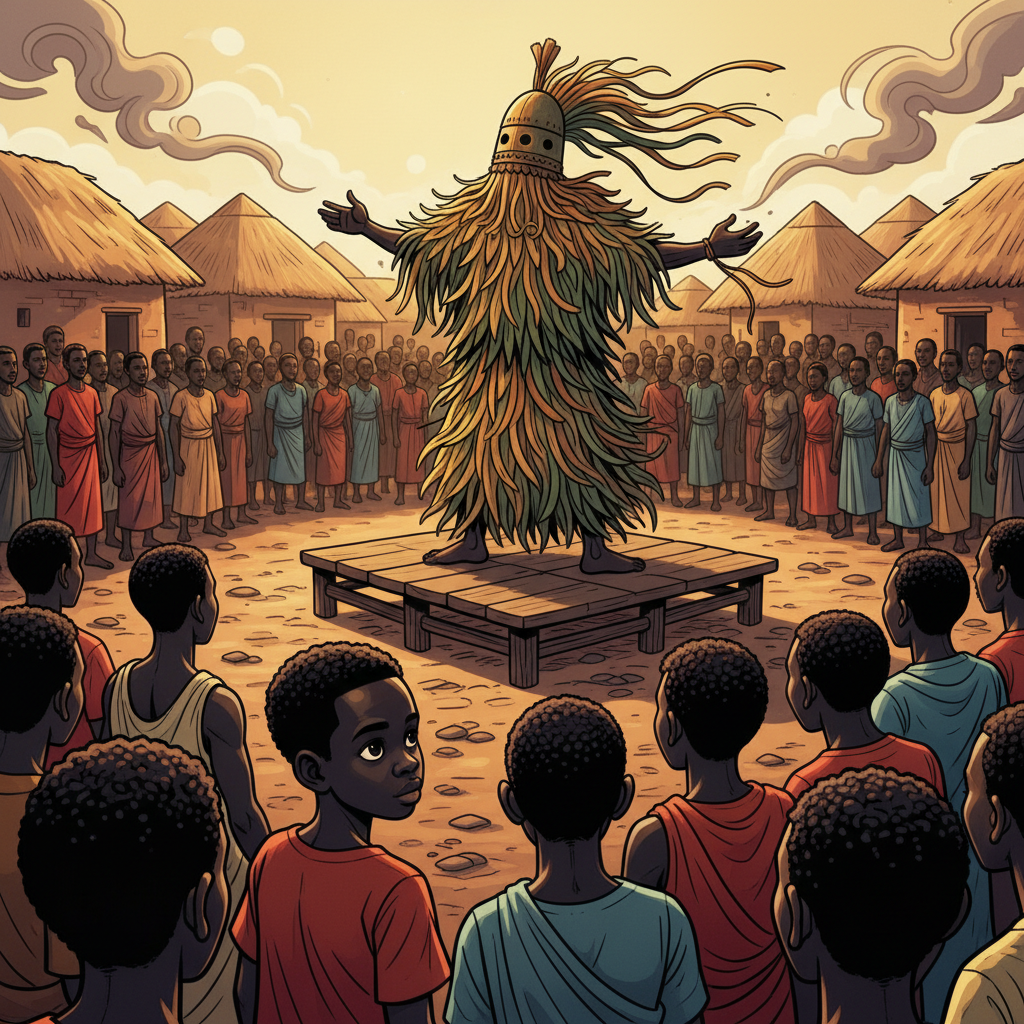
Then, a shift. The drumming intensified, growing from a distant rumble to a thunderous roar that vibrated through the earth. A collective gasp rippled through the crowd as the first masquerade emerged from the sacred grove. Its form was tall and slender, adorned with woven raffia and intricate patterns of cowrie shells. Its mask, carved from dark wood, bore an expression of serene power. More followed, each unique, some grotesque and playful, others majestic and terrifying. The air crackled with their presence, a tangible connection to the spirit world. Obiora felt a shiver of awe and reverence trace its way down his spine. These were not merely men in costumes; they were the Mmanwu, the very spirits of their forefathers, come to walk among them, to dance, to judge, and to bless.
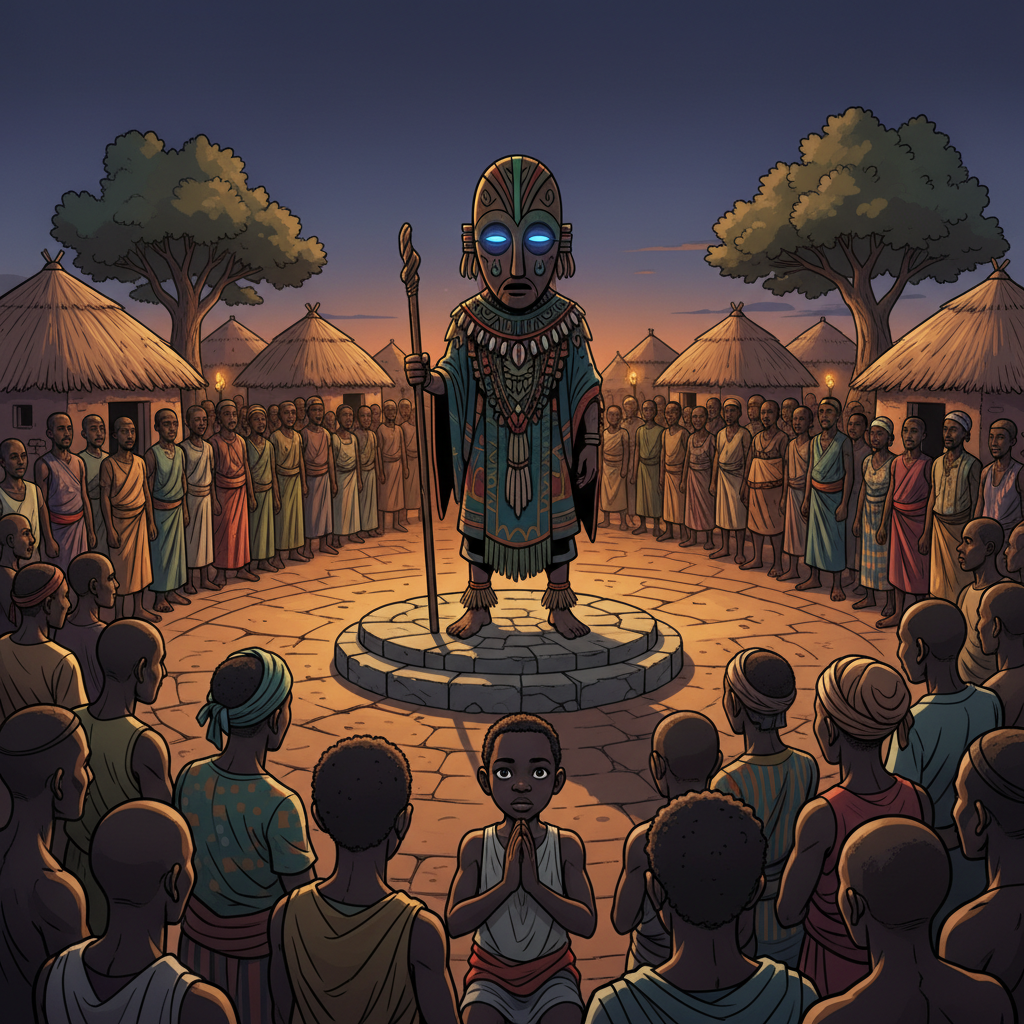
Obiora’s gaze, however, sought a particular masquerade: the Mmanwu Nke Ochie, the Ancient One. This masquerade was renowned for its profound wisdom, its pronouncements always clear, its counsel always just. It appeared less frequently than the others, its emergence reserved for matters of grave importance, moments when the village truly needed ancestral guidance. Its mask was simpler, older, almost worn smooth by the passage of countless festivals, yet it held an undeniable gravitas. The Ancient One did not dance wildly; it moved with slow, deliberate steps, its presence radiating a quiet authority that commanded absolute attention. Obiora knew that today, the Ancient One would address the land dispute, and he hoped its words would mend the rift tearing their community apart. He watched intently, his breath held captive in his chest.
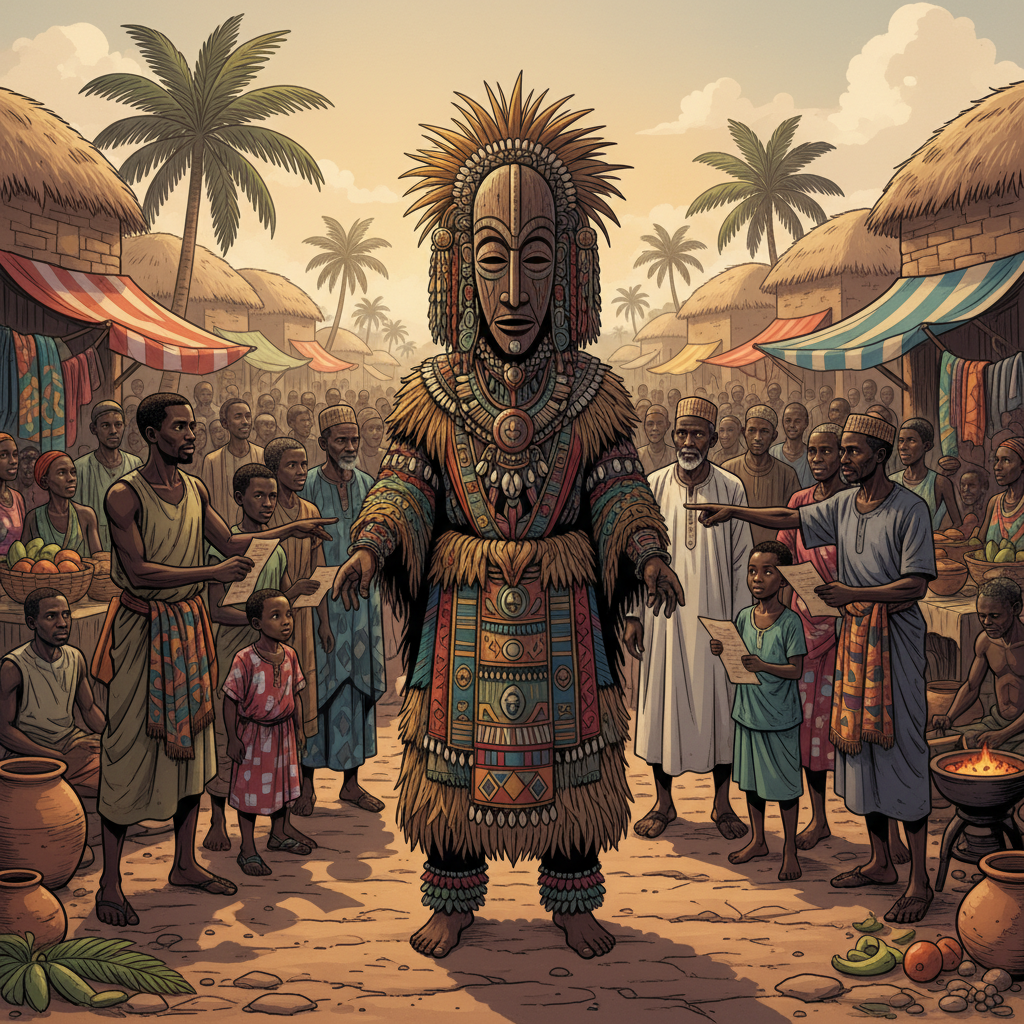
The land dispute had festered for many months, a thorny bush growing in the heart of Umuofia. It concerned a fertile parcel of land, rich with oil palm trees and ripe for cultivation, located at the edge of the village. Both Nnamdi’s family and Okoro’s family claimed ancestral ownership, presenting conflicting stories and faded documents. The elders had deliberated, discussed, and debated, but no resolution seemed possible. The disagreement had caused friction at the market, strained greetings at the village well, and even led to hushed arguments during communal feasts. Everyone knew that without a clear, respected judgment, the division would only deepen. The Mmanwu Nke Ochie was their last, best hope, a sacred conduit for a truth that transcended human understanding and bias.
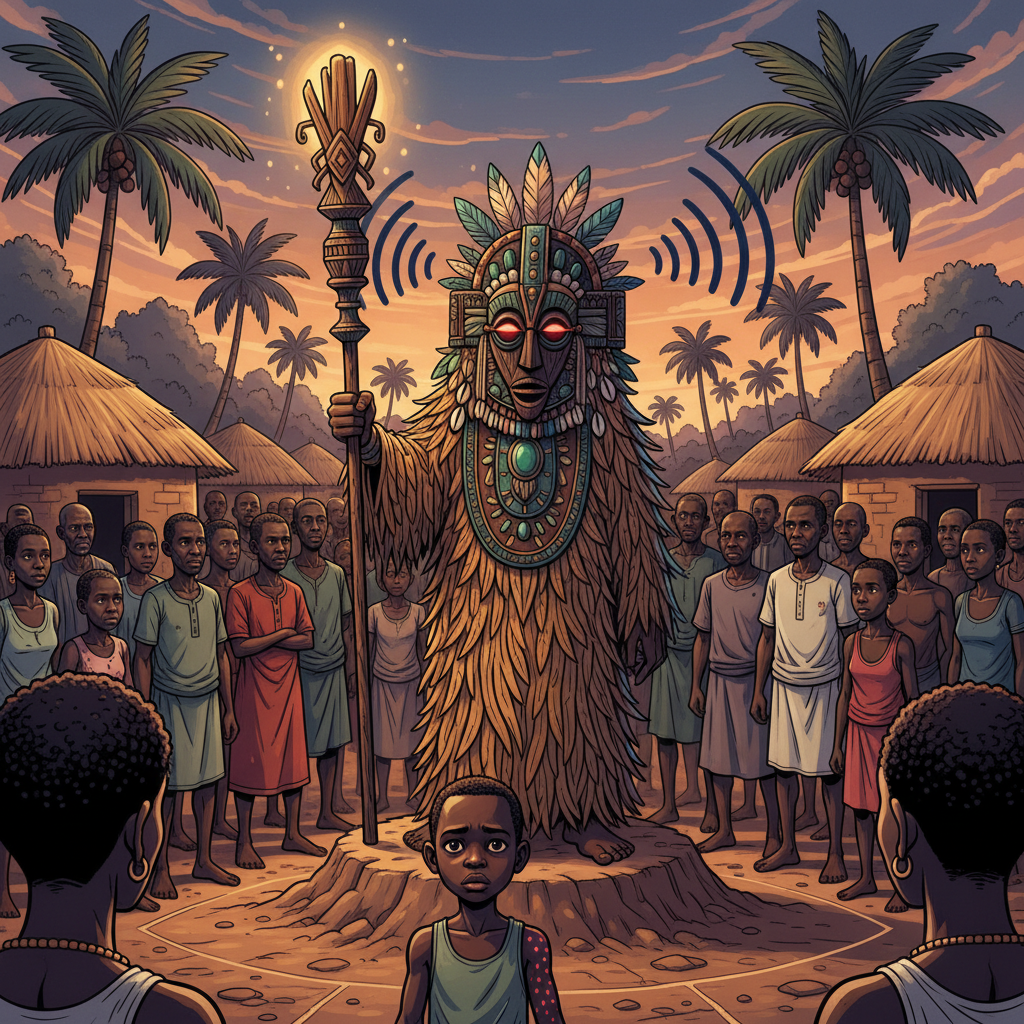
Finally, the Mmanwu Nke Ochie moved to the centre of the square. A profound silence descended upon the throng, broken only by the rustle of raffia and the soft sighs of the wind. The Ancient One lifted a staff carved with ancestral symbols, and its voice, deep and resonant, boomed across the village. It was a voice that seemed to come from the very earth itself, a voice that carried the weight of generations. It spoke of boundaries, of lineage, of ancient agreements. As the masquerade continued, its words began to lean decisively in favour of Nnamdi’s family, citing forgotten landmarks and obscure oral traditions. The crowd listened, some nodding in solemn agreement, others shifting uneasily, their hopes for a truly impartial judgment wavering slightly. Obiora felt a strange prickle on his skin.
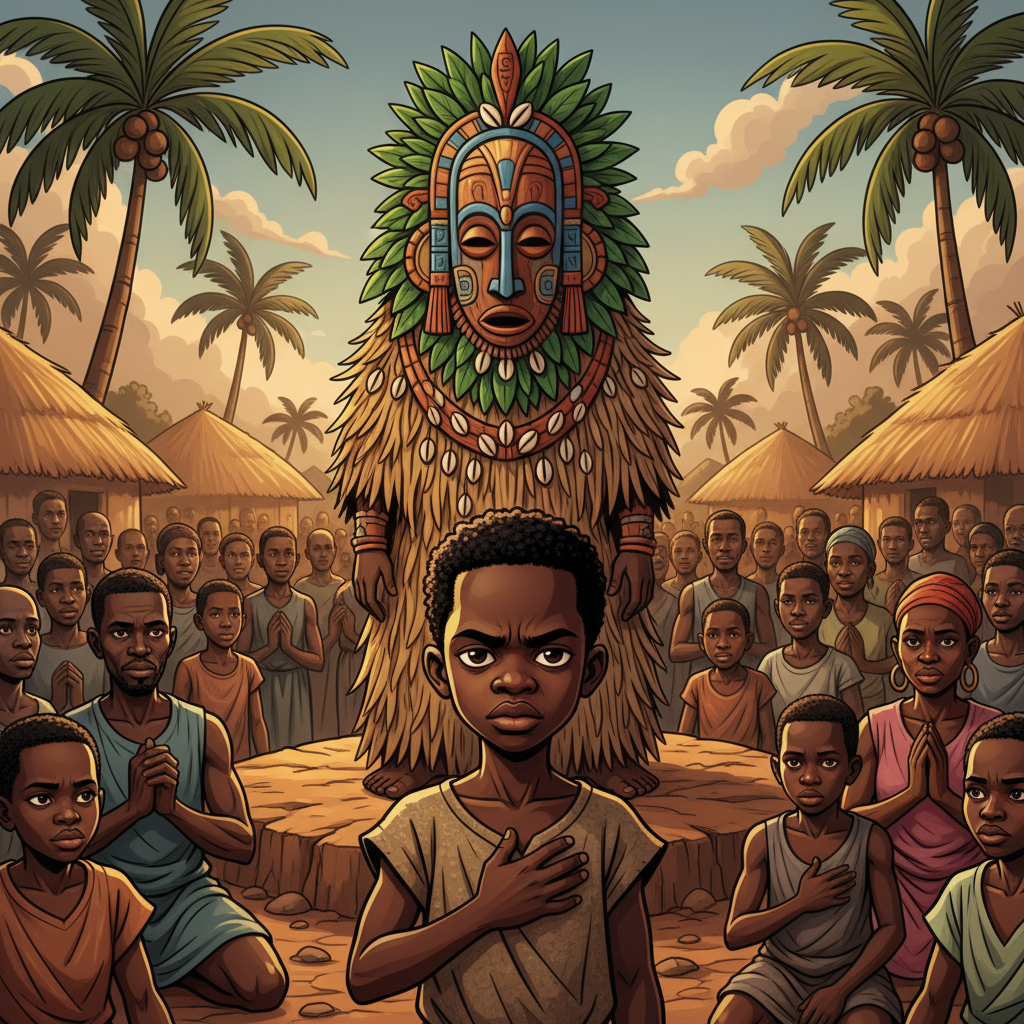
A disquieting sensation began to bloom in Obiora’s chest, a tiny seed of doubt that refused to be ignored. The voice of the Mmanwu Nke Ochie was indeed deep, carefully modulated, and filled with an ancient power. Yet, beneath the layers of spiritual disguise, Obiora detected a subtle tremor, a familiar cadence that tugged at his memory. It was not the voice itself, but the way certain words were stressed, the slight hesitation before a particular phrase. He had heard this pattern before, not from an ancestor, but from a living man. His young mind, usually so quick to accept the magic of the festival, now questioned the sacred pronouncement. He frowned, trying to place the familiarity, his brow furrowing in concentration, feeling a tightness beginning to settle in his chest.
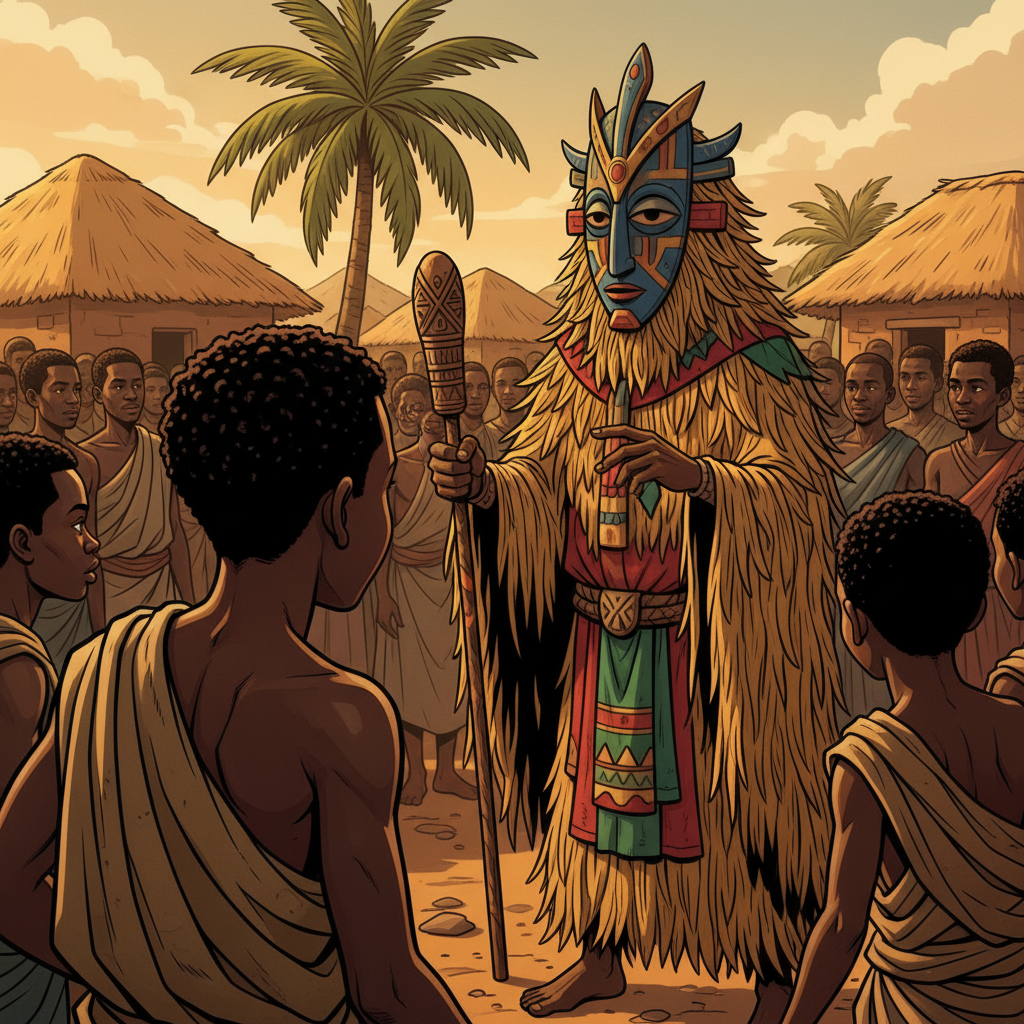
Obiora knew it was forbidden to approach the masquerades too closely, especially the Ancient One, but his curiosity, spurred by that unsettling feeling, compelled him. He subtly edged his way through the periphery of the crowd, using the shifting bodies as cover. He kept his gaze fixed on the Mmanwu Nke Ochie, observing its every movement, every subtle gesture. The masquerade’s hands, though covered in woven cloths, seemed to move with a familiar deliberateness when it gestured with its staff. He watched the way the raffia swayed, the slight tilt of the mask. He was not looking for flaws in the costume, but for something deeper, something about the person beneath the elaborate disguise. He felt like a hunter tracking a wary animal, his senses sharpened, his focus absolute.
As the Mmanwu Nke Ochie paused, turning slightly to address another section of the crowd, a gust of wind caught a loose strand of raffia near its elbow. For a fleeting moment, the fabric shifted, revealing a glimpse of the arm beneath. Obiora’s eyes, keen and observant, caught it. There, just above the elbow, was a small, distinct scar, a jagged line that he recognized instantly. It was the scar of Elder Kalu, a mark he had seen many times when Elder Kalu lifted his arm to gesture during village meetings. Elder Kalu, a respected, albeit sometimes cunning, elder, who also happened to be Nnamdi’s mother’s cousin. A cold dread seeped into Obiora’s stomach, chilling him despite the warmth of the sun. The truth was beginning to reveal its uncomfortable face.
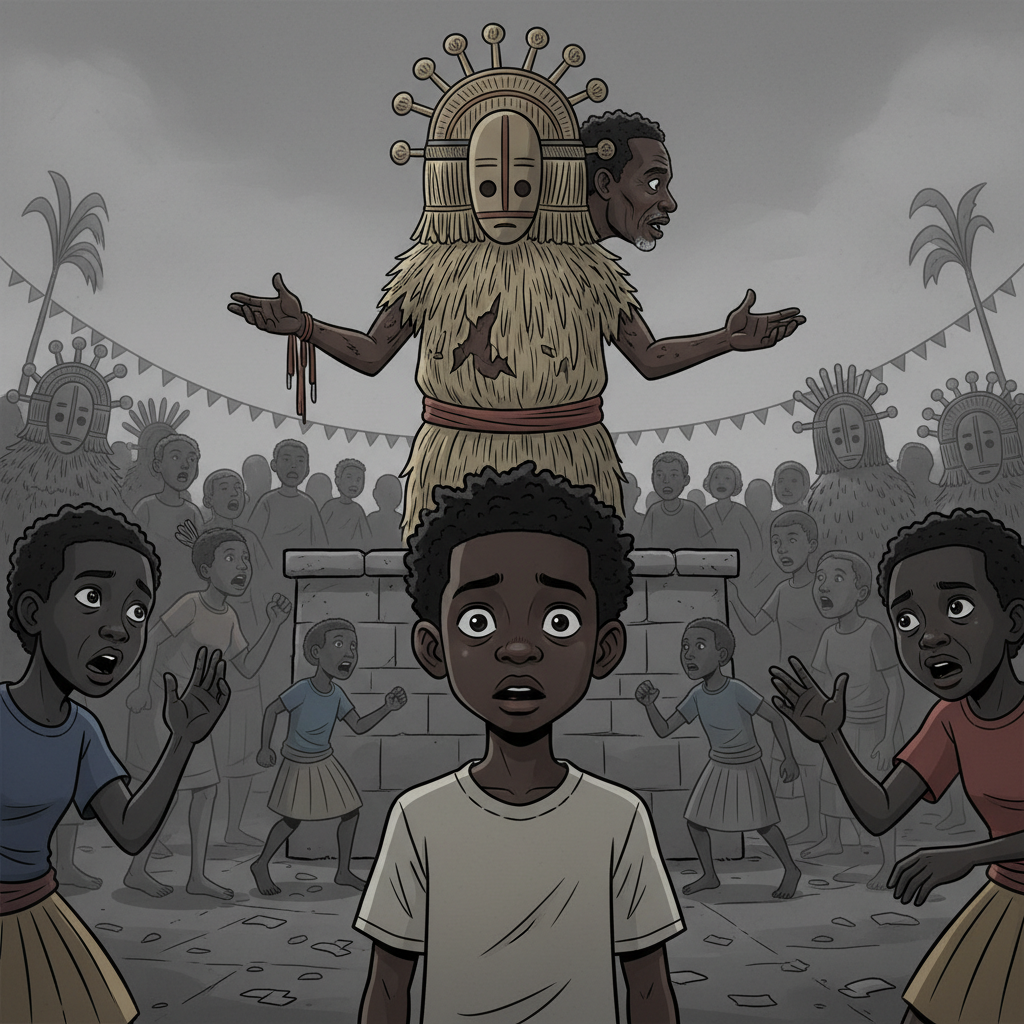
The recognition hit Obiora with the force of a sudden downpour. The voice, the cadence, the gestures, and now the undeniable scar—it was Elder Kalu. The venerated Mmanwu Nke Ochie, the sacred vessel of ancestral wisdom, was merely Elder Kalu, manipulating the festival for his family's gain. The pronouncement favoring Nnamdi’s family now made sickening sense. Elder Kalu had not just participated in the Mmanwu; he had desecrated its sanctity, using its power to sway a judgment for personal benefit. Obiora felt a profound sense of betrayal, not just for himself, but for the entire village, for the ancestors whose voices were now silenced by deceit. The vibrant colours of the festival suddenly seemed muted, the joyous sounds hollow, echoing the emptiness in his heart.
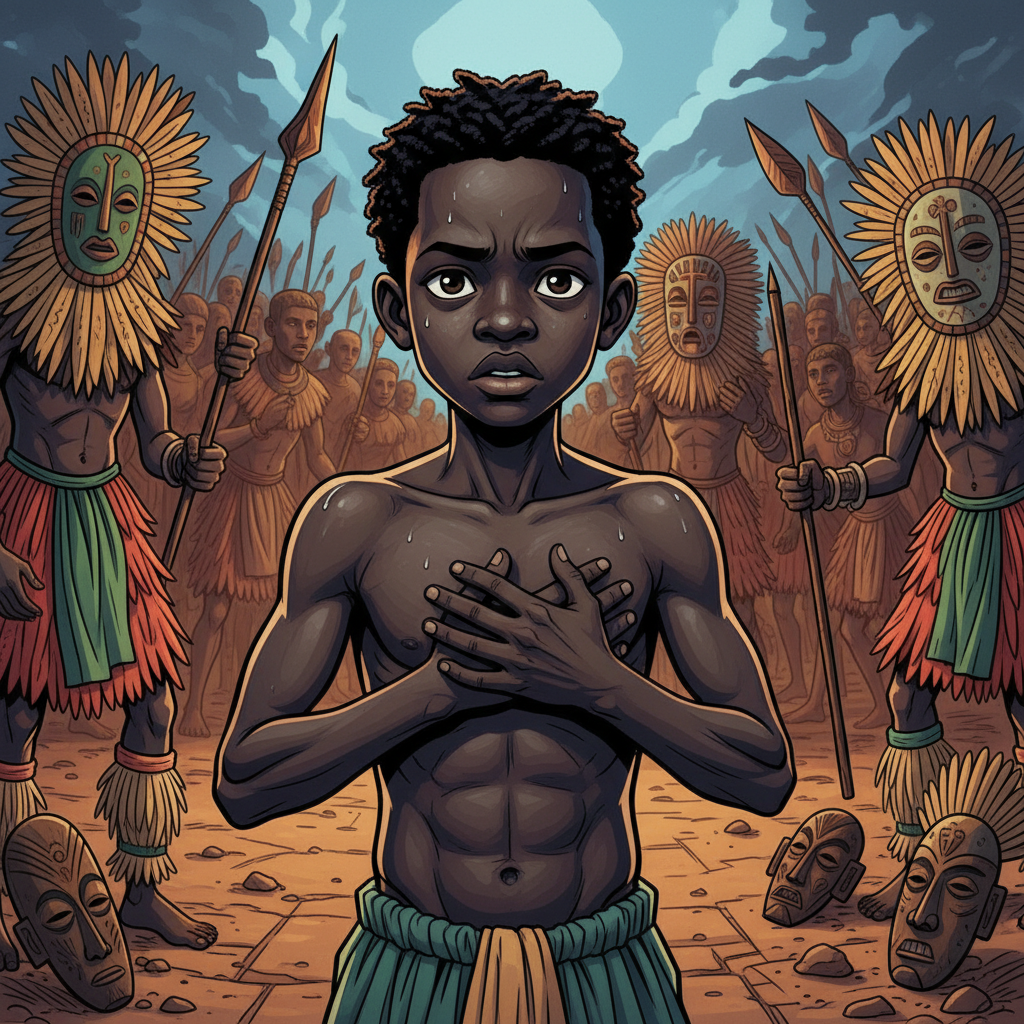
A storm raged within Obiora. His mind raced, grappling with the enormity of his discovery. To expose Elder Kalu would mean to shatter the illusion of the Mmanwu, to bring shame upon a sacred tradition, and to potentially sow further discord in an already divided village. The Mmanwu was the bedrock of their spiritual life, a source of guidance and unity. Could he be the one to reveal such a devastating truth? Yet, to remain silent would be to allow injustice to prevail, to let a lie masquerade as ancestral wisdom. The land would remain unfairly distributed, and the ancestors would be mocked. The tightness in his chest grew, a physical manifestation of his internal struggle. He knew he could not simply ignore what he had seen and heard.
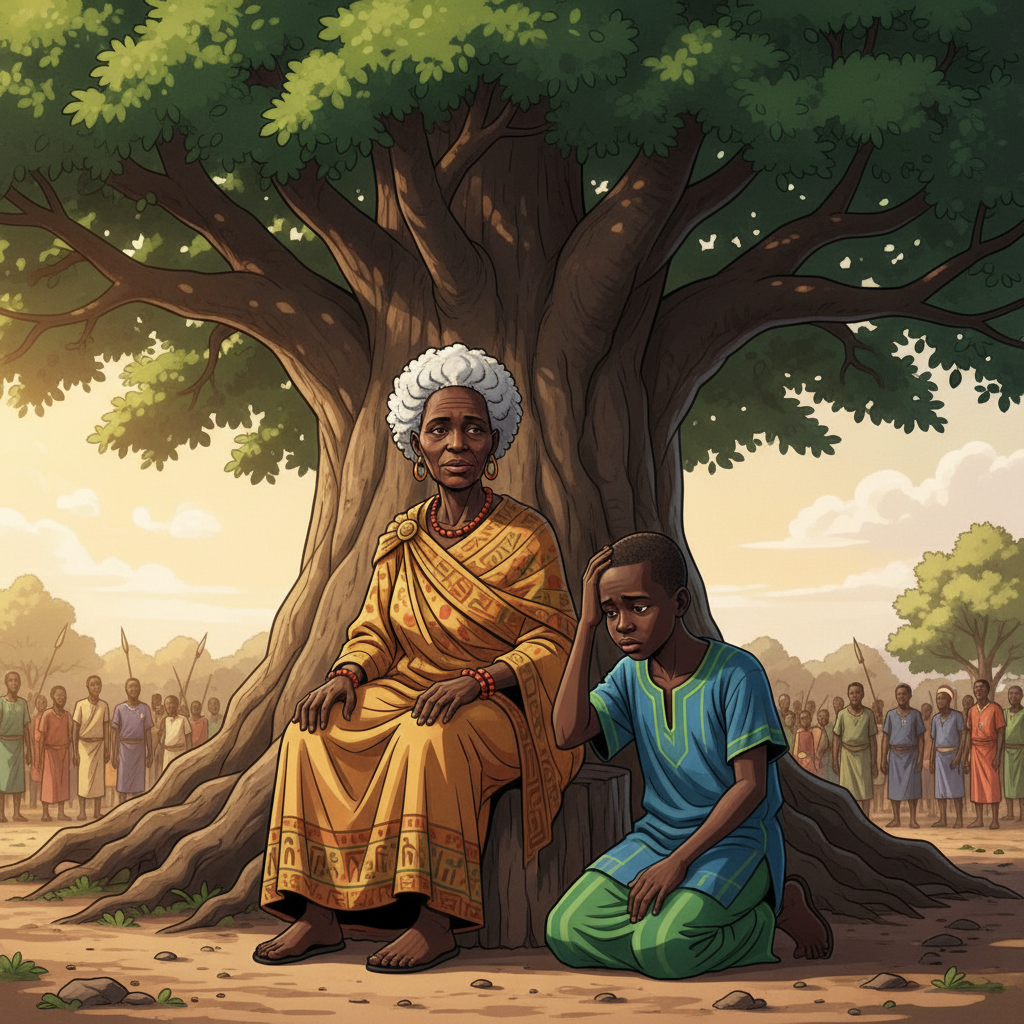
With his heart heavy and his mind in turmoil, Obiora knew there was only one person he could trust with such a burden. He found his grandmother, Adaeze, sitting under the shade of a large iroko tree, watching the festivities with serene eyes. He approached her slowly, his steps feeling unusually heavy. He knelt beside her, his gaze downcast, unable to meet her knowing eyes. "Grandmother," he began, his voice barely a whisper, "I have seen something, something that troubles my spirit deeply." Adaeze gently placed a hand on his head, her touch cool and reassuring. "Speak, my child," she urged, her voice soft but firm, "the truth, no matter how difficult, always finds a way to reveal itself.". He took a deep breath, preparing to unburden his secret.
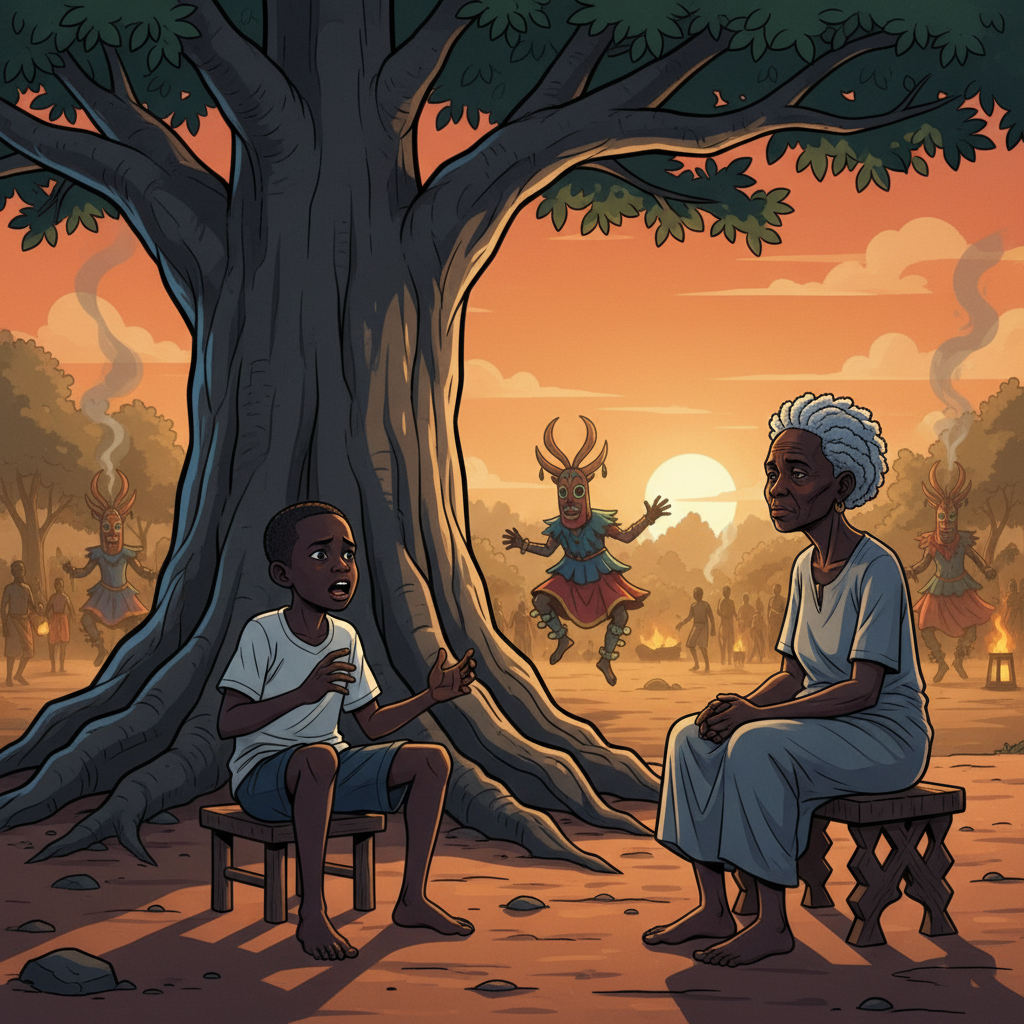
Obiora recounted his discovery, his words tumbling out in a rush, his voice laced with anguish and confusion. He spoke of the familiar tremor, the glimpsed scar, and the betrayal he felt. Adaeze listened without interruption, her gaze fixed on the distant masquerades, her expression unreadable. When he finished, a long silence stretched between them, punctuated only by the distant sounds of the festival. Obiora waited, his chest tight, desperate for her wisdom. Finally, Adaeze turned to him, her eyes ancient pools of understanding. "My child," she began, her voice a low murmur, "the spirits of our ancestors are indeed powerful. They guide us, they protect us, and they speak to us.". Obiora leaned closer, absorbing every word.
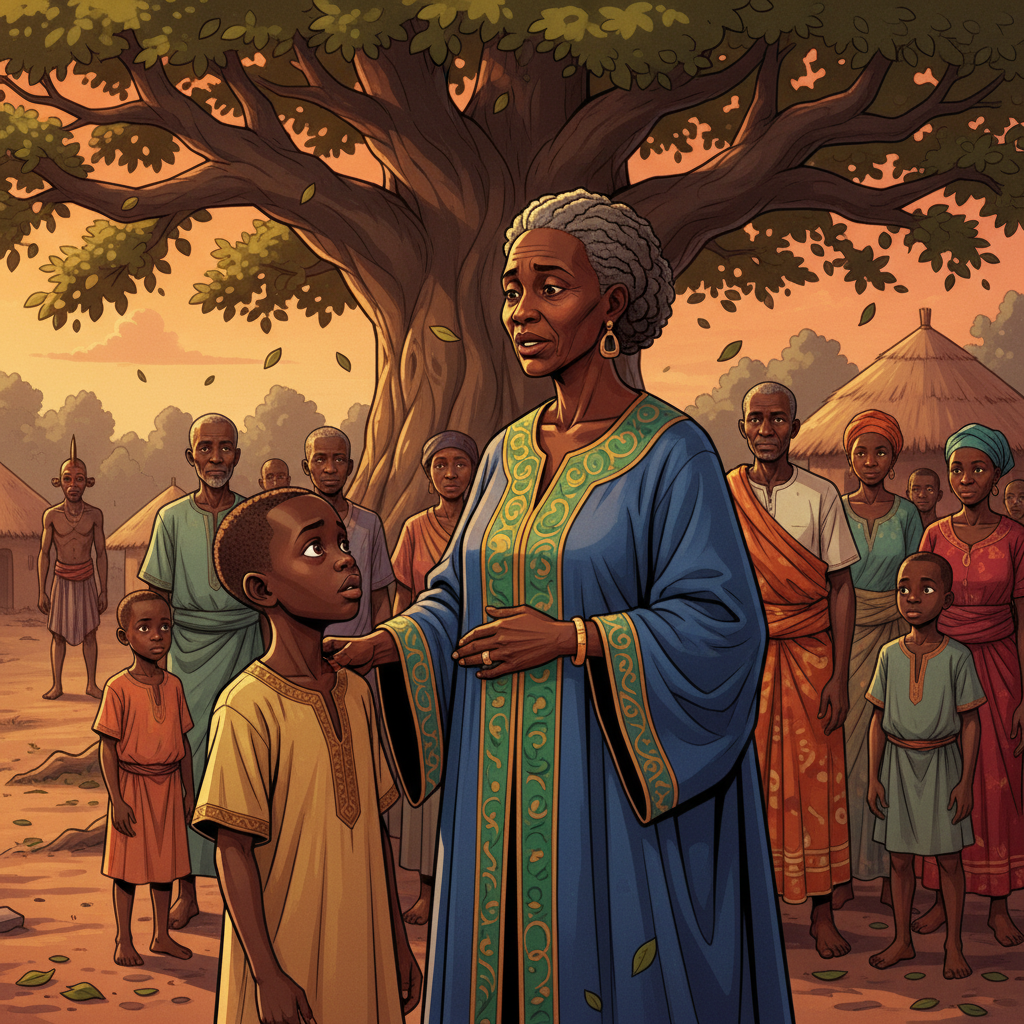
Adaeze continued, her voice gaining a quiet strength. "But ancestors do not need masks to speak. They do not need men to twist their words for selfish gain. They speak through the rustle of the leaves, through the wisdom of the elders, and most profoundly, they speak through the truth that makes your chest tight, the truth that resonates deep within your spirit." She placed a hand over his heart. "You feel this tightness now, do you not? That is the ancestors speaking to you, Obiora. They are calling you to integrity. To allow injustice to stand, especially when you know the truth, is to dishonour them more deeply than any unmasking." Her words were a balm and a challenge, igniting a spark of resolve within him.
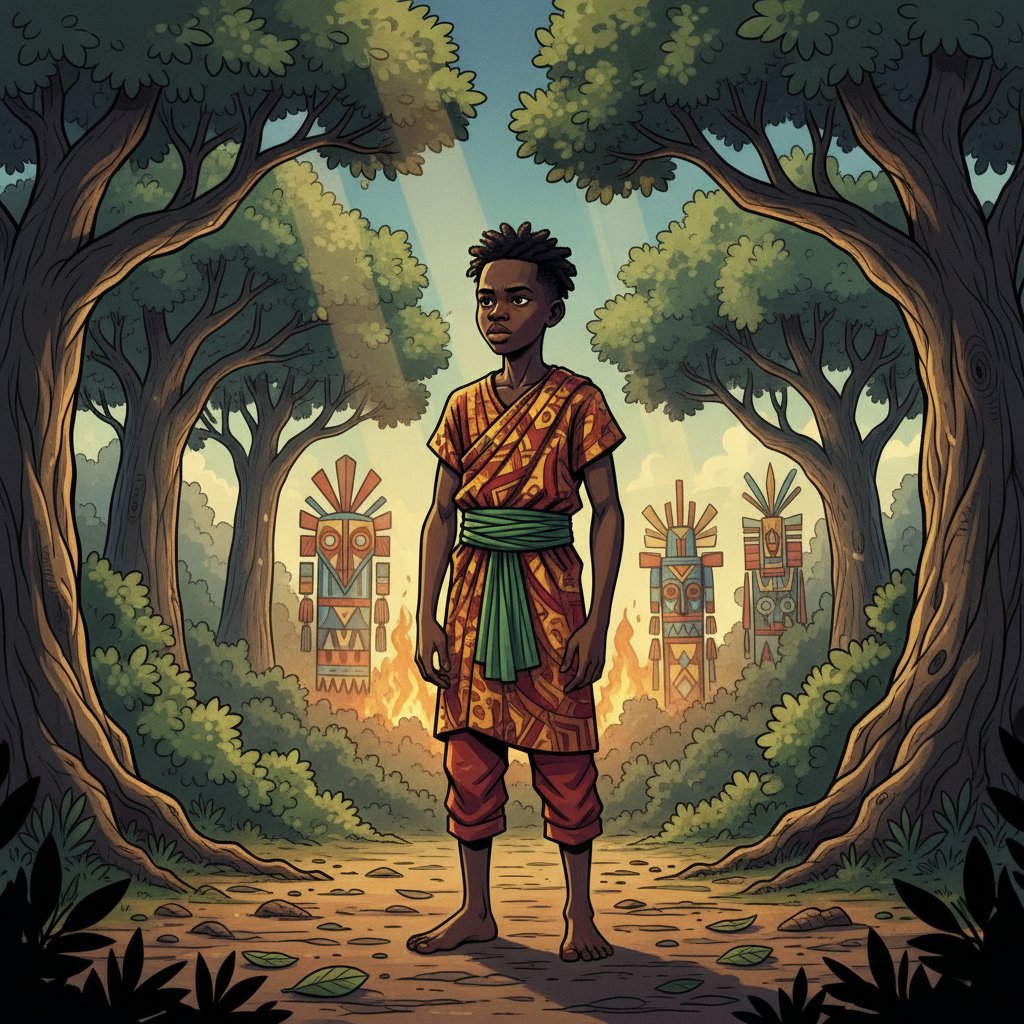
The path ahead was still fraught with difficulty. Adaeze’s words had affirmed his conviction that he could not remain silent, but the "how" remained a daunting question. To directly accuse Elder Kalu during the festival would cause chaos, perhaps even violence. It would discredit the entire Mmanwu tradition in the eyes of the people, shattering their faith in ancestral guidance. Yet, to let Elder Kalu’s deceit stand would be to allow a lie to become truth, to let a family lose their rightful land, and to undermine the very principles of justice and fairness that the Mmanwu was meant to uphold. Obiora understood that his actions would have far-reaching consequences, affecting not just the families involved, but the moral fabric of the entire village.
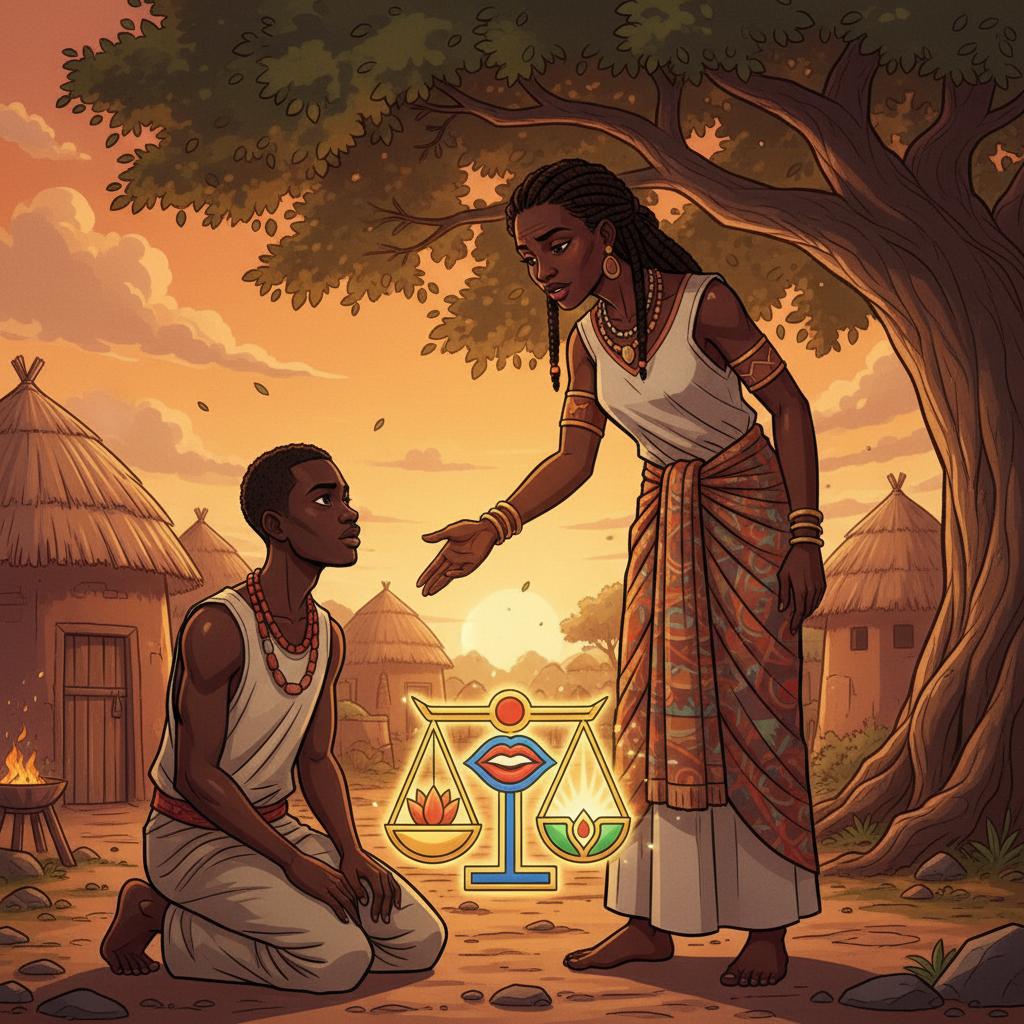
"This is a moment of Sema, Obiora," Adaeze explained, using the ancient word. "Sema is the balance between silence and voice. There are times when silence is wisdom, when it allows truth to ripen. And there are times when voice is necessary, when it cuts through deception, when it protects the innocent. To speak recklessly is foolishness. To remain silent in the face of injustice is cowardice. You must find the balance, the right time and the right way to let your voice be heard, not with anger, but with courage and respect for truth." Her words offered a framework, a guiding principle for his next, difficult steps. Obiora absorbed her teachings, feeling the weight of the decision, but also a growing sense of purpose.
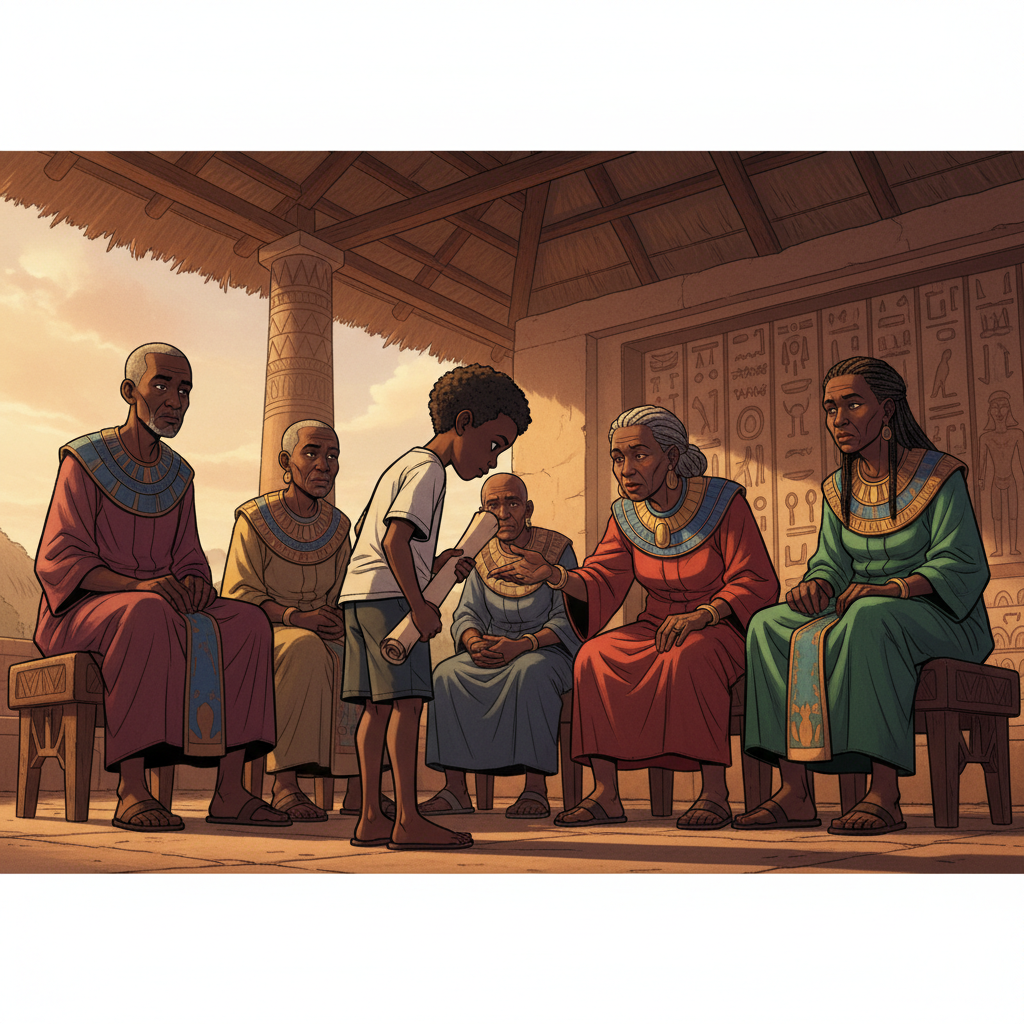
Obiora knew he had to speak. The tightness in his chest, the ancestors' voice, demanded it. He could not allow deceit to fester, poisoning the well of communal trust. But he would not shout, he would not accuse publicly during the sacred festival. That would only bring chaos and disrespect. He would choose the path of Sema, of thoughtful action. He would approach the village elders, those revered men and women who held the village's moral compass, and present his findings with humility and respect. He understood that his youth might make his words seem insignificant, but the truth itself carried immense weight, and his grandmother’s wisdom had fortified his spirit. He would restore integrity, not by tearing down, but by illuminating.
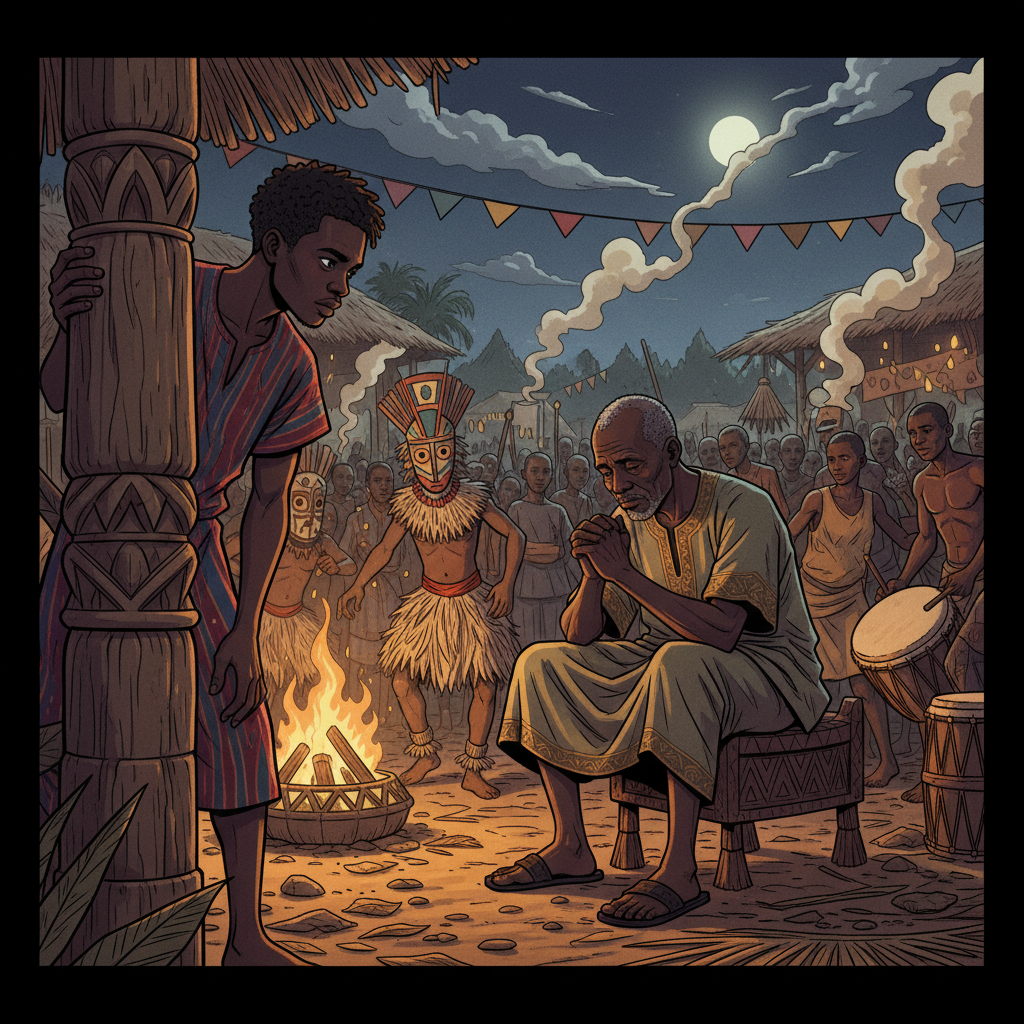
Before approaching the elders, Obiora spent the remainder of the festival observing Elder Kalu from a distance, trying to find other corroborating details without being obvious. He noticed how Elder Kalu, usually boisterous, seemed quieter, more withdrawn than usual, perhaps burdened by his secret. He also recalled small turns of phrase Elder Kalu often used, phrases that had subtly appeared in the masquerade's pronouncement. These were not direct proofs, but they added to the growing certainty within him. He did not seek to gather evidence in a confrontational way, but rather to solidify his own understanding, to ensure that his conviction was not born of mere suspicion, but of clear, undeniable observations. His resolve hardened with each confirming detail.
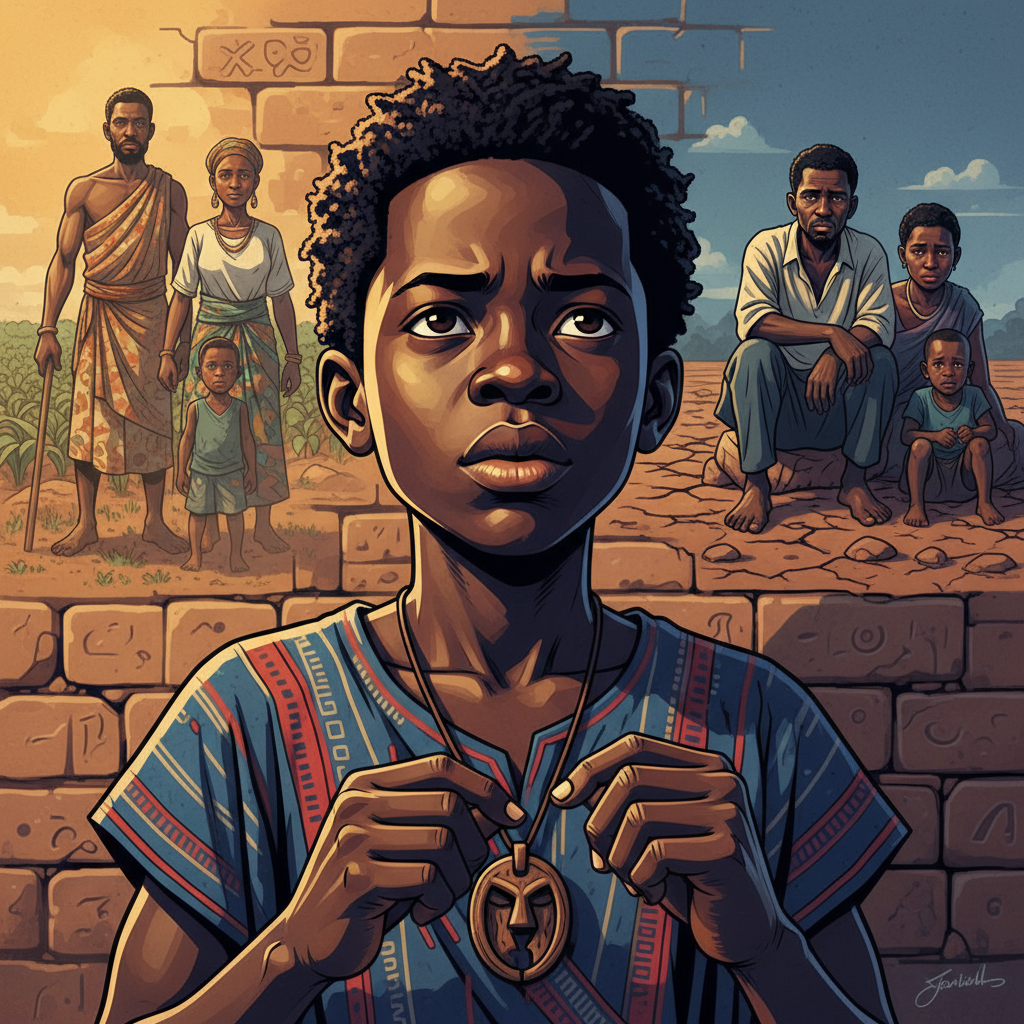
The festival ended, and the masquerades retreated into the sacred grove, their work seemingly done. But for Obiora, the true work was just beginning. He spent the next day in quiet contemplation, mentally rehearsing his words, choosing them carefully, respectfully. He would not accuse Elder Kalu directly, but rather express his profound unease about the Mmanwu Nke Ochie's pronouncement and share the observations that had led to his disquiet. He knew that even suggesting the possibility of deceit within the Mmanwu was a grave matter, one that could bring severe repercussions. Yet, the image of Nnamdi’s family unjustly claiming land, and Okoro’s family suffering, pushed him forward. He understood that courage was not the absence of fear, but the triumph over it.
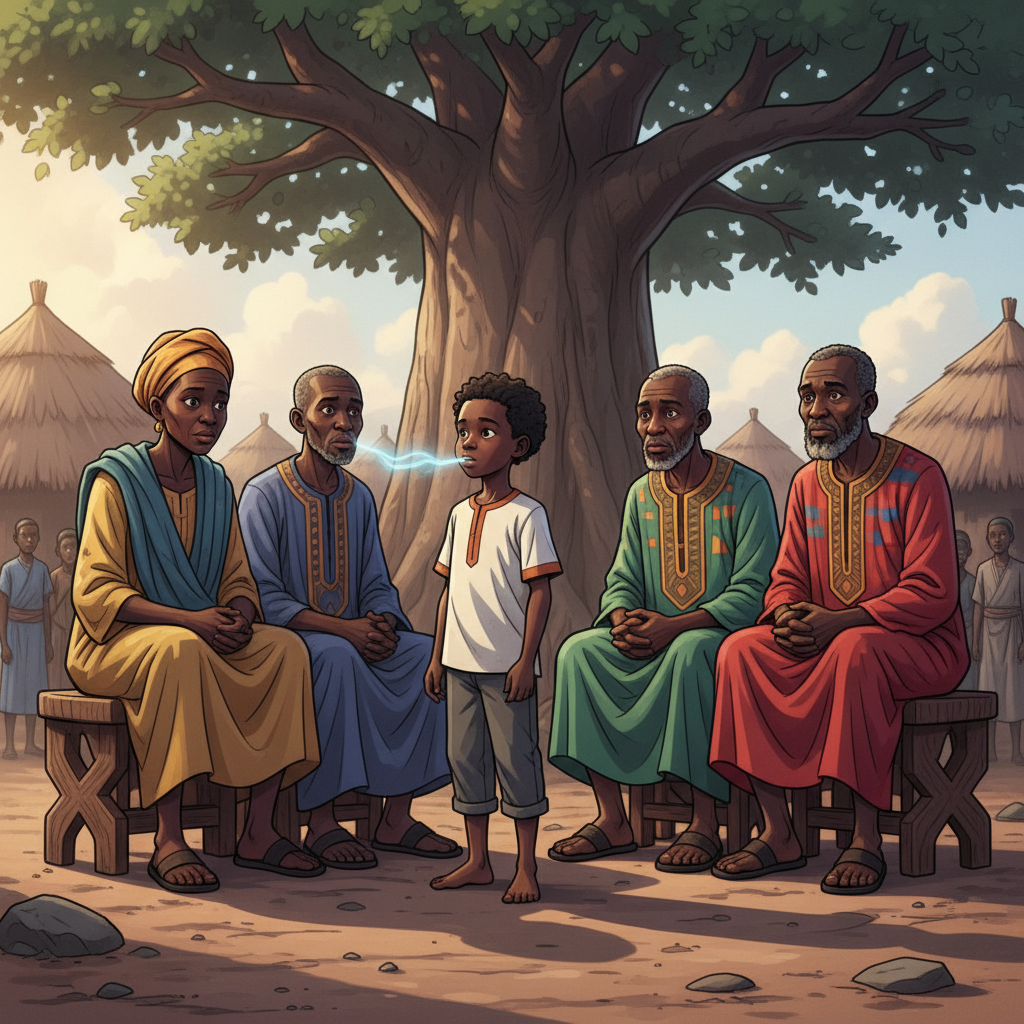
The following morning, Obiora, accompanied by his grandmother Adaeze, presented himself before the council of elders. His heart pounded like a drum, but his voice, though soft, was clear and steady. He spoke not of accusation, but of a heavy heart, of a spirit troubled by what he had witnessed. He recounted the familiar voice, the subtle cadence, and finally, the fleeting glimpse of the scar. He explained his deep respect for Mmanwu, but also his conviction that the ancestors would never condone deceit. Adaeze stood silently beside him, her presence lending immense weight to his words. The elders listened, their faces a mixture of surprise, concern, and quiet contemplation, their usual jovial expressions replaced by solemn gravity.
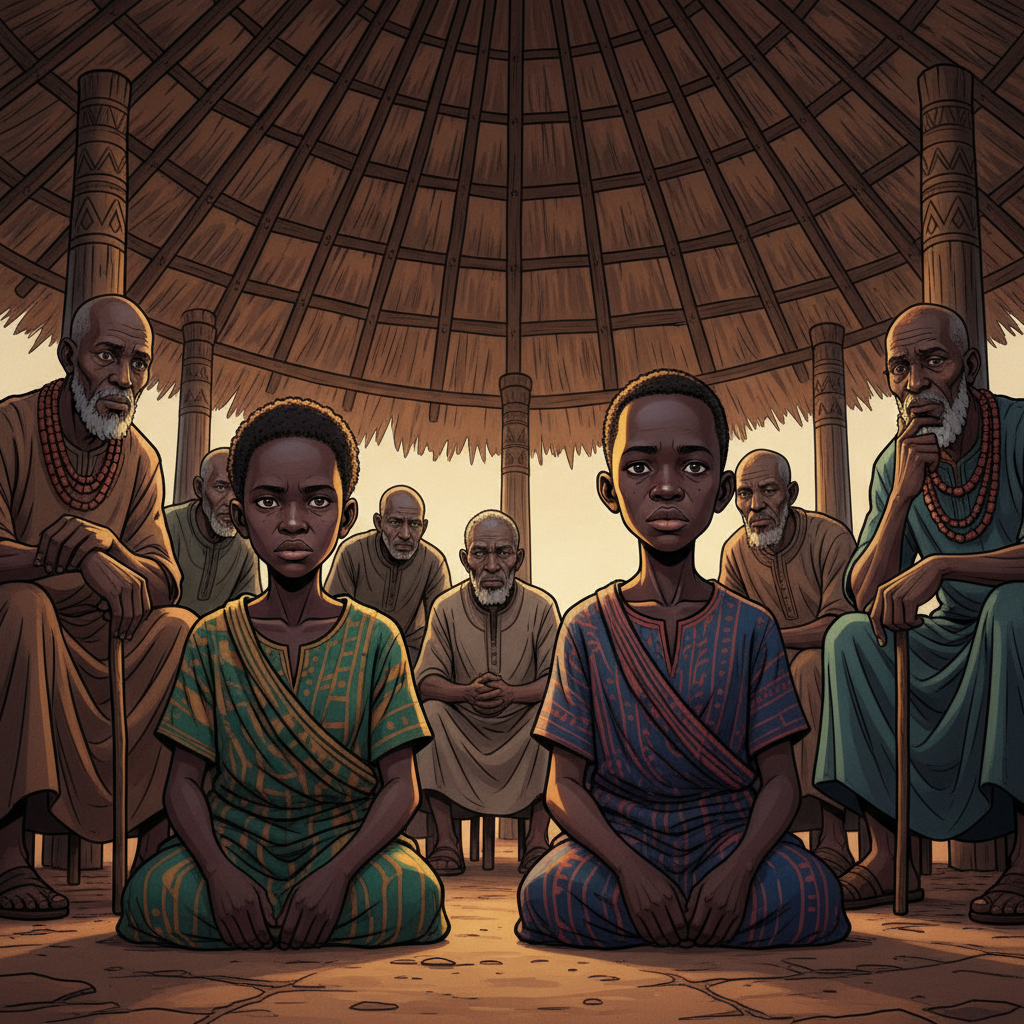
Initial disbelief flickered across the faces of some elders. The idea of a masquerade, especially the Ancient One, being compromised was almost unthinkable. But Obiora’s quiet sincerity, combined with Adaeze’s unwavering gaze and her reputation for unimpeachable wisdom, commanded their full attention. They knew Adaeze would never allow her grandson to speak such grave words lightly. Elder Chukwu, the most senior among them, stroked his beard thoughtfully. "Obiora, this is a heavy matter you bring before us," he said, his voice deep. "To question the Mmanwu is to question the very fabric of our traditions. Yet, your grandmother’s presence and your own earnestness compel us to listen. We will investigate this with the utmost discretion." A ripple of concern went through the council.
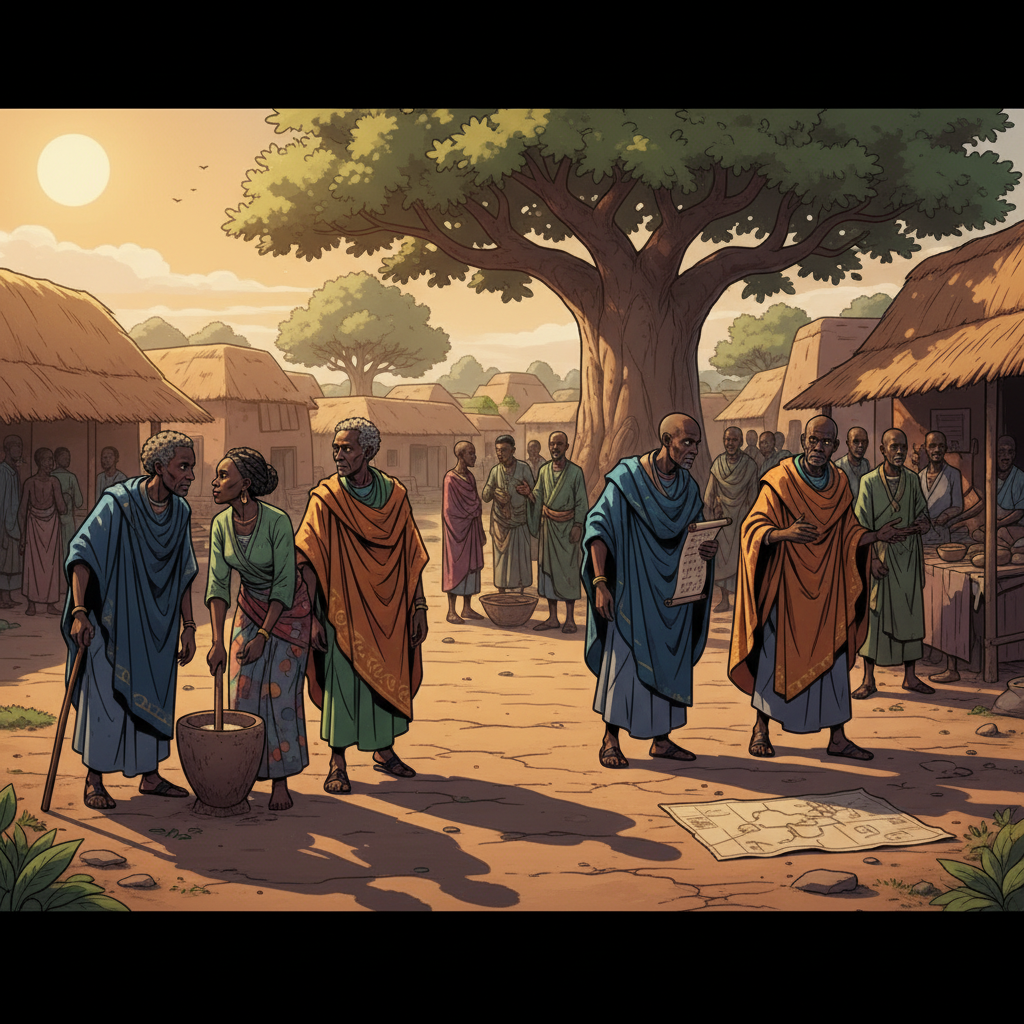
The elders began their discreet investigation, moving with a subtlety that belied their deep concern. They spoke to various members of the community, asking seemingly innocuous questions about the festival, about Elder Kalu’s whereabouts during specific moments, and about the history of the land dispute. They observed Elder Kalu more closely, noting his movements, his reactions to their casual inquiries. They consulted ancient records, cross-referencing genealogies and land agreements. They did not accuse, but they probed, searching for any inconsistencies, any corroborating details that might support Obiora’s difficult claim. The truth, like a persistent stream, was slowly but surely eroding the dam of deception, revealing what lay beneath.
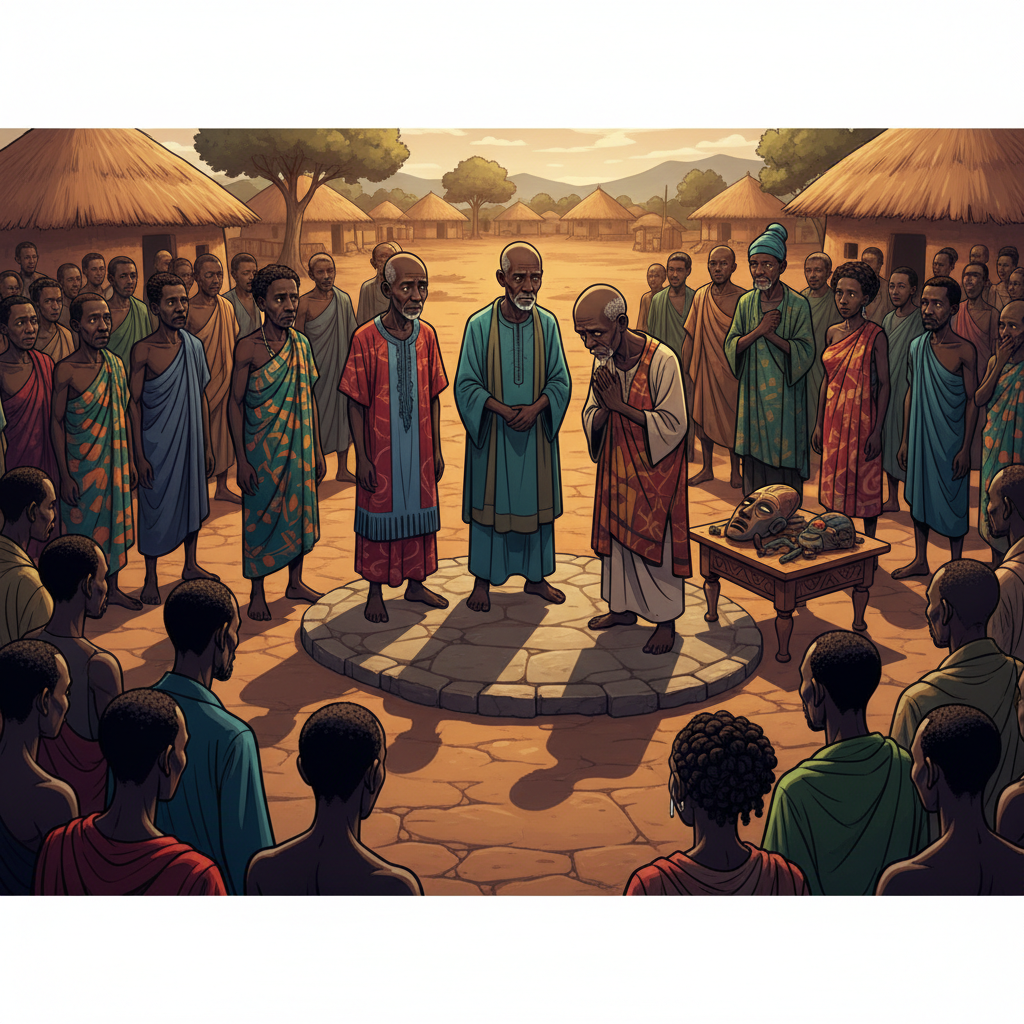
Slowly, meticulously, the elders pieced together the fragments of truth. Other villagers had also noticed subtle inconsistencies in the masquerade's voice or movements, dismissed as imagination until Obiora’s revelation. Further inquiry into Elder Kalu’s alibi for the festival day proved weak. When finally confronted with the accumulating evidence, Elder Kalu, his face etched with shame, confessed. He admitted to impersonating the Mmanwu Nke Ochie, driven by a misguided desire to secure the land for his kinsman, believing it was the "right" outcome despite the dispute. The community was shocked, saddened, and deeply disappointed. The sacred trust had been broken, and the heart of the Mmanwu tradition had been wounded by human frailty and greed.
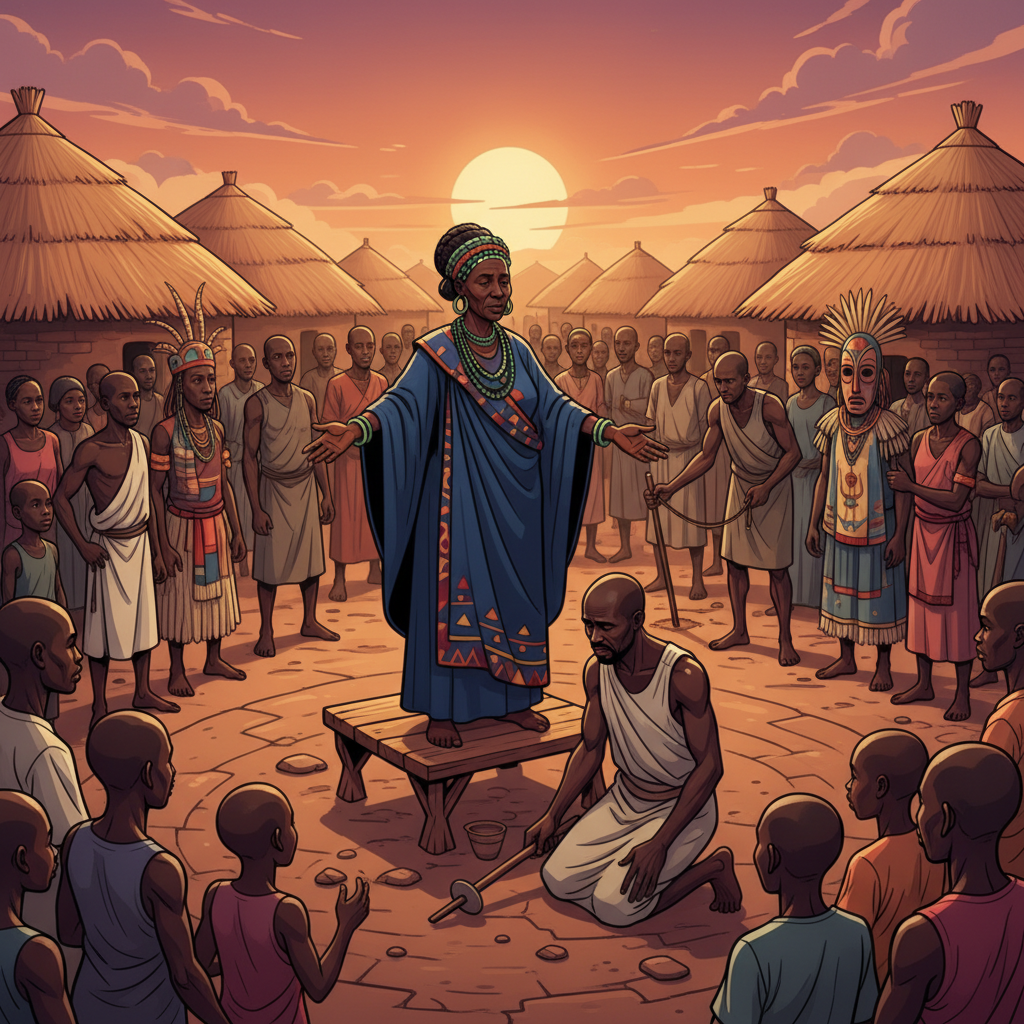
Elder Kalu faced severe consequences. He was stripped of his elder status, forbidden from participating in future Mmanwu festivals, and tasked with a period of intense public atonement, including communal service and reparations to Okoro’s family. The land dispute was re-evaluated, this time with a neutral council from a neighbouring village, and a fair judgment was finally reached, dividing the land equitably based on verifiable ancient boundaries. The integrity of the Mmanwu tradition, though bruised, was carefully restored. The village understood that the masquerades themselves were not flawed, but the human heart beneath the mask could be. The ancestors, it was clear, truly spoke through justice and honesty, not through manipulation.
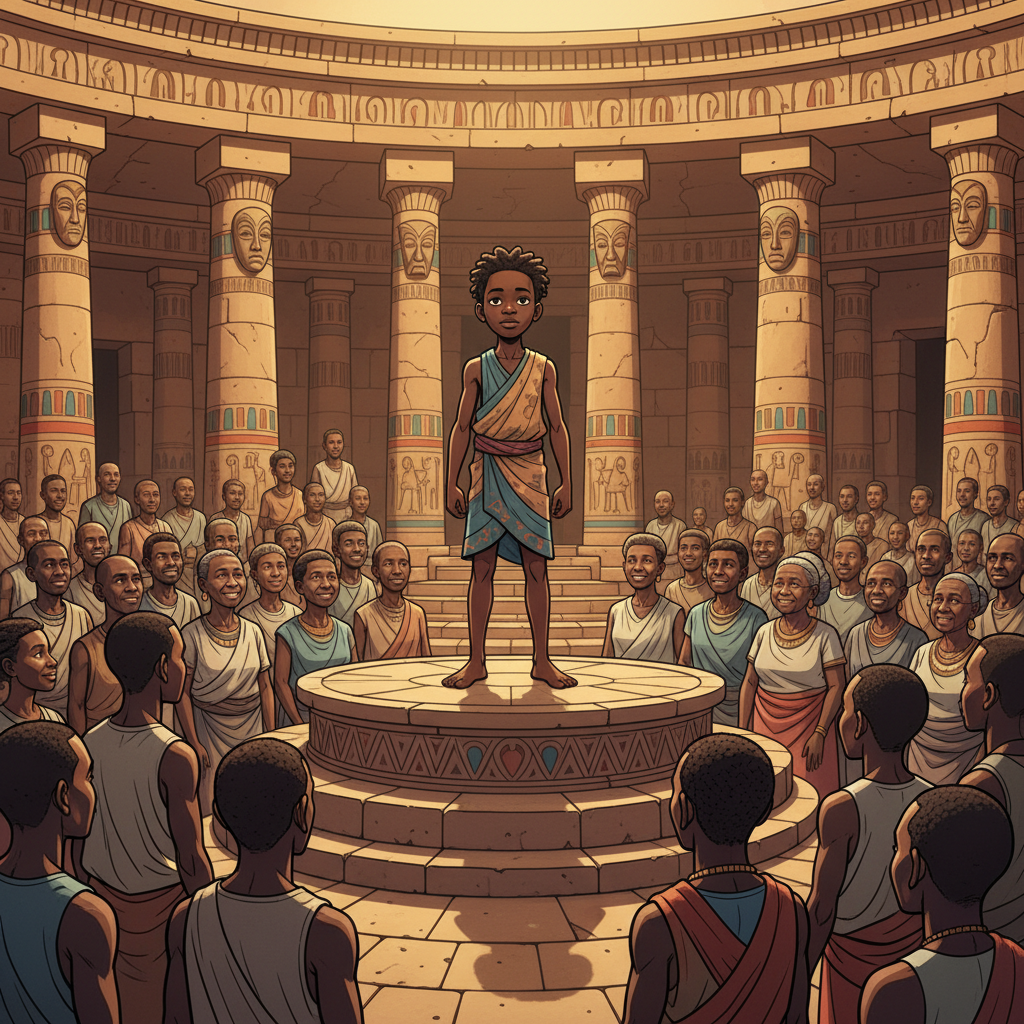
Obiora emerged from the ordeal changed. He had walked through fear and uncertainty, chosen truth over convenience, and found his voice when it mattered most. He learned that courage was not about being loud, but about standing firm for what was right, even when it was difficult. The tightness in his chest, once a signal of doubt, now became a signpost for truth. He understood the profound meaning of his grandmother’s words: that the ancestors’ true voice resonated in the integrity of the living. His actions had not destroyed tradition, but purified it, removing the shadow of deceit. He had become a quiet guardian of truth, a lesson he would carry throughout his life, understanding the power of a single, honest voice.
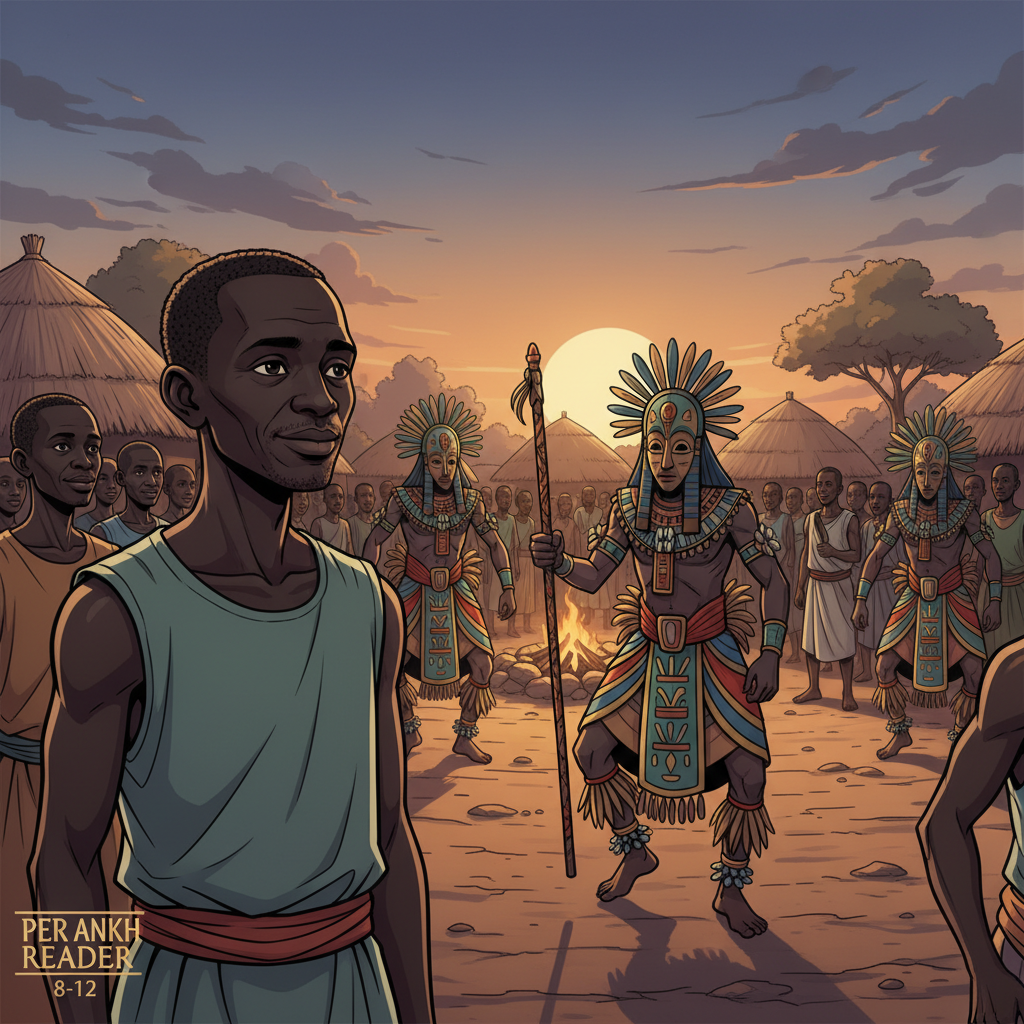
The Mmanwu festival, though tainted by the memory of deceit, continued in subsequent years with renewed reverence. The incident served as a powerful, somber reminder to all that the spirits of the ancestors demanded not blind adherence, but genuine integrity from those who represented them. The village learned that true wisdom came from the heart of the community, guided by honest actions and unwavering principles, not from cloaked figures with hidden agendas. Obiora, now older, continued to attend the festivals, his eyes no longer seeking just the spectacle, but the deeper meaning. He knew the ancestors did not need masks to speak, for they spoke through the truth that made a young boy’s chest tight, a truth that ultimately brought light to darkness.