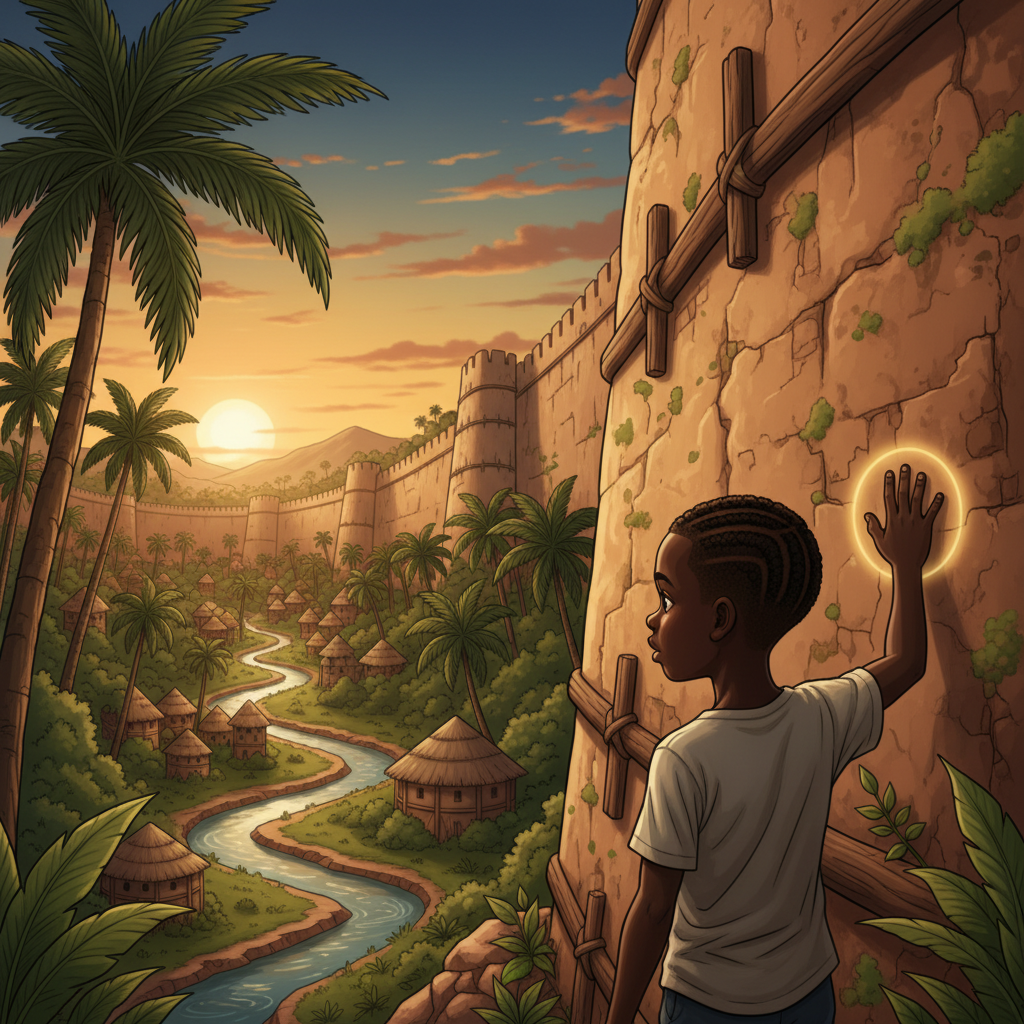
Osakpolor pressed his small, dark brown hand flat against the great earthen wall of Benin City and felt it hum. Not a sound he could hear with his ears — more like a vibration that traveled up through his palm and into his chest, the way the ground trembles when a hundred drummers play at once during the Oba's festival. The wall was enormous, taller than three men standing on each other's shoulders, and so thick at its base that an entire house could fit inside it. It stretched away from him in both directions, curving gently through groves of oil palms and across streams, surrounding the great city like a mother's arms wrapped around a sleeping child. Osakpolor was ten years old, with skin the color of rich earth after the first rains and tightly coiled hair that his mother shaped each week into neat rows with a carved wooden comb and shea butter that smelled like the forest. His eyes were wide and curious — always had been, his mother said, even when he was a baby reaching for everything in sight. This morning, those curious eyes were fixed on the wall, trying to understand something that had been bothering him for weeks.
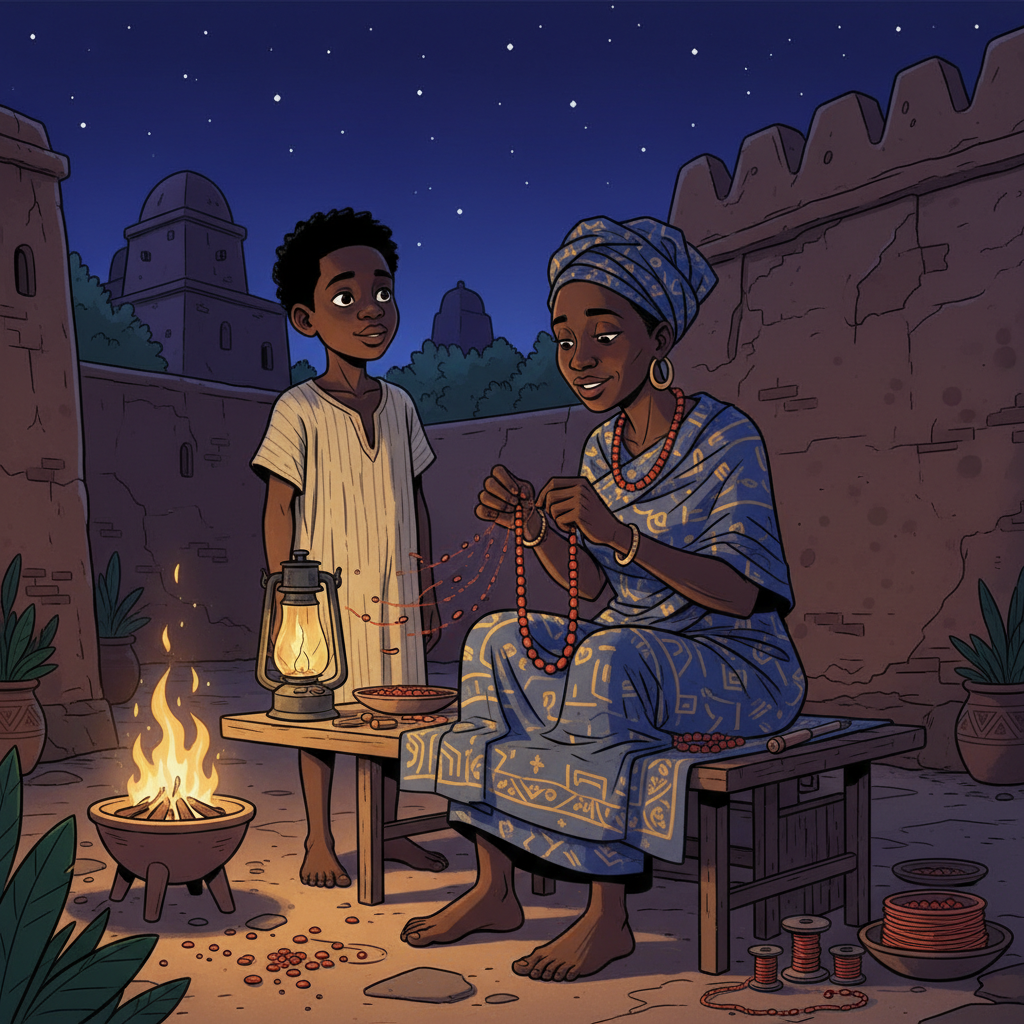
"Why is it so big?" he had asked his mother, Ewere, three days ago while she sat at her workbench threading tiny coral beads onto fine copper wire. Ewere was an artisan of the coral bead guild, and her dark fingers moved with a speed and precision that made the beads seem to fly into place like red birds landing on a branch. The beads she worked with were the color of ripe palm fruit, polished until they glowed, and they would eventually adorn the Oba's ceremonial robes. Only the royal bead workers were permitted to handle coral of this quality. "Why is what so big?" Ewere had asked without looking up, her concentration unbroken. "The wall, Mama. Why did they build it so enormous? It must have taken forever." Ewere had smiled then, a knowing smile that meant she had an answer but was choosing not to give it. "Ask your uncle Ogun," she said. "He is a man of the Igun-Eronmwon. The bronze casters know the walls better than anyone, because the walls and the bronzes tell the same story."
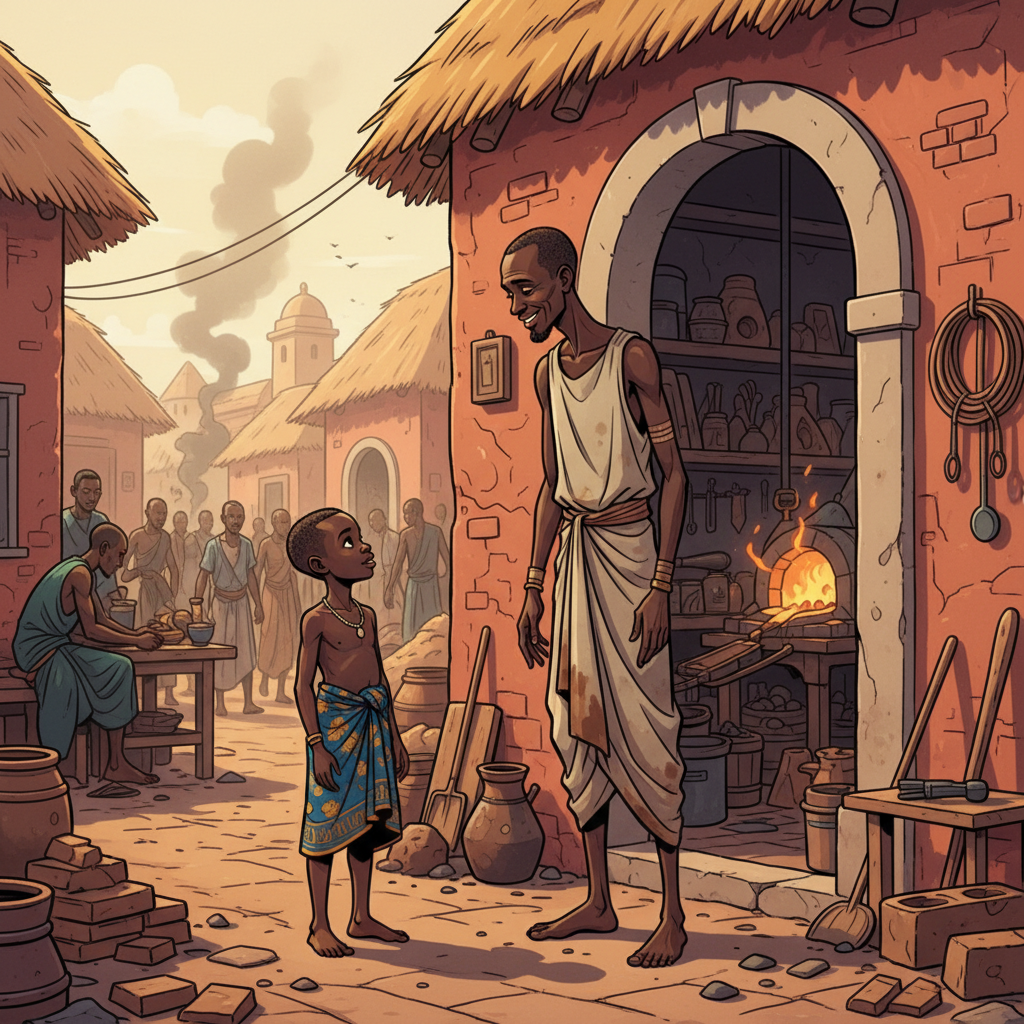
So here Osakpolor stood on a bright morning, waiting outside his uncle's workshop on Igun Street while the sounds of the bronze casters' quarter filled the air around him. He could hear the steady clink of metal tools on wax, the deep whoosh of bellows feeding air to furnaces, and the low voices of craftsmen discussing their work in the Edo language, their words rising and falling like music. The air smelled of charcoal smoke and hot metal and something sweeter underneath — beeswax, warming in the sun. Uncle Ogun appeared in the workshop doorway, wiping his hands on a cloth stained with clay dust. He was a tall, lean man with deep ebony skin and long fingers that seemed built for the delicate work of wax carving. A pattern of small raised scars marked his forearms — old burns from years of working near molten bronze, each one a badge of dedication to his craft. He looked down at Osakpolor with eyes that crinkled at the corners when he smiled. "Your mother says you have questions about the walls," he said. "Good. A boy who does not ask questions is a boy whose mind is sleeping. Come — I will show you what the walls remember."
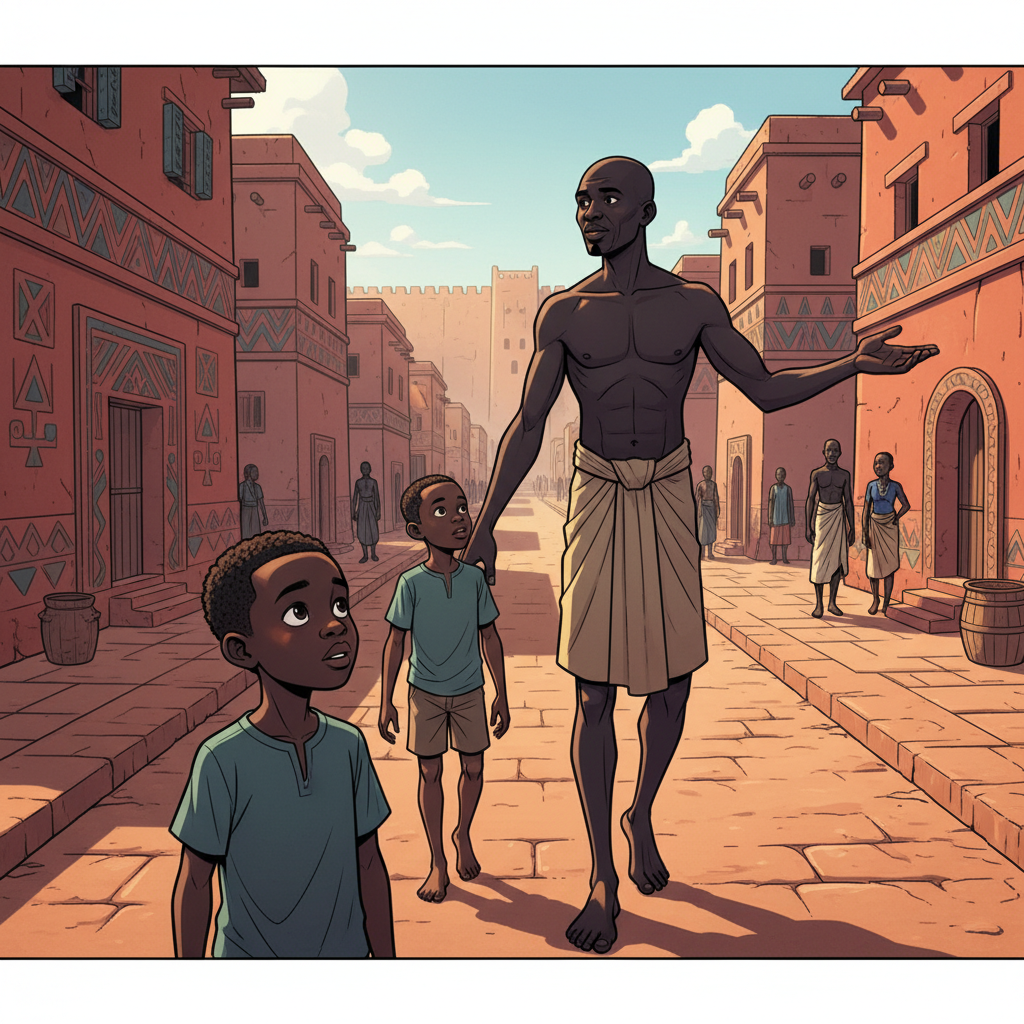
They walked together through the wide, straight streets of Benin City, and Osakpolor tried to see the city the way his uncle seemed to see it — not just as a place where people lived and worked, but as something built with purpose, every wall and avenue part of a great design. The streets were broader than any road Osakpolor had seen, wide enough for ten men to walk abreast. The houses on either side were clean and well-kept, their red clay walls polished smooth and decorated with carved patterns. Drainage channels ran along the edges of the streets, carrying rainwater away so the roads never flooded. "Our city was planned," Uncle Ogun said, sweeping his long arm across the view. "Every street, every wall, every courtyard was placed with intention. The Oba who built these walls — and the ones who expanded them over generations — did not build in haste. They built the way a bronze caster carves: slowly, with truth in every line. The walls of Benin are not just protection from enemies. They are a declaration. They say to the world: here lives a people who build with greatness, who plan for centuries, who understand that order is the foundation of everything."
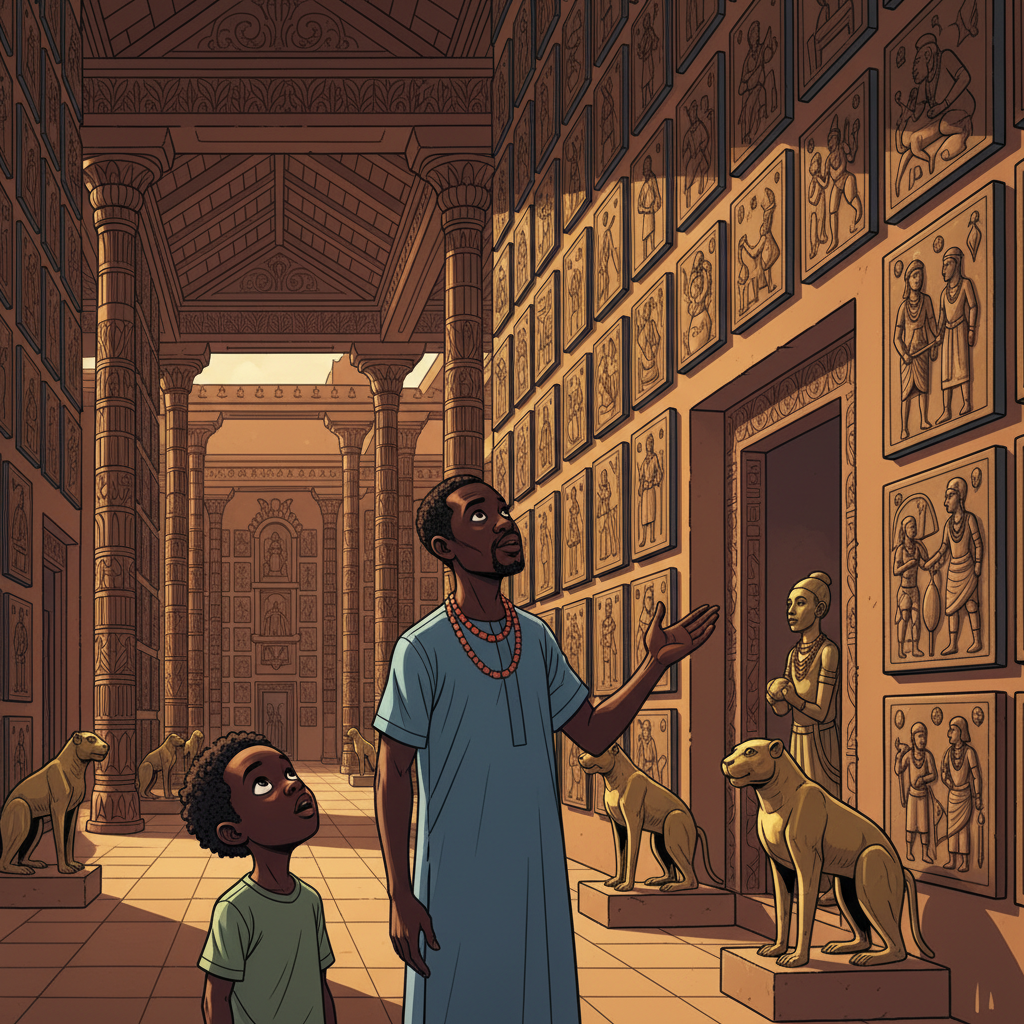
Uncle Ogun led Osakpolor through a gate in the inner wall and into the royal quarter, where the Oba's great palace spread out before them like a city within a city. Osakpolor had been here before during festivals, but he had never really looked — not the way his uncle was teaching him to look now. The palace was vast, with courtyard after courtyard opening into one another, each one decorated with carved wooden pillars and polished clay walls. Brass figures of warriors and leopards guarded the doorways, their metal surfaces gleaming in the equatorial sun. But it was the bronze plaques that stopped Osakpolor in his tracks. They covered the wooden pillars of the palace galleries — rectangular panels of cast bronze, each one depicting a scene in extraordinary detail. Warriors in full regalia, their coral bead necklaces and leopard-skin garments rendered with such precision that Osakpolor could count individual beads. Ceremonies where the Oba sat on his throne surrounded by attendants holding great bronze swords. Processions with musicians playing long ivory horns and drummers striking instruments as tall as children. Hunters returning with game. Traders arriving from distant lands. The plaques were everywhere, hundreds of them, arranged in rows that stretched along the gallery walls like pages of a great book written in metal.
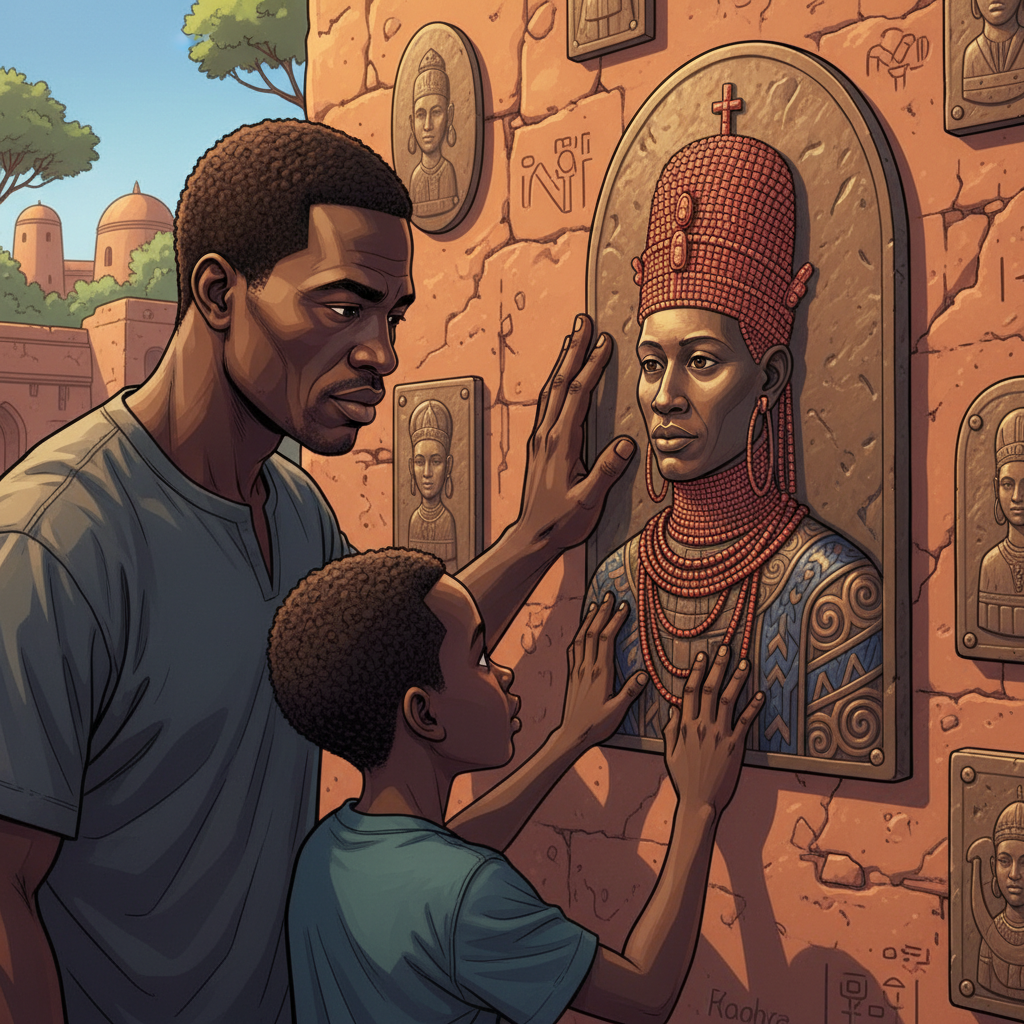
"Touch this one," Uncle Ogun said, guiding Osakpolor's hand to a plaque that showed a figure wearing an elaborate coral bead crown and a high collar of coral beads so detailed that the individual strands were visible. "This is Oba Ewuare the Great, who rebuilt our city over fifty years ago and made it what you see today. He ordered the inner walls strengthened and the streets widened. He established the guilds — the bronze casters, the bead workers, the leather workers, the carvers — and gave each one its sacred duty to the throne." Osakpolor ran his fingers across the bronze surface. It was cool despite the heat of the day, and he could feel every raised detail — the texture of the Oba's robe, the tiny dots of the coral beads, even the expression on the face, which was calm and powerful and seemed to look straight through the metal into Osakpolor's eyes. "Uncle," he whispered, "it feels like he is still here." Ogun nodded slowly. "That is exactly right. That is the purpose. He is still here. The bronze holds him. The bronze holds all of them — every Oba, every ceremony, every great deed. What you are touching is memory made solid."
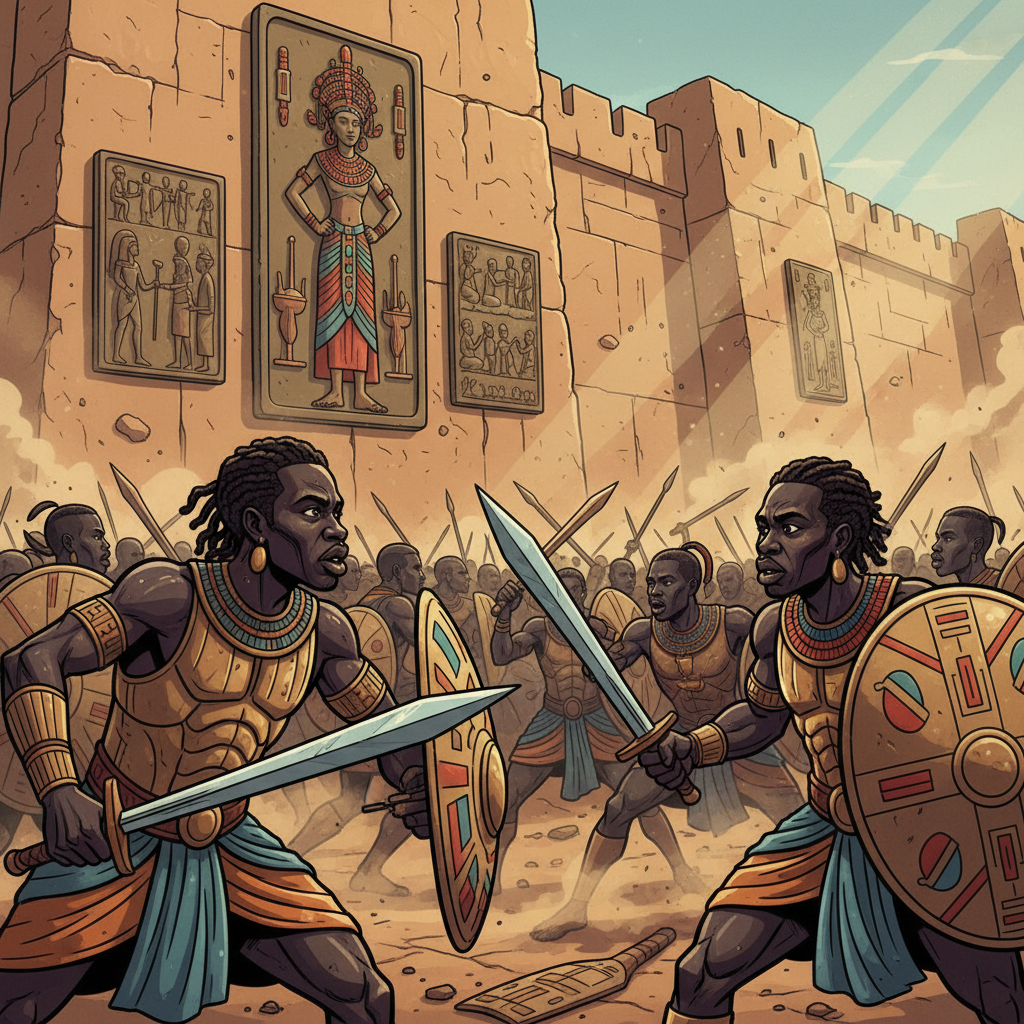
They moved along the gallery, and Uncle Ogun narrated each plaque like a griot reciting the history of a great family. Here was a scene of the Oba receiving tribute from neighboring kingdoms, his court arrayed around him in perfect order. There was a plaque showing the Iyoba — the Queen Mother — in her own ceremonial dress, her authority clear in the strength of her posture and the coral beads that marked her rank. Another plaque depicted a battle scene, warriors with shields and swords defending the city against invaders, their faces fierce with determination. "Every important event is recorded here," Ogun explained. "When a new Oba is crowned, the bronze casters make a plaque. When a great battle is won, a plaque. When a new trade route is opened or a new guild is established, a plaque. We of the Igun-Eronmwon are not just craftsmen, nephew. We are the keepers of memory. What we cast in bronze can never be erased, never be changed, never be forgotten. A bronze plaque does not rot like wood. It does not crumble like clay. It does not fade like dye on cloth. It endures."
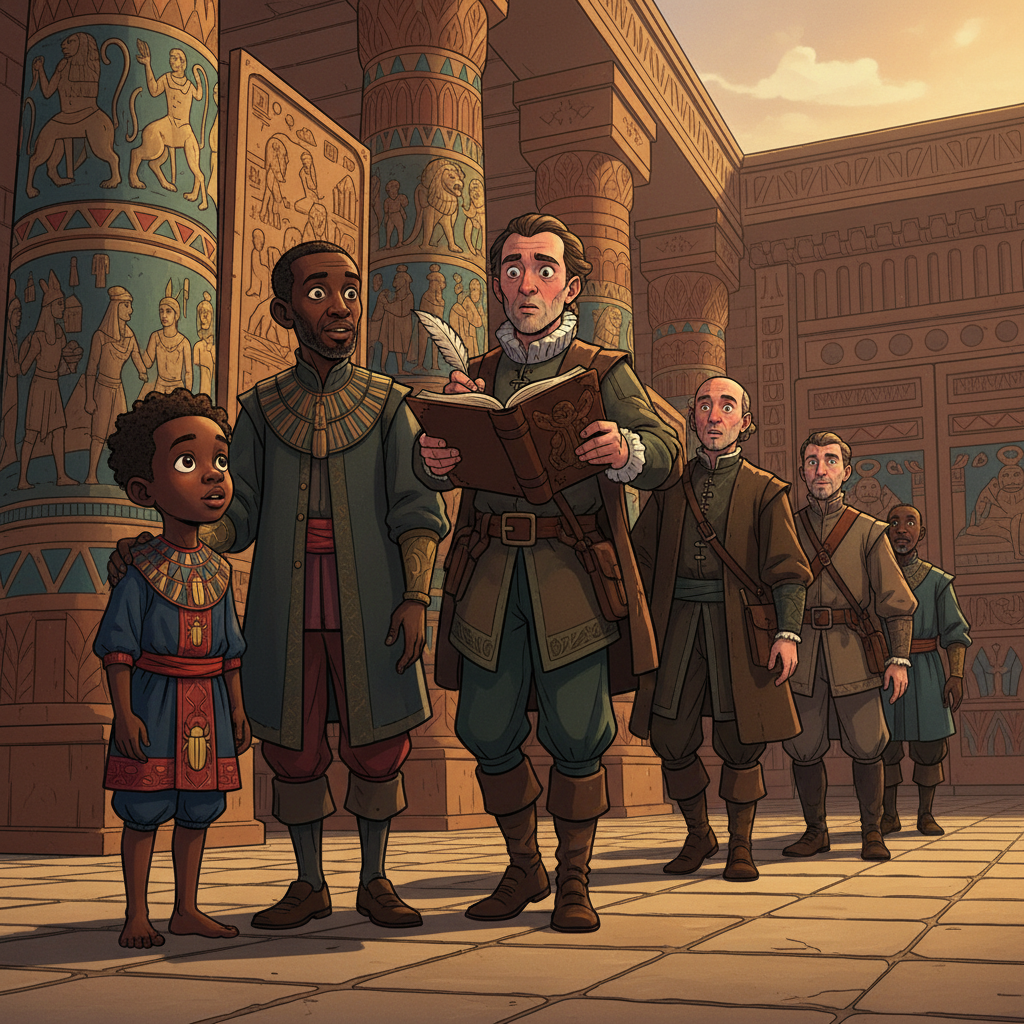
As they walked back toward the main gate of the palace, a commotion near the entrance caught their attention. A group of strangers was being escorted through the courtyard by palace officials — men with pale skin and strange clothing, their faces red from the heat, their eyes wide as they looked around at the palace complex. One of them carried a leather-bound book and was writing furiously, his hand flying across the pages. Uncle Ogun placed a hand on Osakpolor's shoulder. "Those are traders from a land called Portugal, far across the great western ocean. They have been coming to Benin for some years now, arriving in their wooden ships." Osakpolor watched the strangers with fascination. They were staring at everything — the bronze plaques, the carved pillars, the sheer size of the palace — and the one with the book kept stopping to scribble more notes, shaking his head in what looked like disbelief.
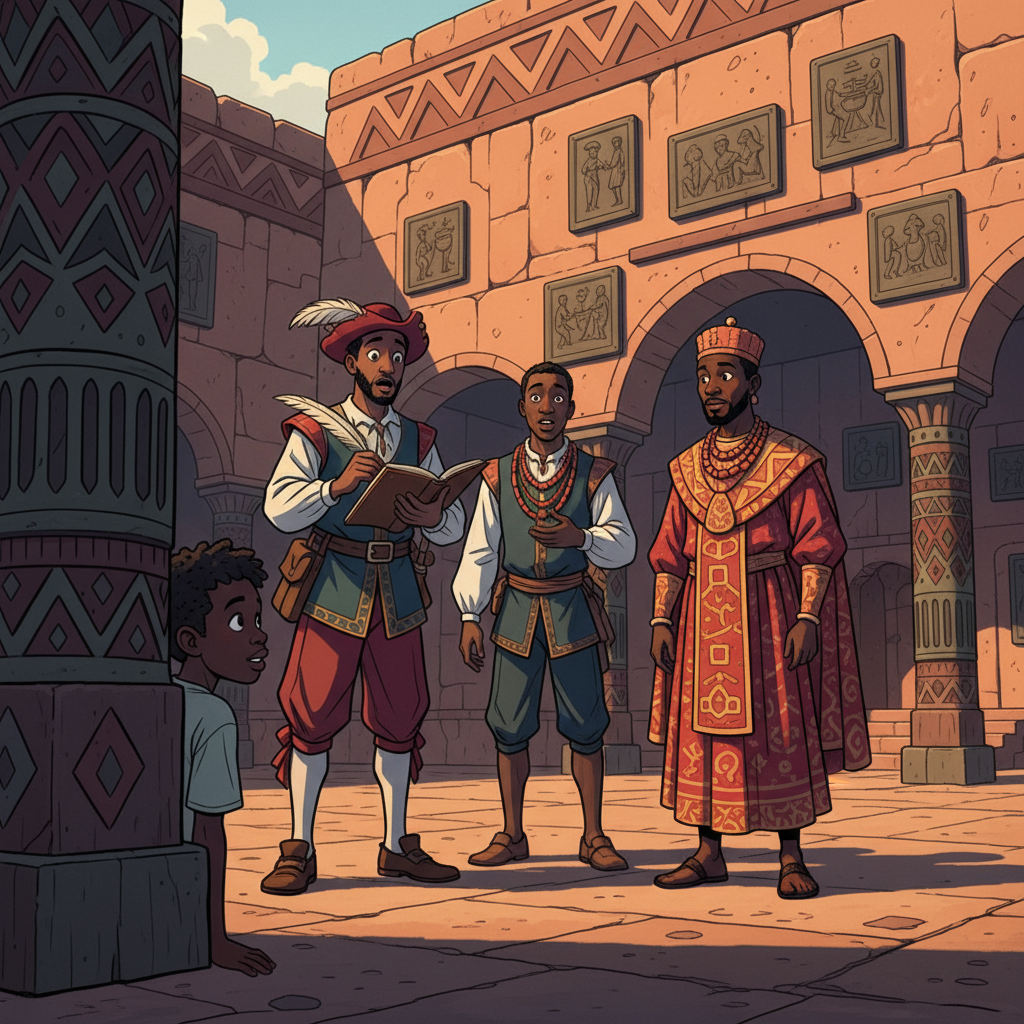
Osakpolor edged closer, curiosity pulling him forward like a fish on a line. He could hear one of the Portuguese men speaking in broken phrases to the palace interpreter, who translated his words into Edo. "He says," the interpreter relayed to the attending chief, "that he has never seen a city so large or so well-ordered. He says the streets are wider than the greatest avenues in his own land. He says the palace is bigger than anything in his country. He is asking how many courtyards there are." The attending chief answered with quiet pride: "Tell the visitor there are two hundred and one courtyards in the Oba's palace, and that our city has thirty broad streets, each one straight and true." The Portuguese man's eyes went wide, and he wrote so fast that his pen seemed to blur. Osakpolor felt something swell in his chest — not arrogance, but a deep, warm pride. This city, these walls, these streets — his people had built all of it. Not by accident, not by luck, but by generations of careful planning, skilled labor, and the sacred commitment to order that his uncle was teaching him to see.
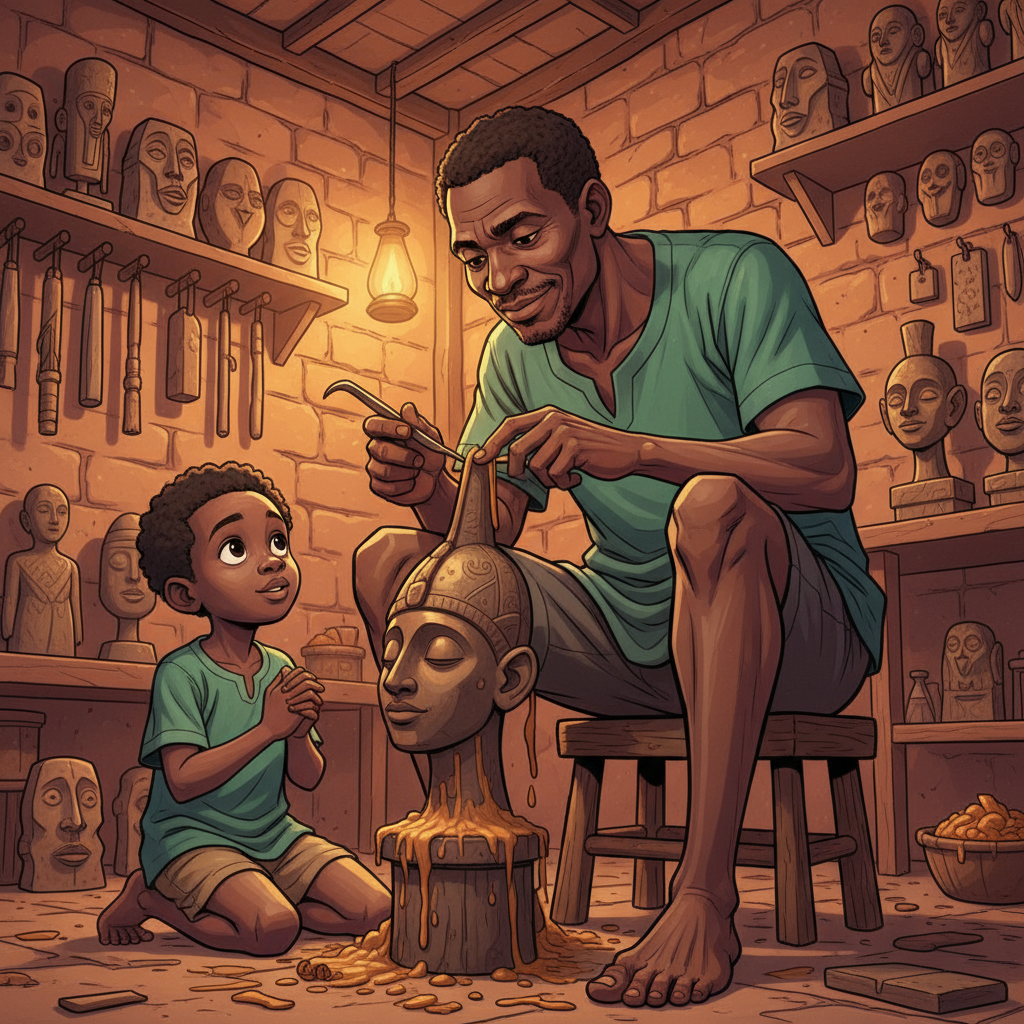
That evening, Osakpolor sat with Uncle Ogun in the workshop as the older man worked on a new wax carving by the light of palm-oil lamps. The flames made the shadows dance on the walls, and the workshop smelled of warm wax and the faint metallic tang of bronze. Tools hung from pegs on every wall — scrapers, polishing stones, molds of different sizes — each one in its proper place, the same order that had been kept in this workshop for generations. "Uncle," Osakpolor said, watching the thin curls of wax fall away under Ogun's blade, "the Portuguese man was so surprised by our city. Does he not have walls and palaces in his own land?" Ogun smiled without looking up from his work. "He does. But he did not expect to find them here. Many people from far lands do not believe that African people can build great cities. When they arrive in Benin and see what the Edo have made — the walls, the streets, the palace, the bronzes — they cannot believe their own eyes. That is why the record matters, nephew. That is why we cast in bronze."
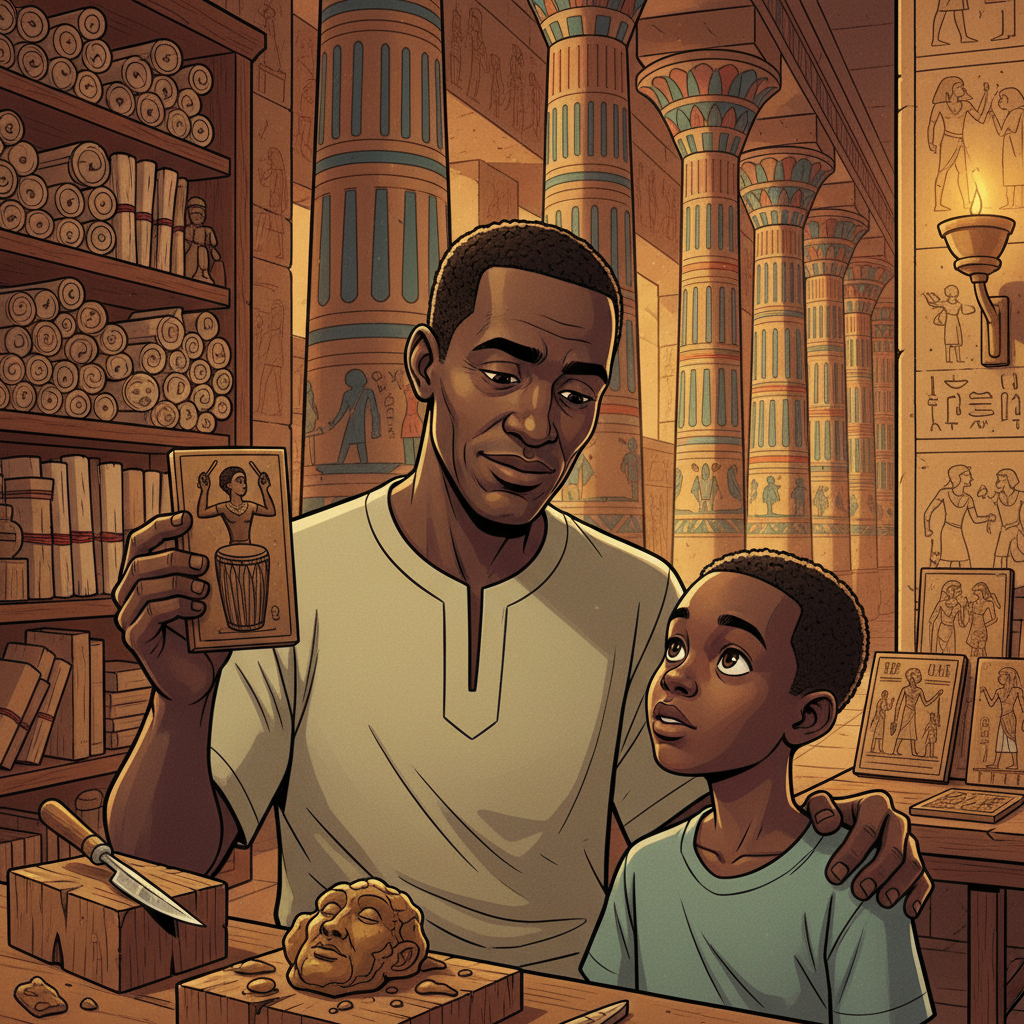
Ogun set down his blade and looked at Osakpolor with an expression that was serious and tender at the same time. "The scribes of Kemet, the great civilization far to the east, wrote their truth on papyrus scrolls and carved it into temple walls. Every deed, every pharaoh, every law was recorded so that the future would know what came before. We cast truth in bronze. Both serve the same sacred duty — to remember, so the future is not built on lies." He picked up a finished bronze plaque that leaned against the wall — a small one, showing a single figure of a drummer with both hands raised above a tall drum. "When someone tries to say our people achieved nothing, we do not need to argue. We hold up the bronze. We point to the walls. We show the thirty streets that were laid out in a perfect grid while many cities across the ocean were still tangles of mud and filth. The truth speaks for itself, but only if someone keeps it alive. That is what maat means — the ancient word for truth and order and justice. The Igun-Eronmwon are servants of maat, whether we use that word or not."
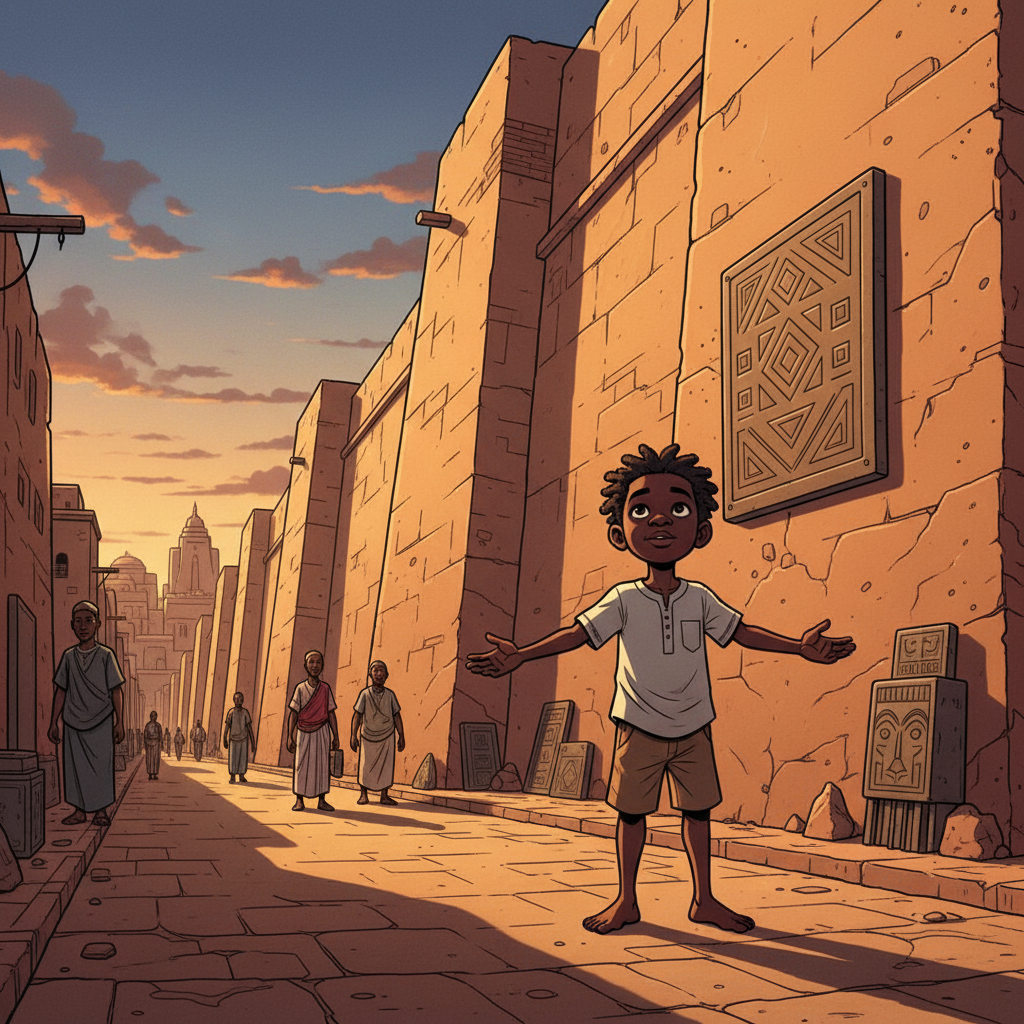
Osakpolor walked home through the warm evening streets of Benin City, and for the first time in his life, he truly saw the city around him. He saw the walls not as simple barriers but as declarations of greatness — millions of hours of labor, generations of planning, a people saying to the world and to the future: we are here, we built this, and we built it to last. He saw the straight streets and understood that they were not accidents but engineering, as deliberate as the angles of a bronze plaque. He saw the palace in his mind's eye, its two hundred and one courtyards and its galleries lined with bronze memory, and he understood that his mother's coral beads and his uncle's bronze plaques were part of the same great work — the work of keeping truth alive. When he reached home, his mother was still at her workbench, threading beads by lamplight, her dark fingers moving in their endless patient rhythm. She looked up and saw something different in her son's face. "You understand now," she said. It was not a question. Osakpolor nodded. "The walls speak, Mama," he said quietly. "And the bronzes speak. They tell the truth about who we are, so that no one — not today, not in a hundred years, not ever — can say we were not great." Ewere smiled and reached out to touch his cheek with her warm, bead-rough fingers. "Now you know why the wall hums when you press your hand against it," she said. "It is the voice of your ancestors, speaking through stone and earth and bronze. And as long as we remember, they are never silent."