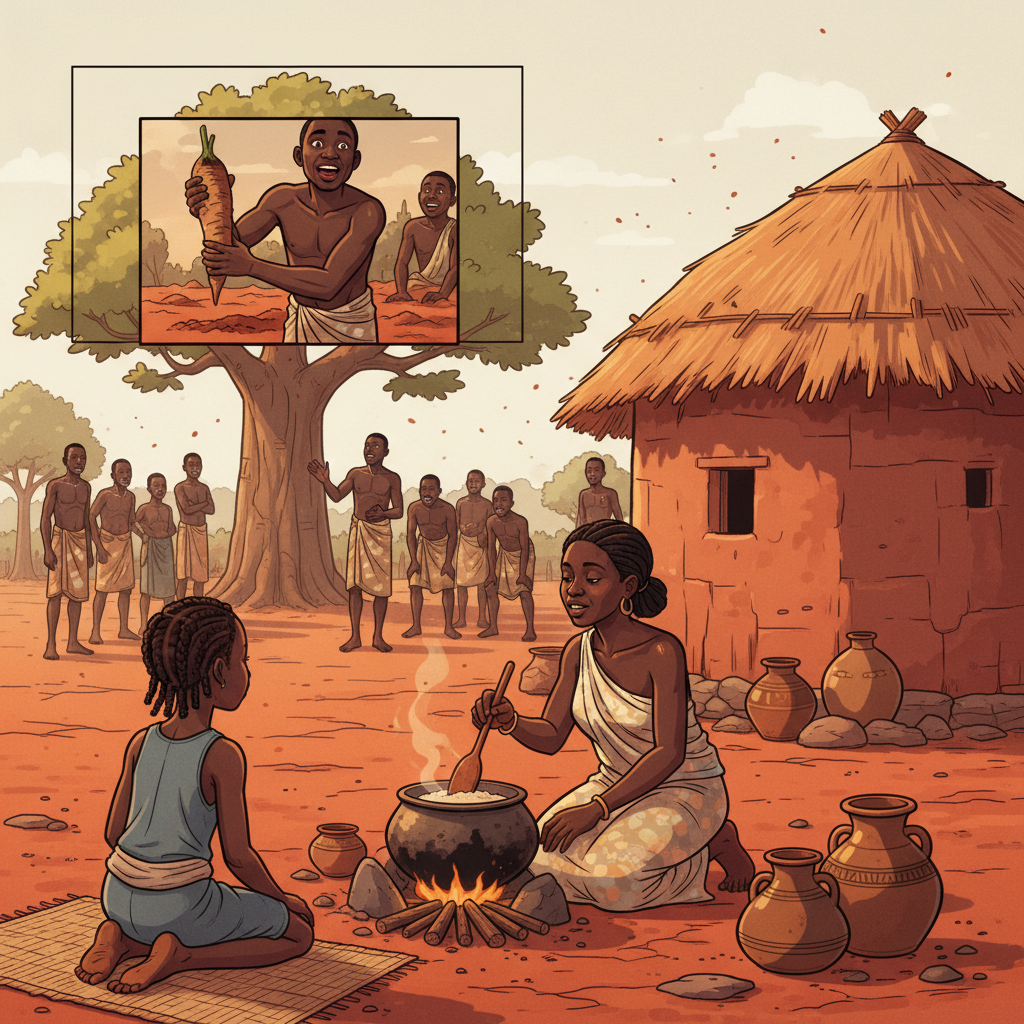
The dry season had lasted three months longer than anyone could remember. Adaeze watched her mother scoop the last of the dried yam flour into the cooking pot and stir it slowly, as if making it last through the motion of her hands. Outside, the compound was quiet in the way that meant worry — no children running, no grinding stones singing, just the harmattan wind dragging dust across the red earth. “They are meeting at the ilo again,” her mother said without looking up. Adaeze already knew. She had seen the men gathering — her uncle Chukwuemeka at the center, the way he always was, his voice carrying across the compound walls before she could make out the words. Her uncle was the kind of man who filled rooms. When he spoke in council, the other men leaned forward. When he lifted a yam from the soil, he held it up like a victory.
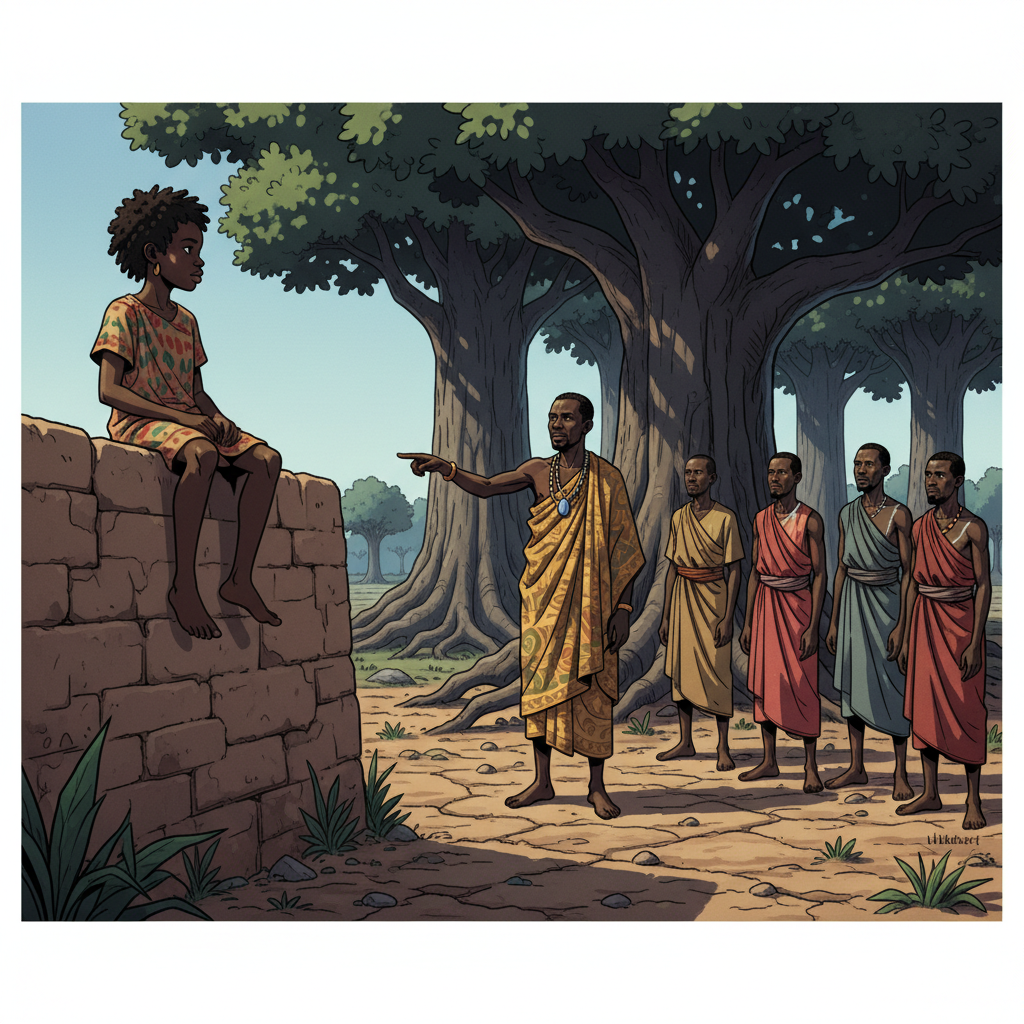
She climbed the compound wall to see. The men stood at the edge of the village where the farmland ended and the sacred grove of Ala began. Her uncle was pointing at the trees — old iroko trees, their roots running deep into the earth like fingers holding something underneath. His voice was not angry. It was the voice he used when he had already decided. “Three months,” he was saying. “Three months our yams have given us nothing. The grove holds the best soil in this land. Ala is our mother — she will understand that her children are hungry.” The men around him were nodding. Adaeze could see in their nods that they were not fully certain — but they were hungry, and her uncle was certain enough for all of them. She climbed down and went to find her grandmother.
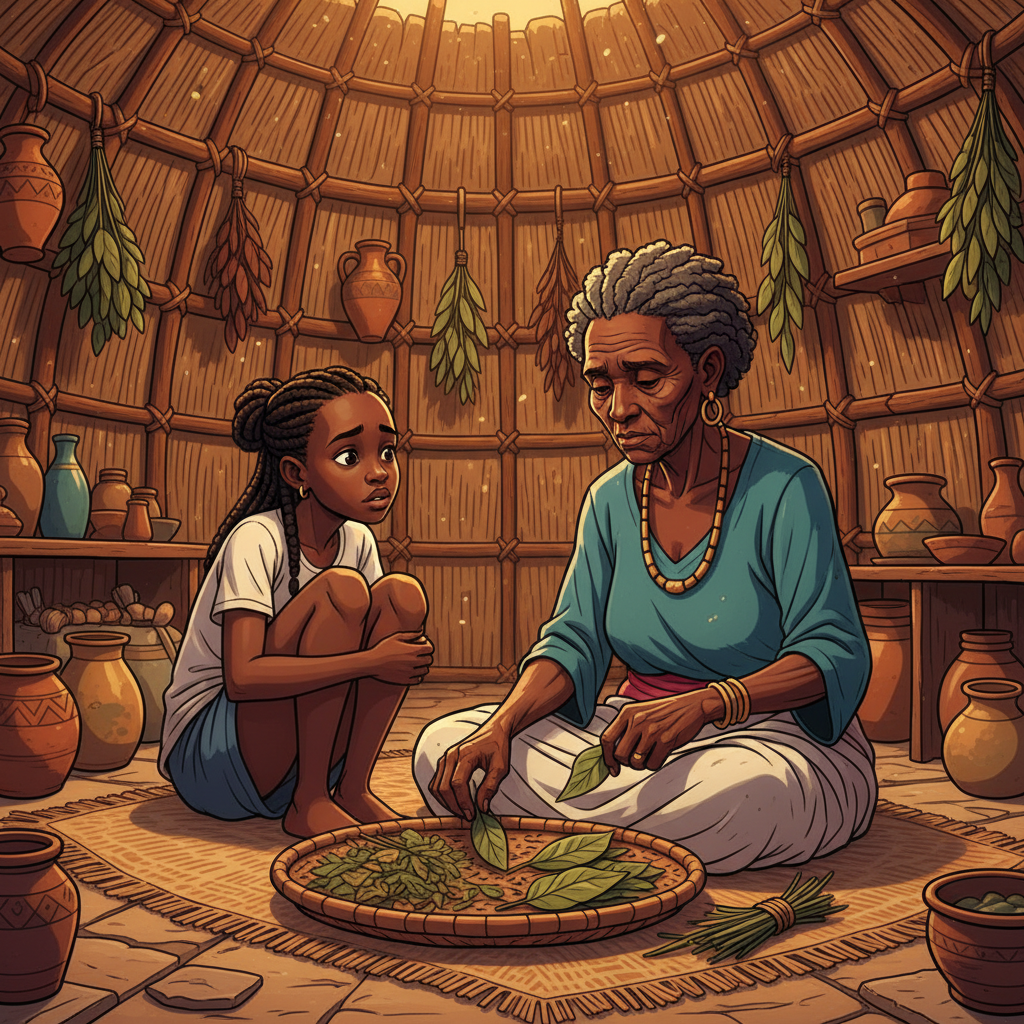
Mama Chidinma was where she always was — in the corner of her hut, sorting through dried herbs with fingers so practiced they moved without her watching them. She was the oldest woman in the compound. Her voice had gone soft with age, the kind of soft that meant you had to be close to hear her, and most people did not bother being close. “They are going to clear the grove,” Adaeze said. Her grandmother’s hands did not stop moving. “I know.” “Uncle says Ala will understand.” “Ala does not understand or misunderstand.” Her grandmother set down a bundle of leaves with great care. “She holds. That is what she does. She holds everything that has ever happened in her soil — the seeds, the dead, the promises made at her feet when this village was young. When something is taken from what she holds —” She paused. “It is not that she punishes. It is that something is missing from what was whole.” Adaeze sat beside her. “Can you stop them?”
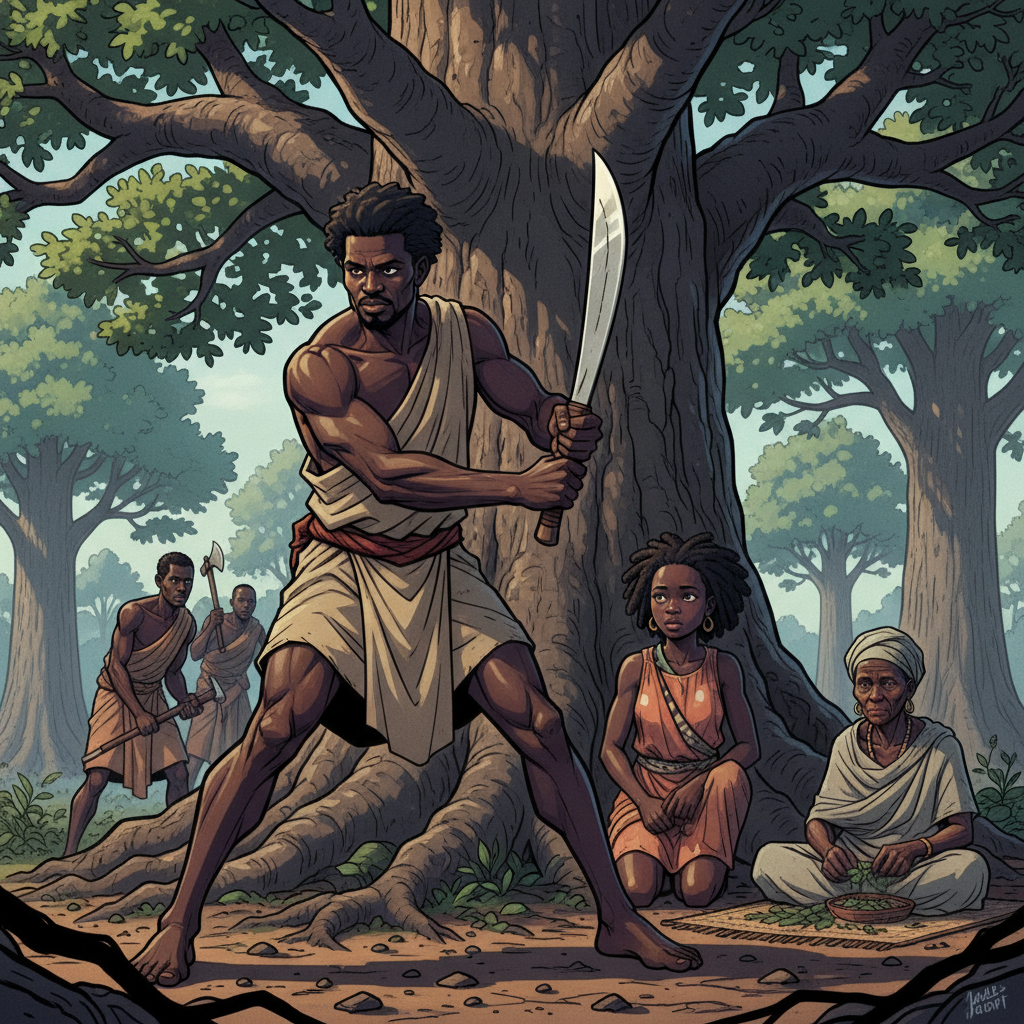
Her grandmother looked at her for a long moment with eyes that had seen many dry seasons. “I am an old woman with a soft voice. Your uncle is a strong man with a loud one.” She returned to her herbs. “What do you think?” The clearing began three days later. Adaeze watched her uncle swing his machete into the first iroko and felt something she could not name — not fear exactly, not sadness exactly. Something underneath those things, like hearing a note played wrong in a song she had known since she was small. The men worked for two days. They did not take the whole grove — her uncle had said enough to plant, not everything — but the oldest trees came down, the ones whose roots went deepest. The soil underneath was dark and rich, exactly as he had promised. The rains came six weeks later. The yams grew. By harvest, people had stopped talking about the grove. Adaeze had not stopped thinking about it.
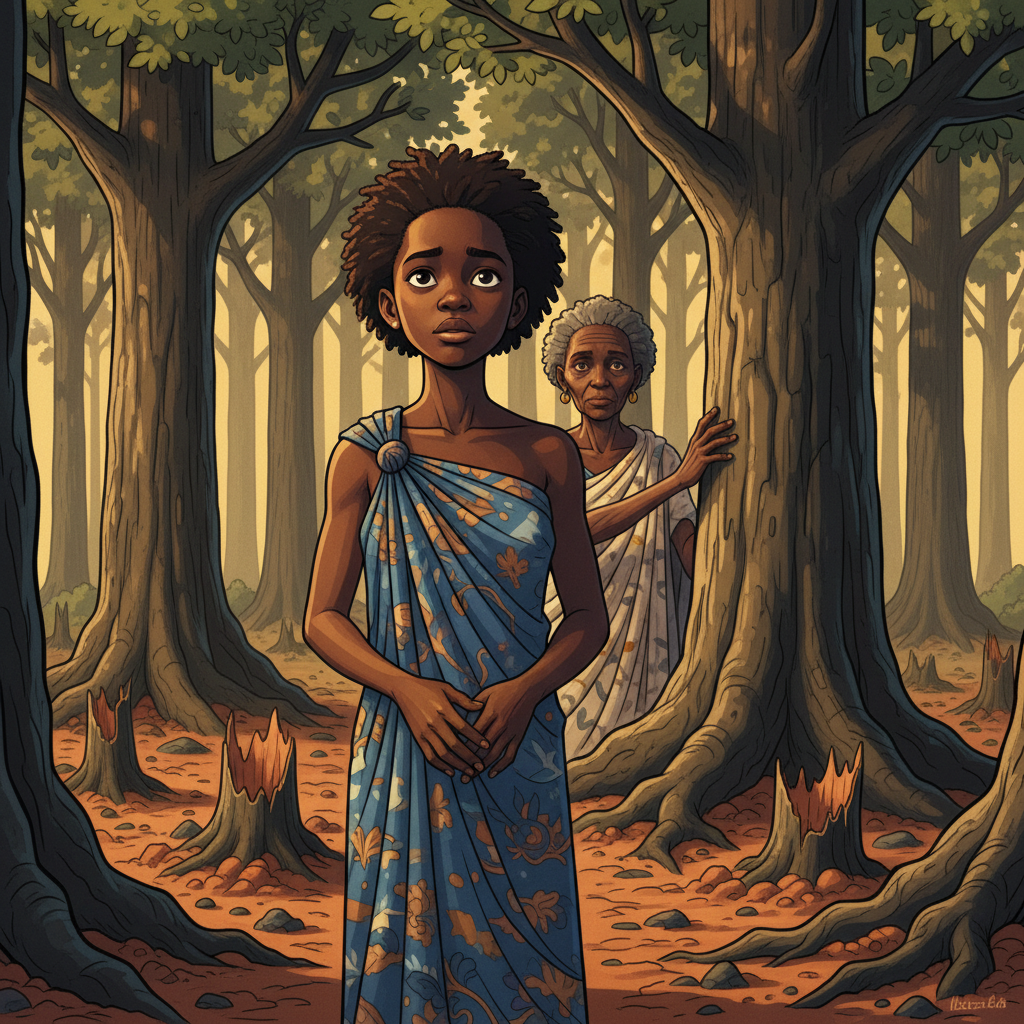
She went back alone one afternoon and stood where the clearing was. The remaining trees looked different. Not dead. Not sick. But different — the way a person looks after something has happened to them that they have not spoken about yet. She was standing there when her grandmother appeared beside her, moving so quietly on old feet that Adaeze had not heard her coming. “What do you see?” her grandmother asked. “I don’t know how to say it.” “Try.” Adaeze looked at the broken root-stumps, at the turned soil. “It looks like something that used to know what it was.” Her grandmother was quiet for a long time. “Your uncle saved this village,” she said finally. “The yams grew. The children ate. This is true.” She touched the bark of the nearest remaining iroko — the same way she sorted her herbs, her fingers reading something the eyes could not. “And this grove held the bones of those who came before us. The prayers their hands pressed into the earth when they planted. The agreements this village made with Ala before your grandfather’s grandfather drew breath.” She withdrew her hand. “This is also true.”
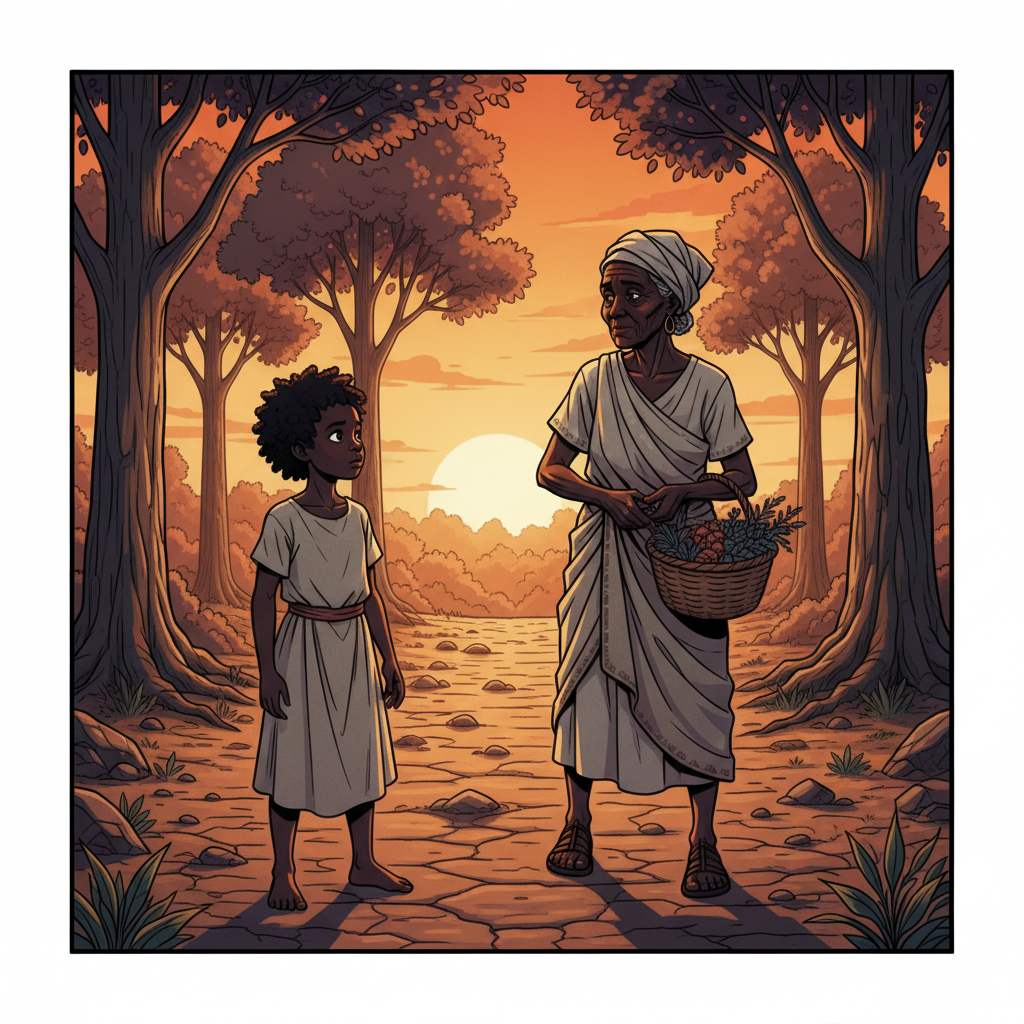
“So who was right?” Adaeze asked. Her grandmother turned and looked at her — and Adaeze saw something in the old woman’s face she had never seen there before. Not wisdom exactly. More like the expression of someone who had carried a weight for so long that the weight had become part of their shape. “Your uncle is the strongest man in this compound,” her grandmother said. “His strength kept this village alive. I am glad of it.” She began to walk slowly toward home. “But there are things that only gentleness can hold. His hands cannot sort my herbs without crushing them. They are not wrong hands. They are strong hands.” She did not look back. “Strength and gentleness are not enemies, Adaeze.” Adaeze looked at the grove. “Then what are they?” Her grandmother paused without turning. “Ask the earth,” she said. “She has been holding both since before there were words for either.” Adaeze stayed until the light began to fall. She did not have an answer by the time she walked home. But she had something else — a question large enough to live inside, the kind that did not ask to be solved, only to be carried. She carried it.