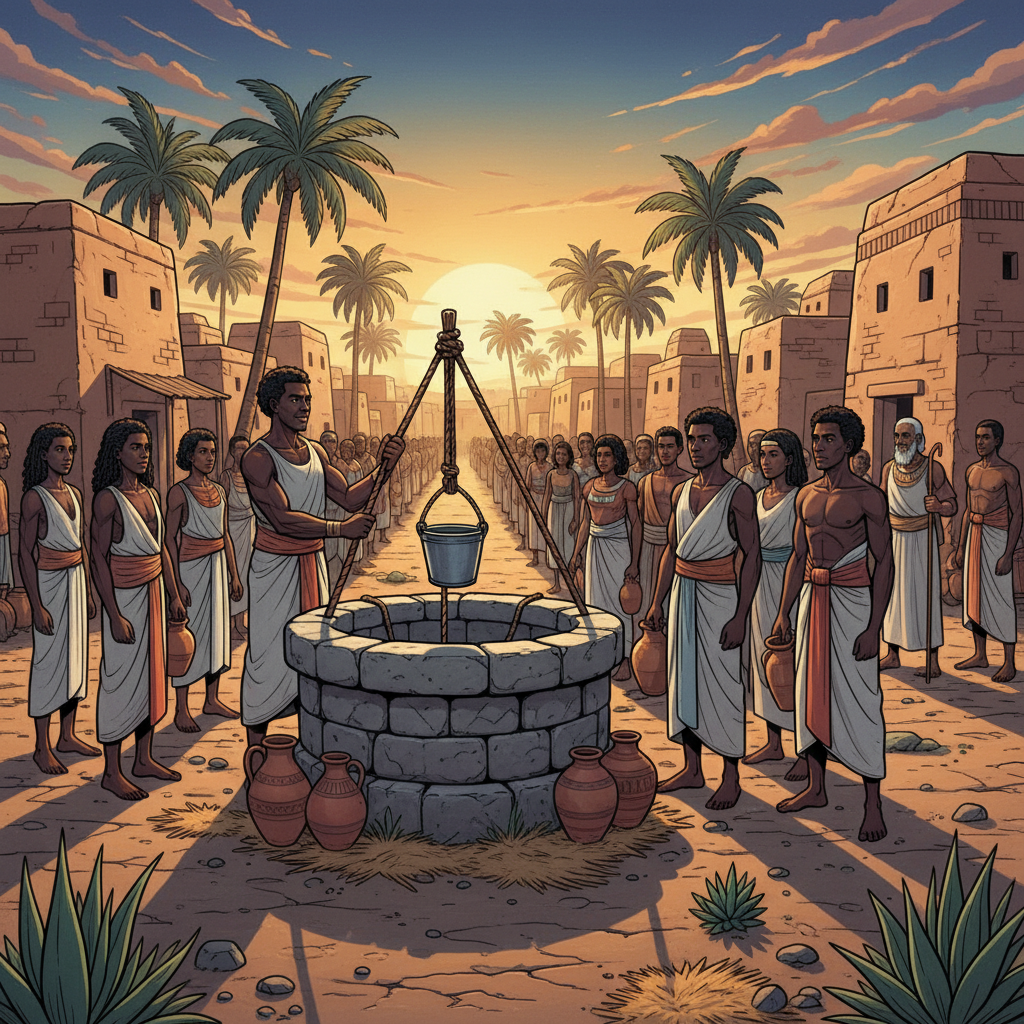
The village well stood at the center of Ipet-Resyt like a stone heart, round and deep and old. Every morning before the sun climbed above the palm trees, families lined up with their clay jars and leather water skins, waiting their turn. The well keeper was a broad-shouldered man named Pentu, with very dark skin weathered by years of standing in the sun, strong hands that could haul a full bucket up the rope in a single pull, and a deep voice that carried across the square like a drum.
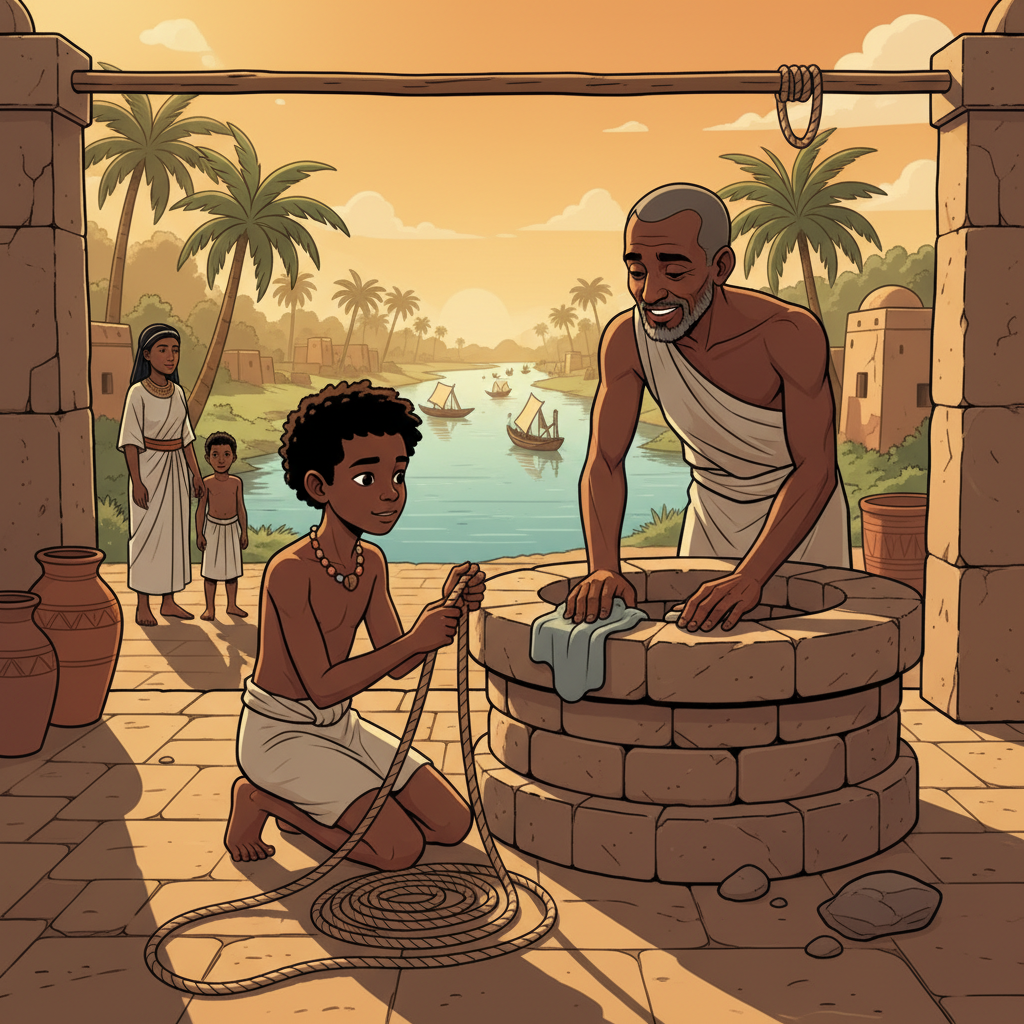
Pentu was also Tau's uncle — the man who had taken Tau in three years ago when river fever stole both his parents in the same terrible week. Tau was eleven now, with the same deep ebony skin as his uncle and sharp, watchful eyes that missed nothing. He helped Pentu at the well every morning, coiling ropes, cleaning the stone rim, and counting the measures of water each family drew. He loved his uncle. Pentu had saved his life.
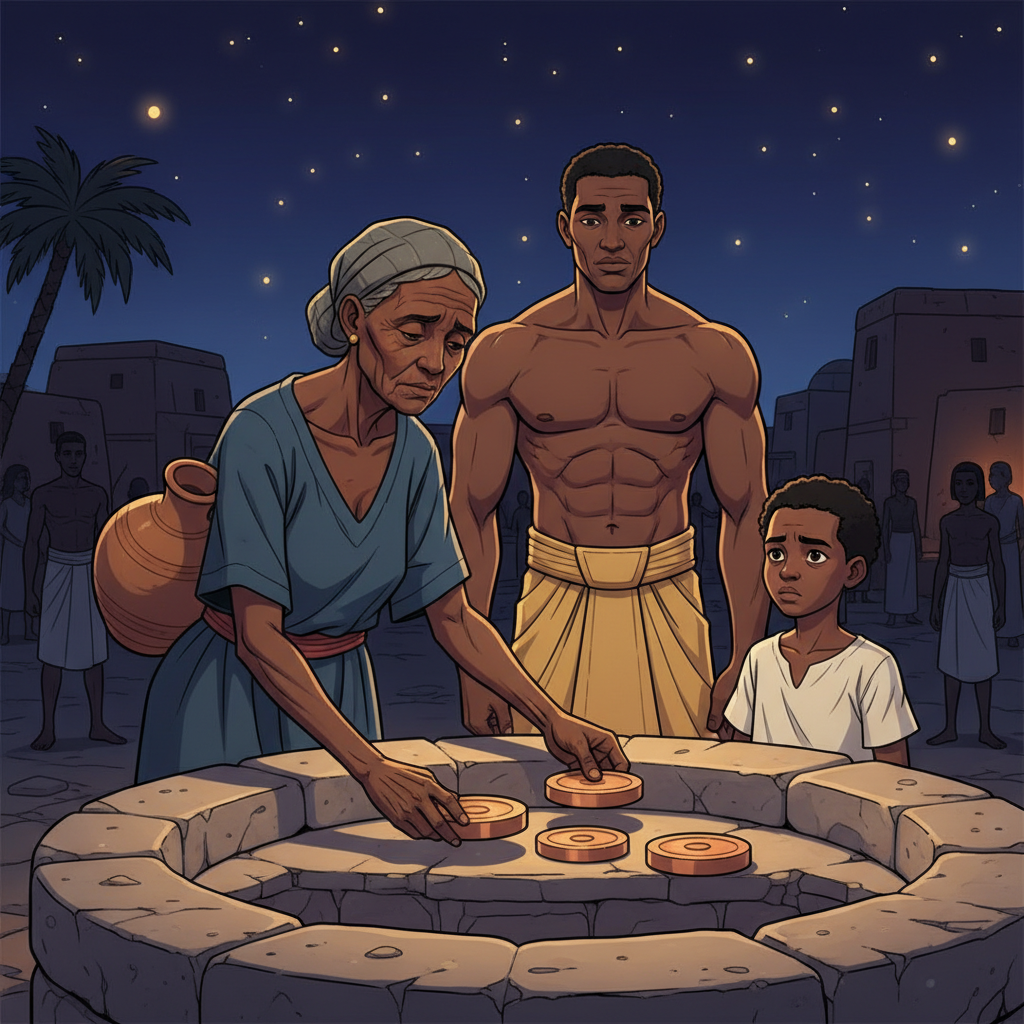
It started small — so small that Tau almost missed it. One morning, old Meret came to the well late. She was a widow who worked in the flax fields from before dawn, and by the time she reached the well her hands were cracked and her face was lined with exhaustion. Pentu filled her jar and said, "Three measures." Tau frowned. He had counted two. But Meret did not argue. She placed three copper weights on the stone ledge and walked away slowly, her jar heavy on her hip.
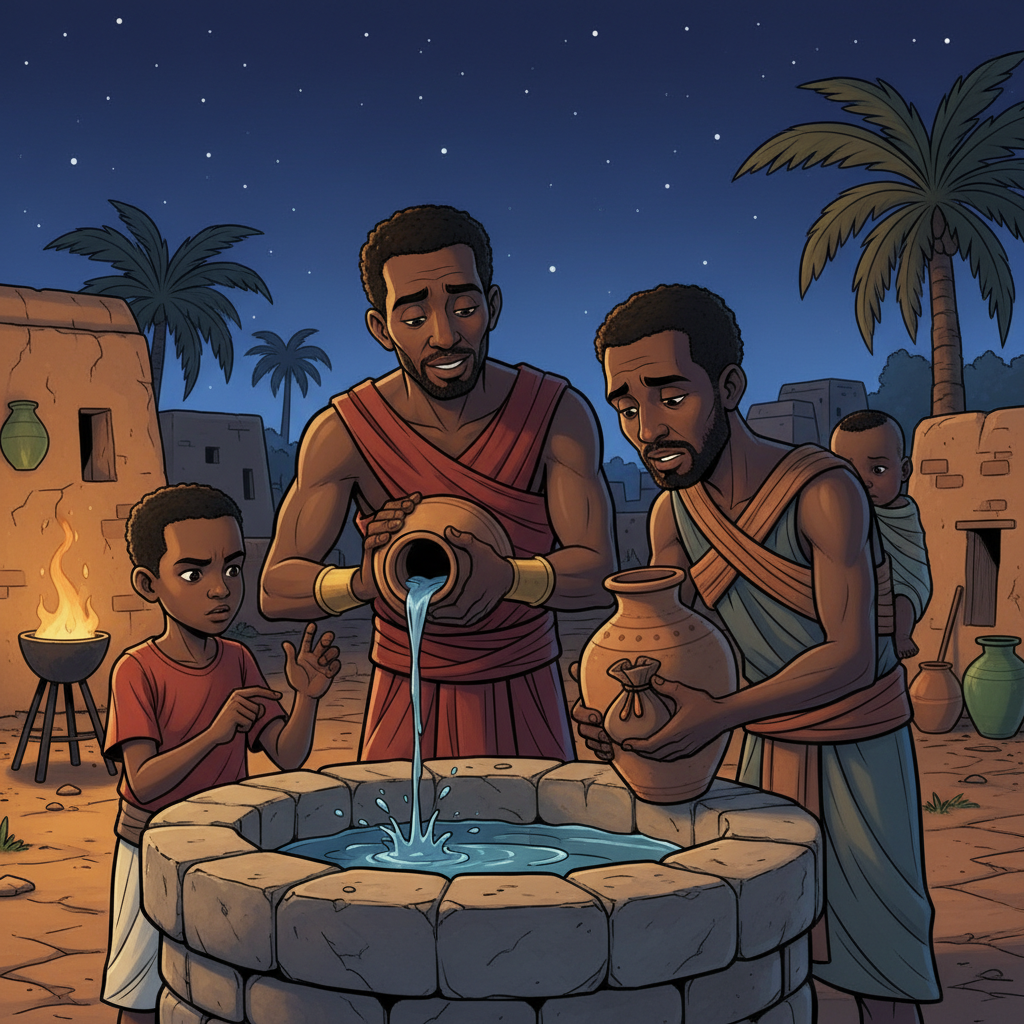
Tau told himself he had miscounted. The sun was bright. The water splashed. Easy to lose track. But the next day it happened again — this time with Khufu, a young father who arrived late because his infant daughter had been crying all night. Pentu filled the jar and said, "Four measures." Tau had counted three. Khufu paid without question. He looked too tired to argue.
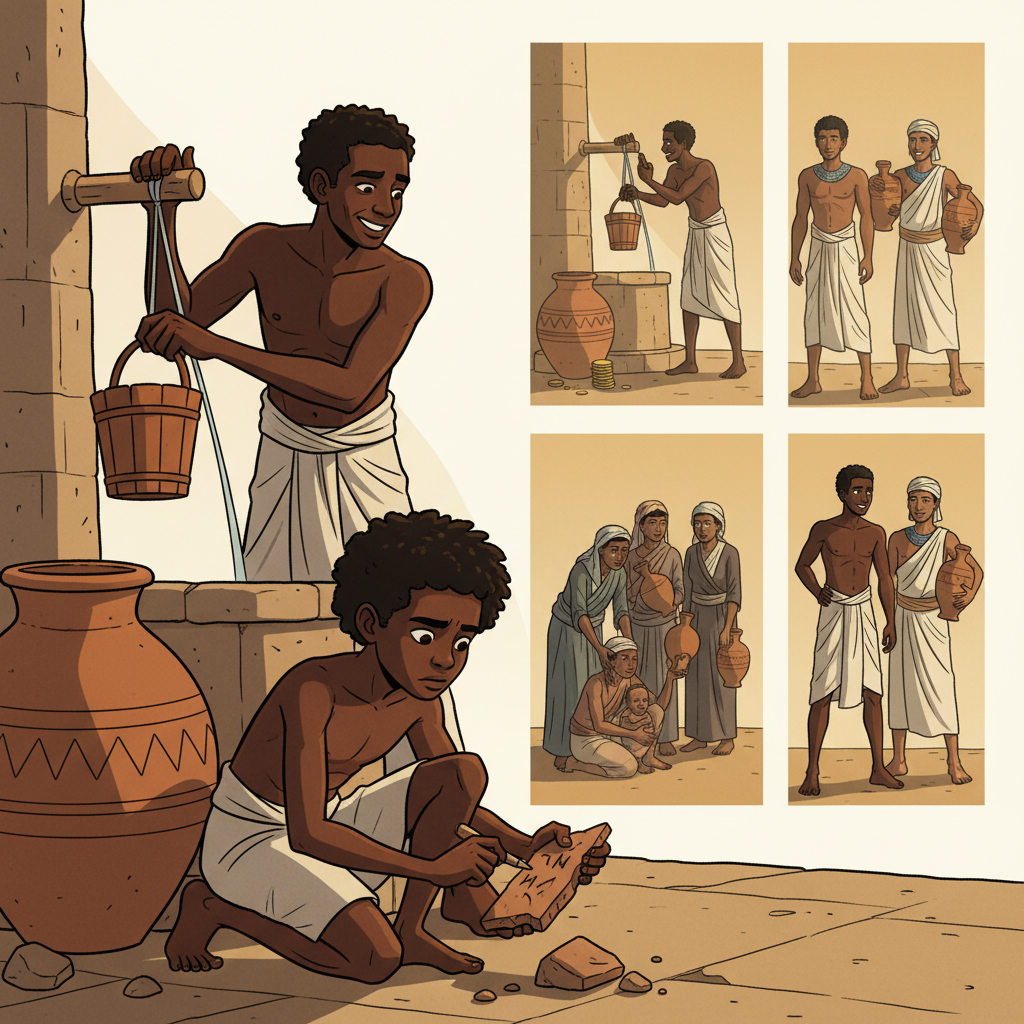
Over the next week, Tau watched carefully. He scratched marks on a piece of broken pottery each time Pentu dipped the bucket. The pattern was clear. Families who arrived early — the wealthier ones, the merchants, the craftsmen who set their own hours — were charged honestly. Families who arrived late — the field workers, the widows, the ones too tired or too desperate to argue — were charged one extra measure every time.
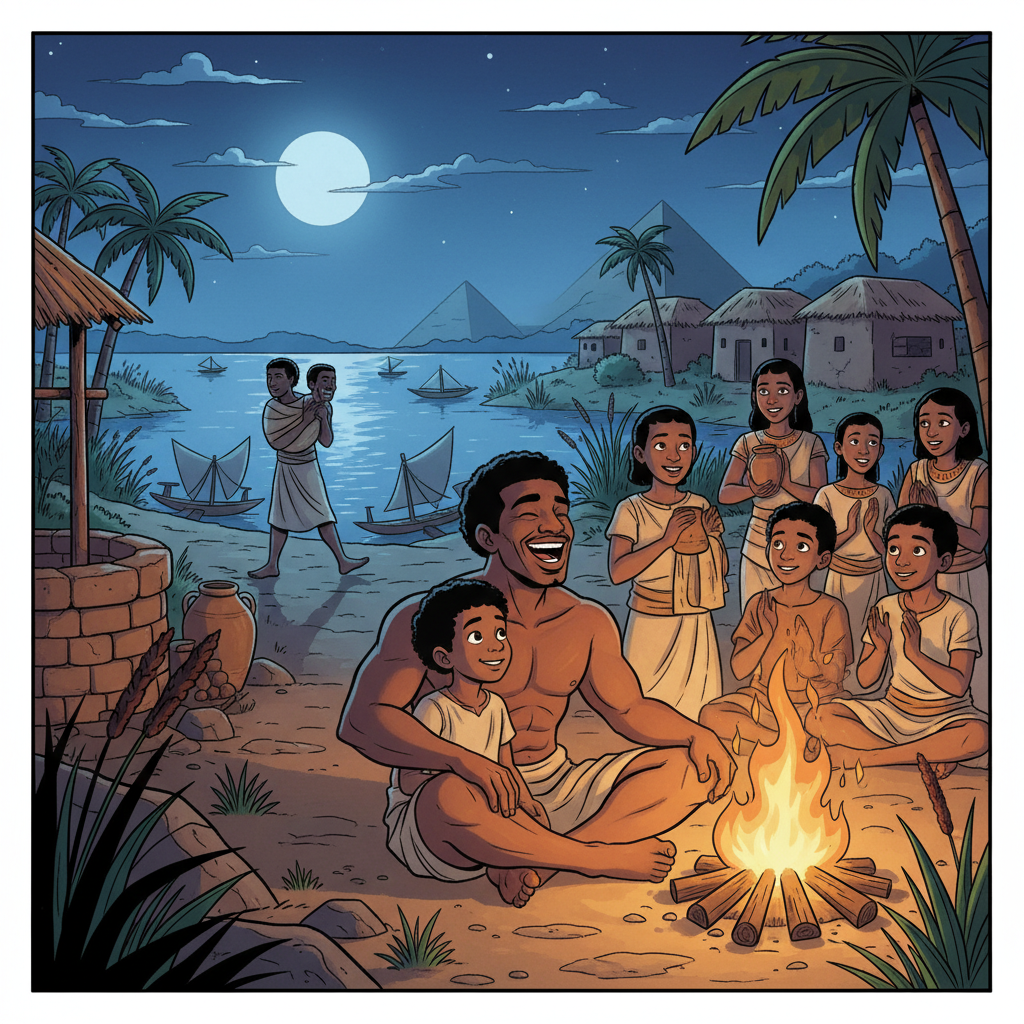
Tau felt sick. His uncle was not a cruel man. Pentu laughed loudly, told stories by the fire, and had once carried a neighbor's sick child three miles to the healer without being asked. He had taken Tau in when no one else would. He fed Tau, clothed Tau, taught Tau to read the water marks on the well shaft. Without Pentu, Tau would be an orphan begging at the market gate.
But Meret was a widow. Khufu's baby was always hungry. The field workers came to the well with dust in their hair and calluses on their hands, and they paid one extra measure — every day — because they were too weary to count and too powerless to complain. One extra measure was small. But over a week, it was seven. Over a month, thirty. Over a year, it was enough to buy a goat. And that extra was coming from the people who could least afford it.
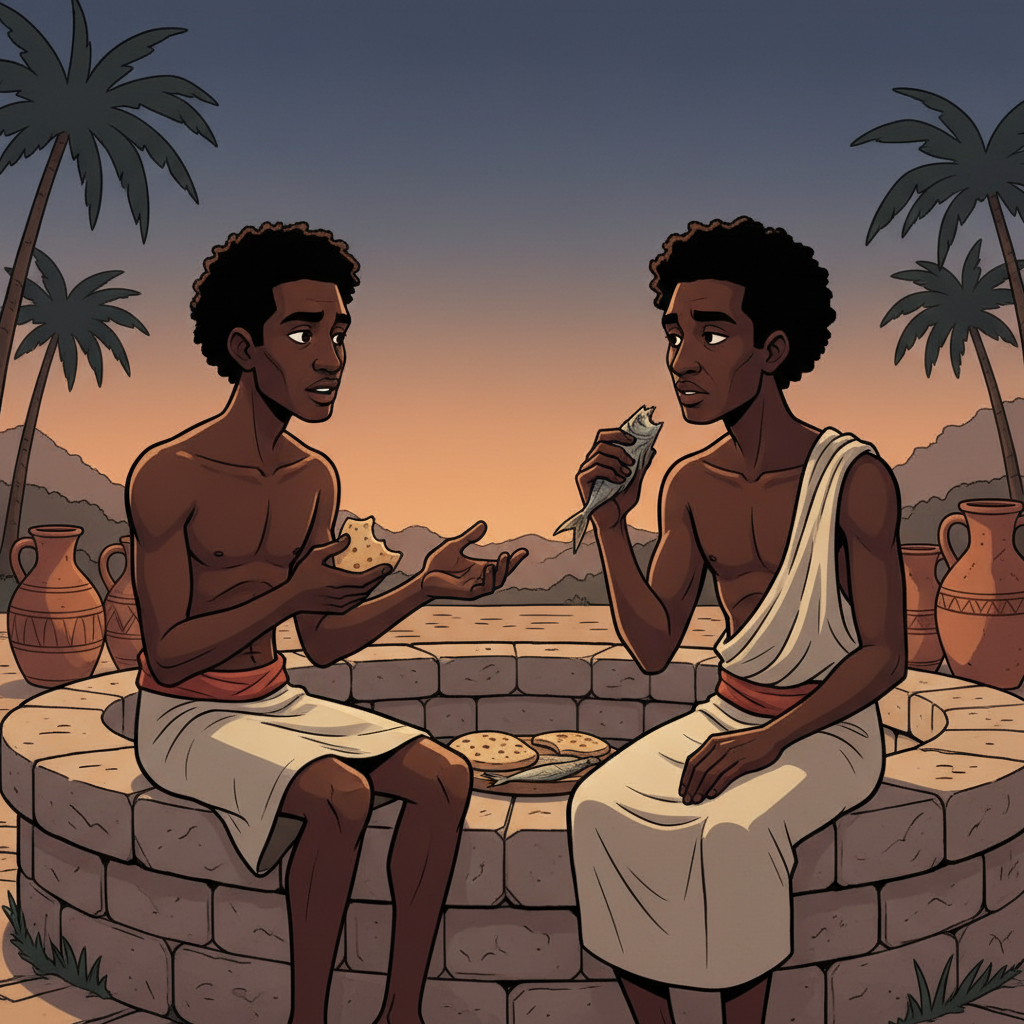
Tau tried to talk to Pentu one evening after the well was closed. They sat on the stone rim in the cooling air, eating bread and dried fish. "Uncle," Tau said carefully, "I think sometimes the count is wrong." Pentu stopped chewing. "Wrong how?" "Sometimes I count two measures and you say three." His uncle's face went still — not angry, not ashamed, but the careful blankness of a man deciding how much truth to allow.
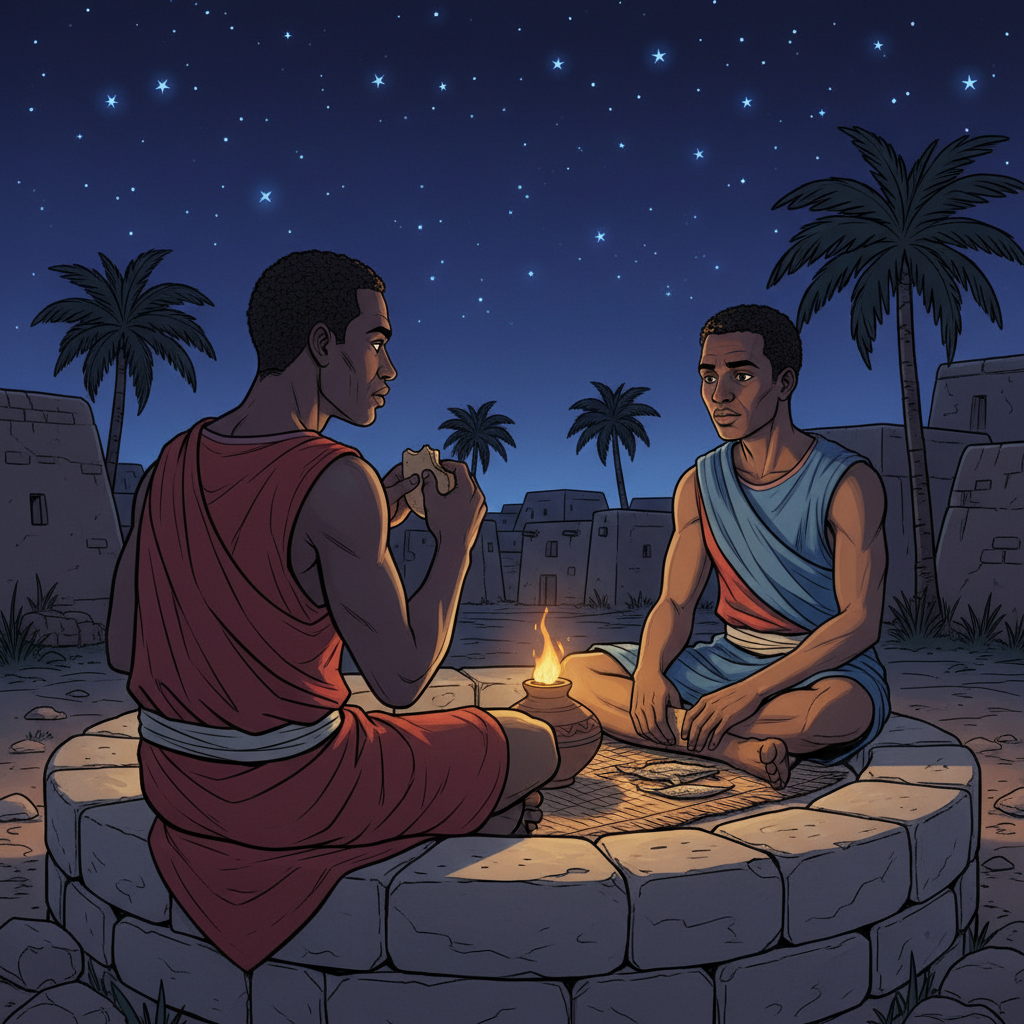
"You are counting wrong," Pentu said flatly. "The splash makes it hard to track. I have been keeping this well for twelve years. Trust my count, boy." He went back to eating. The conversation was over. But Tau saw what his uncle did not say: he saw the flicker of something behind his uncle's eyes — not guilt exactly, but the tight discomfort of a man who knows he has been seen. Tau lay awake that night staring at the stars through the palm thatch, his stomach churning with a feeling he could not name.
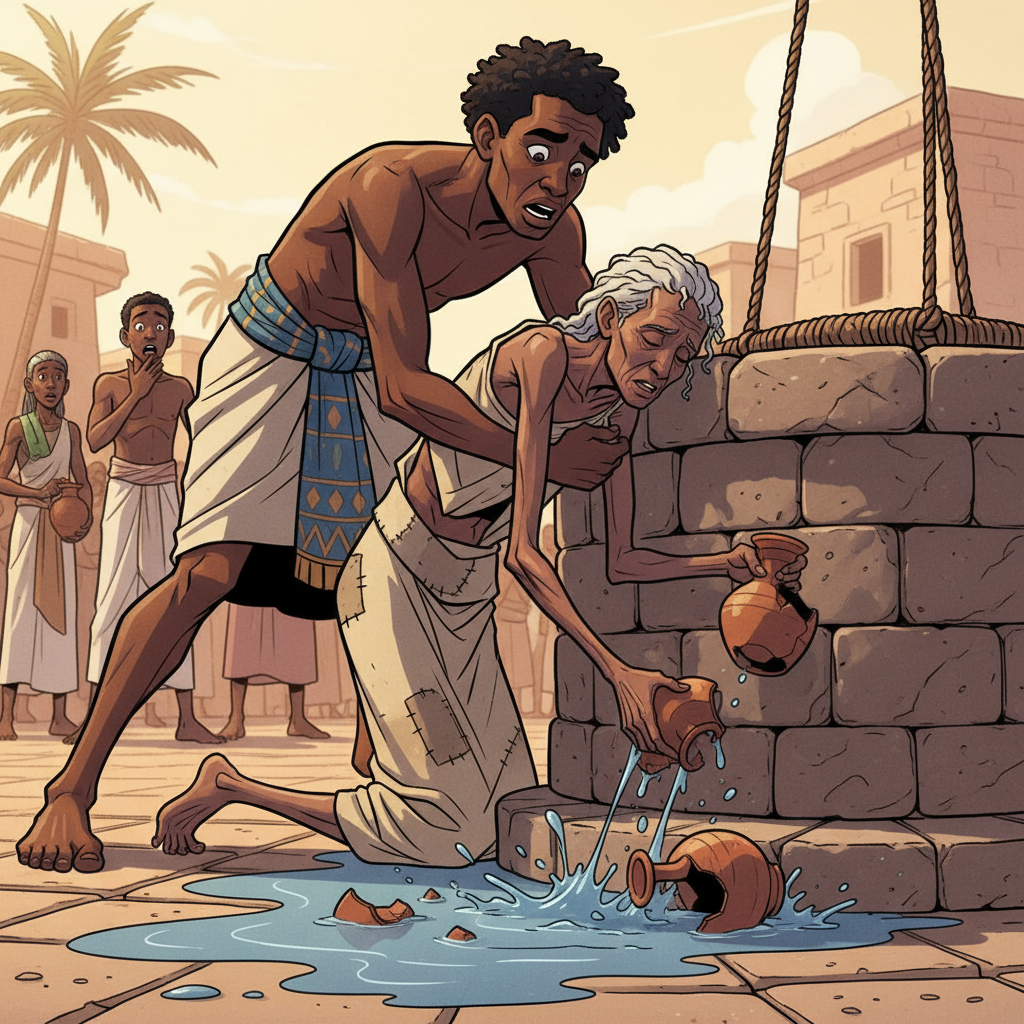
The next morning, old Meret collapsed at the well. She had been working double shifts in the fields to cover the extra water costs, and her body simply gave out. She fell sideways with her clay jar still in her hands, and the jar shattered on the stone, spilling water across the ground like tears. Tau caught her before her head struck the rim. She weighed almost nothing — just bones and sinew wrapped in faded linen. Her pulse was thin and fast under his fingers.
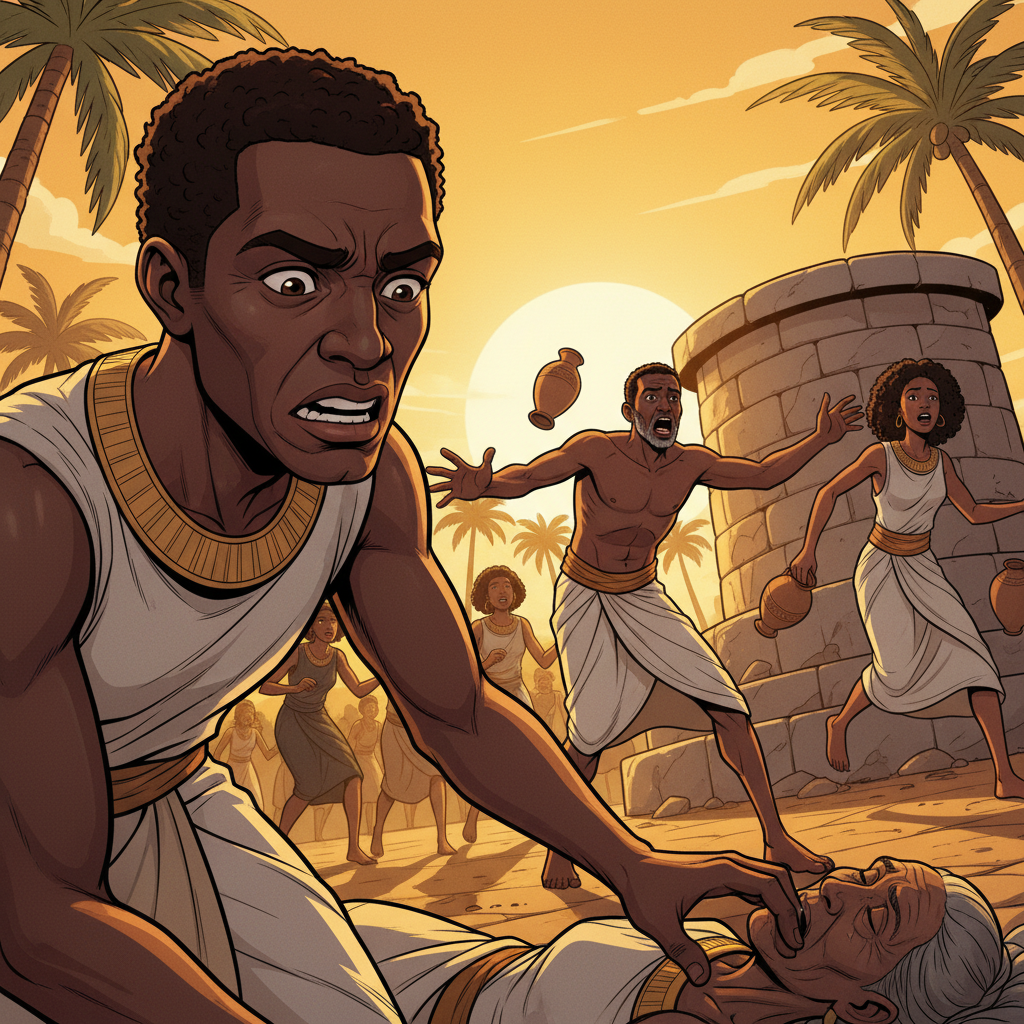
As Pentu shouted for help and other women came running, Tau made a decision. The feeling in his stomach crystallized into something hard and clear. He loved his uncle. He owed his uncle everything. But Meret had collapsed because she was overworked, and she was overworked because she was overcharged, and she was overcharged because the man Tau loved most in the world was stealing from the people least able to fight back. Love and truth were pulling in opposite directions, and Tau had to choose.
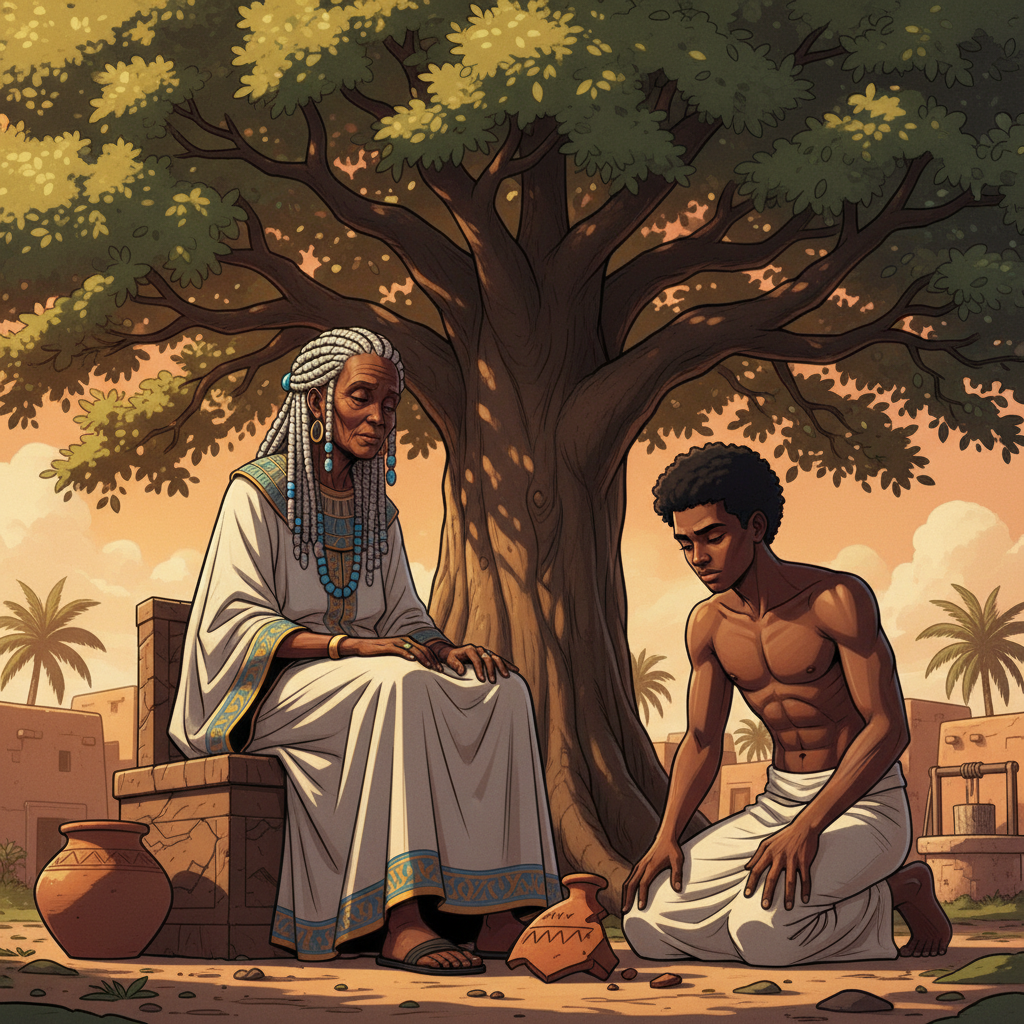
He went to Elder Nefertiti — the oldest woman in the village, the one who settled disputes that even the men could not resolve. She sat in the shade of a great sycamore tree, her deep brown face calm and watchful, her white hair braided with blue beads. Tau placed his pottery shard on the ground between them — the one with the scratch marks, the careful record of every overcharge. "I have something to tell you about the well," he said. His voice shook. His hands did not.
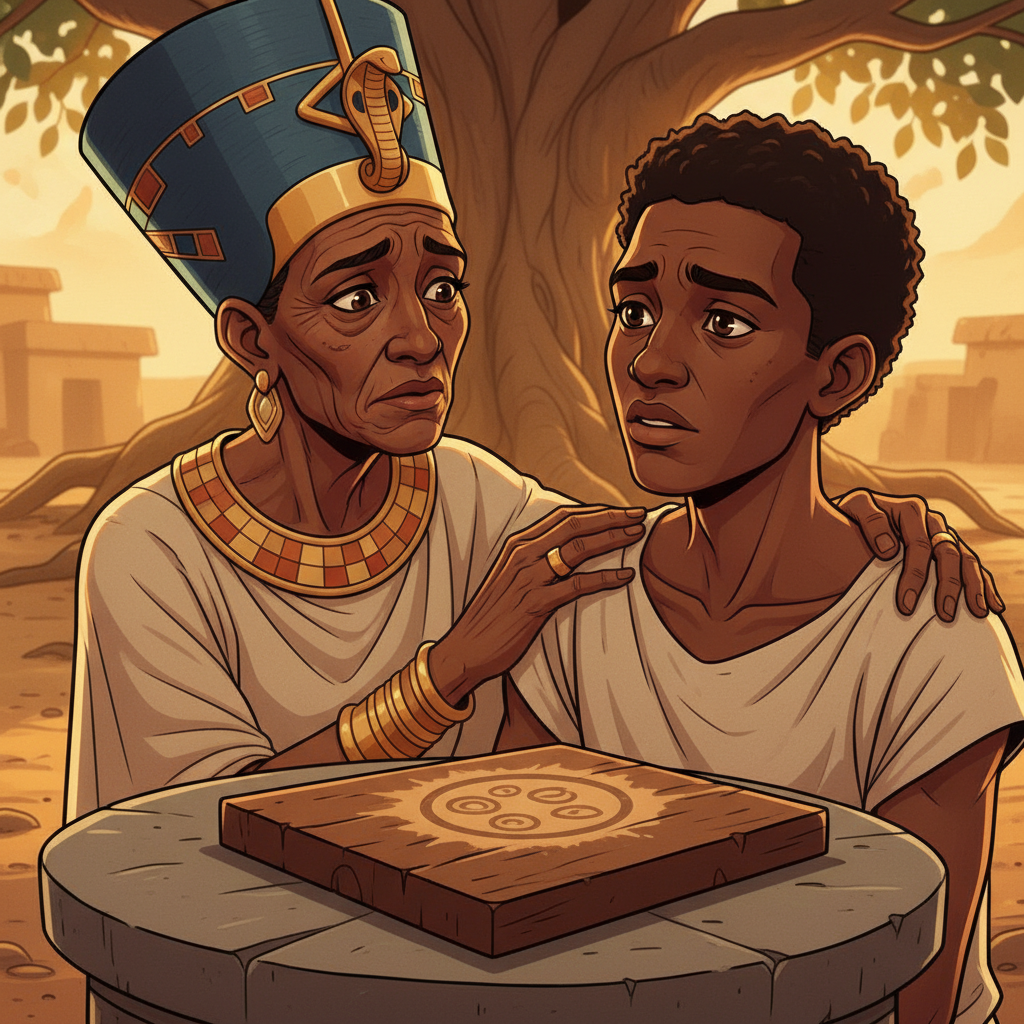
Elder Nefertiti studied the marks for a long time. Then she looked at Tau with eyes that held both sorrow and respect. "You know what this means for your uncle." "Yes." "You know what this means for you. You live in his house. You eat his food. If the village council acts, your uncle may lose his position." Tau swallowed. "I know." "Then why did you come to me?" Tau thought of Meret lying on the stones. "Because she fell," he said. "And she fell because of something I could have stopped."
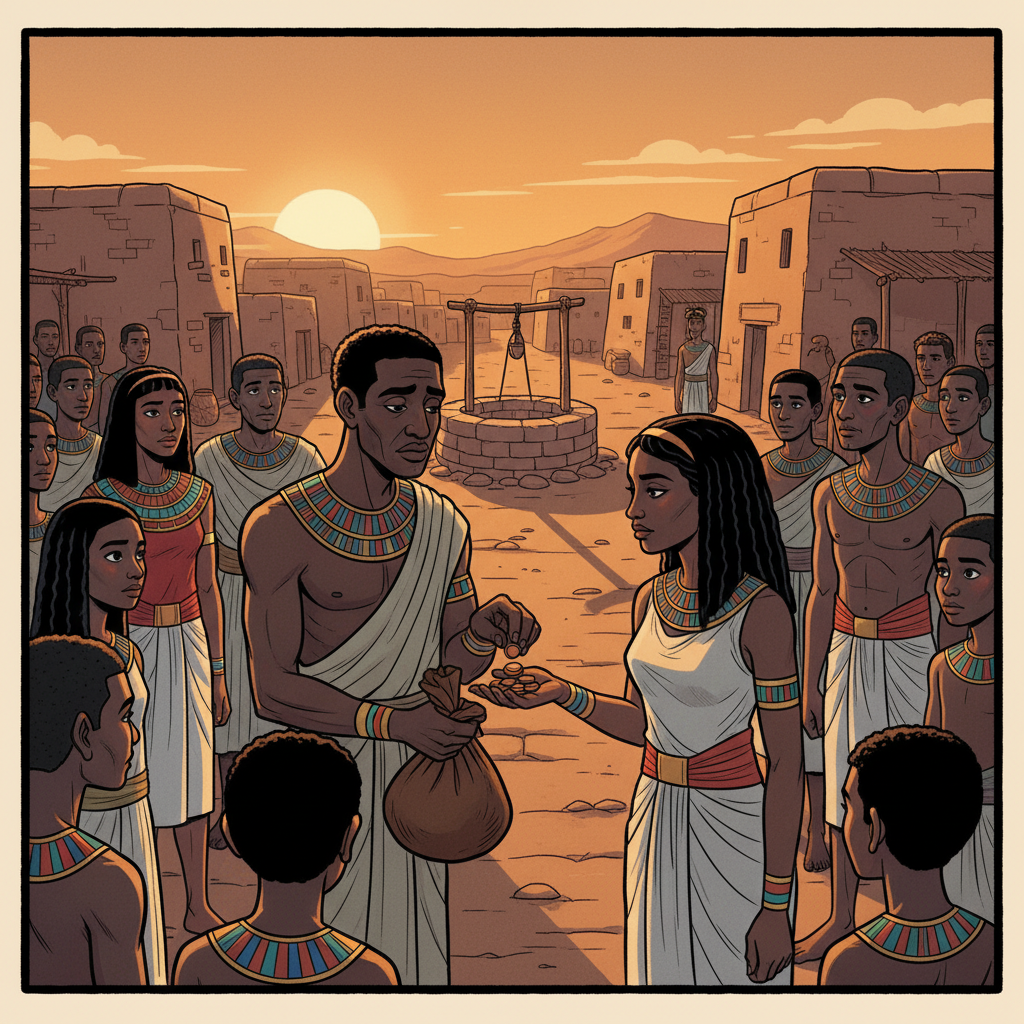
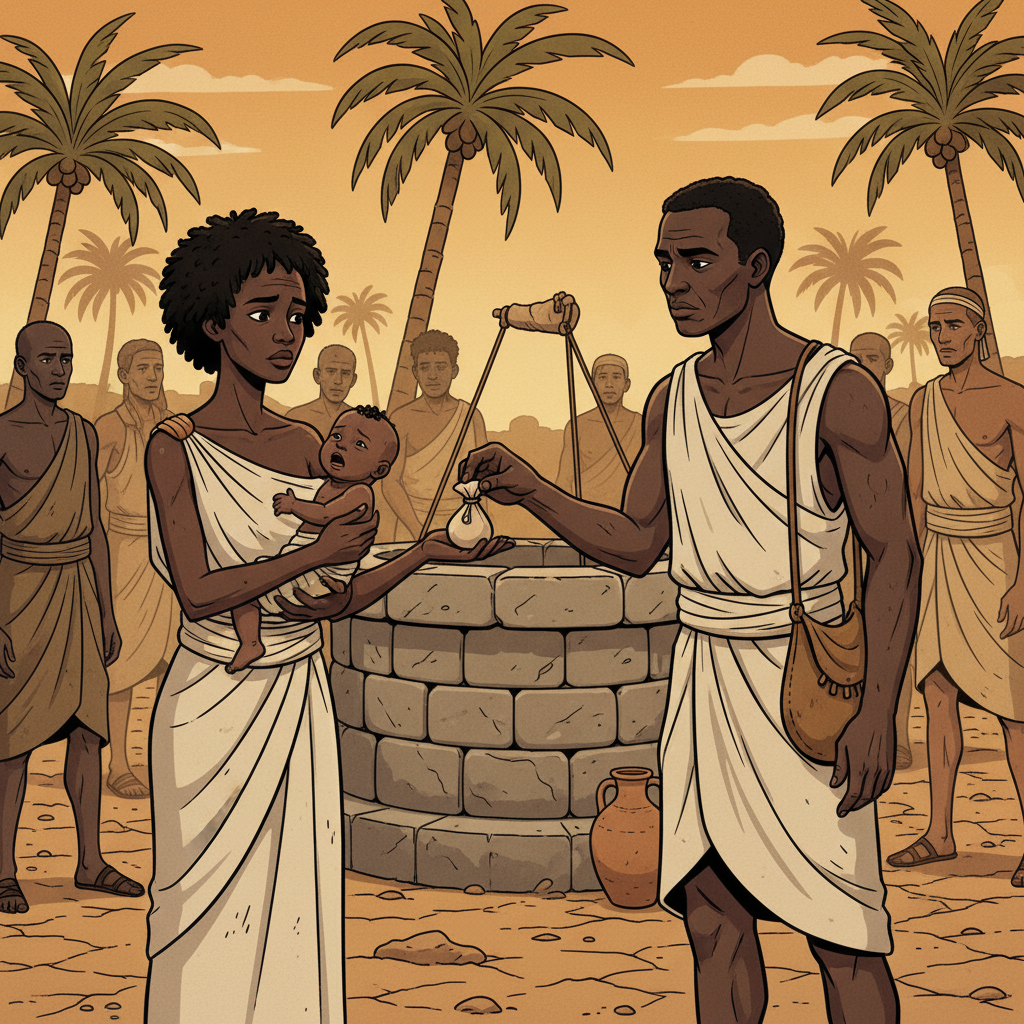
The village council met that evening. Pentu was not removed from the well — the council decided he was too skilled to replace — but he was ordered to return every extra measure he had collected, publicly, to each family he had overcharged. He had to walk to each home with a bag of copper weights and place them in each person's hand while the village watched. It took two hours. When he reached Meret's door, his voice broke. She looked at the copper in her palm and then at Pentu, and she said nothing. Sometimes silence is heavier than any word.
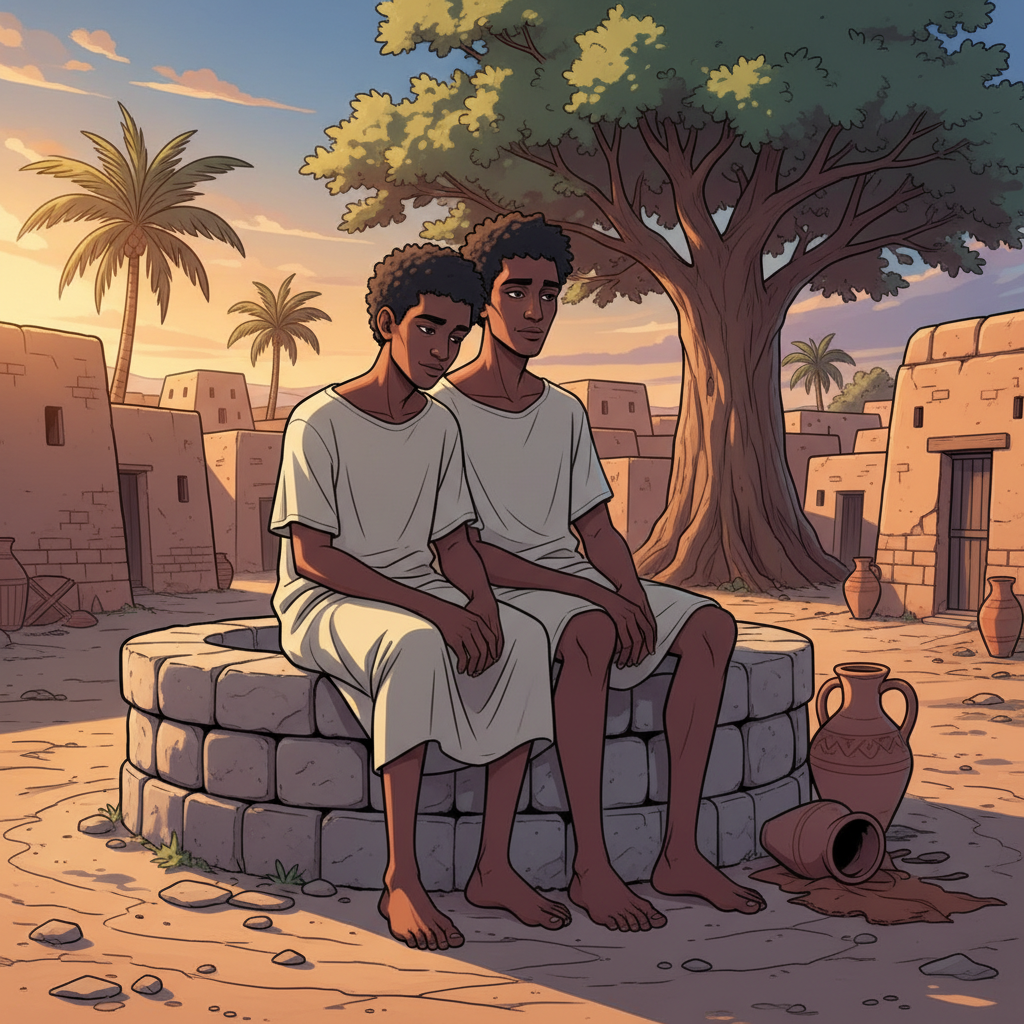
Pentu did not speak to Tau for eleven days. Eleven days of silence in a small mud-brick house, eating meals without words, passing in doorways without meeting eyes. It was the loneliest Tau had ever felt since his parents died. On the twelfth day, Pentu sat down beside Tau at the well and said, very quietly, "You were right." Tau waited. "I told myself it was small. I told myself they would not notice. I told myself that I deserved it because I work hard." He paused. "But the Scale does not weigh what we tell ourselves. It weighs what we do." Tau leaned against his uncle's shoulder. The silence between them was different now — not empty, but full of something being rebuilt.