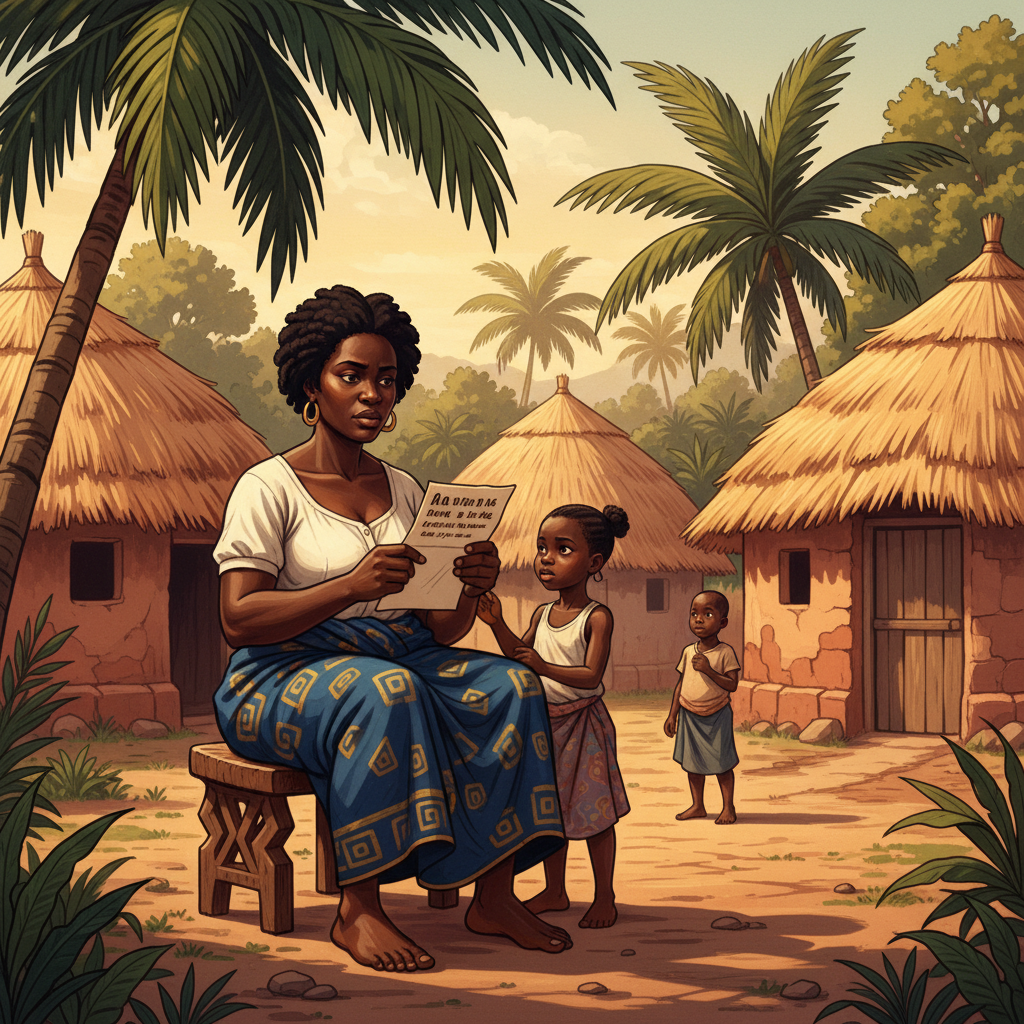
Adaeze had never seen her mother afraid. Nwanyieze was a woman whose hands could split a kola nut with one clean motion and whose voice, when raised in the mikiri — the women's meeting — could silence an entire compound. She was tall, dark-skinned, with the broad features and tightly coiled 4C hair of their Ngwa people, and she moved through the market at Oloko with the certainty of a woman who knew exactly what everything was worth and what everything cost. But on this morning in November 1929, as Nwanyieze sat on the low stool outside their hut reading a message brought by a neighbor's child, Adaeze saw something cross her mother's face that she had never seen there before. Not fear exactly. Something colder. Something that came before fear, the way thunder comes before rain. "What does it say, Mama?" Adaeze asked.
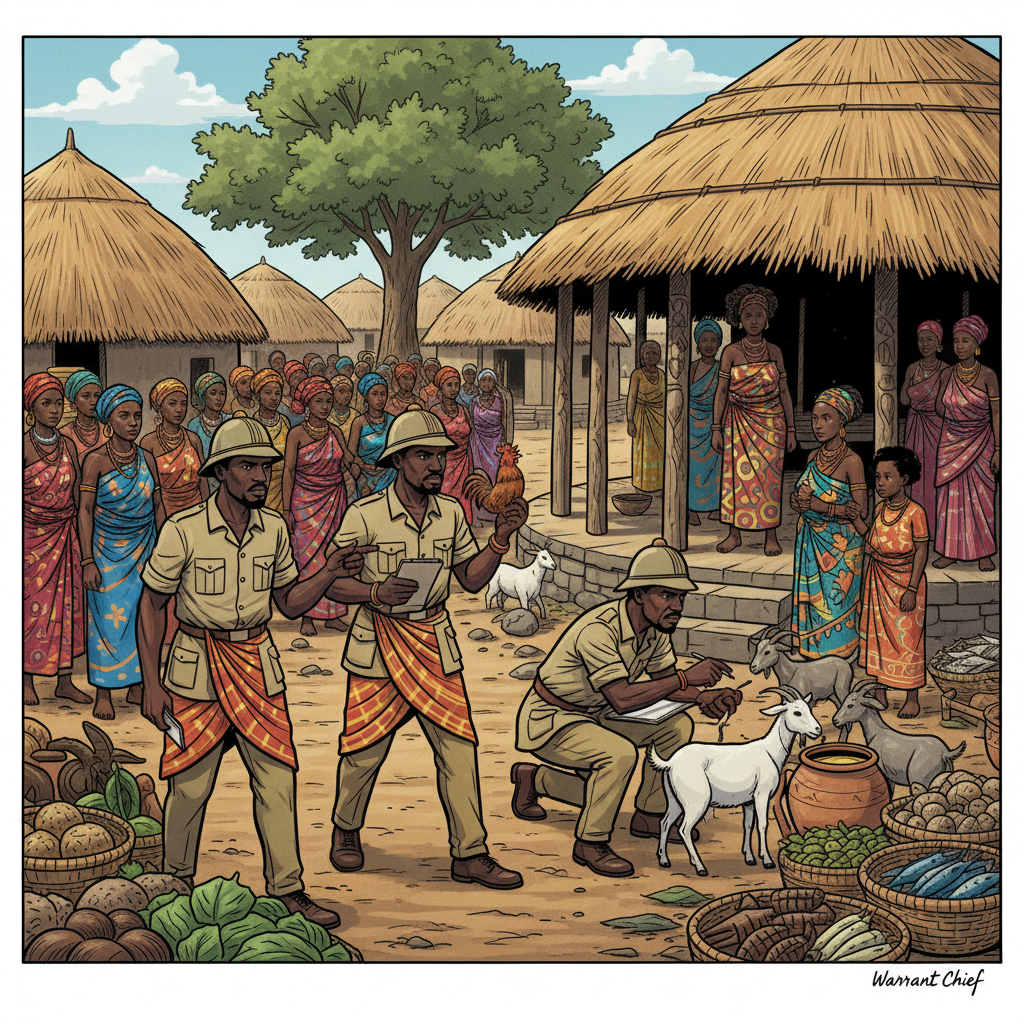
"They are counting our goats," her mother said, her voice flat. "And our sheep. And our chickens. They have sent warrant chiefs to count everything the women own." Adaeze knew about the warrant chiefs. They were men appointed by the British colonial government — not chosen by the community through its own traditions, but selected by foreigners who did not understand or care about the systems that had governed Igbo life for centuries. The warrant chiefs collected taxes from the men, enforced British laws, and served as the local face of an authority that lived far away across an ocean. But women had never been taxed. Women's property — their livestock, their palm oil trade, their market stalls — had always been their own domain, governed by their own councils, their own mikiri meetings. The counting could mean only one thing. "They want to tax us," Adaeze whispered. Her mother folded the message carefully. "Yes. They want to tax what they did not build, what they do not understand, what they have no right to touch."
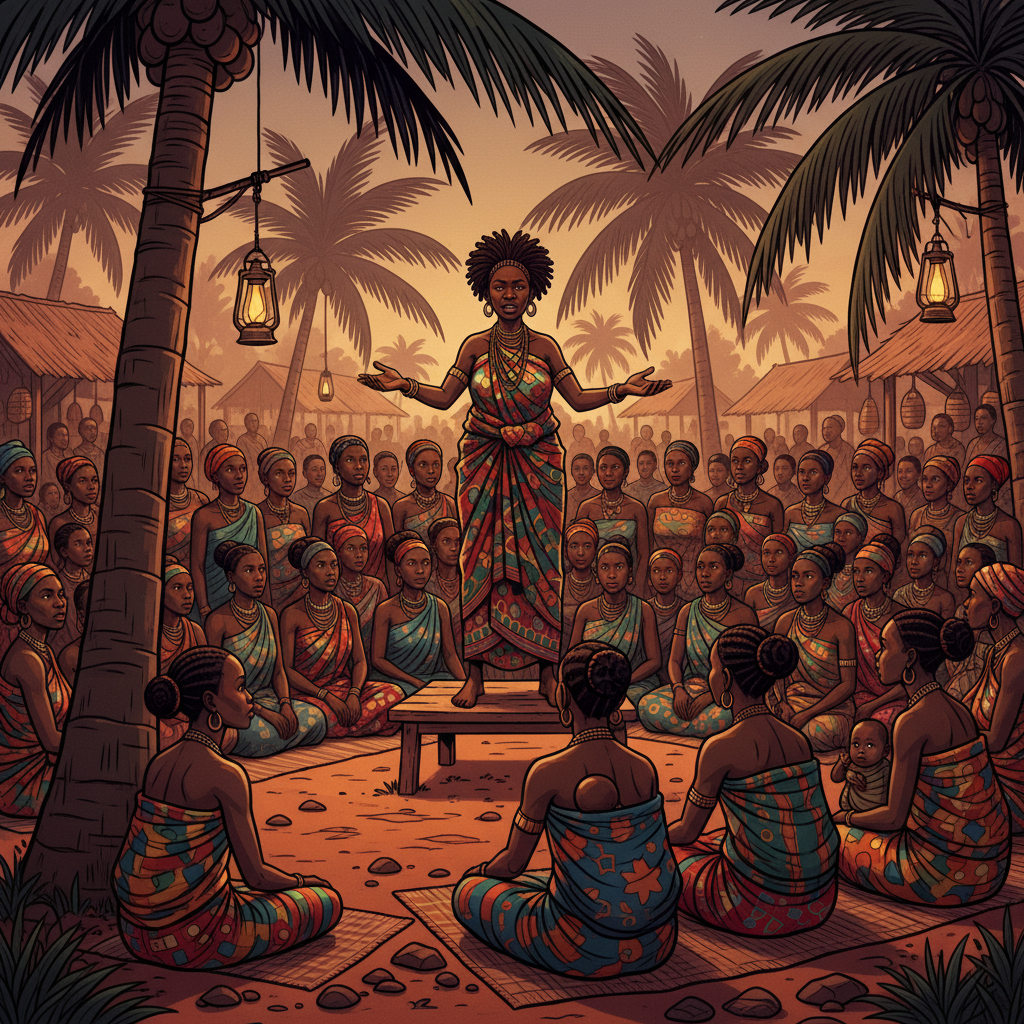
That evening, the mikiri met. Not the ordinary mikiri of a single compound but a gathering that drew women from across the Oloko region. They came on foot, some walking miles through the red-earth paths, carrying children on their backs and determination in their strides. The meeting ground was a wide clearing near the market, ringed by palm trees whose fronds rustled like whispered counsel. Adaeze sat at the edge, watching. She was thirteen, old enough to observe mikiri proceedings but not yet old enough to speak. The women gathered in a rough circle, their dark faces lit by palm oil lamps as dusk settled. The air smelled of smoke and ripe palm fruit. Nwanyieze stood and spoke. Her voice carried without effort — she had learned its power from her own mother, and her mother before that, in a chain of strong-voiced women that stretched back beyond memory. "You have all heard. The warrant chief Mark Emeruwa has sent his men to count our property. He acts on orders from the District Officer, Captain John Cook. They intend to extend the taxation they already impose on our husbands to us — to our trade, our animals, our labor."
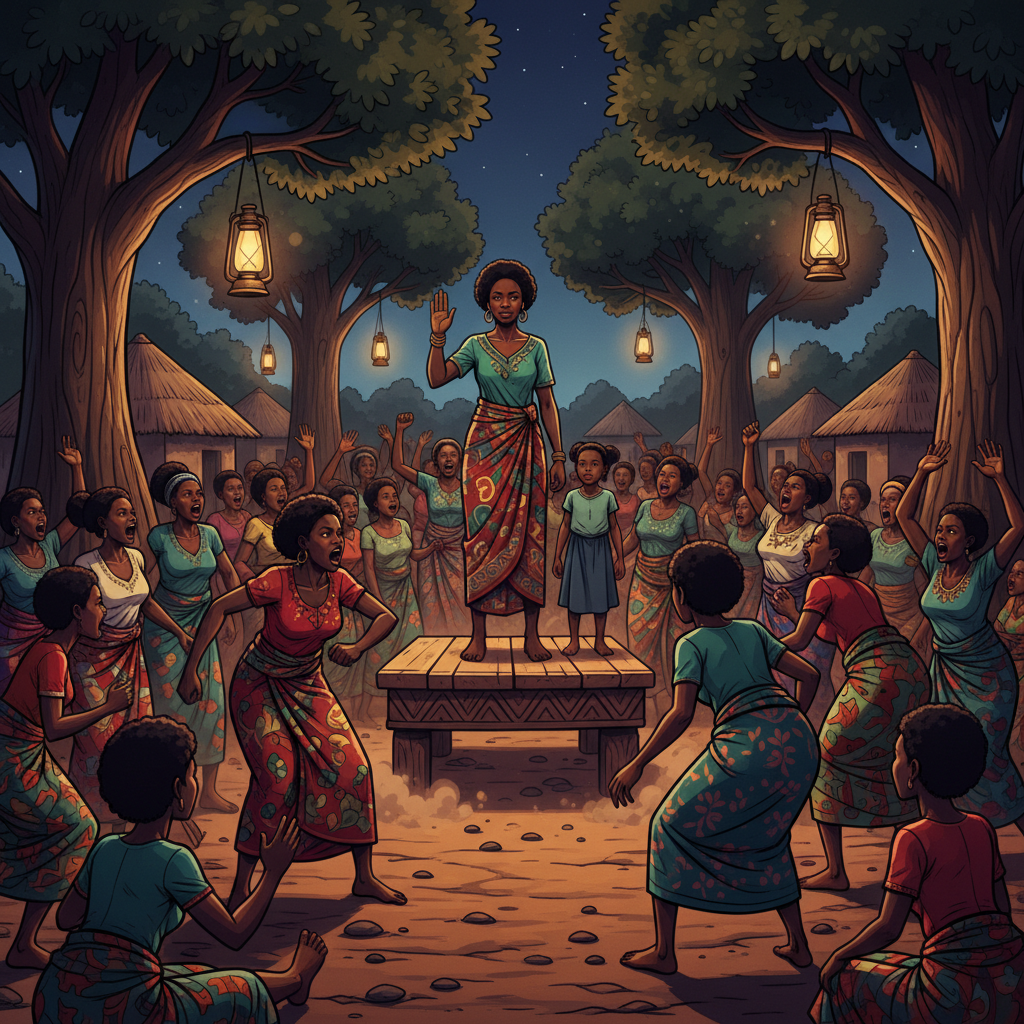
The response was immediate and volcanic. Women leapt to their feet, their voices colliding in outrage. Some waved their arms. Others stamped their feet in the traditional gesture of absolute refusal — a physical declaration that the earth itself rejected what was being proposed. "We will not pay!" a voice shouted. "They tax us for roads we did not ask for, schools that teach our children their language instead of ours, and courts that ignore our own laws!" another woman cried. But Nwanyieze raised her hand, and the clearing quieted. "Anger is easy," she said. "Anger is as common as dust. What we need is action that cannot be ignored. The white men do not fear our anger. They fear our organization. They fear what happens when every woman in every market from here to Calabar stands together and says: This is unjust, and we will not submit." Adaeze felt something shift in the air — the temperature of the gathering changing from hot fury to something more focused, more dangerous. Purpose.
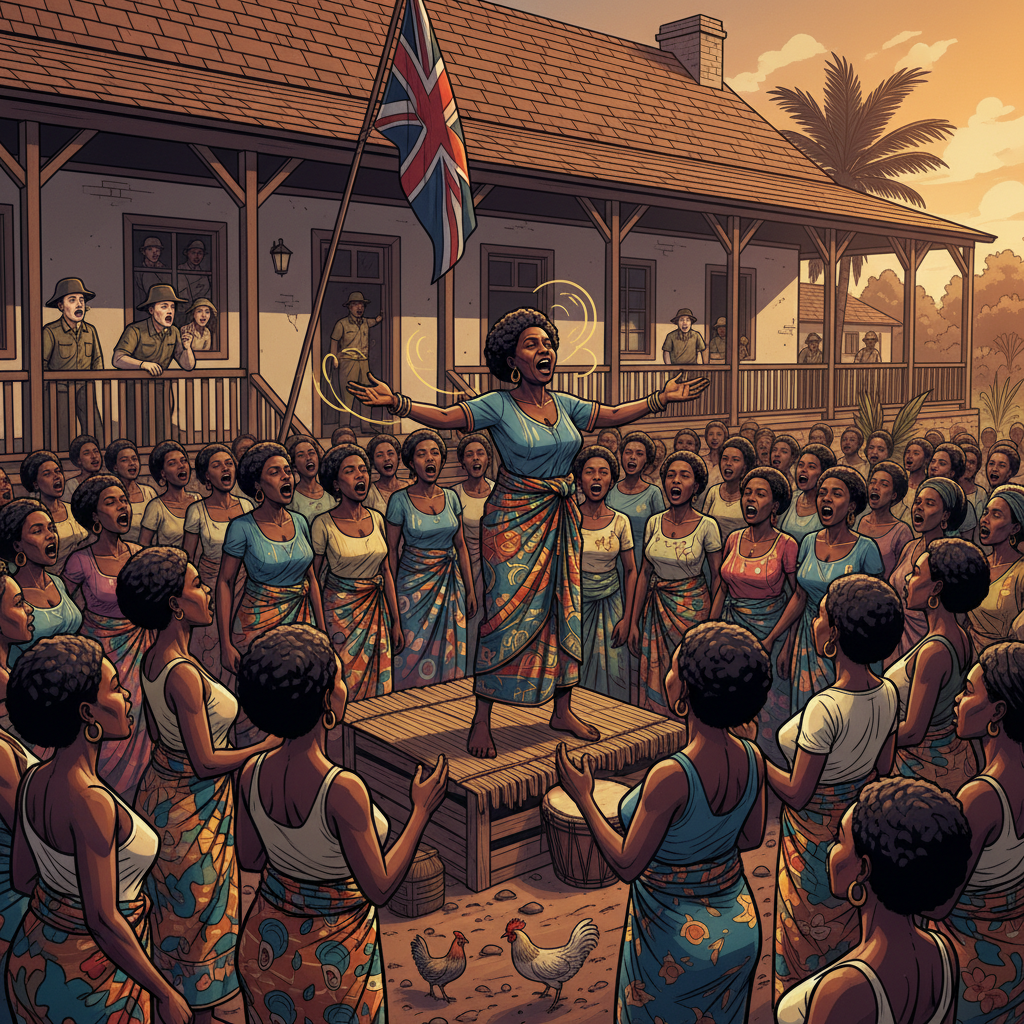
The women's network activated with a speed that astonished even Adaeze, who had grown up watching her mother organize. The mikiri system was not just a local phenomenon — it was a web of connections that linked Igbo women across hundreds of villages. Women who traded in the same markets, who married into each other's communities, who shared the same palm oil groves, all communicated through this network. Within days, the message had traveled across the entire Owerri and Calabar provinces. The strategy was traditional and devastatingly effective. The women would use a practice called "sitting on a man" — though in this case, the target was not a single man but an entire system. "Sitting on a man" meant surrounding the offender's compound, singing songs of shame, refusing to leave, and making normal life impossible until the grievance was addressed. It was a form of protest deeply embedded in Igbo culture, one that carried moral authority because it was only invoked when genuine injustice had occurred. {name}, what the British would encounter was not a riot but a court — a women's court, operating under laws the colonizers did not recognize and could not understand.
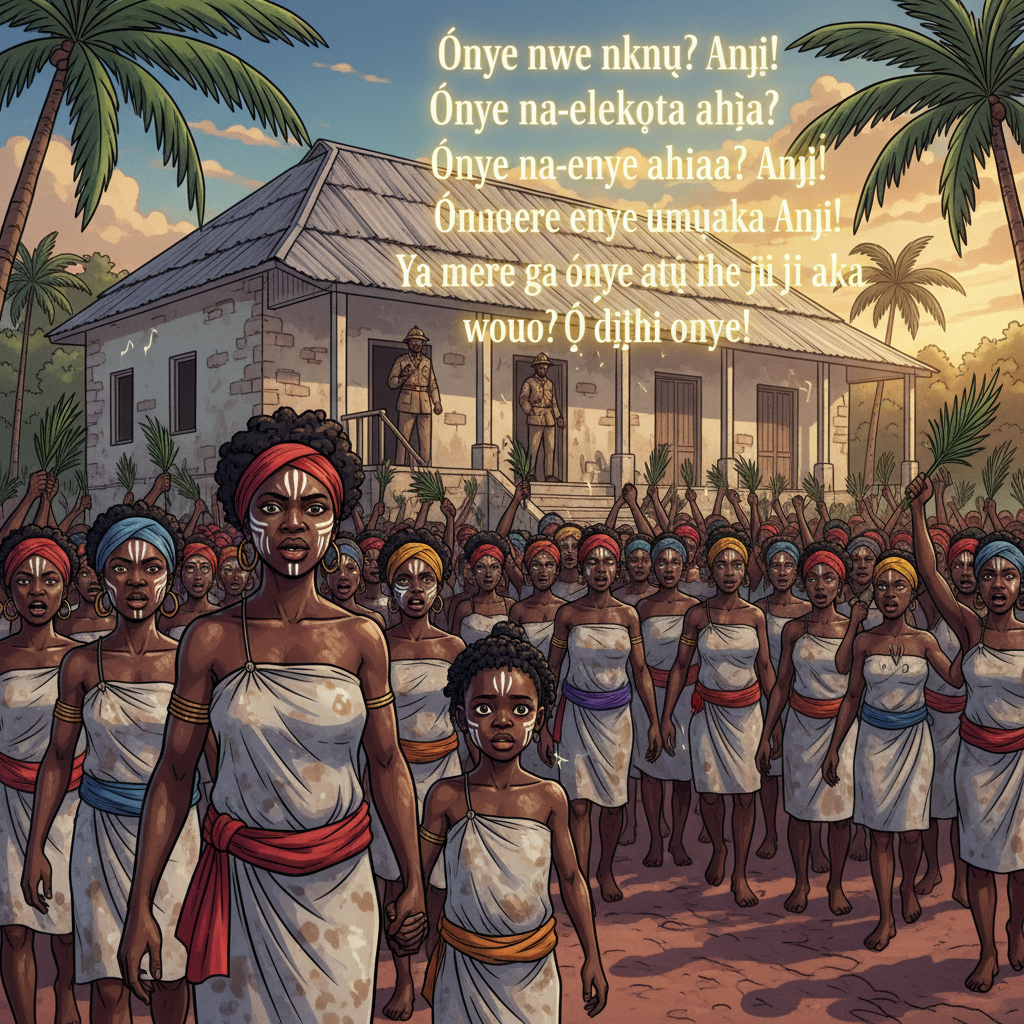
On November 23, 1929, it began. Thousands of women converged on the Native Court at Oloko, where Warrant Chief Mark Emeruwa held his authority. They came singing, their voices rising in the call-and-response patterns of traditional protest songs. They carried pestles and palm fronds — symbols of their domestic and economic power. They wore loincloths smeared with ash, their faces painted with charcoal and uli designs, the traditional markings of women at war. Adaeze walked beside her mother, her heart hammering. The road was a river of women — young and old, mothers and grandmothers, traders and farmers. Their dark skin gleamed with palm oil rubbed in preparation, their 4C hair wrapped in cloths of defiance. The songs they sang named the injustice plainly, in the Igbo tradition where truth was sung before it was spoken. "Who owns the palm tree? We do! Who tends the market? We do! Who feeds the children? We do! Then who can tax what we have built with our own hands? Nobody! Nobody!"
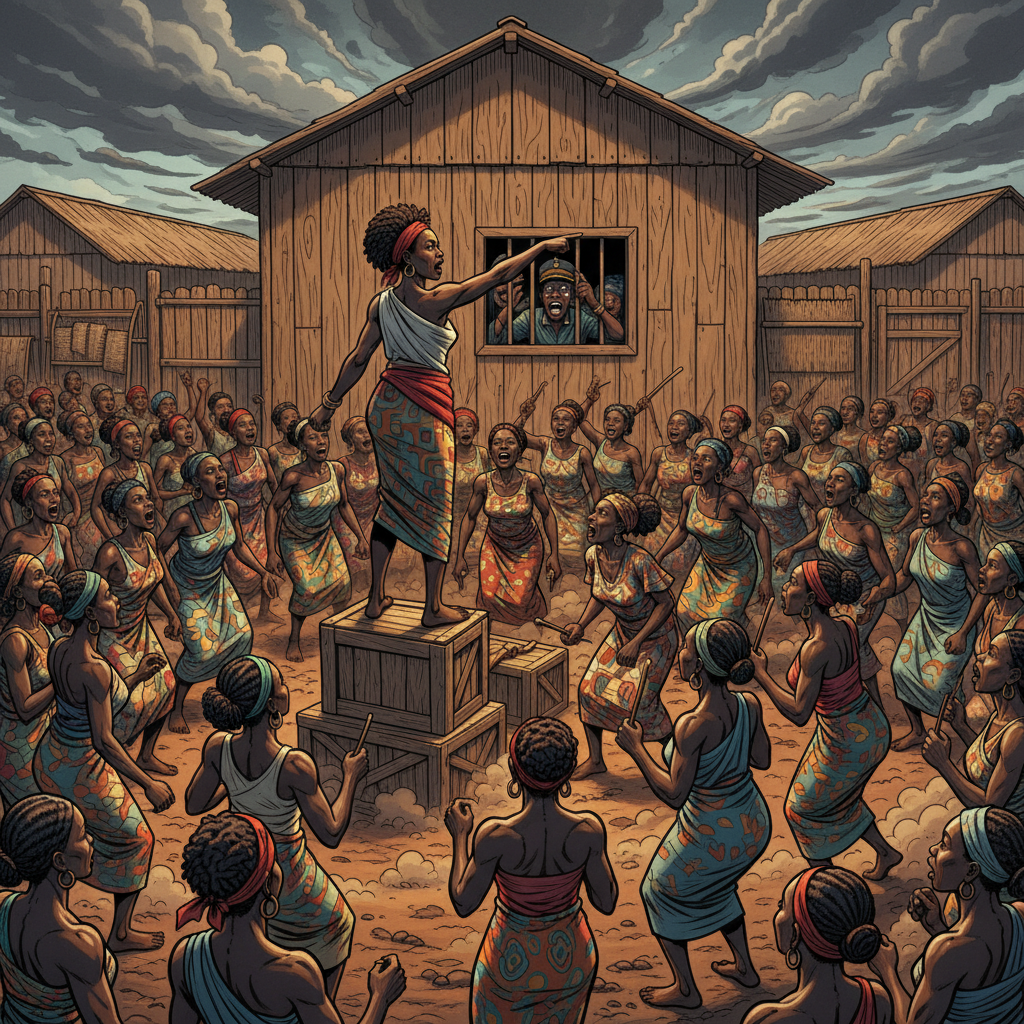
The warrant chief's compound was surrounded within an hour. The women danced around it in circles, their songs growing louder, their feet pounding the earth in rhythms that made the ground itself seem to vibrate with righteous anger. Emeruwa, trapped inside, sent desperate messages to the District Officer. But the women were not interested in negotiation. They demanded the warrant chief's cap of office — the symbol of his colonial authority — and his complete removal from power. "We do not want your tax!" Nwanyieze called out, her voice cutting through the chorus. "We do not want your courts that silence our own justice! We do not want chiefs we did not choose!" Adaeze watched her mother and felt something she would carry for the rest of her life — the sight of a woman who had always been strong becoming something larger than strong. Nwanyieze was not just speaking for herself. She was speaking as the voice of a system of women's governance that the British had ignored, dismissed, and now threatened. She was the mikiri made flesh, the collective will of ten thousand women channeled through one dark, unwavering throat.
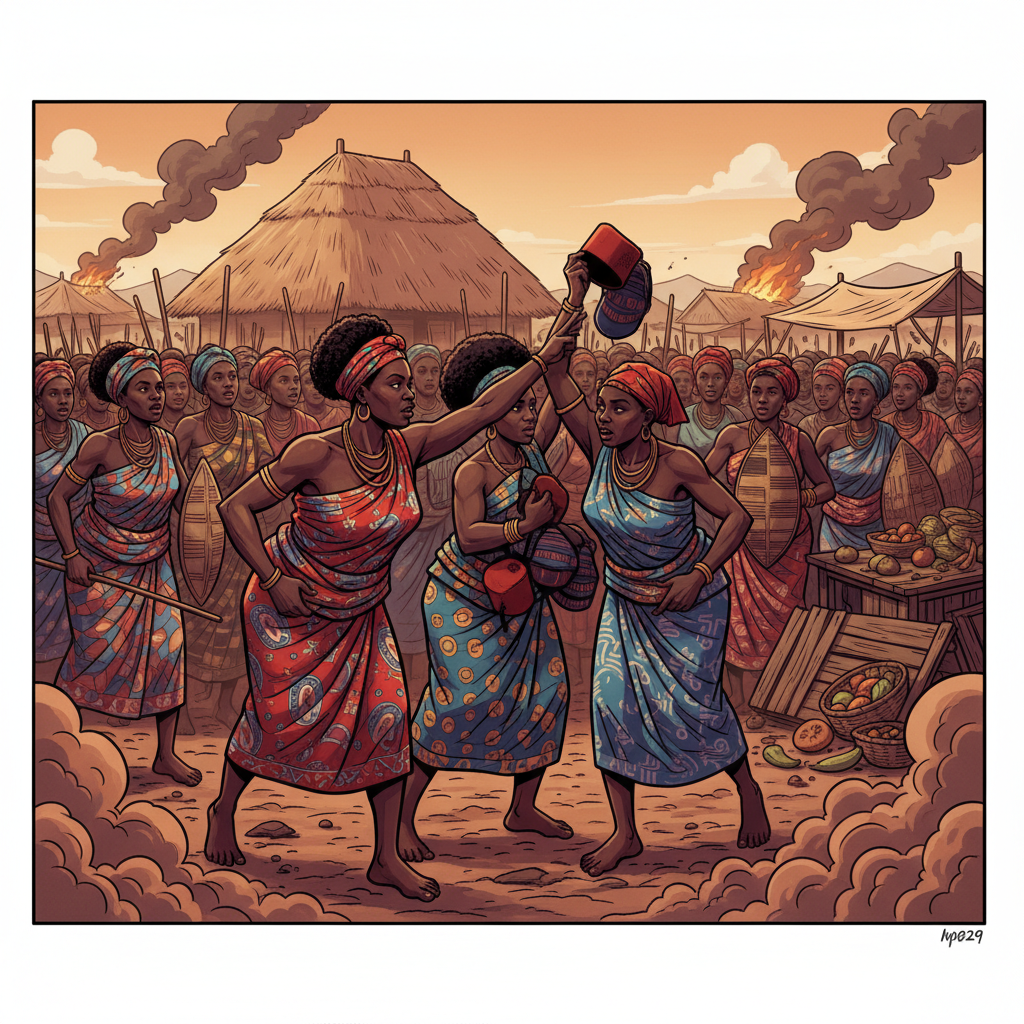
The protest spread like wildfire across a dry savanna. Within days, women in Aba, Umuahia, Owerri, and dozens of smaller communities had risen. Markets were shut down — and in a colonial economy that depended on those markets for food distribution and revenue, this was devastating. Native courts were besieged. Warrant chiefs were stripped of their caps. European trading stores, symbols of the economic system that exploited local labor, were attacked. The British were bewildered. Their intelligence reports described the uprising as spontaneous and leaderless — a "riot" driven by irrational female emotion. They could not see what Adaeze could see: that the organization was not invisible but simply unfamiliar to them. The mikiri network, operating through kinship ties, market relationships, and the ancient traditions of women's collective action, was a governing structure as sophisticated as any the British possessed. They simply could not recognize it because it did not look like theirs. {name}, when the powerful cannot see the systems of the people they govern, they call those systems chaos. The Women's War was not chaos. It was justice, organized from below.
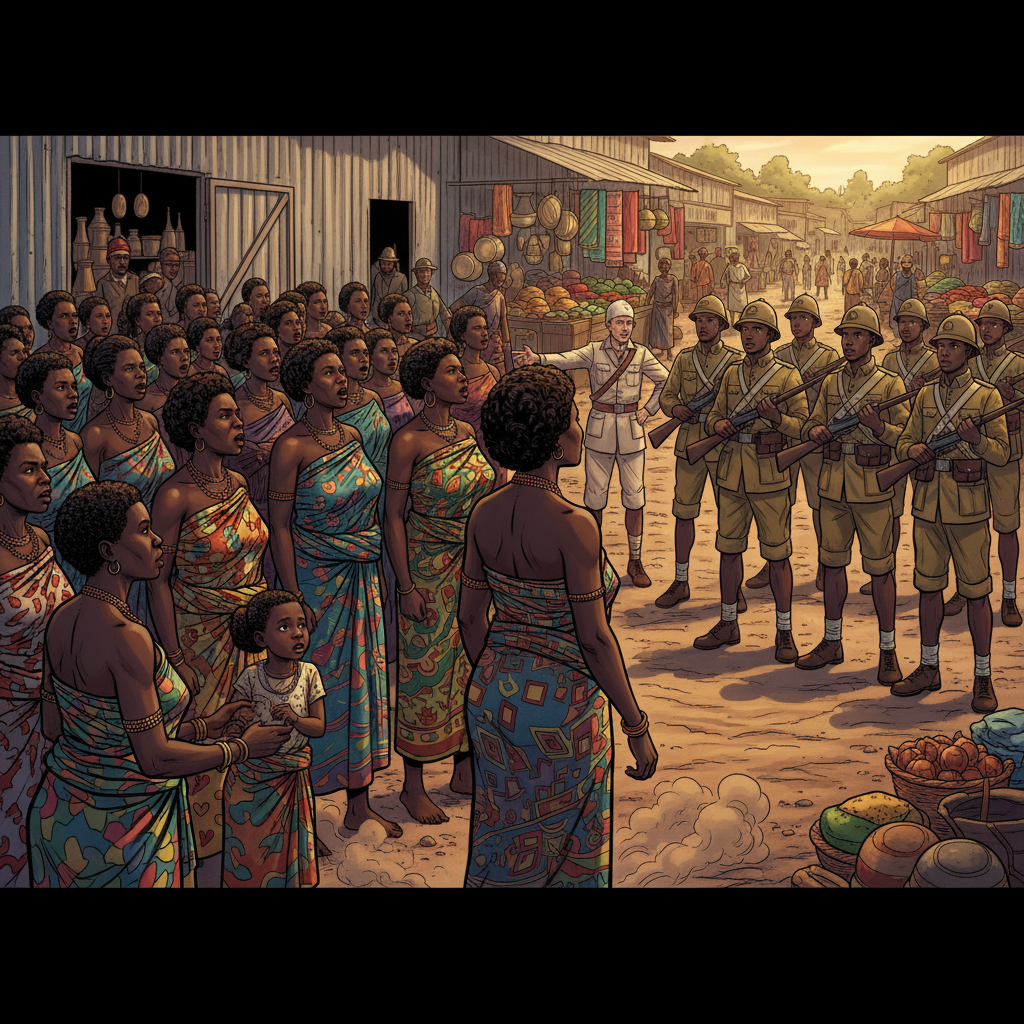
Adaeze was in Aba when the first real violence came. The women had gathered outside the trading store of a European merchant, their songs echoing off the corrugated iron walls. The District Officer had called in police reinforcements, and soldiers from the Fourth Brigade were deployed. They stood in a line across the road — young men, many of them Igbo themselves, in colonial uniforms with rifles held across their chests. The women did not retreat. They had never retreated from injustice before, and the idea that men with guns could silence what was right seemed impossible to them. Their songs continued. Their feet continued to pound the earth. Nwanyieze was near the front. Adaeze, gripped by a fear she could not name, tugged at her mother's wrapper. "Mama, the soldiers —" "I see them," her mother said, not looking back. "And they see us. That is the point, Adaeze. They must see us. They have pretended we are invisible for too long."
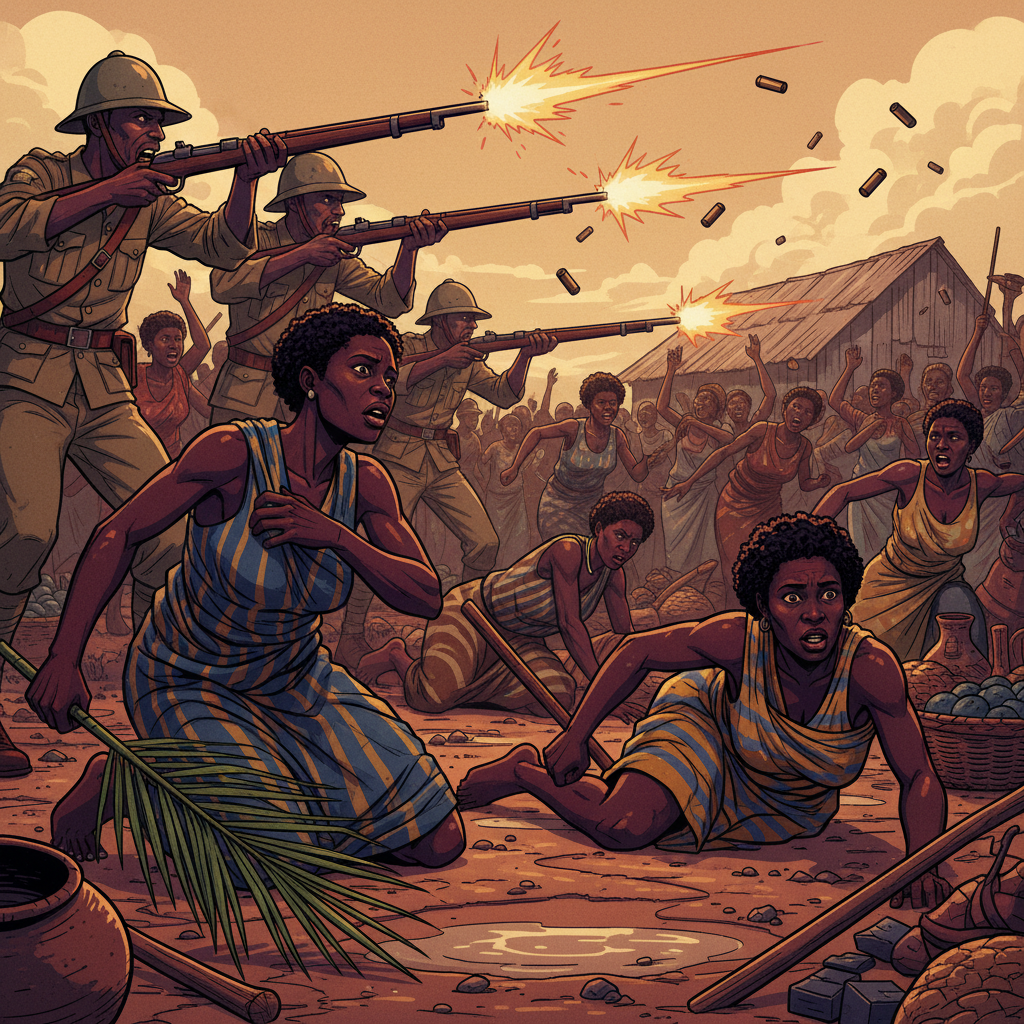
The first shots were fired at Opobo on December 16, 1929. Adaeze was not there. She heard about it from runners who arrived in Aba with faces gray with shock. The soldiers had opened fire on a crowd of unarmed women. The bullets had torn into bodies that carried no weapons — only pestles, palm fronds, and the burning conviction that what they were doing was right. Eighteen women were killed at Opobo. Dozens more at other locations as the colonial authorities, panicked by a protest they could not control or comprehend, resorted to the only language they truly understood: lethal force. Adaeze felt the news like a physical blow — a fist to the center of her chest that drove the air from her lungs. Eighteen women. Mothers, grandmothers, traders, farmers. Women whose hands had held children, stirred pots, tended gardens. Women whose voices had sung the same songs Adaeze had been singing. Dead. Because they asked not to be taxed for what was already theirs.
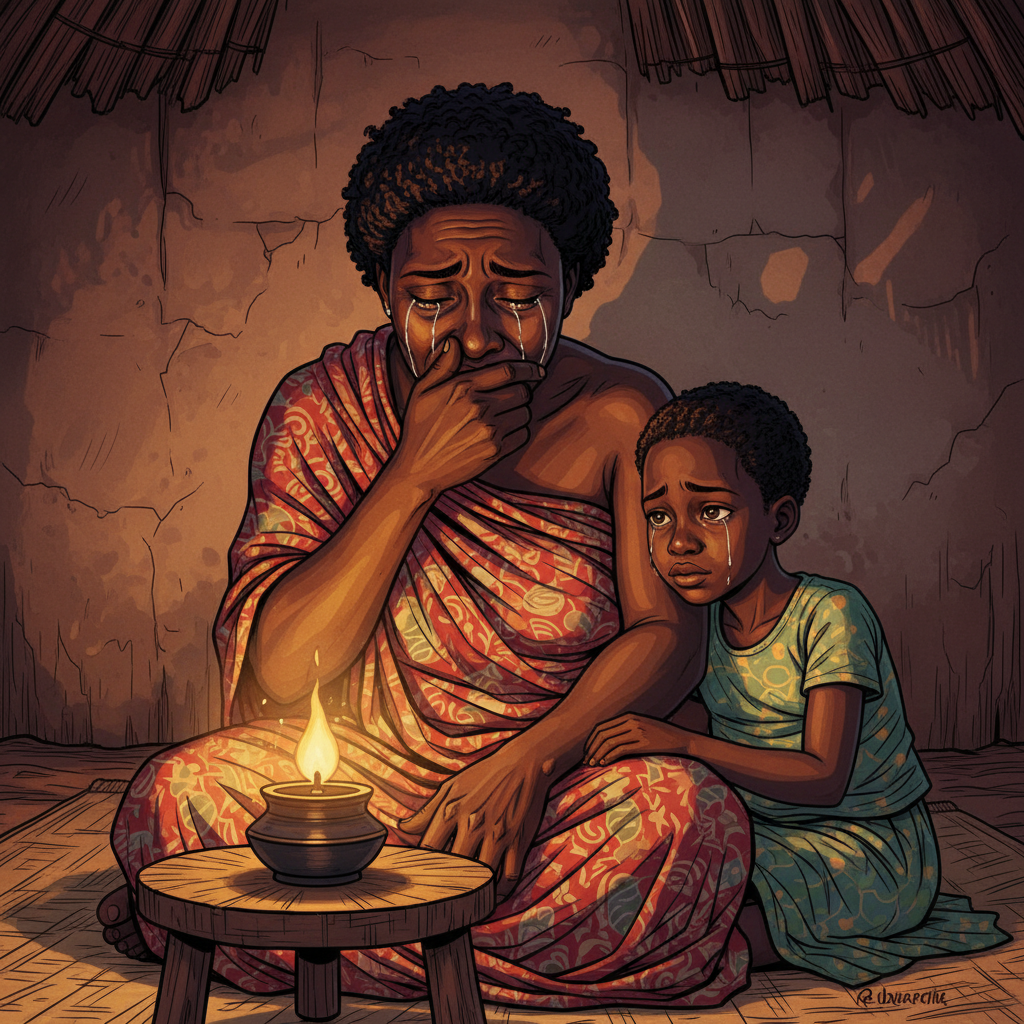
Nwanyieze wept that night. It was the first time Adaeze had ever seen her mother cry. Not the quiet tears of sadness but the deep, wrenching sobs of a woman who had sent others into danger and now carried their deaths. The palm oil lamp cast shadows across her mother's dark face, and Adaeze saw there what war truly cost — not in the abstract language of history books, but in the specific, irreplaceable grief of a woman mourning women she had called sisters. "Did we fail?" Adaeze asked, her own voice cracked. Her mother wiped her face with the back of her broad hand. "Eighteen women are dead, and you ask if we failed?" She was quiet for a long time. The lamp flickered. "We succeeded in being heard. That was not nothing. But the price —" She could not finish. Adaeze sat beside her mother and said nothing more. Some griefs were too large for words. They could only be held, the way the earth held everything — silently, completely, without explanation.
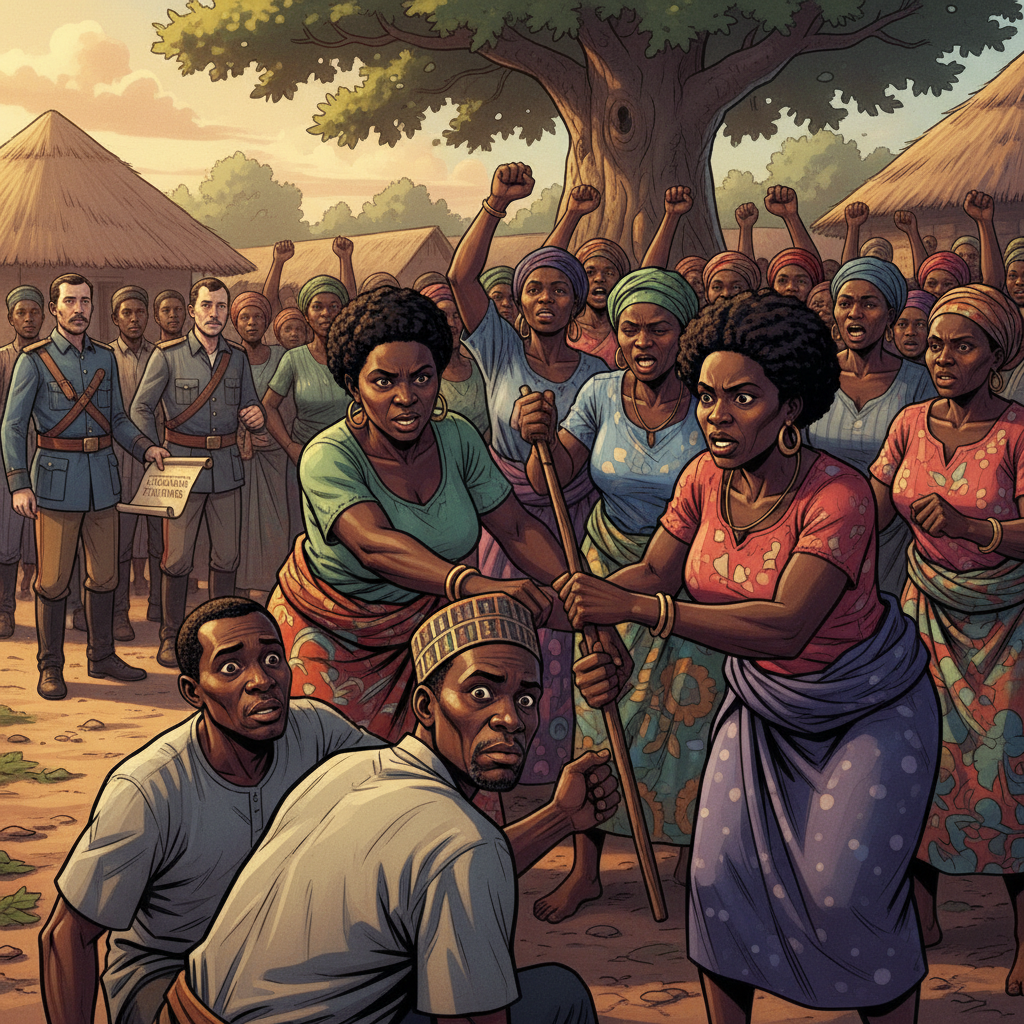
The aftermath revealed both the cost and the consequence of the Women's War. The British, shaken by the violence their own soldiers had committed and by the scale of the uprising they had failed to predict, launched an official commission of inquiry. The Aba Commission heard testimony from hundreds of women — their grievances, their organizational methods, their demands. The commission's findings were significant. The system of warrant chiefs was reformed. The proposed taxation of women was abandoned. Several warrant chiefs were removed from power. The British were forced, however grudgingly, to acknowledge that Igbo women possessed legitimate political authority and organizational capacity that their colonial system had entirely ignored. {name}, the women won. Not completely, not without terrible cost, but they won. The tax was never imposed. The warrant chiefs' power was curtailed. And the British learned — though they would often forget — that the women of eastern Nigeria were not subjects to be silently governed. They were a political force with its own traditions, its own laws, and its own unwavering commitment to justice.
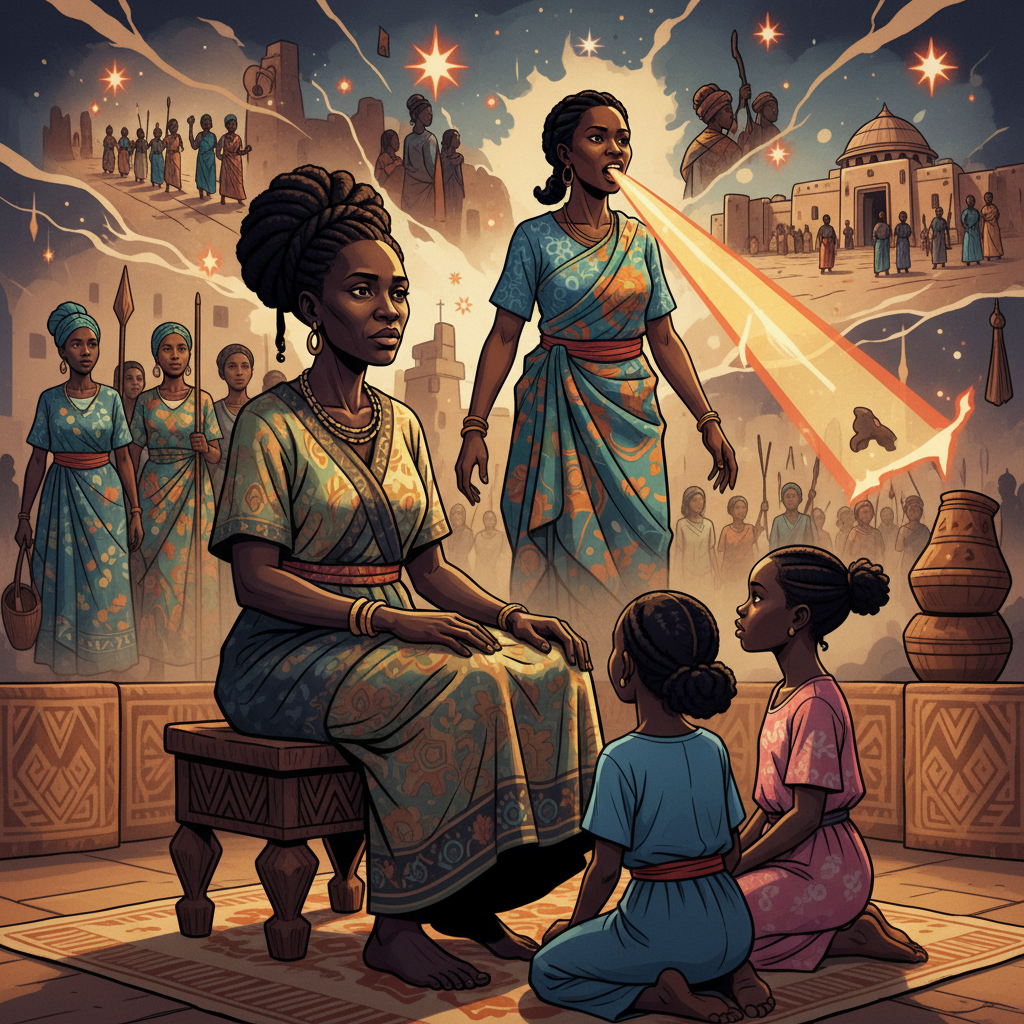
But Adaeze carried the knowledge that victory and grief could live in the same breath. Eighteen women dead was a fact that no policy change could undo. The women of Opobo who fell to British bullets had not lived to see the reforms their sacrifice made possible. Justice had been served — partially, imperfectly — but the serving had cost blood. Years later, as a grown woman, Adaeze would tell her own daughters about November 1929. She would describe the mikiri meetings, the songs, the march on the warrant chief's compound, her mother's voice cutting through the air like a blade of light. And she would tell them about Opobo, about the shots, about the eighteen. "Was it worth it?" her youngest daughter would ask. Adaeze would think for a long time before answering. "Worth is not the right word for what the dead paid. You do not weigh human life against policy changes on a trader's scale. What I can tell you is that it was necessary. The injustice was real. The resistance was right. And the cost —" She paused. "The cost is what we carry, so that you do not have to pay it again."
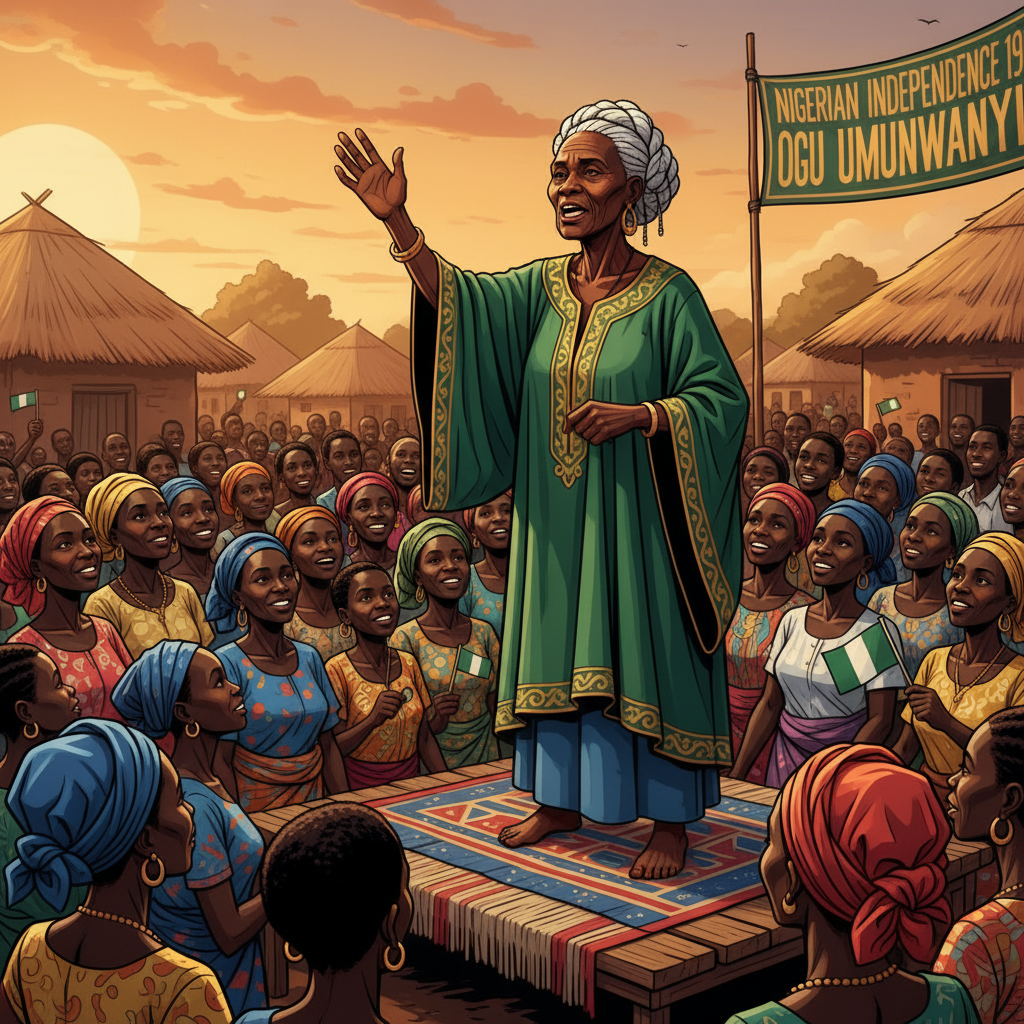
The Women's War of 1929 — called Ogu Umunwanyi in Igbo, the War of the Women — became one of the most significant acts of anti-colonial resistance in African history. It demonstrated that political power did not require formal titles or colonial recognition. It proved that the mikiri, dismissed by British administrators as mere "gossip circles," was in fact a sophisticated system of governance, communication, and collective action. The war also forced a reckoning with the violence that colonial systems were willing to inflict to maintain control. The women had been unarmed. Their protest had been rooted in tradition, organized through legitimate channels of female authority, and directed at specific, concrete injustices. The British response — gunfire — revealed the fundamental nature of colonial power: it rested, ultimately, not on consent or justice, but on the willingness to kill those who said no. Nwanyieze lived to see Nigerian independence in 1960. She was an old woman by then, her hair white, her step slower, but her voice — that voice that had carried across the clearing at Oloko, that had named the injustice and called the women to action — never lost its power. She spoke at independence celebrations in her village, and her words were simple: "We did not wait for freedom to be given. We stood up and took it with our bare hands."
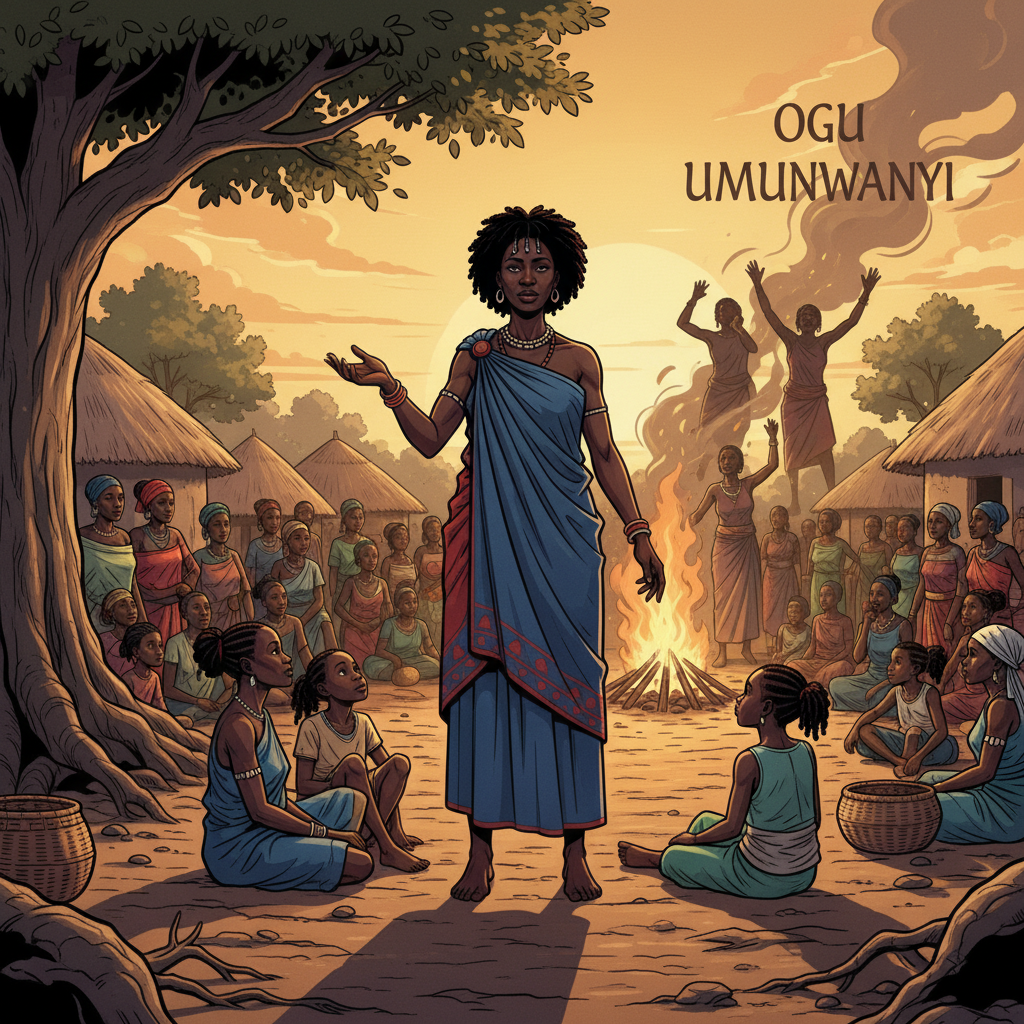
{name}, the Women's War teaches us that justice does not always come from the powerful. Sometimes it rises from the ground, from the people who tend the market and feed the children and know, in their bones, when something is wrong. The women of 1929 did not have armies or parliaments. They had each other, their traditions, and the unshakable conviction that what was being done to them was unjust. Adaeze carried her mother's legacy forward. She taught her daughters to speak with voices that could fill a clearing. She taught them the mikiri ways — how to organize, how to communicate, how to stand together. And she taught them the hardest lesson of all: that justice sometimes requires sacrifice, and that the measure of a people is not whether they avoid suffering but whether they face it for the right reasons. The songs the women sang at Oloko are still remembered. They are sung at gatherings, at commemorations, in moments when Igbo women need to remind themselves and the world of what they are capable of. The songs carry the memory of those who fell, and the fierce, undying conviction that injustice, no matter how powerful, cannot stand forever against the organized will of people who refuse to submit.