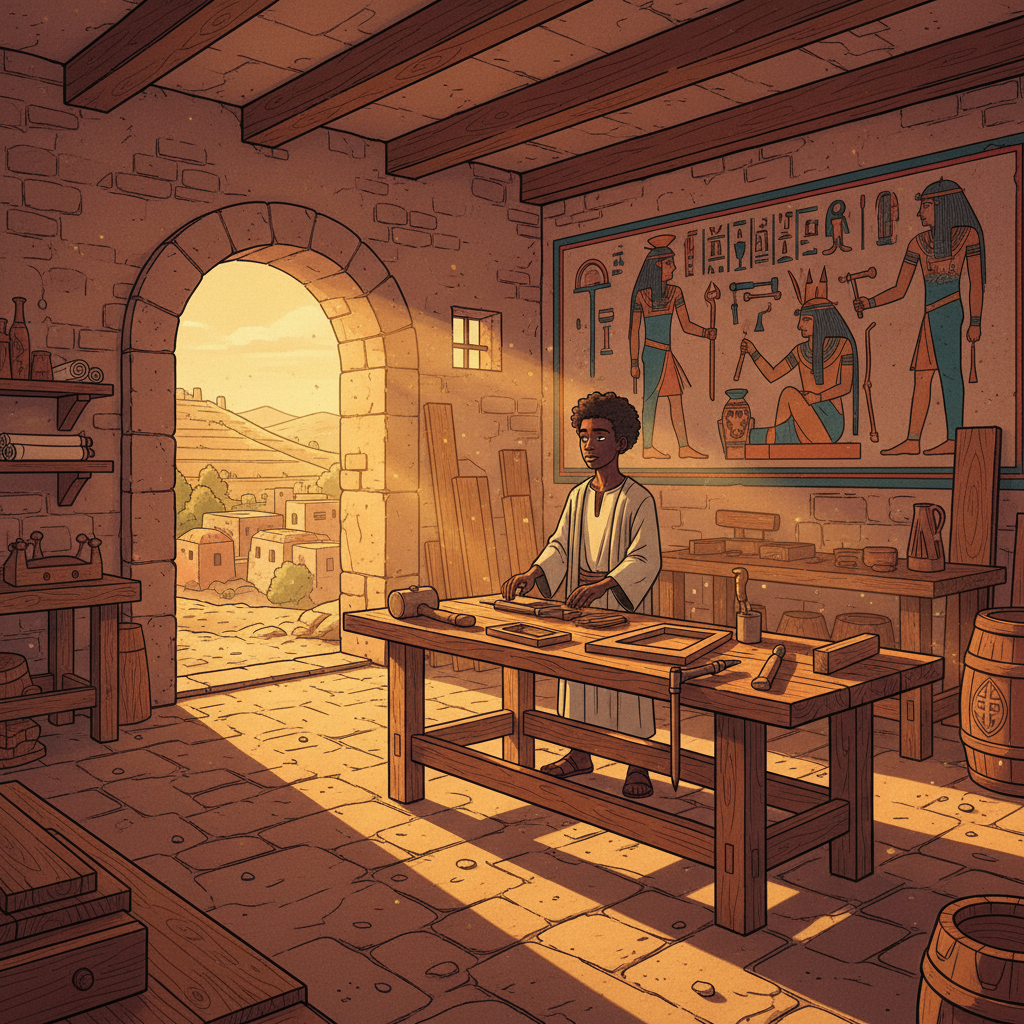
Yeshua was twenty-one when the sun first touched the hills of Nazareth. Three years had passed since Yosef, his father, had joined the ancestors, leaving Yeshua as the eldest carpenter in their humble household. The scent of cedar and olive wood was the very breath of their home, clinging to his dark skin, settling into the lines of his hands. Before dawn broke fully, Yeshua had already opened the shop, the first light finding its way through the doorway. His tools lay ready: the adze for shaping, the mallet for driving, the awl for piercing, the drill-bow for turning, the square for truth. The air carried the sweet, sharp perfume of sawdust, a fragrance that spoke of lineage and labor, of hands that honored the material. This was the place of preparation, the crucible where skill met spirit, echoing the ancient workshops of Kemet where artisans shaped the very fabric of civilization.
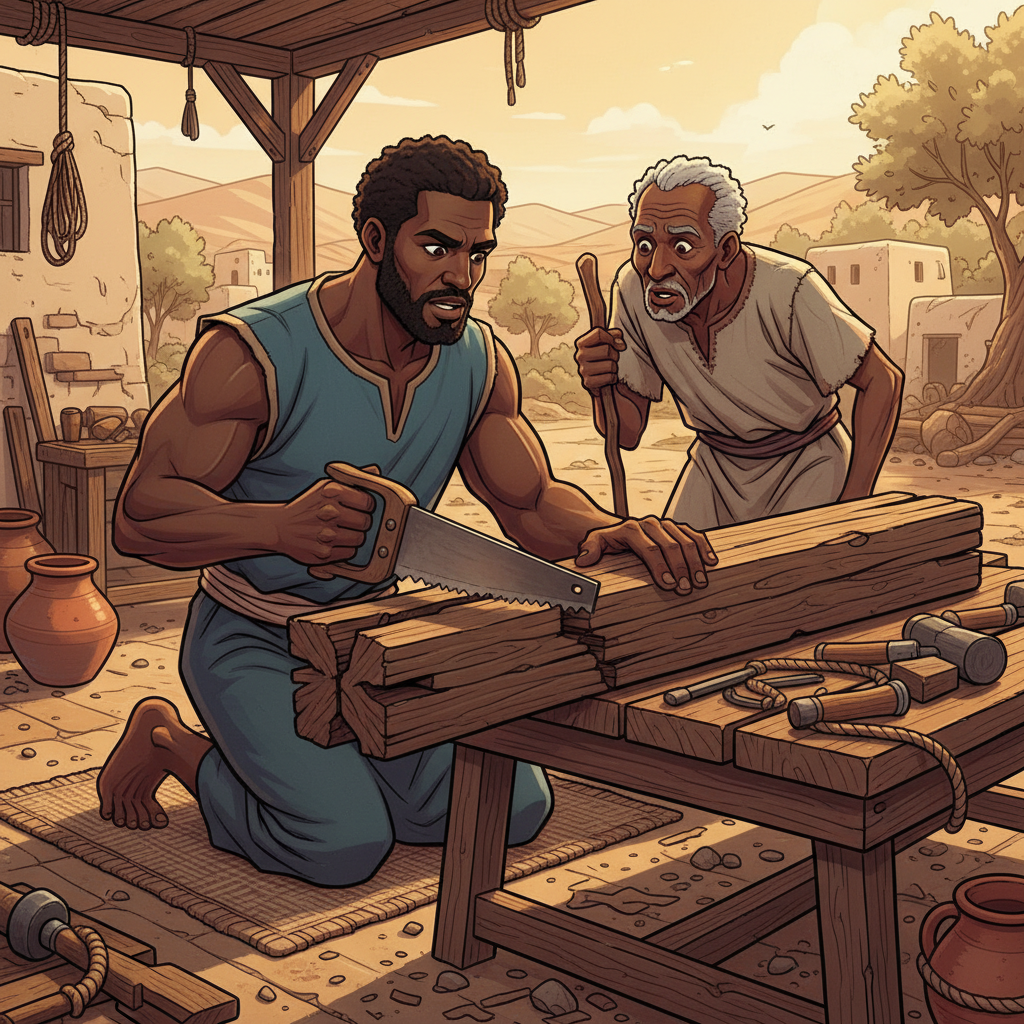
One morning, old Baruch, whose face was a map of the sun and wind, brought a cracked olive-press beam. The thick timber, vital to his family's livelihood, bore a deep fissure that threatened to render it useless. Many would have simply ordered a new beam, seeing only destruction. But Yeshua, his fingers tracing the grain with a reverence taught by generations, read the wood. He saw its history, its struggle, its enduring strength. Instead of discarding, he chose restoration. With precise cuts, guided by an inner vision that saw the unseen integrity, he prepared the pieces for a clean dovetail repair. The work was not merely joining two parts; it was coaxing the wood back to its original promise, a quiet act of healing that honored the life within the timber itself.
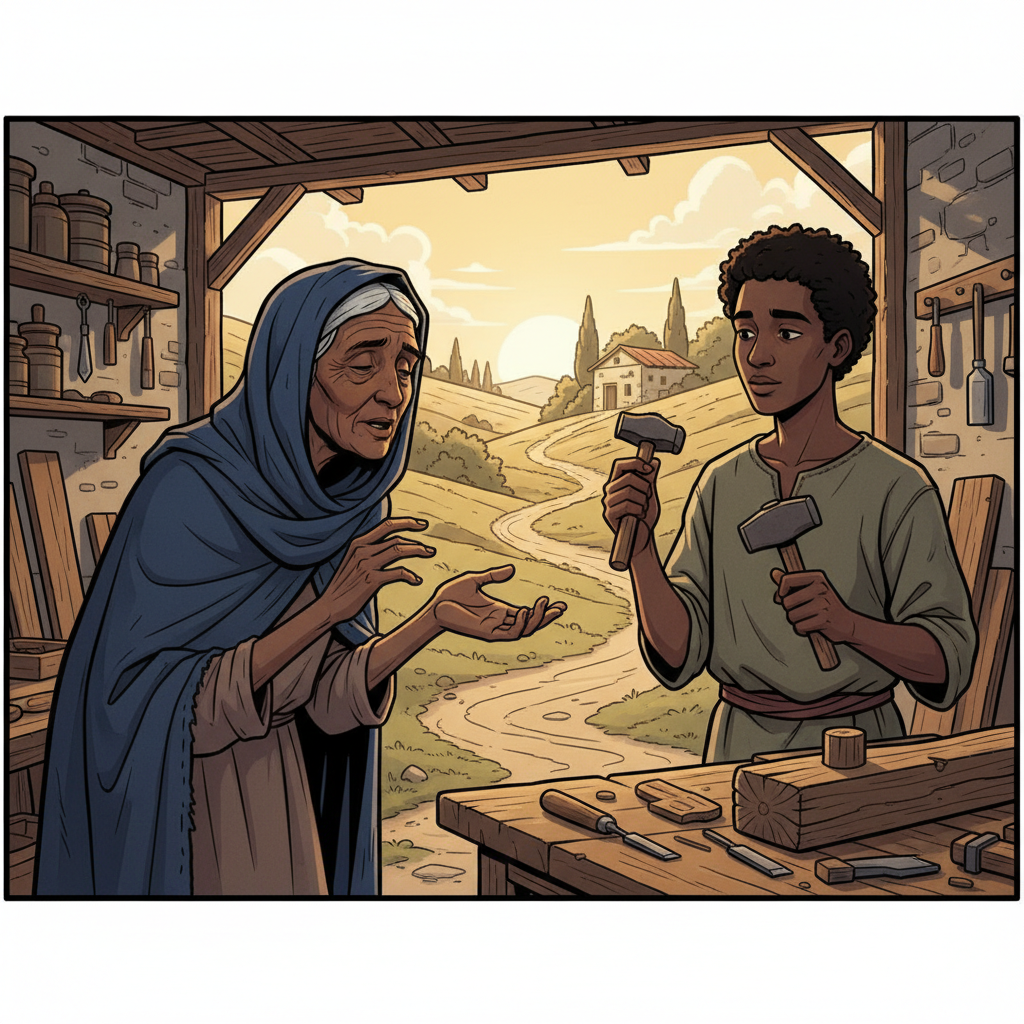
Later that week, a small, stooped woman named Hannah, whose head was wrapped in indigo cloth, approached the shop. Her voice was thin as dry papyrus. "Yeshua," she whispered, "my door hangs loose on its hinges. The latch no longer holds against the wind. I have nothing to pay you." Her eyes, though clouded by age, held a dignity that spoke volumes. Yeshua looked at her, then at the tools in his hands, then at the path that led to her small dwelling. He saw not an empty purse, but a need for security, a desire for peace. Without a word, he took up his tools. The door was old, its wood warped by many seasons, but he carefully re-hung it, replacing the rusted pins with new ones he fashioned himself, tightening the frame until it closed true and firm.

Three days later, Hannah returned, not with money, but with a warm, fragrant loaf of bread, still radiating the heat of her oven. Her hands, gnarled and worn, presented it to him. "It is not payment," she said, "but an offering. For the peace you brought to my home." Yeshua accepted the bread, his dark eyes meeting hers, a silent understanding passing between them. He did not seek recompense for every act of service, for the true currency of the community was not coin but connection, not transaction but transformation. This was the quiet strength, the sacred work that built not just structures, but the very bonds of humanity, a reflection of Maat’s balance in the daily exchanges of life.
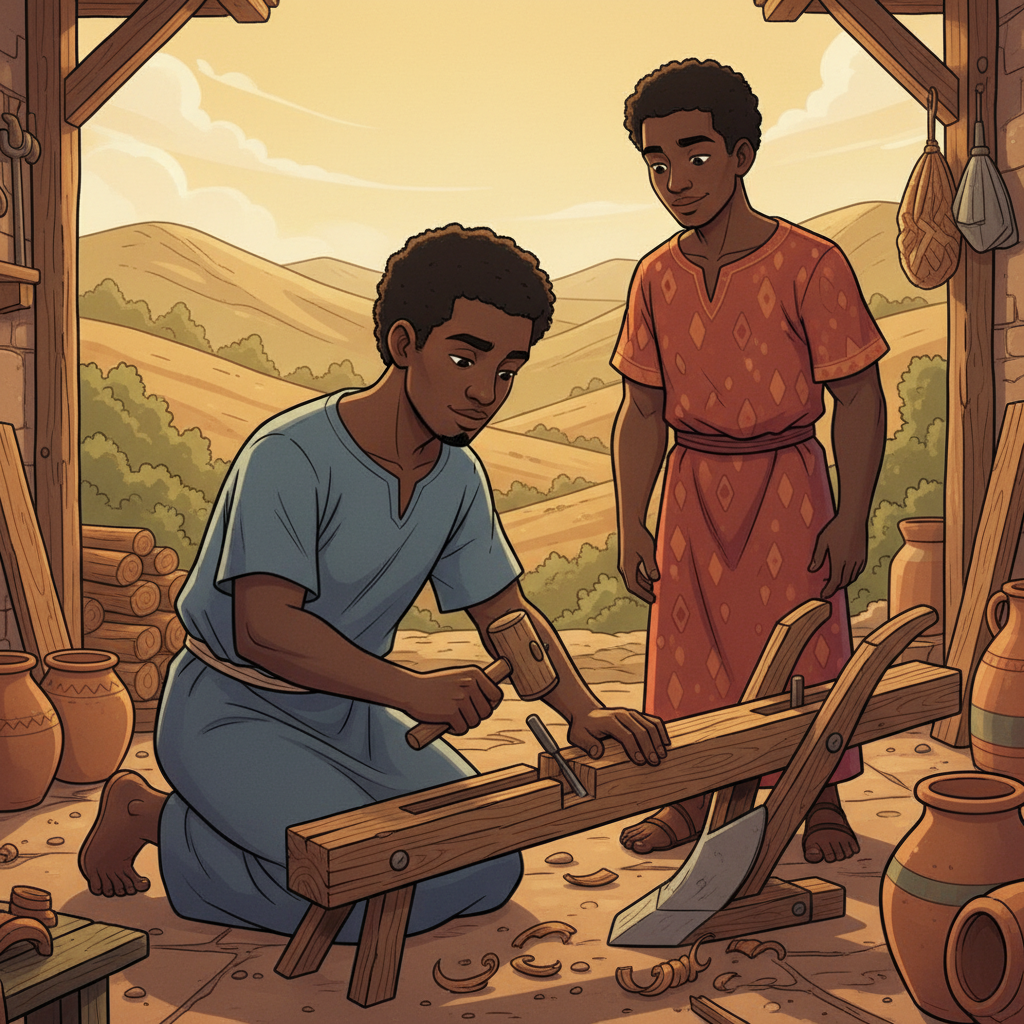
From across the valley, a young man named Yehudah, known for his quick tongue and quicker judgments, heard whispers of the carpenter who worked for bread or simply for need. He came to Nazareth, not to seek repair, but to observe, perhaps to mock this "free-fixer." He watched Yeshua patiently set a mortise-and-tenon joint for a farmer’s plow, the careful chiseling, the dry fit, the final tap that locked the pieces together with immovable strength. Yehudah saw the steady hands, the concentration that filled the space like a visible force. He stayed, fascinated by the meticulousness, the reverence Yeshua showed each piece of wood. The mockery faded, replaced by a quiet awe at the visible patience, the deep, unhurried rhythm of the sacred work.
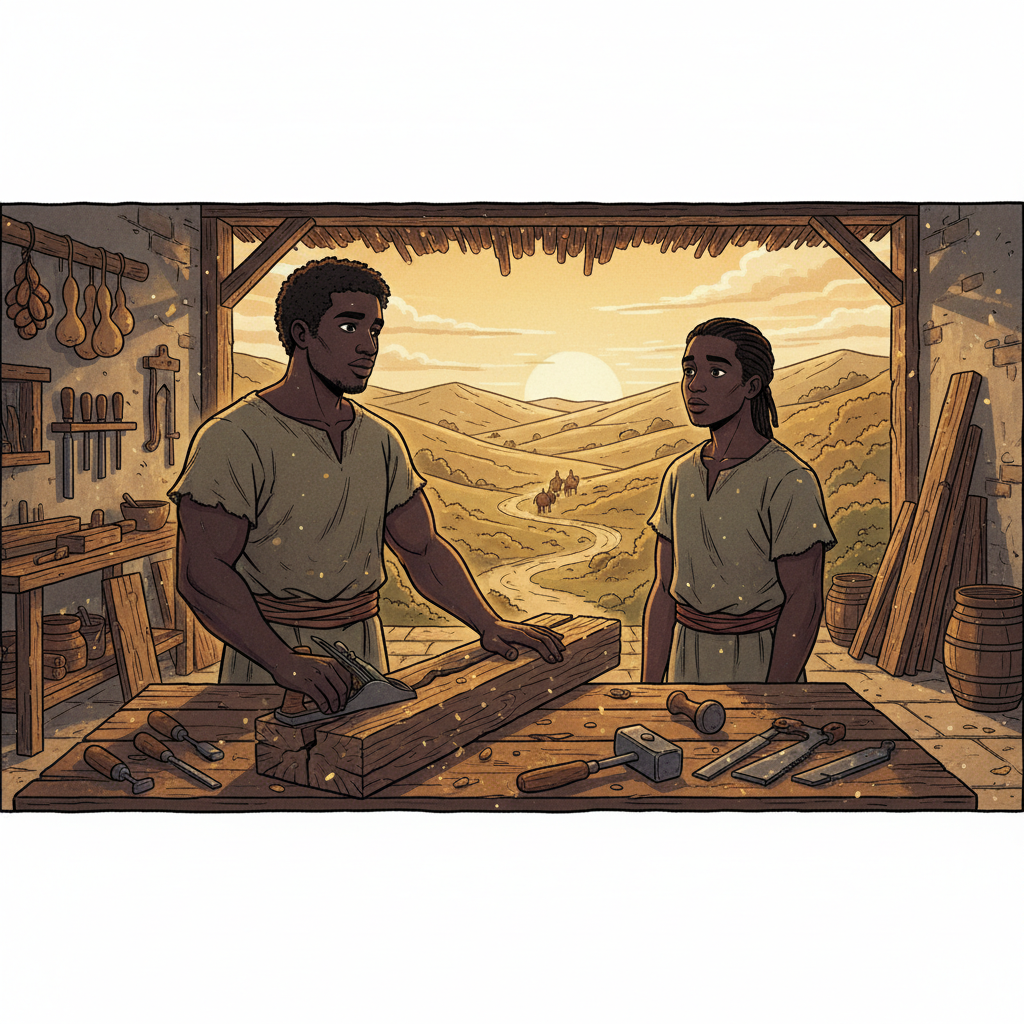
Yehudah, no longer mocking, finally spoke. "Why bother with the cracked beam, Yeshua? Why not simply hew a new one? It would be quicker, less trouble." Yeshua paused, his plane resting on the workbench, the scent of fresh wood rising around them. He looked at Yehudah, his gaze calm and deep. "The wood remembers its first cut, Yehudah," he said, his voice soft but resonant. "It remembers the tree it was, the life it held. To force a new beam where the old one wants to live, where it has already served, is a kind of violence. It disrespects the journey. We are not here merely to replace, but to restore, to honor the essence of what already exists, to bring things back into alignment with their original purpose."
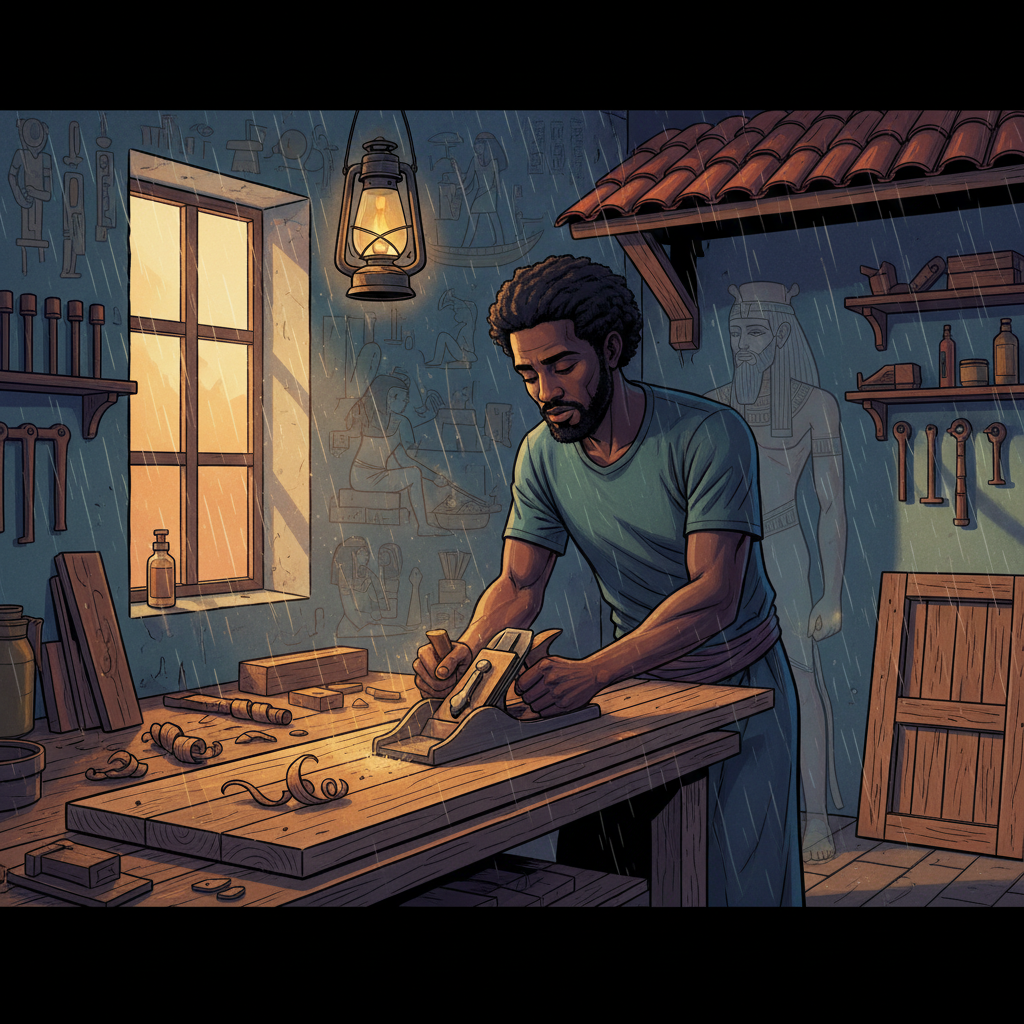
As evening fell, a gentle rain began to whisper against the terracotta tiles of the shop roof. Yeshua, alone now, continued to plane a long board destined for a new doorway. The rhythmic shhhhk-shhhhk of the plane was a meditation, a prayer. His mind drifted, not to the passing day, but to the long sweep of history, to the craftsmen who came before. He thought of Bezalel, the master artisan of the ancient Israelites, the one "filled with the spirit of God" to build the Tent of Meeting, to fashion sacred objects with wisdom and understanding. Yeshua understood that skill was a divine inheritance, a channel for the Spirit to flow through the hands, making the ordinary extraordinary, transforming labor into devotion.
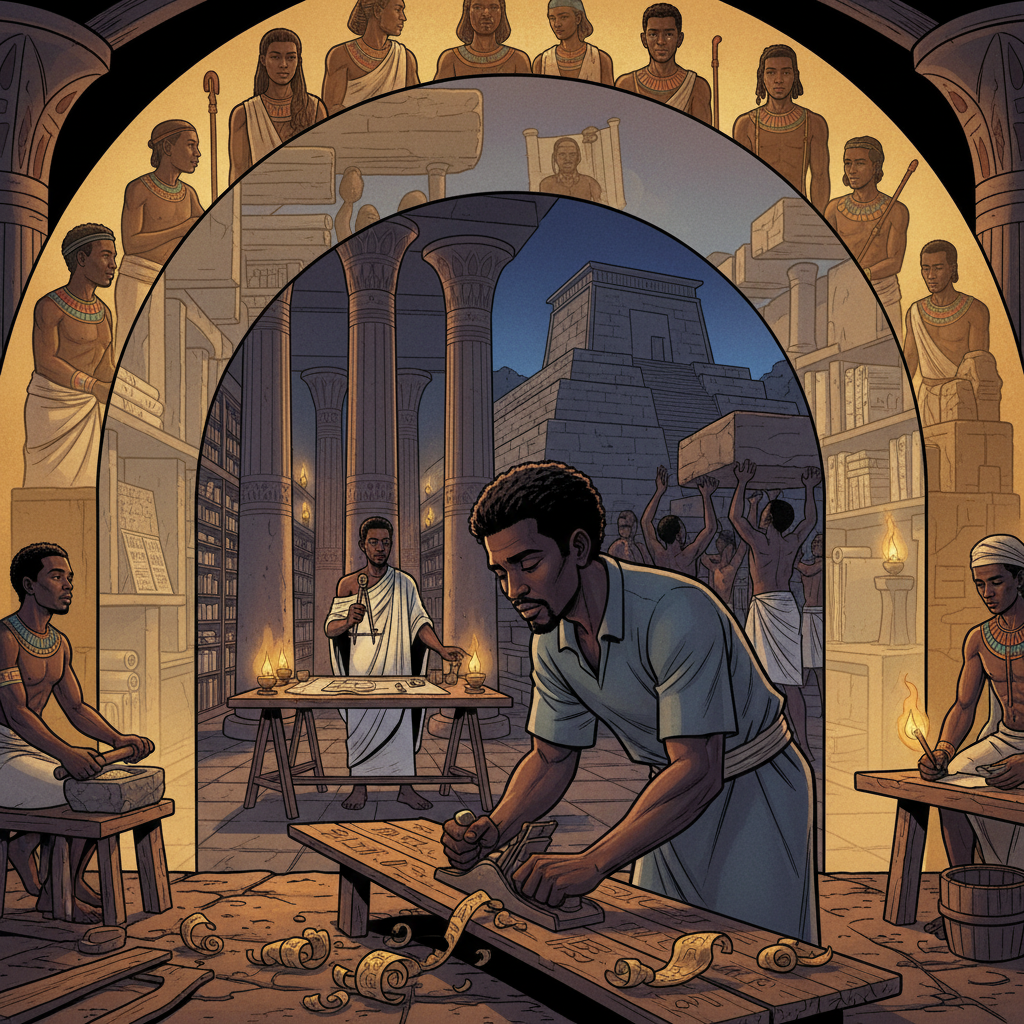
And before Bezalel, there was Imhotep, the Kemetian polymath, architect of the first stone Per Ankh, the House of Life, where sacred knowledge and practical skill were inseparable. The Africana tradition, long before the fracturing of disciplines, never separated the hand and the heart, the mind and the material. Yeshua felt this continuum in his own bones, in the way the wood responded to his touch. The plane sang under his steady hand, coaxing honey-colored shavings that curled like ancient script onto the earthen floor. He was twenty-one, standing in a long line of those who built, who healed, who restored. This was his apprenticeship to life, his place of preparation, a profound stillness within the rhythm of creation.
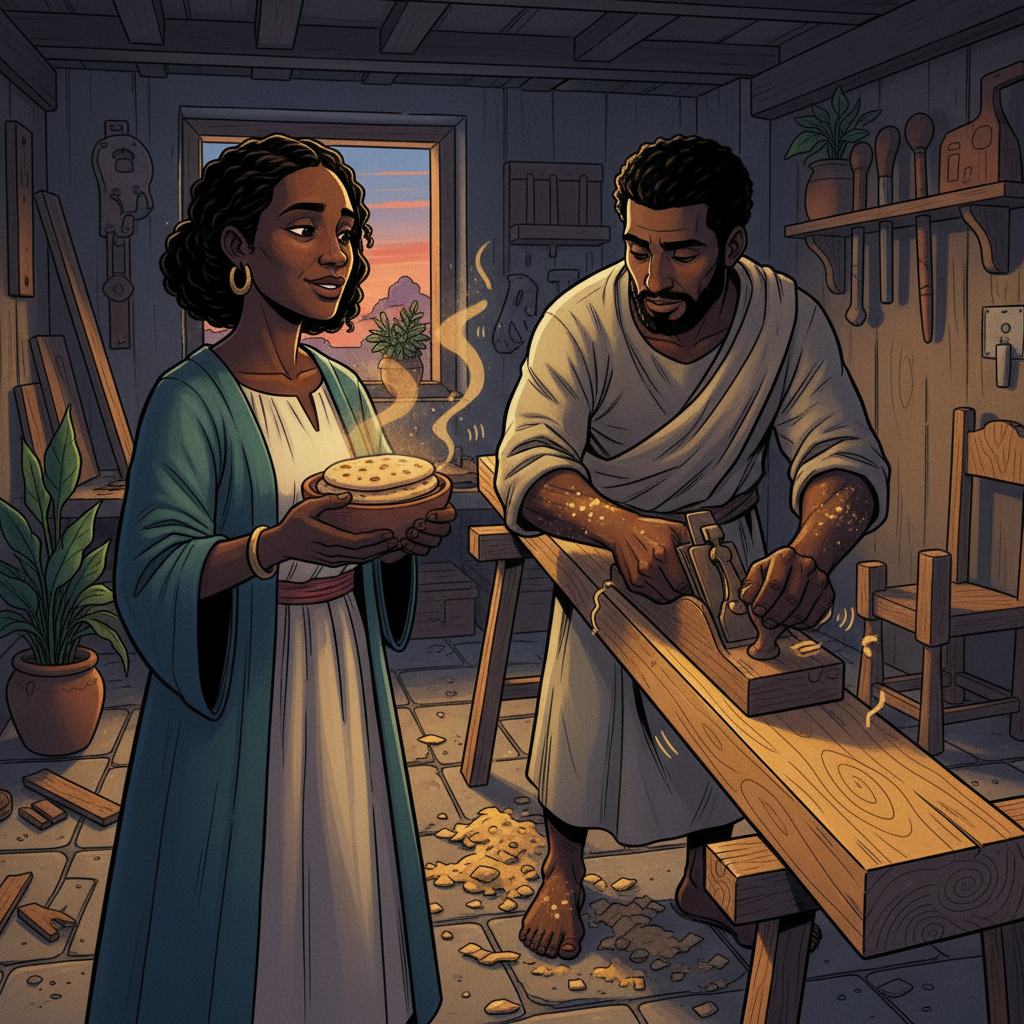
The wood beneath his plane hummed with a deep, resonant tone, a sound that only a craftsman fully attuned could hear. The honey-colored shavings piled at his feet, soft as the desert dust at dusk. He was twenty-one, in the quiet heart of Nazareth, yet standing in a lineage that stretched back through the millennia, a keeper of sacred work. Miriam, his mother, entered the shop, her presence a gentle light in the dimming evening. She carried a small meal of lentils and flatbread, the aroma a comforting warmth. She watched him, her dark eyes seeing not just her son, but the patience etched into his hands, the deep focus in his posture. She remembered the boy in the temple courts, listening and questioning, already seeking the truth that lived beyond surface appearances.
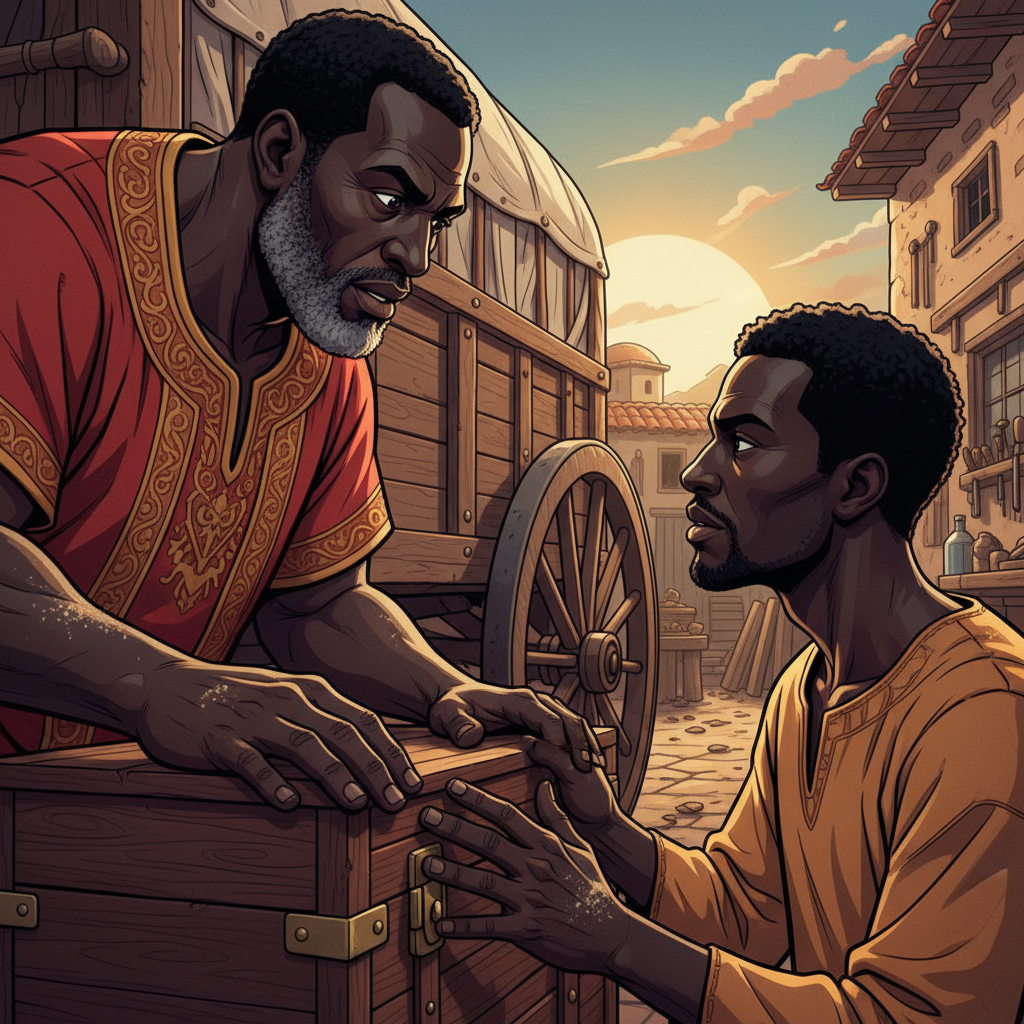
A few days later, a traveling merchant named Yosef of Arimathea passed through Nazareth, his caravan laden with goods from distant lands. He was a man of means, discerning, always seeking quality. He needed three new wheels for his wagon and a small, sturdy chest for his valuables. He heard of Yeshua’s skill and came to the shop. Yeshua worked with the same quiet strength, crafting the wheels with precision, balancing them until they spun true, building the chest with joints that would endure any journey. Yosef of Arimathea paid well, more than Yeshua asked. As he prepared to depart, he looked at Yeshua, his gaze piercing. "What will you do," he asked, "when your hands are tired of wood? When this work no longer calls to you?"

Yeshua looked at his hands, calloused and strong, then back at Yosef of Arimathea. "My hands are never tired of wood, Yosef," he replied, his voice calm and steady, "for the wood teaches me. This work is not something I merely do, but something that does me. It shapes me as I shape it, aligning my spirit with the grain of creation." He paused, considering the deeper meaning. "I will keep working until the work tells me I am done. Until the Spirit that moves through these tools, and through my hands, directs me to a different task. For all sacred work, whether with cedar or with stone, whether with wood or with words, comes from the same source, seeking to bring order and beauty, truth and healing, into the world."
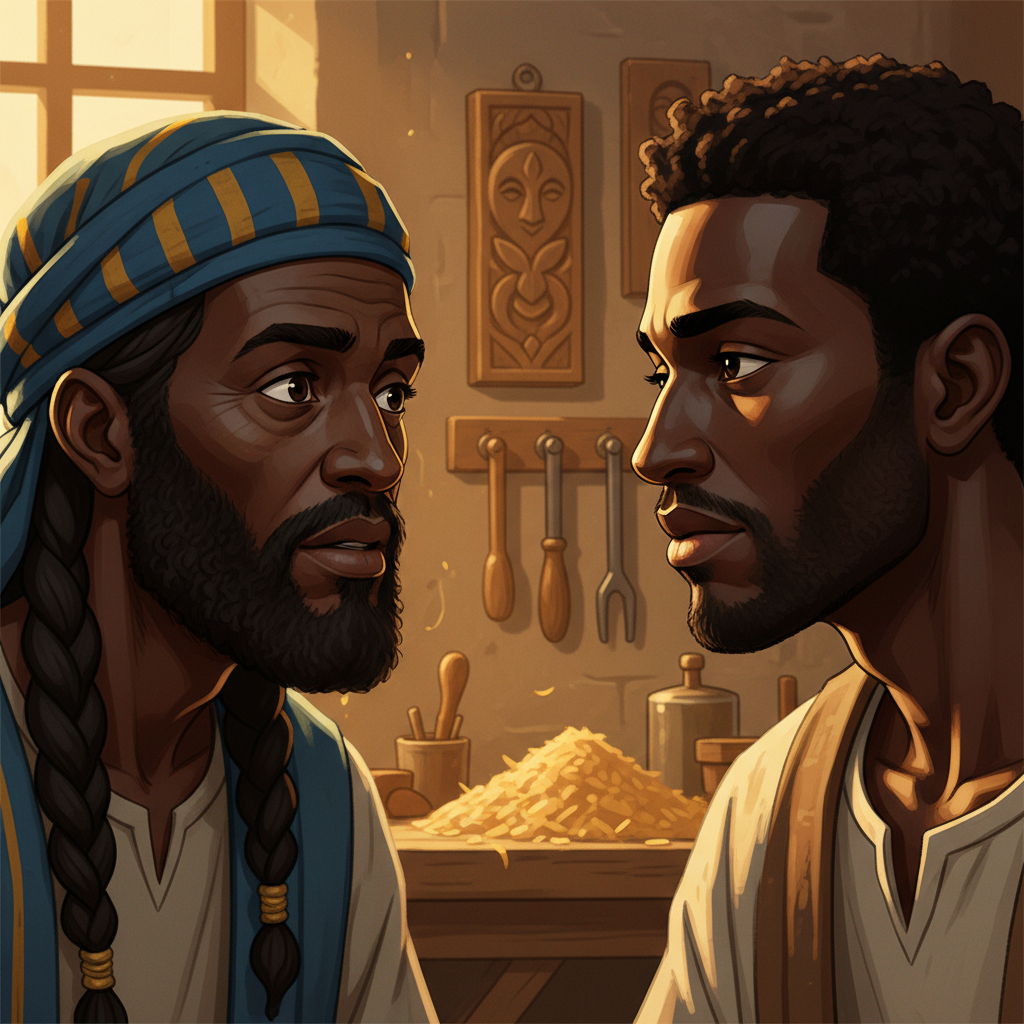
Yosef of Arimathea listened, his expression thoughtful. He had met many skilled artisans, but none who spoke of their craft with such profound depth, such an understanding of its spiritual dimension. He saw not just a carpenter, but a man deeply connected to the essence of creation, a person whose hands were guided by an ancient wisdom. He looked closely at Yeshua's face, the strong jawline, the quiet intensity in his dark eyes, committing the image to memory. He knew, with an intuition that often guided his journeys, that this was not the last time their paths would cross. He would remember Yeshua, the carpenter of Nazareth, for he sensed a destiny far greater than the shaping of wood. Indeed, Yosef of Arimathea would see him again, in circumstances far removed from this dusty workshop.
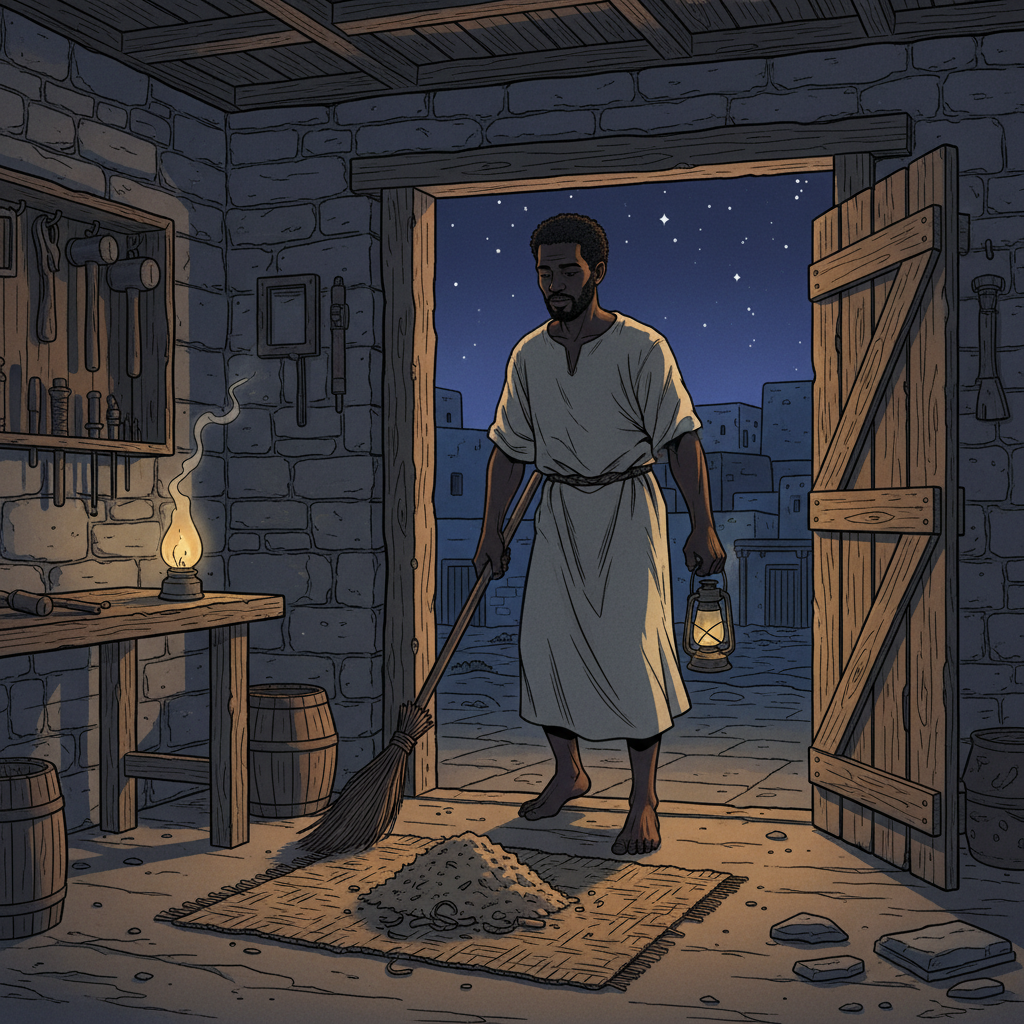
As dusk deepened into true night, Yeshua began the ritual of closing the shop. He swept the earthen floor with a broom of bound twigs, gathering the fragrant shavings into a neat pile, destined for kindling in the morning’s fire. Each tool was carefully cleaned, the steel blades honed, a thin film of olive oil applied to the metal to protect it from the damp night air. The adze, the mallet, the awl, the drill-bow, the square — each returned to its rightful place on the wall, a silent promise of the next day's labor. Finally, he blew out the oil lamp, its flame flickering once before plunging the workshop into the profound darkness of night. The day's work was complete, not just the physical shaping of wood, but the spiritual shaping of self, a continuous practice of Maat. He walked out into the cool Nazareth night, the stars already beginning to pepper the vast sky like scattered diamonds.

He stood under the open sky, breathing the night air, feeling the ancient rhythm of the earth. The day's lessons lingered in his hands and heart. He understood that the grain of the wood, with its knots and its straight lines, its resilience and its imperfections, taught the hand patience and precision. And in turn, the hand, through its diligent, honest labor, taught the heart how to wait, how to listen, how to discern the true nature of things. This was the quiet strength, the profound wisdom embedded in sacred work. It was the legacy of Kemet, the wisdom of Torah, flowing together in the humble carpenter of Nazareth. It was the way of Yeshua, then and always, to find the sacred in every stroke, every cut, every shared loaf of bread.