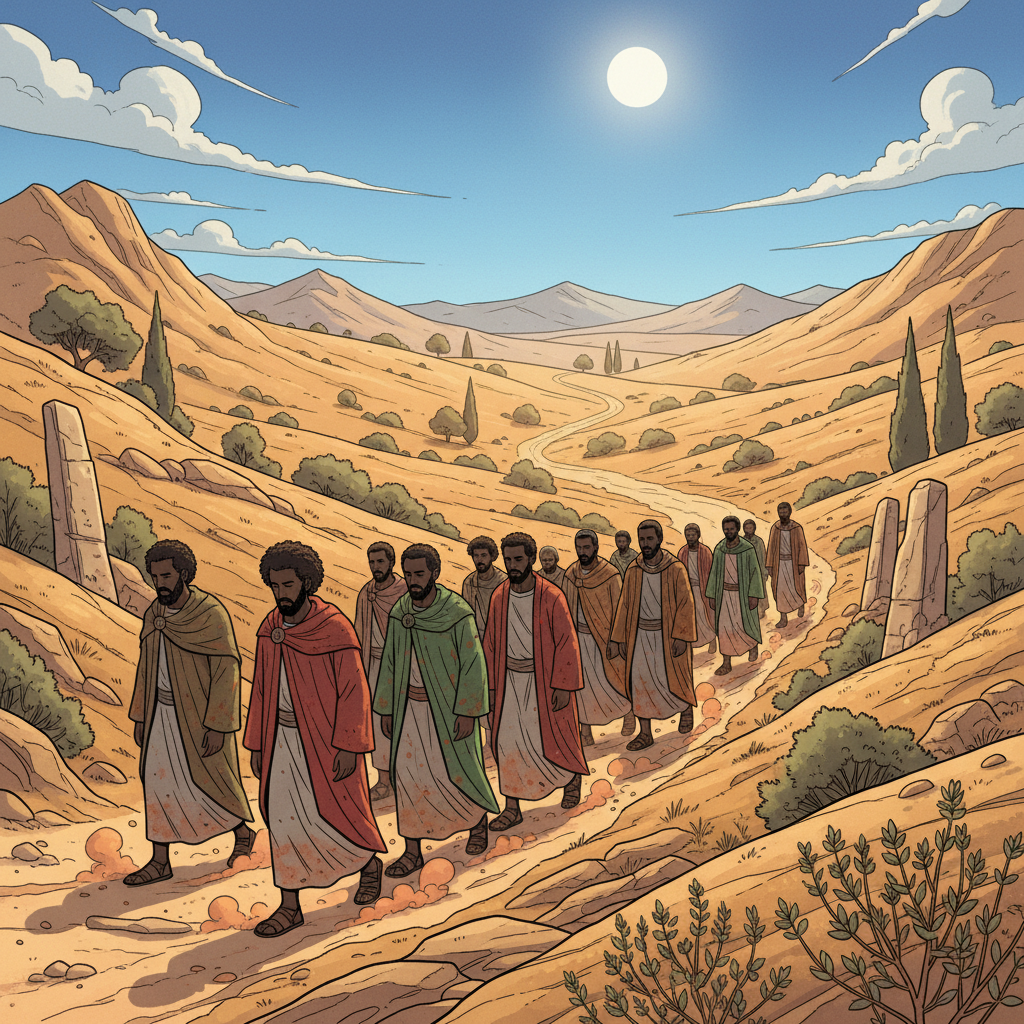
The path from Yericho to Yerushalayim was not a simple walk; it was an ascent. The sun, already high, beat down on the red dust that clung to their sandals. Yeshua and his disciples had been walking since before the first light, climbing steadily away from the Jordan River valley. This was the road David’s sweet psalmists had known, the Ascent of Adummim, a winding passage through arid hills that held the memory of countless journeys. The air grew thinner with each step, carrying the scent of dry thyme and distant cypress. Their cloaks, designed for the cool desert nights, now felt heavy under the morning sun. The land spoke of ancient times, of a people’s long trek through wilderness, always moving toward the heart. Each stone on the path was a silent witness to a lineage that stretched back further than memory.
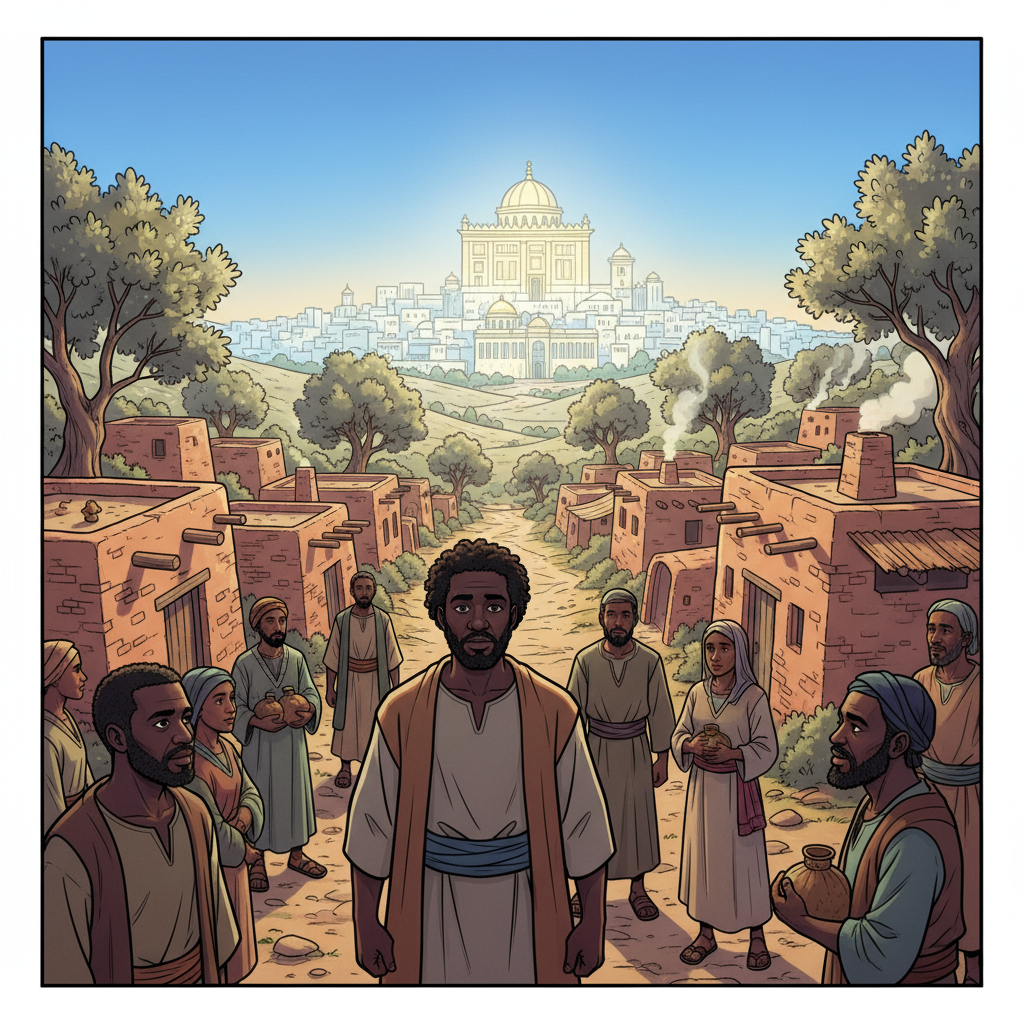
Finally, they reached a small village nestled on the eastern slope of the Mount of Olives. This was Bet-Pagey, a cluster of sun-baked homes surrounded by ancient olive groves, their silver-green leaves shimmering in the gentle breeze. The air here was cooler, carrying the scent of woodsmoke and ripening fruit, a welcome change from the dust of the ascent. Just beyond the village, over the low ridge, the Holy City lay stretched out, a vision of polished stone and ancient faith. The Temple, newly cleaned and adorned for the coming Pesach, shone with a blinding intensity under the morning sun, a beacon in the heart of the land. Its white stones seemed to hum with the prayers of generations, drawing the eye upward, a testament to the Divine presence. Yeshua stopped at the edge of the village, his gaze fixed on the gleaming city, a quiet knowing in his posture.
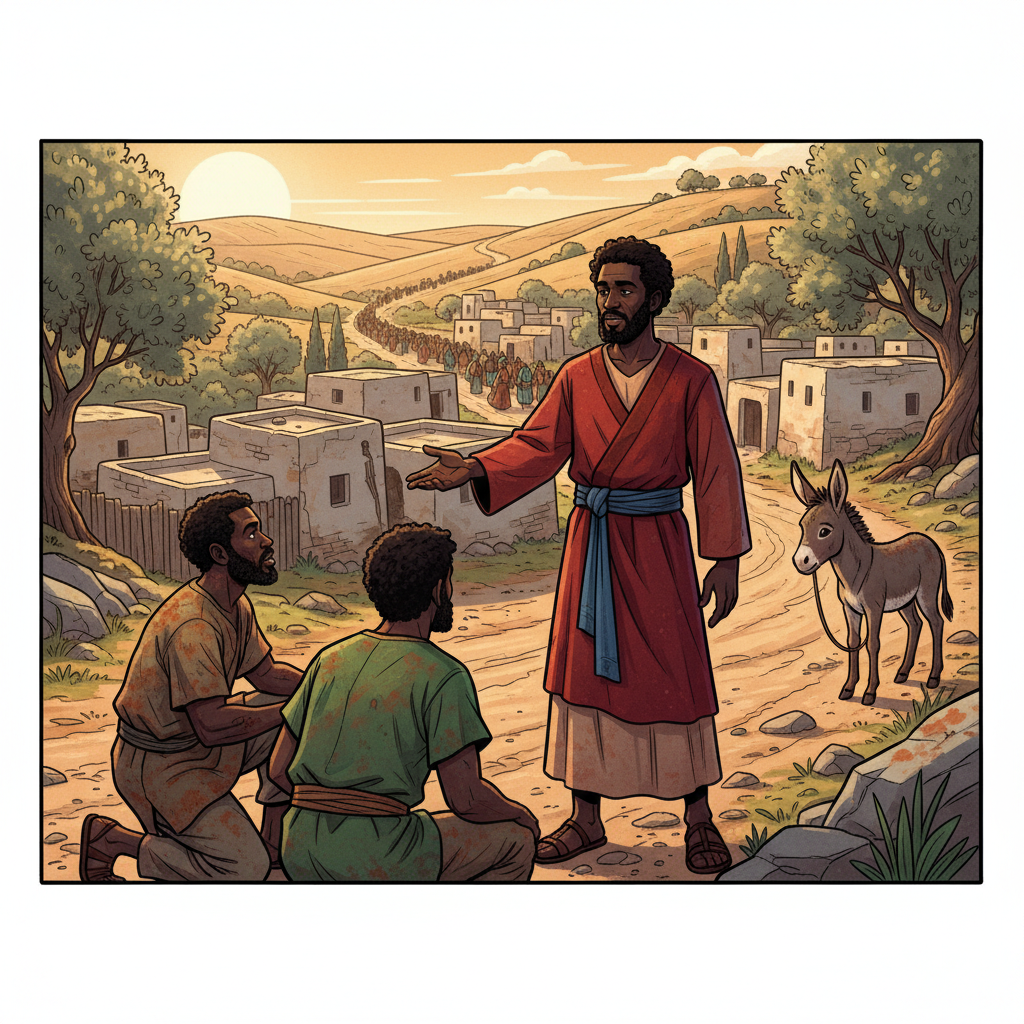
Yeshua turned, his eyes finding Petros and Yochanan in the group. Their faces were etched with the dust and fatigue of the journey, but their spirits were bright. "Go into the village," he instructed, his voice low and clear. "You will find a young donkey tied there, one that has never been ridden. Untie it and bring it to me. This animal has not felt the burden of labor, nor the haste of human command. It is pure." He paused. "And if anyone asks you why you are taking it, simply say this: 'The Lord has need of it.'" The words carried the weight of ancient practice, the understanding that the sacred often required the ordinary, transformed for a divine purpose, an echo of the priest-kings who prepared themselves for sacred tasks.
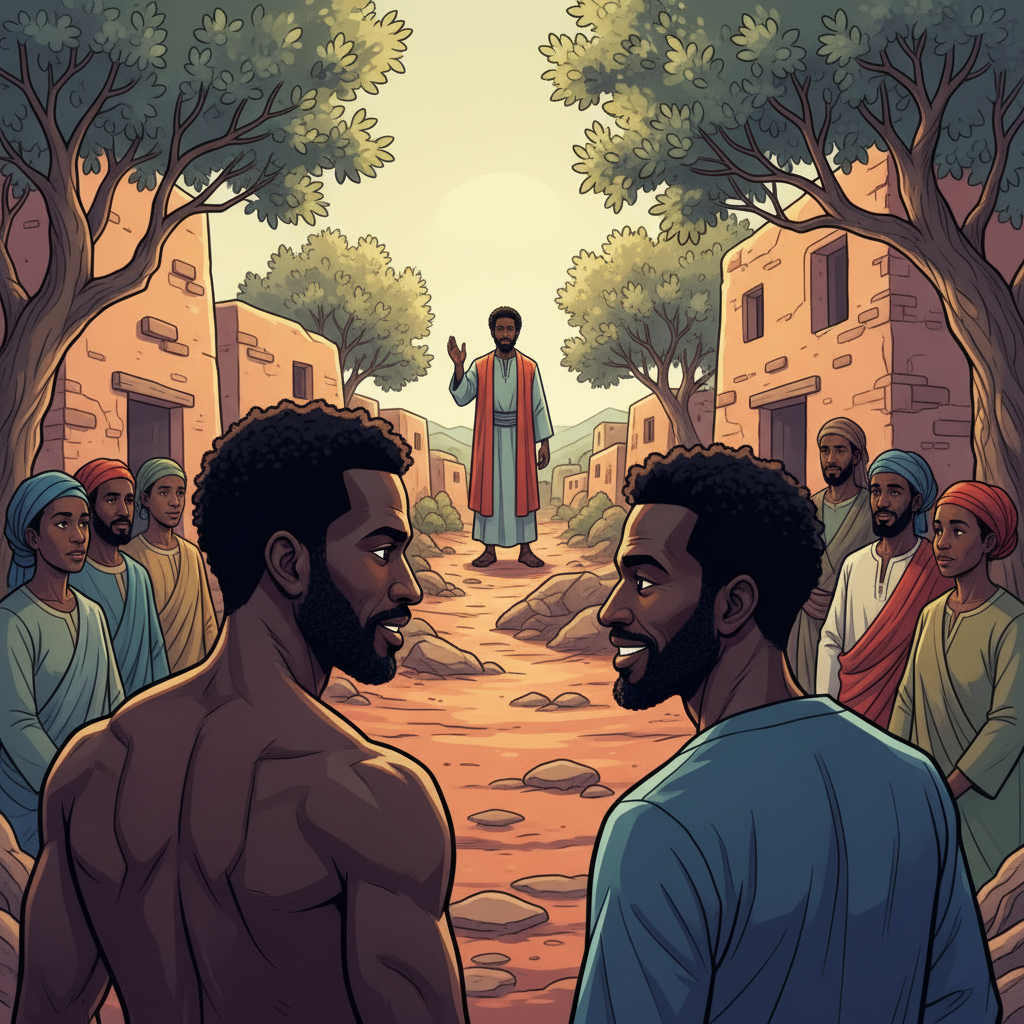
Petros and Yochanan exchanged a look, their eyes meeting in silent communication, a flicker of memory of other times when the Master’s commands seemed to defy common sense. There had been a time when such an instruction would have sparked a flurry of questions, a desire for logical explanation, perhaps even a chuckle. But those days were fading. They had witnessed too many small impossibilities become simple truths in Yeshua’s presence: water turning to wine, loaves multiplying in their hands, the sick rising to walk from their mats. They had learned to trust the quiet certainty in his voice, the deep wisdom that flowed from a source beyond their immediate understanding. Without another word, they turned and walked into the narrow, winding paths of Bet-Pagey, their steps firm with an unshakeable faith, knowing the path would reveal itself.
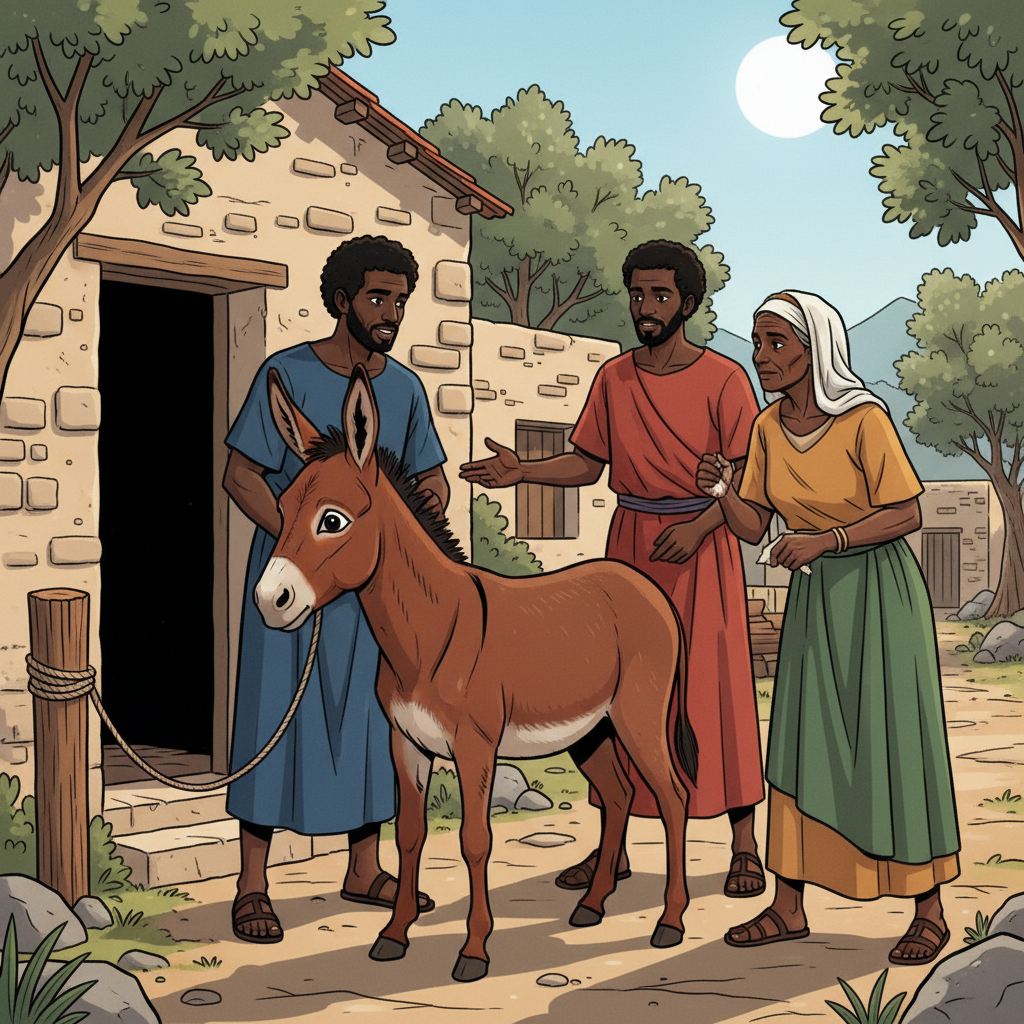
Just as Yeshua had said, they found the young donkey tied by the door of a small stone house, its coat the color of rich earth. It was a sturdy animal, its eyes wide and curious, clearly unused to a bridle or a saddle. As they began to untie it, an elder woman emerged from the house, her face lined with the wisdom of the years, her hands still dusted with flour. "Why are you taking my donkey?" she asked, her voice calm but firm. Petros, remembering Yeshua's words, replied, "The Lord has need of it." The woman paused, her gaze steady, searching their faces. Then, a slow nod of understanding. She stepped aside, a quiet reverence in her eyes, allowing them to lead the patient animal away.
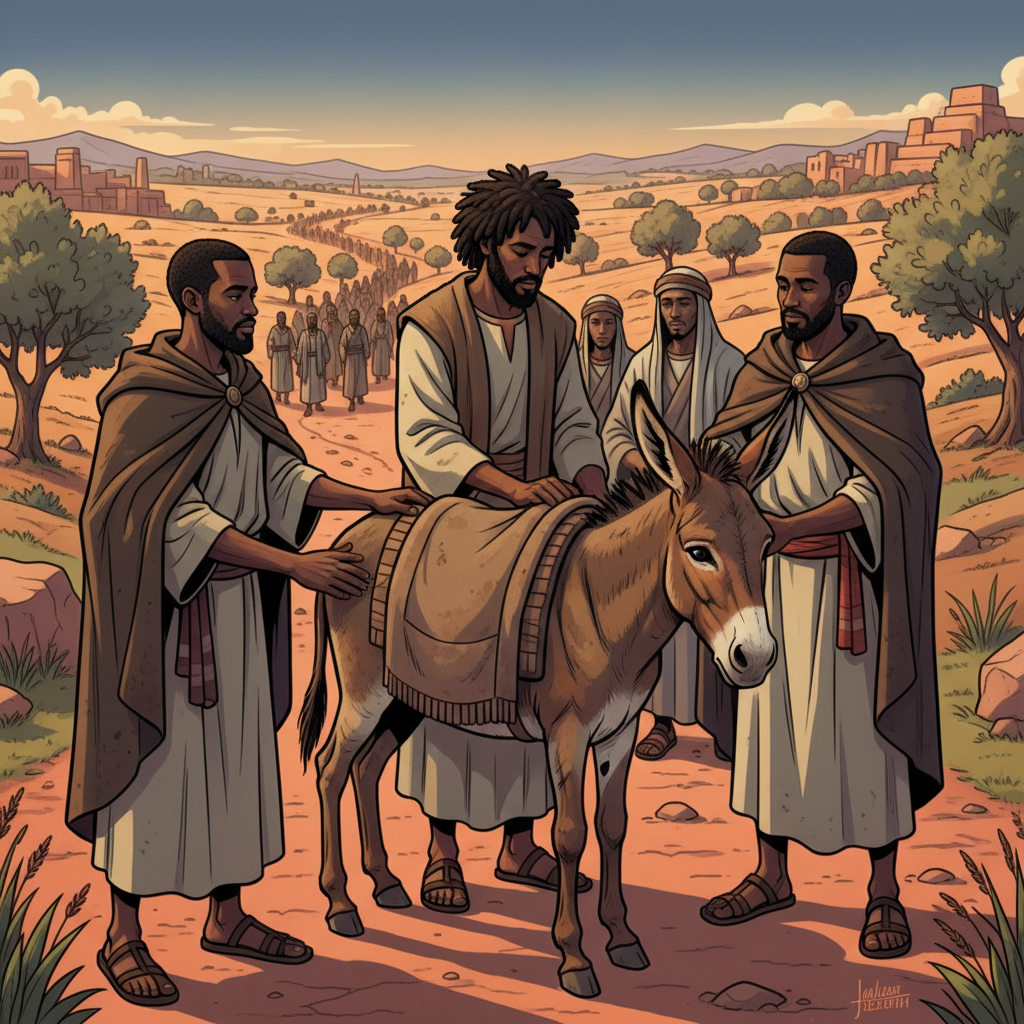
Petros and Yochanan led the young donkey back to where Yeshua waited. The animal, though never ridden, walked with a quiet dignity, its large ears twitching gently. The disciples, understanding the moment’s significance, took off their outer cloaks – garments woven from rough wool, bearing the dust and scent of their journeys – and carefully spread them across the donkey’s back, fashioning a soft, impromptu saddle. It was a humble throne for a king who came not with chariots of war, but with the patient spirit of the working animal, a symbol recognized in the deep memory of Kemet’s enduring strength. This choice, rooted in ancient wisdom, resonated with the Africana understanding of leadership, where humility precedes true authority, contrasting the war-horse of conquerors. Yeshua approached, his movements deliberate. He mounted the young animal, and the donkey stood quietly, its breath warm and steady beneath him, accepting its sacred burden.
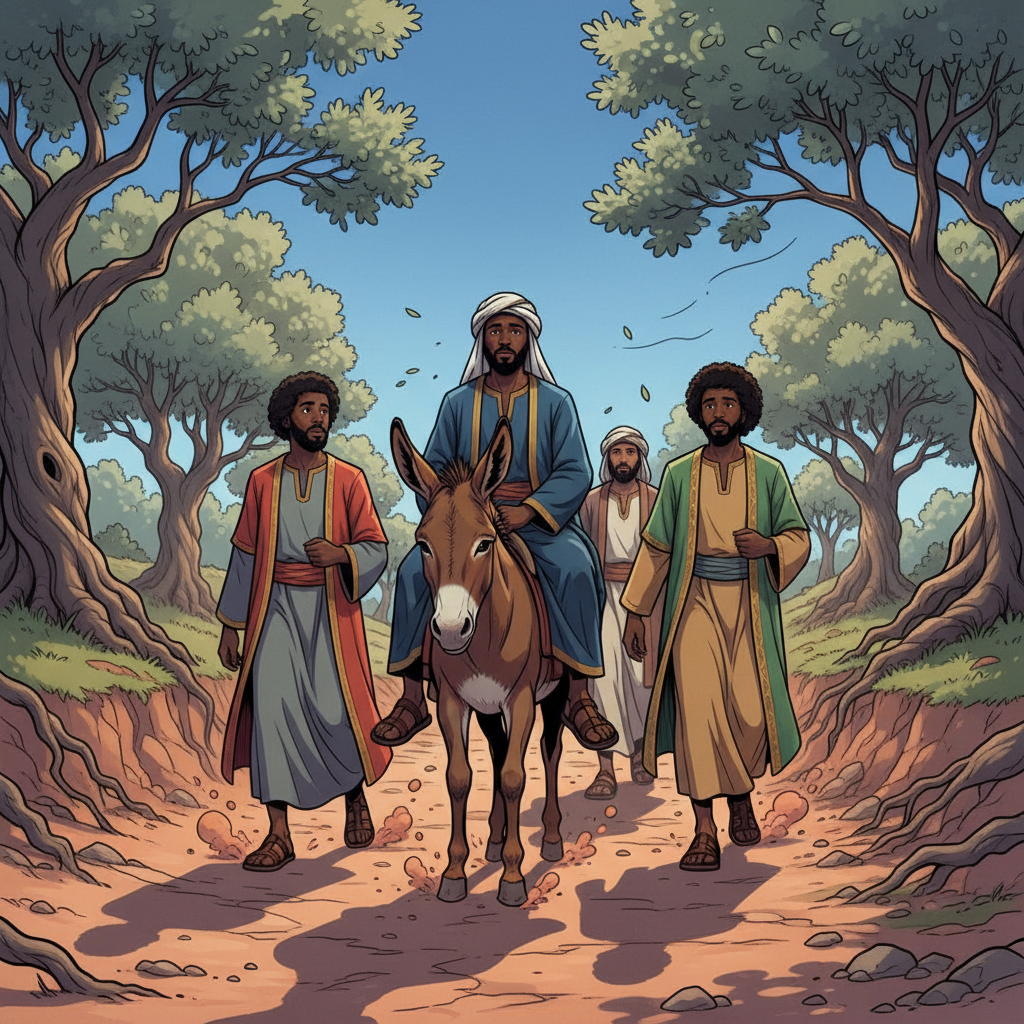
With Yeshua now seated, the small procession began to move. The disciples walked ahead and behind him, their faces reflecting a mixture of awe and anticipation, their feet crunching softly on the dusty path. The morning sun, now risen higher, cast long shadows across the path, illuminating the ancient olive trees that lined the slopes of the Mount of Olives. Their gnarled trunks, witnesses to centuries of seasons, stood like silent guardians, roots holding firm to the timeless earth. A gentle breeze rustled through their silver-green leaves, creating a soft, whispering sound that filled the air. The world felt alive with a quiet power, a sense of destiny unfolding beneath the vast, blue sky, a movement toward the fulfillment of ancient prophecies.
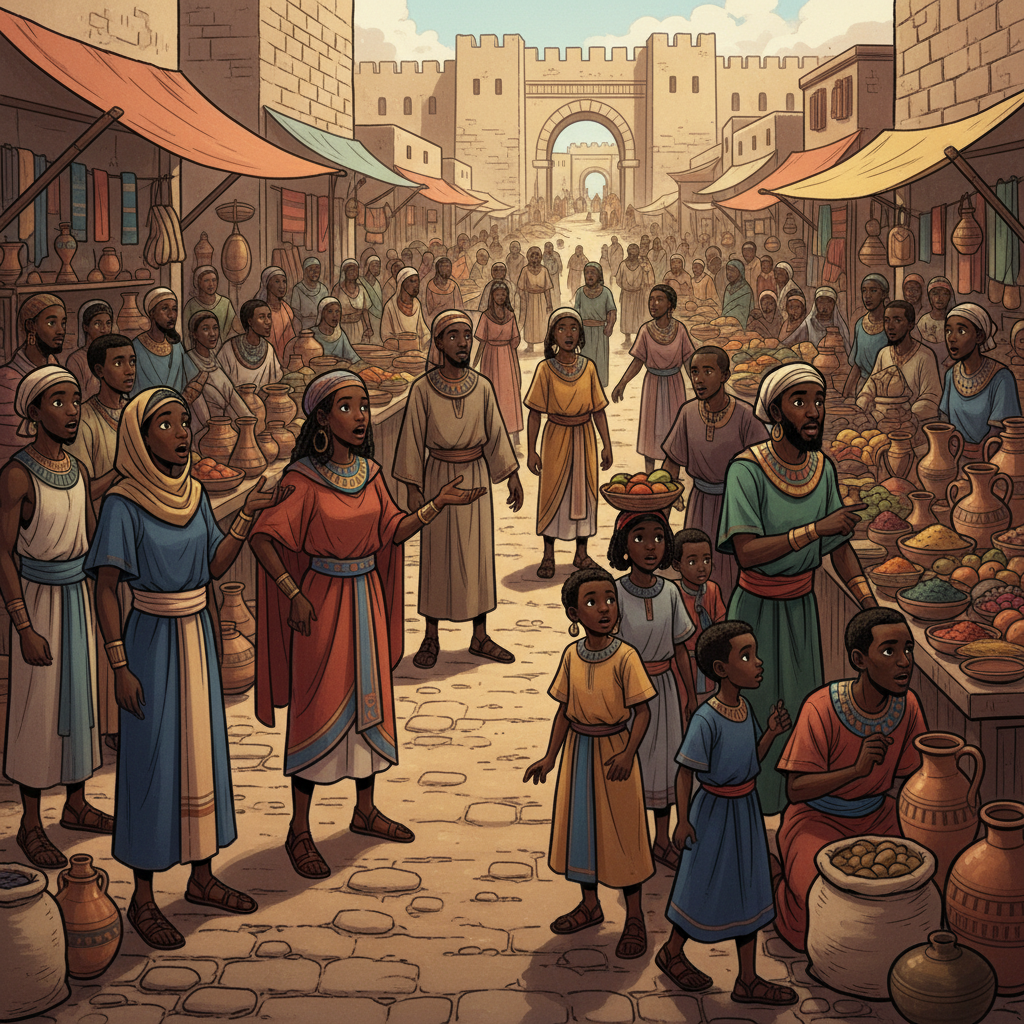
As they descended, word began to spread like a brushfire through the hills and into the city itself. "He is coming! The Rabbi from Galilee is coming!" Pilgrims who had arrived in Yerushalayim days before for Pesach, their hearts already stirred with expectation, streamed out from the city to meet the procession. They had heard the stories, carried on the winds of trade and whispered in marketplaces: the rabbi who had called Lazaros from the tomb after four days, who had fed five thousand from a few fish and loaves, who had calmed the raging storm with a mere word. Their anticipation was a palpable force, drawing them forward, eager to witness the one whose presence brought such undeniable power.
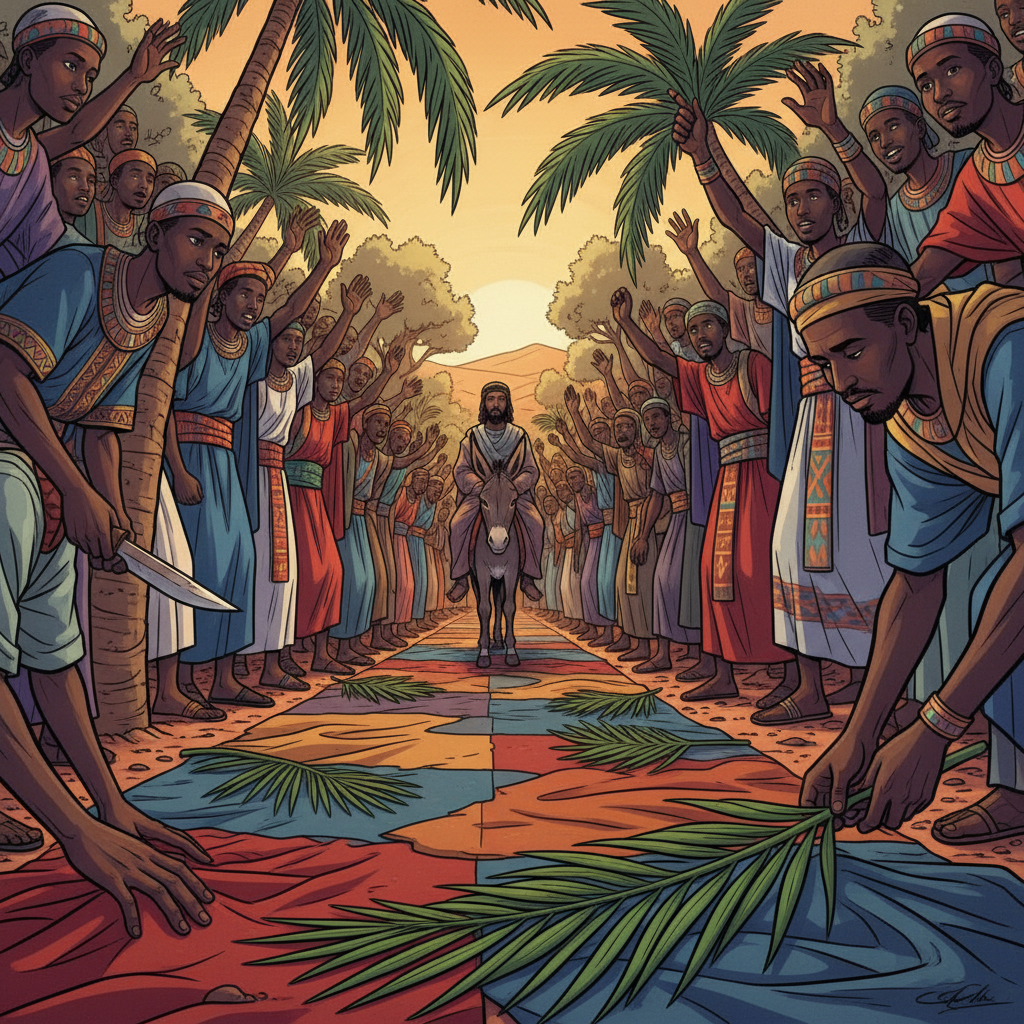
The crowd grew quickly, swelling around the small procession. In a spontaneous act of reverence, mirroring the ancient processions of priest-kings in Kemet, some began to cut palm branches from the trees that lined the path, their broad leaves a vibrant green against the dust. They waved them in the air, then laid them carefully on the ground before the donkey’s hooves. Others, not wishing to be outdone, took off their own outer cloaks, the very clothes they wore, and spread them over the rough earth. The lowly road, usually trodden by common folk and beasts of burden, was transformed into a carpet of honor, paved with cloaks and palms, a tangible expression of deep respect for the one who rode among them.
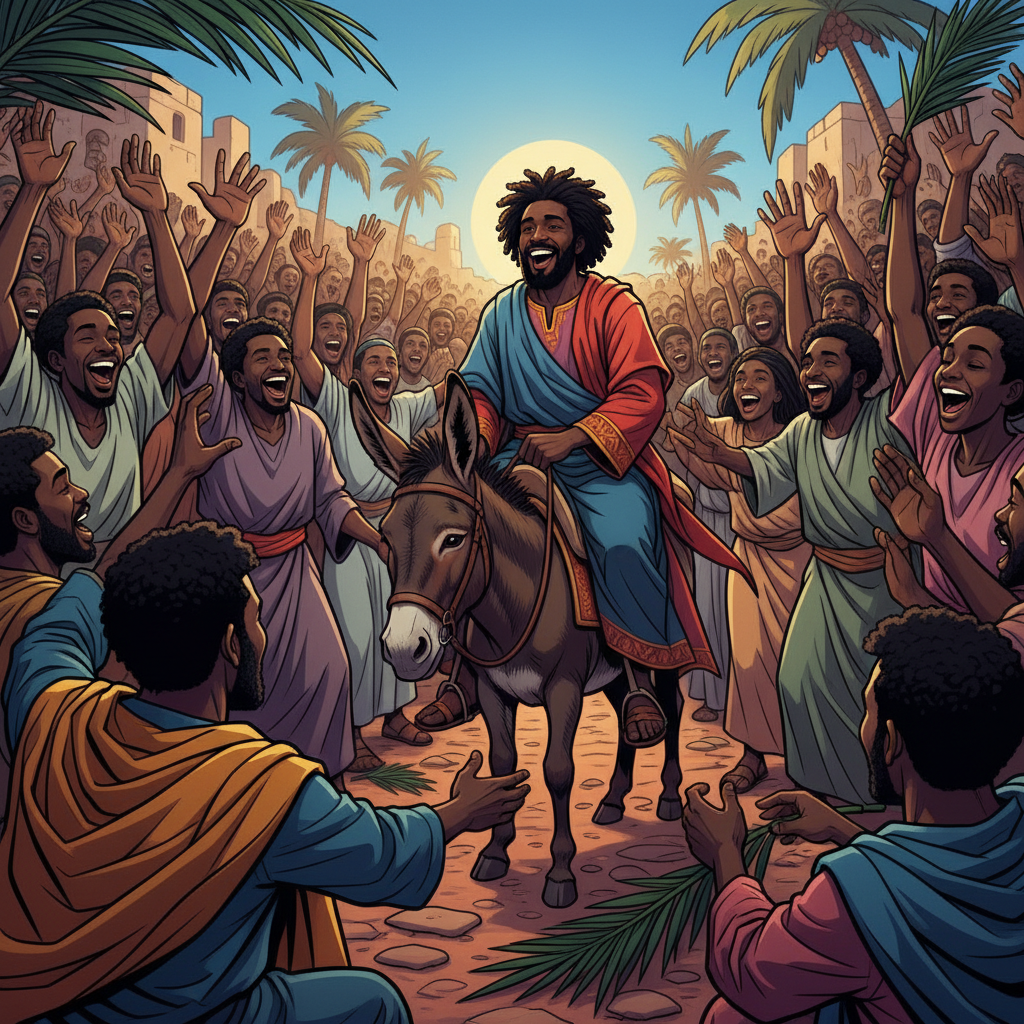
The air vibrated with the growing sound of the multitude. As the procession continued, a joyful, ancient cry erupted from the crowd, rising and falling like the waves of the sea: "Hosanna! Hosanna! Blessed is he who comes in the name of the Lord! Hosanna in the highest!" It was a phrase steeped in history, a coronation acclamation, a prayer for deliverance, an echo of the shouts that greeted Solomon as he rode to his enthronement on David’s own mule. The words carried the weight of generations, anticipating the king the prophets had foretold – not a warrior on a charger, but a humble ruler, as Zechariah had envisioned, arriving on a donkey, bringing peace. The people’s joy was uncontained.
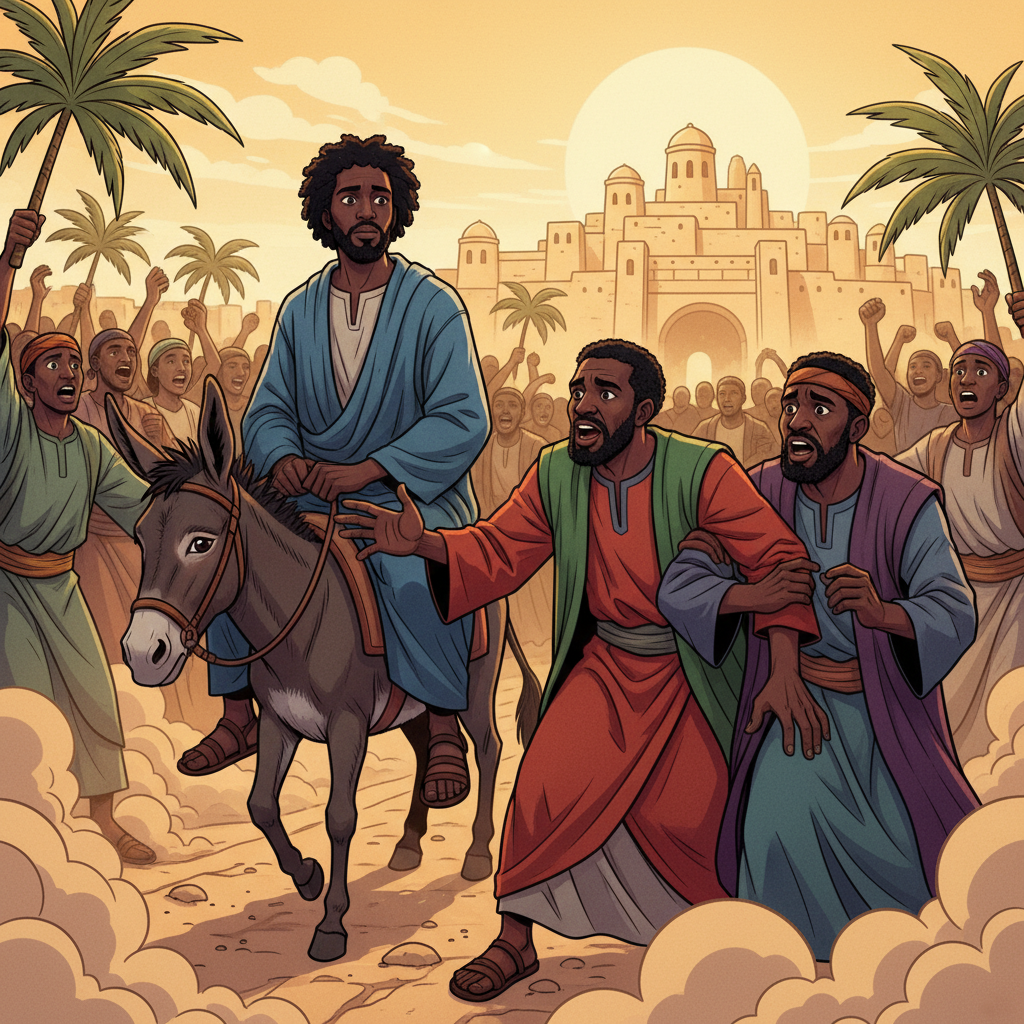
Yeshua did not fight the procession. He did not stop the cries. He did not amplify them. He sat quietly on the small donkey, his simple cloak gathered around him, his posture one of calm acceptance rather than triumphant display. His eyes remained fixed on the city ahead, a deep understanding held within their dark depths, witnessing both the joy and the coming storm. But some among the crowd, the learned Pharisees, watched with growing alarm, their faces tight with disapproval and concern for order. They pushed their way toward Yeshua, their voices sharp. "Rabbi," one urged, his tone laced with urgency, "rebuke your disciples! Make them cease! This is too much! These cries are sedition, they risk the peace of our people and invite swift Roman wrath!"
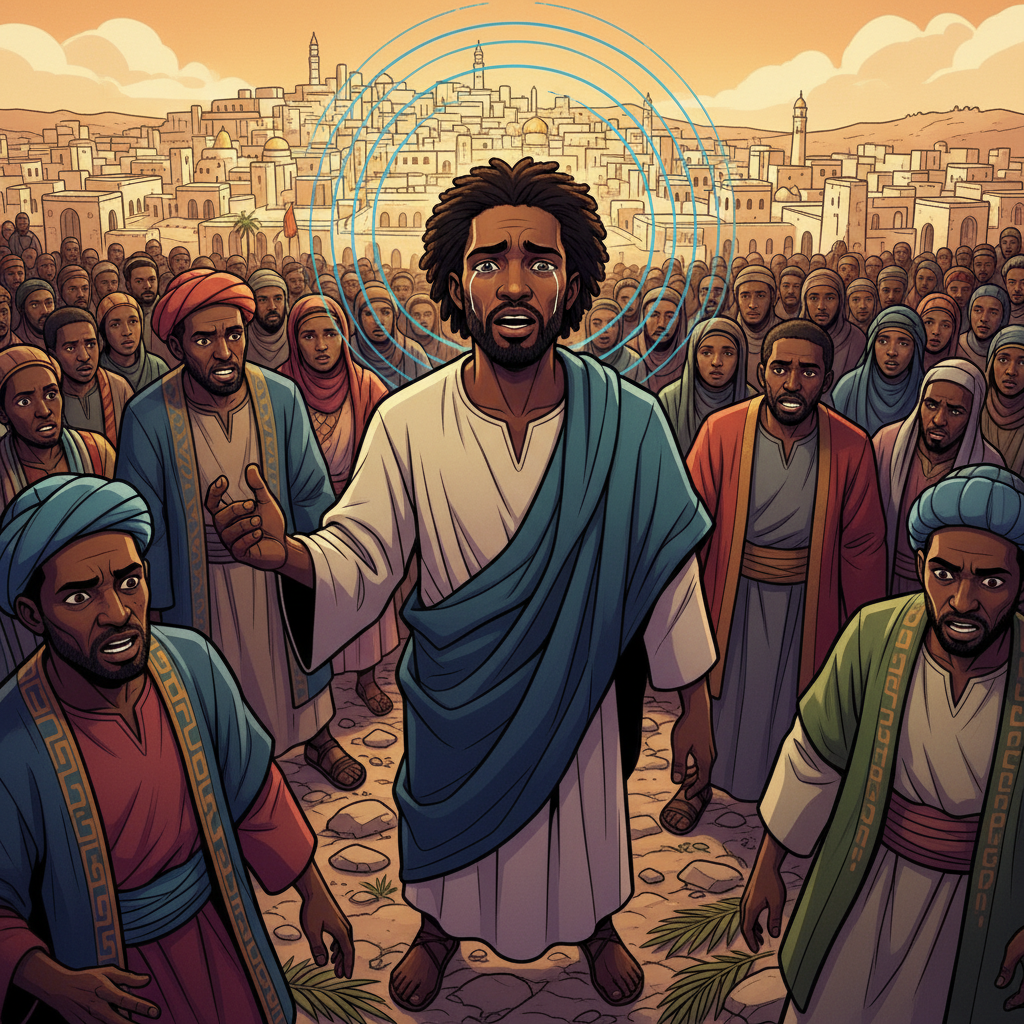
Yeshua turned his gaze from the city to the anxious faces of the Pharisees. His voice, when he spoke, was quiet but carried an undeniable authority, cutting through the clamor of the crowd. "I tell you," he said, "if they kept silent, the very stones themselves would cry out." The statement hung in the air, a profound declaration of the inherent truth of the moment, a truth that even creation understood. The procession continued its steady ascent, cresting the Mount of Olives. From this vantage point, Yerushalayim lay spread beneath them, majestic and vulnerable. And then, as he looked upon the city, Yeshua wept. Tears streamed down his dark cheeks, silent and unexpected, a deep sorrow washing over his face. His disciples had never seen him weep openly like this before.
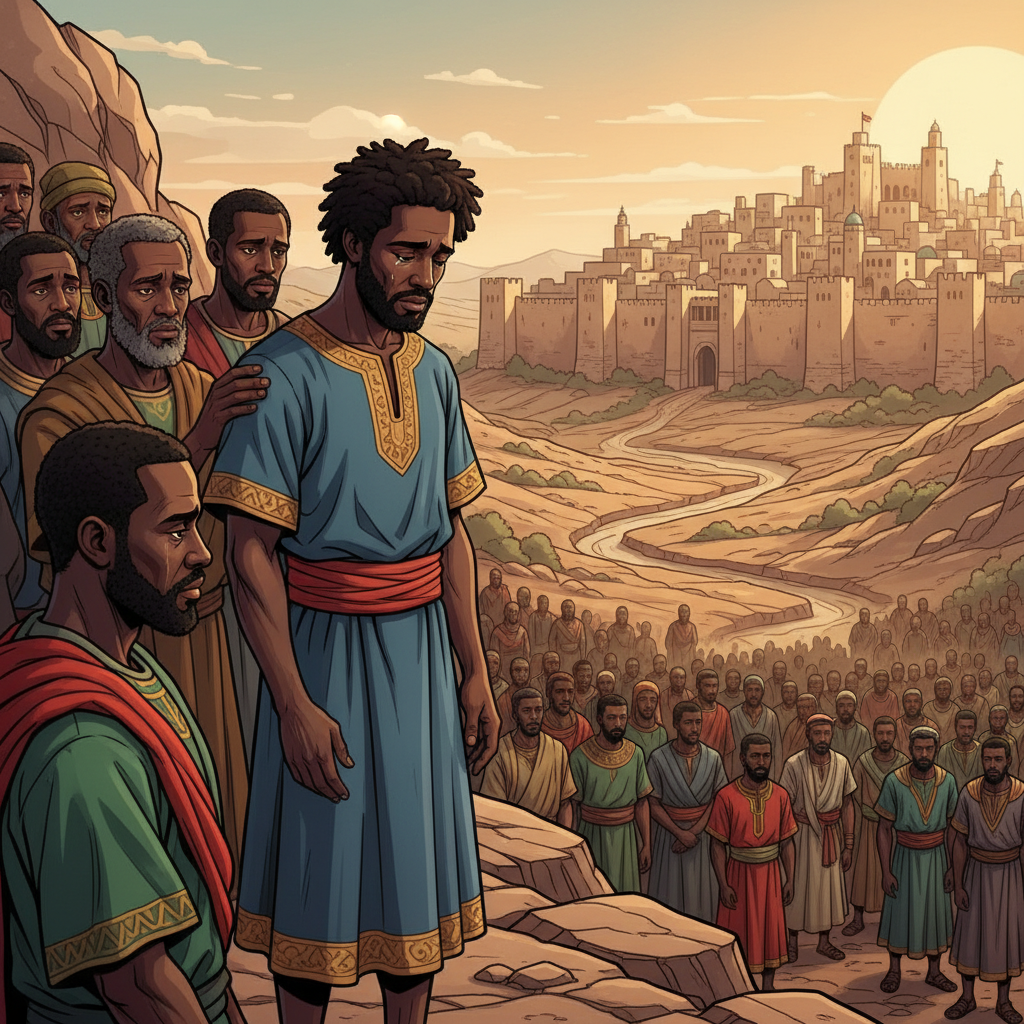
His voice, thick with emotion, broke the silence that had fallen upon those closest to him. "Yerushalayim, Yerushalayim," he murmured, his eyes still fixed on the city below, "if you had only known, even today, what brings peace. But it is hidden from your eyes." It was a lament, a sorrowful recognition of a path not taken, a wisdom not embraced. The procession then began its descent down the western slope of the Mount of Olives, the jubilant cries of the crowd still echoing but now tinged with a solemnity that emanated from Yeshua. They crossed the Kidron Valley, a small, often dry stream bed that separated the Mount from the city walls, its stillness a stark contrast to the fervor.
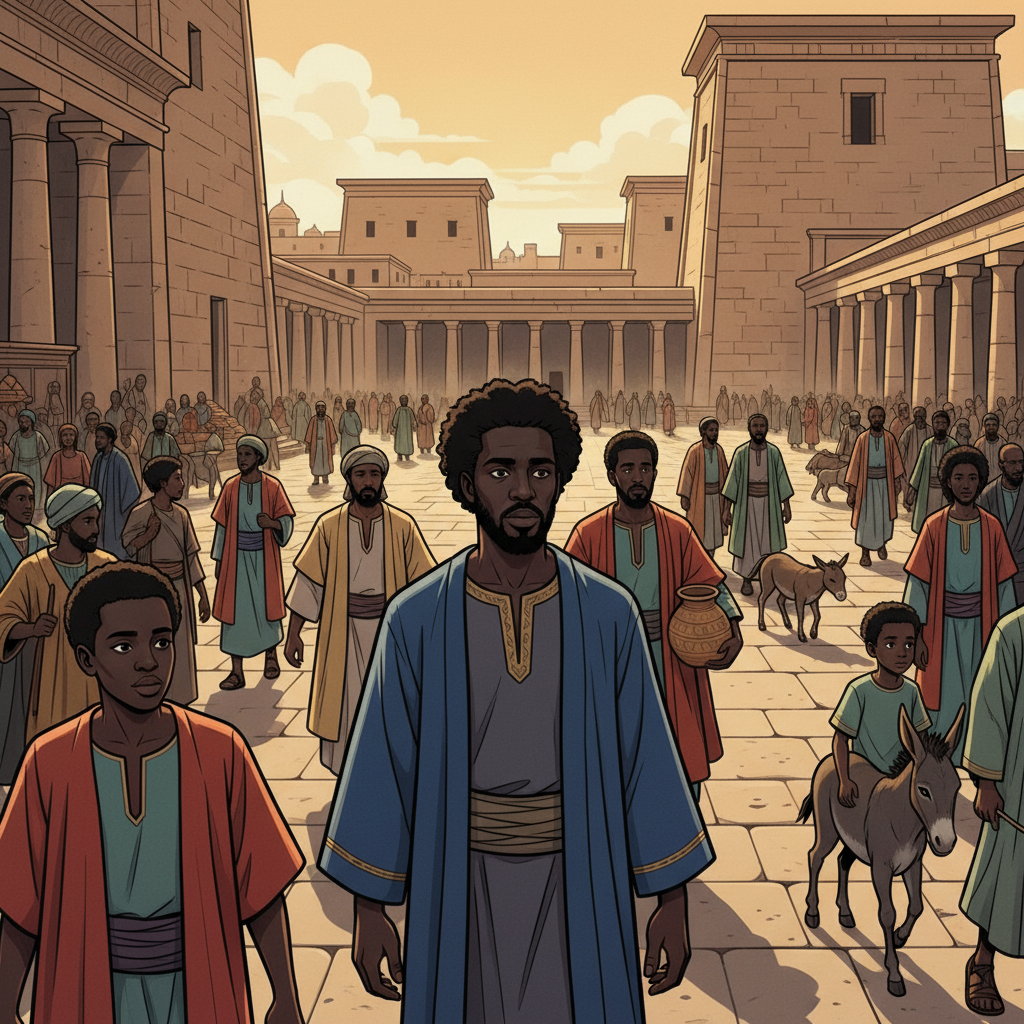
The procession moved through the eastern gate of Yerushalayim, the ancient gate that faced the rising sun, the entry point for sacred rites. Once inside the bustling city, the moment shifted. The young donkey, having fulfilled its quiet, sacred task, was gently led away, perhaps back to its owner, its role complete. The large crowd, having expressed their joy and hope, began to disperse, melting back into the countless pilgrims who filled the city for Pesach. Yeshua, now on foot, walked with his disciples into the temple courts. He moved through the throngs, his eyes taking in the sights, the sounds, the commerce that filled the sacred space. He looked, and he saw what he must do tomorrow.