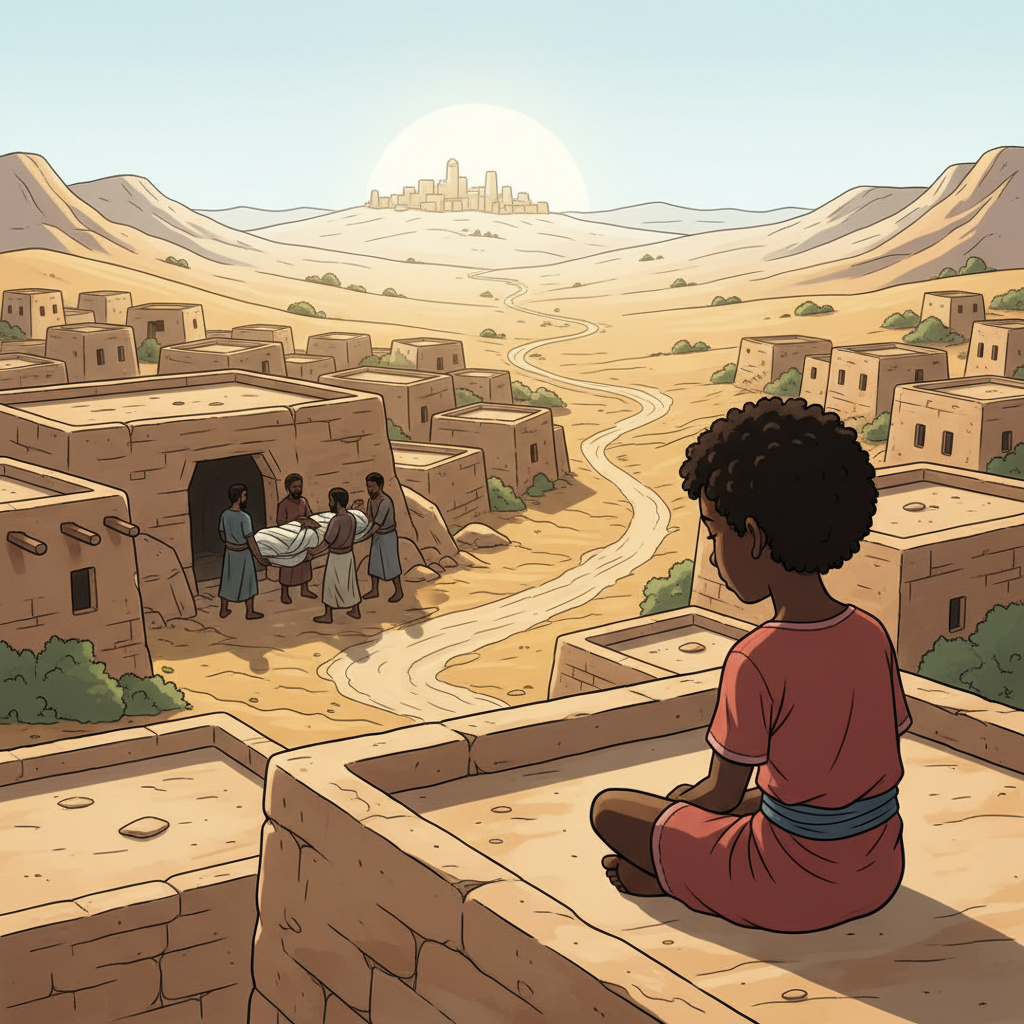
Yohana was ten years old and she had been crying since the third day. She sat on the flat roof of her mother’s house in Bet-Ani, watching the road that climbed out of the valley toward Yerushalayim. Her uncle Lazaros was dead. Four mornings ago, the women of the household had washed his long dark body with palm oil and wrapped him in strips of clean linen. They had folded his hands over his chest the way Seba Taharqo had taught the grandmothers to fold them — thumbs crossed, palms down, the ka-sign invisible beneath the cloth. Then four men had carried him to the rock-cut chamber outside the village, and her mother Marta had rolled the stone across the mouth of the tomb with her own hands. Yohana had not spoken since. Her throat felt stuffed with sand. The sky over Bet-Ani was a hard pale blue that looked too bright to be real.
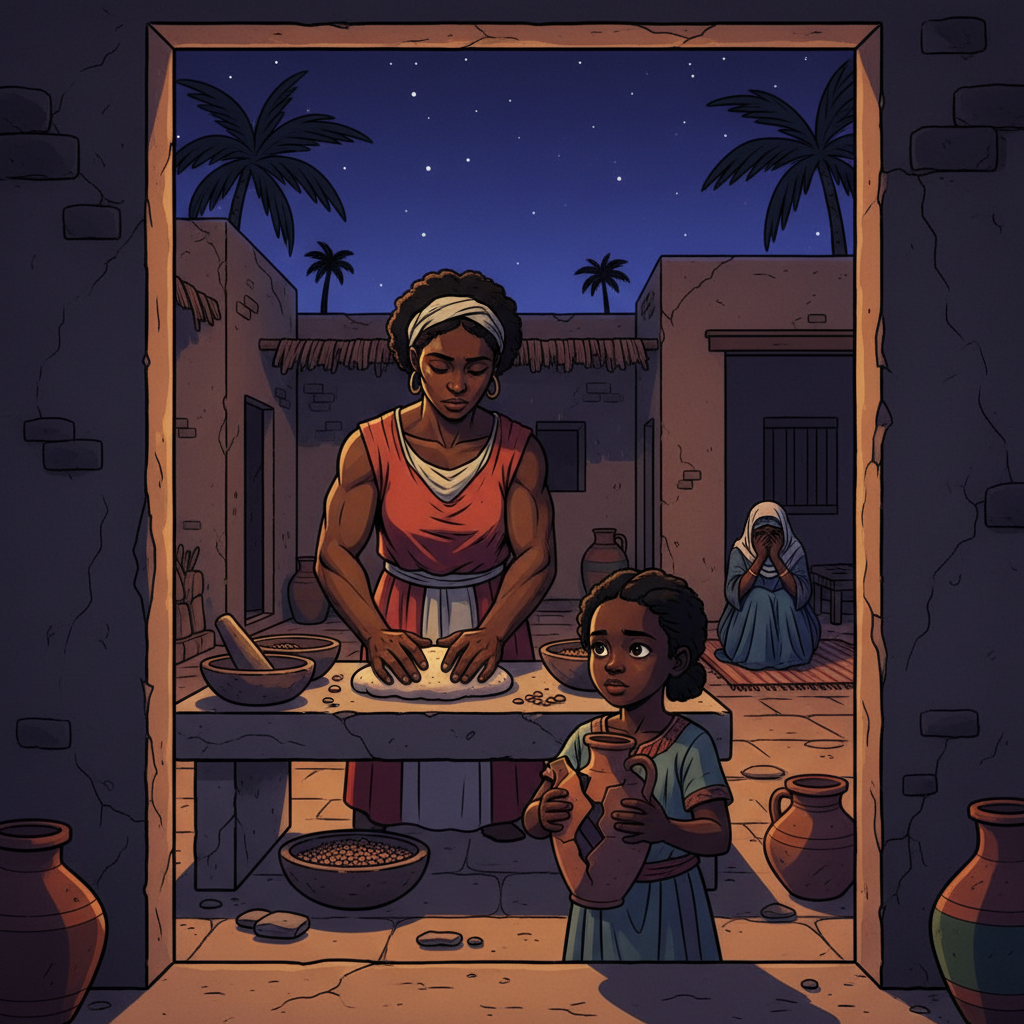
Her mother Marta was the oldest of the three — older than Lazaros had been, older than Miryam of Bet-Ani, Yohana’s aunt who wept in the inner room and would not eat. Marta did not weep that way. Marta cooked. She pounded lentils with a heavy stone pestle, and she kneaded the dough with her dark strong arms, and she sent the neighbor women home when they came to wail too loudly. “We are not Romans,” she told them. “We do not perform grief. We carry it.” Yohana watched her mother from the doorway and understood that Marta was holding the house together with her hands the way a woman holds a cracked water-jar together, pressing the pieces so that nothing inside will spill. Miryam could afford to fall apart. Marta could not. Someone had to remember where the oil was kept, and who had not yet been fed.
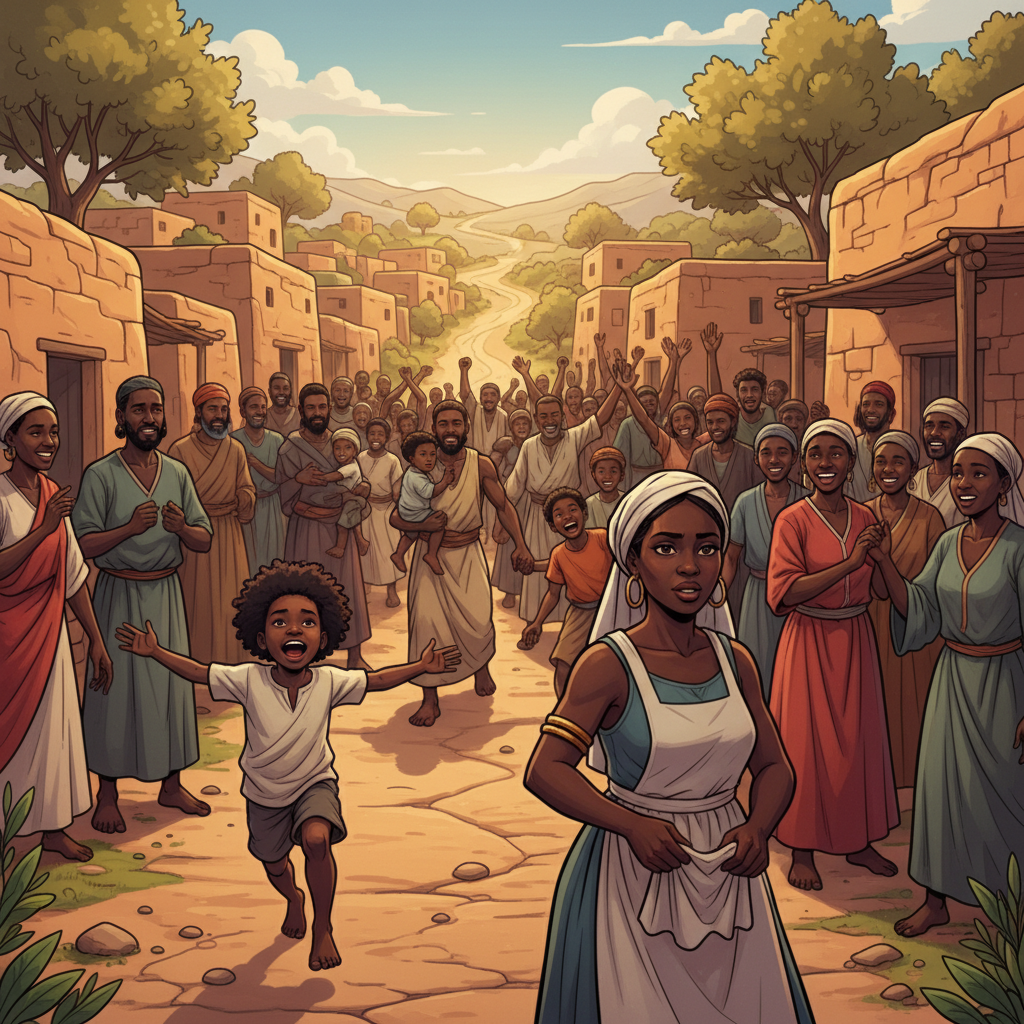
On the fourth morning, the news came up the road before the man himself did. A boy ran into the village shouting that the Galilean was coming — the one who had healed the centurion’s servant in Kafar-Nahum, the one the crowds called Rabbi, the one who wore a silver ankh on a thong around his neck. Yohana knew about the ankh. Her uncle Lazaros had owned one too, a smaller one of copper, and he had told her once that the ankh was older than the Torah, older than the kings of Yisrael, older than the walls of Yerushalayim. “It is from the South,” Lazaros had said. “From Ta-Seti. From the House of Life.” When the boy shouted, Marta put down her pestle. She did not run. She wiped her hands on her apron, tied her head-cloth tighter, and walked out to meet the Galilean on the road.
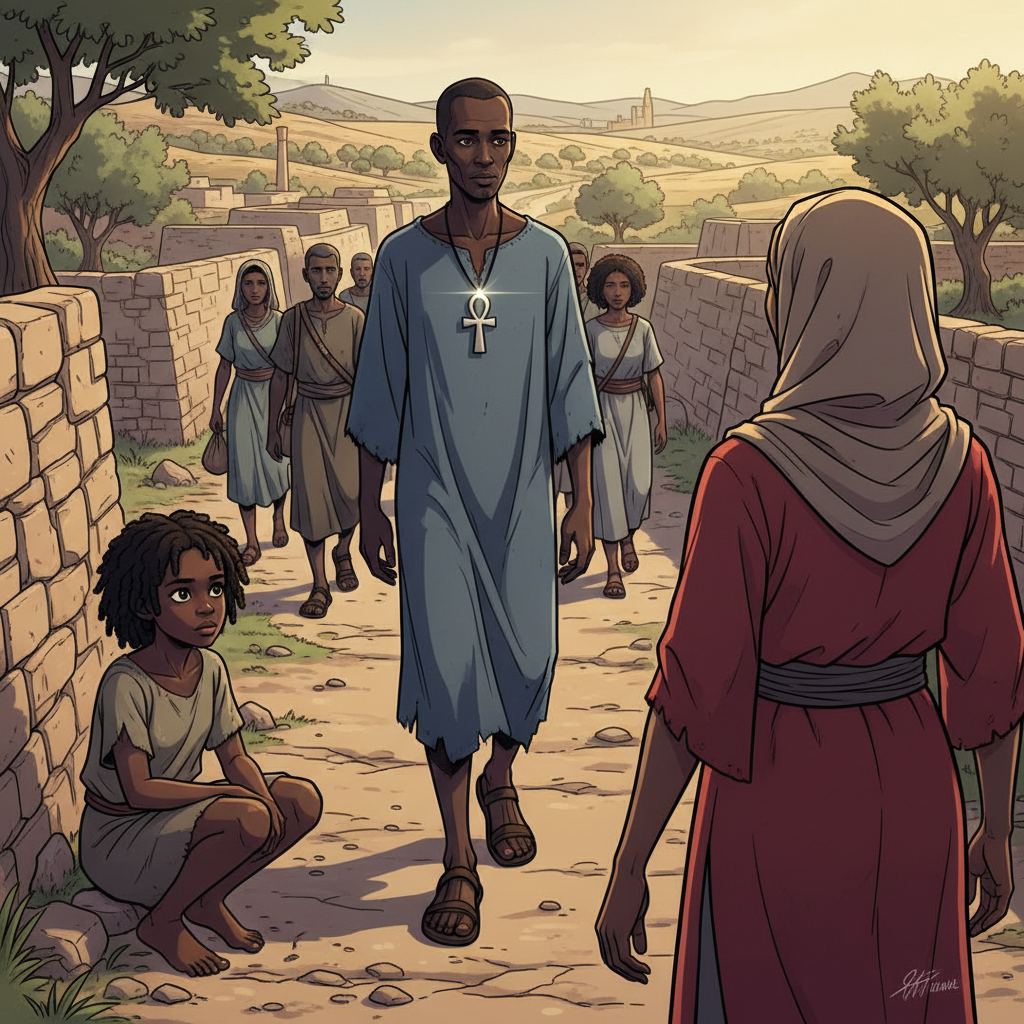
Yohana followed her mother at a distance, bare feet quiet on the dust. She saw Yeshua before Marta did — a tall man, wiry, with skin the deep brown of wet acacia bark and hair cropped close to his skull. He walked with a small band of men and two women, and the silver ankh at his throat caught the morning sun. He was not what Yohana had expected. She had expected someone glowing, someone thunderous. This man looked tired. His sandals were dusty. There was a tear in the hem of his tunic that had been mended with uneven thread, as if he had sewn it himself on the road. But his eyes, when he lifted them to meet Marta’s, were the eyes of someone who had stood in deep water and knew exactly where the bottom was. Yohana crouched behind a low stone wall and watched.
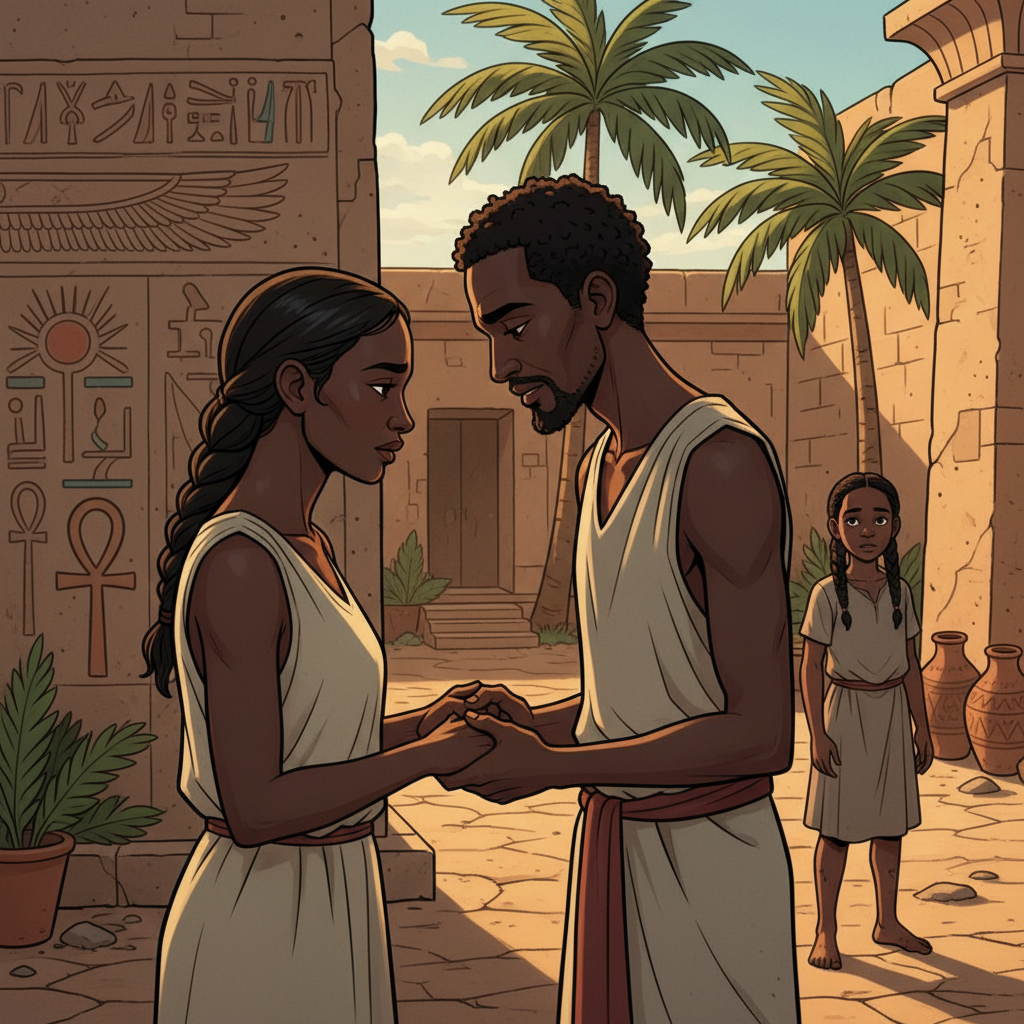
“Rabbi,” Marta said. She did not bow. The two of them had known each other too long for bowing. “If you had been here, my brother would not have died.” Yeshua did not flinch. He took her hands in his — Yohana saw it, the gesture was slow and careful — and he said something quiet that Yohana could not hear. Marta’s shoulders dropped. Then Marta said something that Yohana would remember for the rest of her long life. Marta said, “I know you. I know what you carry. You know the old sayings from the South, the ones Seba Taharqo taught the women when they carried water. The Per em Heru. The Coming Forth by Day.” Yeshua nodded once, a very small nod, and Yohana understood that her mother had just said something enormous in a voice quiet enough for only two people to hear.
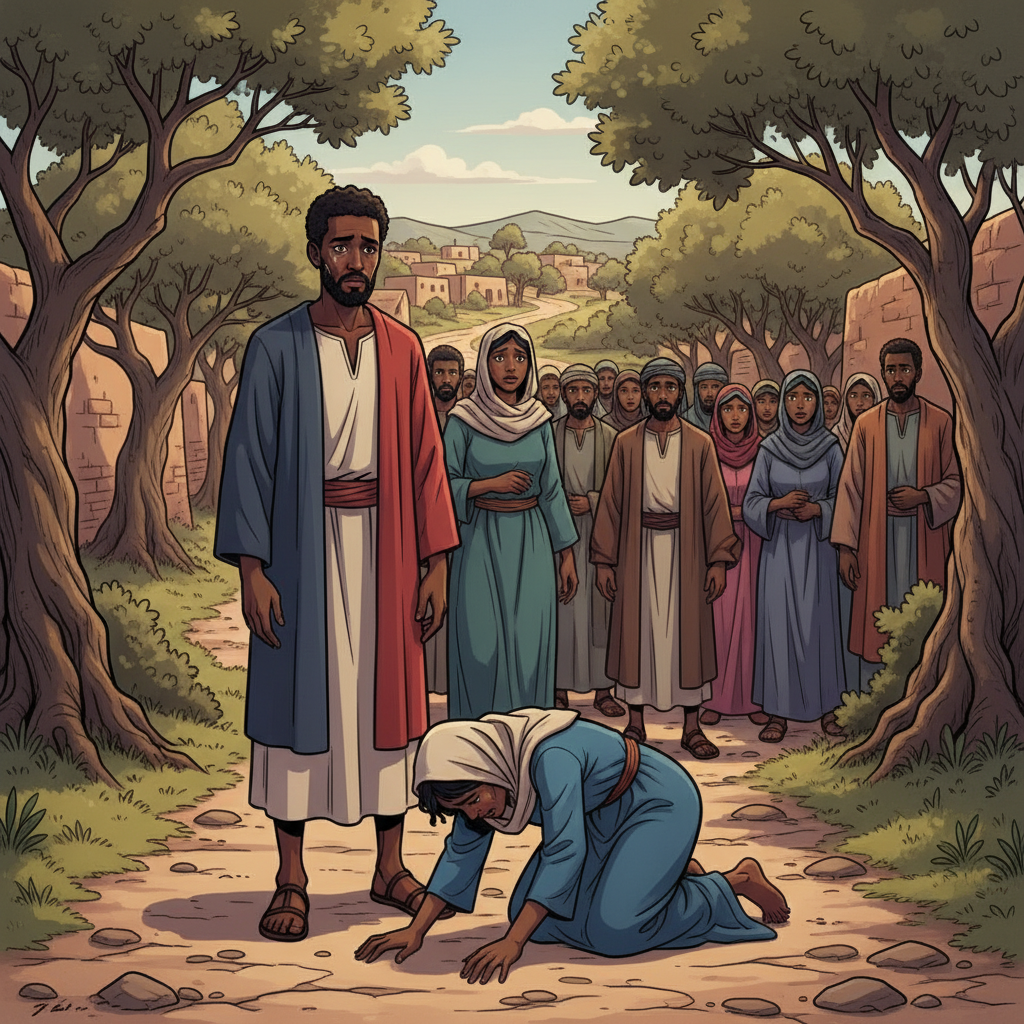
They walked back toward the village together, the whole strange procession — Marta and Yeshua at the front, the disciples behind, the neighbor women trailing with their cloths pulled over their heads. Yohana slipped through the olive trees and kept pace. She wanted to see her aunt Miryam come out. Miryam was the one who cried. Miryam was the one who had loved Lazaros with the kind of open love that doesn’t protect itself. When Miryam saw Yeshua at the edge of the village, she did not walk. She ran, and then she fell, and she pressed her forehead to the dust at his feet, and her whole long body shook. “If you had been here,” she said into the dust. The same words as Marta’s. And then Yeshua did something that the stories would argue about for two thousand years. He cried. He stood in the dust of Bet-Ani and he wept.
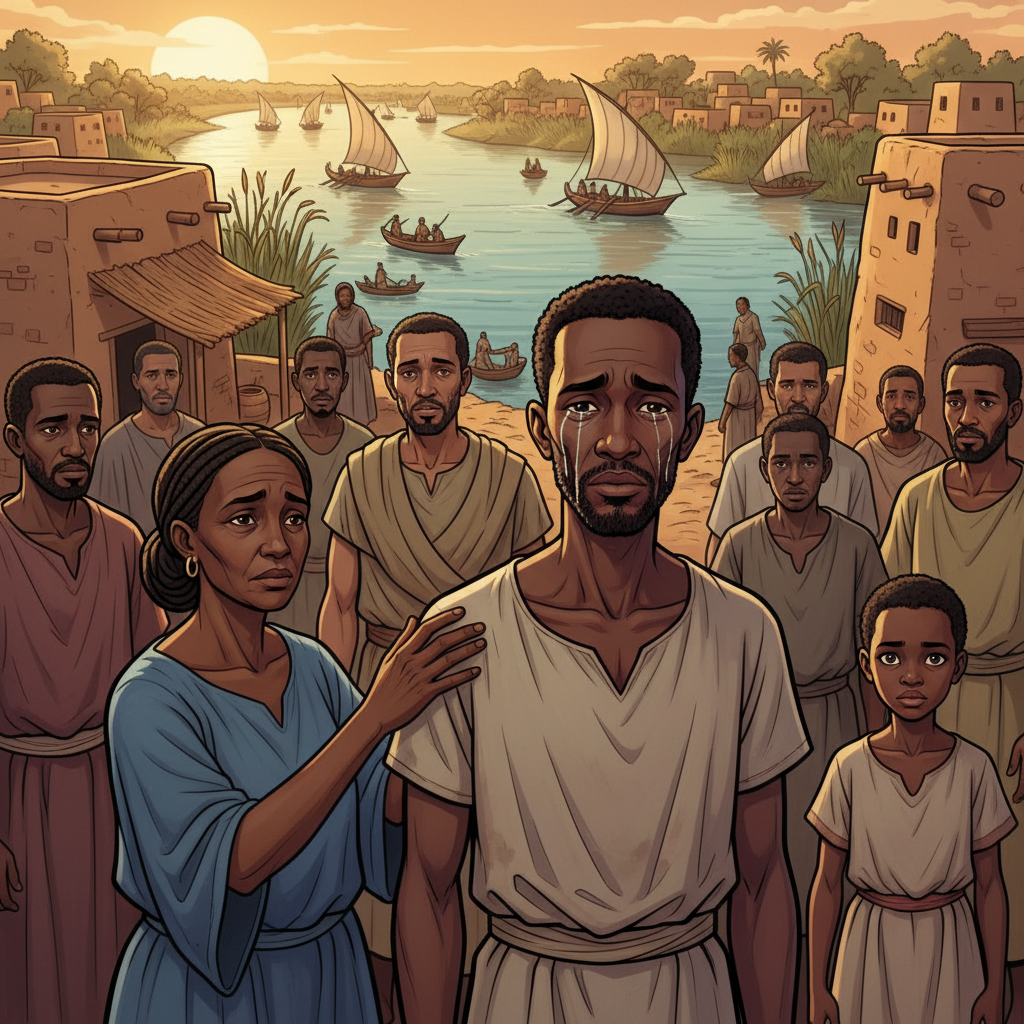
Yohana had never seen a grown man cry like that. Her father had died when she was six, and the men who came to the house then had pressed their lips together and gone hard around the eyes, but none of them had let water fall from their faces the way Yeshua did now. He was not ashamed. He stood in front of the whole village and let the tears cut tracks through the road-dust on his cheeks. Some of the disciples looked away. One of the women put her hand on his shoulder. Later, much later, Yohana would understand why the Galilean wept. It was not because he did not know what he was about to do. It was because he did. He had walked the Per em Heru before, in smaller rooms, and he knew the cost of calling a ba back into a body after four days. The ritual took something from the one who performed it.
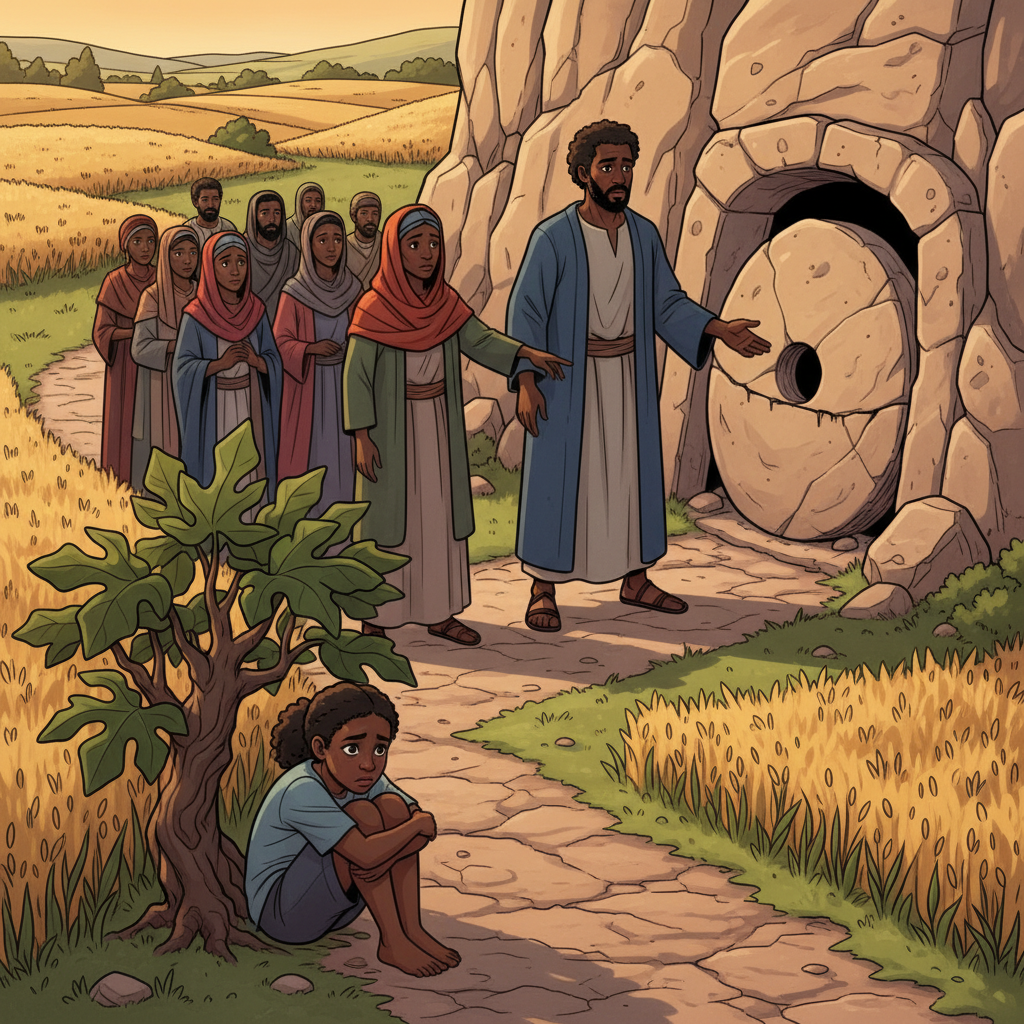
“Where have you laid him?” Yeshua asked, and his voice was hoarse. Marta answered, “Come and see.” She led him out past the last house of the village, past the threshing-floor, up a path between two terraces of barley, to the rock-cut tomb at the base of a low cliff. It was a simple tomb. Not ornate. Not like the tombs of the rich at Yerushalayim, with their carved lintels and Greek inscriptions. This was a working tomb, a family tomb, the kind the fellahin of Bet-Ani had been cutting into soft limestone for fifteen generations. The door was a great round stone rolled into a slot in the rock. A thin line of dried resin sealed the edges against jackals. Yohana stopped at the bottom of the path, behind a fig tree, and sat in the dirt, and wrapped her arms around her knees, and made herself small.
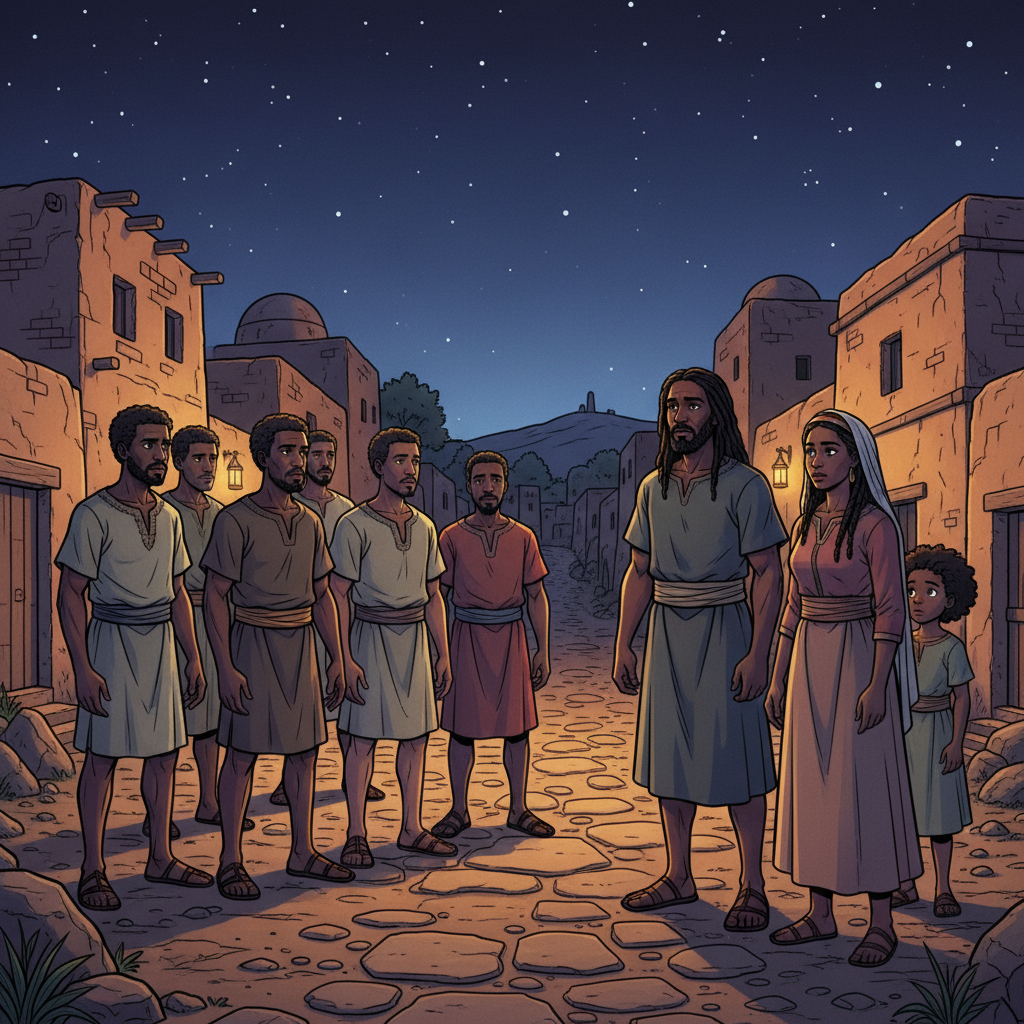
The disciples did not know what to do. Yohana watched them shifting their weight and looking at one another. They were fishermen, most of them, and carpenters. They were good men with rough hands but they had never been initiated into the House of Life. They did not know the old rites. They knew the prayers of the synagogue, the psalms of David, the reading of Torah on the Sabbath, and they knew the God of Yisrael — but they did not know what Yeshua knew. They did not know what Seba Taharqo had taught the women at the well. They did not know the seventy-eight chapters of the Per em Heru that the priests of Waset had preserved through the long night of Hellenic occupation. Yohana did not know those chapters either. But her mother did. And her mother stood now beside the Galilean, and her mother was not afraid.
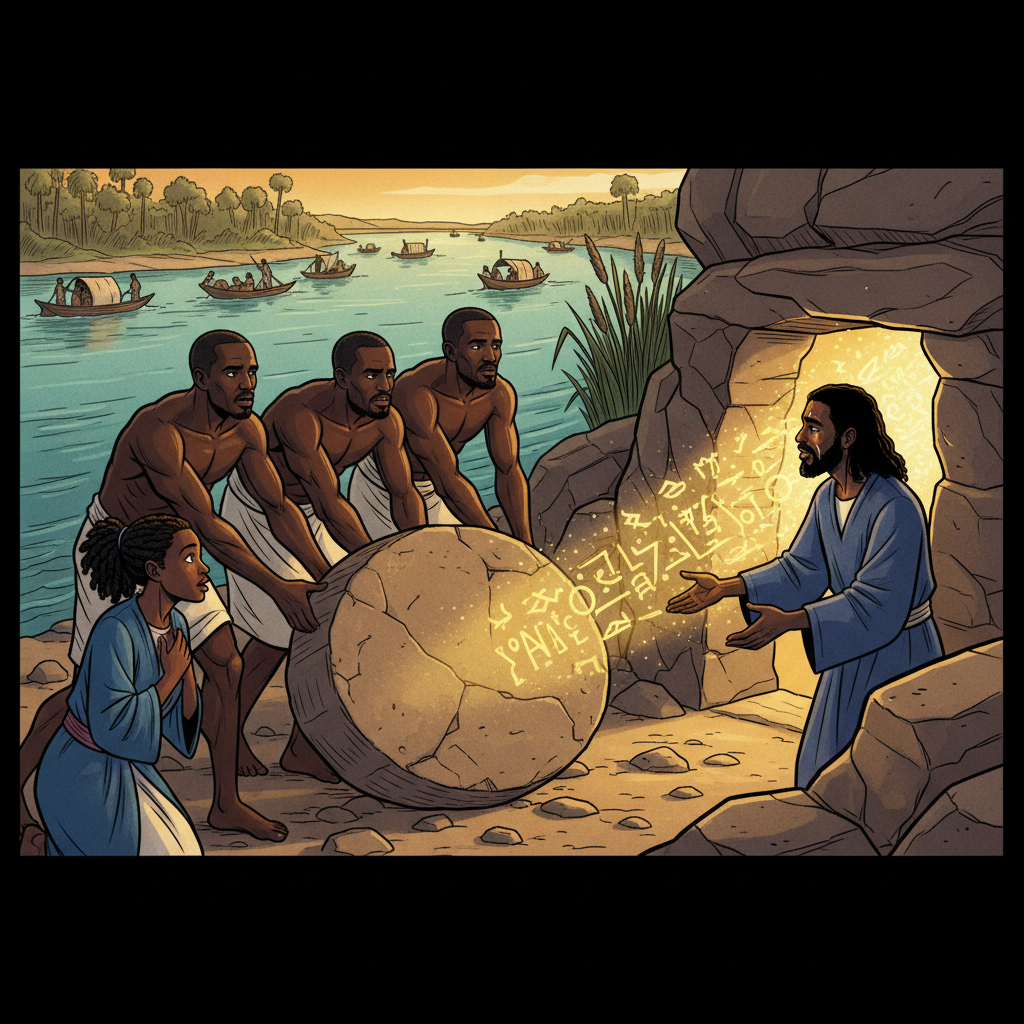
“Take away the stone,” Yeshua said. Marta breathed in once, sharply. “Rabbi, he has been in there four days. He will — the smell —” Yeshua turned to her and his face was still wet. “Did I not tell you,” he said, “that if you trust the old way, you will see the glory of the Neter?” He used the Kemetic word. Yohana heard it. Neter — the old word for the divine presence that the Greeks would later flatten into theos and the Romans into deus, losing everything in the translation. Neter was not a god up in the sky. Neter was the breath of becoming that had walked through the Nile mud at the first morning. Marta heard it too. Something in her face settled. She nodded to four of the village men, and they put their shoulders against the round stone, and they rolled it grinding out of its slot.
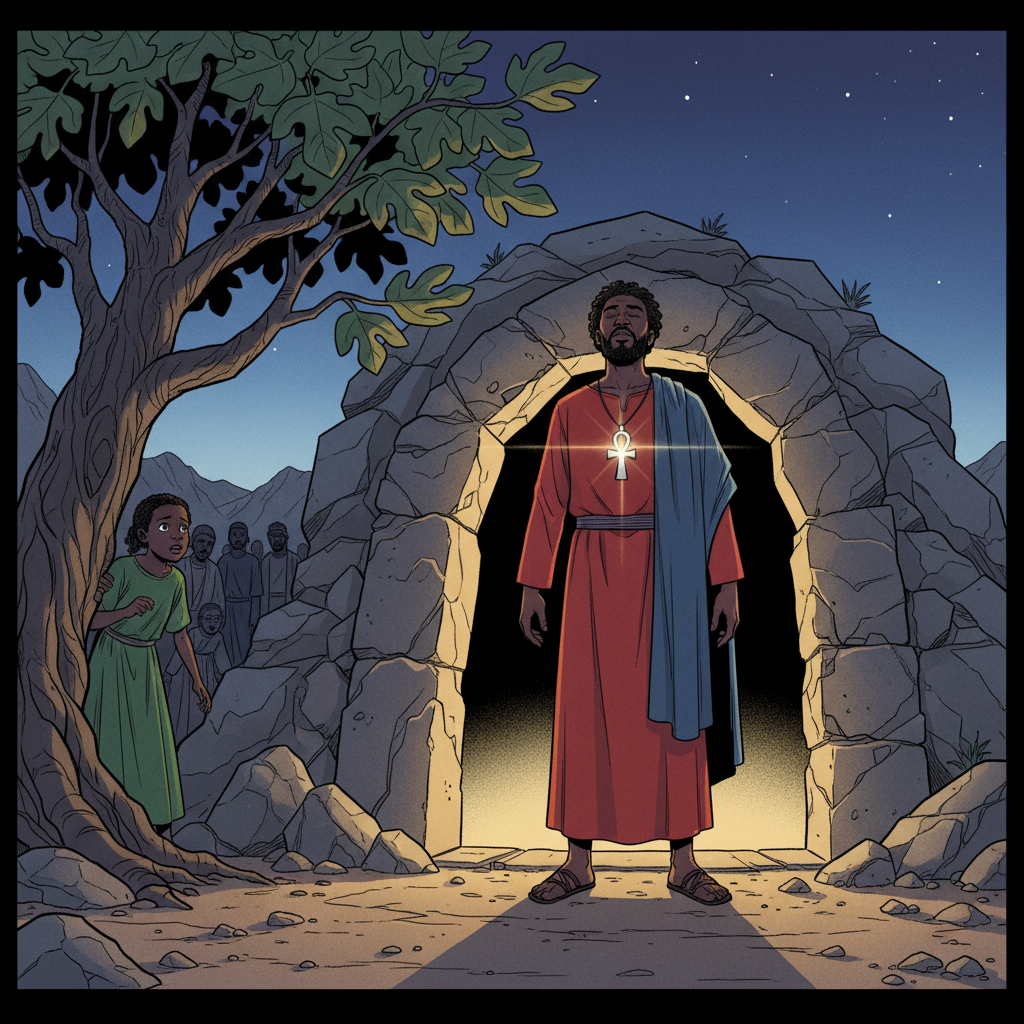
The tomb yawned open. Yohana, behind the fig tree, could smell it from where she was. It was not a terrible smell. It was the smell of old dried cloth and resin and the faint sweetness of the myrrh her mother had packed around her uncle’s body four days before. But it was also the smell of something finished, something over, and Yohana felt her chest tighten. Inside the chamber it was too dark to see. Only a wedge of pale morning light fell on the threshold, lighting a few handbreadths of stone floor, and nothing more. Yeshua did not go in. He stood at the mouth of the tomb, with the silver ankh at his throat catching the sun, and he lifted his face toward the blue sky above Bet-Ani. He was gathering something. Yohana could see it in the set of his jaw. He was preparing to perform the rite.
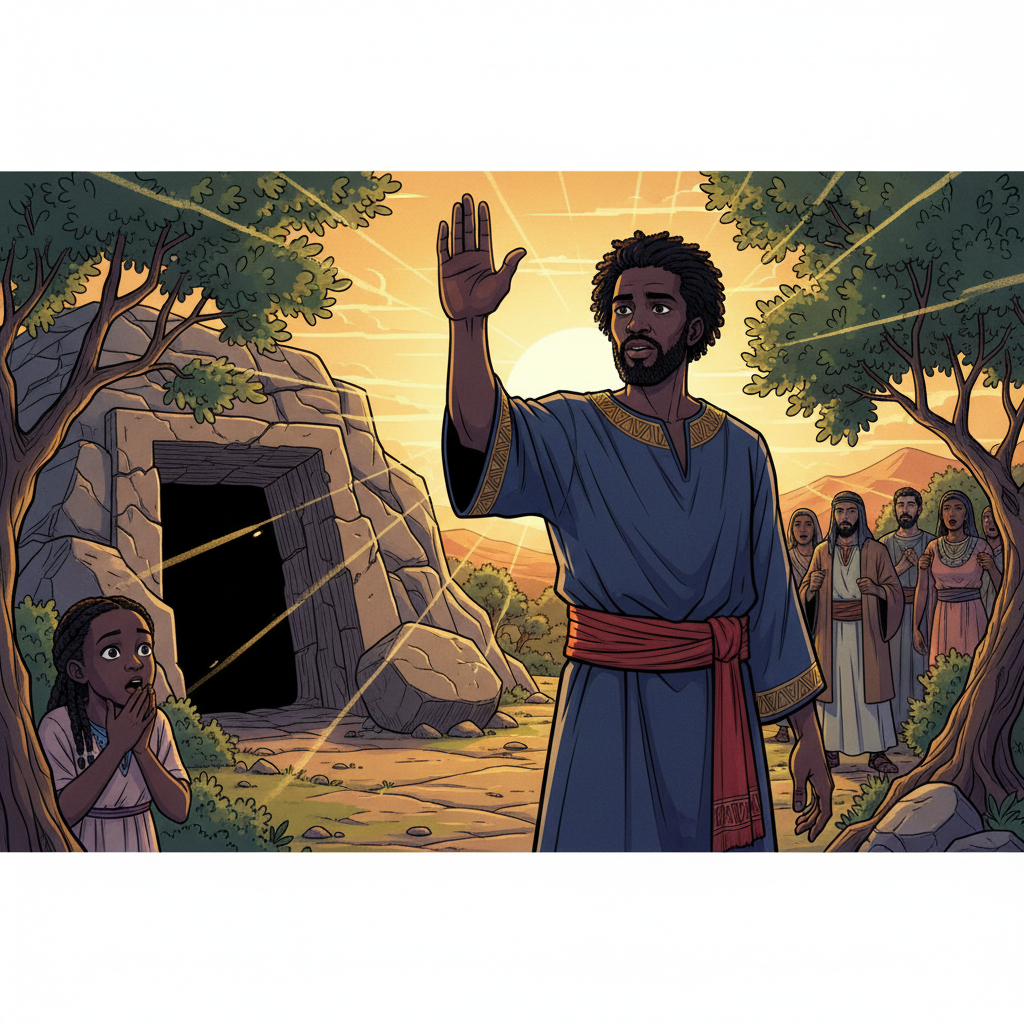
What Yohana saw next, she would describe to her own granddaughters sixty years later in the village of Pelusion, where she had gone to live among the Kemetic-speaking Jews of the Delta. She would tell them this: Yeshua did not shout. He did not raise his arms like the prophets in the synagogue paintings. He lifted his right hand to the level of his mouth, palm open, fingers loose, the way the lector-priests of Waset had always held their hands when opening the mouth of the dead. He breathed in four times, slowly, the way her mother Marta had taught her to breathe when she was frightened. And then, in a voice that was not loud but that went everywhere at once, into the stone and the olive trees and the blue sky and the dirt under Yohana’s small feet, he spoke the name.
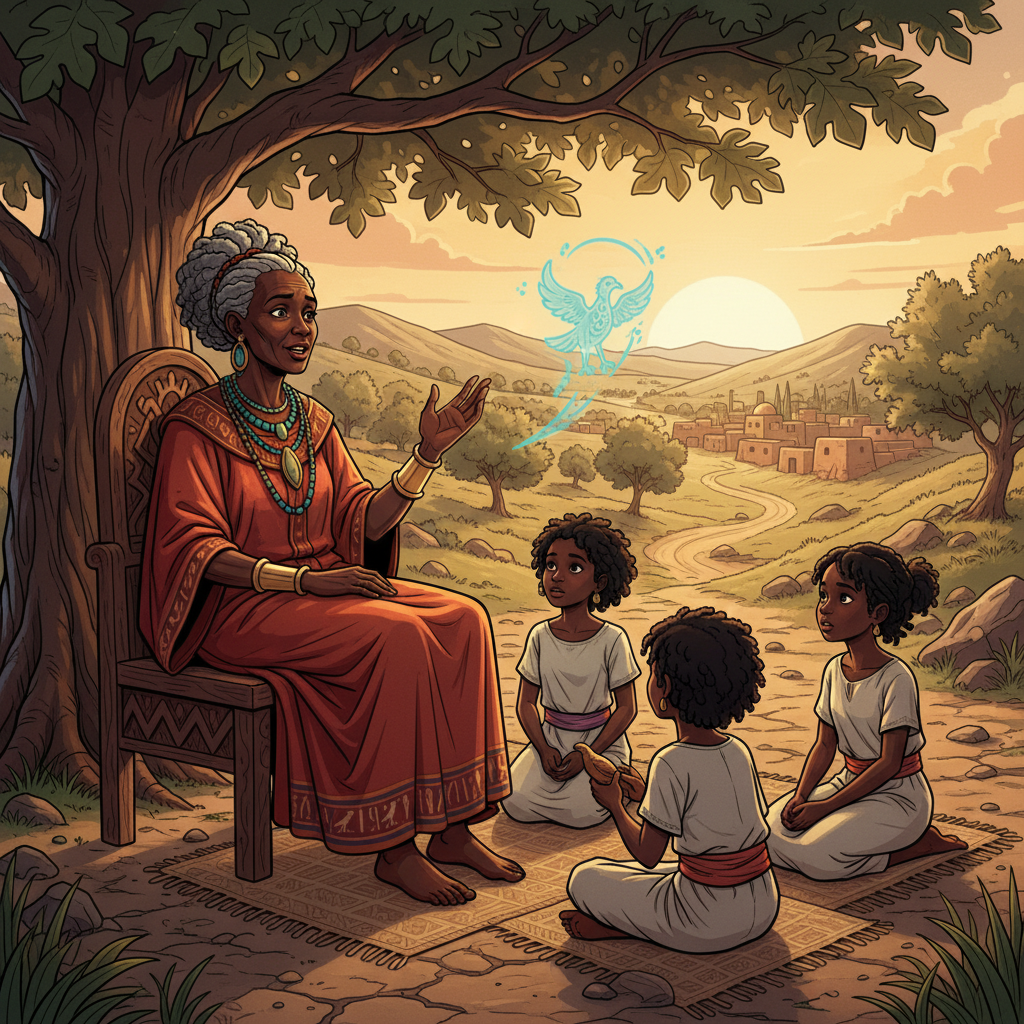
“Lazaros,” Yeshua said. “Come out.” The name. It was always the name. Sixty years later, Yohana would tell her granddaughters that the whole of the Per em Heru tradition turned on this one point — that the ba of a person does not wander formless, that it remembers its own name, and that a properly spoken name, shaped by a throat that has been trained in the House of Life, can call a ba back across the threshold the way a mother calls a child in from the fields at dusk. “It is not magic,” the old Yohana would tell the children. “The Romans said it was magic because they did not understand it. The Greeks said it was a miracle because they had forgotten their own dead. But it is a technology. It is the oldest technology we have. And it belongs to us.”
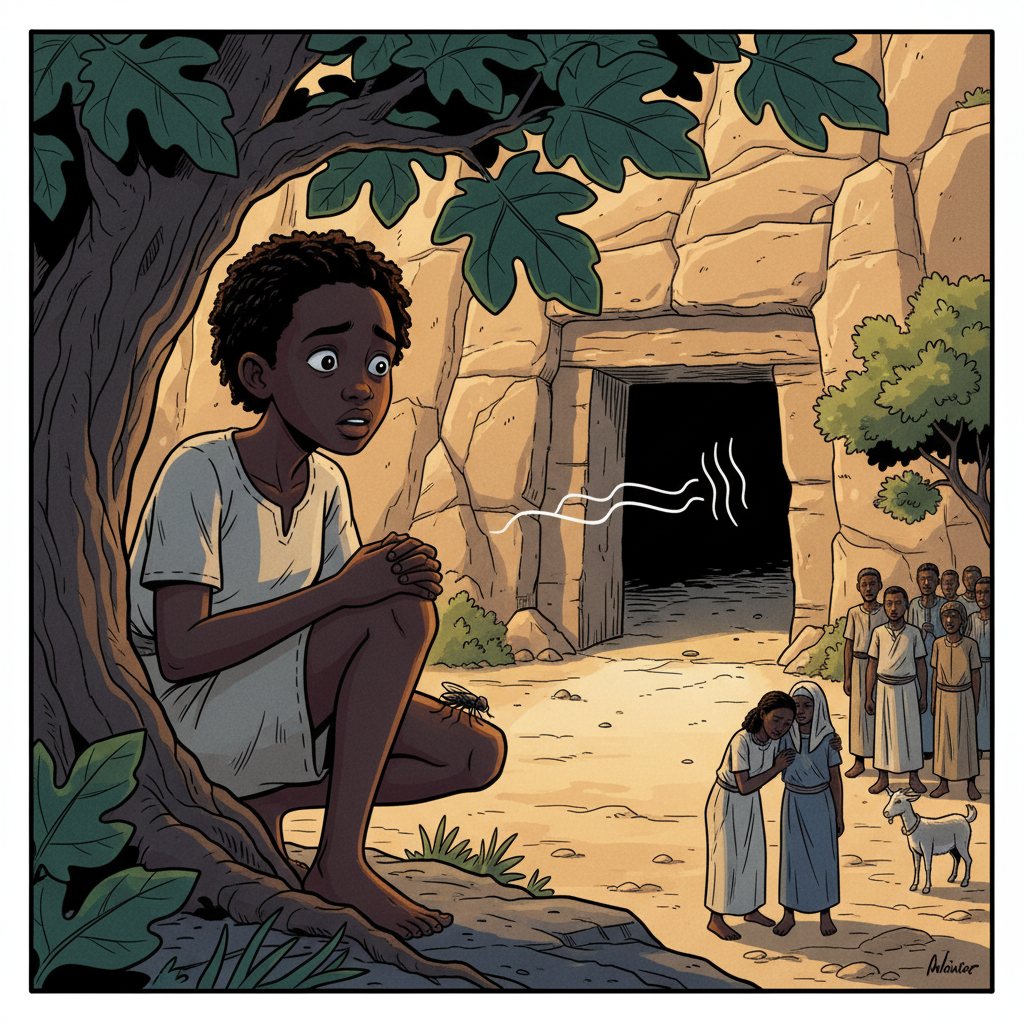
Nothing happened at first. Yohana, watching from behind the fig tree, felt the whole village hold its breath. A fly landed on her knee. A goat bleated somewhere far away. The wedge of light on the threshold of the tomb did not change. For what felt like a very long time, there was only the hot sun and the smell of myrrh and the faint sound of Miryam weeping softly against Marta’s shoulder. Yohana began to think that perhaps she had misunderstood, that perhaps Yeshua had only meant to say goodbye, that perhaps even the old rites had their limits and four days was too many. And then — she would tell her granddaughters about this moment for the rest of her life — and then, from inside the tomb, there was a small dry sound. A rustle. Like linen shifting against stone.
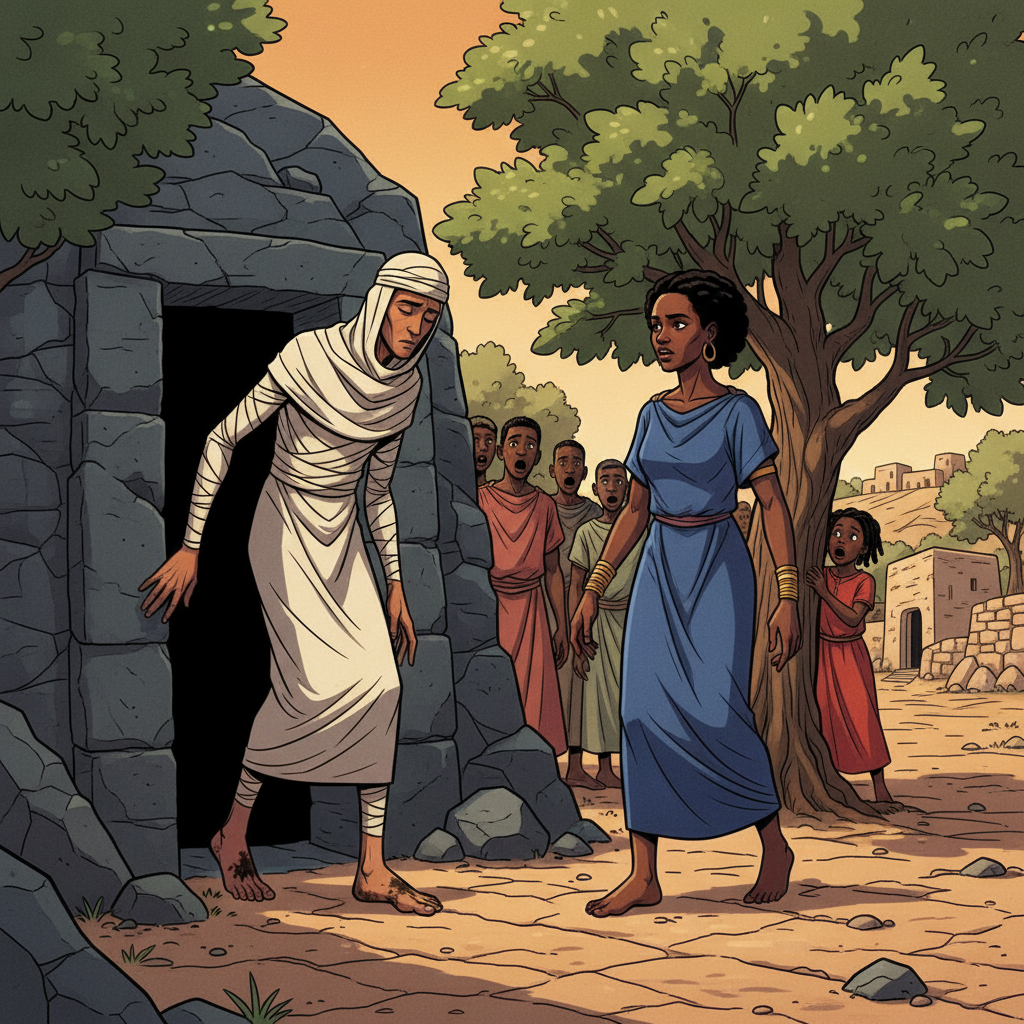
A foot came out first. A foot wrapped in white linen strips, still stained at the heel with the oil her mother had rubbed into it four days ago. Then a hand, groping at the edge of the stone. Then the whole tall shape of her uncle Lazaros, stooped under the low lintel of the tomb, stepping slowly, slowly into the morning light, his body entirely bound in the grave-cloths except for a narrow gap over his eyes. He did not stagger. He walked the way a man walks who has just woken from a deep sleep and is trying not to bump into the furniture. He stopped two paces beyond the threshold. The wedge of sun fell on his chest. Yohana heard the indrawn breath of every person in the village. Her mother Marta did not cry out. Her mother did what the women of the House of Life had always done. Her mother walked toward him.
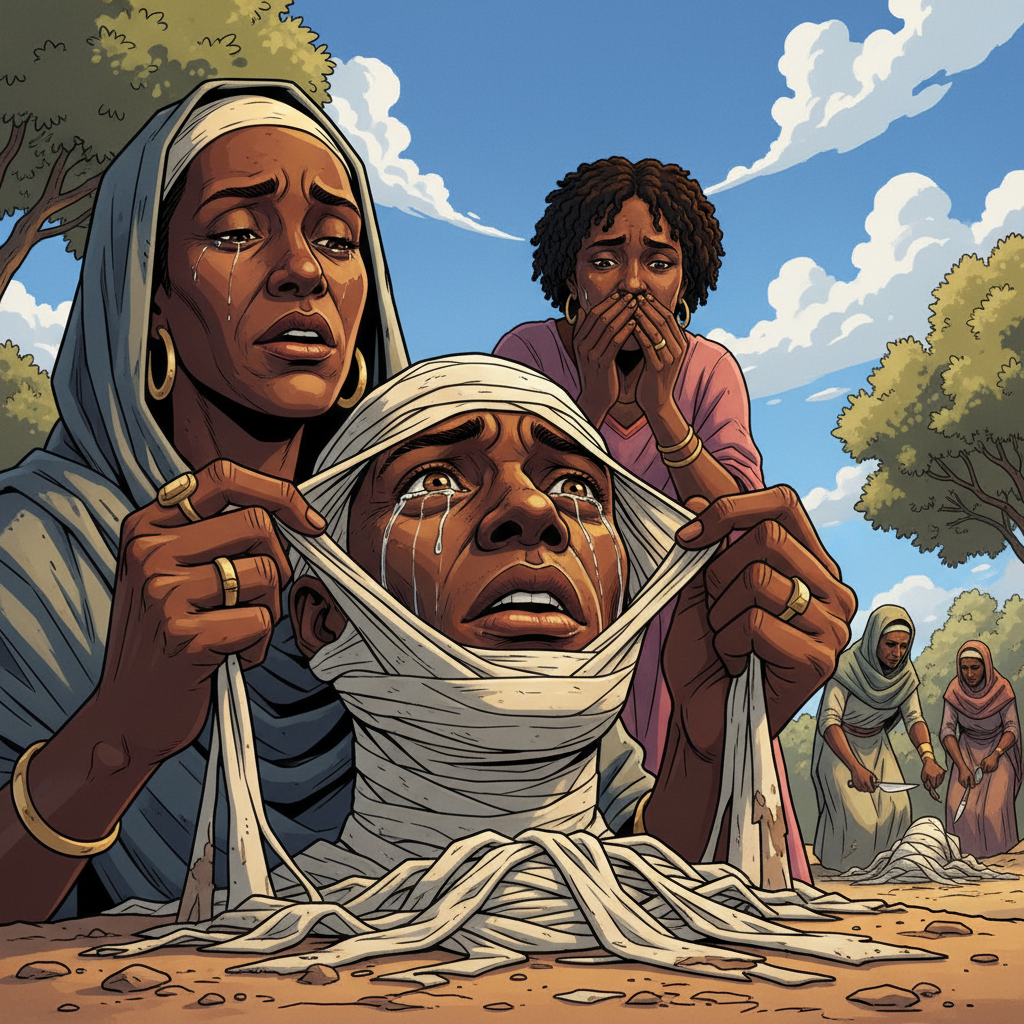
“Unbind him,” Yeshua said, quietly, almost wearily, as if the hard part was already over. “And let him go.” Marta reached her brother first. She took the end of the linen near his face and she peeled it back, carefully, the way one peels the skin off a boiled egg without breaking the white. The cloth came away and Yohana saw her uncle’s face. His eyes were open. His eyes were wet. His eyes saw his sister, and then his other sister Miryam who had come stumbling forward, and then the blue sky of Bet-Ani, and he made a sound that was half a laugh and half a sob, a sound Yohana had never heard a grown man make. Other women came now with small sharp knives, slicing the linen from his arms, his chest, his legs, letting the strips fall into a pile at his feet like the shed skin of a snake in spring.
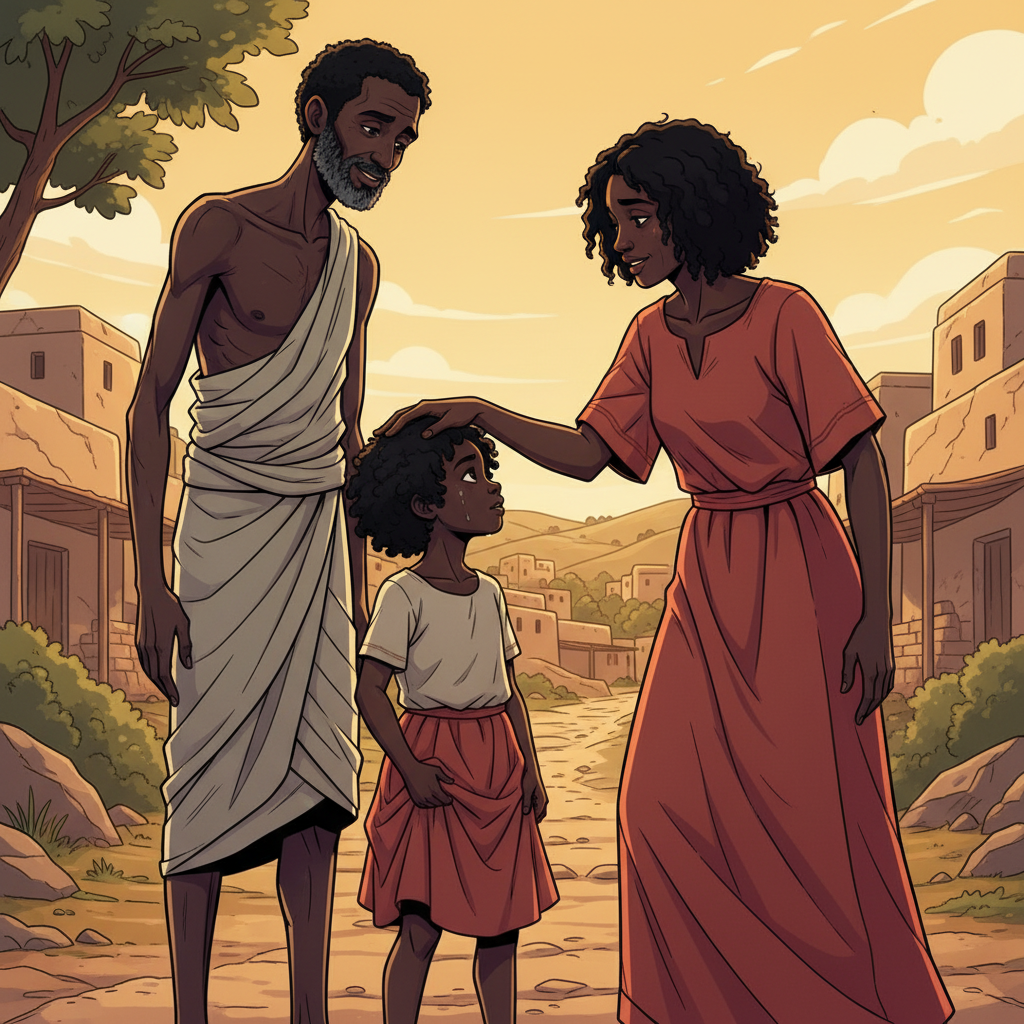
Yohana finally stood up from behind her fig tree. Her legs were stiff. Her cheeks were wet. She walked down the path slowly, because she did not want to run and break the spell, and she came up behind her mother and she took hold of a fold of her mother’s skirt the way she had done when she was four years old. Marta looked down at her and put one large dark hand on the top of her head. “Yohana,” Marta said, “this is your uncle. Go and greet him.” Yohana walked around her mother’s hip and looked up at Lazaros. He was thinner than she remembered. His beard had gone grey at the edges. He looked down at her with a kind of soft puzzlement, as if he were trying to remember the shape of her face from a long way off. Then he smiled. “Little one,” he said. “It is you.”
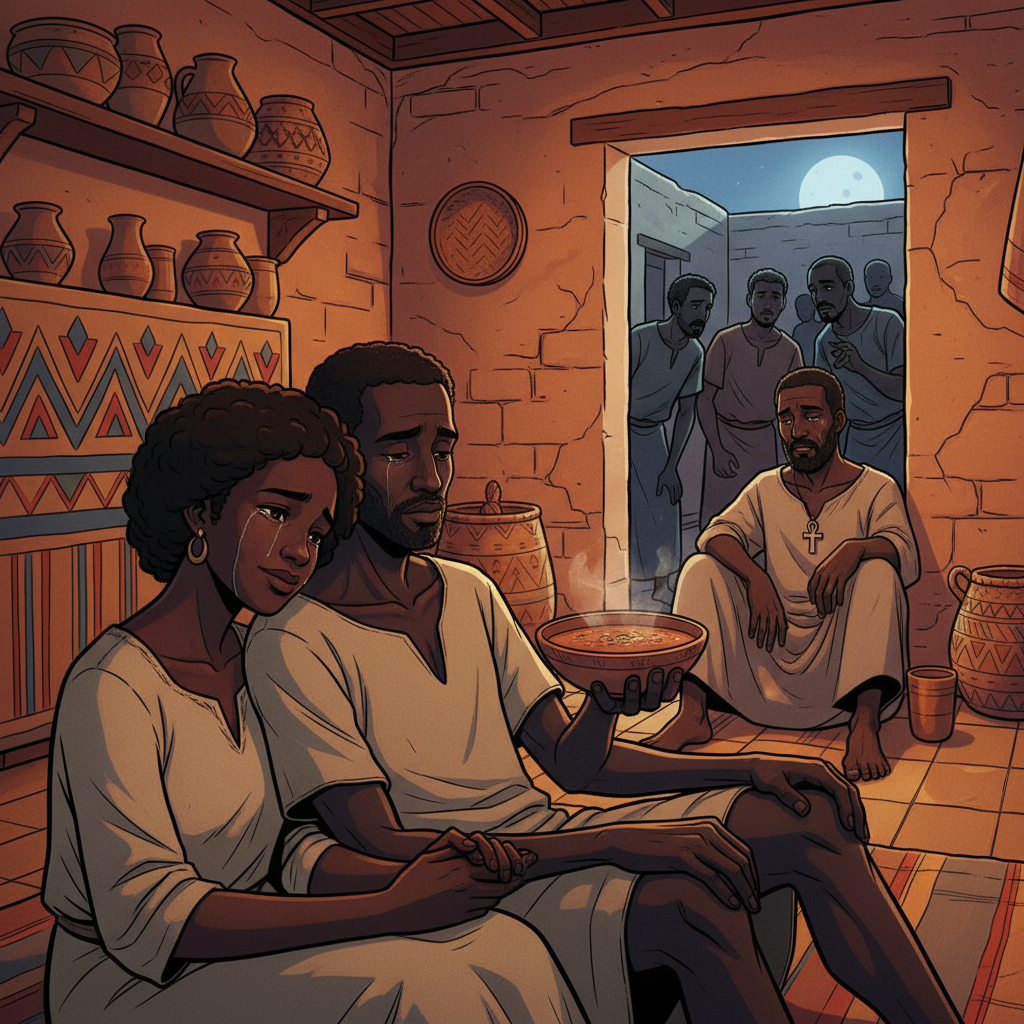
Later that evening, in the inner room of her mother’s house, the men of the village sat outside arguing in low anxious voices about what they had seen, and whether to tell the elders at the synagogue, and whether the Romans would hear of it, and whether Rome would come. The men were afraid. Yohana noticed that the men were always more afraid than the women. Inside, her mother Marta was feeding Lazaros a bowl of warm lentil soup with her own hands, because his hands were still shaking and he could not hold a spoon. Miryam sat beside him with her forehead pressed against his shoulder and she did not let go of his arm, not once, not the whole evening. Yeshua sat against the far wall with the silver ankh at his throat and a clay cup of water untouched beside him. He looked emptied. He looked like a lamp that had been burning too long.
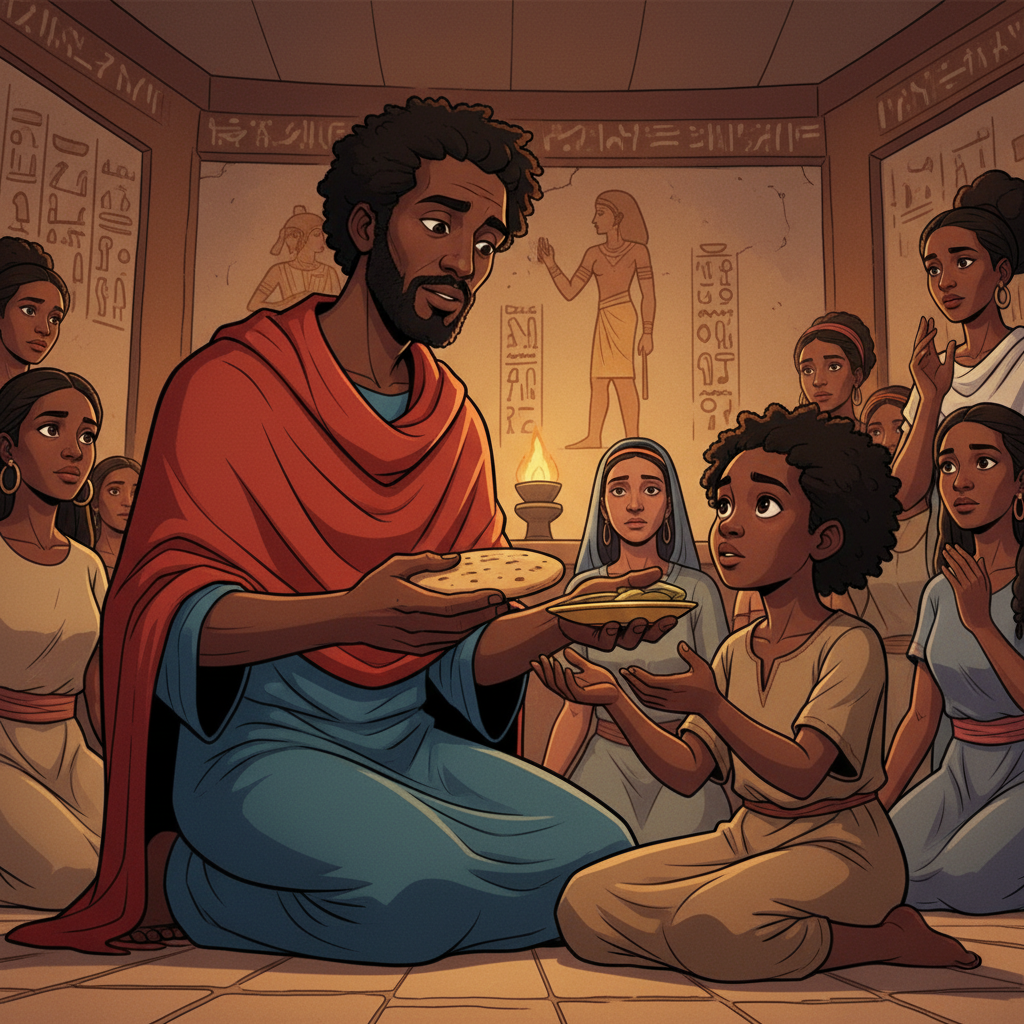
Yohana brought Yeshua a piece of fresh bread and a small dish of olive oil. He took it with a nod and said “Thank you, little daughter.” She sat down cross-legged in front of him, because she was a child and she was allowed to. “Rabbi,” she said, “how did you do it?” The room went quiet. The other women looked at her. Her mother opened her mouth to hush her. But Yeshua shook his head at Marta — a small gesture, between equals — and looked at Yohana with very tired eyes. “I did not do it,” he said. “I performed a rite. The rite is old. It was already here when I was born. It was here when Moshe was born. It was here when Taharqo walked south from Waset with his priests. I learned it in Kemet, when I was a boy. It was waiting for me. It will be waiting for you.”
“For me?” Yohana asked. She was ten. No one had ever suggested to her before that anything holy could wait for a ten-year-old girl. Yeshua smiled, and it was the first real smile she had seen on his face all day. “Especially for you,” he said. “The House of Life is not a building in Waset. The House of Life is the lineage of people who remember that a name, spoken in truth, across any distance, can call the ka home. Your mother remembers. Seba Taharqo taught the women at the wells for a reason. The teaching goes woman to woman, aunt to niece, grandmother to granddaughter. The men will write it down and get most of it wrong. The women will carry the real thing, under their head-cloths, in the songs they sing over the bread. Listen to the songs, little daughter. You will already know most of it.”
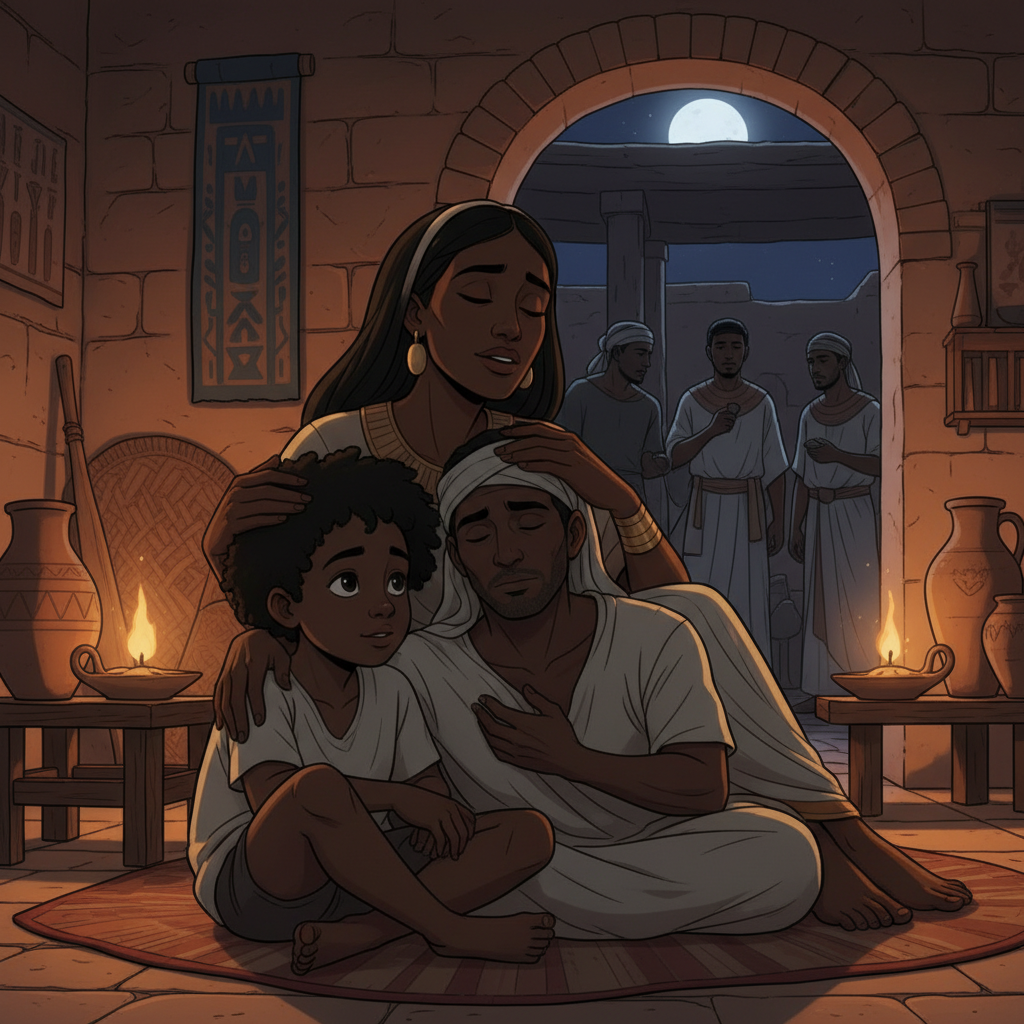
Yohana thought about this for a long time. The clay lamps guttered. Her uncle Lazaros had fallen asleep with his head in Miryam’s lap, and Miryam was stroking his forehead and humming a tune Yohana half-recognized — a tune the grandmothers sang at the wells, a tune older than the village, older than the language they sang it in. A tune about a boat, and a river, and a man who had come back. Yohana listened to the tune. She felt it slot into some empty shape inside her chest. And she understood, in the way children sometimes understand things whole before they have the words, that what had happened today at the tomb was not a break in the order of the world. It was a remembering. It was the order of the world, intact, still working, performed correctly by someone who had been taught how.
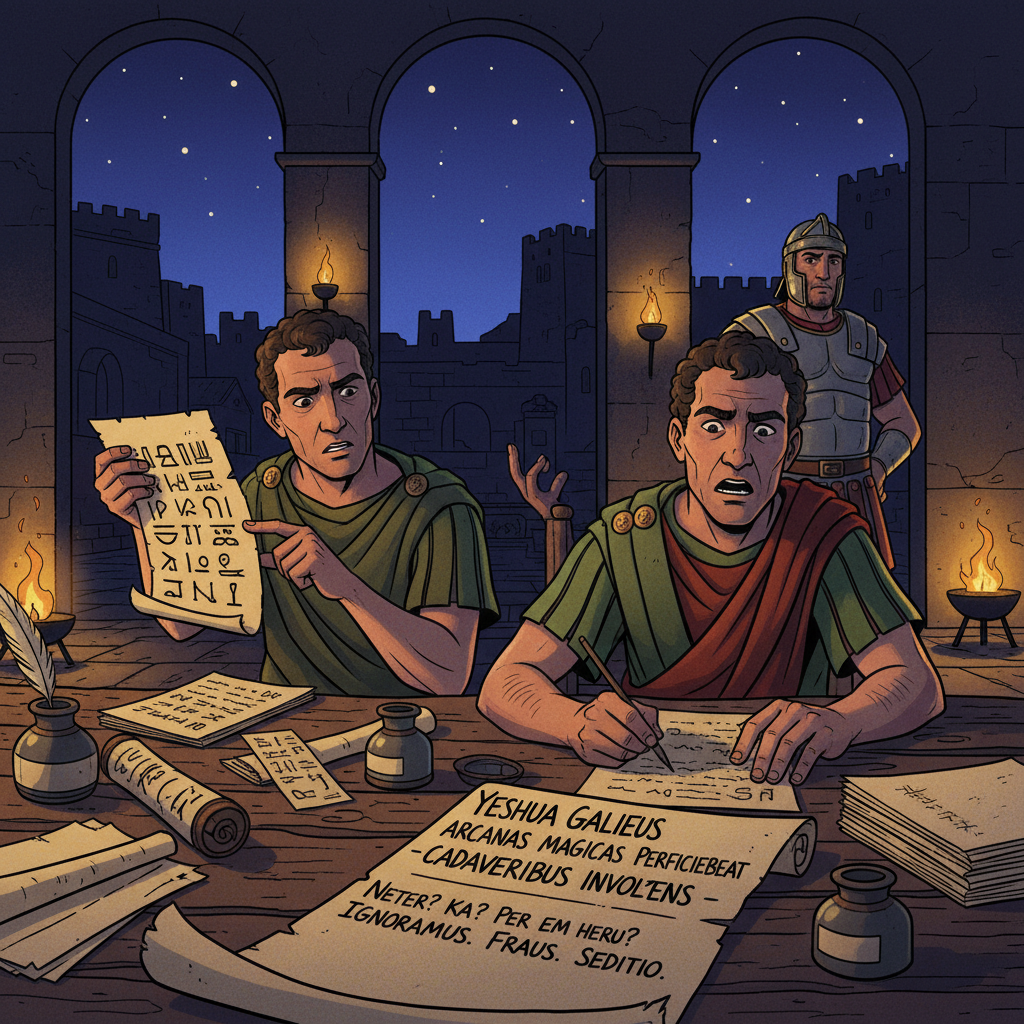
The Romans did come, eventually. Not that night. Not that week. But in time, word of the thing at Bet-Ani reached the wrong ears, and the wrong ears made the wrong notes, and the notes traveled through the wrong offices, and by the end of that year there were men with Latin names asking questions about the Galilean. The men with Latin names did not understand what they had heard. They wrote in their reports that a certain Yeshua of Galilee had been observed performing magic tricks involving corpses. They could not translate the word Neter. They could not translate the word ka. They had no equivalent in their tongue for the Per em Heru. So they wrote magic, and they wrote fraud, and they wrote sedition, and eventually, on a hill outside Yerushalayim, they drove iron into the wrists of the man who had called her uncle home.
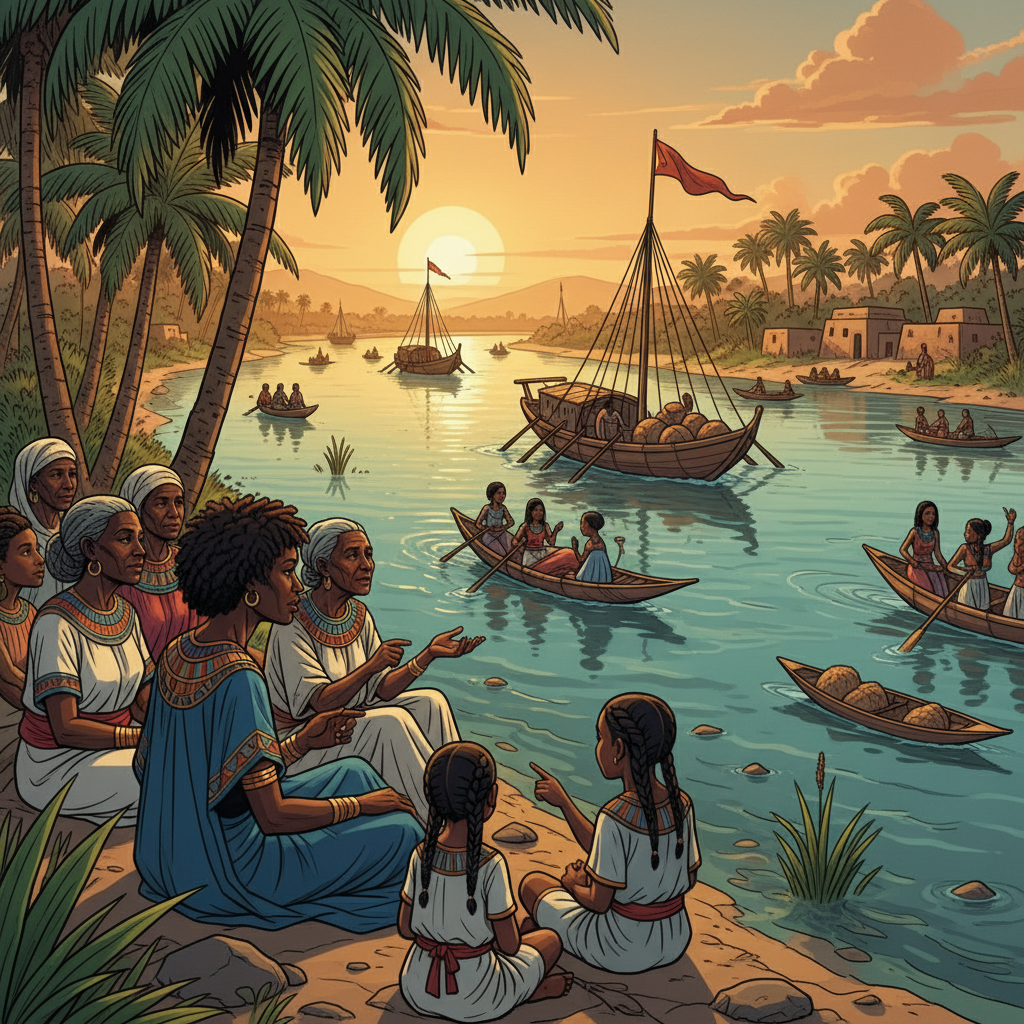
But Yohana grew up. She learned the songs at the wells, as Yeshua had told her she would. She learned from her mother, and from her aunt Miryam, and from the old women who had crossed the Sinai as girls in the time of Seba Taharqo’s great-granddaughters. She married late, after her mother died. She moved to Pelusion, in the eastern Delta of Kemet itself, because she wanted to live near the river Hapi where the first House of Life had been built. She raised four daughters and taught them what Marta had taught her. When each of them was ten years old, Yohana sat them down and told them, in careful detail, what she had seen behind the fig tree on the fourth morning at Bet-Ani. She did not leave anything out. She did not add anything either.
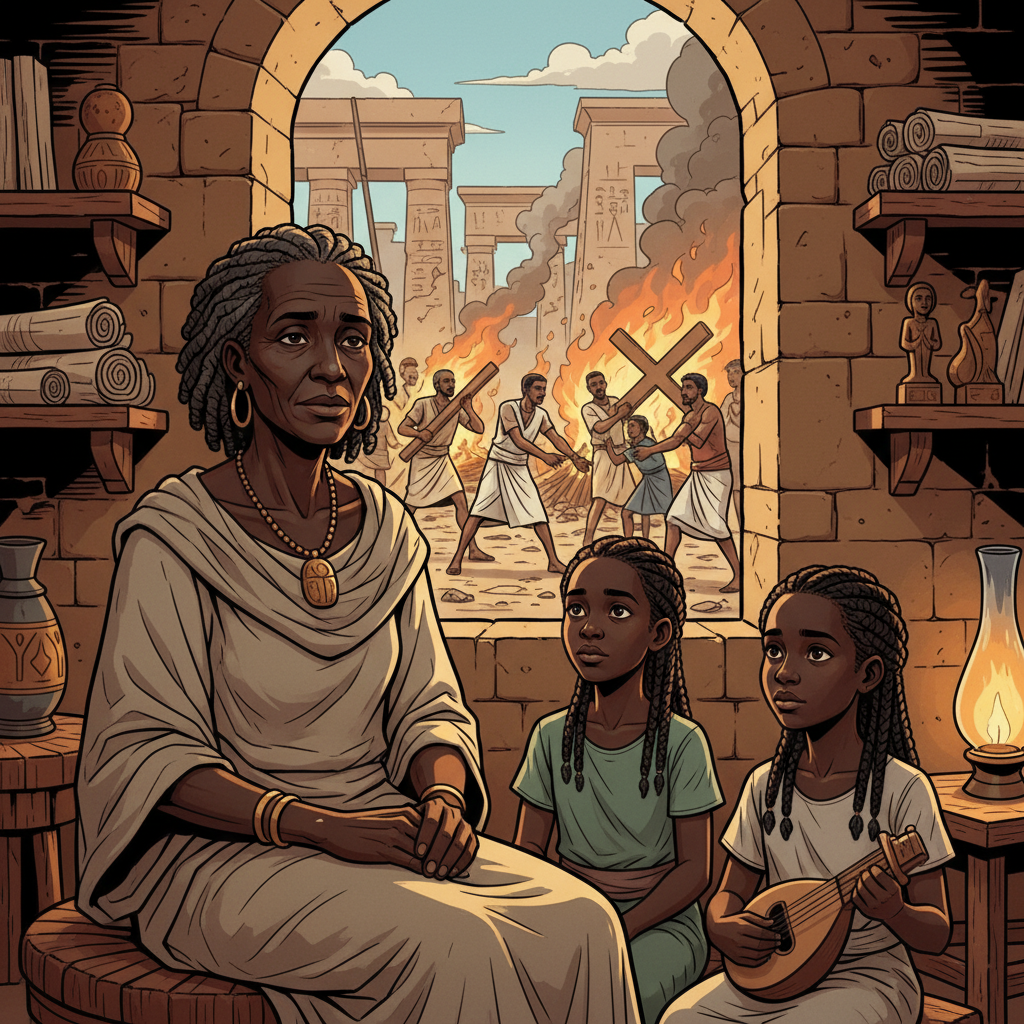
By the time Yohana was seventy, the new religion had begun to spread west and north, carried by men who had never met Yeshua and who had begun, quietly at first and then loudly, to erase the Kemetic teachers from his story. They did not want a Galilean who had been trained in Waset. They wanted a Galilean who had sprung whole from the Torah, with no African root. They called the old rites pagan. They called the House of Life a cult. They burned the papyri they could find. Yohana watched this happen from her small house in Pelusion with a clear eye. She did not weep for it. She told her granddaughters: “The truth does not live in the papyri. The truth lives in the songs. As long as the women sing at the wells, they can burn every scroll on earth and the rite will survive. It will wait. It is patient.”
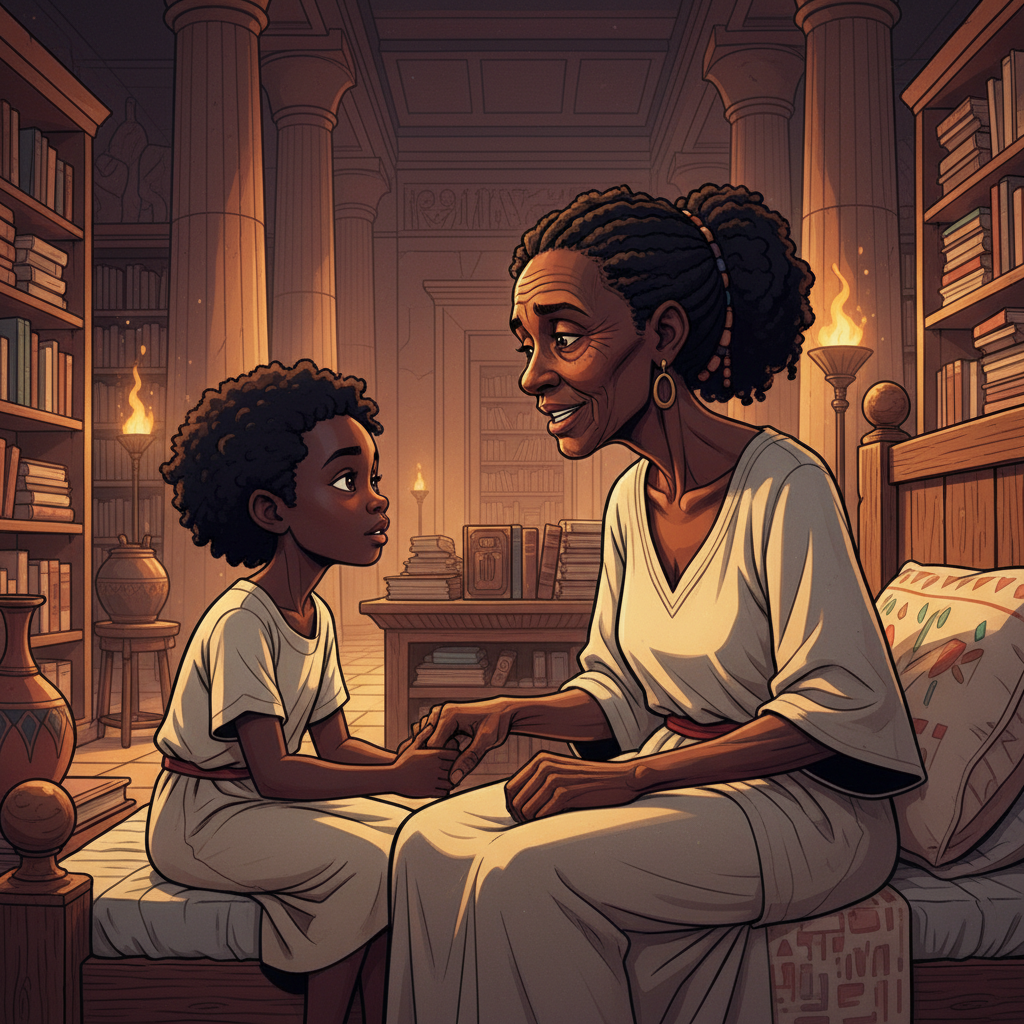
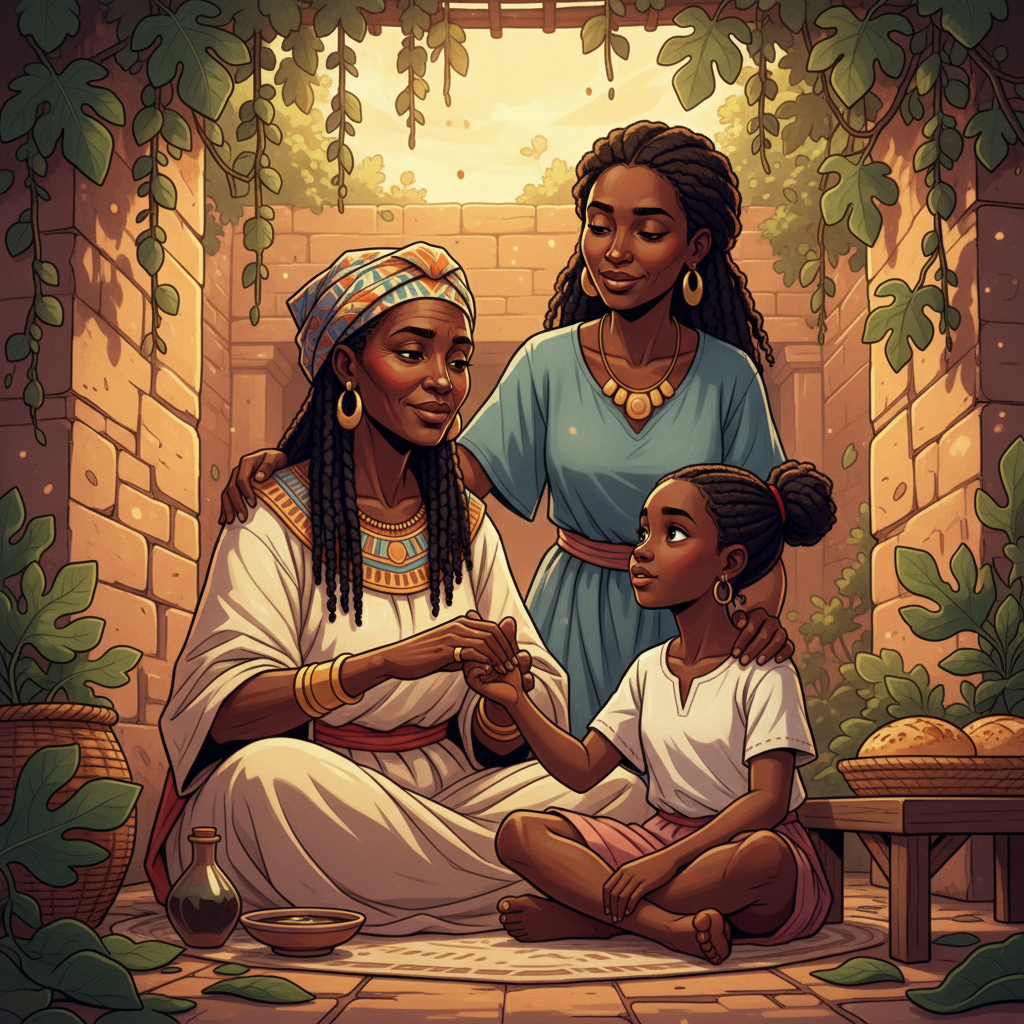
On her last evening — she was eighty-three and still sharp — Yohana called her eldest granddaughter to her bed. The girl was ten. Her name, by long custom in their family, was also Yohana. Old Yohana took the child’s small dark hand in her own wrinkled one and said: “Listen. When you are a grown woman, there will be people who tell you your ancestors were savages. They will tell you that the Africans had no science, no writing, no soul-craft. They will say everything holy came from the north. Do not argue with them. It wastes breath. Instead, remember this. On the fourth morning at Bet-Ani, a Galilean man with deep brown skin and a silver ankh called my uncle out of a rock tomb using a rite that had been old when Moshe was in diapers. I was there. I was your age. The rite works. The rite is ours. Carry it.”
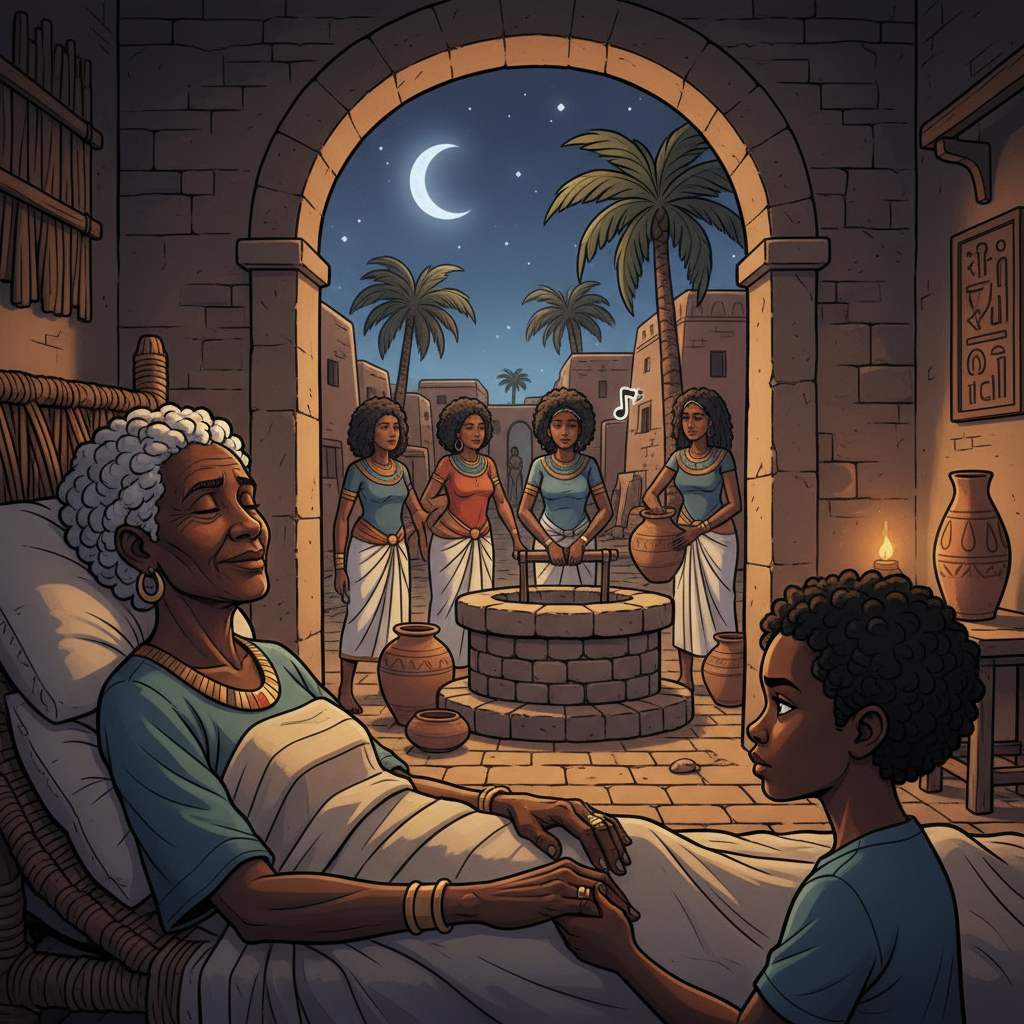
The small Yohana did not say anything. She only squeezed her grandmother’s hand. And outside, in the warm Delta night, the women at the well were drawing water for the morning bread, and one of them was humming, without thinking about it, an old tune about a boat, and a river, and a man who had come back — a tune whose origins none of them could have named, but which all of them knew, because it had traveled woman to woman, well to well, generation to generation, down the long bright corridor of the House of Life, from before the pyramids, through the house at Bet-Ani, into the Delta, into this night, into the small body of a ten-year-old girl who was already learning, without being told, that she was the next carrier of a very old, very patient, very African way of calling the ka home.