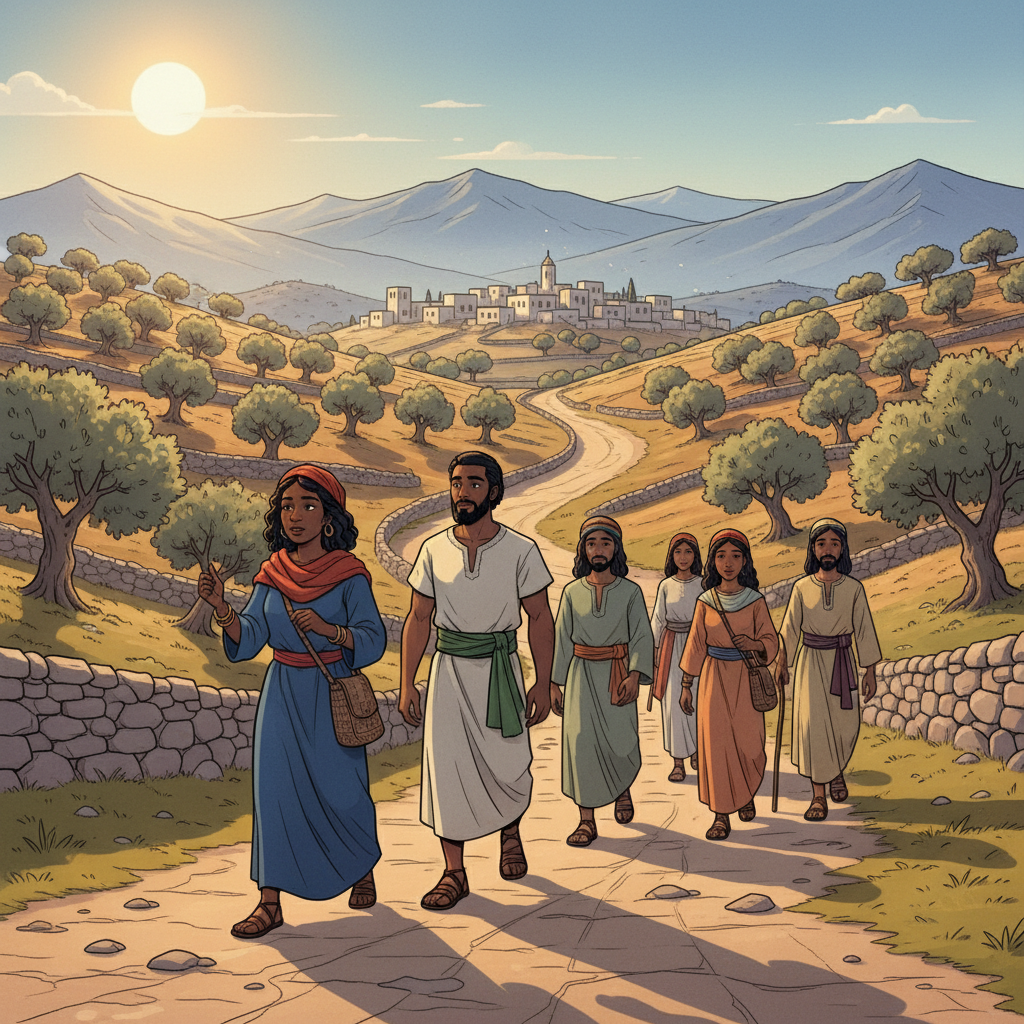
The morning sun, already warm on the dusty path, climbed steadily as Miriam, Yeshua, and a small band of those who followed him, walked toward Qana. Qana was a small village in the heart of the Galilee, a place of olive groves and terraced hills, where families had lived for generations, their roots deep in the dark earth. Today, Qana hummed with a different kind of life, a joyous tremor in the air. A wedding was underway, a joining of two cousin families, their histories braided together like strong desert grasses. Miriam, whose wisdom ran as deep as the Nile's ancient currents, had been called to help prepare, her hands knowing the sacred rhythms of the hearth. Yeshua walked quietly beside her, his gaze taking in the shimmering heat and the distant blue haze of the mountains, his spirit attuned to the pulse of the land. They had walked the morning's road from Capernaum, leaving the bustle of the lake behind them for the quiet celebration.
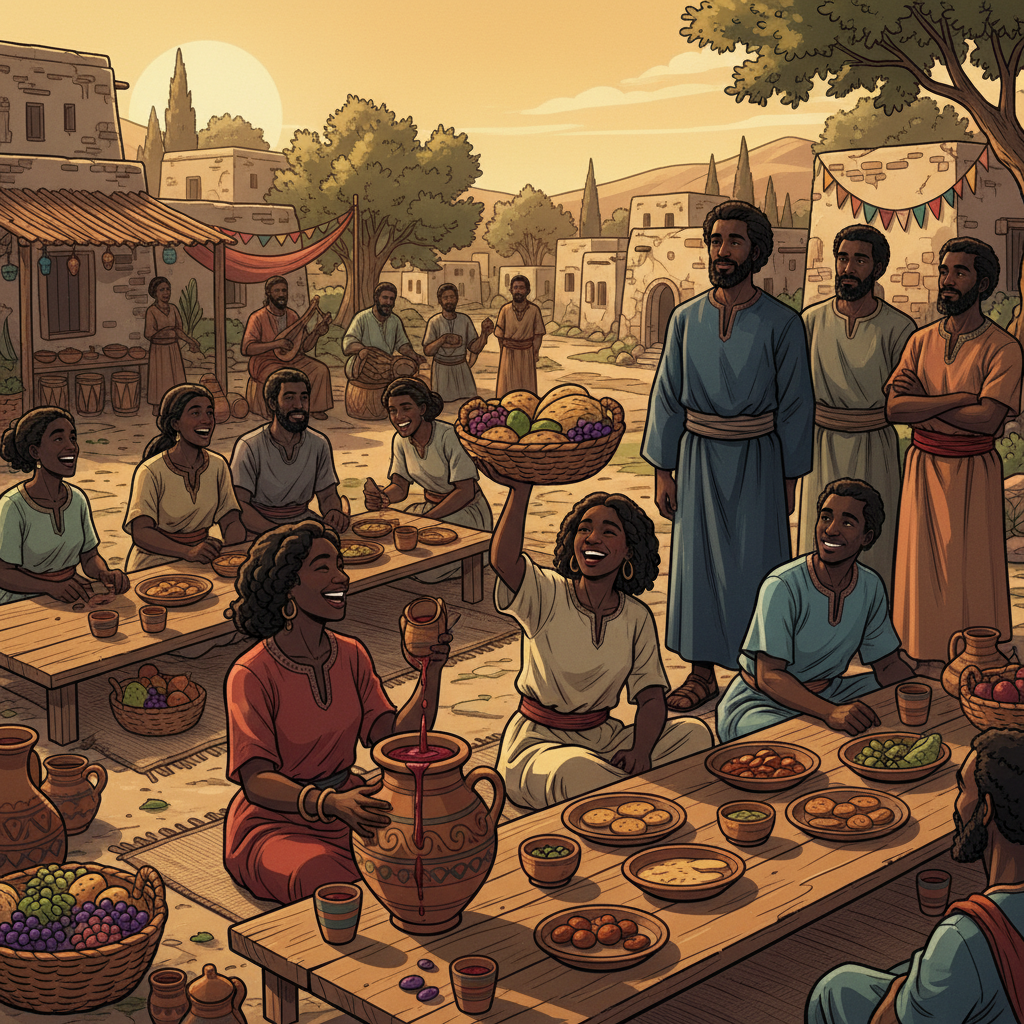
Galilean weddings were not fleeting moments; they were a testament to community, a seven-day unfolding of life and laughter. The food, though often simple, was generous, shared from brimming baskets and earthenware pots, a communal feast that honored the joining of lineages. But the true social glue, the very spirit of the gathering, was the wine. It flowed freely, a deep red river of celebration, marking the joyous covenant between families. Yeshua, now thirty circles of the sun, had passed through the hidden years, the time of quiet learning and deep meditation in the tradition of our ancestors. The baptism by Yochanan (story #3) was behind him, and he had begun to gather disciples – Petros, Andreas, Yochanan – men whose hearts had heard the call. Yet, in these early days, he was still largely unknown, a quiet presence in the unfolding drama of the world, his power still veiled to most.
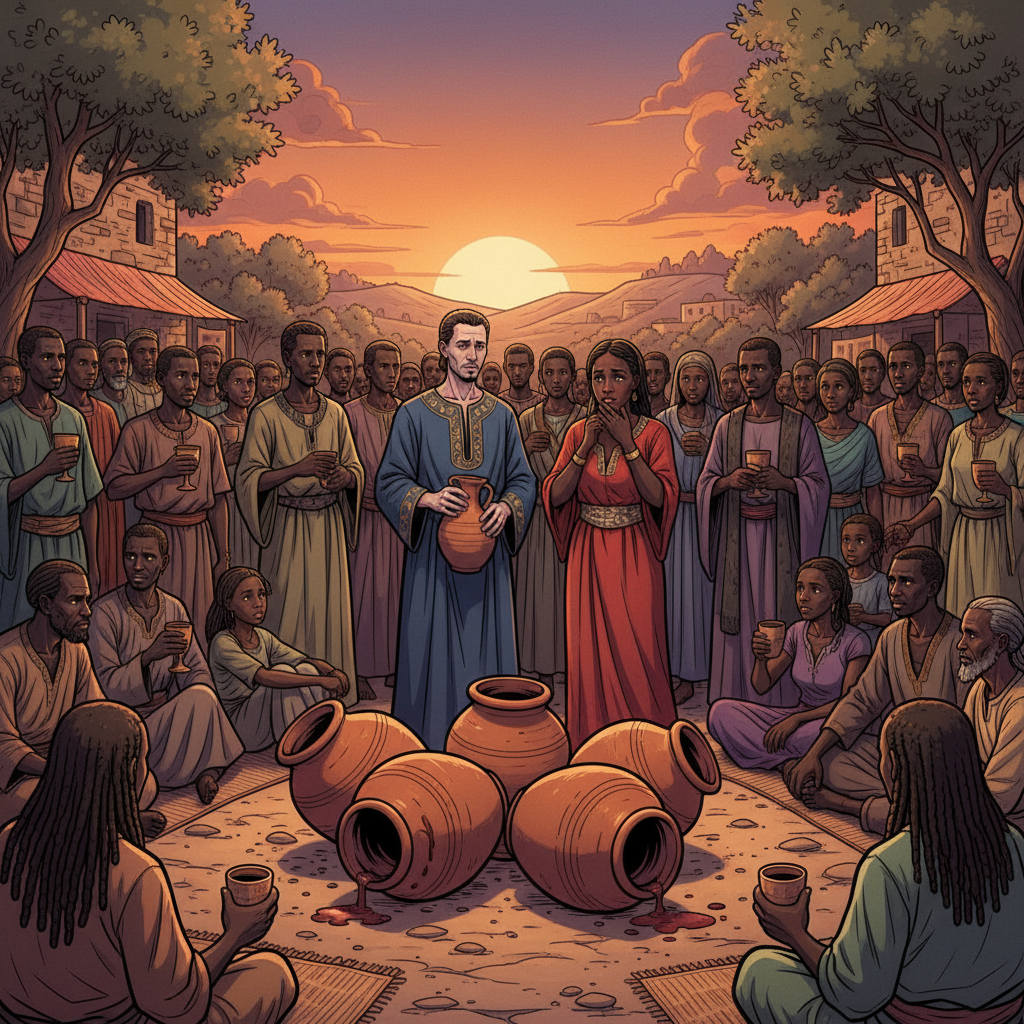
The celebration continued, the drums beating a steady rhythm into the third day. The air was thick with the scent of roasted lamb, fresh bread, and the sweet perfume of myrtle and jasmine. Children chased each other through the packed courtyard, their laughter bright. Elders told stories, their voices raspy with age and wisdom. But as the sun began its slow descent toward the western hills, a subtle shift rippled through the gathering. The cups were being refilled more slowly. A hushed murmur began to spread, like a dry wind through the olive trees. The wine jars, once overflowing, stood empty. The host, a man whose dark skin usually glowed with hospitality, felt the chill of impending shame. His face, usually a map of joy, now went pale, the light draining from his eyes. The bride’s family, too, felt the sting of dishonor, a shadow falling over their sacred day.
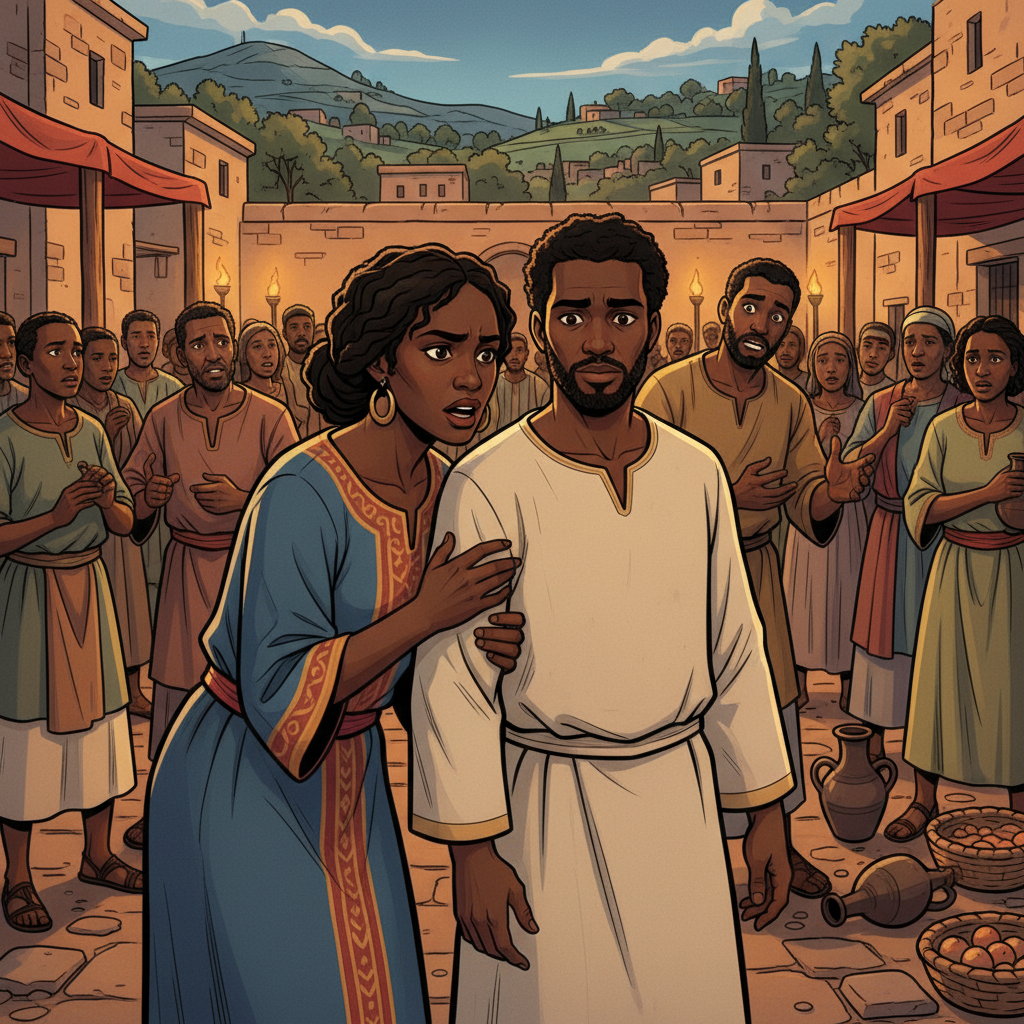
Miriam, ever watchful, her eyes missing nothing, sensed the growing unease. She had seen the host’s face, etched with worry, and understood the weight of the moment. For a wedding to run dry of wine was more than mere inconvenience; it was a deep affront, a blight on the joy, a signal that the sacred flow of abundance had been interrupted. She moved with quiet purpose through the throng of guests, her gaze fixed on her son. Yeshua stood near the periphery, observing, his presence a calm anchor amidst the rising tide of concern. Miriam reached him, her touch light on his arm. She leaned in close, her voice a low, urgent current, carrying the burden of the host’s shame and the families’ honor. “They have no wine,” she stated, not as a question, but as a pronouncement of a need that must be met.
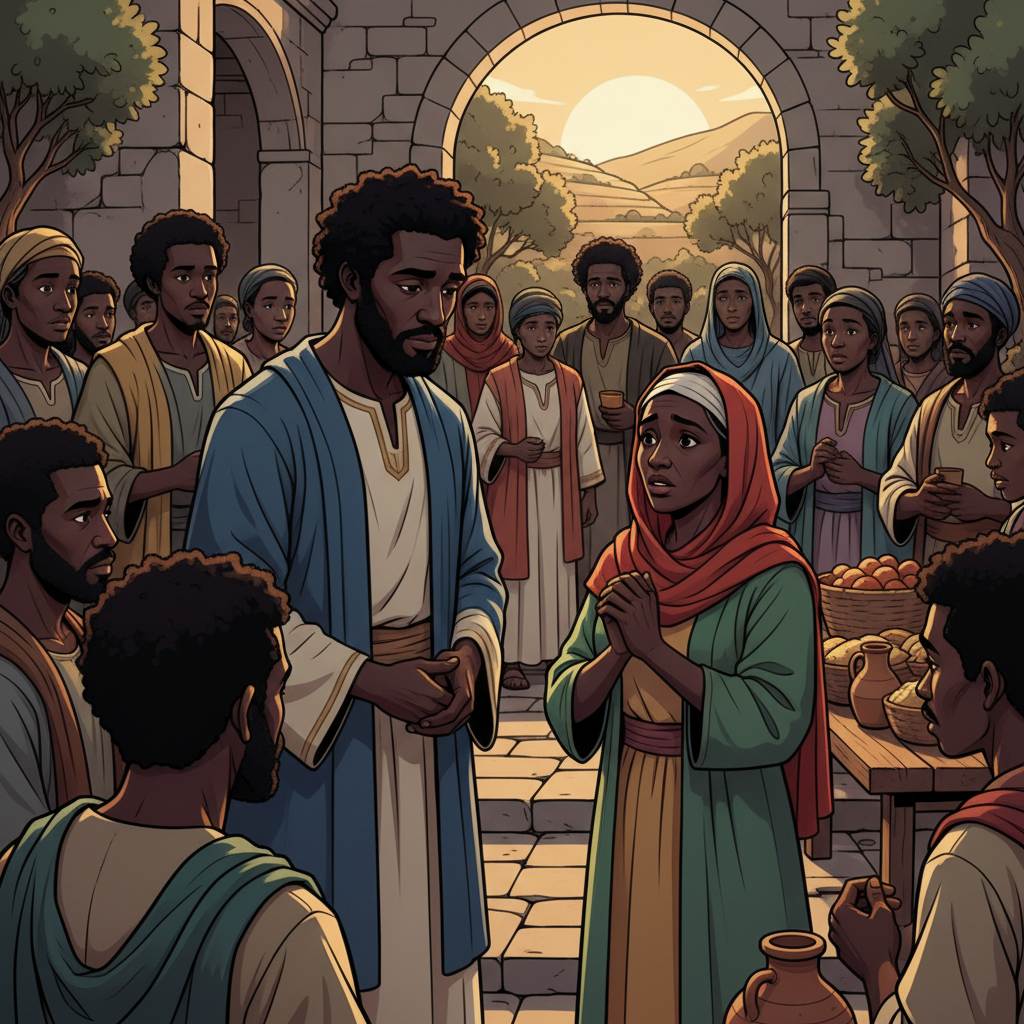
Yeshua turned to his mother, his eyes deep and ancient, holding the wisdom of countless generations. He understood the urgency in her voice, the plea for the gathering to be honored, for the flow of life to continue unbroken. Yet, the path he walked was his own, guided by a deeper rhythm, a timing understood only by the spirit. His response was measured, a gentle push against the tide of expectation. “Woman, why do you bring this to me?” he asked, his Aramaic soft yet firm, carrying a reverence that transcended the familiar. “My hour has not yet come.” He spoke not of a clock’s passing, but of a sacred alignment, a moment when the will of the Most High would fully manifest through him, when the veil between worlds would thin and the true work of transformation could begin. He knew the weight of his lineage, but also the proper order of unfolding.
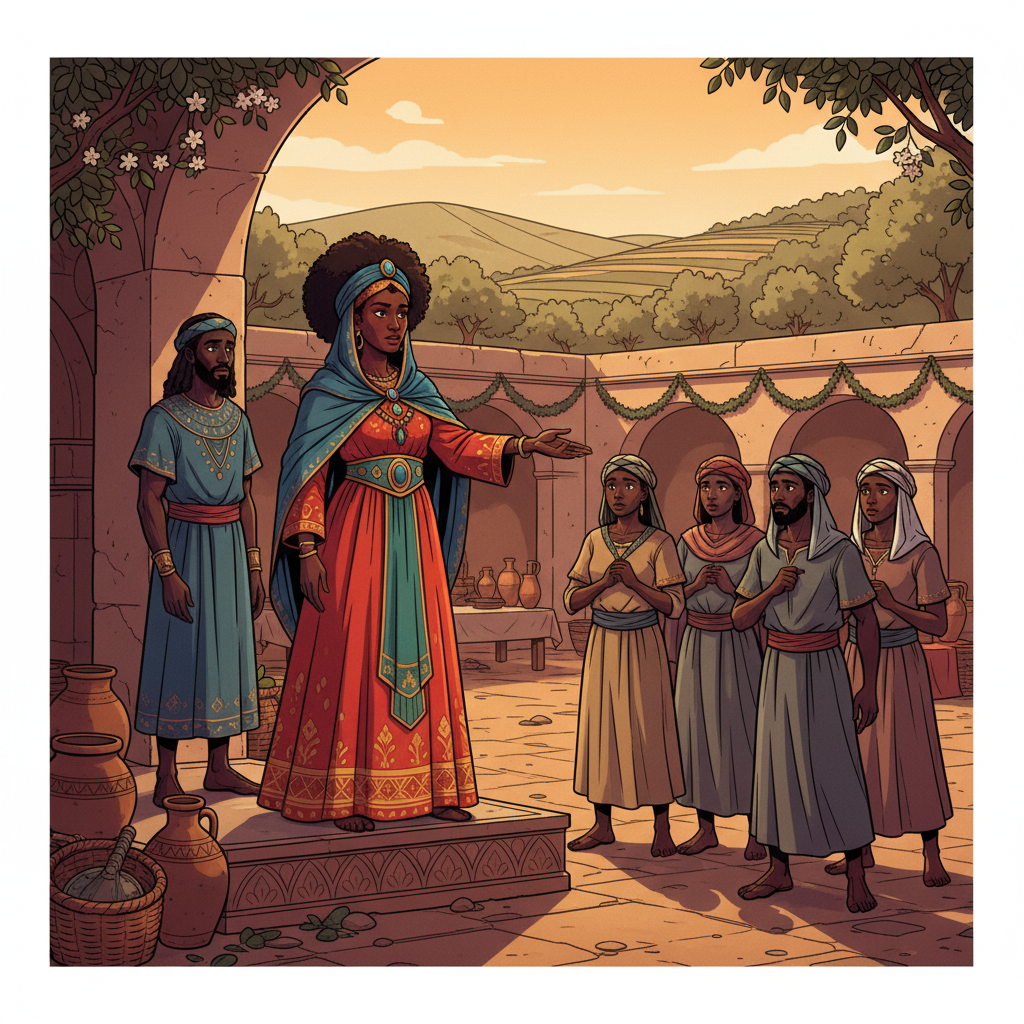
Miriam did not argue. Her understanding of Yeshua ran deeper than words, deeper than the surface of his pronouncements. She knew the sacred fire that burned within him, the Maat-Torah continuum that flowed in his veins, a river of divine order and prophetic power. She had carried him, nurtured him, taught him the ancient ways, and had witnessed the unfolding of his spirit since the days he walked as a child in Kemet. Her faith in the lineage, in the promise of his being, was unshakeable. Her decision was made, not through debate, but through an inner knowing, a conviction as solid as the bedrock beneath the Galilee. She turned from Yeshua, her gaze direct and resolute, and faced the servants who stood nearby, their faces etched with the same anxiety as the host. “Whatever he tells you, do it,” she commanded, her voice clear, carrying the authority of a queen.
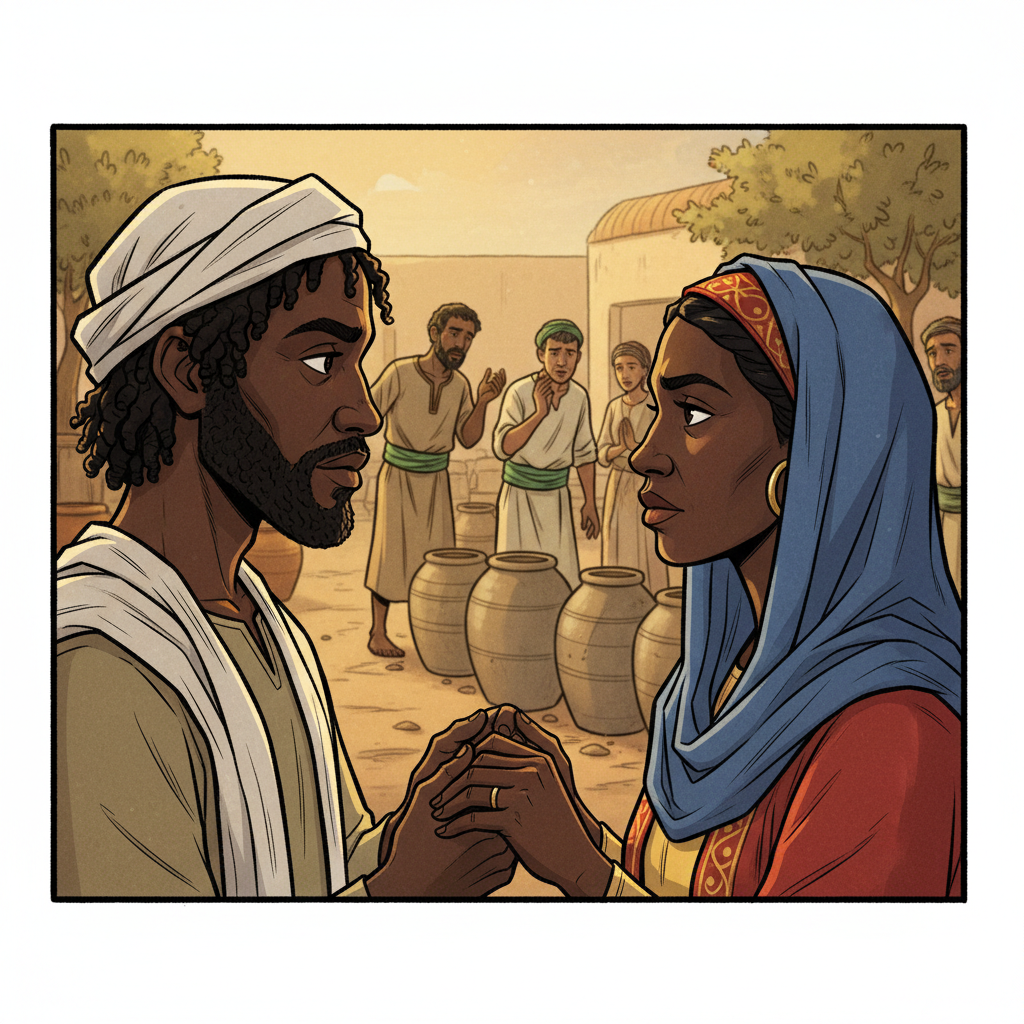
Yeshua looked at his mother, a long, silent beat passing between them. In that moment, an understanding deeper than speech transpired, a quiet covenant between mother and son, between the ancient wisdom and the unfolding manifestation. He saw the fire of conviction in her eyes, the steadfastness of her spirit, mirroring the matriarchs who had guided our people through ages. He saw that she had not only heard his words but had also heard the deeper current of his spirit, and had chosen to act on faith. He nodded, a slow, deliberate movement that signaled his acceptance of her will, of the moment she had now chosen for him. The time was now. He turned, then, from his mother, his dark face composed, and faced the anxious servants, his gaze steady and calm. The air around him seemed to thicken, charged with an unseen energy.
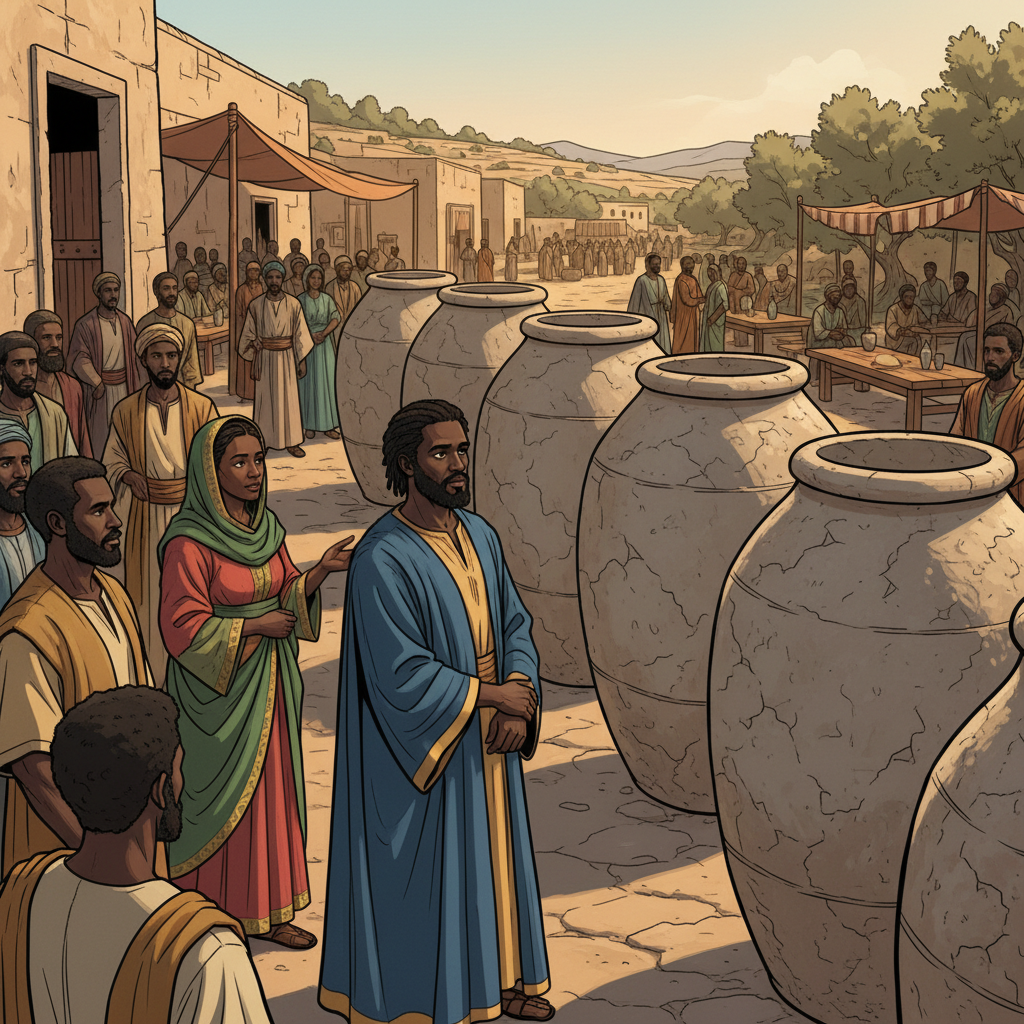
Near the entrance to the feasting hall, standing tall and silent, were six stone water jars. They were not for drinking, but for purification, for the ritual washings that marked the sacred boundaries of Jewish life, ensuring cleanliness before meals and after journeys. Each jar was massive, carved from local limestone, capable of holding twenty or thirty gallons of water – enough for many hands and feet to be made ritually pure. But now, they stood empty, their rough surfaces dry, awaiting the water that would make them ready for their sacred purpose. They were vessels of the holy, awaiting replenishment, embodying the very need of the gathering. Yeshua’s eyes settled on them, seeing not just stone and emptiness, but potential, a canvas awaiting the brushstroke of divine intention. These were the vessels he would choose, standing as silent witnesses to the transformation that was about to unfold.
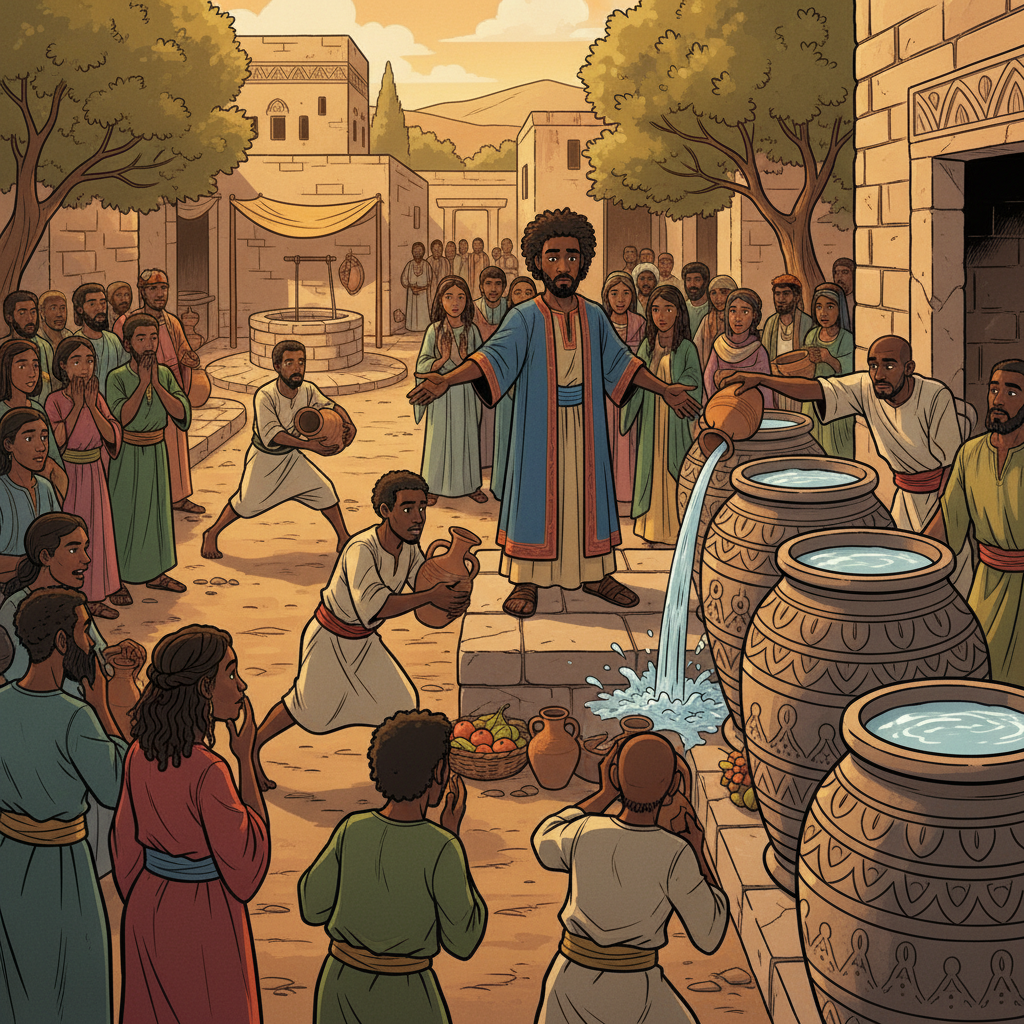
Yeshua spoke to the servants, his voice low but clear, cutting through the murmuring of the guests. “Fill these jars with water,” he instructed. “Fill them to the brim.” The command was simple, yet profound in its implications. The servants, still holding Miriam’s words in their hearts, moved to obey. They fetched large clay pitchers from the well, their steps quickening, a flicker of hope beginning to stir in their eyes. The task was not swift; each jar was immense, demanding many trips to the communal well. Water, drawn from the earth’s deep memory, poured into the waiting stone, a slow, deliberate cascade. The sound of splashing water filled the space, a counterpoint to the quiet tension. Slowly, painstakingly, the six great vessels were filled, rising to their very lips, brimming with the clear, cool essence of life, now heavy with expectation.
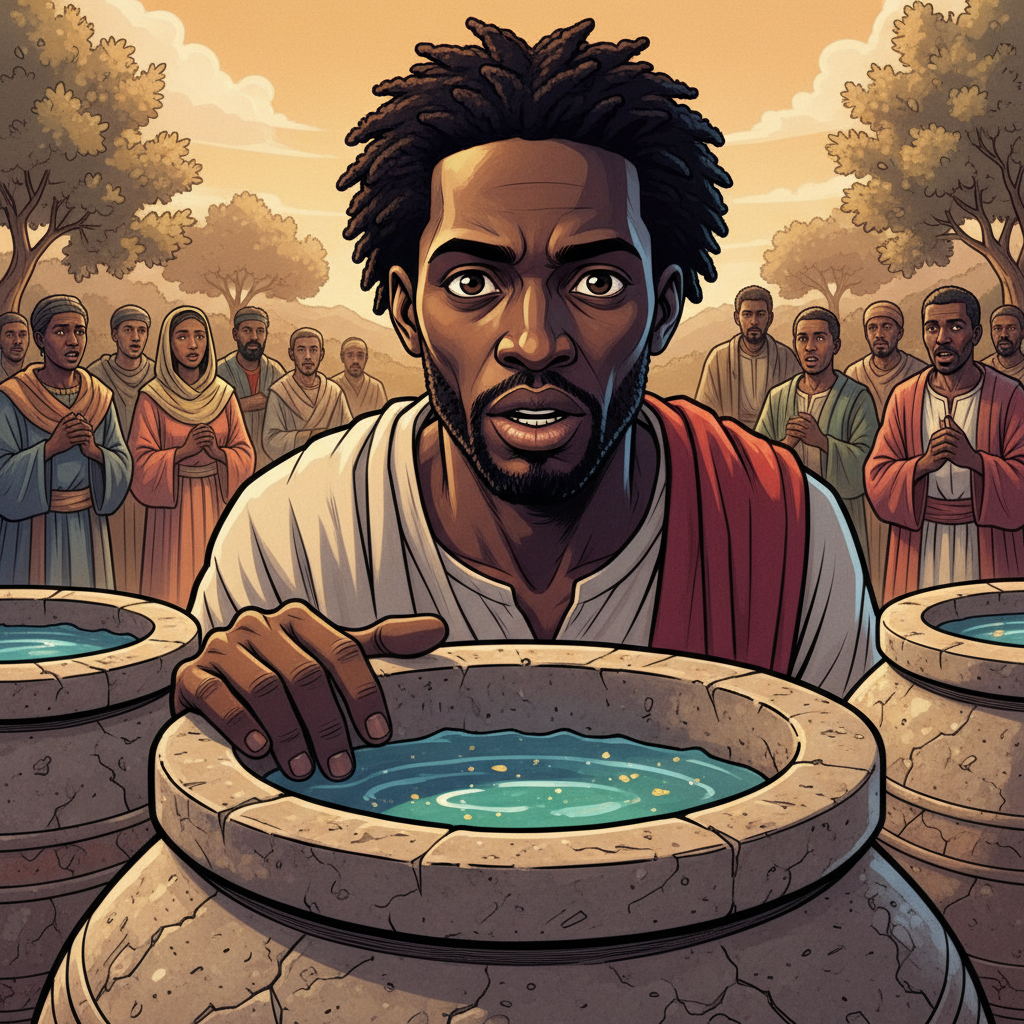
Yeshua walked to the first jar, his presence radiating a quiet authority that hushed the air around him. He placed his dark hand on the cool, rough rim of the stone, his fingers splayed, connecting with the vessel and the water within. He closed his eyes for a moment, drawing deep from the wellspring of his being, from the ancient wisdom that flowed through him, connecting the Maat of Kemet with the Torah of Sinai. Then he opened his eyes, and with a voice that carried the weight of ages, he spoke one word. It was a word known in his Galilean Aramaic, but its roots reached back to the very source of priestly power in Kemet: “Heka.” Heka. It meant transformation. It was the sanctioned art that honored the gathering, the thing-that-the-priest-does, the divine creative power that reshapes reality. It was the utterance that awakened the memory of the waters, recalling them to their primordial state of potential.
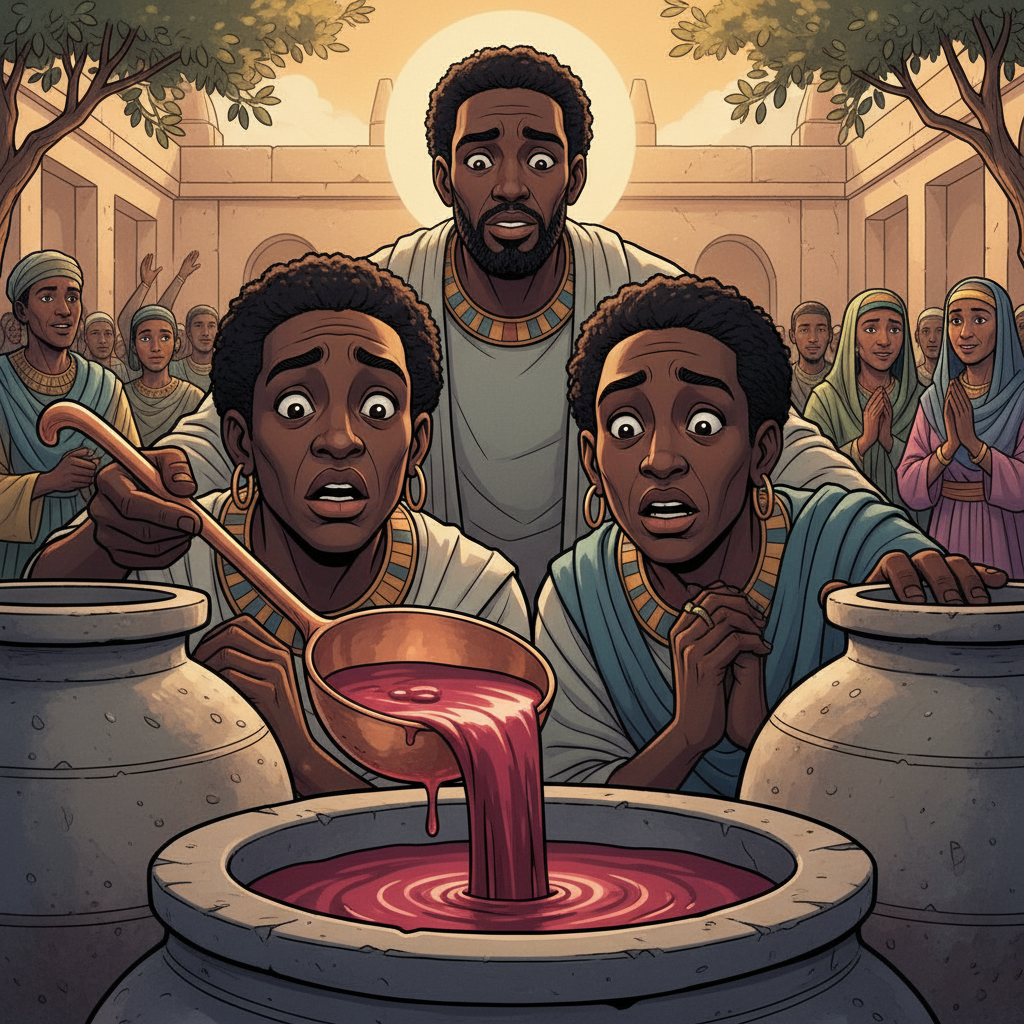
A subtle shimmer seemed to pass over the surface of the water in the jar, though it was almost imperceptible, a trick of the light, perhaps. The servants, who stood close by, watched with wide, disbelieving eyes. They had seen the water poured in; they had filled the jars themselves. Yeshua then turned to them, his voice calm, resonating with a new timbre. “Draw some out now,” he commanded, “and take it to the steward of the feast.” The instruction was simple, direct, yet the weight of what they might be carrying made them hesitate for a breath, their minds struggling to reconcile what they had done with what they were being asked to do. But Miriam’s earlier words still echoed in their ears: “Whatever he tells you, do it.” With trembling hands, one of the servants dipped a ladle into the jar, drawing out a measure, the liquid now a rich, deep crimson.
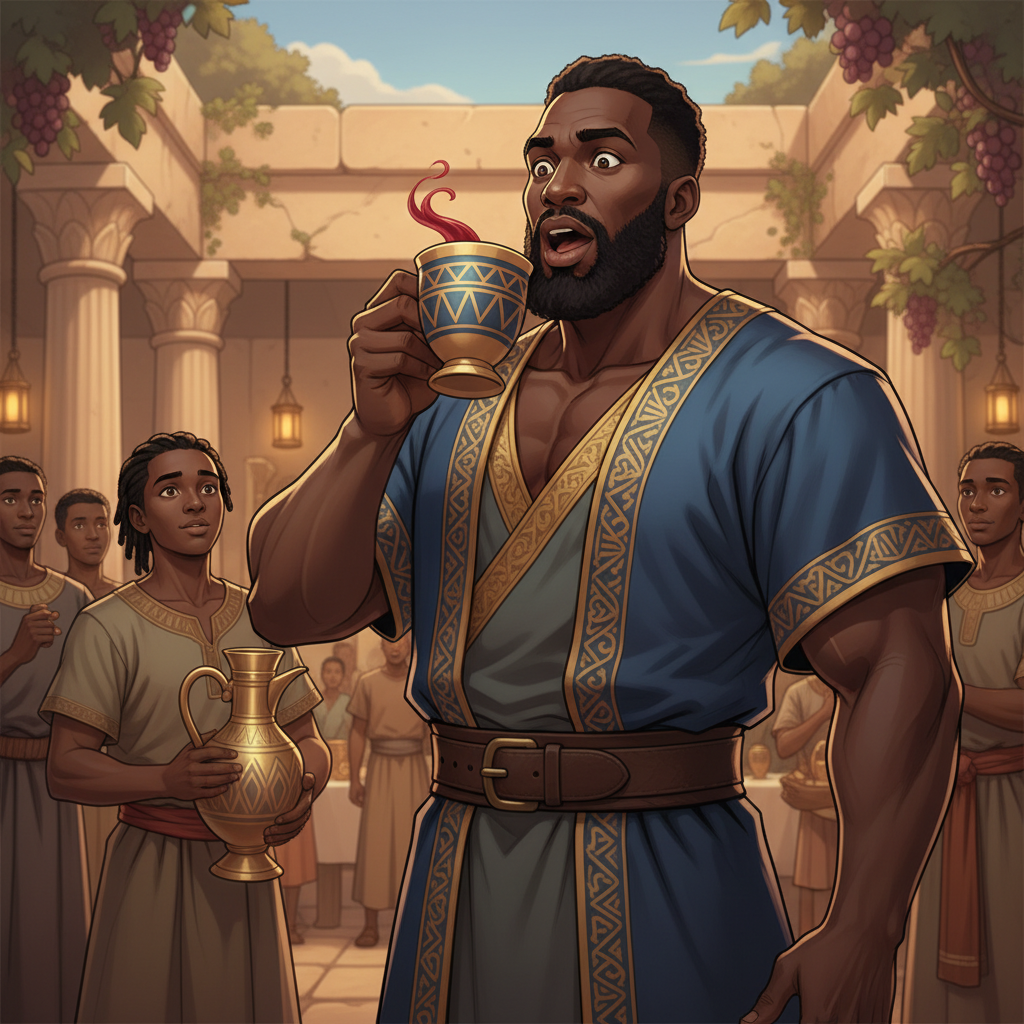
The chief steward of the feast, a man whose palate was as discerning as a royal taster, was still fretting over the lack of wine. He saw the servant approach, carrying a cup. With a sigh of resignation, expecting only water, he took the cup and raised it to his lips. His eyes widened. He tasted again, a slow, deliberate swirl of the liquid in his mouth. This was not water. This was wine, and not just any wine, but wine of exceptional quality, rich and full-bodied, with the deep notes of sun-drenched grapes. He called out, his voice booming with astonishment, cutting through the low hum of the wedding. “Every man serves the good wine first,” he declared, his gaze fixed on the bridegroom, “and when people have drunk freely, then the poor wine. But you have kept the GOOD WINE until now!”
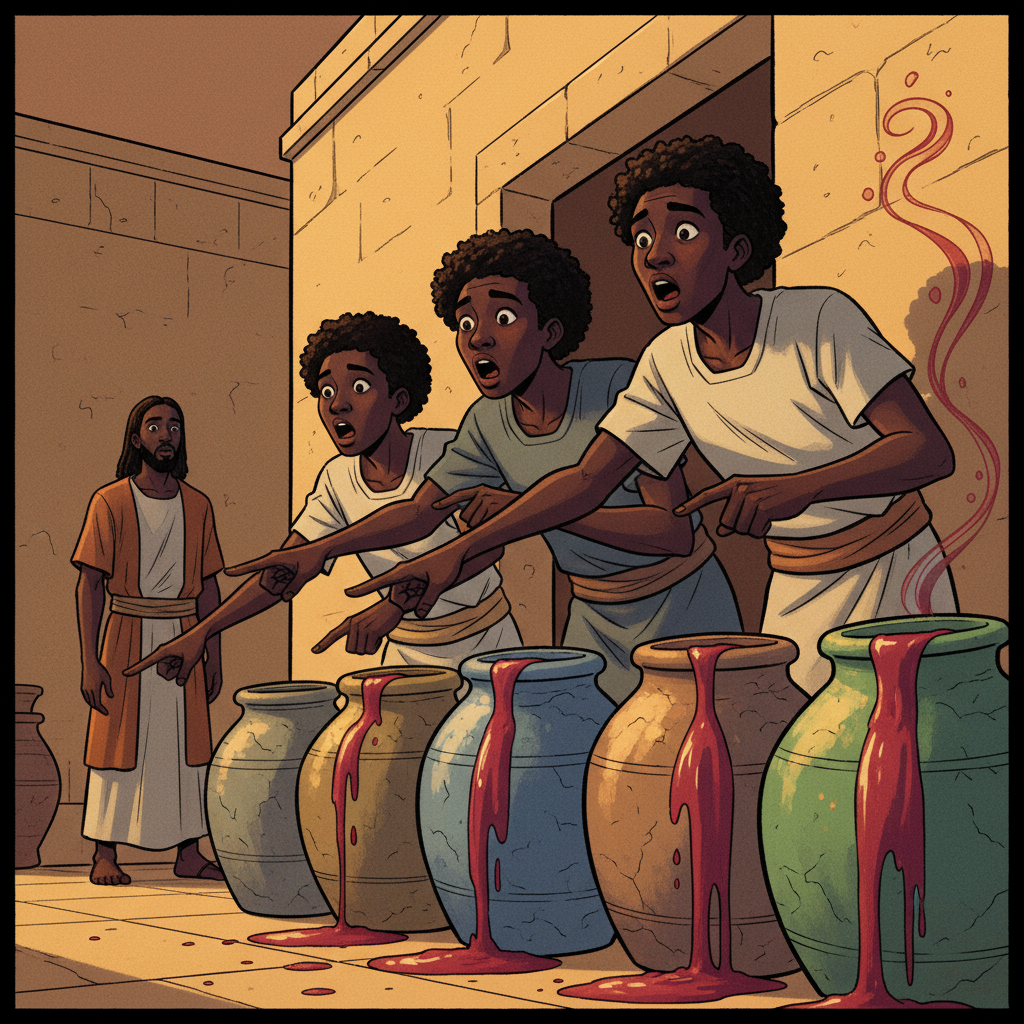
At the kitchen door, hidden from the main celebration but with a clear view of the six stone jars, the servants stood frozen. Their hands, which had so recently poured water into those vessels, now pointed toward them, brimming not with clear water, but with the deep, ruby-red of the finest wine. The scent, rich and complex, now wafted from the jars, undeniable. They looked from the jars to Yeshua, who stood quietly, his dark face unreadable, a silent witness to their witnessing. Their mouths were open, but no words came. The truth of what had occurred was too immense, too profound for easy speech. It was a moment of sacred awe, a revelation that pierced the ordinary fabric of their world. They had filled the jars with water, and now those same jars held the essence of celebration, transformed by a power they could not comprehend.
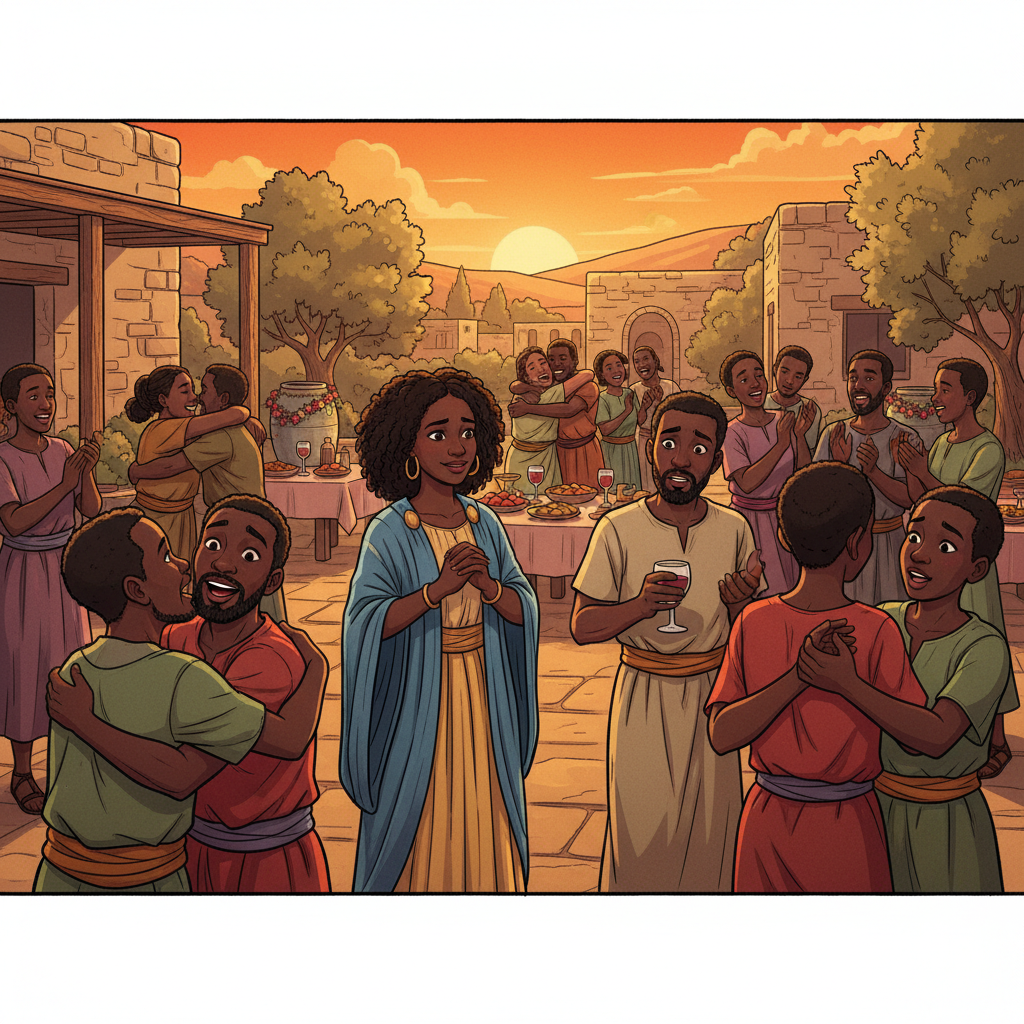
Miriam, who had observed the entire exchange from a distance, a knowing light in her eyes, smiled a small, serene smile. It was not a smile of surprise, but of confirmation, a quiet affirmation of the truth she had long held in her heart about her son. She turned back to the wedding, rejoining the celebration, content in the knowledge that the flow of joy had been restored, and the families’ honor preserved. The disciples, those few who had followed Yeshua from Capernaum, had also witnessed the unfolding events. They had seen the jars filled, heard Yeshua’s quiet command, and observed the steward’s astonished reaction. But their understanding was still nascent, a seed planted in fertile ground. They knew not the full depth of what had transpired, but they had seen it, the first sign of Yeshua’s power, a glimmer of the Maatian spirit made manifest.
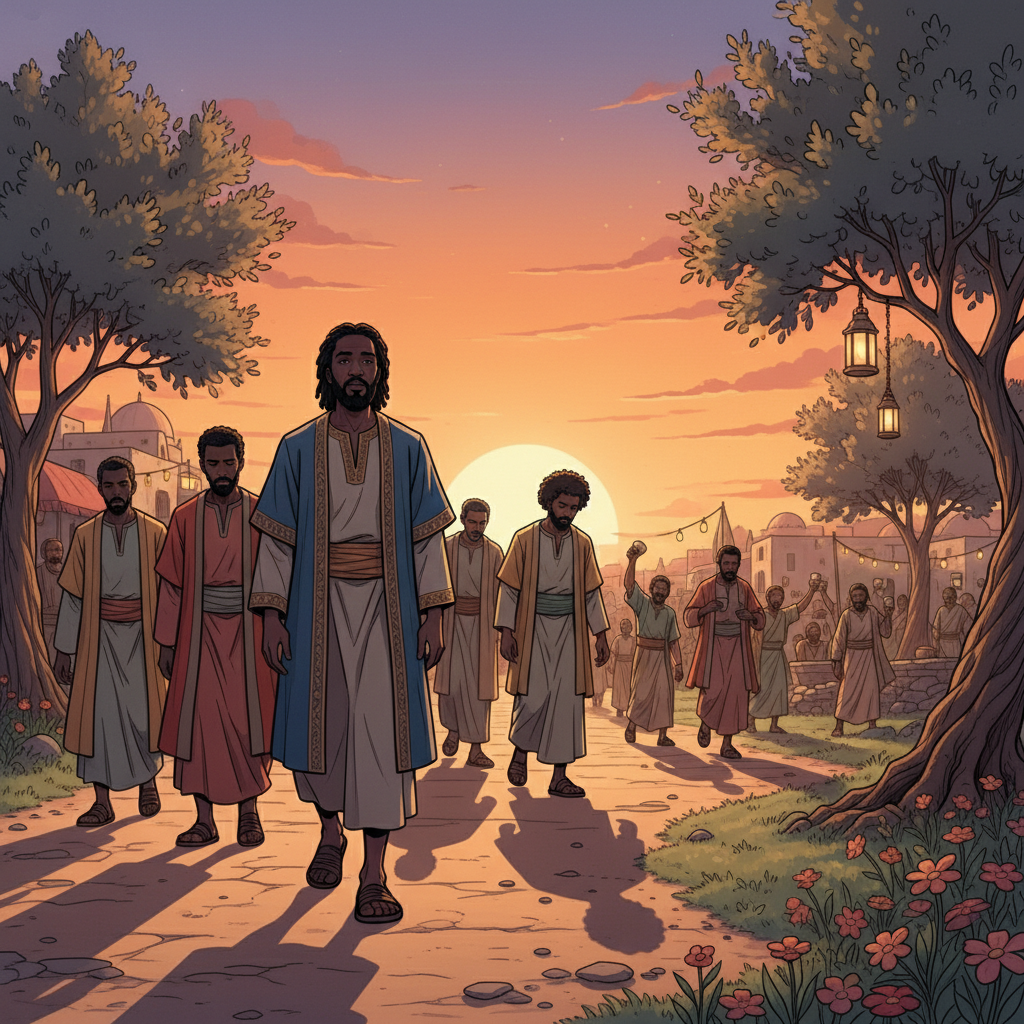
The wedding feast continued, vibrant and joyous once more, the wine flowing freely, a testament to renewed abundance. Later, as the sun began its descent and the shadows lengthened, Yeshua and his disciples began their walk back toward Capernaum, the dusty road familiar beneath their feet. The air was cool now, carrying the faint scent of woodsmoke and evening flowers. The disciples walked in a thoughtful silence, their minds wrestling with the day’s events. Finally, Petros, his brow furrowed in contemplation, broke the quiet. “Rabbi,” he asked, his voice low, filled with wonder, “what was that? What did we see today?” Yeshua walked on for a moment, his gaze fixed on the distant horizon, where the sky met the earth in a blaze of orange and purple. “It was Heka, Petros,” Yeshua said, his voice soft, yet ringing with ancient truth. “The water remembered what it had been at the beginning of time. It remembered its first essence, its true nature, just as the meal of Zarephath did not empty for Eliyahu, because the source is eternal.”