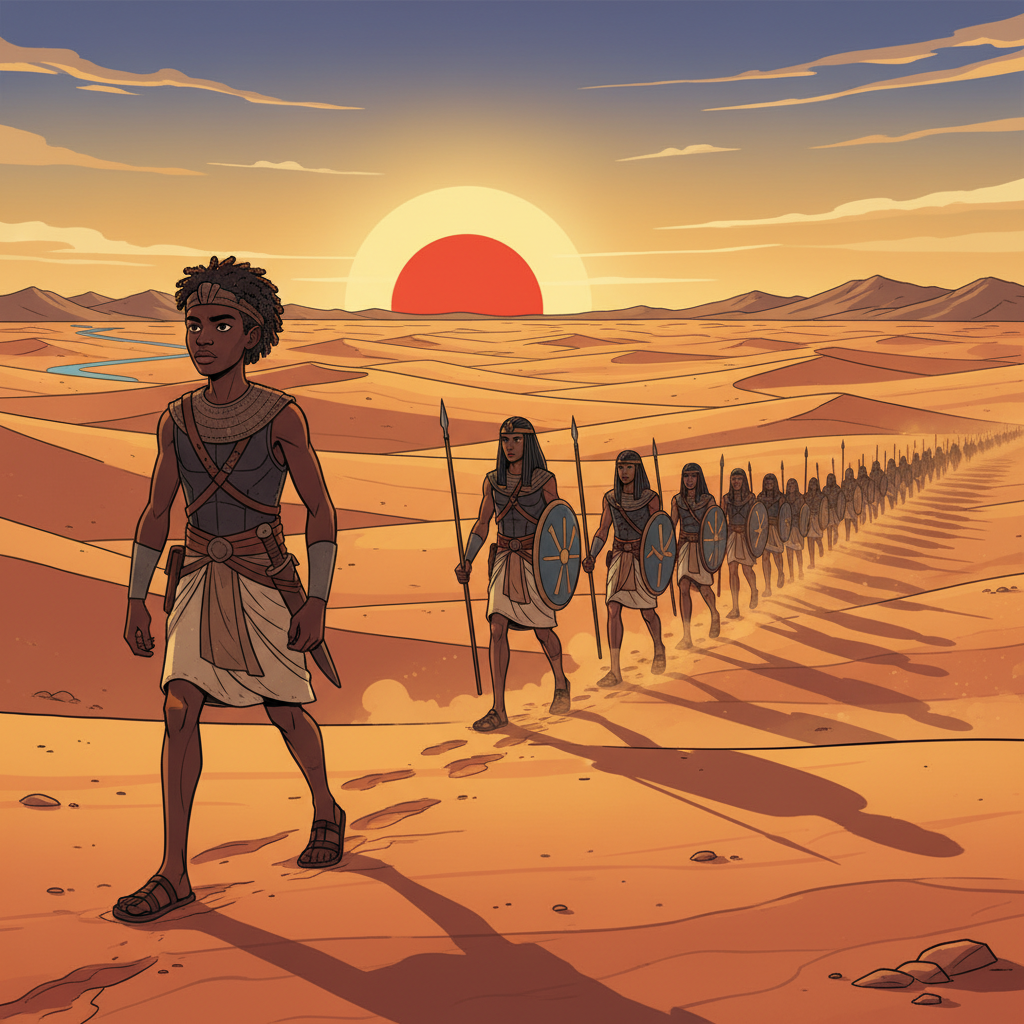
The desert west of the Hapi moved under the column like a slow, pale sea. Neb walked at the flank of the Medjay line, seventeen years old and already trusted with the far eye. His deep brown skin had taken on the colour of the land he crossed — dust on dust, sun over sun — and his close-cropped 4C hair held a fine film of road grit that no amount of shaking would lift. He wore a linen kilt dulled by weeks of travel and a leather scout vest stiffened by sweat and salt. At his hip hung a bronze knife in a plain sheath. He spoke little. Among the Medjay scouts of Ahmose's column, he was known simply as the quiet one — the one who watched the ridgelines longer than anyone else before he offered a word.
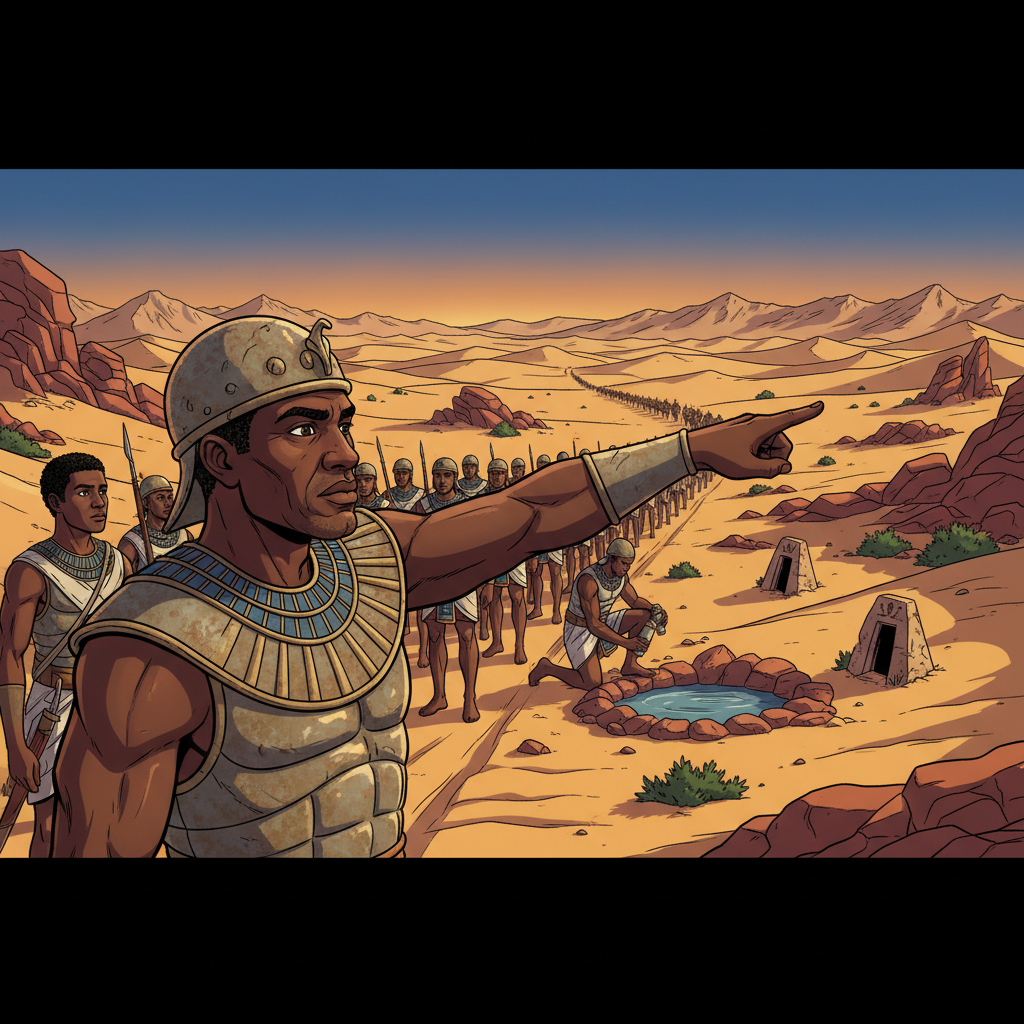
Officer Ra-hotep walked at the head. He was a broad-shouldered man of perhaps forty, with dark skin lined deep at the eyes from twenty seasons of squinting into glare. His helmet was dented in two places from past campaigns. He was not a cruel commander, but he was not a warm one. Ra-hotep believed that the desert rewarded confidence and punished hesitation, and he read the land with the quick authority of a man who had survived it many times. He moved the column in short stages, calling rests at water, reading the horizon, marking each ridge clear or watched. His scouts trusted his eye. Neb trusted his eye. The road west of the Hapi was lined with small shrines to ancestors who had not made it home, and Ra-hotep intended that this column would not add to them.
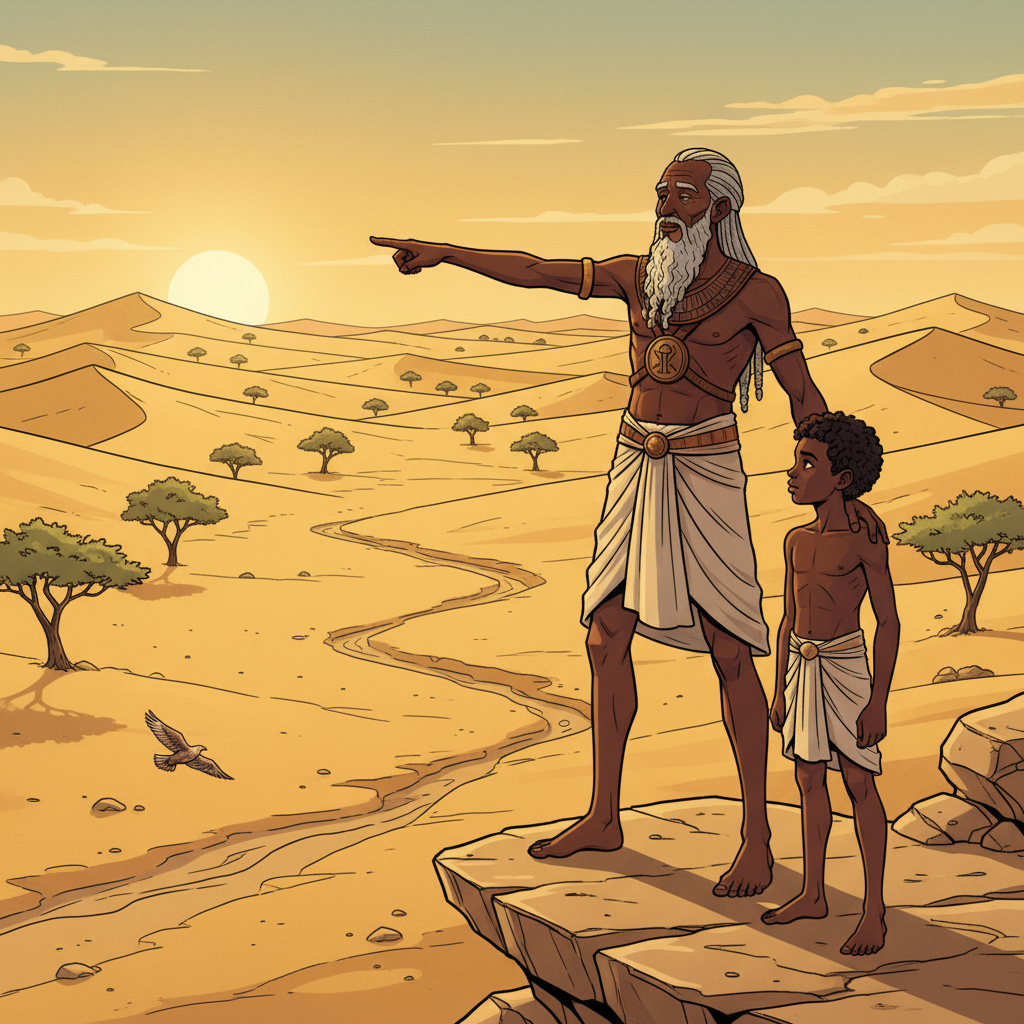
They were ahead of the main force by three days — a thin line of Medjay conducting reconnaissance for the great advance that Ahmose was leading against the Hyksos holdings to the north. Avaris lay somewhere beyond the reach of the naked eye, still unseen, still unthreatened. The work of the scouts was to read every wadi, every ridge, every bird's flight, and carry that reading back. In this work, Neb had been taught by his grandfather, a Medjay who had died in his sleeping mat at the age of sixty and who had said, often enough that Neb could hear the voice now without closing his eyes, The land tells you things, boy. But only if you are quiet enough to let it speak. So Neb walked. Neb watched. Neb said nothing he did not need to say.
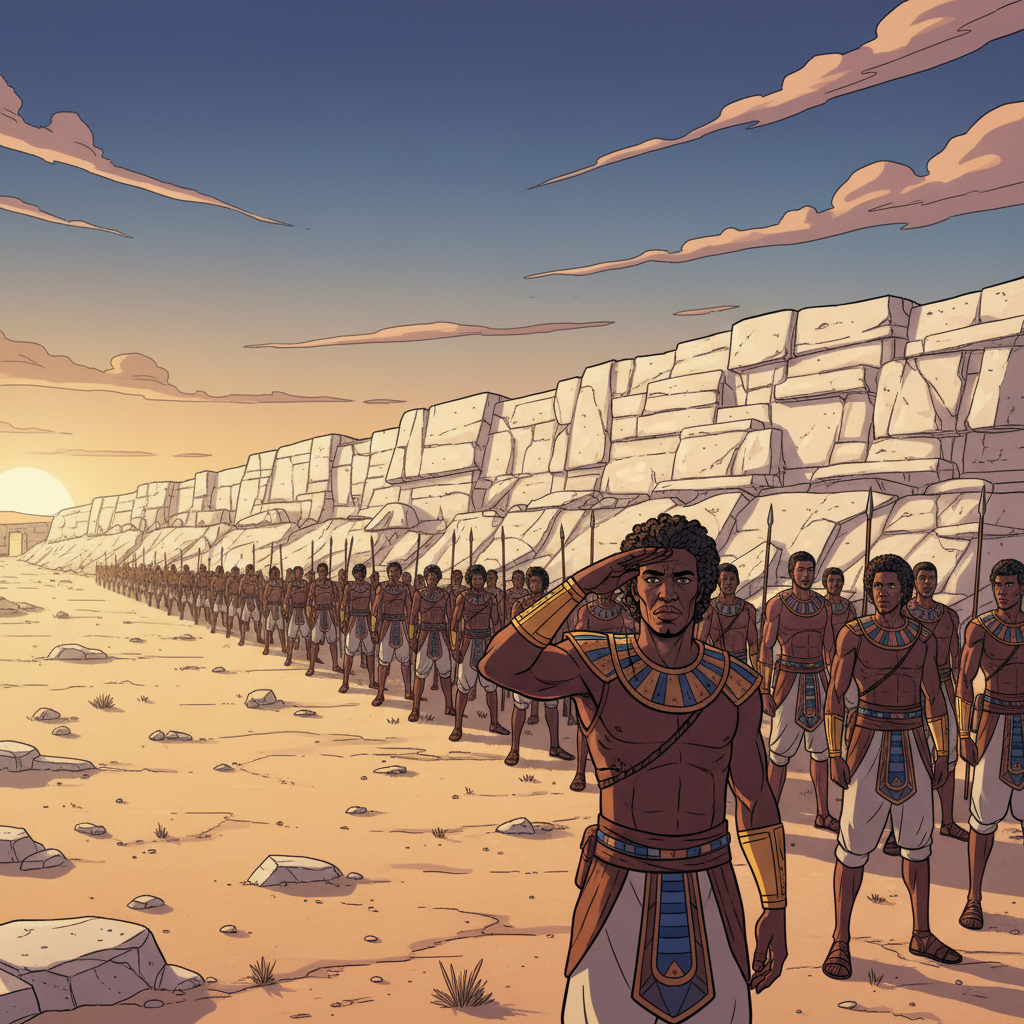
On the fourth morning of the patrol, Ra-hotep halted the column before a long, low ridge of broken limestone. The ridge ran east to west like a wall laid down by an old and careless mason. It was pale, almost white in the early light, and the shadows on its far side were already shrinking as the sun climbed. Ra-hotep lifted a hand. The Medjay stopped, spears butted against the ground, eyes scanning. Ra-hotep walked forward ten paces, shaded his eyes with a flat palm, and studied the ridge for the time it takes a man to draw twenty slow breaths. Then he turned and spoke, clear and final, so that every scout in the column could hear him. "The ridge is clear. We move through the gap at the western end. Column, advance."
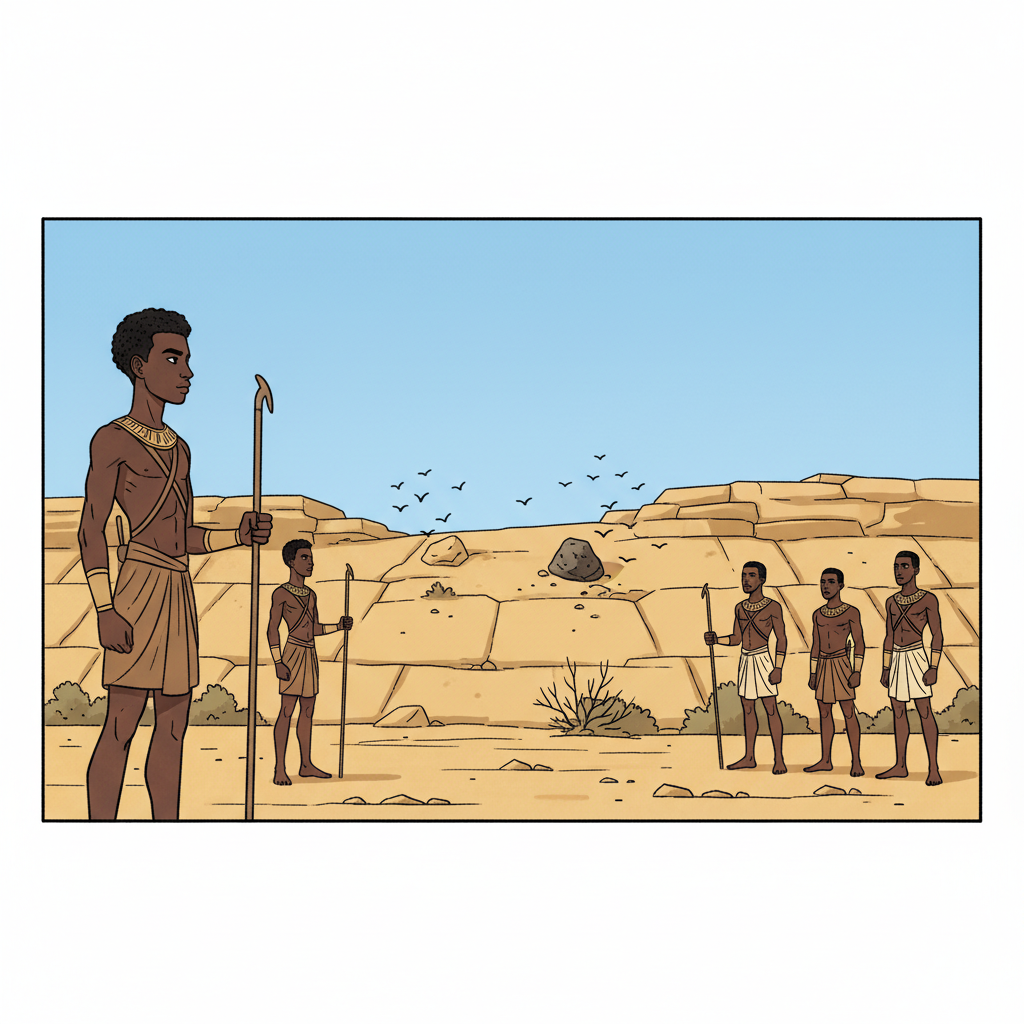
Neb did not move. He stood at the flank and he looked at the ridge, and something in the ridge looked wrong to him. He could not say what. He searched first with his eyes and then with the habit his grandfather had trained into him — letting the land speak before forcing an answer. A stone on the near slope, three man-heights up from the base, lay on its darker, weathered side. The sun-bleached face was turned down. Stones on that ridge did not turn themselves over. A second thing: the small desert birds that should have been lifting from the scrub at the ridge base were not lifting there. They rose to the left of that point. They rose to the right of that point. They did not rise where he was looking.
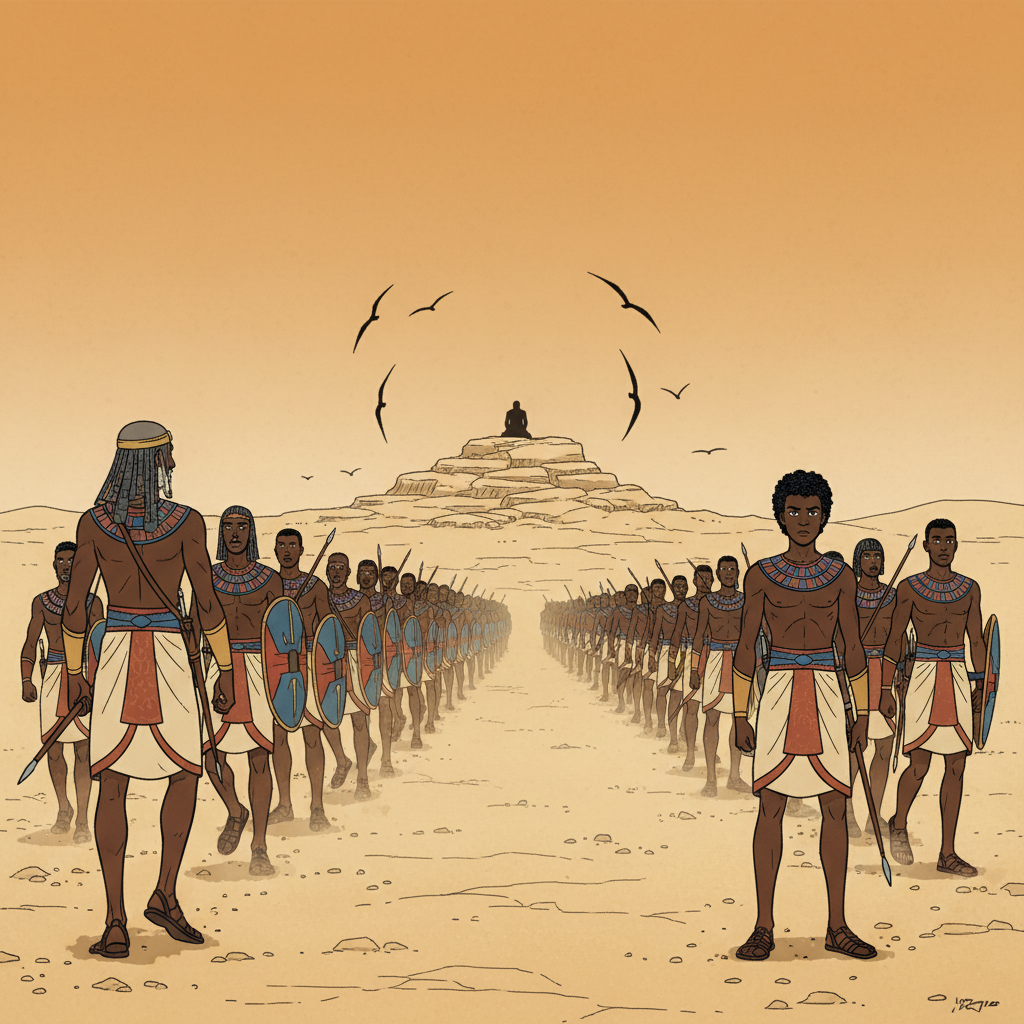
Ra-hotep had already begun walking. The column shifted behind him, sandals scraping on loose gravel, the first rank drawing level with the second. Neb felt the movement pull at him — the pull of obedience, of the line closing up, of a scout taking his place beside his brothers. He took one step with the column. Then another. Then he stopped. The stone was still turned wrong. The birds still rose in two arcs around a point they would not cross. His heart began to beat the way it beat before a night patrol — not fast, but heavy, each stroke landing like a footfall in soft sand. Something sat on that ridge. Something the size of a man. He could not prove it. He could only read it. And Ra-hotep had already called it clear.
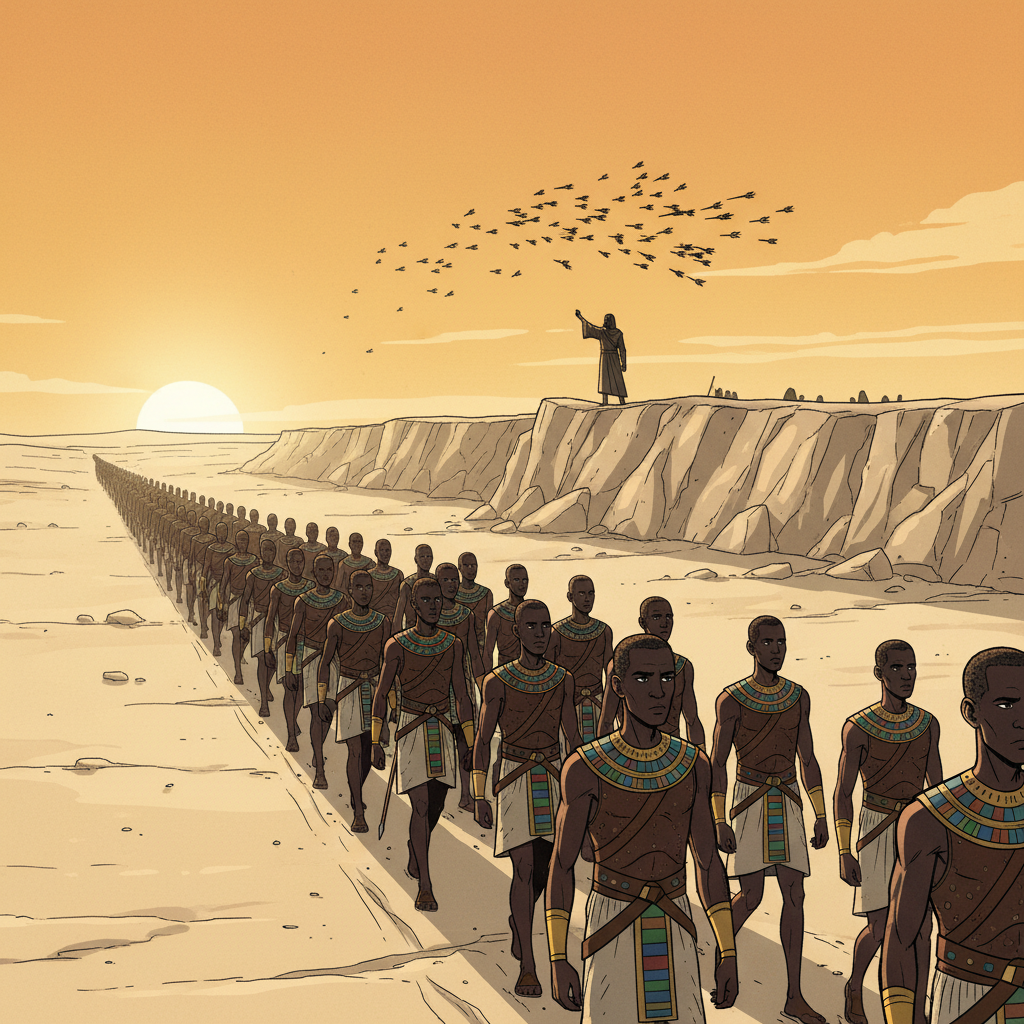
Neb turned the question over inside himself as the column walked. If he spoke and he was wrong, Ra-hotep would be embarrassed before his Medjay. An officer does not enjoy being corrected by a seventeen-year-old scout on a reading of empty stone. The next patrol, and the one after, would carry that embarrassment with them. His own standing among the older men would tilt — not by shouting, but by the slow, wordless way a column treats a scout who has stepped over his station. He had seen it happen to others. He knew the cost. If he spoke and he was right, a man on that ridge would signal a larger force, and the column would walk into an arrow-fall before the sun climbed another hand's breadth. These were the two weights on the scale, and he was the one holding it.
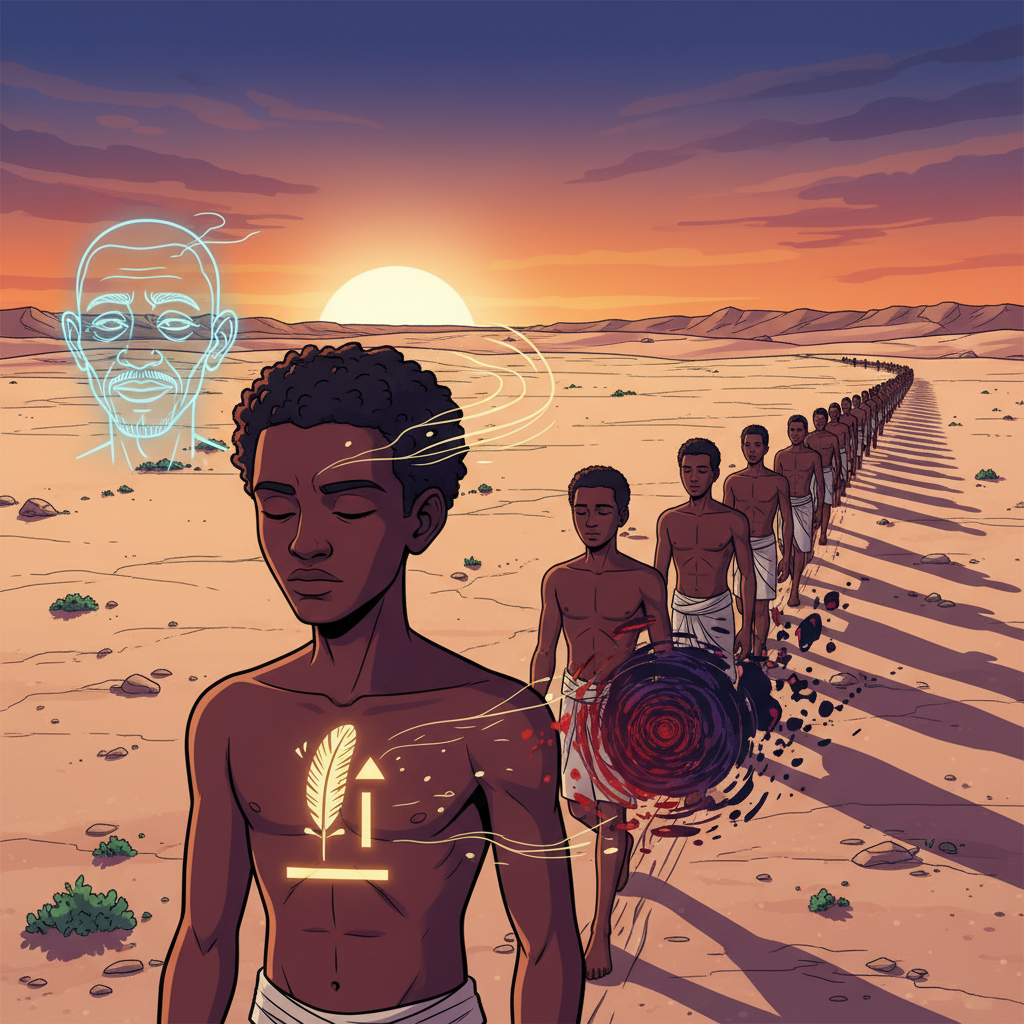
His grandfather's voice came again, quiet as the ridge wind. The land tells you things. But only if you are quiet enough. And then, a second line that Neb had not remembered before but remembered now: And then you must say what the land told you. Even when your voice feels small. Neb thought of the word that sat at the centre of every Medjay oath — Maat. Truth, clear seeing, the straight line drawn between a thing and its name. Isfet was the opposite: the chaos that grew in a man's silence when he had seen and said nothing. Isfet did not always look like a lie. Sometimes it looked like a scout who watched a ridge, read the sign, swallowed it, and walked on with the column. He did not want to be that scout.
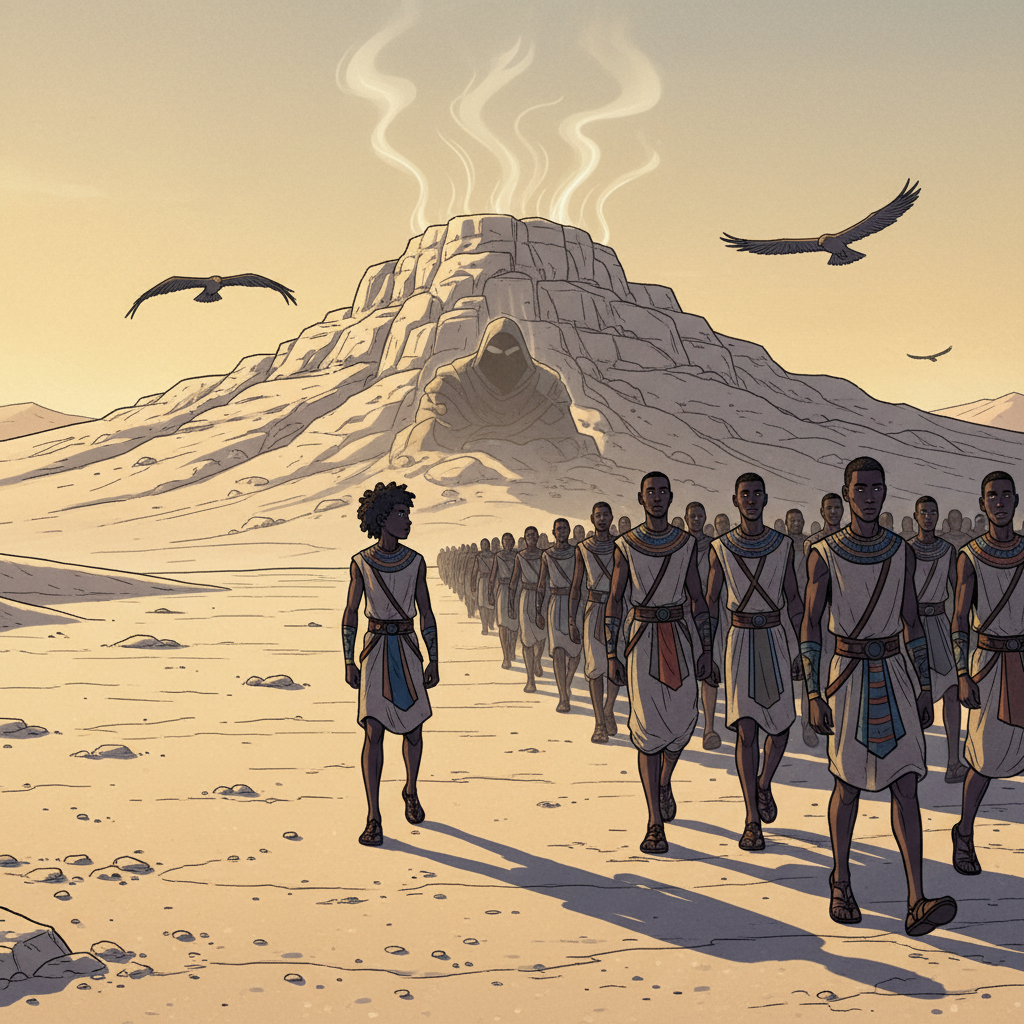
He looked once more at the ridge. The stone lay the same way. The birds rose in the same two arcs around the same gap. A thin line of heat rippled above the pale limestone, and for one breath he thought he saw, in that ripple, the hint of a shape that ought not to be there — a shoulder, a head, something low and still and patient. He could not be sure. The desert played with a scout's eye at this hour. But the reading, taken together, did not leave him. He had not spoken. The column kept moving. Each step it took was a step further into the fall of an arrow he could not yet see. He made his choice. He was going to speak, and he was going to speak carefully.
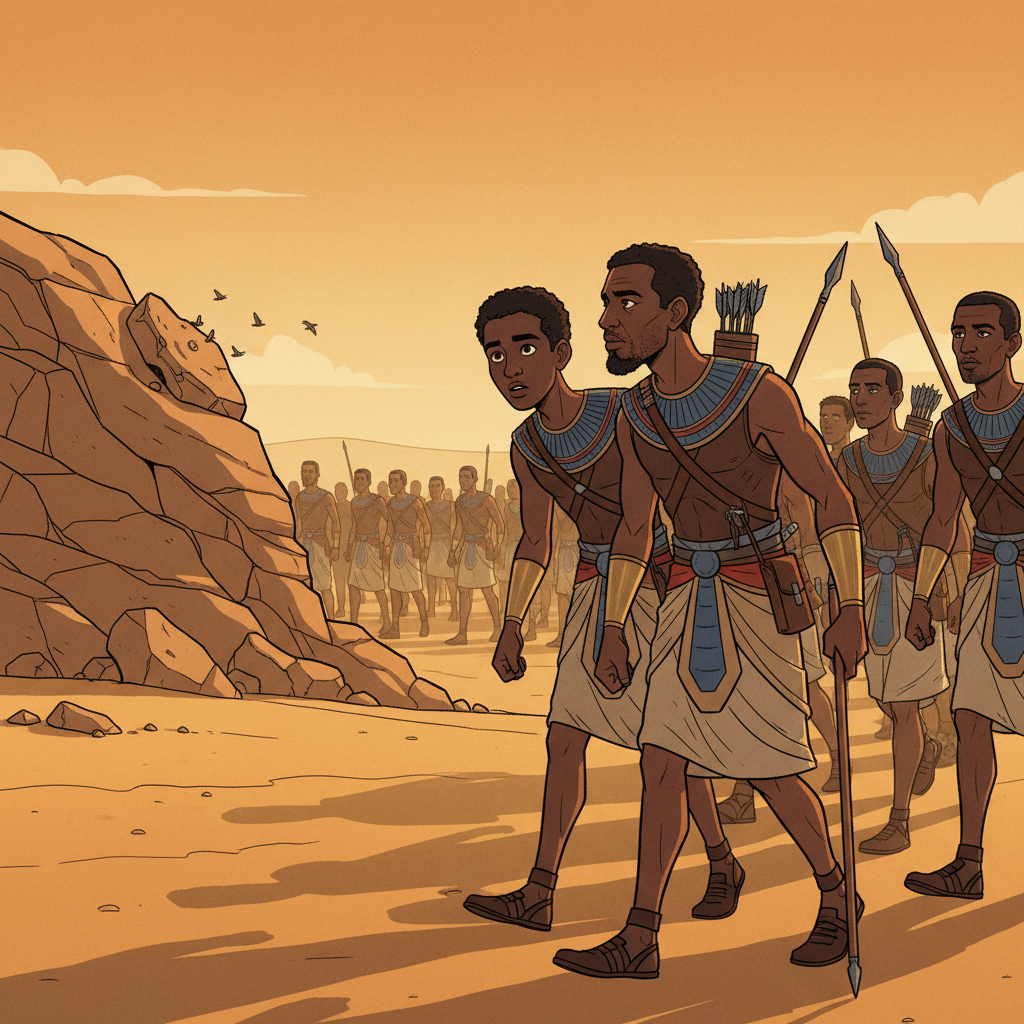
Neb did not break formation. He did not raise his voice. He closed the distance to Senu, the scout who walked nearest to him in the flank rank — a steady man of thirty who had served with Ra-hotep for six seasons. Neb spoke low, so that only Senu heard. "Brother. Before we clear the gap, I would ask the officer for a second look at the ridge. There is a stone turned wrong and the birds lift around a point. I cannot name it. But I would have a second pair of eyes before we pass under it." Senu did not answer at once. He was a man who weighed words. Then he gave a short nod. "You have the right to ask. Ask him through me. That is cleaner for both of you."
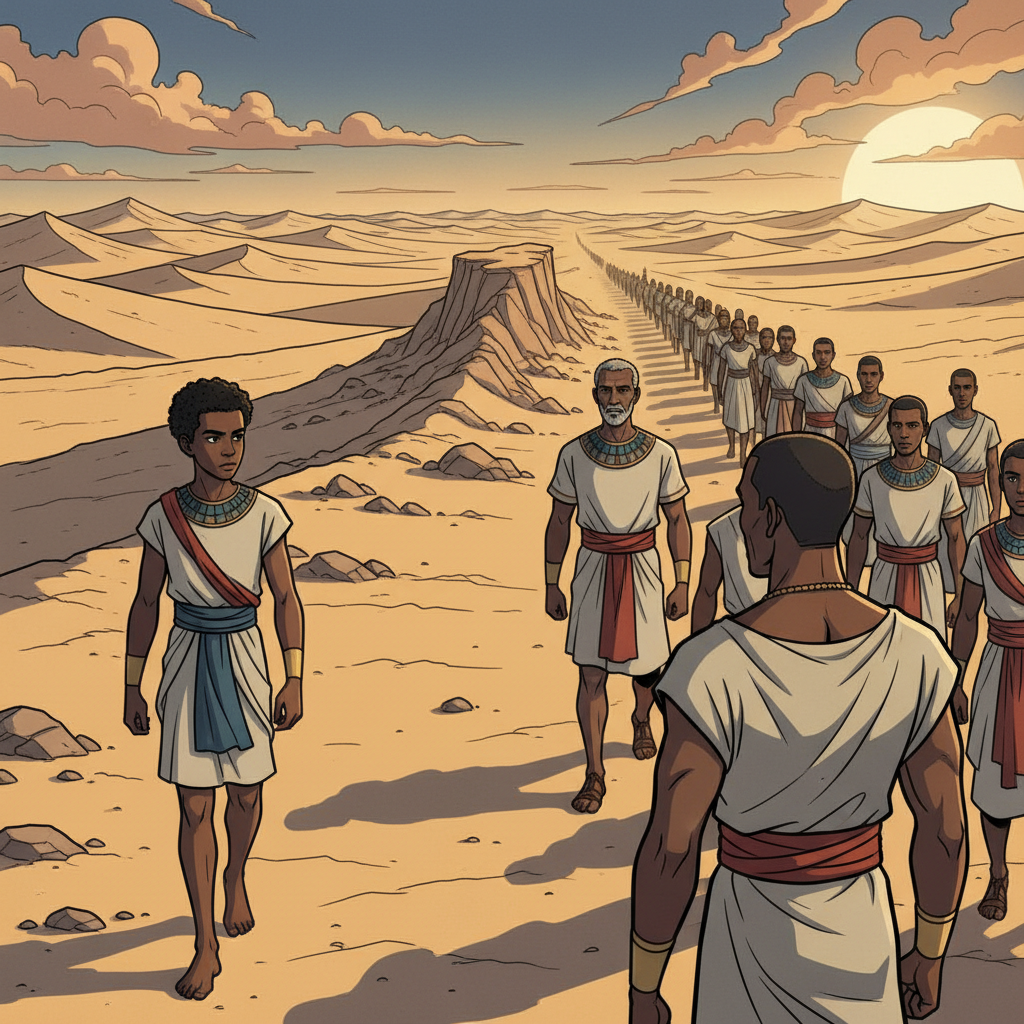
Senu closed the distance to Ra-hotep at the head of the column. Neb walked at his usual pace, eyes on the ridge, heart steady now that the choice was made. He could hear the murmur of Senu's voice, not the words. He saw Ra-hotep's shoulders stiffen — the small, unmistakable tightening of a man who has been asked to reconsider. Ra-hotep turned, found Neb with his eyes across the dust, and held him there for the space of three breaths. Neb did not look down. He did not puff himself up. He met the officer's gaze the way a scout meets the land — without challenge, without apology. Then Ra-hotep raised his hand again, called the column to halt, and gestured Neb forward. "Scout. Come. Show me what the ridge told you."
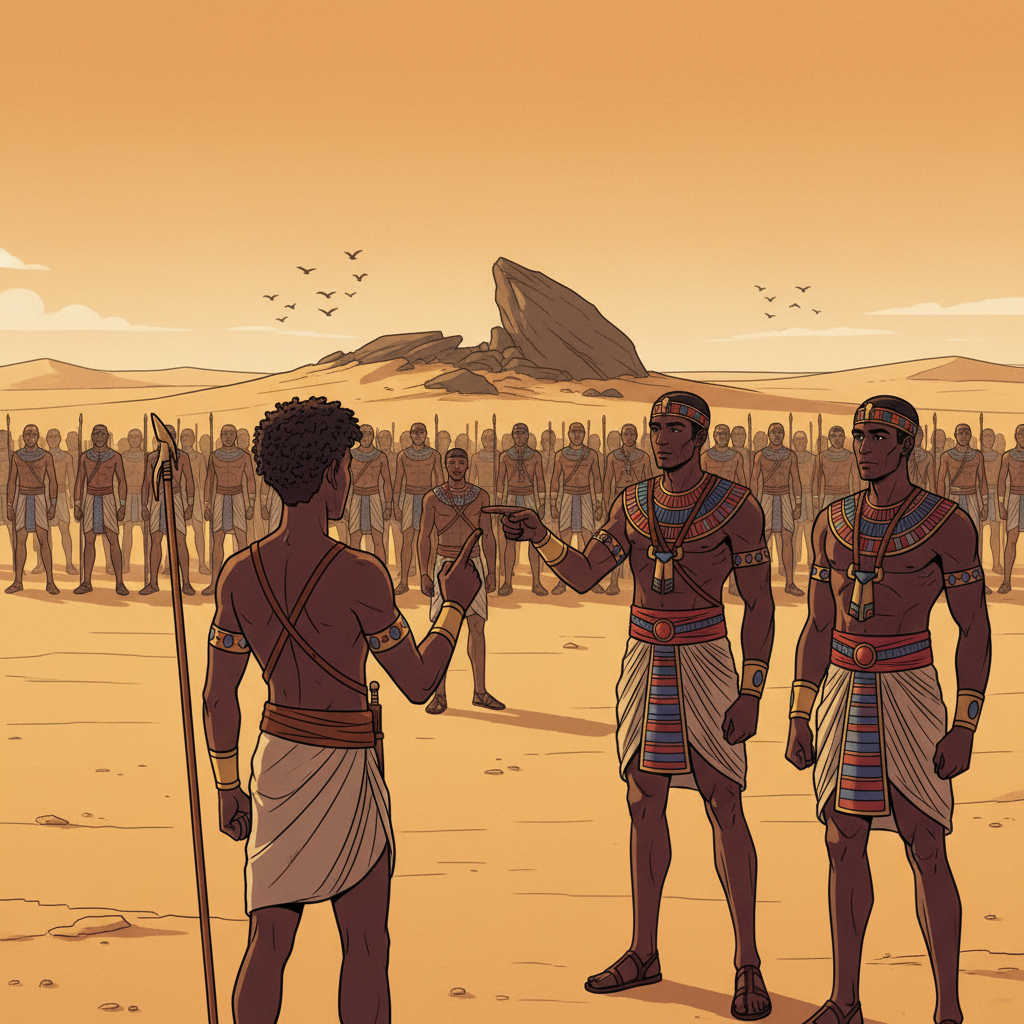
Neb walked to the head of the column under the eyes of every Medjay in it. He did not rush. He did not slow. When he reached Ra-hotep he did not point dramatically. He lifted one finger, small and close to his own chest, toward the stone on the slope. "The stone, officer. Its dark face is down. A stone laid by the rains does not sit that way." He lifted the same finger a second time, toward the ridge base. "The birds. They rise left of that point and right of that point. They do not cross it. Something sits between them that the birds can see and we cannot." He lowered his hand. "I cannot promise a man is there. I can only say the sign does not match a clear ridge."
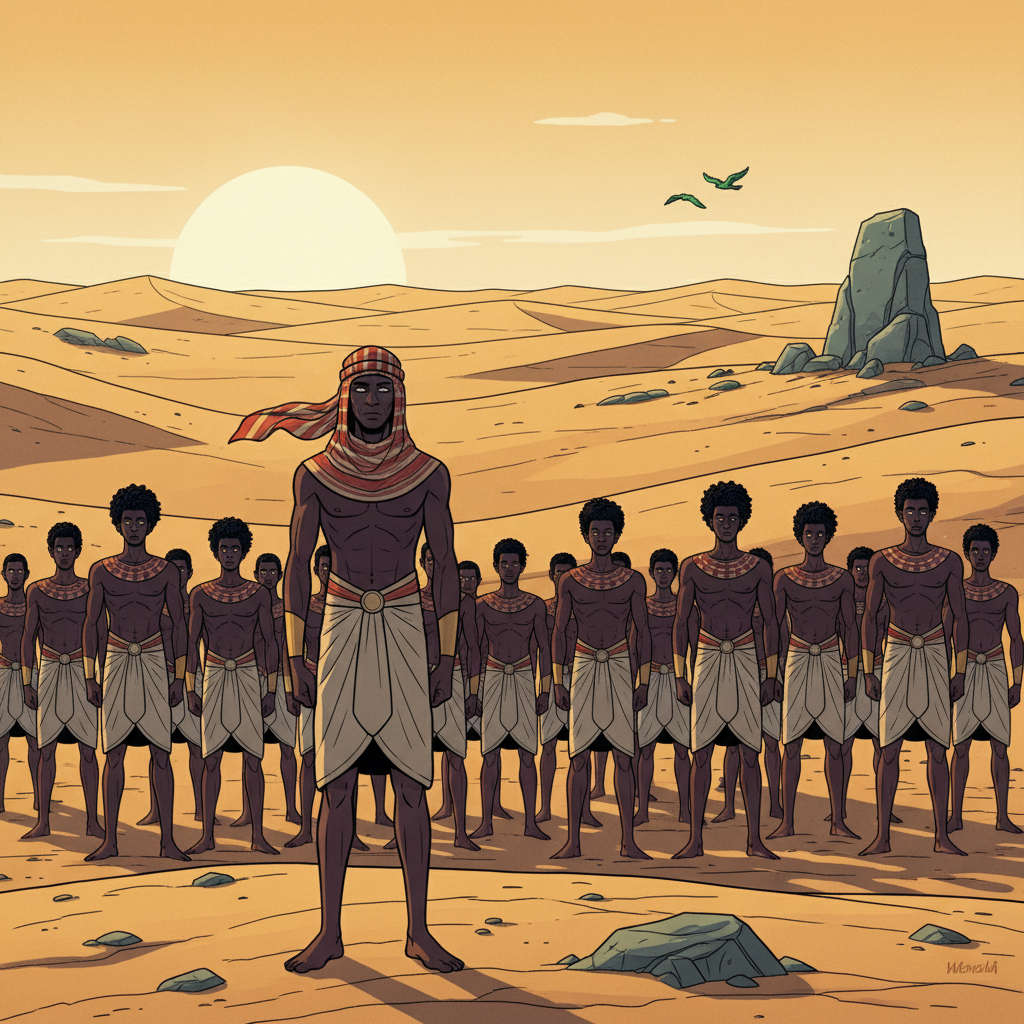
Ra-hotep stood very still. The wind moved the edge of his headcloth and nothing else. He looked at the stone. He looked at the birds. He watched the ridge for a longer count than he had watched it the first time, and his eyes travelled slowly, not quickly, as if he were rereading a line in a scroll he had already decided he understood. The column waited. No Medjay spoke. Neb kept his hands at his sides, his breathing even. He had placed the reading in the officer's hands and he had left it there. Finally Ra-hotep exhaled — a short, dry sound, less than a sigh. "Two scouts. Wide approach. I want the near slope checked before the column moves a further step." He did not look at Neb when he said it. But he said it.
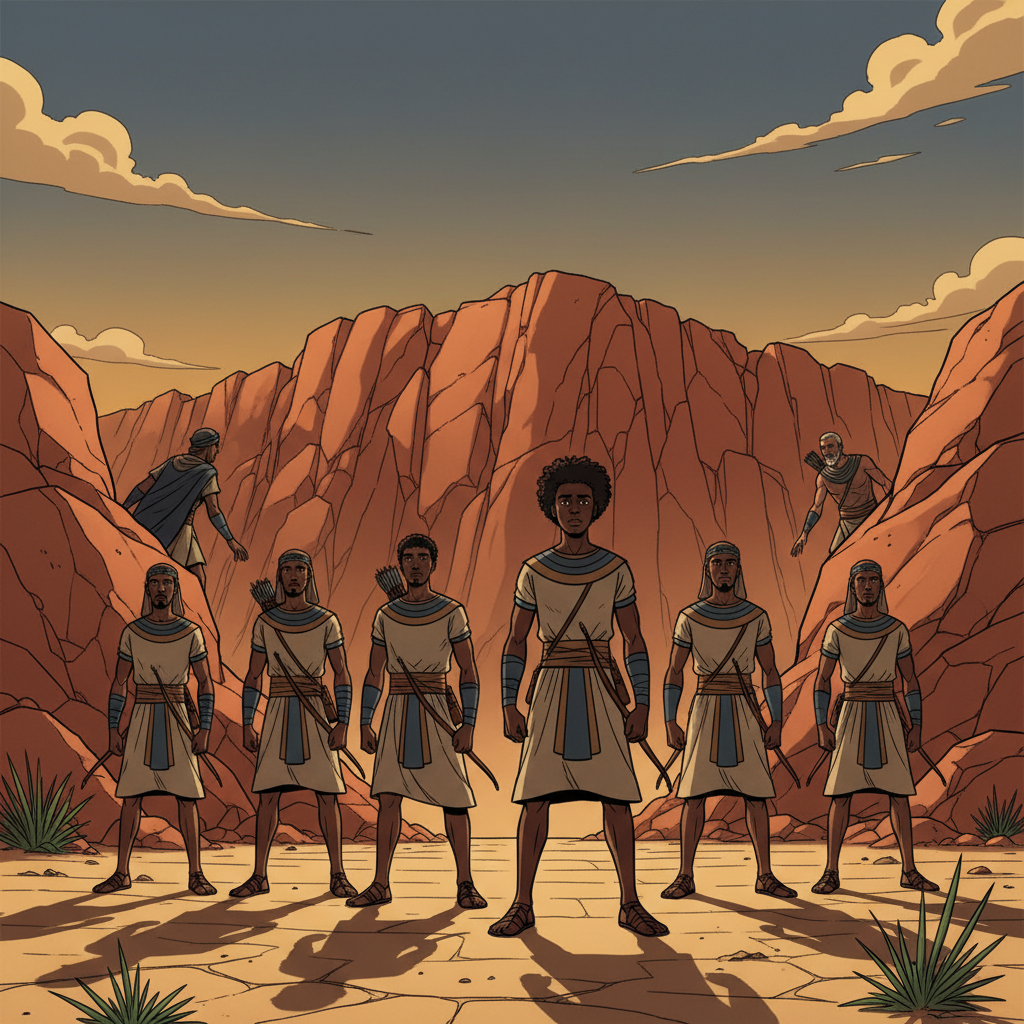
Senu went with another scout named Pedubast — a lean, grey-threaded man who moved through the scrub the way water moves through cracked earth. They separated at the base of the ridge, each taking a different angle of climb, neither speaking. The rest of the column stood in the open and watched them go. Neb watched too. He noticed that his breathing had gone shallow again, and he made himself deepen it. A scout who could not breathe could not see. Senu vanished behind a shoulder of stone. Pedubast vanished behind the other. For a stretched count of perhaps fifty heartbeats, the ridge swallowed them both, and the column stood in the silence that follows a thrown spear before it lands. Then, from behind the shoulder of stone, there came a short, clear whistle. The scout's signal for found.
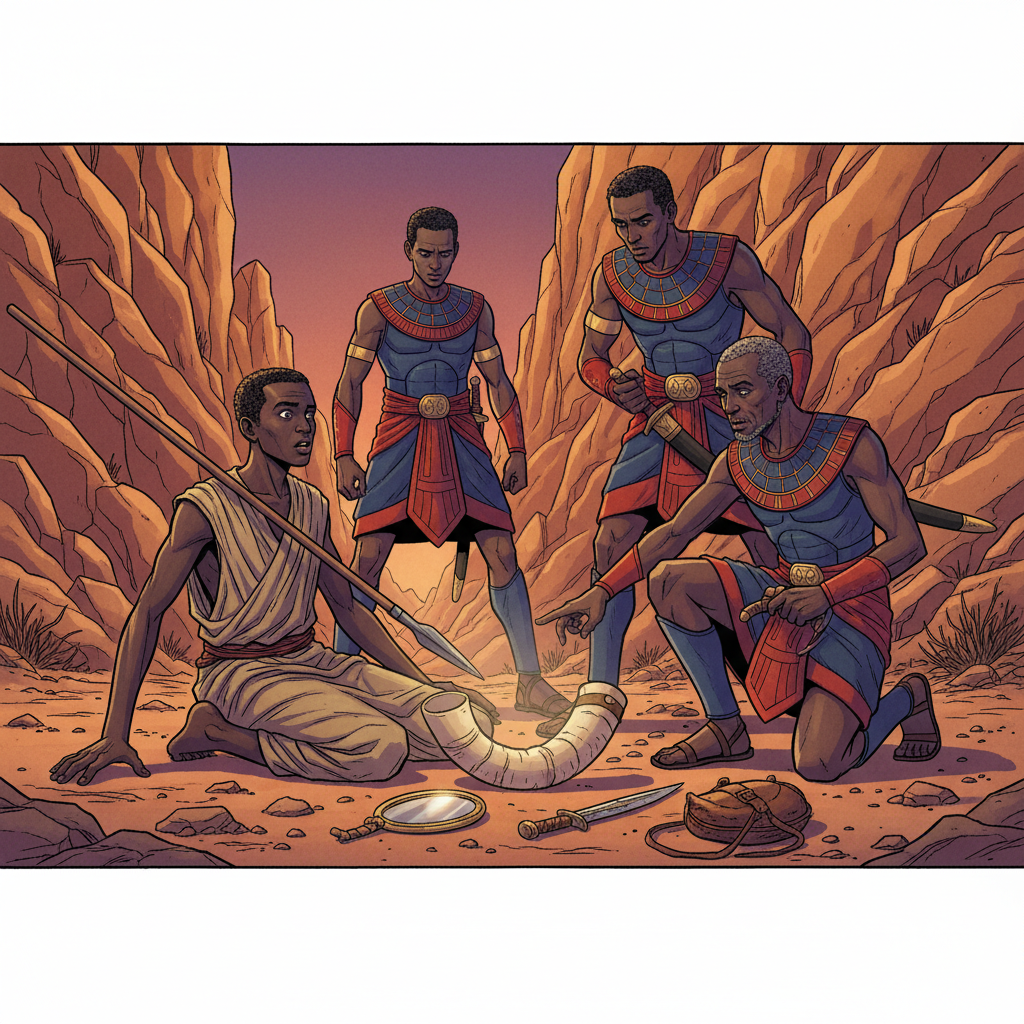
They brought the man down at spear-point. He was Hyksos by his dress, a lookout in a dun-coloured wrap that lay near-invisible against the stone when he was still. He carried a small brass mirror, a water skin, a curved dagger, and a horn of polished ibex bone. The horn was the thing that stilled every Medjay in the column. One blast of that horn, directed north, and a waiting force would have known the precise instant the Kemetic column entered the gap. The lookout had not been a single man watching. He had been an eye set for a blade. Pedubast laid the horn on the ground between Ra-hotep and Neb. No one said the word ambush. No one needed to. Every man in the column could feel the shape of the arrow that had not been loosed.
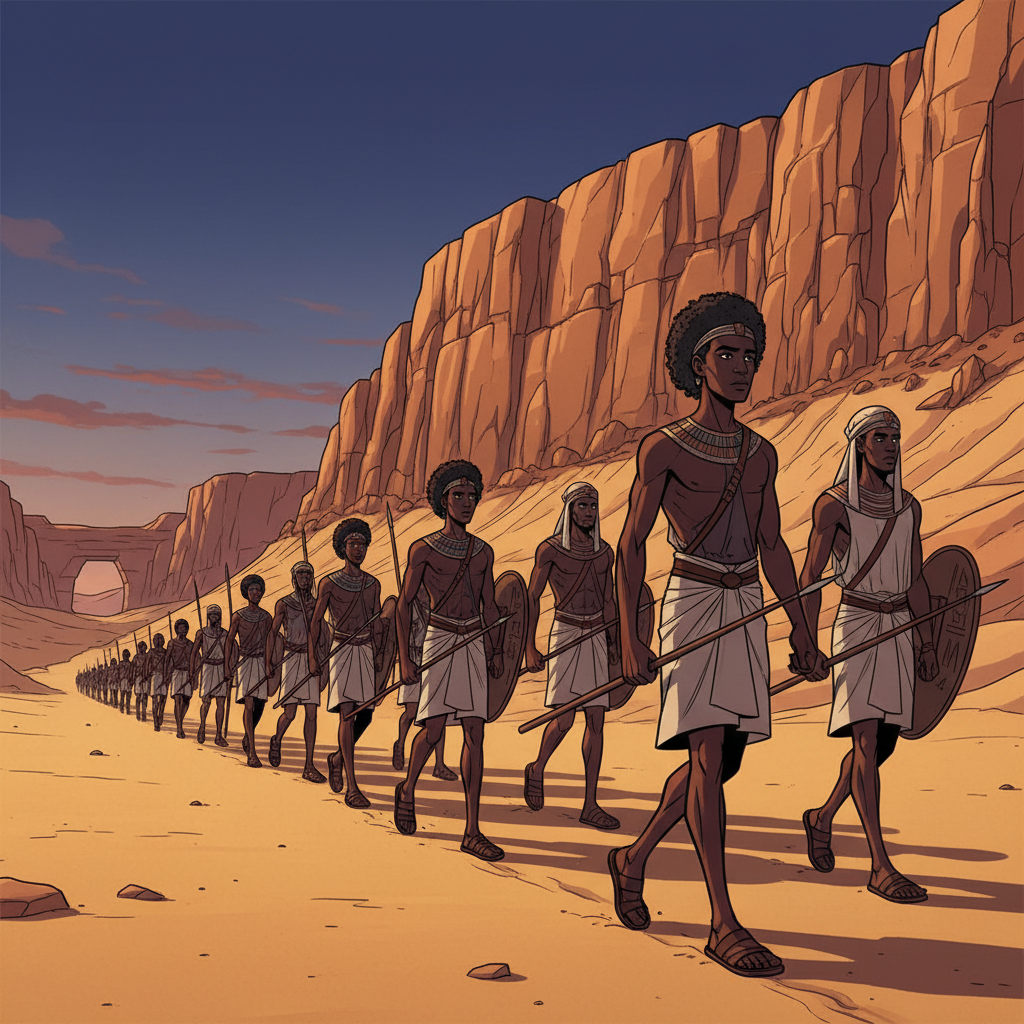
Ra-hotep interrogated the lookout briefly and without cruelty. The man did not resist. He gave a number of spears waiting beyond the ridge — thirty, perhaps forty, positioned at the throat of the gap. He gave the signal that had been agreed. He gave the direction the Hyksos force would have closed from. Ra-hotep listened with a stillness that was not calm, exactly, but something harder. When the questioning was done he ordered the lookout bound and set aside under guard, and he ordered the column to a different path — a longer way around the ridge, adding half a day to their reconnaissance but removing them from the jaws. The Medjay moved. No one cheered. The column walked in the same order it had walked before, and the ridge fell slowly behind them, clear now because they had not walked under it.
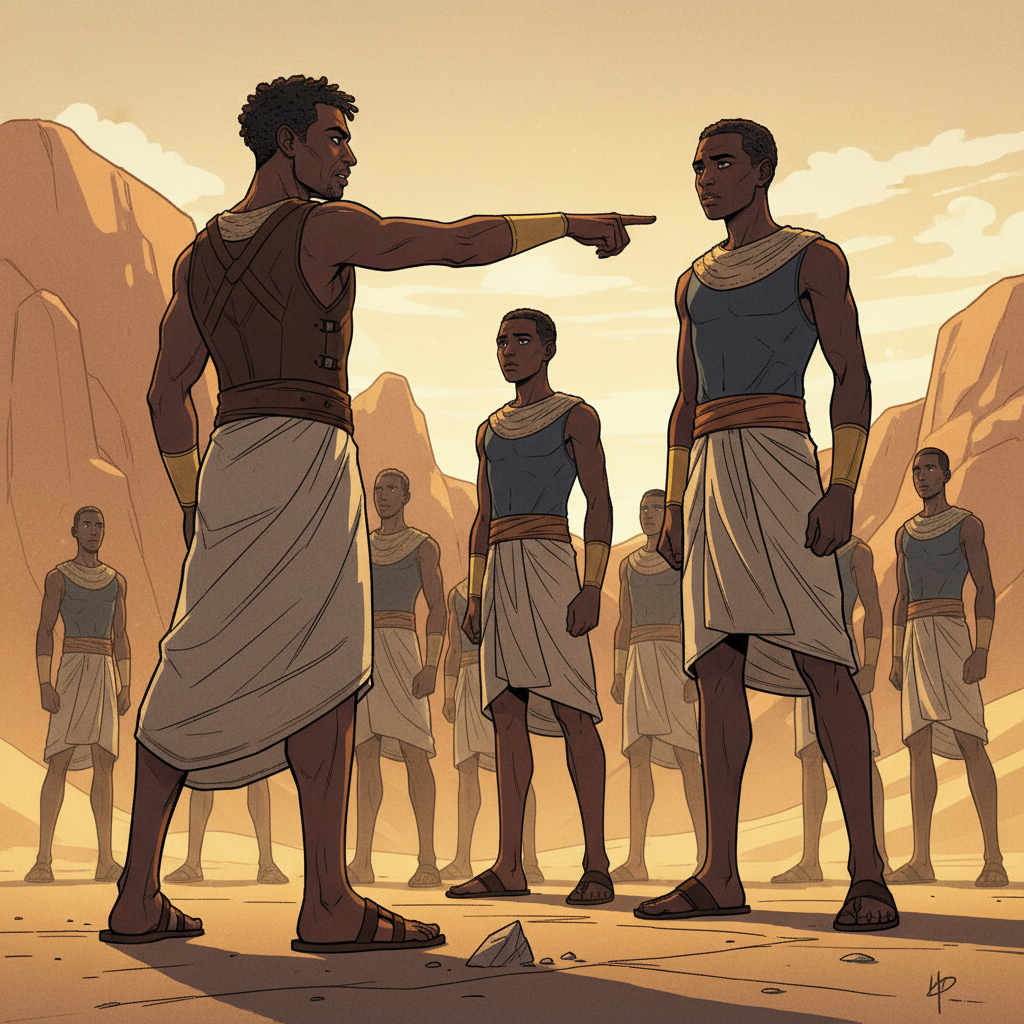
Ra-hotep did not speak to Neb for the rest of that day. He did not rebuke him. He did not thank him. He gave his orders in the same tone he had used before the ridge, to the same scouts he had used before, and when he passed Neb in the line he looked at the horizon as if the horizon had a message he must not miss. Neb felt the absence of the officer's eye more sharply than he had expected to feel it. He had known that a correction of this size would cost him something in Ra-hotep. He had not known exactly how that cost would sit. It sat like a stone in a sandal — small, constant, not bleeding him, but there with every step, reminding him that the ridge had been bought.
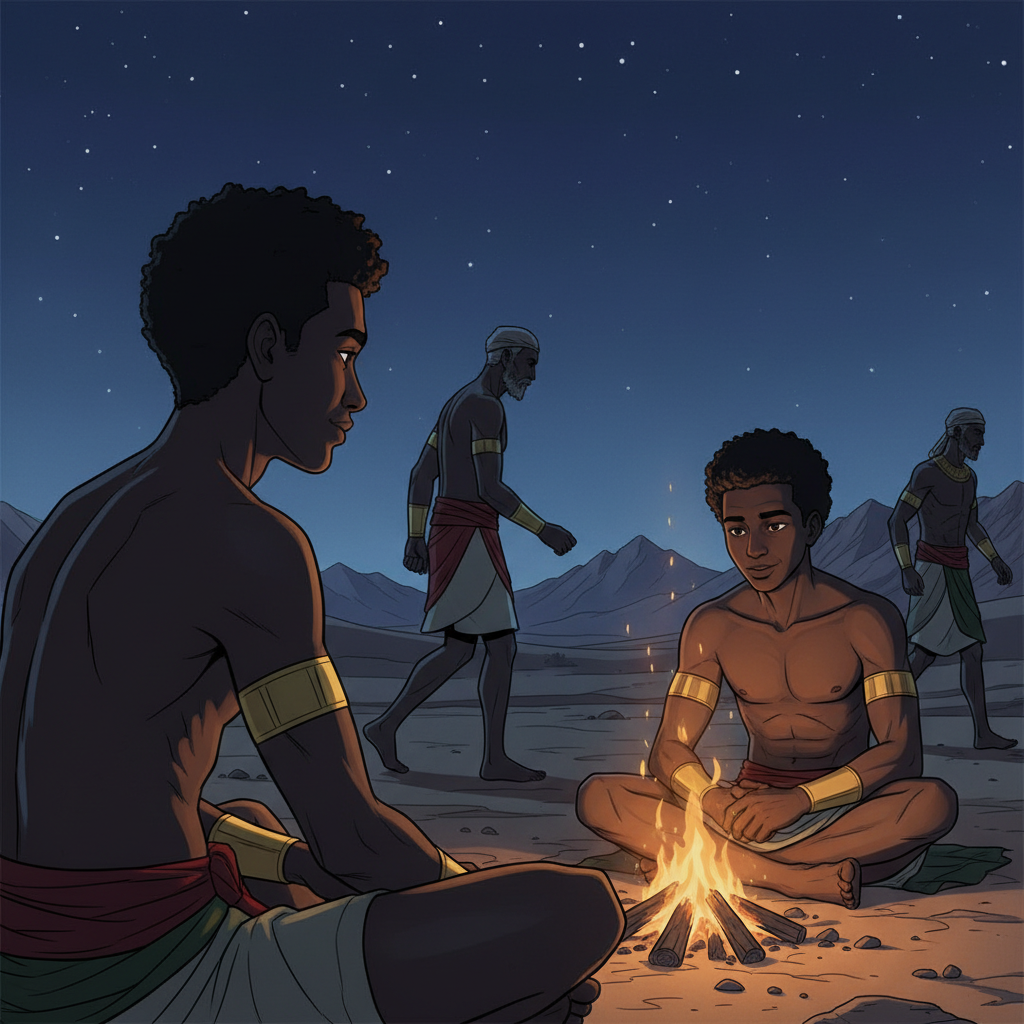
The other Medjay acknowledged him without acknowledging him. Senu, walking past at the water halt, brushed the back of his own hand against Neb's shoulder — the briefest contact, less than a word. Pedubast, passing later, met his eyes for one full breath and then moved on. An older scout whom Neb did not know well gave a single slow nod across the fire that evening and returned to his food. There was no speech. There was no clap on the back. There was only the Medjay way of marking a thing — quiet, sure, and without theatre. Neb understood, and he was grateful. If they had celebrated him openly, the officer would have felt the weight of it, and that weight would have sat on Neb for the rest of the patrol. The silence was kinder than praise.
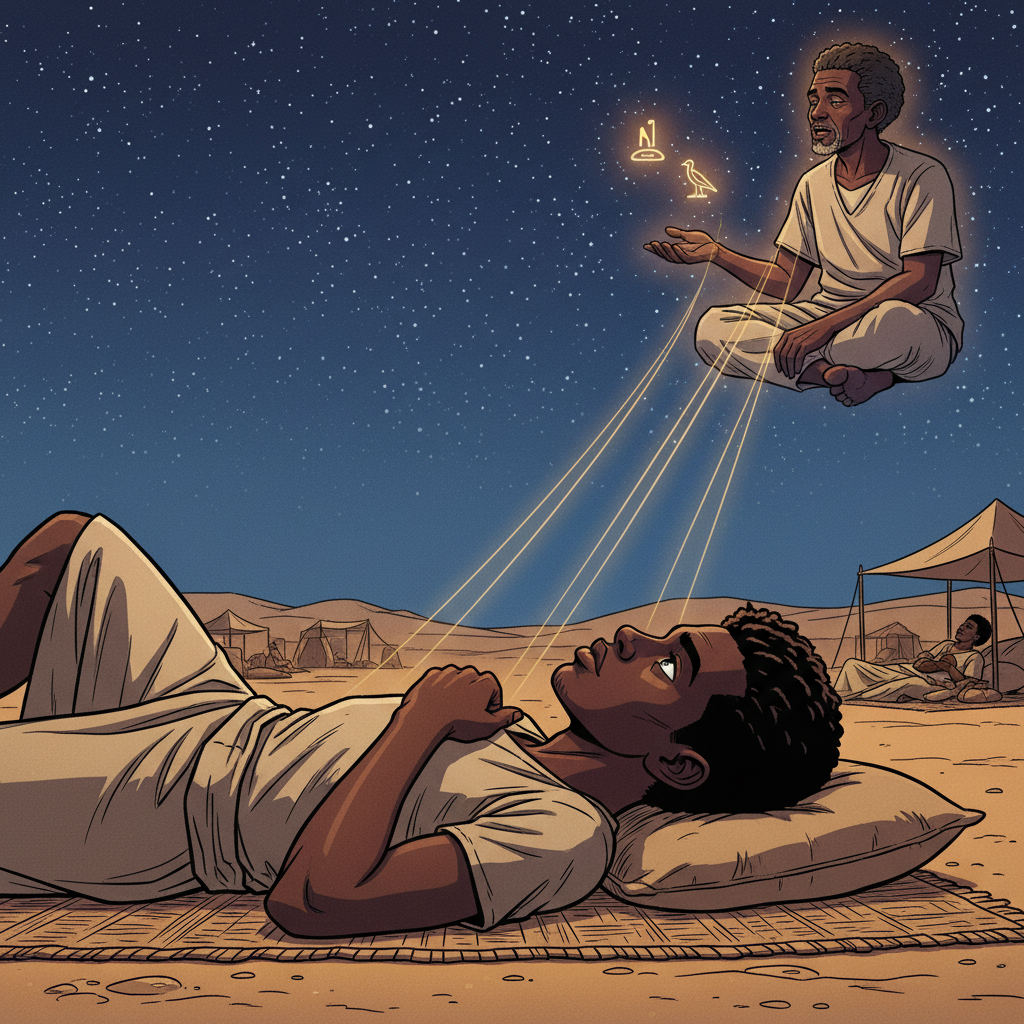
That night Neb lay on his sleeping mat under a sky so clean the stars seemed close enough to touch with a spear point. He thought about his grandfather. He thought about the two lines he had spoken in his own voice that afternoon — the stone, the birds. He thought about how small the words had been, and how much they had carried. He thought about Maat, and how his teachers at home had always said that Maat was a straight line. Tonight he thought he understood the straightness in a new way. The straight line was not the easy line. It was the line you drew between what you had seen and what you said, even when drawing it tilted every other line in the camp. Especially then. He slept without dreams.
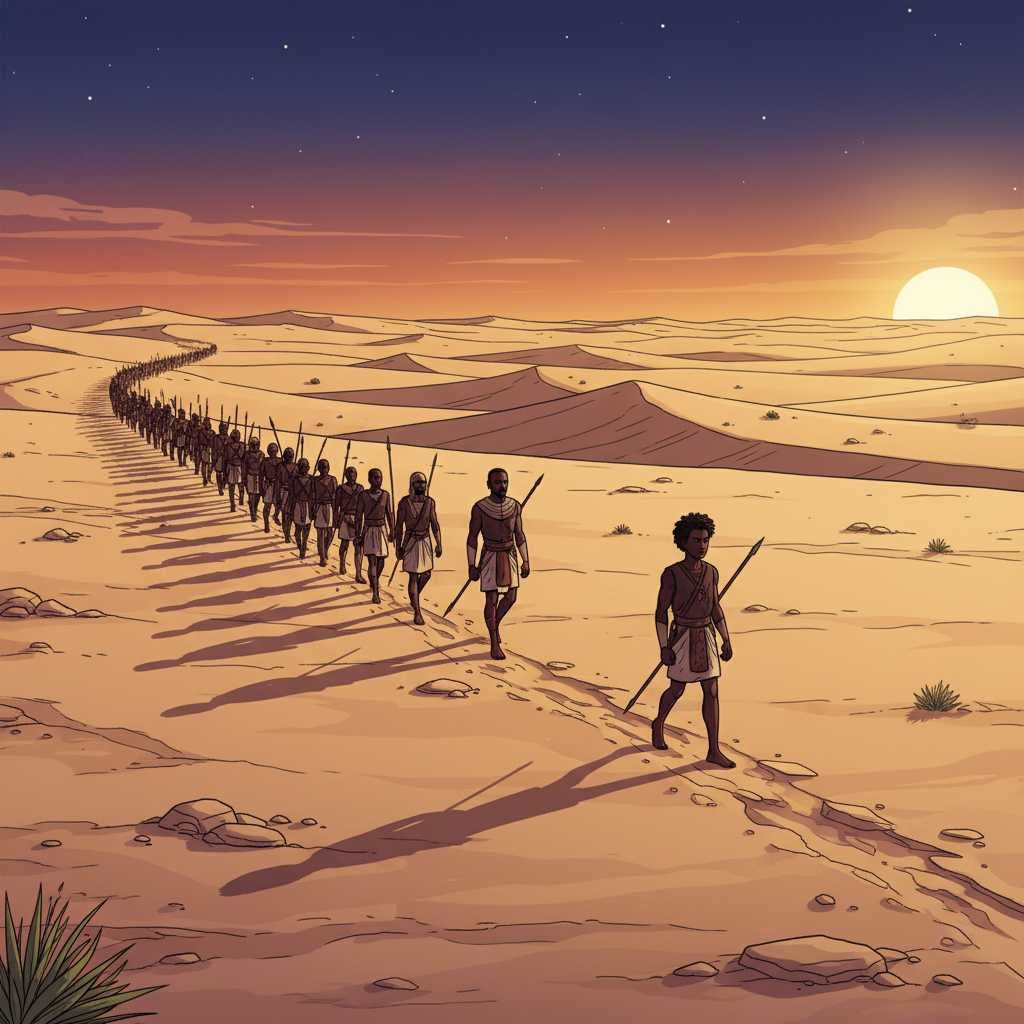
The next patrol, Ra-hotep sent him out alone. Not as punishment — Neb could read the officer well enough to know it was not that. A punishment patrol would have had a different shape, a different hour. This was a patrol to a rise three hundred paces west of the column, the kind of watching post a trusted scout was sent to, and Ra-hotep gave him the assignment in a voice as level as a stone shelf. But he gave it without meeting Neb's eye, and Neb walked out alone across the broken ground with the full understanding of what had changed. He had spoken the truth and the truth had saved the column. He had also, in the same breath, stepped into a distance from his officer that would not close quickly, and might not close at all.
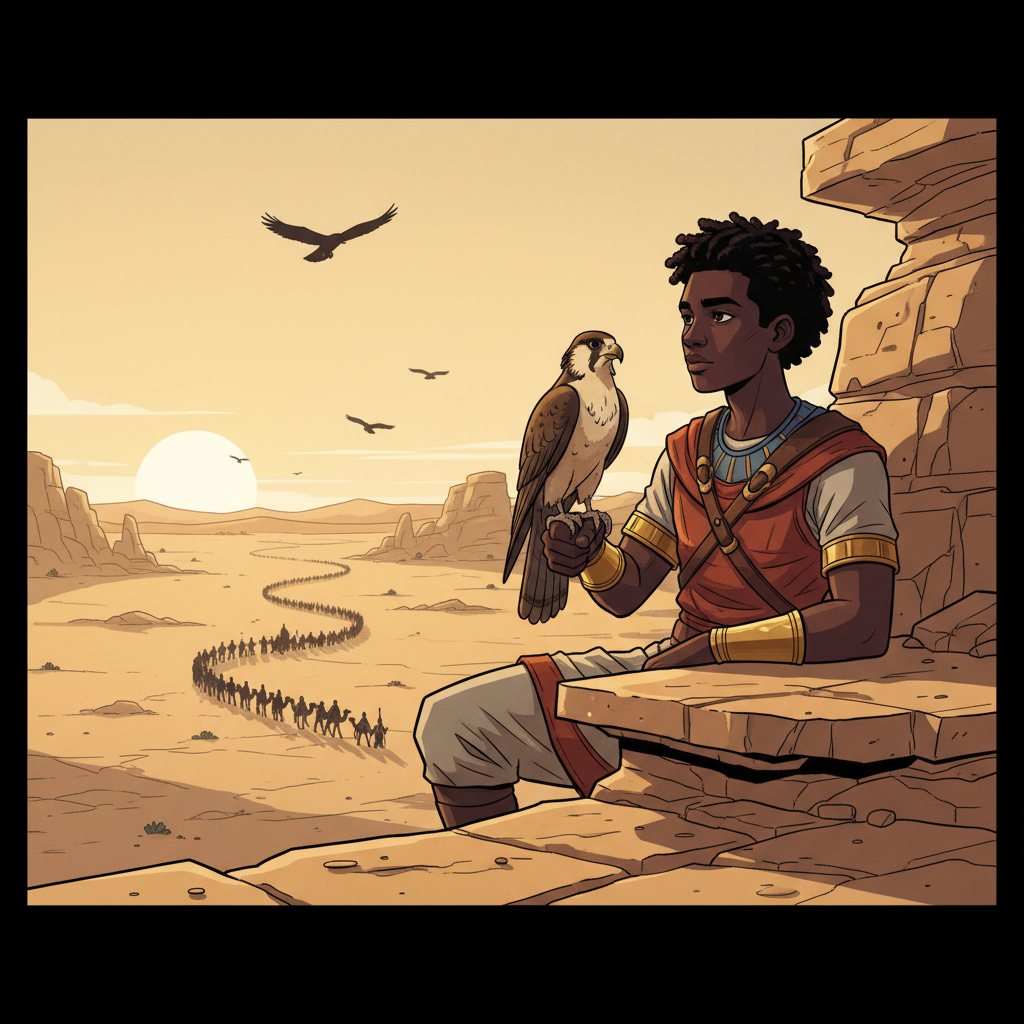
He climbed the rise and settled himself behind a shelf of limestone that kept him out of the eye of anyone approaching from the north. The column was a dark line on the pale ground behind him, small with distance. The sun rolled west. Birds lifted and did not lift, and he read them the way he had been taught. And he understood, sitting there in the hot stone quiet, what his grandfather had meant by the second line — the one he had not remembered until the ridge. Then you must say what the land told you. Even when your voice feels small. The saying did not come with thanks attached. It did not come with warmth attached. Maat did not promise thanks. It asked for the straight line, and it left the rest of the world to respond however the world chose.
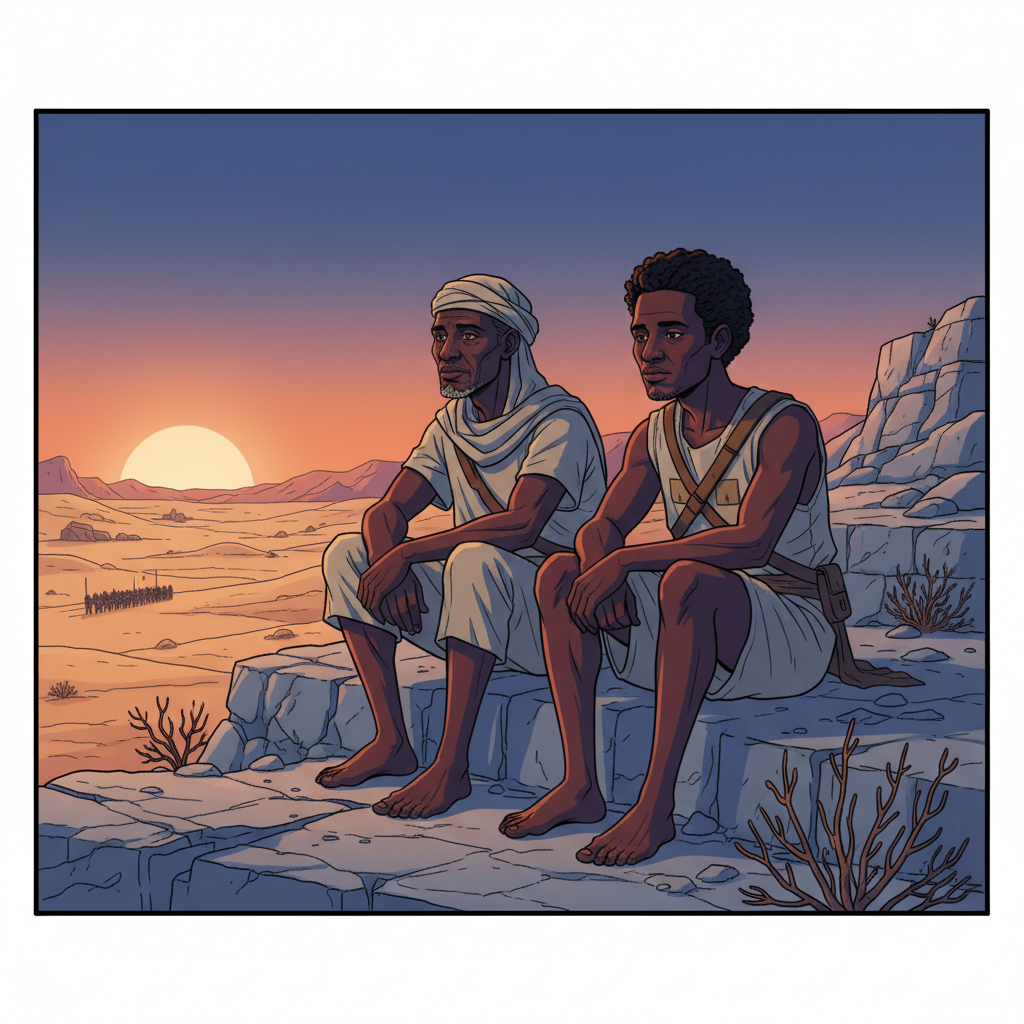
Toward dusk, Pedubast came up the rise to relieve him. The older scout climbed slowly, his breath even, and he settled himself beside Neb on the limestone without speaking for a long moment. They watched the light fall together. Then Pedubast said, without turning his head, without ceremony, almost as if the words were meant for the ridge and not for Neb at all, "The land speaks to those who listen. Keep listening." That was the whole of it. He did not add. He did not elaborate. He turned his eyes back to the horizon and took up the watch, and Neb rose and walked back down the rise toward the column with the sentence folded inside him like a seed wrapped in linen. It was enough. In the quiet way of the Medjay, it was more than enough.