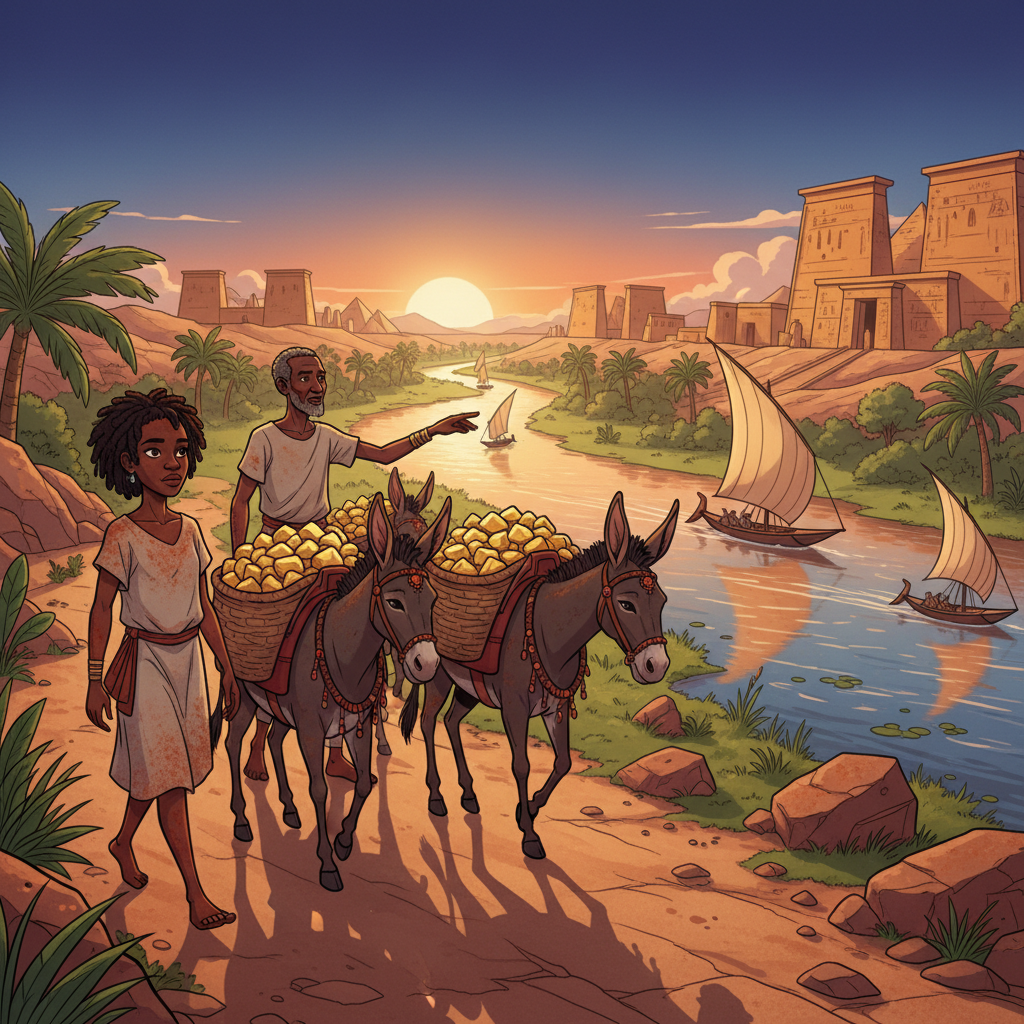
Twelve-year-old Amara walked beside her uncle's donkeys as they carried baskets of gold nuggets northward through the valley. Her ebony skin was dusted with red earth from the mining lands of Kush, the great kingdom south of Kemet. She had waited three years for this journey — the moment her uncle Kofi decided she was old enough to learn the trade routes that connected their world. The morning sun turned the Nile into a ribbon of copper light. Amara could see boats gliding north, their sails fat with wind, carrying goods from deep in the African interior. Her uncle told her to watch everything and forget nothing. "Your eyes are your first tool," he said. "Your honesty is your second. Everything else you can learn on the road."
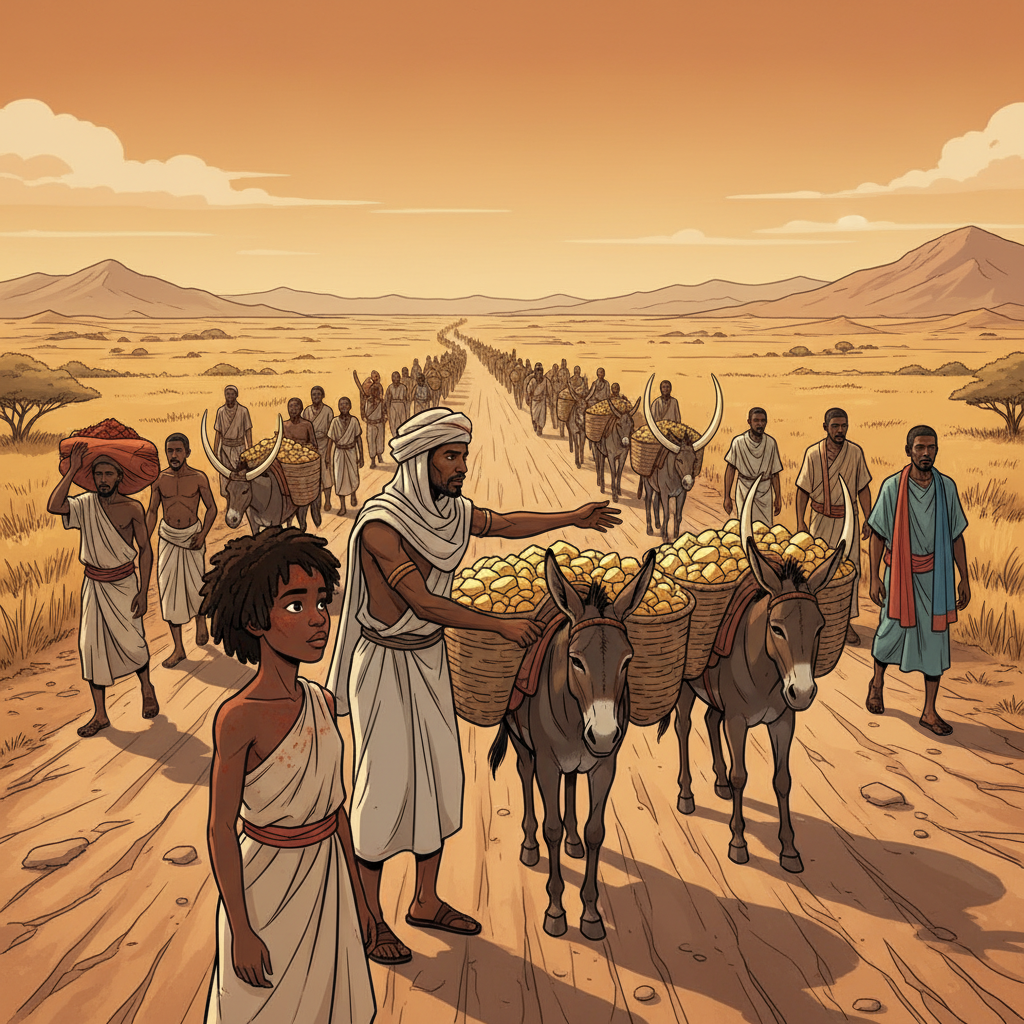
"Gold is beautiful," her uncle said, his deep brown face shaded by a cloth wrap as they walked. "But it is not the most valuable thing we carry. Ideas are. Every trader who walks this road carries stories, songs, and knowledge alongside their goods." He adjusted the lead donkey's pack and continued. "Our ancestors in Kush did not become powerful from gold alone. They became powerful because they shared what they knew." Amara watched caravans pass in both directions — long lines of donkeys and men carrying incense from the eastern mountains, ivory from the southern forests, and bundles of dyed cloth brilliant as sunset. The road itself felt alive, like a river of people and purpose flowing across the land.
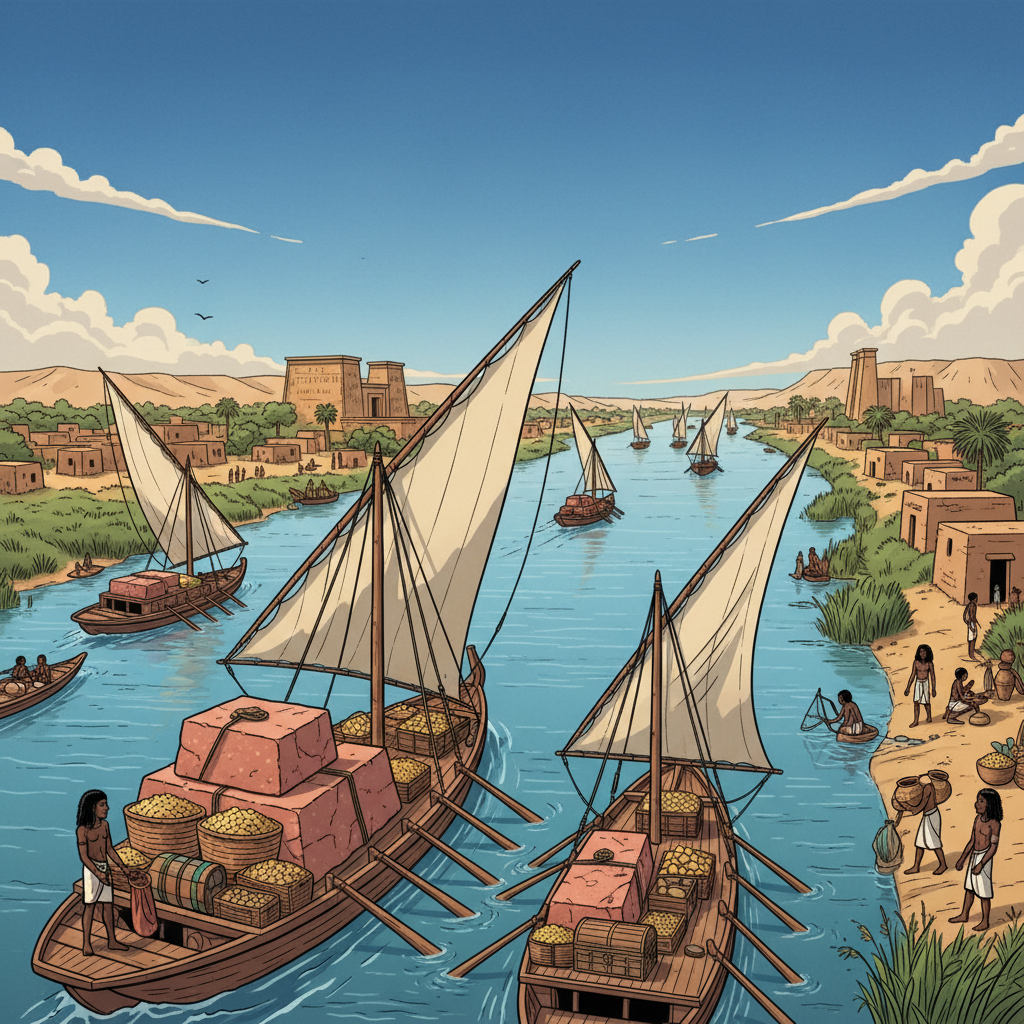
Their route followed the Nile corridor, the oldest trade road in the world. For thousands of years, goods had moved along this river — from the cataracts of Kush in the south to the great delta of Kemet where the Nile met the sea. Boats carried heavy loads of granite, gold, and grain downriver with the current. When traders needed to go south, they raised their sails and let the north wind push them home. Amara learned that the Nile was more than water. It was a highway, a messenger, and a lifeline. Villages along its banks grew rich not from conquest but from connection. Each town offered something the next town needed — papyrus here, dried fish there, pottery further on. The river made neighbors of people who lived hundreds of miles apart.
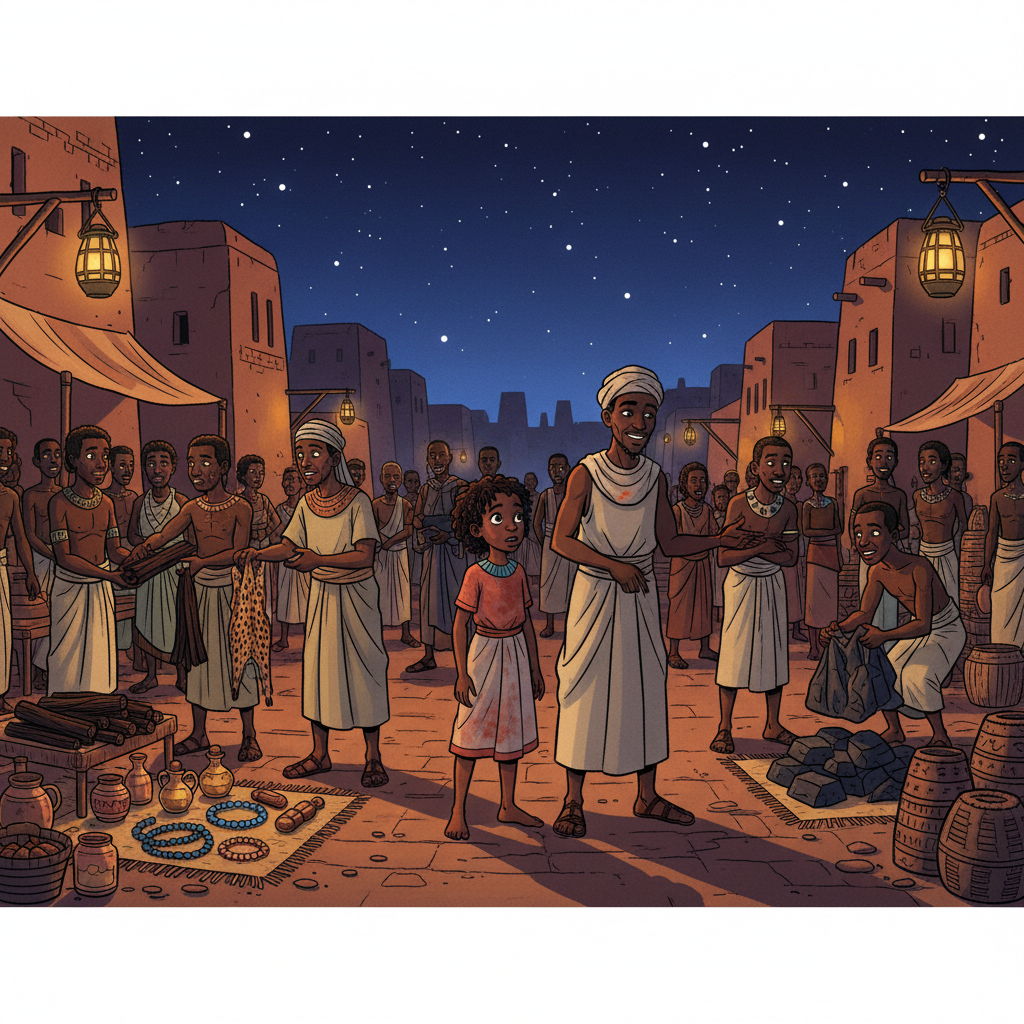
At a trading post near the second cataract, Amara saw the network up close for the first time. Dark-skinned traders from the southern forests exchanged rare ebony wood and leopard skins. Merchants from Kemet offered copper tools, beads of blue glass, and jars of fragrant oils. A group of men with ritual scars on their cheeks had traveled weeks on foot carrying bundles of iron — the strong metal that was becoming more valuable than bronze. Everyone bargained firmly but fairly, because the road depended on trust. Her uncle greeted traders he had known for twenty years, clasping hands and asking after their families. "One cheat can poison a route for generations," he told Amara quietly. "These relationships are older than either of us. We are custodians, not owners."
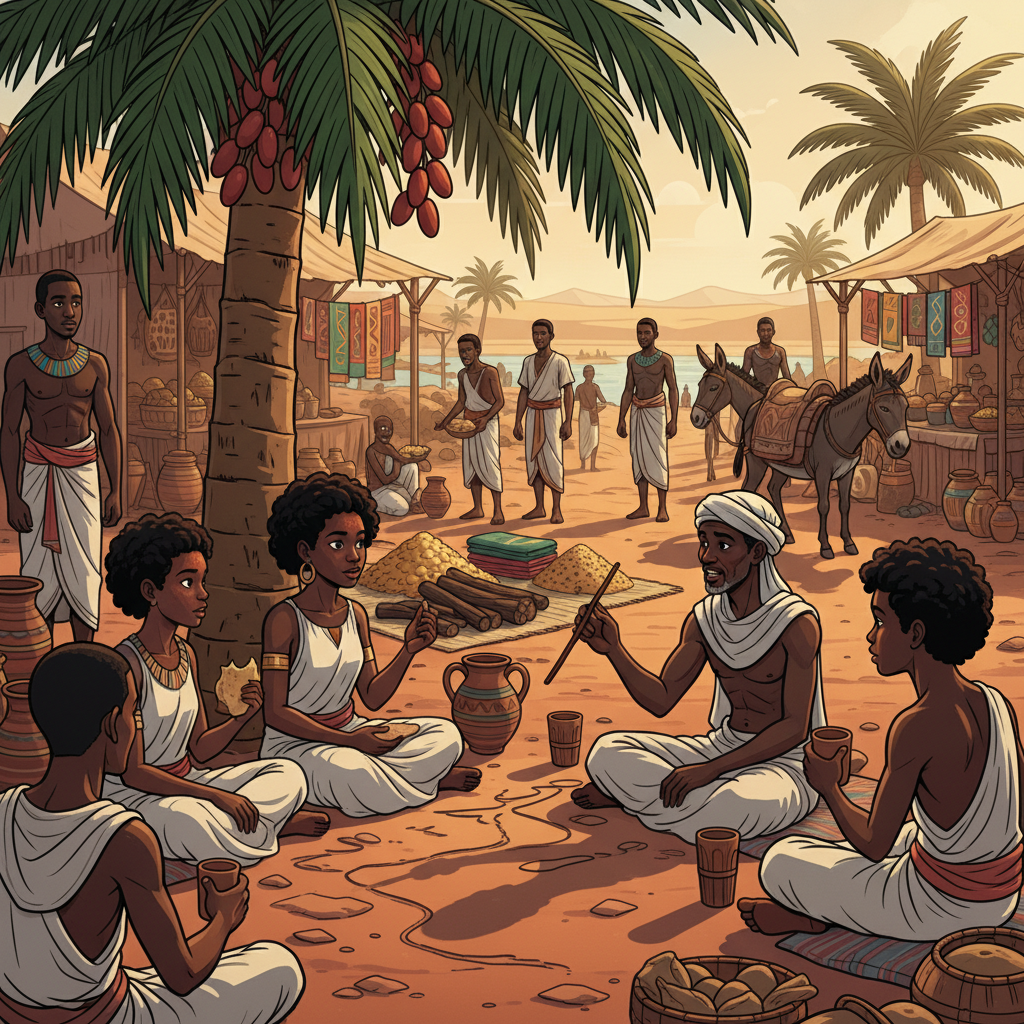
"This is maat in trade," her uncle explained as they sat beneath a date palm, sharing bread and beer with fellow travelers. "Fair exchange. You give honestly, you receive honestly. The ancestors built these roads on that promise. When someone takes by force or tricks people with false weights, that is isfet — chaos — and isfet always breaks the road." He drew in the sand with a stick, sketching the routes that branched out from where they sat. One line went south to the land of forests and elephants. Another went north through Kemet to the great sea. A third cut east toward the Red Sea coast and the land the ancients called Punt. "Maat holds all of this together," he said. "Remove maat, and every line I just drew disappears."
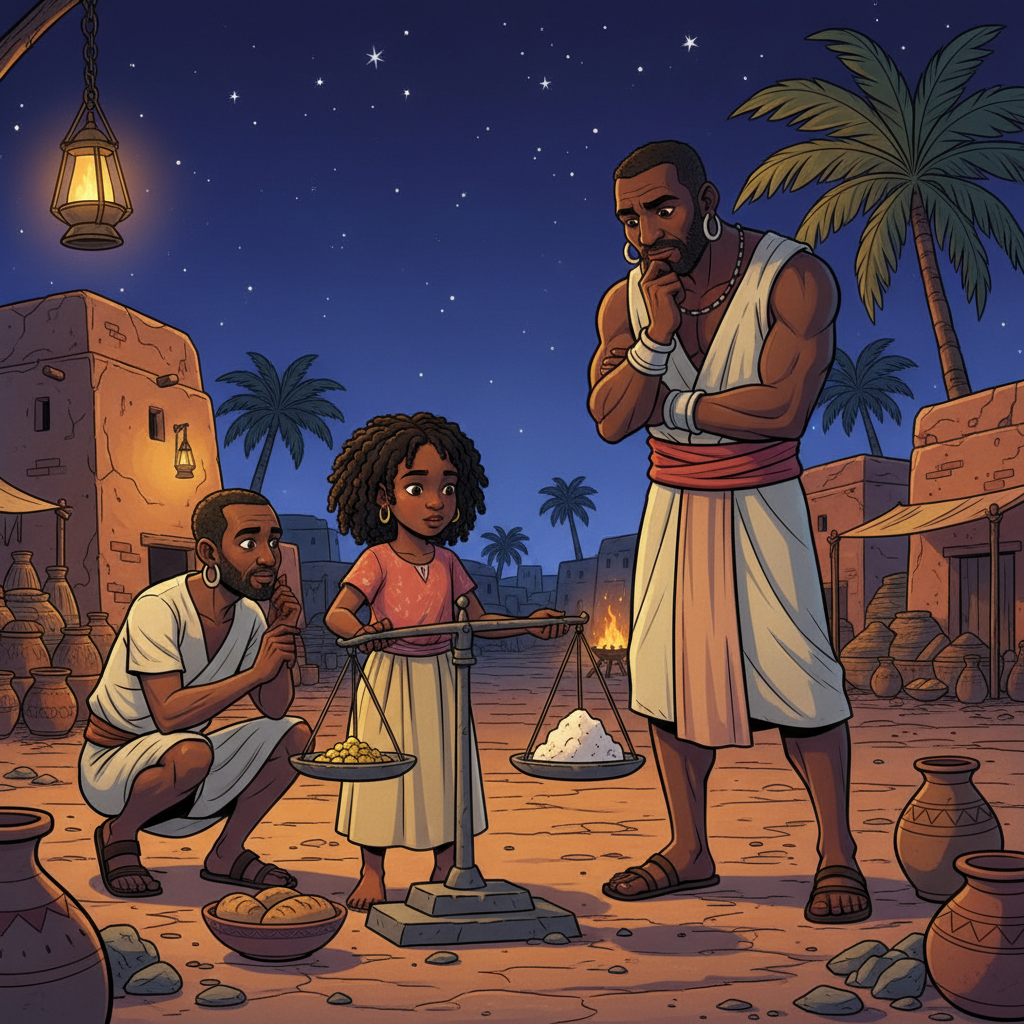
The next morning, Amara's uncle let her handle her first real negotiation. A merchant with rich dark skin and silver rings in his ears wanted to trade salt from the western desert for a portion of their gold. Salt was precious — armies needed it, families needed it to preserve meat, and it was difficult to transport without it crumbling to dust. Amara's hands trembled as she weighed the merchant's salt on a stone balance. "Speak clearly and look him in the eye," her uncle whispered. "Name a fair price. Not too high — that is greed. Not too low — that disrespects your own labor." Amara took a breath and offered her terms. The merchant countered. They went back and forth three times before clasping hands. Her uncle nodded once, and she knew she had done well.
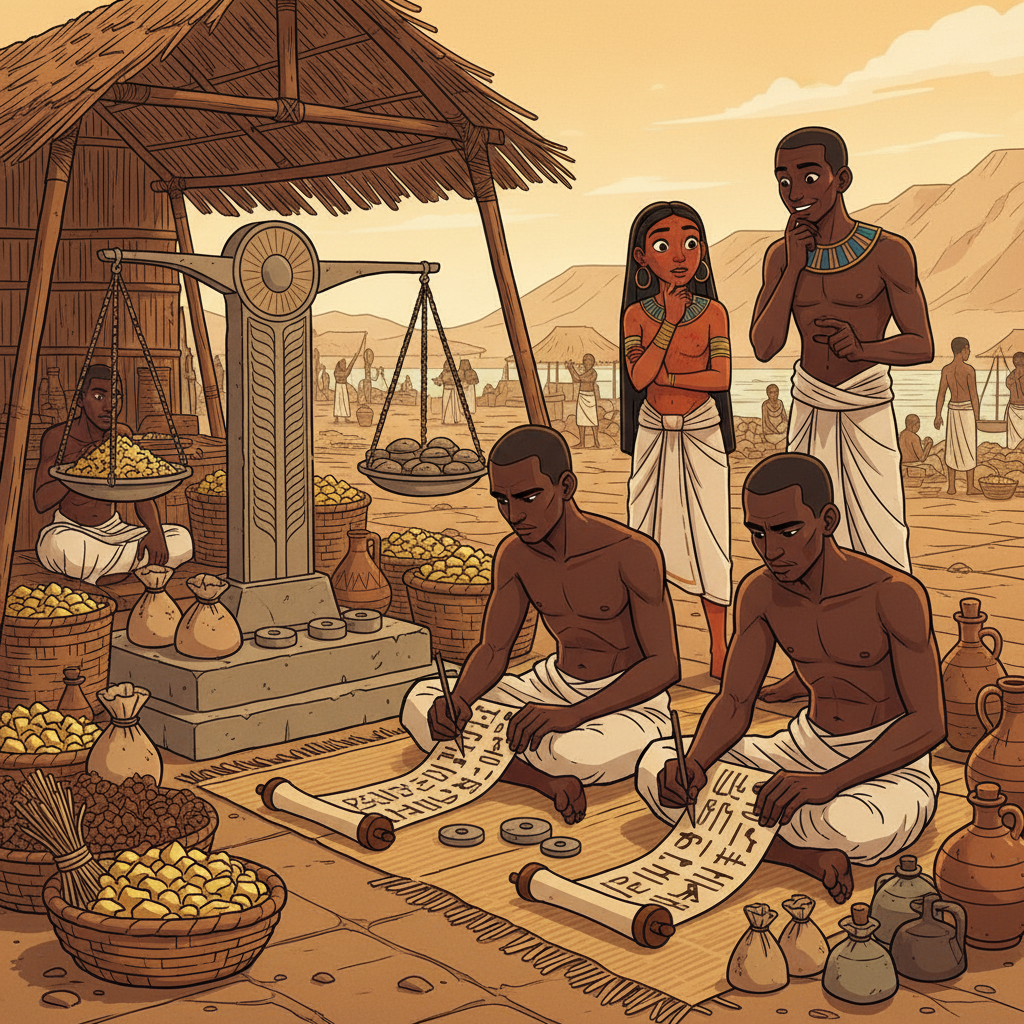
Amara noticed scribes at the trading post recording every exchange on papyrus scrolls. They sat cross-legged under reed canopies, their dark fingers stained with ink, writing in the careful script they had learned at the per ankh — the House of Life where knowledge was kept and taught. Weights were checked with stone balances shaped like the feather of maat. Nothing was hidden. Every basket of gold, every bundle of incense, every jar of oil was measured and recorded. She understood now why her uncle said trust was more precious than gold. These scribes were the memory of the trade road. If a merchant was dishonest, his name would be written down. If he was fair, that was recorded too. Without this system of truth, the entire network — stretching thousands of miles — would collapse like a house without its pillars.
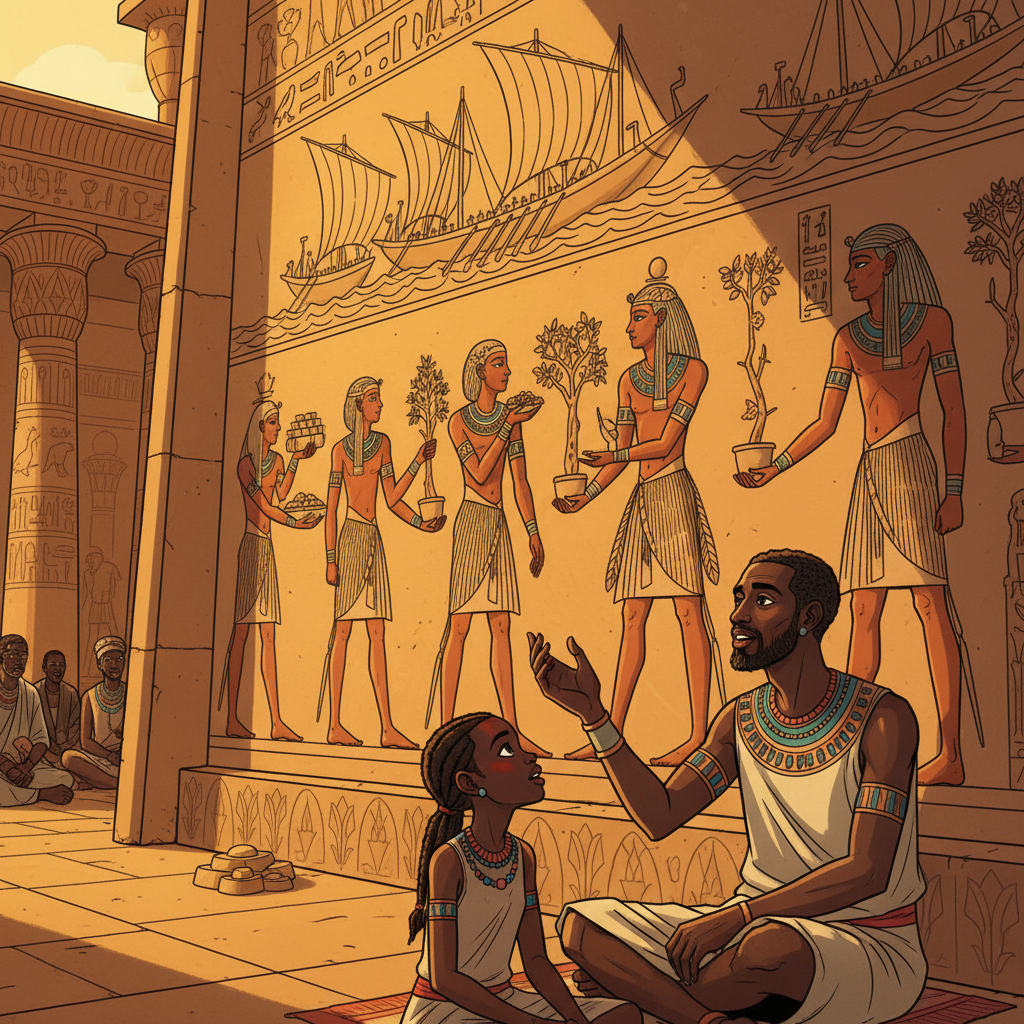
Her uncle told her about the trade route to Punt as they rested one evening. "Punt lies far to the east, across the Red Sea," he said, his voice low and reverent. "The people of Kemet called it Ta Netjer — the Land of the Gods — because it produced the finest incense in the world. Myrrh and frankincense grow there like weeds grow here." He explained how Queen Hatshepsut of Kemet had sent a great expedition to Punt, not with soldiers but with traders carrying gold, beads, and gifts. "She did not invade," he said firmly. "She exchanged. The people of Punt welcomed her traders because they came with respect. They returned with incense trees, ebony, electrum, and animals no one in Kemet had ever seen. That expedition is carved on temple walls to this day — proof that maat in trade creates wealth that lasts forever."
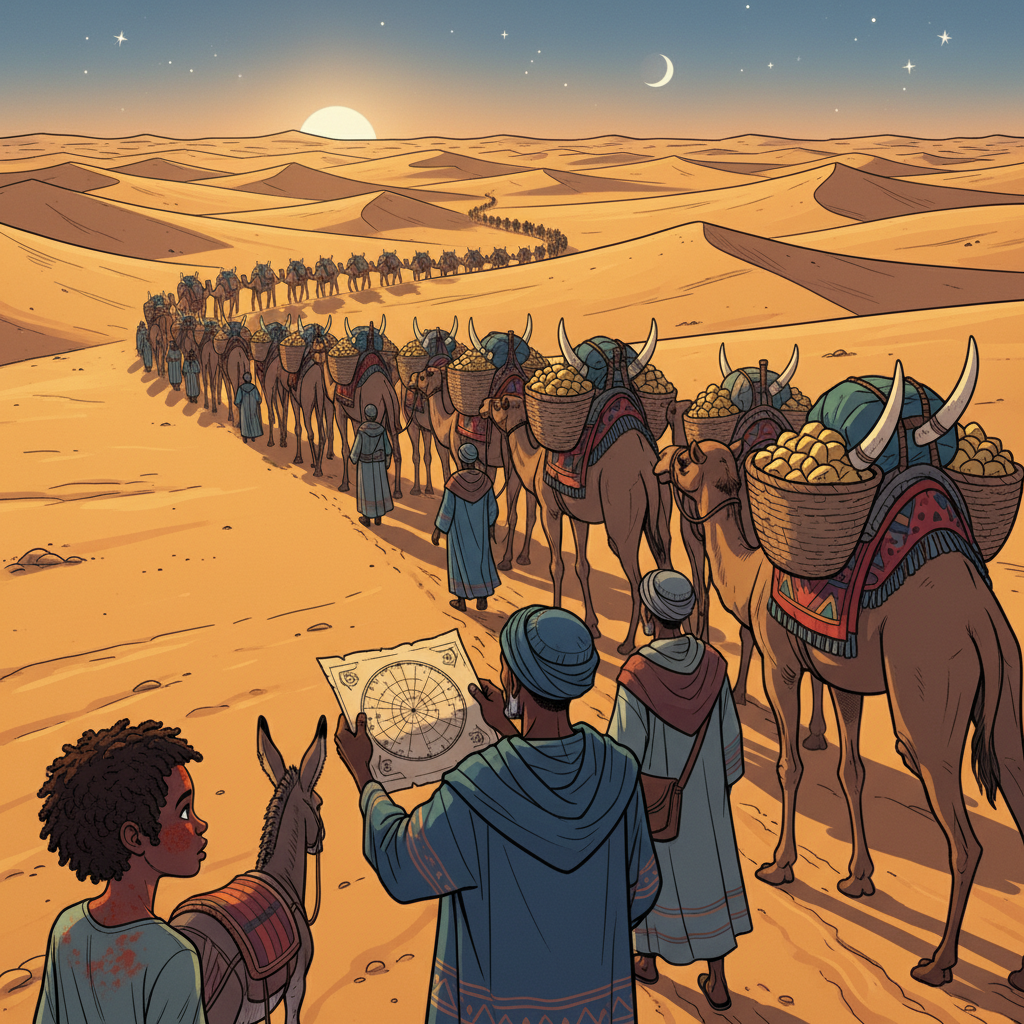
As they continued north, Amara learned about the trans-Saharan routes — the roads that cut west across the great desert. These were the most dangerous paths of all. Caravans of hundreds of camels carried gold and ivory from the interior of Africa to trading cities on the desert's edge. In return, they brought back salt, copper, and textiles woven with patterns that told stories. Men with skin dark as polished wood led these caravans by the stars, navigating sand seas where a wrong turn meant death. "The desert traders are the bravest people alive," her uncle said with admiration. "They risk everything, and so they value fairness above all else. In the deep desert, your word is the only contract. There are no scribes, no witnesses — only your ka, your spirit, watching whether you live in truth." Amara felt the weight of that idea settle into her chest.
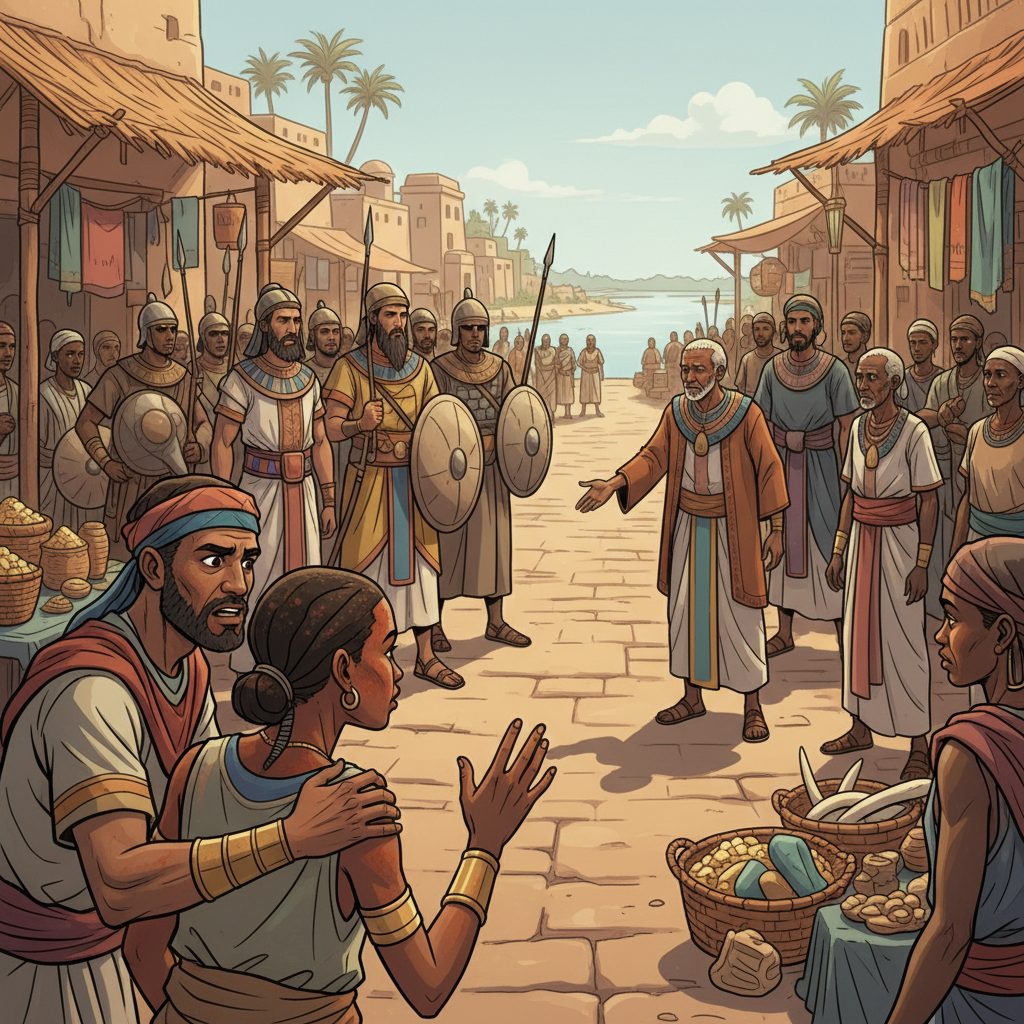
At a larger trading city further north along the Nile, Amara witnessed something that troubled her. A group of foreign merchants had arrived with soldiers. They were not bargaining — they were demanding. They wanted ivory and gold at prices far below what was fair, and they gestured toward their armed men when local traders resisted. The marketplace grew tense and quiet. Her uncle pulled her aside, his jaw tight. "This is how isfet begins," he said. "When someone brings weapons to a trading post, they have already broken maat. Trade built on fear is not trade — it is theft wearing a mask." The local elders gathered and refused to sell. The foreign merchants left with nothing. It was a hard victory — they might return with more soldiers — but the elders chose dignity over submission.
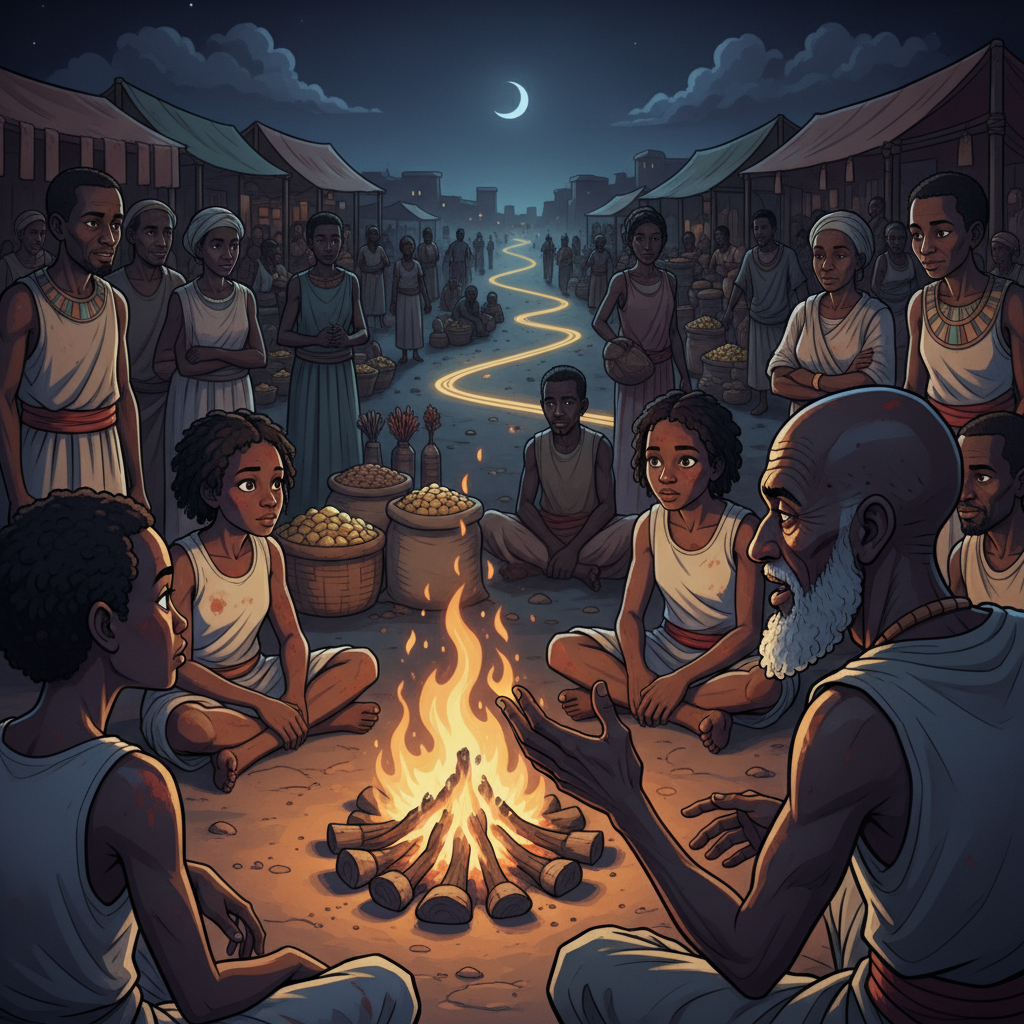
That night, around a fire, one of the elders told Amara a story. Long ago, he said, the trade roads had no guards and no fences. People and goods moved freely across the land because the ancient world understood a simple truth: when everyone trades fairly, everyone prospers. The kingdoms of Kush and Kemet grew wealthy not by hoarding but by connecting — linking the gold of the south with the grain of the north, the incense of the east with the iron of the west. "The roads themselves were sacred," the elder continued, firelight dancing on his dark weathered face. "To rob a trader was to wound the land. The ancestors believed that maat flowed along these roads like water flows in the Nile. Block the water, and the fields die. Block maat, and the people starve." Amara stared into the flames, memorizing every word.
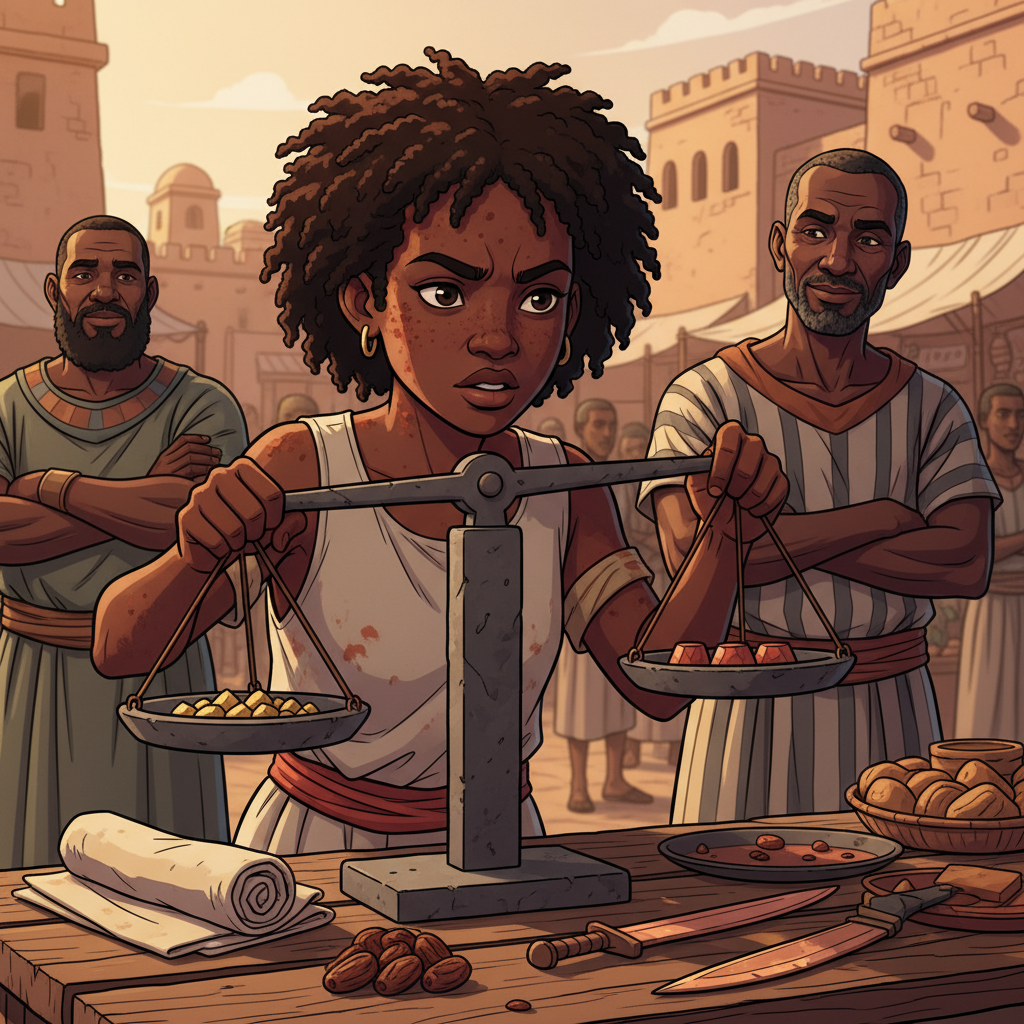
Over the following days, Amara practiced negotiation at every stop. She traded small portions of gold for things the family needed — linen cloth, dried dates, a new copper blade for her uncle's knife. Each time, she used the stone balance, checked the weights, and looked the other trader in the eye. She learned to read faces — to see when someone was being honest and when they were hiding something. Her uncle watched without interfering. "You are finding your voice," he told her one evening. "A good trader does not try to win. A good trader tries to make sure both sides walk away satisfied. That is the deepest meaning of maat — not just fairness, but balance. Like the two sides of the scale, both must be equal, or the whole thing tips over." Amara began to see the balance everywhere — in trade, in conversation, in life itself.
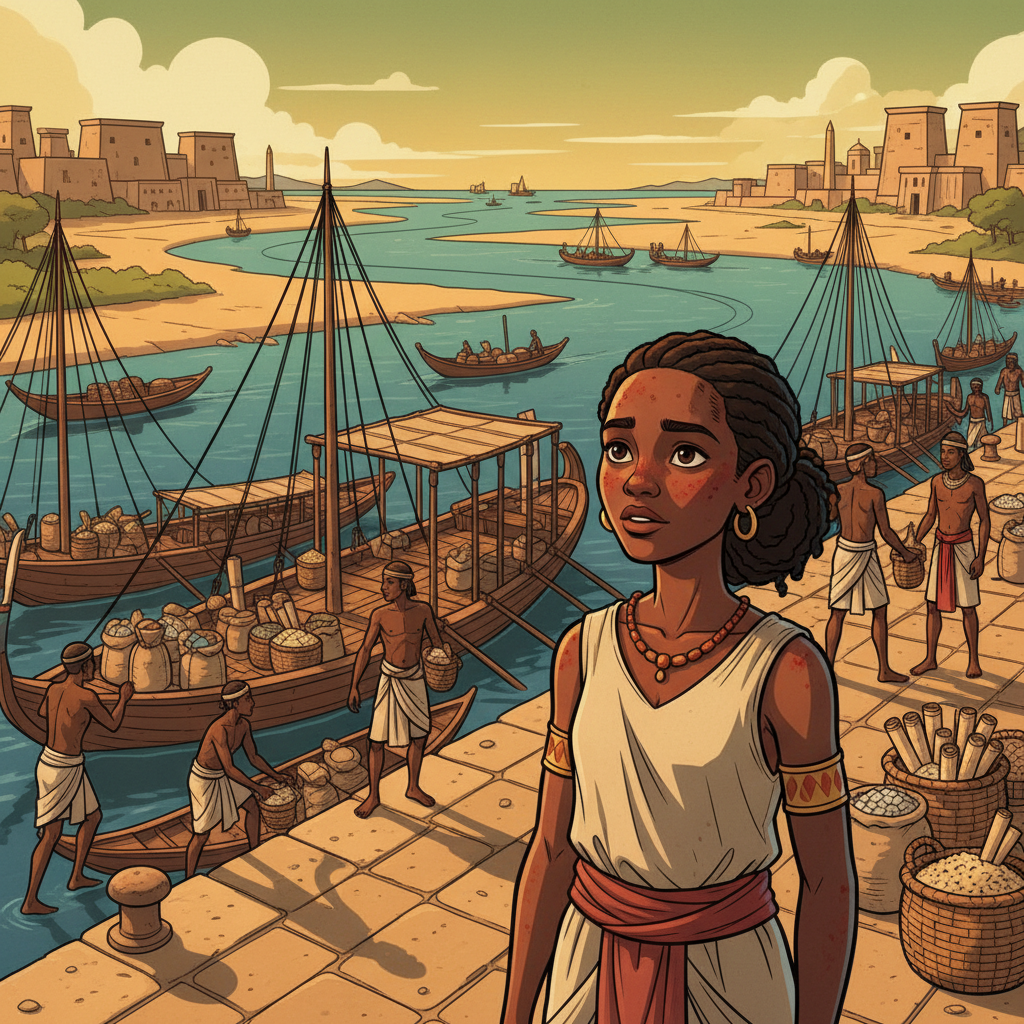
They finally reached the great delta where the Nile spread into many fingers before meeting the sea. Here, the trade roads of the entire ancient world converged. Ships arrived carrying cedar wood from the northern coast. Traders brought tin and silver from distant lands across the water. Merchants from Kemet exported papyrus, linen, and grain — the riches of the black fertile soil that the Nile deposited each year during the flood. Amara stood at the harbor and watched dark-skinned dockworkers loading and unloading boats with practiced ease. She realized that the wealth of Kemet was not just in its gold or its monuments. It was in its position — sitting at the crossroads of Africa, the eastern lands, and the great sea. And that position meant nothing without the systems of maat that made strangers trust each other enough to trade.
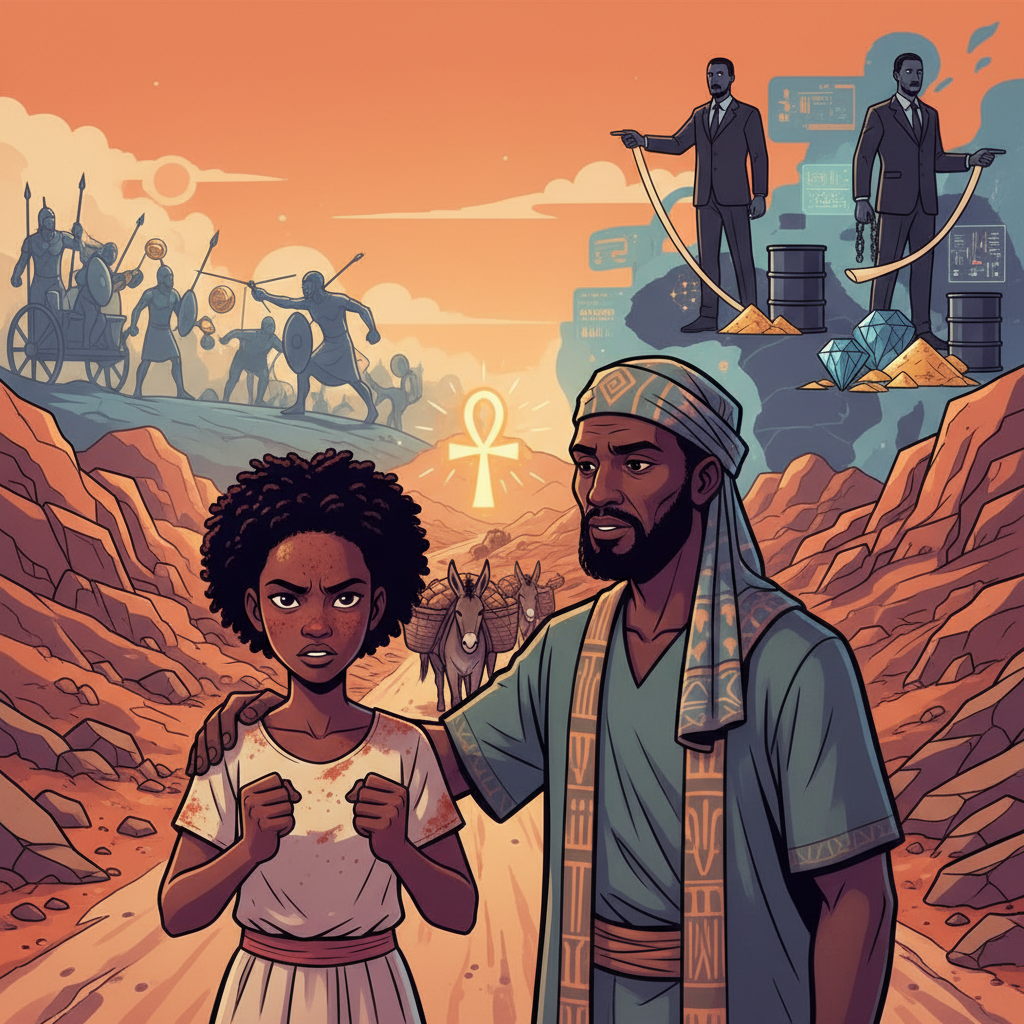
On the journey home, her uncle grew serious. "The world is changing, Amara," he said. "There are people coming from far away who do not understand maat. They see gold and they want to take it — not trade for it. They see land and they want to own it — not share it." He told her how, in distant times to come, nations would invade the African continent, stealing gold, diamonds, and oil without fair payment. They would call it commerce, but the ancestors of Kush and Kemet would recognize it as pure isfet. "Even today," he said, "many countries exploit other nations for resources, giving almost nothing in return. They use tricks more dangerous than false weights — they use debt, and contracts written in languages people cannot read, and armies that never leave." Amara felt anger rise in her chest, but her uncle placed a hand on her shoulder. "Anger is right," he said. "But remember — isfet is fought with maat, not with more isfet."
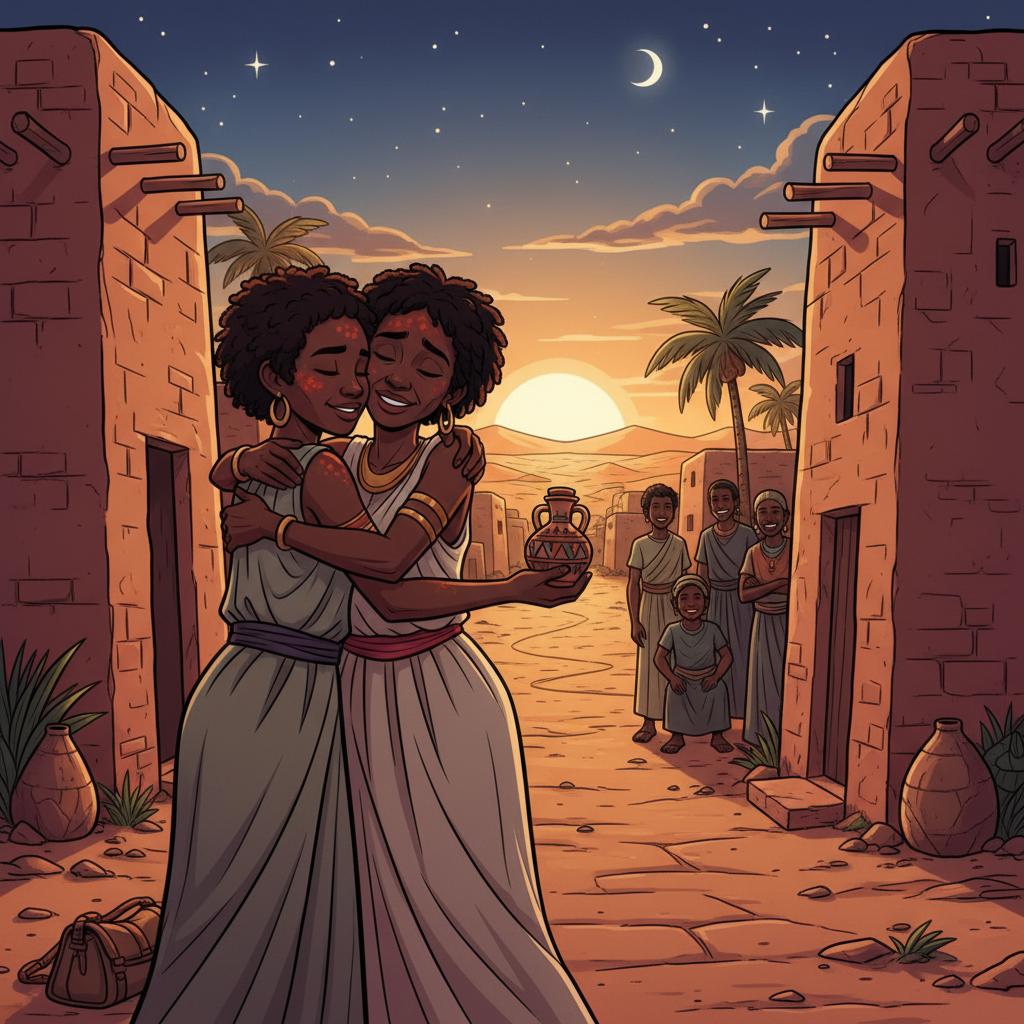
When they finally returned to their village in Kush, Amara felt different. She had walked hundreds of miles. She had negotiated trades, met people from distant lands, and seen both the beauty of fair exchange and the ugliness of greed. Her mother embraced her at the door, and Amara pressed a small jar of fragrant oil from Punt into her hands — purchased with gold she had traded herself. That night, she sat outside and looked at the stars the desert traders navigated by. She thought about the roads stretching out in every direction, connecting millions of people through the simple promise of honesty. She whispered a vow to her ka — her inner spirit — that she would carry maat with her on every road she walked, in every exchange she made, for the rest of her life. The gold roads were not made of gold. They were made of trust.