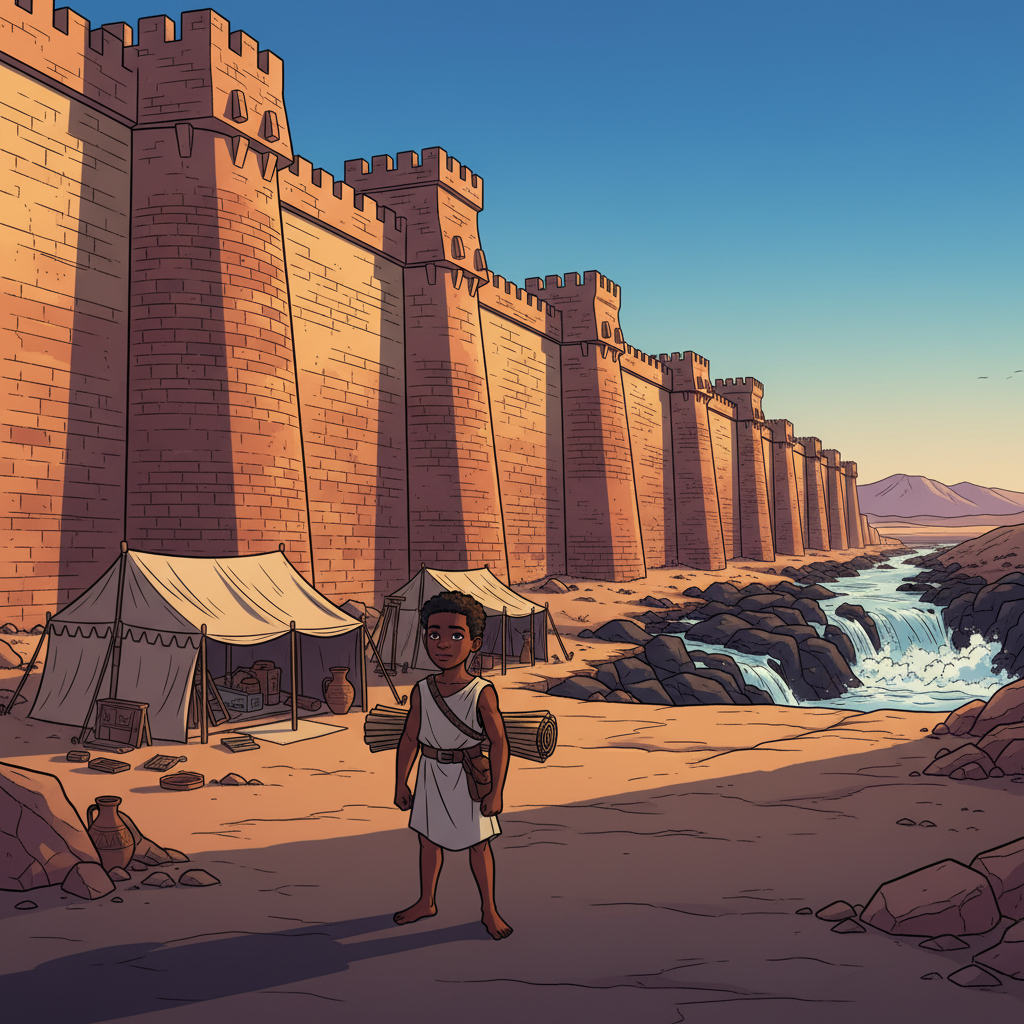
Sebek was thirteen years old, and he had grown up in the shadow of the largest thing his people had ever built. His skin was dark brown, his arms already strong from carrying his father’s measuring-cords, and his home was an engineer’s tent pitched beside the great fortress of Buhen, near the second cataract where the river roared white over black rocks. His father, Pawah, was the chief engineer of the walls, and Sebek had spent his whole childhood watching those walls climb, mud-brick upon mud-brick, toward the wide sky.
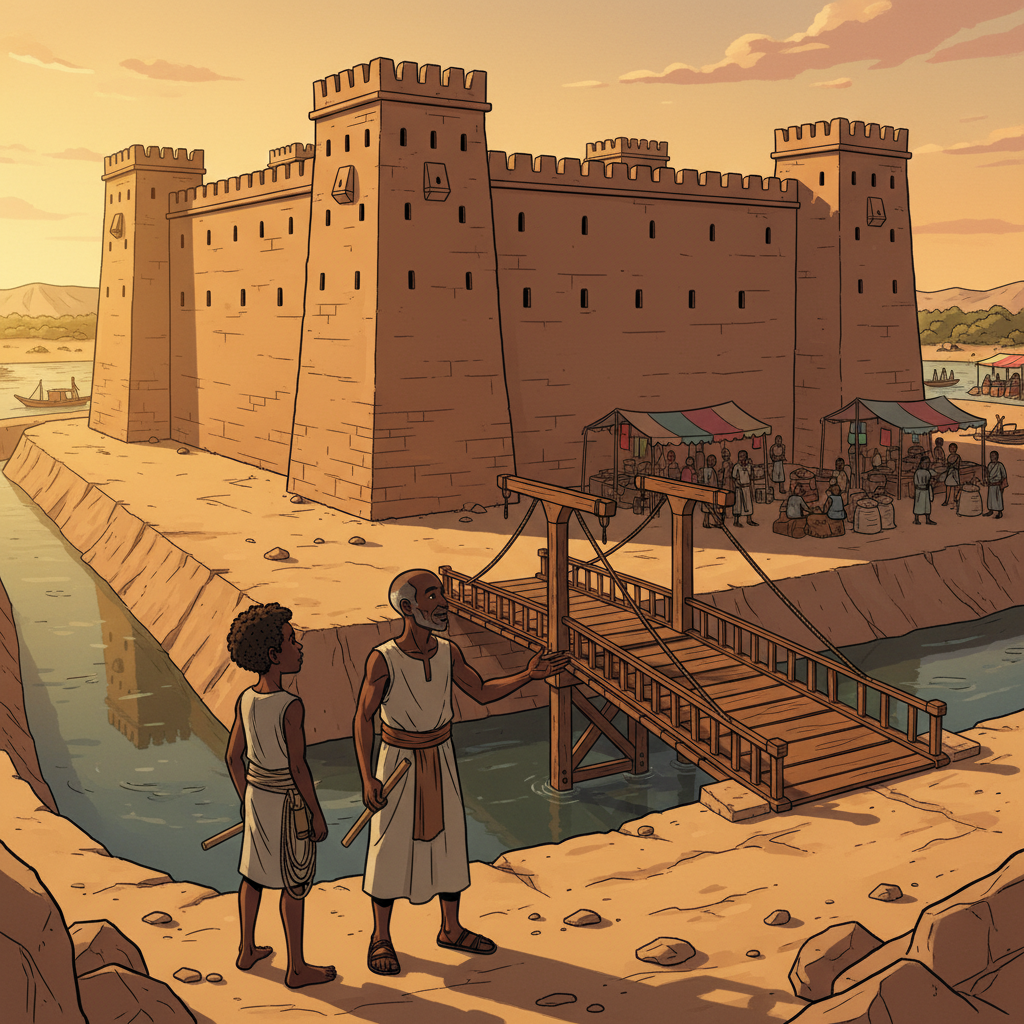
Buhen was not a small thing. Its walls of mud-brick rose thirty feet high and ran in a great rectangle, with square towers, narrow arrow-slits, a walkway along the top, and a deep moat crossed by a drawbridge that Sebek’s father had designed himself. But Buhen was never only a fort. Set where it was, at the meeting-place of the lands, it was also a gateway — a market where the goods of the south and the goods of the north changed hands. The wall could close like a fist. It could also open like a hand. Which one it was, Sebek would come to learn, depended entirely on the people standing inside it.
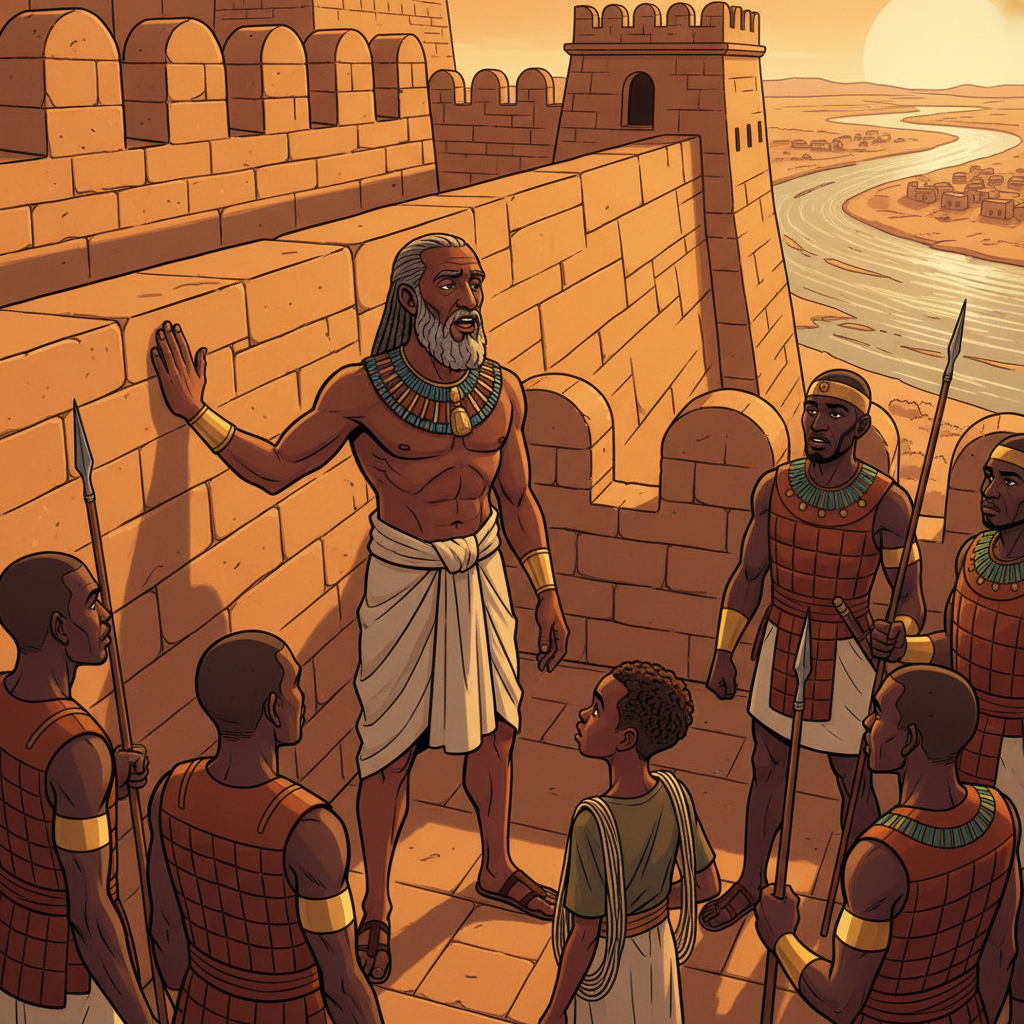
Sebek’s father took the walls personally. “A wall is a sentence the river will still be reading in a thousand years,” Pawah told his son. “Build it carelessly and it says: the people who made this were careless. Build it greedy and it says: the people who made this were afraid of their neighbors.” He ran his hand along the new brick. “Build it right, and it can say something far better.” Sebek did not fully understand him yet. He only knew that when his father spoke about the wall, even the fort’s hard soldiers grew quiet — because the wall was his, brick by brick, and a man cannot easily argue with the one who built the thing he is standing on.
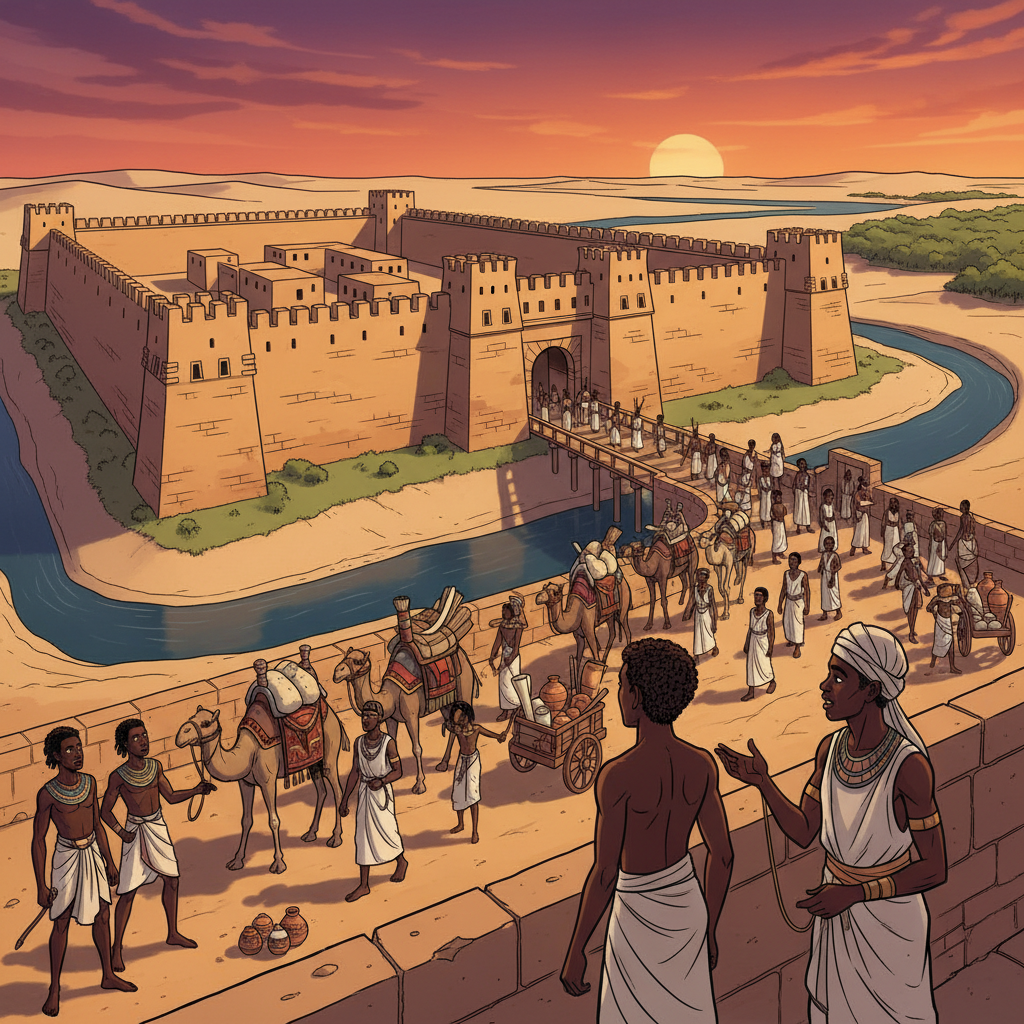
Buhen sat on the border-country between Kemet, the land to the north, and Kush, the great land to the south. Through its gate flowed the trade of a whole world: from the south came gold, ebony, ivory, leopard-skins, and incense; from the north came grain, fine linen, copper tools, and crafted things. Sebek had watched a hundred caravans pass through. The fort itself made none of these goods. It only sat in the middle of them, like a knot in a long rope — and a knot can either hold the rope together, or strangle whatever tries to pass through it.
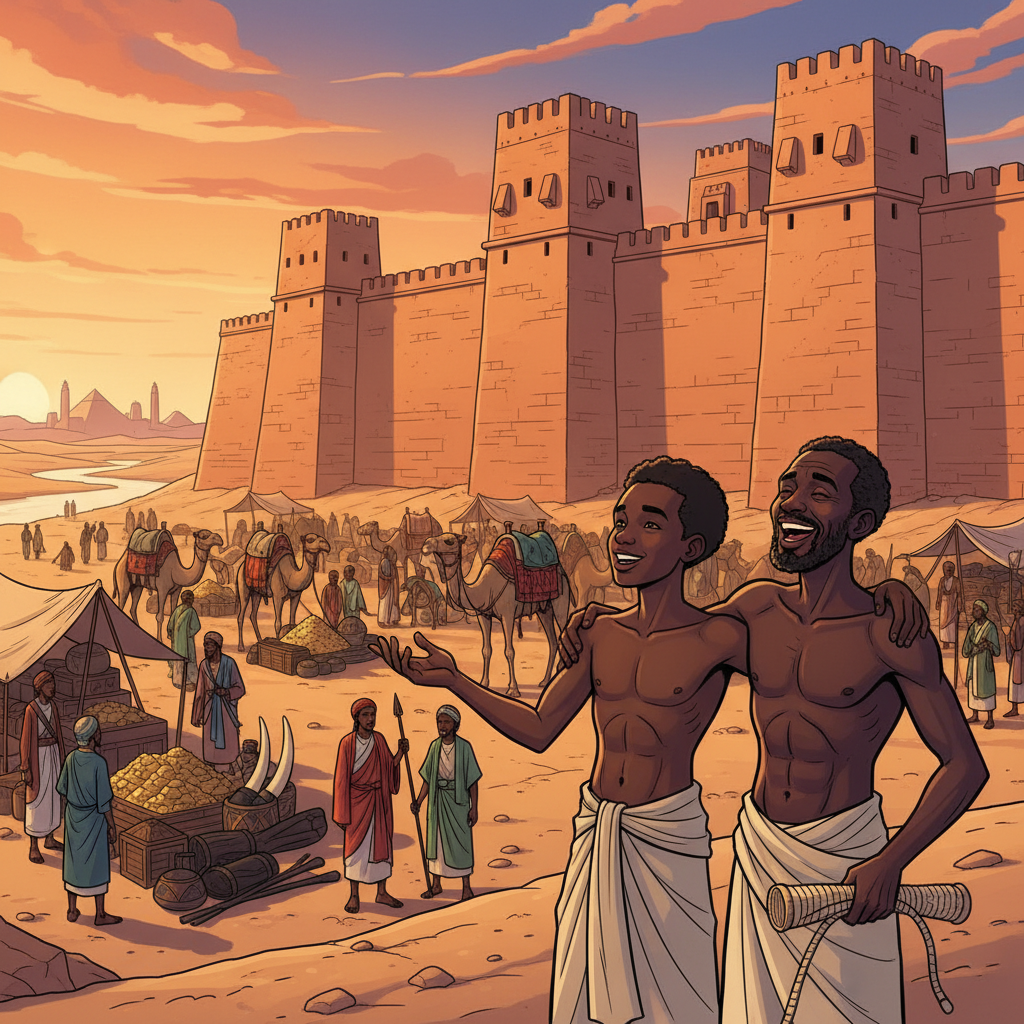
One evening, watching a southern caravan make its camp below the walls, Sebek asked his father whether Kush was a poor land that came begging for Kemet’s grain. Pawah laughed — not unkindly. “Poor? Boy, Kush has cities older than some of ours. Kush has gold mines so rich that kings of the north have gone to war over a rumor of them. Kush has its own kings, its own gods, its own armies, its own roads. Do not ever let a soldier tell you the caravans come here begging. They come here to trade, as equals — and the day we forget that is the day they carry their gold to a gate that still remembers it.”
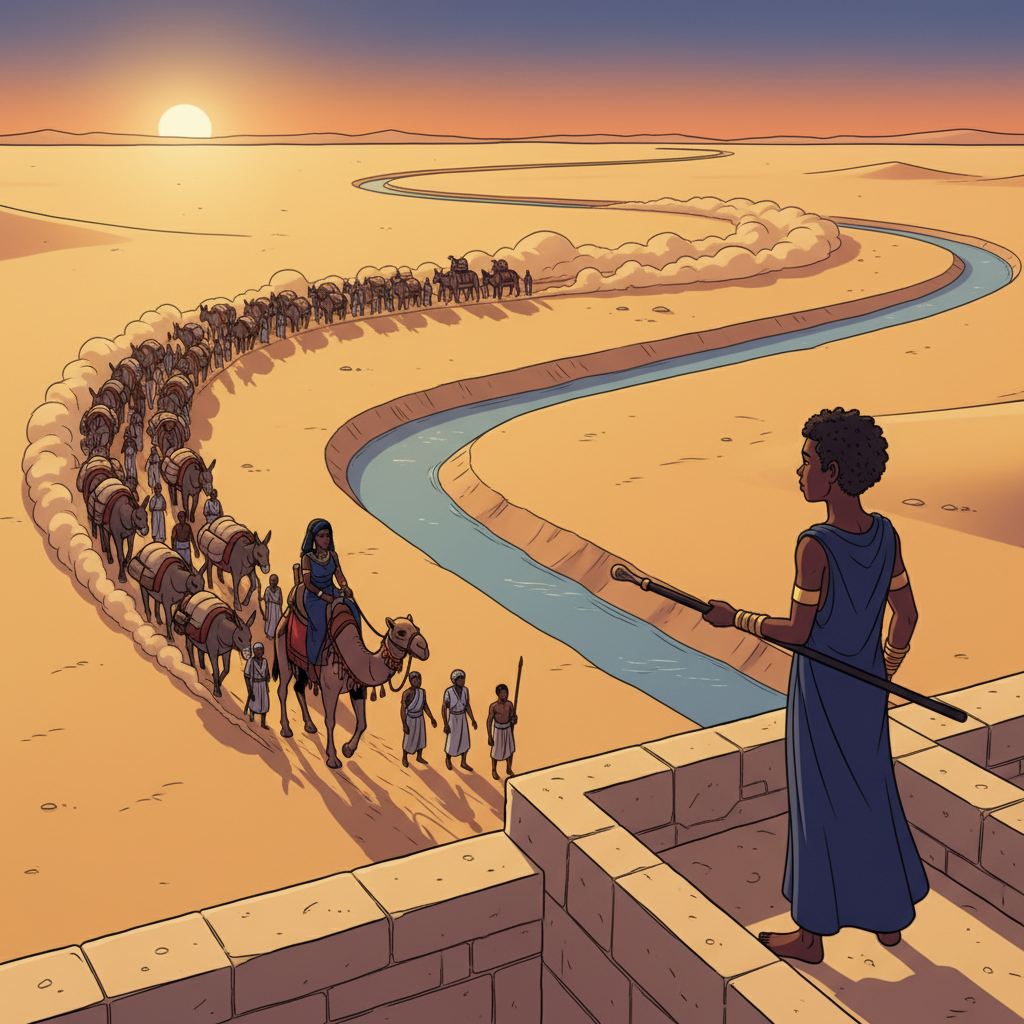
The moat was finished on a hot afternoon in the dry season, and on that same afternoon a great Kushite caravan came up the river road. Sebek climbed the new wall to watch it arrive: a long line of laden donkeys and walking traders, dark against the gold desert, raising a thread of dust that hung shining in the late light. At its head rode the caravan’s leader — a tall woman in deep indigo cloth, gold at her wrists, a staff of dark ebony across her saddle, sitting her mount the way Sebek’s father stood upon his wall: like someone who had built something real and knew exactly what it was worth. Her name was Lady Amanare, and she spoke for the south.
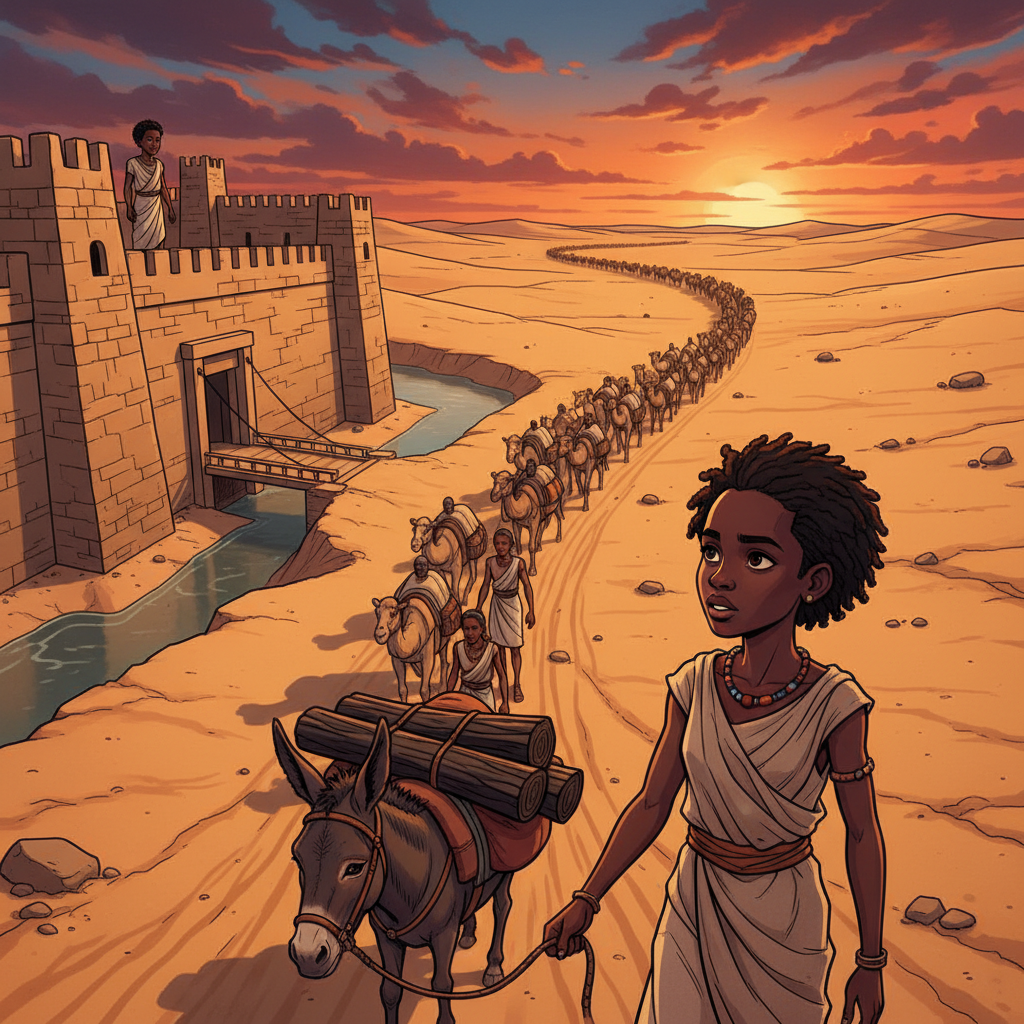
Among the caravan walked a girl about Sebek’s own age, leading a donkey loaded with billets of ebony. She had a quick, measuring look — much like Sebek’s own, when he was checking his father’s cords. While the adults busied themselves with the camp, the two children found each other at the foot of the wall, the way children do. Her name was Tekhi. She let him heft the ebony, heavier and darker than any wood he knew. He showed her the moat and the clever drawbridge his father had designed. They did not share a full language, but they shared enough of one: this is what my people make; this is what yours make. Neither child was begging. Each was plainly, simply proud.
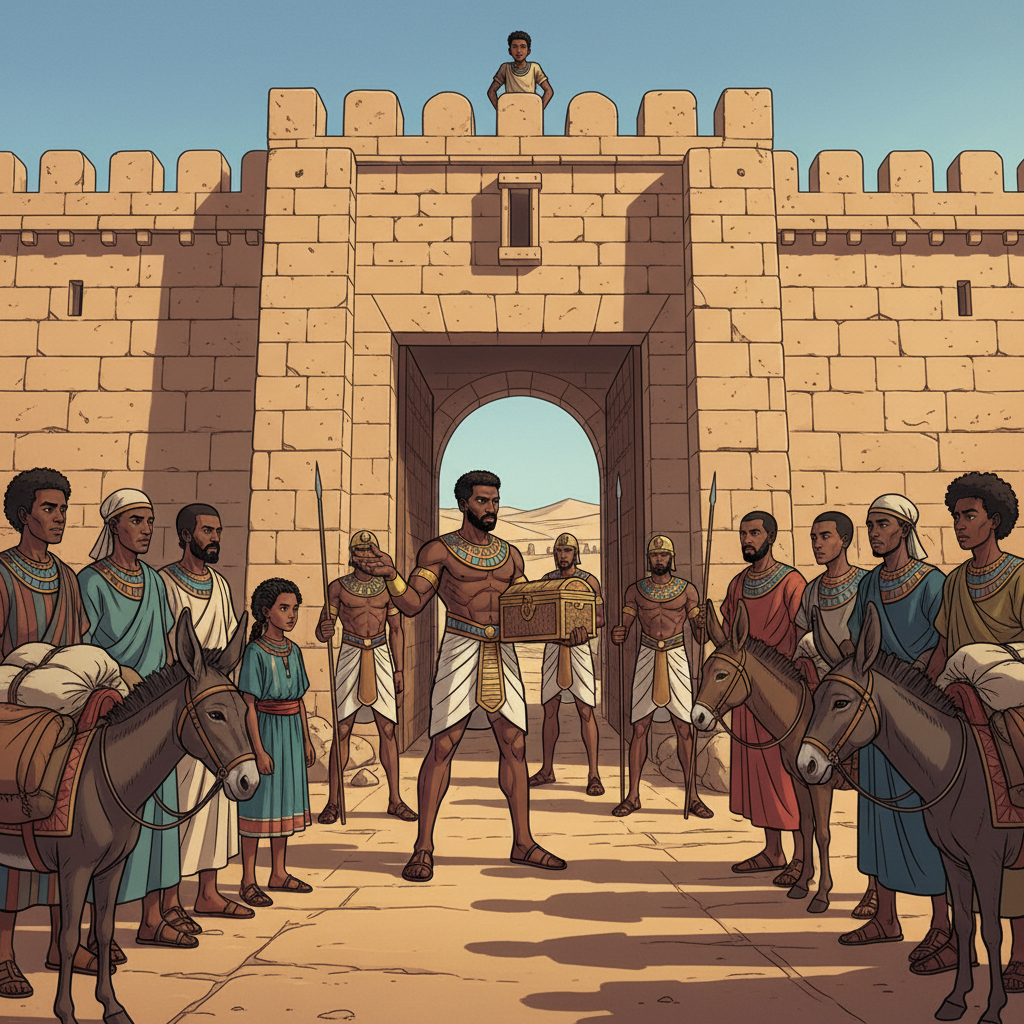
But the next morning, at the gate, the fort’s commander — a hard man named Iru, who had come up from the north hungry for a name — did not greet the caravan as traders. He greeted them as a tax. He stood in the open gateway and announced that any caravan wishing to pass through Buhen would first surrender a share of its gold to the fort, as tribute to the king of the north. Not a trade. A toll. A taking. The soldiers behind him settled their hands on their spears. Sebek, watching from the wall above, felt the whole morning tip toward something ugly.
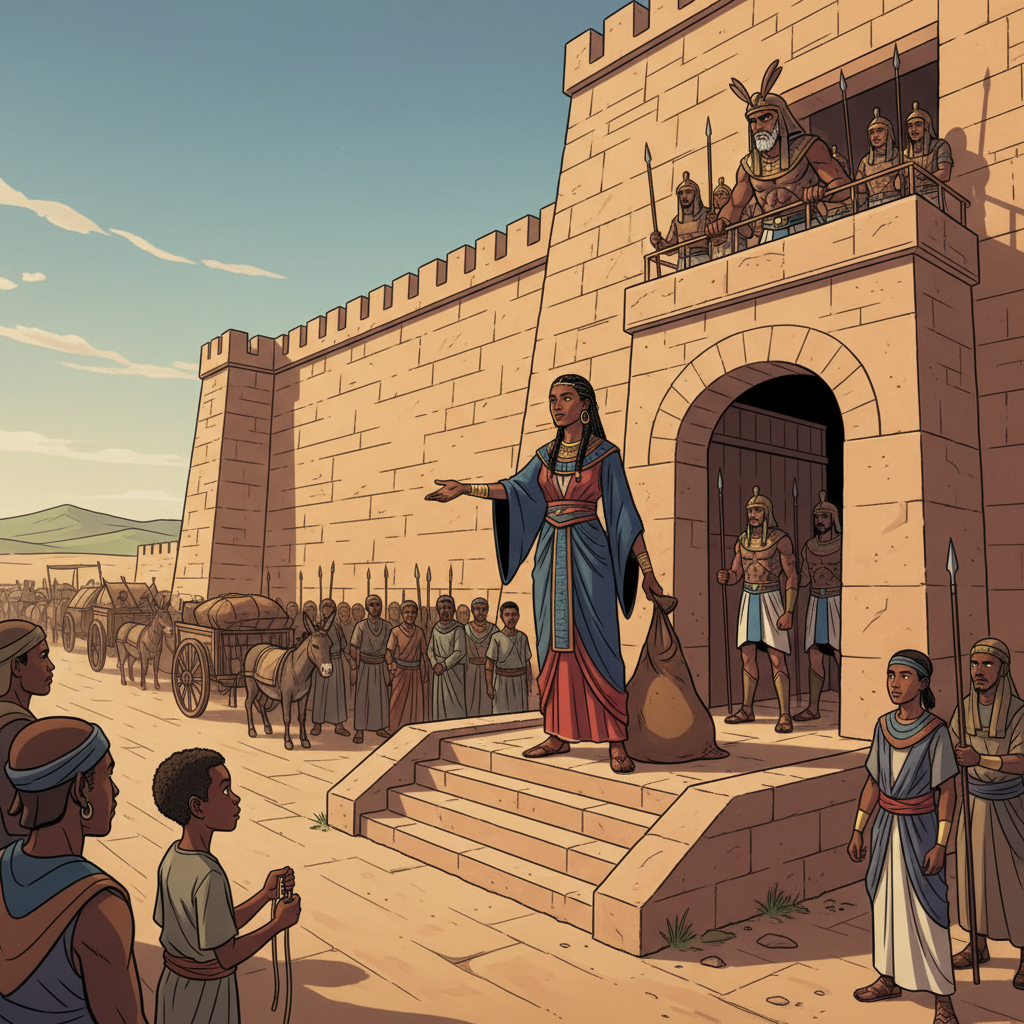
Lady Amanare did not flinch. She let the silence stretch until it grew uncomfortable, and only then spoke — calm and clear, so that the whole gate could hear her. “We did not climb the river to be taxed,” she said. “We came to trade: our gold for your grain, fairly weighed, both sides leaving richer than they came. That is the only reason Buhen has ever prospered. Take from us as a fist takes, commander, and we will simply carry our gold to the next gate, and the gate after that. There are other roads to the north. There is only one Buhen — and it eats only if we choose to feed it.” The commander’s face darkened. He held the wall. But she held the gold, and the legs to walk it elsewhere.
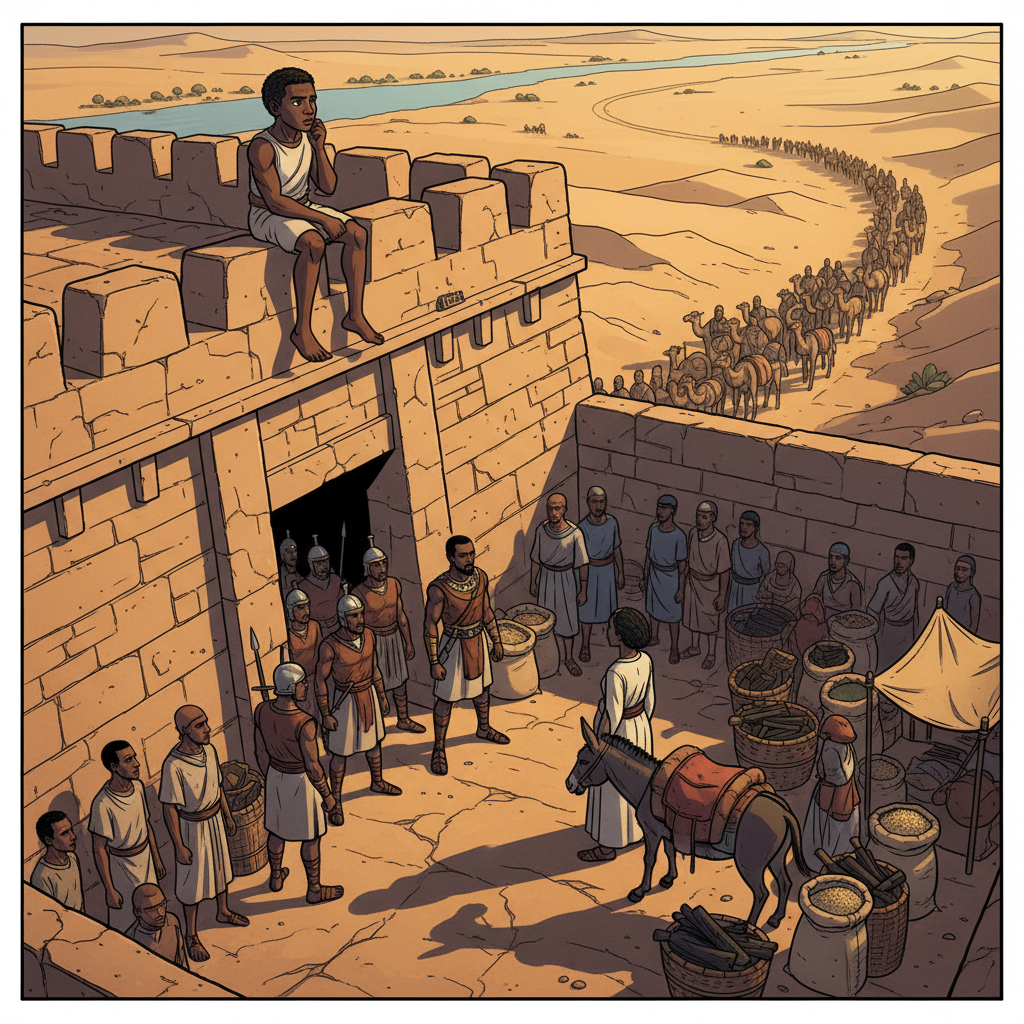
Watching from above, Sebek understood that both of them were partly right, and that the whole thing was about to break. The commander had the fort — the power to close the gate. Lady Amanare had the goods — the power to take her trade away forever. If Iru seized the gold as tribute, he would win this one morning and lose every morning after, because the caravans would learn to avoid Buhen, and a fort with no trade is only an expensive pile of brick baking in the desert. If Amanare walked away, both peoples would lose the meeting-place that had made them both richer. Someone had to find the measure that let both sides leave better. And the only person at that gate whom both sides would truly listen to was neither a soldier nor a trader.
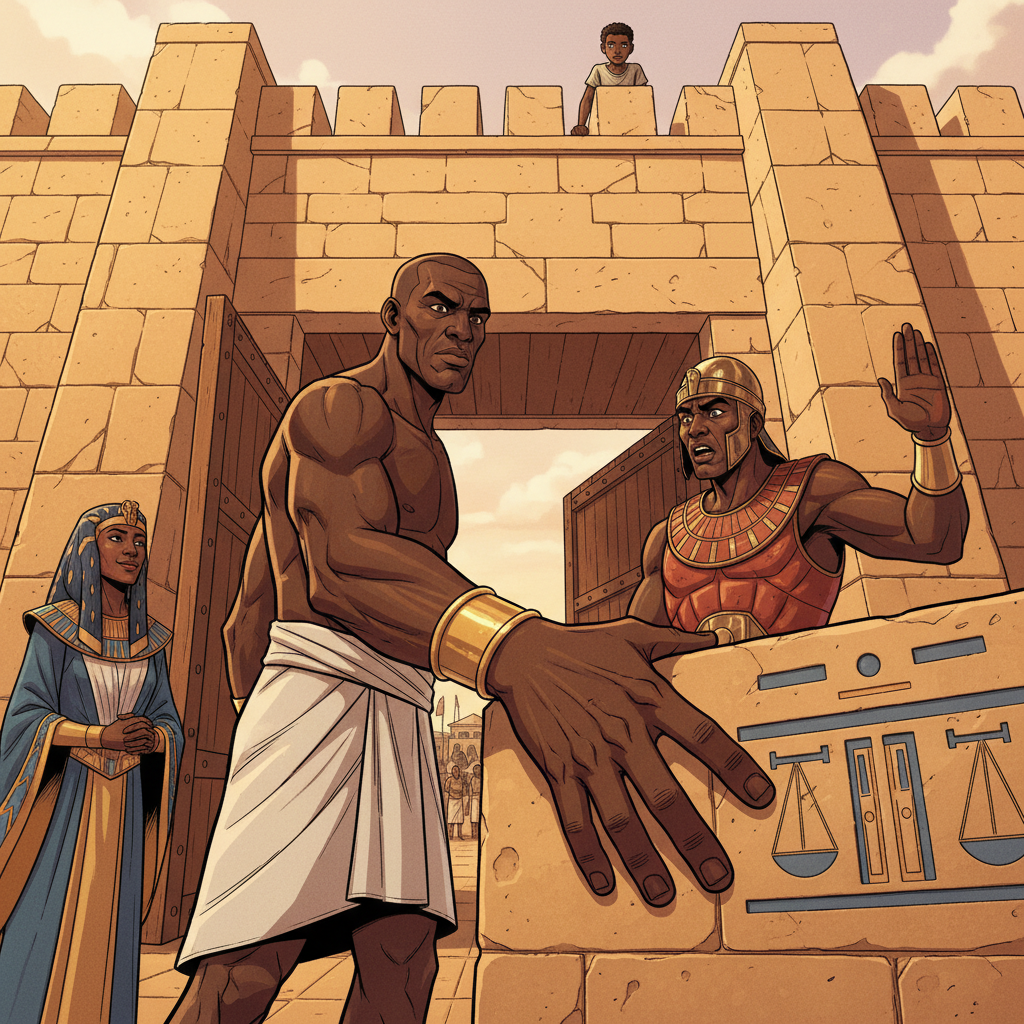
It was Sebek’s father, the engineer, who stepped into the open gate. The commander could not wave him aside, because the gate Iru stood in was a gate that Pawah had built. Pawah did not take a side. He laid his hand on the wall beside him — the wall that was his — and said, plainly, so that both the commander and Lady Amanare heard every word: “A wall that takes more than it gives is a wall against itself. I did not build Buhen to be a fist that empties the very hands that feed it. I built it to be a door. And a door that swings only one way is not a door at all. It is a trap — and a trap catches the trapper, in the end, when there is nothing left to catch.”
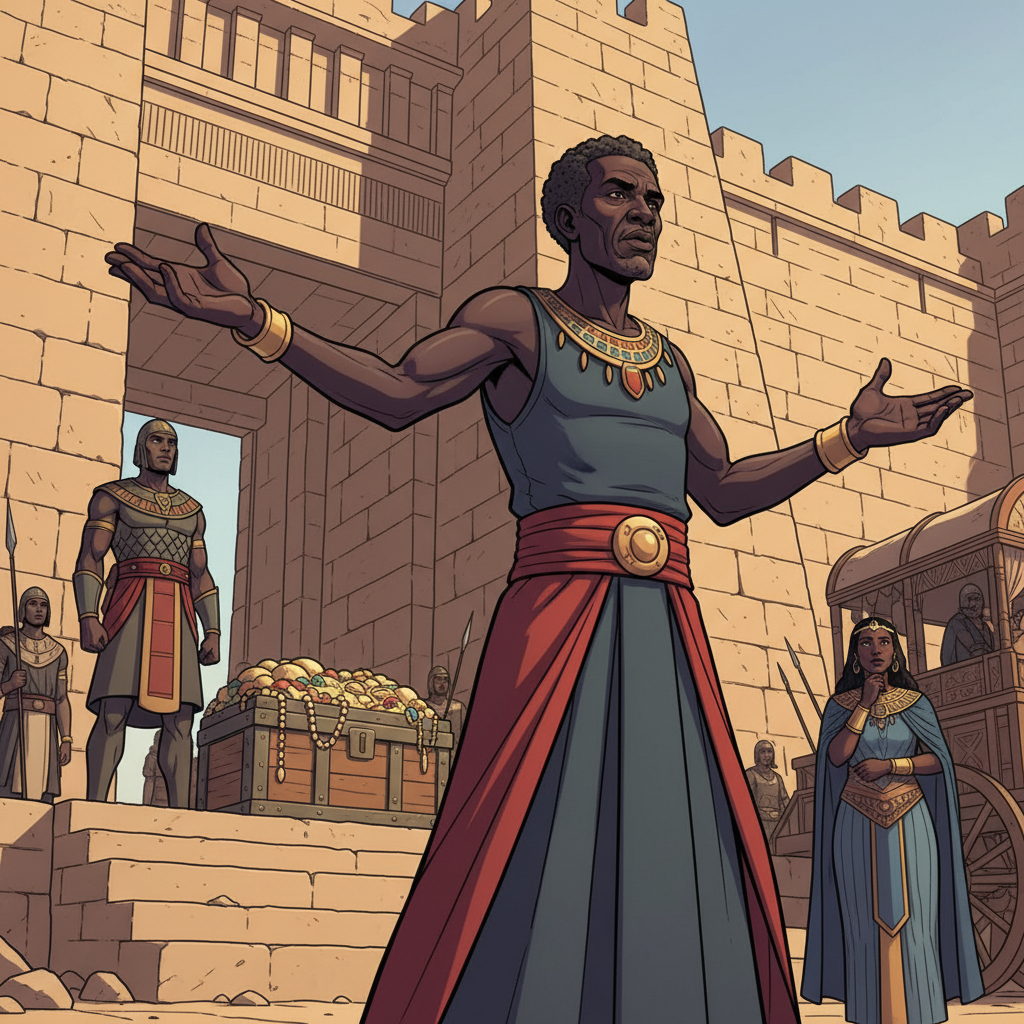
Pawah turned to the commander first. “Take their gold as tribute, Iru, and you will be remembered as the man who closed the greatest trade-gate in the south. The caravans will route around us within two seasons. Your fort will still stand — and it will starve, guarding a road that no one walks.” Then he turned to Lady Amanare. “And you, lady, need a gate you can trust year after year far more than you need to win this single morning. A fair measure here, written and kept, is worth more to the south than a victory that kills the trade.” Both of them were listening now — the soldier and the trader both — because the engineer was not arguing for a side. He was arguing for the wall to be what a wall is meant to be.
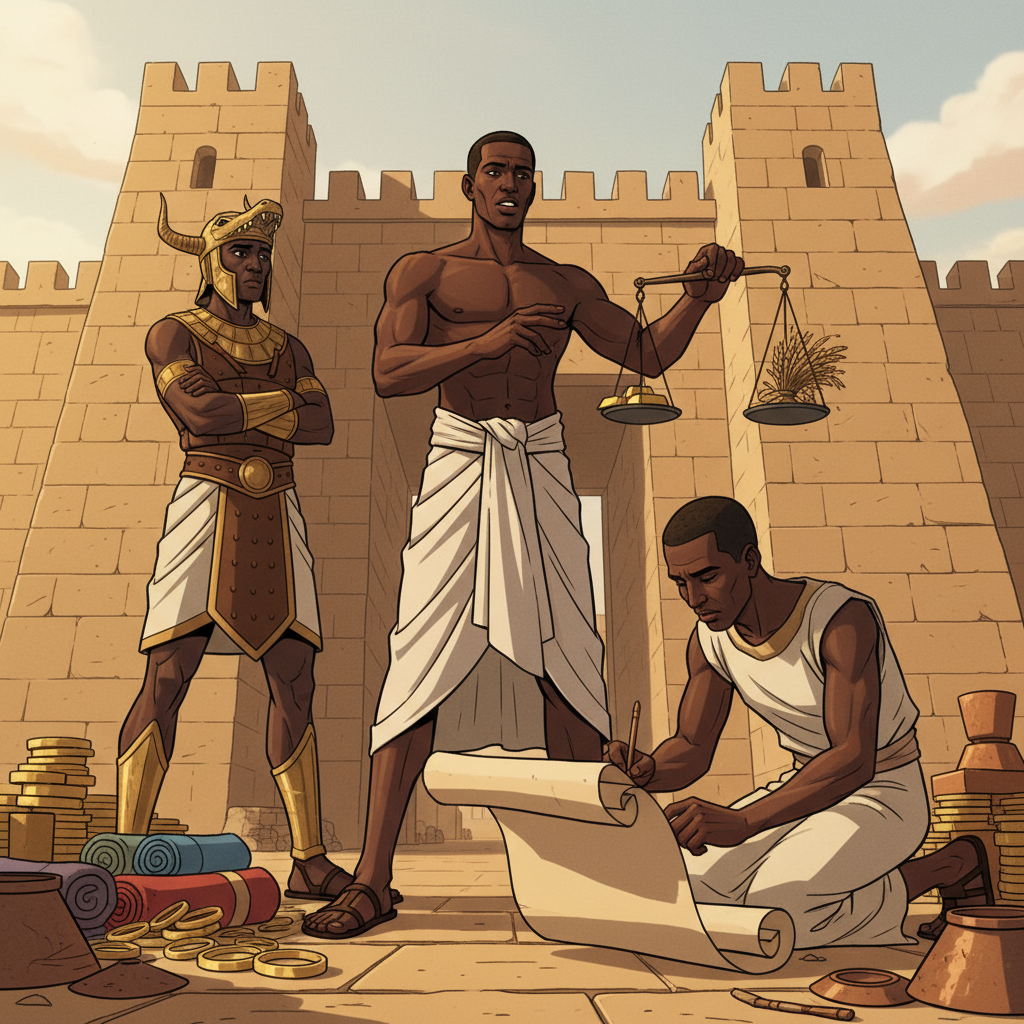
It took the rest of the day. Pawah proposed a measure, and the two leaders argued it down to something each could carry home without shame: gold from the south weighed fairly against grain and linen and copper from the north, at a rate set plainly and written on a scribe’s papyrus, so that next year’s caravan and next year’s commander would both be bound to it. No tribute. No fist. A trade, recorded, that left both peoples richer than they had come. Commander Iru did not love it — a man hungry for a name rarely loves being made smaller. But he could count, and he could see that a living gate was worth a great deal more than a dead one.
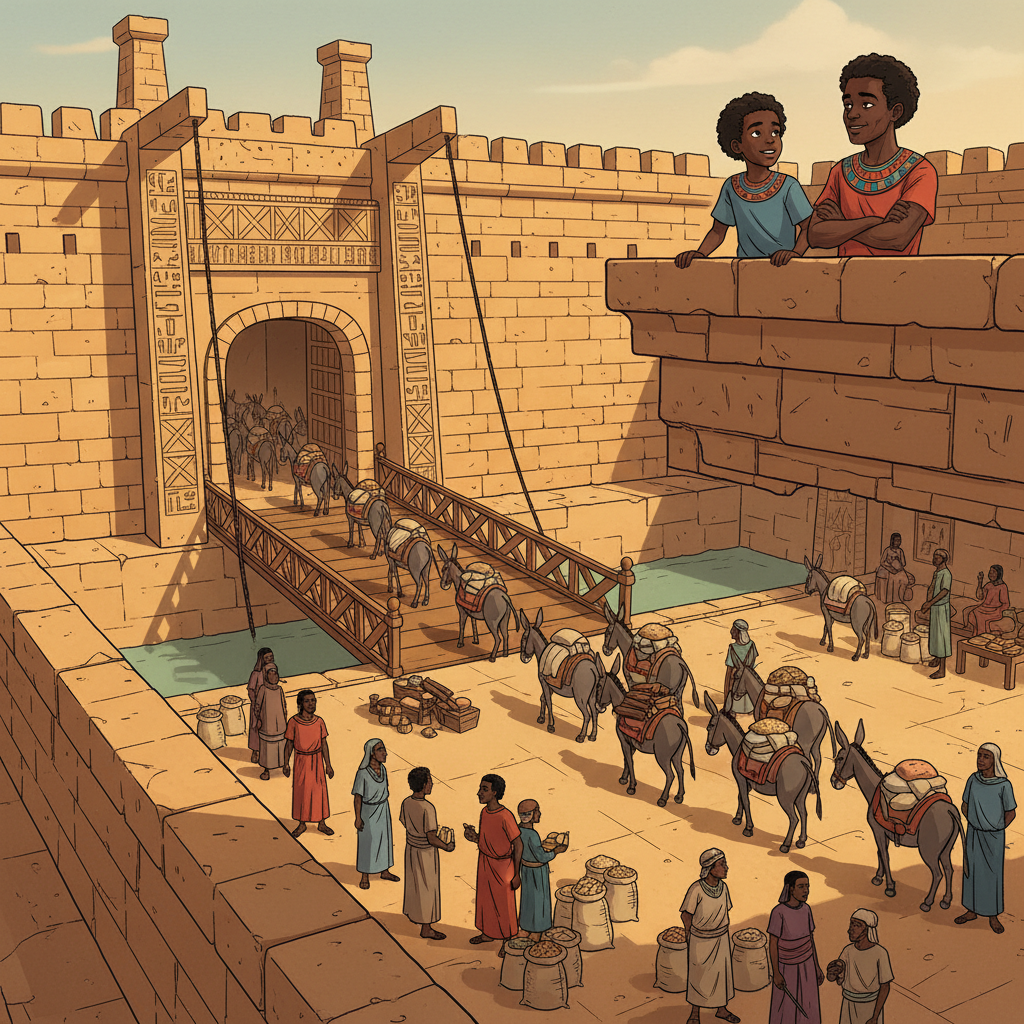
And so the gate of Buhen opened — not as a fort surrendering, and not as a caravan paying, but as a market beginning. The donkeys came through laden with ebony and gold and went back laden with grain and linen and copper. The drawbridge Sebek’s father had designed lowered across the moat, and the long line of traders crossed it into the great court, and the wall that could have closed like a fist instead opened like a hand. Sebek stood on the parapet and watched the goods of two great lands change places beneath him, and thought he had never seen his father look so quietly, deeply satisfied.
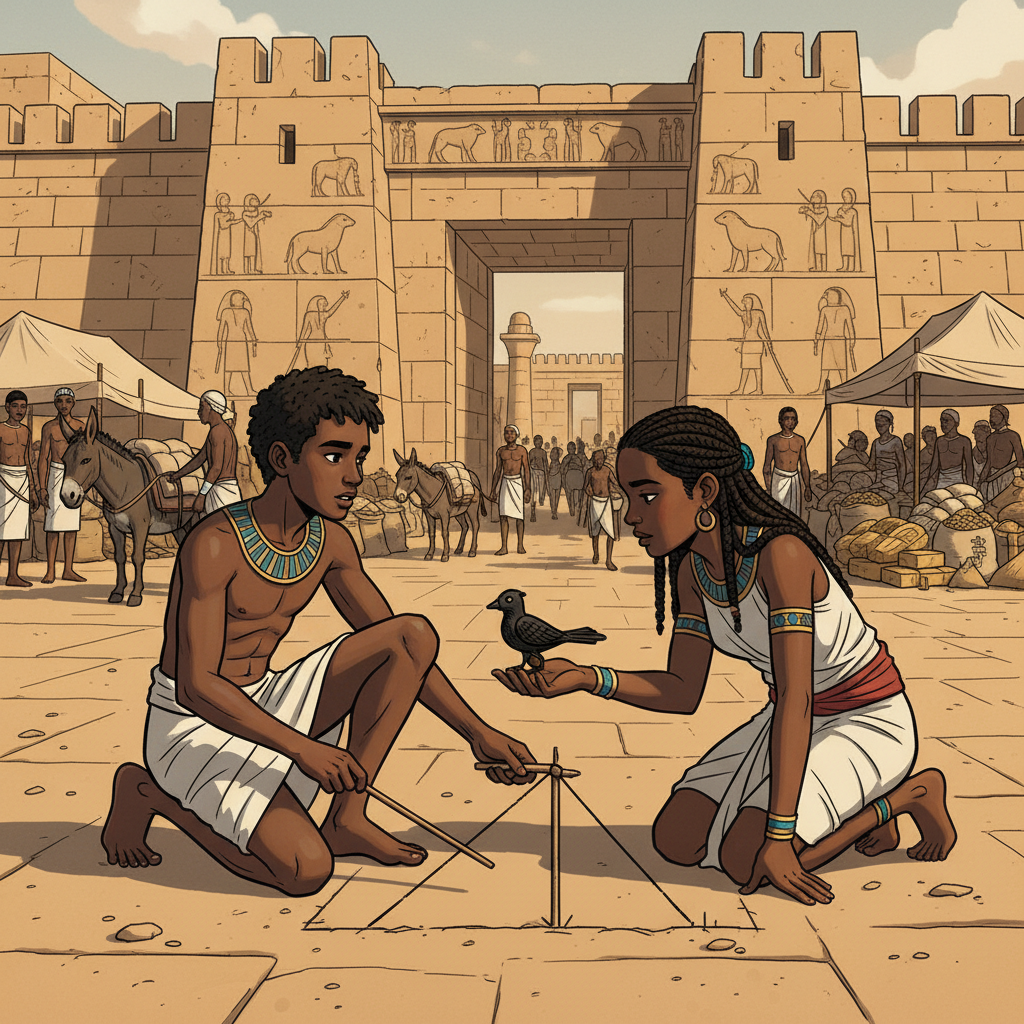
Down in the trading-court, after the measure was set, Sebek found Tekhi again. The adults had made the agreement; the children only confirmed what it meant. Tekhi pressed a small carved ebony bird into Sebek’s hand — a thing from her land, shaped by her people’s hands. Sebek had nothing carved to give back, so he gave her the thing he had: he taught her the trick of his father’s drawbridge, drawing it in the dust, the counterweight and the pivot, a piece of his people’s knowing. A bird for a bridge. Neither was tribute. Each was a gift freely given between equals — the small echo of the large thing their elders had just agreed at the gate.
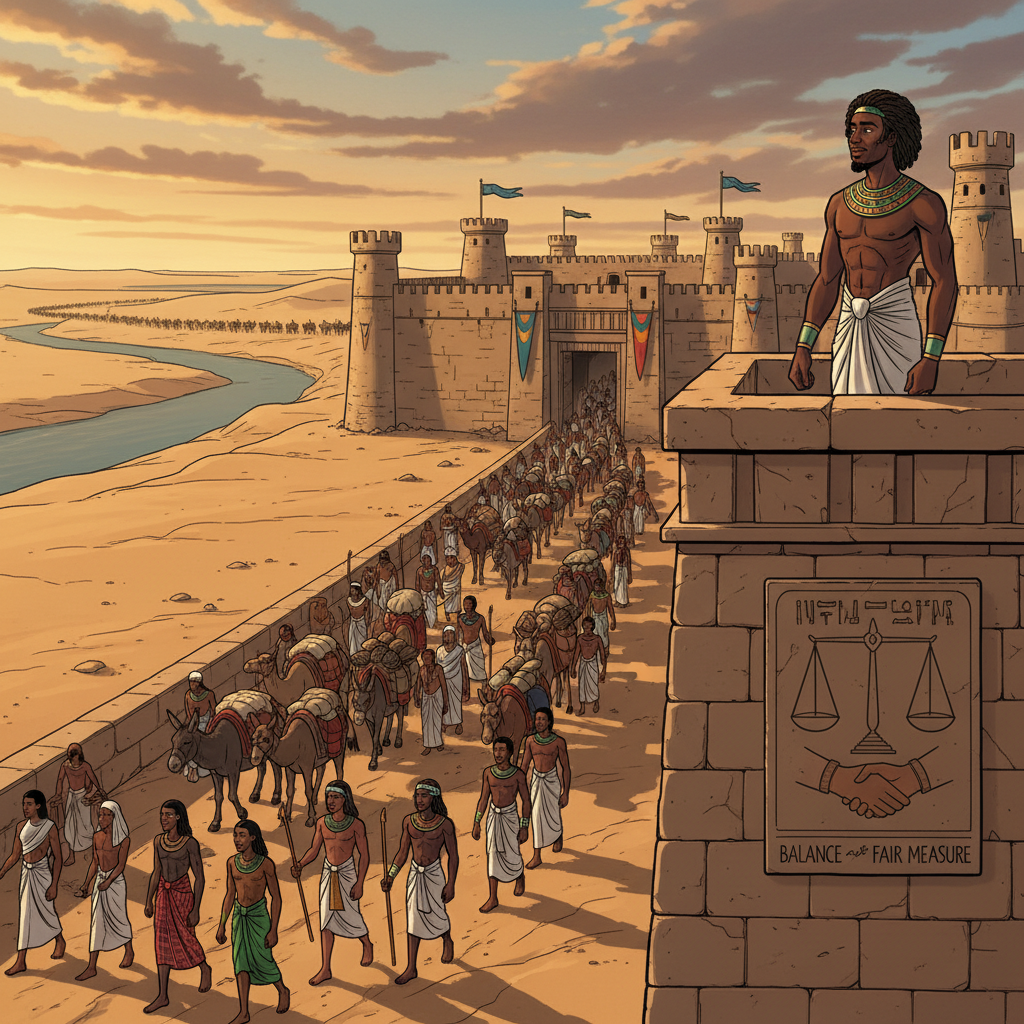
In the years that followed, Buhen grew rich — not as a fist, but as a market. Caravans came up the river road precisely because the gate was fair: because the measure was written and kept, because a trader from the south could trust that she would leave Buhen richer than she came. The fort still bristled with towers and arrow-slits; it could still defend the road if it must. But its truest strength, Sebek saw, turned out to be its fairness. The keepers of history would record what he had learned by watching from the wall: that Kush was never a poor supplicant at Kemet’s door, but a kingdom of its own gold and its own ancient cities — and that Buhen lasted because it was a meeting of equals, a wall that was also a door.
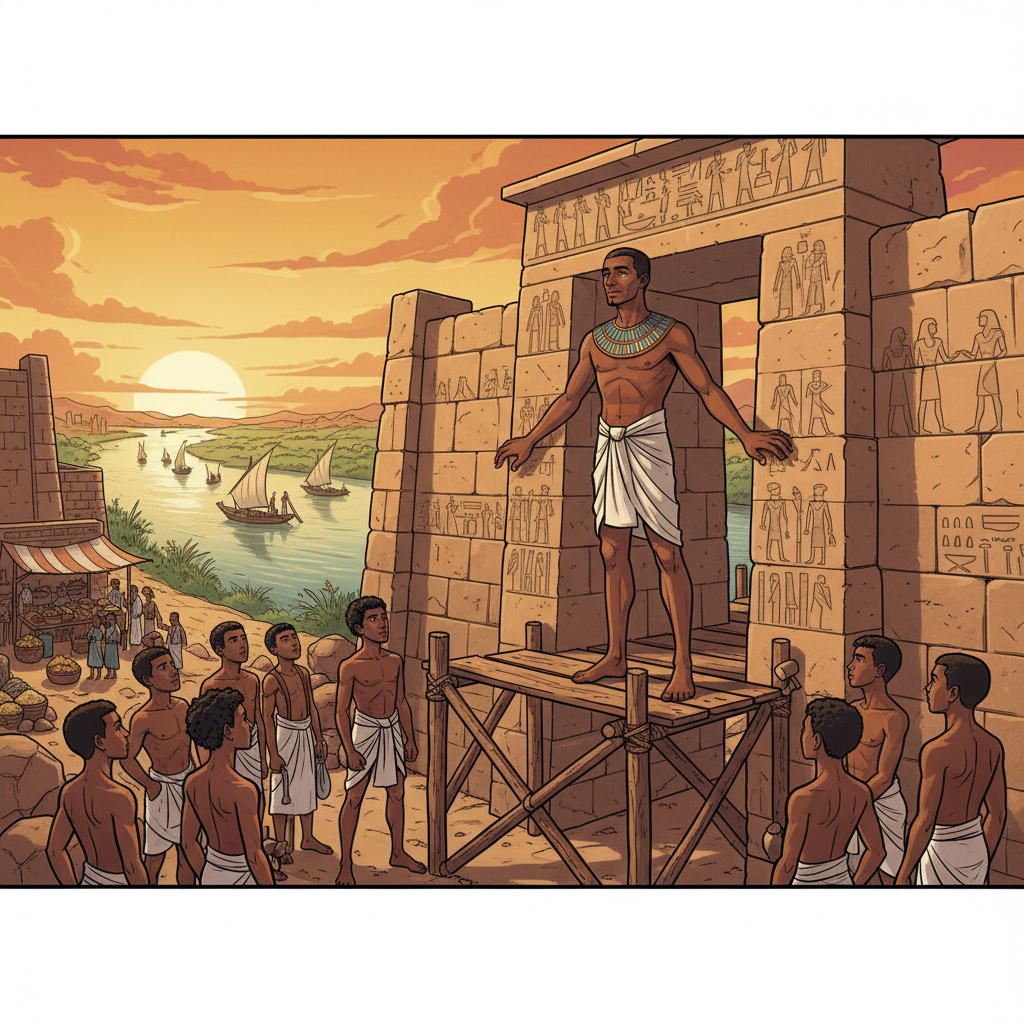
Sebek grew up to be an engineer like his father, and he built gates of his own along the great river. He taught the young builders who came after him the thing he had learned at thirteen, in a hot dry season, watching a soldier and a trader nearly shatter the greatest market in the south. “Balance,” he would tell them, laying his hand on a fresh wall the way his father once had, “is a trade where both sides leave better than they came. A wall that only takes is not Maat at all — it is isfet, imbalance, a wall standing against its own city. So build them a door, not a fist. The strongest wall in all the world is the one your neighbor is glad to walk through — because a neighbor who is glad to come is a wall no enemy can ever buy.”