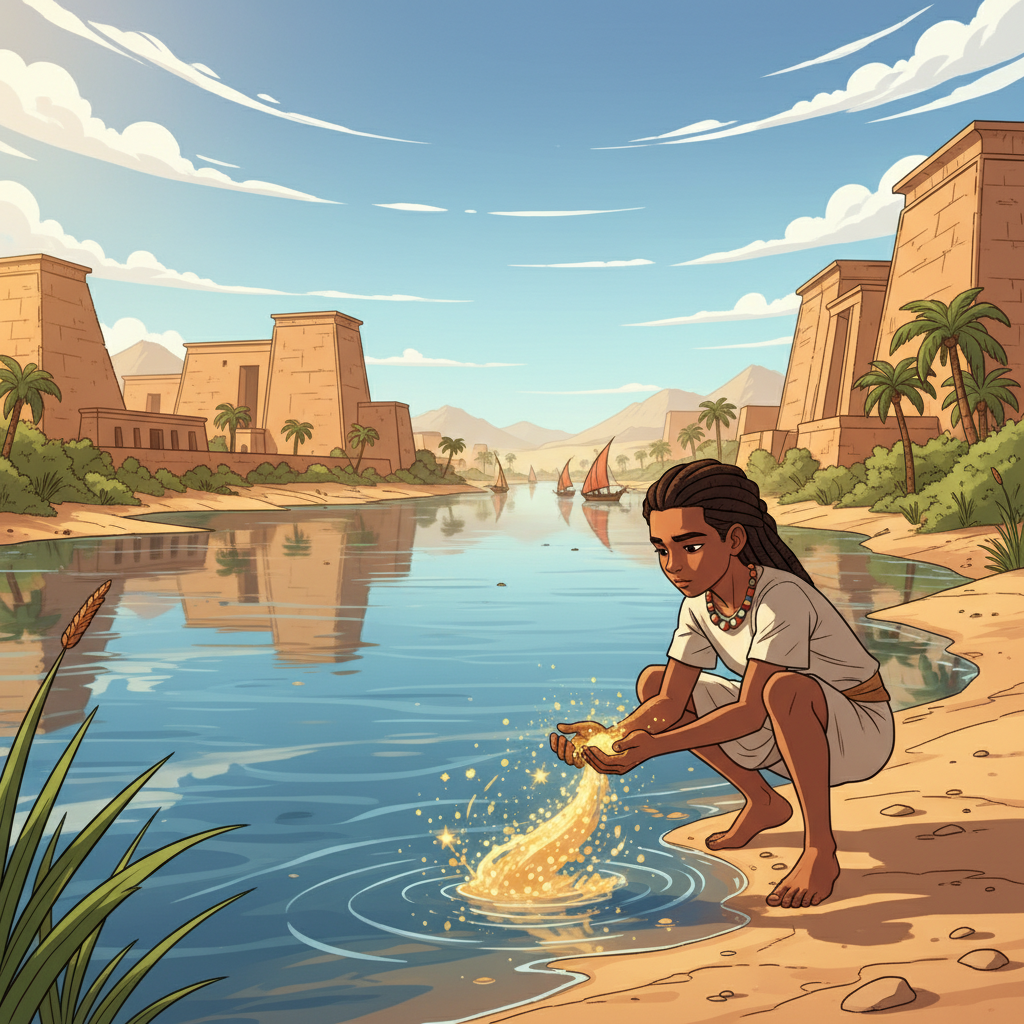
Young Issa crouched beside the river, watching the golden flecks swirl in the shallow water. He was twelve years old, with skin as dark as the fertile earth along the Nile and thick braided hair that his grandmother had woven that morning. The gold dust caught the light like scattered stars, and Issa cupped his hands to catch it, feeling the cold water rush between his fingers.
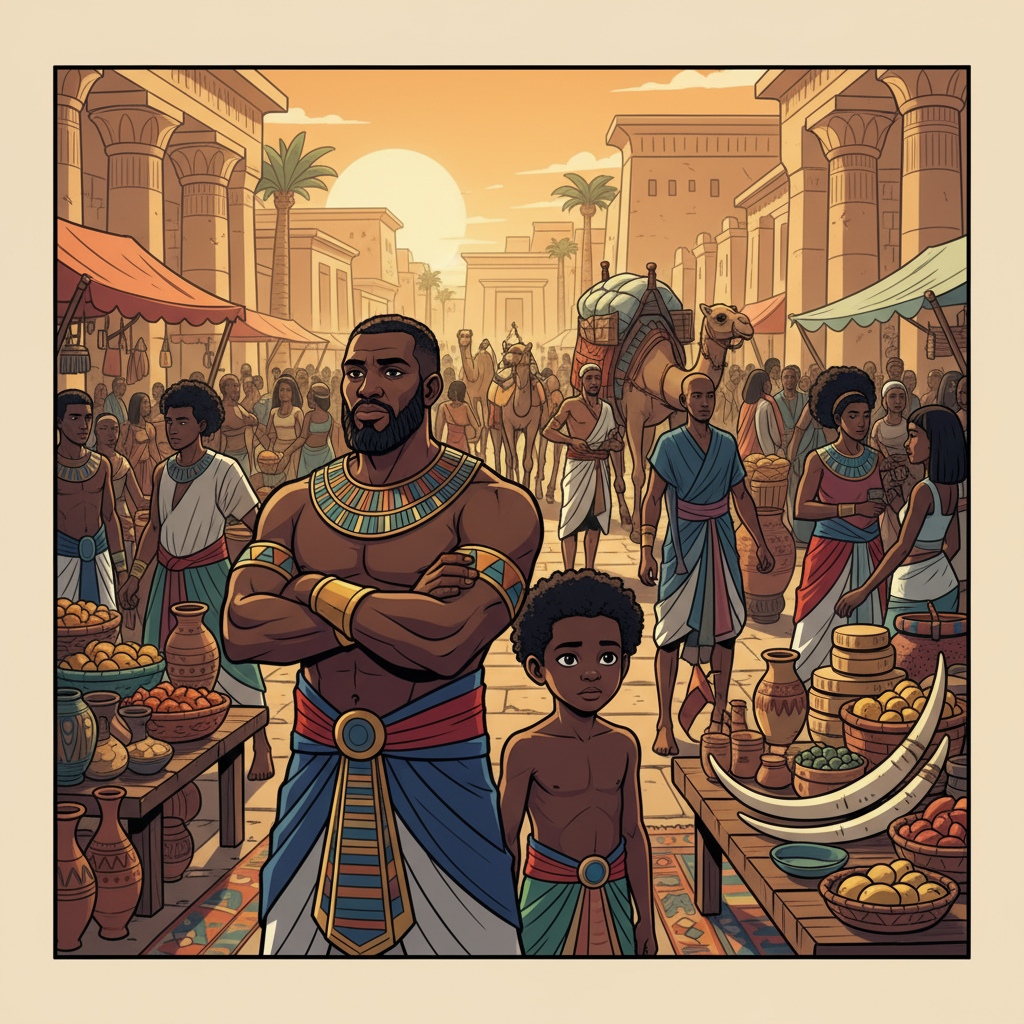
His uncle Djabal stood behind him, arms folded across his broad chest. Djabal was a trader — one of the most respected men along the Gold Roads that connected Kush to Kemet and beyond. He had walked those ancient paths since before Issa was born, carrying gold, ivory, and ebony north to the markets of Waset and Memphis.
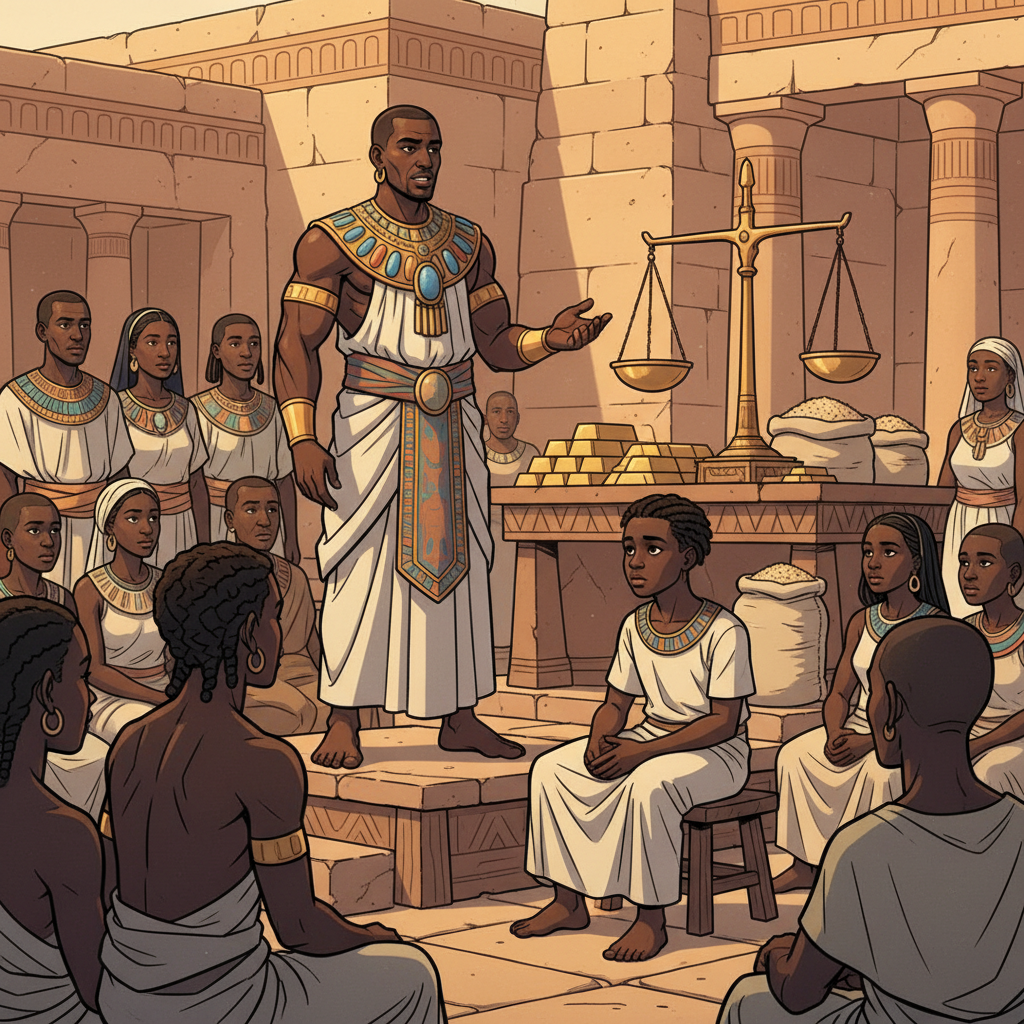
"The gold means nothing by itself," Djabal said, his deep voice steady as the river current. "What matters is how you trade it. A fair exchange builds something that lasts longer than any bar of gold — trust. Cheat once, and the road closes forever." Issa listened carefully. He had heard these words before, but today they carried new weight.
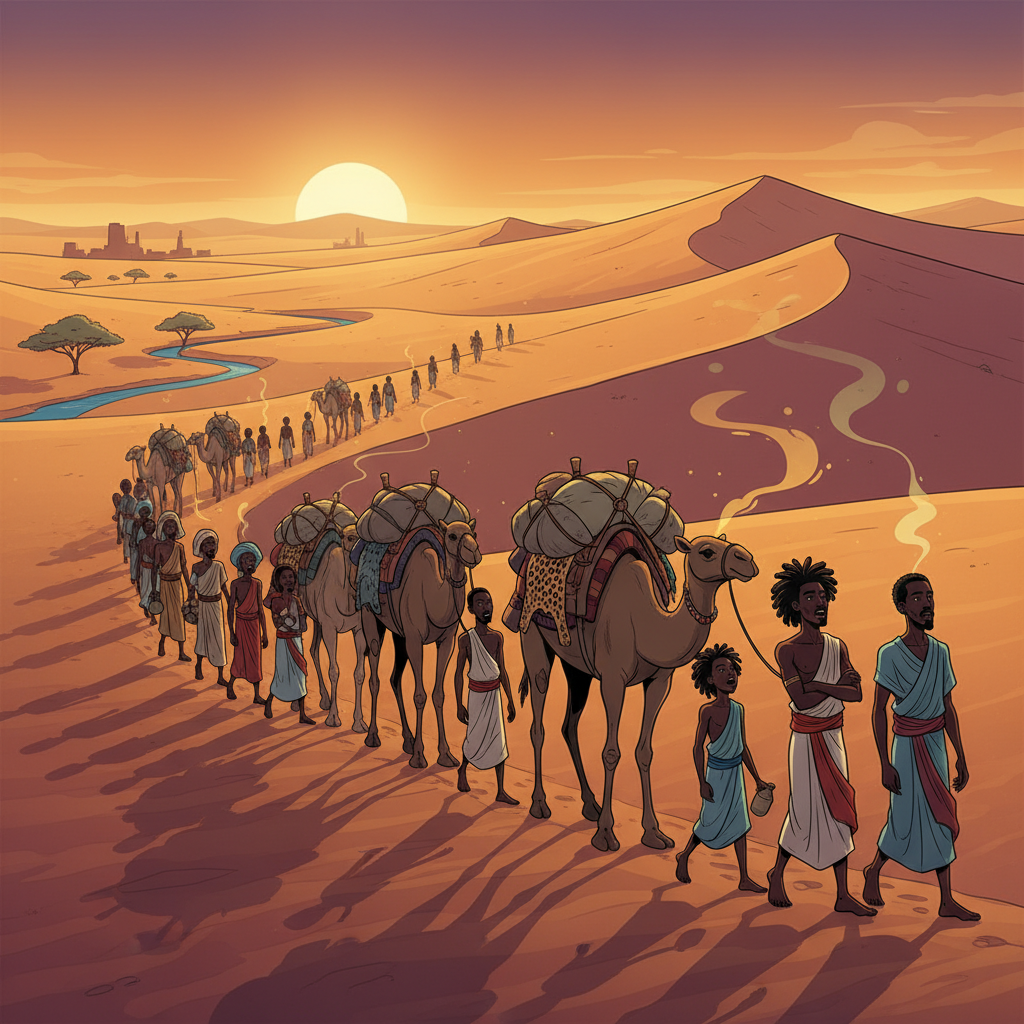
They traveled north along the Nile for seven days, joining a caravan of twenty traders from the cities of Kerma and Napata. Camels loaded with bundles of gold dust, leopard skins, and fragrant incense swayed through the desert heat. The traders walked in loose formation, sharing water and food, singing songs that their ancestors had sung along these same paths for a thousand years.
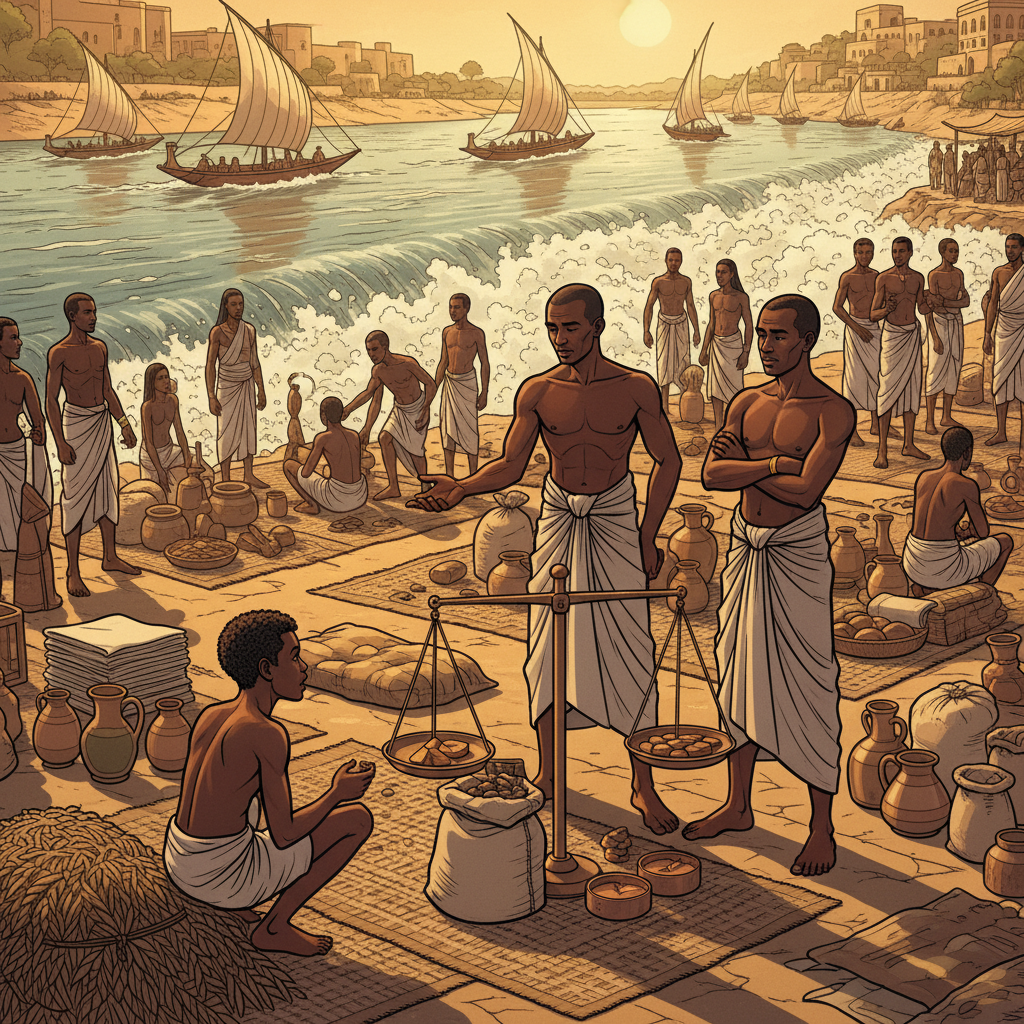
At the great trading post of Aswan, where the first cataract churned the river into white foam, they met traders from Ta-Mehu — the northern lands of Kemet. The Kemetic merchants spread their goods on woven mats: copper tools, fine linen, oils, and wheat. Everything was weighed on bronze scales, and Issa watched the careful ritual of fair exchange unfold.
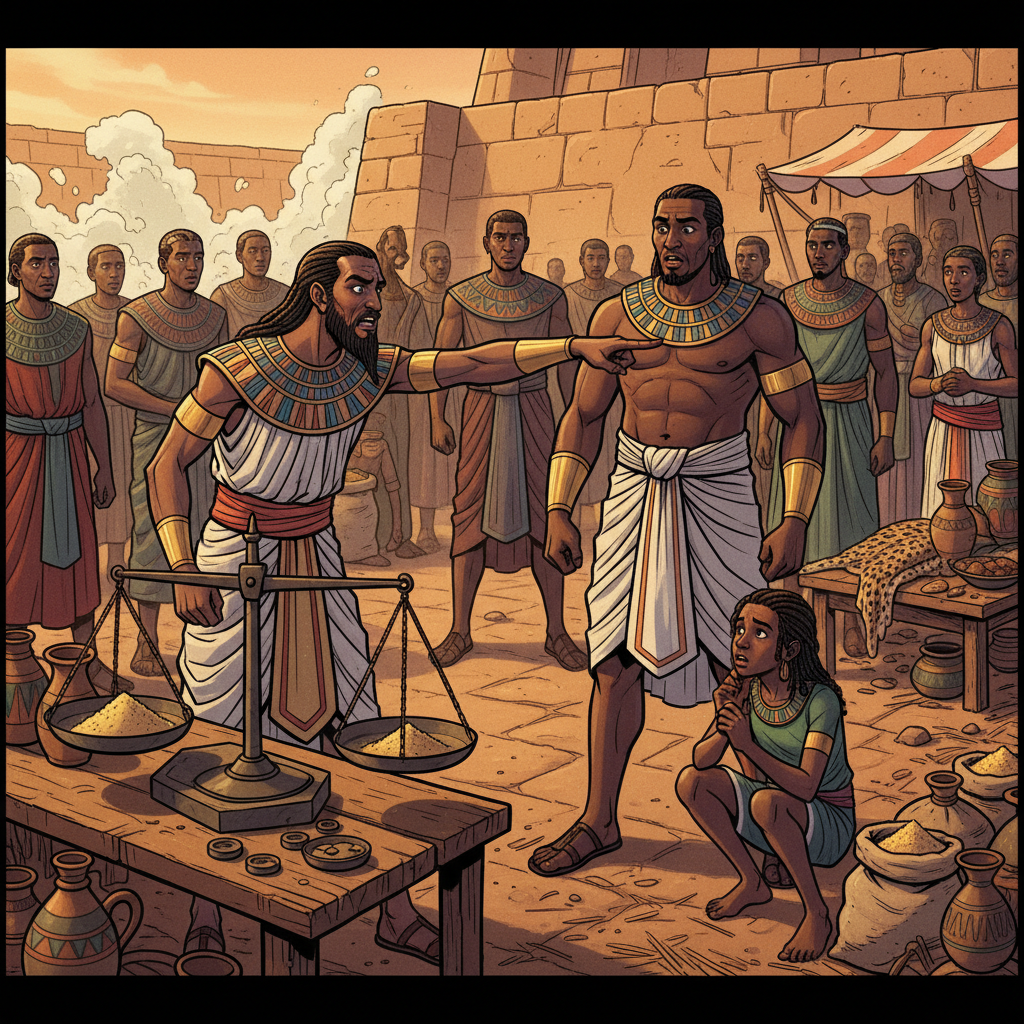
A problem arose on the third day of trading. A Kemetic merchant named Wennefer claimed that Djabal's gold dust was mixed with sand. "Your scales lie," he accused, pointing a thin finger. The other traders fell silent. An accusation of cheating was the most serious charge that could be made on the Gold Roads.
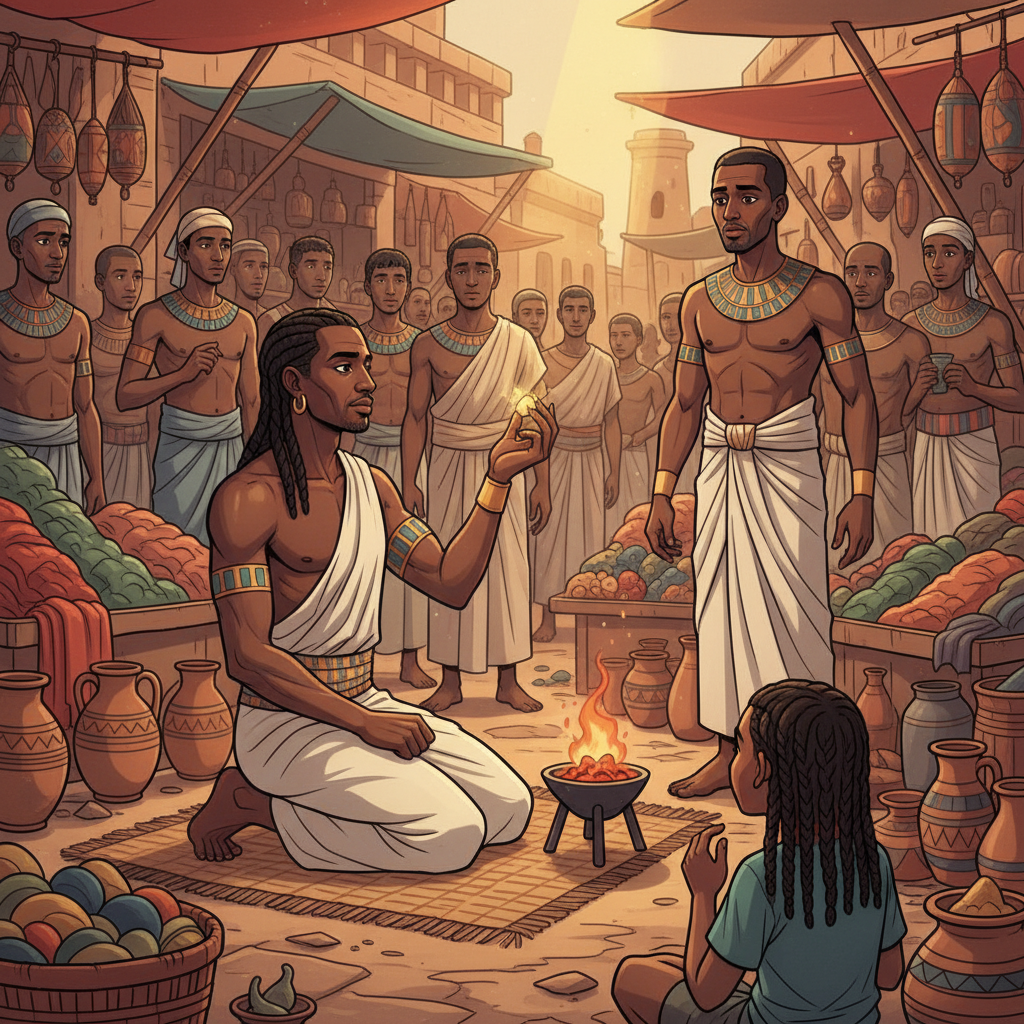
Djabal did not shout or threaten. He knelt beside the disputed gold, took a pinch between his fingers, and held it to the light. "Test it," he said calmly. "Melt it in the fire. If it is impure, I will give you double. If it is pure, you owe me an apology before every trader here." This was the way of Maat — truth tested, not shouted.
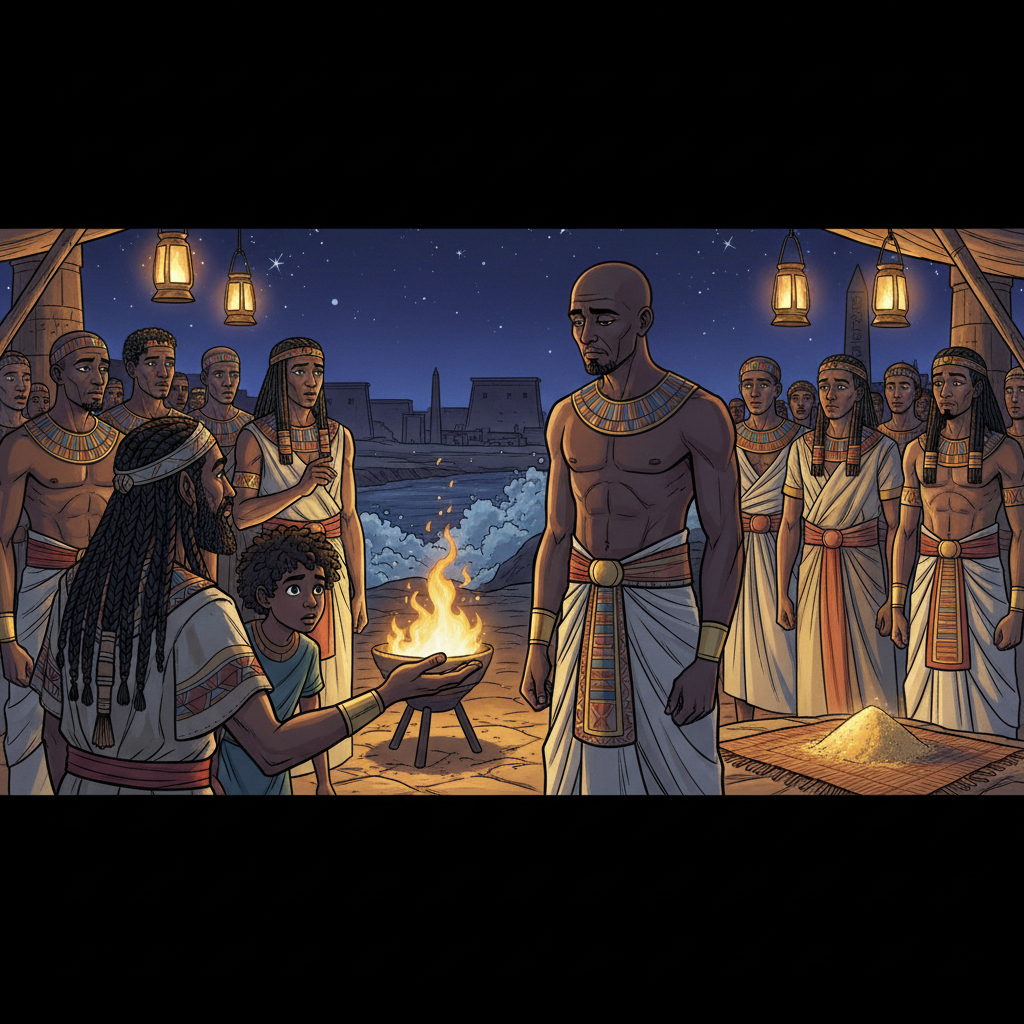
The gold was tested. It was pure — as clean and bright as any that had ever come from the mines of Kush. Wennefer's face darkened with shame, and the traders murmured among themselves. Djabal could have demanded punishment. Instead, he offered his hand. "Mistakes happen when fear speaks louder than truth. Let us trade as friends."
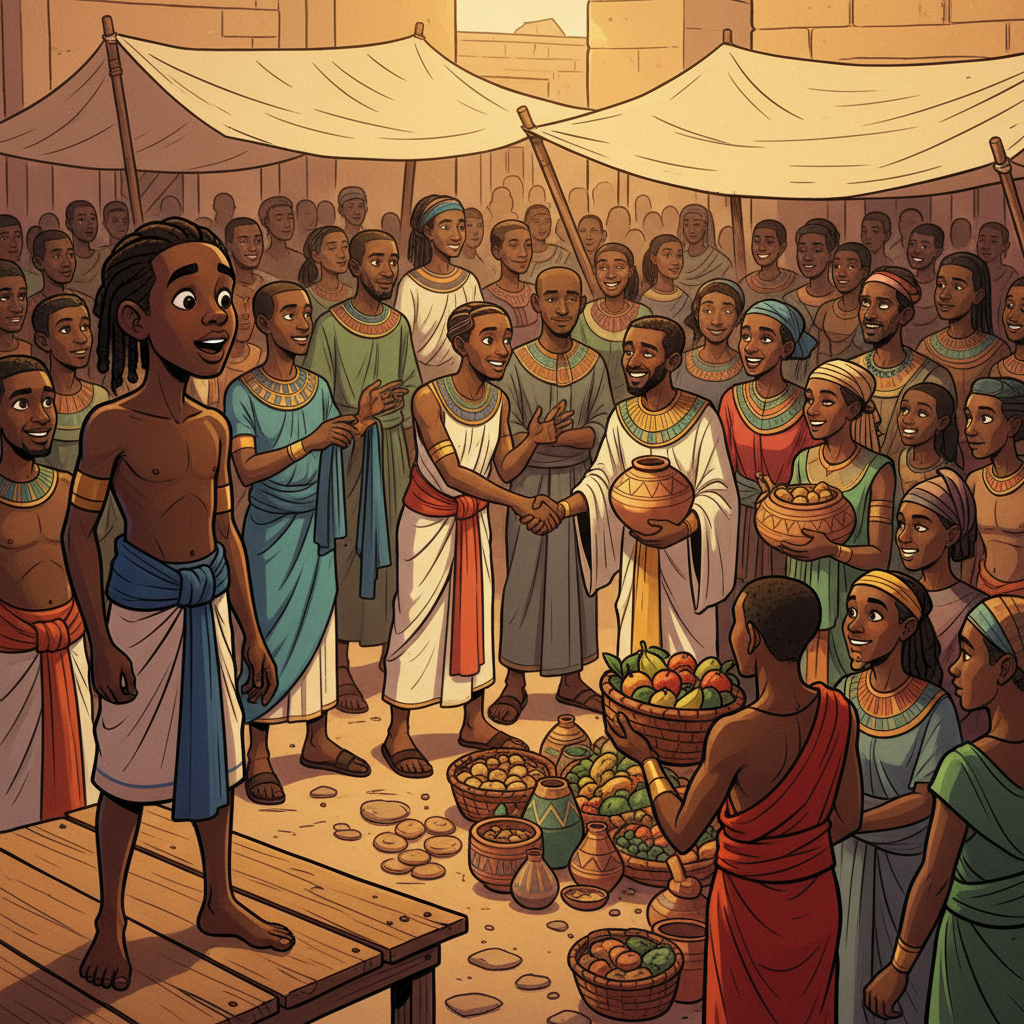
Issa saw something change in the marketplace after that. The other traders began seeking Djabal out first, offering their best goods at fair prices. Wennefer himself became a reliable trading partner over the years that followed. Trust, once demonstrated, multiplied like grain in fertile soil.
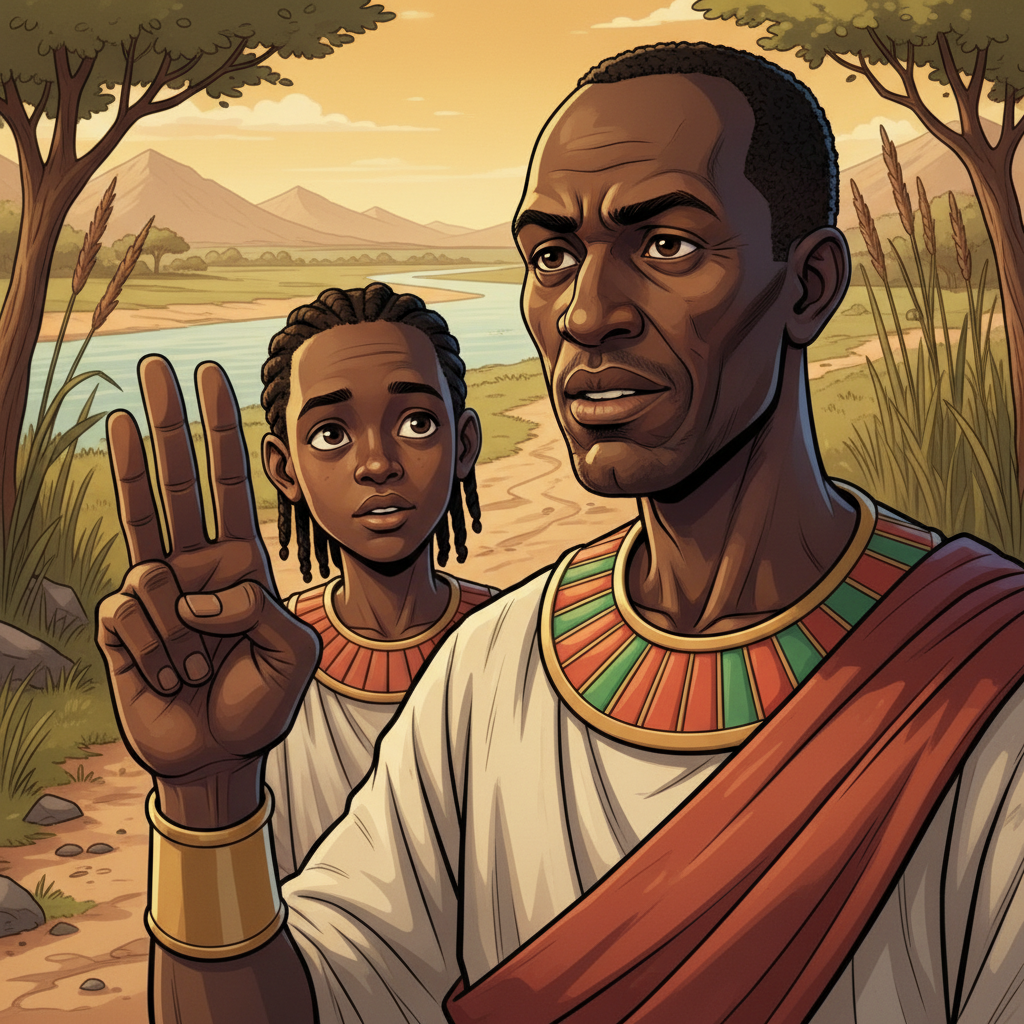
On the journey home, Djabal taught Issa the ancient principles of fair trade. "Three rules," he said, counting on his dark, calloused fingers. "First: never lie about what you sell. Second: never take more than the goods are worth. Third: always leave the other person feeling they were treated fairly."
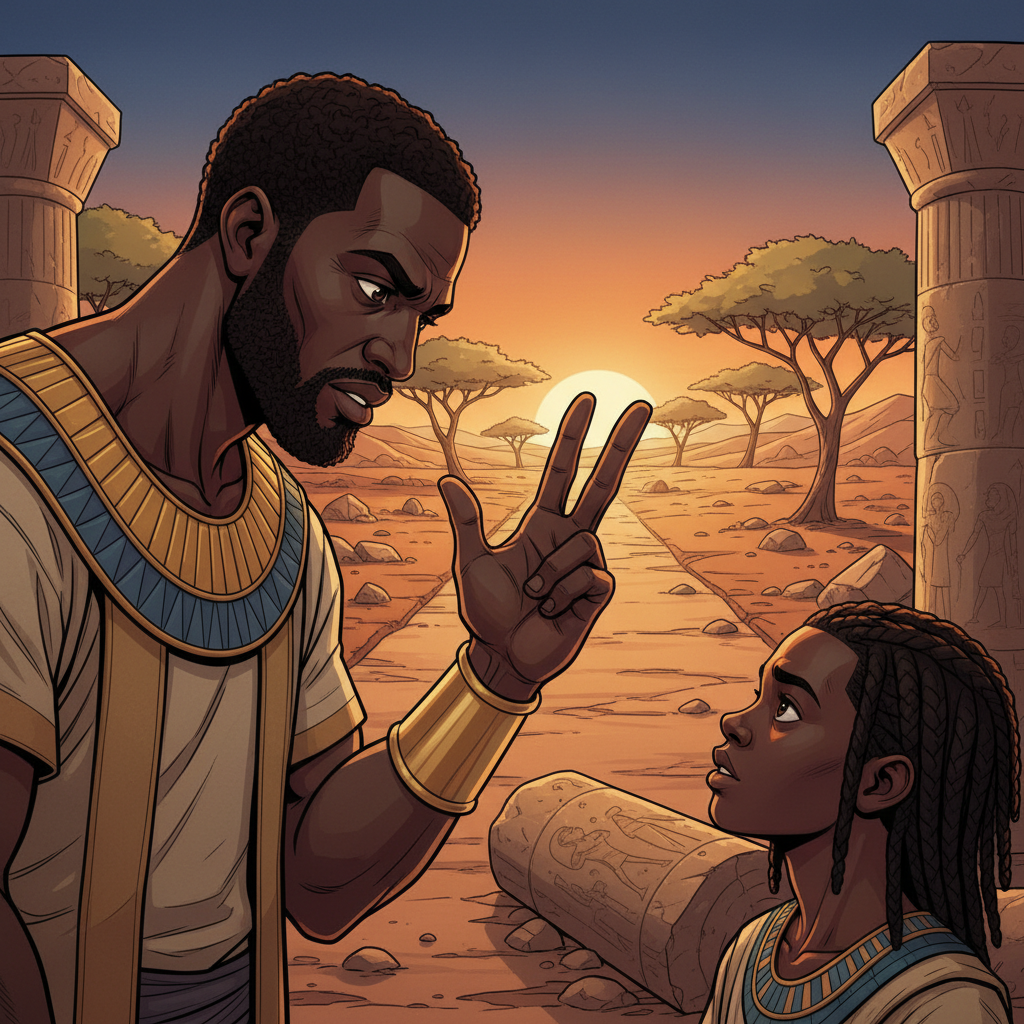
"But what if someone cheats you first?" Issa asked. Djabal looked at him with serious eyes. "Then you walk away. A trade route poisoned by dishonesty is worth less than no trade at all. Our ancestors built these roads with trust. Every cheat tears a hole in something that took generations to build."
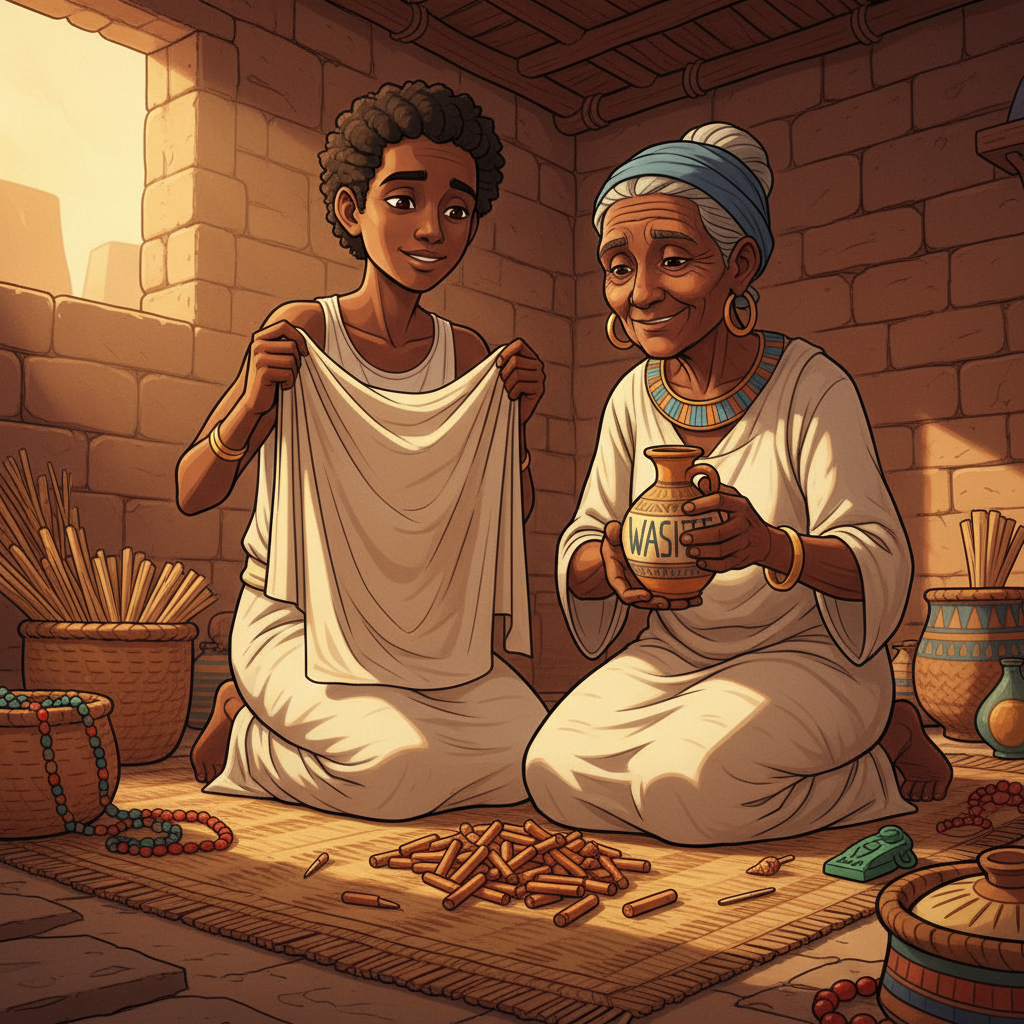
Back in their village, Issa helped his grandmother sort the goods they had brought home — fine linen for clothes, copper needles for sewing, and a small jar of perfumed oil from the temples of Waset. Each item represented a fair exchange, a moment of trust between strangers who might never meet again.
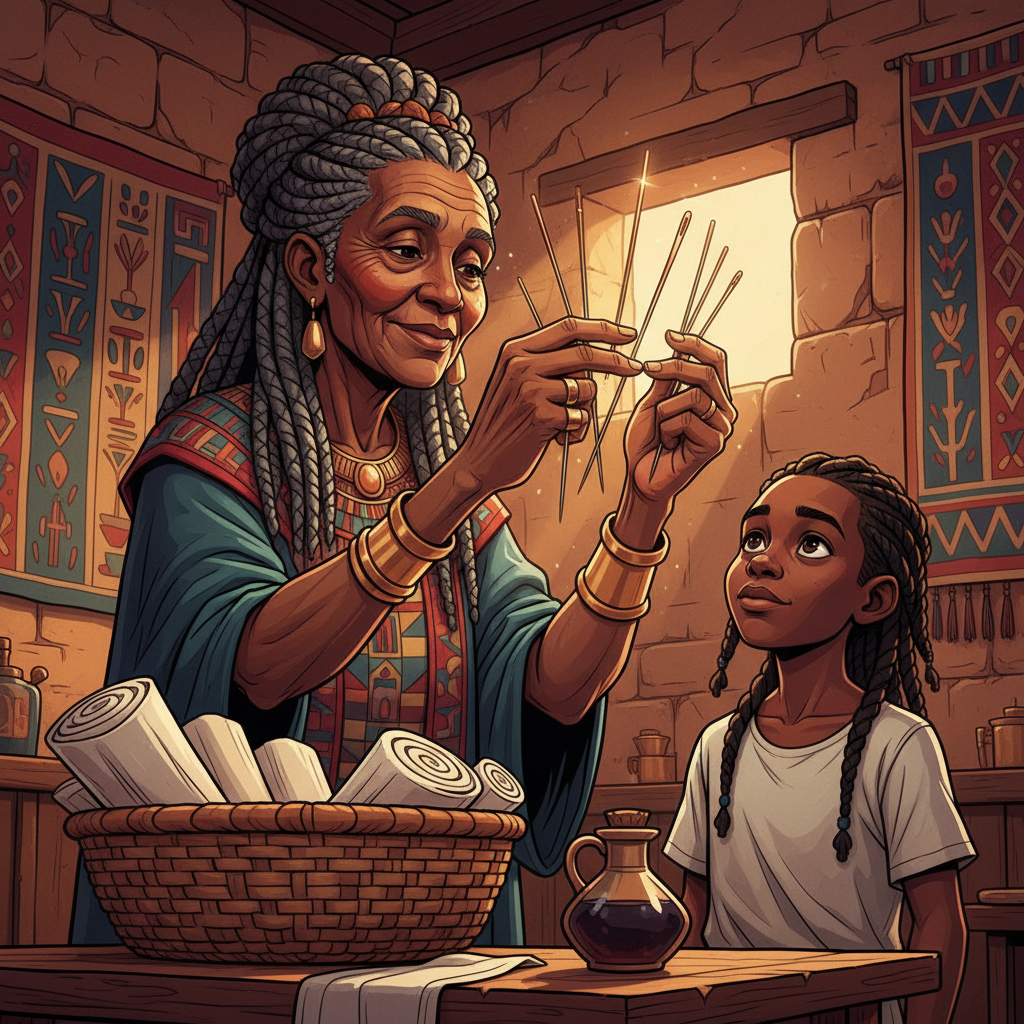
His grandmother held the copper needles to the light, examining their craftsmanship. "Your uncle is known along every road from here to the Delta," she said proudly. "Not because he is rich, but because his word is gold. When Djabal says a thing, it is true. That reputation is worth more than all the mines of Kush."
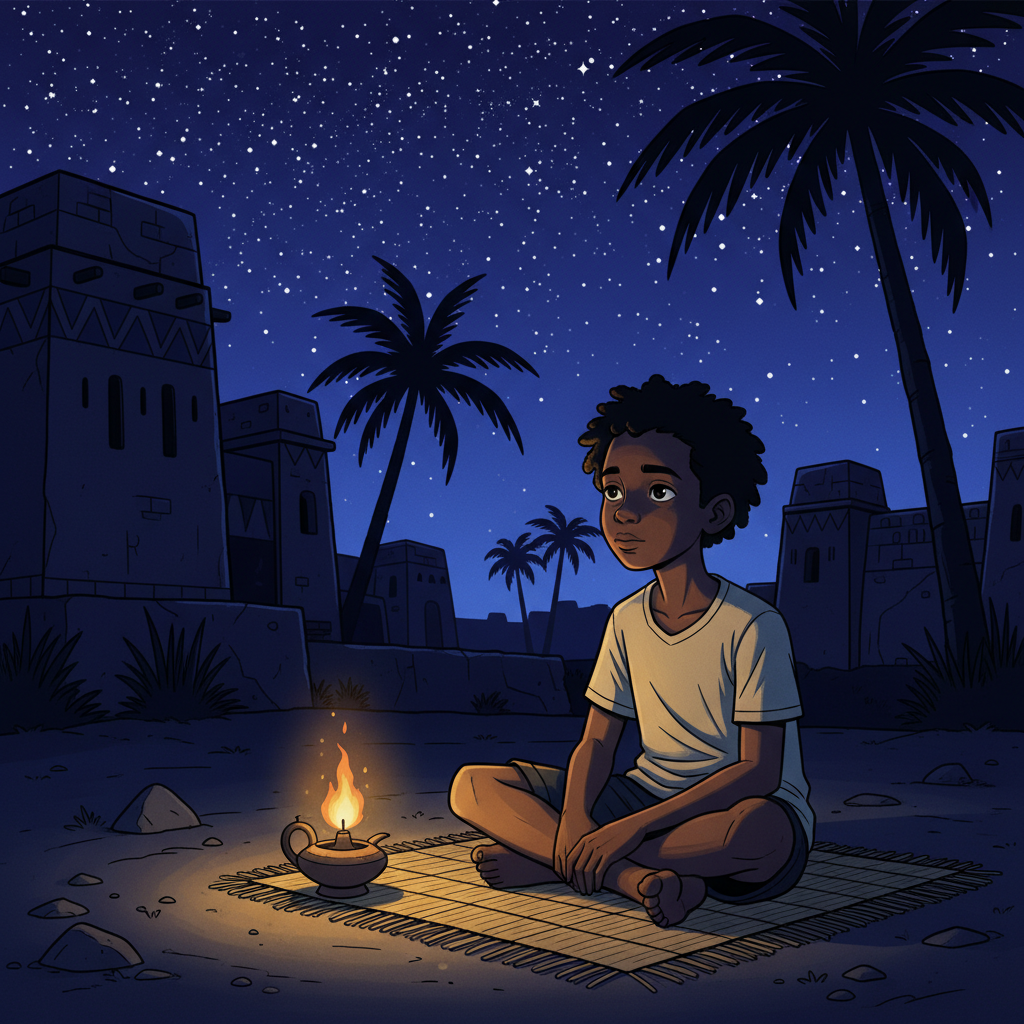
That night, Issa sat outside under the stars and thought about what he had learned. Gold was beautiful, but it could be stolen. Goods wore out and broke. Only trust endured. The ancestors had known this — that was why the Gold Roads had survived for a thousand years while empires rose and fell around them.
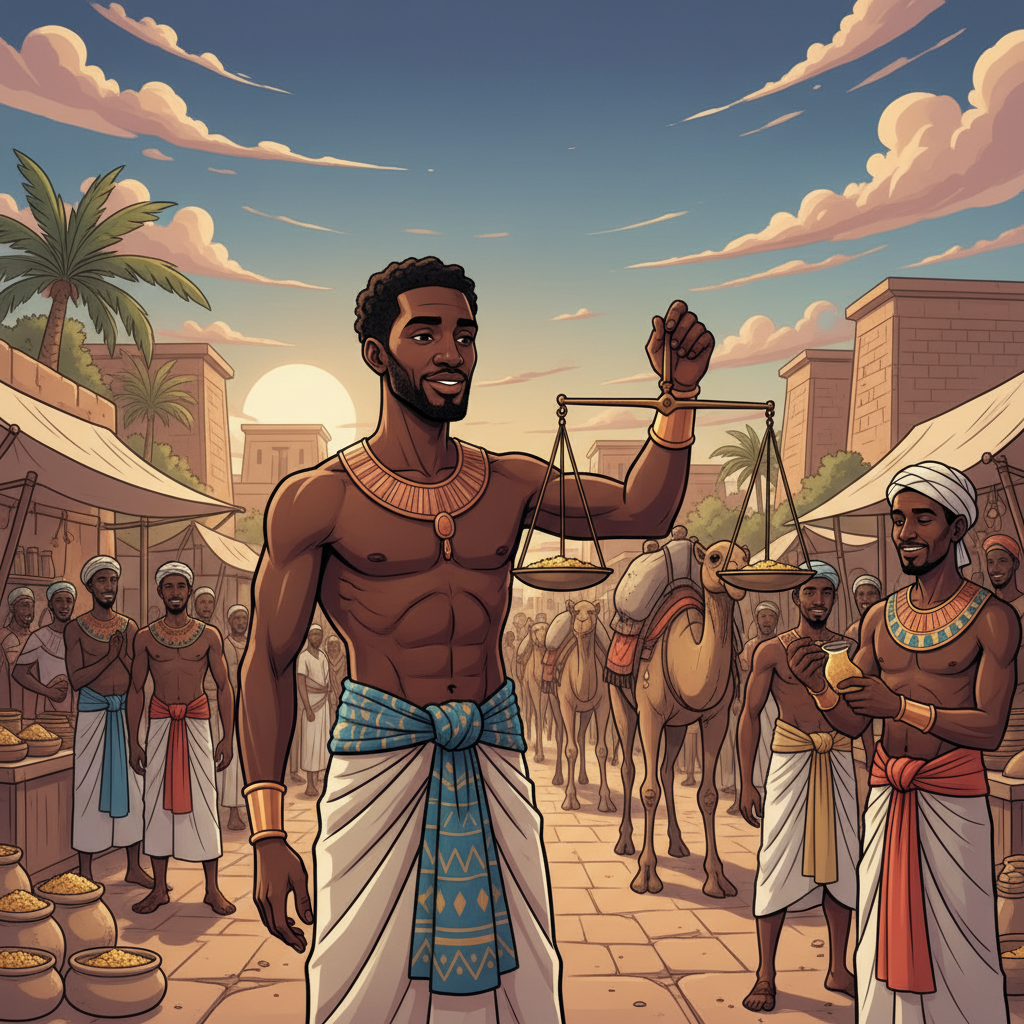
Years later, Issa would walk those same roads himself, carrying gold from the mines of Kush to the markets of Kemet. And every trader who met him would say the same thing: "Issa trades like his uncle — with a scale that never lies and a word that never breaks." In the language of Maat, there was no higher praise.