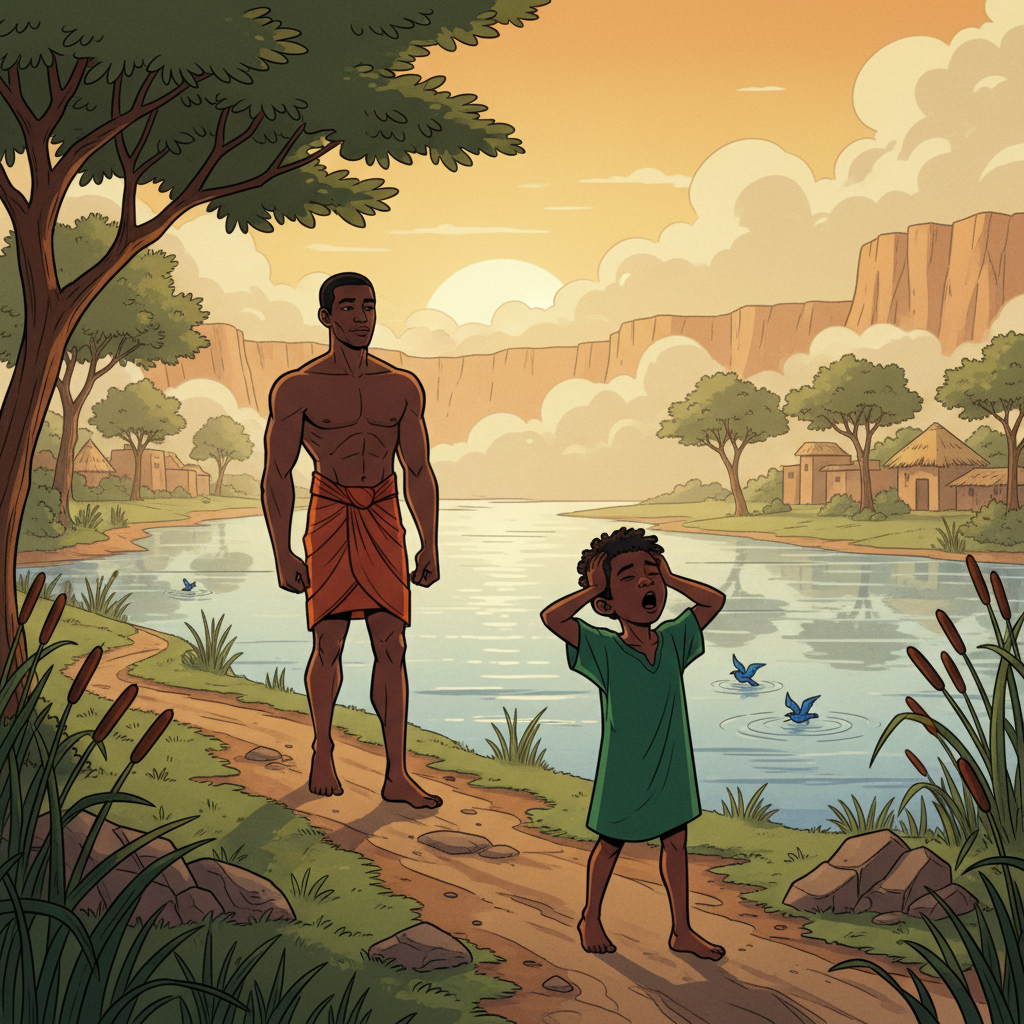
The morning mist rose from the Great Nile like a soft gray blanket being pulled away by invisible hands. Little birds with bright blue feathers darted across the water, their tiny voices singing the first songs of the day. Kofi rubbed his eyes and stretched his arms wide as he walked beside his father down the muddy path toward the riverbank. The air smelled like wet earth and green growing things. Kofi could hear the river before he could see it — a gentle whooshing sound, like the Nile was whispering secrets to anyone who would listen. His father, Amenhotep, walked ahead with steady steps, his tall frame dark against the golden sky of dawn.
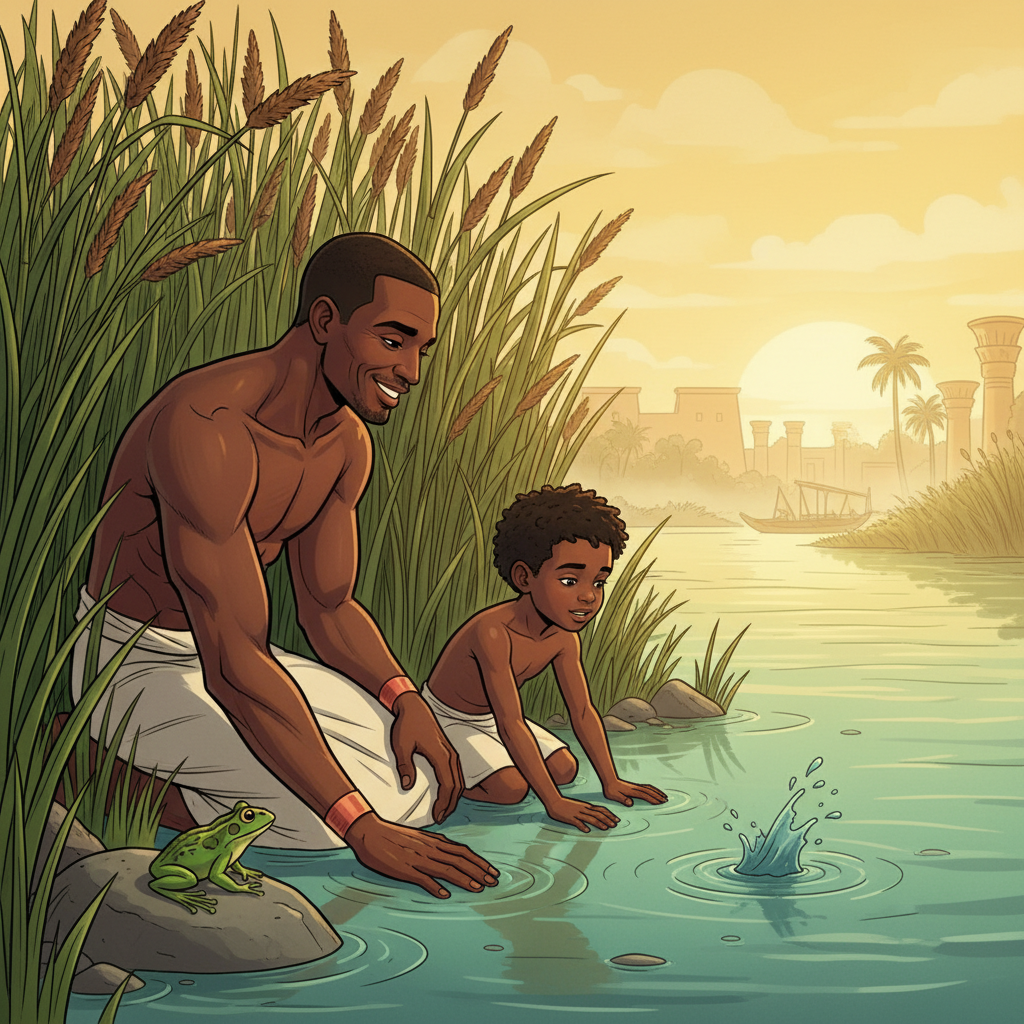
Amenhotep knelt at the edge of the water where the papyrus reeds grew thick and tall. His dark brown arms moved with a gentle strength that Kofi admired more than anything in the world. "First, we must ask the river for permission," his father said, pressing his ebony palm flat against the cool water. "The Nile gives us everything, so we begin with respect." Kofi pressed his own small hand into the water too. It was cold and made his fingers tingle. A bright green frog leaped off a rock nearby, splashing into the shallows with a tiny plop. Kofi giggled, but his father smiled warmly and nodded — even the frog was part of the river's family.
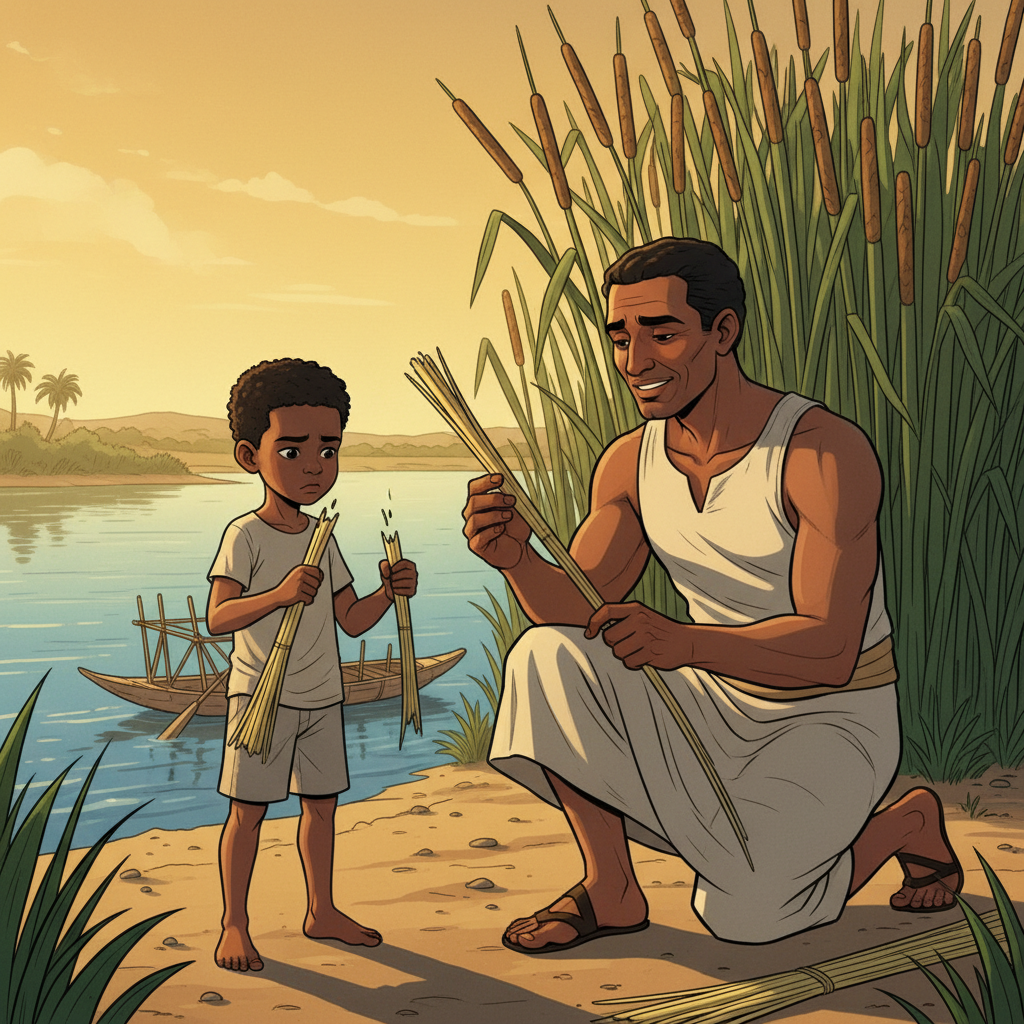
Amenhotep showed Kofi how to choose the right reeds. "Feel this one," he said, bending a tall papyrus stalk gently between his strong fingers. "It bends but does not break. That is what we need — something flexible but tough." Kofi reached for a reed and pulled hard, but it snapped right in half. He frowned and looked down at the broken pieces in his small ebony hands. "Do not worry," his father said kindly. "Every boat builder breaks reeds at first. The secret is to pull slowly from the base, close to the water. Let the reed teach you how it wants to move." Kofi tried again, this time pulling low and slow. The reed came free in one beautiful piece, and Kofi held it up like a golden treasure.
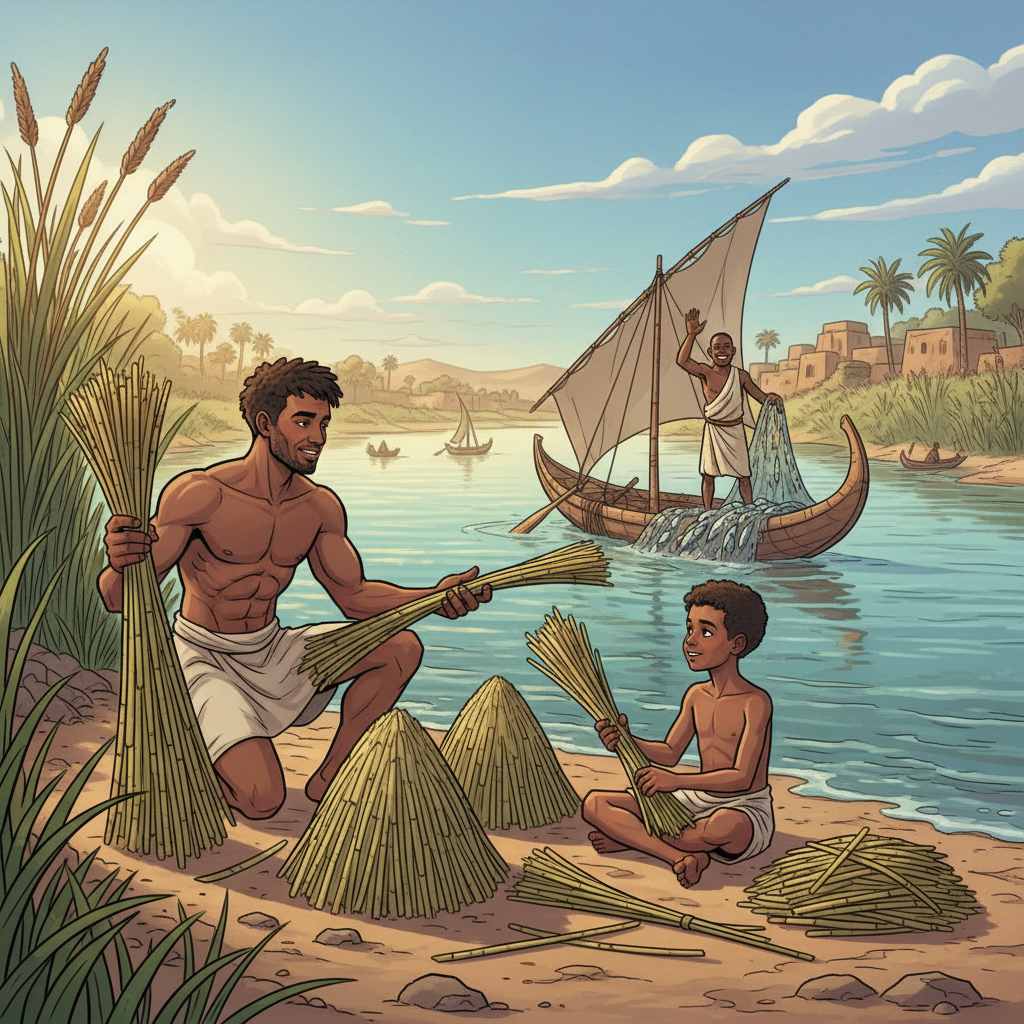
They gathered reeds for a long time, stacking them in neat bundles on the riverbank. Kofi's hands got sore and his fingers turned green from the plant juice, but he did not complain. He watched how his father sorted the reeds by size — long ones in one pile, medium ones in another, and short ones for plugging gaps. Everything had a purpose and a place. A fishing boat drifted past them on the quiet water. The fisherman waved and called out a greeting. His net was already full of silver fish that flashed in the early sunlight. "That boat was built by your grandfather," Amenhotep said proudly. "Twenty seasons ago, and it still floats strong. That is what good work looks like — it lasts."
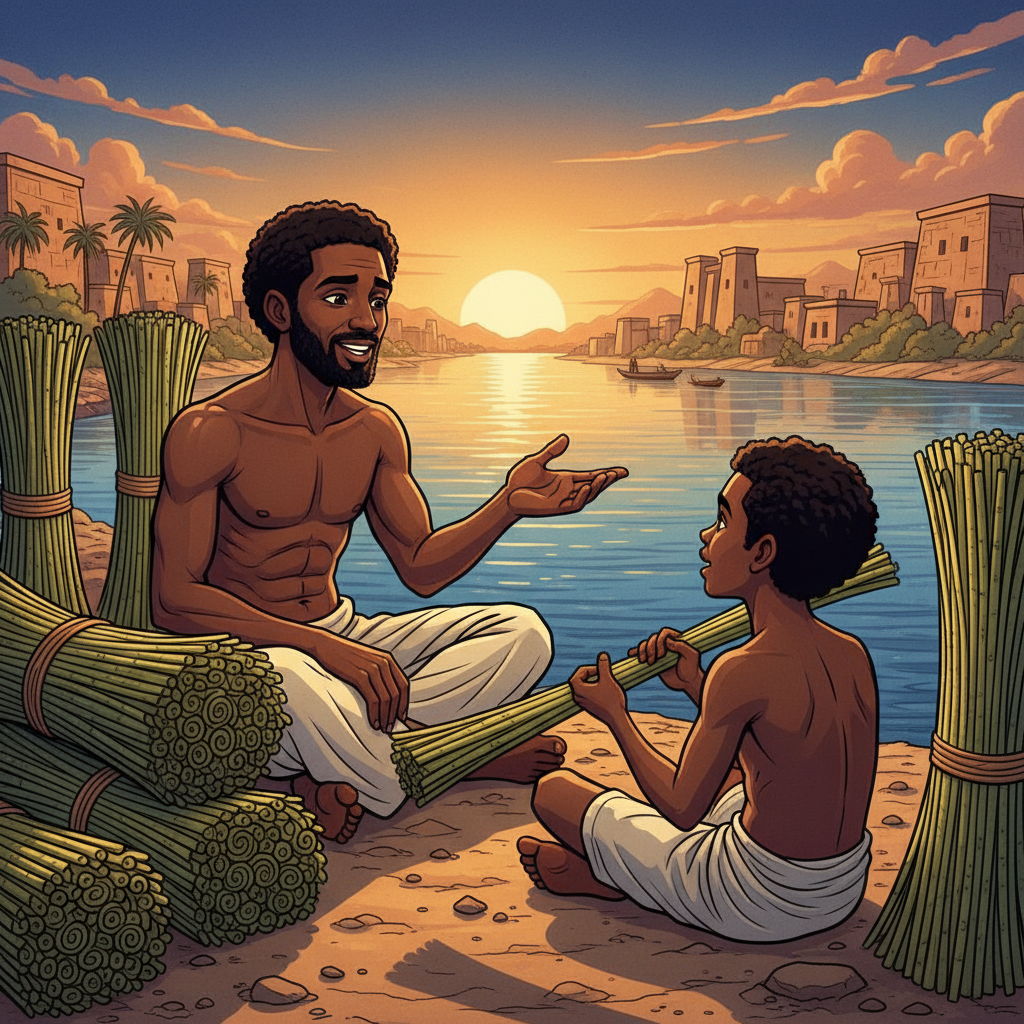
"A boat is not just wood and reeds, Kofi," his father said as they sat together surrounded by their piles of papyrus. His voice was deep and warm like the earth itself. "Every boat is a promise. A promise to carry families safely across the water. A promise to bring food from the farms to the villages. When we build, we are making a promise to our whole community." Kofi listened carefully, turning a long reed over in his hands. The Great Nile stretched out before them, wide and shining like a road made of liquid bronze. "The river connects everyone in Kemet," his father continued. "From the first village in the south to the great cities in the north, the Nile is our water road. And boats are how we travel it."
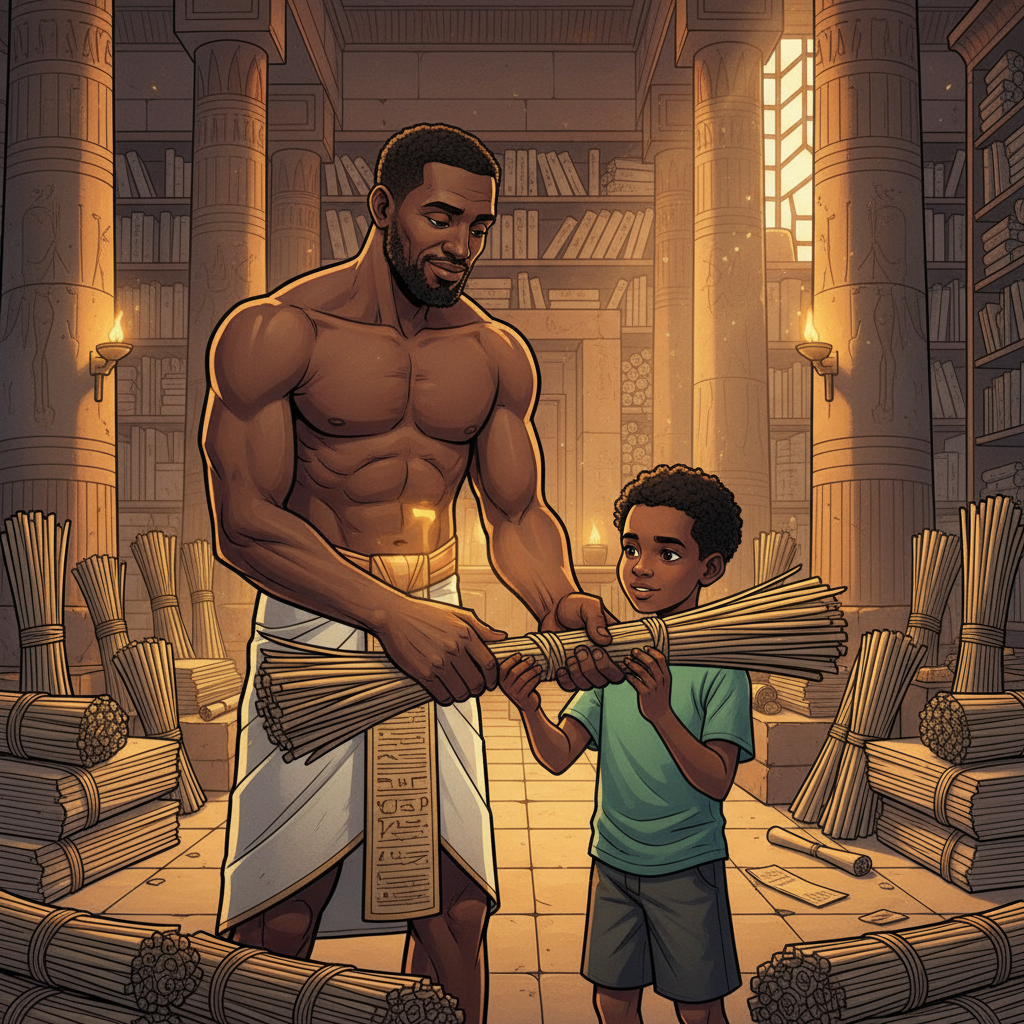
Amenhotep began teaching Kofi how to build. "First, we make the core," he explained, taking a thick bundle of reeds and tying them tightly with strips of palm bark. His dark fingers moved so fast they seemed to dance. "Wrap the cord around three times, then pull. Three times, then pull." Kofi tried to copy him, but his knot came loose and the reeds sprang apart like a surprised cat. "My hands are too small!" Kofi said, frustrated. His father gently took Kofi's hands in his own and guided them through the motion. "Your hands are not too small. They are just learning. Even the great builders of Per Ankh started with loose knots." Together, they tied the bundle again — three times around, then pull. This time, it held tight, and Kofi felt his ka glow warm with pride inside his chest.
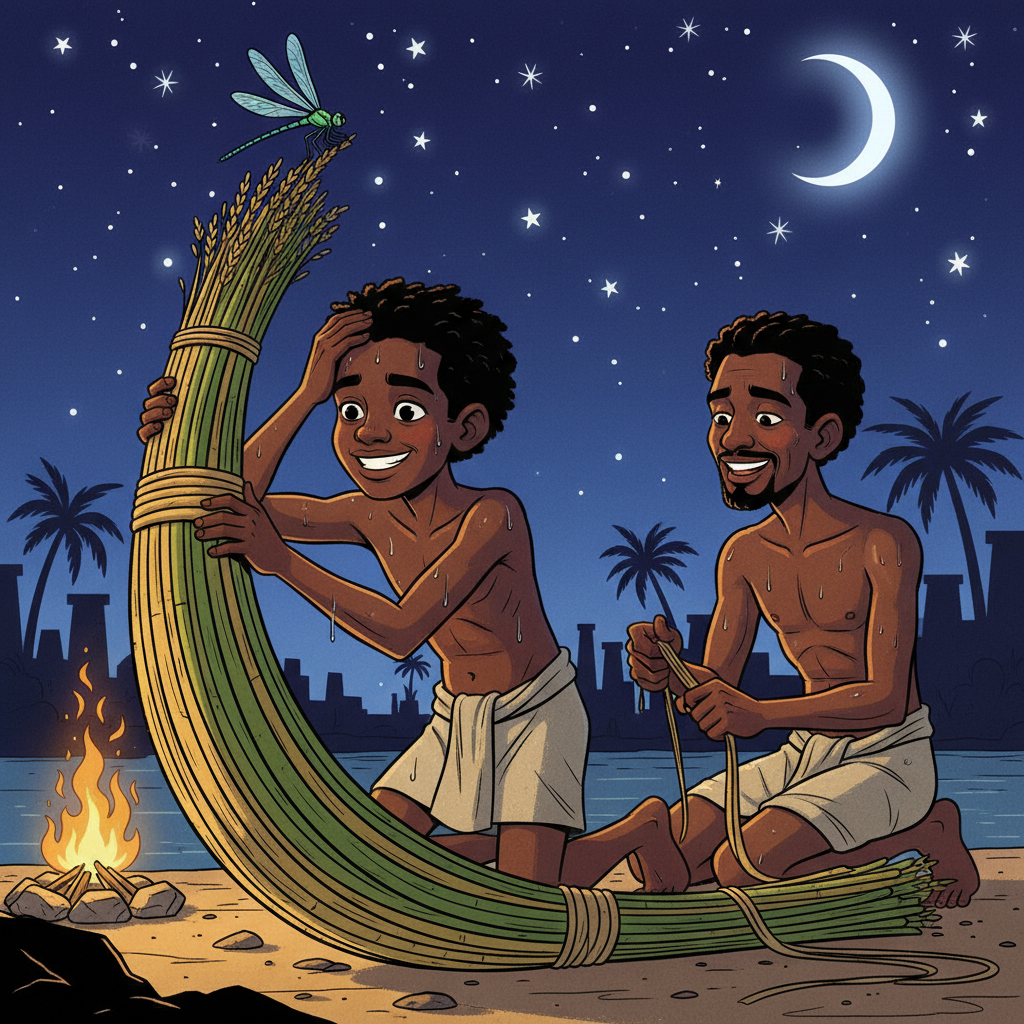
Next came the shaping. Amenhotep showed Kofi how to curve the bundles upward at both ends so the boat would rise above the water like a smile. "If the ends are flat, the river will swallow the boat," he warned. "But if we lift them up, the boat rides on top of the water like a bird sitting on a branch." Kofi helped bend the reeds, pressing his whole body against them to hold the curve while his father tied the shape in place. Sweat dripped down Kofi's forehead and onto his arms, making his dark skin shine in the sunlight. A dragonfly with wings like tiny pieces of glass landed on the tip of the boat and sat there as if inspecting their work. "Even the dragonfly approves," Amenhotep laughed. Kofi laughed too, wiping his forehead with the back of his hand.
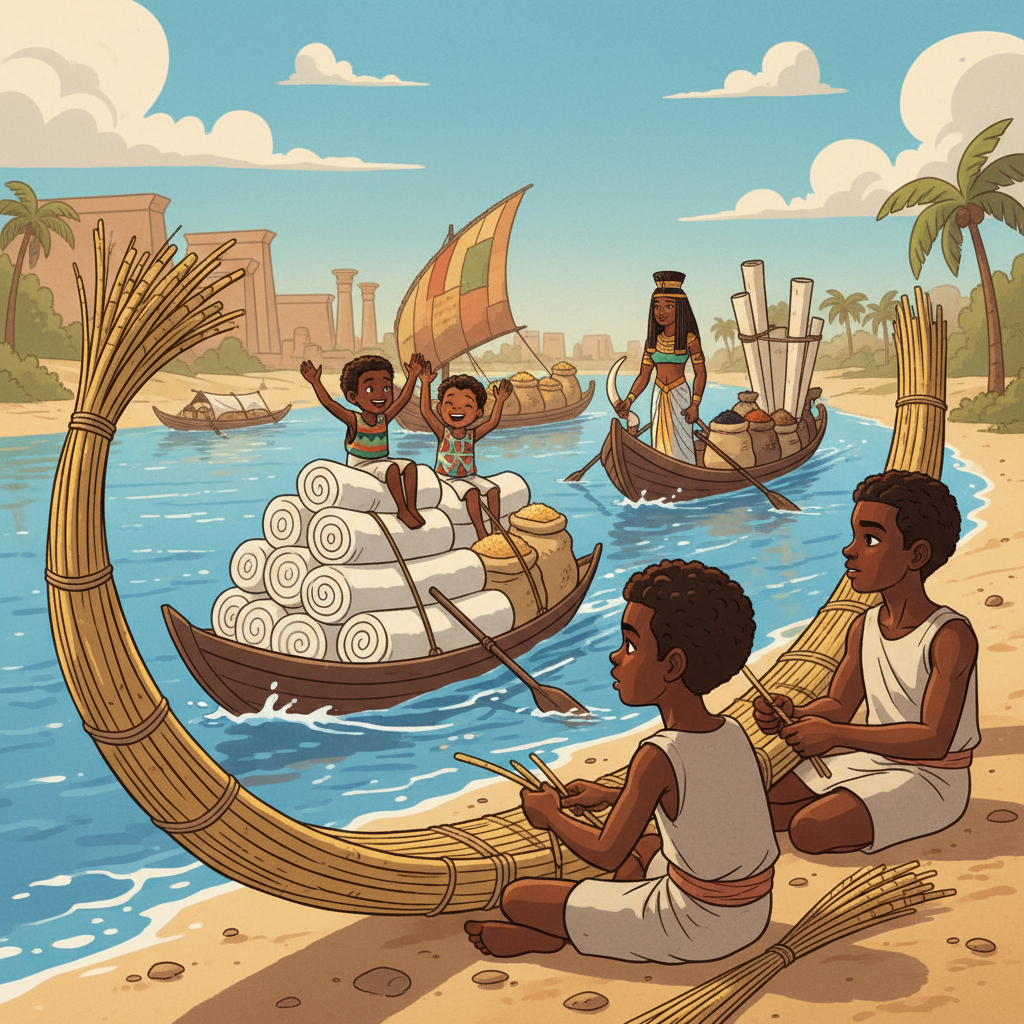
While they worked on weaving the sides of the boat together, Kofi watched the river traffic pass by. A long cargo boat glided south, loaded with bags of golden grain that smelled sweet even from the shore. Behind it came a smaller boat carrying rolls of white linen cloth, stacked so high they looked like a floating cloud. Two children sat on top of the linen pile, waving and laughing at Kofi as they passed. Then came a boat from Kush, far to the south, with traders whose skin was deep as midnight and whose arms sparkled with gold bracelets. They carried ivory and ebony wood and sacks of fragrant spices that made Kofi's nose tingle. Behind them, a woman with proud shoulders steered a boat loaded with papyrus scrolls, taking them north to the great libraries. No one needed permission to travel the Nile. The river belonged to all the people of Kemet.
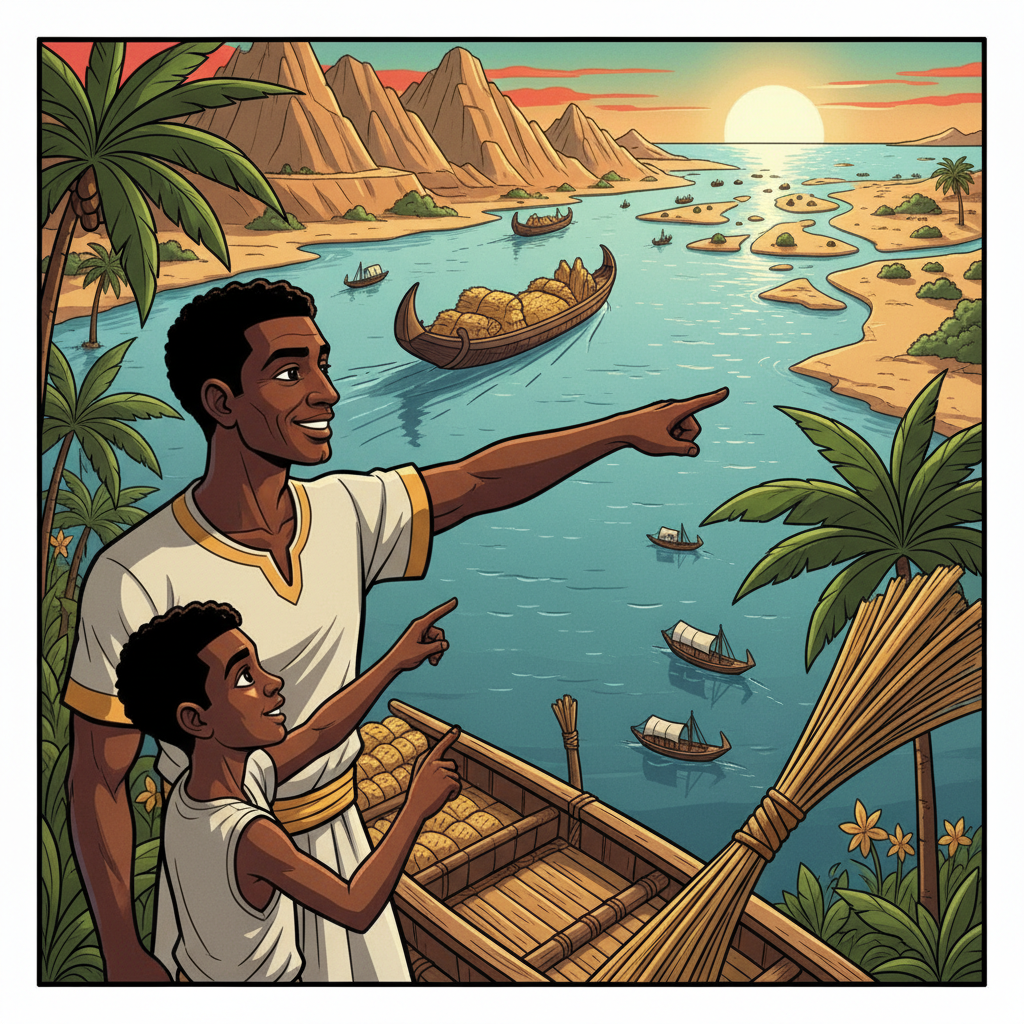
"Where do all the boats go, Father?" Kofi asked, still watching the water road come alive with travelers. Amenhotep smiled and pointed south. "That way leads to Kush, where the gold mines shine and the mountains touch the sky. Your grandmother was born there." Then he pointed north. "That way leads to the great delta, where the river splits into many fingers before meeting the sea." Kofi tried to imagine the river splitting into fingers like a giant hand reaching for the ocean. "Some boats carry stories," his father added quietly. "Scribes send scrolls from city to city so that knowledge can travel. The river carries wisdom just as easily as it carries grain. That is the beauty of the Nile — it connects not just places, but people and ideas."
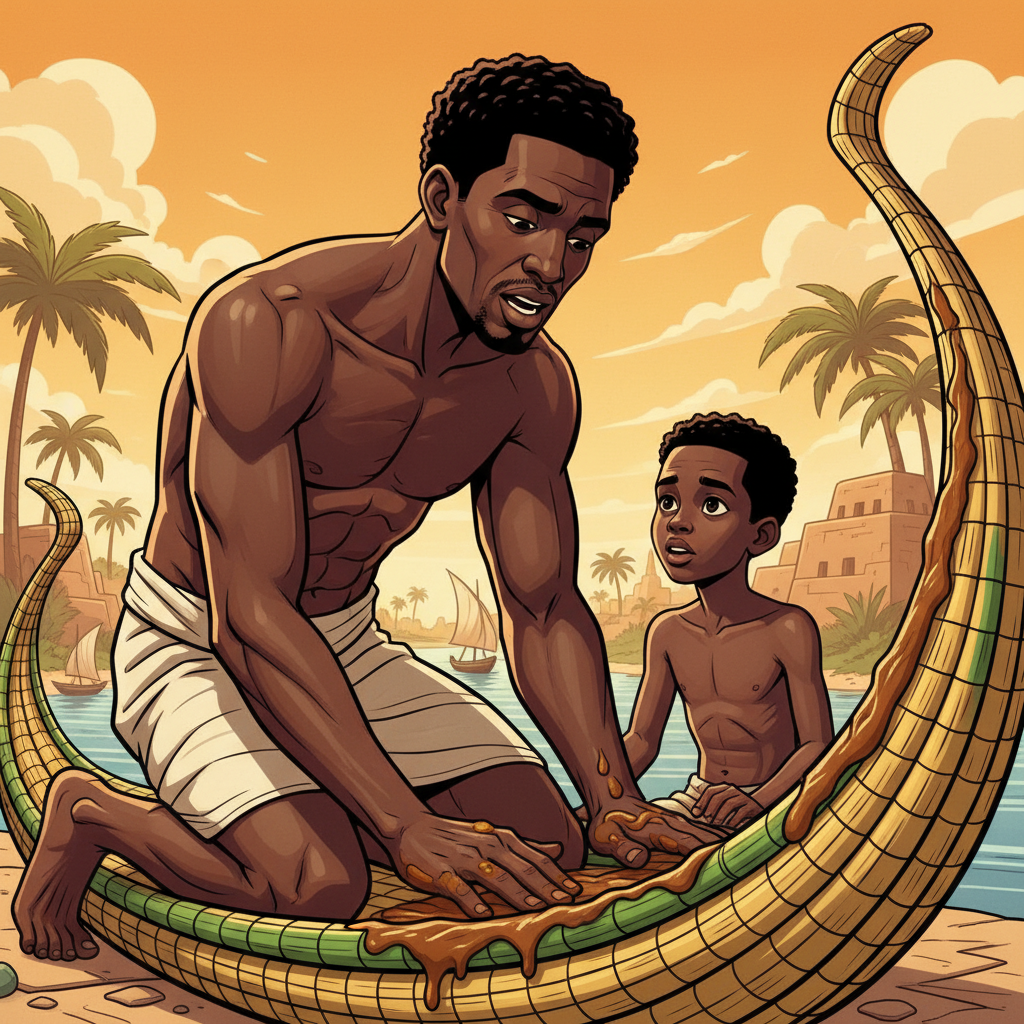
"Caring for the river is Ma'at," Amenhotep said firmly as they sealed the bottom of their boat with a paste made from tree sap and clay. "Ma'at means keeping the world in balance — truth, justice, and order. When we care for the Nile, we keep Ma'at strong." He spread the thick paste with his hands, pressing it into every tiny gap between the reeds so no water could sneak through. Kofi helped smooth the paste along the curved sides. "What happens if someone does not care for the river?" he asked. His father's face grew serious. "That is Isfet — chaos and disorder. If people dump waste into the water or take more fish than the river can give, the balance breaks. The fish disappear. The water turns bad. Isfet hurts everyone, not just the person who caused it." Kofi nodded slowly. He understood. The river was alive, and it deserved to be treated with honor.
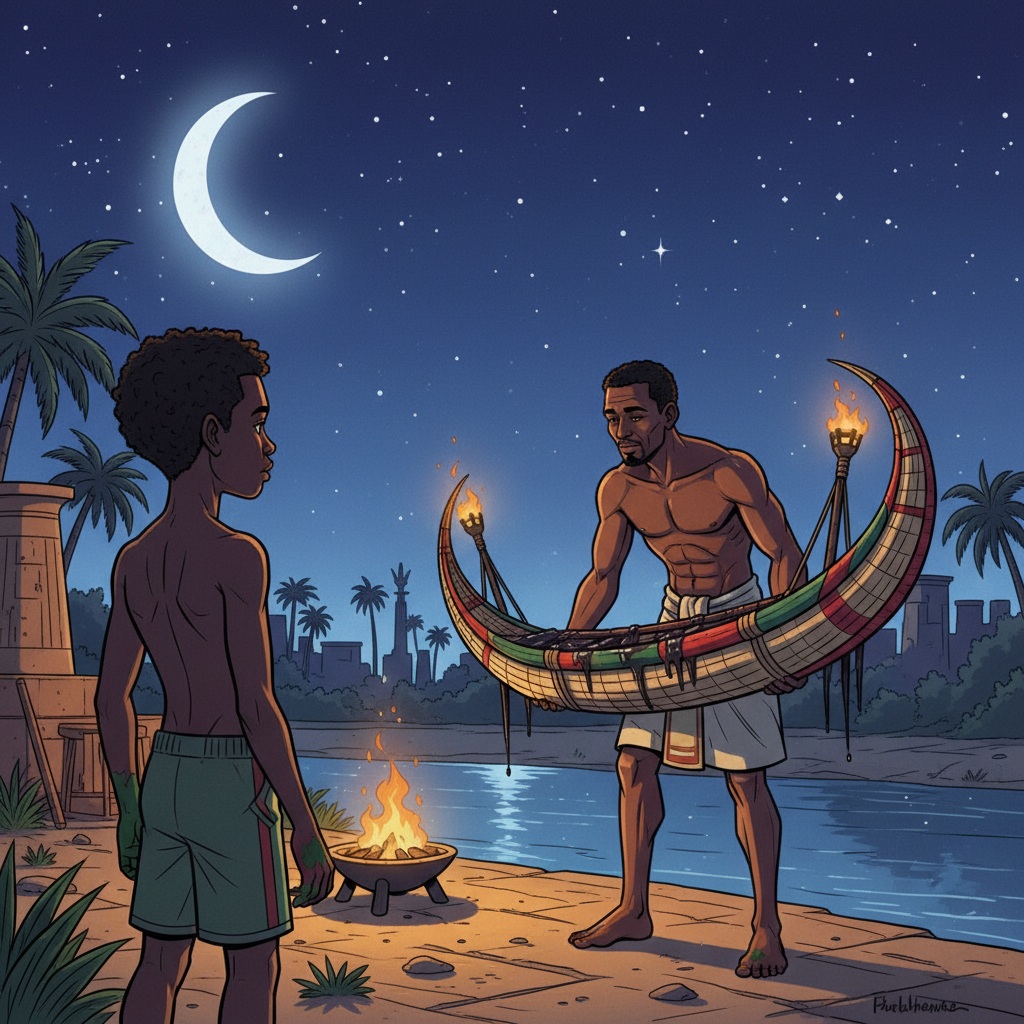
By the time the afternoon sun blazed high and golden above the river, the boat was finished. Kofi stood back and looked at what they had made together. It was beautiful — curved up at both ends like a crescent moon lying on its back, woven tight and smooth, sealed against the water. His ebony hands were sore and stained green, but his heart was so full it felt like it might float right out of his chest. Amenhotep lifted the boat and carried it to the water's edge. "You do the honors," he said, stepping aside. Kofi took a deep breath and pushed the boat gently onto the surface of the Nile. For one terrifying second, it wobbled. Then it steadied itself and floated — light and proud on the shining water. "I did it!" Kofi shouted, jumping up and down on the muddy bank. "Father, it floats!" Amenhotep placed his strong hand on his son's shoulder and beamed. "You built something that connects people, Kofi. That is a gift greater than gold."
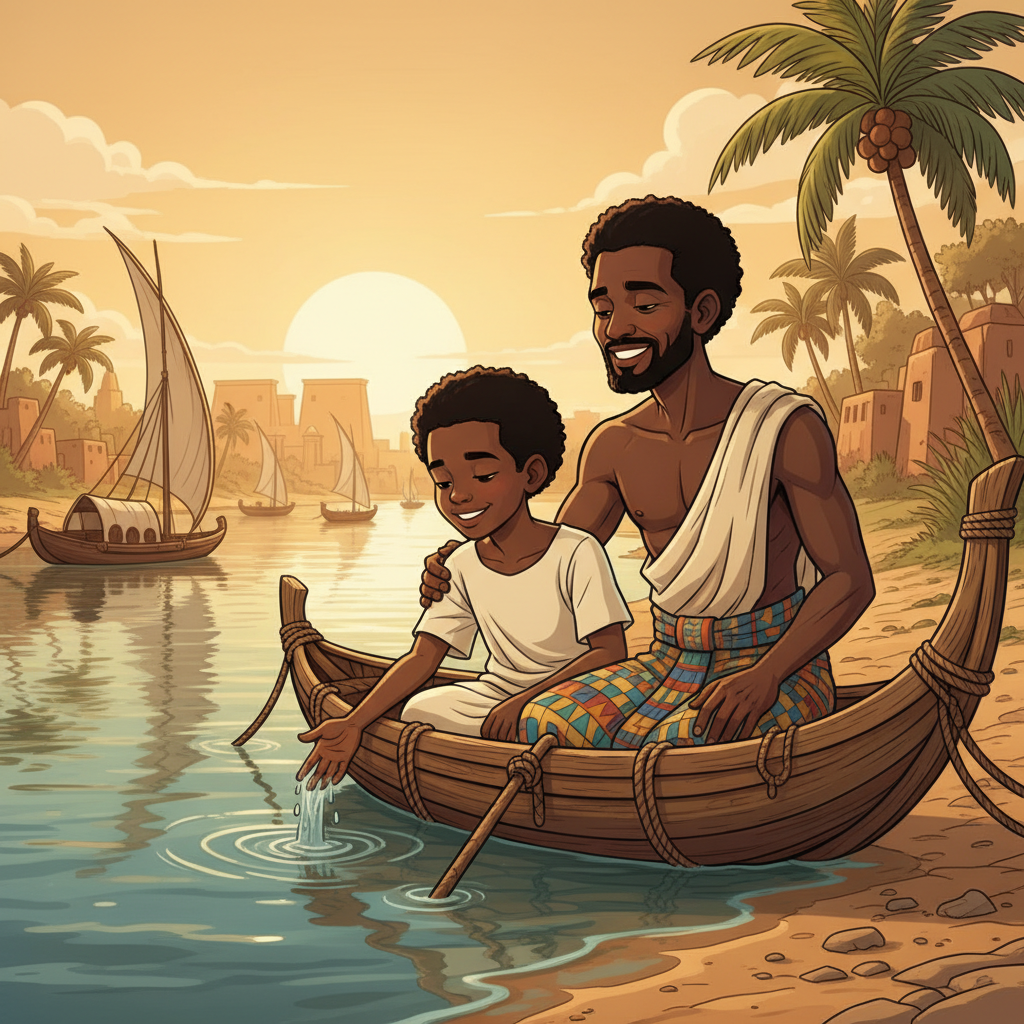
Kofi and his father waded into the shallow water and climbed carefully into their new boat. It rocked gently beneath them but held firm and strong. Kofi dipped his hand over the side and let the cool Nile water run through his fingers as they drifted slowly downstream. He could feel the river's heartbeat — steady and ancient, carrying them the same way it had carried his grandfather and his grandfather's grandfather before that. The people of ancient Kemet knew something that the world must never forget. Rivers are not just water — they are life itself. They carry food, they carry people, they carry knowledge and dreams. Today, many rivers around the world are sick with pollution and waste. But if we remember Ma'at — if we keep the balance and treat the water with respect — we can heal them. Kofi looked up at his father and smiled. He was a boat builder now, and he would always protect the river that connected his whole world.