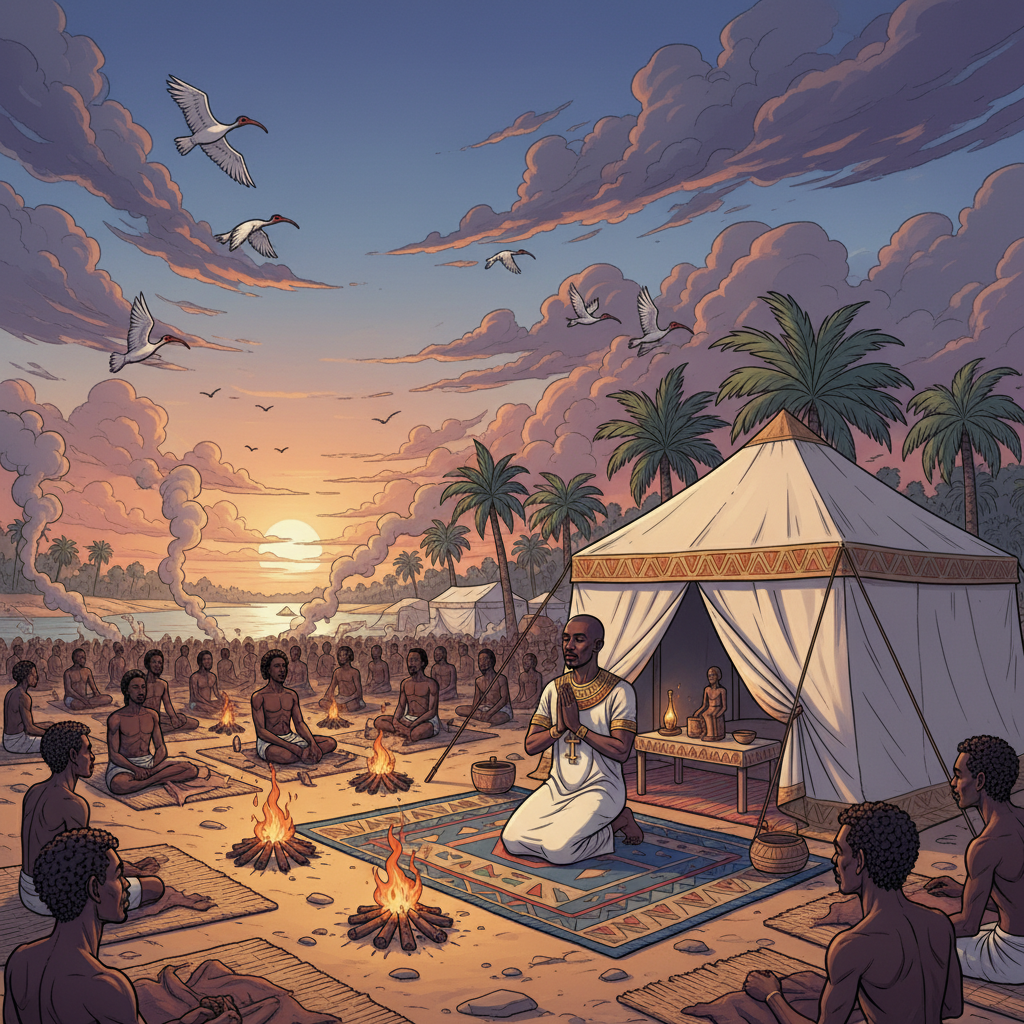
The sun had not yet risen over Napata when the first war drums began. Their deep, resonant booming rolled across the river valley like thunder born from the earth itself, shaking the palm fronds and sending ibis birds spiraling into the pale sky. Along the western bank of the Nile, twenty thousand warriors stirred from their camps, rising from sleeping mats laid on the warm sand. Cookfires flickered to life in the predawn darkness, and the smell of roasting grain mixed with the sharp scent of oiled leather and bronze. At the center of the great encampment stood a tent of white linen bordered with gold thread. Inside, Taharqa, Pharaoh of the Two Lands, Lord of Kush and Kemet, knelt before a small altar. His skin was deep ebony, rich and dark as the fertile soil the Nile left behind after each flood. He wore no crown yet this morning, and his shaved head gleamed in the lamplight as he whispered prayers to Amun, asking not for victory but for the wisdom to protect his people. The djed pillar amulet around his neck caught the flame — that ancient symbol of stability, of the backbone of Osiris, of all that holds the world upright against the forces of collapse.
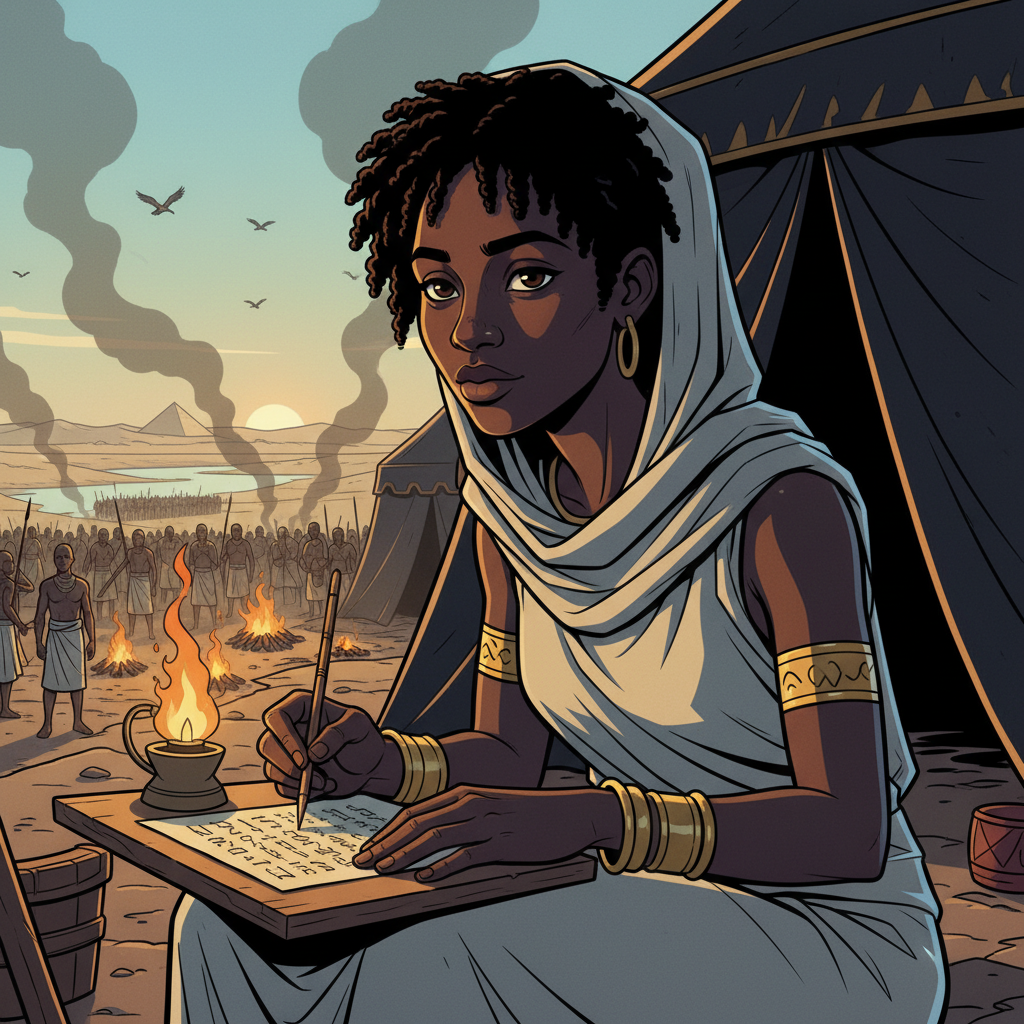
Fourteen-year-old Abar crouched outside her uncle's tent, her reed pen already moving across a fresh sheet of papyrus. She was Taharqa's niece, daughter of his eldest sister, and she had begged for months to accompany the army as a scribe. Her skin was the deep brown-black of her Kushite mother, and her dark eyes missed nothing. She had trained at the Per Ankh in Napata since she was eight years old, learning to shape hieroglyphs with the precision of a jeweler cutting stone. Now she would use that training not to copy temple prayers but to record the march of an army. Her hands trembled slightly as she wrote the date and the location. She steadied them by pressing the papyrus flat against the portable writing board on her lap. A scribe does not tremble, she told herself. A scribe is the memory of the world. What she did not write down would be lost forever, swallowed by time like a stone dropped into the Nile. What she recorded would last as long as the words themselves endured. That thought frightened her more than any army.
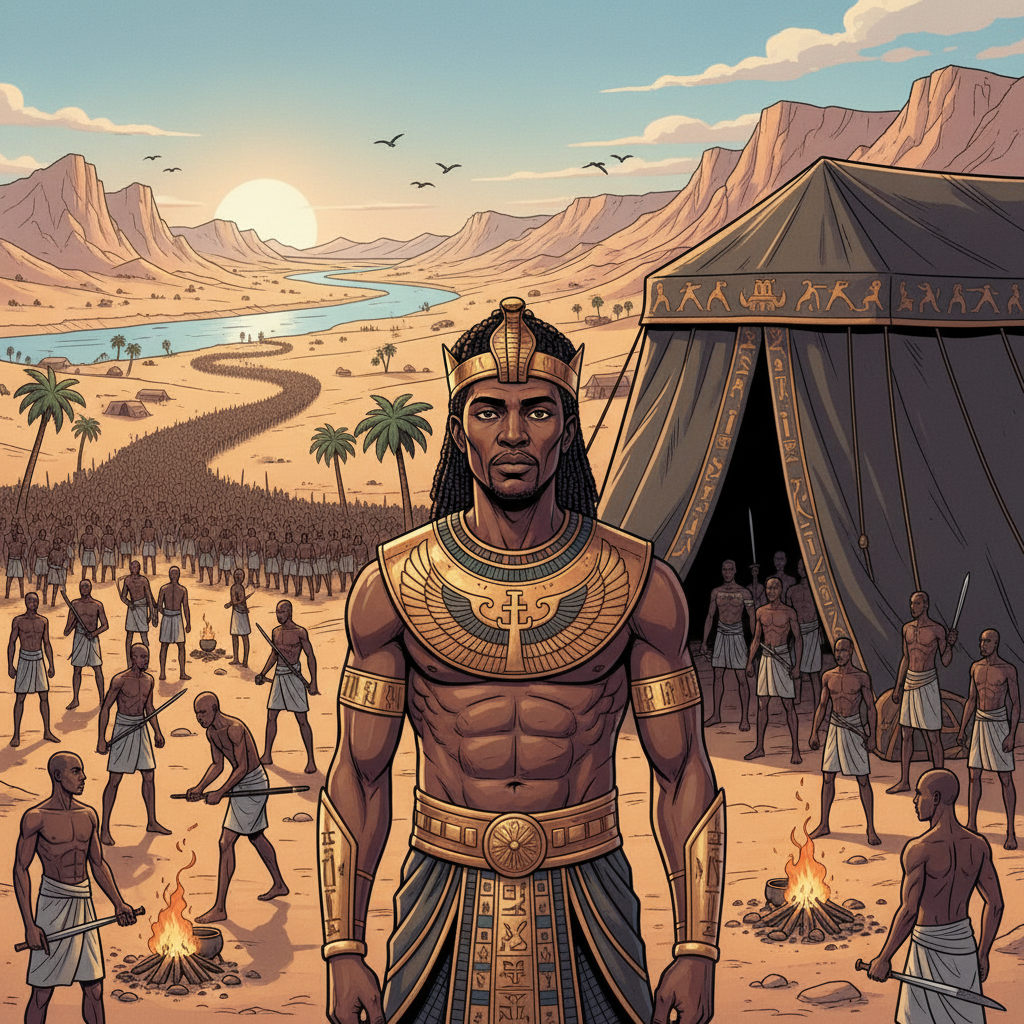
Taharqa emerged from his tent as Ra's first light broke over the eastern cliffs. He was tall — taller than any man in the camp — and his body was lean and hard from decades of training. He wore his golden war crown now, the double uraeus coiled at his brow, marking him as ruler of both Kush and Kemet. His breastplate of hammered bronze bore the djed pillar at its center, flanked by the wings of Horus. Every element of his armor carried meaning. Every symbol was a declaration that maat — truth, justice, cosmic order — marched with this army. He surveyed the camp with eyes that seemed to see everything at once. Thousands of warriors moved through their morning rituals with the discipline of men who understood what they defended. Taharqa had not inherited a unified kingdom. He had built it, year by year, journey by journey, walking the length of the Nile from the Fourth Cataract of Ta-Seti to the marshes of the delta, listening to village elders, resolving disputes, rebuilding temples. He knew the names of garrison commanders in cities a thousand miles apart. He remembered the taste of bread baked in every province.
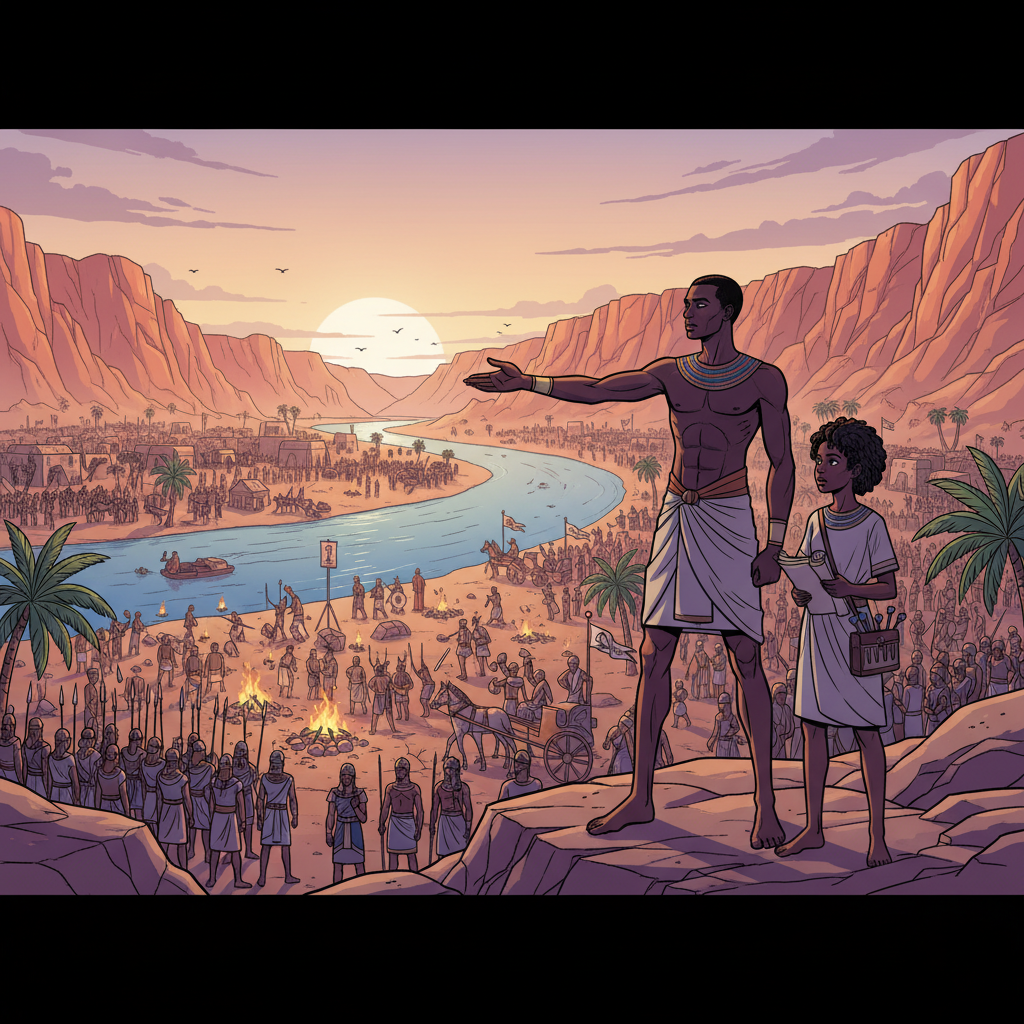
"Abar." His voice was deep and quiet, but it carried. She scrambled to her feet, clutching her writing kit. "Walk with me." They moved through the camp together, uncle and niece, pharaoh and scribe. Warriors bowed as Taharqa passed, touching their foreheads. He acknowledged each one by name when he could. These were not faceless soldiers to him. They were the sons and daughters of farmers, fishermen, priests, and craftsmen who had answered the call because their pharaoh asked. "Tell me what you see," Taharqa said as they reached a rise overlooking the full encampment. Abar looked out at the vast assembly spread along the riverbank. She saw cookfires and weapon racks, chariots being hitched and horses being watered. But she sensed he wanted more than that. "I see Kush and Kemet together," she said carefully. "Warriors from both lands, sharing the same fires." Taharqa nodded slowly. "That is what you must record above all else. Not just what we fight, but what we are. The Nile connects all peoples, Abar. It does not stop at borders drawn by men."
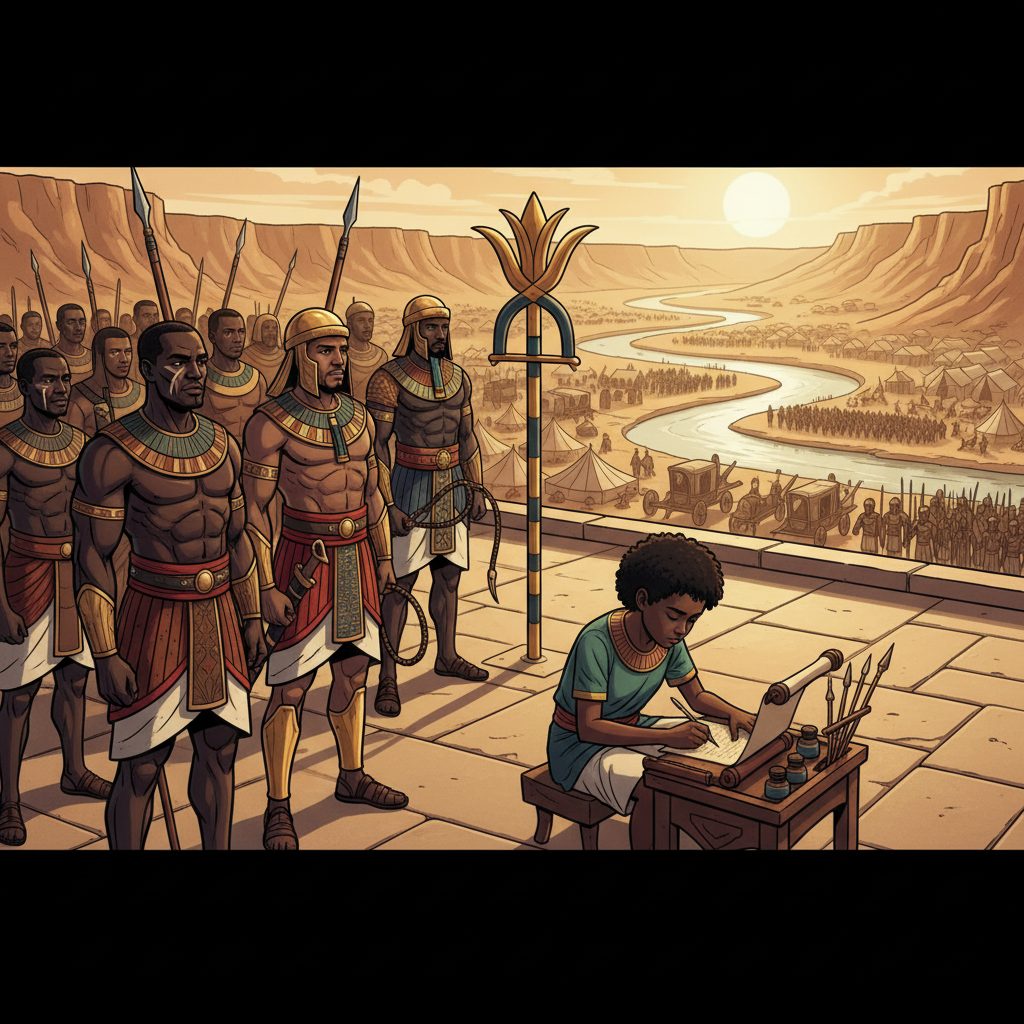
The assembly began at midmorning, when the sun stood high enough to illuminate the great standard of the Two Lands planted at the center of camp. Taharqa's generals gathered on a flat stone platform overlooking the river. General Kalakara of Napata commanded the Kushite infantry — three brigades of spearmen whose dark, sinewy arms had trained since boyhood with the long thrusting spear. His face bore ritual scars across both cheeks, marks of the warrior tradition of Ta-Seti that stretched back thousands of years. Beside him stood Commander Shepseskaf, who led the Kemetic charioteers from Waset — men whose families had driven war chariots since the days of Thutmose. Abar sat behind the generals, her reed pen scratching steadily. She recorded each commander's name, the size of their forces, the condition of their equipment. This was the work of a true scribe — not merely writing beautifully, but capturing the details that future generations would need to understand what happened and why. A scribe who recorded only glory was not serving maat but vanity.
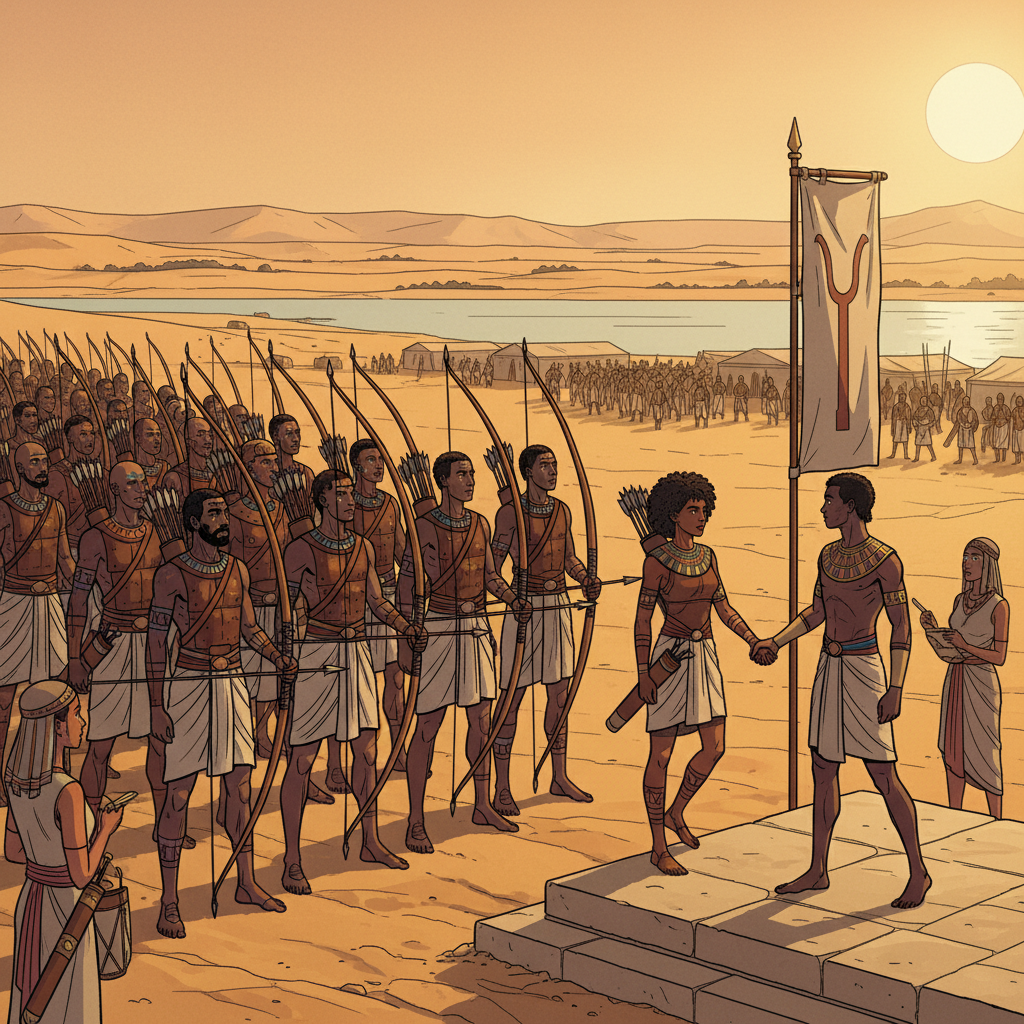
The Medjay archers arrived last, marching in from the southern road in perfect formation. They were elite warriors recruited from the desert regions south of the Second Cataract, and their reputation preceded them like a shadow. Each archer carried a bow of acacia wood as tall as himself — bows so massive that the Greek writer Strabo reported in astonishment that Kushite archers had to brace them against their feet to string them. Their quivers held forty arrows apiece, each shaft straight as a temple column, tipped with points designed for maximum penetration. Their commander, a woman named Takhat whose obsidian-dark skin bore the geometric tattoos of her clan, reported directly to Taharqa. Abar watched the Medjay with awe. These were not ordinary soldiers. They could put an arrow through a target the size of a fist at two hundred paces. They ran for hours without rest. They could track a lizard across bare stone. Takhat walked like a leopard — balanced, silent, coiled. When she spoke to Taharqa, her voice was measured and precise. "My archers are ready, Great One. We have trained for this since the first reports came from the delta." Taharqa clasped her forearm in the warrior's greeting. "The Medjay have always been the shield of the Nile. Today is no different."
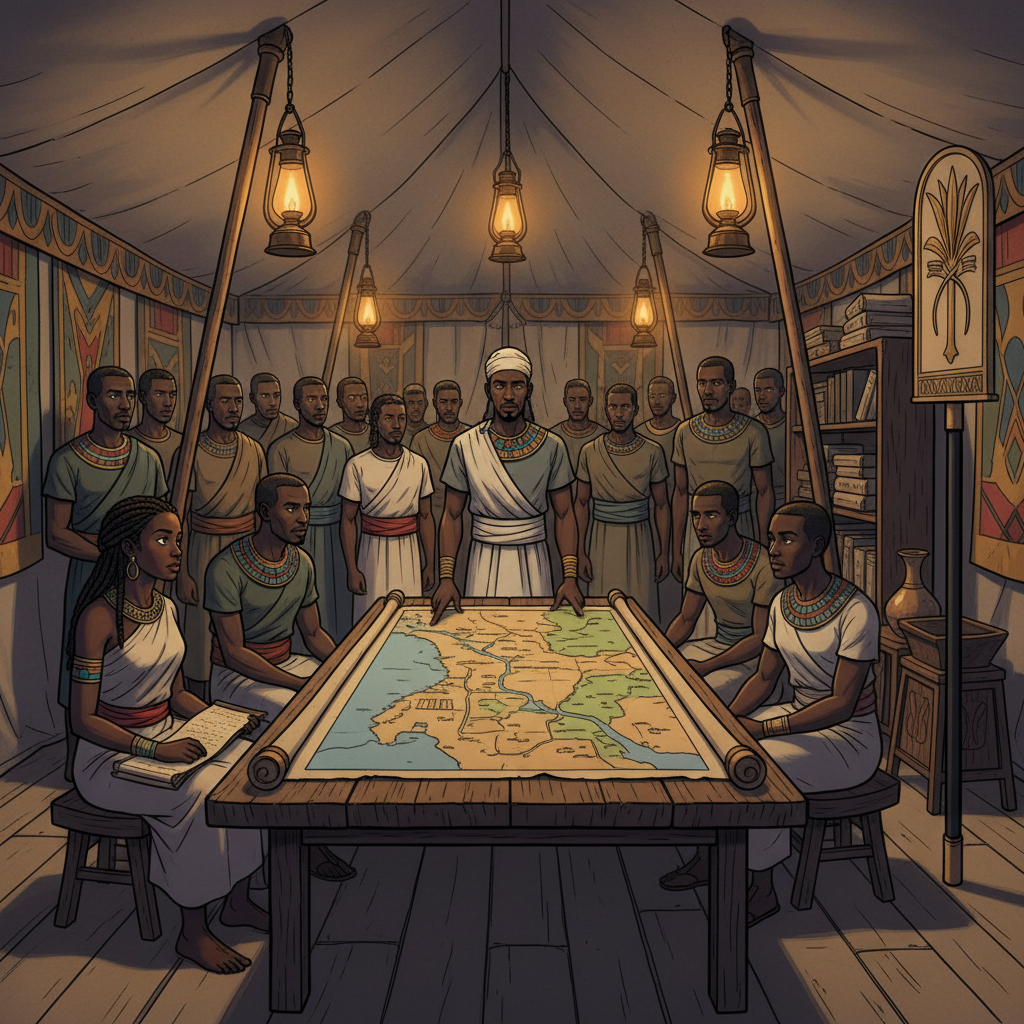
That evening, Taharqa called a war council in his tent. Abar was permitted to attend as the official scribe, and she felt the weight of that honor like a stone on her chest. The tent was crowded with commanders, the air thick with the smell of oil lamps and sweat. A large map of the Nile valley, painted on stretched calfskin, was spread across a wooden table. Taharqa stood at its head, his war crown replaced by a simple linen cap. In council, he was not a god-king performing for his court. He was a strategist. "The Assyrians have crossed into the eastern delta," he said, tracing the route with his finger. "Esarhaddon commands them. He brings cavalry, siege engines, and iron weapons." The tent went silent. Iron. The Assyrians had mastered ironworking on a scale that gave their soldiers harder blades and stronger armor than bronze could match. Taharqa let the silence hold, then continued. "They are strong. They are disciplined. They have conquered Babylon and humbled the Phoenicians. But they do not know this land. They do not know the Nile. And they fight for plunder. We fight for something they cannot understand."
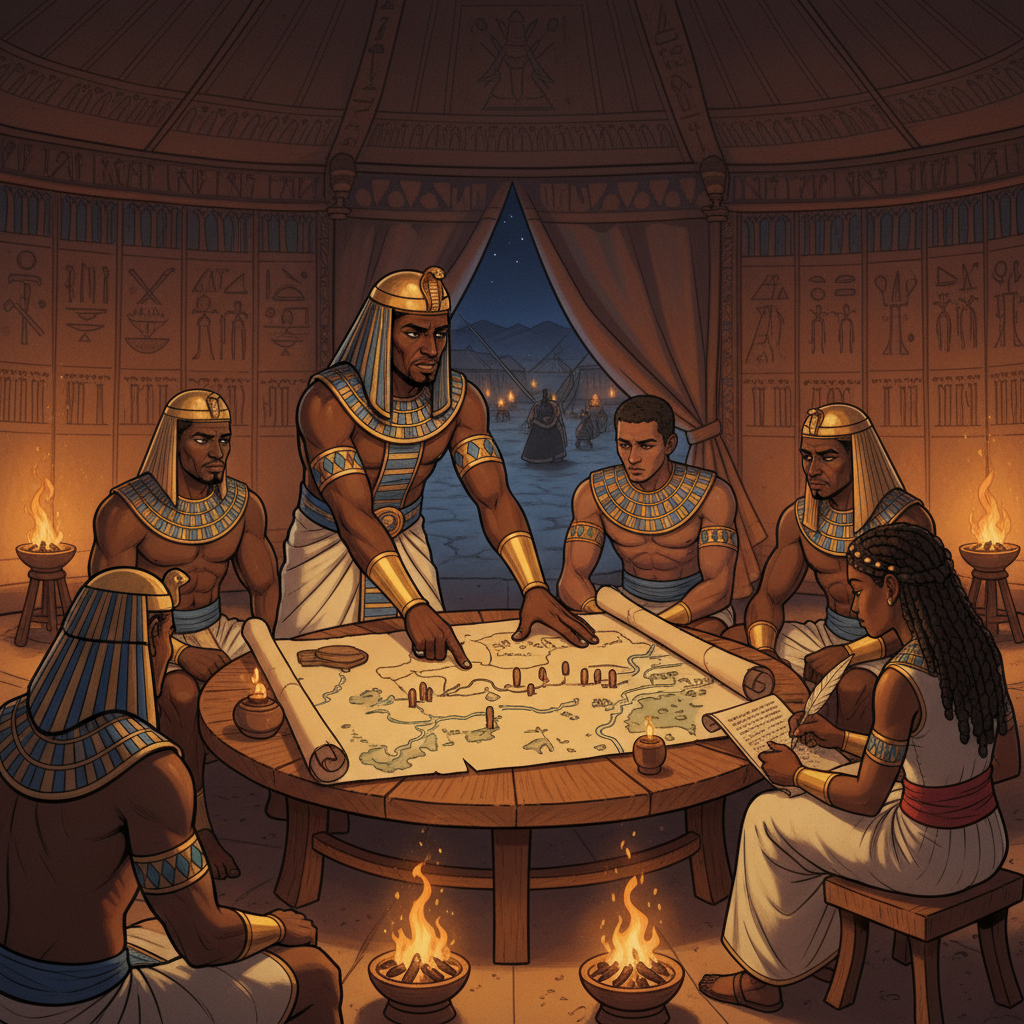
General Kalakara spoke first. "If we meet them in the open delta, their chariots and cavalry will have the advantage. The ground is flat and firm." Commander Shepseskaf disagreed. "Our chariots are faster. We should strike before they consolidate." Takhat shook her head. "Speed means nothing if we are outnumbered at the point of contact. We should use the terrain — the canals and marshes of the delta slow cavalry to a crawl." Taharqa listened to each voice without interrupting. This was his way. He gathered counsel the way a farmer gathers grain — patiently, thoroughly, missing nothing. When the debate had run its course, he spoke. "Kalakara is right that the open ground favors them. Takhat is right that the canals can slow their advance. We will not charge blindly into strength, and we will not hide behind walls." He placed his hand flat on the map. "We will meet them here, at the edge of the delta marshland, where their formations must narrow and their cavalry cannot wheel. The Medjay will hold the flanks. The infantry will hold the center. The chariots will wait in reserve." Abar wrote every word.
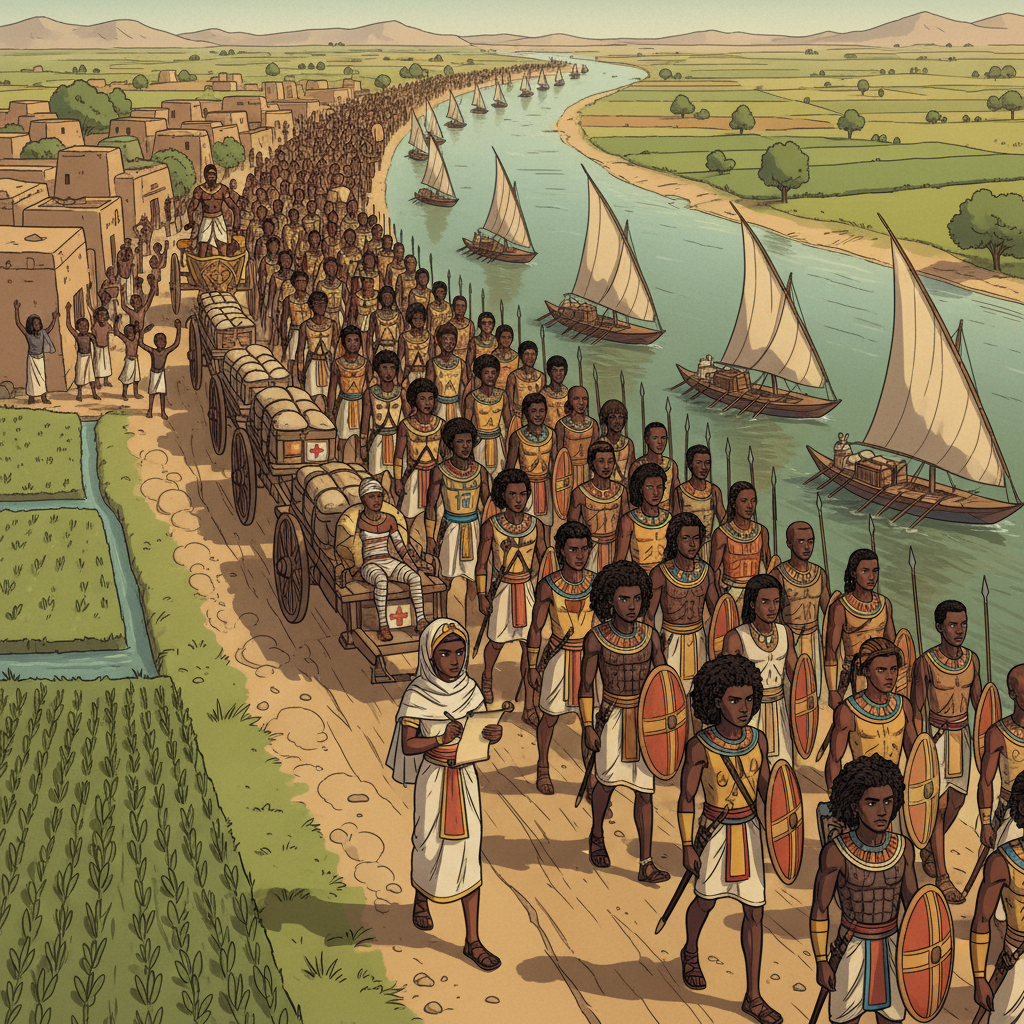
The march northward began the next morning. Twenty thousand warriors moved along the Nile in a column that stretched for miles. The river flowed beside them like a companion, its green-brown waters carrying feluccas loaded with grain, dried fish, and medical supplies. Taharqa had planned the logistics with the same care he planned the battle. An army that starved before it fought had already lost. Abar walked near the middle of the column, beside the supply wagons. She had given up her place on the wagon seat to a wounded scout who had ridden hard from the north with intelligence reports. Her sandals raised small clouds of dust with each step, and the sun beat down on her linen head covering. She wrote as she walked, her script tilting slightly with each stride but remaining legible. She recorded the landscape they passed through — the farms of Upper Kemet with their orderly irrigation channels, the villages where people came out to watch the army pass, the children who ran alongside the column shouting encouragement.
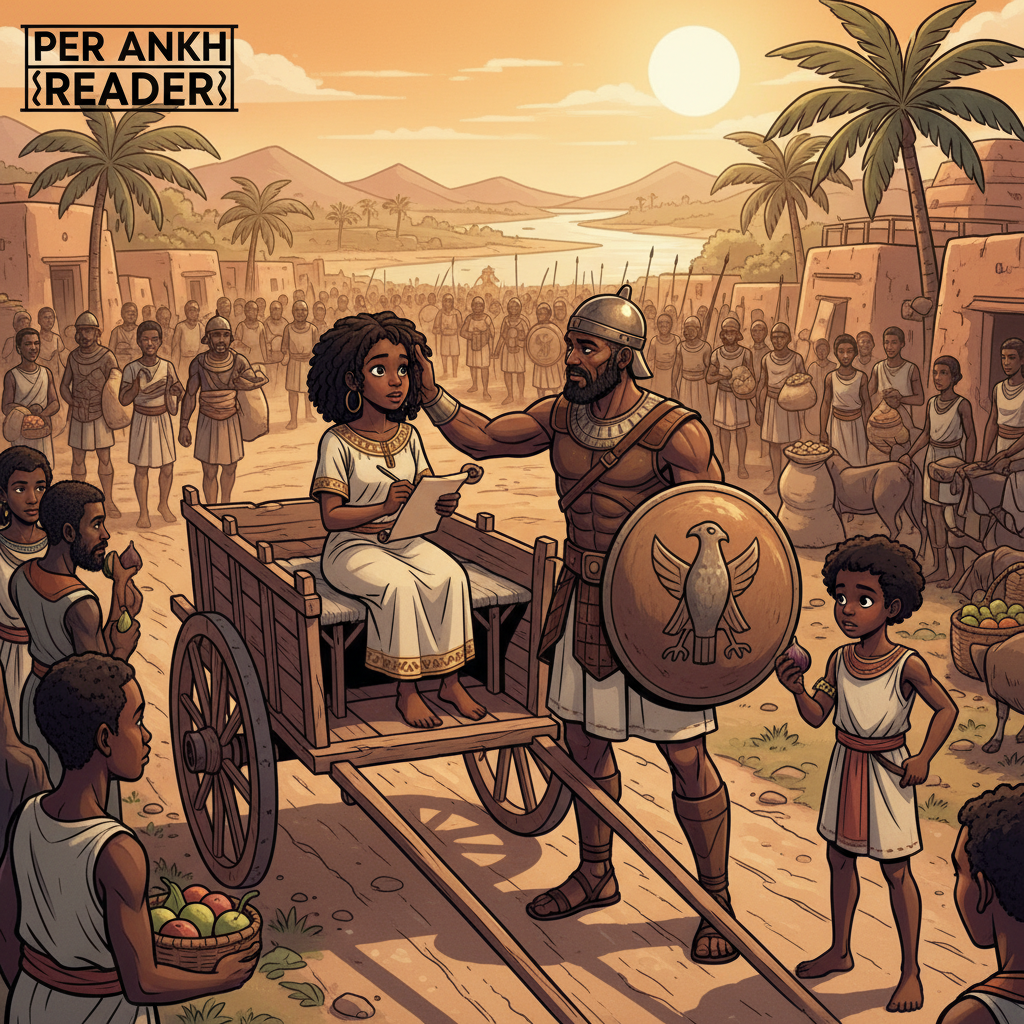
At each village, Taharqa sent representatives ahead to assure the people that the army came as protectors, not conquerors. No crops were seized. No livestock was taken without fair trade. This was Taharqa's iron law: the army of maat does not create isfet in its wake. A soldier who stole from his own people was no better than the enemy he marched against. Abar recorded two incidents where soldiers were disciplined for taking fruit from a farmer's grove without payment. Taharqa ordered them to pay double and apologize publicly. "Why does he care about a few figs?" a young soldier muttered near Abar's wagon. An older warrior cuffed him gently on the back of the head. "Because those figs belong to someone. Because maat does not stop at the camp boundary. Because if we cannot govern ourselves, we have no right to defend others." Abar wrote that exchange down too. The older warrior's words struck her as something worth preserving — truth spoken not by a pharaoh but by an ordinary man who understood what they fought for.
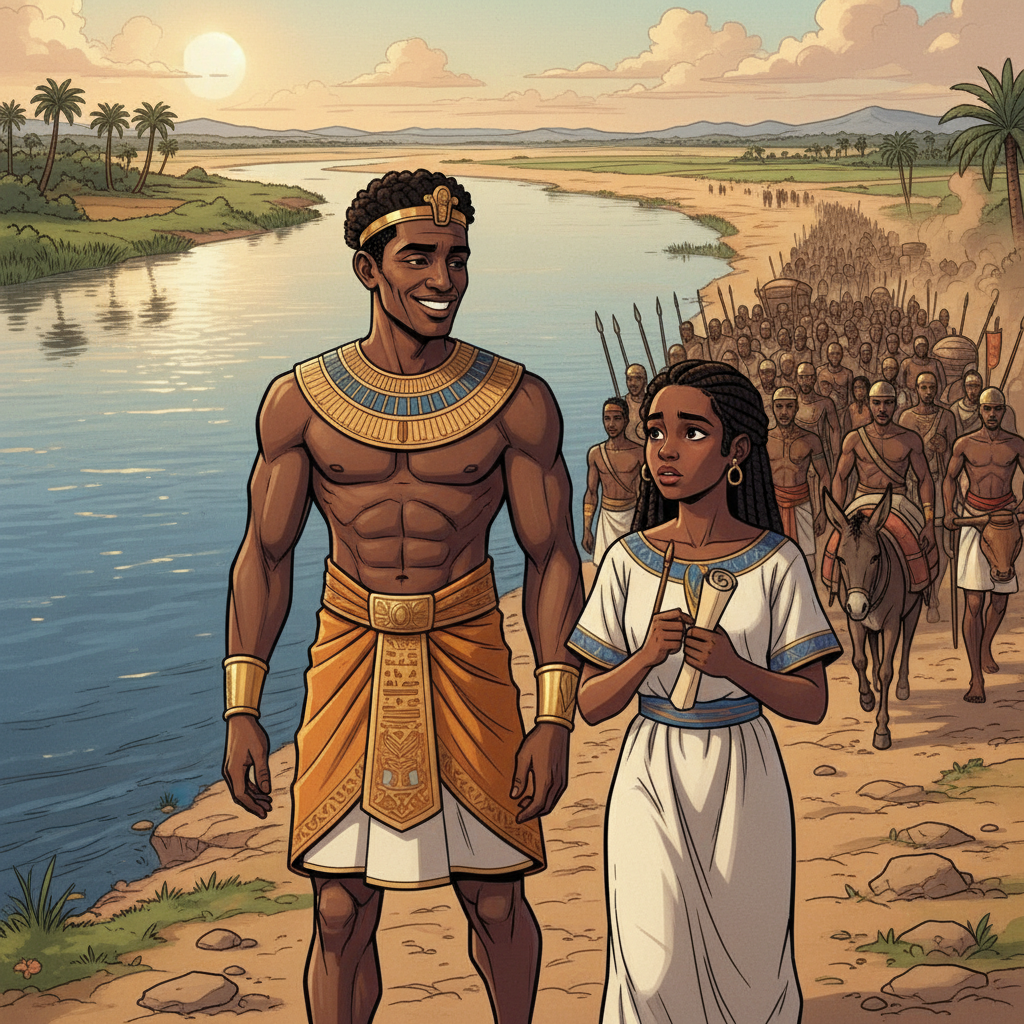
On the fifth day of the march, Taharqa summoned Abar to walk beside him at the head of the column. The Nile stretched wide and calm to their left, and ahead the valley began to open into the broader floodplain of Lower Kemet. Abar was nervous. She had spoken with her uncle many times in private, but walking beside the pharaoh in full view of the army felt different. Every eye was on them. "You have been writing constantly," Taharqa observed. "Good. But tell me — what have you learned that you did not know before?" Abar thought carefully before answering. "I have learned that an army is not just warriors. It is bakers and healers and blacksmiths and scouts. It is supply lines and water sources and the mood of the men after a long day's march." Taharqa smiled, and the expression transformed his stern face. "You are learning to see beneath the surface. That is the ka of a true scribe — not the hand that writes but the spirit that perceives. Anyone can record what happens. The great scribes record why it matters."
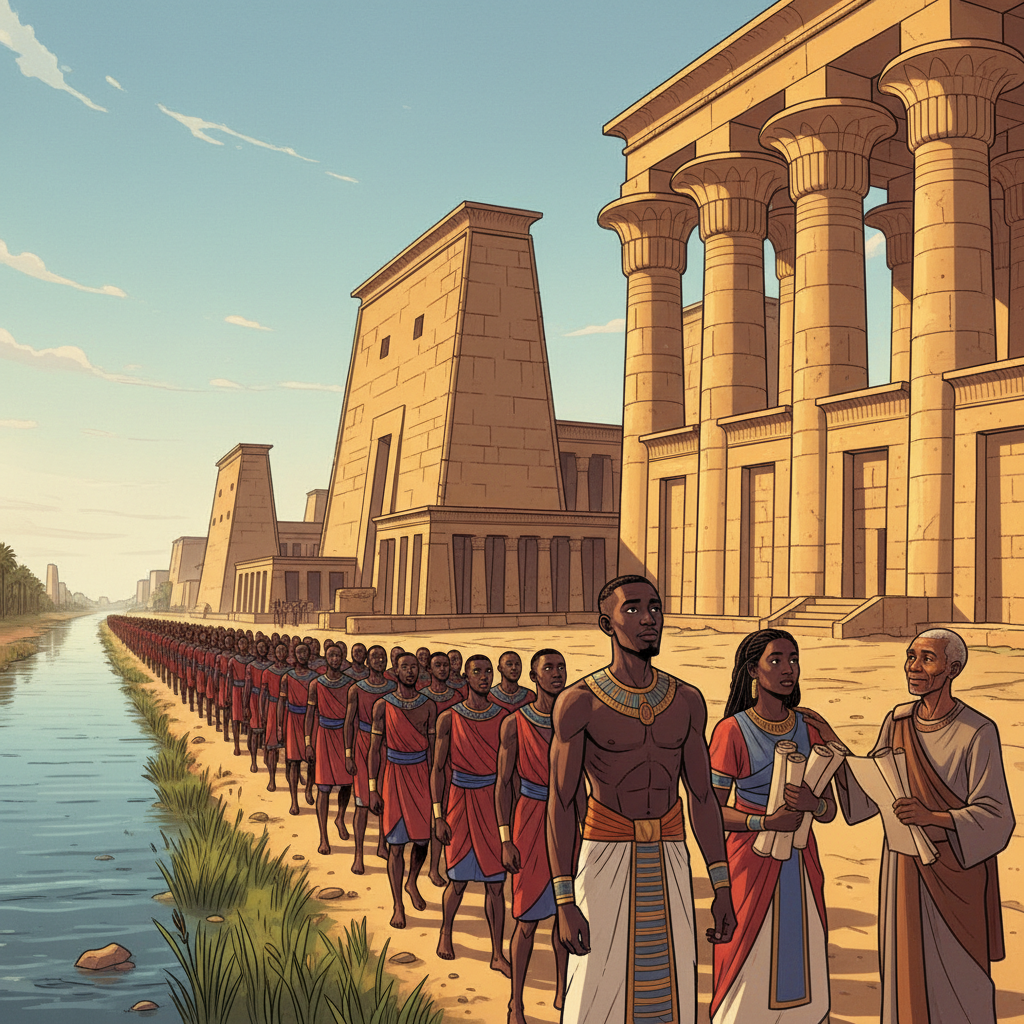
They passed the ancient city of Waset on the seventh day. Its great temples rose from the eastern bank like mountains built by human hands. The columns of Karnak caught the morning light and blazed gold. Taharqa ordered a brief halt so the army could pay respects at the temple of Amun. He entered alone, his ebony skin disappearing into the cool shadows between the massive pillars. When he emerged, his face was composed but his eyes were bright, as if he had seen something within those sacred walls that renewed his purpose. Abar used the halt to resupply her writing materials. She had already filled seven papyrus scrolls, and the march was not yet half complete. A temple scribe, an elderly man with deep brown skin weathered by decades of sun, gave her fresh papyrus and new reed pens. "You are recording the pharaoh's campaign?" he asked. Abar nodded. The old scribe touched her shoulder gently. "Then write true, child. The neter of writing, Djehuti himself, watches over those who serve the truth. A false word on papyrus is worse than a sword thrust, for a wound heals but a lie endures forever."
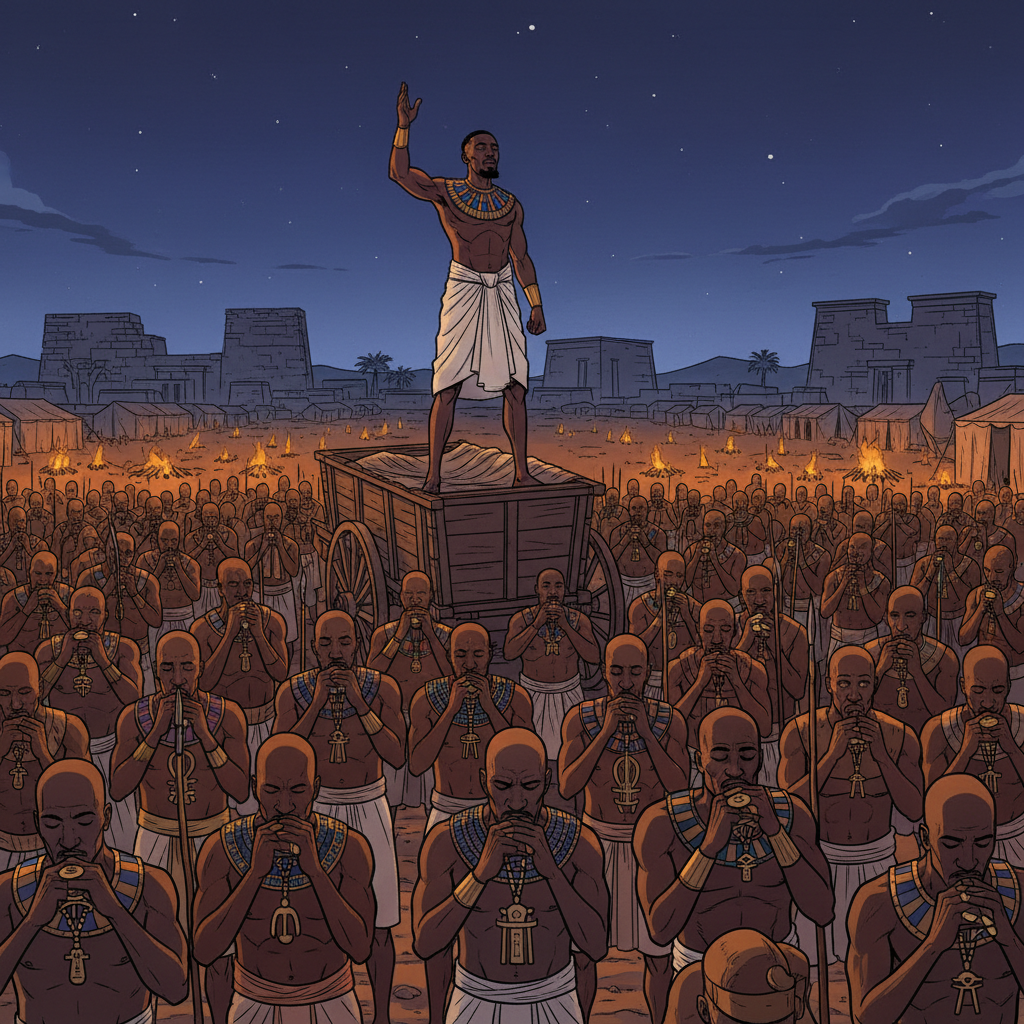
North of Waset, the character of the army changed. Word of the Assyrian advance had spread, and the reality of what lay ahead settled over the column like dust. Soldiers who had marched with songs and jokes grew quieter. Abar noticed that many warriors touched their amulets more frequently — small djed pillars, Eye of Horus pendants, carved scarabs pressed to lips in silent prayer. Fear was not weakness. Fear was the honest response of the ka to the approach of danger. What mattered was what you did with that fear. Taharqa addressed the army that evening from atop a supply wagon. His deep voice carried across the camp in the still air. "I will not lie to you. The Assyrians are fierce. They have iron where we have bronze. They have numbers where we have fewer. But they march into a land they do not understand, to fight a people they have never faced. We are the children of the Nile — Kush and Kemet, one people, one river, one purpose. Isfet comes wearing Assyrian armor, but it is the same isfet that has always threatened maat. And maat has always endured."
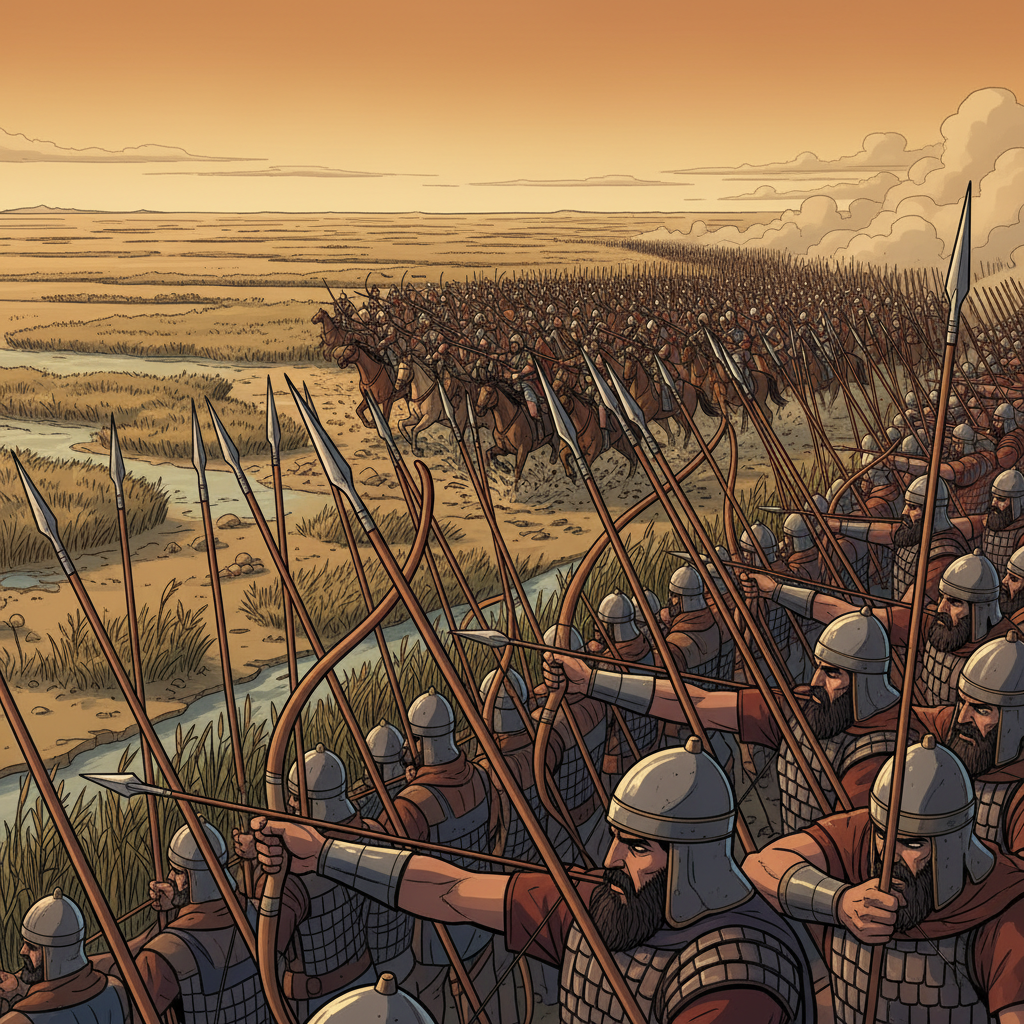
The scouts brought detailed reports as the army entered the delta region. The Assyrian force was larger than expected — King Esarhaddon had committed his finest troops, veterans of campaigns across Mesopotamia. They moved in disciplined formations, their iron-tipped spears glinting in the sun like a forest of deadly reeds. Their archers used composite bows with a range that matched or exceeded the Medjay longbows. And they brought something the armies of the Nile had rarely faced: mounted cavalry, warriors on horseback who could strike and withdraw faster than any chariot. Abar recorded the scout reports with clinical precision, fighting to keep her hand steady. The numbers were daunting. But she also recorded the scouts' observations about Assyrian weaknesses: their supply lines were stretched thin across unfamiliar territory, their horses struggled in the soft delta soil, and their soldiers, though disciplined, showed signs of unease in this strange flat land of canals and marshes where the horizon seemed to dissolve into water and sky.
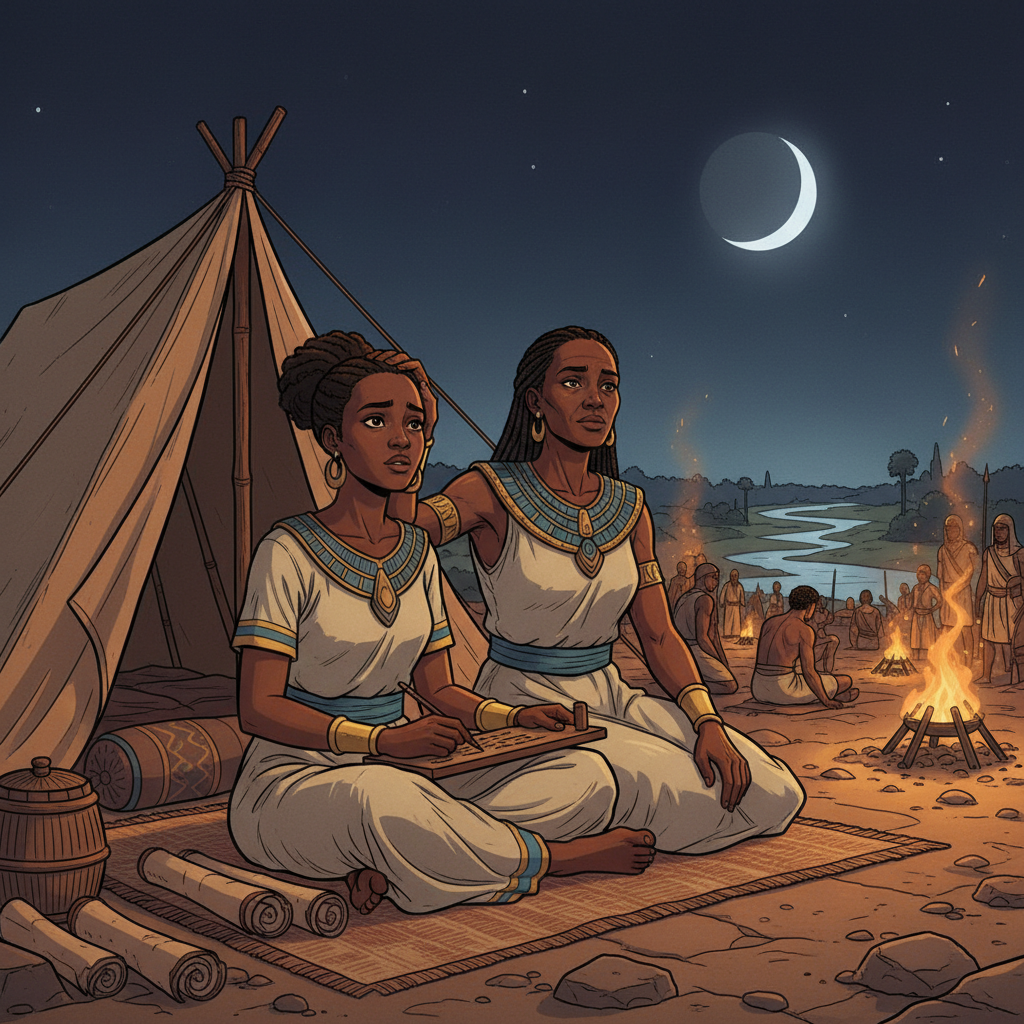
The night before the battle, Abar could not sleep. She sat outside her small tent, her writing board on her knees, and tried to organize her scrolls. The camp was quieter than usual but not silent. She could hear the low murmur of prayers, the soft clink of weapons being sharpened, the occasional whinny of a horse. A half-moon hung over the Nile, painting the water silver. Takhat, the Medjay commander, found her there. The warrior woman sat down beside Abar without asking permission. Her dark face was calm, but her eyes held a distant look. "Cannot sleep?" Takhat asked. Abar shook her head. "I keep thinking about tomorrow. What if I cannot write fast enough? What if I miss something important?" Takhat was quiet for a moment. "You will miss things. Every warrior misses things in battle. The world moves too fast for any one pair of eyes. But you will capture what you can, and what you capture will be true. That is enough." She placed her hand briefly on Abar's head. "The ancestors see what we miss. Your job is to record what the living can see."
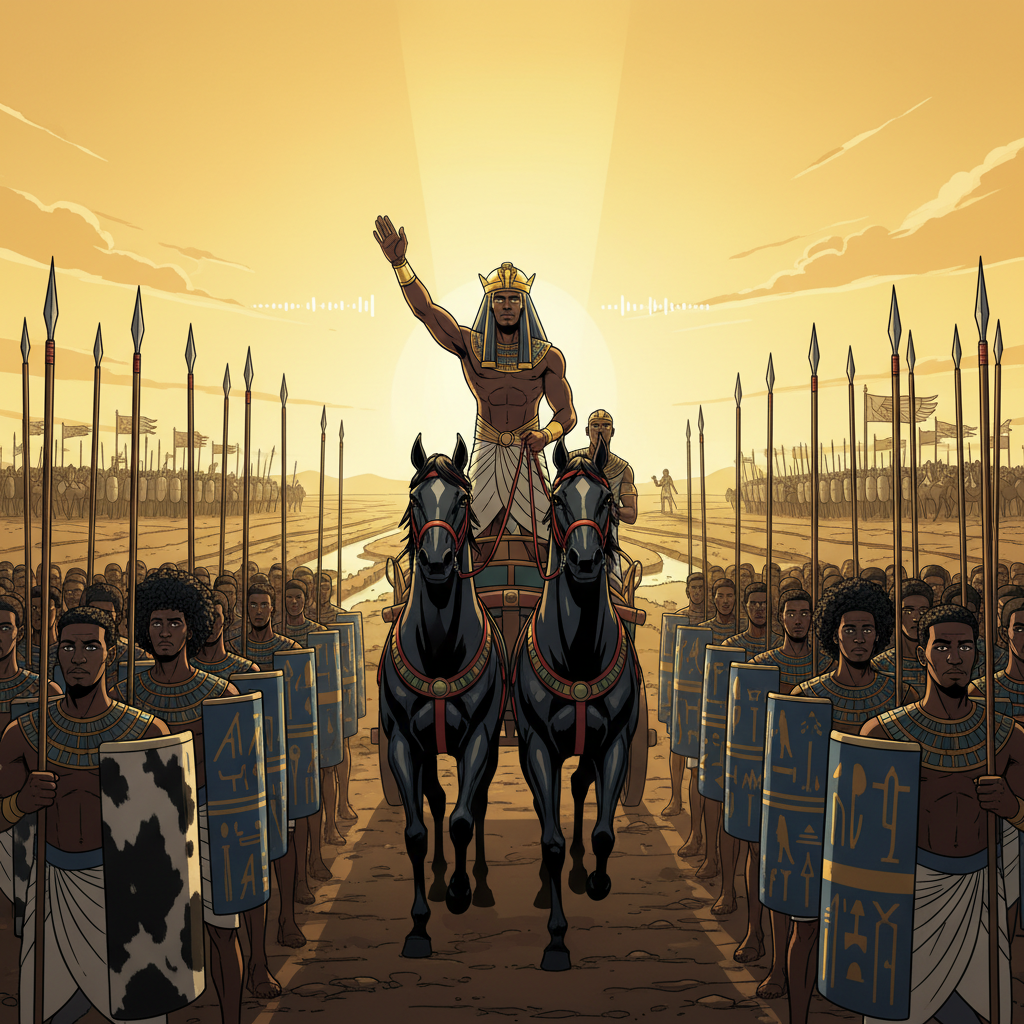
Dawn came like a blade of gold across the eastern sky. The two armies faced each other across a stretch of delta farmland bordered by irrigation canals. The Assyrians had formed their battle line during the night — a wall of shields and iron-tipped spears stretching across the firm ground, with cavalry on both wings. Their war standards, bearing the image of the winged bull of Ashur, snapped in the morning breeze. The sound of their war chants drifted across the field, harsh and rhythmic. Taharqa sat in his chariot at the center of the Kemetic line, his golden war crown catching the first rays of sunlight. His charioteer held the reins of two magnificent horses whose dark coats had been oiled until they shone. On either side of the pharaoh, the infantry of Kush and Kemet stood shoulder to shoulder — Kushite spearmen with their tall cowhide shields beside Kemetic soldiers carrying the rectangular shields of the northern tradition. Behind them, arranged in a crescent along the canal banks, the Medjay archers waited with arrows already nocked. Abar had positioned herself on a low rise behind the lines, where she could see the entire field.
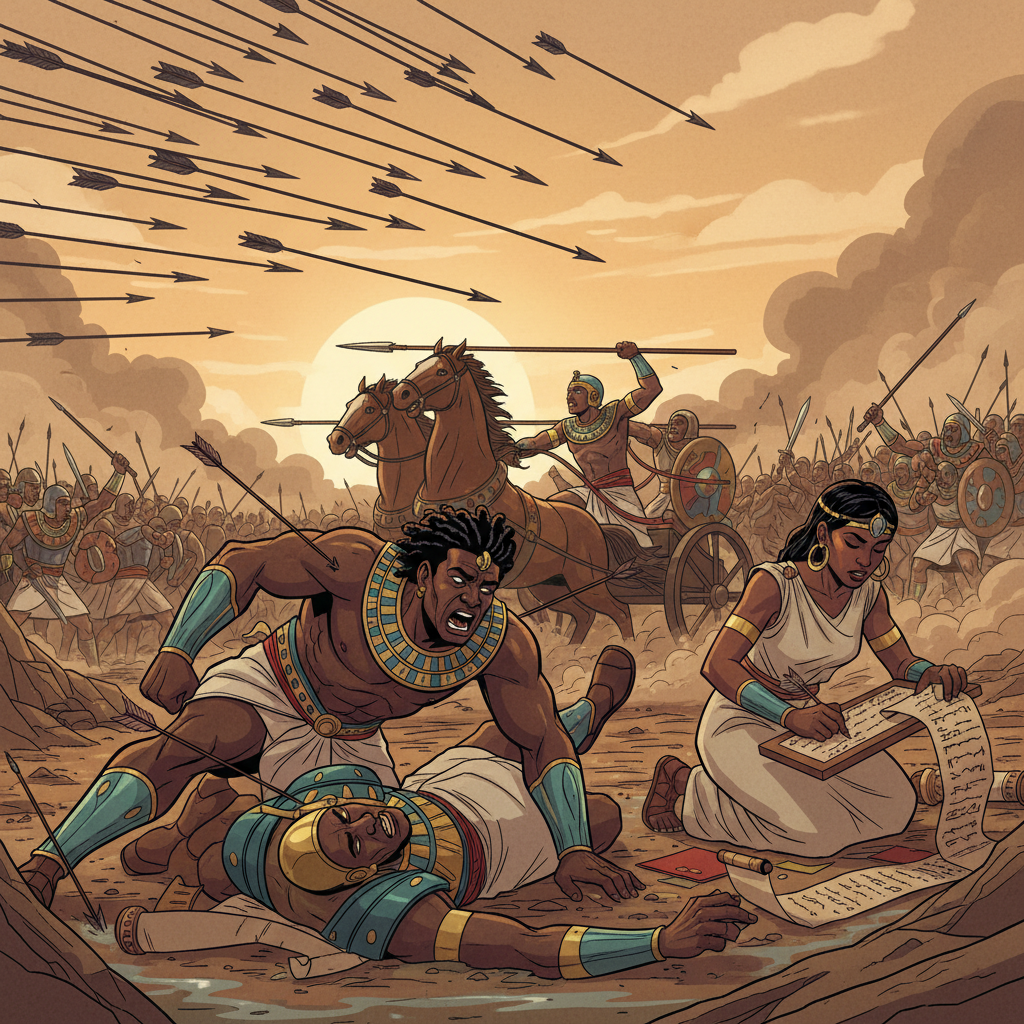
The battle began not with a charge but with a sound — a sound Abar would never forget and would struggle for years to describe on papyrus. It was the combined roar of forty thousand voices from both armies, a sound that seemed to come from the earth itself, vibrating through her bones. Then the Assyrian infantry advanced, their iron-shod sandals striking the ground in unison, and the arrows began to fly. The Medjay let loose first, their long shafts arcing high over the Kemetic line and falling like dark rain upon the Assyrian shields. The Assyrians returned fire, and Abar saw warriors fall on both sides, clutching at shafts buried in shields and flesh. The lines crashed together with a sound of bronze on iron, wood splintering, men shouting. Taharqa drove his chariot forward into the thickest fighting, his spear striking with terrible precision. Abar's hand moved across the papyrus in desperate strokes, her hieroglyphs rougher than any she had ever written. She recorded what she could — the surging of the Kushite spearmen against the Assyrian center, the Medjay arrows finding gaps in the enemy formation, the screams of wounded horses and the hoarse commands of officers trying to maintain order in the chaos.
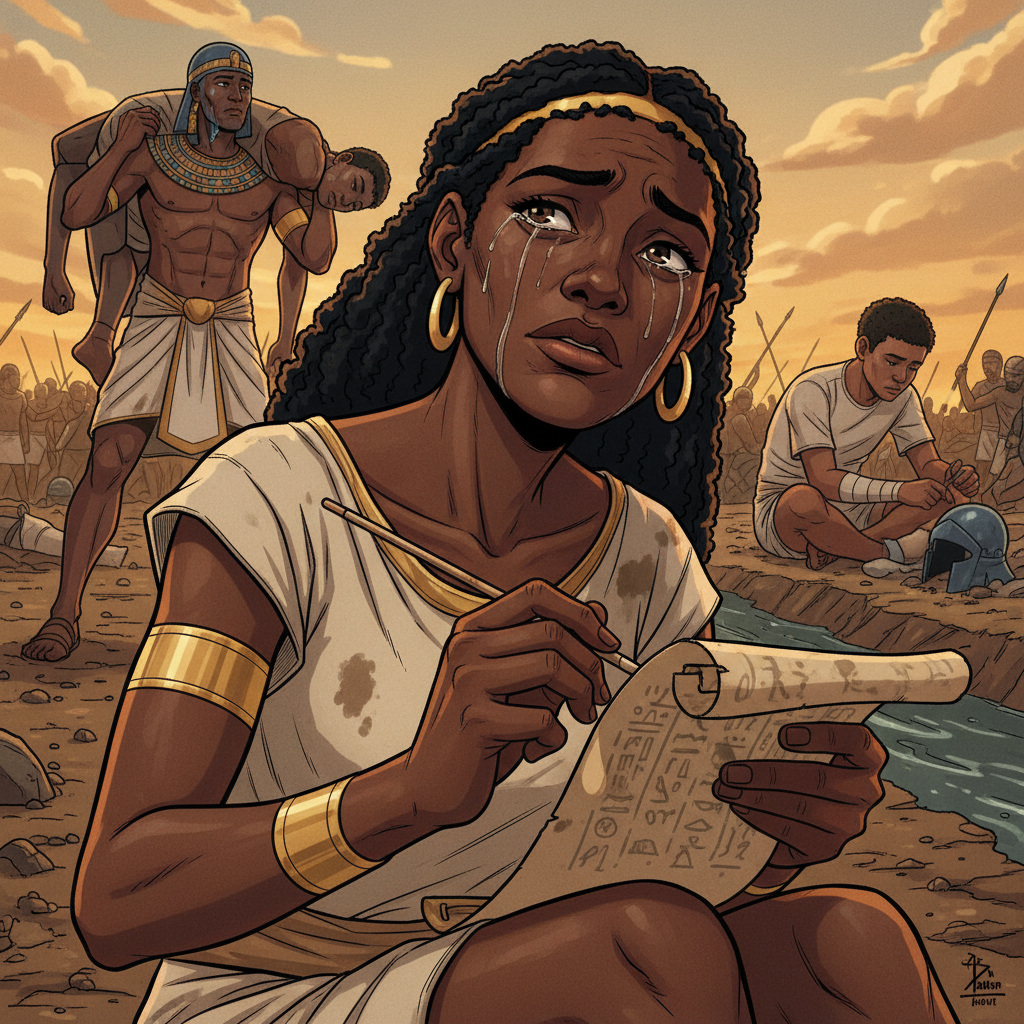
The battle swayed back and forth for hours. The Assyrian cavalry charged the left flank, and for a terrible moment Abar thought the line would break. Kushite spearmen went down under the hooves, their shields trampled. But Takhat had anticipated this. She shifted her Medjay archers to concentrate fire on the cavalry, and the rain of arrows turned the charge into a staggering retreat. Horses screamed and fell, throwing their riders into the mud. Abar saw things she wished she could unsee. A young Kemetic soldier, no older than herself, dragged back from the front line with a wound that made her stomach clench. A Kushite warrior carrying his fallen friend over his shoulders while arrows hissed past them. An Assyrian soldier lying face down in the canal, the water turning dark around him. She wrote through her tears, the papyrus spotted with drops that blurred some of her hieroglyphs. She understood now what Taharqa meant when he said that defending maat was not glorious. It was necessary. It was terrible. And someone had to witness it so the truth would survive.
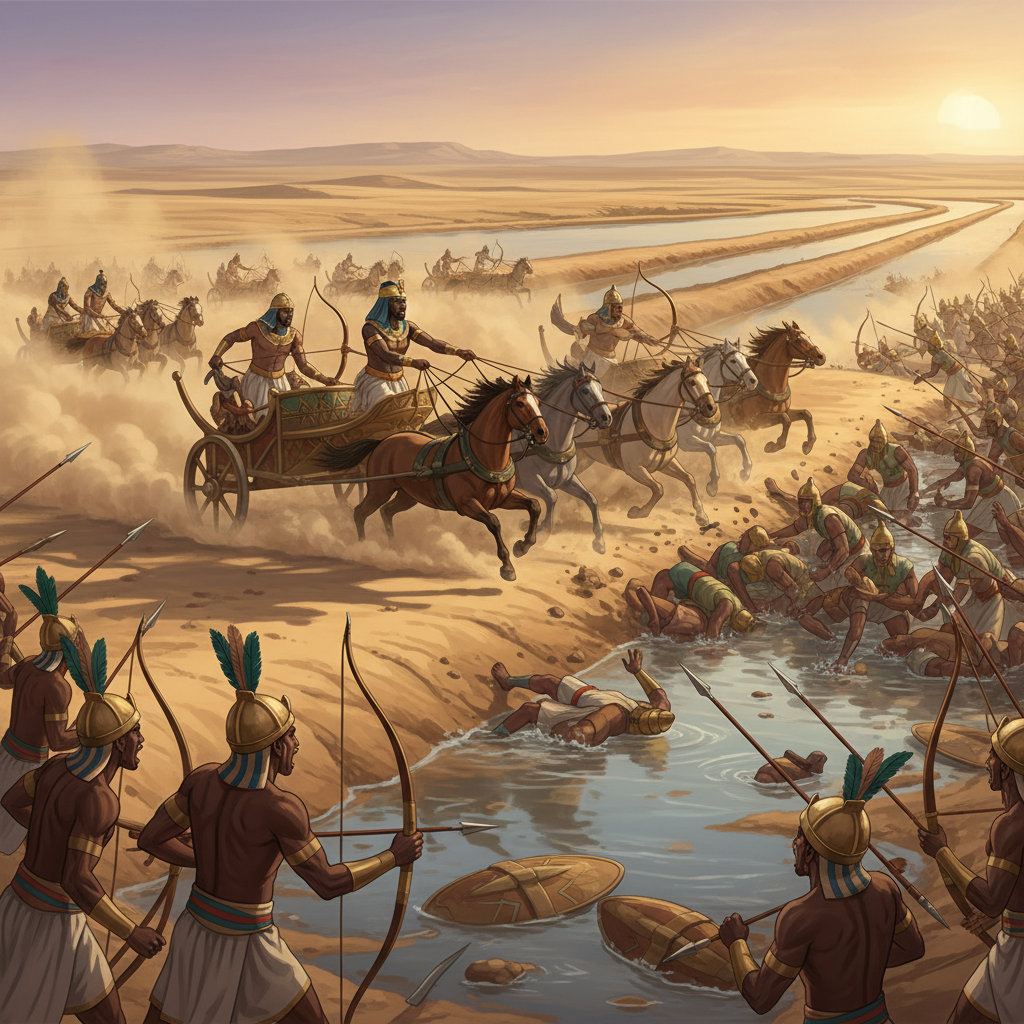
The turning point came in the afternoon. Taharqa had held his chariot reserve in check all morning, and the Assyrians, pressing forward, had extended their lines too far. The canals on either side funneled their formations into a narrowing front, just as Taharqa had planned. When the Assyrian center was fully committed and their cavalry bogged down in the soft ground near the marshes, Taharqa gave the signal. Twenty chariots burst from concealment behind a low ridge and struck the Assyrian right flank like a thunderbolt. The effect was devastating. The Assyrian right buckled, then broke. Soldiers who had never retreated before stumbled backward into their own comrades. The Kushite spearmen pressed forward with renewed fury, their war cry — a deep, rhythmic chant that echoed the drumbeats of Napata — rolling across the field. The Medjay poured arrows into the gaps that opened in the Assyrian formation. By sunset, Esarhaddon's army was in full retreat, streaming eastward across the delta toward the border. Taharqa did not pursue. He ordered his army to hold its ground and tend to the wounded, both his own and the Assyrian soldiers left behind.
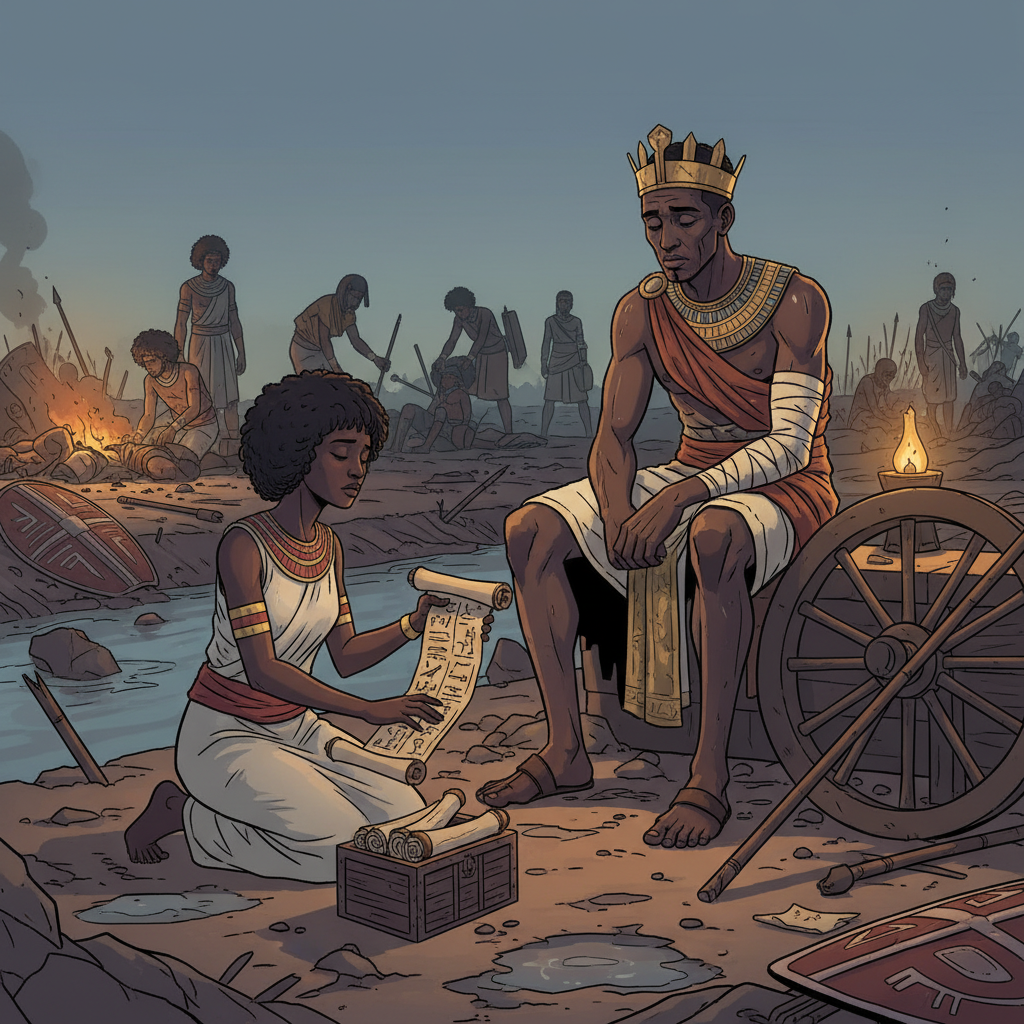
Abar found Taharqa after the battle, sitting alone on an overturned chariot beside the canal. His war crown was dented, and there was a bandaged cut across his left forearm where an Assyrian blade had found a gap in his armor. His ebony face was streaked with dust and sweat, and his eyes held the hollow look of a man who has seen too much death in a single day. He did not look like a victorious pharaoh. He looked exhausted and sorrowful. "How many?" he asked when he saw Abar. She consulted her scrolls with shaking hands. The numbers were still being tallied, but the losses were significant. Hundreds of warriors from both Kush and Kemet would not return to their families. Taharqa closed his eyes. "Record their names," he said quietly. "Every name we can recover. They did not die for my glory, Abar. They died because maat demanded defenders, and they answered. The least we owe them is to remember who they were." That night, by lamplight, Abar began the long work of recording the names of the fallen.
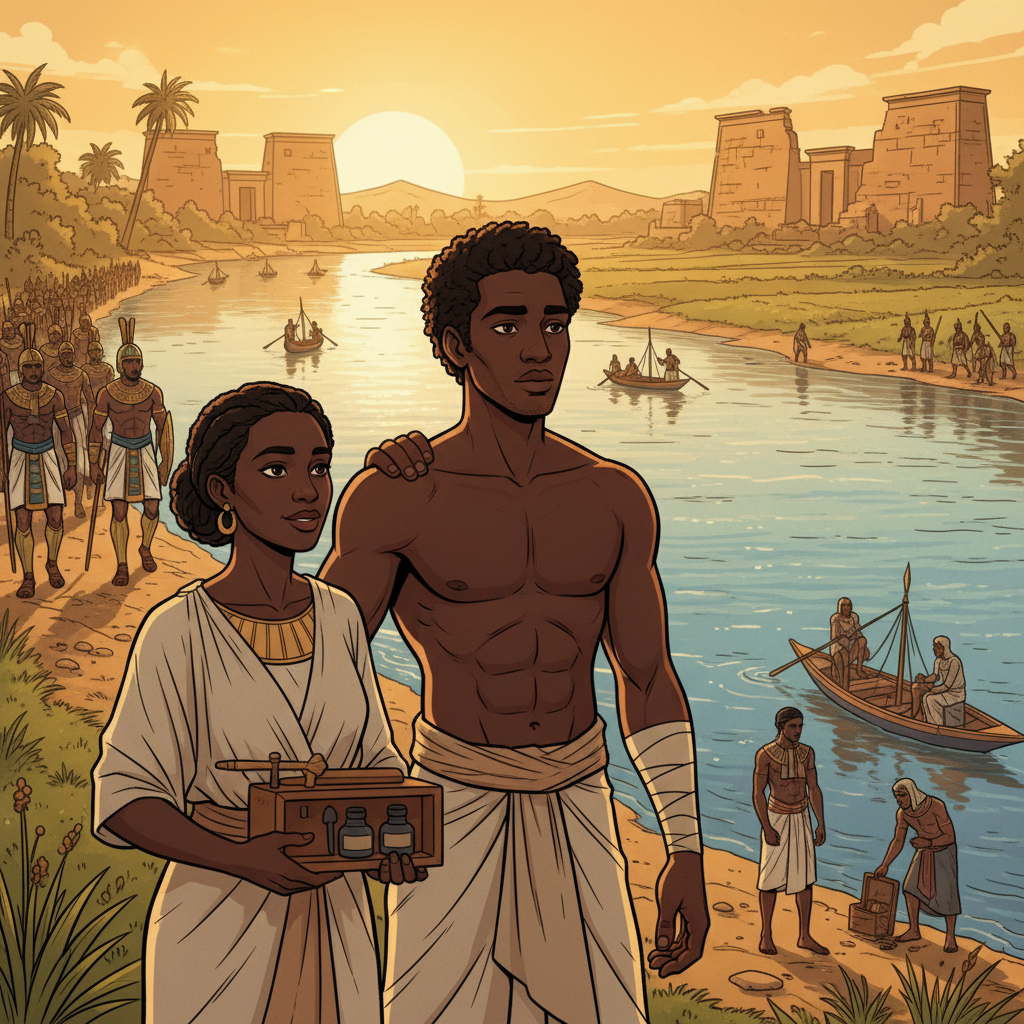
Three days after the battle, as the army began its slow march south toward home, Taharqa walked with Abar along the bank of the Nile. The river flowed on as it always had, unchanged by the violence that had scarred its shores. Fishermen were already back on the water. Farmers were already assessing their trampled fields. Life continued, because maat endured. This was the Nile's ancient lesson — that the river of truth flows on even when storms rage upon its surface. "You recorded everything," Taharqa said, and it was not a question. Abar nodded. "The victories and the losses. The courage and the fear. The strategy and the chaos." Taharqa placed his broad, dark hand on her shoulder. "Good. Because in a hundred years, no one alive today will remain. In a thousand years, even these temples may crumble. But the words of a truthful scribe outlast stone. You have fought your own battle these past weeks, Abar — not with spear or bow, but with reed and ink. And your battle may matter more than mine."
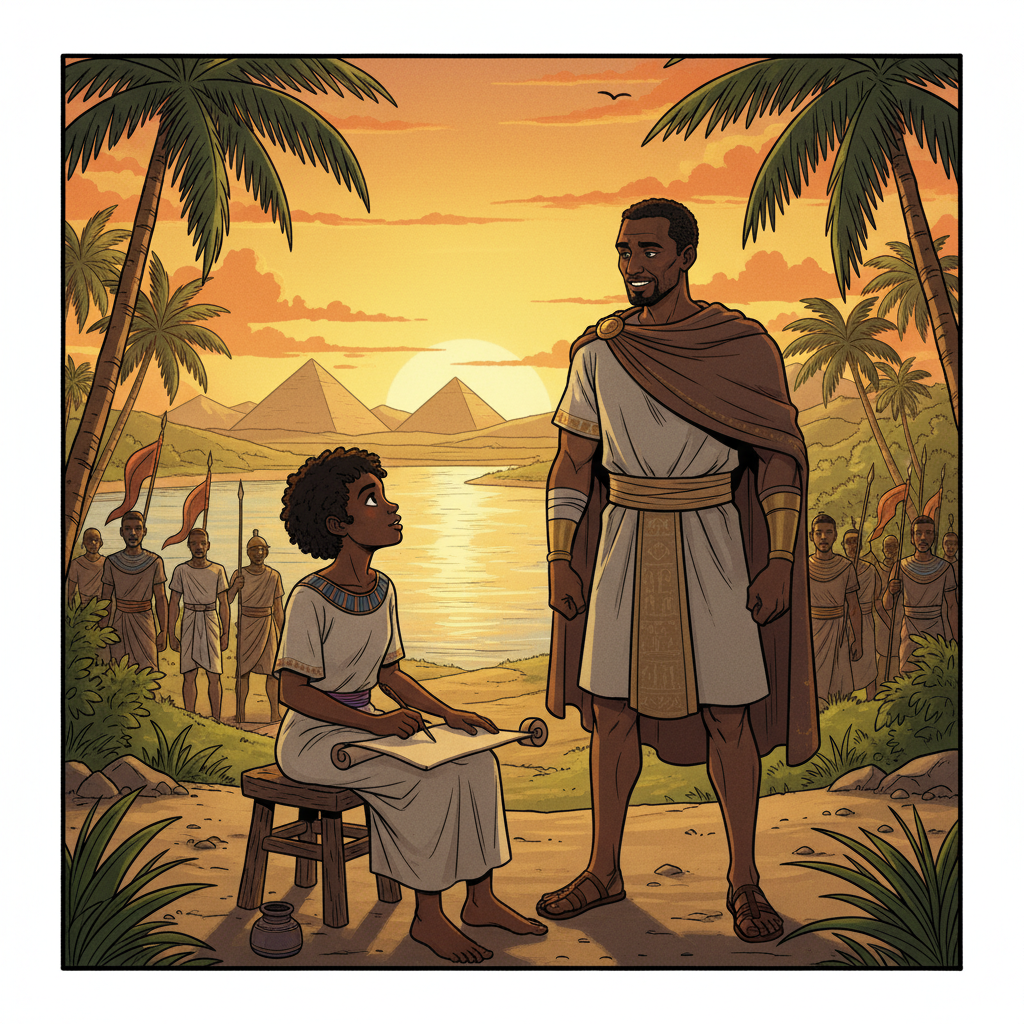
Abar looked up at her uncle, this tall man with skin like polished night and eyes that had seen both the glory and the grief of defending what was right. She understood now why he had allowed her to come. It was not a kindness or a favor to a persistent niece. It was a mission. The warriors defended the Nile with their bodies. The pharaoh defended it with his wisdom and will. But the scribe defended it across time itself, carrying the truth forward into futures that no warrior or king would live to see. "The scribe's reed is as mighty as the warrior's spear," Taharqa said, echoing the words he had spoken to her once before, but now they carried the weight of everything she had witnessed. "For without truth, victories are forgotten and sacrifices become meaningless. Kush and Kemet stood together today, one people beside the same Nile, defending maat against isfet. If your words survive, that truth survives. And as long as that truth survives, no force on earth can truly divide the children of the Nile." Abar dipped her reed pen in fresh ink and began to write.