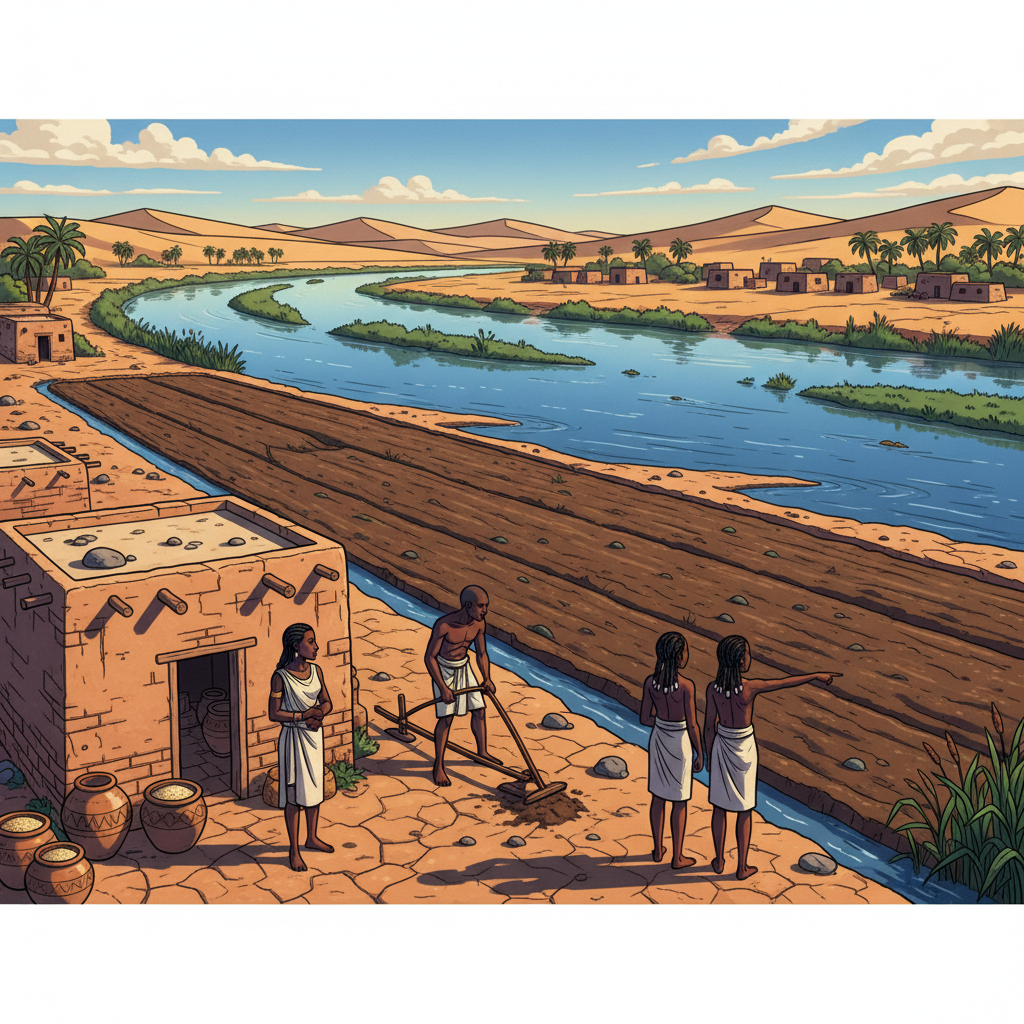
Mut was eight years old and lived in a small mud-brick house at the edge of the Nile. Her skin was deep brown, the color of the wet silt that the river left behind every year. Her hair was in three thick braids tied at the ends with small bits of white shell. Her family was Henutmut her mother, who kept the grain-store at the back of the house, and her father Khaemwaset, who farmed the long thin field that ran from their doorway down to the riverbank. Mut also had Tia, her older cousin who was fourteen and lived in the next house over with Mut's aunt and uncle. Tia had been teaching Mut, all summer, how to read the river.
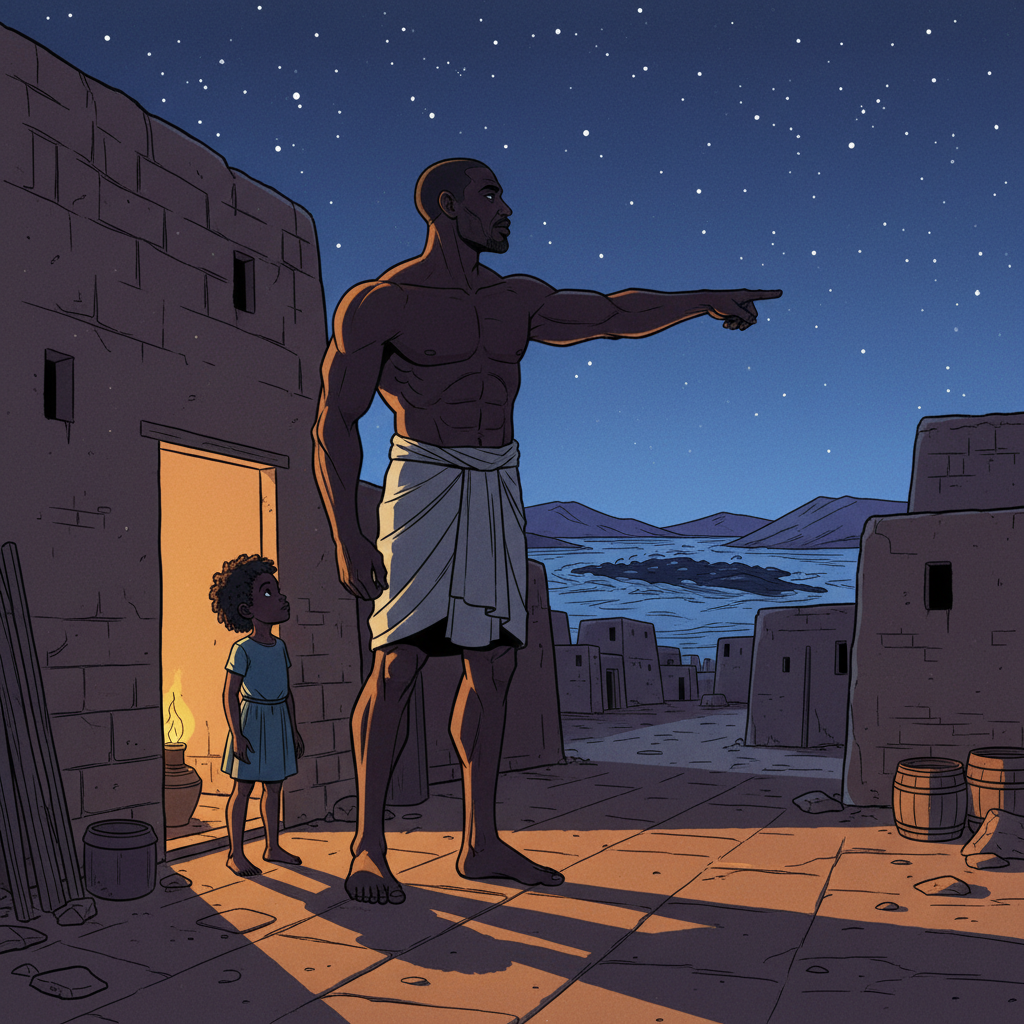
Reading the river meant knowing what the water was doing without having to ask anyone. The Nile had a name. It was not just water. The teacher Diop, in books that would not be written for thousands of years, would say that the oldest fathers of Kemet knew the river had a name and a mood. Mut's father said the same thing every morning before he walked down to the field: "The river is rising. The river is patient. We will be patient too." The river was rising right now because it was Akhet — the season of the flood. Every summer, far to the south where the river was born, great rains fell on the Ethiopian highlands and on the lakes of the African interior — the Mountains of the Moon, her father called them — the African origin-place of the Nile, mountains Mut had never seen but knew by name from her father's evening stories. The rains came north as a flood. The flood reached Mut's village in the middle of summer and lasted until the early fall.
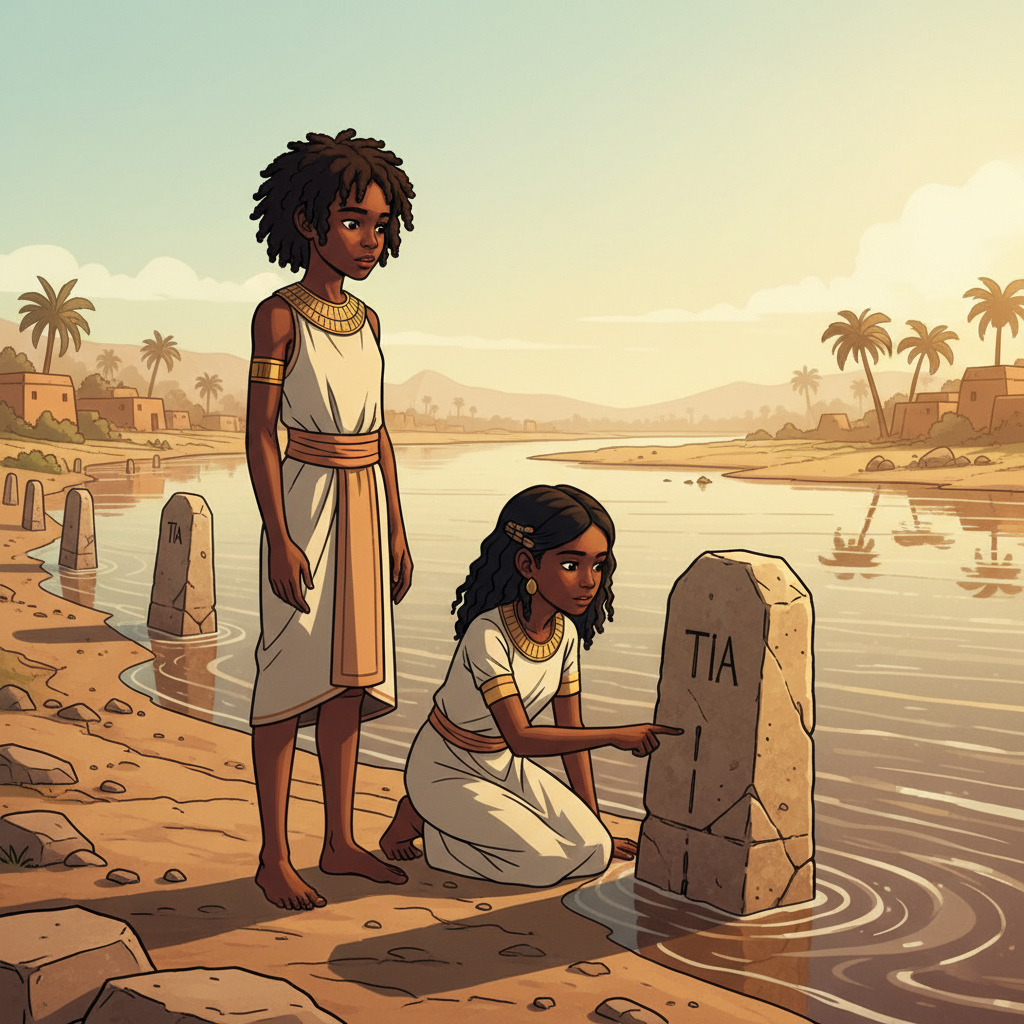
On a hot morning in the first week of Akhet, Mut walked down to the riverbank with Tia. The flood was just starting. The water that yesterday had been low and green was today darker and higher, climbing slowly up the bank toward the marker-stones the farmers had set. Each marker-stone was a flat slab of limestone with notches cut into its side. The notches told the farmers, from the height of the water against the stone, exactly how deep the silt would be in their fields when the flood pulled back. Tia knelt at the largest marker-stone and put her finger on the lowest notch. The water was just touching it. "See?" Tia said. "First notch. That means the flood is barely beginning. The good silt has not arrived yet. The river is just sweeping clean."
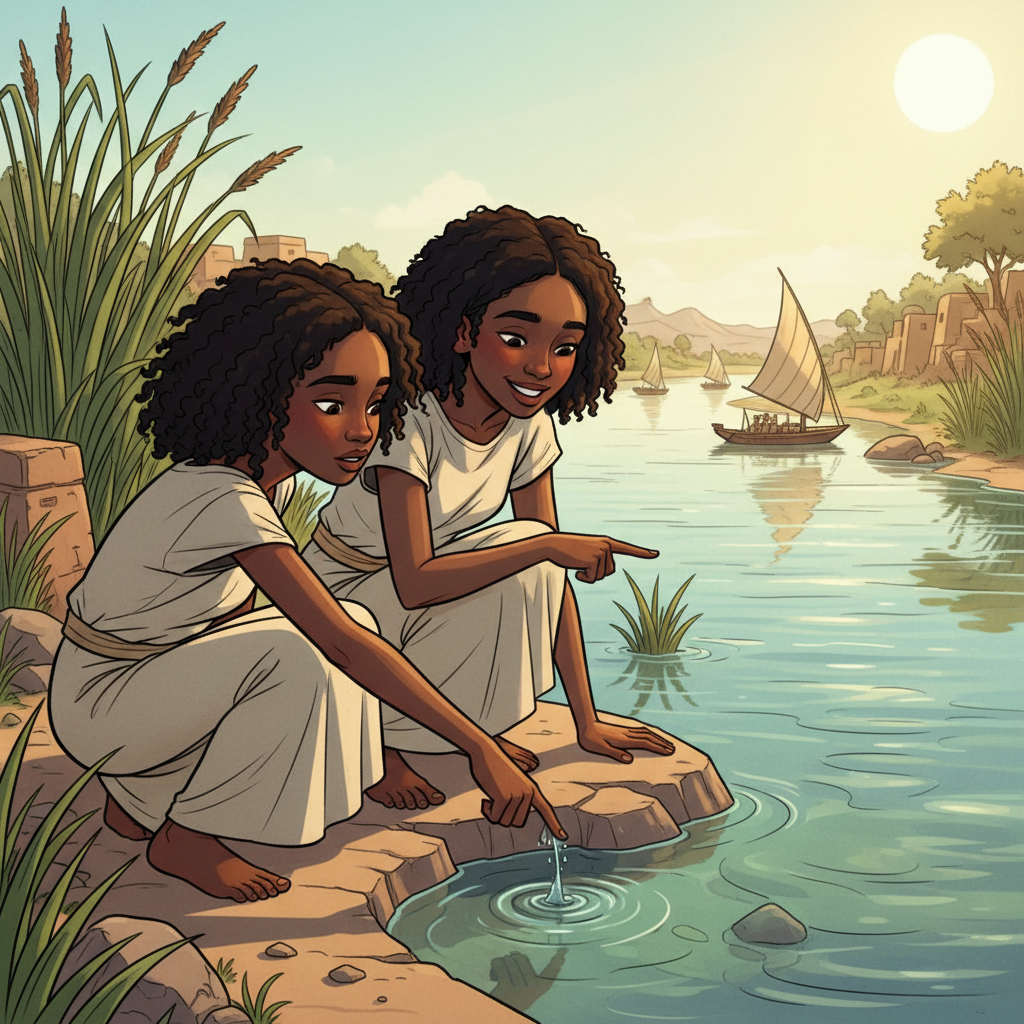
Mut crouched beside her cousin and put her own finger on the notch. The water was cold against her skin. "How do you know it is sweeping clean?" she asked. Tia smiled. "Because at the first notch the water is still green and clear. The brown silt comes later. The brown silt is the gift. The river is going to bring down rich soil from the mountains far in the south, and it will spread that soil across our fields, and that soil is what makes our barley and our emmer wheat and our flax grow. But not yet. Not at the first notch." She pulled her finger out of the water. "Anyone who plants now is planting in dirty water with no gift. The seed will rot."
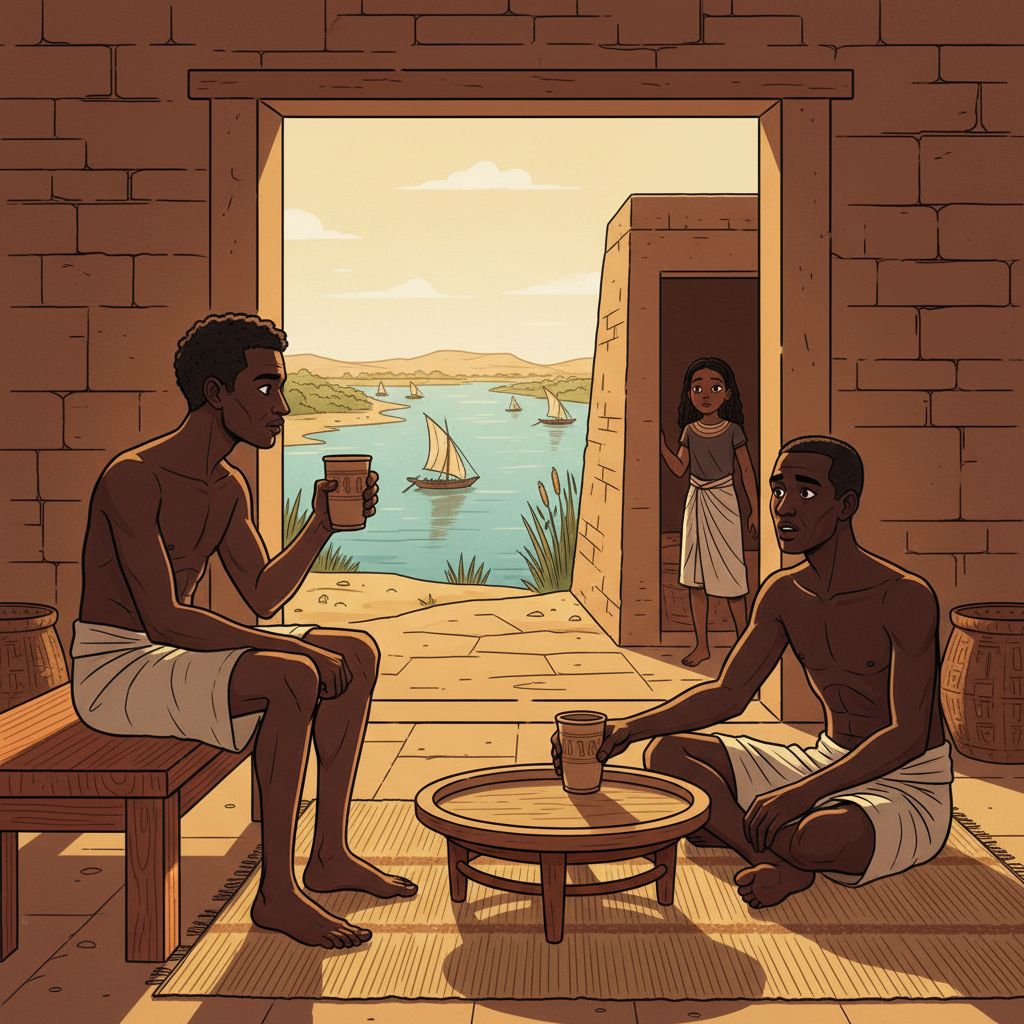
That afternoon Mut's uncle came to the house. His name was Senebkay, and he was Mut's father's younger brother, and he was an impatient man. Mut's mother had once said, quietly to Mut, that Uncle Senebkay had been impatient since he was a boy. He sat on the low cedar bench in the front room and drank a cup of barley beer and told Mut's father that he was going to plant his field tomorrow. "Tomorrow?" said Mut's father. He set down his own cup. "Senebkay, the water is at the first notch. There is no silt yet." Senebkay waved his hand. "I have a feeling about this year," he said. "The water is going to come up fast. If I plant tomorrow, I will be ahead of everyone. My field will sprout while the other fields are still soaked. I will sell my barley first."
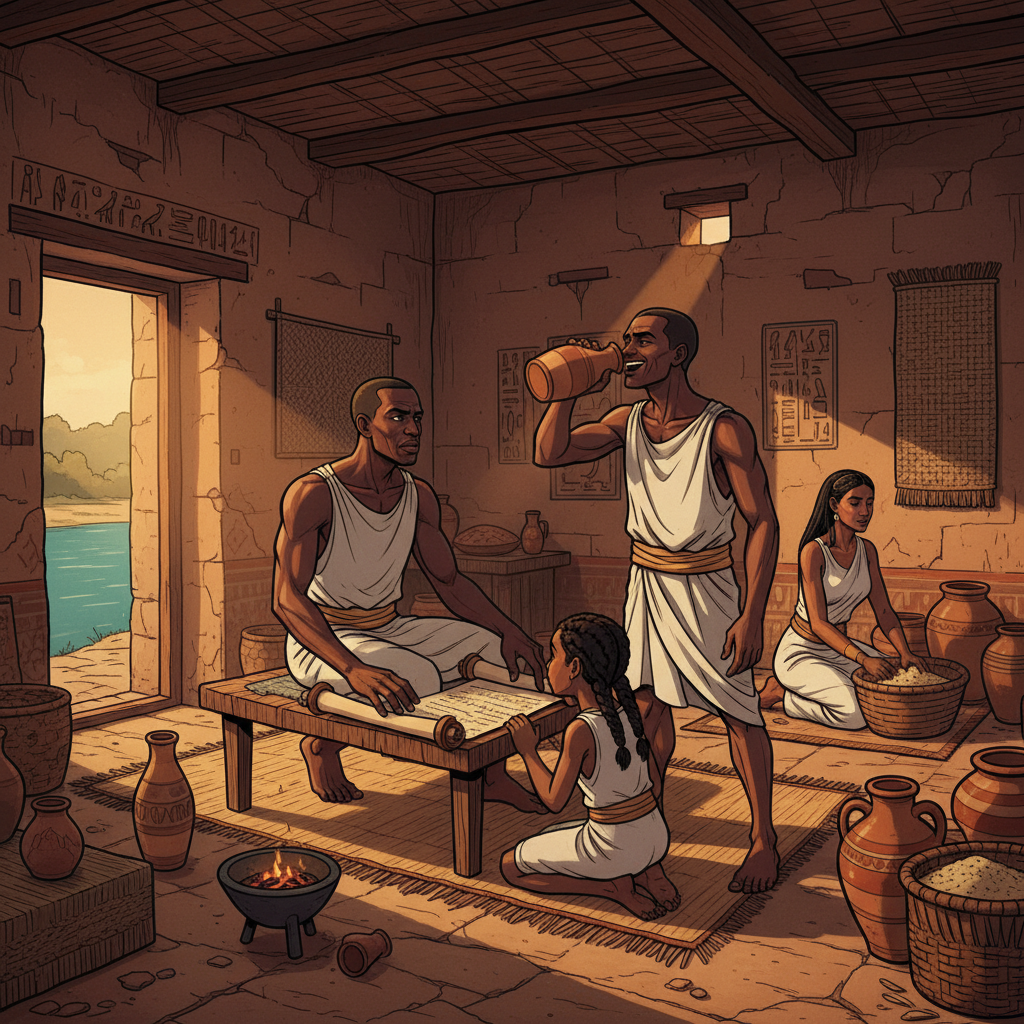
Mut sat on the floor beside the bench and listened. She did not speak. Her mother Henutmut was at the back of the room sorting the day's grain into clay jars. She did not look up but Mut could see that she was listening too. Her father Khaemwaset shook his head slowly. "Brother," he said, "the river has a mood. The mood is not yet ready. Wait for the second notch. Wait for the brown water. The silt will come." Senebkay laughed. "The river is just water, Khaemwaset. It is not a person. You can plant when you want. I will plant tomorrow." Mut's father did not argue. He only said: "We will see at harvest." Senebkay drank the rest of his beer and left. The front room was quiet for a moment after the door closed.

The next morning, before sunrise, Mut walked with her father down to the marker-stones. The water was a little higher than the day before, but still touching only the first notch. The water was still green. Mut's father knelt at the stone and put his bare palm flat against the wet silt at the river's edge. He held it there for a long moment. He turned to Mut. "Cold," he said. "Cold and clear. The mountains have just begun to send their snow-melt. The brown silt is two weeks away." He stood up. Mut copied him. She knelt and put her own small bare palm flat against the wet silt. It was cold against her hand. She could feel the slow steady pulse of the water beneath her fingers. She looked up at her father. She nodded.
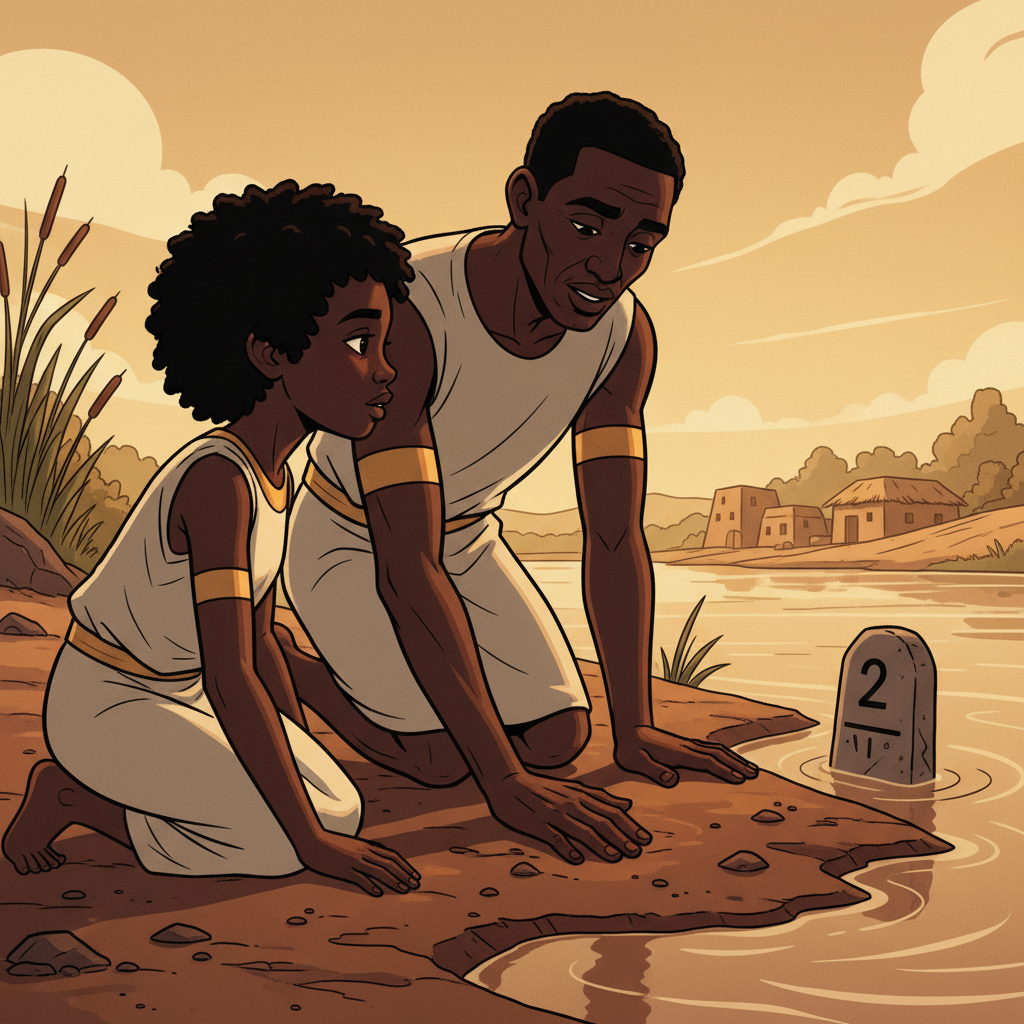
Two weeks later, the second notch was underwater. The water had turned the deep rich brown of milky tea. Mut's father walked down to the bank again with Mut beside him. He knelt at the stone. He put his palm flat against the silt where the water had just receded. He held it there. "Warm now," he said. "Warm and thick. This is the silt that has come down from the mountains. This is the silt the river has carried for a thousand miles. This is the gift." He turned to Mut. "Plant tomorrow." That evening Mut and her father and Henutmut and Tia and Tia's parents all worked together in the long thin field. They cast emmer-wheat seed across the wet silt. They cast barley seed. They cast flax seed for the linen.
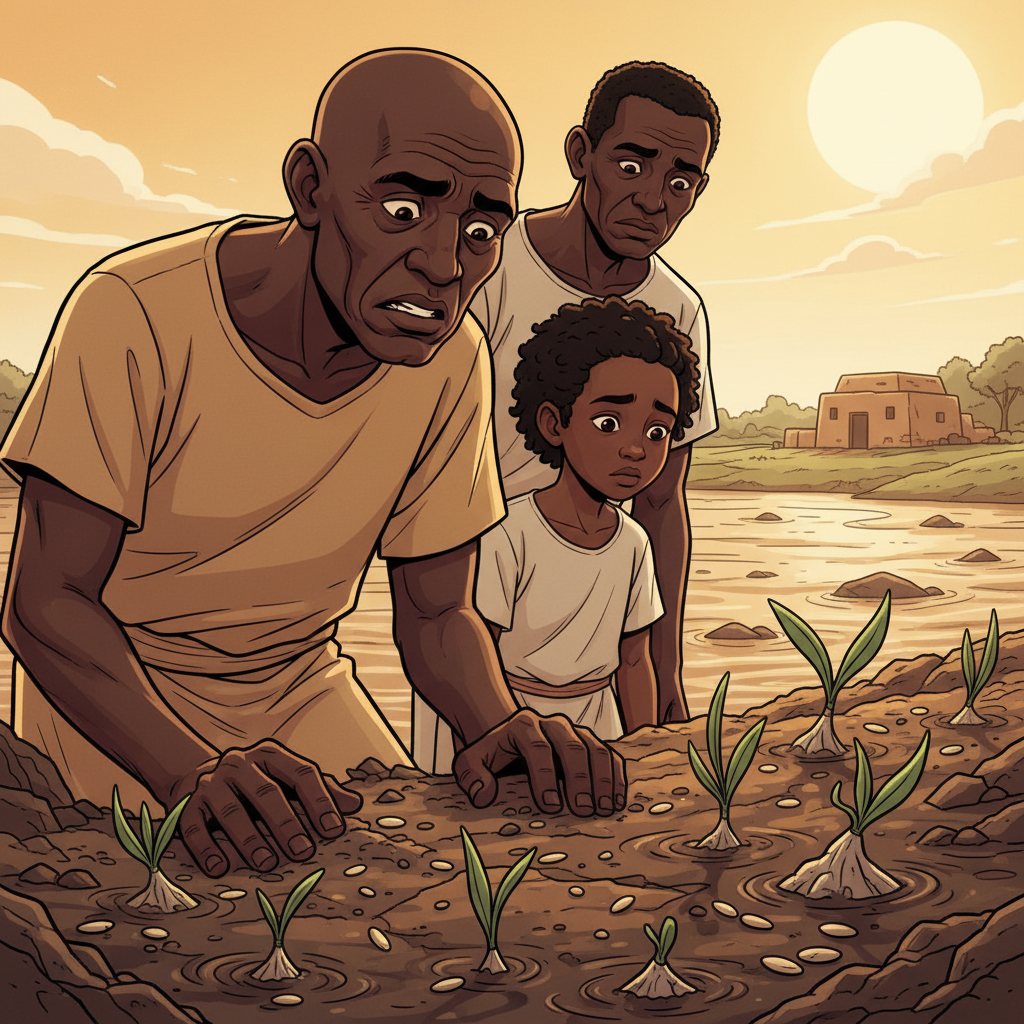
Across the river path, Uncle Senebkay's field had been planted two weeks earlier. Mut walked over to look at it the next morning. The seeds were still sitting in the muck. Some had begun to rot. A few had sprouted but the sprouts were thin and pale. Senebkay was at the edge of his field, frowning. "It is the early flood," he said when he saw Mut. "The water did not bring the right silt. It is a bad year. I will plant again. Half a crop is better than none." He cast a second round of seed. But the field had already been soaked too long. The new seed sat on top of the old rotted seed. Mut watched. She did not say anything. She could see what her father had seen.
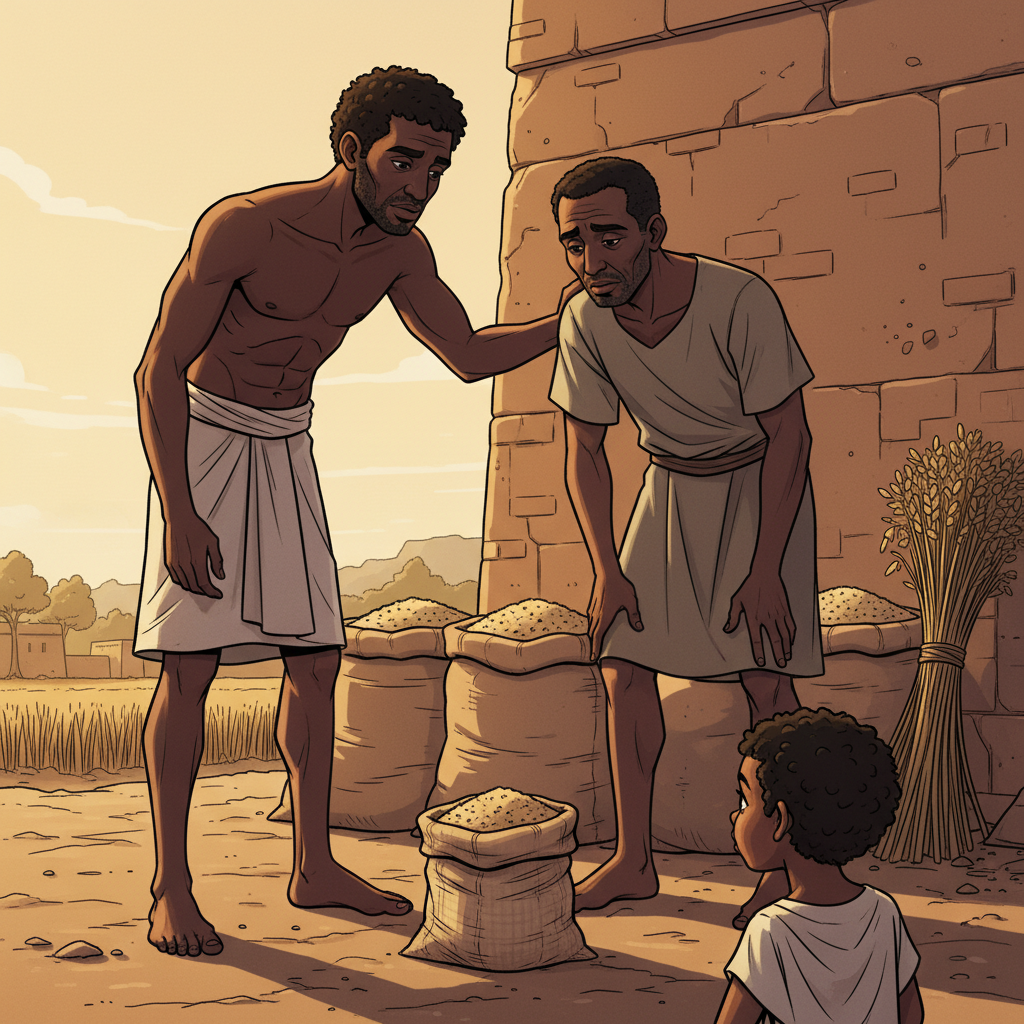
Two months later, the harvest came. Mut's family's field produced three big leather sacks of emmer wheat, one big sack of barley, and enough flax to weave linen for the whole family for a year. Three sacks. Uncle Senebkay's field produced one thin sack of barley and almost no wheat at all. The flax had not sprouted. He came to Mut's house at the end of the harvest with the one thin sack on his shoulder. He set it down by the doorway. He did not look at Mut's father at first. He looked at the ground. Then he looked up. "Brother," he said. His voice was quiet now, not laughing. "I should have waited. You were right." Mut's father walked over and put his hand on his brother's shoulder. He did not say anything for a moment. Then he said: "Stay for supper. Henutmut has baked bread."
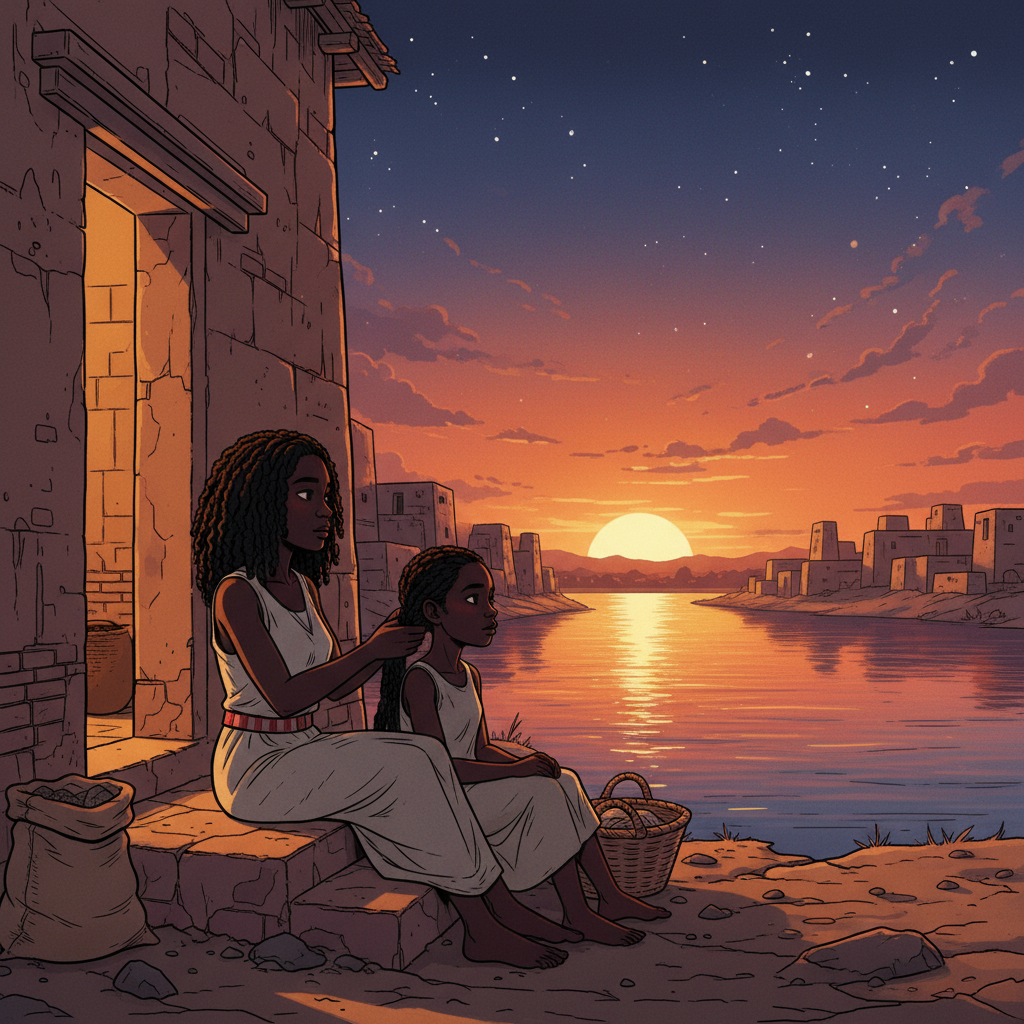
After Senebkay had eaten and gone home with a smaller sack of Mut's family's wheat to help him through the dry season, Mut sat on the doorstep with her mother. The sun was setting over the river. Henutmut was braiding Mut's hair for the night. "Mama," Mut said. "Why did Uncle Senebkay not wait? Tia said anyone could see the first notch was too early." Henutmut's fingers paused in Mut's hair. Then they kept moving. "Some people," she said, "want the river to be a thing. A thing they can take from when they want. A thing without a mood." Mut thought about this. "But the river has a mood." "Yes," her mother said. "The river has a mood. The teacher Diop, who is yet to be born, will say that the oldest fathers of Kemet knew this. We have always known it. Maat is the word for the agreement between a person and the river. You listen, you wait, the river gives. That is reciprocity."
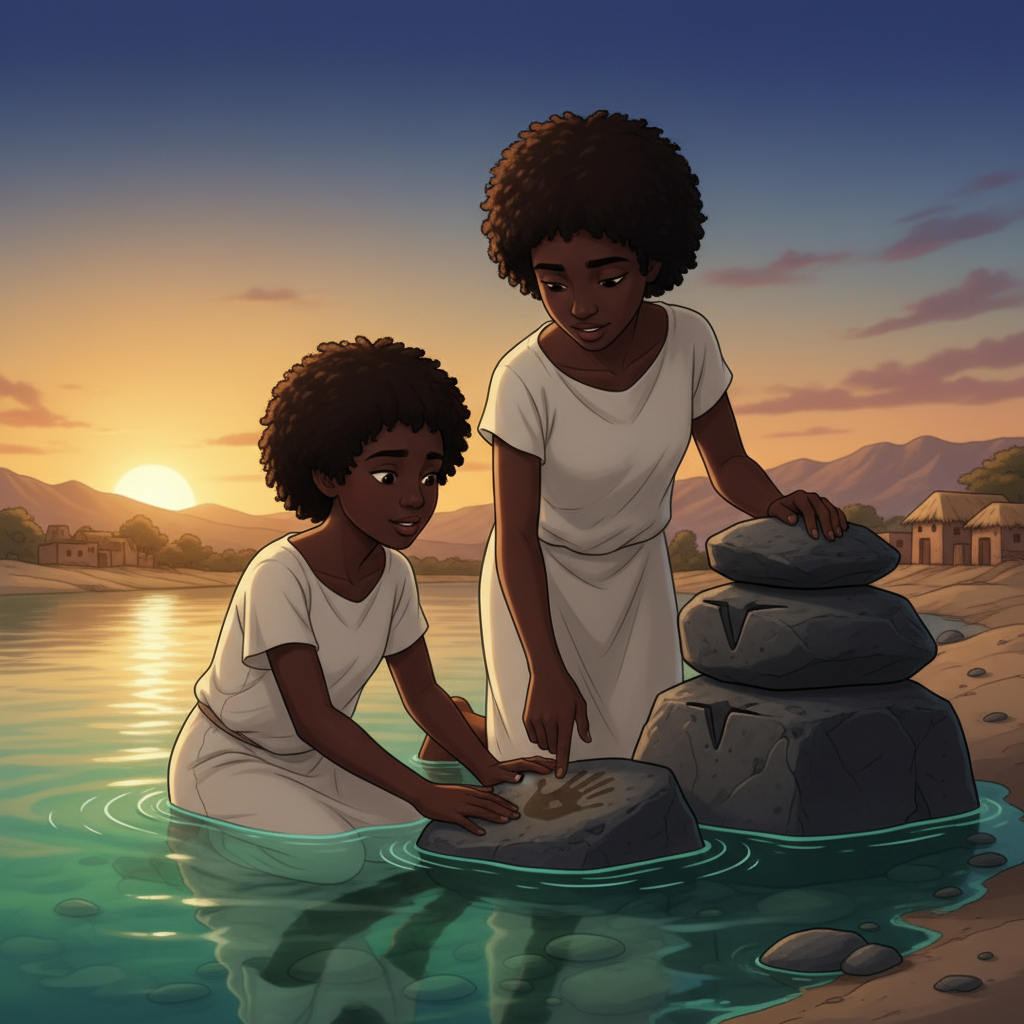
The next year, when Mut was nine, the flood came again. Mut walked with Tia down to the marker-stones in the first week of Akhet. The water was at the first notch. It was green and clear. Tia, fifteen now, knelt and put her finger on the notch the way she had taught Mut to do. Then she stood and put her hand on Mut's shoulder for a moment. "Read it for me," she said. Mut knelt. She put her own small bare palm flat against the wet silt. It was cold. Clear. The mountains had just begun to send their snow-melt. The brown silt was two weeks away. Mut looked up at her cousin. "First notch," Mut said. "Cold and clear. The brown silt is two weeks away. We wait." Tia smiled. "Good," she said. "Tell your father at supper tonight. He will be proud."