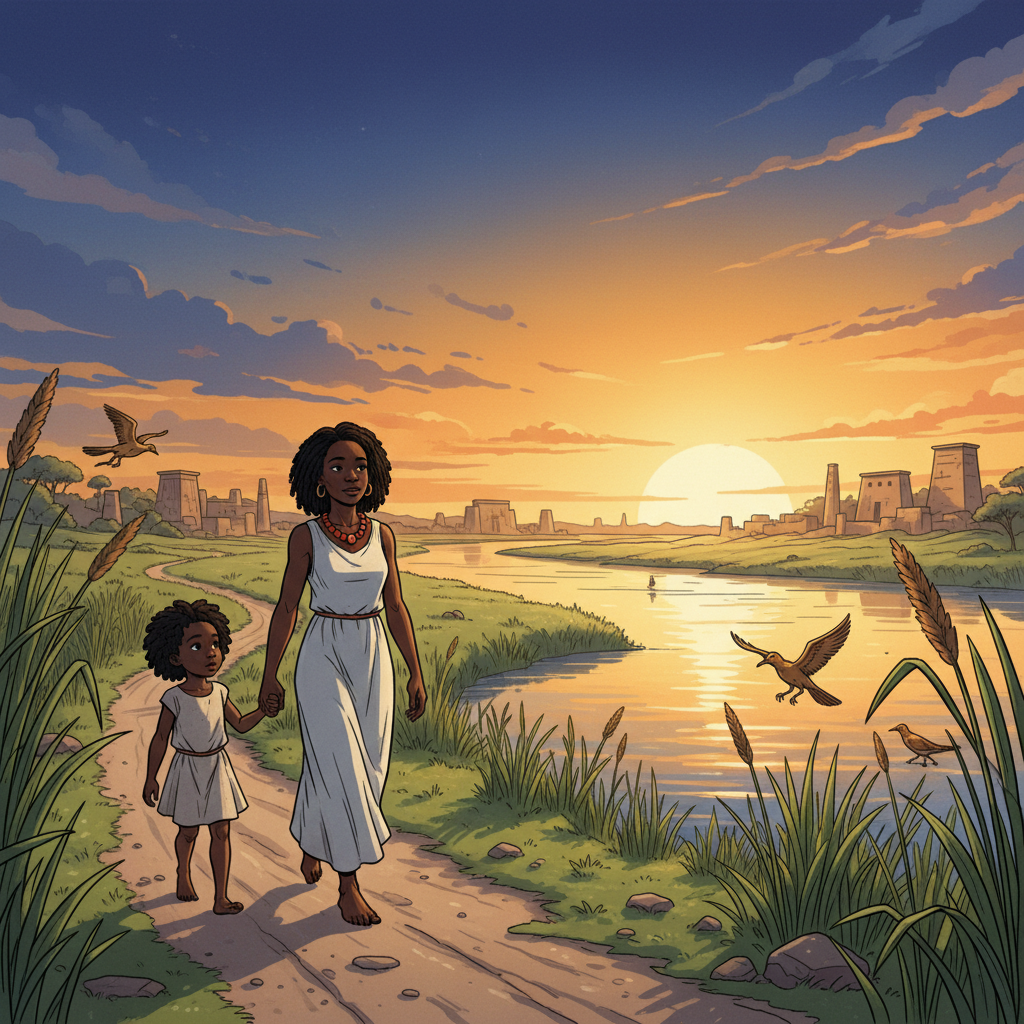
Little Esi was only seven years old, but she felt like a brave explorer every time she walked to the great river. She held her mother's warm hand as they stepped along the dirt path in the early morning light. The sky above Kemet was turning from deep purple to gold, like the gods were painting it just for her. Esi's bare feet felt the cool earth beneath them, still damp from the night air. She could hear birds waking up in the papyrus reeds, singing their first songs of the day. Her mother hummed along softly, and Esi thought the whole world was making music together.
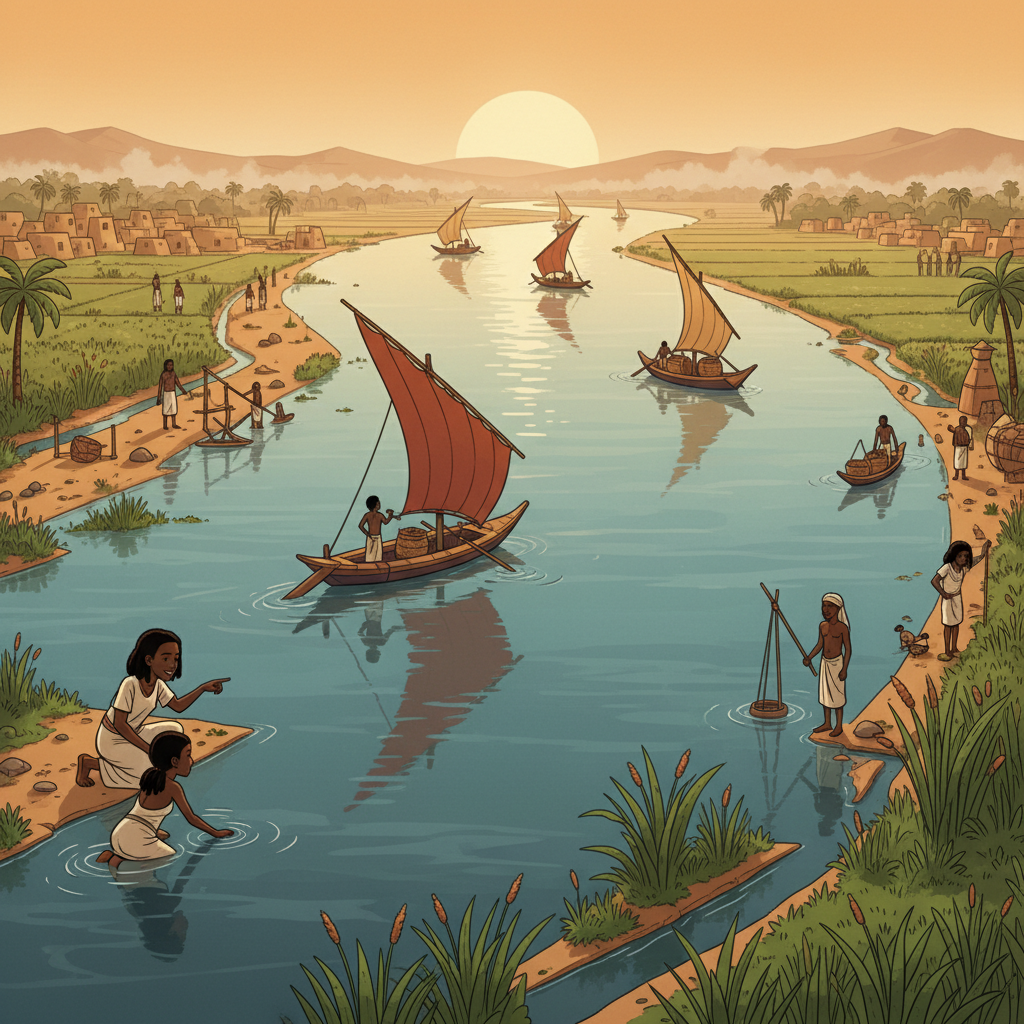
The great Nile stretched out before them like a wide silver ribbon. Esi loved this river more than almost anything. It brought water to the farmers' fields, it carried boats full of people and goods, and it connected her family on both sides of its mighty banks. The river never kept anything for itself. It gave its water to everyone equally, to every field and every village along its shores. Her mother always said the Nile was the most generous elder in all of Kemet, and Esi believed it with her whole heart.
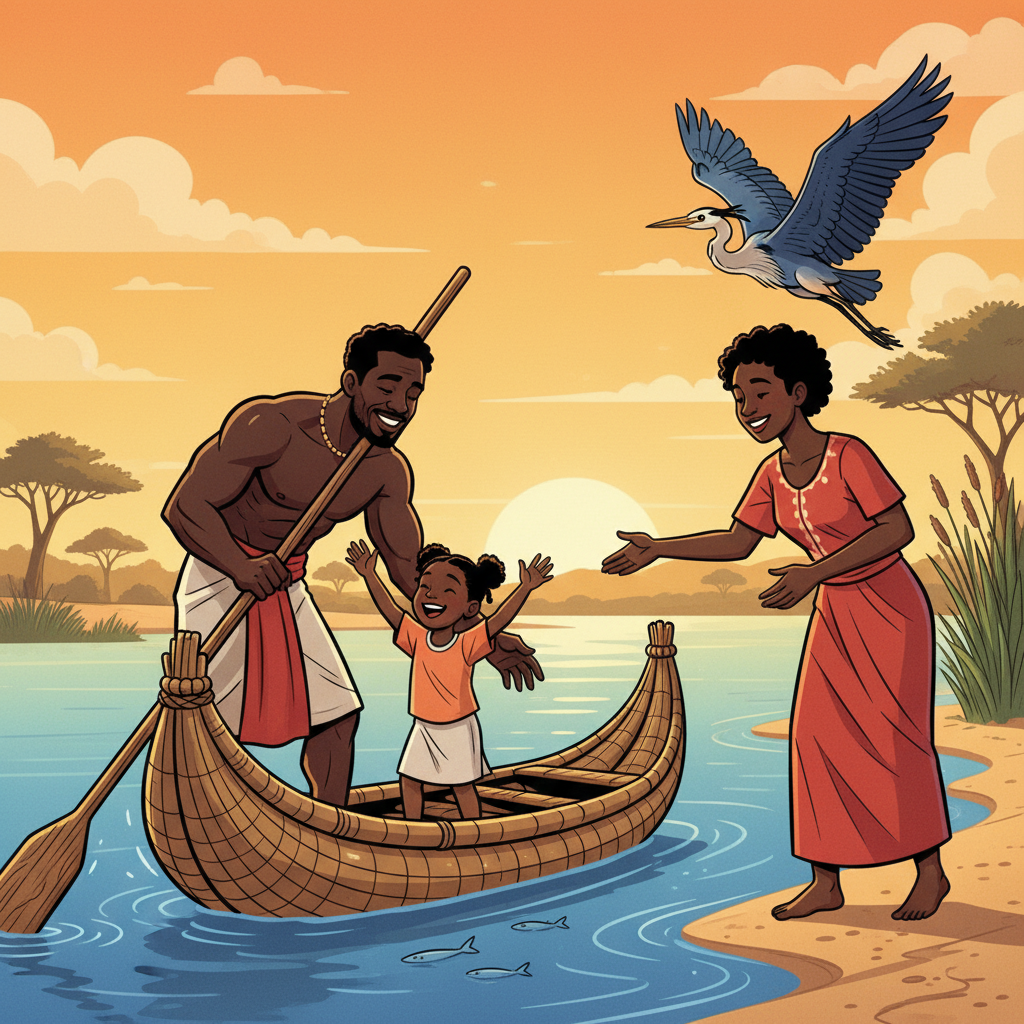
Uncle Mensah was already waiting at the riverbank with his reed boat. He had strong arms the color of rich dark earth, and his smile was as bright as the morning sun. He lifted Esi into the boat and she squealed with delight as it rocked gently on the water. The boat glided forward as Uncle Mensah pushed his long paddle through the current. Esi leaned over the side and let her fingers trail in the cool water. She watched a blue heron take flight from the reeds, its wide wings beating slowly against the golden sky. Little fish darted beneath the surface like tiny flashes of silver light.
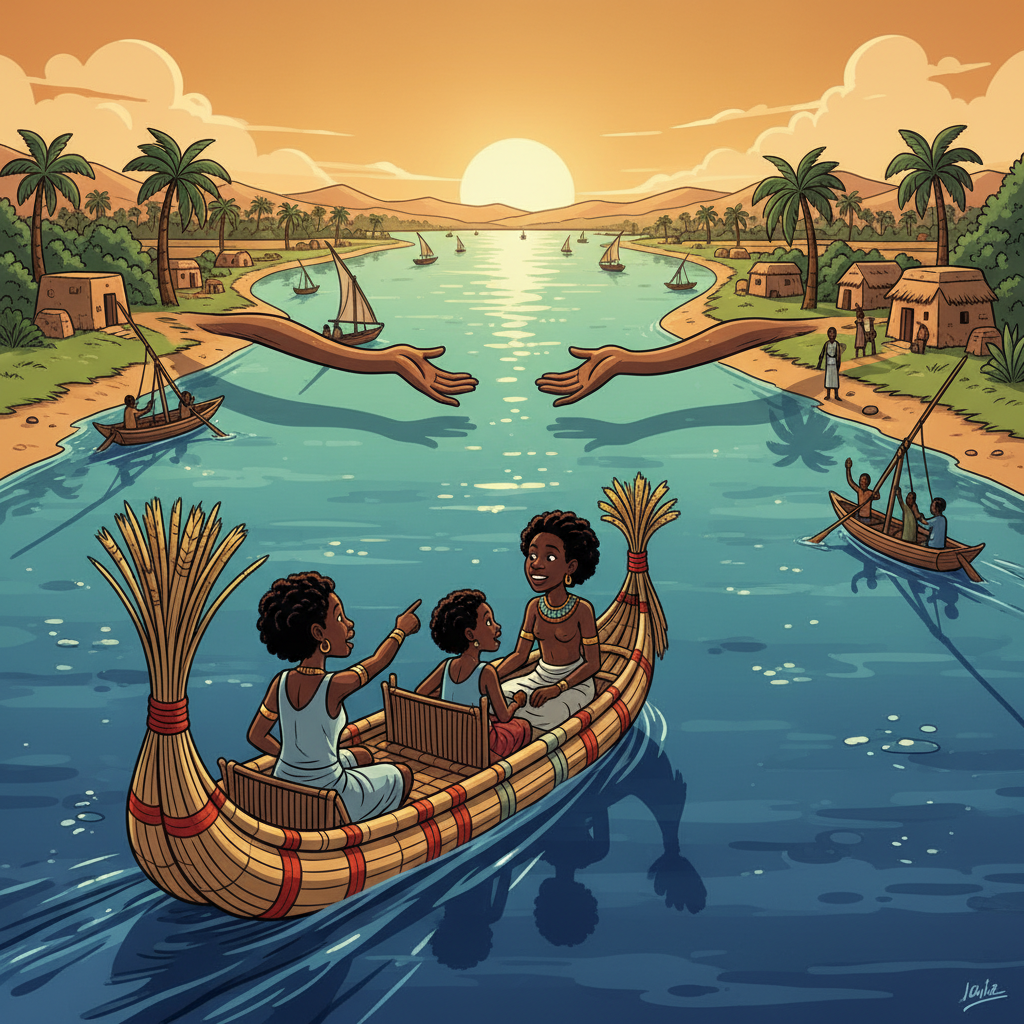
As they crossed the Nile, Esi noticed there were no walls or fences anywhere along the riverbank. There was nothing separating one family's land from another. The river flowed freely and so did the love between the families who lived on its banks. Uncle Mensah told her that long ago, the ancestors chose to live on both sides of the river on purpose. They wanted the Nile to be the center of the family, not a barrier. The river did not divide them. It held them together, the way a mother holds two children in her arms at the same time.
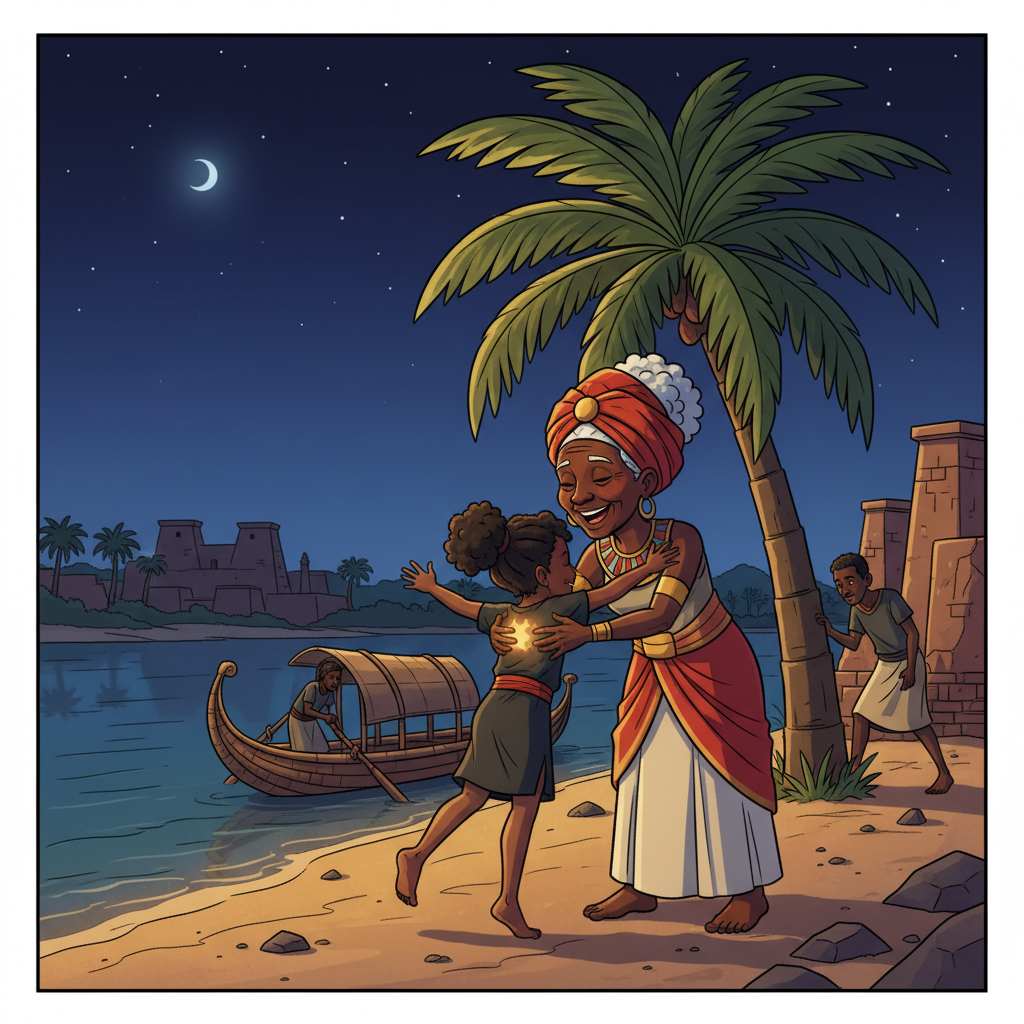
When the boat touched the far shore, Esi saw her grandmother Aset standing beneath a tall date palm tree. Grandmother Aset had deep ebony skin that glowed like polished wood in the sunlight. Her white hair was wrapped in bright cloth, and her dark eyes were full of joy. Esi ran across the sandy bank and jumped into her grandmother's arms. Aset wrapped her up tight and kissed the top of her head. She smelled like cinnamon and honey and warm bread. Esi felt her Ka glow bright inside her chest, the way it always did when she was surrounded by people who loved her.
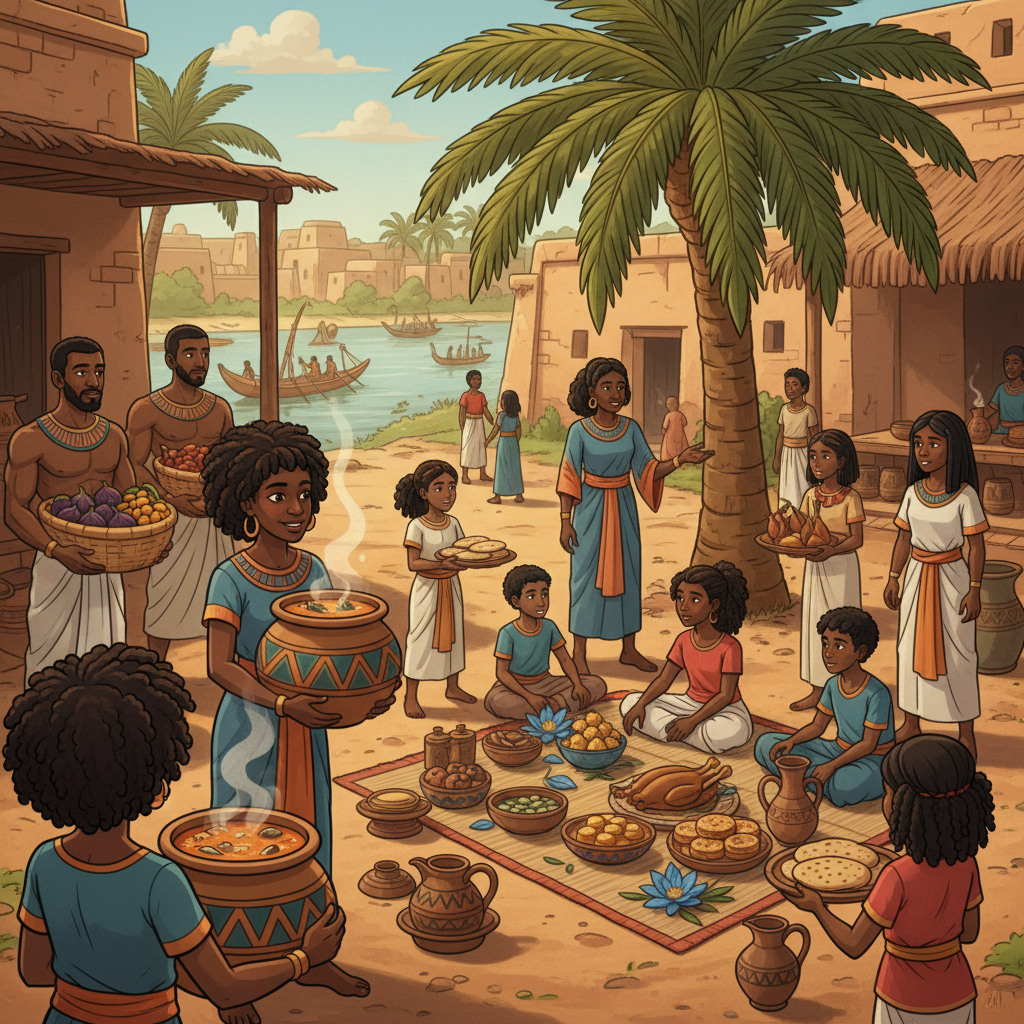
The whole family began to gather at Grandmother Aset's home. Aunties carried clay pots of fish stew seasoned with cumin and coriander. Uncles brought baskets of fresh figs and golden dates picked that very morning. The children helped carry flat bread still warm from the clay oven. Esi helped her mother arrange lotus flowers on the long eating mat. The feast was beautiful, with bowls of honeycakes, roasted duck, and jugs of cool water from the Nile. Everyone had a job to do and everyone worked together. That was the way of Ma'at, her mother explained. When everyone gives, everyone has enough.
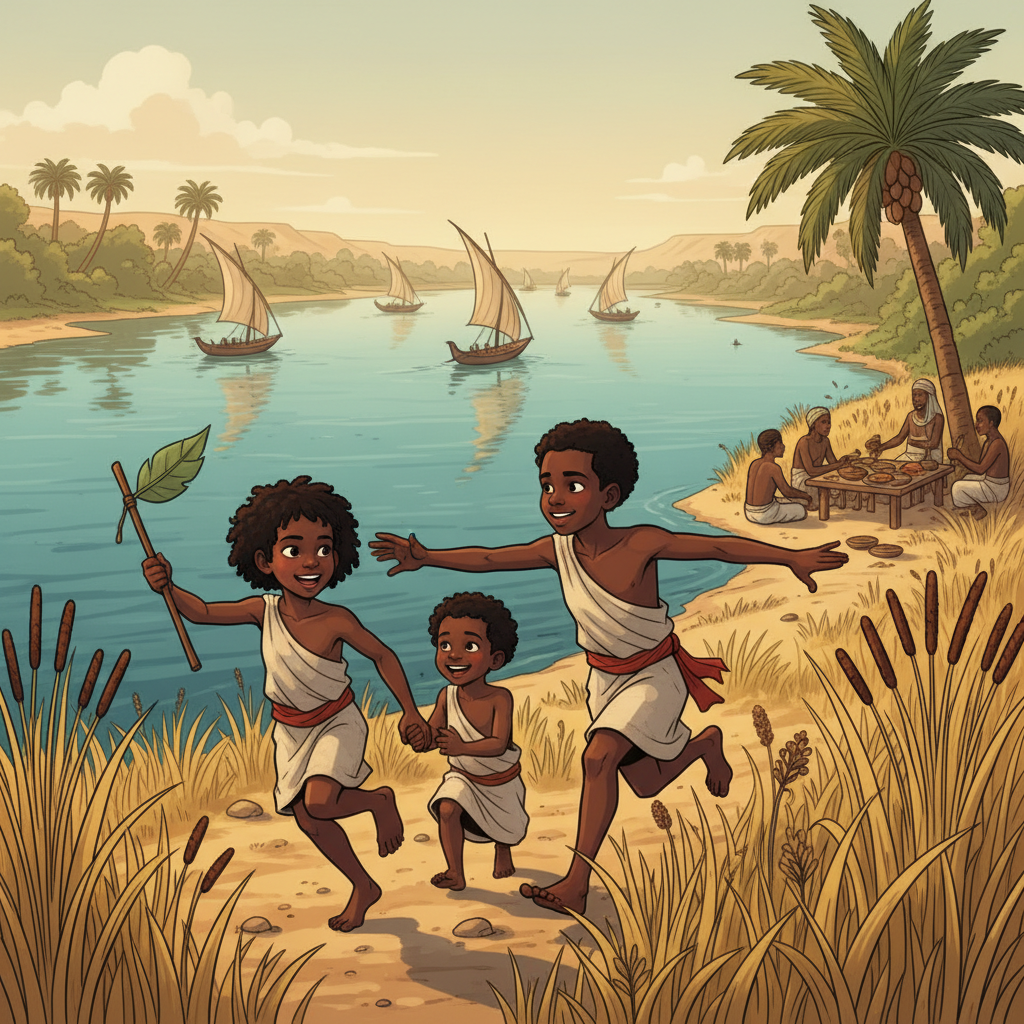
While the grown-ups finished preparing the meal, the children ran off to play near the riverbank. Esi and her cousins played a clapping game and then chased each other through the tall grass. They pretended to be great explorers sailing up the Nile to the land of Kush, where their ancestors once built mighty kingdoms. Esi's favorite cousin was Kofi. He was eight years old and very fast. He could climb a palm tree quicker than anyone, and he always made Esi laugh with his silly faces. But today, something was different about Kofi. He kept looking over at the feast table with hungry, selfish eyes.
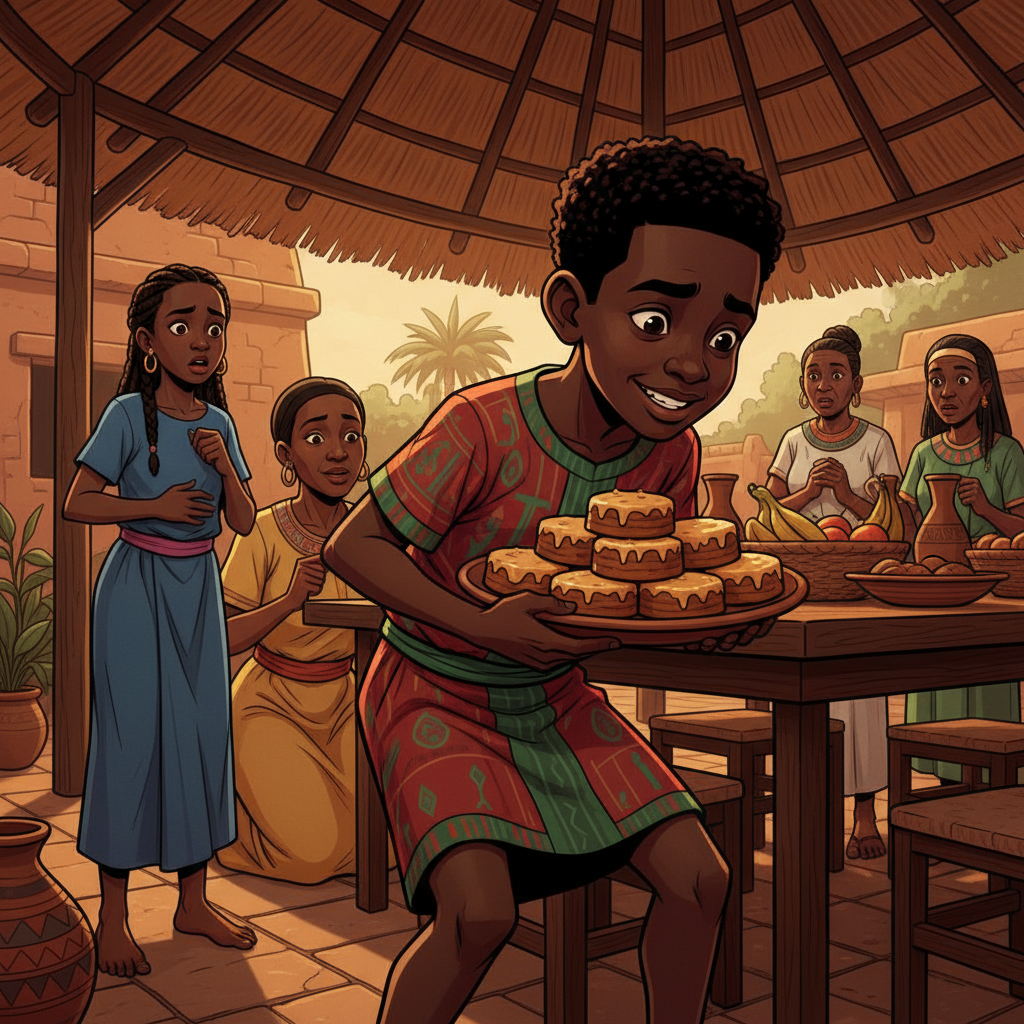
When Grandmother Aset called everyone to eat, Kofi rushed to the table before anyone else. He grabbed a whole plate of honeycakes and tried to hide them behind his back. There were twelve cakes on that plate, enough for every child to have one, but Kofi wanted them all for himself. Esi felt something cold and uncomfortable in her belly when she saw what Kofi did. Her mother knelt down beside them both. She spoke in a calm and gentle voice. She said that what Kofi was doing had a name. It was called Isfet. Isfet is the greed and chaos that creeps in when we forget that we belong to each other.
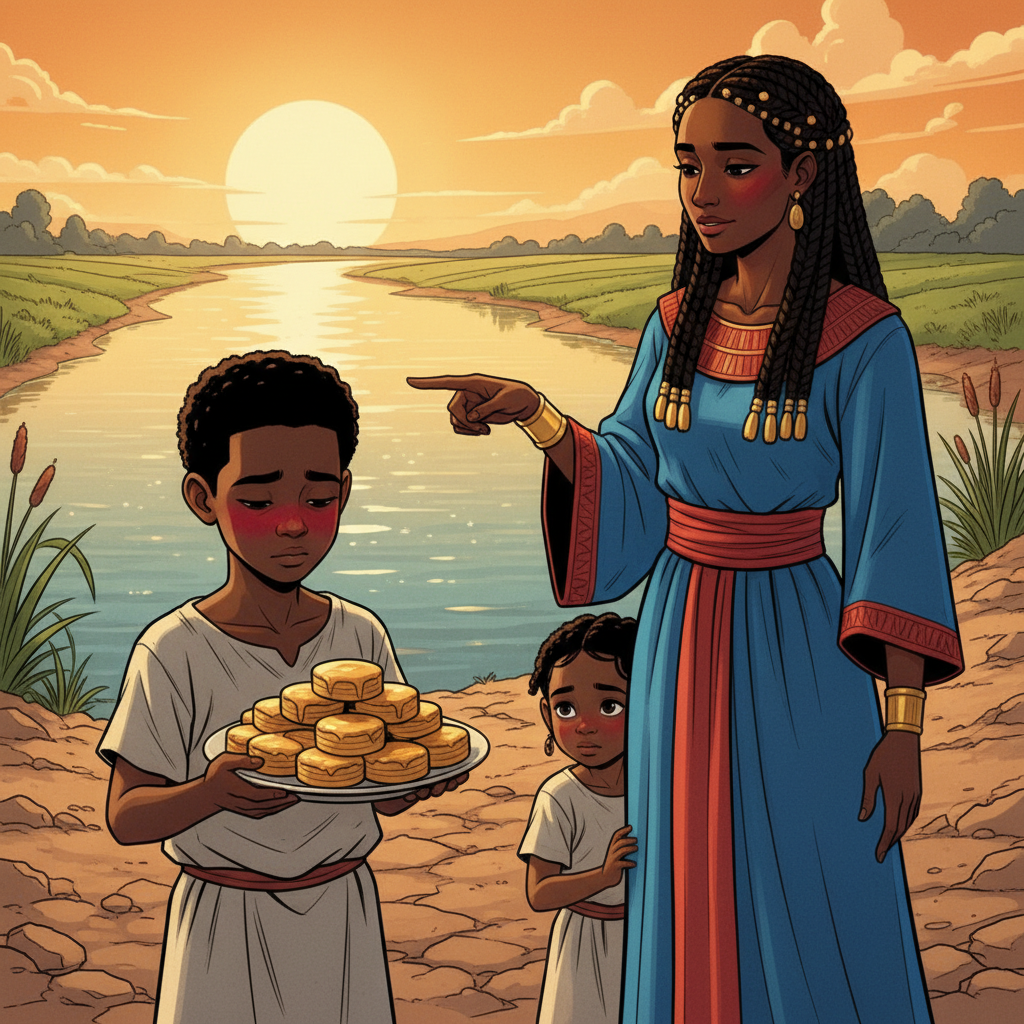
Kofi's face grew hot with shame. He looked down at the honeycakes in his hands. Esi's mother was not angry. She pointed to the Nile, shimmering in the afternoon light. She asked Kofi if the river ever kept its water for itself. Kofi shook his head slowly. No, the river always shared. Then she asked him to imagine what would happen if the Nile decided to stop flowing and keep all the water in one place. The fields would dry up. The animals would go thirsty. The families would suffer. Selfishness does not just hurt others, she said softly. It hurts the one who holds on too tightly, because it cuts them off from everyone they love.
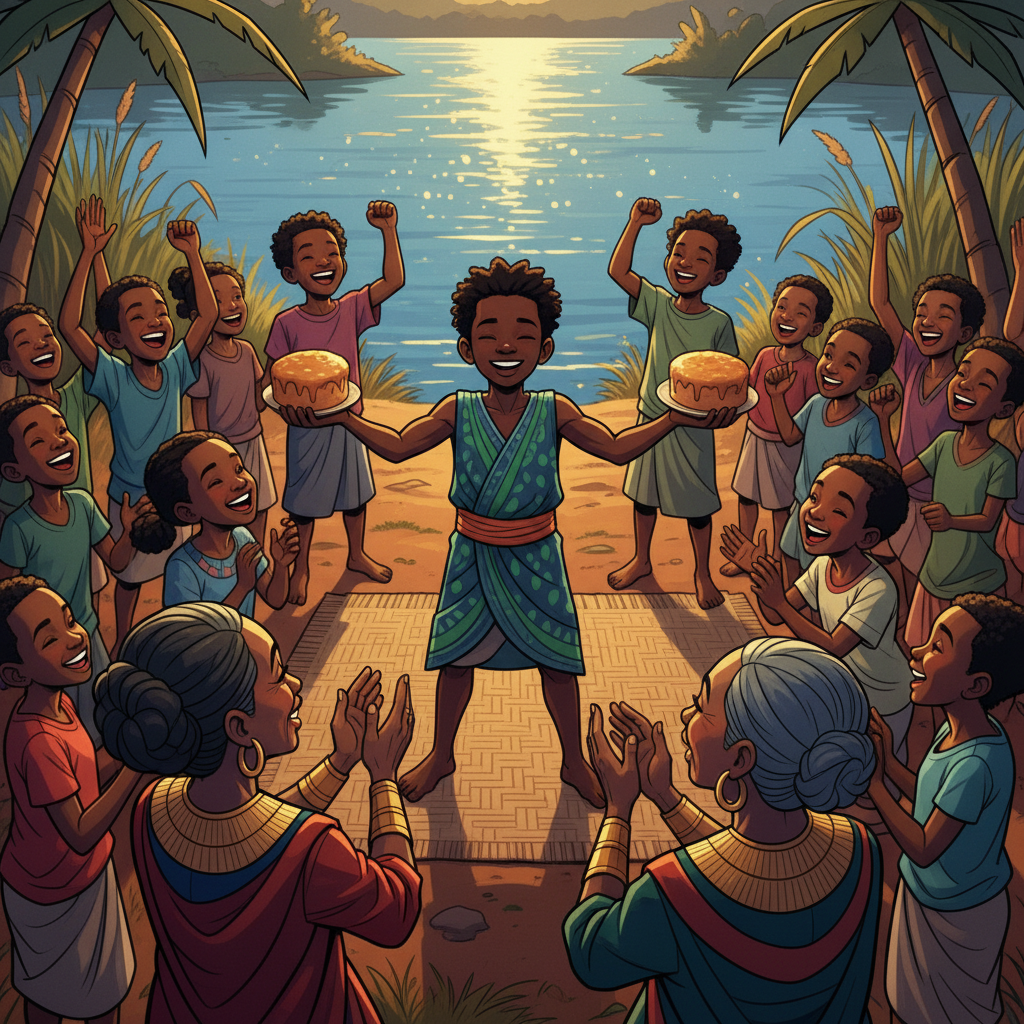
Kofi thought about this for a long moment. Then he stood up straight and walked back to the eating mat. One by one, he placed a honeycake in front of every child. He gave the last cake to Esi and smiled at her. Esi smiled back and broke her cake in half, giving one piece to Kofi. That was the way of Ma'at, the sacred balance that kept the world spinning in harmony. When you share freely, there is always enough. When you give with love, the gift comes back to you even sweeter. The whole family cheered, and Grandmother Aset clapped her hands with pride. The river seemed to sparkle brighter, as if it was cheering too.
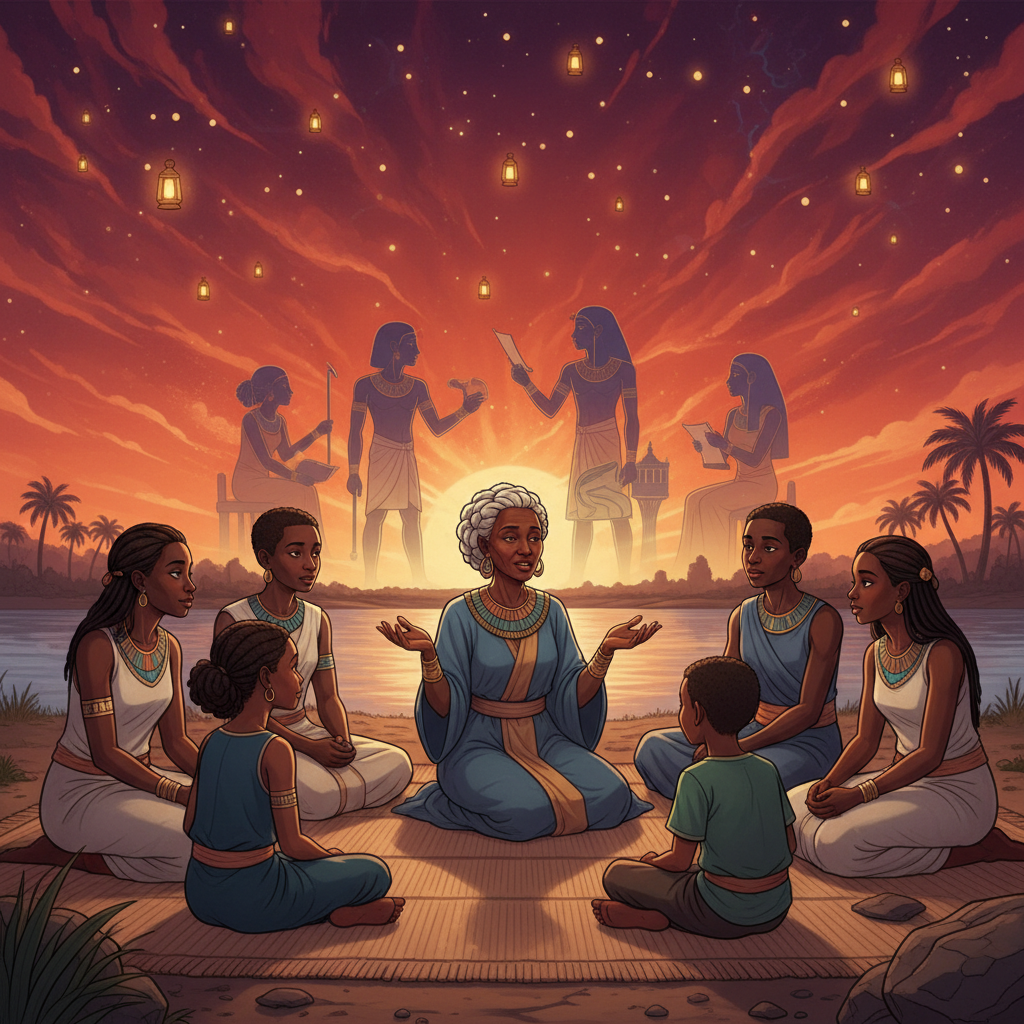
As the sun set over the Nile, the sky turned the color of ripe pomegranates and burning embers. The family gathered close together on woven mats. Grandmother Aset began to tell stories about the ancestors of Kemet and Kush, great builders and healers and teachers who lived by Ma'at every single day. She told them about the Per Ankh, the great houses of learning where children studied the stars and the seasons and the sacred words. She said that the most important lesson from the Per Ankh was this: you are never alone. Your family stretches across rivers, across lands, across time itself. The stars above them flickered like tiny lanterns held by ancestors watching over them.
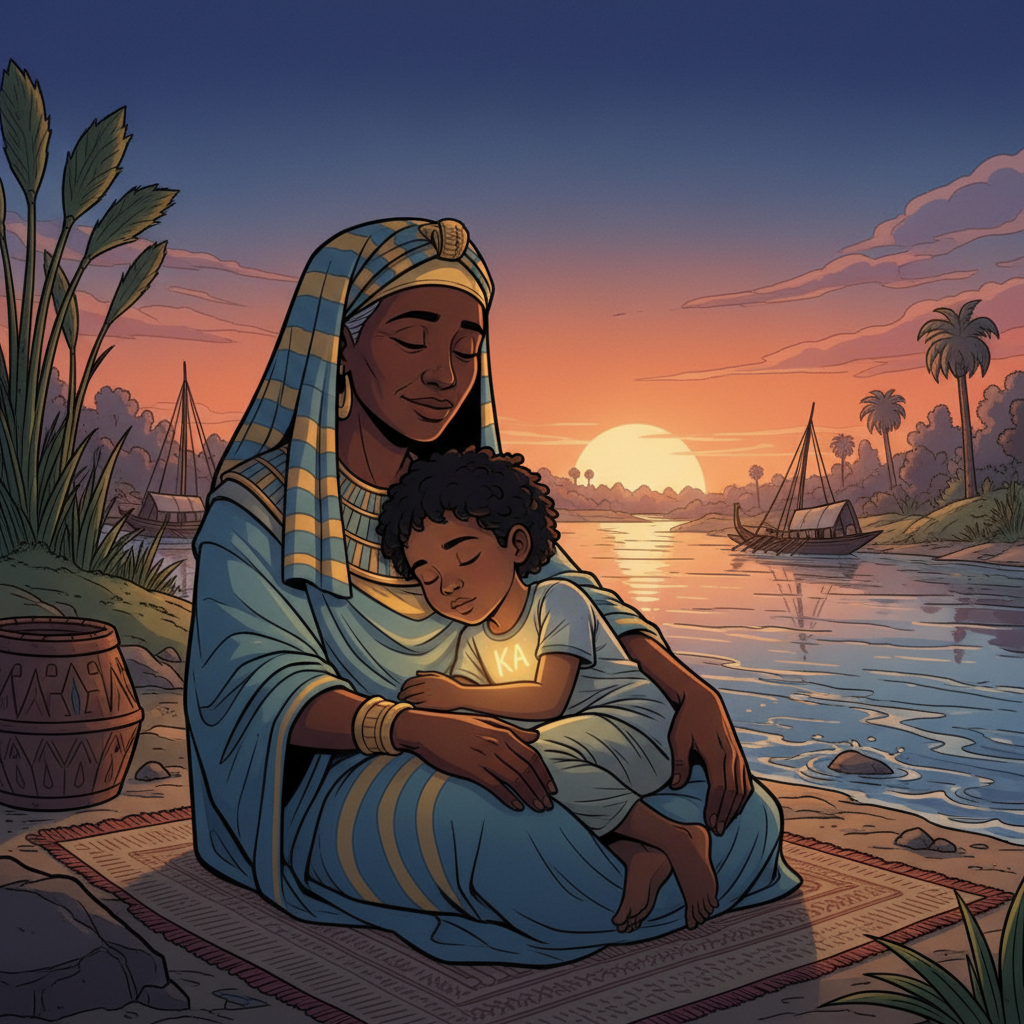
Esi felt her eyes growing heavy. The sound of the river lapping against the shore was like a lullaby sung just for her. She crawled into Grandmother Aset's lap and rested her head against her chest. She could hear her grandmother's heartbeat, steady and strong like a drum. Grandmother Aset whispered that family has no borders and no fences. Family flows like the Nile, always moving, always giving, always connecting one heart to another. Esi's Ka glowed warm and golden inside her as she drifted off to sleep. She dreamed of the river carrying love from shore to shore, and she knew that sharing was what made her family the strongest family in all of Kemet.